
Analysis
Trading in the Year of Geopolitics: Why Asian Markets Demand a Nuanced Strategy in 2026

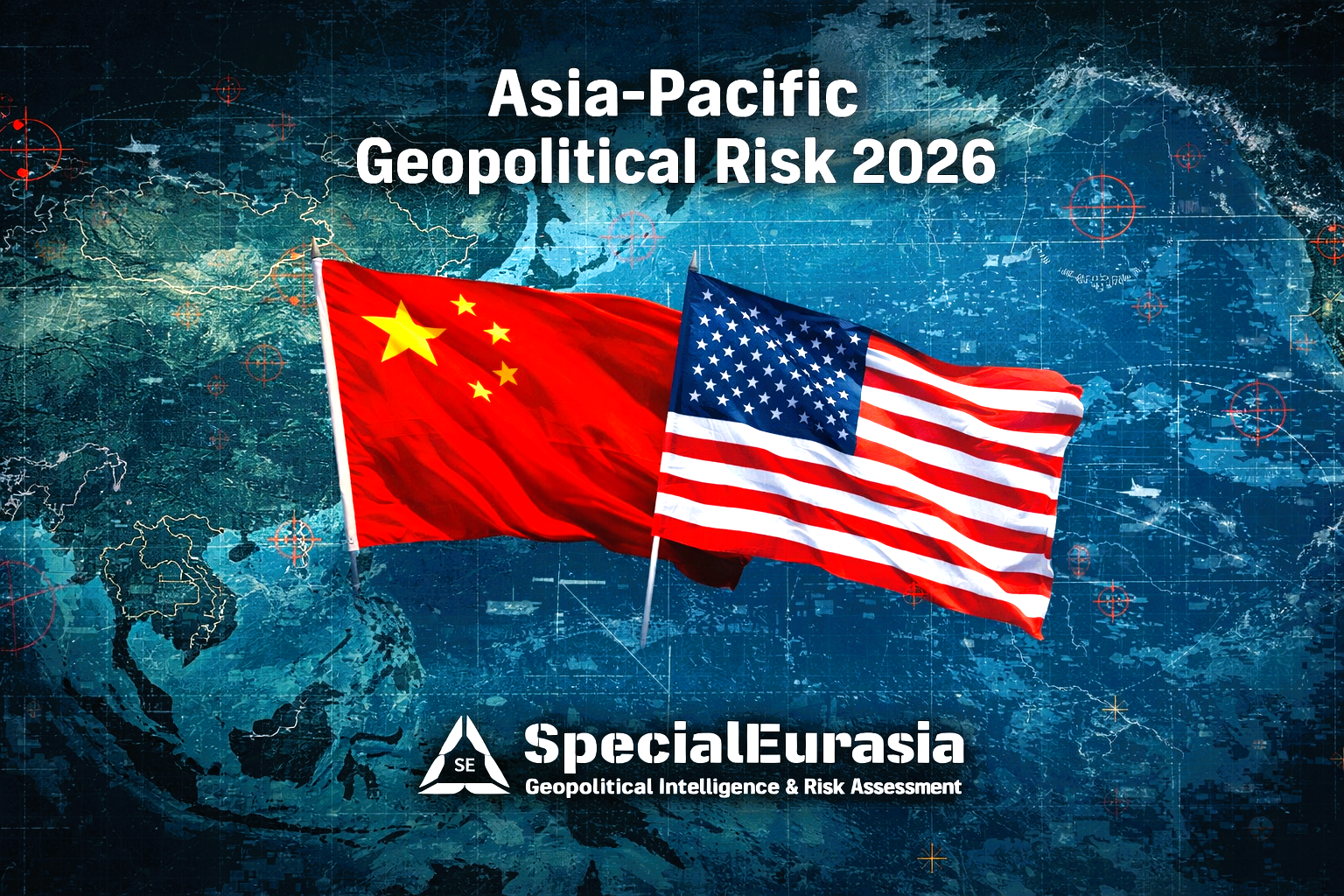
How Asian investors can navigate the geopolitical impact on Asian markets without falling into the twin traps of complacency and panic — and why pricing geopolitical risk in 2026 demands a fundamentally different toolkit
The Fire Horse Meets the Year of Geopolitics
In the Chinese zodiac, 2026 belongs to the Fire Horse — a symbol of restless, combustible energy. Driven, brilliant, and unpredictably volatile, the Fire Horse is considered one of the most dramatic animals in the Chinese astrological cycle. In certain East Asian traditions, years bearing its mark are ones in which conventional wisdom gets upended and fortune favors those who move decisively rather than hesitantly.
For investors operating across Asian markets this year, that ancient metaphor has collided head-on with a grimmer, more modern label: the Year of Geopolitics.
It is a label earned in full. Consider the dizzying catalogue of risk events that greeted markets before the calendar had even turned to February. On January 3rd, US forces captured Venezuelan President Nicolás Maduro — barely three days into the new year — in an intervention that Lombard Odier’s strategists immediately flagged as a return of sphere of influence logic to geopolitics, with the operation mirroring the US intervention in Panama in 1989 and the arrest of Manuel Noriega. MarketPulse Within weeks, President Trump announced 10% tariffs on eight NATO allies, ostensibly tied to US demands over Greenland — a move that, according to Lombard Odier’s analysis, drove geopolitical risk premia higher, led by gold, though broader impacts were expected to stay contained unless tensions intensified. J.P. Morgan
Meanwhile, US military assets have been repositioned in the Gulf, pressuring Iran toward nuclear negotiations, with Lombard Odier warning that oil markets are a key transmission channel for geopolitical risks, and any Iranian action in the Strait of Hormuz would be a high-risk, high-cost option — but one that cannot be ruled out. Allianz Global Investors And as if a crowded geopolitical stage needed more actors, the independence of the US Federal Reserve has come into question, with Jerome Powell’s term ending in May and President Trump’s preference for a loyalist replacement threatening what markets once considered an institutional certainty.

Layering all of this is the ongoing shadow of Trump’s trade tariffs — tools whose legal foundations remain contested in the Supreme Court — and a tech decoupling between Washington and Beijing that has moved from rhetorical sparring to operational architecture.
The central question for Asian investors is not whether these risks are real. They are, spectacularly so. The question is: how should you price geopolitical risk in a world where economic growth remains remarkably resilient? Do you sell? Discount? Simply watch the headlines and hold firm? As we will argue, the answer is none of the above in isolation. What this moment demands — particularly for investors with Asian portfolio exposure — is analytical nuance, not instinct.
Loud Headlines, Quiet Markets — and Why That Pattern Can Deceive
There is a seductive and well-documented pattern in modern financial history: geopolitical events tend to produce sharp, short-lived volatility spikes, followed by recoveries that leave investors wondering what all the fuss was about. Geopolitical events tend to have only a temporary impact on markets as long as they have no lasting effect on oil prices or permanently disrupt global supply chains. BlackRock
This has been the dominant experience of the past several years. From Middle Eastern flare-ups to the initial phases of the Russia-Ukraine war, from North Korean missile tests to US-China semiconductor skirmishes, markets have repeatedly absorbed the shock, processed the information, and moved on — often within days. The global economy has shown surprising resilience. Despite the tax burdens and protectionist policies of the Trump administration, markets have grown accustomed to the rhythm of confrontation and compromise — particularly in the ongoing dynamic between President Trump and his global counterparts. Asia House
The clearest stress-test of this pattern came in April 2025 with “Liberation Day” — the Trump administration’s sweeping tariff announcement. Volatility spiked violently, and supply-chain-exposed stocks across Taiwan, South Korea, Vietnam, and Malaysia sold off hard. After Liberation Day, markets panicked. The dollar fell as volatility spiked — the opposite of its usual safe-haven behavior. Reserve managers sharply shifted allocations away from dollars; the greenback’s share of global reserves hit its lowest in two decades. Pundits rushed to declare American exceptionalism dead. Lombard Odier And yet, by the year’s end, a partial trade détente had been negotiated, and foreign investors had bought more US assets than in the prior year.
Despite fading market shocks, ongoing geopolitical tensions and elevated gold volatility signal that concerns about global risks may linger in 2026, as State Street’s Head of Macro Policy Research Elliot Hentov noted. Trade continues to grow despite trade wars — but deals are being closed only gradually, and uncertainty has not fully dissipated. BlackRock
The danger for investors lies in a subtle but crucial category error: confusing market recovery with market immunity. Geopolitical risks are often priced heuristically. Their uncertain duration, scope, and low frequency make them difficult to quantify in advance. In the meantime, their tail-risk nature — as relatively rare but potentially extreme occurrences — means they are underpriced until they materialise. J.P. Morgan Private Bank Put differently: the fact that a crisis passed without lasting damage does not mean the next one will. And for Asian investors, the structural transmission channels are uniquely numerous and direct.

BlackRock’s Geopolitical Risk Dashboard tracks a “market movement score” for each risk — measuring the degree to which asset prices have moved similarly to risk scenarios. The current environment reflects the US resetting of trade deals and alliances, intensifying US-China competition with AI at its core, and continued volatility from conflicts in Ukraine, Gaza, and the Caribbean. Allianz Global Investors The dashboard makes plain that market attention and market movement are two different things — and that the gap between them is where complacency breeds.
Asia’s Unique Position — Why Nuance Is Not Optional
Asia is not a spectator in the Year of Geopolitics. It is one of its primary stages. The region encompasses the world’s most consequential bilateral rivalry (US-China), the most contested maritime geography (the Taiwan Strait and South China Sea), the most trade-exposed economies in the developed world, and the most energy-import-dependent major markets on the planet. For Asian investors, the transmission channels for geopolitical shocks are not theoretical — they flow directly into earnings, currencies, bond yields, and capital flows.
The bilateral relationship between Washington and Beijing remains the most important indicator of geopolitical tensions to gauge in 2026 and for years to come. Long-term strategic decoupling is highly likely to continue amid growing great-power competition, especially in emerging technologies and defense. While there may be increased stability prior to an anticipated summit between Xi Jinping and Donald Trump, the underlying dynamic of technology and supply-chain competition is structural rather than episodic. SpecialEurasia
Several specific vulnerability channels demand attention:
Export dependency. South Korea, Taiwan, Malaysia, Singapore, and Vietnam are among the world’s most trade-reliant economies. Any durable deterioration in global trade flows hits their corporate earnings faster and harder than in more domestically insulated markets. China’s export machine continues to defy geopolitical headwinds, showing robust growth even as protectionist policies proliferate globally — yet the structural supply-demand imbalance will require years to resolve, and more time is needed for recent anti-involution policy measures to have a meaningful impact on the real economy. Pinebridge
Energy import vulnerability. Around one-third of the world’s seaborne crude oil flows through the Strait of Hormuz, which is also key for transporting liquefied natural gas, fertilisers, copper, and aluminium. Allianz Global Investors Japan and South Korea, as near-total energy importers, face the most direct exposure to any supply disruption emanating from Middle Eastern conflict.
Technology decoupling. Despite a trade detente with China, the military posture in Asia hasn’t softened. Washington sent Taipei its largest-ever arms sale package, and Beijing continues to assert its Taiwan position. Lombard Odier Meanwhile, China’s ambition to triple domestic semiconductor production by 2026 is reshaping investment flows across the electronics supply chain from Penang to Shenzhen.
Currency fragility. The Chinese yuan’s relative stability — maintained deliberately to preserve export competitiveness — acts as an anchor that constrains appreciation across the broader Asian currency complex. Dollar-yen is expected to breach 160 in 2026, with yen risks remaining key to the downside. Hartford Funds
Water and resource security. An often-overlooked vector of geopolitical risk in Asia is resource competition. The Indus Waters Treaty has been suspended. South Asian nuclear-armed rivals are turning rivers into leverage. The governance vacuum around shared water resources is deepening — and when the next shock comes, water will make it worse. Lombard Odier
Given these interlocking vulnerabilities, it should be clear why the standard market wisdom — “geopolitics rarely moves markets” — is an incomplete guide for Asian portfolios. Despite optimism about Asian equities in 2026, some challenges cannot be overlooked, including uncertain global demand, trade dynamics, and a volatile macro environment, all creating headwinds to medium-term potential growth. J.P. Morgan
The correct response, however, is not to flee risk entirely. Asia enters 2026 with genuine resilience and structural opportunity, driven by AI infrastructure investment, advanced manufacturing, and the green energy transition. The message for investors is clear: stay nimble, diversify beyond technology, and hedge strategically. Eurasia Group
The Lombard Odier Framework: How the Intelligent Allocator Approaches Geopolitical Risk
In managing clients’ money through successive geopolitical shocks over more than two centuries, Lombard Odier has developed what it calls the “Intelligent Allocator” framework — a discipline for separating analytical signal from emotional noise in volatile environments. Its core insight is worth absorbing in full.
The investor’s edge does not come from predicting events, but from understanding which outcomes are unaffordable. Rather than trying to anticipate geopolitical shocks, the goal is to build portfolios that can endure them through a robust strategic asset allocation. The idea is to understand the objectives of major economic actors, and more importantly the material constraints that limit those objectives — the hard physical, economic, and resource limits that bind policymakers regardless of ideology. J.P. Morgan Private Bank
This “material constraints” framework, developed by geopolitical strategist Marko Papic, is particularly illuminating in the context of US-China relations. At the February 2026 Lombard Odier “Rethink Perspectives” event in Paris, the firm’s chief strategists laid out the logic explicitly. The Americans possess what China needs — computing power — but China equally holds what the Americans require — rare earths. This symmetry is central to risk management. It sustains geopolitical tension, yet also reduces the probability of full decoupling, as the economic cost of a “pure” separation would be prohibitive. For markets, this translates into recurring cycles of political announcements, targeted restrictions, and industrial adaptation — in other words, volatility that is structural rather than episodic. Pinebridge
This insight directly challenges two equally mistaken responses: the first is to dismiss US-China tech tensions as noise that markets will look through; the second is to treat them as an existential rupture requiring wholesale portfolio defensiveness. The correct position is somewhere harder to hold: acknowledging the structural nature of the competition while maintaining exposure to the growth it generates.
On portfolio construction in this environment, Lombard Odier has been consistently clear since the start of the year. The key lesson from 2025 is to remain invested through the noise. Economies are still expanding, corporate growth is solid, policy offsets are in place, and the private sector is strong. While growth should slow through the year, stronger end-2025 momentum provides a higher buffer. Diversification is essential, with a preference for emerging markets, which offer higher earnings growth at a more reasonable price. Hartford Funds
On the Venezuela intervention specifically, Lombard Odier’s January analysis provided a useful template for how the framework operates in real time. The firm expected further spread compression in emerging bonds, precious metals outperforming due to a rise in the geopolitical risk premium, and a neutral view on the global energy sector — given both upside and downside risks to oil prices in the short term. MarketPulse This is the Intelligent Allocator in action: calibrated rather than reactive, nuanced rather than binary.
Real-Time Geopolitical Fault Lines: What Is Priced In and What Isn’t
Against this analytical backdrop, several specific 2026 geopolitical fault lines warrant close attention from Asian investors — both for the risks they present and, often, the opportunities embedded within them.
The US Political Revolution. According to the Eurasia Group’s Top Risks 2026 report, the United States is attempting to dismantle checks on presidential power and capture the machinery of government — making it the principal source of global risk in 2026. Lombard Odier As Eurasia Group founder Ian Bremmer put it: “The United States is itself unwinding its own global order. The world’s most powerful country is in the throes of a political revolution.” Lombard Odier For Asian markets, the implications ripple through trade policy, Federal Reserve independence, and the durability of US security commitments in the Indo-Pacific.
The Federal Reserve question is especially consequential. With Jerome Powell’s term ending in May 2026, the nomination process will be a market-moving spectacle. If a presidential loyalist is nominated, markets could price in a politicized, dovish Fed — producing a sharp equity rally and a sell-off in the dollar, with Senate confirmation hearings becoming the key volatility event of the spring. Societegenerale
The Electrons vs. Molecules Competition. China is betting on electrons — AI, advanced manufacturing, drones, batteries, and solar — while the United States is betting on molecules: energy, fossil fuels, critical minerals. 2026 will begin to reveal which bet is paying off. Lombard Odier The answer has significant implications for Asian supply chains. China tightens its grip on drones, battery storage, robots, and manufacturing, even as deflation clouds its domestic outlook with a quarter of all listed Chinese firms now unprofitable — the highest level in 25 years. Lombard Odier
The Supreme Court Tariff Ruling. Legal challenges to the administration’s reciprocal tariff executive orders are heading to the Supreme Court, with a ruling expected by June. If the Court strikes down the president’s authority to unilaterally set broad tariffs, the result could be a massive deflationary unwind and a rally in global trade proxies — shipping, emerging markets, and Asian export-oriented economies. Societegenerale The reverse scenario — Court upholding the tariffs — would entrench the current landscape of elevated trade friction.
Iran and Energy Risk. Lombard Odier’s February assessment concluded that the base case remains a negotiated outcome on US-Iran tensions, consistent with financial markets’ relative calmness. The VIX remained just below its long-term average, with no sign that risk premia were adjusting in anticipation of escalation. Allianz Global Investors But the tail risk remains real: a Strait of Hormuz disruption would function as a direct economic shock to virtually every energy-importing Asian economy.
Gray Zone Warfare Around Taiwan. Intelligence suggests China may be moving its timeline for “reunification readiness” forward. 2026 could see an increase in gray zone warfare — cyberattacks, blockades, and airspace incursions — that could trigger major repricing in risk assets and the US dollar. Any kinetic escalation around Taiwan would make 2025’s volatility look like a warm-up. Societegenerale Wellington Management’s geopolitical framework places this among the highest-consequence monitoring priorities for Asia-tilted portfolios.
China’s Deflation Trap. China enters 2026 with ten consecutive quarters of worsening deflation, personal consumption at just 39% of GDP — half the US share — and disposable income stalled at US$5,800 per person. Lombard Odier China’s export machine continues to defy geopolitical headwinds, showing robust growth. However, resolving the structural supply-demand imbalance will be a multi-year process. Pinebridge The irony is that Beijing’s response — accelerating exports — compounds competitive pressure on Asian neighbors even as it stabilizes Chinese growth.
Structural Beneficiaries: Vietnam, Malaysia, Indonesia. Not all of Asia’s geopolitical geography is risk. Vietnam has increasingly functioned as a “connector economy,” facilitating trade flows between the US and China. As corporates diversify production away from China, Vietnam has absorbed manufacturing activity tied to US end-demand while continuing to source intermediate inputs from China. Pinebridge Indonesia’s critical minerals position — particularly nickel for batteries and semiconductors — aligns directly with the AI-driven digital economy. These are genuine structural opportunities embedded within the geopolitical disruption.
Investment Strategies: Pricing Risk Without Being Paralyzed by It
What does a genuinely nuanced approach look like in practice? The following principles synthesize insights from across the major institutional frameworks operating in this environment.
Stay invested — but with eyes open. Despite its stellar performance in 2025, gold remains the most attractive portfolio hedge against market and geopolitical risks, with momentum from private inflows and central bank diversification expected to remain strong. As for the US dollar, renewed Fed easing and US policy uncertainty argue for sustained weakness and lower exposures. Hartford Funds The base case across major institutional investors entering 2026 is moderately pro-risk — not risk-off.
Use gold as a systematic hedge, not an emotional response. Adding gold in a sell-off makes sense given the multiple roles it can play as a hedge against geopolitical risk, stagflation, and US-dollar concerns. Stimson Center Lombard Odier advocates a gold allocation “of the order of 3–5%” as a line of portfolio defence when faced with extreme shocks — a structural position rather than a tactical reaction. Wellington Management The critical distinction is between owning gold before a crisis, when it is cheapest, versus scrambling to buy it after a spike.
Distinguish geopolitical categories. Geopolitical cycles are long — historically, they last between 80 and 100 years. Structural changes like those we’re witnessing now only come around once per century and tend to be disruptive. While market risk is structurally higher in this new regime, 2026 will afford ongoing and novel opportunities to seek portfolio winners and losers across defense technology, energy transition, and advanced manufacturing themes. SpecialEurasia
Diversify within Asia, not just out of it. Lombard Odier expects Swiss, Japanese, and emerging market equities to outperform. Within EM equities, more domestic-led markets such as China and India are expected to outperform more US-exposed markets such as Taiwan and Korea, which are more vulnerable to profit-taking when tariff tensions flare. J.P. Morgan
Watch sovereign bond dynamics for structural signals. Geopolitical shifts are reshaping global demand for government debt. As central banks diversify into gold, sovereign bonds may see higher domestic ownership and depend more on domestic demand — a structural shift that changes the diversification calculus for Asian fixed-income investors. State Street
Position for AI as a geopolitical theme, not merely a technology theme. A genuine transformation is underway, with the logic of efficiency and interdependence giving way to the logic of security. Security is replacing efficiency as the guiding principle of economic policy, prompting massive investment in energy, infrastructure, and industrial capacity — a shift that creates both risks and long-term opportunities for investors. Pinebridge In Asia, this means AI hardware infrastructure, semiconductor equipment makers, and advanced manufacturing platforms are not simply growth stocks — they are geopolitical position plays.
The comparison below illustrates how geopolitical risk transmission differs across key Asian markets:
| Market | Primary Risk Channel | Key Vulnerability | Structural Opportunity |
|---|---|---|---|
| Taiwan | Tech decoupling, Taiwan Strait | Semiconductor export controls | TSMC global supply chain dominance |
| South Korea | Trade tariffs, China slowdown | US-Korea trade tension | Defense tech, battery manufacturing |
| Japan | Yen weakness, energy costs | BoJ normalization pace | Governance reforms, fiscal stimulus |
| India | Tariff exposure (36% effective rate) | Energy import costs | Domestic demand, rate cutting cycle |
| Vietnam | China +1 beneficiary dynamics | US scrutiny of trade flows | Manufacturing connector economy |
| Indonesia | Critical minerals demand | Commodity price volatility | Nickel, AI infrastructure materials |
| China | Deflation trap, tech restrictions | Export overcapacity, property sector | Semiconductor self-sufficiency drive |
| Singapore | Financial hub volatility | Capital flow sensitivity | Digital economy, wealth management |
The Case for Active Management Over Passive Conviction
One underappreciated implication of the geopolitical environment is its structural favorability for active over passive investment management. This environment is naturally conducive to active management, which can seek to avoid increased market risks and capitalize on differentiation more nimbly than a passive approach. There may be alpha opportunities for long/short and other alternatives strategies that simply do not exist in a regime of smooth, globally coordinated growth. SpecialEurasia
Passive indices — particularly those heavily weighted toward Chinese or tech-dominant Asian benchmarks — embed specific geopolitical assumptions that may not reflect the rapidly evolving risk landscape. A passive Asia ex-Japan ETF, for example, carries significant Taiwan semiconductor and South Korean battery exposure, and limited hedging against the tail scenarios that both Wellington and Lombard Odier have flagged. Active management allows for the kind of within-region, within-sector rotation that a nuanced geopolitical view demands.
Geopolitical fragmentation does not lead to a generalised market retreat, but instead imposes a more detailed and refined hierarchy of risks, broken down by region and sector. It demands particular attention to sovereign balance sheets and microeconomic fundamentals. Wellington Management This is a world that rewards research depth and penalizes index-hugging.
The Intelligent Allocator’s Conclusion: Nuance Is the Strategy
The Fire Horse year demands that investors move: those who stand still, paralyzed by the sheer volume of geopolitical noise, risk being trampled by the opportunities passing them. Those who panic-sell risk exiting at precisely the moments when fundamentals argue for holding course. And those who are complacent — who assume that because markets have recovered from previous shocks, they will always recover quickly from the next — are building portfolios on a foundation that the Year of Geopolitics may not spare.
The geopolitical environment remains fraught with uncertainty. But markets have grown accustomed to the rhythm of confrontation and compromise. The balance of power, especially in trade and strategic resources like rare earths, has shifted. And yet, despite the tax burdens and protectionist policies of the Trump administration, the global economy has shown surprising resilience. Asia House
A moderate pace of economic growth, more accommodative monetary conditions, and a weaker dollar create fertile ground for risk assets, even as the fixed income outlook remains constrained. By seeking value opportunities, embracing emerging markets, and diversifying further through real assets, investors can position portfolios for resilience amid inevitable risks and potential shocks. Societegenerale
The analytical discipline that this moment demands is not exotic. It is, at its core, a commitment to asking a more precise question than either “should I be scared?” or “should I be calm?” The better question is: which specific outcomes are unaffordable for my portfolio, which geopolitical risks have economic transmission channels that could materialize those outcomes, and am I appropriately positioned to endure them while remaining exposed to the genuine growth that Asia’s structural story continues to offer?
That question, asked with rigor and answered with evidence rather than instinct, is the whole of the nuanced response. In the Year of Geopolitics, it may also be the difference between a good year and a great one.
Discover more from The Economy
Subscribe to get the latest posts sent to your email.



Navigating Mortgage and Loan Refinancing in a High-Yield Environment
Global public debt crossing critical thresholds has kept central bank policies volatile, resulting in fluctuating US Treasury yields throughout 2026. For homeowners and commercial property holders burdened by previous high-interest borrowing cycles, finding optimal refinance windows has become a high-stakes financial puzzle. Stalled disinflation and stubborn employment numbers mean rate cuts are incremental, requiring borrowers to act with precision.
Timing your mortgage or commercial loan refinance in this environment requires a deep understanding of yield curve movements and lender risk appetites.
Decoding 2026 Refinance Dynamics
The 10-Year Treasury Yield Benchmark
Mortgage rates continue to track closely with the 10-year US Treasury yield. When macroeconomic anxiety spikes debt issuance, yields rise, tightening consumer borrowing capacity. Savvy borrowers monitor weekly Treasury auctions to lock in rates during brief dip windows.
Hybrid ARMs and Alternative Structures
With fixed rates remaining elevated, 7/1 and 10/1 adjustable-rate mortgages (ARMs) have surged in popularity. These products offer lower initial monthly payments, giving borrowers breathing room until central bank easing cycles fully materialize.
| Loan Product | Current Rate Range | Best For | Key Risk Factor |
| 30-Year Fixed Mortgage | 6.2% – 6.8% | Long-term predictability | Higher initial monthly outlay |
| 7/1 Hybrid ARM | 5.5% – 5.9% | Short-term ownership / flipping | Rate reset risk after year 7 |
| Commercial Refinance | 7.0% – 8.2% | Corporate asset restructuring | Strict DSCR lender covenants |
Actionable Steps for Successful Refinancing
To maximize your chances of securing favorable refinance terms in a volatile market, follow a disciplined preparation strategy.
Boost Your Credit Score Immediately: Lenders in 2026 are applying stringent credit tiering; a 20-point increase can drop your APR by a crucial quarter-point.
Shop Regional Credit Unions: Smaller financial institutions often offer portfolio loans with more flexible underwriting than major national banks.
Calculate the Break-Even Point: Ensure your total closing costs are recouped through monthly savings within 24 months of closing.
“Market Strategist View: Refinancing in 2026 is an exercise in opportunistic timing. Borrowers must maintain immaculate financial profiles ready to strike the moment Treasury yields dip.”
Mastering the complexities of today’s debt environment ensures you can successfully lower your debt service costs and protect your long-term financial stability.
Discover more from The Economy
Subscribe to get the latest posts sent to your email.

The days of pulling generic auto insurance quotes based purely on your zip code and age are officially over. In 2026, insurance comparison engines are powered entirely by generative AI and real-time telematics. These platforms digest thousands of live data points—ranging from your driving smoothness via connected vehicle sensors to real-time traffic congestion patterns—to generate hyper-personalized premiums instantly.
For consumers, this evolution represents both a massive opportunity for savings and a hidden trap for penalty pricing. Understanding how AI algorithms evaluate risk is essential for anyone looking to lower their monthly auto insurance premiums.
How AI Comparison Engines Evaluate Your Risk Profile
Behavioral Telematics and Connected Cars
Modern cars stream performance data directly to insurance aggregators. Generative AI models analyze braking sharpness, acceleration curves, cornering G-forces, and phone distraction metrics. Drivers who maintain smooth, defensive habits are rewarded with dynamic rate cuts of up to 40% compared to traditional rating tiers.
Predictive Traffic and Weather Modeling
AI tools now cross-reference your daily commute route with predictive weather and accident probability models. If your standard parking location or driving corridor has a statistically higher incidence of uninsured motorist claims, your quotes will reflect that hyper-local risk assessment.
| Comparison Factor | Traditional Rating Model | 2026 Generative AI Model | Impact on Premium |
| Mileage & Usage | Annual estimated odometer reading | GPS tracking & live trip duration | High (up to 35% savings) |
| Driving Behavior | MVR driving record & accidents | Real-time braking, speed, & G-force | Critical (determines tier) |
| Vehicle Tech | Make, model, and safety rating | ADAS calibration & repair cost data | Moderate |
Strategies to Lower Your AI-Driven Insurance Quote
To outsmart the algorithm and secure the lowest possible premium in 2026, drivers must proactively manage their digital footprint on insurance platforms.
Opt-In for Telematics Trial Periods: Many insurers offer immediate 15% discounts just for installing their driving app; let it track safe habits for 30 days to lock in permanent savings.
Scrub Unverified Public Records: Ensure your motor vehicle report is free of clerical errors that AI risk models misinterpret as reckless behavior.
Compare AI Aggregators: Use platforms that integrate multi-carrier API feeds rather than single-brand comparison sites to find the best risk-adjusted rate.
“Industry Note: AI-driven pricing rewards transparency and precision. Drivers who actively manage their telematics data consistently out-save those relying on legacy quote calculators.”
Embracing AI comparison tools allows savvy policyholders to customize coverage limits precisely to their driving habits, eliminating wasted premium spend while ensuring robust protection.
Discover more from The Economy
Subscribe to get the latest posts sent to your email.

Despite decades of bans and strict handling mandates, asbestos remains a silent killer across legacy manufacturing plants, shipyards, and modern green-energy infrastructure retrofits. In 2026, regulatory changes by the EPA and tightened occupational health standards have triggered a fresh wave of mesothelioma litigation. Manufacturers attempting to fast-track industrial transitions are encountering catastrophic oversight, exposing workers to legacy toxins and opening corporate parent companies to unprecedented liability.
Navigating a mesothelioma claim in 2026 requires understanding how modern industrial supply chains intersect with historical exposure. Trusts established decades ago are being audited under stricter transparency laws, altering payout ratios and accelerating fast-track settlements for terminally ill plaintiffs.
Modern Industrial Exposure Hotspots
Green Retrofitting and Renewable Energy Infrastructure
A primary source of 2026 asbestos exposure occurs during the decommissioning and retrofitting of older industrial facilities for renewable energy production. Workers insulating electrical grids, modernizing HVAC systems, or upgrading manufacturing floors frequently disturb encapsulated asbestos materials that were improperly documented or ignored during facility audits.
Automotive and Aerospace Supply Chains
With advanced manufacturing booming, workers handling specialized friction materials, gaskets, and heat shields face ongoing risks. Supply chain tracing has become more sophisticated, allowing legal teams to pinpoint exact corporate entities responsible for raw material distribution across multinational borders.
| Industry Sector | Primary Exposure Risk | Legal Venue / Trust | Avg. Claim Value Range |
| Green Energy Retrofit | Disturbed insulation, pipe lagging | Federal Tort / Manufacturer Trust | $1.2M – $3.5M |
| Shipbuilding & Marine | Boiler insulation, structural seals | Asbestos Bankruptcy Trusts | $800K – $2.4M |
| Automotive Manufacturing | Brake components, high-heat gaskets | Third-Party Product Liability | $600K – $1.8M |
Securing Maximum Compensation: Steps for Plaintiffs
Time is of the essence in mesothelioma cases. Plaintiffs and their families must act decisively to secure financial recovery before statutes of limitations expire.
Retain Specialized Counsel: Work exclusively with national mesothelioma law firms possessing deep historical databases of asbestos-containing products.
Audit Employment History: Document every job site, supervisor name, and equipment brand encountered throughout your career.
Expedite Medical Filings: Secure a formal pathological diagnosis quickly to qualify for expedited trust fund distribution and priority trial settings.
“Expert Insight: Modern asbestos litigation is no longer just about historical tracking; it is about holding modern corporations accountable for failing to conduct rigorous environmental safety audits before initiating industrial retrofits.”
By combining meticulous work history reconstruction with aggressive multi-trust filings, victims can secure substantial financial relief to cover specialized immunotherapy and family support.
Discover more from The Economy
Subscribe to get the latest posts sent to your email.

Best Dividend Stocks 2026: European & Asian Blue Chips

World Bank & IMF Reports 2026: Why the “3% Growth” Consensus Is Actually a Debate

Elon Musk’s Boring Company Hits $23B Valuation After UAE-Led $3 Billion Series D

Middle East War Economics 2026: Oil Prices & Energy Markets

PSX Forecast 2026: KSE-100, IMF Reviews & Geopolitics

Asian Markets Outlook 2026: China, Japan & Singapore Stocks

Global Economy 2026: IMF Growth, Inflation & Private Credit

Current Account Deficit (CAD) : Causes and Impact

Balance of Payments (BOP)

The Falkland Islands Dispute: Sovereign Wealth, Offshore Drilling, and Market Impacts

Gross Domestic Product (GDP): Nominal vs. Real

What is Inflation and the Consumer Price Index (CPI)?

US-China Trade Competition 2026: Supply Chain Relocation Guide

Oil Prices Break $100 in 2026: Middle East Conflict & Energy Markets

State Farm’s $5B Dividend 2026: Who Qualifies & Payout Dates

US-China Relations in Q3 2026: Trade Tariffs and Supply Chain Risks

Gold’s Wild 2026: From a Record $5,600 Peak to a 24% Crash and Back Toward $4,500

Oil Surges as Strait of Hormuz Traffic Collapses Again

The Rocket That Won’t Quit: Inside SpaceX’s Falcon 9 Launch Machine

Bank of England Set to Hold Rates Through Year-End, Reuters Poll Shows

SpaceX Starship Flight 14: First Orbital Attempt & Starlink V3 Launch Explained

The 2026 Crypto Regulatory Shift: What It Means for Institutional Investors

AI Chip Stocks 2026: The Best Semiconductor Investments Beyond Marvell

Retail Earnings Week: What Home Depot, Target & Walmart Reveal

AI-Powered Training: The Next Multi-Billion Dollar Ecosystem in Fitness

Russia’s Black Sea Oil Exports Fall for a Fifth Straight Week

Top 30 Stocks for Investment in PSX for Massive ROI in 2026

Tween Back-to-School Trends 2026: What’s Driving the $85B Season
-

 Markets & Finance8 months ago
Top 15 Stocks for Investment in 2026 in PSX: Your Complete Guide to Pakistan’s Best Investment Opportunities
-

 Analysis7 months ago
Johor’s Investment Boom: The Hidden Costs Behind Malaysia’s Most Ambitious Economic Surge
-

 Analysis7 months ago
Top 10 Stocks for Investment in PSX for Quick Returns in 2026
-

 Analysis7 months ago
Brazil’s Rare Earth Race: US, EU, and China Compete for Critical Minerals as Tensions Rise
-

 Banks8 months ago
Best Investments in Pakistan 2026: Top 10 Low-Price Shares and Long-Term Picks for the PSX
-

 Investment8 months ago
Top 10 Mutual Fund Managers in Pakistan for Investment in 2026: A Comprehensive Guide for Optimal Returns
-

 Global Economy9 months ago
15 Most Lucrative Sectors for Investment in Pakistan: A 2025 Data-Driven Analysis
-

 Global Economy9 months ago
Pakistan’s Export Goldmine: 10 Game-Changing Markets Where Pakistani Businesses Are Winning Big in 2025