
Geopolitics
How Troubled Is the Iranian Economy?

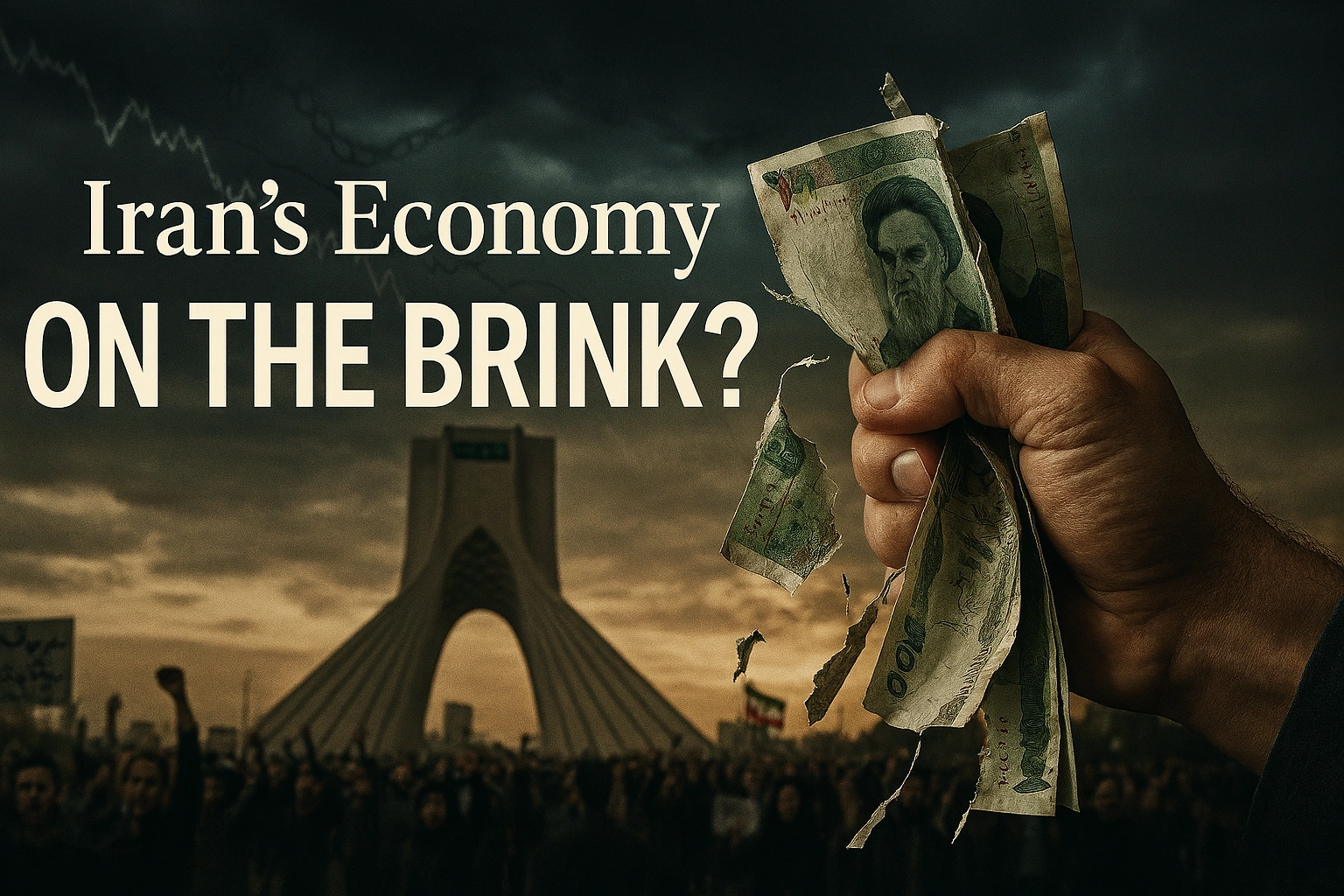
The shopkeeper in Tehran’s Grand Bazaar no longer bothers checking the official exchange rate. Every morning, he opens his phone to WhatsApp groups where the real price of the dollar flickers like a fever chart—120,000 rials one hour, 135,000 the next, sometimes 150,000 by afternoon. “The number doesn’t matter anymore,” he tells a regular customer, weighing out pistachios with hands that have measured nuts and currency crises for three decades. “What matters is that yesterday’s salary buys half of yesterday’s goods.” Outside, in the labyrinthine alleys where merchants have traded since the Safavid era, the mood is brittle. When the rial plunged past the psychologically devastating threshold of 700,000 to the dollar in late 2025—a figure that would have seemed apocalyptic just years earlier—something fractured in the social contract between Iran’s 88 million citizens and their government.
The protests that erupted were not merely about currency. They were about the accumulated weight of sanctions, mismanagement, and dashed expectations—a generation raised on promises of prosperity now queuing for subsidized bread. The government’s response was swift and brutal: internet blackouts, mass arrests, dozens dead in street clashes. By January 2026, the demonstrations had been largely suppressed, the streets quieted through force. Yet the underlying economic rot that sparked the unrest remains unaddressed, a malignancy spreading through Iran’s financial organs while the world watches a slow-motion collapse of what was once the Middle East’s second-largest economy.
This is not merely an Iranian story. It reverberates through global oil markets, shapes the calculus of nuclear negotiations, and has elevated unlikely opposition figures like Reza Pahlavi—son of the deposed Shah—into positions of potential political relevance for the first time in decades. Understanding how deeply troubled Iran’s economy has become requires looking beyond exchange rates to the structural fractures beneath: the oil dependency that sanctions have weaponized, the subsidy system that simultaneously bankrupts the state and enslaves the public, and the geopolitical isolation that has turned economic policy into a game of survival rather than prosperity. The question is no longer whether Iran faces an economic crisis, but whether that crisis will metastasize into something the Islamic Republic cannot contain.
How Financially Unstable Has Iran Become in 2026?
The Currency Catastrophe and Inflation Spiral
The Iranian rial’s trajectory tells a story of cascading financial collapse. As of January 2026, the currency trades at approximately 700,000–750,000 rials per US dollar on the unofficial market—a staggering depreciation from roughly 32,000 rials per dollar when the Trump administration reimposed comprehensive sanctions in 2018. This represents a loss of over 95% of the currency’s value in less than eight years, an economic evisceration rarely seen outside of hyperinflationary episodes in Zimbabwe or Venezuela.
The official rate, maintained through dwindling foreign exchange reserves and increasingly desperate interventions by the Central Bank of Iran, hovers around 420,000 rials per dollar—a figure that exists primarily on paper and serves mainly to subsidize essential imports and enable corruption through arbitrage. The gap between official and market rates has become a barometer of state dysfunction, widening whenever geopolitical tensions spike or sanctions enforcement tightens.
Inflation has become the daily tax on Iranian life. Official figures from Iran’s Statistical Center put annual inflation at approximately 42% as of late 2025, though independent economists and international observers estimate the real rate for food and essential goods approaches 60-70%. Housing costs in Tehran have surged beyond the reach of middle-class families; a modest apartment now requires years of combined household savings for a down payment. The price of cooking oil, chicken, and eggs—staples of Iranian cuisine—have tripled or quadrupled in the past two years alone.
Key economic indicators for Iran (2026 estimates):
- Inflation rate: 42% official, 60-70% for food and essentials
- GDP growth: -2% to -3% (contraction)
- Unemployment: 11-12% official, youth unemployment approaching 25%
- Currency depreciation: 95%+ since 2018
- Foreign reserves: Estimated $10-20 billion (down from $120+ billion in 2012)
GDP Contraction and the Non-Oil Sector Collapse
Iran’s gross domestic product has been shrinking in real terms for much of the past five years. The International Monetary Fund projects a contraction of 2-3% for the 2025-2026 fiscal year, marking the continuation of a trend that has seen Iran’s economy oscillate between stagnation and recession since maximum pressure sanctions returned. In purchasing power parity terms, GDP per capita has regressed to levels last seen in the early 2000s—an entire generation’s potential prosperity erased.
The non-oil sector, which reformist economists once hoped would diversify Iran away from petroleum dependency, has instead withered under the combined weight of sanctions, currency volatility, and domestic mismanagement. Manufacturing output has declined as companies struggle to import raw materials and machinery parts. The automotive sector, once a source of national pride with production exceeding one million vehicles annually, now operates at roughly 40% capacity. International partnerships with French, German, and Japanese manufacturers evaporated when sanctions snapped back, leaving Iranian carmakers to produce outdated models with smuggled components.
Small and medium enterprises—the backbone of employment in any healthy economy—face existential challenges. Access to credit has evaporated as banks, themselves drowning in non-performing loans estimated at over 40% of total lending, restrict new financing. The rial’s volatility makes business planning impossible; contracts signed in the morning can be rendered unprofitable by afternoon exchange rate movements. Many entrepreneurs have simply given up, closing shop or pivoting to speculative activities like cryptocurrency trading and gold smuggling.
The Oil Dependency Trap and Sanctions Warfare
Despite decades of rhetoric about economic diversification, Iran remains hostage to petroleum exports. Oil and gas revenues constitute an estimated 60-70% of government income and over 80% of export earnings. When sanctions effectively barred Iran from global oil markets in 2018-2020, government revenue collapsed, forcing Tehran into desperate measures: slashing public investment, delaying salary payments to civil servants, and monetizing deficits through Central Bank money printing that fueled inflation.
Though Iran has found creative sanctions-busting methods—selling oil at steep discounts to China through shadowy networks of front companies and ship-to-ship transfers—export volumes remain well below potential. Iran currently exports an estimated 1.2-1.4 million barrels per day, compared to over 2.5 million barrels before sanctions. The discount required to circumvent sanctions—often 15-20% below market prices—means Iran earns far less per barrel than Gulf competitors, hemorrhaging billions in annual revenue.
The non-oil export sector, which might compensate, remains underdeveloped and plagued by sanctions complications. Iran exports pistachios, carpets, petrochemicals, and some manufactured goods to neighboring countries, but payment mechanisms are tortuous. Banking sanctions mean transactions must go through barter arrangements or cryptocurrency channels, adding costs and uncertainty. The tourism industry, which briefly flourished during the 2015-2018 sanctions relief period, has vanished again as international visitors disappeared.
Unemployment, Poverty, and Social Fracture
Official unemployment stands at 11-12%, but these figures drastically understate reality. Youth unemployment—the demographic time bomb that terrifies the regime—approaches 25% and reaches even higher levels among university graduates. Iran produces hundreds of thousands of engineering, science, and humanities graduates annually, but the sanctioned, stagnating economy cannot absorb them. The result is a catastrophic brain drain: skilled Iranians emigrate to Turkey, the UAE, Europe, and North America in numbers unseen since the immediate post-revolution exodus.
Poverty has metastasized. While the Iranian government does not publish comprehensive poverty statistics, independent research suggests that approximately 30-35% of the population now lives below the poverty line, defined as lacking the income to afford basic nutrition and housing. This represents a doubling of poverty rates since 2018. The middle class, once the bedrock of Iranian society, has been hollowed out—professionals and civil servants with fixed salaries watch their purchasing power evaporate monthly.
The government’s response—expanding cash handouts and subsidies—has created fiscal unsustainability while failing to address root causes. Universal basic income transfers reach most Iranian households, but at levels rendered increasingly meaningless by inflation. Subsidized goods are available but require hours of queuing and connection to distribution networks controlled by the Revolutionary Guards and affiliated foundations. This has created a peculiar economy of dependence: citizens hate the system that impoverishes them yet cannot survive without its handouts.
What Circumstances Have Elevated Reza Pahlavi to Prominence?
The resurgence of Reza Pahlavi—eldest son of Mohammad Reza Pahlavi, the Shah deposed in 1979—into political relevance would have seemed fantastical a decade ago. For years, the crown prince lived in quiet exile in Maryland, a historical curiosity maintaining ceremonial ties to a dwindling community of Iranian royalists. Yet the economic desperation and suppressed fury of 2022-2023 protests, followed by the 2025 economic collapse, created space for opposition figures once dismissed as irrelevant.
The Vacuum of Opposition Leadership
Iran’s opposition landscape has long been fragmented and ineffective. Reformist politicians who operate within the Islamic Republic’s framework—figures like former presidents Mohammad Khatami and Hassan Rouhani—are constrained by red lines they cannot cross. Diaspora opposition groups are balkanized, divided by ideology, ethnicity, and personalities. Meanwhile, the regime has systematically destroyed independent political organizations through imprisonment, exile, and intimidation.
Into this vacuum stepped Pahlavi, who has carefully cultivated a modern, democratic image. He advocates for a constitutional referendum, secular governance, and national reconciliation—positions designed to appeal to diverse constituencies without explicitly demanding monarchy’s restoration. His social media presence, managed with professional savvy, reaches millions of young Iranians who have no memory of his father’s authoritarian rule but see in him an alternative to the Islamic Republic’s theocracy.
The 2022 protests following Mahsa Amini’s death were a turning point. As thousands chanted “Woman, Life, Freedom” and openly called for regime overthrow, Pahlavi positioned himself as a unifying voice for change. He condemned violence, called for international support, and articulated a vision of democratic Iran—carefully calibrated messaging that garnered unprecedented attention. Western media outlets began covering him seriously for the first time in decades, and polling among diaspora Iranians showed rising favorability.
The Symbolism of Pre-Revolutionary Nostalgia
Economic misery has bred selective amnesia about Iran’s pre-revolutionary past. Older Iranians remember the Shah’s era as one of relative prosperity, modernization, and global respect—conveniently forgetting the SAVAK secret police, corruption, and inequality that fueled the 1979 revolution. Younger Iranians, educated but underemployed, compare their constrained present not to the 1970s reality but to an idealized vision of what might have been had revolution never occurred.
Pahlavi skillfully leverages this nostalgia while distancing himself from his father’s authoritarianism. He speaks of democracy, human rights, and economic freedom—concepts that resonate with a population exhausted by theocratic micromanagement of daily life. The Pahlavi name, once toxic, has been partially rehabilitated through the Islamic Republic’s own failures. When the regime can neither deliver prosperity nor tolerate dissent, alternative visions gain currency.
International Attention and Legitimacy
Western governments and media, searching for Iranian opposition interlocutors, have granted Pahlavi platforms once unimaginable. He has addressed policy forums, given interviews to major publications, and met with legislators in Washington and European capitals. This international visibility creates a feedback loop: attention abroad boosts credibility at home, particularly among Iranians who consume foreign media through VPNs.
Whether Pahlavi represents genuine political potential or merely symbolic opposition remains debatable. Inside Iran, his support is difficult to measure given repression and the impossibility of free polling. Some see him as a transitional figure who could facilitate regime change without being its ultimate beneficiary. Others dismiss him as a Western creation with no organic constituency. What’s undeniable is that economic collapse has made the previously unthinkable—regime change involving monarchist symbols—at least discussable.
What Is at Stake in Potential Iranian Regime Change?
Economic Stakes: Reconstruction vs. Continued Decline
A regime change scenario presents both enormous opportunity and catastrophic risk for Iran’s economy. On one hand, a post-Islamic Republic government could potentially unlock sanctions relief, reintegrate into global financial systems, and attract the investment desperately needed to rebuild infrastructure and industry. Iran possesses substantial human capital—an educated population of 88 million—and vast natural resources beyond oil: minerals, agricultural potential, and strategic geographic position connecting Europe, Asia, and the Middle East.
Foreign direct investment, which currently trickles in at under $2 billion annually, could surge if sanctions lift and political risk declines. Iranian oil production could rapidly expand to 4+ million barrels daily, generating tens of billions in annual revenue. The return of Iranian banks to the SWIFT system would normalize trade. The tourism industry could flourish given Iran’s extraordinary cultural heritage.
Yet the path from collapse to reconstruction is treacherous. Regime change rarely unfolds smoothly, particularly in countries with Iran’s regional entanglements and internal complexities. Economic transitions following regime change have mixed records: consider Libya’s descent into chaos after Gaddafi, versus South Africa’s managed transition from apartheid. Iran’s centralized state structure, Revolutionary Guards’ economic dominance, and sanctions-spawned black market networks could prove difficult to dismantle without triggering chaos.
The immediate post-transition period would likely see economic turbulence: capital flight, currency instability, and political uncertainty deterring investment. The Revolutionary Guards control an estimated 40% of the economy through front companies and foundations—unwinding this would require either accommodation or confrontation. Subsidy reform, necessary for fiscal sustainability, would spark immediate popular backlash as prices surge. International creditors would demand debt restructuring.
Geopolitical Stakes: Regional Realignment and Nuclear Questions
Iran’s potential regime change would reshape Middle Eastern geopolitics more profoundly than any event since the 1979 revolution itself. The Islamic Republic has built an axis of influence spanning Lebanon (Hezbollah), Syria (Assad regime), Iraq (Shia militias), and Yemen (Houthis). A new Iranian government—particularly one aligned with Western interests—could withdraw support from these proxies, fundamentally altering regional power dynamics.
Israel and Saudi Arabia, Iran’s primary adversaries, view regime change as potentially beneficial but also unpredictable. An unstable, fragmenting Iran could be more dangerous than a repressive but coherent Islamic Republic. The nuclear program remains the ultimate wildcard: would a new government abandon enrichment in exchange for sanctions relief, or maintain it as a nationalist symbol? The fate of Iran’s uranium stockpiles and centrifuge infrastructure would be central to any transition negotiation.
Russia and China, Iran’s quasi-allies of convenience, would lose a strategic partner useful primarily for its opposition to American influence. Their investments in Iranian infrastructure and energy could become political liabilities in a pro-Western Iran. Conversely, Europe and the United States would gain opportunities to reintegrate Iran into Western-led international institutions, potentially stabilizing oil markets and reducing Middle Eastern tensions.
Social Stakes: Sectarian Tensions and National Identity
Regime change would force Iran to confront suppressed questions of identity, religion, and governance that the Islamic Republic settled through authoritarian imposition. Would a post-theocratic Iran remain an Islamic country, just with secular governance? How would the Shia clerical establishment, deeply embedded in society, adapt to reduced political power? What role would ethnic minorities—Azeris, Kurds, Arabs, Baloch—demand in a new constitutional order?
The risk of Yugoslavia-style fragmentation seems low given Iran’s strong historical national identity predating the Islamic Republic. Yet ethnic tensions exist, particularly in border regions where Kurdish and Baloch insurgencies simmer. A weak central government emerging from regime change could face separatist challenges.
Women’s rights would be central to any transition, given their leadership in recent protests. The compulsory hijab, gender segregation, and legal discrimination that characterize the Islamic Republic would face immediate challenges. Yet Iranian society itself remains divided on these issues—urban secular elites versus traditional provincial communities. Navigating these divisions without triggering backlash would test any new government.
The Shadow of Sanctions and the Price of Defiance
The cruel irony of Iran’s economic crisis is that it represents precisely the outcome Western sanctions architects intended: economic pressure so severe it forces either government capitulation or popular revolt. Yet sanctions’ human cost—impoverished civilians, medical shortages, brain drain—has not translated into policy change from Tehran’s leadership, which has weathered pressure through repression and distributing pain downward.
Whether sanctions have been strategic success or moral failure remains contested. Proponents argue they prevented war while constraining Iran’s nuclear program and regional activities. Critics point to humanitarian suffering and the strengthening of hardliners who use sanctions as nationalist rallying cry. What’s clear is that maximum pressure created maximum desperation without achieving stated objectives of behavioral change or negotiated settlement.
The Biden administration’s limited sanctions relief proved insufficient to reverse economic decline, while Trump’s return to office in 2025 dashed hopes for meaningful negotiations. Iran’s government, convinced that Western demands are designed for regime change regardless of concessions, has doubled down on resistance. The nuclear program has advanced to alarming levels—near weapons-grade enrichment without actual weaponization—creating a permanent crisis that neither side can resolve without political courage absent in Tehran and Washington.
Conclusion: The Economics of Endurance and Uncertainty
Iran’s economic troubles run deeper than currency fluctuations or even sanctions—they reflect a regime that has sacrificed prosperity for ideological purity and elite enrichment. The protests of 2025 were suppressed, but the economic grievances that fueled them remain unresolved and worsening. The question is no longer whether Iran’s economy is troubled, but whether it can remain troubled indefinitely without triggering irreversible political consequences.
The elevation of figures like Reza Pahlavi indicates that Iranians are psychologically preparing for possibilities once unthinkable. Yet regime change carries profound risks alongside potential rewards. The Islamic Republic has proven remarkably resilient, surviving war, sanctions, and periodic unrest for 45 years. Its security apparatus remains powerful, its ideological supporters still numerous enough to matter, and its regional influence a source of leverage.
What happens next depends on variables impossible to predict: Will oil prices surge or crash? Will the Trump administration pursue military confrontation or transactional diplomacy? Will Iran’s youth overcome fear to mount sustained resistance, or will repression and exhaustion prevail? Can the regime implement reforms sufficient to relieve pressure without triggering demands for fundamental change?
For the shopkeeper in Tehran’s Grand Bazaar, these geopolitical abstractions matter less than the daily calculus of survival. He measures the crisis not in percentage points but in customers who can no longer afford pistachios they once bought by the kilo. Economic troubles, he knows from experience, can be endured for a long time—until suddenly they cannot. The question for Iran in 2026 is which side of that inflection point the country stands on.
Discover more from The Economy
Subscribe to get the latest posts sent to your email.


Key Takeaways
- The US-China relationship in Q3 2026 is best described as a “tactical truce” — managed friction with both sides avoiding total decoupling, rather than a resolved trade relationship.
- The blended effective US tariff on Chinese imports stood around 33% as of May 2026, stacked across four separate legal layers, with some product categories (EVs, batteries, solar) clearing 145%.
- A Supreme Court ruling on February 20, 2026 found the President cannot use IEEPA to impose tariffs, forcing a pivot to Section 122 and Section 301 authorities — a significant legal constraint reshaping the tariff toolkit.
- Washington’s focus has shifted from tariff escalation toward structural supply chain revamps, including critical-minerals diplomacy with dozens of allied countries.
- US imports from China have fallen to near-2001 levels — the year China joined the WTO — reflecting one of the most significant trade reallocations in a generation.
From Escalation to “Managed Competition”
Q3 2026 finds the US-China relationship in a distinctly different posture than the tariff-escalation cycles of 2025. As of mid-2026, the US-China trade relationship is best described as a “tactical truce” — a state of managed friction where both nations maintain aggressive competitive postures while avoiding total economic decoupling. Unlike the optimistic expectations surrounding the 2020 Phase One agreement, today’s reality reflects a fundamental shift toward “de-risking” and “friend-shoring” strategies reshaping global logistics patterns.
That truce has institutional grounding. President Trump and President Xi Jinping appear to have maintained a fragile truce in the trade war following their May 2026 summit in Beijing, though experts say complete decoupling of the world’s two biggest economies remains unlikely, with high tariffs, rare earth restrictions, and tech export controls remaining major sticking points. The two leaders shared a vision of building “a constructive relationship of strategic stability” to bring enhanced certainty and predictability to the global economy — with the agreed approach to restore stability being “managed trade” through a board of trade to manage bilateral trade in non-sensitive goods, reduced tariff and non-tariff barriers in selective sectors, and Chinese commitments to purchase US aircraft and address US concerns about critical mineral supplies.
The Tariff Stack: Complex, Layered, and Legally Contested
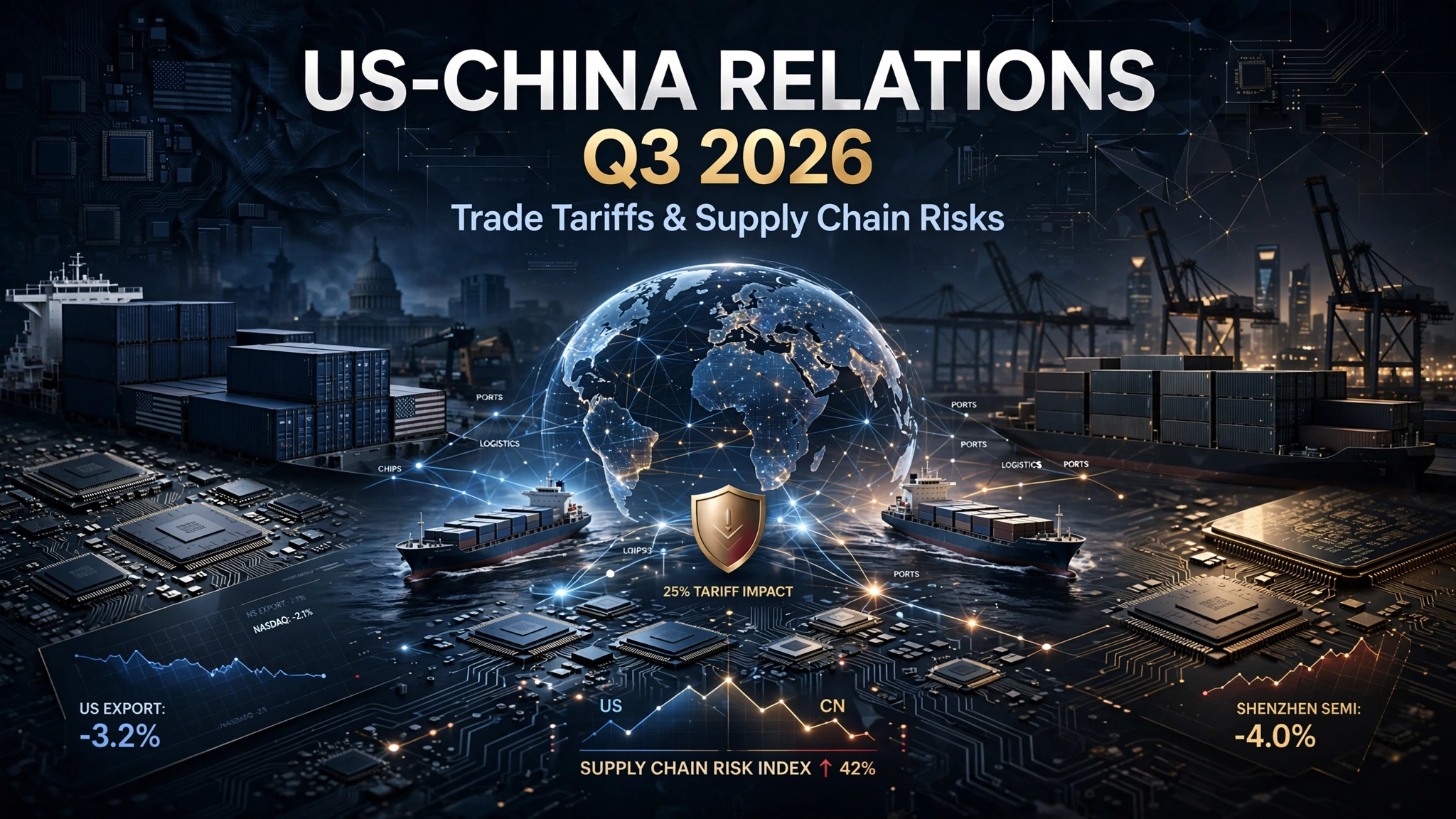
Understanding the actual tariff burden on US-China trade in Q3 2026 requires unpacking a genuinely complex, multi-layered structure. The blended effective US tariff on Chinese imports stood around 33% in May 2026, stacked across four layers: MFN (~3.4%), Section 301 (7.5-25%), IEEPA fentanyl (20%), and the reciprocal tariff (currently 10% during a truce extension) — though some HS codes covering EVs, batteries, and solar clear 145%.
That legal architecture was upended mid-year by the judiciary. On February 20, 2026, the Supreme Court ruled that the President cannot use IEEPA to impose tariffs. President Trump subsequently lifted such tariffs and imposed a 10% global tariff for 150 days under Section 122 of the Trade Act instead. This ruling forced a structural pivot in how the administration constructs its China tariff policy — shifting weight toward Section 301 and Section 122 authorities, which carry different procedural and duration constraints than the IEEPA framework the administration had relied on.
The November 2025 Truce Framework Still Shapes Q3 2026
Under the trade agreement, the US halved the 20% fentanyl-related tariff to 10% and extended Section 301 tariff exclusions through November 2026, while China pledged to suspend retaliatory tariffs on US agricultural and food products. The US also agreed to suspend implementation of the new BIS “Affiliates Rule” for one year until November 9, 2026, and China agreed to “take appropriate measures” to resume semiconductor manufacturing and exports of legacy chips, suspending for one year its October 2025 export control measures on rare earth materials — though the status of its earlier April 2025 controls remains ambiguous.
That November 10, 2026 expiration date is the single most important near-term calendar event for anyone tracking US-China trade risk through Q3 and into Q4 2026 — nearly every major concession in the current truce is time-limited to that date.
The Structural Shift: From Tariffs to Supply Chain Architecture
The most consequential Q3 2026 development is not a new tariff announcement but a change in strategic focus. Washington has been steadily moving to revamp supply chains away from China — after taking US levies on China up past 100% at their peak, the administration’s efforts to reset the economic relationship have lately focused on a different set of tools. In early 2026, the United States convened dozens of countries and hosted two separate ministerial meetings on critical minerals, signalling that the policy centre of gravity has moved from bilateral tariff brinkmanship toward multilateral supply chain realignment.
The scale of the underlying reallocation is historically significant. The recalibration of supply chains has been so profound that US imports from China have returned to near-2001 levels — the year China entered the World Trade Organization — with research showing companies were already positioned to adjust to tariff levels well before the most recent escalations.
Comparative Table: US-China Trade Relationship, Late 2025 vs. Q3 2026
| Dimension | Late 2025 | Q3 2026 |
|---|---|---|
| Overall posture | Active tariff escalation | “Tactical truce” / managed competition |
| Primary tariff legal basis | IEEPA (executive emergency powers) | Section 122 / Section 301 (post-Supreme Court ruling) |
| Blended effective tariff rate | Higher, more volatile | ~33% (as of May 2026), layered across four mechanisms |
| Policy focus | Tariff rate negotiation | Critical-minerals diplomacy, supply chain diversification |
| US imports from China | Declining | Near 2001 (pre-WTO-accession-era) levels |
| Key expiration date to watch | N/A | November 9-10, 2026 (multiple truce provisions expire) |
Why It Matters: Sector-Specific Supply Chain Exposure
The blended tariff figures conceal enormous sector variation, and that variation is where the real corporate risk-management work lies. The technology sector has been hit hardest, with tariffs on components forcing abrupt sourcing shifts and catalysing a wave of investment in domestic fabrication, though dependence on Asian supply chains remains a persistent challenge. Automakers have been compelled to redesign supply routes, absorbing some extra costs via price adjustments while facing longer lead times and increased inventory holding that strain margins. Retailers in consumer goods and apparel have explored new sourcing from Bangladesh, India, and Central America, but price volatility and inconsistent quality control remain problematic.
For investors and supply chain planners, the practical takeaway is that “US-China trade risk” is no longer a single macro variable — it is a sector-specific, product-code-specific exposure that requires granular mapping rather than a single blended-tariff assumption.
What to Do Next
- Calendar the November 9-10, 2026 expiration dates explicitly — the Affiliates Rule suspension, Section 301 exclusions, and reciprocal tariff terms are all time-limited to this window, making it the highest-probability point for renewed volatility.
- Map exposure at the HS-code level, not the country level — with some categories facing 145% effective rates while the blended average sits near 33%, country-level tariff assumptions materially understate risk for EV, battery, and solar-linked supply chains.
- Track critical-minerals diplomacy as a leading indicator of the next phase of US trade strategy — the shift from tariff brinkmanship to allied-country mineral-supply coordination signals a more durable structural approach than tariff negotiation alone.
- Monitor the Supreme Court’s IEEPA ruling’s downstream effects on the administration’s remaining tariff toolkit, since Section 301 and Section 122 authorities carry different procedural constraints than the now-invalidated IEEPA approach.
- Treat “near-2001 levels” of US-China import volume as a durable baseline, not a cyclical dip — the scale of supply chain reallocation documented by Harvard Business School research suggests this is structural rather than temporary.
FAQ
What is the current effective tariff rate on Chinese imports to the US?
The blended effective US tariff on Chinese imports stood around 33% as of May 2026, stacked across four layers — MFN, Section 301, the IEEPA fentanyl tariff, and the reciprocal tariff — though specific categories like EVs, batteries, and solar can face rates as high as 145%.
Did the Supreme Court block Trump’s China tariffs?
Partially. On February 20, 2026, the Supreme Court ruled that the President cannot use the International Emergency Economic Powers Act to impose tariffs, prompting a shift to a 10% global tariff under Section 122 of the Trade Act instead. Section 301 tariffs, which rest on separate legal authority, remain largely intact.
When does the current US-China trade truce expire?
Multiple key provisions expire around the same date. The suspension of the BIS “Affiliates Rule” runs until November 9, 2026, and the suspension of heightened tariffs on Chinese imports is set to run until November 10, 2026 — making that window the most significant near-term risk point for the relationship.
Discover more from The Economy
Subscribe to get the latest posts sent to your email.
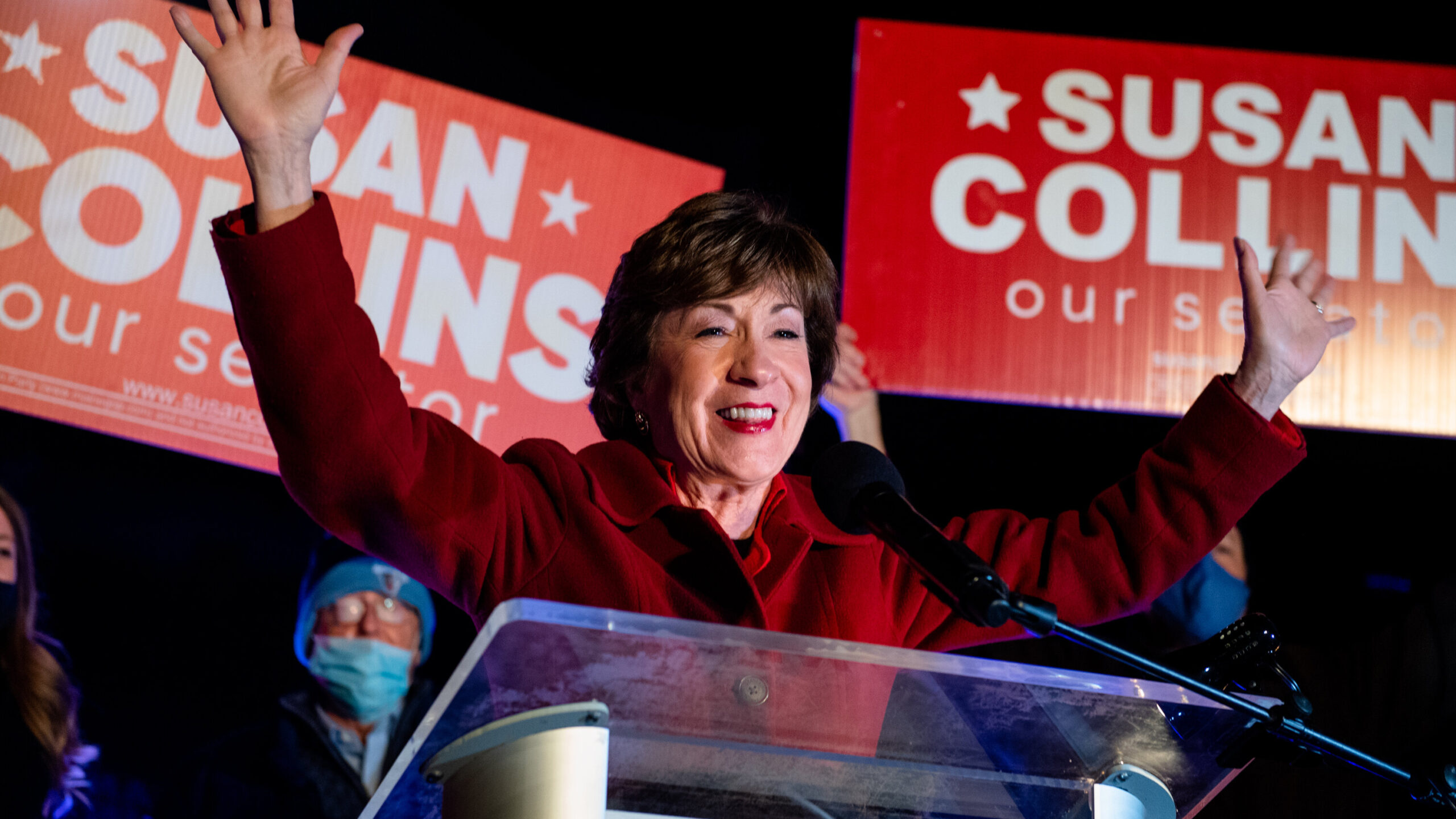
Susan Collins faces her toughest reelection yet against Troy Jackson after a chaotic Democratic candidate swap. Here’s why Maine is a genuine Senate toss-up.
Republican Sen. Susan Collins faces Democrat Troy Jackson, a former Maine Senate president, in a toss-up 2026 general election after Democrats’ original nominee, Graham Platner, was replaced through a special party nomination process. Recent polling shows Jackson with a slight edge.
For a senator who has survived six consecutive campaigns and just cast her 10,000th consecutive Senate vote, Susan Collins now faces what independent analysts are calling a genuine toss-up race — one of the clearest tests of whether Republicans can hold their Senate majority in November.
A Late, Chaotic Democratic Swap
The road to Collins’ current opponent was unusually turbulent. Maine’s Democratic field originally centered on a three-way primary between Gov. Janet Mills, oyster farmer and combat veteran Graham Platner, and former Maryland government official David Costello. Mills dropped out in April, leaving Platner as the grassroots-backed front-runner heading into the June 9 primary — a candidate whose anti-establishment profile and matched fundraising against Collins had national Democrats excited about their odds.
But Platner’s candidacy collapsed amid revelations that included past social media posts and a tattoo resembling a Nazi symbol. With the general election bearing down, the Maine Democratic Party activated an emergency special nomination process — built around county-level delegate meetings rather than a snap primary — to replace him. On July 25, that process produced Troy Jackson, a former Maine Senate president, as the party’s new standard-bearer with roughly 100 days left until Election Day.
Why the Race Is Genuinely Competitive
Despite the compressed timeline, early data suggests Jackson is not merely a placeholder candidate. A Pine Tree Poll conducted by the University of New Hampshire Survey Center showed Jackson with a three-point edge over Collins among likely general-election voters, and Fox News’ inaugural 2026 Power Rankings classify the race as a toss-up — one of roughly a dozen Senate contests that will determine which party controls the chamber.
Collins’ vulnerabilities are structural as much as political. Maine backed the Democratic presidential ticket by seven points in 2024, meaning Collins has long relied on ticket-splitting voters to survive in a state that leans against her party nationally. Democrats are also targeting her more directly than in past cycles, criticizing her comment that she doesn’t regret her 2018 vote to confirm Justice Brett Kavanaugh despite his later vote to overturn Roe v. Wade, and her continued support for Immigration and Customs Enforcement funding following a fatal shooting in Maine involving ICE agents earlier this month.
Collins, who chairs the powerful Senate Appropriations Committee, is leaning on 28 years of relationship-building with industries dependent on federal spending, along with a substantial outside-money advantage. In her campaign launch, Collins argued that “my experience, seniority and independence matter,” while Democrats have countered that “seniority without a backbone is just tenure.”
What It Means for Senate Control
Maine is one of two Senate seats Democrats are defending — or, in Collins’ case, one Republicans are defending — in a state won by the opposing party’s presidential nominee in 2024, making it a marquee Senate battleground alongside Georgia, North Carolina, and Alaska. Democrats need to net four seats nationally to reclaim the majority, and unseating Collins is widely viewed as central to that math given how few genuinely competitive Republican-held seats exist on the 2026 map.
The compressed Jackson campaign timeline is itself a variable worth watching: Collins has now defeated multiple well-funded Democratic challengers over her career, and whether Jackson can build statewide name recognition and a comparable small-dollar fundraising operation in roughly 14 weeks will likely determine whether Maine actually flips or simply stays close.
Discover more from The Economy
Subscribe to get the latest posts sent to your email.
Most headlines on Russia’s economy in July 2026 focus on the latest sanctions package or oil price cap negotiation. The more important story is structural: the model Russia has used to fund its war for four years is showing real signs of running out of road.
The core finding
A research brief from the Center for Strategic and International Studies (CSIS) argues Putin is pushing Russia toward an “economic, political, and military abyss,” according to Fortune. While Russia’s economy remains large — roughly $2.6 trillion — growth is slowing and shrinking on a quarterly basis, with 2026 growth projected at just 0.4%, worse than 2025’s 1% growth, which itself narrowly avoided recession.
Analysts describe Russia’s approach as a form of “military Keynesianism” — the state investing heavily in militarizing the economy while extending financial support to households affected by the war. But per Fortune’s reporting, “after more than four years of war, that well is running dry.” Russia’s fiscal reserves are dwindling, and 71% of the country’s gold reserves have been liquidated to sustain spending.
The number that matters most: oil and gas budget share
The most underreported data point here: the share of oil and gas receipts in Russia’s federal budget revenue fell to just 23% in 2025 — the lowest share in two decades — according to the Oxford Institute for Energy Studies, cited by Fortune. To compensate, Russia has turned to expansive taxation, including raising VAT from 20% to 22% — a move that has proven unpopular domestically.
This matters because Russia’s economy has historically been described, correctly, as fossil-fuel dependent — with oil and gas taxation making up 44% of federal revenues in the decade before the Ukraine invasion, and still around 24.5% over the first three quarters of 2025, according to a Brookings Institution analysis. A further slide to 23% signals the sanctions and diversification pressure are compounding, even as Russia continues finding workarounds through its “shadow fleet.”
The Iran-war reprieve was temporary — and it’s over
The Iran war offered Russia a brief lifeline: Brent crude surged more than 55% at its peak, nearing $120 a barrel, after President Trump eased some sanctions on Russian oil, per Fortune. But that chaos also undermined Russia’s own long-term energy and infrastructure projects in the Middle East — two Russian-linked power plants in Iran were put on hold, along with oil and gas exploration and plans to link Russia to India via Iran through new transit routes. Since then, oil prices have normalized as demand softened and the Strait of Hormuz reopened, removing that temporary cushion.
The sanctions escalation now in motion
The pressure is intensifying on multiple fronts simultaneously. US senators unveiled a sweeping bipartisan Russia sanctions bill in mid-July, which would impose mandatory sanctions on Russian political and military leaders including President Putin, and up to a 100% tariff on the top five countries — including China and India — that purchase Russian crude oil and natural gas, according to CNN. Separately, the EU has been racing to avoid an automatic upward revision of its Russian oil price cap, which would otherwise jump from $44.10 to roughly $58 per barrel if a new sanctions package wasn’t agreed by July 15, per Euronews.
Analysis from the Center for European Policy Analysis notes the outcome depends heavily on whether India and China accept the risk of secondary sanctions: “If China stands firm, Moscow’s dependence on Beijing deepens,” per CEPA. If Russian seaborne oil exports were to fall to near-zero, the budget would lose roughly a quarter of its revenue — an extreme but non-trivial scenario given the pace of legislative and diplomatic pressure building in July 2026.
Why this matters beyond Russia
For countries positioned between Western sanctions regimes and continued Russian energy purchases — including India, and by extension trade partners like Pakistan whose remittance and trade flows intersect with Gulf and South Asian energy markets — the trajectory of Russia’s budget dependency and the secondary-sanctions risk attached to its buyers is a live variable, not a settled one. A further deterioration in Russia’s oil-and-gas revenue share would likely accelerate Moscow’s reliance on China specifically, reshaping regional energy-trade alignments well beyond the Russia-Ukraine conflict itself.
FAQ
What percentage of Russia’s federal budget comes from oil and gas? 23% in 2025 — the lowest share in two decades, according to the Oxford Institute for Energy Studies.
What is Russia’s projected GDP growth for 2026? 0.4%, according to CSIS research cited by Fortune — down from 1% growth in 2025.
What is “military Keynesianism” in the context of Russia’s economy? A term analysts use to describe Russia’s strategy of heavy state investment in militarizing the economy alongside financial support for war-affected households, functioning as a form of stimulus that is now showing signs of fiscal strain.
Discover more from The Economy
Subscribe to get the latest posts sent to your email.

High-CPM Finance Niches 2026: Publisher Monetization Blueprint

IMF & World Bank 2026 Global Economic Outlook: Growth, Inflation, Debt

Pork Recall 2026: USDA Guanciale Listeria Recall in 8 States Explained

Zelda: Ocarina of Time Switch 2 Remake — Release Date & Everything Confirmed

Social Security Trust Fund 2032: OASI Depletion Timeline Explained

Oracle (ORCL) Stock Analysis: AI Cloud Growth Ahead of Sept 10 Earnings

2027 Social Security COLA: 3.5% Increase Explained

Non-State Actors and AI 2026: The Push for Global Guardrails

Mandatory Lobbying Registers 2026: Corporate Risk Guide

Beyond $100 Oil: Why the Geopolitical Shock at Hormuz Marks a Structural Turning Point

Digitally Deliverable Services: 56% of Global Trade in 2026

AI Data Center Real Estate 2026: Power & Grid Battle Guide

Smart Glasses Privacy Crisis 2026: Regulation & Compliance

Refinance Options Amid the 2026 Global Debt Crisis and Shifting US Treasury Yields

State Farm’s $5B Dividend 2026: Who Qualifies & Payout Dates

US-China Relations in Q3 2026: Trade Tariffs and Supply Chain Risks

Gold’s Wild 2026: From a Record $5,600 Peak to a 24% Crash and Back Toward $4,500

Oil Surges as Strait of Hormuz Traffic Collapses Again

The Rocket That Won’t Quit: Inside SpaceX’s Falcon 9 Launch Machine

Bank of England Set to Hold Rates Through Year-End, Reuters Poll Shows

The 2026 Crypto Regulatory Shift: What It Means for Institutional Investors

SpaceX Starship Flight 14: First Orbital Attempt & Starlink V3 Launch Explained

Retail Earnings Week: What Home Depot, Target & Walmart Reveal

AI-Powered Training: The Next Multi-Billion Dollar Ecosystem in Fitness

China’s Economy Has a Structural Problem: Factories Are Winning, Households Are Losing

AI Chip Stocks 2026: The Best Semiconductor Investments Beyond Marvell

Russia’s Black Sea Oil Exports Fall for a Fifth Straight Week

Global Chip Selloff Deepens: What’s Driving the Aug. 19 Semiconductor Rout
-

 Markets & Finance8 months ago
Top 15 Stocks for Investment in 2026 in PSX: Your Complete Guide to Pakistan’s Best Investment Opportunities
-

 Analysis7 months ago
Johor’s Investment Boom: The Hidden Costs Behind Malaysia’s Most Ambitious Economic Surge
-

 Analysis7 months ago
Top 10 Stocks for Investment in PSX for Quick Returns in 2026
-

 Analysis7 months ago
Brazil’s Rare Earth Race: US, EU, and China Compete for Critical Minerals as Tensions Rise
-

 Banks8 months ago
Best Investments in Pakistan 2026: Top 10 Low-Price Shares and Long-Term Picks for the PSX
-

 Investment8 months ago
Top 10 Mutual Fund Managers in Pakistan for Investment in 2026: A Comprehensive Guide for Optimal Returns
-

 Global Economy9 months ago
15 Most Lucrative Sectors for Investment in Pakistan: A 2025 Data-Driven Analysis
-

 Global Economy9 months ago
Pakistan’s Export Goldmine: 10 Game-Changing Markets Where Pakistani Businesses Are Winning Big in 2025