
Geopolitics
How Troubled Is the Iranian Economy?

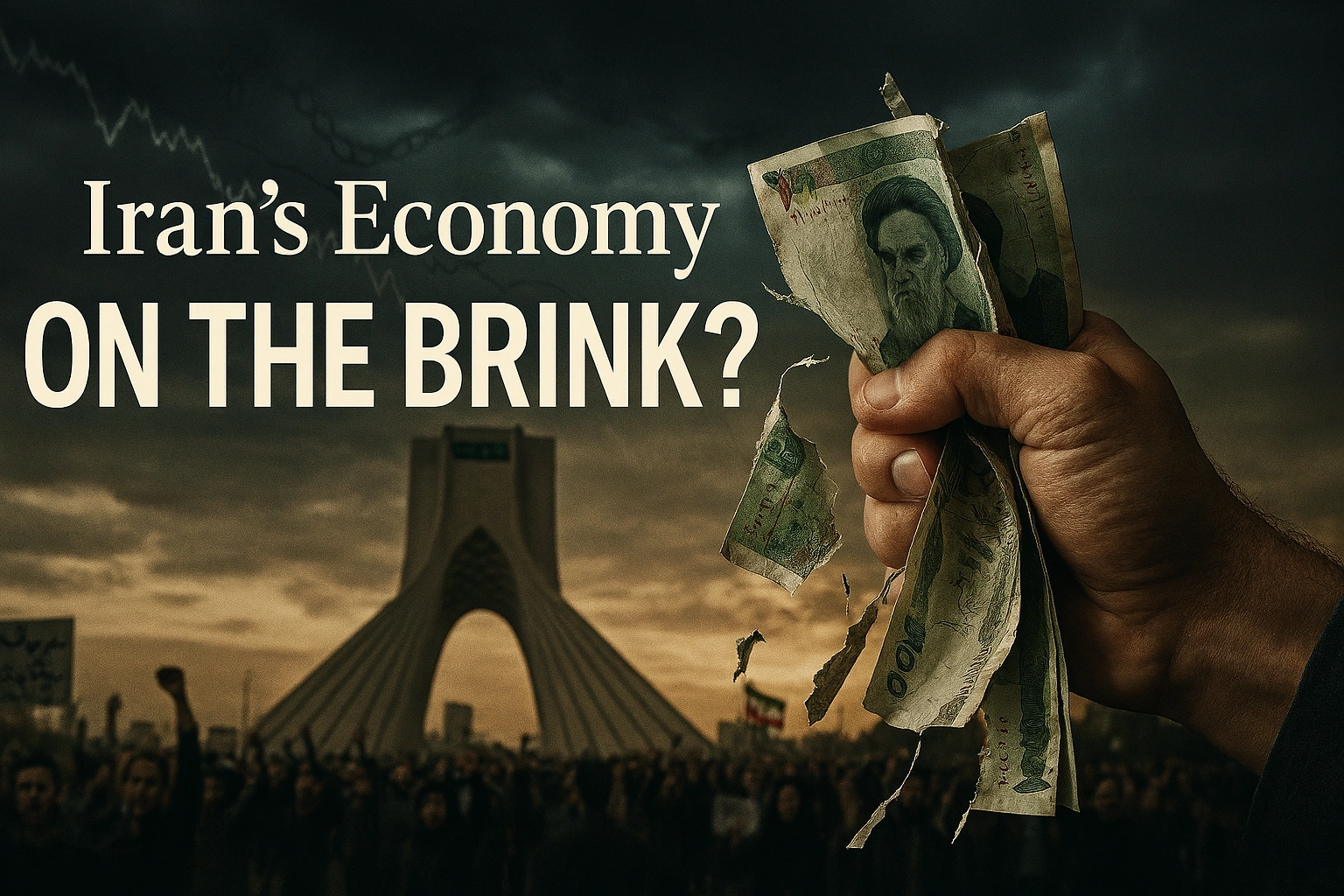
The shopkeeper in Tehran’s Grand Bazaar no longer bothers checking the official exchange rate. Every morning, he opens his phone to WhatsApp groups where the real price of the dollar flickers like a fever chart—120,000 rials one hour, 135,000 the next, sometimes 150,000 by afternoon. “The number doesn’t matter anymore,” he tells a regular customer, weighing out pistachios with hands that have measured nuts and currency crises for three decades. “What matters is that yesterday’s salary buys half of yesterday’s goods.” Outside, in the labyrinthine alleys where merchants have traded since the Safavid era, the mood is brittle. When the rial plunged past the psychologically devastating threshold of 700,000 to the dollar in late 2025—a figure that would have seemed apocalyptic just years earlier—something fractured in the social contract between Iran’s 88 million citizens and their government.
The protests that erupted were not merely about currency. They were about the accumulated weight of sanctions, mismanagement, and dashed expectations—a generation raised on promises of prosperity now queuing for subsidized bread. The government’s response was swift and brutal: internet blackouts, mass arrests, dozens dead in street clashes. By January 2026, the demonstrations had been largely suppressed, the streets quieted through force. Yet the underlying economic rot that sparked the unrest remains unaddressed, a malignancy spreading through Iran’s financial organs while the world watches a slow-motion collapse of what was once the Middle East’s second-largest economy.
This is not merely an Iranian story. It reverberates through global oil markets, shapes the calculus of nuclear negotiations, and has elevated unlikely opposition figures like Reza Pahlavi—son of the deposed Shah—into positions of potential political relevance for the first time in decades. Understanding how deeply troubled Iran’s economy has become requires looking beyond exchange rates to the structural fractures beneath: the oil dependency that sanctions have weaponized, the subsidy system that simultaneously bankrupts the state and enslaves the public, and the geopolitical isolation that has turned economic policy into a game of survival rather than prosperity. The question is no longer whether Iran faces an economic crisis, but whether that crisis will metastasize into something the Islamic Republic cannot contain.
How Financially Unstable Has Iran Become in 2026?
The Currency Catastrophe and Inflation Spiral
The Iranian rial’s trajectory tells a story of cascading financial collapse. As of January 2026, the currency trades at approximately 700,000–750,000 rials per US dollar on the unofficial market—a staggering depreciation from roughly 32,000 rials per dollar when the Trump administration reimposed comprehensive sanctions in 2018. This represents a loss of over 95% of the currency’s value in less than eight years, an economic evisceration rarely seen outside of hyperinflationary episodes in Zimbabwe or Venezuela.
The official rate, maintained through dwindling foreign exchange reserves and increasingly desperate interventions by the Central Bank of Iran, hovers around 420,000 rials per dollar—a figure that exists primarily on paper and serves mainly to subsidize essential imports and enable corruption through arbitrage. The gap between official and market rates has become a barometer of state dysfunction, widening whenever geopolitical tensions spike or sanctions enforcement tightens.
Inflation has become the daily tax on Iranian life. Official figures from Iran’s Statistical Center put annual inflation at approximately 42% as of late 2025, though independent economists and international observers estimate the real rate for food and essential goods approaches 60-70%. Housing costs in Tehran have surged beyond the reach of middle-class families; a modest apartment now requires years of combined household savings for a down payment. The price of cooking oil, chicken, and eggs—staples of Iranian cuisine—have tripled or quadrupled in the past two years alone.
Key economic indicators for Iran (2026 estimates):
- Inflation rate: 42% official, 60-70% for food and essentials
- GDP growth: -2% to -3% (contraction)
- Unemployment: 11-12% official, youth unemployment approaching 25%
- Currency depreciation: 95%+ since 2018
- Foreign reserves: Estimated $10-20 billion (down from $120+ billion in 2012)
GDP Contraction and the Non-Oil Sector Collapse
Iran’s gross domestic product has been shrinking in real terms for much of the past five years. The International Monetary Fund projects a contraction of 2-3% for the 2025-2026 fiscal year, marking the continuation of a trend that has seen Iran’s economy oscillate between stagnation and recession since maximum pressure sanctions returned. In purchasing power parity terms, GDP per capita has regressed to levels last seen in the early 2000s—an entire generation’s potential prosperity erased.
The non-oil sector, which reformist economists once hoped would diversify Iran away from petroleum dependency, has instead withered under the combined weight of sanctions, currency volatility, and domestic mismanagement. Manufacturing output has declined as companies struggle to import raw materials and machinery parts. The automotive sector, once a source of national pride with production exceeding one million vehicles annually, now operates at roughly 40% capacity. International partnerships with French, German, and Japanese manufacturers evaporated when sanctions snapped back, leaving Iranian carmakers to produce outdated models with smuggled components.
Small and medium enterprises—the backbone of employment in any healthy economy—face existential challenges. Access to credit has evaporated as banks, themselves drowning in non-performing loans estimated at over 40% of total lending, restrict new financing. The rial’s volatility makes business planning impossible; contracts signed in the morning can be rendered unprofitable by afternoon exchange rate movements. Many entrepreneurs have simply given up, closing shop or pivoting to speculative activities like cryptocurrency trading and gold smuggling.
The Oil Dependency Trap and Sanctions Warfare
Despite decades of rhetoric about economic diversification, Iran remains hostage to petroleum exports. Oil and gas revenues constitute an estimated 60-70% of government income and over 80% of export earnings. When sanctions effectively barred Iran from global oil markets in 2018-2020, government revenue collapsed, forcing Tehran into desperate measures: slashing public investment, delaying salary payments to civil servants, and monetizing deficits through Central Bank money printing that fueled inflation.
Though Iran has found creative sanctions-busting methods—selling oil at steep discounts to China through shadowy networks of front companies and ship-to-ship transfers—export volumes remain well below potential. Iran currently exports an estimated 1.2-1.4 million barrels per day, compared to over 2.5 million barrels before sanctions. The discount required to circumvent sanctions—often 15-20% below market prices—means Iran earns far less per barrel than Gulf competitors, hemorrhaging billions in annual revenue.
The non-oil export sector, which might compensate, remains underdeveloped and plagued by sanctions complications. Iran exports pistachios, carpets, petrochemicals, and some manufactured goods to neighboring countries, but payment mechanisms are tortuous. Banking sanctions mean transactions must go through barter arrangements or cryptocurrency channels, adding costs and uncertainty. The tourism industry, which briefly flourished during the 2015-2018 sanctions relief period, has vanished again as international visitors disappeared.
Unemployment, Poverty, and Social Fracture
Official unemployment stands at 11-12%, but these figures drastically understate reality. Youth unemployment—the demographic time bomb that terrifies the regime—approaches 25% and reaches even higher levels among university graduates. Iran produces hundreds of thousands of engineering, science, and humanities graduates annually, but the sanctioned, stagnating economy cannot absorb them. The result is a catastrophic brain drain: skilled Iranians emigrate to Turkey, the UAE, Europe, and North America in numbers unseen since the immediate post-revolution exodus.
Poverty has metastasized. While the Iranian government does not publish comprehensive poverty statistics, independent research suggests that approximately 30-35% of the population now lives below the poverty line, defined as lacking the income to afford basic nutrition and housing. This represents a doubling of poverty rates since 2018. The middle class, once the bedrock of Iranian society, has been hollowed out—professionals and civil servants with fixed salaries watch their purchasing power evaporate monthly.
The government’s response—expanding cash handouts and subsidies—has created fiscal unsustainability while failing to address root causes. Universal basic income transfers reach most Iranian households, but at levels rendered increasingly meaningless by inflation. Subsidized goods are available but require hours of queuing and connection to distribution networks controlled by the Revolutionary Guards and affiliated foundations. This has created a peculiar economy of dependence: citizens hate the system that impoverishes them yet cannot survive without its handouts.
What Circumstances Have Elevated Reza Pahlavi to Prominence?
The resurgence of Reza Pahlavi—eldest son of Mohammad Reza Pahlavi, the Shah deposed in 1979—into political relevance would have seemed fantastical a decade ago. For years, the crown prince lived in quiet exile in Maryland, a historical curiosity maintaining ceremonial ties to a dwindling community of Iranian royalists. Yet the economic desperation and suppressed fury of 2022-2023 protests, followed by the 2025 economic collapse, created space for opposition figures once dismissed as irrelevant.
The Vacuum of Opposition Leadership
Iran’s opposition landscape has long been fragmented and ineffective. Reformist politicians who operate within the Islamic Republic’s framework—figures like former presidents Mohammad Khatami and Hassan Rouhani—are constrained by red lines they cannot cross. Diaspora opposition groups are balkanized, divided by ideology, ethnicity, and personalities. Meanwhile, the regime has systematically destroyed independent political organizations through imprisonment, exile, and intimidation.
Into this vacuum stepped Pahlavi, who has carefully cultivated a modern, democratic image. He advocates for a constitutional referendum, secular governance, and national reconciliation—positions designed to appeal to diverse constituencies without explicitly demanding monarchy’s restoration. His social media presence, managed with professional savvy, reaches millions of young Iranians who have no memory of his father’s authoritarian rule but see in him an alternative to the Islamic Republic’s theocracy.
The 2022 protests following Mahsa Amini’s death were a turning point. As thousands chanted “Woman, Life, Freedom” and openly called for regime overthrow, Pahlavi positioned himself as a unifying voice for change. He condemned violence, called for international support, and articulated a vision of democratic Iran—carefully calibrated messaging that garnered unprecedented attention. Western media outlets began covering him seriously for the first time in decades, and polling among diaspora Iranians showed rising favorability.
The Symbolism of Pre-Revolutionary Nostalgia
Economic misery has bred selective amnesia about Iran’s pre-revolutionary past. Older Iranians remember the Shah’s era as one of relative prosperity, modernization, and global respect—conveniently forgetting the SAVAK secret police, corruption, and inequality that fueled the 1979 revolution. Younger Iranians, educated but underemployed, compare their constrained present not to the 1970s reality but to an idealized vision of what might have been had revolution never occurred.
Pahlavi skillfully leverages this nostalgia while distancing himself from his father’s authoritarianism. He speaks of democracy, human rights, and economic freedom—concepts that resonate with a population exhausted by theocratic micromanagement of daily life. The Pahlavi name, once toxic, has been partially rehabilitated through the Islamic Republic’s own failures. When the regime can neither deliver prosperity nor tolerate dissent, alternative visions gain currency.
International Attention and Legitimacy
Western governments and media, searching for Iranian opposition interlocutors, have granted Pahlavi platforms once unimaginable. He has addressed policy forums, given interviews to major publications, and met with legislators in Washington and European capitals. This international visibility creates a feedback loop: attention abroad boosts credibility at home, particularly among Iranians who consume foreign media through VPNs.
Whether Pahlavi represents genuine political potential or merely symbolic opposition remains debatable. Inside Iran, his support is difficult to measure given repression and the impossibility of free polling. Some see him as a transitional figure who could facilitate regime change without being its ultimate beneficiary. Others dismiss him as a Western creation with no organic constituency. What’s undeniable is that economic collapse has made the previously unthinkable—regime change involving monarchist symbols—at least discussable.
What Is at Stake in Potential Iranian Regime Change?
Economic Stakes: Reconstruction vs. Continued Decline
A regime change scenario presents both enormous opportunity and catastrophic risk for Iran’s economy. On one hand, a post-Islamic Republic government could potentially unlock sanctions relief, reintegrate into global financial systems, and attract the investment desperately needed to rebuild infrastructure and industry. Iran possesses substantial human capital—an educated population of 88 million—and vast natural resources beyond oil: minerals, agricultural potential, and strategic geographic position connecting Europe, Asia, and the Middle East.
Foreign direct investment, which currently trickles in at under $2 billion annually, could surge if sanctions lift and political risk declines. Iranian oil production could rapidly expand to 4+ million barrels daily, generating tens of billions in annual revenue. The return of Iranian banks to the SWIFT system would normalize trade. The tourism industry could flourish given Iran’s extraordinary cultural heritage.
Yet the path from collapse to reconstruction is treacherous. Regime change rarely unfolds smoothly, particularly in countries with Iran’s regional entanglements and internal complexities. Economic transitions following regime change have mixed records: consider Libya’s descent into chaos after Gaddafi, versus South Africa’s managed transition from apartheid. Iran’s centralized state structure, Revolutionary Guards’ economic dominance, and sanctions-spawned black market networks could prove difficult to dismantle without triggering chaos.
The immediate post-transition period would likely see economic turbulence: capital flight, currency instability, and political uncertainty deterring investment. The Revolutionary Guards control an estimated 40% of the economy through front companies and foundations—unwinding this would require either accommodation or confrontation. Subsidy reform, necessary for fiscal sustainability, would spark immediate popular backlash as prices surge. International creditors would demand debt restructuring.
Geopolitical Stakes: Regional Realignment and Nuclear Questions
Iran’s potential regime change would reshape Middle Eastern geopolitics more profoundly than any event since the 1979 revolution itself. The Islamic Republic has built an axis of influence spanning Lebanon (Hezbollah), Syria (Assad regime), Iraq (Shia militias), and Yemen (Houthis). A new Iranian government—particularly one aligned with Western interests—could withdraw support from these proxies, fundamentally altering regional power dynamics.
Israel and Saudi Arabia, Iran’s primary adversaries, view regime change as potentially beneficial but also unpredictable. An unstable, fragmenting Iran could be more dangerous than a repressive but coherent Islamic Republic. The nuclear program remains the ultimate wildcard: would a new government abandon enrichment in exchange for sanctions relief, or maintain it as a nationalist symbol? The fate of Iran’s uranium stockpiles and centrifuge infrastructure would be central to any transition negotiation.
Russia and China, Iran’s quasi-allies of convenience, would lose a strategic partner useful primarily for its opposition to American influence. Their investments in Iranian infrastructure and energy could become political liabilities in a pro-Western Iran. Conversely, Europe and the United States would gain opportunities to reintegrate Iran into Western-led international institutions, potentially stabilizing oil markets and reducing Middle Eastern tensions.
Social Stakes: Sectarian Tensions and National Identity
Regime change would force Iran to confront suppressed questions of identity, religion, and governance that the Islamic Republic settled through authoritarian imposition. Would a post-theocratic Iran remain an Islamic country, just with secular governance? How would the Shia clerical establishment, deeply embedded in society, adapt to reduced political power? What role would ethnic minorities—Azeris, Kurds, Arabs, Baloch—demand in a new constitutional order?
The risk of Yugoslavia-style fragmentation seems low given Iran’s strong historical national identity predating the Islamic Republic. Yet ethnic tensions exist, particularly in border regions where Kurdish and Baloch insurgencies simmer. A weak central government emerging from regime change could face separatist challenges.
Women’s rights would be central to any transition, given their leadership in recent protests. The compulsory hijab, gender segregation, and legal discrimination that characterize the Islamic Republic would face immediate challenges. Yet Iranian society itself remains divided on these issues—urban secular elites versus traditional provincial communities. Navigating these divisions without triggering backlash would test any new government.
The Shadow of Sanctions and the Price of Defiance
The cruel irony of Iran’s economic crisis is that it represents precisely the outcome Western sanctions architects intended: economic pressure so severe it forces either government capitulation or popular revolt. Yet sanctions’ human cost—impoverished civilians, medical shortages, brain drain—has not translated into policy change from Tehran’s leadership, which has weathered pressure through repression and distributing pain downward.
Whether sanctions have been strategic success or moral failure remains contested. Proponents argue they prevented war while constraining Iran’s nuclear program and regional activities. Critics point to humanitarian suffering and the strengthening of hardliners who use sanctions as nationalist rallying cry. What’s clear is that maximum pressure created maximum desperation without achieving stated objectives of behavioral change or negotiated settlement.
The Biden administration’s limited sanctions relief proved insufficient to reverse economic decline, while Trump’s return to office in 2025 dashed hopes for meaningful negotiations. Iran’s government, convinced that Western demands are designed for regime change regardless of concessions, has doubled down on resistance. The nuclear program has advanced to alarming levels—near weapons-grade enrichment without actual weaponization—creating a permanent crisis that neither side can resolve without political courage absent in Tehran and Washington.
Conclusion: The Economics of Endurance and Uncertainty
Iran’s economic troubles run deeper than currency fluctuations or even sanctions—they reflect a regime that has sacrificed prosperity for ideological purity and elite enrichment. The protests of 2025 were suppressed, but the economic grievances that fueled them remain unresolved and worsening. The question is no longer whether Iran’s economy is troubled, but whether it can remain troubled indefinitely without triggering irreversible political consequences.
The elevation of figures like Reza Pahlavi indicates that Iranians are psychologically preparing for possibilities once unthinkable. Yet regime change carries profound risks alongside potential rewards. The Islamic Republic has proven remarkably resilient, surviving war, sanctions, and periodic unrest for 45 years. Its security apparatus remains powerful, its ideological supporters still numerous enough to matter, and its regional influence a source of leverage.
What happens next depends on variables impossible to predict: Will oil prices surge or crash? Will the Trump administration pursue military confrontation or transactional diplomacy? Will Iran’s youth overcome fear to mount sustained resistance, or will repression and exhaustion prevail? Can the regime implement reforms sufficient to relieve pressure without triggering demands for fundamental change?
For the shopkeeper in Tehran’s Grand Bazaar, these geopolitical abstractions matter less than the daily calculus of survival. He measures the crisis not in percentage points but in customers who can no longer afford pistachios they once bought by the kilo. Economic troubles, he knows from experience, can be endured for a long time—until suddenly they cannot. The question for Iran in 2026 is which side of that inflection point the country stands on.
Discover more from The Economy
Subscribe to get the latest posts sent to your email.


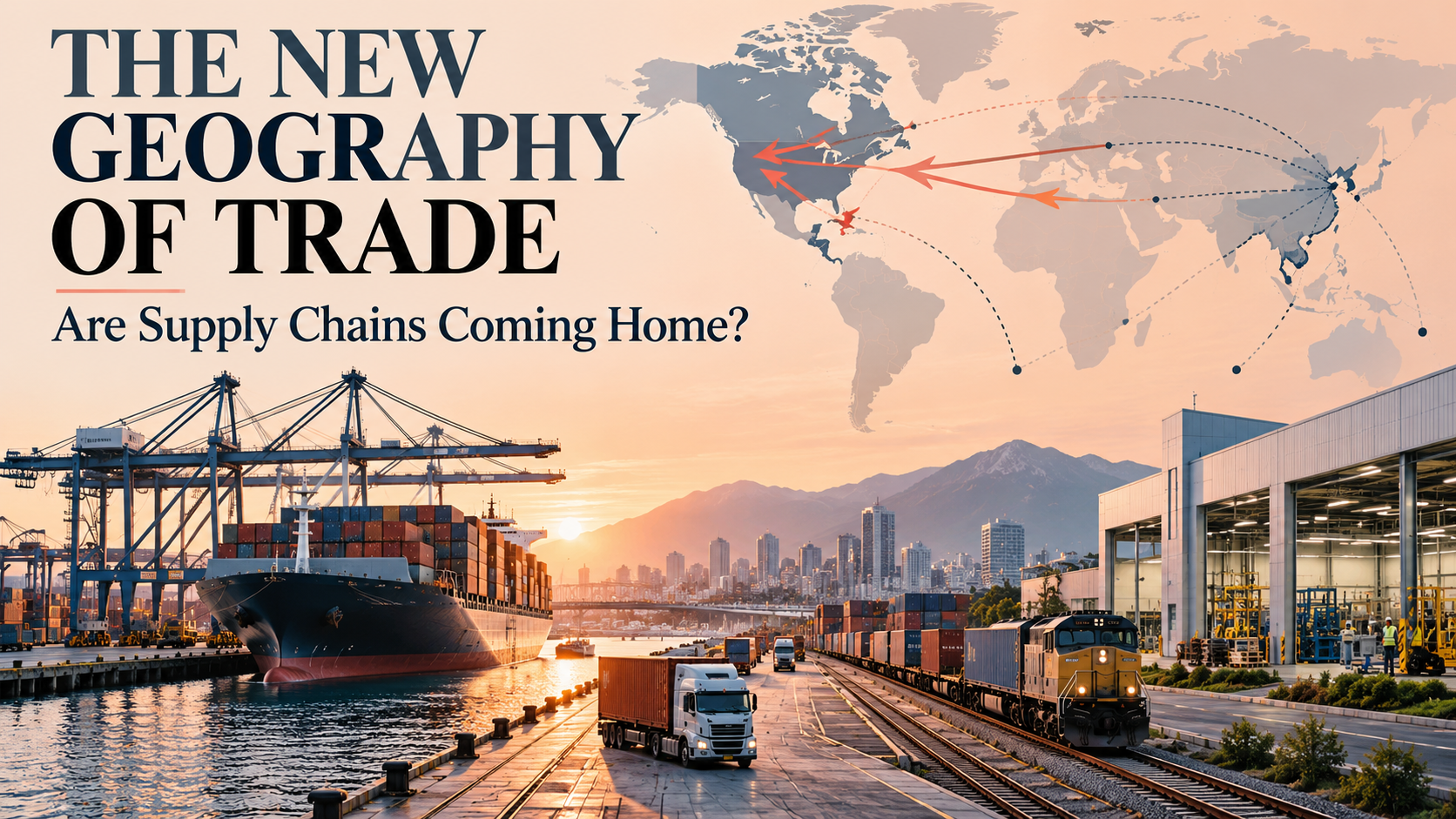
Global supply chains are changing, but the evidence does not support a simple retreat from international trade. Companies are balancing cost against disruption risgek, diversifying suppliers and reconsidering where strategically important production takes place. Some facilities are moving closer to customers; others are shifting to trusted partners or expanding in established Asian manufacturing clusters.
This is a redesign of globalization, not necessarily its end. The World Trade Organization’s October 2026 outlook expects merchandise trade volumes to grow by 3.9% this year and 4.1% in 2027, even after the Middle East conflict disrupted energy and transport routes. The sharper story is which products and economies are driving that growth, and which firms are bearing higher resilience costs.
Key takeaways
- Nearshoring moves production closer to customers; friend-shoring prioritizes strategically aligned partners; neither necessarily eliminates international trade.
- The WTO upgraded its 2026 merchandise-trade growth forecast as supply chains adapted and AI goods demand rose.
- More supplier diversity can reduce disruption exposure but increase inventories, compliance and operating costs.
- Investment is concentrating in advanced technology, energy and strategic manufacturing.
- Pakistan can benefit from supply diversification only through reliable delivery, skills, logistics and trade facilitation.
Why ‘reshoring’ is an incomplete description
A multinational may move one stage of production from a distant supplier while retaining components and equipment sourced from several countries. Measuring the final assembly address tells only part of the story. Modern manufacturing networks are built around intermediate inputs, specialized suppliers, intellectual property and reliable services.
A factory can be geographically close but commercially fragile if critical components still depend on a distant chokepoint. Conversely, a geographically dispersed supplier network can be resilient when sourcing is genuinely diversified and logistics are transparent. Resilience is therefore a property of the entire chain, not merely the location of the last factory.
Trade policy makes this more complex. Tariffs can favour domestic assembly, but firms may still need to import machinery or raw materials. Origin requirements can alter supplier choice. Export restrictions on strategically important technologies can reshape both markets and the timing of investment. These effects should be evaluated product by product rather than described as one global trend.
What the latest trade data actually say
The WTO’s October trade report revised 2026 merchandise trade growth to 3.9%, from 1.9% in its March baseline. It also lowered the 2026 forecast for commercial services trade growth to 3.3%, compared with an earlier 4.8%, with travel affected by the conflict and higher fuel costs. These are different trade categories; stronger goods growth should not be presented as evidence that air travel or every cross-border service is booming.
AI-enabling goods accounted for 47% of merchandise trade-value growth in the first half of 2026, the WTO reports. Technology’s outsized contribution explains part of why trade can appear surprisingly healthy while many importers and tourism businesses are struggling. It also highlights concentration: the countries supplying equipment and components capture gains unavailable to exporters outside those networks.
The WTO’s forecast is conditional. A further disruption in energy markets or a material reassessment of AI investment could change it. Both policymakers and businesses need contingency plans rather than a single straight-line prediction.
Four models of supply-chain redesign
| Strategy | Main objective | Benefit | Hidden cost |
|---|---|---|---|
| Nearshoring | Shorter delivery distance | Lower transit time | May sacrifice supplier specialization |
| Friend-shoring | Reduce geopolitical restrictions | Greater policy predictability | Narrower pool of eligible suppliers |
| Multi-sourcing | Maintain alternatives | Less exposure to one supplier | Higher qualification and management expense |
| Regional hub-and-spoke | Serve several markets from one network | Scale plus regional flexibility | Hub and transport chokepoints remain |
Original conceptual framework. Actual results depend on product, geography and regulation.
The choice depends on what failure costs. A clothing retailer may optimize replenishment speed; a medical-equipment producer may place higher weight on product certification and continuity; a semiconductor user may prioritize access to specialized fabrication. Applying the same sourcing formula to all three would be poor strategy.
A useful model is expected total cost: normal production and shipping costs plus the likely cost of interruption, inventory, financing and regulatory compliance. This is harder to estimate than a unit factory price, but it reflects the risk firms are actually trying to manage.
The investment map is changing faster than most export maps
Companies announce projects before factories become operational. A new plant may require years of permits, construction, utilities, workforce recruitment and supplier qualification. Analysts should therefore separate announced projects, committed spending and actual export shipments.
The UNCTAD World Investment Report 2026 found that global FDI rose to $1.6 trillion in 2025, but was concentrated. Strategic sectors represented 44% of announced greenfield project values, compared with 16% in 2020. This measure tracks the announced value of new projects, not proof that 44% of operating global factories have moved.
The report underscores an uncomfortable problem for smaller economies: courting a strategic investor can require large infrastructure commitments and incentives, while the future employment and technology spillovers remain uncertain. Governments should publish transparent project evaluations rather than compete blindly in subsidy auctions.
Asia is a network, not a single destination
Asian economies occupy different positions in the trade system. Some supply highly specialized chips and equipment. Others offer large-scale assembly, raw materials, logistics or business services. Supply-chain diversification may benefit a secondary production location without displacing the original supplier, because firms often need both sites.
There is also a misconception that supply-chain relocation always means lower-cost labour replacing higher-cost labour. Today, electricity reliability, supplier density, customs efficiency, quality control and geopolitical access can matter as much as hourly wages. Automation can further lower labour’s share of production costs while raising the importance of engineering and maintenance skills.
The WTO’s trade analysis provides a useful check on sweeping narratives: adaptive global supply chains have contributed to stronger-than-anticipated merchandise trade even during the year’s disruption. A more regional structure may coexist with rising worldwide flows of intermediate and capital goods.
Pakistan’s opportunity—and the execution test
Pakistan has reasons to pursue export diversification, but not to assume that geopolitical shifts automatically create orders. International buyers require consistent quality, contract enforcement, dependable energy, timely delivery, predictable taxation and credible documentation. A production location wins repeat business only when the entire operating system performs.
For apparel and textiles, faster customs processing, reliable raw-material access and improvements in compliance can matter greatly. For higher-value engineering exports, testing facilities, supplier certification and technical training are essential. For digital services, payment access, security and customer trust form a different kind of supply chain.
The IMF’s October 2026 Pakistan assessment calls for stronger competition, fewer trade barriers, improved public-sector governance and more cost-efficient energy. These reforms directly influence whether Pakistan can become a viable alternative supplier.
A realistic programme should begin with the sectors in which firms already have export relationships and can upgrade quality or delivery. Public policy then needs to remove obstacles that are common across many firms: unstable electricity, unnecessary permits, costly logistics and low access to export finance.
How executives should stress-test their sourcing strategy
First, map suppliers beyond the first tier. A company can have three direct vendors that all rely on the same factory upstream. Second, identify single points of failure in ports, energy, communications and financing. Third, quantify the working-capital cost of larger inventories. Fourth, model how tariffs and exchange rates change final delivered cost. Fifth, test alternative suppliers before an emergency rather than during one.
The objective is not to eliminate all exposure; that is usually impossible. It is to build enough visibility and flexibility that a temporary interruption does not trigger an expensive production shutdown. Companies should also avoid imposing excessive diversification costs on low-risk items when bottlenecks elsewhere would be more damaging.
Why resilience has a price—but also a payoff
Resilience spending should not be confused with inefficiency. Maintaining a qualified secondary supplier costs money even when the primary supplier operates normally. The economic benefit appears only when a disruption occurs and orders can continue. Governments and firms therefore need to weigh the cost of redundancy against losses from shutdowns, not insist that the lowest invoice price is always optimal.
The opposite mistake is equally serious. A blanket domestic-content rule can force firms to buy expensive inputs without meaningfully reducing exposure, especially where the local supplier still relies on imported components or fuel. The IMF’s October global outlook identifies trade tensions as a potential downside risk; it is not an argument for indiscriminate barriers. Policy should focus on the specific weakness it is designed to address.
Energy infrastructure offers a useful case study. The IEA’s October ASEAN review shows that the region relies on a diverse mix of domestic resources, cross-border supplies and imported fuels. Even a factory producing entirely for a nearby market is exposed if its electricity supply depends on a fragile gas-import route. Trade and energy security therefore need to be planned together.
There is also a development-finance dimension. The UN DESA discussion of the Middle East conflict’s effects highlights how shocks can squeeze financing and investment in lower-income economies. A supplier moving production to a new country does not automatically overcome those financing constraints. Ports, power, quality assurance and working capital need investment before export orders can scale.
Finally, track realized results. UNCTAD’s investment overview demonstrates how strategic investment has become concentrated; the question for recipients is how much translates into operating capacity and domestic supplier development. Governments should publish completed project milestones and the extent of local procurement, rather than count memoranda of understanding as finished factories.
Risks and uncertainties
Trade forecasts can be revised. Supply-chain projects may be delayed or cancelled, and political preferences can change after elections or negotiations. More local production may reduce certain transport risks but increase consumer costs. Friend-shoring can strengthen trust within blocs while fragmenting markets between them. Trade-flow data cannot, on their own, establish the motives behind a company’s sourcing decisions.
What deserves close monitoring is the share of intermediate goods traded, supplier concentration, customs performance, announced versus completed projects, logistics reliability and whether new locations develop an ecosystem of supporting firms. Those measures reveal more than the headline count of relocated factories.
Frequently asked questions
What is nearshoring?
Nearshoring is the movement of production or service activity closer to the customer or final market, often to shorten lead times and reduce transportation exposure.
What is friend-shoring?
It describes sourcing or investment preferences influenced by geopolitical alignment and the desire for dependable international relationships.
Is globalization ending in 2026?
No simple evidence supports that claim. WTO forecasts still show expanding goods trade, but its composition and geography are shifting.
Why is AI relevant to global trade?
AI infrastructure increases demand for semiconductors, servers, electrical equipment and related components, influencing international goods flows.
Do shorter supply chains always reduce costs?
No. A shorter route can reduce delay risk but may increase production prices, capital spending or supplier concentration.
How can Pakistan attract more supply-chain investment?
By improving energy reliability, customs speed, quality assurance, logistics, technical skills and the consistency of trade rules.
Conclusion
The new geography of trade is being defined less by the end of globalization than by the price businesses are willing to pay for reliability. The winners will not necessarily be those closest to customers or those offering the lowest wages. They will be countries and suppliers that combine credible delivery, competitive costs, diversified inputs and predictable policy. That is a demanding agenda—but a useful one for Asia and Pakistan.
Discover more from The Economy
Subscribe to get the latest posts sent to your email.
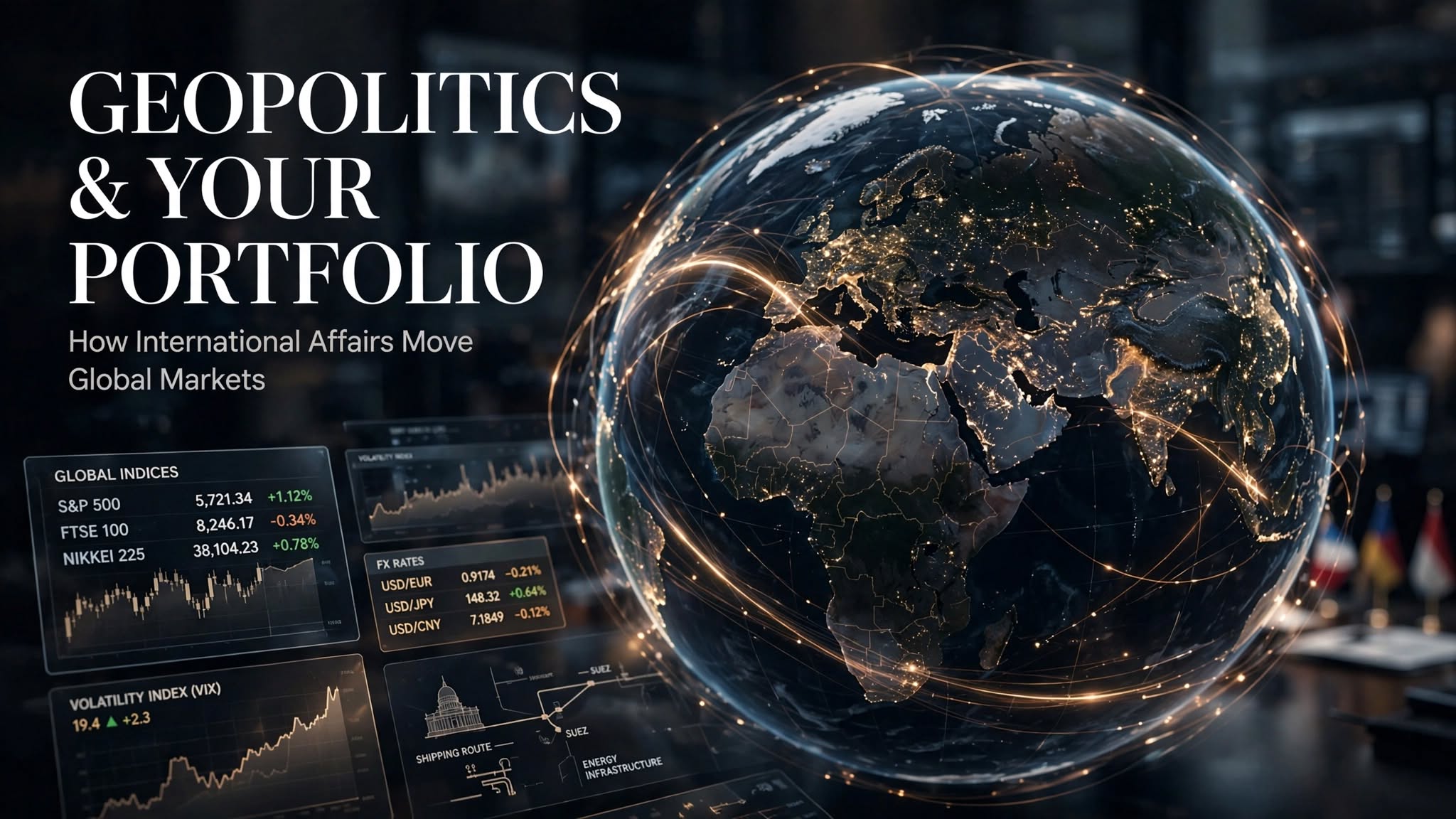
Key Takeaways
- Geopolitical risk is a measurable drag, not just a headline. A widely cited Federal Reserve study finds that higher geopolitical risk foreshadows lower investment and employment, and that the damage comes from both the threat of events and the events themselves.
- 2026 broke a familiar hedge. With oil driven higher by the Iran war, the U.S. 10-year Treasury yield briefly touched about 5.34%, its highest since 2002, so bonds did not cushion stocks the way textbooks promise.
- Energy is the transmission belt. Roughly a fifth of the world’s oil normally sails through the Strait of Hormuz, which is why a regional conflict becomes a global inflation story.
- Indexes can look calm while the market underneath is not. The S&P 500 sits within a couple of percent of its August record, yet market breadth is weak.
- The practical response is structural, not tactical. Diversification, a sensible time horizon and a plan for rebalancing do more than guessing the next headline.
Every few years a news story makes investors feel that the world has changed overnight. A tanker stops moving. A central bank surprises the room. A border closes. Then your portfolio app lights up red, and the temptation to do something becomes almost physical.
This guide is about doing the right something. It explains how international affairs actually reach your investments, what the evidence says about geopolitical shocks, what has happened in 2026 so far, and how to build a portfolio that can absorb the next surprise without a panic sale. It is general information, not personalized financial advice.
How a Distant Conflict Ends Up in Your Account
Geopolitics doesn’t touch prices directly. It moves through a few well-worn channels.
- Commodities. War and sanctions disrupt supply of oil, gas, grain and fertilizer. Prices jump, and costs ripple through transport, food and manufacturing.
- Inflation and interest rates. Higher energy prices push inflation up, which can force central banks to raise rates or delay cuts.
- Currencies and capital flows. Money rotates toward perceived safe havens and away from import-dependent economies.
- Corporate planning. Executives delay investment when the outlook is murky, which is exactly the effect researchers measure.
- Sentiment. Fear alone can reprice risk assets, even before any physical disruption shows up in the data.
The academic backbone here is the geopolitical risk index built by Fed economists Dario Caldara and Matteo Iacoviello. Their paper, published in the American Economic Review, finds that higher geopolitical risk is associated with lower investment and employment and with a greater probability of disasters and larger downside risks. Industries and firms more exposed to those risks cut investment more.
What 2026 Has Looked Like So Far
Start with the shock. Iran’s reported closure of the Strait of Hormuz in early March sent Brent crude sharply higher, as Yahoo Finance reported at the time, and Treasury yields rose on bets that inflation would run hotter. Within about a week, an AP report cited Rystad Energy estimating that more than 12 million barrels of oil equivalent per day had been taken offline.
Since then, the conflict has produced a pattern of hope and disappointment. Brent fell more than 7% in one early-August week on signals of a deal to reopen the strait, per CNBC, then rebounded as the prospects faded. By October 1, Brent was back above $100.
The knock-on effects reached everyday costs. U.S. on-highway diesel averaged $6.382 a gallon in the week of September 28, about $2.63 more than a year earlier.
Where markets stood on October 5
| Indicator | Level | What it signals |
|---|---|---|
| S&P 500 | About 7,720 | Near records, but narrow leadership |
| Nasdaq Composite | About 27,190 | Tech still carrying the index |
| U.S. 10-year Treasury yield | About 5.28% | Borrowing costs near two-decade highs |
| WTI crude | About $90 | Energy still priced for disruption |
| Gold | About $4,190 an ounce | Elevated, but not a one-way bet |
| U.S. Dollar Index | About 102 | A firm dollar tightens conditions abroad |
Figures are from Schwab’s market update and are rounded. Schwab also noted that the S&P 500 Equal Weight Index had posted its seventh straight weekly loss, a sign that gains are concentrated in a small group of large stocks.
The Hedge That Didn’t Hedge
For decades, investors assumed bonds would rise when stocks fell. A geopolitical energy shock can break that assumption, because the problem isn’t weak growth. It’s inflation, and inflation pushes bond yields up and prices down.
You can see it in 2026. The 10-year Treasury hit highs not seen since 2023 in early September, according to CNBC, and then climbed past 5.3% by October 1, a level last seen decades ago. The Federal Reserve raised rates in September to a 3.75% to 4.00% range, its first hike since 2023, and its next meeting is October 27 to 28.
The UK shows the same pattern. Its 10-year gilt yield hovered near 5.4% and the 30-year yield approached 6%, according to Trading Economics, as a global bond sell-off hit one market after another.
The lesson isn’t that bonds are broken. It’s that which kind of shock you face determines which assets protect you. A growth scare favors long-duration government bonds. An inflation scare punishes them.
How Different Assets Tend to React
| Asset | Typical behavior in a Gulf supply shock | Caveat from 2026 |
|---|---|---|
| Energy stocks and commodities | Often benefit as prices rise | Prices can reverse fast on peace headlines |
| Broad equities | Dip on the shock, then recover if growth holds | Leadership can be narrow and fragile |
| Long-term government bonds | Normally a safe haven | Fell when the shock was inflationary |
| Gold | Traditional geopolitical hedge | Highly volatile; forecasts miss often |
| Cash and short-term bills | Stable, with rising yields | Loses ground if inflation persists |
| Import-dependent currencies | Pressured by a higher oil bill | Depends on reserves and policy credibility |
On gold, remember how hard it is to time. JPMorgan was reported in March forecasting gold at $6,300 an ounce by the end of 2026. In early October it traded near $4,190. A gold gain of 7.1% in a single August week was its best weekly performance since January, which also shows how violently it can move in both directions.
Why Your Home Market Matters
Geopolitics hits countries unevenly. An oil shock is a windfall for some and a bill for others.
| Exposure type | Typical pressure points | Examples |
|---|---|---|
| Net energy importers | Higher import bills, weaker currencies, inflation | Pakistan, China |
| Major energy exporters | Stronger trade balances, sanction and logistics risk | Canada, Russia |
| Trade and finance hubs | Shipping costs, risk-off capital flows | Singapore, UK |
| Mixed commodity economies | Depends on the commodity mix | Malaysia, Indonesia |
If most of your income, spending and savings sit in one currency and one market, a geopolitical shock that hurts that economy hits you three times. Spreading exposure across regions and currencies is the cheapest protection available.
A Practical Framework for Investors
None of this requires predicting the next headline. It requires a plan you can follow when the headline arrives.
1. Decide what job each asset does
Equities for growth. Government bonds for stability in growth scares. Real assets or inflation-linked instruments for inflation scares. Cash for liquidity. If you can’t name the job, you probably don’t understand the risk.
2. Match your horizon to your holdings
Money you need within a few years shouldn’t sit in assets that can fall sharply during a crisis. Money you won’t touch for decades can ride out volatility that would be unbearable on a shorter clock.
3. Rebalance by rule, not by mood
Set thresholds in advance, such as reviewing when an asset class drifts five percentage points from target. Rebalancing forces you to trim what has run up and add to what has fallen, which feels wrong in the moment and works over time.
4. Check your inflation sensitivity
Ask what your portfolio does if energy prices stay high for a year. Long-duration bonds, rate-sensitive stocks and thin-margin businesses tend to struggle. Companies with pricing power tend to cope better.
5. Watch the transmission, not the noise
Four numbers tell you more than most cable-news segments: oil prices, bond yields, the dollar and central-bank decisions. If they are calm, the headline is probably just a headline.
Mistakes to Avoid
- Selling after the drop. Geopolitical selloffs are often sharpest early, so panic exits tend to lock in losses.
- Treating gold or any single asset as a guarantee. Hedges are probabilities, not promises.
- Ignoring currency risk. A foreign investment can rise in local terms and still lose in yours.
- Overreacting to forecasts. Price targets and scenario headlines are guesses, as the gold example shows.
Asked & Answered
Do wars always crash the stock market?
No. Research finds that higher geopolitical risk tends to weigh on investment, employment and stock returns, but the size and duration vary widely. Markets often absorb a shock and recover if the economy underneath stays healthy.
Why did bonds fall when stocks were under pressure in 2026?
Because the shock was inflationary. Higher oil prices raised inflation expectations, which pushed yields up and bond prices down, even while equities wobbled.
Is gold a reliable geopolitical hedge?
It can help, but it is volatile and hard to time. Gold moved sharply in both directions this year, and forecasts have repeatedly missed.
How does a Strait of Hormuz disruption affect everyday costs?
Roughly a fifth of the world’s oil normally passes through the strait. When that flow is disrupted, crude, diesel and shipping costs rise, which feeds into transport, food and manufacturing prices.
What should I do with my portfolio when conflict flares?
Start with your plan, not the news. Confirm your asset allocation matches your goals and time horizon, rebalance if you’ve drifted, and avoid large moves made in a hurry. For decisions specific to your situation, talk to a qualified financial adviser.
Discover more from The Economy
Subscribe to get the latest posts sent to your email.
Fintech & Global Finance
Marie Gluesenkamp Perez: How a Former Shop Owner’s Moderate Politics Are Shaping Tech and Economy Bills
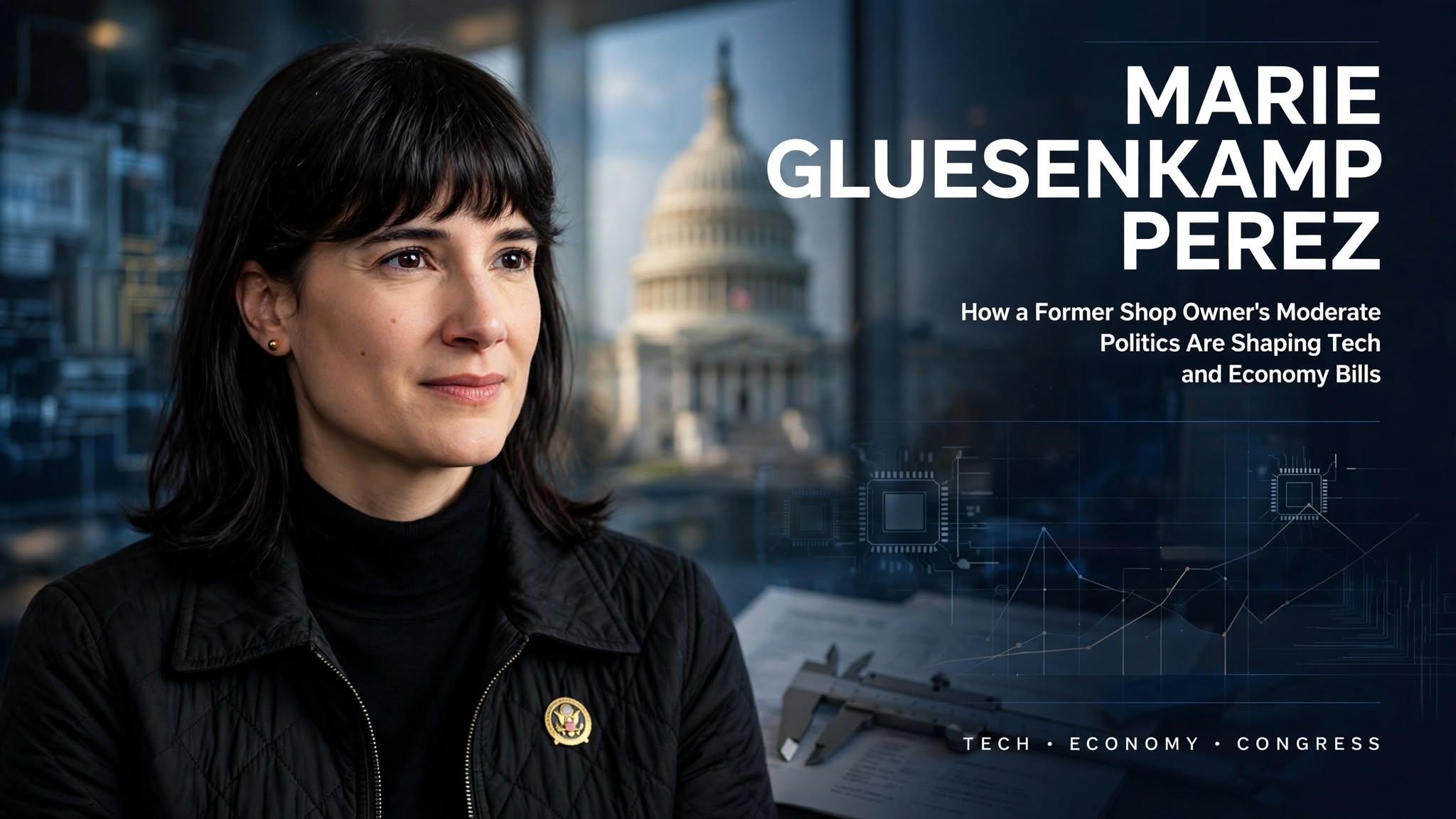
Key Takeaways
- Rep. Marie Gluesenkamp Perez (D-WA-3), a former auto repair shop co-owner, has built a legislative record centered on right-to-repair, trades workforce development, and semiconductor manufacturing funding.
- She helped secure a $105 million federal investment for Analog Devices, including $80 million for Pacific Northwest projects, to modernize domestic semiconductor fabrication — reinforcing Washington’s “Silicon Forest” manufacturing base.
- Described as one of the House’s most centrist Democrats, she sits in the Problem Solvers Caucus, the Blue Dog Coalition, and the Congressional Hispanic Caucus, and serves on the House Appropriations Committee.
- She is seeking a third term in the 2026 midterms against Republican John Braun, the Washington State Senate minority leader.
- Her legislative approach consistently favors practical, trade-oriented policy over ideological framing — a positioning that has made her a notable swing-district data point heading into November.
From Auto Shop to Appropriations Committee
Gluesenkamp Perez co-owned an auto repair and machine shop with her husband before her 2022 upset win over Republican Joe Kent, a race she repeated and won again in 2024. That hands-on business background has directly shaped her legislative priorities: she has pushed bipartisan right-to-repair legislation for agricultural equipment, introduced the Fairness for the Trades Act to expand 529 education savings plans to cover trade-career tools, and worked to ease regulatory burdens on small businesses like the one she used to run.
The Semiconductor Funding Win
In one of her more tangible economy-facing wins, Gluesenkamp Perez — alongside Washington Senators Patty Murray and Maria Cantwell — helped secure $105 million for Analog Devices to modernize domestic chip fabrication, with $80 million specifically benefiting Pacific Northwest facilities, including an expansion in Camas. The investment targets mature-node semiconductors used in automotive, healthcare, aerospace, defense, and consumer electronics — chips that are less headline-grabbing than AI accelerators but arguably more embedded in everyday supply chains (a theme covered in our companion piece on 2026 silicon supply chain risk).
Where She Sits Politically
Caucus memberships tell their own story: Problem Solvers Caucus, Blue Dog Coalition, and Congressional Hispanic Caucus place her firmly in the House’s center-right Democratic lane. She has been publicly described as one of the chamber’s most centrist Democrats, willing to break from party lines on specific votes. Her appropriations work has focused heavily on constituent-level wins — from mobile home energy-efficiency provisions to Secure Rural Schools reauthorization — over broader ideological legislation.
2026 Midterm Context
Gluesenkamp Perez is defending her seat in Washington’s 3rd Congressional District against John Braun, the Washington State Senate’s Republican minority leader — a race widely watched as a bellwether for how centrist Democrats in competitive districts perform in the 2026 midterms.
What is Marie Gluesenkamp Perez known for in Congress?
Rep. Gluesenkamp Perez (D-WA-3) is known for centrist, trades- and small-business-focused legislation, including right-to-repair bills and a $105 million semiconductor manufacturing investment for the Pacific Northwest. She sits on the House Appropriations Committee and is seeking a third term in 2026 against Republican John Braun.
Discover more from The Economy
Subscribe to get the latest posts sent to your email.

Russia Sanctions Waiver: What Asian Oil Buyers Gain

Asia Markets Weekly: How Oil, US Yields and the Fed Reach Tokyo, Kuala Lumpur and Karachi

Gold Near $4,000: Buy, Hold or Wait? A Pakistan Tola Price Guide

US 10-Year Treasury Yield Near 5%: The Hidden Cost for Pakistani Investors

Fed Meeting on October 28: Hike or Hold—and Why Pakistan Investors Should Care

Can Pakistan Turn US–Iran Mediation Into an Economic Dividend?

Oil Above $100: How Higher Crude Prices Reach Pakistan’s Rupee, Petrol and Imports

SBP Interest Rate at 11.5%: What Will Decide Pakistan’s Next Policy Move?

The Global South: Debt, Climate Finance and Investment in 2026

Energy Security Is the New Economic Security

Can Global Tourism Survive Geopolitical Shocks?

Global Maritime Hegemony: How China Secured Over 81% of All New Shipbuilding Orders

The Coming Battle Over AI, Jobs and Wages

Why Developing Economies Face a Sharper Inflation Problem

Crude Oil & Petroleum Market Analysis: OPEC+ Decisions and Price Forecasts

Silver Price Today: Why the Xi-Trump AI Standoff Is Fueling a Safe-Haven Rally

Algorithmic Dogfights: Why the U.S. and China Must Establish Rules of Engagement for Autonomous Air Power

Top US Convenience Store Chains: Store Counts, EV Charging, and Sales Trends

Who Is Shivon Zilis? The Neuralink Executive at the Center of the Musk–OpenAI Trial

Social Security Extra $90 Deposit: Who Qualifies for the October 2026 Medicare Rebate?

Corporate America Faces a New Debt Test as US Borrowing Costs Surge

Global Economic Outlook 2026: 7 Forces Reshaping Markets, Trade and Business

Gold Falls 3.7% as Yields Surge: Is Gold Still a Safe Haven in 2026?

MAS Allocates S$1.45 Billion to Five Asset Managers in Third EQDP Batch: Total Deployment Reaches S$5.4 Billion

Stock Market Today: Dow, S&P 500, and Nasdaq Retreat as Treasury Yields

Anthropic Bans Sustained Abuse of Claude AI Under New Usage Policy Effective November 12, 2026

Gold Price Outlook 2026: The Forces Behind the Forecasts—and What Could Reverse Them

US 10-Year Yield Hits 5.24%: What the Historic Bond Market Sell off Means for Mortgages and Investors
-

 Markets & Finance10 months ago
Top 15 Stocks for Investment in 2026 in PSX: Your Complete Guide to Pakistan’s Best Investment Opportunities
-

 Analysis8 months ago
Johor’s Investment Boom: The Hidden Costs Behind Malaysia’s Most Ambitious Economic Surge
-

 Analysis8 months ago
Top 10 Stocks for Investment in PSX for Quick Returns in 2026
-

 Banks9 months ago
Best Investments in Pakistan 2026: Top 10 Low-Price Shares and Long-Term Picks for the PSX
-

 Analysis9 months ago
Brazil’s Rare Earth Race: US, EU, and China Compete for Critical Minerals as Tensions Rise
-

 Investment10 months ago
Top 10 Mutual Fund Managers in Pakistan for Investment in 2026: A Comprehensive Guide for Optimal Returns
-

 Global Economy10 months ago
15 Most Lucrative Sectors for Investment in Pakistan: A 2025 Data-Driven Analysis
-

 Global Economy10 months ago
Pakistan’s Export Goldmine: 10 Game-Changing Markets Where Pakistani Businesses Are Winning Big in 2025