
Opinion
The West’s Last Chance: Building a New Global Order


The drone strikes came at dawn. On a January morning in 2026, another wave of Russian missiles arced across Ukrainian skies, while in Khartoum, the sound of artillery fire echoed through emptied streets as Sudan’s civil war ground into its third year. In Gaza, the fragile ceasefire negotiated months earlier showed fresh signs of strain. These aren’t disconnected tragedies flickering across our screens—they’re symptoms of a deeper rupture. The world has transformed more profoundly in the past four years than in the previous three decades, and the international order that once promised stability now resembles a house with crumbling foundations.
We are living through the death throes of the post-Cold War era. The optimism that followed 1989—when Francis Fukuyama proclaimed the “end of history” and democracy seemed destined to sweep the globe—now feels like ancient hubris. The very forces that were supposed to bind nations together—trade networks, energy interdependence, digital technology, and information flows—have become weapons in a new kind of global conflict. The liberal international order is fracturing, and the West faces a choice more consequential than any since the Marshall Plan: adapt to build a new global order that reflects today’s realities, or watch its influence dissolve into irrelevance.
The window for action is narrow. Between 2026 and 2030, decisions made in Washington, Brussels, and allied capitals will determine whether the twenty-first century belongs to multipolar chaos or to a reformed, resilient system of global governance. This is the West’s last chance—not to restore hegemony, but to help architect something more sustainable.
Why the Liberal International Order Is Crumbling
The post-1945 international order, refined after the Cold War, rested on three pillars: American military and economic dominance, a web of multilateral institutions from the UN to the WTO, and an assumption that globalization would inevitably spread liberal democracy and market capitalism. Each pillar is now compromised.
Start with the numbers. Global power is dispersing at unprecedented speed. China’s economy has grown from 4% of global GDP in 2000 to approximately 18% today, while the combined GDP of the G7 has shrunk from 65% to around 43% of world output. India is projected to become the world’s third-largest economy by 2027. The “rise of the rest” isn’t a future scenario—it’s present reality.
But economic redistribution alone doesn’t explain the order’s collapse. The deeper failure was ideological arrogance. Western policymakers assumed that autocracies would liberalize as they enriched, that technology would empower citizens against authoritarians, and that economic interdependence would make war obsolete. Russia’s full-scale invasion of Ukraine in February 2022 shattered the last illusion. As The Economist observed, “The tank is back; so is great-power rivalry.”
The mechanisms that once integrated nations now divide them. Global trade, which surged from 39% of world GDP in 1990 to 60% by 2008, has plateaued and is increasingly fragmented into competing blocs. The U.S. and China are decoupling their technology ecosystems—semiconductors, artificial intelligence, telecommunications infrastructure—creating what some analysts call “parallel universes of innovation.” Energy, previously a force for interdependence, became a coercive tool when Russia weaponized gas supplies to Europe, triggering the worst energy crisis in generations.
Even information—the currency of the digital age—has become a battlefield. Russian disinformation campaigns, Chinese narrative control, and Western social media platforms’ struggle with content moderation have produced not a global conversation but a cacophony of incompatible realities. Democratic backsliding has accelerated, with Freedom House recording 17 consecutive years of declining global freedom.
What a Multipolar World Really Means
The term “multipolar world order” gets thrown around carelessly. It doesn’t simply mean multiple power centers—the world has always had regional powers. What’s emerging is something more complex and potentially more unstable: a system where no single nation can set rules, where coalitions are fluid and transactional, and where might increasingly makes right.
This new multipolarity has three defining features. First, variable geometry—countries align differently on different issues. India, for example, participates in the Quad (with the U.S., Japan, and Australia) to counter China but buys Russian oil and abstains on Ukraine votes at the UN. Saudi Arabia normalizes relations with Iran through Chinese mediation while maintaining security ties to Washington. These aren’t contradictions; they’re the new logic.
Second, institutional paralysis. The UN Security Council—designed for a different era—is structurally incapable of addressing today’s crises, with Russia holding a veto and China increasingly willing to use its own. The World Trade Organization hasn’t completed a major multilateral round since 1994. The Bretton Woods institutions remain dominated by Western voting shares that no longer reflect economic reality. As Foreign Affairs recently documented, “The gap between the problems we face and the institutions we have to solve them has never been wider.”
Third, the return of spheres of influence. Russia’s war in Ukraine is explicitly about denying neighboring states sovereign choice. China’s Belt and Road Initiative—spanning 150 countries and over $1 trillion in infrastructure investment—creates economic dependencies that translate into political leverage. The U.S. maintains its alliance network but increasingly frames security in zero-sum terms. We’re not heading toward a rules-based multipolar order; we’re already in a power-based one.
The global South isn’t choosing sides—it’s choosing interests. At the UN vote condemning Russia’s invasion, 35 countries abstained and 12 were absent, representing more than half the world’s population. These nations see Western calls for a “rules-based order” as selective, applied to adversaries but not allies, enforced in Ukraine but ignored in Gaza or Yemen. The credibility deficit is real.
The Weaponization of Interdependence
Globalization was supposed to make conflict costly. It did—but that hasn’t stopped states from wielding economic tools as weapons. We’re witnessing what scholars call “weaponized interdependence“: the strategic use of network positions in global systems to coerce or exclude rivals.
Start with semiconductors. Taiwan produces over 90% of the world’s most advanced chips, making it simultaneously indispensable and vulnerable. The U.S. has effectively banned Chinese access to cutting-edge chip-making equipment through export controls, while Beijing has restricted exports of rare earth minerals critical to defense and clean energy. These aren’t trade disputes; they’re preview skirmishes in a potential conflict over Taiwan.
Energy flows have become political levers. Europe’s dependence on Russian gas—which supplied 40% of its natural gas before the war—gave Moscow enormous coercive power. The subsequent pivot to liquified natural gas from the U.S. and Qatar demonstrates that diversification is possible, but costly and slow. Meanwhile, China has locked up long-term contracts for resources across Africa and Latin America, securing supply chains while Western powers scramble.
Financial architecture is fragmenting too. The U.S. and allies’ decision to freeze Russian central bank reserves and eject Russian banks from SWIFT demonstrated the dollar-based system’s weaponizability—but also accelerated efforts to bypass it. China’s Cross-Border Interbank Payment System (CIPS) is expanding, yuan-denominated oil contracts are growing, and discussions of BRICS currencies gained momentum at recent summits. The dollar’s dominance isn’t ending soon, but its primacy is no longer assumed to be permanent.
Data governance presents perhaps the most consequential battlefield. Should data flow freely across borders (the Western position) or remain subject to national sovereignty and storage requirements (the Chinese model)? Europe’s GDPR represents a third way, emphasizing privacy rights over either commercial freedom or state control. There’s no emerging consensus—only divergence.
Why 2026–2030 Is the Decisive Window
History accelerates in certain periods, when choices made reverberate for generations. The late 1940s were such a moment, producing the UN, Bretton Woods, NATO, and the Marshall Plan. The early 1990s were another, though the choices made then—NATO expansion, shock therapy economics, WTO accession without political reform—look less wise in hindsight.
We’re in a third such period. Several factors make the next four years critical for rebuilding global order.
First, leadership transitions. The 2024 U.S. election has produced a new administration taking office as this is written. European elections in 2024 shifted the European Parliament rightward. China’s leadership, while more stable, faces slowing growth and demographic decline that will force strategic choices. India’s emergence as a major power is accelerating, with elections that will shape its trajectory. These concurrent transitions create both risk and opportunity—the chance to reset relationships before they calcify into permanent hostility.
Second, technological inflection points. Artificial intelligence is advancing faster than governance frameworks can adapt. The next few years will determine whether AI development follows a cooperative model (sharing safety research, preventing autonomous weapons races) or a competitive one (national AI champions, digital authoritarianism, ungoverned deployment). Climate technology is reaching scale—solar and batteries are now often cheaper than fossil fuels—creating opportunities for collaborative energy transitions if countries can align incentives.
Third, institutional windows. The UN’s 80th anniversary in 2025 and various institutional reviews create political space for reforms that are impossible during normal times. The 2030 deadline for the Sustainable Development Goals imposes a timeline for global cooperation on development. The WTO’s ministerial conferences and climate COPs provide recurring venues where new frameworks could be negotiated.
Fourth, war fatigue. Ukraine’s war, while ongoing, has demonstrated to Russia and others the unsustainability of conquest in a mobilized, weaponized world. The economic costs of fragmentation are becoming clear—global growth is sluggish, inflation pressures persist, and supply chain vulnerabilities plague everyone. The pain creates incentives to find off-ramps, if leaders are wise enough to take them.
But the window won’t stay open. If the next four years produce further fragmentation—China invading Taiwan, a wider Middle East war, collapse of arms control—the possibility of reconstructing any global order will vanish. We’ll be fully in the realm of competing blocs and zero-sum competition.
Concrete Steps to Build a Resilient Global Order
Rebuilding can’t mean restoring American hegemony or even Western dominance. That ship has sailed. The question is whether it’s possible to construct a polycentric order—multiple centers of power operating within agreed frameworks that prevent catastrophic conflict and enable cooperation on shared challenges.
This requires both humility about what’s achievable and ambition about what’s necessary. Here’s a framework:
Reform Core Institutions to Reflect Reality
The UN Security Council’s permanent membership—decided in 1945—no longer reflects global power. Expansion is overdue, with seats for India, Brazil, and African representation in some form. This is diplomatically complex but necessary for legitimacy. The alternative is growing irrelevance.
The IMF and World Bank need governance changes that give rising economies voting shares commensurate with their economic weight. China has proposed reforms repeatedly; Western resistance makes these institutions look like relics of Western power rather than genuine multilateral forums.
The WTO needs restoration of its dispute settlement mechanism, paralyzed since 2019 when the U.S. blocked appellate body appointments. Trade rules require updating for digital commerce, state capitalism, and climate-related measures. If the WTO can’t adapt, trade will fragment into bilateral and regional deals, losing any multilateral character.
These reforms won’t happen easily. They require Western countries accepting reduced voting shares and influence in exchange for revitalized, legitimate institutions. That’s a hard domestic sell, but the alternative—irrelevant institutions and no frameworks at all—is worse.
Build Coalitions of the Capable
If universal agreements are impossible, work with those willing. This means plurilateral approaches—coalitions of countries that share specific interests, even if they don’t agree on everything.
On climate, for example, the U.S., EU, and China together account for over half of global emissions. A trilateral framework on technology sharing, carbon pricing, and transition finance could achieve more than endless COP negotiations seeking consensus among 190+ parties. Expanding this to include India, Japan, and major developing emitters could create sufficient critical mass.
On technology governance, democracies could coordinate on AI safety standards, semiconductor supply chain security, and data protection frameworks. This isn’t about excluding China completely—interoperability matters—but about setting standards that reflect democratic values and then inviting others to adopt them if they choose.
On nuclear arms control, the U.S. and Russia still possess 90% of the world’s nuclear weapons. Bilateral talks must resume, even amid broader hostility. China should be brought into arms control negotiations as its arsenal expands. The New START treaty’s 2026 expiration creates urgency.
Create Minilateral Security Architecture
NATO remains the world’s most capable alliance, but it can’t be the sole security framework for a multipolar world. The West needs additional security partnerships that aren’t about containing China but about regional stability.
The Quad (U.S., Japan, India, Australia) should deepen coordination on maritime security, disaster response, and infrastructure financing—offering alternatives to Chinese-dominated projects. AUKUS (Australia, UK, U.S.) provides a model for technology sharing among close partners. Similar frameworks could emerge in other regions.
Crucially, these arrangements should have thresholds for engagement with rivals. Regular military-to-military communications with China and Russia reduce accident risks. Hotlines and crisis management protocols prevent escalation. During the Cold War, the U.S. and USSR maintained communication channels even at the tensest moments. That wisdom applies today.
Develop Values-Based Tech Governance
Technology competition will define the 21st century, but it doesn’t have to be a race to the bottom. Democratic countries should coordinate on principles for AI development: transparency, human oversight, privacy protection, and limiting use in autonomous weapons.
The EU’s AI Act provides a foundation, establishing risk tiers and requirements for high-risk applications. The U.S., Japan, South Korea, and other democracies could align their approaches, creating a large market for responsible AI that sets effective global standards.
On critical infrastructure—semiconductors, telecommunications, cloud computing—selective decoupling from authoritarian rivals makes sense where genuine security risks exist. But this should be narrow and focused, not a new digital Iron Curtain. Maintaining scientific collaboration and academic exchange remains important even amid strategic competition.
Link Climate and Security
Climate change is a threat multiplier, worsening water scarcity, migration pressures, and resource conflicts. It’s also a rare area where cooperation serves everyone’s interests. The West should propose linking climate finance to security cooperation.
Specifically: major emitters (including China) contribute to a massively scaled-up climate adaptation fund for vulnerable countries, particularly in Africa and South Asia. In exchange, these countries receive support for governance and stability, reducing migration pressures and conflict risks that affect everyone.
China is already the largest bilateral lender to developing countries. The West should match or exceed this with transparent, sustainable financing tied to institutions rather than dependency. If the West can’t compete with China’s infrastructure investments, it loses influence across the global South.
Rebuild Democratic Credibility
None of this works if democracies can’t demonstrate that their system delivers better outcomes. That means addressing the domestic pathologies—polarization, inequality, institutional dysfunction—that have undermined Western credibility.
The U.S. needs to show it can still build infrastructure, regulate tech platforms, and provide healthcare and education at levels comparable to peer democracies. Europe needs to demonstrate it can defend itself and make timely decisions. The alternatives to democracy—Chinese authoritarianism, Russian nationalism—look appealing to some precisely because Western democracies appear sclerotic.
This isn’t altruism; it’s strategic necessity. A world where democracy looks like a failing system will be a world where autocrats gain adherents and confidence. Conversely, democracies that deliver prosperity and justice will attract partners and maintain legitimacy.
The Global South’s Role in the New Order
Any viable global order must account for the voices and interests of countries that make up the majority of humanity. The global South—roughly 85% of the world’s population—isn’t a monolith, but it shares some common perspectives that the West ignores at its peril.
First, a deep skepticism of Western lectures about rules-based order. Countries remember that the Iraq War violated international law, that Western banks caused the 2008 financial crisis with global repercussions, and that climate change was caused primarily by historical Western emissions that now-developing countries are asked to curtail.
Second, pragmatic non-alignment. Most countries want access to Chinese investment, Western technology, and Russian energy—whatever serves development goals. The Cold War–style “you’re either with us or against us” framing doesn’t work. India’s ability to maintain relations with all major powers while advancing its interests is increasingly the model others follow.
Third, demand for agency in global governance. African countries, representing 1.4 billion people, have no permanent Security Council seat. Latin America’s voices are marginalized in economic governance. The Middle East beyond Saudi Arabia and Israel is often treated as a problem to be managed rather than a region with its own agency and interests.
A rebuilt global order must offer the global South genuine partnership, not clientelism. That means:
- Development finance that competes with China’s Belt and Road on scale, not just rhetoric about transparency and debt sustainability (which matters but isn’t sufficient).
- Technology transfer on climate and health, not just intellectual property protection that keeps life-saving innovations expensive.
- Institutional voice through Security Council reform and reweighted voting in economic institutions.
- Respect for sovereignty and non-interference, which most of the global South values more highly than Western promotion of democratic norms.
The West can’t afford to write off the global South or assume it will choose autocracy over democracy. But earning their partnership requires acknowledging past failures and offering tangible benefits, not just moral arguments.
Managing the China Challenge Without Catastrophe
China presents the most complex challenge to any new global order. It’s simultaneously a rival, a partner on climate and trade, and a country whose choices will shape whether this century sees catastrophic conflict or managed competition.
The West’s approach should be competitive coexistence—neither the naive engagement of the 1990s nor the comprehensive confrontation that some advocate. This means:
Compete where interests genuinely clash. On technology supremacy, Taiwan’s security, and maritime disputes in the South China Sea, the West and its partners should maintain clear red lines backed by capability. Economic decoupling in sensitive sectors (advanced semiconductors, certain AI applications, defense-critical minerals) is justified.
Cooperate where interests align. Climate change, pandemic preparedness, nuclear non-proliferation, and space debris don’t respect national boundaries. Chinese solar panel production has dramatically lowered clean energy costs globally—that benefits everyone. Scientific research, particularly in basic science, should remain collaborative where possible.
Communicate constantly to prevent miscalculation. The most dangerous scenario isn’t intentional aggression but accidental escalation from Taiwan Strait incidents, cyberattacks, or economic crises. Military-to-military dialogues, leader-level summits, and track-two diplomacy should intensify, not diminish.
Model an alternative. The best response to China’s authoritarian state capitalism isn’t to copy it but to demonstrate that democratic systems can innovate faster, adapt more flexibly, and provide better lives for citizens. If that’s true, many countries will prefer the democratic model. If it’s not true, no amount of rhetoric will matter.
The Taiwan question remains the most dangerous flashpoint. Beijing has made reunification a core nationalist goal; Washington has committed to Taiwan’s defense. War would be catastrophic for all parties. The current status quo—strategic ambiguity, unofficial relations, robust arms sales—has kept peace for decades but looks increasingly fragile.
Maintaining it requires military deterrence sufficient to make an invasion too costly, diplomatic creativity to give Beijing off-ramps, and discipline to avoid symbolic gestures that provoke crises without enhancing security. That’s a tightrope, but it’s navigable with skill and patience.
The Case for Cautious Optimism
The picture painted so far is sobering. War in Europe, democratic backsliding, fragmenting trade, and nuclear-armed rivals with clashing visions. Why should anyone be optimistic that the West—or anyone—can build a new global order?
Because history shows that even amid catastrophe, humans have rebuilt. The institutions created after World War II emerged from even greater devastation. The Cold War ended without nuclear exchange despite decades of existential tension. The 2008 financial crisis, which seemed likely to trigger a depression, was managed through unprecedented cooperation.
More concretely, several trends favor reconstruction over collapse:
Nuclear weapons impose caution. No major power wants direct war with another nuclear state, which constrains escalation in ways that didn’t exist before 1945. Proxy conflicts and economic warfare are awful, but they’re preferable to great power war.
Economic interdependence, while weaponized, remains deep. China and the U.S. trade over $750 billion annually. Complete decoupling would devastate both economies and many others. That creates incentives—grudging, perhaps, but real—for managing competition.
Climate imperatives force cooperation. No country can solve climate change alone. The physics doesn’t care about ideology. As damages mount—from flooding to food insecurity to migration—cooperation on mitigation and adaptation becomes survival, not idealism.
Democratic resilience shouldn’t be underestimated. Yes, democracies face challenges, but they’ve adapted before. The expansion of voting rights, welfare states, civil rights movements—all were responses to crises that made democracies more inclusive and legitimate. Current challenges could spur similar evolution.
Younger generations globally share values around climate action, social justice, and skepticism of nationalism that could reshape politics. Youth voter participation is rising, and while young people’s views are diverse, they’re generally more internationalist and less ideological than older cohorts.
The optimism must be cautious because the path is narrow and failure is possible. But it’s not inevitable.
A Call to Action: What Leaders Must Do Now
Rebuilding global order requires specific actions from those with power to shape it:
U.S. leaders must recognize that hegemony is over but leadership remains possible. That means investing in alliances, accepting institutional reforms that reduce American voting shares, and demonstrating that democracy can still deliver prosperity. It means restraining the impulse toward unilateralism and accepting that multilateralism is sometimes slower but more sustainable.
European leaders must move beyond dependence—on American security guarantees, on Russian energy, on Chinese manufacturing. That means defense spending that allows genuine strategic autonomy, industrial policy that secures critical supply chains, and diplomatic initiative that makes Europe a pole in multipolarity, not a prize to be competed over.
Chinese leaders face a choice between seeking dominance (which will provoke lasting opposition) and accepting shared leadership in a multipolar system. The latter would require transparency about military capabilities, compromise on territorial disputes, and trade practices that don’t systematically disadvantage partners. It’s unclear whether China’s political system can make these choices, but the offer should be extended.
Global South leaders should leverage their position. Non-alignment gives power when major powers compete for partnership. But it also requires making affirmative choices about what kind of order serves their interests, not just playing great powers against each other opportunistically.
Citizens in democracies must hold leaders accountable for both vision and delivery. That means demanding foreign policy that balances idealism with realism, rejecting both isolationism and overextension, and supporting the resources—diplomatic, military, economic—required to sustain global engagement.
The next four years will determine whether the 21st century becomes an era of spheres of influence and recurring crises or a period of managed multipolarity with functional cooperation on existential challenges. The West can’t unilaterally decide this outcome, but it can make the choice between constructive adaptation and nostalgic decline.
This is, genuinely, the last chance. Not because the West will disappear—it won’t—but because the window for shaping a new global order is closing. The decisions made between now and 2030 will echo for decades, perhaps generations. The world has changed more in the past four years than in the previous thirty. The next four will change it even more.
The question is whether we’ll navigate that change with wisdom, building institutions and partnerships that prevent the worst while enabling cooperation on shared challenges—or whether we’ll drift into fragmentation, conflict, and a darker future that none of us wants but all of us might get if we’re not careful.
The foundations are crumbling. We can rebuild them, but only if we start now, work together, and accept that the new architecture must look different from the old. The alternative isn’t stasis; it’s collapse. That’s why this is the West’s last chance—and humanity’s best hope.
Discover more from The Economy
Subscribe to get the latest posts sent to your email.



An AI neocloud can announce billions of dollars of contracted demand and still face a dangerous financial squeeze. The business typically commits large amounts of capital to graphics processing units, networking hardware, data-center facilities, electricity and financing well before every installed GPU begins generating revenue. If customers use the capacity intensively and pay on time, the model can produce attractive operating leverage. If hardware arrives late, sits idle or loses value quickly, financial costs do not wait for demand to recover.
That tension is the central question in neocloud economics in 2026. An important real-world reference is the second-quarter report by CoreWeave, which disclosed around $104 billion in revenue backlog at June 30, 2026 and rapid expansion in infrastructure spending. A backlog provides visibility but is not cash already received, booked profit or a guarantee that hardware will be deployed on schedule. Investors should follow the money from purchase commitment through installation, utilization, billing, cash collection and debt service.
What an AI neocloud actually sells
A neocloud primarily offers accelerated compute capacity, often optimized for training and serving large AI systems. Customers can rent GPU clusters and the supporting networking, storage, software and operations needed to use them. Some agreements reserve substantial capacity over time; others are more exposed to usage or shorter contract duration. The seller is not necessarily producing proprietary AI models. Its principal economic product may be reliable access to expensive compute.
The model differs from that of the biggest diversified cloud companies. A hyperscaler can spread data-center assets over many services, customers and uses. A specialist may offer a strong technical product while being more concentrated in AI infrastructure and dependent on a smaller set of important customers. Concentration can accelerate growth when large clients sign agreements, but it can also magnify a cancellation, renegotiation or project delay.
Providers vary considerably. A modern dedicated AI cluster with high-speed interconnects is not interchangeable with a small assortment of standalone graphics cards. Training requires systems that exchange large volumes of information efficiently; inference may be optimized differently. Capacity quality, energy availability and networking topology can all affect the price customers are willing to pay.
Follow the life of a GPU, not just the booking headline
There are six economically meaningful stages. First, a neocloud signs a customer commitment or forecasts demand. Second, it orders equipment and secures data-center capacity. Third, facilities and electrical systems become ready. Fourth, GPUs are installed, tested and connected. Fifth, customers actually consume or reserve the service under their contracts. Sixth, the neocloud collects cash while continuing to pay for electricity, people, maintenance, financing and future equipment.
A problem at any handoff can destroy expected margin. A delivery delay keeps the company from billing for some capacity but may not eliminate its facility, interest or operating costs. A data-center power delay can leave valuable hardware waiting. A customer shifting workloads to a different architecture can weaken expected pricing. Even fully installed machines may be subject to planned maintenance, software deployment or other non-billable periods.
The CoreWeave Form 10-Q discusses capital investment, operating risks and business concentration. This is why a careful comparison examines realized utilization and cash-flow generation, not only contracted GPU counts or announced megawatts.
Backlog is visibility, not a bank account
CoreWeave stated that its backlog reached approximately $104 billion at the end of Q2 2026. Its official earnings release separately explained that the disclosed backlog did not include more than $25 billion in net new customer commitments added in early Q3. These figures demonstrate demand and long-term contracting, but treating them as the company’s current revenue would be incorrect.
A contracted backlog must turn into recognized revenue according to delivery and availability requirements. That conversion can span years. Contracts may have conditions, customer concentration or renegotiation and timing risks. Even when the client eventually pays in full, the neocloud might finance new equipment long before the payment is received. The timing of cash is as consequential as its contractual total.
Investors should therefore ask four questions: What share of backlog is expected to be recognized in the next twelve months? What has to be constructed or purchased before billing? How much cash will customers pay upfront or during deployment? And what remedies or flexibility exist if delivery is delayed? Not all disclosures answer each question. Where details are unavailable, valuation should not quietly assume the most favorable response.
An illustrative one-thousand-GPU unit-economics model
Consider a fictional 1,000-GPU deployment. The following assumptions are teaching tools, not a quote from an equipment supplier, a current rental tariff, CoreWeave guidance or a forecast for any listed company. Assume total installed hardware and associated capital cost of $50 million, depreciated economically over four years; a blended realized billable rate of $4.00 per GPU-hour; annualized utilization of 75%; power and site operating cost of $8 million annually; and annual financing cost of $3 million. Ignore taxes, overhead not listed and capital structure complexities for the first pass.
The 1,000 GPUs offer 8.76 million available GPU-hours per year (1,000 × 24 × 365). At 75% utilization, the billable hours are 6.57 million. Multiplied by $4, annual revenue would be $26.28 million. Annual equipment depreciation on a straight-line four-year illustrative basis is $12.5 million.
| Fictional fleet economics | Annual amount |
|---|---|
| Maximum available GPU-hours | 8.76 million |
| Billable hours at 75% utilization | 6.57 million |
| Revenue at $4 per billable hour | $26.28 million |
| Power and site costs | ($8.00 million) |
| Economic equipment depreciation | ($12.50 million) |
| Financing expense | ($3.00 million) |
| Remainder before omitted costs and tax | $2.78 million |
This remainder is not EBITDA, GAAP net income or free cash flow. EBITDA would exclude depreciation and interest; free cash flow must account for actual capital expenditures, debt payments and working capital. The example instead shows how narrow the cushion can be even when revenue looks substantial relative to hourly prices.
The model also assumes every unit has the same billable economic value, which is rarely true across product types, chip generations and contracted discounts. It omits network expansion, insurance, personnel, spare equipment, downtime penalties and refresh investment. The omissions mean actual all-in profitability could be lower under these specific assumptions, not that every neocloud necessarily earns this margin.
Utilization can change everything
Holding the $4 hourly rate and $23.5 million combined modeled annual costs constant, utilization has a powerful effect. At 50%, annual revenue would be $17.52 million, yielding an illustrative $5.98 million shortfall before other costs. At 75%, the modeled remainder is $2.78 million. At 90%, revenue would be $31.54 million, creating roughly $8.04 million before omitted expenses.
| Fictional annual utilization | Revenue | Remainder after modeled costs |
|---|---|---|
| 50% | $17.52m | −$5.98m |
| 75% | $26.28m | +$2.78m |
| 90% | $31.54m | +$8.04m |
These amounts are arithmetic scenarios, not actual reported occupancy or profitability. They also show why the definition of utilization matters. A provider may report time when equipment is committed to a customer, physical computing activity, or billable capacity; those measures can differ significantly. An enterprise paying for a reserved cluster may support revenue even when the GPUs are not running at maximum physical workload intensity. Conversely, a spot market may show intense usage with unpredictable prices.
The quality of demand matters just as much as the reported percentage. Long-term take-or-pay-style agreements can make billing more predictable, subject to exact contract terms, but may lock in pricing at levels that later look unattractive if energy or replacement costs rise. Short-term capacity can capture scarcity premiums, but it is exposed to new supply and workload migration.
Power is a financing problem as well as an engineering problem
GPU operations depend on electricity, cooling, transformers, network links and resilient facility design. Electricity consumption rises with high-power accelerators and associated equipment, but nameplate power is not identical to average billable energy draw. The data-center power usage effectiveness measure can help describe total facility electricity relative to IT equipment electricity, yet it is not a complete proxy for margin.
A company that has obtained equipment but lacks grid interconnection is not free to deploy it anywhere. Interconnection queues, substations and available generation can impose genuine bottlenecks. Local tariffs, electricity contracts and the ability to curtail load during stress affect operations. A seemingly small change in power price becomes material across large capacity blocks.
Some providers build or lease facility infrastructure, others contract through colocation partners. Both structures create obligations. Leasing may transfer certain facility construction risks but does not remove power and availability constraints. Owned infrastructure may offer more control while increasing capital needs. Investors need to distinguish megawatts reserved, megawatts ready and megawatts actively producing revenue.
Why GPU depreciation is unusually contentious
Conventional depreciation allocates equipment cost over an estimated useful life for accounting purposes. Economic obsolescence is different. Accelerators may remain physically operational for years while newer products deliver more compute per watt, improved networking or a lower cost per unit of useful AI work. If customers shift workloads toward newer equipment, an older cluster may require a price discount before its accounting book value has fully depreciated.
The correct useful life depends on technology, workloads, customer demand and resale markets; no universal answer applies to every GPU model. It is therefore dangerous to compare companies solely on adjusted EBITDA, which adds back depreciation. A cash-intensive operator can report high adjusted EBITDA while continuously reinvesting heavily to refresh an increasingly competitive fleet.
An analyst can test a four-year depreciation estimate against more pessimistic three-year replacement economics or a longer six-year life. A three-year model increases annual cost on $50 million of assets from $12.5 million to about $16.7 million, reducing the hypothetical annual remainder by about $4.2 million if all other assumptions remain fixed. That sensitivity is large relative to the model’s $2.78 million cushion at 75% utilization. The point is not that three years must be correct; it is that technology-life assumptions can overwhelm a valuation.
Leverage changes the payoff profile
Infrastructure companies can finance equipment and facilities through secured loans, leasing, convertible notes, equity issuance and customer-backed arrangements. Debt can accelerate expansion while contracts appear attractive, but fixed interest and principal obligations become painful if operating cash arrives late. It also matters whether collateral can be resold easily or whether lenders may require more security when market conditions deteriorate.
CoreWeave’s 2026 SEC filing gives investors original details to analyze, including material debt, contractual obligations and risks. Its scale and financing profile should not be applied automatically to every smaller GPU provider. Some firms may be much less leveraged, while others could be more reliant on a small number of funders or customers.
Excess leverage has a second-order effect: creditors, not only shareholders, can gain influence over capital allocation. A provider might be forced to preserve liquidity, slow a profitable expansion or issue equity at an unfavorable price. In a stress case, a customer could remain willing to rent GPUs while the balance sheet still prevents a company from funding their installation.
Customer concentration is a double-edged sword
Signing a multi-year agreement with a large AI laboratory or hyperscaler can validate a neocloud’s technology and support financing. It can also make financial results heavily dependent on a few customers’ investment priorities. A large client might develop its own capacity, diversify among suppliers, negotiate discounts or modify workloads as new hardware generations arrive.
Revenue recognition can be especially lumpy when a cluster becomes available after a long construction period. A growing backlog may therefore coexist with periods of compressed margins, particularly when multiple facilities ramp at the same time. Compare the company’s actual cash receipts and working-capital movements over several quarters instead of treating a single record backlog figure as evidence that these transitions are riskless.
A helpful due-diligence question is whether new customers broaden the revenue base faster than the largest existing customers increase their spending. Expansion from giant buyers can be profitable, but a diversification claim deserves measurable evidence. Customer anonymity may limit public assessment; in that case the unanswered concentration risk should be acknowledged.
Pricing power can disappear even while AI demand rises
AI demand is not a single market. An older GPU may be suitable for some inference tasks but unattractive for the most demanding model training. Dedicated high-speed clusters can command different prices from loosely connected cards. Prices depend on generation, geographic availability, service reliability, contract length and software support. The rental market may also become more competitive as hyperscalers and specialist providers bring new capacity online.
A company could see total AI compute demand rise while its revenue per older GPU-hour declines. In such a world, a high utilization rate might not rescue the original projected economics. The relevant metric is revenue per unit of total invested capital over the equipment’s actual useful life, after operating and financing costs—not merely GPU-hours sold.
Conversely, a specialized operator may create a premium by offering fast cluster deployment, predictable performance and support for demanding workloads. Those service attributes can distinguish a neocloud from a commodity equipment rental. The advantage must eventually appear in pricing, customer retention or lower operating cost, not just in marketing claims about purpose-built infrastructure.
A framework for comparing public and private providers
A serious assessment should start with contracted revenue, the timing of its recognition, and how much additional capital is necessary to fulfill it. Next come realized pricing and the company’s definition of utilization. The third layer is capital structure: gross debt, interest expense, maturity timing, restricted cash and the ability to finance additional capacity. The fourth is technical: hardware age, network speed, failure rates and the energy economics of facilities. Finally, assess who is buying the capacity and whether their commitments are diversified.
One useful ratio is capital expenditure divided by revenue, though its interpretation varies substantially between a company in initial construction and a mature operator. Another is operating cash flow versus capital expenditure over several years. Neither should be used without explaining leases and financing flows. Growth may justify spending ahead of demand, but investors must establish when cash conversion is expected.
For a startup without SEC filings, diligence is harder. Ask management for cohort utilization, contract coverage by calendar year, true all-in power costs and a capex schedule that includes networking and facilities. If those numbers are unavailable, higher uncertainty is the appropriate conclusion. Assumed precision does not become trustworthy just because it is presented in a spreadsheet.
Questions readers ask
Are AI neoclouds profitable?
Some operations can generate positive economics, but profitability differs by provider, contract structure, equipment cost, power cost and accounting treatment. High revenue growth or adjusted EBITDA is not proof of positive free cash flow. Review audited statements and reconciliations for any specific company.
Is a $100 billion backlog the same as $100 billion in sales?
No. Backlog represents expected future revenue under contractual arrangements and defined assumptions. Recognition and collection occur over time and require delivery. CoreWeave’s cited approximately $104 billion backlog was a company-specific measure as of June 30, 2026, not an industry total or already-collected cash.
What is the biggest risk: electricity or GPU prices?
Both can be significant, but the dominant risk varies. A power-constrained build may fail before it bills a single hour; a fully operating fleet may suffer when rental prices decline or customers favor newer hardware. Debt obligations can amplify either problem.
The central investment question
Neoclouds can be valuable infrastructure providers in an expanding market, but they are not passive beneficiaries of AI enthusiasm. Their returns depend on connecting expensive capital assets to paying workloads quickly, keeping those assets relevant, and surviving the financing gap between construction and cash collection. A disciplined investor should be able to describe how backlog becomes billable capacity, and how billable capacity becomes free cash after debt and replacement equipment. Everything else is an incomplete growth story.
Discover more from The Economy
Subscribe to get the latest posts sent to your email.
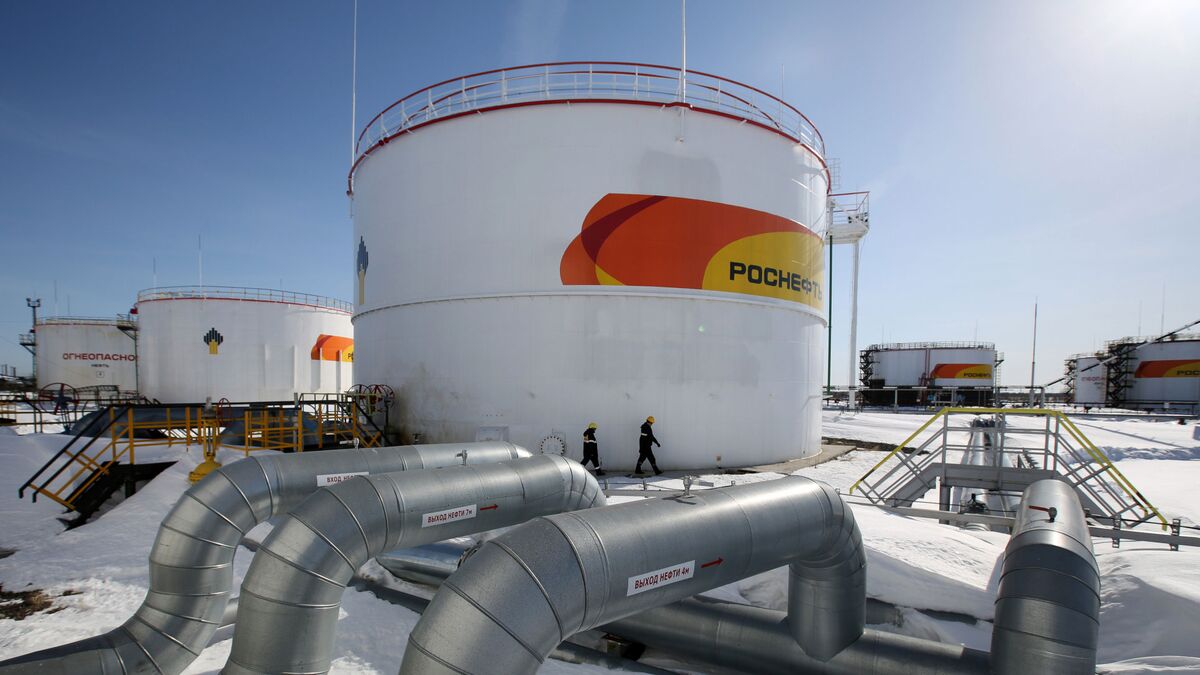
An unexpected shift in US sanctions policy has given Asian energy buyers a potentially important reprieve. It has also opened fresh questions about how importers should balance cheap fuel, diplomatic relationships and the risk that trading rules may change again.
On October 17, Reuters reported that President Donald Trump had issued an order waiving important Russia-related sanctions and tariffs before planned measures took effect. A subsequent Reuters account identified India as a significant beneficiary, given its role as a major Russian oil customer. The move reduces one category of immediate concern; it does not guarantee unlimited imports free of every restriction.
Why buyers in Asia care
Asia’s refineries compete for crude on price, quality, transport economics and availability. A sanction or tariff threat adds uncertainty to contracts even before it is implemented. Trading banks, insurers and shipowners may become more cautious; buyers may diversify supply or ask for discounts to compensate for risks.
A waiver can therefore matter before a single new tanker sails. It may improve the feasibility of existing contracts and ease pressure for rapid, expensive substitution. Still, the benefit depends on the precise terms of the waiver, the identity of the buyer and seller, the bank handling payment and the practical shipping route.
India is the immediate test case
India’s refining industry has cultivated access to discounted Russian crude, but its policymakers also value the trading relationship with Washington. The reported waiver potentially reduces friction between energy security and trade negotiations. Reuters’ October 19 analysis connected the decision to hopes for progress on a broader US–India trade deal.
Yet it would be a mistake to treat the waiver as permanent diplomatic alignment. Policy decisions may be reviewed, challenged or narrowed. India’s future purchases will still depend on relative crude prices and refinery requirements, not diplomatic headlines alone.
Why oil did not simply collapse
Market reports described some easing after the policy decision, but Middle East disruption and threats to physical energy infrastructure remained important. A Reuters oil-market report cautioned that implementation uncertainty limited confidence in sustained additional supply.
More Russian barrels accessible on paper may fail to solve problems caused by damaged refining equipment, disrupted shipping lanes or unusually tight diesel stocks elsewhere. Crude oil is also not a homogeneous product. Refineries are configured for specific blends; changing the input can increase costs or reduce efficiency.
Winners and losers are not obvious
| Stakeholder | Potential benefit | Important caveat |
|---|---|---|
| Indian refiners | Access to competitive crude | Compliance and financing |
| Other Asian importers | Some relief from global supply pressure | Eligibility differs by transaction |
| Tanker operators | More potential freight business | Insurance and security costs |
| Oil exporters competing with Russia | Demand can shift away | Overall prices and volumes still uncertain |
| Asian consumers | Possible easing in fuels | Taxes, FX and local distribution affect pump prices |
Smaller importers should not assume a waiver affecting one set of transactions automatically provides legal cover for every Russian energy purchase. Compliance teams must examine operative legal documents, not rely on a news summary as advice.
The geopolitical trade-off
Critics argue that relaxing pressure on Russia can weaken coercive leverage relating to the war in Ukraine. Supporters of relief emphasise the cost of energy scarcity and the need to stabilise prices. These perspectives reflect a genuine policy trade-off: reducing immediate energy stress may conflict with broader sanctions objectives.
A rigorous regional article should distinguish the economic effects of the waiver from an endorsement of its foreign-policy rationale. It should also avoid forecasting specific oil-price declines from a change whose practical effects are still being assessed.
What to watch in November
Importers and analysts should monitor official US rules, commercial purchase announcements, actual tanker arrivals, refinery throughput and the spread between competing crude grades. Other developments—including renewed conflict around Hormuz—could easily overwhelm the marginal supply effect of the waiver.
The paperwork behind a cheap barrel
A tanker purchase is not simply a quoted price multiplied by volume. The buyer must consider contract origin, payment route, shipping ownership, insurance, discharge location, refinery compatibility and applicable legal restrictions. Even when particular sanctions measures are waived, businesses should confirm whether related banking or export controls remain relevant to the proposed transaction.
The economic gain from a discounted crude grade also depends on refining yields. A barrel that produces a lower share of the products a refinery needs may be less valuable than a seemingly more expensive alternative. Freight routes, demurrage and quality specifications can erase an advertised discount. That is why refinery-level economics matter more than a headline claim that Russian oil is ‘cheap’.
Asian policymakers also need to distinguish short-term energy security from strategic dependence. Diversification across suppliers, fuels and transport routes generally provides resilience when a major trading partner or shipping corridor is disrupted. An importer that shifts too much procurement to one politically sensitive source may exchange today’s cheaper invoices for tomorrow’s concentrated risk.
A practical follow-up story should compare actual arrival data and refinery purchases after the waiver. Only then can readers distinguish a change in legal permission from a change in physical supply.
Are all Russian sanctions now removed?
No. Reporting describes waivers of specified measures. The exact surviving restrictions and compliance obligations must be checked against current official documents.
Will Indian petrol immediately become cheaper?
Not necessarily. Crude prices, refining margins, taxes and distribution costs intervene.
Does the waiver solve Asia’s energy security problem?
No. It can ease one bottleneck while leaving transport, geopolitical and market vulnerabilities intact.
For Asian buyers, the opportunity is flexibility—not certainty. The sensible response is to diversify procurement and understand the legal terms before betting a fuel strategy on a political announcement.
Discover more from The Economy
Subscribe to get the latest posts sent to your email.
Markets & Finance
Asia Markets Weekly: How Oil, US Yields and the Fed Reach Tokyo, Kuala Lumpur and Karachi
The global market’s biggest stories can look deceptively American: a Federal Reserve decision, a Treasury yield and a Wall Street earnings call. Yet the cost of these events is often felt most sharply across Asia, where energy import dependence, divergent monetary policies and unequal access to technology investment create different winners and losers.
The next scheduled Federal Reserve policy decision is October 28, according to its official calendar. The US 10-year Treasury yield was around 5.00% by October 23, down from higher levels earlier in the month. Oil was still elevated, while the IMF’s latest global outlook sees world growth slowing to 3.1% in 2026. These common shocks will not produce uniform Asian market returns.
Tokyo: currency moves complicate the equity story
Japan’s multinational exporters can be sensitive to yen movements because overseas revenue must be translated back into local currency, while domestic consumers and importers face different pressures when the yen weakens. The effect is not one-directional: a weaker currency may support export competitiveness but raise fuel and food import costs.
Investors should distinguish a broad index rally driven by a few large manufacturers or technology names from improving profits across the economy. Japanese government-bond yields and domestic monetary policy also matter. A US rate move may change yen-dollar incentives, but it does not dictate Japanese policy.
Kuala Lumpur: energy exposure is mixed
Malaysia’s place in the global energy system is different from that of a pure importer. Some businesses benefit from upstream prices, while manufacturers, transport operators and households can face higher costs. Currency and fiscal effects depend on domestic subsidy design, trade receipts and the balance between oil and gas revenues and imported refined products.
For equity investors, oil up should not be treated as a universal buy signal. Airlines, logistics companies, industrial users and energy-related firms can have opposing sensitivities. Malaysia’s electrical and electronics export exposure also links the country to the AI hardware cycle, but final demand and margins deserve scrutiny.
Karachi: the import bill dominates
Pakistan’s external vulnerability is sharper because energy prices can quickly affect dollar demand, local prices and business borrowing costs. The World Bank reported on October 22 that reforms and macro stabilisation had supported growth, but conflict-related pressures remained. Higher energy costs can erode these improvements even when the US equity market rises on technology earnings.
For the Pakistan Stock Exchange, sector analysis matters more than a generic Asian risk-on or risk-off label. Banks, energy firms, exporters, consumer businesses and highly leveraged industrial companies have distinct exposures to rates and exchange rates.
The regional transmission map
| Shock | Japan | Malaysia | Pakistan |
|---|---|---|---|
| US yields rise | Yen and valuation sensitivity | Funding costs, foreign flows | Dollar pressure and external borrowing context |
| Brent crude rises | Import cost pressure | Mixed effects across producers and users | Import bill, petrol and inflation pressure |
| AI investment accelerates | Capital goods and semiconductor ecosystem | Electronics supply chain opportunities | Selective digital services potential, energy constraints |
| Global demand softens | Exporters affected | Trade and tourism affected | Export and remittance channels |
These are transmission mechanisms, not guaranteed daily market movements. Political measures, domestic policies and company-specific developments can overwhelm them.
What to watch next week
The Fed’s statement and press conference will indicate how officials weigh inflation against growth. US technology earnings will test whether expensive AI infrastructure is translating into profitable demand. Oil-market shipping and security developments remain a separate source of risk that can upset even the strongest company results.
Investors should also check Asian market holidays, local economic releases and currency fixing times. Comparisons made across different trading-session cutoffs can create false narratives about which exchange responded first.
A sharper method than daily prediction
A regional investor can create a four-factor watchlist: oil, US yields, the dollar and domestic policy. For each market, identify companies with pricing power, foreign-currency debt, export income and energy-cost exposure. That framework is more durable than confident predictions about Monday’s opening index point.
How to read a cross-market comparison properly
A strong weekly comparison should fix each market’s closing date and reporting currency. If one exchange is closed for a holiday while another has traded through a major US event, their percentage changes cover different information sets. A reader can misinterpret this as one market being more resilient when the difference is mostly timing.
Currency conversion adds another complication. A stock index may gain in local currency but deliver a smaller return to an investor measuring wealth in dollars. This does not mean one series is incorrect; it means the investor’s benchmark is different. Analysts should label both local and dollar-adjusted comparisons and resist mixing them within a single ranking.
The regional supply-chain connection deserves the same precision. AI demand can benefit semiconductor and electrical-equipment producers, but the benefit is not evenly distributed across Tokyo and Kuala Lumpur, and it may have little immediate impact on a Pakistani small business facing higher power bills. A regional theme should identify channels rather than assume countries move together.
At the end of each weekly roundup, list the coming policy announcements and company results with local times. A reliable calendar may be more valuable to investors than an index-level prediction.
Will a Fed hike automatically trigger an Asian sell-off?
No. Expectations, positioning and the Fed’s message matter, alongside domestic fundamentals.
Which Asian markets benefit when oil rises?
The answer depends on the mix of producers, refiners, importers, subsidy arrangements and market valuations.
What is the most useful common comparison?
Compare earnings and cash-flow sensitivity to oil, currency and rates rather than comparing headline index changes alone.
The regional lesson: Asia is not one trade. From Tokyo to Kuala Lumpur to Karachi, the same global shock is filtered through a different currency, industrial structure and policy response.
Discover more from The Economy
Subscribe to get the latest posts sent to your email.

Neocloud Economics in 2026: GPU Debt, Utilization and Power

What Is a Neocloud? How AI GPU Clouds Work and Compare

Lula Re-elected in 2026: What Changes for the Dollar, Brazilian Stocks, and Interest Rates?

Lula Wins Brazil’s 2026 Election: Five Economic Tests for 2027

SSI November 2026 Payment: Why Benefits Arrive October 30

Russia Sanctions Waiver: What Asian Oil Buyers Gain

Asia Markets Weekly: How Oil, US Yields and the Fed Reach Tokyo, Kuala Lumpur and Karachi

Gold Near $4,000: Buy, Hold or Wait? A Pakistan Tola Price Guide

US 10-Year Treasury Yield Near 5%: The Hidden Cost for Pakistani Investors

Fed Meeting on October 28: Hike or Hold—and Why Pakistan Investors Should Care

Can Pakistan Turn US–Iran Mediation Into an Economic Dividend?

Oil Above $100: How Higher Crude Prices Reach Pakistan’s Rupee, Petrol and Imports

SBP Interest Rate at 11.5%: What Will Decide Pakistan’s Next Policy Move?

The Global South: Debt, Climate Finance and Investment in 2026

Crude Oil & Petroleum Market Analysis: OPEC+ Decisions and Price Forecasts

Top US Convenience Store Chains: Store Counts, EV Charging, and Sales Trends

Algorithmic Dogfights: Why the U.S. and China Must Establish Rules of Engagement for Autonomous Air Power

Who Is Shivon Zilis? The Neuralink Executive at the Center of the Musk–OpenAI Trial

Social Security Extra $90 Deposit: Who Qualifies for the October 2026 Medicare Rebate?

Corporate America Faces a New Debt Test as US Borrowing Costs Surge

Gold Price Outlook 2026: The Forces Behind the Forecasts—and What Could Reverse Them

Global Economic Outlook 2026: 7 Forces Reshaping Markets, Trade and Business

Gold Falls 3.7% as Yields Surge: Is Gold Still a Safe Haven in 2026?

Stock Market Crash in 2026? Warning Signs, Scenarios and a Calm Investor Checklist

Anthropic Bans Sustained Abuse of Claude AI Under New Usage Policy Effective November 12, 2026

MAS Allocates S$1.45 Billion to Five Asset Managers in Third EQDP Batch: Total Deployment Reaches S$5.4 Billion

Stock Market Today: Dow, S&P 500, and Nasdaq Retreat as Treasury Yields

Geopolitics and Your Portfolio: How International Affairs Move Global Markets
-

 Markets & Finance10 months ago
Top 15 Stocks for Investment in 2026 in PSX: Your Complete Guide to Pakistan’s Best Investment Opportunities
-

 Analysis8 months ago
Johor’s Investment Boom: The Hidden Costs Behind Malaysia’s Most Ambitious Economic Surge
-

 Analysis8 months ago
Top 10 Stocks for Investment in PSX for Quick Returns in 2026
-

 Banks9 months ago
Best Investments in Pakistan 2026: Top 10 Low-Price Shares and Long-Term Picks for the PSX
-

 Analysis9 months ago
Brazil’s Rare Earth Race: US, EU, and China Compete for Critical Minerals as Tensions Rise
-

 Investment10 months ago
Top 10 Mutual Fund Managers in Pakistan for Investment in 2026: A Comprehensive Guide for Optimal Returns
-

 Global Economy10 months ago
15 Most Lucrative Sectors for Investment in Pakistan: A 2025 Data-Driven Analysis
-

 Global Economy10 months ago
Pakistan’s Export Goldmine: 10 Game-Changing Markets Where Pakistani Businesses Are Winning Big in 2025