Connect with us

Opinion

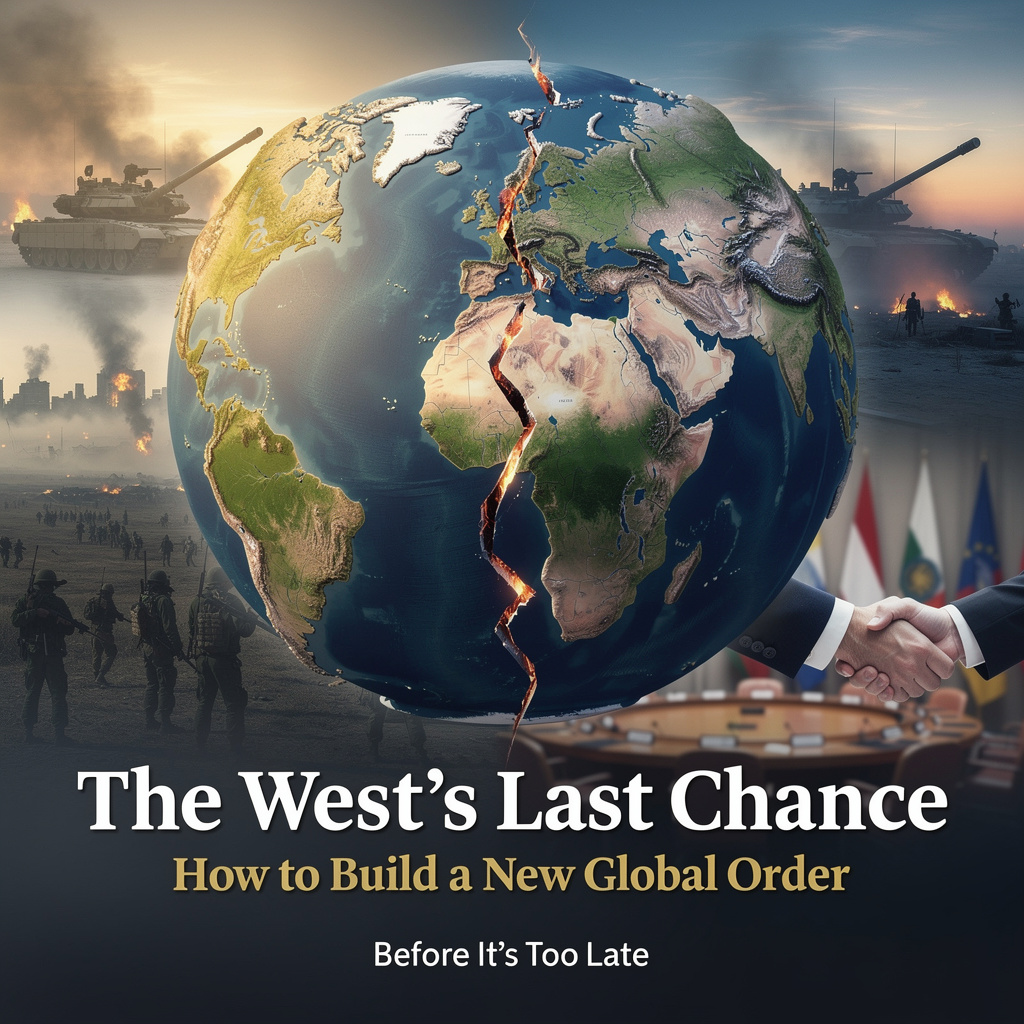
The West’s Last Chance: Building a New Global Order

Published

on

The drone strikes came at dawn. On a January morning in 2026, another wave of Russian missiles arced across Ukrainian skies, while in Khartoum, the sound of artillery fire echoed through emptied streets as Sudan’s civil war ground into its third year. In Gaza, the fragile ceasefire negotiated months earlier showed fresh signs of strain. These aren’t disconnected tragedies flickering across our screens—they’re symptoms of a deeper rupture. The world has transformed more profoundly in the past four years than in the previous three decades, and the international order that once promised stability now resembles a house with crumbling foundations.

We are living through the death throes of the post-Cold War era. The optimism that followed 1989—when Francis Fukuyama proclaimed the “end of history” and democracy seemed destined to sweep the globe—now feels like ancient hubris. The very forces that were supposed to bind nations together—trade networks, energy interdependence, digital technology, and information flows—have become weapons in a new kind of global conflict. The liberal international order is fracturing, and the West faces a choice more consequential than any since the Marshall Plan: adapt to build a new global order that reflects today’s realities, or watch its influence dissolve into irrelevance.

The window for action is narrow. Between 2026 and 2030, decisions made in Washington, Brussels, and allied capitals will determine whether the twenty-first century belongs to multipolar chaos or to a reformed, resilient system of global governance. This is the West’s last chance—not to restore hegemony, but to help architect something more sustainable.

Why the Liberal International Order Is Crumbling

The post-1945 international order, refined after the Cold War, rested on three pillars: American military and economic dominance, a web of multilateral institutions from the UN to the WTO, and an assumption that globalization would inevitably spread liberal democracy and market capitalism. Each pillar is now compromised.

Start with the numbers. Global power is dispersing at unprecedented speed. China’s economy has grown from 4% of global GDP in 2000 to approximately 18% today, while the combined GDP of the G7 has shrunk from 65% to around 43% of world output. India is projected to become the world’s third-largest economy by 2027. The “rise of the rest” isn’t a future scenario—it’s present reality.

But economic redistribution alone doesn’t explain the order’s collapse. The deeper failure was ideological arrogance. Western policymakers assumed that autocracies would liberalize as they enriched, that technology would empower citizens against authoritarians, and that economic interdependence would make war obsolete. Russia’s full-scale invasion of Ukraine in February 2022 shattered the last illusion. As The Economist observed, “The tank is back; so is great-power rivalry.”

The mechanisms that once integrated nations now divide them. Global trade, which surged from 39% of world GDP in 1990 to 60% by 2008, has plateaued and is increasingly fragmented into competing blocs. The U.S. and China are decoupling their technology ecosystems—semiconductors, artificial intelligence, telecommunications infrastructure—creating what some analysts call “parallel universes of innovation.” Energy, previously a force for interdependence, became a coercive tool when Russia weaponized gas supplies to Europe, triggering the worst energy crisis in generations.

Even information—the currency of the digital age—has become a battlefield. Russian disinformation campaigns, Chinese narrative control, and Western social media platforms’ struggle with content moderation have produced not a global conversation but a cacophony of incompatible realities. Democratic backsliding has accelerated, with Freedom House recording 17 consecutive years of declining global freedom.

What a Multipolar World Really Means

The term “multipolar world order” gets thrown around carelessly. It doesn’t simply mean multiple power centers—the world has always had regional powers. What’s emerging is something more complex and potentially more unstable: a system where no single nation can set rules, where coalitions are fluid and transactional, and where might increasingly makes right.

This new multipolarity has three defining features. First, variable geometry—countries align differently on different issues. India, for example, participates in the Quad (with the U.S., Japan, and Australia) to counter China but buys Russian oil and abstains on Ukraine votes at the UN. Saudi Arabia normalizes relations with Iran through Chinese mediation while maintaining security ties to Washington. These aren’t contradictions; they’re the new logic.

Second, institutional paralysis. The UN Security Council—designed for a different era—is structurally incapable of addressing today’s crises, with Russia holding a veto and China increasingly willing to use its own. The World Trade Organization hasn’t completed a major multilateral round since 1994. The Bretton Woods institutions remain dominated by Western voting shares that no longer reflect economic reality. As Foreign Affairs recently documented, “The gap between the problems we face and the institutions we have to solve them has never been wider.”

Third, the return of spheres of influence. Russia’s war in Ukraine is explicitly about denying neighboring states sovereign choice. China’s Belt and Road Initiative—spanning 150 countries and over $1 trillion in infrastructure investment—creates economic dependencies that translate into political leverage. The U.S. maintains its alliance network but increasingly frames security in zero-sum terms. We’re not heading toward a rules-based multipolar order; we’re already in a power-based one.

The global South isn’t choosing sides—it’s choosing interests. At the UN vote condemning Russia’s invasion, 35 countries abstained and 12 were absent, representing more than half the world’s population. These nations see Western calls for a “rules-based order” as selective, applied to adversaries but not allies, enforced in Ukraine but ignored in Gaza or Yemen. The credibility deficit is real.

The Weaponization of Interdependence

Globalization was supposed to make conflict costly. It did—but that hasn’t stopped states from wielding economic tools as weapons. We’re witnessing what scholars call “weaponized interdependence“: the strategic use of network positions in global systems to coerce or exclude rivals.

Start with semiconductors. Taiwan produces over 90% of the world’s most advanced chips, making it simultaneously indispensable and vulnerable. The U.S. has effectively banned Chinese access to cutting-edge chip-making equipment through export controls, while Beijing has restricted exports of rare earth minerals critical to defense and clean energy. These aren’t trade disputes; they’re preview skirmishes in a potential conflict over Taiwan.

Energy flows have become political levers. Europe’s dependence on Russian gas—which supplied 40% of its natural gas before the war—gave Moscow enormous coercive power. The subsequent pivot to liquified natural gas from the U.S. and Qatar demonstrates that diversification is possible, but costly and slow. Meanwhile, China has locked up long-term contracts for resources across Africa and Latin America, securing supply chains while Western powers scramble.

Financial architecture is fragmenting too. The U.S. and allies’ decision to freeze Russian central bank reserves and eject Russian banks from SWIFT demonstrated the dollar-based system’s weaponizability—but also accelerated efforts to bypass it. China’s Cross-Border Interbank Payment System (CIPS) is expanding, yuan-denominated oil contracts are growing, and discussions of BRICS currencies gained momentum at recent summits. The dollar’s dominance isn’t ending soon, but its primacy is no longer assumed to be permanent.

Data governance presents perhaps the most consequential battlefield. Should data flow freely across borders (the Western position) or remain subject to national sovereignty and storage requirements (the Chinese model)? Europe’s GDPR represents a third way, emphasizing privacy rights over either commercial freedom or state control. There’s no emerging consensus—only divergence.

Why 2026–2030 Is the Decisive Window

History accelerates in certain periods, when choices made reverberate for generations. The late 1940s were such a moment, producing the UN, Bretton Woods, NATO, and the Marshall Plan. The early 1990s were another, though the choices made then—NATO expansion, shock therapy economics, WTO accession without political reform—look less wise in hindsight.

We’re in a third such period. Several factors make the next four years critical for rebuilding global order.

First, leadership transitions. The 2024 U.S. election has produced a new administration taking office as this is written. European elections in 2024 shifted the European Parliament rightward. China’s leadership, while more stable, faces slowing growth and demographic decline that will force strategic choices. India’s emergence as a major power is accelerating, with elections that will shape its trajectory. These concurrent transitions create both risk and opportunity—the chance to reset relationships before they calcify into permanent hostility.

Second, technological inflection points. Artificial intelligence is advancing faster than governance frameworks can adapt. The next few years will determine whether AI development follows a cooperative model (sharing safety research, preventing autonomous weapons races) or a competitive one (national AI champions, digital authoritarianism, ungoverned deployment). Climate technology is reaching scale—solar and batteries are now often cheaper than fossil fuels—creating opportunities for collaborative energy transitions if countries can align incentives.

Third, institutional windows. The UN’s 80th anniversary in 2025 and various institutional reviews create political space for reforms that are impossible during normal times. The 2030 deadline for the Sustainable Development Goals imposes a timeline for global cooperation on development. The WTO’s ministerial conferences and climate COPs provide recurring venues where new frameworks could be negotiated.

Fourth, war fatigue. Ukraine’s war, while ongoing, has demonstrated to Russia and others the unsustainability of conquest in a mobilized, weaponized world. The economic costs of fragmentation are becoming clear—global growth is sluggish, inflation pressures persist, and supply chain vulnerabilities plague everyone. The pain creates incentives to find off-ramps, if leaders are wise enough to take them.

But the window won’t stay open. If the next four years produce further fragmentation—China invading Taiwan, a wider Middle East war, collapse of arms control—the possibility of reconstructing any global order will vanish. We’ll be fully in the realm of competing blocs and zero-sum competition.

Concrete Steps to Build a Resilient Global Order

Rebuilding can’t mean restoring American hegemony or even Western dominance. That ship has sailed. The question is whether it’s possible to construct a polycentric order—multiple centers of power operating within agreed frameworks that prevent catastrophic conflict and enable cooperation on shared challenges.

This requires both humility about what’s achievable and ambition about what’s necessary. Here’s a framework:

Reform Core Institutions to Reflect Reality

The UN Security Council’s permanent membership—decided in 1945—no longer reflects global power. Expansion is overdue, with seats for India, Brazil, and African representation in some form. This is diplomatically complex but necessary for legitimacy. The alternative is growing irrelevance.

The IMF and World Bank need governance changes that give rising economies voting shares commensurate with their economic weight. China has proposed reforms repeatedly; Western resistance makes these institutions look like relics of Western power rather than genuine multilateral forums.

The WTO needs restoration of its dispute settlement mechanism, paralyzed since 2019 when the U.S. blocked appellate body appointments. Trade rules require updating for digital commerce, state capitalism, and climate-related measures. If the WTO can’t adapt, trade will fragment into bilateral and regional deals, losing any multilateral character.

These reforms won’t happen easily. They require Western countries accepting reduced voting shares and influence in exchange for revitalized, legitimate institutions. That’s a hard domestic sell, but the alternative—irrelevant institutions and no frameworks at all—is worse.

Build Coalitions of the Capable

If universal agreements are impossible, work with those willing. This means plurilateral approaches—coalitions of countries that share specific interests, even if they don’t agree on everything.

On climate, for example, the U.S., EU, and China together account for over half of global emissions. A trilateral framework on technology sharing, carbon pricing, and transition finance could achieve more than endless COP negotiations seeking consensus among 190+ parties. Expanding this to include India, Japan, and major developing emitters could create sufficient critical mass.

On technology governance, democracies could coordinate on AI safety standards, semiconductor supply chain security, and data protection frameworks. This isn’t about excluding China completely—interoperability matters—but about setting standards that reflect democratic values and then inviting others to adopt them if they choose.

On nuclear arms control, the U.S. and Russia still possess 90% of the world’s nuclear weapons. Bilateral talks must resume, even amid broader hostility. China should be brought into arms control negotiations as its arsenal expands. The New START treaty’s 2026 expiration creates urgency.

Create Minilateral Security Architecture

NATO remains the world’s most capable alliance, but it can’t be the sole security framework for a multipolar world. The West needs additional security partnerships that aren’t about containing China but about regional stability.

The Quad (U.S., Japan, India, Australia) should deepen coordination on maritime security, disaster response, and infrastructure financing—offering alternatives to Chinese-dominated projects. AUKUS (Australia, UK, U.S.) provides a model for technology sharing among close partners. Similar frameworks could emerge in other regions.

Crucially, these arrangements should have thresholds for engagement with rivals. Regular military-to-military communications with China and Russia reduce accident risks. Hotlines and crisis management protocols prevent escalation. During the Cold War, the U.S. and USSR maintained communication channels even at the tensest moments. That wisdom applies today.

Develop Values-Based Tech Governance

Technology competition will define the 21st century, but it doesn’t have to be a race to the bottom. Democratic countries should coordinate on principles for AI development: transparency, human oversight, privacy protection, and limiting use in autonomous weapons.

The EU’s AI Act provides a foundation, establishing risk tiers and requirements for high-risk applications. The U.S., Japan, South Korea, and other democracies could align their approaches, creating a large market for responsible AI that sets effective global standards.

On critical infrastructure—semiconductors, telecommunications, cloud computing—selective decoupling from authoritarian rivals makes sense where genuine security risks exist. But this should be narrow and focused, not a new digital Iron Curtain. Maintaining scientific collaboration and academic exchange remains important even amid strategic competition.

Link Climate and Security

Climate change is a threat multiplier, worsening water scarcity, migration pressures, and resource conflicts. It’s also a rare area where cooperation serves everyone’s interests. The West should propose linking climate finance to security cooperation.

Specifically: major emitters (including China) contribute to a massively scaled-up climate adaptation fund for vulnerable countries, particularly in Africa and South Asia. In exchange, these countries receive support for governance and stability, reducing migration pressures and conflict risks that affect everyone.

China is already the largest bilateral lender to developing countries. The West should match or exceed this with transparent, sustainable financing tied to institutions rather than dependency. If the West can’t compete with China’s infrastructure investments, it loses influence across the global South.

Rebuild Democratic Credibility

None of this works if democracies can’t demonstrate that their system delivers better outcomes. That means addressing the domestic pathologies—polarization, inequality, institutional dysfunction—that have undermined Western credibility.

The U.S. needs to show it can still build infrastructure, regulate tech platforms, and provide healthcare and education at levels comparable to peer democracies. Europe needs to demonstrate it can defend itself and make timely decisions. The alternatives to democracy—Chinese authoritarianism, Russian nationalism—look appealing to some precisely because Western democracies appear sclerotic.

This isn’t altruism; it’s strategic necessity. A world where democracy looks like a failing system will be a world where autocrats gain adherents and confidence. Conversely, democracies that deliver prosperity and justice will attract partners and maintain legitimacy.

The Global South’s Role in the New Order

Any viable global order must account for the voices and interests of countries that make up the majority of humanity. The global South—roughly 85% of the world’s population—isn’t a monolith, but it shares some common perspectives that the West ignores at its peril.

First, a deep skepticism of Western lectures about rules-based order. Countries remember that the Iraq War violated international law, that Western banks caused the 2008 financial crisis with global repercussions, and that climate change was caused primarily by historical Western emissions that now-developing countries are asked to curtail.

Second, pragmatic non-alignment. Most countries want access to Chinese investment, Western technology, and Russian energy—whatever serves development goals. The Cold War–style “you’re either with us or against us” framing doesn’t work. India’s ability to maintain relations with all major powers while advancing its interests is increasingly the model others follow.

Third, demand for agency in global governance. African countries, representing 1.4 billion people, have no permanent Security Council seat. Latin America’s voices are marginalized in economic governance. The Middle East beyond Saudi Arabia and Israel is often treated as a problem to be managed rather than a region with its own agency and interests.

A rebuilt global order must offer the global South genuine partnership, not clientelism. That means:

  • Development finance that competes with China’s Belt and Road on scale, not just rhetoric about transparency and debt sustainability (which matters but isn’t sufficient).
  • Technology transfer on climate and health, not just intellectual property protection that keeps life-saving innovations expensive.
  • Institutional voice through Security Council reform and reweighted voting in economic institutions.
  • Respect for sovereignty and non-interference, which most of the global South values more highly than Western promotion of democratic norms.

The West can’t afford to write off the global South or assume it will choose autocracy over democracy. But earning their partnership requires acknowledging past failures and offering tangible benefits, not just moral arguments.

Managing the China Challenge Without Catastrophe

China presents the most complex challenge to any new global order. It’s simultaneously a rival, a partner on climate and trade, and a country whose choices will shape whether this century sees catastrophic conflict or managed competition.

The West’s approach should be competitive coexistence—neither the naive engagement of the 1990s nor the comprehensive confrontation that some advocate. This means:

Compete where interests genuinely clash. On technology supremacy, Taiwan’s security, and maritime disputes in the South China Sea, the West and its partners should maintain clear red lines backed by capability. Economic decoupling in sensitive sectors (advanced semiconductors, certain AI applications, defense-critical minerals) is justified.

Cooperate where interests align. Climate change, pandemic preparedness, nuclear non-proliferation, and space debris don’t respect national boundaries. Chinese solar panel production has dramatically lowered clean energy costs globally—that benefits everyone. Scientific research, particularly in basic science, should remain collaborative where possible.

Communicate constantly to prevent miscalculation. The most dangerous scenario isn’t intentional aggression but accidental escalation from Taiwan Strait incidents, cyberattacks, or economic crises. Military-to-military dialogues, leader-level summits, and track-two diplomacy should intensify, not diminish.

Model an alternative. The best response to China’s authoritarian state capitalism isn’t to copy it but to demonstrate that democratic systems can innovate faster, adapt more flexibly, and provide better lives for citizens. If that’s true, many countries will prefer the democratic model. If it’s not true, no amount of rhetoric will matter.

The Taiwan question remains the most dangerous flashpoint. Beijing has made reunification a core nationalist goal; Washington has committed to Taiwan’s defense. War would be catastrophic for all parties. The current status quo—strategic ambiguity, unofficial relations, robust arms sales—has kept peace for decades but looks increasingly fragile.

Maintaining it requires military deterrence sufficient to make an invasion too costly, diplomatic creativity to give Beijing off-ramps, and discipline to avoid symbolic gestures that provoke crises without enhancing security. That’s a tightrope, but it’s navigable with skill and patience.

The Case for Cautious Optimism

The picture painted so far is sobering. War in Europe, democratic backsliding, fragmenting trade, and nuclear-armed rivals with clashing visions. Why should anyone be optimistic that the West—or anyone—can build a new global order?

Because history shows that even amid catastrophe, humans have rebuilt. The institutions created after World War II emerged from even greater devastation. The Cold War ended without nuclear exchange despite decades of existential tension. The 2008 financial crisis, which seemed likely to trigger a depression, was managed through unprecedented cooperation.

More concretely, several trends favor reconstruction over collapse:

Nuclear weapons impose caution. No major power wants direct war with another nuclear state, which constrains escalation in ways that didn’t exist before 1945. Proxy conflicts and economic warfare are awful, but they’re preferable to great power war.

Economic interdependence, while weaponized, remains deep. China and the U.S. trade over $750 billion annually. Complete decoupling would devastate both economies and many others. That creates incentives—grudging, perhaps, but real—for managing competition.

Climate imperatives force cooperation. No country can solve climate change alone. The physics doesn’t care about ideology. As damages mount—from flooding to food insecurity to migration—cooperation on mitigation and adaptation becomes survival, not idealism.

Democratic resilience shouldn’t be underestimated. Yes, democracies face challenges, but they’ve adapted before. The expansion of voting rights, welfare states, civil rights movements—all were responses to crises that made democracies more inclusive and legitimate. Current challenges could spur similar evolution.

Younger generations globally share values around climate action, social justice, and skepticism of nationalism that could reshape politics. Youth voter participation is rising, and while young people’s views are diverse, they’re generally more internationalist and less ideological than older cohorts.

The optimism must be cautious because the path is narrow and failure is possible. But it’s not inevitable.

A Call to Action: What Leaders Must Do Now

Rebuilding global order requires specific actions from those with power to shape it:

U.S. leaders must recognize that hegemony is over but leadership remains possible. That means investing in alliances, accepting institutional reforms that reduce American voting shares, and demonstrating that democracy can still deliver prosperity. It means restraining the impulse toward unilateralism and accepting that multilateralism is sometimes slower but more sustainable.

European leaders must move beyond dependence—on American security guarantees, on Russian energy, on Chinese manufacturing. That means defense spending that allows genuine strategic autonomy, industrial policy that secures critical supply chains, and diplomatic initiative that makes Europe a pole in multipolarity, not a prize to be competed over.

Chinese leaders face a choice between seeking dominance (which will provoke lasting opposition) and accepting shared leadership in a multipolar system. The latter would require transparency about military capabilities, compromise on territorial disputes, and trade practices that don’t systematically disadvantage partners. It’s unclear whether China’s political system can make these choices, but the offer should be extended.

Global South leaders should leverage their position. Non-alignment gives power when major powers compete for partnership. But it also requires making affirmative choices about what kind of order serves their interests, not just playing great powers against each other opportunistically.

Citizens in democracies must hold leaders accountable for both vision and delivery. That means demanding foreign policy that balances idealism with realism, rejecting both isolationism and overextension, and supporting the resources—diplomatic, military, economic—required to sustain global engagement.

The next four years will determine whether the 21st century becomes an era of spheres of influence and recurring crises or a period of managed multipolarity with functional cooperation on existential challenges. The West can’t unilaterally decide this outcome, but it can make the choice between constructive adaptation and nostalgic decline.

This is, genuinely, the last chance. Not because the West will disappear—it won’t—but because the window for shaping a new global order is closing. The decisions made between now and 2030 will echo for decades, perhaps generations. The world has changed more in the past four years than in the previous thirty. The next four will change it even more.

The question is whether we’ll navigate that change with wisdom, building institutions and partnerships that prevent the worst while enabling cooperation on shared challenges—or whether we’ll drift into fragmentation, conflict, and a darker future that none of us wants but all of us might get if we’re not careful.

The foundations are crumbling. We can rebuild them, but only if we start now, work together, and accept that the new architecture must look different from the old. The alternative isn’t stasis; it’s collapse. That’s why this is the West’s last chance—and humanity’s best hope.


Discover more from The Economy

Subscribe to get the latest posts sent to your email.

Continue Reading
Click to comment

Leave a Reply

Banks

Best Investments in Pakistan 2026: Top 10 Low-Price Shares and Long-Term Picks for the PSX

Published

on

Discover the best investment in Pakistan 2026 with our expert analysis of top 10 best low price shares to buy today in Pakistan and 10 best shares to buy today in Pakistan for long term growth. Data-driven insights on PSX opportunities.

Pakistan’s Equity Market Emerges as a Global Outlier

As dawn breaks over Karachi’s I.I. Chundrigar Road in January 2026, the Pakistan Stock Exchange (PSX) continues a remarkable transformation that has captivated frontier market investors worldwide. The benchmark KSE-100 Index climbed to 185,099 points on January 16, 2026, gaining over 60% compared to the same period last year, cementing Pakistan’s position among the best-performing bourses globally for the third consecutive year. For investors seeking the best investment in Pakistan 2026, understanding this structural shift—from macroeconomic stabilization to corporate earnings acceleration—has become essential.

This comprehensive analysis examines why equities represent the optimal asset class for Pakistani and international investors in 2026, identifies the top 10 best low price shares to buy today in Pakistan with compelling value propositions, and profiles the 10 best shares to buy today in Pakistan for long term wealth creation. Drawing on current data from Arif Habib Limited, AKD Research, Taurus Securities, and authoritative macroeconomic sources including the IMF and Asian Development Bank, we provide rigorous fundamental analysis while acknowledging inherent risks in this frontier market.

Disclaimer: This article is for informational and educational purposes only and does not constitute personalized financial, investment, tax, or legal advice. All investments carry risk, including potential loss of principal. Readers should conduct independent research and consult qualified financial advisors before making investment decisions. Past performance does not guarantee future results.

Pakistan’s Economic and Market Outlook for 2026: Fragile Stability Meets Structural Headwinds

Macroeconomic Fundamentals: Cautious Optimism Amid Reform Fatigue

Pakistan’s economy enters 2026 exhibiting tentative stability following a turbulent 2023-2024 period marked by currency crises, political uncertainty, and devastating floods. The International Monetary Fund projects Pakistan’s real GDP growth at 3.6% for FY2026, moderating from earlier estimates as the nation navigates a delicate balance between IMF-mandated fiscal consolidation and growth imperatives. The IMF’s Extended Fund Facility (EFF), approved in September 2024, has delivered significant progress in stabilizing the economy, with gross foreign reserves reaching $14.5 billion by end-FY25, up from $9.4 billion a year earlier.

The inflation trajectory presents a mixed picture. After touching double digits in 2024, the IMF forecasts consumer price inflation moderating to 6% in FY2026, although recent flood-related food price shocks and energy tariff adjustments create upside risks. The State Bank of Pakistan has begun a monetary easing cycle, cutting the policy rate to three-year lows near 11%, providing tailwinds for interest-rate-sensitive sectors while maintaining real rates sufficiently positive to anchor inflation expectations within the 5-7% target range.

The external account remains Pakistan’s Achilles’ heel. The current account deficit is projected to widen modestly in FY26 due to import-led demand recovery, though remittance inflows—totaling approximately $3 billion monthly—provide crucial support. Pakistan’s economy continues to grapple with structural challenges: energy sector circular debt exceeding PKR 2.5 trillion, tax-to-GDP ratios among the world’s lowest at under 10%, and climate vulnerability underscored by the 2025 floods that disrupted agricultural output.

PSX Performance: From Frontier Backwater to Asia-Pacific Leader

The Pakistan Stock Exchange’s transformation has been nothing short of extraordinary. According to Arif Habib Limited’s strategy report, the KSE-100 Index delivered an impressive 57% USD-based return in FY25, making it the best-performing market in the Asia-Pacific region. This outperformance reflects multiple factors: sharp rerating from depressed valuations (forward P/E expanding from 3x to approximately 8x), robust corporate earnings growth particularly in banking and energy sectors, and sustained domestic liquidity as alternative investment options remain limited.

Looking forward, brokerage houses present divergent but uniformly constructive targets for the KSE-100 in 2026:

  • Arif Habib Limited: 208,000 points by December 2026, implying 21.6% upside
  • Taurus Securities: 206,000 points, translating to 24% return from levels at end-November 2025
  • AKD Research: 263,800 points by December 2026, suggesting 53% appreciation fueled by monetary easing and structural reforms

The market trades at a forward P/E of 6.8x and price-to-book ratio of 1.1x for FY26, attractive relative to regional frontier market averages, suggesting room for further multiple expansion if political stability persists and the IMF program remains on track.

Key Catalysts and Risk Factors for 2026

Growth Drivers:

  1. Monetary Easing Cycle: Further policy rate cuts anticipated through H1 2026, benefiting leveraged sectors (banks, cement, auto) and stimulating credit growth
  2. Corporate Earnings Momentum: Earnings growth projected at 14% (excluding banks and E&Ps) for FY26, with overall growth at 9.2%
  3. Foreign Investment Recovery: AHL forecasts foreign portfolio inflows of $150-200 million in FY26, reversing FY25’s net outflows of $304 million
  4. Privatization Pipeline: Successful PIA divestment signals renewed reform momentum; DISCO privatizations (IESCO, GEPCO, FESCO) could attract significant capital
  5. Remittance Resilience: Overseas Pakistani inflows provide structural support to external accounts and domestic consumption

Headwinds and Vulnerabilities:

  1. Political Uncertainty: Pakistan’s governance remains fragile; policy reversals or institutional conflicts could derail the reform agenda
  2. Climate Risks: Intensifying monsoons and glacial lake outburst floods threaten agricultural productivity and infrastructure
  3. Global Trade Tensions: US tariff policies and reciprocal measures create uncertainty for export-oriented sectors
  4. Energy Sector Malaise: Circular debt overhang and capacity payments strain fiscal resources
  5. Currency Volatility: PKR depreciation risks persist despite relative stability in recent months
  6. Tax Revenue Shortfalls: Chronic inability to broaden the tax base constrains fiscal space for development spending

Why Equities Remain the Best Investment in Pakistan 2026

Comparative Asset Class Returns: Equities Dominate

For Pakistani investors navigating a challenging macroeconomic environment, asset allocation decisions in 2026 carry significant weight. According to Arif Habib Limited’s investment strategy report, equities remain the top choice for 2026, with the KSE-100 projected to deliver 21.60% returns, significantly outperforming gold (5.15%), silver (7.89%), and Treasury Bills (10.05%). This performance gap reflects both the depressed starting valuations of Pakistani equities and the repricing potential as macroeconomic stability improves.

Alternative investment classes present less compelling risk-adjusted prospects:

  • Real Estate: The property market faces structural headwinds from increased taxation, documentation requirements, and elevated borrowing costs. Rental yields remain anemic in major urban centers, and transaction volumes have slumped. For investors seeking housing or rental income, real estate retains relevance, but capital appreciation appears limited in 2026.
  • Fixed Income (Government Securities): With 10-year Pakistan Investment Bonds yielding approximately 12% and Treasury Bills around 10%, fixed income offers respectable nominal returns but struggles to generate meaningful real returns after accounting for 6% inflation. Moreover, falling interest rates will compress bond yields, creating capital losses for holders of long-duration securities.
  • Gold and Precious Metals: Traditional inflation hedges like gold face limited upside in a moderating inflation environment. Silver’s industrial demand provides some support, but projected single-digit returns pale compared to equity market potential.
  • Foreign Currency (USD/PKR): Currency depreciation expectations of 12.45% suggest the PKR will continue weakening, making USD holdings attractive for capital preservation but inferior to equities for growth.

The Equity Advantage: Structural and Cyclical Tailwinds Converge

Pakistan’s equity market benefits from a unique confluence of factors in 2026:

Valuation Opportunity: Despite the strong 2023-2025 rally, the KSE-100’s forward P/E of 6.8x remains below historical averages and well below regional peers. This suggests the market has not overshot fundamentals, leaving room for continued multiple expansion as foreign investors rediscover Pakistan.

Earnings Growth: Corporate profitability is accelerating across key sectors. Banks are reporting return on equity (ROE) exceeding 20% as net interest margins benefit from still-elevated lending rates. Exploration & production companies are capitalizing on new discoveries and favorable gas pricing. Fertilizer manufacturers enjoy government support and agricultural demand recovery. Cement producers are positioned for infrastructure spending linked to CPEC Phase II and post-flood reconstruction.

Liquidity Environment: The KSE-100 maintains high liquidity with average daily trading volume of $102 million in FY25, ensuring institutional investors can enter and exit positions without significant market impact. Deepening domestic participation—driven by limited alternative investment options—provides a stable demand base.

Dividend Income: Many PSX blue-chips offer attractive dividend yields of 5-10%, providing income streams that cushion against market volatility. In a falling interest rate environment, dividend-yielding stocks become increasingly attractive to income-focused investors.

Shariah-Compliant Options: For investors seeking halal investments, the PSX offers robust Islamic indices (KMI-30, Meezan Pakistan Index) comprising companies adhering to Shariah principles, broadening the investable universe for a significant demographic.

Top 10 Best Low-Price Shares to Buy Today in Pakistan: Value Opportunities in Undervalued Segments

The following ten stocks represent compelling value propositions for investors seeking exposure to Pakistan’s equity market at accessible price points. These names trade at relatively low absolute prices (generally under PKR 300), exhibit strong fundamentals or turnaround potential, and offer meaningful upside based on current valuations. This section focuses on undervalued shares, penny stocks with improving fundamentals, and companies poised to benefit from sector-specific catalysts in 2026.

Important Note: “Low-price” or “penny stock” classification refers to absolute share price, not market capitalization or fundamental quality. Investors should assess these opportunities based on business fundamentals, growth prospects, and risk factors rather than price alone. Position sizing should be conservative, and stop-losses prudent.

1. TRG Pakistan Limited (TRG) – Technology & IT Services

Sector: Technology & Communication
Current Price Range: PKR 75-80
52-Week Range: PKR 49.50 – 84.39
P/E Ratio: 4.97 (TTM)
Market Cap: ~PKR 34 billion

Investment Thesis:
TRG Pakistan operates through its subsidiary in business process outsourcing (BPO), Medicare insurance, and IT-enabled services sectors, with significant exposure to the US market. Trading at an exceptionally low P/E multiple of under 5x, the stock appears undervalued relative to its earnings power. The company has navigated governance challenges and shareholder disputes, which have weighed on sentiment but created an attractive entry point for value investors. Recent corporate actions, including foreign investment inflows and operational restructuring, suggest improving fundamentals. The technology sector globally commands premium valuations; TRG’s discount reflects Pakistan-specific risks and governance concerns that may dissipate in 2026.

2026 Catalysts:

  • Resolution of shareholder disputes creating clarity for investors
  • Potential foreign investment transactions enhancing liquidity
  • BPO sector tailwinds from global companies seeking cost-competitive offshore destinations
  • Currency depreciation benefiting USD-denominated revenue streams

Risks:

  • Governance and shareholder conflict history
  • Limited Shariah compliance (excludes Islamic investors)
  • US economic slowdown could impact BPO demand
  • High operational leverage to client concentration

2. Engro Fertilizers Limited (EFERT) – Agricultural Inputs

Sector: Fertilizer
Current Price Range: PKR 240-245
52-Week Range: PKR 145.25 – 263.30
P/E Ratio: 14.57 (TTM)
Dividend Yield: ~6-7% (estimated)
Market Cap: ~PKR 428 billion

Investment Thesis:
EFERT operates one of Pakistan’s most efficient urea manufacturing plants (EnVen facility), delivering superior profit margins compared to older competitor facilities. The company’s competitive moat stems from low-cost natural gas feedstock access (government-subsidized) and world-class operational efficiency. Pakistan’s agricultural sector, representing nearly 20% of GDP, requires consistent fertilizer inputs; government subsidies support farmer affordability, ensuring stable demand. EFERT has traded down from 2024 highs above PKR 260, creating a value entry point ahead of the spring 2026 application season. The stock is Shariah-compliant and offers regular dividend income.

2026 Catalysts:

  • Agricultural sector recovery following flood-affected FY25 harvest
  • Government maintaining fertilizer subsidies to support food security
  • Potential gas price stability under IMF program
  • Spring and autumn crop application seasons driving volume growth

Risks:

  • Natural gas allocation uncertainties (feedstock risk)
  • Government policy changes on subsidies or pricing
  • Competition from Fauji Fertilizer (FFC) and Fatima Fertilizer
  • Monsoon disruptions affecting agricultural activity
  • Limited international growth opportunities (domestic market saturation)

3. Faysal Bank Limited (FABL) – Commercial Banking

Sector: Commercial Banks
Current Price Range: PKR 90-95
Target Price (Dec 2026): PKR 104.8 (per broker estimates)
Dividend Yield: 8.9% (CY26E), 10% (CY27E)
EPS: PKR 14.4 (2026E), PKR 16.2 (2027E)

Investment Thesis:
Faysal Bank represents a small-to-mid-cap banking play offering compelling valuation and dividend yield. As interest rates decline through 2026, banks with strong deposit franchises and improving asset quality will benefit from net interest margin stability and lower provisioning requirements. Faysal Bank’s relatively low absolute share price makes it accessible to retail investors, while institutional participation remains limited, creating potential upside as the name gains visibility. The banking sector overall appears positioned for strong 2026 performance given falling funding costs, improving loan growth, and robust capital adequacy ratios. Faysal’s dividend policy—targeting 8-10% yields—provides attractive income while investors await capital appreciation.

2026 Catalysts:

  • Monetary easing cycle expanding net interest margins
  • Credit growth recovery as private sector borrowing improves
  • Asset quality improvements reducing provisioning charges
  • Potential M&A interest from larger banks or foreign investors

Risks:

  • Smaller scale limits competitive positioning vs. Big-5 banks
  • Asset quality deterioration if economic recovery falters
  • Concentration risks in loan book (SME, agriculture segments)
  • Regulatory changes affecting profitability (ADR/CRR requirements)

4. Attock Cement Pakistan Limited (ACPL) – Construction Materials

Sector: Cement
Current Price Range: PKR 200-220 (estimated)
Market Position: Mid-tier cement producer

Investment Thesis:
Pakistan’s cement sector stands to benefit from multiple demand drivers in 2026: CPEC-related infrastructure development, government low-cost housing initiatives (5 million homes program), post-flood reconstruction, and private sector construction recovery. Attock Cement, part of the diversified Attock Group, operates efficient production capacity in northern Pakistan, serving key consumption centers. The sector faced overcapacity pressures in FY25, but capacity utilization is improving as demand recovers. Cement stocks are cyclical plays on economic growth; with GDP forecast at 3.6%, domestic consumption should strengthen. Export opportunities to Afghanistan (pending border reopening) and other regional markets provide upside optionality.

2026 Catalysts:

  • Infrastructure spending linked to CPEC Phase II and provincial development
  • Post-flood reconstruction driving cement demand
  • Potential Afghanistan border reopening restoring export volumes
  • Energy cost moderation improving margins

Risks:

  • Sector overcapacity triggering price competition
  • Energy costs (coal, electricity) volatility
  • Monsoon seasonality disrupting construction activity
  • Cement levies and taxation increasing input costs
  • Afghanistan trade relations remain uncertain

5. Pakistan Petroleum Limited (PPL) – Energy (Exploration & Production)

Sector: Oil & Gas Exploration
Current Price Range: PKR 217.2 (Dec 2025 reference)
Target Price: PKR 261 (Dec 2026, per broker estimates)
EPS: PKR 34.6 (2026E), PKR 35.3 (2027E)
Dividend Yield: 6.0% (2026), 6.9% (2027)

Investment Thesis:
PPL complements OGDC as a major E&P sector investment, offering exposure to Pakistan’s hydrocarbon production with attractive dividend yields. The company has maintained strong free cash flow generation through efficient operations and strategic asset development. Recent discoveries in the Nashpa Block and other exploration areas enhance reserve replacement ratios, critical for long-term sustainability. E&P stocks benefit from energy price stability and government support for domestic production to reduce import dependency. PPL’s joint ventures with international oil companies provide technical expertise and de-risk exploration activities. The stock’s relatively low price point compared to historical levels suggests a value entry, particularly for income-seeking investors attracted by 6-7% dividend yields.

2026 Catalysts:

  • New well completions and production ramp-ups
  • Favorable gas pricing negotiations with government
  • Discovery upside from ongoing exploration programs
  • Stable global oil prices supporting profitability

Risks:

  • Exploration risk (dry wells, geological uncertainties)
  • Government gas pricing policies affecting revenue
  • Regulatory changes in petroleum sector
  • Mature fields facing natural production decline
  • Currency risk on dollar-denominated revenues

6. D.G. Khan Cement Company Limited (DGKC) – Construction Materials

Sector: Cement
Current Price Range: PKR 180-200 (estimated)
Market Cap: Mid-tier cement producer

Investment Thesis:
DGKC, part of the Nishat Group conglomerate, operates significant cement manufacturing capacity in Punjab and Khyber Pakhtunkhwa provinces. The company benefits from proximity to major consumption centers (Lahore, Islamabad, Peshawar) and efficient logistics infrastructure. DGKC has historically traded at discounts to sector leader Lucky Cement, creating relative value opportunities. The stock appeals to investors seeking cement sector exposure at more accessible price points than LUCK. Nishat Group’s financial strength and diversification (banking through MCB, textiles, power) provide implicit support. Cement demand fundamentals remain constructive for 2026 given infrastructure requirements and construction activity recovery.

2026 Catalysts:

  • Market share gains in northern Pakistan construction markets
  • Potential capacity expansions or efficiency improvements
  • Provincial infrastructure projects (roads, bridges, housing)
  • Corporate action potential (dividends, buybacks) given Nishat Group’s shareholder-friendly approach

Risks:

  • Intense competition from Lucky Cement, Bestway, and others
  • Energy cost pressures compressing margins
  • Seasonal construction slowdowns (monsoons)
  • Overcapacity in Pakistan cement industry
  • Economic slowdown reducing cement offtake

7. Maple Leaf Cement Factory Limited (MLCF) – Construction Materials

Sector: Cement
Current Price Range: PKR 40-50 (estimated based on historical patterns)
Export Markets: Afghanistan, Middle East, Africa

Investment Thesis:
Maple Leaf Cement represents a more speculative, high-risk/high-reward play within the cement sector. The company’s export focus to Afghanistan and African markets differentiates it from domestically-oriented peers but also introduces geopolitical and logistical risks. Recent corporate actions, including the announced acquisition of a majority stake in Pioneer Cement, signal growth ambitions and potential value creation through consolidation. MLCF has historically exhibited higher volatility than larger cement names, attracting traders and speculators. For long-term investors, the stock offers exposure to Pakistan’s cement industry at a deep discount to sector leaders, with optionality on successful M&A execution and export market development.

2026 Catalysts:

  • Pioneer Cement acquisition closing and synergy realization
  • Afghanistan border reopening restoring export volumes
  • African market penetration and volume growth
  • Domestic market share gains through competitive pricing

Risks:

  • Afghanistan political instability and trade disruptions
  • Export logistics complexities and shipping costs
  • Integration risks from M&A activity
  • Financial leverage increasing with expansion investments
  • Smaller scale limiting pricing power vs. industry leaders

8. Agritech Limited (AGL) – Agricultural Technology/Inputs

Sector: Miscellaneous/Agriculture
Current Price Range: Under PKR 100 (estimated for accessibility)

Investment Thesis:
Pakistan’s agriculture sector, employing nearly 40% of the workforce, requires modernization and technology adoption to improve yields and resilience. Companies operating in agricultural technology, inputs (seeds, pesticides), or value-added processing stand to benefit from government initiatives supporting food security and farm productivity. While specific fundamentals for smaller agricultural plays vary, the sector offers thematic exposure to Pakistan’s structural need for agricultural development. Investors should conduct thorough due diligence on individual companies in this space, focusing on those with government contracts, innovative products, or strong distribution networks.

2026 Catalysts:

  • Government agricultural subsidies and support programs
  • Climate-resilient crop varieties gaining adoption
  • Export opportunities for agricultural products
  • Technology partnerships with international agritech firms

Risks:

  • Weather dependency and climate volatility
  • Small-cap liquidity challenges
  • Limited financial transparency in some firms
  • Commodity price fluctuations
  • Government policy changes affecting profitability

9. National Bank of Pakistan (NBP) – Commercial Banking

Sector: Commercial Banks
Current Price Range: PKR 80-90 (estimated)
Dividend Yield: 10.1% (CY25), 10.9% (CY26)
Government-Owned: Yes (majority stake)

Investment Thesis:
As Pakistan’s largest state-owned bank by branch network, NBP offers a unique investment profile combining government backing with commercial banking upside. The bank’s extensive rural and semi-urban presence positions it to capture government-to-person (G2P) payment flows, agricultural lending, and remittance business. NBP has historically lagged private-sector banks (MCB, UBL, HBL) in profitability and efficiency metrics, but ongoing digitalization efforts and management reforms could narrow this gap. The stock’s primary appeal lies in exceptional dividend yields exceeding 10%, attractive for income-focused investors, and implicit government support reducing credit risk. Privatization speculation occasionally surfaces, which would likely revalue the franchise at a premium.

2026 Catalysts:

  • Digital banking initiatives improving efficiency
  • Agricultural lending growth with government support
  • Potential privatization or strategic partnership
  • Dividend sustainability given strong capital ratios

Risks:

  • Government ownership limiting operational flexibility
  • Asset quality pressures from government-directed lending
  • Slower technology adoption vs. private banks
  • Political interference in management decisions
  • Branch network rationalization costs

10. Hum Network Limited (HUMN) – Media & Entertainment

Sector: Media & Broadcasting
Current Price Range: PKR 5-8 (estimated penny stock)

Investment Thesis:
Hum Network operates Pakistan’s leading entertainment television channels, including Hum TV, known for popular drama serials that command significant viewership across South Asia and the diaspora. The stock trades at extremely low absolute prices, reflecting challenges in Pakistan’s media sector (advertising slowdowns, regulatory pressures, piracy). However, the company’s content library has enduring value, and digital distribution opportunities (streaming platforms, YouTube) offer monetization potential beyond traditional TV advertising. This is a highly speculative position suitable only for investors comfortable with entertainment sector volatility and penny stock risks. Upside scenarios include content licensing deals, international partnerships, or acquisitions by larger media groups.

2026 Catalysts:

  • Digital streaming revenue growth (YouTube, OTT platforms)
  • Content export to Middle East and international markets
  • Advertising market recovery with economic stabilization
  • M&A interest from regional media groups

Risks:

  • Penny stock volatility and liquidity constraints
  • Advertising market remaining subdued
  • Regulatory uncertainties in media sector
  • Content production costs rising
  • Piracy impacting revenue realization
  • Limited financial transparency

Investment Strategy for Low-Price Shares:
These ten opportunities span multiple sectors and risk profiles. Conservative investors should focus on established names like EFERT, PPL, and Faysal Bank, which offer reasonable valuations, dividend income, and lower volatility. More aggressive investors might allocate smaller portions to speculative plays like TRG, MLCF, or HUMN, recognizing heightened risk but also asymmetric upside potential.

Diversification is critical: No single position should exceed 5-10% of an equity portfolio. Regularly review holdings, set stop-losses (typically 15-20% below entry), and take profits incrementally as targets are achieved. Always confirm current prices, fundamentals, and news flow before initiating positions, as market conditions evolve rapidly.

10 Best Shares to Buy Today in Pakistan for Long-Term Growth: Blue-Chip Quality and Dividend Compounding

For investors prioritizing wealth preservation, steady compounding, and lower volatility, the following ten stocks represent Pakistan’s premier blue-chip franchises. These companies demonstrate durable competitive advantages, consistent profitability, robust dividend policies, and resilience through economic cycles. Long-term holdings (3-5+ year horizon) in these names have historically generated mid-to-high teens annualized returns, significantly outpacing inflation and fixed income alternatives.

1. United Bank Limited (UBL) – Banking Sector Leader

Sector: Commercial Banks
Current Price: PKR 495.90 (as of Jan 7, 2026)
Market Cap: Over $3 billion (PKR 1.24 trillion)
1-Year Performance: +50%+
P/E Ratio: ~10x (estimated)
Dividend Yield: 5.37%

Why It’s a Top Long-Term Pick:
United Bank Limited has surged past the $3 billion market capitalization threshold, making it one of Pakistan’s most valuable financial institutions. UBL operates an extensive branch network exceeding 1,765 branches nationwide, providing unmatched distribution reach for deposits and lending. The bank’s diversified business model—spanning retail, corporate, SME, and international operations—reduces concentration risk and generates stable earnings through economic cycles.

UBL’s strength lies in superior asset quality, digital banking leadership, and consistent dividend payments. The bank reported robust Q1 FY25 results with profit after tax surging 124% year-over-year, demonstrating operating leverage as interest rates moderate. Management’s focus on high-margin segments (credit cards, consumer finance, trade finance) positions UBL to benefit from Pakistan’s credit growth recovery in 2026. As a subsidiary of Bestway Group (UK), UBL benefits from international expertise and capital access.

Long-Term Growth Drivers:

  • International operations providing geographic diversification and FX earnings
  • Remittance market leadership (HBL Express branches worldwide)
  • Digital banking platform HBL Konnect gaining traction
  • Trade finance dominance supporting export/import businesses
  • AKFED ownership ensuring strong governance and stability

Risks:

  • Regulatory scrutiny in international markets (AML/CFT compliance costs)
  • Geopolitical risks affecting overseas operations
  • Domestic market share pressures from aggressive competitors
  • Technology infrastructure investments requiring capital

Long-Term Target: PKR 220-250 (2027-2028), with steady dividend income

4. Oil & Gas Development Company Limited (OGDC) – Energy Sector Backbone

Sector: Oil & Gas Exploration & Production
Current Price: PKR 175-185 (estimated)
Market Cap: Largest E&P company in Pakistan
Dividend Yield: 6-8% (historical average)
Government Ownership: Significant stake (strategic asset)

Why It’s a Top Long-Term Pick:
OGDC operates as Pakistan’s flagship exploration and production company, contributing approximately 50% of domestic oil and gas production. The company’s massive acreage position across Pakistan provides extensive exploration optionality, while producing fields generate strong cash flows supporting generous dividend distributions. OGDC’s quasi-government status ensures access to prime exploration blocks and preferential treatment in licensing rounds.

The E&P sector benefits structurally from Pakistan’s energy deficit and import substitution policies. OGDC’s diversified asset base—spanning oil wells, gas fields, and LPG production—reduces commodity price risk. Recent discoveries and appraisal wells suggest meaningful reserve additions ahead, critical for maintaining production plateaus. For long-term investors, OGDC offers a rare combination of energy sector exposure, dividend income exceeding 6%, and inflation hedge characteristics (hydrocarbon prices correlating with general price levels).

Long-Term Growth Drivers:

  • Exploration success adding reserves and extending production life
  • Government support for domestic production (pricing, regulatory)
  • Energy demand growth driven by economic expansion and population
  • LPG business providing margin upside
  • Dividend sustainability from strong free cash flow generation

Risks:

  • Mature field production declines
  • Government interference in pricing and operational decisions
  • Exploration risk (dry wells, geological complexity)
  • Global energy transition reducing long-term hydrocarbon demand
  • Currency risk on dollar-linked revenues

Long-Term Target: PKR 220-240 (2027-2028), with 6-8% annual dividends

5. Lucky Cement Limited (LUCK) – Cement Sector Champion

Sector: Cement
Current Price: PKR 420-450 (estimated)
Market Cap: Largest cement producer by market value
Dividend Yield: 3-4%
Regional Presence: Pakistan, Iraq, DRC (Congo)

Why It’s a Top Long-Term Pick:
Lucky Cement dominates Pakistan’s cement industry with the largest market capitalization, most efficient operations, and strongest brand equity. The company’s integrated operations—clinker production, cement grinding, coal mining, power generation—provide cost advantages and margin resilience. Lucky’s international expansion into Iraq and Democratic Republic of Congo demonstrates management’s ambition and provides geographic diversification beyond Pakistan’s cyclical construction market.

The stock has historically commanded premium valuations reflecting quality, operational excellence, and growth execution. Lucky’s consistent profitability through cement sector downturns, combined with prudent capital allocation and regular dividends, makes it a defensive play within the cyclical construction materials sector. The company’s balance sheet strength positions it to pursue consolidation opportunities or capacity expansions when sector conditions warrant.

Long-Term Growth Drivers:

  • Domestic infrastructure boom (CPEC Phase II, housing programs)
  • Export markets (Iraq, Afghanistan, East Africa) reducing Pakistan dependency
  • Operational efficiency gains from technology and process improvements
  • Potential M&A creating consolidation value
  • Energy cost management through captive power and coal supply integration

Risks:

  • Cement sector overcapacity pressuring pricing
  • Energy cost volatility (coal, electricity)
  • International operations carrying geopolitical and operational risks (Iraq, DRC)
  • Competition from Bestway, DG Khan, and others
  • Economic slowdown reducing construction activity

Long-Term Target: PKR 550-600 (2027-2028), with modest dividend contributions

6. Fauji Fertilizer Company Limited (FFC) – Fertilizer Industry Leader

Sector: Fertilizer
Current Price: PKR 140-150 (estimated post-split or adjusted)
Market Cap: Dominant urea producer
Dividend Yield: 5-7%
Shareholder: Fauji Foundation (military-linked conglomerate)

Why It’s a Top Long-Term Pick:
FFC operates Pakistan’s most extensive fertilizer manufacturing network, with plants strategically located near gas fields to secure low-cost feedstock. The company’s market leadership in urea (Pakistan’s most-consumed fertilizer) provides pricing power and volume stability. Fauji Foundation’s ownership ensures operational continuity, access to capital, and alignment with national agricultural priorities.

Pakistan’s chronic food security challenges necessitate consistent fertilizer availability, making FFC’s operations nationally critical. Government subsidies support farmer affordability, while FFC’s efficient operations deliver healthy margins even during subsidy reductions. The company’s diversified product portfolio (urea, DAP, CAN) reduces single-product risk. For long-term investors, FFC offers stable cash flows, regular dividends (5-7% yields), and defensive characteristics (agriculture is less economically sensitive than industrial sectors).

Long-Term Growth Drivers:

  • Agricultural demand growth from population expansion and food requirements
  • Government support maintaining fertilizer subsidies
  • Natural gas feedstock access at concessional rates
  • Potential expansions into value-added products or international markets
  • Dividend sustainability from strong balance sheet

Risks:

  • Government subsidy policy changes
  • Natural gas allocation uncertainties (feedstock interruptions)
  • Competition from EFERT, Fatima Fertilizer
  • Import parity pricing pressures from international urea markets
  • Environmental regulations on emissions

Long-Term Target: PKR 180-200 (2027-2028), with consistent dividend income

7. Systems Limited (SYS) – Technology & IT Services

Sector: Technology
Current Price: PKR 600-650 (estimated)
Market Cap: Leading IT services and software company
Dividend Yield: 2-3%
Export Focus: 80%+ revenues from international clients

Why It’s a Top Long-Term Pick:
Systems Limited represents Pakistan’s premier technology export success story, delivering software development, business process services, and technology solutions to clients across North America, Middle East, and Europe. The company’s client roster includes Fortune 500 companies, testifying to service quality and competitive positioning. Systems Limited benefits from Pakistan’s cost-competitive IT talent pool, earning USD-denominated revenues while managing PKR-denominated costs—a natural currency hedge.

The global shift toward digital transformation, cloud computing, and AI integration drives sustained demand for offshore IT services. Systems Limited’s investments in emerging technologies (AI/ML, blockchain, IoT) position it to capture premium segments. For long-term investors, the stock offers exposure to secular technology trends, dollar revenue streams, and growth potential exceeding traditional sectors.

Long-Term Growth Drivers:

  • Global IT services market expansion
  • Digital transformation spending by enterprises worldwide
  • Currency depreciation enhancing PKR-based profitability
  • Geographic expansion into high-growth markets (Middle East, Southeast Asia)
  • Talent availability in Pakistan providing competitive edge

Risks:

  • Client concentration in specific sectors (financial services)
  • Competition from Indian IT giants and global consulting firms
  • Currency volatility affecting reported PKR earnings
  • Talent retention challenges (wage inflation, brain drain)
  • Economic slowdowns in client markets reducing IT budgets

Long-Term Target: PKR 800-900 (2027-2028), with modest dividend income

8. Pakistan Tobacco Company Limited (PTC) – Consumer Staples

Sector: Tobacco
Current Price: PKR 1,000-1,200 (estimated, absolute price varies)
Market Cap: Dominant cigarette manufacturer
Dividend Yield: 5-8% (historically generous)
Parent Company: British American Tobacco (BAT)

Why It’s a Top Long-Term Pick:
PTC operates as a classic consumer staples defensive holding, manufacturing and distributing cigarettes in Pakistan under licenses from British American Tobacco. Tobacco’s addictive nature ensures demand stability regardless of economic conditions—consumption may even rise during downturns. PTC’s pricing power, stemming from oligopolistic market structure, allows passing through excise tax increases to consumers, protecting margins.

The company generates exceptional free cash flow, enabling generous dividend distributions often exceeding 5-8% yields. PTC’s defensive qualities shine during market volatility, providing portfolio ballast when growth stocks falter. For long-term investors willing to accept tobacco sector ESG considerations, PTC offers inflation protection, steady income, and capital preservation.

Long-Term Growth Drivers:

  • Population growth expanding smoker base
  • Premiumization (trading up to higher-margin brands)
  • Pricing power offsetting excise tax increases
  • Operational efficiency from lean operations and automation
  • Dividend sustainability from cash generation

Risks:

  • Regulatory risks (taxation, packaging restrictions, advertising bans)
  • Global anti-smoking trends potentially reaching Pakistan
  • Illicit trade (smuggling, counterfeit cigarettes)
  • ESG investor exclusion reducing demand
  • Health litigation (though limited precedent in Pakistan)

Long-Term Target: Capital preservation + 6-8% annual dividend income

9. Hub Power Company Limited (HUBC) – Power Generation

Sector: Power Generation & Distribution
Current Price: PKR 150-170 (estimated)
Market Cap: Significant independent power producer
Dividend Yield: 5-6%
Power Plants: Multiple sites with diverse fuel sources

Why It’s a Top Long-Term Pick:
HUBC pioneered independent power production in Pakistan in the 1990s, establishing a portfolio of power plants utilizing oil, coal, and renewable energy sources. The company’s power purchase agreements (PPAs) with the government provide revenue visibility and protection from fuel price volatility through pass-through mechanisms. HUBC’s diversified generation mix reduces single-fuel dependency risk.

Pakistan’s electricity demand growth—driven by population, industrialization, and urbanization—ensures long-term offtake for HUBC’s capacity. The company’s dividend policy distributes substantial cash flows to shareholders, offering 5-6% yields. Recent investments in renewable energy (wind, solar) position HUBC for Pakistan’s energy transition while maintaining thermal capacity for baseload requirements.

Long-Term Growth Drivers:

  • Electricity demand growth from economic expansion
  • PPA revenue certainty reducing cash flow volatility
  • Renewable energy expansion (wind, solar projects)
  • Capacity payment structures ensuring returns
  • Dividend sustainability from contracted revenues

Risks:

  • Circular debt delaying government payments
  • PPA renegotiation risks (government seeking tariff reductions)
  • Fuel supply disruptions affecting generation
  • Renewable energy competition reducing thermal plant utilization
  • Regulatory changes in power sector

Long-Term Target: PKR 180-200 (2027-2028), with steady dividend income

10. Engro Corporation Limited (ENGRO) – Diversified Conglomerate

Sector: Multi-Sector Conglomerate
Current Price: PKR 400-420 (estimated)
Market Cap: Leading diversified industrial group
Subsidiaries: Fertilizer (EFERT), Foods, Polymer & Chemicals, Energy, Telecommunications Infrastructure
Dividend Yield: 3-4%

Why It’s a Top Long-Term Pick:
Engro Corporation serves as a holding company for one of Pakistan’s most successful industrial conglomerates, with interests spanning fertilizers, petrochemicals, foods, energy, and telecommunications infrastructure. This diversification provides resilience through economic cycles—when one segment faces headwinds, others may compensate. Engro’s management team has a track record of value creation through strategic investments, operational improvements, and portfolio optimization.

The corporation’s stake in Engro Fertilizers (EFERT), Engro Polymer & Chemicals, and Engro Foods provides exposure to agriculture, manufacturing, and consumer sectors. Recent expansions into digital infrastructure (Engro Infiniti telecom towers) position the group to benefit from Pakistan’s telecommunications growth. For long-term investors, ENGRO offers a “one-stop” Pakistan exposure vehicle, with professional management and dividend income.

Long-Term Growth Drivers:

  • Subsidiary value realization through spin-offs or stake sales
  • Strategic investments in high-growth sectors (digital infrastructure)
  • Operational improvements across portfolio companies
  • M&A opportunities leveraging group’s financial strength
  • Dividend growth from subsidiary cash flow generation

Risks:

  • Conglomerate discount (holding company structure)
  • Individual subsidiary risks affecting group valuation
  • Capital allocation challenges across diverse businesses
  • Regulatory uncertainties in multiple sectors
  • Execution risk in new ventures

Long-Term Target: PKR 500-550 (2027-2028), with modest dividend contributions

Sector Spotlight: Deep Dive into Pakistan’s Top Investment Themes for 2026

Banking Sector: Interest Rate Cycle Drives Outperformance

Pakistan’s banking sector enters 2026 as the most favored by institutional investors, projected to deliver exceptional returns. According to Arif Habib Limited’s sector analysis, banks are expected to achieve 11.7% earnings growth in 2026, driven by falling funding costs, improving loan-to-deposit ratios, and better asset quality.

Comparative Banking Metrics (2026 Estimates):

BankCurrent Price (PKR)Target Price (Dec 2026)Dividend Yield (%)P/E RatioKey Strength
UBL495.90600-6505.37%~10xMarket cap leader, digital banking
MCB428.00550-6008.27%10.09xPremium HNW/SME focus, Nishat Group
HBL180-190220-2505.64%~9xInternational diversification
FABL90-95104.88.9%6.6xHigh dividend yield, value play
NBP80-9095-10510.1%~6xGovernment backing, rural reach

Why Banking Wins in 2026:
The State Bank of Pakistan’s monetary easing cycle, with rates declining from peaks above 22% to 11%, fundamentally transforms bank economics. Lower funding costs improve net interest margins even as lending rates moderate. Credit growth, dormant during the 2023-2024 crisis, is recovering as private sector confidence returns. Banks with strong deposit franchises (UBL, MCB, HBL) benefit most, capturing funding cost advantages while repricing loans gradually.

Asset quality improvements reduce provisioning requirements, directly boosting bottom lines. Non-performing loan ratios have declined across the sector, reflecting economic stabilization and aggressive recovery efforts. Additionally, banks’ investments in government securities—accumulated during high-rate periods—generate substantial interest income, supporting profitability even if loan growth lags.

Investment Strategy:
Overweight banking sector at 25-30% of equity portfolio. Emphasize quality names (UBL, MCB, HBL) for core positions, with selective allocations to high-yielders (FABL, NBP) for income. Avoid smaller banks with weak asset quality or limited capital buffers.

Energy Sector: E&P Companies Shine, Power Faces Headwinds

Pakistan’s energy sector bifurcates between upstream exploration & production (E&P) companies and downstream power generation. E&P firms benefit from supportive pricing policies and discovery potential, while power companies navigate circular debt challenges and PPA renegotiation risks.

E&P Sector Fundamentals:
OGDC and PPL dominate Pakistan’s hydrocarbon production, contributing critical energy security and foreign exchange savings (import substitution). Both companies trade at attractive valuations relative to international E&P peers, with forward P/E ratios in single digits and dividend yields above 6%. Recent discoveries and appraisal drilling suggest reserve additions, though investors should temper expectations given Pakistan’s challenging geology.

The government’s push for domestic production—motivated by expensive LNG imports exceeding $15/mmbtu—creates a favorable policy environment. E&P companies receive dollar-linked gas prices, providing inflation hedge characteristics and currency benefit when the PKR depreciates.

Power Generation Outlook:
HUBC and other independent power producers face more complex outlooks. While PPAs provide revenue certainty, circular debt (delayed payments from distribution companies) strains cash flows. The government has initiated PPA renegotiations to reduce capacity payments, creating uncertainty for future returns. However, electricity demand growth and the need for reliable baseload capacity ensure HUBC’s plants remain essential, limiting downside risks.

Comparative Energy Metrics:

CompanySectorCurrent Price (PKR)Dividend Yield (%)Key DriverPrimary Risk
OGDCE&P175-1856-8%Domestic production, discoveriesField depletion
PPLE&P217.206.0%Joint ventures, new wellsGas pricing
HUBCPower150-1705-6%PPA revenue certaintyCircular debt

Investment Strategy:
Favor E&P over power generation. Allocate 15-20% to OGDC/PPL for dividend income and inflation hedging. Limit power sector exposure to 5-10%, focusing on companies with diversified fuel sources and strong balance sheets (HUBC).

Cement Sector: Infrastructure Boom Materializing

Pakistan’s cement industry, with installed capacity of approximately 82 million tons, has endured years of overcapacity and weak demand. However, 2026 may mark an inflection point as multiple demand catalysts converge: CPEC Phase II infrastructure projects, post-flood reconstruction requirements, government low-cost housing initiatives, and private sector construction recovery.

Cement dispatches (domestic + export) are projected to grow 6-8% in FY26, driven primarily by domestic consumption. However, export dynamics remain uncertain due to Afghanistan border closures and regional competition. Cement stocks are cyclical plays leveraged to economic growth and construction activity.

Leading Cement Companies:

CompanyMarket PositionKey Advantage2026 Outlook
LUCKIndustry leaderOperational efficiency, international expansionPositive
DG KhanNorth focusProximity to major markets, Nishat GroupNeutral-Positive
AttockMid-tierStrategic location, Attock Group diversificationNeutral
MLCFExport-focusedAfghanistan/Africa markets, M&A activitySpeculative-Positive

Risks:
Overcapacity triggers price wars if demand disappoints. Energy costs (coal, electricity) remain volatile, compressing margins. Seasonal monsoons disrupt construction activity for 2-3 months annually. Environmental regulations on emissions may impose compliance costs.

Investment Strategy:
Selective allocation (10-15% of portfolio) to quality names like LUCK for long-term infrastructure exposure. Treat smaller names (DGKC, MLCF) as tactical positions for 6-12 month holding periods, exiting when sector sentiment peaks.

Technology & IT Services: Pakistan’s Silicon Valley

Pakistan’s technology sector, led by companies like Systems Limited and TRG Pakistan, offers rare growth stories in a frontier market. The sector’s USD-denominated export revenues, young talent pool, and exposure to global digital transformation trends make it structurally attractive.

Sector Catalysts:

  • Global IT services spending projected to exceed $1.3 trillion in 2026
  • Pakistan’s cost competitiveness (30-40% lower than India)
  • Government support through tax incentives and infrastructure (software technology parks)
  • Currency depreciation enhancing dollar-earning profitability

Risks:
Client concentration in specific geographies or industries creates vulnerability. Talent retention challenges intensify as demand outstrips supply, driving wage inflation. Competition from India, Philippines, and Eastern Europe limits pricing power.

Investment Strategy:
Allocate 10-15% to technology sector for growth exposure. Favor established exporters (Systems Limited) with proven client relationships. Treat TRG Pakistan as a speculative turnaround play with limited position sizing (2-3% maximum).

Fertilizer Sector: Agriculture’s Critical Input

Fertilizers are essential inputs for Pakistan’s agriculture, which employs 37% of the workforce and contributes 22% to GDP. FFC and EFERT dominate the urea market, benefiting from government subsidies, low-cost natural gas feedstock, and captive demand.

Sector Fundamentals:
Urea demand correlates with crop cycles (Rabi and Kharif seasons), creating seasonal revenue patterns. Government fertilizer subsidies ensure farmer affordability during economic hardships, supporting volume stability. Recent agricultural policy emphasis on food security suggests subsidy support will persist through 2026.

Natural gas allocation remains the sector’s primary risk. Fertilizer plants require consistent feedstock; interruptions force production halts and margin compression. However, both FFC and EFERT have secured long-term gas supply arrangements with government backing.

Investment Strategy:
Hold 10-12% in fertilizer stocks for defensive exposure and dividend income. Prefer EFERT for growth (newer, more efficient plant) and FFC for stability (market leadership, diversification). Monitor monsoon patterns and government policy closely.

Risk Factors and Diversification Strategies: Navigating Frontier Market Volatility

Political and Governance Risks

Pakistan’s political landscape remains fragile following the February 2024 elections. While the current coalition government has maintained the IMF program and avoided policy shocks, institutional tensions between civilian authorities, military establishment, and judiciary create uncertainty. Political instability can trigger capital flight, currency depreciation, and policy reversals that undermine investment returns.

Mitigation Strategies:

  • Limit Pakistan exposure to 5-15% of total global portfolio for international investors
  • Diversify across sectors to reduce political economy risks (avoid concentrating in state-owned enterprises)
  • Monitor policy developments closely; reduce exposure during periods of heightened instability
  • Favor companies with international operations or dollar revenues less dependent on domestic politics

Currency Risk: PKR Depreciation Trajectory

The Pakistani rupee has historically depreciated 5-8% annually against the USD, with occasional sharp devaluations during crisis periods. The IMF projects PKR depreciation continuing in 2026, albeit at more gradual rates given improved external buffers. For investors in PKR-denominated equities, currency risk can erode USD-based returns.

Mitigation Strategies:

  • Favor export-oriented companies (technology, textiles) earning dollar revenues
  • Select E&P firms with dollar-linked pricing (OGDC, PPL)
  • Hedge currency exposure through forward contracts if available
  • Accept currency risk as part of frontier market investment thesis; focus on companies delivering returns that exceed depreciation rates

Liquidity and Market Access Risks

The PSX, while improving, remains a frontier market with limited daily trading volumes compared to emerging markets. Large institutional orders can move prices significantly, creating execution challenges. Additionally, repatriation restrictions or capital controls—though currently absent—could be imposed during crises.

Mitigation Strategies:

  • Focus on large-cap, liquid stocks (UBL, MCB, LUCK, OGDC) for core holdings
  • Limit position sizes in small-cap/penny stocks to amounts that can be liquidated within 1-2 weeks
  • Maintain 10-15% cash buffer for opportunistic buying during market corrections
  • Understand PSX trading mechanisms (settlement cycles, price limits) before investing

Sector Concentration and Diversification

Pakistan’s equity market exhibits concentration in banking, energy, and cement sectors, which together comprise 60%+ of KSE-100 index weight. Over-concentration in these sectors amplifies specific risks (regulatory changes affecting banks, commodity price shocks for energy).

Optimal Portfolio Construction:

For a balanced Pakistan equity portfolio targeting long-term growth, consider the following sector allocation:

  • Banking: 25-30% (UBL, MCB, HBL core; FABL for income)
  • Energy: 20-25% (OGDC, PPL, HUBC)
  • Fertilizers: 10-12% (FFC, EFERT)
  • Cement: 10-15% (LUCK primary; DGKC/MLCF tactical)
  • Technology: 10-15% (Systems Limited, TRG)
  • Consumer Staples: 5-8% (PTC for defensiveness)
  • Industrials/Conglomerates: 5-10% (ENGRO)
  • Cash/Tactical Opportunities: 5-10%

This allocation balances growth (banking, technology), income (fertilizers, E&P), and defensiveness (consumer staples), while maintaining liquidity for opportunistic deployments.

Macroeconomic Shocks: Climate, Commodity Prices, Global Recessions

Pakistan faces external vulnerabilities beyond domestic control:

Climate Change: Pakistan ranks among the world’s most climate-vulnerable nations. Intensifying monsoons, glacial melt, and heat waves threaten agriculture, infrastructure, and human capital. The 2025 floods disrupted cement dispatches, agricultural output, and economic activity, illustrating climate’s economic impact.

Commodity Prices: As a net importer of energy, Pakistan’s trade balance and inflation respond to global oil and LNG prices. Sustained commodity price increases strain fiscal accounts and current account deficits.

Global Recessions: Pakistan’s exports (textiles, rice) and remittances depend on economic health in destination markets (US, EU, Middle East). Global slowdowns reduce export demand and remittance inflows.

Mitigation Strategies:

  • Maintain diversified asset allocation beyond equities (gold, foreign currency, real estate)
  • Focus on companies with defensive business models or essential services (fertilizers, staples)
  • Monitor global macro developments; reduce equity exposure during periods of elevated global risks
  • Accept volatility as inherent to frontier markets; avoid panic selling during corrections

Shariah Compliance Considerations

For Muslim investors requiring halal investments, Pakistan offers robust Shariah-compliant options through dedicated Islamic indices (KMI-30, Meezan Pakistan Index). Major banks operate Islamic banking windows, while many industrial companies are Shariah-compliant by nature (fertilizers, cement, technology).

Non-Compliant Sectors to Avoid:

  • Conventional banking (interest-based lending)
  • Tobacco companies
  • Entertainment/media (selective)
  • Alcohol producers (not applicable in Pakistan)

Compliant Investment Universe:

  • Islamic banking windows (Meezan Bank)
  • E&P companies (OGDC, PPL)
  • Fertilizers (FFC, EFERT)
  • Cement (LUCK, DGKC)
  • Technology (Systems, TRG)
  • Select industrials and conglomerates

Conclusion: Balancing Opportunity and Prudence in Pakistan’s Equity Market

As Pakistan’s economy cautiously emerges from recent turmoil, the equity market presents a compelling—albeit risky—investment proposition for 2026. The best investment in Pakistan 2026 remains diversified equity exposure, combining quality blue-chips for stability, undervalued opportunities for alpha generation, and income-generating holdings for portfolio ballast. Our analysis of the top 10 best low price shares to buy today in Pakistan highlights accessible entry points across technology (TRG), fertilizers (EFERT), banking (FABL, NBP), cement (DGKC, MLCF), energy (PPL), and speculative plays (HUMN), each offering distinct risk-return profiles.

For long-term wealth creation, the 10 best shares to buy today in Pakistan for long term growth—UBL, MCB, HBL, OGDC, LUCK, FFC, Systems Limited, PTC, HUBC, and Engro Corporation—form the backbone of a resilient portfolio. These companies demonstrate competitive moats, consistent profitability, dividend sustainability, and alignment with Pakistan’s structural growth trends. Collectively, they provide exposure to banking sector rerating, energy security imperatives, infrastructure development, agricultural demand, digital transformation, and consumer staples defensiveness.

Investors must approach Pakistan with eyes wide open to inherent risks: political fragility, currency depreciation, climate vulnerability, and frontier market illiquidity. However, for those willing to accept volatility and conduct rigorous due diligence, the PSX’s attractive valuations, improving fundamentals, and transformational potential offer asymmetric return opportunities rarely available in developed markets.

Key Takeaways for 2026:

  1. Prioritize Quality: Focus on companies with strong balance sheets, proven management, and durable competitive advantages
  2. Diversify Thoughtfully: Spread exposure across sectors to mitigate concentration risks
  3. Harvest Dividends: In an uncertain environment, dividend-yielding stocks (6-10% yields) provide income cushions
  4. Stay Informed: Monitor IMF program compliance, political developments, and global macro trends
  5. Think Long-Term: Short-term volatility is inevitable; maintain 3-5 year investment horizons
  6. Consult Professionals: Engage qualified financial advisors familiar with Pakistan’s market dynamics
  7. Start Small, Scale Gradually: For new investors, begin with modest allocations and increase exposure as confidence builds

The Pakistan Stock Exchange in 2026 is neither a guaranteed wealth generator nor a market to ignore. It demands active engagement, realistic expectations, and disciplined risk management. For investors who navigate wisely, balancing optimism with prudence, the rewards can be substantial.

Final Disclaimer: This article is provided for informational and educational purposes only and does not constitute personalized financial, investment, tax, or legal advice. The author and publisher are not registered financial advisors or investment professionals. All investments in securities, including those discussed herein, carry risks including the potential for complete loss of principal. Past performance of any security or market does not guarantee future results. Readers are strongly encouraged to conduct independent research, verify all data and claims, and consult with qualified, licensed financial advisors, tax professionals, and legal counsel before making any investment decisions. The information presented reflects conditions as of January 2026 and may become outdated; always verify current prices, fundamentals, and market conditions before investing. The author and publisher disclaim all liability for investment decisions made based on this content.


Disclaimer:The information provided in this article is for general informational and educational purposes only and does not constitute financial, investment, or professional advice. Investing in securities involves substantial risks, including the potential loss of principal. Past performance is not indicative of future results. Readers are strongly urged to conduct their own thorough due diligence, consider their financial situation, risk tolerance, and investment objectives, and consult qualified financial advisors or professionals before making any investment decisions. The author and publisher assume no liability for any losses or damages arising from the use of this information.


Discover more from The Economy

Subscribe to get the latest posts sent to your email.

Continue Reading

Geopolitics

How Troubled Is the Iranian Economy?

Published

on

The shopkeeper in Tehran’s Grand Bazaar no longer bothers checking the official exchange rate. Every morning, he opens his phone to WhatsApp groups where the real price of the dollar flickers like a fever chart—120,000 rials one hour, 135,000 the next, sometimes 150,000 by afternoon. “The number doesn’t matter anymore,” he tells a regular customer, weighing out pistachios with hands that have measured nuts and currency crises for three decades. “What matters is that yesterday’s salary buys half of yesterday’s goods.” Outside, in the labyrinthine alleys where merchants have traded since the Safavid era, the mood is brittle. When the rial plunged past the psychologically devastating threshold of 700,000 to the dollar in late 2025—a figure that would have seemed apocalyptic just years earlier—something fractured in the social contract between Iran’s 88 million citizens and their government.

The protests that erupted were not merely about currency. They were about the accumulated weight of sanctions, mismanagement, and dashed expectations—a generation raised on promises of prosperity now queuing for subsidized bread. The government’s response was swift and brutal: internet blackouts, mass arrests, dozens dead in street clashes. By January 2026, the demonstrations had been largely suppressed, the streets quieted through force. Yet the underlying economic rot that sparked the unrest remains unaddressed, a malignancy spreading through Iran’s financial organs while the world watches a slow-motion collapse of what was once the Middle East’s second-largest economy.

This is not merely an Iranian story. It reverberates through global oil markets, shapes the calculus of nuclear negotiations, and has elevated unlikely opposition figures like Reza Pahlavi—son of the deposed Shah—into positions of potential political relevance for the first time in decades. Understanding how deeply troubled Iran’s economy has become requires looking beyond exchange rates to the structural fractures beneath: the oil dependency that sanctions have weaponized, the subsidy system that simultaneously bankrupts the state and enslaves the public, and the geopolitical isolation that has turned economic policy into a game of survival rather than prosperity. The question is no longer whether Iran faces an economic crisis, but whether that crisis will metastasize into something the Islamic Republic cannot contain.

How Financially Unstable Has Iran Become in 2026?

The Currency Catastrophe and Inflation Spiral

The Iranian rial’s trajectory tells a story of cascading financial collapse. As of January 2026, the currency trades at approximately 700,000–750,000 rials per US dollar on the unofficial market—a staggering depreciation from roughly 32,000 rials per dollar when the Trump administration reimposed comprehensive sanctions in 2018. This represents a loss of over 95% of the currency’s value in less than eight years, an economic evisceration rarely seen outside of hyperinflationary episodes in Zimbabwe or Venezuela.

The official rate, maintained through dwindling foreign exchange reserves and increasingly desperate interventions by the Central Bank of Iran, hovers around 420,000 rials per dollar—a figure that exists primarily on paper and serves mainly to subsidize essential imports and enable corruption through arbitrage. The gap between official and market rates has become a barometer of state dysfunction, widening whenever geopolitical tensions spike or sanctions enforcement tightens.

Inflation has become the daily tax on Iranian life. Official figures from Iran’s Statistical Center put annual inflation at approximately 42% as of late 2025, though independent economists and international observers estimate the real rate for food and essential goods approaches 60-70%. Housing costs in Tehran have surged beyond the reach of middle-class families; a modest apartment now requires years of combined household savings for a down payment. The price of cooking oil, chicken, and eggs—staples of Iranian cuisine—have tripled or quadrupled in the past two years alone.

Key economic indicators for Iran (2026 estimates):

  • Inflation rate: 42% official, 60-70% for food and essentials
  • GDP growth: -2% to -3% (contraction)
  • Unemployment: 11-12% official, youth unemployment approaching 25%
  • Currency depreciation: 95%+ since 2018
  • Foreign reserves: Estimated $10-20 billion (down from $120+ billion in 2012)

GDP Contraction and the Non-Oil Sector Collapse

Iran’s gross domestic product has been shrinking in real terms for much of the past five years. The International Monetary Fund projects a contraction of 2-3% for the 2025-2026 fiscal year, marking the continuation of a trend that has seen Iran’s economy oscillate between stagnation and recession since maximum pressure sanctions returned. In purchasing power parity terms, GDP per capita has regressed to levels last seen in the early 2000s—an entire generation’s potential prosperity erased.

The non-oil sector, which reformist economists once hoped would diversify Iran away from petroleum dependency, has instead withered under the combined weight of sanctions, currency volatility, and domestic mismanagement. Manufacturing output has declined as companies struggle to import raw materials and machinery parts. The automotive sector, once a source of national pride with production exceeding one million vehicles annually, now operates at roughly 40% capacity. International partnerships with French, German, and Japanese manufacturers evaporated when sanctions snapped back, leaving Iranian carmakers to produce outdated models with smuggled components.

Small and medium enterprises—the backbone of employment in any healthy economy—face existential challenges. Access to credit has evaporated as banks, themselves drowning in non-performing loans estimated at over 40% of total lending, restrict new financing. The rial’s volatility makes business planning impossible; contracts signed in the morning can be rendered unprofitable by afternoon exchange rate movements. Many entrepreneurs have simply given up, closing shop or pivoting to speculative activities like cryptocurrency trading and gold smuggling.

The Oil Dependency Trap and Sanctions Warfare

Despite decades of rhetoric about economic diversification, Iran remains hostage to petroleum exports. Oil and gas revenues constitute an estimated 60-70% of government income and over 80% of export earnings. When sanctions effectively barred Iran from global oil markets in 2018-2020, government revenue collapsed, forcing Tehran into desperate measures: slashing public investment, delaying salary payments to civil servants, and monetizing deficits through Central Bank money printing that fueled inflation.

Though Iran has found creative sanctions-busting methods—selling oil at steep discounts to China through shadowy networks of front companies and ship-to-ship transfers—export volumes remain well below potential. Iran currently exports an estimated 1.2-1.4 million barrels per day, compared to over 2.5 million barrels before sanctions. The discount required to circumvent sanctions—often 15-20% below market prices—means Iran earns far less per barrel than Gulf competitors, hemorrhaging billions in annual revenue.

The non-oil export sector, which might compensate, remains underdeveloped and plagued by sanctions complications. Iran exports pistachios, carpets, petrochemicals, and some manufactured goods to neighboring countries, but payment mechanisms are tortuous. Banking sanctions mean transactions must go through barter arrangements or cryptocurrency channels, adding costs and uncertainty. The tourism industry, which briefly flourished during the 2015-2018 sanctions relief period, has vanished again as international visitors disappeared.

Unemployment, Poverty, and Social Fracture

Official unemployment stands at 11-12%, but these figures drastically understate reality. Youth unemployment—the demographic time bomb that terrifies the regime—approaches 25% and reaches even higher levels among university graduates. Iran produces hundreds of thousands of engineering, science, and humanities graduates annually, but the sanctioned, stagnating economy cannot absorb them. The result is a catastrophic brain drain: skilled Iranians emigrate to Turkey, the UAE, Europe, and North America in numbers unseen since the immediate post-revolution exodus.

Poverty has metastasized. While the Iranian government does not publish comprehensive poverty statistics, independent research suggests that approximately 30-35% of the population now lives below the poverty line, defined as lacking the income to afford basic nutrition and housing. This represents a doubling of poverty rates since 2018. The middle class, once the bedrock of Iranian society, has been hollowed out—professionals and civil servants with fixed salaries watch their purchasing power evaporate monthly.

The government’s response—expanding cash handouts and subsidies—has created fiscal unsustainability while failing to address root causes. Universal basic income transfers reach most Iranian households, but at levels rendered increasingly meaningless by inflation. Subsidized goods are available but require hours of queuing and connection to distribution networks controlled by the Revolutionary Guards and affiliated foundations. This has created a peculiar economy of dependence: citizens hate the system that impoverishes them yet cannot survive without its handouts.

What Circumstances Have Elevated Reza Pahlavi to Prominence?

The resurgence of Reza Pahlavi—eldest son of Mohammad Reza Pahlavi, the Shah deposed in 1979—into political relevance would have seemed fantastical a decade ago. For years, the crown prince lived in quiet exile in Maryland, a historical curiosity maintaining ceremonial ties to a dwindling community of Iranian royalists. Yet the economic desperation and suppressed fury of 2022-2023 protests, followed by the 2025 economic collapse, created space for opposition figures once dismissed as irrelevant.

The Vacuum of Opposition Leadership

Iran’s opposition landscape has long been fragmented and ineffective. Reformist politicians who operate within the Islamic Republic’s framework—figures like former presidents Mohammad Khatami and Hassan Rouhani—are constrained by red lines they cannot cross. Diaspora opposition groups are balkanized, divided by ideology, ethnicity, and personalities. Meanwhile, the regime has systematically destroyed independent political organizations through imprisonment, exile, and intimidation.

Into this vacuum stepped Pahlavi, who has carefully cultivated a modern, democratic image. He advocates for a constitutional referendum, secular governance, and national reconciliation—positions designed to appeal to diverse constituencies without explicitly demanding monarchy’s restoration. His social media presence, managed with professional savvy, reaches millions of young Iranians who have no memory of his father’s authoritarian rule but see in him an alternative to the Islamic Republic’s theocracy.

The 2022 protests following Mahsa Amini’s death were a turning point. As thousands chanted “Woman, Life, Freedom” and openly called for regime overthrow, Pahlavi positioned himself as a unifying voice for change. He condemned violence, called for international support, and articulated a vision of democratic Iran—carefully calibrated messaging that garnered unprecedented attention. Western media outlets began covering him seriously for the first time in decades, and polling among diaspora Iranians showed rising favorability.

The Symbolism of Pre-Revolutionary Nostalgia

Economic misery has bred selective amnesia about Iran’s pre-revolutionary past. Older Iranians remember the Shah’s era as one of relative prosperity, modernization, and global respect—conveniently forgetting the SAVAK secret police, corruption, and inequality that fueled the 1979 revolution. Younger Iranians, educated but underemployed, compare their constrained present not to the 1970s reality but to an idealized vision of what might have been had revolution never occurred.

Pahlavi skillfully leverages this nostalgia while distancing himself from his father’s authoritarianism. He speaks of democracy, human rights, and economic freedom—concepts that resonate with a population exhausted by theocratic micromanagement of daily life. The Pahlavi name, once toxic, has been partially rehabilitated through the Islamic Republic’s own failures. When the regime can neither deliver prosperity nor tolerate dissent, alternative visions gain currency.

International Attention and Legitimacy

Western governments and media, searching for Iranian opposition interlocutors, have granted Pahlavi platforms once unimaginable. He has addressed policy forums, given interviews to major publications, and met with legislators in Washington and European capitals. This international visibility creates a feedback loop: attention abroad boosts credibility at home, particularly among Iranians who consume foreign media through VPNs.

Whether Pahlavi represents genuine political potential or merely symbolic opposition remains debatable. Inside Iran, his support is difficult to measure given repression and the impossibility of free polling. Some see him as a transitional figure who could facilitate regime change without being its ultimate beneficiary. Others dismiss him as a Western creation with no organic constituency. What’s undeniable is that economic collapse has made the previously unthinkable—regime change involving monarchist symbols—at least discussable.

What Is at Stake in Potential Iranian Regime Change?

Economic Stakes: Reconstruction vs. Continued Decline

A regime change scenario presents both enormous opportunity and catastrophic risk for Iran’s economy. On one hand, a post-Islamic Republic government could potentially unlock sanctions relief, reintegrate into global financial systems, and attract the investment desperately needed to rebuild infrastructure and industry. Iran possesses substantial human capital—an educated population of 88 million—and vast natural resources beyond oil: minerals, agricultural potential, and strategic geographic position connecting Europe, Asia, and the Middle East.

Foreign direct investment, which currently trickles in at under $2 billion annually, could surge if sanctions lift and political risk declines. Iranian oil production could rapidly expand to 4+ million barrels daily, generating tens of billions in annual revenue. The return of Iranian banks to the SWIFT system would normalize trade. The tourism industry could flourish given Iran’s extraordinary cultural heritage.

Yet the path from collapse to reconstruction is treacherous. Regime change rarely unfolds smoothly, particularly in countries with Iran’s regional entanglements and internal complexities. Economic transitions following regime change have mixed records: consider Libya’s descent into chaos after Gaddafi, versus South Africa’s managed transition from apartheid. Iran’s centralized state structure, Revolutionary Guards’ economic dominance, and sanctions-spawned black market networks could prove difficult to dismantle without triggering chaos.

The immediate post-transition period would likely see economic turbulence: capital flight, currency instability, and political uncertainty deterring investment. The Revolutionary Guards control an estimated 40% of the economy through front companies and foundations—unwinding this would require either accommodation or confrontation. Subsidy reform, necessary for fiscal sustainability, would spark immediate popular backlash as prices surge. International creditors would demand debt restructuring.

Geopolitical Stakes: Regional Realignment and Nuclear Questions

Iran’s potential regime change would reshape Middle Eastern geopolitics more profoundly than any event since the 1979 revolution itself. The Islamic Republic has built an axis of influence spanning Lebanon (Hezbollah), Syria (Assad regime), Iraq (Shia militias), and Yemen (Houthis). A new Iranian government—particularly one aligned with Western interests—could withdraw support from these proxies, fundamentally altering regional power dynamics.

Israel and Saudi Arabia, Iran’s primary adversaries, view regime change as potentially beneficial but also unpredictable. An unstable, fragmenting Iran could be more dangerous than a repressive but coherent Islamic Republic. The nuclear program remains the ultimate wildcard: would a new government abandon enrichment in exchange for sanctions relief, or maintain it as a nationalist symbol? The fate of Iran’s uranium stockpiles and centrifuge infrastructure would be central to any transition negotiation.

Russia and China, Iran’s quasi-allies of convenience, would lose a strategic partner useful primarily for its opposition to American influence. Their investments in Iranian infrastructure and energy could become political liabilities in a pro-Western Iran. Conversely, Europe and the United States would gain opportunities to reintegrate Iran into Western-led international institutions, potentially stabilizing oil markets and reducing Middle Eastern tensions.

Social Stakes: Sectarian Tensions and National Identity

Regime change would force Iran to confront suppressed questions of identity, religion, and governance that the Islamic Republic settled through authoritarian imposition. Would a post-theocratic Iran remain an Islamic country, just with secular governance? How would the Shia clerical establishment, deeply embedded in society, adapt to reduced political power? What role would ethnic minorities—Azeris, Kurds, Arabs, Baloch—demand in a new constitutional order?

The risk of Yugoslavia-style fragmentation seems low given Iran’s strong historical national identity predating the Islamic Republic. Yet ethnic tensions exist, particularly in border regions where Kurdish and Baloch insurgencies simmer. A weak central government emerging from regime change could face separatist challenges.

Women’s rights would be central to any transition, given their leadership in recent protests. The compulsory hijab, gender segregation, and legal discrimination that characterize the Islamic Republic would face immediate challenges. Yet Iranian society itself remains divided on these issues—urban secular elites versus traditional provincial communities. Navigating these divisions without triggering backlash would test any new government.

The Shadow of Sanctions and the Price of Defiance

The cruel irony of Iran’s economic crisis is that it represents precisely the outcome Western sanctions architects intended: economic pressure so severe it forces either government capitulation or popular revolt. Yet sanctions’ human cost—impoverished civilians, medical shortages, brain drain—has not translated into policy change from Tehran’s leadership, which has weathered pressure through repression and distributing pain downward.

Whether sanctions have been strategic success or moral failure remains contested. Proponents argue they prevented war while constraining Iran’s nuclear program and regional activities. Critics point to humanitarian suffering and the strengthening of hardliners who use sanctions as nationalist rallying cry. What’s clear is that maximum pressure created maximum desperation without achieving stated objectives of behavioral change or negotiated settlement.

The Biden administration’s limited sanctions relief proved insufficient to reverse economic decline, while Trump’s return to office in 2025 dashed hopes for meaningful negotiations. Iran’s government, convinced that Western demands are designed for regime change regardless of concessions, has doubled down on resistance. The nuclear program has advanced to alarming levels—near weapons-grade enrichment without actual weaponization—creating a permanent crisis that neither side can resolve without political courage absent in Tehran and Washington.

Conclusion: The Economics of Endurance and Uncertainty

Iran’s economic troubles run deeper than currency fluctuations or even sanctions—they reflect a regime that has sacrificed prosperity for ideological purity and elite enrichment. The protests of 2025 were suppressed, but the economic grievances that fueled them remain unresolved and worsening. The question is no longer whether Iran’s economy is troubled, but whether it can remain troubled indefinitely without triggering irreversible political consequences.

The elevation of figures like Reza Pahlavi indicates that Iranians are psychologically preparing for possibilities once unthinkable. Yet regime change carries profound risks alongside potential rewards. The Islamic Republic has proven remarkably resilient, surviving war, sanctions, and periodic unrest for 45 years. Its security apparatus remains powerful, its ideological supporters still numerous enough to matter, and its regional influence a source of leverage.

What happens next depends on variables impossible to predict: Will oil prices surge or crash? Will the Trump administration pursue military confrontation or transactional diplomacy? Will Iran’s youth overcome fear to mount sustained resistance, or will repression and exhaustion prevail? Can the regime implement reforms sufficient to relieve pressure without triggering demands for fundamental change?

For the shopkeeper in Tehran’s Grand Bazaar, these geopolitical abstractions matter less than the daily calculus of survival. He measures the crisis not in percentage points but in customers who can no longer afford pistachios they once bought by the kilo. Economic troubles, he knows from experience, can be endured for a long time—until suddenly they cannot. The question for Iran in 2026 is which side of that inflection point the country stands on.


Discover more from The Economy

Subscribe to get the latest posts sent to your email.

Continue Reading

Tariffs

Trump’s Greenland Gambit: How Tariffs on Eight European Allies Could Reshape the Transatlantic Alliance

Published

on

On the frigid evening of January 17, 2026, President Donald Trump lobbed what may prove to be the most audacious—and potentially destructive—ultimatum of his second term across the Atlantic. Via his preferred digital megaphone, Truth Social, Trump announced sweeping tariffs targeting eight of America’s closest European allies: Denmark, Norway, Sweden, France, Germany, the United Kingdom, the Netherlands, and Finland. The levy, set at 10% on all imported goods beginning February 1 and escalating to 25% from June 1, comes with a singular, extraordinary condition: the “Complete and Total purchase of Greenland” by the United States.

The declaration sent tremors through diplomatic channels, financial markets, and NATO headquarters alike. Within hours, European capitals responded with a mixture of bewilderment, outrage, and steely resolve. Danish Prime Minister Mette Frederiksen, who had previously dismissed Trump’s Greenland overtures as “absurd,” condemned the tariff threat as “economic blackmail” that violates fundamental principles of international law and alliance solidarity. German Chancellor’s office termed the move “incomprehensible,” while French officials warned of swift EU-wide countermeasures.

This is not merely another chapter in Trump’s unpredictable trade policy playbook. It represents a fundamental reassessment of America’s relationship with its oldest democratic partners—one that prioritizes Arctic ambitions and resource nationalism over seven decades of transatlantic cooperation. The question facing European leaders and global observers is stark: Is this a negotiating tactic from a president known for brinkmanship, or does it signal a permanent fracturing of the Western alliance at precisely the moment when unity matters most?

The Island That Haunts Trump’s Strategic Imagination

Trump’s fixation on Greenland is neither new nor entirely irrational, even if his methods appear extraordinary. The world’s largest island has occupied a peculiar space in American strategic thinking since 1946, when President Harry Truman offered Denmark $100 million for outright purchase—a proposal politely declined. During the Cold War, the United States established Thule Air Base in northwest Greenland, which remains a critical early-warning station for ballistic missile detection and satellite surveillance, now upgraded to monitor threats from Russia and China.

Trump first publicly floated the purchase idea in August 2019, initially reported as a jest before the then-president confirmed serious interest. The proposal met swift rejection from both Denmark and Greenland’s autonomous government, prompting Trump to cancel a scheduled state visit to Copenhagen in a diplomatic snub that reverberated for months. At the time, analysts dismissed the episode as characteristic Trump bluster—a distraction from domestic troubles or perhaps genuine curiosity about an unconventional deal.

Yet the intervening years have transformed Greenland from a geopolitical curiosity into a strategic imperative in Washington’s eyes. The Arctic is warming twice as fast as the global average, opening previously ice-locked sea routes and revealing vast mineral wealth beneath Greenland’s melting ice sheets. Geological surveys suggest the island harbors significant deposits of rare earth elements—including neodymium, praseodymium, and dysprosium—critical for electric vehicles, wind turbines, advanced weaponry, and semiconductors. China currently controls roughly 70% of global rare earth production and 90% of processing capacity, creating what Pentagon strategists view as an unacceptable vulnerability in supply chains for both commercial technology and defense systems.

Russia’s 2022 invasion of Ukraine and subsequent militarization of its Arctic territories has further elevated Greenland’s importance. Moscow has reopened Soviet-era bases along its northern coastline, deployed advanced anti-access/area denial systems, and conducted frequent bomber patrols near North American airspace. China, despite being a “near-Arctic” nation by its own creative geography, has declared itself a “Polar Silk Road” power, investing in Icelandic infrastructure and conducting research expeditions that European intelligence agencies suspect serve dual civilian-military purposes.

For Trump and his advisers, Greenland represents the ultimate “art of the deal”—a territorial acquisition that would simultaneously secure critical minerals, establish American dominance in the Arctic, and cement a legacy comparable to the Louisiana Purchase or Alaska acquisition. The fact that such a deal contradicts modern international norms regarding self-determination and sovereignty appears, in this calculation, a manageable obstacle rather than a disqualifying one.

The Tariff Ultimatum: Mechanics and Targeted Impact

The tariffs Trump announced represent a significant escalation in both scope and justification. Unlike his first-term steel and aluminum levies, ostensibly grounded in Section 232 national security provisions, or his China tariffs under Section 301, these measures reportedly invoke the International Emergency Economic Powers Act (IEEPA)—an assertion of presidential authority typically reserved for sanctions against hostile nations like Iran or North Korea, as legal experts have noted with alarm.

The eight targeted nations collectively represent America’s third-largest trade relationship, with bilateral goods trade totaling approximately $680 billion annually. The economic pain would be unevenly distributed but universally felt:

Denmark, though a modest trading partner with roughly $15 billion in annual bilateral trade, faces disproportionate leverage given its sovereignty over Greenland. Danish pharmaceutical giants like Novo Nordisk—which supplies approximately 50% of the world’s insulin and has invested billions in US manufacturing—could see profit margins compressed and supply chains disrupted. The country’s wind energy sector, led by Vestas and Ørsted, exports significant turbine components to American renewable projects that could face cost increases precisely when the US seeks to expand green energy capacity.

Germany, America’s largest European trading partner with $267 billion in bilateral trade, confronts the most severe economic exposure. The automotive sector—BMW, Mercedes-Benz, and Volkswagen together exported over $24 billion worth of vehicles to the US in 2025—would face punishing costs that could render German cars uncompetitive against American, Japanese, and Korean alternatives. German machinery, chemicals, and precision instruments, which underpin countless American manufacturing processes, would ripple through industrial supply chains with inflationary consequences for US businesses and consumers.

The United Kingdom, still navigating post-Brexit trade relationships, sees roughly $132 billion in annual goods and services trade with America potentially jeopardized. While services trade might initially escape tariffs, financial institutions, consulting firms, and creative industries fear retaliatory measures or secondary impacts. British Aerospace, with deep integration into US defense projects including the F-35 fighter program, faces potential disruption despite ostensible national security carve-outs.

France, the Netherlands, Sweden, Norway, and Finland each face sector-specific vulnerabilities: French aerospace and luxury goods, Dutch chemicals and refined petroleum, Swedish automobiles and telecommunications equipment, Norwegian seafood and aluminum, and Finnish paper products and technology exports all enter the crosshairs. Collectively, these represent not just bilateral relationships but intricate European supply chains that feed American consumers and manufacturers.

The escalation timeline—from 10% to 25%—appears designed to maximize pressure while offering a narrow window for capitulation. A 10% tariff might be absorbed through currency adjustments or marginal price increases; a 25% levy would fundamentally alter trade flows, forcing companies to relocate production, seek alternative markets, or accept devastating market share losses.

Europe’s Response: Unity, Defiance, and Legal Recourse

European reaction has been swift, coordinated, and unambiguous. Within 24 hours of Trump’s announcement, European Commission President Ursula von der Leyen convened an emergency meeting of EU trade ministers, emerging with a preliminary retaliatory package targeting $75 billion in American exports—from Kentucky bourbon and Harley-Davidson motorcycles to California almonds and Florida orange juice, mirroring the effective pressure tactics employed during Trump’s first-term steel tariffs.

Critically, the European response extends beyond mere economic retaliation. Legal experts within the EU have begun preparing a complaint to the World Trade Organization, arguing that IEEPA invocation for territorial acquisition constitutes an abuse of emergency powers and violates foundational WTO principles. While WTO dispute resolution typically proceeds slowly—often requiring years for final rulings—the symbolic importance of challenging American legal rationale cannot be overstated. It frames the conflict not as a legitimate trade dispute but as an arbitrary exercise of power that threatens the multilateral trading system itself.

NATO allies face a particularly acute dilemma. The alliance, already strained by burden-sharing debates and divergent threat perceptions regarding Russia and China, now confronts a fundamental question: Can collective defense coexist with economic coercion among members? Several European defense ministers have privately expressed concern that Trump’s tariff threats undermine the alliance’s credibility at precisely the moment when Russian aggression demands unity. NATO Secretary General Mark Rutte, in carefully calibrated remarks, emphasized that “economic disputes must not weaken our shared security commitments,” a plea that acknowledges deep anxiety about alliance cohesion.

Perhaps most significantly, Greenland itself has asserted its voice in ways that complicate Trump’s narrative. Múte Bourup Egede, Greenland’s Premier, issued a statement reiterating that “Greenland is not for sale and will never be for sale,” while emphasizing the island’s ongoing path toward full independence from Denmark. Greenland’s 57,000 inhabitants, predominantly Indigenous Inuit, have increasingly demanded autonomy over their resource development and foreign relations—a self-determination claim that makes external purchase proposals both legally dubious and morally fraught. Greenlandic officials have suggested openness to expanded US investment and security cooperation, but firmly within frameworks respecting sovereignty rather than territorial transfer.

Economic Consequences: Beyond the Spreadsheet

Trade wars, as economists wearily remind policymakers, rarely produce clear winners. The immediate impact of Trump’s Greenland tariffs would be quantifiable: the Peterson Institute for International Economics estimates that a full 25% tariff regime could reduce US GDP growth by 0.3-0.5 percentage points while increasing consumer prices by $850-1,200 per household annually through higher costs for vehicles, pharmaceuticals, machinery, and consumer goods.

European economies would suffer comparably, with Germany potentially seeing GDP contraction of 0.4% and manufacturing job losses concentrated in export-dependent regions. Smaller Nordic economies, heavily reliant on US markets for specialized exports, could face sharper downturns. The Netherlands, a critical logistics hub for European-American trade, would experience cascading effects through Rotterdam’s ports and distribution networks.

Yet the deeper consequences extend beyond quarterly earnings reports. Global supply chains, painstakingly constructed over decades to optimize efficiency and resilience, would face abrupt reconfiguration. American pharmaceutical companies relying on Danish active ingredients or German precision equipment would scramble for alternative suppliers—often at higher cost and lower quality. European manufacturers would accelerate efforts to diversify away from American markets, potentially strengthening trade ties with China, India, and Southeast Asia in ways that diminish long-term US influence.

Financial markets, initially wobbling on tariff announcement day with the S&P 500 dropping 1.8%, face sustained uncertainty. Currency volatility—particularly euro-dollar fluctuations—could destabilize international transactions and complicate central bank monetary policy. Investment flows, already cautious amid geopolitical tensions, might retreat further from transatlantic ventures, starving promising technologies and industries of capital.

The rare earth dimension adds peculiar irony to Trump’s strategy. While Greenland theoretically harbors valuable deposits, actual extraction would require decades of infrastructure development, environmental assessments, and community consultation—hardly a near-term solution to Chinese dominance. Meanwhile, alienating European allies who are themselves seeking to diversify rare earth supply chains squanders opportunities for coordinated Western resource strategies that might genuinely challenge Beijing’s monopoly.

The Geopolitical Chessboard: Arctic Ambitions and Alliance Erosion

Beneath the tariff theatre lies a substantive geopolitical question: What does American leadership mean in the 21st century? Trump’s Greenland gambit reflects a worldview increasingly common among American nationalists—that alliances are transactional arrangements to be leveraged for discrete national advantages rather than collective security frameworks requiring mutual sacrifice and long-term commitment.

This philosophy stands in stark contrast to the architecture that has defined Western security since 1949. NATO’s Article 5 mutual defense guarantee assumes that an attack on one member constitutes an attack on all—a principle tested after 9/11 when European allies invoked the clause on America’s behalf, deploying forces to Afghanistan for two decades. The EU-US partnership on sanctions against Russia, technology export controls on China, and climate cooperation similarly presumes shared interests transcending narrow economic calculation.

Trump’s willingness to economically coerce NATO allies fundamentally challenges this framework. If the United States will threaten Denmark—a loyal ally hosting critical defense infrastructure and deploying forces to US-led missions from Iraq to Mali—over territorial ambitions, what restraints apply to American pressure on any partner? The message to European capitals is clear: alignment with Washington offers no protection from Washington’s demands.

The Arctic dimension complicates matters further. All eight nations targeted by Trump’s tariffs are Arctic Council members, engaged in scientific cooperation and environmental governance in the far north. Norway and Finland share Arctic borders with Russia; Sweden recently joined NATO explicitly to enhance Arctic security; Denmark (via Greenland) and the United States are the region’s dominant territorial powers. Effective Arctic strategy—whether addressing Russian militarization, Chinese economic penetration, or climate change impacts—requires precisely the coordinated approach that Trump’s unilateralism undermines.

Russia and China observe these fissures with undisguised satisfaction. Moscow’s propaganda apparatus has gleefully highlighted Western disunity, while Chinese state media frames Trump’s tactics as evidence of American imperial decline and unreliability. Beijing, simultaneously facing its own tariff battles with Washington, sees opportunity to position itself as a more stable economic partner for European nations seeking alternatives to American volatility. The strategic competition that ostensibly motivates Trump’s Greenland interest may actually be advanced by the very methods he employs to pursue it.

Precedents, Parallels, and the Question of Feasibility

Historical parallels to Trump’s approach are scarce and sobering. The United States has acquired territory through purchase—Louisiana from France in 1803, Alaska from Russia in 1867, the Virgin Islands from Denmark in 1917—but always through willing seller-buyer transactions, often driven by the seller’s financial desperation or strategic realignment. Modern international law, codified in the UN Charter and subsequent frameworks, explicitly rejects territorial transfer without the consent of governed populations.

The Virgin Islands precedent, interestingly involving Denmark, occurred during World War I when Copenhagen faced potential German occupation and desperately needed funds. The $25 million transaction (equivalent to roughly $600 million today) came after decades of Danish-American negotiations, formal ratification by both governments, and—crucially—no meaningful consultation with the islands’ inhabitants, reflecting colonial-era norms now universally rejected.

Greenland’s situation differs fundamentally. The island enjoys substantial autonomy under Denmark’s constitutional framework, with local government controlling most domestic affairs while Copenhagen manages foreign relations and defense. Greenland has pursued gradual independence, achieving self-governance in 1979 and expanded autonomy in 2009, with full sovereignty theoretically achievable through referendum. Any transfer of sovereignty—whether to full independence or hypothetically to another nation—would require Greenlandic consent through democratic processes that current polling suggests would overwhelmingly reject American purchase.

The tariff mechanism itself carries ominous precedent from Trump’s first term. Steel and aluminum tariffs imposed in 2018 under Section 232 national security justifications triggered retaliatory cycles that harmed American farmers, manufacturers, and consumers while achieving minimal strategic benefit. The Phase One trade deal with China, celebrated by Trump as a historic victory, saw Beijing fall short of purchase commitments while American concessions on Huawei and technology transfer went substantially unreciprocated. Subsequent economic analyses suggested that American consumers and businesses bore the primary cost of Trump’s trade wars through higher prices and disrupted supply chains.

Legal experts question whether IEEPA, designed for sanctions against hostile actors threatening US national interests, can legitimately justify tariffs aimed at coercing friendly democracies into property sales. Constitutional scholars note that while presidents enjoy broad trade authorities, using them for purposes unrelated to trade policy or genuine national emergencies potentially exceeds statutory authorization and invites judicial challenge. The prospect of courts intervening in foreign policy remains uncertain, but the legal architecture appears shakier than Trump’s confident pronouncements suggest.

Scenarios and Futures: Where Does This End?

As European and American officials absorb the initial shock, several potential pathways emerge, each carrying distinct implications for transatlantic relations and global order.

Scenario One: Strategic Capitulation and Creative Dealmaking. Perhaps least likely but most aligned with Trump’s apparent hopes, Denmark and Greenland could interpret the tariff threat as sufficiently severe to explore unprecedented arrangements. Rather than outright sale, imaginative diplomacy might yield a 99-year lease model (similar to Hong Kong’s pre-1997 status), expanded US basing rights, joint resource development agreements, or substantial American infrastructure investment in exchange for privileged access to minerals and strategic facilities. This outcome would require Greenlandic leadership to view American partnership as preferable to continued Danish association and incipient independence—a calculation that current political sentiment does not support but economic realities and Chinese pressure might eventually encourage.

Scenario Two: Managed De-escalation Through Face-Saving Compromise. More plausibly, intense diplomatic engagement over the coming weeks could produce a formula allowing Trump to claim victory while European allies avoid economic catastrophe. Enhanced US-Greenland bilateral cooperation, formalized through treaties or executive agreements, might address legitimate American security and resource concerns without sovereignty transfer. Denmark could facilitate expanded American military presence or rare earth development partnerships, framed as alliance strengthening rather than territorial concession. Trump could declare that improved Arctic access and resource agreements satisfy US interests, suspending tariffs while preserving rhetorical claims about Greenland’s importance. This path requires European willingness to reward American coercion with substantive concessions—a precedent with troubling implications but potentially preferable to economic warfare.

Scenario Three: Mutual Escalation and Transatlantic Rupture. The darkest timeline sees neither side blinking as February 1 approaches. American tariffs take effect at 10%, triggering immediate EU countermeasures targeting politically sensitive US exports and states. Financial markets deteriorate amid uncertainty; businesses accelerate supply chain reconfiguration; political rhetoric hardens on both sides. The June 1 escalation to 25% produces genuine economic pain—job losses in German automotive regions, pharmaceutical shortages in American markets, inflationary pressures complicating monetary policy. NATO faces existential questions about its viability when economic and security interests diverge so sharply. US-European cooperation on China, Russia, climate, and technology fractures as mutual recrimination overwhelms shared interests. This scenario, while catastrophic, cannot be dismissed given Trump’s demonstrated willingness to sustain confrontation and European determination not to reward extortion.

Scenario Four: Domestic American Constraint. An often overlooked possibility involves American political and economic actors constraining Trump’s ambitions. US businesses dependent on European imports—pharmaceutical companies, auto manufacturers, technology firms—would lobby intensively for tariff reversal or exemption. Congressional Republicans, facing midterm elections in 2026 and constituent pressure from affected industries, might threaten legislation curtailing presidential tariff authorities or blocking IEEPA invocation for non-emergency purposes. Federal courts could issue injunctions questioning the legal basis for tariffs, forcing administration lawyers into prolonged litigation. While Trump demonstrated during his first term a capacity to resist such pressures, the economic stakes here are substantially higher, potentially mobilizing more formidable domestic opposition.

What This Reveals About American Power and Its Limits

Beyond the immediate diplomatic crisis and economic calculations lies a more fundamental question about the nature of American power in the 2020s. Trump’s Greenland gambit embodies a particular vision of strength—one rooted in unilateral action, economic leverage, and transactional relationships rather than alliance management, institutional frameworks, and long-term strategic patience.

This approach contains internal contradictions that European observers have noted with a mixture of concern and strategic calculation. The United States seeks to counter Chinese influence in critical mineral supply chains and Arctic regions, yet does so by alienating the very partners whose cooperation would be essential for any successful containment strategy. America demands loyalty and burden-sharing from NATO allies while demonstrating that loyalty provides no immunity from Washington’s economic coercion. The administration champions sovereignty and self-determination in contexts like Taiwan or Ukraine while dismissing those same principles when applied to Greenland.

These contradictions do not necessarily doom Trump’s approach—inconsistency has rarely constrained effective exercise of power—but they do reveal limits. American economic leverage over Europe remains substantial but not absolute; the EU collectively represents a $17 trillion economy with capacity to absorb short-term pain while diversifying partnerships. Military alliances cannot be sustained indefinitely through intimidation alone; at some threshold, partners conclude that autonomy and alternative arrangements serve their interests better than subordination to an unreliable hegemon.

The Greenland episode may ultimately be remembered less for its specific outcome—whether Trump secures mineral agreements, basing rights, actual territory, or nothing at all—than for what it clarifies about early 21st-century geopolitics. We inhabit an era where even the closest democratic partnerships face strain from nationalism, resource competition, and divergent threat perceptions. The post-1945 liberal international order, built on American leadership and institutional cooperation, confronts challenges from without (authoritarian powers) and within (democratic leaders questioning multilateralism’s value).

Trump’s tariff ultimatum forces allies to answer uncomfortable questions: What price are Europeans willing to pay for transatlantic partnership? Can NATO survive fundamental economic disputes among members? How do middle powers navigate a world where the superpower they’ve relied upon for protection increasingly treats them as adversaries in resource competition?

Conclusion: The Weight of an Island in a Fragmenting World

Greenland, an island of 57,000 souls, spectacular fjords, and melting ice sheets, never asked to become the flashpoint for transatlantic crisis. Its strategic importance is real—the Arctic is indeed warming, minerals are genuinely critical, and great power competition increasingly focuses on polar regions. But the manner in which Trump has chosen to pursue American interests transforms a potential opportunity for cooperative Western strategy into a loyalty test that may fracture the alliances such strategy requires.

As February 1 approaches and European capitals weigh their responses to Trump’s Greenland tariffs, the world watches a stress test of the Western alliance’s resilience. The immediate question—whether Denmark will negotiate, Trump will relent, or economic warfare will escalate—matters enormously for trade flows, market stability, and political careers. But the deeper inquiry concerns whether democracies can sustain cooperation in an age of resource nationalism, where even longtime partners view each other’s assets as potential acquisitions and deploy economic coercion against friends with the same ruthlessness once reserved for adversaries.

History suggests that great powers overestimate their leverage and underestimate their partners’ capacity for independent action. Rome discovered this as client kingdoms rebelled; Britain learned it as colonies demanded independence; the Soviet Union realized it as satellites broke away. Whether the United States is embarking on a similar trajectory—transforming allies into adversaries through arrogance and overreach—remains uncertain.

What is clear is that Trump’s Greenland gambit represents something more consequential than another unpredictable presidential pronouncement. It is a wager on the nature of power itself: whether strength derives from the capacity to compel or the wisdom to cooperate, whether interests are best served through intimidation or partnership, whether the future belongs to those who dominate or those who build coalitions capable of addressing shared challenges.

The answer will shape not just Greenland’s fate or transatlantic trade, but the structure of international order for decades to come. An island in the Arctic has become a mirror reflecting the fractures in the Western alliance—and perhaps the fault lines along which our geopolitical era will ultimately break.


Discover more from The Economy

Subscribe to get the latest posts sent to your email.

Continue Reading

Trending

Copyright © 2025 The Economy, Inc . All rights reserved .

Discover more from The Economy

Subscribe now to keep reading and get access to the full archive.

Continue reading