
UK Economy
UK Economy Defies Expectations: How Industrial Production Powered November’s Surprising 0.3% Growth

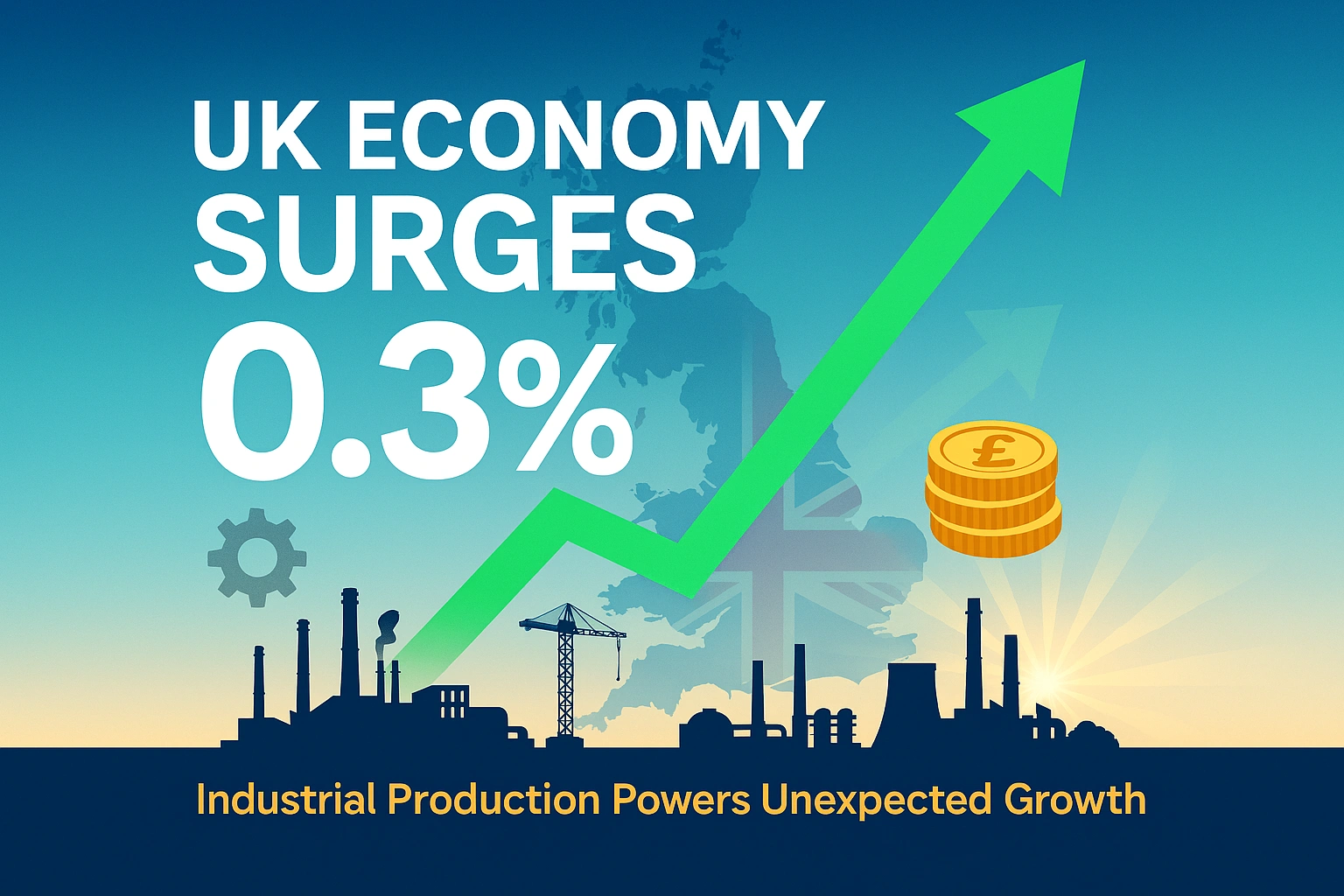
UK economy grows 0.3% in November 2024, beating forecasts as industrial production surges. Expert analysis reveals what this means for 2026 growth, Bank of England policy, and your financial future.
UK Economy Growth November 2024
Key Highlights:
- Economic growth: 0.3% in November (tripled 0.1% forecast)
- Primary driver: Industrial production surge of 1.1%, led by manufacturing recovery
- Manufacturing rebound: 25.5% increase in motor vehicle output following JLR cyberattack recovery
- Services growth: Solid 0.3% expansion, particularly in hospitality sector
- Significance: Five-month high suggesting economic resilience heading into 2026
- Outlook: Economists increasingly optimistic despite persistent challenges
Here’s something that doesn’t happen often in British economic data: genuine surprise. On a grey January morning, the Office for National Statistics dropped numbers that made economists do a double-take. The UK economy expanded by 0.3% in November 2024—triple what the forecasting consensus had predicted.
But what makes this figure particularly fascinating isn’t just that it beat expectations. It’s how it did so, and what that tells us about the underlying structural dynamics of Britain’s economic engine as we navigate through 2026.
The Numbers Behind the Surprise: More Than Just a Statistical Blip
Let’s cut through the noise. When economic data exceeds forecasts by 200%, skepticism is warranted. Yet the November figures tell a coherent story that aligns with recent on-the-ground developments across British industry.
According to official ONS data, production output surged by 1.1% month-on-month—a remarkable reversal after three consecutive months of decline. This wasn’t statistical noise or creative accounting. It represented real factories producing real goods, shipping real products to real customers.
The standout performer? Manufacturing output jumped 2.1%, with the transport equipment sector leading the charge with a staggering 10.7% increase. To put that in perspective, motor vehicle manufacturing alone posted a 25.5% monthly gain. That’s the kind of number you might see during a post-recession boom, not in the middle of uncertain economic times.
Jane Foley, head of FX Strategy at Rabobank, told CNBC the data represented a “big relief” following October’s unexpected contraction. But relief implies we were merely avoiding disaster. These numbers suggest something more interesting might be happening beneath the surface.
Industrial Production: The Unsung Hero of Britain’s Economic Story
For years, the narrative around British economic growth has centered on services—financial services, professional services, the knowledge economy. Manufacturing? That’s supposedly a declining sector, a relic of Britain’s industrial past.
November’s data challenges that assumption head-on.
The surge in industrial output wasn’t just about one sector having a good month. It reflected genuine operational capacity coming back online across multiple manufacturing subsectors. Yes, the recovery at Jaguar Land Rover’s facilities following the devastating September cyberattack—which cost the UK economy an estimated £1.9 billion—played a significant role. But that’s precisely the point.
When a single manufacturer can move the national GDP needle by getting back to work, it demonstrates how vital our industrial base remains. According to recent analysis, manufacturing still accounts for 9.4% of the UK economy, down from 17% in 1990 but still representing billions in economic output and hundreds of thousands of jobs.
The JLR recovery exemplifies modern manufacturing’s complexity and interconnectedness. The cyberattack didn’t just shut down JLR’s factories; it paralyzed over 5,000 organizations in the supply chain, from small component suppliers to logistics firms. When production resumed in early October, the economic ripple effects were substantial and immediate.
But here’s what the headline numbers don’t capture: manufacturing’s return isn’t about nostalgia for Britain’s industrial past. It’s about high-value, technologically sophisticated production in sectors like aerospace, pharmaceuticals, and luxury automotive—areas where the UK maintains genuine competitive advantages in global markets.
What This Means for the Average Briton: Beyond the Statistical Abstract
Economic growth figures can feel abstract, disconnected from daily reality. So let’s translate the 0.3% into something tangible.
First, employment. Manufacturing directly supports over 2.6 million jobs in the UK, but the multiplier effects extend far beyond factory floors. Every manufacturing job typically supports 2-3 additional positions in the supply chain, from logistics to business services. The industrial recovery signaled by November’s data suggests these jobs are becoming more secure, not less.
Regional implications matter enormously. The North West of England remains Britain’s manufacturing powerhouse with £29.5 billion in annual output. When manufacturing rebounds, these regions—often overlooked in London-centric economic narratives—benefit disproportionately.
For consumers, the picture is nuanced. Services output grew 0.3%, with accommodation and food service activities posting particularly strong gains of 2.0% after October’s decline. Translation? Hospitality is bouncing back, restaurants are filling seats, and consumer confidence appears to be stabilizing after months of anxiety around the Autumn Budget.
Yet challenges persist. Real household disposable income per capita remains barely 2% higher than pre-pandemic levels—a sobering reminder that while the economy might be growing, living standards are still under pressure.
The Political Economy Lens: Winners, Losers, and the Budget’s Shadow
Economics and politics are inseparable in 2026’s Britain, and November’s growth figures arrive at a politically charged moment.
Chancellor Rachel Reeves’ Autumn Budget 2025 announced £26 billion in tax increases—the third-largest tax-raising budget in post-war British history. The political gamble was explicit: short-term fiscal pain for medium-term economic stability and growth.
November’s data provides the first real test of that strategy. The Institute for Fiscal Studies noted that Reeves faced a smaller fiscal repair job than anticipated, with forecast downgrades partially offset by higher-than-expected inflation and wage growth. That created fiscal space for the Chancellor to increase her headroom to £22 billion—a prudent buffer against economic turbulence.
But here’s the political calculus: borrowing will be higher in each of the next three years under Reeves’ plans. Only after 2029-30 will borrowing decrease, enabled by back-loaded tax rises and spending restraint promises that conveniently come just before the next election. As the IFS tactfully noted, “one could be forgiven for treating that with a healthy dose of skepticism.”
November’s growth surge gives Reeves breathing room. It demonstrates economic resilience despite uncertainty around her fiscal changes. Manufacturing’s recovery, in particular, validates her emphasis on industrial strategy—supporting sectors where Britain has competitive advantages rather than spreading resources thinly across the entire economy.
Yet opposition voices remain vocal. Shadow Chancellor Mel Stride described growth as “still flatlining,” arguing that the government’s approach of raising taxes rather than controlling benefit expenditure weighs heavily on business confidence and economic dynamism.
The truth, as usual, sits somewhere in the middle. One month’s strong data doesn’t establish a trend. But neither does it represent a statistical fluke. It suggests the UK economy possesses more underlying resilience than recent pessimistic commentary acknowledged.
Storm Clouds on the Horizon: Why Optimism Must Be Qualified
Let’s inject some necessary realism. One good month doesn’t make a robust recovery, and significant headwinds remain clearly visible.
Inflation Remains Stubborn: Despite falling from its October 2025 peak of 3.6%, inflation sits at 3.2%—well above the Bank of England’s 2% target. The Bank of England has emphasized that underlying inflationary pressures, particularly in services, remain concerning.
Interest Rate Uncertainty: The Bank of England cut rates to 3.75% in December 2025, the fourth reduction of the year. But future cuts remain uncertain. Market signals suggest investors are less confident about the pace of easing in 2026 than economists’ forecasts would justify.
As Morningstar analysts noted, “Stubborn wage growth will constrain how far the Bank can cut.” Private sector regular pay growth remains around 4.9%—substantially higher than what’s compatible with sustained 2% inflation. Until wage pressures moderate convincingly, the Monetary Policy Committee will remain cautious about aggressive rate cutting.
Labor Market Weakness: Unemployment rose to 5.1% in August-October 2025—the highest since 2021. Youth unemployment hit 16.0%, the worst level since early 2015. These aren’t abstract statistics; they represent hundreds of thousands of people struggling to find work in an economy that’s supposedly growing.
Global Headwinds: The OECD warns of persistent global uncertainties, from trade policy volatility to geopolitical tensions. UK-weighted world GDP growth is projected below historical averages, limiting export opportunities for British manufacturers and service providers.
Productivity Puzzle: Perhaps most troubling, the OBR downgraded its medium-term productivity forecast from 1.3% annually to 1.0%—closer to the dismal post-2008 trend. Without productivity improvements, sustainable wage growth becomes impossible, and living standards stagnate.
Productivity remains Britain’s fundamental economic challenge. November’s industrial surge is welcome, but unless it translates into sustained productivity gains—doing more with less, innovating processes, adopting new technologies—it won’t fundamentally alter Britain’s economic trajectory.
Expert Forecast: Navigating 2026’s Economic Landscape
So where do we go from here? Let’s avoid the false precision of exact numerical forecasts and instead focus on scenarios and probabilities.
The Baseline Scenario (60% probability): Modest, uneven growth continues through 2026. Quarterly GDP growth oscillates between 0.1% and 0.3%, averaging around 1.2-1.5% annually. The Bank of England continues gradual rate cuts, bringing Bank Rate down to 3.0-3.25% by year-end. Inflation slowly converges toward target, reaching approximately 2.2% by Q4 2026.
Manufacturing maintains momentum as supply chains fully normalize post-JLR recovery, but services growth remains subdued amid fiscal tightening and cautious consumer behavior. Real wage growth turns positive but remains modest. Unemployment stabilizes around 5.0%.
This scenario aligns with current OBR projections and represents neither triumph nor disaster—just gradual, grinding progress.
The Optimistic Scenario (25% probability): Something clicks. Business confidence improves significantly as Budget uncertainty fades and clarity around taxation emerges. The industrial strategy gains traction, driving increased capital investment in high-productivity sectors. Planning reforms accelerate housing and infrastructure development.
Consumer confidence rebounds more strongly than anticipated as real wages rise and mortgage rates fall. Export growth surprises to the upside as UK competitiveness improves relative to struggling European peers. GDP growth reaches 1.8-2.0% in 2026, with unemployment falling back toward 4.5%.
In this scenario, November’s data marked an inflection point—the moment when Britain’s economic engine found its rhythm again.
The Pessimistic Scenario (15% probability): Global shocks derail fragile recovery. Escalating trade tensions, geopolitical instability, or financial market turbulence trigger renewed economic anxiety. Consumer and business confidence crater. The productivity downgrade proves prescient as structural weaknesses reassert themselves.
The Bank of England faces an impossible choice between cutting rates to support growth and holding firm to combat persistent inflation. Growth stalls, potentially turning negative in one or more quarters. Unemployment rises above 5.5%. Political stability fractures as the fiscal consolidation strategy collapses.
This isn’t prediction—it’s acknowledging tail risks that could rapidly materialize in our interconnected, fragile global economy.
For Investors and Business Leaders: The prudent approach is planning for the baseline while hedging against downside risks and positioning to capitalize on potential upside. That means:
- Maintaining liquidity to navigate potential turbulence
- Focusing on productivity improvements rather than relying on demand-side tailwinds
- Exploring opportunities in advanced manufacturing, where Britain maintains competitive advantages
- Watching inflation and wage data closely—these will determine the Bank of England’s policy trajectory
- Diversifying geographically to reduce dependence on UK-specific risks
For households, the advice is similar: maintain emergency savings, lock in mortgage rates if you can afford to, and don’t count on rapid improvements in living standards. But also don’t succumb to excessive pessimism. Britain’s economy has repeatedly demonstrated more resilience than commentators anticipated.
The Bigger Picture: Britain’s Economic Identity in Transition
Step back from the monthly data and a larger pattern emerges. Britain’s economy is undergoing a quiet but significant transition.
The service-sector dominance that defined Britain’s economy for three decades is giving way to something more balanced. Not a return to mid-20th-century manufacturing dominance—that ship sailed long ago—but recognition that high-value manufacturing and services are complementary, not competitive.
November’s data captures this transition mid-stream. Manufacturing’s strong performance wasn’t despite Britain’s service-oriented economy but because of it. Modern advanced manufacturing depends on sophisticated business services, logistics networks, financial infrastructure, and professional expertise.
The cyberattack that paralyzed JLR and the subsequent recovery both demonstrate this reality. Britain’s manufacturing sector survives and thrives not through mass production but through specialization, quality, and integration with global value chains. That model proved vulnerable to digital disruption but also capable of rapid recovery when systems came back online.
This is Britain’s economic reality in 2026: neither industrial powerhouse nor pure service economy, but something hybrid and evolving. Success requires embracing that complexity rather than retreating into simplified narratives about what “type” of economy Britain should be.
Final Analysis: Cautious Optimism with Eyes Wide Open
November’s 0.3% growth isn’t cause for celebration or complacency. It’s evidence of resilience—the kind that emerges from businesses adapting, workers persevering, and industrial capacity proving more robust than pessimists believed.
The industrial production surge matters not because manufacturing will save Britain’s economy single-handedly but because it demonstrates that multiple growth engines can fire simultaneously. Services, manufacturing, and construction can all contribute when conditions align favorably.
Yet fundamental challenges persist. Productivity remains stubbornly low. Living standards barely exceed pre-pandemic levels. Public debt continues rising. Inflation sits well above target. Global conditions remain uncertain. Political tensions around fiscal policy show no signs of abating.
The path forward requires acknowledging both progress and problems. November’s data suggests Britain’s economy possesses underlying strength that recent gloomy forecasts underestimated. That’s genuinely good news. But converting one month’s strong performance into sustained, inclusive, productivity-driven growth remains the challenge.
As we navigate deeper into 2026, the question isn’t whether November marked a turning point—monthly data rarely does. The question is whether policymakers, business leaders, and society more broadly can build on this resilience to create the conditions for sustainable prosperity.
The answer to that question won’t be found in GDP reports. It will be written in investment decisions, productivity improvements, policy choices, and the daily efforts of millions of Britons working to build a more prosperous future.
One thing is certain: those who dismissed Britain’s economic prospects based on a few months of weak data should reconsider. And those celebrating November’s figures as vindicating current policies should remember that economic performance isn’t determined by individual data points but by sustained trends, structural fundamentals, and the ability to navigate uncertainty with wisdom and adaptability.
November 2024’s surprise growth reminds us that economies—like people—are more resilient, complex, and unpredictable than our models suggest. That’s simultaneously humbling and encouraging. The path ahead remains uncertain, but it’s far from predetermined.
Sources: All data sourced from official UK government statistics, Bank of England publications, and analysis from premium economic research institutions including the OECD, IFS, and Institute for Government.
Discover more from The Economy
Subscribe to get the latest posts sent to your email.


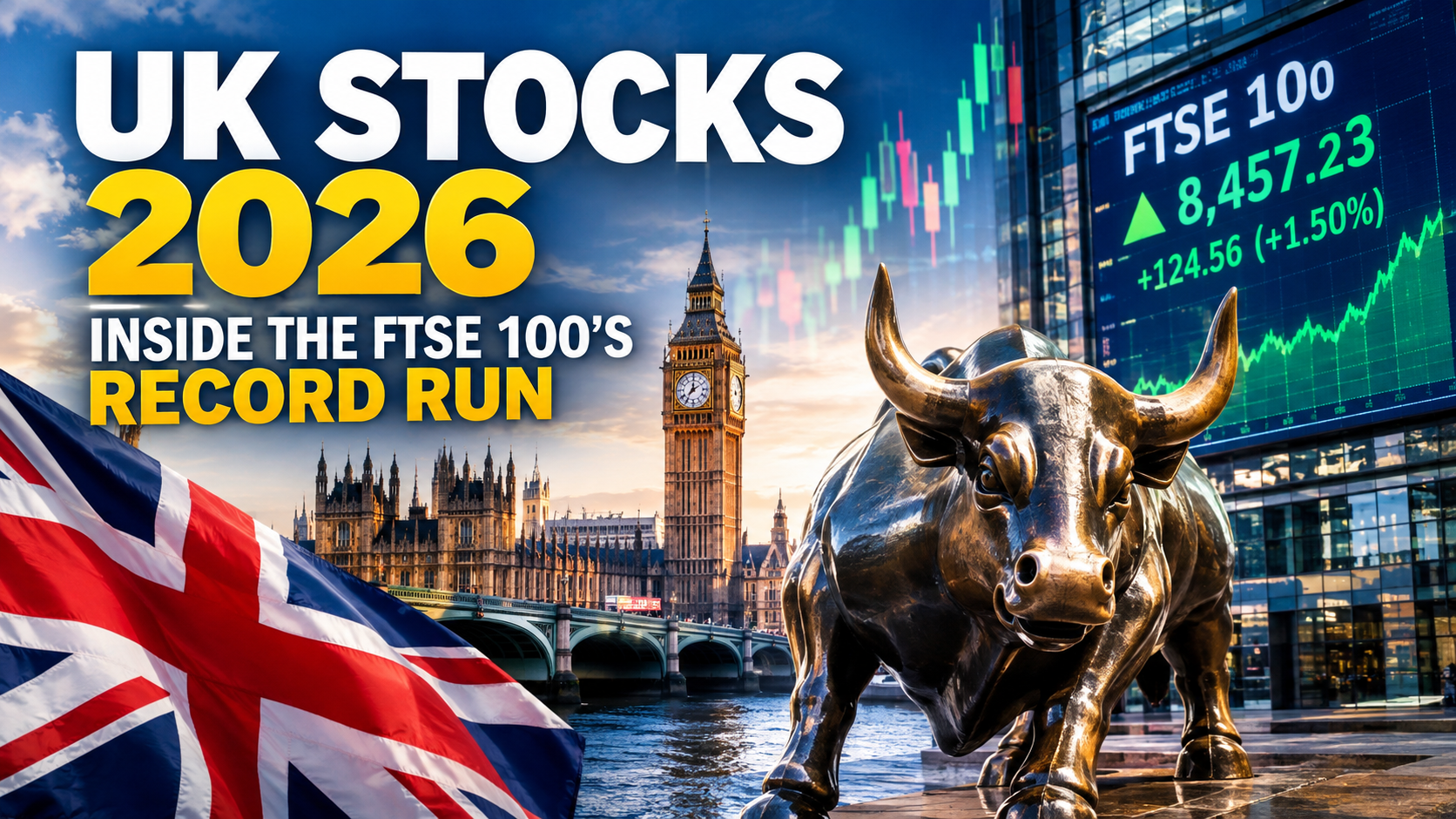
Is the FTSE 100 at a record high in 2026? Yes, repeatedly. The UK’s blue-chip index broke through the 10,000-point threshold for the first time in its history on January 2, 2026, touching an intraday peak of 10,046.25 points, and has gone on to set a string of further records through the year — reaching roughly 10,846.70 by late February and approaching 10,908 by late July, according to tracking from Trading Economics and Hargreaves Lansdown.
That run extends a strong 2025, when the index posted an annual gain of more than 20% — a performance that had already reset expectations for what UK equities could deliver after years of being treated as a laggard relative to U.S. markets.
What’s Driving the Rally
Featured Snippet Target: The FTSE 100’s 2026 rally has been driven by a combination of earnings resilience across globally diversified blue-chip companies, attractive valuations relative to international peers, expectations of further Bank of England interest rate cuts as UK inflation eases, and a weaker sterling that boosts overseas earnings for the index’s many exporter-heavy constituents.
UK inflation has been the single biggest tailwind. By mid-February, inflation had slowed to 3% — its lowest level since March 2025 — driven by falling petrol, airfare, food, and education costs, which strengthened market expectations for continued Bank of England rate cuts, according to Trading Economics. That combination of falling inflation and rate-cut expectations has repeatedly been cited as the catalyst behind individual record-high sessions throughout the year — including a session in which the index breached 8,300 points as traders returned from a long weekend pricing in additional Bank of England easing ahead of a policy meeting, per Reuters coverage carried by Yahoo Finance.
Sector leadership has rotated through the year rather than concentrating in one theme the way U.S. markets have around AI. Early-year gains were led by companies with global earnings exposure — Shell, HSBC Holdings, and AstraZeneca all posted record highs during a rally that saw the index climb 8.5% in the first two months of 2026 alone, a bounce that followed a sharp April 2025 selloff tied to that year’s “Liberation Day” tariff turmoil, according to analysis from interactive investor. Defence stocks were a standout theme later in the rally, with BAE Systems gaining roughly 4% on stronger revenue, orders, and profit, alongside gains for Babcock and Rolls-Royce, while mining names including Glencore, Antofagasta, and Fresnillo advanced as metals and precious-metals prices climbed.
The Global Comparison Matters
For context on what a 20%+ annual gain actually represents globally: the FTSE 100’s roughly 8.5% year-to-date gain by late February was only bettered among major global indices by a near-14% jump in Japan’s Nikkei 225, which was itself boosted by fiscal stimulus expectations following a change in Japanese political leadership. That places UK equities firmly in the upper tier of global index performance for 2026 — a notable reversal from the index’s reputation in prior years as an unloved, undervalued market overshadowed by U.S. technology stocks.
Individual stock winners have varied by theme. Takeover targets Beazley and Schroders posted the largest single gains among FTSE 100 constituents earlier in the year, while the mining quartet of Antofagasta, Endeavour Mining, Glencore, and Fresnillo posted gains between 27% and 33% on the back of rising metals prices. More than 40 constituent stocks registered double-digit gains through the first two months of the year alone, spanning sectors from consumer staples (Diageo) to telecoms (BT Group) to retail (Tesco).
Not Every Sector Is Winning
The rally has not lifted every FTSE 100 name. Data and information-services companies including RELX, Experian, and Sage Group have lagged the broader index — RELX shares fell by more than a fifth through the early part of the year — as investors reassessed the competitive threat AI-driven tools pose to traditional data and legal-services businesses. That divergence mirrors, on a smaller scale, the AI-driven winner-loser split playing out across U.S. markets, where AI infrastructure spenders have vastly outperformed companies whose core business AI threatens to disintermediate.
Risks to the Rally
Analysts tracking the FTSE 100’s record run through 2026 have consistently flagged the same set of risks even as the index kept climbing: heightened geopolitical tensions (particularly any escalation of the Middle East conflict affecting oil prices, which spiked to $110 a barrel at one point during the year), an unexpected resurgence in UK inflation that could stall Bank of England rate cuts, a sharper-than-expected slowdown in global growth, or an earnings-delivery breakdown among the index’s largest constituents that could unsettle broader sentiment. None of these risks had materialized meaningfully enough to derail the rally as of late summer 2026, but each remains a live catalyst that could reverse the index’s momentum.
The Bottom Line
The FTSE 100’s 2026 performance represents one of the most significant re-ratings of UK equities in years, driven by a genuine combination of falling inflation, rate-cut expectations, resilient blue-chip earnings, and a weaker pound that flatters the index’s globally-earning exporters. But the rally is not uniform — data and information-services stocks facing AI disruption have been left behind, and the same geopolitical and inflation risks that have periodically rattled global markets all year remain squarely in play for UK equities too.
Next step: Investors tracking UK equities should watch Bank of England policy meetings and UK inflation prints as the clearest near-term signal for whether the FTSE 100’s rate-cut-driven rally has further room to run.
Discover more from The Economy
Subscribe to get the latest posts sent to your email.
A new Reuters poll shows 90% of economists expect the BoE to hold rates at 3.75% for the rest of 2026 — up from 83% last month. Here’s why the consensus hardened.
The Bank of England looks set to sit tight for the rest of 2026, and the consensus behind that view is getting stronger, not weaker. Per Investing.com’s coverage of the Reuters poll, the Bank will leave rates unchanged at 3.75% for the rest of the year according to a strong majority of economists, who have held that view since the war began in late February. Nearly 90% — 56 of 64 respondents — now expect no change through year-end, up from 83% last month, with six expecting a hike and two a cut; no one in the poll, conducted August 13–18, expects a September move.
Key Takeaways
- A Reuters poll of 64 economists (Aug 13–18) shows 56 now expect the BoE to hold Bank Rate at 3.75% through year-end — 90%, up from 83% last month.
- No economist in the poll expects a rate change at the September MPC meeting.
- The consensus has held since the US-Israeli war on Iran began in late February, with little evidence yet of energy-price spillover into the broader economy.
- Markets remain slightly more hawkish than economists, still pricing some chance of a rise by year-end.
- The BoE’s own guidance flags rising Q3/Q4 inflation risk tied specifically to Middle East energy prices.
The consensus is driven less by domestic demand and more by an external variable the Bank has flagged repeatedly. Per the same Reuters poll coverage, the UK economy has stayed mostly resilient since the war began, with little evidence of energy-price spillover into the broader economy — giving the Bank room to stay on the sidelines.
That resilience is fragile by the Bank’s own admission. According to an August 2026 review from Hanbury Wealth, the MPC voted six-to-three at its July 30 meeting to hold at 3.75%, with policymakers signaling rates could rise if Middle East-linked inflationary pressure intensifies; Governor Andrew Bailey said inflation had fallen faster than expected, but the conflict continues to mean high and volatile energy prices that will push inflation back up later in the year. The Bank’s own trajectory reflects this: per the House of Commons Library’s inflation briefing, based on mid-June energy pricing, the Bank projected CPI at “a little under 3%” in Q3 2026 and “a little over 3¼%” in Q4 — a downgrade from its April forecast.
There’s a genuine two-sided risk the poll’s headline framing tends to flatten. On the downside for inflation, the same House of Commons briefing notes that if Middle East energy disruption proves short-lived and oil and gas prices decline, inflation could instead fall from a September 2026 peak toward the Bank’s 2% target by Q2 2027. On the upside risk, HSBC UK economist Elizabeth Martins told Reuters (via Investing.com) that “a big rebound in energy prices would certainly change things.”
Markets aren’t as settled as the economist consensus: per the same poll coverage, financial markets are still pricing in one quarter-point rate rise by year-end — a genuine gap between what economists expect and what traders are hedging against, reported by outlets as two separate data points rather than connected explicitly.
Underlying data support a “resilient but fragile” framing. A KPMG-cited economic overview from Opus Business Advisory Group shows GDP grew 0.7% in the three months to May, slightly down from 0.8% in April, while core inflation fell more than expected in the twelve months to June, reaching its lowest rate since March 2025 — evidence the disinflation trend independent of energy hasn’t reversed. Separately, the House of Commons Library data shows food price inflation eased to 1.7% in June, its lowest since August 2024, reinforcing that the risk is concentrated in energy rather than broad-based prices.
Why It Matters
For borrowers, a prolonged hold at 3.75% keeps mortgage costs elevated relative to sharper-cut scenarios floated earlier in the year. For savers, it sustains relatively attractive cash returns. For the government, Opus’s review notes Prime Minister Andy Burnham has pledged a £2 bus-fare cap and removal of VAT from household electricity bills from October while maintaining existing fiscal rules and avoiding tax rises — a combination that gets harder to fund if borrowing costs stay elevated through year-end.
Data and Evidence
- Bank Rate: held at 3.75% since the July 30 MPC vote (6-3)
- Reuters poll: 56 of 64 economists (90%) expect no change through year-end, up from 83% last month
- BoE inflation forecast: ~3% Q3 2026, ~3.25%+ Q4 2026
- GDP growth: 0.7% in the three months to May 2026
- Food inflation: 1.7% in June 2026, lowest since August 2024
Global Impact
A UK central bank holding firm against energy-driven inflation risk is a data point other energy-importing economies — including Pakistan and much of South and Southeast Asia — are watching as a template for treating Middle East-linked price shocks as transitory.
What Happens Next
The next live decision point is the September MPC meeting, where the poll shows unanimous expectation of no change. The Q3/Q4 inflation prints will show whether the Bank’s own ~3.25% forecast materializes — and whether the hold consensus survives contact with that data.
Frequently Asked Questions
What is the UK’s current interest rate?
3.75%, unchanged since July 30, 2026.
Why isn’t the BoE cutting further?
Concern that Middle East-driven energy prices could push inflation back up in H2 2026.
Will UK mortgage rates change soon?
Based on the current poll, no near-term move is expected.
What would change the outlook?
A significant rebound — or further de-escalation — in Middle East energy prices.
Do markets agree with economists?
Not entirely — traders still price some chance of a year-end rate rise.
Discover more from The Economy
Subscribe to get the latest posts sent to your email.

Four major UK forecasters — the OBR, the Bank of England-adjacent IFS, NIESR, and RSM UK — are converging on a similar diagnosis for 2026: an economy that’s avoiding outright recession but also not meaningfully growing, squeezed between resilient inflation and cautious business investment.
The Growth Numbers Are Converging Downward
RSM UK’s latest forecast puts 2026 GDP growth at just 1.0%, down from 1.4% in 2025, describing the pattern explicitly as “stagflation-lite” for a second consecutive year, with a modest recovery only expected in 2027 as inflation fades and rate cuts continue, according to RSM’s economic outlook. NIESR’s central forecast is slightly more optimistic at 1.4% GDP growth for 2026, describing the economy as beginning the year “closer to normal than at any other point this decade” despite heightened geopolitical stress, per NIESR’s winter 2026 outlook.
The Institute for Fiscal Studies frames the constraint more directly: consumption and business investment will likely stay muted as elevated uncertainty, still-restrictive monetary policy, and continued household saving all weigh on activity, with businesses “dissuaded from investing by squeezed margins and high financing costs,” according to IFS’s economic outlook.
Inflation Is Heading Back Up, Not Down
The most consequential shared theme across forecasters: inflation, which briefly dipped below 3% in early 2026, is expected to climb back toward 3.5% by year-end. RSM attributes this to a 13% rise in the energy price cap in July, higher motor fuel costs, and pass-through effects into food and goods prices, forecasting inflation to average 3.1% for 2026 overall, per RSM’s analysis. Notably, the report flags that the IMF has revised its UK inflation and growth forecasts more sharply than for any other developed economy, given Britain’s outsized reliance on gas for electricity pricing.
Bank of England Rate Path
Despite the inflation uptick, both NIESR and IFS still expect further Bank of England rate cuts through 2026. NIESR forecasts two further 25-basis-point cuts bringing Bank Rate to 3.25% by year-end — its estimate of the long-run neutral rate — following a cut to 3.75% in December 2025. IFS’s own forecast assumes Bank Rate reaches 3.5% in the first half of 2026. The divergence between continued rate cuts and rising inflation is the core tension defining UK monetary policy through the rest of the year.
Fiscal Headroom Is Nearly Gone
The Office for Budget Responsibility’s March 2026 outlook flags the tax-to-GDP ratio rising to a post-war high of 38% by 2030-31, with the November 2025 Budget having raised taxes by roughly £26 billion annually against OBR-assessed fiscal headroom of just £22 billion, according to NIESR’s reading of the same data. NIESR’s own forecast is notably more pessimistic than the OBR’s, projecting the current budget stays close to balance by 2029-30 with effectively no headroom at all — meaning public debt continues climbing toward 100% of GDP by decade’s end, sharply limiting the government’s room to respond to any future shock. RSM adds a domestic political risk on top: a Labour leadership contest raising the prospect of higher borrowing and renewed gilt yield pressure, with a short recession “not ruled out” if that risk materializes alongside global headwinds.
For UK-based investors, Deloitte notes the practical fallout includes a reduced cash ISA allowance for under-65s (down from £20,000 to £12,000) and a 2027 increase in tax on landlord property income — both tightening the traditional wealth-preservation toolkit just as broader growth conditions stay subdued, according to Deloitte’s TaxScape 2026 briefing.
Discover more from The Economy
Subscribe to get the latest posts sent to your email.

Neocloud Economics in 2026: GPU Debt, Utilization and Power

What Is a Neocloud? How AI GPU Clouds Work and Compare

Lula Re-elected in 2026: What Changes for the Dollar, Brazilian Stocks, and Interest Rates?

Lula Wins Brazil’s 2026 Election: Five Economic Tests for 2027

SSI November 2026 Payment: Why Benefits Arrive October 30

Russia Sanctions Waiver: What Asian Oil Buyers Gain

Asia Markets Weekly: How Oil, US Yields and the Fed Reach Tokyo, Kuala Lumpur and Karachi

Gold Near $4,000: Buy, Hold or Wait? A Pakistan Tola Price Guide

US 10-Year Treasury Yield Near 5%: The Hidden Cost for Pakistani Investors

Fed Meeting on October 28: Hike or Hold—and Why Pakistan Investors Should Care

Can Pakistan Turn US–Iran Mediation Into an Economic Dividend?

Oil Above $100: How Higher Crude Prices Reach Pakistan’s Rupee, Petrol and Imports

SBP Interest Rate at 11.5%: What Will Decide Pakistan’s Next Policy Move?

The Global South: Debt, Climate Finance and Investment in 2026

Crude Oil & Petroleum Market Analysis: OPEC+ Decisions and Price Forecasts

Top US Convenience Store Chains: Store Counts, EV Charging, and Sales Trends

Algorithmic Dogfights: Why the U.S. and China Must Establish Rules of Engagement for Autonomous Air Power

Who Is Shivon Zilis? The Neuralink Executive at the Center of the Musk–OpenAI Trial

Social Security Extra $90 Deposit: Who Qualifies for the October 2026 Medicare Rebate?

Corporate America Faces a New Debt Test as US Borrowing Costs Surge

Global Economic Outlook 2026: 7 Forces Reshaping Markets, Trade and Business

Gold Price Outlook 2026: The Forces Behind the Forecasts—and What Could Reverse Them

Gold Falls 3.7% as Yields Surge: Is Gold Still a Safe Haven in 2026?

Stock Market Crash in 2026? Warning Signs, Scenarios and a Calm Investor Checklist

MAS Allocates S$1.45 Billion to Five Asset Managers in Third EQDP Batch: Total Deployment Reaches S$5.4 Billion

Stock Market Today: Dow, S&P 500, and Nasdaq Retreat as Treasury Yields

Anthropic Bans Sustained Abuse of Claude AI Under New Usage Policy Effective November 12, 2026

Geopolitics and Your Portfolio: How International Affairs Move Global Markets
-

 Markets & Finance10 months ago
Top 15 Stocks for Investment in 2026 in PSX: Your Complete Guide to Pakistan’s Best Investment Opportunities
-

 Analysis8 months ago
Johor’s Investment Boom: The Hidden Costs Behind Malaysia’s Most Ambitious Economic Surge
-

 Analysis8 months ago
Top 10 Stocks for Investment in PSX for Quick Returns in 2026
-

 Banks9 months ago
Best Investments in Pakistan 2026: Top 10 Low-Price Shares and Long-Term Picks for the PSX
-

 Analysis9 months ago
Brazil’s Rare Earth Race: US, EU, and China Compete for Critical Minerals as Tensions Rise
-

 Investment10 months ago
Top 10 Mutual Fund Managers in Pakistan for Investment in 2026: A Comprehensive Guide for Optimal Returns
-

 Global Economy10 months ago
15 Most Lucrative Sectors for Investment in Pakistan: A 2025 Data-Driven Analysis
-

 Global Economy10 months ago
Pakistan’s Export Goldmine: 10 Game-Changing Markets Where Pakistani Businesses Are Winning Big in 2025