
Markets & Finance
UK Stocks 2026: Inside the FTSE 100’s Record Run


Is the FTSE 100 at a record high in 2026? Yes, repeatedly. The UK’s blue-chip index broke through the 10,000-point threshold for the first time in its history on January 2, 2026, touching an intraday peak of 10,046.25 points, and has gone on to set a string of further records through the year — reaching roughly 10,846.70 by late February and approaching 10,908 by late July, according to tracking from Trading Economics and Hargreaves Lansdown.
That run extends a strong 2025, when the index posted an annual gain of more than 20% — a performance that had already reset expectations for what UK equities could deliver after years of being treated as a laggard relative to U.S. markets.
What’s Driving the Rally
Featured Snippet Target: The FTSE 100’s 2026 rally has been driven by a combination of earnings resilience across globally diversified blue-chip companies, attractive valuations relative to international peers, expectations of further Bank of England interest rate cuts as UK inflation eases, and a weaker sterling that boosts overseas earnings for the index’s many exporter-heavy constituents.
UK inflation has been the single biggest tailwind. By mid-February, inflation had slowed to 3% — its lowest level since March 2025 — driven by falling petrol, airfare, food, and education costs, which strengthened market expectations for continued Bank of England rate cuts, according to Trading Economics. That combination of falling inflation and rate-cut expectations has repeatedly been cited as the catalyst behind individual record-high sessions throughout the year — including a session in which the index breached 8,300 points as traders returned from a long weekend pricing in additional Bank of England easing ahead of a policy meeting, per Reuters coverage carried by Yahoo Finance.
Sector leadership has rotated through the year rather than concentrating in one theme the way U.S. markets have around AI. Early-year gains were led by companies with global earnings exposure — Shell, HSBC Holdings, and AstraZeneca all posted record highs during a rally that saw the index climb 8.5% in the first two months of 2026 alone, a bounce that followed a sharp April 2025 selloff tied to that year’s “Liberation Day” tariff turmoil, according to analysis from interactive investor. Defence stocks were a standout theme later in the rally, with BAE Systems gaining roughly 4% on stronger revenue, orders, and profit, alongside gains for Babcock and Rolls-Royce, while mining names including Glencore, Antofagasta, and Fresnillo advanced as metals and precious-metals prices climbed.
The Global Comparison Matters
For context on what a 20%+ annual gain actually represents globally: the FTSE 100’s roughly 8.5% year-to-date gain by late February was only bettered among major global indices by a near-14% jump in Japan’s Nikkei 225, which was itself boosted by fiscal stimulus expectations following a change in Japanese political leadership. That places UK equities firmly in the upper tier of global index performance for 2026 — a notable reversal from the index’s reputation in prior years as an unloved, undervalued market overshadowed by U.S. technology stocks.
Individual stock winners have varied by theme. Takeover targets Beazley and Schroders posted the largest single gains among FTSE 100 constituents earlier in the year, while the mining quartet of Antofagasta, Endeavour Mining, Glencore, and Fresnillo posted gains between 27% and 33% on the back of rising metals prices. More than 40 constituent stocks registered double-digit gains through the first two months of the year alone, spanning sectors from consumer staples (Diageo) to telecoms (BT Group) to retail (Tesco).
Not Every Sector Is Winning
The rally has not lifted every FTSE 100 name. Data and information-services companies including RELX, Experian, and Sage Group have lagged the broader index — RELX shares fell by more than a fifth through the early part of the year — as investors reassessed the competitive threat AI-driven tools pose to traditional data and legal-services businesses. That divergence mirrors, on a smaller scale, the AI-driven winner-loser split playing out across U.S. markets, where AI infrastructure spenders have vastly outperformed companies whose core business AI threatens to disintermediate.
Risks to the Rally
Analysts tracking the FTSE 100’s record run through 2026 have consistently flagged the same set of risks even as the index kept climbing: heightened geopolitical tensions (particularly any escalation of the Middle East conflict affecting oil prices, which spiked to $110 a barrel at one point during the year), an unexpected resurgence in UK inflation that could stall Bank of England rate cuts, a sharper-than-expected slowdown in global growth, or an earnings-delivery breakdown among the index’s largest constituents that could unsettle broader sentiment. None of these risks had materialized meaningfully enough to derail the rally as of late summer 2026, but each remains a live catalyst that could reverse the index’s momentum.
The Bottom Line
The FTSE 100’s 2026 performance represents one of the most significant re-ratings of UK equities in years, driven by a genuine combination of falling inflation, rate-cut expectations, resilient blue-chip earnings, and a weaker pound that flatters the index’s globally-earning exporters. But the rally is not uniform — data and information-services stocks facing AI disruption have been left behind, and the same geopolitical and inflation risks that have periodically rattled global markets all year remain squarely in play for UK equities too.
Next step: Investors tracking UK equities should watch Bank of England policy meetings and UK inflation prints as the clearest near-term signal for whether the FTSE 100’s rate-cut-driven rally has further room to run.
Discover more from The Economy
Subscribe to get the latest posts sent to your email.



What is Fox Corporation’s biggest move in 2026? Fox delivered record annual revenue and adjusted EBITDA in fiscal 2026 while simultaneously announcing its most significant strategic move in years: a proposed acquisition of Roku, Inc., designed to combine Fox’s sports, news, and entertainment content — plus its Tubi streaming service — with Roku’s connected-TV platform and its direct relationship with more than 100 million global streaming households, according to Fox’s SEC filings related to the transaction.
The company also returned approximately $2.3 billion in capital to shareholders during fiscal 2026 — a figure that underscores how the Roku deal is being funded from a position of financial strength rather than distress, a contrast with the defensive posture many legacy media companies have adopted amid streaming-era pressure on traditional broadcast and cable economics.
Tubi’s Record Year
Featured Snippet Target: Fox’s ad-supported streaming service Tubi delivered record revenue in fiscal 2026, growing more than 25% year-over-year on the strength of over 100 million monthly active users, with total viewing time reaching approximately 13.2 billion hours — a 20% increase over fiscal 2025 — making it one of the most-watched free ad-supported streaming services in the United States according to Nielsen’s The Gauge, where it averaged roughly 2.2% of all television viewing over the year.
That growth wasn’t just about viewership volume — Tubi posted its first profitable quarter during the fiscal year, with advertising revenue soaring roughly 27% and average viewing time climbing 18% in that period, according to earnings analysis from Barchart. The platform has also been expanding its content library aggressively, growing its catalog to over 350,000 movies and television episodes, premiering 50 new original titles during the fiscal year, and expanding its “Tubi for Creators” program to include more than 20,000 episodes of creator-led content from over 400 individual creators.
FOX One and the Direct-to-Consumer Push
Fox’s other major 2026 launch was FOX One, its wholly-owned direct-to-consumer subscription streaming service — a move that positions the company to capture subscription revenue directly rather than relying solely on traditional distribution deals and Tubi’s ad-supported model. Combined with the pending Roku transaction, FOX One represents a two-pronged streaming strategy: a subscription product for viewers willing to pay directly, and an expanded free, ad-supported footprint through Tubi and, pending deal completion, Roku’s owned-and-operated Roku Channel.
Live Sports Remains the Core Engine
Even as streaming investments dominate headlines, Fox’s traditional broadcast business — anchored by live sports — has continued to perform well. NFL ratings on Fox strengthened by nearly 12% year-over-year during a recent quarter, according to Barchart’s earnings preview coverage, reinforcing the company’s continued dominance in live sports programming — a category that has proven far more resistant to streaming-driven audience fragmentation than scripted entertainment.
Fox also announced a $1.5 billion share buyback during the year, a signal management has framed as confidence in the company’s underlying growth trajectory even as it simultaneously invests heavily in the FOX One launch and the Roku transaction.
What Analysts Are Watching
Wall Street’s overall read on Fox has remained constructive through the year. Among analysts covering the stock, the consensus rating has held at “Moderate Buy,” with roughly even sentiment split between “Strong Buy” and “Hold” ratings and shares trading above the average analyst price target for extended stretches of the year — an unusual signal that suggests analyst price targets themselves have struggled to keep pace with the stock’s performance, according to coverage from Barchart.
Wall Street has broadly forecast Fox’s per-share earnings to decline modestly in fiscal 2026 on a diluted basis, before rebounding with double-digit percentage growth in fiscal 2027 — a projection that assumes Tubi’s profitability and FOX One’s early subscriber growth begin meaningfully offsetting continued softness in traditional linear-television economics. Fox’s monetization of major sporting events, including its FIFA World Cup 2026 advertising commitments, has been flagged repeatedly by analysts as a key swing factor for whether that fiscal 2027 rebound materializes on schedule.
The Bottom Line
Fox Corporation’s 2026 has been defined by a genuine strategic pivot executed from a position of financial strength: record revenue and shareholder returns funding an aggressive expansion into both ad-supported (Tubi, pending Roku) and subscription (FOX One) streaming, without sacrificing the live-sports programming that remains the company’s core competitive advantage. The Roku transaction, if completed, would meaningfully expand Fox’s direct reach into connected-TV households — arguably the single most contested distribution layer in the entire streaming industry.
Next step: Investors and media-industry watchers should track the Roku acquisition’s regulatory review timeline closely — deal completion, rather than any single quarterly earnings beat, is likely to be the biggest near-term catalyst for how Fox’s connected-TV strategy is ultimately valued by the market.
Discover more from The Economy
Subscribe to get the latest posts sent to your email.
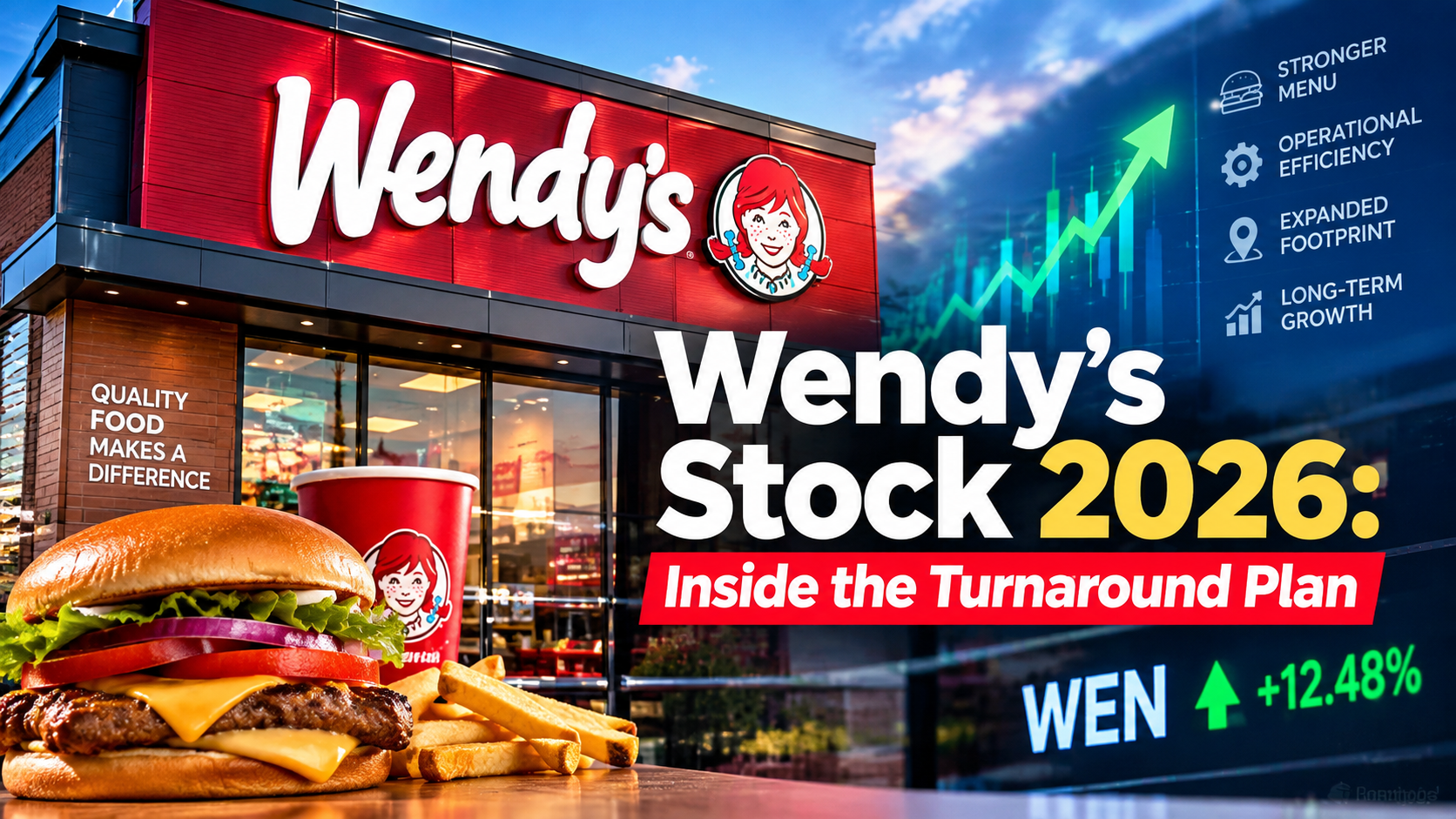
Why did Wendy’s stock fall in 2026? The Wendy’s Company withdrew its full-year 2026 financial outlook and cut its dividend to help fund a turnaround effort after reporting second-quarter results showing global systemwide sales down 6.5% year-over-year, according to the company’s official second-quarter earnings release. The decline was driven by an 8.2% drop in U.S. sales, only partially offset by 3.4% growth internationally — a split that has defined the company’s story for most of the year.
New leadership has been blunt about the scale of the problem. President and CEO Bob Wright, who returned to the company to lead the turnaround, said directly that traffic, the brand’s value proposition, and franchisee economics were not meeting expectations, while outlining five specific areas of focus: rebuilding a quality menu at compelling value, marketing that drives demand, operational excellence, a stronger digital experience, and turning restaurants themselves into a growth engine.
The Numbers Behind the Turnaround
Featured Snippet Target: Wendy’s Q2 2026 results showed revenue of $571 million, net income of $32.6 million, and adjusted EBITDA of $124.1 million, but global systemwide sales fell 6.5% year-over-year — driven primarily by an 8.2% U.S. sales decline — prompting the company to withdraw its full-year guidance and cut its dividend.
The pressure had been building for several quarters before the Q2 announcement. In the first quarter of 2026, Wendy’s reported revenue of $541 million (up 3.3% year-over-year) but adjusted earnings per share of just $0.12 — down 40% from $0.20 in the same quarter of 2025 — as global systemwide sales fell 5.5% on a constant-currency basis, driven by a 7.8% drop in U.S. same-restaurant sales, according to financial analysis from TIKR. Management attributed part of that decline to severe winter weather in January and February, alongside intentional operating-hour reductions tied to the company’s store-footprint optimization initiative, known internally as Project Fresh.
International growth has been the one consistent bright spot. Wendy’s international business delivered 6% systemwide sales growth in the first quarter, powered by new restaurant development in the Philippines and Mexico — a pattern that continued into the second quarter, when international sales grew 3.4% even as the U.S. business contracted sharply.
Is Project Fresh Actually Working?
Company-operated restaurants that have fully implemented the Project Fresh operational playbook outperformed the broader U.S. system by 310 basis points in same-restaurant sales during the first quarter, according to comments from Interim CEO and CFO Ken Cook on the Q1 earnings call — an early data point management has pointed to as evidence the turnaround approach works where it has actually been rolled out. On the subsequent Q4 earnings call, Cook told analysts that October marked the low point for the business, with sequential improvement through late 2025 and early 2026, before adverse January weather disrupted that recovery trend, according to call notes compiled by StockStory.
The restructuring has a real physical footprint: roughly 5% to 6% of U.S. Wendy’s locations are set to close, with most of those closures concentrated in the first half of 2026 — building on 240 U.S. location closures the chain had already carried out the prior year, according to reporting picked up by Fast Company. Franchisee buy-in has been a recurring analyst question on earnings calls, with Cook emphasizing frequent communication and flexibility as franchisees weigh whether the new operational playbook genuinely improves their unit economics.
What Wall Street Thinks
Analyst sentiment on Wendy’s stock has remained genuinely split rather than converging on a clear verdict. Coverage compiled by Barchart noted that the stock trades at roughly 12 times current-year earnings and under eight times 2030 forecasts — a valuation implying significant potential upside if the turnaround succeeds — but also flagged that the number of analysts covering the stock rose 30% in the first quarter of 2026 alone, with the resulting consensus landing on a “Hold” rating and a roughly even split between Buy and Sell recommendations. That’s an unusually wide disagreement for a large-cap consumer stock, reflecting genuine uncertainty about whether management’s turnaround playbook can offset structural share losses to competitors such as McDonald’s.
Rising beef costs added a separate layer of margin pressure through the first half of the year. Wendy’s Chief Accounting Officer and Global Head of FP&A Suzanne Thuerk indicated commodity inflation would run in the high single digits during the first half of 2026 due to double-digit beef inflation, before moderating to a low single-digit pace in the back half of the year as the company began cycling past the prior year’s elevated beef costs.
The Bottom Line
Wendy’s 2026 story is a genuine turnaround-in-progress rather than a settled outcome in either direction. The company has been transparent about the scale of its U.S. traffic and value-proposition problems, has a specific operational framework (Project Fresh) with early data suggesting it improves results where implemented, and has an international business that continues to grow steadily even as the U.S. core contracts. But the dividend cut, withdrawn guidance, and split analyst sentiment all signal that management itself is not yet confident enough in the pace of recovery to make firm forward commitments.
Next step: Investors and franchise-industry watchers should track same-restaurant sales trends specifically at fully-converted Project Fresh locations in upcoming quarters — that cohort, more than the blended company-wide average, is the clearest read on whether the turnaround strategy itself is working.
Discover more from The Economy
Subscribe to get the latest posts sent to your email.
Are Asian stock markets rising in 2026?
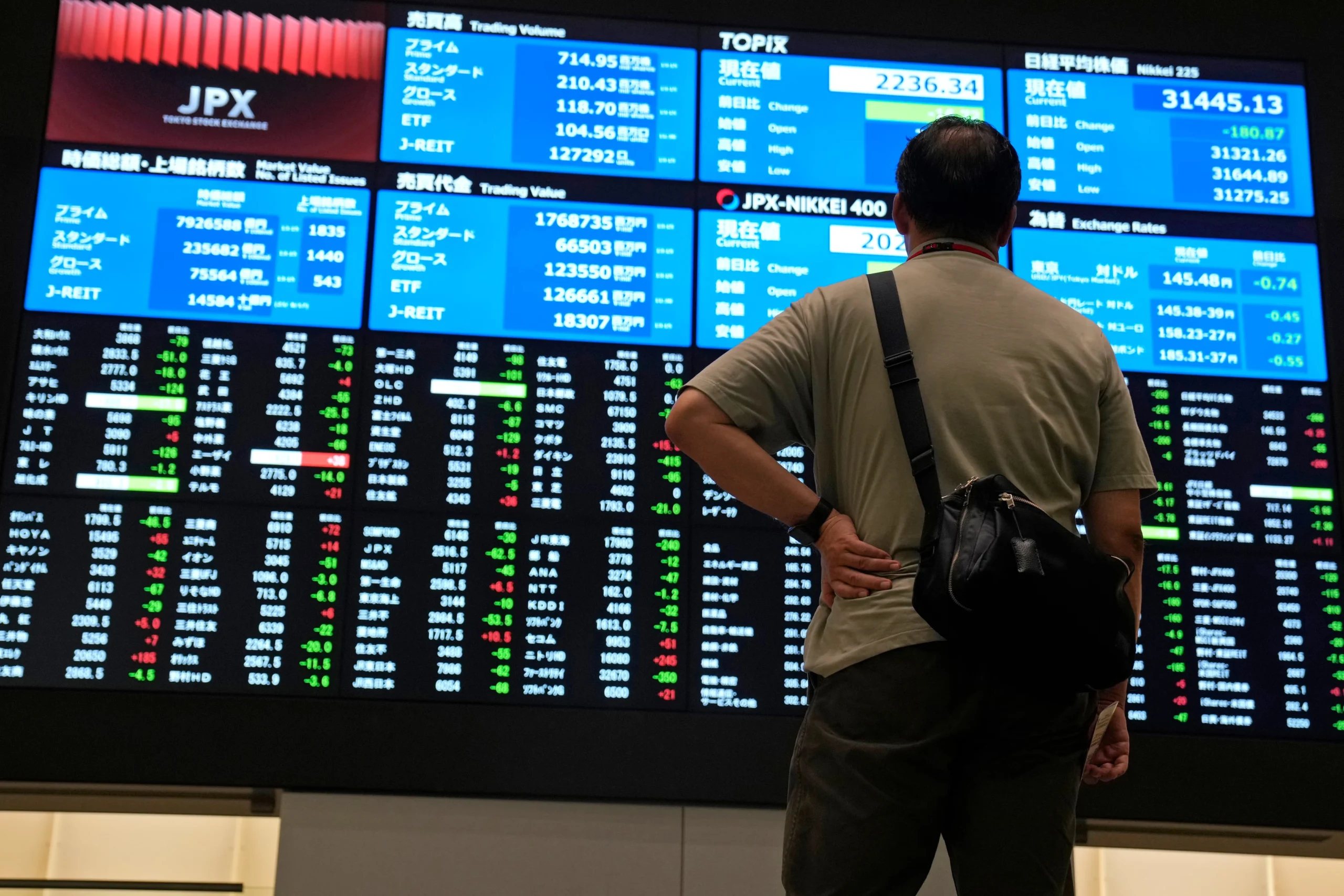
Most of them are, but for very different reasons. Japan’s Nikkei 225 is trading at levels roughly 44% higher than a year ago on continued AI-linked technology strength; China’s benchmark indices climbed to multi-year highs at the start of the year on AI optimism and signs of economic recovery; and Pakistan’s KSE-100 has been one of the most volatile large gainers globally, crossing record highs early in the year before enduring sharp single-session pullbacks in September. Understanding each market separately matters more than treating “Asia” as one trade.
Japan: A 15-Year-Plus Bull Run Meets a Hawkish Central Bank
The Nikkei 225 closed at 65,018.95 on September 18, 2026, gaining 1.38% on the session and sitting 44.34% above where it stood a year earlier, according to data compiled by Trading Economics. That move came even as the Bank of Japan raised its policy rate by 25 basis points to 1.25% — a widely expected but still consequential tightening step, as policymakers balance elevated inflation and wage growth against pressure from U.S. Treasury Secretary Scott Bessent for currency and trade cooperation. Japan’s annual inflation rate held at 1.9% in August, with core inflation at 1.7% — below the Bank of Japan’s 2% target for a seventh straight month, suggesting the central bank still has room to normalize policy gradually rather than aggressively.
Technology and AI-related names have led Japan’s rally, with chip-equipment and materials names such as Advantest and Lasertec posting some of the sharpest single-day gains, echoing similar advances on Wall Street. That correlation is a theme across the region: Asian equity performance in 2026 has tracked the U.S. AI-capex story almost as closely as it has tracked domestic fundamentals.
China: AI Optimism Meets an Overheating Warning
China’s equity markets opened 2026 on a tear. The benchmark CSI 300 Index advanced 1.6% to close at its highest level in four years on January 6, while the Shanghai Composite rose 1.5% to its strongest level since July 2015, fueled by sustained optimism over the country’s AI advances and early signs of broader economic recovery, according to Bloomberg. Materials and technology shares led the advance, and the rally coincided with a robust pipeline of onshore AI-related IPOs.
That said, the rally showed early signs of overheating even in January: the 14-day relative strength index on the Shanghai Composite climbed above 75 — firmly into technical overbought territory — a level it had not touched since the previous September. Momentum has been uneven since; by late July, the Shanghai Composite had pulled back to a 16-week low on the CSI 300 gauge even as the broader index posted modest daily gains, reflecting a market still working through the tension between AI-driven optimism and valuation discipline. On the macro side, the IMF’s own China growth revisions this year have tracked a similar push-pull, with earlier 2025 forecasts putting Chinese growth near 4.8% before moderating toward roughly 4.2% as trade and property-sector headwinds persist.
Malaysia and Singapore: Steady Gains, Regional Correlation
Malaysia’s FTSE Bursa Malaysia KLCI has spent much of 2026 grinding toward multi-year highs rather than posting dramatic single-day swings. The index touched a more-than-six-year high near 1,686 points in early January, according to New Straits Times, and by early September had climbed further to around 1,714–1,715 points, per Bursa Malaysia futures data reported by Bernama, Malaysia’s state news agency. Analysts at Rakuten Trade have described the index as being in a healthy uptrend across both short- and long-term timeframes, with pullbacks read as consolidation rather than a change in trend.
Singapore’s Straits Times Index has moved in tandem with regional sentiment through the year, trading in the high-3,900-point range during mid-2026 sessions alongside comparable moves in Hong Kong’s Hang Seng and South Korea’s Kospi — a reminder that Southeast Asian and Northeast Asian benchmarks remain tightly correlated on any given trading day, even when their underlying economic drivers differ.
Pakistan: The Region’s Most Volatile Outperformer
Featured Snippet Target: Pakistan’s KSE-100 Index began 2026 at a record high above 176,000 points, climbed further past 186,000 and 188,000 in the following days on institutional buying and expectations of a policy rate cut, but has since seen sharp single-session pullbacks — including a 3,078-point, 1.79% drop on September 10 — underscoring how the world’s best-performing frontier market in early 2026 has also been among its most volatile.
The Pakistan Stock Exchange’s rally traces back to a shift in domestic asset allocation: brokerage house Topline Securities described the move from fixed-income instruments into equities — driven by falling returns on traditional savings vehicles — as the primary fuel behind sustained liquidity and elevated valuations, according to coverage from Aaj News. Banking names including United Bank Limited, Habib Bank, and MCB, alongside energy majors like Oil and Gas Development Company, have repeatedly featured among the index’s top contributors on both up and down days.
By early September, the picture had turned choppier. The KSE-100 gained 399 points on September 4 to close at 175,328, per ARY News, before dropping over 3,000 points just days later on September 10 — a reminder that Pakistan’s rally, while historic in percentage terms, remains far more sensitive to single-session sentiment shifts than its larger regional peers.
The Cross-Market Pattern
Three threads tie these otherwise disconnected markets together in 2026. First, AI-linked capital spending is now a genuine cross-border driver — Japanese and Chinese tech names have both rallied on echoes of the same U.S. hyperscaler capex story. Second, central bank policy divergence is widening: Japan is tightening from historically ultra-loose settings, while Pakistan has been cutting rates to support a still-fragile broader economy. Third, frontier and emerging markets — Pakistan chief among them — are delivering far larger percentage swings, in both directions, than developed Asian benchmarks, rewarding investors who can tolerate volatility but punishing those who chase momentum without hedging for pullbacks.
The Bottom Line
Asia’s 2026 story is not one market but five distinct ones moving on different clocks — Japan’s AI-and-rate-hike rally, China’s optimism-versus-overheating tension, Malaysia and Singapore’s steadier regional drift, and Pakistan’s high-beta swings around a genuine structural re-rating. Anyone allocating across the region needs a market-by-market view rather than a single “Asia” thesis.
Next step: Track Bank of Japan policy meetings, China’s Politburo economic guidance sessions, and Pakistan’s State Bank Monetary Policy Committee decisions together — the three events, spaced through the remainder of 2026, are the clearest near-term catalysts for each market’s next move.
Discover more from The Economy
Subscribe to get the latest posts sent to your email.

Fox Corp 2026: Record Revenue, Tubi Growth & Roku Deal

Wendy’s Stock 2026: Inside the Turnaround Plan

Technology News 2026: Inside the $1.3T AI Chip Boom

UK Stocks 2026: Inside the FTSE 100’s Record Run

Asian Stock Markets 2026: Japan, China, Pakistan & More

Mortgage Rates Today 2026: Full Rate Guide & Forecast

Beyond Paper Wealth: Unpacking Donald Trump’s Multibillion-Dollar Liquidity and Legal Crisis

Bitcoin & XRP 2026: Inside Crypto’s Institutional Era

Global Economy 2026: IMF Growth, AI Stocks & Market Risk

China’s Local Debt Race Against Time: Why Economists Demand Central Action Before the Deflation Window Closes

Money News: How to Protect Your Portfolio From Global Inflation

World Bank Projections: Emerging vs. Big Economies of Asia

IMF Reports 2026: What the Latest Data Means for the Global Economy

Singapore Stocks Outlook: A Safe Haven in the Asian Market?

Top 30 Stocks for Investment in PSX for Massive ROI in 2026

SpaceX Starship Flight 14: First Orbital Attempt & Starlink V3 Launch Explained

AI Chip Stocks 2026: The Best Semiconductor Investments Beyond Marvell

The 2026 Crypto Regulatory Shift: What It Means for Institutional Investors

Oil Prices Break $100 in 2026: Middle East Conflict & Energy Markets

Fidelity Investments Review 2026: SPAXX Yields & Zero-Fee Funds

Tween Back-to-School Trends 2026: What’s Driving the $85B Season

AI-Powered Training: The Next Multi-Billion Dollar Ecosystem in Fitness

BRICS+ Cross-Border Payments 2026: Interoperability Explained

10-Year Treasury Yield Hits 4.80%: What It Means for Rates & Portfolios

Shein Clothes Quality & Safety in 2026: What Lab Tests Show

China’s US$10.8 Billion Trade Shortcut: Why the Pinglu Canal Matters

MRVL Earnings 2026: Why Marvell Sank Despite Beating Estimates

Leveraging Viral AI & Climate Hashtags for Brand Growth on X
-

 Markets & Finance9 months ago
Top 15 Stocks for Investment in 2026 in PSX: Your Complete Guide to Pakistan’s Best Investment Opportunities
-

 Analysis7 months ago
Johor’s Investment Boom: The Hidden Costs Behind Malaysia’s Most Ambitious Economic Surge
-

 Analysis7 months ago
Top 10 Stocks for Investment in PSX for Quick Returns in 2026
-

 Analysis8 months ago
Brazil’s Rare Earth Race: US, EU, and China Compete for Critical Minerals as Tensions Rise
-

 Banks8 months ago
Best Investments in Pakistan 2026: Top 10 Low-Price Shares and Long-Term Picks for the PSX
-

 Investment8 months ago
Top 10 Mutual Fund Managers in Pakistan for Investment in 2026: A Comprehensive Guide for Optimal Returns
-

 Global Economy9 months ago
15 Most Lucrative Sectors for Investment in Pakistan: A 2025 Data-Driven Analysis
-

 Global Economy9 months ago
Pakistan’s Export Goldmine: 10 Game-Changing Markets Where Pakistani Businesses Are Winning Big in 2025