Connect with us

Analysis

$20bn in 20 minutes”: the man turning Trump into a global deal machine

Published

on

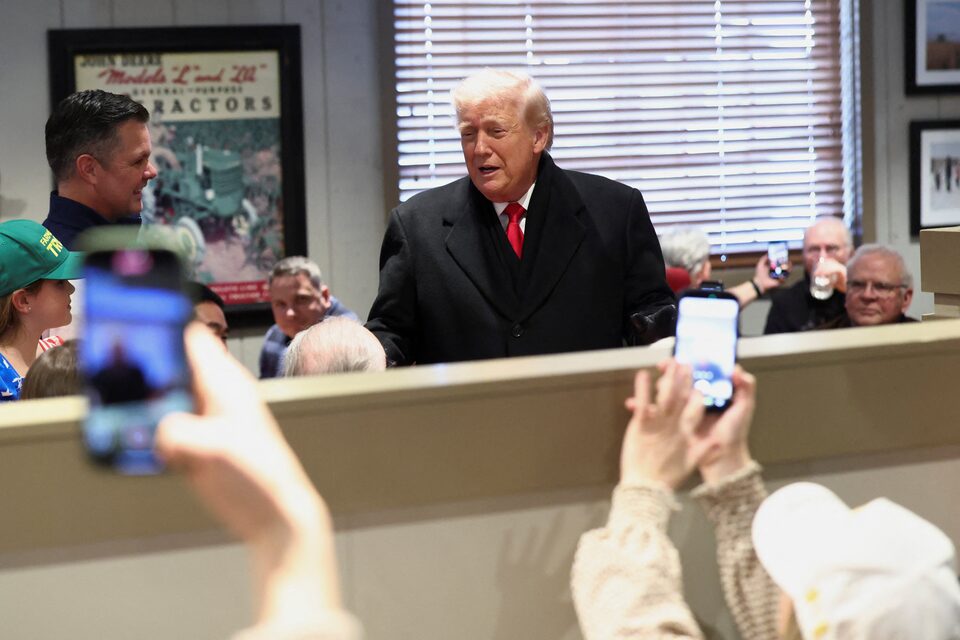
The espresso hasn’t even cooled by the time the term sheet is pushed across the table. In the gilded, low-lit lounges of Davos or the velvet-draped dining rooms of Mar-a-Lago, the pitch is always the same: hyper-kinetic, aggressively informal, and unapologetically transactional. There are no sprawling delegations of State Department bureaucrats. There are no months-long interagency reviews. There is only Paolo Zampolli, a bespoke Italian suit, and a promise that the President of the United States is ready to sign.

This is the reality of Paolo Zampolli Trump commercial diplomacy 2026. As the U.S. Special Representative for Global Partnerships—a title he assumed in March 2025—the former modeling agent and Manhattan real estate broker has become the undisputed architect of Donald Trump’s second-term foreign policy. Recently dubbed by the Financial Times as the man behind the legendary “$20bn in 20 minutes” metric, Zampolli is single-handedly redefining American statecraft.

But as the Trump deal machine accelerates, the global macroeconomic establishment is forced to ask a profound question: Is Zampolli a brilliant innovator of 21st-century deal-making, cutting through the sclerotic red tape of traditional diplomacy? Or is he the ultimate symptom of a transactional presidency that bypasses democratic institutions in favor of personality-driven power?

The Architect of Trump 2.0’s Commercial Diplomacy

To understand how Zampolli brokers billion-dollar Trump deals, one must understand his origins. Zampolli is not a product of the Georgetown School of Foreign Service. He is a product of 1990s New York nightlife, the founder of ID Models, and the man who famously introduced a young Slovenian model named Melania Knauss to Donald Trump in 1998.

From selling luxury condominiums at Trump Park Avenue to securing a UN Ambassadorship for the Commonwealth of Dominica, Zampolli has always understood that proximity to power is the ultimate currency. Now, armed with an official State Department mandate, his influence has reached the geopolitical stratosphere. As The Economist recently noted, Zampolli operates less like an envoy and more like a sovereign wealth fund manager wielding the Oval Office as his primary asset class.

The traditional diplomatic playbook has been entirely discarded. In its place is a ruthless, high-velocity commercial pragmatism. Trump special envoy deal-making speed is designed to dizzy foreign counterparts, forcing rapid concessions in exchange for exclusive access to U.S. markets, technology, and defense umbrellas.

The “$20bn in 20 Minutes” Playbook: A Track Record of Velocity

The phrase “$20bn in 20 minutes” is no longer just a boast; it is the operational thesis of the 2026 U.S. State Department under Zampolli’s purview. By stripping away diplomatic pleasantries and leveraging a strict “Buy American” ethos, Zampolli has engineered a series of staggering bilateral agreements over the last 12 months.

Consider the recent string of high-profile outcomes:

  • The Hungarian Nuclear & Energy Play (March 2026): During a highly publicized trip to Budapest alongside Vice President JD Vance, Zampolli ostensibly focused on “sports and cultural diplomacy.” But behind closed doors, the real agenda was brokering a massive energy pivot. Moving Viktor Orbán’s government away from Russian dependence, Zampolli laid the groundwork for a multi-billion-dollar framework involving American Small Modular Reactors (SMRs) and long-term LNG contracts, a move closely tracked by Bloomberg.
  • The Sovereign TikTok Restructuring: As the U.S. forced the final divestment of TikTok, Zampolli quietly shuttled between Gulf state wealth funds and Silicon Valley holding companies. By treating the tech giant’s U.S. operations as a geopolitical bargaining chip, he helped structure a consortium deal that kept the data onshore while filling the coffers of key U.S. allies—a masterstroke of commercial leverage analyzed extensively in The Wall Street Journal.
  • Gulf Defense & Infrastructure Fast-Tracking: Bypassing traditional congressional notification delays, Zampolli has utilized emergency commercial partnerships to expedite next-generation defense hardware and AI-infrastructure investments in the Middle East, demanding immediate, reciprocal capital injections into America’s Rust Belt manufacturing zones.

This hyper-efficient, boardroom-style negotiation is intoxicating for foreign leaders who despise Washington’s usual moralizing and bureaucratic delays. As Reuters reported last month, foreign ministries are actively bypassing traditional embassies to get on Zampolli’s WhatsApp.

The Geopolitical Price of Transactional Governance

Yet, this unprecedented velocity comes with severe structural risks. The Zampolli net worth influence nexus blurs the line between national interest and private commercial advantage. When the President’s Special Envoy operates with the swagger of a private equity rainmaker, the foundational transparency of U.S. foreign policy begins to erode.

I have spent decades covering global alliances for Foreign Affairs, and the consensus among allied diplomats in Europe and Asia is one of deep anxiety. Traditional diplomacy is a game of millimeters—built on treaties, shared values, and long-term institutional trust. Zampolli’s approach treats alliances as short-term lease agreements. If a country cannot immediately put billions of dollars on the table, their strategic value to the United States is summarily downgraded.

Furthermore, the domestic optics are highly combustible. As The New York Times recently highlighted, Zampolli’s personal entanglements—including a highly controversial public fallout and ICE deportation involving his former partner Amanda Ungaro in early 2026—suggest a willingness to leverage state apparatuses for personal disputes. When personal vendettas and state power intermingle, the credibility of the “deal machine” is severely compromised.

What This Means for Global Markets

For global investors, C-suite executives, and sovereign wealth managers, the reality of Trump 2.0’s commercial diplomacy requires a radical recalibration of risk.

  1. Volatility is the Feature, Not the Bug: Deals struck in 20 minutes can be dismantled just as quickly if a foreign leader falls out of favor with the Oval Office.
  2. The Premium on Direct Access: Corporate lobbying via traditional K Street firms is yielding diminishing returns. The new imperative is direct capital allocation into projects favored by the administration’s inner circle, as recently highlighted by Forbes.
  3. The Emerging Market Squeeze: Developing nations without massive sovereign wealth funds are being frozen out of U.S. strategic partnerships, forcing them to look toward Beijing for more patient, albeit debt-laden, capital.

Conclusion: The Future of the Deal Machine

Paolo Zampolli has undeniably transformed the U.S. presidency into a hyper-efficient, personality-driven global deal-making machine. The “$20bn in 20 minutes” framework is a testament to the raw, unadulterated power of American leverage when stripped of its diplomatic velvet glove.

He is, in many ways, the perfect avatar for the current geopolitical moment: unapologetic, fiercely pragmatic, and entirely unbothered by the pearl-clutching of the foreign policy establishment.

But deals made in 20 minutes rarely factor in the 20-year consequences. By replacing the enduring architecture of international alliances with the fleeting high of a signed term sheet, the Trump administration may be winning the quarter while losing the century. Zampolli has proven he can close the deal. The question the world must now ask is: what happens when the bill comes due?


Discover more from The Economy

Subscribe to get the latest posts sent to your email.

Analysis

The Tax That Quietly Grew: OECD Wage Levies Hit Their Highest Point in Nearly a Decade

Published

on

Across 38 developed economies, the average tax wedge on wages climbed to 34.9 per cent in 2024 — its highest mark since 2017. Workers who survived the inflation shock now face a new form of fiscal attrition. The question is whether governments have the will to respond.

Key Statistics

MetricValueNote
OECD Average Tax Wedge (2024)34.9%Highest since 2017 (35.1%)
Belgium — Highest Tax Wedge52.6%Followed by Germany at 47.9%
Countries Where Wedge Rose20/38OECD member states in 2024
EU Average Tax Burden (2025)38.9%EU-27 + UK single avg-wage worker

There is a peculiar cruelty in recovering from one crisis only to be slowly bled by another. For millions of workers across the OECD’s 38 member economies, the years since the COVID-19 shock have followed this precise emotional arc. Inflation clawed back real wages through 2022 and 2023. Now, just as price growth has eased and nominal pay has begun recovering, a quieter mechanism — the structural ratchet of the tax wedge — has pushed the effective burden on wages to its highest level in nearly a decade.

The OECD’s Taxing Wages 2025 report, released in April 2025 and drawing on verified 2024 data across all member states, puts the headline number at 34.9 per cent of labour costs — the average tax wedge borne by a single worker without children earning the national mean wage. That figure, modest on first reading, represents the combined weight of personal income taxes, employee social security contributions (SSCs), and employer SSCs, net of any cash transfers received. It is, in short, the distance between what a job costs an employer and what an employee actually keeps. And it has now climbed back to where it stood in 2017, erasing what progress had been made during the pandemic years when temporary relief measures briefly compressed the wedge.¹

The Anatomy of a Squeeze: How the Wedge Widened

To understand the present moment, one must first appreciate the mechanics of fiscal creep. When wages rise — as they have, in nominal terms, in 37 of 38 OECD countries between 2023 and 2024 — progressive income tax systems extract a proportionally larger share unless thresholds are explicitly adjusted for inflation or earnings growth. In the absence of such indexation, the tax burden rises silently, through bracket creep, without a single parliament passing a new rate.²

In 2024, this dynamic was particularly visible. Of the 20 countries where the single worker’s tax wedge increased, the rise was driven by higher personal income taxes in 14 — attributable not to legislative change but to average wages outpacing static bracket thresholds. In countries such as Australia, Greece, Korea, Latvia, Mexico, Poland, Slovenia and Spain, nominal wage growth alone dragged workers into heavier effective tax territory.³ The remaining increases were led by social security contribution rate hikes, most notably in Italy — where a payroll threshold was breached — and Slovenia, where a new flat-rate health insurance levy of €420 per year was introduced. Italy recorded the sharpest single-country increase: 1.61 percentage points.⁴

Key Definition — Tax Wedge The tax wedge measures the total tax cost of employing a worker relative to their net take-home pay. It combines personal income tax, both employee and employer social security contributions, and subtracts any cash benefits. A higher wedge signals a wider gap between labour costs and disposable income.

This is not, strictly speaking, a crisis of government malice. Public finances across the OECD are under multi-directional pressure: ageing populations are enlarging pension and healthcare liabilities; defence budgets are rebuilding after decades of contraction; and the legacy debts of pandemic-era stimulus remain on sovereign balance sheets. Revenue needs are real. The question is whether wages — and wages alone — should bear the burden.


“For the average single worker across the OECD, more than a third of what they cost their employer never reaches their pocket. In Belgium, that figure exceeds half — a ratio that strains the very social contract taxation is meant to uphold.”

— Editorial Analysis, The Policy Tribune, April 2026

The Geography of Burden: Country-by-Country Disparities

The aggregate masks a divergence that is itself a policy story. Belgium’s tax wedge of 52.6 per cent — the highest in the OECD — means that for every €100 of labour cost incurred by a Belgian employer, the worker takes home less than €48. Germany (47.9%), France (47.2%), Italy (47.1%) and Austria (47.0%) complete the quintet of countries where the tax wedge exceeds 47 per cent, a threshold that would once have been considered a fiscal outlier.⁵

OECD Tax Wedge Rankings — Single Average Worker, 2024 (% of Labour Costs)

CountryTax Wedge
🇧🇪 Belgium52.6%
🇩🇪 Germany47.9%
🇫🇷 France47.2%
🇮🇹 Italy47.1%
🇦🇹 Austria47.0%
🌍 OECD Average34.9%
🇨🇭 Switzerland~23.5%
🇨🇱 Chile7.2%
🇨🇴 Colombia0.0%

Source: OECD Taxing Wages 2025 — Data for 2024 fiscal year.

At the other end of the spectrum, Switzerland, Israel, and New Zealand occupy a different fiscal philosophy — one that combines lower aggregate wedges with comparatively generous targeted reliefs for families. Colombia, uniquely, records a 0% tax wedge for the average single worker, partly a function of how its social security contributions are classified, and partly a reflection of its lower formal employment base.⁶

Research from the Tax Foundation — drawing on both OECD and EUROMOD modelling — reinforces that higher tax wedges correlate with subdued employment growth, particularly at the lower end of the wage distribution. A one-percentage-point rise in the tax wedge is associated, in panel analyses of EU labour markets, with a 0.05 percentage-point decline in employment growth.⁷ Over a decade, across a continent, those fractions compound.

Families vs. Singles: A Diverging Fiscal Experience

The one genuinely hopeful finding in the Taxing Wages 2025 data is a sustained and deliberate policy pivot toward protecting households with children. For the second consecutive year, the only household type for which the OECD average tax wedge declined was the single parent earning 67 per cent of the average wage — down 0.38 percentage points to 15.8 per cent. In Portugal and Poland, single parents saw their tax burden fall by 7.2 and 4.1 percentage points respectively, driven in part by expanded cash benefit programmes.⁸

The gap between single workers and couples with children is, in some countries, staggering. In the Slovak Republic, Poland, Luxembourg and Belgium, the tax wedge for a single childless worker at average earnings exceeds that of a one-earner married couple with two children by more than 15 percentage points.⁹ These differentials reflect deliberate family-support design — but they also highlight how thoroughly the standard single worker has become the system’s principal revenue base.

The Fiscal Pressure Valve: Why This Is Unlikely to Reverse Soon

Several structural forces suggest that the upward drift in the tax-to-wage ratio will persist in the medium term. Population ageing is not a trend that governments can legislate away: the OECD’s own demographic projections indicate that dependency ratios across most member states will worsen materially through the 2030s, placing direct upward pressure on pension and healthcare contributions — precisely the social security levies that constitute the largest component of the tax wedge for many workers.

Meanwhile, between 2024 and 2025, sixteen European countries increased their effective tax burden on labour while only nine reduced it.¹⁰ The direction of travel, while not uniform, is weighted toward expansion. Several nations — including a number in Central and Eastern Europe — have not indexed their income tax thresholds to inflation, creating a permanent background mechanism by which nominal wage growth continuously generates real tax increases without political accountability.

Policy Context — Bracket Creep When income tax thresholds are not indexed to inflation or wage growth, rising nominal wages push workers into higher brackets automatically. This “silent tax increase” generates additional revenue for governments without explicit parliamentary approval and is particularly prevalent in fiscally stretched OECD members.


What Policymakers Must Do: The Competitiveness Imperative

The policy implications converge on three interconnected challenges: labour market competitiveness, income redistribution, and fiscal sustainability. On competitiveness, the data is unambiguous. Countries with lower tax wedges — Switzerland, New Zealand, Israel — consistently demonstrate that lighter burdens on labour do not preclude high-quality public services; they are funded instead through broader-based consumption and wealth taxes. The lesson for high-wedge European economies is not that public services must be dismantled, but that the financing mix requires rebalancing.

On redistribution, the evidence suggests that targeted credits and allowances — rather than flat rate reductions — deliver the most efficient compression of inequality. The OECD’s own analysis finds that tax credits and allowances collectively enhance the progressivity of labour taxation by between 28 and 44 per cent, depending on household type.¹¹ Credits, in particular, have an outsized progressive effect precisely because they benefit lower earners disproportionately. Expanding refundable credit systems — as Ireland, the United States and several Nordic countries have demonstrated — can simultaneously reduce headline wedges and sharpen the incentive to enter formal employment.

Finally, on fiscal sustainability, the most pragmatic reform available to most OECD governments in the near term is mandatory indexation. Linking income tax thresholds to either inflation or a wage index — as Lithuania has done with payroll visibility, and as Latvia has done by simplifying its tax schedule — removes the silent ratchet of bracket creep and forces any genuine tax increase to proceed through democratic deliberation rather than administrative attrition.¹²

Conclusion: The Worker Is Not a Fiscal Residual

The OECD tax wedge at 34.9 per cent is not, in isolation, an alarming number. What is alarming is the trajectory, the context, and the distribution. Workers who absorbed a pandemic, endured an inflation shock, and watched real wages fall in 21 countries in 2023 are now, in their recovery, finding that the state takes a larger share of the nominal gains they have clawed back. That is not a sustainable settlement.

The countries that will attract talent, sustain birth rates, and maintain civic trust in their fiscal contracts over the coming decade are those that treat wage taxation not as an instrument of passive revenue extraction but as a deliberate and legible social compact — one that workers can see, understand, and believe is fair. The OECD’s data this year tells us that too many governments have drifted from that standard. The question for 2026 and beyond is how many have the political courage to return to it.

Citations & Primary Sources

  1. OECD (2025). Taxing Wages 2025: Decomposition of Personal Income Taxes and the Role of Tax Reliefs. OECD Publishing, Paris. doi: 10.1787/b3a95829-en
  2. OECD (April 2025). Labour Taxes Edge Up in the OECD as Real Wages Recover in 2024. OECD Press Release.
  3. OECD (2025). Taxing Wages 2025 — Summary Brochure. OECD Publishing.
  4. Ibid. — Italy tax wedge increase: +1.61 p.p., attributed to SSC threshold breach at €35,000.
  5. OECD (2025). Effective Tax Rates on Labour Income in 2024. Chapter 3, Taxing Wages 2025.
  6. Ibid. — Colombia classification note on SSC reclassification.
  7. Tax Foundation (2024). A Comparison of the Tax Burden on Labor in the OECD, 2024.
  8. OECD Taxing Wages 2025 — Single parent household section; Portugal and Poland data.
  9. OECD Taxing Wages 2025 — Table comparing single vs. one-earner couple tax wedge differentials.
  10. Tax Foundation Europe (April 2026). Tax Burden on Labor in Europe. EUROMOD J2.0+, UKMOD B2026.01.
  11. OECD Taxing Wages 2025 — Chapter 2: Decomposing Personal Income Taxes; credits and allowances progressivity analysis.
  12. Tax Foundation Europe (2026) — Latvia and Lithuania bracket reform case studies.

Discover more from The Economy

Subscribe to get the latest posts sent to your email.

Continue Reading

Analysis

The $60 Billion Option: SpaceX’s Cursor Gambit and the Limits of Ambition

Published

on

Elon Musk has obtained the right to acquire AI coding startup Cursor for $60 billion — a deal that is part strategy, part spectacle, and entirely a reflection of how much ground his AI empire still has to cover.

When SpaceX announced on April 21, 2026 that it had secured the right to acquire AI coding startup Cursor for $60 billion later this year — or alternatively pay $10 billion for the fruits of a joint collaboration — the headline looked, at first glance, like another act of Elon Musk’s well-rehearsed theatre of technological inevitability. Look again, and the deal reads very differently: as a candid admission that the AI empire he is assembling ahead of what may be the largest IPO in history still has a gaping hole at its centre.

The SpaceX Cursor acquisition option is, in the most precise sense, a confession. A confession that xAI — folded into SpaceX in February 2026 in a transaction Musk valued at $1.25 trillion — cannot yet produce a coding model that competes with the best from OpenAI or Anthropic. A confession that Cursor’s founders built something in four years that Musk’s engineers, for all their resources, have not. And a confession that in the race for the developer market, raw compute is no substitute for the accumulated behavioural data of millions of programmers actively debugging, refactoring, and shipping code.

What the Deal Actually Is — and Why the Structure Matters

The mechanics of this arrangement deserve careful attention, because they are unusual even by the elastic standards of Silicon Valley dealmaking. As Bloomberg reported, SpaceX holds an option to acquire Cursor rather than having announced a binding merger. The company may instead elect to pay Cursor $10 billion for their collaborative work — a figure that exceeds the entire venture valuation of most mature unicorns. The deal was announced in a post on X, SpaceX’s social network subsidiary, moments before The New York Times published a report citing the acquisition figure as a done deal at $50 billion. SpaceX’s own X post subsequently corrected the record.

The dual-path structure — buy or pay for collaboration — tells its own story. It gives SpaceX flexibility ahead of an IPO where every line item will face institutional scrutiny. It preserves optionality in an antitrust environment that, while currently permissive, could harden. And it gives Cursor’s investors — who include Andreessen Horowitz, Nvidia, and Thrive Capital — a cleaner path to liquidity without committing to a full sale before a $2 billion fundraising round at a $50 billion-plus valuation has closed. That round, as CNBC confirmed, was already in motion before Tuesday’s announcement.

Data Callout — Cursor’s Valuation Trajectory

MilestoneValuation / FigureContext
January 2025$2.5 billionEarly-stage valuation before the “vibe coding” category exploded
May 2025$9 billionRapid re-rating on accelerating developer adoption
November 2025$29.3 billionPost-money valuation after $2.3bn Series D
2026 (projected)$6bn+ annualised revenueFivefold increase from late-2025 estimates, per TradingKey analysis

Cursor’s Technology — and Why SpaceX Needs It

Cursor is not, at its core, a model company. It is a behavioural-data company dressed in the clothes of a developer tool. Since its launch in 2023, the platform has captured something that every frontier AI lab covets and few possess: a high-fidelity record of how the world’s best programmers actually think — how they decompose problems, navigate codebases, catch their own mistakes, and iterate under pressure. The platform logs developer actions via videos, screenshots, and structured logs, generating a proprietary dataset of cognitive process at industrial scale.

This matters to xAI for a reason that goes beyond the obvious. xAI’s Grok model was trained heavily on data from X, the social network. That is useful for conversational fluency and cultural awareness. It is far less useful for building a model that can reason about multi-file software architectures, optimise runtime performance, or catch security vulnerabilities before they reach production. As TechCrunch noted, xAI’s models still lack the proprietary coding capability to match OpenAI’s Codex or Anthropic’s Claude — the very models Cursor currently resells to its own users, in an arrangement that grows more awkward by the quarter.

There is also a talent dimension that should not be understated. Two of Cursor’s most senior engineering leaders — Andrew Milich and Jason Ginsberg — departed to join xAI in recent weeks, where both report directly to Musk. Simultaneously, xAI began renting tens of thousands of its chips to Cursor for model training. The outlines of a deeper integration were already visible. Tuesday’s announcement formalised an embrace that had been in progress for months. What SpaceX is acquiring, should it exercise the option, is not merely a product but a pipeline: of data, of talent, and of enterprise relationships — Cursor is used by more than half of the Fortune 500, including Uber and Adobe.


“What SpaceX is acquiring is not merely a product but a pipeline — of data, of talent, and of enterprise credibility that xAI, for all its compute, has yet to earn.”

The Capital Desk, Analysis, April 2026

Valuation Breakdown and Market Logic

Sixty billion dollars for a four-year-old company founded by individuals born after the millennium requires justification that goes beyond revenue multiples. At a projected $6 billion in annualised revenue by end-2026, the $60 billion acquisition price implies a forward revenue multiple of roughly 10x — aggressive, but not extraordinary for the highest-growth tier of AI infrastructure. For context, Snowflake’s peak valuation touched 100x forward revenue. Palantir has traded above 50x for extended periods. In a category — developer AI tooling — where network effects compound with every commit pushed through the platform, premium multiples carry real economic logic.

The harder question is whether SpaceX can afford it. TechCrunch has reported that SpaceX is widely considered to be running at a loss following the absorptions of xAI and X. Its upcoming IPO, targeted at a $1.75 trillion valuation, is designed in part to generate the public-market currency — stock — that can fund precisely this kind of acquisition without touching cash. The statement announcing the Cursor deal did not specify whether payment would be in SpaceX equity, which is itself a meaningful silence. If the deal is funded in stock, it transforms from a capital allocation question into an IPO narrative question: does Cursor make the SpaceX story bigger, or more complicated?

Regulatory and Geopolitical Considerations

Any assessment of the SpaceX Cursor deal that omits the regulatory dimension is incomplete. The combined SpaceX-xAI entity — already subject to scrutiny over its control of orbital infrastructure, global data flows via Starlink, and classified U.S. defence contracts — is being watched carefully by antitrust authorities on both sides of the Atlantic. Analysts have noted that the complexity of the SpaceX-xAI merger was one reason the anticipated S-1 filing slipped by several weeks. Adding a $60 billion acquisition of the dominant AI coding tool used by Fortune 500 companies would substantially raise the profile of regulatory review.

There is a geopolitical overlay that institutional investors would be unwise to dismiss. Cursor’s technology, deployed at scale across corporate software infrastructure globally, touches systems that regulators in Brussels, London, and Beijing will regard as strategically sensitive. Musk’s simultaneous roles in U.S. government advisory structures and at the helm of a company with classified defence contracts introduces an unprecedented information-asymmetry risk for any public shareholder. SpaceX operates under ITAR restrictions and holds contracts whose details will never appear in an S-1. The Cursor acquisition deepens an already labyrinthine governance structure that institutional fiduciaries will need to price carefully.

Strategic Implications for AI Competition

The deal, if consummated, would accelerate a consolidation dynamic already reshaping the developer tools market. Cursor’s principal competitors in the agentic coding space — GitHub Copilot (Microsoft), Amazon Q Developer, and Google’s Gemini Code Assist — are all backed by hyperscalers with balance sheets that dwarf SpaceX’s. Bringing Cursor inside Musk’s orbit would force a choice on every enterprise customer currently running the platform: remain with a tool now explicitly aligned with xAI and SpaceX’s commercial interests, or migrate to a hyperscaler alternative. That migration calculus is non-trivial given Cursor’s deep integration into developer workflows, but the reputational and governance dimensions of a Musk-owned coding infrastructure layer will give enterprise compliance and procurement teams genuine pause.

For OpenAI, the deal carries a particular irony. The company was an early investor in Cursor. The approaching trial in Musk v. Altman begins less than a week after Tuesday’s announcement — a legal confrontation over the soul and governance of AI development. Musk is now, in effect, seeking to acquire one of the few AI developer platforms that still distributes access to OpenAI models. Should the acquisition proceed, that arrangement would almost certainly end.

The Counterarguments — and Why They Deserve Hearing

There is a cogent sceptical case to be made, and it is not served by dismissing it. Cursor, for all its valuation momentum, still lacks a proprietary frontier model. Its current competitive advantage rests in part on its willingness to offer users the best available model regardless of origin — Claude, GPT-4o, Gemini — a flexibility that disappears the moment it becomes an xAI subsidiary. The platform’s enterprise growth story could soften meaningfully if customers begin to perceive it as a pipeline into Musk’s data infrastructure rather than an independent tool. Talent retention, always precarious in AI, becomes more uncertain still when a company transitions from founder-led startup to conglomerate business unit.

There is also the question of whether the $10 billion collaboration fee — the cheaper of the two options SpaceX retains — might prove the more rational choice. If xAI can train a competitive coding model on Cursor’s data and infrastructure over the next twelve months, the rationale for paying the full $60 billion acquisition premium weakens considerably. The option structure may be as much a negotiating instrument as a statement of intent.

What Policymakers and Investors Should Do Now

For regulators, the moment demands pre-emptive engagement rather than retrospective review. The standard antitrust framework — market share thresholds, horizontal overlap analysis — is poorly suited to a deal whose competitive significance lies not in current market share but in data accumulation and model training leverage. The FTC, the DOJ, and their European counterparts should be developing frameworks now for evaluating the competitive consequences of AI training data monopolies, before the consolidation is too advanced to unwind.

For investors considering exposure to the SpaceX IPO, the Cursor deal adds valuation optionality but also execution complexity. A company that is simultaneously absorbing xAI, integrating X, pursuing a Cursor acquisition, managing classified defence contracts, and attempting the first orbital heavy-lift launch of the V3 Starship is carrying an operational load without precedent in public-market history. The SpaceX Cursor acquisition option is not, in itself, a reason to be cautious about the IPO. But it is a reminder that the story being sold is not merely about rockets. It is about whether a single conglomerate intelligence — human and artificial — can hold all of this together without fracturing.

The $60 billion option is a statement of intent. Whether it becomes a statement of capability is a question that the next twelve months — and the first earnings calls after what will be an extraordinary public offering — will begin to answer. The markets will price it. The regulators will scrutinise it. And the engineers at Cursor, not all of whom chose this outcome, will have their own verdict.


Discover more from The Economy

Subscribe to get the latest posts sent to your email.

Continue Reading

Analysis

Moscow’s Quiet Squeeze: Why Russia’s Halt of Kazakh Oil to Germany Signals a New Era of Energy Weaponisation

Published

on

Russia is set to suspend transit of Kazakh crude via the Druzhba pipeline from May 1, threatening Berlin’s fuel supply at a moment of compounding global disruption. The move is small in volume — and devastating in message.

On most mornings, the drivers of Berlin’s Brandenburg hinterland do not think much about the Druzhba pipeline. They fill their tanks, they commute, they carry on. The crude that powered their fuel was drawn from the steppes of Kazakhstan, piped westward through 5,000 kilometres of Soviet-era steel traversing Russia and Poland, refined at the PCK facility in the small river town of Schwedt, and quietly distributed to nine in ten cars in the greater Berlin region. It is, in the lexicon of energy policy, “critical infrastructure” — and it is infrastructure that Russia is now preparing to switch off.

According to three industry sources cited by Reuters on April 21, 2026, Moscow has sent an adjusted oil export schedule to both Kazakhstan and Germany, signalling its intent to halt transit of Kazakh crude through the northern branch of the Druzhba pipeline effective May 1. The Kremlin’s spokesman, Dmitry Peskov, offered the kind of denial that functions as its own confirmation: “We will try to check it,” he told reporters. Reuters has independently verified the schedule with multiple sources. The Russian energy ministry did not reply to a request for comment. Neither Kazakhstan’s energy ministry nor the German government had responded at time of writing.

The volumes involved are not enormous in a global context — approximately 43,000 barrels per day. But the implications are considerably larger than the numbers suggest. This is not a commercial dispute. It is a carefully calibrated act of geopolitical signalling, dressed in the administrative language of an export schedule.

Key Numbers at a Glance — Druzhba Kazakh Transit, 2026

MetricFigure
Kazakh crude to Germany via Druzhba (2025)~43,000 barrels per day
Volume increase, 2024 to 2025+44% (1.49 → 2.146 million metric tons)
Delivered in Q1 2026730,000 metric tons
PCK Schwedt feedstock potentially lost (full halt)~17% of 12 mt/year capacity

The Anatomy of a Squeeze

Understanding why this matters requires a brief tour of post-2022 European energy architecture. When Russia launched its full-scale invasion of Ukraine in February of that year, it set off a chain of European decisions that fundamentally restructured the continent’s relationship with Russian hydrocarbons. Germany, Europe’s largest economy and historically its most enthusiastic consumer of Russian gas and oil, moved with unusual speed. Berlin placed the German subsidiaries of Rosneft — Russia’s state oil giant and PCK Schwedt’s controlling shareholder — under state trusteeship. Direct imports of Russian crude were halted. The country’s entire energy supply chain was forced into an emergency pivot.

PCK Schwedt — a Soviet-era refinery built specifically to process Urals crude and positioned at the terminus of the Druzhba pipeline’s northern branch — presented a particular engineering and geopolitical headache. It cannot easily process light sweet crude from the North Sea. Its configuration is matched to heavier, higher-sulphur grades. After considerable effort, Germany settled on a workaround: Kazakh crude, chemically similar to Urals, would be shipped from Kazakhstan through the very same Russian pipeline infrastructure that Germany had ostensibly sought to escape.

The irony was not lost on analysts at the time. Kazakhstan had never been subject to Western sanctions. Its oil is sovereign — distinct in law, if not always in pipeline, from Russian crude. The arrangement was legally defensible, commercially viable, and geopolitically fragile. Russia, as the transit state, retained physical control over every barrel shipped westward. That control has now been exercised.

“Kazakh crude travels through Russian steel. Its ownership may be Kazakhstani, its sanctions status clean — but its passage has always been a favour Moscow can revoke.”

— Geopolitical Energy Review Analysis, April 2026


Why Now? The Kremlin’s Strategic Calculus

The timing is not accidental. Russia-Germany relations have reached their most acrimonious point in the post-war era. Berlin has been among the most consistent suppliers of military and financial support to Ukraine. Germany remains in active legal dispute over the Rosneft trusteeship, which Russian officials have repeatedly condemned as an unlawful expropriation. Diplomatically, the two countries have little left to lose with each other — which, paradoxically, gives Moscow more freedom to act.

Equally significant is the broader global disruption context. Tensions in West Asia — specifically the conflict involving Iran — have already injected fresh uncertainty into global oil supply chains. The Iran-related disruption has pushed European energy buyers into a defensive crouch, assessing exposure across multiple corridors simultaneously. Russia, with characteristic precision, has chosen this moment of compounded anxiety to introduce another variable into Europe’s supply calculus. The message is layered: we remain indispensable; your diversification is incomplete; we can still find levers.

There is also a message being sent to Astana. Kazakhstan’s multi-vector foreign policy — carefully balanced between Russia, China, the West, and Turkey — has been under pressure since 2022. Nur-Sultan (now Astana) has refused to align publicly with Moscow’s war, has refrained from joining Russian sanctions evasion schemes, and has quietly expanded its connections with Western energy majors. By using transit control to curtail Kazakhstani exports, Moscow serves notice that the geographic reality of Kazakhstan’s landlocked position remains a constraint on Astana’s strategic autonomy, whatever its diplomatic ambitions.

Ground Zero: The Schwedt Refinery and Berlin’s Fuel Supply

For the residents of Brandenburg and Berlin, the immediate concern is practical. A complete halt of Kazakh flows would remove approximately 17% of the feedstock processed by PCK Schwedt — a facility that handles up to 12 million metric tons of crude per year and produces the diesel, petrol, kerosene, and heating oils that supply roughly nine in ten cars in the Berlin-Brandenburg corridor. That is not, by itself, a catastrophe. Germany has other refineries and has been building emergency supply flexibility since 2022. But it is a serious tightening of already-stretched margins.

The refinery’s shareholder structure adds a further complication. PCK is co-owned by Rosneft (under German state trusteeship), Shell, and Eni. Non-Russian shareholders have been working with German authorities on alternative supply arrangements, and there is an established alternative route: oil can be shipped through the Baltic port of Gdańsk in Poland and piped southward to Schwedt via the infrastructure of PERN, Poland’s state pipeline operator. PERN’s spokesman confirmed to Reuters that the company stands ready to supply non-Russian shareholders of PCK through Gdańsk “if asked to.” That caveat — if asked — is doing considerable work. Logistics would need rapid scaling; the route exists but has limited throughput history at volumes sufficient to replace Druzhba supply fully.

Meanwhile, Germany’s other supply diversification efforts — including crude deliveries via the Baltic port of Rostock — have also faced intermittent disruptions, partly due to Ukrainian drone strikes on Russian pipeline infrastructure that have periodically interrupted the northern Druzhba branch even when Russia was not actively intervening. The cumulative effect is a supply posture that is more resilient than 2022 but still less robust than Berlin’s official communications acknowledge.

Kazakhstan’s Impossible Geometry

For Kazakhstan, the squeeze is existential in a way that transcends the immediate export disruption. President Kassym-Jomart Tokayev’s government has spent four years articulating a vision of sovereign economic development: a Central Asian nation that is modern, outward-facing, and able to monetise its vast hydrocarbon reserves on its own terms. The Druzhba suspension cuts directly across that narrative.

Kazakhstan’s primary western export route is the Caspian Pipeline Consortium (CPC) system, which runs from the Tengiz oilfield westward to the Russian Black Sea port of Novorossiysk. That route, handling the bulk of Kazakhstan’s crude exports, has experienced its own turbulence — including multiple technically-explained outages that industry observers have attributed to Russian leverage rather than engineering misfortune. Druzhba, by contrast, had been a secondary but growing channel: exports through it rose 44% year-on-year in 2025, suggesting Kazakhstan was deliberately building capacity there as a partial CPC hedge. That hedge has now been called in.

The alternative — moving more oil through the Trans-Caspian system toward the Baku-Tbilisi-Ceyhan pipeline — is attractive in theory and constrained in practice. BTC throughput is limited; Caspian shipping capacity is finite; infrastructure investment timelines are measured in years, not months. Kazakhstan can and should accelerate these diversification routes, but they do not solve the problem of May 2026. In the near term, Astana faces both a revenue shortfall and a diplomatic humiliation: being seen as unable to defend its own export channels.

“The geography of landlocked oil states is not merely inconvenient — it is a permanent structural vulnerability that geopolitical rivals know how to exploit.”

— Geopolitical Energy Review Analysis, April 2026

Energy as Weapon: The Structural Shift

What is happening here is not, strictly speaking, new. Russia cut gas supplies to Ukraine in 2006, 2009, and again after 2014. It used the transit of gas through Ukrainian pipelines as leverage in price disputes that were, in truth, political disputes wearing commercial clothing. The weaponisation of energy flows has been part of Moscow’s toolkit for two decades. What has changed since 2022 is the transparency of the tactic and the sophistication of European responses — and the gap between the two remains dangerous.

The Druzhba suspension illustrates a structural vulnerability in Europe’s post-2022 energy architecture: the assumption that routing non-Russian oil through Russian infrastructure is a durable solution to Russian energy dependency. It was always a transitional arrangement, dependent on Moscow’s forbearance. That forbearance has a price — and Russia has now begun naming it.

For European energy security planners, the lesson is uncomfortable. Diversification of supply origin is insufficient if the physical infrastructure remains under an adversarial state’s control. The policy conversation in Brussels must shift toward infrastructure sovereignty: not merely where the oil comes from, but who controls every kilometre of the route through which it travels.

The Broader Market Context

The suspension occurs against a backdrop of unusual global oil market stress. Disruptions linked to tensions in West Asia — including shipping route uncertainty through the Persian Gulf — have already added a geopolitical risk premium to benchmark crude prices. The simultaneous compression of Kazakhstan-to-Germany flows adds further upward pressure, particularly on the grades and logistics chains serving continental European refiners who cannot easily pivot to spot market alternatives in days. PCK Schwedt’s engineering constraints — its configuration for heavier grades — mean that not every available barrel on global markets is a viable substitute on short notice.

For oil traders, this creates a micro-market in Urals-grade substitutes: Azerbaijani, Iraqi, and potentially some African grades may find new demand. The arbitrage opportunity is real, if logistically complex. For European consumers, any pass-through of refinery margin compression to pump prices arrives at a politically sensitive moment — one in which German voters are already navigating elevated energy costs and political uncertainty.

Scenarios for May and Beyond

📌 Base Case — Managed Disruption

Russia proceeds with suspension; Germany and PERN activate the Gdańsk alternative route at partial capacity. Schwedt operates at reduced throughput (roughly 83% of normal) for several weeks. A diplomatic channel opens quietly between Berlin and Moscow, with Kazakhstan as an intermediary. The halt lasts 4–8 weeks before a face-saving technical resolution is announced.

⚠️ Adverse Case — Prolonged Squeeze

Russia extends the halt indefinitely; PERN’s Gdańsk route cannot scale fast enough to fully compensate; Germany declares a temporary energy emergency for the Berlin-Brandenburg region and activates strategic petroleum reserve releases. The EU accelerates regulatory action on remaining Russian transit dependencies. Kazakhstan’s revenues decline materially; Astana begins emergency diplomatic outreach to both Moscow and Brussels.

✅ Optimistic Case — Political Resolution

The halt proves short-lived — days rather than weeks — as back-channel pressure from China (which has significant economic interest in Central Asian stability) and Turkey (which has cultivated a mediator role) persuades Moscow to resume flows pending a bilateral technical agreement. The episode becomes a catalyst for accelerated Trans-Caspian route investment.

What Europe Must Now Do

The Druzhba episode should function as a policy forcing event. Several responses are both urgent and achievable. First, the European Commission should formally assess the residual risk posed by remaining Russian-controlled transit infrastructure for non-Russian hydrocarbons, and map the investment required to physically decouple those routes. Second, the EU-Kazakhstan energy partnership — already strengthened since 2022 — should be deepened into concrete infrastructure commitments: increased funding for Trans-Caspian capacity expansion, port infrastructure at Aktau, and regulatory alignment to facilitate easier westward routing of Kazakhstani oil. Third, Germany should accelerate the legal and operational restructuring of PCK Schwedt to reduce its dependence on any single pipeline corridor — Russian, Polish, or otherwise.

More broadly, the energy transition conversation in Europe must absorb this lesson: the faster the continent moves toward electricity-based transport and heating, the narrower Moscow’s leverage corridor becomes. Every electric vehicle sold in Brandenburg is, in a very small but real sense, a pipeline bypass.

Kazakhstan’s Necessary Pivot

For Astana, the imperative is investment — and urgency. The Trans-Caspian International Transport Route, the BTC expansion, and diversified shipping infrastructure in the Caspian are not merely economic projects. They are sovereign infrastructure in the most literal sense: the physical capacity to move one’s own resources without permission from a neighbour. Kazakhstan’s energy ministry has long understood this; the political will and capital to execute has sometimes lagged. The Druzhba suspension may be the catalyst needed to close that gap.

Kazakhstan should also leverage its close relationship with China — its largest single trading partner — to explore westward shipping expansions through Chinese-financed corridors, including the Trans-Caspian Middle Corridor through the Caucasus. The irony of using Chinese infrastructure to escape Russian leverage is not lost on analysts, but geopolitics has rarely rewarded ideological consistency over practical necessity.

Conclusion: The Return of Geography

There is a temptation, in the comfortable decade before 2022, to believe that energy had been fully commercialised — that pipelines were just pipes, and that the physics of supply and demand had displaced the politics of control. That temptation looks naive in retrospect. Energy infrastructure has always been political. The question was merely whether the politics were visible.

Russia’s decision to halt transit of Kazakh crude to Germany makes the politics visible again, starkly and deliberately. It is a reminder that in a world of fragmenting multilateralism, physical geography still governs power — that a landlocked nation’s oil moves only with its neighbours’ consent, and that a continental energy system is only as sovereign as its most vulnerable transit corridor.

For Germany and Europe, the lesson is one of incomplete work: the energy divorce from Russia has been largely achieved in legal and commercial terms, but the physical infrastructure of dependency has not been fully unwound. For Kazakhstan, it is a reminder that multi-vector foreign policy requires multi-vector export infrastructure — and that the time to build such infrastructure is not when the pipeline has already been shut. And for the world at large, it is a portrait of energy in the age of geopolitical fracture: a tool, a weapon, and a mirror — reflecting back at us the costs of the strategic complacencies we thought we had already paid.

In Brandenburg, the drivers will still fill their tanks in May. But the price of that normalcy — measured not in euros but in strategic exposure — has quietly risen.


Discover more from The Economy

Subscribe to get the latest posts sent to your email.

Continue Reading

Trending

Copyright © 2025 The Economy, Inc . All rights reserved .

Discover more from The Economy

Subscribe now to keep reading and get access to the full archive.

Continue reading