Analysis
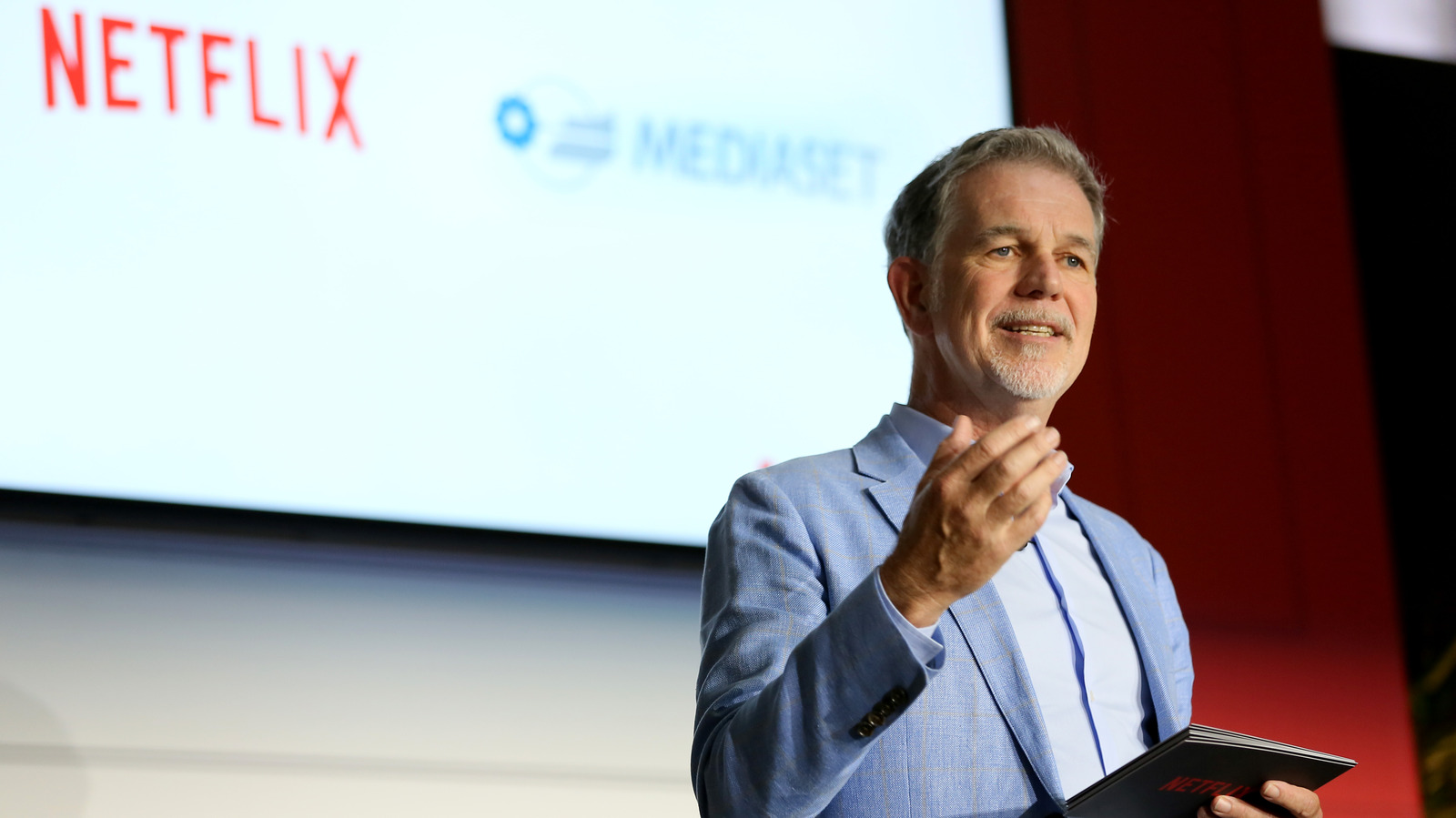
Reed Hastings Leaves Netflix: End of an Era
There is a particular kind of departure that announces itself not with a bang but with a line buried inside a quarterly earnings letter — neat, unassuming, and quietly seismic. On April 16, 2026, Netflix slipped exactly such a line into its first-quarter shareholder report: Reed Hastings, co-founder, former chief executive, and current board chairman, would not stand for re-election at the June annual meeting. After 29 years, the last founder’s hand on the tiller is finally coming free. The Reed Hastings steps down Netflix board story has been written in a hundred ways in the hours since, but almost none of them ask the harder question: not what this means for Netflix today, but what it reveals about the peculiar alchemy that built the most consequential entertainment company of the 21st century — and whether that alchemy can be bottled without the chemist.
Key Takeaways
- Hastings formally notified Netflix on April 10, 2026; he will depart at the June annual meeting after 29 years.
- The departure was disclosed alongside Q1 2026 earnings: revenue $12.25B (+16% YoY), EPS $1.23 — both beating consensus.
- Stock fell ~9% after-hours, driven primarily by soft Q2 guidance, not the leadership change itself.
- Netflix’s succession plan is multi-year, deliberate, and structurally robust under the Sarandos-Peters co-CEO model.
- Three risks to monitor: cultural drift without the founder, AI disruption of content economics, and geopolitical navigation in high-growth emerging markets.
- Hastings’ next act — Anthropic board, philanthropy, Powder Mountain — signals confidence in, not anxiety about, the company he leaves behind.
From Stamped Envelopes to Global Streaming Dominance
The timeline of Reed Hastings’ Netflix is worth reciting not as nostalgia, but as context for the scale of what is now changing hands. In 1997, Hastings and co-founder Marc Randolph conceived a company in the unglamorous gap between late fees and convenience. By 1999, Netflix had launched its subscription DVD-by-mail model — a marginal curiosity in a world of Blockbuster megastores and Hollywood’s iron grip on home video windows. When Netflix finally went public in 2002, almost nobody outside Silicon Valley was paying attention.
What happened next is the stuff of business school mythology. Netflix’s pivot to streaming in 2007 was not merely a product decision; it was a civilisational one. The company didn’t just change how people watched television — it changed what television was. It collapsed the distinction between film and episodic narrative, funded auteurs who couldn’t get a studio meeting, and, with House of Cards in 2013, proved that an algorithm-driven platform could not only predict taste but manufacture prestige. By January 2016 — Hastings’ own “all-time favourite memory,” he noted this week — Netflix was live in nearly every country on earth simultaneously. The company had, in a single night, become the first truly global television network.
Over the past 20 years, Netflix stock has generated a compound annual growth rate of 32%, producing total gains of approximately 99,841% for long-term shareholders — a figure that requires a moment of silence. For context, the S&P 500 returned roughly 460% in the same period. Hastings did not merely build a company; he compounded human attention on an industrial scale.
The Governance Architecture of a Graceful Exit
What makes the Netflix leadership transition 2026 so instructive is not the departure itself, but the architecture of its execution. Hastings has been engineering his own obsolescence with unusual intentionality since at least 2020. He elevated Ted Sarandos to co-CEO in July of that year, a move widely read at the time as a talent-retention play but which now reads as deliberate succession landscaping. In January 2023, he took a further step back, stepping down as co-CEO and anointing Greg Peters — then the company’s chief operating officer — as Sarandos’s co-equal partner, while himself assuming the role of executive chairman.
According to an SEC Form 8-K filed by Netflix, Hastings formally informed the company on April 10, 2026 of his decision not to stand for re-election as a director at the 2026 annual meeting of stockholders, and the filing explicitly states his decision was not the result of any disagreement with the company. In the world of corporate governance, that boilerplate language is often a fig leaf. Here, the broader evidence suggests it is genuinely true.
During the Q1 2026 earnings call, the last analyst question — posed by Rich Greenfield of LightShed Partners — probed the obvious rumour: had Netflix’s failed bid to acquire Warner Bros. Discovery assets, and Hastings’ reported preference for organic growth over acquisition, driven a wedge between founder and management? Sarandos was unequivocal: “Sorry for anyone who was looking for some palace intrigue here — not so. Reed was a big champion for that deal. He championed it with the board. The board unanimously supported the deal.” Netflix had walked away from Warner Bros. not because of internal conflict, but because Paramount Skydance outbid them — and Netflix wisely drew the line. Netflix received a $2.8 billion breakup fee from Warner Bros. Discovery after withdrawing from the bidding contest. Hastings’ departure, it seems, is genuinely what it claims to be: the clean, unhurried conclusion of a plan conceived long ago.
What the Market’s Reaction Actually Tells Us
Netflix stock fell approximately 8% in after-hours trading on April 16, even as the company reported Q1 revenue of $12.25 billion — up 16% year-over-year — and adjusted earnings per share of $1.23, well above the consensus estimate of $0.76. Analysts and headlines rushed to assign the selloff to the Netflix board changes Hastings announcement. The truth is messier and more instructive.
The real culprit was softer-than-expected guidance: Q2 revenue forecast of $12.57 billion fell below Wall Street’s $12.64 billion estimate, while earnings per share guidance of $0.78 missed the $0.84 expected, and the operating income outlook of $4.11 billion came in well below the $4.34 billion the Street had anticipated. Bloomberg Intelligence senior media analyst Geetha Ranganathan noted that the guidance miss did little to assuage investor concerns about growth momentum, a sentiment compounded by the fact that Netflix shares had already risen 15% year-to-date before Thursday’s report — leaving little cushion for disappointment.
This dynamic — a founder departure landing atop a guidance miss — is a particular kind of market stress test. It forces investors to disaggregate genuine structural concern from sentiment-driven noise. The answer, in this case, is mostly noise. Netflix’s underlying trajectory remains enviable: the ad-supported tier represented 60% of all Q1 signups in countries where the company offers advertising, and Netflix said it remains on track to double its advertising revenue to $3 billion in 2026, up from $1.5 billion in 2025, with advertising clients up 70% year-over-year to more than 4,000. A company executing that kind of commercial transformation does not need its founder’s continued presence to validate the thesis.
The Strategic Implications: Three Fault Lines to Watch
The what Reed Hastings departure means for Netflix question has generated predictably shallow commentary. Here is a more honest mapping of the fault lines that actually matter.
The Culture Carrier Problem
Hastings was not primarily a financial engineer. He was, above all, a culture architect — the author of the Netflix Culture Memo, a document so influential that Sheryl Sandberg once called it “the most important document ever to come out of Silicon Valley.” Its precepts — radical transparency, freedom with responsibility, no “brilliant jerks” — are not policies that survive their author automatically. They must be performed by leadership, daily and visibly, to remain operational. Sarandos has been performing them alongside Hastings for more than two decades; Peters for over a decade. But there is a meaningful difference between internalising a culture and constituting it. Without Hastings present — even in the background, even as a non-executive reference point — the risk of cultural drift is real. Not imminent, but real.
The AI Reckoning
In a recent interview, Hastings himself identified what he believes is Netflix’s biggest existential risk: the threat of AI-generated video transforming content creation in ways the company cannot control. This is not a paranoid concern. The economics of content production are structurally threatened by generative AI in ways that could compress Netflix’s most durable competitive advantage — exclusive, high-production-value, globally distributed storytelling — into something more easily replicated. The company’s response to this challenge will be the defining strategic question of the next decade. Hastings leaves at precisely the moment that challenge is becoming acute, and his absence removes the kind of contrarian, first-principles thinking that originally enabled Netflix to see around corners its competitors could not.
The Succession That Has Already Happened
Here is the structurally optimistic read, and it deserves equal weight: unlike the chaotic founder-exits at Twitter, WeWork, Uber, or early-period Apple, Netflix’s Netflix succession planning has been a multi-year, deliberate, and remarkably un-dramatic process. Sarandos noted on the earnings call that Hastings, as far back as the company’s founding days, was already talking about building “a company that would be around long after him,” and that succession planning was baked into the organisation’s DNA from its earliest stages. The co-CEO structure — unusual in corporate America, but increasingly recognised as effective for companies that must balance creative and operational excellence simultaneously — has been tested under real conditions: a pandemic, a catastrophic subscriber loss in 2022, a Wall Street rout, a failed M&A campaign, and a successful strategic pivot to advertising. Sarandos and Peters have governed capably through all of it.
On the earnings call, Sarandos described Hastings as “a singular source of inspiration, personally and professionally,” and said he and Peters had the privilege of working for “a true history maker.” Peters added that Hastings “will always be Netflix’s founder and biggest champion — he is a part of our DNA.” This is the language of inheritance, not of rupture.
The Global Stakes of a Streaming Power Shift
International readers should not underestimate how much of the streaming industry power shift now in motion runs through this moment. Netflix operates in over 190 countries. Its annual content spend rivals the GDP of small nations. Its pricing decisions — the company raised its Standard ad-free plan to $19.99 per month and its Premium tier to $26.99 per month earlier this year — ripple through household budgets from Karachi to Kansas City.
The transition away from founder governance also matters for how Netflix navigates increasingly fraught geopolitical terrain. India, Southeast Asia, and Sub-Saharan Africa remain the company’s highest-growth opportunity corridors, and each requires a kind of nimble, relationship-driven market entry that benefits from an executive chairman’s imprimatur. Hastings, who was personally involved in many of those early market pushes, leaves a vacuum in that domain that is less easily filled by institutional structure than by individual authority.
Meanwhile, the competitive landscape has shifted dramatically from the streaming wars of 2019–2022. The consolidation that was expected — and partially delivered — has produced a duopoly structure at the top of premium streaming: Netflix on one side, with Disney+ and Max competing for second position. Apple TV+ remains a boutique anomaly. Amazon Prime Video is a bundle play. The insurgent aggression that once threatened Netflix has largely dissipated. What remains is a grind for engagement share and advertising dollars — and in that grind, Netflix currently holds most of the strongest cards.
Forward Look: Hastings’ Legacy and the Next Chapter
The Hastings legacy Netflix is not in doubt. It will be taught in business schools for a generation, and rightly so. But the more interesting question is what Hastings will do next, and what it signals about where he believes the action is.
Since leaving the CEO role in 2023, Hastings has accepted a board seat at leading AI firm Anthropic, purchased the Powder Mountain ski resort in Utah, and deepened his involvement in educational philanthropy through organisations including KIPP, City Fund, and the Charter School Growth Fund. The Anthropic board seat, in particular, is worth dwelling on. Hastings, who spent 29 years disrupting incumbent entertainment, is now a governance voice at the company most directly challenging the foundations of knowledge work and creative production. If he believes AI-generated content is the existential risk for Netflix, his choice of next chapter suggests he intends to be on the other side of that disruption — shaping it rather than absorbing it.
That, in itself, is a kind of institutional vote of confidence in the team he leaves behind. A founder who feared his company could not manage without him would not make such a decisive break. Hastings is not hedging. He is exiting cleanly because he believes the machine is running. The future of Netflix after Hastings, in his own implicit judgment, is not a crisis. It is an execution challenge. And execution, it turns out, is what Sarandos and Peters have been hired — and tested — to deliver.
The Art of Knowing When to Leave
There is a moment in almost every great company’s life when the founder’s continued presence stops being an asset and starts being a constraint — not because they have become less brilliant, but because institutions need room to grow beyond their origins. The great founders are those who can feel that moment approaching and act before it arrives. Watson at IBM could not. Jobs at Apple, the second time, could — barely, and only because illness forced his hand. Bezos stepped back from Amazon at a moment of his choosing. Hastings has now done the same at Netflix, and done it more cleanly than almost any comparable figure in modern corporate history.
His farewell statement, included in the Q1 shareholder letter, was characteristically precise and unflashy: “My real contribution at Netflix wasn’t a single decision; it was a focus on member joy, building a culture that others could inherit and improve, and building a company that could be both beloved by members and wildly successful for generations to come.” That sentence is the whole thesis. The mark of a truly great builder is not the product they ship on a given day; it is the institution they leave behind that goes on shipping without them.
Reed Hastings has, by that measure, succeeded. The question now belongs to Greg Peters, Ted Sarandos, and the 280 million households worldwide that have made Netflix part of the fabric of their evenings. Whether they prove the founder’s faith justified is the next act of a story he began writing in 1997 — and which, for the first time, he will watch from the audience.
Discover more from The Economy
Subscribe to get the latest posts sent to your email.
Analysis
Mortgage Costs Rise Sharply on Middle East Conflict
Home loans have become more expensive in North America and Europe despite central banks keeping rates on hold
The war no one wanted is now costing people their homes — or at least the homes they planned to buy. Since US and Israeli forces launched strikes on Iran on 28 February 2026, the financial blast radius has extended well beyond oil tankers and stock exchanges. It has reached the mortgage desk at your local bank. Across North America and Europe, the cost of financing a home has climbed sharply, not because central banks have moved rates, but because bond markets have moved anyway. The Federal Reserve, the European Central Bank, and the Bank of England have all held their benchmark rates steady. It hasn’t mattered.
The Bond Market Doesn’t Wait for Central Bankers
There is a persistent misunderstanding in how most people think about borrowing costs. Central bank policy rates set the floor for overnight lending between banks. They do not, directly, set what a homebuyer pays for a 30-year mortgage. That rate is tethered to a different instrument: long-dated government bonds — specifically the 10-year Treasury note in the United States, or gilt yields in the United Kingdom. When investors grow nervous about inflation, they sell bonds. Prices fall. Yields rise. Mortgage rates follow.
Since the conflict began, that chain reaction has played out in near-textbook fashion. The 10-year US Treasury yield climbed to 4.595% on 16 May 2026, its highest level since early 2025. The 30-year Treasury bond yield pushed above 5.1%, a level not consistently seen since before the 2008 global financial crisis. In the United Kingdom, five-year gilt yields jumped roughly 19 basis points in a single trading session on 3 March, triggering emergency repricing at several mortgage lenders who had been preparing rate cuts that morning. In the eurozone, the 10-year GDP-weighted sovereign bond yield rose approximately 15 basis points in the weeks following the outbreak, closing the first review period at around 3.3%.
The driver in all three cases is the same: oil. The Strait of Hormuz, a narrow waterway through which roughly 20% of the world’s energy supply flowed before the war, has been effectively closed to commercial traffic since late February. Oil prices have surged more than 80% this year as a result. Brent crude touched $109 a barrel on 16 May; West Texas Intermediate hit $105. Those numbers don’t just affect petrol forecourts. They feed through into transport, logistics, household energy bills, and the price of manufactured goods — a broad-based inflation shock that bond investors price quickly, and that central bankers, constrained by competing obligations to growth, cannot easily offset with rate hikes.
Why Mortgage Costs Are Rising Despite Central Banks Holding Rates
Why are mortgage rates rising if central banks haven’t moved? Central banks control overnight lending rates, not long-term bond yields. Fixed-rate mortgages are priced off government bond yields and swap rates, which respond to inflation expectations rather than policy decisions. When oil prices spike and investors anticipate persistently higher inflation, they demand a higher yield to hold long-duration bonds — and mortgage rates rise in lockstep, regardless of what the Fed, ECB, or Bank of England decides.
The practical effect on American borrowers has been stark. The 30-year fixed mortgage rate jumped to 6.65% on 16 May, according to Mortgage News Daily data. Freddie Mac’s weekly survey, released on 7 May, put the same rate at 6.37% — the second consecutive weekly increase. Bankrate’s lender survey placed it at 6.46% on 13 May. In late February, before the conflict began, that rate had dipped just below 6%. In round terms, that’s a swing of more than 60 to 70 basis points in ten weeks.
The monthly arithmetic is punishing. Based on a 6.46% rate and the April 2026 median existing home price of $417,700, a buyer putting 20% down would pay roughly $2,103 per month in principal and interest — consuming about 24% of the median American family’s monthly pre-tax income. That’s before property tax, insurance, or maintenance. Housing economists no longer expect mortgage rates to fall below 6% in the near future, a revision that has upended what was supposed to be a recovery year for the US housing market.
The picture is more complicated for European borrowers, partly because fixed-rate structures there tend to be shorter-term — two- or five-year fixes rather than 30-year instruments. But the mechanism is similar. In the UK, swap rates and short-dated gilt yields rose sharply in early spring. “Pricing teams at mortgage lenders across the country are deep in discussions right now,” said Pete Dockar, chief commercial officer at UK lender Gen H, on 3 March. “This is a bit of a blow to the mortgage market because, for the first time in recent memory, buyers were feeling really optimistic.” Those discussions have since produced visible results: lenders including Coventry, Nationwide, and Virgin Money have adjusted rates upward since the conflict escalated.
An Inflation Shock with Structural Characteristics
Joel Kan, the Mortgage Bankers Association’s vice president and deputy chief economist, put the transmission mechanism plainly in early May: “The threat of higher-for-longer oil prices continued to keep Treasury yields elevated, and mortgage rates finished last week higher.” He added that higher mortgage rates, combined with affordability constraints and economic uncertainty, had pushed potential homebuyers to the sidelines.
What makes this particular inflation episode difficult to manage is its geographic origin. Energy price shocks stemming from geopolitical disruption don’t respond to domestic policy tools. The Fed cannot reopen the Strait of Hormuz. The ECB cannot persuade Iran to stand down. When inflation is driven by domestic wage growth or fiscal expansion, central banks have well-calibrated instruments. When it arrives via a closed waterway in the Persian Gulf, they face a different problem: tightening into a demand slowdown risks worsening a downturn; holding rates risks being perceived as indifferent to inflation anchoring.
The ECB’s governing council opted to hold its benchmark deposit facility rate at 2% at its April meeting, even as eurozone inflation jumped to 3% that month, driven largely by energy costs. ECB President Christine Lagarde acknowledged the dilemma at the Bank’s April press conference. “The economic outlook is highly uncertain and will depend on how long the war in the Middle East lasts and how strongly it affects energy and other commodity markets as well as global supply chains,” she said. Economists at KPMG and Pictet Asset Management have flagged the June ECB meeting as a potential pivot point — where, if oil prices remain elevated and second-round effects on wages materialise, a 25-basis-point rate increase becomes politically viable.
Central banks control overnight lending rates, not long-term bond yields. Fixed-rate mortgages are priced off government bond yields and swap rates, which respond to inflation expectations. When oil prices spike due to Middle East conflict and investors anticipate persistent inflation, they sell bonds, yields rise, and mortgage rates follow — regardless of central bank policy decisions.
The Bank of England has held at 3.75%, with UK CPI at 3.3% in May. The Federal Reserve, meanwhile, held steady at its May meeting; traders have now completely priced out rate cuts for 2026, while a minority is pricing in a hike before year-end. The Consumer Price Index hit 3.8% in April, its highest level since May 2023. The Producer Price Index surged to a 6% annual rate.
The Housing Market Feels the Freeze
The second-order effects on housing markets are already measurable. Mortgage applications for new home purchases fell 4% in the week ending 9 May compared with a week earlier, according to the Mortgage Bankers Association. Zillow reported that buyer demand fell across April relative to March. One in four Americans paused major purchases — including homes and cars — due to war-driven economic uncertainty, according to a Redfin survey from early May.
“Spring has not sprung for the home-selling season this year,” said Mark Hamrick, senior economic analyst at Bankrate. “It is essentially a stuck or frozen market right now.” Lisa Sturtevant, chief economist at Bright MLS, put it more sharply: the conditions that were supposed to define 2026 — improving affordability, rising listings, rates trending toward the high fives — have been reversed. “The conflict with Iran, the conflict in the Middle East has created a lot more uncertainty and volatility than we had anticipated.”
The knock-on effects extend beyond the transaction itself. As the National Association of Realtors chief economist Lawrence Yun noted, home sales generate ancillary spending — on remodelling, lawn care, removals, mortgage origination. A frozen housing market is not just a housing problem; it is a modest but meaningful drag on overall consumption. The S&P Cotality Case-Shiller national home price index showed annual growth of just 0.7% in the year to February 2026, and half of the 50 largest US metro areas saw outright price declines over the past year.
In Europe, the ECB’s March projections flagged that “higher mortgage rates weigh on affordability” as a constraint on housing investment, even as the baseline assumed some energy price stabilisation. The adverse scenario — in which 40% of oil and LNG flows through the Strait of Hormuz are disrupted in the second quarter of 2026 — contemplated a more severe inflation and growth divergence. Parts of that adverse scenario now look uncomfortably close to current conditions.
The refinancing channel has also seized. Homeowners who took on variable-rate or hybrid products expecting rate cuts this year face direct resets that can raise their monthly payments quickly. Those who planned cash-out refinancing at lower rates have seen potential savings evaporate. The 15-year fixed refinance rate stood at 5.72% on 7 May, up from 5.64% the prior week. The window that briefly appeared to open in early 2026 has closed.
The Case for Equanimity — and Its Limits
Not every analyst reads the situation as unambiguously bleak. There is a reasonable counterargument, and it deserves to be heard clearly.
First, the rate volatility of this period has cut both ways. When ceasefire signals emerge — as they did in early April, when 30-year US rates briefly retreated to around 6.25% — markets respond quickly. “As the cost of crude fell and it appeared there were building blocks of an agreement to open the Strait of Hormuz, rates declined,” said Del Palacio, a mortgage banking executive cited by CBS News in late April. Any sustained diplomatic breakthrough could compress bond yields and mortgage rates meaningfully within days. The bond market giveth as quickly as it taketh.
Second, the current rate environment, though painful relative to 2025 expectations, is not historically extreme. The 6.37% 30-year rate recorded by Freddie Mac in early May remains below the 6.76% average posted during the same period last year. Borrowers who locked in before the conflict are unaffected entirely. The US housing market’s structural reliance on 30-year fixed-rate instruments means millions of existing homeowners are insulated from current rate movements.
Third, and most structurally, Alessia Berardi, head of global macroeconomics at Amundi Investment Institute, noted that every major central bank that held rates last week “leaned hawkish” — meaning they retained the credibility and the tools to act if inflation proves persistent. “These central banks are buying time to understand how long the conflict goes on, the oil price remains persistently high, and possibly gathering information on possible second-round effects,” she said. That optionality has value.
Yet the optionality comes with a cost. Buying time is not the same as solving the problem. And the limits of central bank patience are not unlimited: if oil stays above $100 per barrel through the summer, if US CPI stays above 3.5%, and if wage data begin to show second-round effects, the conversation shifts. Rate hikes — not cuts — become the live discussion. Pictet Asset Management’s lead economist Nikolay Markov warned that a sustained Strait of Hormuz closure and oil at $150 per barrel could push eurozone inflation to 6%, double April’s level.
That scenario would not just reshape mortgage markets. It would reshape the entire macroeconomic framework that households and policymakers spent the past two years constructing.
The Geopolitics of Home Finance
There is something almost vertiginous about the transmission chain at work here: a military decision made in Washington and Tel Aviv, executed on 28 February, has cascaded through oil tanker routes, energy futures markets, government bond auctions, swap rate desks at European lenders, and into the monthly outgoing of a family in Manchester or Minneapolis trying to buy their first home. No one in that chain exercised any particular agency. The mortgage broker repricing at 6am on 3 March was not making a geopolitical statement. They were doing arithmetic.
That is precisely what makes this episode instructive. The separation many households assume exists between global conflict and personal finance is largely illusory — it holds only when energy markets remain stable. When they don’t, the cost flows everywhere, invisibly and at speed.
The spring of 2026 was supposed to deliver a better housing market. The listings were rising. The rate trajectory was favourable. Affordability was, at last, beginning to improve. The war in Iran didn’t ask for anyone’s plans.
Discover more from The Economy
Subscribe to get the latest posts sent to your email.
Analysis
South-east Asia Has Never Produced an Enterprise Software Giant. AI Might Change That.
Southeast Asia has minted 64 unicorns. It has built ride-hailing empires, mobile payment networks, and e-commerce platforms that reach hundreds of millions of consumers across one of the most demographically compelling markets on earth. What it has never built — not once, not even close — is an enterprise software company worth the name. No SAP, no Salesforce, no ServiceNow emerged from Singapore or Jakarta or Ho Chi Minh City. The $4 trillion category that generates the most durable recurring revenue in global technology has, for three decades, belonged entirely to companies founded in Walldorf and San Francisco. The arrival of artificial intelligence is the most serious challenge to that arrangement yet.
A Market Built on Someone Else’s Software
The enterprise software market across Southeast Asia generated approximately $4 billion in revenue in 2025, according to Statista — a figure that flatters the region’s actual technological dependence, since the overwhelming majority of that spend flows directly to SAP, Oracle, Salesforce, and Microsoft. Local vendors, where they exist at all, typically occupy narrow verticals: payroll, point-of-sale, inventory management. Not the full-stack, cross-functional platforms that generate the kind of compounding recurring revenue capable of becoming a $50 billion company.
Yet the capital environment is shifting decisively. AI-related investments accounted for 32% of all private funding raised in Southeast Asia in the first half of 2025, with more than 680 AI startups collectively raising over $2.3 billion in the year to June, according to regional ecosystem analysis by Second Talent. That is not merely a financing phenomenon. It is the precondition for a structural realignment — one that, for the first time, gives a Southeast Asian software company a credible route to building at genuine enterprise scale.
The Structural Explanation — and Why It’s Starting to Break Down
Why has Southeast Asia never produced an enterprise software giant?
For most of the past two decades, building enterprise software in Southeast Asia has existed in a state of structural impossibility. The model rests on a simple foundation: win a large domestic market, develop a replicable product, and export it. The United States gave SAP and Oracle a homogenous, English-speaking buyer base of enormous size. Germany gave SAP its first industrial clients. India gave Infosys an outsourcing wedge into the same corporations. Southeast Asia gave its founders ten countries, eight hundred language variants, and ten divergent sets of tax codes, data-localisation rules, and labour law frameworks.
The consequence is identifiable and consistent. Vishal Harnal, managing partner at 500 Global overseeing the firm’s Southeast Asian activities, stated it plainly in 2025: there is “very little B2B software in Southeast Asia, almost none of it,” and virtually every large software exit in 500 Global’s portfolio came from the United States, not the regional one. The domestic corporate buyer class was simply too thin. Southeast Asia’s economy is dominated by family conglomerates — the Jardine Mathesons and Salim Groups of the world — and by SMEs that historically resisted dollar-denominated SaaS contracts and preferred either bespoke implementations or whatever SAP subsidiary had just set up offices in their city. The Southeast Asia ERP market was valued at approximately $1.74 billion in 2024, growing at a 10% annual rate, according to UniVDatos — healthy growth, but spread across an archipelago of fragmented national markets, still dominated by Western incumbents.
What has changed is the cost structure of building software itself. Enterprise software was expensive in 2003 because it required large direct-sales teams, multi-year implementations, and deep relationships with CIOs who controlled multi-million dollar procurement budgets. The generative AI layer has compressed all of that. A conversational interface, built on top of an open-weight model fine-tuned for Bahasa Indonesia or Vietnamese, can replace months of workflow configuration. A Southeast Asian company that previously needed a $500,000 SAP implementation can now automate meaningfully from a local founder charging usage-based fees in local currency. The buyer is no longer a CIO with a multi-year budget cycle. It’s a logistics manager in Surabaya who wants her invoicing done by Thursday.
The software market in Southeast Asia has always had demand. What it lacked was a product architecture that could satisfy that demand at a price point local buyers would accept. AI changes the economics.
The Leapfrog Thesis — and Why This Time Might Actually Differ
How is AI enabling Southeast Asia to leapfrog traditional SaaS models?
Southeast Asia skipped the desktop era almost entirely, going mobile-first in ways that became case studies for markets from sub-Saharan Africa to Latin America. The same structural logic is now being applied to enterprise software. As Insignia Ventures Partners has documented, the region is “leapfrogging SaaS to AI in the same way it leapfrogged the computer to mobile,” and the conditions support the claim. Cloud adoption among Southeast Asian businesses sits at roughly 32%, compared to over 70% in the United States and Australia. That gap is not a handicap. It means the installed base of legacy SaaS contracts — the kind that trap American CFOs in multi-year Salesforce renewals — simply doesn’t exist here. There is no incumbent workflow to migrate away from.
Southeast Asia never locked itself into the SaaS subscription model that now encumbers Western enterprises. With cloud penetration at just 32% versus over 70% in the US, switching costs are close to zero. AI-native tools — priced on usage, built around conversational interfaces, and localised for regional languages — can displace legacy workflows in weeks rather than years.
The language question, long the most intractable barrier to building regional software, is being attacked directly. In May 2025, A*STAR launched an upgraded version of MERaLiON, a multimodal large language model supporting Malay, Vietnamese, Thai, Tamil, Bahasa Indonesia, and Mandarin, capable of handling the code-switching that characterises how Southeast Asians actually communicate — switching mid-sentence between English and Tagalog, or Thai and Mandarin. AI Singapore’s parallel SEA-LION project, funded with a S$70 million government commitment, is building a multilingual AI ecosystem covering 11 regional languages and designed explicitly for cost-sensitive enterprise deployment.
The commercial implication is visible at the company level. Diaflow, a Singapore-based AI-native workflow platform that raised its seed round from Insignia Ventures in February 2026, was built explicitly around the conviction that button-and-click enterprise software had failed the region. Founder Jonathan Viet Pham described the genesis of the company: years of failed enterprise automation projects that “didn’t save them time, didn’t save them money,” because companies were locked in the old mindset of menus and clicks. “Nobody wanted to change their behavior to another software.” Diaflow’s response was to abandon the button-and-click interface entirely and build for fully conversational, automated workflows. It is one of dozens of similar bets being placed across the region now.
Kata.ai, an Indonesian conversational AI company, raised significant funding in 2025 and launched enterprise-grade solutions that reportedly reduced customer service costs by 40% for Indonesian banking clients in 2026. Vietnam International Bank built ViePro, a generative AI financial assistant trained on proprietary banking data, on Amazon Bedrock — delivering real-time responses in Vietnamese across mortgage, credit card, and vehicle loan queries. Neither of these is a software giant yet. Both are proof that the enterprise application layer is buildable locally.
Implications: The Moat, the Hyperscaler Signal, and the Regulatory Paradox
The downstream consequences of this shift extend well beyond individual startups. The hyperscalers are reading the same data. Amazon Web Services recorded 38% year-on-year growth in AI adoption across ASEAN in 2024, with 29% of regional businesses — roughly 21 million companies — now using AI. AWS has committed $9 billion to Singapore through 2028 and $5 billion to Thailand. Microsoft pledged $1.7 billion to Indonesian cloud and AI infrastructure. Salesforce announced a $1 billion investment in Singapore in March 2025, specifically to expand its Agentforce AI platform and co-innovate with local enterprises. These are not speculative positions. They reflect the conclusion that Southeast Asia’s enterprise application layer will be large, and that whoever owns the distribution into it will capture meaningful value.
What’s often missed in this conversation is the regulatory paradox. The data-sovereignty patchwork that has historically terrified foreign vendors — Singapore’s PDPA, Indonesia’s PDP Law, Vietnam’s AI Law enacted December 2025 — is, for a local founder with regional expertise, a competitive moat. A company that builds a compliance engine capable of satisfying Bank Indonesia’s regulatory sandbox, Vietnam’s data-residency requirements, and Thailand’s forthcoming cloud controls has constructed something that a company in Menlo Park cannot cheaply replicate. The complexity is front-loaded and painful; the defensibility compounds over time.
SAP’s announcement of a €150 million R&D hub in Vietnam, made in August 2025, is instructive from the incumbent side: even Western enterprise software giants are now investing in regional engineering capacity, because local language and regulatory nuance has become too important to manage from a global centre. The competition is finally taking the region seriously as a place to build, not just to sell into.
The picture that emerges is not one company about to displace SAP. It’s an ecosystem undergoing a structural reorientation — away from consumer applications and toward the enterprise software layer that generates the most durable recurring revenue in technology.
The Counterargument: Most of This Will Fail
The case against Southeast Asia producing an enterprise software giant is not trivial. It is, in several respects, still the more defensible position.
Research cited by Insignia Ventures puts the global failure rate of generative AI projects at 95% on an ROI basis. Southeast Asia’s version of this failure follows a consistent pattern: a promising proof-of-concept, funded by a government grant or a local corporate pilot, that never scales beyond its first customer. The gap between individual AI tool adoption and genuine enterprise transformation remains wide. While three-quarters of employees in Singapore use AI tools individually, only 15% of SMEs have managed to integrate AI at the enterprise level — a figure cited directly by Singapore’s Minister for Digital Development and Information in early 2026. Interest is not the problem. Institutional change is.
The talent constraint is structural, not cyclical. Machine learning engineers and data scientists remain scarce across the region. Salaries in Vietnam, the Philippines, and Indonesia rose 18–21% in 2025, which sounds encouraging until you note it’s partly the result of hyperscaler expansion competing for the same engineers. Companies best positioned to build durable enterprise software — those requiring deeply technical founders and the ability to retain ML talent — are disproportionately clustered in Singapore, where the cost of that talent approaches US rates.
Fragmented regulation, rather than always creating a moat, can simply create paralysis. A startup attempting to build a genuine cross-border enterprise platform faces ten different data-localisation regimes and procurement processes that explicitly reward the incumbency of SAP and Oracle. The result is that “regional enterprise software” has historically meant “Singapore plus one adjacent market” — not the genuine ten-country scale that would constitute an ASEAN platform. That pattern has resisted every generation of optimistic founders so far.
That said, the honest critique must acknowledge what it cannot explain: why this generation — armed with open-weight models, usage-based pricing, local LLMs, and zero legacy SaaS installed base to compete against — will simply repeat the failures of their predecessors rather than exploit the structural opening those predecessors never had.
Closing
The honest answer to whether Southeast Asia will finally produce an enterprise software giant is: probably not in the shape the question implies. The SAP model — one vendor, one platform, forty years of global dominance — was a product of historical conditions specific to Germany in the 1970s. What the region might produce is something structurally different: a cluster of AI-native companies, built on local language models and embedded regulatory expertise, capable of delivering enterprise-grade automation at a price point and user experience that Western incumbents cannot match. A smaller ambition in one sense. In another, a more interesting one — and more likely to actually materialise.
The leapfrog, when it arrives, will look less like SAP and more like GCash.
Discover more from The Economy
Subscribe to get the latest posts sent to your email.
Analysis
China’s $17 Billion Farm Pledge: A Lifeline or a Rerun?
Two days after Air Force One touched down in Washington from Beijing, the White House released a fact sheet that American farmers had been waiting years to see. China, it said, had committed to purchasing at least $17 billion worth of American agricultural products every year from 2026 through 2028 — beef and poultry restored to Chinese shelves, soybeans flowing back across the Pacific, a vast market that had all but closed its doors now signalling it was open again. The announcement followed a high-profile summit between President Donald Trump and Chinese President Xi Jinping. It was, by design, big news in farm country.
The picture is more complicated than a single headline number suggests.
The Collapse That Made This Necessary
To understand what a $17 billion annual commitment means, you first have to understand how far US-China agricultural trade has fallen. USDA data shows that China’s imports of American agricultural goods peaked at $38 billion in 2022, then fell to just $8 billion in 2025. That’s a decline of nearly 80 percent in three years — a collapse in purchasing that was not accidental. It was deliberate, calibrated, and politically targeted. ABC News
When the Trump administration launched its tariff offensive against Beijing in 2025, China responded by doing what it has done before: cutting purchases of the American agricultural products most likely to cause pain in politically significant states. Soybeans were the primary weapon. China, traditionally the largest foreign buyer of American soybeans, halted purchases altogether after Trump raised tariffs on Chinese goods, with soybean imports falling from nearly $18 billion in 2022 to $3 billion in 2025. The poultry trade suffered too: US exports of poultry meats and products to China were $286 million in 2025, down from more than $1 billion three years earlier. ABC NewsABC News
The resulting squeeze on American farm finances was severe. Farmers were already dealing with years of depressed commodity prices and elevated input costs before the trade war escalated. The loss of China’s buying power removed one of the few reliable sources of demand support. Rural America was hurting, and the political pressure on Trump — whose coalition depends heavily on farm-state voters — was building.
The October 2025 trade truce offered partial relief. China agreed to resume soybean purchases, committing to 12 million metric tons before February and at least 25 million metric tons annually for three years. It was a start. But the full scope of what American farm exporters had lost remained unaddressed — until now.
What the China US Agricultural Trade Deal Actually Covers
The commitment announced Sunday is structured as a floor, not a ceiling. China has agreed to buy US agricultural products at an annualized rate of $17 billion per year in 2026, at the same level in 2027, and again in 2028. Beyond the headline figure, the substance matters. The White House confirmed that China would restore market access for US beef and resume poultry imports from American states certified by the USDA as free of avian influenza. ABC NewsABC News
The $17 billion commitment is on top of the soybean deal from October, making it a non-soybean guarantee — a significant distinction. “Historically speaking, a $17 billion non-soybean ag commitment from China would move the US back at or near post-Phase One trade values,” said Susan Stroud, analyst at No Bull Ag, adding that “the market has been desperate for any signs China may finally return for additional business — whether that’s corn, sorghum, cotton, beef, or beans.” Yahoo Finance
US Trade Representative Jamieson Greer had telegraphed the direction of travel a day before the full announcement. Greer said on Friday he expected the US to see China purchase “double-digit billions” worth of American farm goods over the next three years. The White House fact sheet went further, describing a “sweeping package of commitments” that Trump “negotiated” during the Beijing summit to “drive high-paying American jobs and open new markets for US goods.” The Globe and MailThe Hill
The deal also seeks to clear away accumulated non-tariff obstacles. The US Meat Export Federation had pointed specifically to a series of administrative barriers Beijing imposed over the past year. Dan Halstrom, the federation’s chief executive, said the removal of non-tariff measures could restore US pork’s competitive position in China, and that the renewal of expired US beef plant registrations — which China had allowed to lapse — would “restore access to a critical beef export market.” Feedstuffs
On paper, then, this is a broad and detailed commitment. The structure is more concrete than previous agreements, with a named dollar floor and multi-year duration. That matters to farmers making investment and planting decisions many months in advance.
Why Farmers Are Cautiously Optimistic — Not Jubilant
Commitments, in US-China trade diplomacy, have a fraught history.
The 2020 Phase One agreement is the cautionary tale that no analyst in the agricultural sector can ignore. That deal asked China to purchase $200 billion in additional American goods — including $32 billion in agricultural products — over 2020 and 2021. China fell short of its total commitment by roughly 60 percent, with pandemic disruptions accounting for some but not all of the gap. The Peterson Institute for International Economics found that US agricultural exports were 18 percent short of the 2020 legal commitment — and that was the better year. Congress.govPIIE
Did the Phase One agricultural deal fail? In a word: yes. The targets were ambitious to the point of being aspirational, enforcement mechanisms were weak, and Beijing gradually redirected purchases to Brazil and Argentina once the formal commitments expired. US agricultural exports to China peaked at $41 billion in 2022 before dropping to $32 billion in 2023 and $27 billion in 2024 — a slow erosion that reflected China’s successful supplier diversification even as Phase One was nominally in force. The lesson was not lost on market participants. American Farm Bureau Federation
China has recently turned to cheaper Brazilian soybeans after meeting initial purchase volumes agreed to in last year’s truce — a move that illustrates how quickly structural trade patterns can solidify around alternative suppliers once disrupted. Yahoo Finance
Still, there are structural reasons to think this agreement may fare better than its predecessor. The $17 billion floor is a dollar figure, not a volume target — a simpler metric to verify and enforce. The multi-year framework is designed to give producers something the last agreement conspicuously failed to deliver: predictability. That matters enormously when farmers commit to crop mixes, expansion investments, and forward contracts twelve to eighteen months in advance. Crypto Briefing
The Downstream Consequences for Farm Markets and Rural Economies
How much could this deal actually move the needle for American farmers?
The American Farm Bureau Federation’s chief economist, Dr. John Newton, offered measured optimism. He noted that during the years covered by Phase One, US agricultural exports to China reached record highs, contributing to record cash receipts for crops and record net farm income — a period that showed what a functioning China relationship can do for rural America. Whether this agreement generates similar momentum, he cautioned, “will depend on consistent follow-through by both parties and a geopolitical and market environment that allows the deal to endure.” FeedstuffsFeedstuffs
The commodities most directly in play are beef, poultry, soybeans, corn, cotton, and sorghum. Each sector carries different supply dynamics. American soybean farmers are watching a specific metric: USDA data shows that the US had exported 10.9 million metric tons of soybeans to China as of May 7, putting China on track to fulfill its existing commitment by the end of the marketing year on August 31 — though this remains well below historical volumes of 25 to 30 million metric tons. ABC News
Scott Metzger, president of the American Soybean Association, was direct about what he wants to see beyond the current commitments: “Greater certainty and consistency in the marketplace help provide farmers with the confidence they need as they make decisions for the year ahead.” ABC News
Beyond agriculture itself, the deal carries wider macro signals. Lower trade tension reduces tail risk in commodity markets, supports rural bank lending conditions, and feeds into broader farm income projections that underpin rural consumer spending. That chain runs from the soybean field to the local implement dealer to the small-town bank.
The Sceptical Case
Not everyone is buying the headline.
The first line of scepticism is institutional: China has form on not following through. Previous efforts by Trump to get China to purchase more US goods have fallen short, raising questions about whether the latest pledges will be fulfilled. The Phase One deal was, in retrospect, a political victory dressed as an economic one — Beijing never came close to the $200 billion commitment, and the enforcement provisions proved toothless. Yahoo Finance
The second concern is structural. China has spent years actively diversifying its agricultural supply chains away from the United States, cultivating deep relationships with Brazilian and Argentine producers. Those relationships don’t evaporate because of a White House fact sheet. If Chinese private processors find Brazilian soybeans cheaper — and they often will — state direction will only go so far in redirecting purchases.
Third, the $17 billion, while substantial, must be contextualised against where trade once stood. US agricultural exports to China hit $38 billion in 2022 and $24 billion in 2024. A $17 billion floor represents meaningful recovery from the $8 billion trough but falls well short of the relationship’s peak capacity. ABC News
Joshua Manske, a farmer and board member who has watched the diplomatic cycle repeat, captured the mood: relief that something has been announced, combined with the hard-won caution of people who have lived through a deal that promised the world and delivered considerably less.
What Comes Next
The deal was concluded at a moment of unusual diplomatic intensity. Trump’s Beijing visit — originally planned for March before being postponed by the Iran war — was surrounded by parallel conversations on Taiwan, energy, and investment. The agricultural commitment is one plank of a broader economic architecture the two governments are trying to assemble, including the creation of bilateral boards to manage trade and investment flows.
China’s Commerce Ministry characterised the agricultural agreements as “preliminary” and said they would be “finalised as soon as possible.” That qualifier is worth sitting with. Preliminary agreements can become final ones. They can also stall, be revised downwards, or accumulate asterisks — as any seasoned China trade watcher will attest. The Globe and Mail
What is clear is that American farmers needed this. After years of low commodity prices, rising input costs, the sudden loss of a $38 billion market, and dependence on government subsidy to plug the gap, the prospect of a structured, multi-year commitment from their largest historical customer is genuinely significant. The American Farm Bureau has reason to call it a potential turning point. The critical question — the only one that will ultimately matter — is not what was signed in Beijing last week.
It is what actually ships.
Discover more from The Economy
Subscribe to get the latest posts sent to your email.
-
Markets & Finance4 months agoTop 15 Stocks for Investment in 2026 in PSX: Your Complete Guide to Pakistan’s Best Investment Opportunities
-
Analysis3 months agoTop 10 Stocks for Investment in PSX for Quick Returns in 2026
-
Analysis3 months agoBrazil’s Rare Earth Race: US, EU, and China Compete for Critical Minerals as Tensions Rise
-
Banks4 months agoBest Investments in Pakistan 2026: Top 10 Low-Price Shares and Long-Term Picks for the PSX
-
Investment4 months agoTop 10 Mutual Fund Managers in Pakistan for Investment in 2026: A Comprehensive Guide for Optimal Returns
-
Global Economy5 months ago15 Most Lucrative Sectors for Investment in Pakistan: A 2025 Data-Driven Analysis
-
Global Economy5 months agoPakistan’s Export Goldmine: 10 Game-Changing Markets Where Pakistani Businesses Are Winning Big in 2025
-
Analysis3 months agoJohor’s Investment Boom: The Hidden Costs Behind Malaysia’s Most Ambitious Economic Surge