
Business
Top 5 Stock Picks on the Pakistan Stock Exchange for 2026: Expert Analysis and Investment Outlook

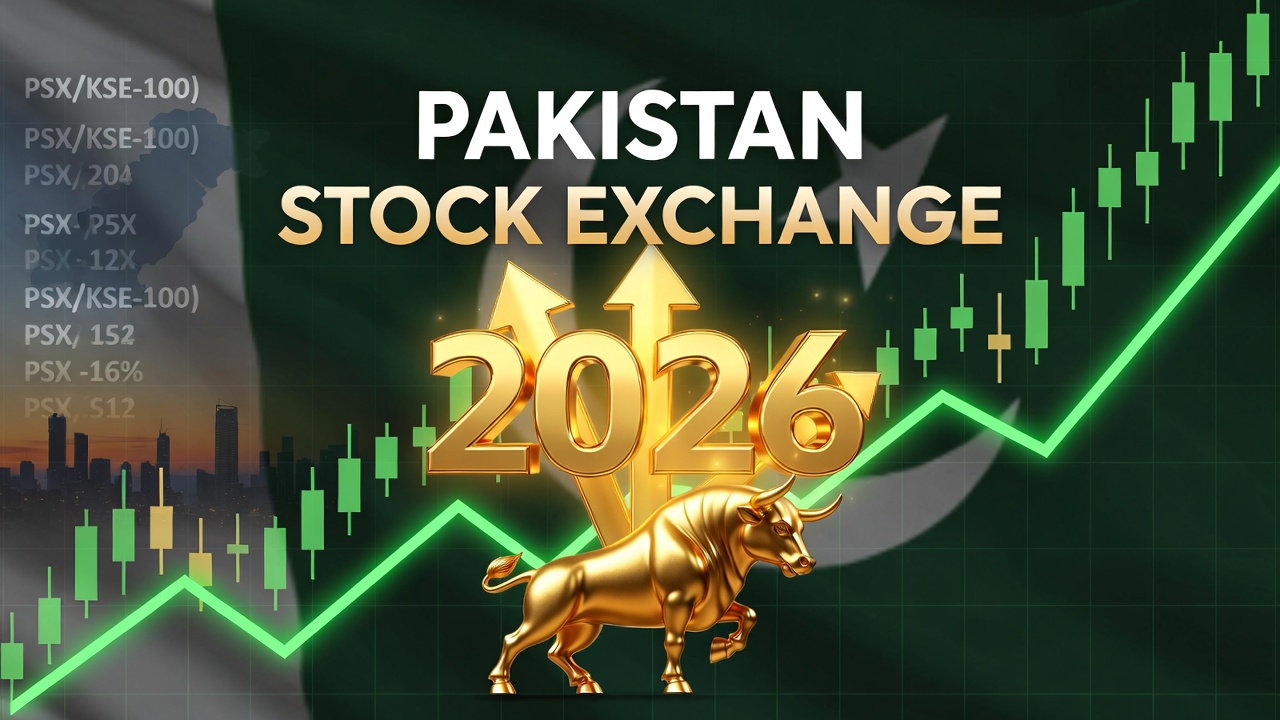
Explore the best PSX stocks 2026 with expert analysis of top Pakistan Stock Exchange investments. In-depth review of MEBL, FFC, LUCK, OGDC, and SYS with target prices and growth catalysts.
The Pakistan Stock Exchange has delivered one of the world’s most remarkable performances. As we move deeper into 2026, the KSE-100 index sits near record highs at approximately 188,000 points, reflecting a stunning 68% year-over-year gain. For investors seeking emerging market exposure with compelling risk-adjusted returns, Pakistan presents an increasingly attractive proposition—but only if you know where to look.
The question isn’t whether to invest in Pakistani equities. It’s which stocks offer the optimal combination of valuation discipline, earnings visibility, and sectoral tailwinds. After examining macroeconomic fundamentals, conducting comparative sector analysis, and consulting analyst consensus across leading brokerages, I’ve identified five stocks that warrant serious consideration for 2026 portfolios: Meezan Bank (MEBL), Fauji Fertilizer Company (FFC), Lucky Cement (LUCK), Oil & Gas Development Company (OGDC), and Systems Limited (SYS).
This isn’t about momentum chasing. These selections reflect a rigorous methodology that prioritizes sustainable competitive advantages, improving fundamentals, and reasonable entry points. But first, let’s understand why Pakistan’s equity market deserves your attention right now.

Pakistan’s 2026 Economic Renaissance: Building on Fragile Progress
Three years ago, Pakistan teetered on the brink of sovereign default. Currency reserves had dwindled to precarious levels, inflation exceeded 38%, and the rupee was in freefall. Fast forward to January 2026, and the transformation is striking. Inflation has moderated to 5.6% as of December 2025, while the State Bank of Pakistan has reduced its policy rate to 10.5%, the lowest level in three years.
The IMF projects Pakistan’s GDP growth at 3.2% for 2026, a figure that may appear modest by Asian standards but represents genuine momentum after years of near-stagnation. More importantly, the composition of growth has shifted. The manufacturing sector is rebounding from flood-induced disruptions, services remain resilient, and agricultural output is stabilizing. Foreign exchange reserves have climbed above $14.5 billion, providing a crucial buffer against external shocks.
What does this mean for equity investors? Lower interest rates typically compress bond yields, making equities more attractive on a relative basis. Stabilizing inflation allows companies to plan with greater confidence, improving capital allocation decisions. And critically, Pakistan’s improving macroeconomic stability is drawing foreign investors back after years of outflows, with potential MSCI Emerging Markets Index reclassification on the horizon.
Yet challenges persist. Political uncertainty remains elevated. Structural reforms—particularly in the bloated public sector and loss-making state enterprises—advance at a glacial pace. And external dependencies, especially on IMF support, create vulnerability to global financial conditions. Smart investors will balance optimism with prudence, recognizing that Pakistan’s story is one of recovery, not renaissance.
Methodology: How We Selected the Top 5 PSX Stocks for 2026
Investment selection is both art and science. Our approach combines quantitative screens with qualitative judgment, focusing on:
Financial Health: Consistent profitability, manageable leverage ratios, and robust cash flow generation over rolling three-year periods. Companies must demonstrate resilience through Pakistan’s recent economic turbulence.
Valuation Discipline: We prioritize stocks trading at reasonable multiples relative to historical norms and regional peers. No growth story, however compelling, justifies egregious valuations.
Sectoral Positioning: Industries benefiting from structural tailwinds—declining interest rates, agricultural focus, infrastructure development, digital transformation—receive preference.
Analyst Consensus: We reviewed recommendations from Arif Habib Limited, JS Global, Topline Securities, and international platforms like TradingView and MarketScreener, synthesizing diverse perspectives.
Market Liquidity: Stocks must maintain adequate daily trading volumes to ensure efficient entry and exit, particularly important in frontier markets.
Dividend Sustainability: In volatile markets, dividend yield provides downside cushion. We favor companies with track records of reliable payouts.
The result is a diversified basket spanning banking, fertilizers, cement, energy, and technology—sectors we believe will drive PSX performance through 2026 and beyond.
1. Meezan Bank (MEBL): Pakistan’s Islamic Banking Powerhouse

Current Price: PKR 484.56 (as of January 27, 2026)
52-Week Range: PKR 230.00 – 505.00
Market Cap: PKR 870 billion
Target Price (Consensus): PKR 560–617
Dividend Yield: ~6.5%
Why MEBL Leads Our List
Meezan Bank dominates Pakistan’s Islamic banking sector with an estimated 35% market share, making it the undisputed leader in Sharia-compliant financial services. This matters enormously in a country where Islamic banking assets have grown at double-digit rates for over a decade, supported by demographic preferences and regulatory encouragement.
The bank’s recent performance validates this positioning. In 2024, Meezan reported revenue of PKR 309.15 billion, up 27.44% year-over-year, while earnings reached PKR 102.69 billion. More impressively, return on equity (ROE) stands at 18%—exceptional for any bank, let alone in a frontier market—indicating efficient capital deployment.
The Interest Rate Tailwind
Pakistan’s monetary easing cycle represents a structural catalyst for banking profitability. As interest rates decline, banks benefit from several mechanisms simultaneously: compressed funding costs, wider net interest margins on floating-rate assets, and reduced credit costs as borrowers find repayment more manageable. For Meezan, with its substantial corporate and SME lending portfolio, this translates directly to bottom-line accretion.
Analyst consensus points to a 12-month target of PKR 560-617, implying 15-27% upside from current levels. Eight analysts covering the stock rate it a “Strong Buy,” with none recommending sells—a rare unanimity.
Risks to Consider
Like all Pakistani banks, Meezan faces asset quality concerns if economic recovery stalls. Non-performing loans, while currently manageable, could deteriorate if the IMF program encounters difficulties. Regulatory changes affecting Islamic banking structures, though unlikely, pose tail risks. And the stock’s remarkable run—up 100% year-over-year—means it’s no longer obviously cheap on traditional metrics, trading at approximately 9.6x trailing earnings.
Still, for investors seeking exposure to Pakistan’s financial sector transformation, Meezan offers the optimal combination of growth, profitability, and relative safety. The dividend yield provides income while you wait for capital appreciation.
2. Fauji Fertilizer Company (FFC): Agricultural Backbone With Energy Exposure

Current Price: PKR 598.60 (as of January 2, 2026)
52-Week Range: PKR 314.18 – 658.28
Market Cap: PKR 993 billion
Target Price (Consensus): PKR 615
Dividend Yield: ~7-8%
The Fertilizer Thesis for 2026
Pakistan’s agricultural sector, representing roughly 20% of GDP, is poised for renewed focus as the government prioritizes food security and export earnings. Fertilizer companies sit at the nexus of this imperative, and FFC—Pakistan’s second-largest urea producer—is exceptionally well-positioned.
The company’s integrated business model is its competitive moat. FFC doesn’t just manufacture fertilizer; it operates across the value chain, from gas-based production facilities to extensive distribution networks reaching thousands of agricultural retailers nationwide. This vertical integration provides margin stability even when raw material costs fluctuate.
Recent results underscore operational excellence. FFC reported EBITDA of PKR 134.75 billion with a 25.56% margin, impressive for a commodity producer. The company recently reached an all-time high of PKR 658.28 on January 23, 2026, reflecting strong market confidence.
Why Now?
Three catalysts converge for FFC in 2026:
Government Subsidy Clarity: Recent policy stability around fertilizer subsidies removes a major uncertainty that plagued the sector in previous years, allowing farmers to plan purchases with confidence.
Natural Gas Allocations: As Pakistan’s circular debt in the gas sector is gradually addressed, FFC benefits from more reliable feedstock supply. Arif Habib Limited’s Pakistan Strategy 2026 report specifically highlights FFC among beneficiaries of gas circular debt resolution.
International Urea Prices: Global fertilizer markets remain supportive, with Russia-Ukraine tensions and Chinese export restrictions keeping prices elevated on a historical basis.
Analyst consensus projects minimal upside to PKR 615, suggesting the stock is fairly valued at current levels. However, the generous dividend yield—FFC historically pays out 40-50% of earnings—makes it attractive for income-focused investors.
What Could Go Wrong?
FFC’s fortunes are tightly linked to natural gas availability and pricing—factors outside management control. Weather-related agricultural disruptions reduce fertilizer demand. And if the rupee strengthens significantly, import competition could intensify. Still, with Pakistan’s food import bill straining the trade balance, domestic agricultural productivity remains a national priority, benefiting the entire fertilizer value chain.
3. Lucky Cement (LUCK): Infrastructure Play With Regional Expansion

Current Price: PKR 482.99 (as of January 28, 2026)
52-Week Range: PKR 214.00 – 529.50
Market Cap: PKR 867 billion
Target Price (Consensus): PKR 530-580
Dividend Yield: ~1.1%
Cement: Pakistan’s Building Block
When governments prioritize infrastructure, cement companies print money. Pakistan’s infrastructure deficit is legendary—power distribution bottlenecks, inadequate road networks, insufficient housing stock—creating decades of latent demand. As fiscal space improves under the IMF program, infrastructure spending will accelerate, directly benefiting cement producers.
Lucky Cement, Pakistan’s largest cement manufacturer by capacity, operates state-of-the-art plants in both Pakistan and Iraq, with additional ventures in the Democratic Republic of Congo. This geographic diversification differentiates it from purely domestic players, providing natural currency hedges and access to faster-growing African markets.
The company reported revenue of PKR 449.63 billion in 2025, up 9.40%, with earnings growing 17.39% to PKR 76.96 billion. Net profit margins expanded despite raw material cost pressures—a testament to operational efficiency and pricing power.
Construction Boom Coming?
Pakistan’s housing shortage exceeds 10 million units by most estimates. The government’s Naya Pakistan Housing Programme, though progressing slowly, signals intent to address this crisis. Private sector construction is also awakening as mortgage availability improves and consumer confidence rebuilds.
For Lucky Cement, domestic demand revival combines with Iraqi reconstruction spending and African urbanization to create a multi-year growth runway. Analysts project upside to PKR 530-580, representing 10-20% appreciation potential.
Cyclicality Concerns
Cement is inherently cyclical, making timing crucial. Rising energy costs squeeze margins. The stock’s rally—up 123% year-over-year—has compressed valuations, with LUCK now trading at an elevated P/E ratio near 47. This suggests much good news is already priced in, leaving little margin for disappointment.
Low dividend yield (around 1%) also means capital appreciation must do the heavy lifting. But for investors with a 2-3 year horizon who believe Pakistan’s infrastructure story is just beginning, Lucky Cement offers asymmetric upside—if, and it’s a meaningful if, execution on Iraqi and African projects proceeds on schedule.
4. Oil & Gas Development Company (OGDC): Energy Independence Champion

Current Price: PKR 319.26 (as of January 29, 2026)
52-Week Range: PKR 242.00 – 331.80
Market Cap: PKR 1.42 trillion
Target Price: PKR 315-332
Dividend Yield: ~6.8%
Pakistan’s Largest E&P Company
Energy security ranks among Pakistan’s highest strategic priorities. The country imports approximately 75% of its oil and significant quantities of LNG, draining precious foreign exchange. OGDC, Pakistan’s largest exploration and production company, controls over 40% of awarded exploration acreage, making it the flagship of domestic energy development efforts.
The company’s portfolio spans mature producing fields and greenfield exploration prospects across Pakistan’s diverse geological basins. Recent discoveries, including significant finds in the TAL Block, demonstrate OGDC’s technical capabilities and reserve replacement potential.
Fiscal 2025 Challenges and 2026 Recovery
Fiscal 2025 proved challenging, with OGDC reporting subdued earnings due to lower crude oil and gas production volumes and softer realized prices. However, the company responded with a record dividend of PKR 15.05 per share—its highest ever—signaling management confidence in underlying cash generation capacity despite near-term headwinds.
Looking ahead, several catalysts should support OGDC’s rerating:
Gas Circular Debt Resolution: Arif Habib Limited’s 2026 strategy report identifies OGDC among primary beneficiaries of government efforts to tackle the PKR 3.2 trillion gas circular debt. If receivables are cleared through dividend clawbacks or petroleum levy arrangements, OGDC’s cash flows and balance sheet will strengthen dramatically.
Production Revival Projects: Planned capital expenditure targeting aging field rejuvenation and new well completions should arrest production declines that have plagued the sector.
Oil Price Sensitivity: Global crude benchmarks remain supported near $75-80/barrel, levels that ensure healthy economics for OGDC’s oil-weighted production mix.
State-Owned Enterprise Risks
Government ownership (approximately 88%) creates both stability and constraints. OGDC will never face existential solvency issues, but political interference in pricing, forced gas supply to loss-making utilities at below-market rates, and dividend decisions driven by fiscal needs rather than shareholder optimization remain ever-present concerns.
The stock’s recent run to all-time highs near PKR 331.80 in mid-January 2026 suggests investors are pricing in considerable optimism around circular debt resolution. At current levels, with minimal consensus upside, OGDC is more suited for dividend-focused investors than aggressive growth seekers. But as a defensive holding with government backing and essential sector positioning, it earns its place in a diversified PSX portfolio.
5. Systems Limited (SYS): Riding Pakistan’s Digital Transformation

Current Price: PKR 170.09 (as of January 29, 2026)
52-Week Range: PKR 145.00 – 190.00
Market Cap: PKR 243 billion
Target Price (Consensus): PKR 215
Dividend Yield: ~0.7%
The Technology Outlier
No Pakistani stock portfolio feels complete without exposure to the country’s burgeoning technology sector. Systems Limited, Pakistan’s premier IT services and business process outsourcing company, offers precisely that—a claim on digital transformation trends both domestically and globally.
Founded in 1977, Systems has evolved from a regional software vendor to a multinational corporation with operations across North America, the Middle East, Europe, Africa, and Asia-Pacific. The company provides digital consulting, data and AI services, cloud migration, cybersecurity solutions, and BPO services to telecommunications, banking, healthcare, retail, and government sectors.
In 2024, Systems reported revenue of PKR 67.47 billion, a robust 26.27% increase, demonstrating strong demand for its service offerings. The company’s recent acquisition of Confiz, a digital transformation consultancy, and strategic partnership with British American Tobacco expand addressable markets and deepen client relationships.
Growth Drivers for 2026
AI and Automation Demand: Every enterprise globally is rethinking technology infrastructure to incorporate artificial intelligence and automation. As a services integrator, Systems benefits as clients seek implementation expertise—a trend that transcends Pakistan’s economic cycles.
Nearshore/Offshore Arbitrage: Pakistan’s educated, English-speaking IT workforce offers compelling cost advantages versus Indian or Eastern European alternatives, particularly for clients in the Middle East and Africa where cultural affinity matters.
Domestic Digitalization: Pakistan’s government and private sector are digitalizing, from taxation systems to banking platforms. Systems, with established relationships across key sectors, is positioned to capture disproportionate share.
Currency Dynamics: A significant portion of Systems’ revenue is dollar-denominated exports. If the rupee depreciates, profit margins expand automatically.
Valuation and Volatility
Analyst consensus suggests a target price near PKR 215, implying roughly 26% upside—the highest among our five selections. Yet Systems trades at premium valuations befitting a growth stock, and the technology sector’s inherent volatility means drawdowns can be sharp.
The company’s low dividend yield (~0.7%) signals management preference for reinvestment over shareholder distributions. For investors comfortable with volatility and seeking pure growth exposure, Systems Limited offers the best risk-reward profile on this list. For those prioritizing income stability, it’s the weakest fit.
Comparative Analysis: Which Stock Fits Your Strategy?
| Stock | Ticker | Price (PKR) | P/E Ratio | Dividend Yield | 12M Target | Upside Potential | Risk Profile |
|---|---|---|---|---|---|---|---|
| Meezan Bank | MEBL | 484.56 | 9.6x | 6.5% | 560-617 | 15-27% | Moderate |
| Fauji Fertilizer | FFC | 598.60 | 13.2x | 7-8% | 615 | 2.5% | Low-Moderate |
| Lucky Cement | LUCK | 482.99 | 47.5x | 1.1% | 530-580 | 10-20% | Moderate-High |
| OGDC | OGDC | 319.26 | 8.2x | 6.8% | 315-332 | 0-4% | Low |
| Systems Limited | SYS | 170.09 | 25.2x | 0.7% | 215 | 26% | High |
For Income Investors: FFC and OGDC, with their 7-8% and 6.8% yields respectively, provide the most reliable dividend streams. Both companies have track records of consistent payouts even during Pakistan’s recent economic turbulence.
For Growth Investors: Systems Limited clearly leads, with double-digit revenue growth, expanding margins, and secular digitalization tailwinds. MEBL also offers compelling growth at more reasonable valuations.
For Value Investors: OGDC trades at just 8.2x earnings—remarkably cheap for a company with government backing and quasi-monopoly market position. However, the lack of near-term catalysts means value realization may take time.
For Balanced Investors: MEBL strikes the optimal balance—reasonable valuations, solid growth, meaningful dividend yield, and structural sector tailwinds. It’s the core holding I’d recommend for most portfolios.
For Risk Takers: Lucky Cement offers leverage to Pakistan’s infrastructure revival story, though current valuations leave minimal room for execution missteps.
Risks Every PSX Investor Must Understand
No investment thesis is complete without acknowledging what can go wrong. Pakistani equities, despite their remarkable recent performance, carry risks that justify their frontier market classification:
Political Instability: Pakistan’s political environment remains volatile. Policy reversals, civil unrest, or geopolitical tensions with neighboring countries can trigger sharp market corrections.
IMF Program Dependence: Pakistan’s economic stability hinges on continued IMF support. If program reviews encounter difficulties or conditions prove unpalatable domestically, renewed crisis could emerge.
Currency Volatility: While recent stability is welcome, the rupee’s history of sharp devaluations creates constant uncertainty. Foreign investors face currency risk; domestic investors may find dollar-denominated alternatives more attractive during periods of rupee weakness.
Liquidity Constraints: PSX daily trading volumes remain modest by regional standards. Large positions can be difficult to exit quickly without moving markets, particularly in small and mid-cap stocks.
Regulatory Unpredictability: Corporate governance standards, while improving, lag developed markets. Regulatory interventions—from dividend restrictions to price controls—can materialize with little warning.
Sector Concentration: Pakistan’s equity market remains heavily weighted toward financials, energy, and materials. True diversification requires looking beyond PSX.
These risks are real, material, and unlikely to dissipate entirely in the near term. They’re also precisely why expected returns are higher than in developed markets. Frontier market investing rewards those who can tolerate volatility and maintain discipline through inevitable drawdowns.
2026 Market Outlook: Tempering Enthusiasm With Realism
Arif Habib Limited projects the KSE-100 Index will reach 208,000 points by December 2026, implying 21.6% upside from late-December 2025 levels. Alternative forecasts from AKD Securities suggest even more aggressive targets near 263,800, predicting a 53% return and potentially lifting PSX market capitalization to $100 billion.
These projections rest on several key assumptions:
- Continued monetary easing as inflation remains anchored within the 5-7% target range
- Sustained reform momentum, particularly around privatization (PIA, power distribution companies) and energy sector restructuring
- Political stability through the critical 2026 midpoint
- Foreign investor return, potentially catalyzed by MSCI Emerging Markets Index reclassification
- Benign external environment, with no major shocks from oil prices, U.S. interest rates, or geopolitical conflicts
History counsels humility. Markets rarely move in straight lines. Pakistan’s KSE-100 Index has delivered 15-20% annualized returns over extended periods, but with 30-40% drawdowns occurring periodically. Even in a favorable scenario, expect volatility.
My base case suggests PSX can deliver 15-20% total returns in 2026—double-digit appreciation plus dividend income—provided the fragile macroeconomic stability holds. The bull case, if MSCI upgrade materializes and foreign flows accelerate, could see returns approaching 30-35%. The bear case, triggered by IMF program failure or political crisis, would see flat to negative returns.
Position sizing matters enormously. For international investors, PSX exposure should represent a small portion of overall equity allocation—perhaps 3-5% maximum. For domestic Pakistani investors with rupee liabilities, a larger allocation (20-30%) makes sense, but diversification across sectors remains critical.
Pakistan’s Moment—But Not Without Caveats
Pakistan stands at an inflection point. Years of crisis management are giving way to cautious optimism. Bloomberg noted that Pakistan’s stock rally and surging retail participation are drawing companies back to equity markets, with up to 16 IPOs expected in 2026—the most in years. This is the environment where disciplined investors can generate asymmetric returns.
The five stocks profiled here—Meezan Bank, Fauji Fertilizer, Lucky Cement, OGDC, and Systems Limited—offer diverse exposures to Pakistan’s recovery narrative. Collectively, they provide a balanced portfolio spanning financials, industrials, and technology. Individually, each presents distinct risk-return profiles suitable for different investor objectives.
But make no mistake: investing in Pakistani equities remains a calculated risk. Frontier markets don’t become developed markets overnight. Progress is rarely linear. Setbacks will occur. The key is separating signal from noise, maintaining conviction during inevitable periods of doubt, and remembering that extraordinary returns require accepting extraordinary uncertainty.
For those willing to embrace that uncertainty with eyes wide open, Pakistan’s equity market in 2026 offers opportunities that have become increasingly rare in an expensive, fully-priced global marketplace. The question isn’t whether risks exist—they always do. The question is whether potential rewards justify those risks. For the stocks discussed here, I believe they do.
As with any investment, conduct your own due diligence. Consult with qualified financial advisors familiar with your specific circumstances. And never invest capital you can’t afford to lose. Frontier markets reward the prepared, patient, and prudent—not the reckless.
Disclaimer:
This article is for informational purposes only and does not constitute investment advice, a recommendation, or a solicitation to buy or sell any securities. Past performance is not indicative of future results. Readers should conduct their own research and consult with licensed financial advisors before making investment decisions. The author and publisher assume no liability for any losses incurred from reliance on the information presented herein.
Discover more from The Economy
Subscribe to get the latest posts sent to your email.


Russia’s federal budget deficit hit 4.58 trillion rubles — roughly $58.8 billion, or 1.9% of GDP — in the first quarter of 2026 alone, already surpassing Moscow’s entire annual deficit target of 3.79 trillion rubles, according to Finance Ministry data reported by The Moscow Times. Total revenue fell 8.2% to 8.3 trillion rubles even as spending jumped 17% to 12.9 trillion rubles.
Oil Revenue Is the Core Problem
The pain concentrated almost entirely in energy receipts. Oil and gas revenue collapsed 45.4% year-on-year in the first quarter, according to Meduza, which attributed the decline primarily to falling global oil prices alongside reduced export volumes following repeated Ukrainian drone strikes on major export terminals including Ust-Luga, Primorsk and Novorossiysk. By April, cumulative hydrocarbon revenue for the year had fallen 38.3% to $30.6 billion, according to analysis published by Ukraine’s foreign intelligence service, SZRU, which noted all three key energy revenue streams — additional income tax, gas export duty, and mineral extraction tax — collapsed simultaneously.
How the Kremlin Is Plugging the Gap
Two mechanisms are absorbing the shock. First, Moscow raised its base VAT rate by 2 percentage points to 22% starting in 2026 and stripped most small-business VAT exemptions, pushing non-oil-and-gas revenue up 10.2% even as the broader economy weakened, according to SZRU’s analysis. Second, and more significant, the treasury has leaned heavily on domestic debt markets: OFZ bond placements delivered 1.7 trillion rubles net over four months, covering 45% of the annual deficit, according to a contrarian assessment from the New Eurasian Strategies Centre.
That analysis argues the more likely 2026 outcome isn’t fiscal collapse but simply higher spending financed by cheap debt — revenue collection is running 3-4 percentage points behind the pace of recent years, but reserves and borrowing capacity remain deep enough that the “fiscal squeeze” narrative may overstate near-term risk.
The National Welfare Fund Problem
The structural issue is longer-term. Since early 2025, oil prices have stayed below the threshold needed to replenish Russia’s National Welfare Fund (NWF), meaning the sovereign buffer that absorbed prior shocks is no longer being topped up, according to the OSW Centre for Eastern Studies. Finance Minister Anton Siluanov has acknowledged the original 1.6%-of-GDP deficit target may need revision, alongside discussion of tightening Russia’s fiscal rule parameters, per Interfax.
Corporate Stress Is Spreading
The fiscal strain is showing up in the private sector too. More than half of large Russian companies ended 2025 with declining profits and frozen investment plans, and roughly 300 companies were reportedly preparing to close as of late February 2026, according to Ukrainian intelligence reporting cited by NV. For the first time on record, 74 of Russia’s regional budgets (oblasts) reportedly fell into deficit simultaneously.
The bottom line: Russia’s 2026 fiscal position is genuinely deteriorating relative to plan, but with deep reserves and functioning debt markets still available, the more accurate framing is a slow-motion transition to war-financed deficit spending rather than an acute crisis — one whose durability depends almost entirely on how long global oil prices stay depressed.
Discover more from The Economy
Subscribe to get the latest posts sent to your email.
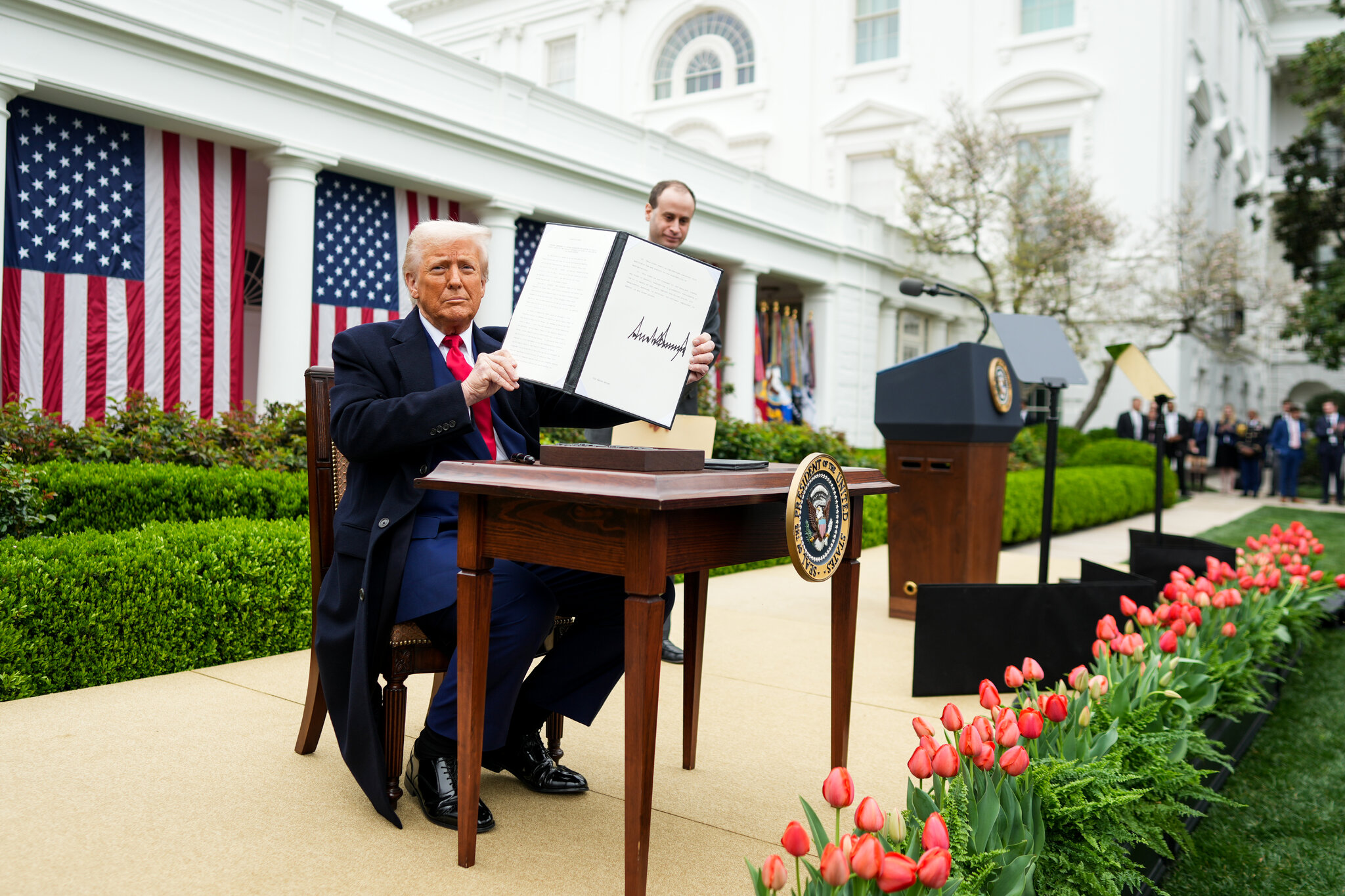
The US is imposing 10–12.5% tariffs on 60 countries over forced-labour enforcement gaps. Here’s what it means for Canada, Pakistan, and global sourcing.
Most tariff coverage in 2026 has focused on headline-grabbing bilateral fights — Section 232 metals duties, the US-Canada CUSMA review, reciprocal tariff threats. But a quieter measure moving through the USTR process may end up touching more of global trade than any single country-specific tariff: a forced-labour enforcement tariff applied not to a handful of adversaries, but to 60 economies accounting for 99% of US imports.
In mid-2026, the US Trade Representative proposed tariffs of 10% to 12.5% on imports from 60 economies — covering roughly 99% of US imports — after finding these countries had not adequately enforced bans on forced-labour goods. Countries with partial enforcement commitments face the lower 10% rate; the rest face 12.5%, with a special mechanism for apparel and textiles.
What the rule actually does
The USTR’s findings state that these 60 economies have failed to adequately prohibit or enforce bans on goods made with forced labour, which the agency frames as a source of unfair competition against countries that do enforce such bans. The proposed structure is two-tiered: a 10% tariff for countries that already have some form of forced-labour import prohibition or have committed to implementing one, and a 12.5% tariff for the remaining countries. A separate mechanism would allow limited apparel and textile imports at reduced rates, softening the blow for garment-dependent exporters.
Canada is on the list despite being a treaty partner under CUSMA — a reminder that forced-labour enforcement gaps are being treated as a distinct trade-policy lever, separate from tariff and quota negotiations under existing free-trade agreements.
Why this is the underreported story
Coverage so far has treated this as a compliance footnote inside broader tariff news. It deserves more attention for three reasons:
- Scale: unlike sector tariffs on steel or autos, this rule touches nearly the entire US import base at once, which means the aggregate cost pass-through to US consumers could exceed any single sector-specific measure.
- Enforcement burden shifts downstream: exporting countries — including major garment and electronics suppliers in Asia — will need to demonstrate active supply-chain auditing, not just legal prohibitions on paper, to qualify for the lower rate.
- Leverage point beyond trade: it gives Washington a tool to press human-rights and labour-standards issues inside what looks, on the surface, like a routine tariff schedule.
What exporters and sourcing teams should watch
- Whether their country lands in the 10% or 12.5% tier once USTR finalises findings after the July 2026 comment period
- Documentation requirements for the textile/apparel carve-out
- Whether affected governments respond with formal labour-enforcement commitments to shift tiers before the rule takes effect.
Discover more from The Economy
Subscribe to get the latest posts sent to your email.
Banks
Pakistan’s Most Reliable Export Is Its People: Remittances Hit $41.6 Billion, Overtaking Total Exports
Introduction
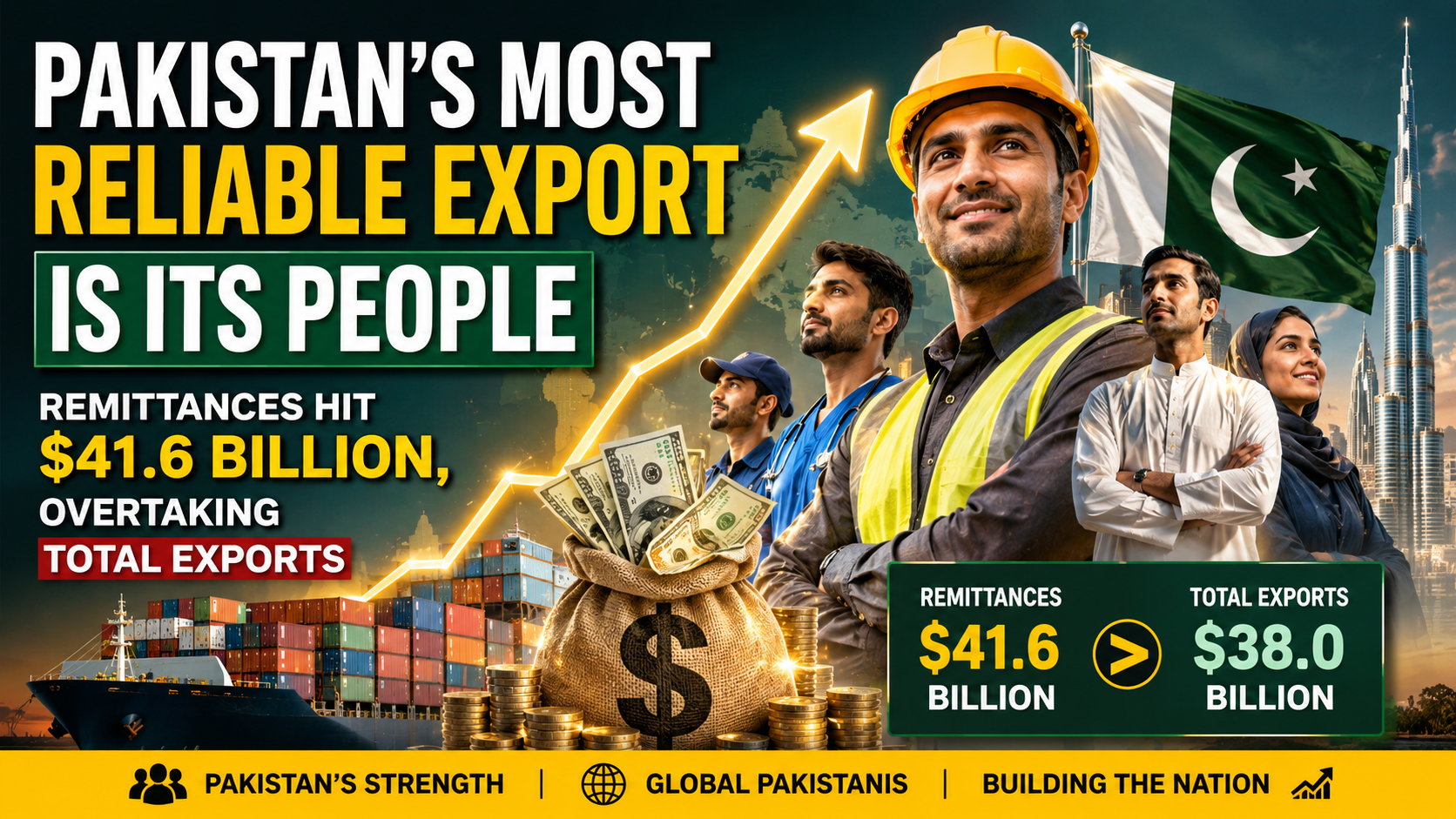
For the first time in the country’s history, money sent home by Pakistan’s overseas workers has exceeded the value of everything Pakistan actually sells abroad. Remittances hit a record $41.6 billion in the fiscal year ending June 30, 2026, according to State Bank of Pakistan data — surpassing total merchandise exports for the same period and cementing a structural shift that economists are increasingly uneasy about (VOI World/State Bank of Pakistan).
The Numbers Behind the Milestone
Remittance inflows rose 8.6% year-on-year in FY26, up from $38.3 billion in FY25 (VOI World). Some reporting puts the full 11-month figure even higher at $38 billion before the final month was tallied, with May 2026 alone contributing $4.25 billion — an amount roughly equal to what the entire country spends on imports in a single month (Express Tribune). A separate Express Tribune report puts the full FY26 total even higher, at $41.58 billion, an increase of nearly $3.29 billion over the prior year, delivered “without structured educational, training or welfare support” for the overseas workforce generating it (Express Tribune — Remittances Without Structured Support).
Saudi Arabia remained the single largest source of remittances in June 2026 at $829.6 million, followed by the UAE ($792.3 million), the United Kingdom ($514.9 million) and the United States ($296.8 million), with Italy and Oman each contributing more than $100 million (VOI World). That geographic concentration matters: a substantial share of Pakistan’s remittance base originates from the Gulf, leaving the country’s external account exposed to labor market reforms, economic cycles and geopolitical developments concentrated in a single, currently volatile region (Business Recorder Editorial).
Exports Have Been Stuck for Years
The remittance surge stands in sharp contrast to Pakistan’s export performance, which has shown little sustained dynamism despite years of concessional financing, preferential tariff regimes and subsidized energy for exporters (Business Recorder Editorial). The textile sector — long considered the backbone of Pakistan’s export economy — has been stuck in a $15–18 billion annual range for years, even as a handful of forward-thinking textile groups have managed to grow exports and diversify product lines under the exact same operating conditions others cite as prohibitive (Express Tribune). Separately reported nine-month data for the fiscal year showed exports contracting 5.8% to $23.3 billion even as imports rose nearly 8% to $46.8 billion, widening the trade gap further (Minute Mirror).
Over the three fiscal years from 2023 to 2025, Pakistan received $95.8 billion in remittances compared with $91 billion in merchandise exports — a gap that reflects, according to Business Recorder analysis, a deliberate policy orientation that has effectively institutionalized remittances as the default tool for stabilizing the current account rather than addressing the underlying export weakness (Business Recorder Opinion).
The Dutch Disease Warning
Independent economists have begun explicitly framing this pattern as a precursor to Dutch disease — the phenomenon where a large, easy source of foreign currency inflow reduces the pressure and incentive to build a competitive tradeable export sector (Business Recorder Opinion). The policy dimension is not incidental: under IMF program conditions, a long-standing subsidy that had encouraged banks to actively mobilize remittance transfers was withdrawn in the 2026 Budget, contributing to a temporary slowdown in inflows during the early months of the fiscal year before the government released Rs30 billion from its contingency fund to help revive momentum (Business Recorder Opinion).
A Business Recorder editorial published in July 2026 was blunt about the implication: Pakistan’s overseas workers have effectively become the country’s “most reliable export,” with its own people functioning as its largest export commodity — a framing the editorial explicitly calls an unsustainable foundation for long-term development strategy (Business Recorder Editorial).
The Silver Linings
The remittance boom has provided genuine macroeconomic stabilization. Total liquid foreign reserves crossed $23.98 billion as of early July 2026, including $18.47 billion held by the State Bank of Pakistan itself, with the rupee holding relatively steady around Rs278 per dollar in the interbank market (Express Tribune — Remittances Without Structured Support). Inflation has also been easing, and large-scale manufacturing showed signs of recovery with 5.9% growth in earlier-reported data, while agricultural lending rose 14.4% during July–February, extending credit access to farmers (Minute Mirror). Separately, Pakistan has reportedly repaid roughly Rs4,722 billion in debt ahead of schedule and posted a historic milestone in IT sector exports, suggesting pockets of genuine structural improvement exist alongside the broader export stagnation (Radio Pakistan).
Why This Matters Beyond Pakistan
Pakistan’s experience is a useful case study for other remittance-dependent emerging economies navigating IMF program conditions. The core tension — using a reliable, low-effort capital inflow to paper over a harder structural problem in the tradeable goods sector — is not unique to Pakistan, but few economies illustrate the scale of the imbalance as starkly as a country where remittances now formally exceed total exports.
Key Takeaways
- Pakistan’s FY26 remittances hit a record $41.6 billion, surpassing total merchandise exports for the first time in the country’s history.
- Saudi Arabia and the UAE remain the largest single sources, concentrating external account risk in the Gulf region.
- Textile exports have been stuck between $15–18 billion annually for years despite sustained government support.
- Economists are increasingly framing the remittance-export imbalance as a Dutch disease risk rather than a stabilization success story.
- Reserves have strengthened to nearly $24 billion and the rupee has stabilized, but the underlying export competitiveness problem remains unresolved.
Sources: VOI World, Express Tribune — Remittances Dwarf Exports, Express Tribune — Remittances Without Structured Support, Business Recorder Opinion, Business Recorder Editorial, Minute Mirror, Radio Pakistan
Discover more from The Economy
Subscribe to get the latest posts sent to your email.

Rachel Reeves’s £25 Billion Problem: What the Autumn Budget Gap Means for Britain

Inside the Fed’s Most Divided Vote in Years: Why Warsh Held the Line on Rates

Pakistan Passed Its Third IMF Review

The Fed Is Fractured — And a New Chair Just Made It Louder, Not Quieter

The UK Economy in 2026 Is Neither Recession Nor Recovery :Stagflaton

Indonesia’s $121 Billion Nickel Bet Is Facing a Battery Chemistry

Why Ultra-Wealthy Families Are Splitting Between Singapore and Dubai inmarkets 2026

China Chose Political Control Over Fixing Its Deflation Trap in 2026

Oil Markets Are Oversupplied and Geopolitically Explosive at the Same Time

Russia’s Budget Deficit Blew Past Its Full-Year Target in Three Months

Malaysia’s Rare Earth Bet: Six Powers Are Negotiating for Kuantan at Once

Gulf Sovereign Capital Bypasses Pakistan Despite Record 2026 Spending Spree

Pakistan’s $10bn US Facility Request: Inside the New Gulf Capital Triangle

China Criticizes US Bill Targeting Russian Oil Buyers — Why It Matters

AI Bubble Warning 2026: Why BIS, IMF and Bank of England Fear a Market Crash

Russia Bans Diesel Exports 2026: Global Fuel Market Impact Explained

Gold Price Forecast 2026: Fed’s July 29 Decision and Record Central Bank Buying Explained

Strait of Hormuz Blockade 2026: Oil Prices Surge 9% as US-Iran Conflict Reignites

Strait of Hormuz 2026: Why Markets Still Don’t Trust It’s Open

Down But Not Out: Inside the Slow Sinking of Russia’s War Economy

Gulf Capital Retreat From Pakistan 2026: UAE Loan Freeze & What It Means

China Politburo July 2026: Stimulus Signals Explained

Pakistan IMF Deal 2026: Third Review Cleared, Budget 2026-27 and Inflation Outlook

Pakistan Economy 2026: GDP Grows 3.7% as IMF Completes EFF Review Amid Middle East Risk

Apple vs OpenAI Lawsuit: The Economic Story Behind the Headline

Global Stock Market Selloff 2026: Stagflation Fears Return as Iran Conflict Reignites

Indonesia Russian Oil Imports 2026: Why Jakarta Is Diversifying Crude Supply

The Yuan Now Settles 67% of Russian Oil Payments — Quiet De-Dollarization in Action
-

 Markets & Finance7 months ago
Top 15 Stocks for Investment in 2026 in PSX: Your Complete Guide to Pakistan’s Best Investment Opportunities
-

 Analysis5 months ago
Johor’s Investment Boom: The Hidden Costs Behind Malaysia’s Most Ambitious Economic Surge
-

 Analysis6 months ago
Top 10 Stocks for Investment in PSX for Quick Returns in 2026
-

 Analysis6 months ago
Brazil’s Rare Earth Race: US, EU, and China Compete for Critical Minerals as Tensions Rise
-

 Banks7 months ago
Best Investments in Pakistan 2026: Top 10 Low-Price Shares and Long-Term Picks for the PSX
-

 Investment7 months ago
Top 10 Mutual Fund Managers in Pakistan for Investment in 2026: A Comprehensive Guide for Optimal Returns
-

 Global Economy7 months ago
15 Most Lucrative Sectors for Investment in Pakistan: A 2025 Data-Driven Analysis
-

 Global Economy7 months ago
Pakistan’s Export Goldmine: 10 Game-Changing Markets Where Pakistani Businesses Are Winning Big in 2025