AI
The Voice of the Next Billion: How Uplift AI is Rewiring the Global South’s Digital Frontier
KARACHI — In the sun-drenched cotton fields of southern Punjab, a farmer named Bashir holds a cheap Android smartphone. He doesn’t type; he doesn’t know how. Instead, he presses a button and asks a question in his native Saraiki. Within seconds, a human-sounding voice responds, explaining the exact nitrate concentration needed for his soil based on the morning’s weather report.
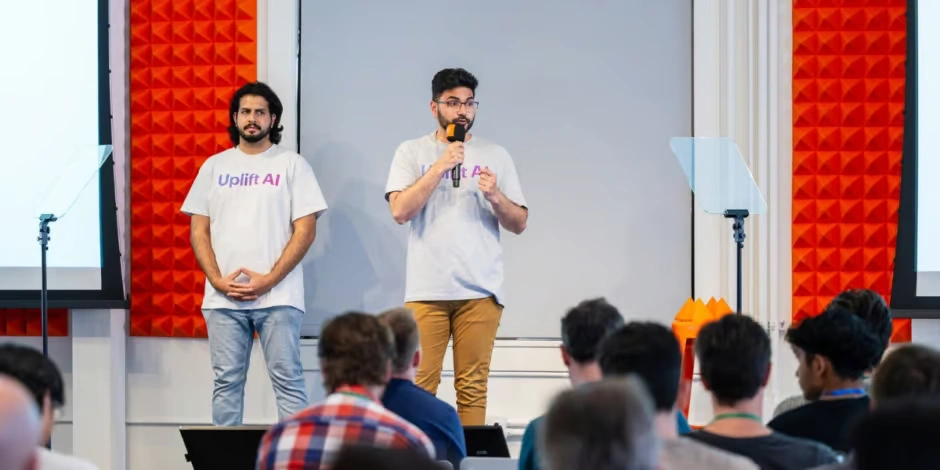
This isn’t a speculative vision of 2030. It is the immediate reality being built by Uplift AI, a Pakistani voice-AI infrastructure startup that recently announced a $3.5 million seed round in January 2026. Led by Y Combinator and Indus Valley Capital, the round marks a pivotal shift in the global AI narrative—one where the “next billion users” are brought online not through text, but through the primal, intuitive medium of speech.
A High-Stakes Bet on Linguistic Sovereignty
The funding arrives as Pakistan’s tech ecosystem stages a gritty comeback. Following a 2025 rebound that saw startups raise over $74 million—a 121% increase from the previous year’s doldrums—Uplift AI’s seed round represents one of the largest early-stage injections into pure-play AI in the region.
Joining the cap table is an elite syndicate including Pioneer Fund, Conjunction, Moment Ventures, and a group of high-profile Silicon Valley angels. Their conviction lies in a sobering statistic: 42% of Pakistani adults are illiterate. For them, the LLM revolution of 2023–2024 was a spectator sport. By building foundational voice models for Urdu, Punjabi, Pashto, Sindhi, Balochi, and Saraiki, Uplift AI is effectively building the “operating system” for a population previously locked out of the digital economy.
The Engineers Who Left Big Tech for the Indus Valley
Uplift AI’s pedigree is its primary moat. Founders Zaid Qureshi and Hammad Malik are veterans of the front lines of voice technology. Malik spent nearly a decade at Apple and Amazon, contributing to the core logic of Siri and Alexa, while Qureshi served as a senior engineer at AWS Bedrock, designing the very guardrails that govern modern enterprise AI.
“Off-the-shelf models from Silicon Valley treat regional languages as an afterthought—a translation layer slapped onto an English brain,” says Hammad Malik, CEO of Uplift AI. “We built our Orator family of models from the ground up. We don’t just translate; we capture the cadence, the cultural nuance, and the soul of the language.”
This “ground-up” philosophy involved a massive, in-house data operation. The startup has spent the last year recording thousands of hours of native speakers across Pakistan’s provinces to ensure their Speech-to-Text (STT) and Text-to-Speech (TTS) engines could outperform global giants like ElevenLabs or OpenAI in local dialects. According to the company, their models are currently 60 times more cost-effective for regional developers than Western alternatives.
Traction: From Khan Academy to the Corn Fields
The market’s response suggests the founders’ thesis was correct. Uplift AI has already secured high-impact partnerships:
- Khan Academy: Dubbed over 2,500 Urdu educational videos, slashing production costs and making world-class education accessible to millions of non-reading students.
- Syngenta: Deploying voice-first tools for farmers to receive agricultural intelligence in their local dialects.
- Developer Ecosystem: Over 1,000 developers are currently utilizing Uplift’s APIs to build everything from FIR (First Information Report) bots for police stations to health-intake systems for rural clinics.
| Language | Status | Market Reach (Est.) |
| Urdu | Live | 100M+ Speakers |
| Punjabi | Live | 80M+ Speakers |
| Sindhi | Live | 30M+ Speakers |
| Pashto | Beta | 25M+ Speakers |
| Balochi/Saraiki | In-Development | 20M+ Speakers |
Competitive Landscape: The Regional “Voice-First” Race
Uplift AI does not exist in a vacuum. In neighboring India, well-funded players like Sarvam AI and Krutrim are racing to build sovereign “Indic” models. However, Uplift’s focus on voice-first infrastructure rather than just text-based LLMs gives it a unique edge in markets with low literacy and high mobile penetration.
While global giants like AssemblyAI or OpenAI’s Whisper offer multilingual support, they often struggle with “code-switching”—the common practice in Pakistan of mixing Urdu with English or regional slang. Uplift’s models are natively trained to understand this linguistic fluidity, making them the preferred choice for local enterprises.
Macro Implications: AI as a GDP Multiplier
The significance of this round extends beyond a single startup. It signals Pakistan’s emergence as a serious contender in the “Sovereign AI” movement. By investing in local infrastructure, the country is reducing its “intelligence trade deficit”—the reliance on expensive, foreign-hosted models that don’t understand local context.
According to Aatif Awan, Managing Partner at Indus Valley Capital, “Voice is the primary gateway to the digital economy in emerging markets. Uplift AI isn’t just a tech play; it’s a productivity play for the entire nation.”
The startup plans to use the $3.5M to expand its R&D team and begin its foray into the MENA (Middle East and North Africa) region, targeting other underserved languages. As the “Generative AI” hype settles into a phase of practical utility, the real winners will be those who can connect the most sophisticated technology to the most fundamental human need: to be understood.
What’s Next?
The success of Uplift AI suggests that the next phase of the AI revolution won’t happen in the boardrooms of San Francisco, but in the streets of Karachi and the farms of Multan. By giving a digital voice to the 42% who cannot read, Uplift AI is not just building a company—it is unlocking a nation.
Discover more from The Economy
Subscribe to get the latest posts sent to your email.
AI
Top 10 Businesses to Start in Singapore for Massive Profits in 2026 and Beyond
Singapore stands at an economic crossroads in 2026. The Ministry of Trade and Industry projects GDP growth between 1.0% and 3.0% for the year, a moderation from 2025’s robust 4.8% expansion but one that masks extraordinary sectoral opportunities. While manufacturing surged 15% in Q4 2025, driven by biomedical and electronics clusters, the city-state’s real entrepreneurial promise lies not in traditional industries but in its digital-first transformation.
For aspiring entrepreneurs, this moment presents a paradox of promise. Singapore’s trade-dependent economy faces headwinds—trade accounts for over 320% of GDP, exposing it to global tariff tensions—yet its AI readiness score of 0.80 ranks first globally, and the fintech market is projected to reach USD 13.97 billion in 2026, growing at 15.9% annually through 2031. The question isn’t whether to launch a business in Singapore, but which business model will capture the massive profit potential embedded in this sophisticated, technology-saturated market.
This comprehensive analysis examines the top 10 businesses to start in Singapore in 2026, drawing on real-time data from authoritative sources including the Singapore Economic Development Board, Ministry of Trade and Industry, Statista, and market intelligence from premium outlets. Each opportunity is evaluated on startup costs, revenue potential, competitive barriers, and strategic advantages specific to Singapore’s unique ecosystem.
1. AI Consulting and Implementation Services: Riding the Wave of Digital Transformation
Singapore’s artificial intelligence market tells a story of explosive growth. The AI market is projected to grow at 28.10% annually through 2030, reaching USD 4.64 billion, while generative AI specifically will expand at 46.26% CAGR to USD 5.09 billion by 2030. More tellingly, 53% of Singaporean companies have already deployed AI at scale, the third-highest rate globally behind only India and the UAE.
Why This Profitable Business Idea in Singapore Works Now
The government’s aggressive push toward sovereign AI and trusted governance creates sustained enterprise demand. IMDA published the Model AI Governance Framework for Agentic AI in 2026, mandating responsible deployment frameworks across sectors. Companies need external expertise to navigate these requirements while extracting business value. According to Salesforce’s State of Service report, AI is expected to handle 41% of customer service cases in Singapore by 2027, up from 30% today, revealing massive implementation gaps.
Startup Costs and Revenue Projections
Initial investment: SGD 15,000-30,000 (cloud infrastructure, business registration, initial marketing) Year 1 revenue potential: SGD 150,000-400,000 Year 3 revenue potential: SGD 800,000-2 million Gross margins: 60-75%
Small teams of 2-3 AI specialists can command SGD 8,000-15,000 per project for pilot implementations, with enterprise retainers reaching SGD 20,000-50,000 monthly. The Micron announcement of $24 billion investment in Singapore for AI-related semiconductor production signals sustained infrastructure demand that will ripple through the consulting ecosystem.
Competitive Barriers and Risks
Technical talent shortage remains acute. Domain expertise in specific verticals (healthcare, finance, logistics) commands premium pricing. Large consultancies like Accenture and Deloitte dominate enterprise accounts, but nimble startups can capture mid-market SMEs through specialized offerings—medical imaging AI for clinics, inventory optimization for retailers, or compliance automation for fintech firms.
Success Strategy
Focus on one vertical initially. Partner with universities for talent pipeline. Offer “AI readiness assessments” as loss leaders to land implementation contracts. Build case studies demonstrating ROI in 90-day pilots.
2. Cybersecurity Solutions and Managed Services: Protecting Singapore’s Digital Economy
If AI represents opportunity, cybersecurity represents necessity. Singapore’s cybersecurity market is expected to reach USD 2.65 billion in 2025 and grow at 16.14% CAGR to USD 5.60 billion by 2030. More significantly, Singapore needs over 3,000 more cybersecurity specialists by 2026, as MAS tightens compliance requirements.
Market Drivers Creating Profit Potential
Singapore Exchange’s mandatory four-business-day cyber-incident notification rules surfaced 14 reportable events in 2024’s pilot, driving listed firms to increase spending on automated breach-impact assessment tools by 31%. Digital full-banks accumulated SGD 1.8 billion in deposits by end-2024, channeling roughly 22% of operating expenditure into cybersecurity during their first year.
Zero-trust architecture mandates create recurring revenue opportunities. By November 2024, 96% of critical information infrastructure owners had submitted zero-trust roadmaps, generating demand for ongoing implementation, monitoring, and compliance validation services.
Startup Costs and Profit Margins
Initial investment: SGD 25,000-50,000 (certifications, security tools, compliance frameworks) Year 1 revenue potential: SGD 200,000-500,000 Year 3 revenue potential: SGD 1-3 million Gross margins: 50-70%
Managed security service providers (MSSPs) can structure retainers from SGD 5,000-25,000 monthly depending on client size. Penetration testing commands SGD 10,000-50,000 per engagement. The talent constraint actually benefits qualified operators—median senior-analyst pay climbed 14% to SGD 117,000, but successful firms charging 2-3x salary in client fees maintain healthy margins.
Differentiation in a Competitive Market
Most cybersecurity firms focus on network security. Emerging opportunities lie in OT (operational technology) security for manufacturers, cloud security posture management for digital-native companies, and compliance-as-a-service for fintech startups navigating MAS Technology Risk Management guidelines.
Risks and Mitigation
Client acquisition costs are high in enterprise sales. Start with SME packages (SGD 3,000-8,000/month) to build references, then move upmarket. Partner with software vendors like Microsoft and AWS for co-selling opportunities. Obtain CREST certification to differentiate from unlicensed operators.
3. Fintech Infrastructure and Embedded Finance Solutions: Building the Plumbing of Digital Commerce
Singapore’s fintech market will reach USD 13.97 billion in 2026, growing from USD 12.05 billion in 2025. But the real opportunity isn’t another consumer payments app—it’s building the infrastructure that powers next-generation financial services.
The Project Nexus Advantage
Project Nexus will connect payment rails across Singapore, Malaysia, Thailand, Philippines, and India by 2026, enabling real-time settlement and freeing an estimated USD 120 billion in trapped liquidity. Early-stage fintech firms providing API integration, cross-border reconciliation software, or SME working-capital products tied to shipment milestones can capture disproportionate value.
High-Profit Niches in 2026
Embedded finance platforms: Enable non-financial companies to offer financial services. A SaaS platform providing “banking-as-a-service” APIs can charge 0.5-2% per transaction plus monthly infrastructure fees.
Regulatory technology (regtech): Increasing sophistication of AI-powered attacks and growing regulatory scrutiny will redefine cybersecurity strategies in 2026. Compliance automation tools for KYC, AML, and reporting can command SGD 2,000-15,000 monthly SaaS fees.
B2B payments optimization: Trade finance platforms leveraging real-time settlement for SME supplier payments represent a multi-billion-dollar opportunity as traditional nostro/vostro account structures become obsolete.
Revenue Model and Profitability
Initial investment: SGD 100,000-300,000 (development, licenses, initial compliance) Year 1 revenue potential: SGD 300,000-800,000 Year 3 revenue potential: SGD 2-8 million Gross margins: 70-85% (SaaS model)
Transaction-based pricing scales elegantly. A platform processing SGD 10 million monthly at 0.75% generates SGD 75,000 in monthly revenue. Ten enterprise clients create a SGD 900,000 annual run-rate with minimal incremental costs.
Regulatory Considerations
MAS licensing requirements are stringent but navigable for infrastructure providers. Consider partnership models with licensed entities initially. The MAS SGD 100 million FSTI 3.0 program co-funds quantum-safe cybersecurity and AI-driven risk models, providing potential grant support.
4. HealthTech and Telemedicine Platforms: Serving Singapore’s Aging Population
Singapore’s demographic time bomb creates entrepreneurial opportunity. The number of healthtech startups grew from 140 to over 400 by 2025, with Singapore accounting for 9% of all healthtech startups in Asia despite its small size. In 2025, Singapore’s health and biotech sectors secured $342 million in funding.
Market Fundamentals
Singapore’s population is aging rapidly, with chronic disease management becoming a national priority. The government’s Smart Nation initiative explicitly supports digital health adoption. From AI-enabled home care to precision diagnostics, healthtech addresses both access and quality challenges.
Profitable Business Models
Chronic disease management platforms: AI-powered platforms like Mesh Bio use analytics to identify risks earlier and personalize care. B2B contracts with healthcare providers generate SGD 5-20 per patient per month.
Telemedicine infrastructure: Building white-label telemedicine platforms for clinics and hospitals. License fees of SGD 3,000-15,000 monthly plus per-consultation charges (SGD 2-5).
Medical wearables and RPM: Real-time patient monitoring wearables command hardware margins (30-40%) plus recurring subscription revenue (SGD 50-150/month per device).
Startup Costs and Scaling
Initial investment: SGD 80,000-200,000 (product development, regulatory compliance, clinical validation) Year 1 revenue potential: SGD 200,000-600,000 Year 3 revenue potential: SGD 1.5-5 million Gross margins: 50-75%
Regulatory Pathway
HSA (Health Sciences Authority) approval is required for medical devices. Start with wellness devices (lower regulatory burden) to validate market fit, then pursue medical device classification. Partner with established healthcare providers for clinical credibility and distribution.
Export Potential
Singapore serves as a springboard to Southeast Asia’s 650 million population. Successful validation in Singapore’s sophisticated market enables regional expansion, multiplying addressable market 100-fold.
5. E-Commerce Enablement and Cross-Border Logistics Tech: Powering the $30 Billion Digital Commerce Boom
Singapore’s e-commerce market was valued at USD 8.9 billion in 2024 and is projected to reach USD 29.57 billion by 2032, growing at 16.2% CAGR. But the real money isn’t in becoming the next Shopee—it’s in providing the infrastructure that makes e-commerce work.
Market Opportunity
Food and beverages is expanding at 12.45% CAGR through 2030, fastest among all categories. Parcel-locker densification and refrigerated last-mile fleets support fresh-food deliveries. Social commerce—TikTok Shop reached USD 16.3 billion GMV in 2023—creates demand for creator tools and fulfillment integration.
High-Margin Service Categories
Multi-channel integration platforms: SaaS tools enabling merchants to synchronize inventory across Shopee, Lazada, TikTok Shop, and Amazon. Charge SGD 200-2,000 monthly based on order volume.
Cross-border logistics optimization: Software that optimizes customs clearance, carrier selection, and shipping costs. Take 5-15% of savings generated.
D2C brand incubation: White-label product sourcing, branding, and marketplace optimization services. Success-based fees (10-30% of revenue) or equity stakes in brands built.
Returns and reverse logistics: Automated returns management platforms charging per transaction (SGD 3-8) or monthly subscriptions (SGD 500-5,000).
Financial Model
Initial investment: SGD 30,000-80,000 (software development, partnerships, working capital) Year 1 revenue potential: SGD 250,000-700,000 Year 3 revenue potential: SGD 1.2-4 million Gross margins: 60-80%
A logistics tech platform serving 50 merchants processing 5,000 orders monthly at SGD 2 per order generates SGD 120,000 monthly (SGD 1.44 million annually) with minimal variable costs once software is built.
Competitive Moat
Network effects matter. The more merchants on your platform, the better rates you negotiate with carriers. The more data you aggregate, the smarter your algorithms. First movers in specific verticals (food, fashion, electronics) can build defensible positions before well-funded competitors enter.
6. EdTech and Corporate Learning Solutions: Capturing the $2 Billion Skills Training Market
Singapore’s workforce transformation creates massive demand for continuous learning. 94% of firms are expected to become AI-driven by 2028, with AI and data science salaries boosting by over 25%. This skills gap translates to commercial opportunity.
Government-Backed Market Demand
SkillsFuture credits provide Singaporeans with government subsidies for approved training programs. Companies receive productivity grants to upskill employees. This creates a market where both individual learners and corporate buyers have subsidized purchasing power.
Profitable EdTech Models
Corporate micro-learning platforms: 10-15 minute modules on AI tools, cybersecurity, data analysis. B2B contracts of SGD 50-200 per employee annually.
Industry-specific certification programs: Deep-tech certifications for semiconductors, biotech, or fintech. Charge SGD 2,000-8,000 per learner with 60%+ margins.
AI-powered personalized learning: Adaptive learning platforms that customize content based on performance. Premium positioning at SGD 300-800 per learner annually.
Career transition bootcamps: 8-12 week intensive programs for mid-career switchers entering tech. Charge SGD 8,000-15,000 per cohort with income-share agreements as alternative payment.
Economics and Scale
Initial investment: SGD 50,000-150,000 (content creation, platform development, instructor fees) Year 1 revenue potential: SGD 300,000-900,000 Year 3 revenue potential: SGD 1.5-5 million Gross margins: 65-85% (digital delivery)
A corporate learning platform with 20 enterprise clients, each with 100 employees at SGD 150 per seat, generates SGD 300,000 annually. Scale to 100 clients (achievable in 3 years) and revenue reaches SGD 1.5 million with marginal content costs.
Regulatory Advantage
Partner with SkillsFuture Singapore (SSG) to become an approved training provider. This unlocks access to billions in government subsidies, dramatically reducing customer acquisition costs and price sensitivity.
7. Sustainable Food and AgriFood Tech: Meeting Green Plan 2030 Targets
Singapore’s Green Plan 2030 targets 80% of new buildings to be Super Low Energy Buildings by 2030, and the government has committed over S$30 million to the Food Tech Innovation Centre alongside A*STAR. Leading players like Oatly and Eat Just have established facilities in Singapore.
Market Dynamics
Singapore imports over 90% of its food, creating national security concerns. The government actively promotes local production through technology. Alternative proteins, vertical farming, and food waste reduction represent high-growth segments with government support.
Profitable Niches
B2B alternative protein ingredients: Selling plant-based or cultivated protein to food manufacturers. This wholesale model offers better margins (30-50%) than D2C consumer brands.
Vertical farming automation: Providing AI-powered climate control, nutrient monitoring, and harvest prediction software to vertical farms. Charge SGD 5,000-20,000 monthly per facility.
Food waste valorization: Converting food waste into animal feed, compost, or biofuel. Charge waste generators for collection (tipping fees) while selling outputs—double revenue streams.
Dark kitchen and ghost restaurant infrastructure: Shared commercial kitchen space with integrated ordering systems. Rent to multiple brands, generating SGD 4,000-15,000 per kitchen bay monthly.
Startup Investment and Returns
Initial investment: SGD 80,000-250,000 (equipment, licenses, initial inventory) Year 1 revenue potential: SGD 200,000-800,000 Year 3 revenue potential: SGD 1-4 million Gross margins: 35-60% (varies by model)
Grant Support
Enterprise Singapore offers sustainability-focused grants with up to 70% support (from standard 50%). This dramatically reduces capital requirements for green initiatives.
Exit Opportunities
Singapore’s agriFood tech ecosystem attracts significant M&A activity. Successful startups can exit to regional conglomerates (Wilmar, Olam) or global food companies seeking Asian footprints. Temasek’s active investments create additional liquidity paths.
8. Digital Marketing and Performance Marketing Agencies: Serving Singapore’s 46,000+ SMEs
Singapore hosts 46,232 companies as of January 2026, with 5,890 having secured funding. These companies—from funded startups to growth-stage enterprises—need customer acquisition expertise. Digital marketing services remain perennially in demand with high margins.
Why This Small Business Opportunity in Singapore Remains Attractive
Low barriers to entry combined with high margins create entrepreneurial appeal. A solo operator can launch with minimal capital, scale to a 5-10 person team generating SGD 2-5 million annually, then either scale further or sell to a consolidator.
Service Models and Pricing
SEO and content marketing: Retainers of SGD 3,000-15,000 monthly. Gross margins: 60-75%.
Performance marketing (Google Ads, Meta Ads): Charge 15-25% of ad spend or performance fees (5-15% of attributed revenue). A client spending SGD 50,000 monthly generates SGD 7,500-12,500 in agency fees.
Social commerce management: Managing TikTok Shop, Instagram Shopping, live-streaming commerce. Charge SGD 5,000-20,000 monthly plus 5-10% of sales.
Marketing automation and CRM: Implementation and management of HubSpot, Salesforce, or local alternatives. Setup fees (SGD 10,000-50,000) plus monthly management (SGD 2,000-10,000).
Financial Projections
Initial investment: SGD 10,000-25,000 (business setup, initial marketing, software subscriptions) Year 1 revenue potential: SGD 180,000-500,000 Year 3 revenue potential: SGD 800,000-3 million Gross margins: 60-80%
Differentiation Strategy
Generalist agencies face intense competition. Specialize by vertical (healthtech marketing, fintech growth, e-commerce brands) or by channel (TikTok-first agency, programmatic advertising specialists). Develop proprietary IP—frameworks, tools, or methodologies—that justify premium pricing.
Scale and Exit
Unlike product companies, agencies scale linearly with headcount. The path to SGD 10 million+ revenue requires either significant team growth or productization (creating software tools that deliver service outcomes with less human labor). Alternatively, build to SGD 3-5 million revenue and sell to a holding company at 3-6x EBITDA multiples.
9. Home-Based Business Services: Consulting, Virtual Assistance, and Specialized B2B Services
Not every profitable business requires significant capital. Singapore’s high cost of physical real estate makes home-based business models especially attractive for solo entrepreneurs and small teams.
Online Business Singapore Low Investment Options
Technical writing and documentation: B2B technical writing for software companies, financial services, or manufacturers. Charge SGD 0.15-0.50 per word or SGD 80-200 per hour. A single client project (20,000-word technical manual) generates SGD 3,000-10,000.
Fractional C-suite services: Part-time CFO, CMO, or CTO services for startups and SMEs. Charge SGD 5,000-15,000 monthly for 2-4 days of work. Four clients create SGD 20,000-60,000 monthly income with minimal overhead.
Specialized recruiting: Tech recruiting, executive search, or niche talent acquisition. Charge 20-25% of first-year salary. Placing 12 candidates annually at average SGD 120,000 salaries generates SGD 288,000-360,000 revenue.
Virtual CFO and bookkeeping: Monthly financial management for SMEs. Charge SGD 800-3,000 monthly per client. Twenty clients generate SGD 192,000-720,000 annually.
B2B content creation: White papers, case studies, thought leadership for tech companies. Charge SGD 2,000-8,000 per deliverable. Ten deliverables monthly generate SGD 240,000-960,000 annually.
Economics of Home-Based Models
Initial investment: SGD 3,000-10,000 (business registration, initial marketing, professional services) Year 1 revenue potential: SGD 80,000-300,000 Year 3 revenue potential: SGD 200,000-1 million Gross margins: 80-95% (primarily time-based)
Scaling Strategies
Lifestyle businesses work beautifully in Singapore’s high-cost environment—a solo consultant generating SGD 300,000 annually keeps more take-home than a mid-level corporate employee earning SGD 150,000. To scale beyond personal capacity, hire associate consultants, build proprietary methodologies you can license, or create info products and courses that generate passive income.
10. Sustainability Consulting and ESG Advisory: Profiting from the Green Transition
The global green technology and sustainability market is set to grow to USD 185.21 billion by 2034 at 22.94% CAGR. Singapore sits at the epicenter of Asia’s sustainability transformation, with the financial sector channeling billions into green investments.
Market Drivers
MAS, aligned with Green Plan 2030, has channeled funding into green bonds, sustainability-linked loans, and voluntary carbon trading platforms like Climate Impact X. SGX-listed companies face increasing ESG disclosure requirements. Supply chain partners of global corporations must demonstrate sustainability credentials to maintain contracts.
High-Value Services
Carbon accounting and reporting: Help companies measure, reduce, and report emissions. Charge SGD 15,000-80,000 for baseline assessments plus SGD 3,000-15,000 monthly for ongoing tracking.
Sustainability strategy development: Multi-month engagements creating net-zero roadmaps. Charge SGD 50,000-300,000 per engagement depending on company size.
Green financing advisory: Help companies access green bonds, sustainability-linked loans, or climate tech venture capital. Charge success fees (1-3% of capital raised) or retainers (SGD 10,000-30,000 monthly).
Supply chain sustainability audits: Assess and improve supplier sustainability practices. Charge per supplier audited (SGD 5,000-20,000) or percentage of procurement spend (0.5-2%).
ESG reporting and compliance: Prepare sustainability reports meeting GRI, SASB, or TCFD standards. Charge SGD 30,000-150,000 annually depending on report complexity.
Business Model
Initial investment: SGD 20,000-60,000 (certifications, training, initial marketing) Year 1 revenue potential: SGD 200,000-700,000 Year 3 revenue potential: SGD 1-4 million Gross margins: 65-85%
Credentials Matter
Obtain recognized certifications: GRI Certified Sustainability Professional, SASB FSA Credential, or relevant engineering certifications for technical assessments. Partner with engineering firms for energy audits and technical solutions you can’t deliver in-house.
Competitive Positioning
Big Four accounting firms dominate large enterprise ESG advisory. Target mid-market companies (SGD 50-500 million revenue) that need sophisticated services but can’t afford Big Four rates. Specialize by sector—maritime decarbonization, real estate energy retrofits, food supply chain sustainability—to build domain expertise competitors can’t easily replicate.
Synthesis: Choosing Your Path in Singapore’s 2026 Business Landscape
These ten opportunities share common threads: they leverage Singapore’s strengths (advanced digital infrastructure, sophisticated buyers, government support), address genuine market needs amplified by demographic or regulatory trends, and offer paths to profitability within 12-18 months for well-executed ventures.
Capital Intensity vs. Profit Potential Trade-offs
| Business Model | Initial Investment | Year 3 Revenue Potential | Competitive Moat |
|---|---|---|---|
| AI Consulting | Low (SGD 15-30K) | High (SGD 800K-2M) | Medium (expertise) |
| Cybersecurity | Medium (SGD 25-50K) | High (SGD 1-3M) | High (credentials) |
| Fintech | High (SGD 100-300K) | Very High (SGD 2-8M) | Very High (regulatory) |
| HealthTech | Medium (SGD 80-200K) | High (SGD 1.5-5M) | High (clinical validation) |
| E-commerce Tech | Low-Medium (SGD 30-80K) | High (SGD 1.2-4M) | Medium (network effects) |
| EdTech | Medium (SGD 50-150K) | High (SGD 1.5-5M) | Medium (content quality) |
| FoodTech | Medium-High (SGD 80-250K) | Medium (SGD 1-4M) | Medium (government support) |
| Digital Marketing | Very Low (SGD 10-25K) | Medium-High (SGD 800K-3M) | Low (services) |
| Home Business | Very Low (SGD 3-10K) | Low-Medium (SGD 200K-1M) | Low (personal brand) |
| Sustainability | Low-Medium (SGD 20-60K) | High (SGD 1-4M) | Medium (certification) |
Key Success Factors Across All Models
- Leverage government support: From SkillsFuture subsidies to Enterprise Development Grants offering 50-70% funding support, Singapore’s government actively co-invests in entrepreneurship.
- Focus on B2B models first: Singapore’s small consumer market (6 million people) limits B2C scale. B2B models offer higher contract values, longer customer relationships, and regional export potential.
- Build for ASEAN, validate in Singapore: Use Singapore’s sophisticated market as a quality signal, then expand to Indonesia (270 million people), Vietnam, Thailand, and Malaysia for scale.
- Prioritize recurring revenue: Subscription, retainer, and usage-based pricing models create predictable cash flow and higher business valuations (5-10x revenue vs. 1-3x for one-time sales).
- Partner strategically: Singapore’s ecosystem rewards collaboration. Partner with universities for talent and R&D, government agencies for grants and validation, and corporations for distribution and credibility.
Your Action Plan for Launching a Profitable Business in Singapore in 2026
The opportunity is clear. Singapore-based startups are expected to raise over $18.4 billion in new funding in 2026, with nearly 6,000 new startups projected by year-end. The question isn’t whether Singapore offers entrepreneurial opportunity—it manifestly does. The question is which opportunity aligns with your expertise, capital, and risk tolerance.
Start by assessing your competitive advantages. Do you have deep technical expertise (favor AI, cybersecurity, healthtech)? Strong sales and relationship-building skills (favor consulting, digital marketing)? Industry connections (leverage into fintech, sustainability advisory)? Limited capital but strong work ethic (home-based services, consulting)?
Next, validate demand before building. Conduct 20-30 customer discovery interviews. Sell pilot projects before developing full solutions. Use government grants to de-risk early-stage investment. Build minimum viable products in weeks, not months.
Finally, think beyond Singapore from day one. The city-state’s true value lies in its role as Asia’s quality signal and regional launchpad. Build businesses that can export to ASEAN’s 650 million people or serve global enterprises from a Singapore base.
The moderating GDP growth of 2026 masks profound sectoral opportunities. Manufacturing may face challenges, but digital services, technology enablement, and sustainability solutions are accelerating. Choose wisely, execute relentlessly, and leverage Singapore’s unparalleled business environment to build the next generation of highly profitable Asian enterprises.
Ready to launch your Singapore business? The best time to start was yesterday. The second-best time is now. Whether you’re pursuing AI consulting, cybersecurity services, fintech innovation, or any of the opportunities outlined here, Singapore’s ecosystem stands ready to support ambitious entrepreneurs willing to solve real problems for paying customers. The massive profits of 2026 and beyond await those bold enough to begin.
Discover more from The Economy
Subscribe to get the latest posts sent to your email.
Business
Pakistan’s Startups at Davos: Symbolism or Substance?
When seven Pakistani startups were selected to showcase at the World Economic Forum Annual Meeting 2026 in Davos, it was heralded as a breakthrough for the country’s entrepreneurial ecosystem. The Pathfinder CITADEL DAVOS Challenge, which shortlisted these ventures from over 200 entries, has positioned Pakistan’s innovators on one of the most influential global stages.
This achievement is not just about visibility. It is about whether Pakistan can leverage Davos to attract investment, build credibility, and scale innovation ecosystems beyond symbolic representation.
Why Davos Matters
The World Economic Forum (WEF) is more than a networking event; it is a marketplace of ideas where policymakers, investors, and entrepreneurs converge. For emerging economies, participation signals credibility. Countries like India and Singapore have long used Davos as a platform to project their innovation narratives. Pakistan’s presence now offers a chance to reframe its global image from a frontier market to a rising tech hub.
According to The Economist and Financial Times, global investors increasingly look to emerging markets for AI, fintech, and healthtech solutions that address scalability and affordability. Pakistan’s startups fit neatly into this narrative.
The Startups: Microcosms of Pakistan’s Innovation Priorities
- Edversity – Tackling the tech skills gap by training youth in AI, blockchain, and cybersecurity with localized learning solutions.
- Fintech ventures – Expanding financial inclusion in underserved markets, a critical need in Pakistan where nearly 70% remain unbanked.
- Healthtech startups – Innovating in affordable healthcare delivery, aligning with global demand for scalable health solutions.
- AI-driven platforms – Positioning Pakistan as a digital talent hub for emerging technologies.
These startups embody Pakistan’s strategic priorities: education, inclusion, and digital transformation.
Opportunities and Challenges
Opportunities:
- Access to global investors and mentors at Davos.
- Branding Pakistan as a tech-forward nation.
- Potential for cross-border collaborations in AI and fintech.
Challenges:
- Scaling beyond local markets where infrastructure gaps persist.
- Regulatory hurdles in Pakistan’s startup ecosystem.
- Risk of Davos becoming a token showcase without long-term policy support.
As Harvard Business Review notes, emerging market startups often struggle to convert global visibility into sustainable growth without ecosystem-level reforms.
Opinion: A Turning Point or a Missed Opportunity?
The selection of seven startups is undoubtedly historic. Yet, the question remains: is Pakistan ready for global competition?
To move beyond symbolism, Pakistan must:
- Strengthen venture capital pipelines.
- Reform regulatory frameworks for startups.
- Invest in digital infrastructure and talent development.
Without these, Davos risks becoming a photo opportunity rather than a launchpad.
Conclusion
Pakistan’s startups at Davos are ambassadors of resilience and creativity, but the country’s innovation economy needs more than symbolic wins. If policymakers and investors seize this moment, Pakistan could emerge as a serious contender in the global digital economy.
The world will be watching—not just the pitches in Davos, but the policies and partnerships that follow.
Sources:
- CW Pakistan – Seven Pakistani Startups Selected for Davos 2026
- Gad Insider – Pakistan’s Seven Startups Selected for CITADEL Davos 2026
- TechJuice – These Seven Pakistani Startups Are Heading to Davos 2026
Discover more from The Economy
Subscribe to get the latest posts sent to your email.
AI
How AI Is Systematically Transforming Education
For nearly half a century, Benjamin Bloom’s research has haunted educators with a tantalizing possibility. In 1984, the educational psychologist demonstrated that students receiving one-on-one tutoring performed two standard deviations better than those in conventional classrooms—a difference so profound that the average tutored student outperformed 98% of students in traditional settings. Bloom called this the “2-Sigma Problem”: how could schools possibly deliver such transformative results at scale when human tutors remain prohibitively expensive and scarce?
The answer, it seems, is finally emerging—not from hiring millions of tutors, but from intelligent machines that never tire, never lose patience, and can simultaneously serve millions of students while learning from each interaction. From classrooms in Estonia to rural India, from struggling readers in Detroit to gifted mathematicians in Singapore, AI-powered learning systems are beginning to deliver the kind of personalized instruction that Bloom could only dream of. The implications extend far beyond test scores: how nations learn, compete, and prosper in the coming decades may be defined not by their geography or natural resources, but by how effectively they harness this educational transformation.
The Personalized Learning Revolution Finally Arrives
The promise of personalized education has been recycled so often it risks becoming a cliché. Yet something genuinely different is happening now. Where previous technologies merely digitized traditional content—turning textbooks into PDFs or lectures into videos—today’s adaptive learning platforms powered by AI fundamentally reimagine the learning process itself.
Consider Duolingo, which has evolved from a simple vocabulary app into a sophisticated AI tutor serving over 500 million learners worldwide. Its latest iteration employs large language models to generate contextual explanations, adapts difficulty in real-time based on performance patterns, and provides conversational practice that mimics human interaction. The Economist recently noted that such platforms are achieving learning outcomes comparable to human tutoring at a fraction of the cost—precisely the kind of breakthrough Bloom sought.

Khan Academy’s Khanmigo represents another inflection point. Built atop OpenAI’s GPT-4, this AI teaching assistant doesn’t simply provide answers but guides students through Socratic questioning, adapting its pedagogical approach based on each learner’s responses. Early trials show remarkable results: students using Khanmigo demonstrated 30% faster mastery of algebraic concepts compared to traditional methods, while reporting higher engagement and reduced math anxiety.
These aren’t isolated experiments. Century Tech, deployed across hundreds of UK schools, uses neuroscience-informed algorithms to map how individual students learn and continuously adjusts content delivery. Squirrel AI in China serves millions of students with granular diagnostic assessments that identify knowledge gaps human teachers might miss. Microsoft’s AI-powered education initiatives are bringing similar capabilities to underserved communities globally, from refugee camps to remote villages.
What makes this wave different is the sophistication of the personalization. Earlier adaptive systems could adjust difficulty; today’s AI tutors understand context, detect misconceptions, recognize when students are frustrated or bored, and vary their teaching strategies accordingly. They’re beginning to approximate what great human tutors do instinctively—and doing it for millions simultaneously.
Augmenting Teachers, Not Replacing Them
The dystopian narrative of AI replacing teachers makes for compelling headlines but misses the more nuanced reality emerging in classrooms. The most successful implementations treat AI as what it truly is: a powerful tool that amplifies human educators rather than supplanting them.
Administrative burden consumes an astonishing portion of teacher time—an estimated 30-40% in most developed nations, according to OECD research. Grading essays, tracking attendance, generating progress reports, answering repetitive questions: tasks that drain energy from what teachers do best. AI teaching assistants are systematically eliminating this drudgery. Natural language processing systems can now provide substantive feedback on student writing, flagging not just grammar errors but structural weaknesses and opportunities for stronger argumentation. Automated grading systems handle multiple-choice assessments and even numerical problems, freeing teachers to focus on higher-order thinking.
More profoundly, AI is transforming teachers’ ability to differentiate instruction—the educational ideal honored more in rhetoric than reality. In a typical classroom of 30 students, providing truly individualized learning paths has been practically impossible. AI changes this calculus entirely. Teachers using platforms like DreamBox or ALEKS receive granular dashboards showing exactly where each student struggles, which concepts require reteaching, and which students need additional challenges. This intelligence allows educators to intervene precisely when and where it matters most.
In South Korea, the government’s ambitious AI textbook initiative pairs digital learning materials with teacher analytics that surface patterns invisible to the naked eye: which students consistently stumble on word problems versus computational tasks, who masters concepts quickly but forgets them within weeks, which peer groups might benefit from collaborative work. Teachers report that such insights transform their effectiveness, allowing them to orchestrate learning with unprecedented precision.
The role is evolving from “sage on the stage” to something more sophisticated: curator, coach, and conductor. Teachers design learning experiences, provide emotional support and motivation, facilitate discussion and debate, teach collaboration and critical thinking—the irreducibly human elements of education. Meanwhile, AI handles the mechanical, the repetitive, and the computationally intensive analysis that humans perform poorly at scale.
Narrowing the Great Divide: AI and Educational Equity
Perhaps the most consequential promise of AI in education lies in its potential to narrow yawning inequities—both within wealthy nations and globally.
In the United States, the gap between advantaged and disadvantaged students costs the economy an estimated $390-$550 billion annually in lost output, according to McKinsey research. Students in affluent districts enjoy experienced teachers, abundant resources, and often private tutoring. Their peers in struggling schools face overcrowded classrooms, teacher shortages, and outdated materials. AI tutors potentially democratize access to high-quality instruction regardless of zip code.
The transformation is perhaps most visible in developing nations. In India, BYJU’S serves over 150 million students, many in rural areas previously lacking access to quality education. Its AI-driven platform adapts to local languages, cultural contexts, and varying levels of prior knowledge, effectively bringing world-class teaching to villages without reliable electricity. UNESCO reports highlight similar initiatives across Sub-Saharan Africa, where AI-powered learning on low-bandwidth mobile platforms is reaching students who have never seen a traditional textbook.
Estonia offers an instructive policy model. The small Baltic nation, having digitized its entire education system, now uses AI to identify at-risk students early and deploy interventions before they fall irreparably behind. The results are striking: Estonia now ranks among the global leaders in educational outcomes despite spending substantially less per student than the United States or UK. The secret, according to education officials, lies in using AI to ensure no child becomes invisible—the system flags struggling students automatically, triggering human support.
Yet equity concerns cut both ways. The same technology that could democratize education might also deepen divides if deployed unevenly. Students in well-resourced schools may gain access to sophisticated AI tutors while their peers in underfunded districts receive outdated or inferior systems. The Brookings Institution warns that without deliberate policy intervention, AI could replicate existing inequalities rather than remedy them. The digital divide—in infrastructure, devices, and connectivity—remains a formidable barrier in many regions.
Moreover, AI systems trained predominantly on data from advantaged populations may serve those students better, embedding bias into the learning process itself. Ensuring that AI in education genuinely promotes equity requires conscious design choices, substantial public investment, and vigilant oversight.
The Considerable Risks We Cannot Ignore
No discussion of AI transforming education would be complete without confronting legitimate concerns that extend beyond access and equity.
Algorithmic bias represents perhaps the most insidious challenge. AI systems learn from historical data, and when that data reflects societal prejudices, the systems perpetuate them. A recent New York Times investigation found that some AI tutoring platforms consistently provided more detailed explanations and encouragement to students with traditionally European names than those with names common in minority communities—a subtle but consequential form of discrimination. Facial recognition systems used to monitor student attention have been shown to perform poorly on darker-skinned students, raising both accuracy and privacy concerns.
Privacy itself deserves careful scrutiny. AI learning platforms collect vast amounts of data about student performance, behavior, and even emotional states. While this data fuels personalization, it also creates troubling possibilities for surveillance and misuse. Who owns this information? How long is it retained? Could it be used to track individuals into adulthood, affecting college admissions or employment? The Financial Times has documented instances where student data from educational platforms was shared with third parties or used for purposes beyond learning—a troubling precedent as AI systems proliferate.
Perhaps most philosophically concerning is the risk of over-reliance undermining the very capabilities education should cultivate. If AI provides instant answers and step-by-step guidance, do students lose opportunities to struggle productively, to develop resilience through challenge, to think independently? Critics worry that excessive dependence on AI tutors might atrophy critical thinking skills, creativity, and intellectual autonomy—the qualities most essential in an AI-saturated world.
There’s also the question of what gets optimized. AI systems excel at improving measurable outcomes: test scores, completion rates, efficiency. But education encompasses much that resists quantification: wisdom, character, citizenship, the capacity for moral reasoning. An education system dominated by AI might systematically undervalue these harder-to-measure dimensions while over-emphasizing the easily trackable. As the educational philosopher Nel Noddings might ask: are we teaching students to learn, or merely to perform?
Finally, the pace of change itself presents challenges. Teachers need training, not just in using AI tools, but in redesigning pedagogy around them. Curricula must evolve to emphasize skills AI cannot replicate. Assessment systems built for a pre-AI era seem increasingly obsolete when students can generate essays or solve problems with chatbots. Educational institutions, traditionally slow to change, must somehow transform rapidly without losing sight of their core mission.
The Future: National Competitiveness and Lifelong Learning
The nations that successfully integrate AI into education may gain decisive advantages in the emerging global economy. When The World Economic Forum analyzes future competitiveness, it increasingly emphasizes not natural resources or manufacturing capacity, but human capital and adaptability—precisely what AI-enhanced education cultivates.
Consider the trajectory. Students educated with personalized AI tutors may master fundamental skills faster and more thoroughly, freeing time to develop higher-order capabilities: creativity, complex problem-solving, ethical reasoning, collaboration across differences. They’ll grow accustomed to learning continuously, adapting to new tools and concepts with AI-assisted agility. By some estimates, these students could complete traditional K-12 curricula two to three years faster while achieving deeper mastery—a profound competitive advantage multiplied across entire populations.
The implications extend well beyond childhood education. In an era where technological disruption renders skills obsolete with alarming frequency, lifelong learning transitions from aspiration to necessity. AI tutors available on-demand make continuous upskilling dramatically more accessible. A factory worker displaced by automation might learn coding through an AI tutor that adapts to her schedule and prior knowledge. A nurse could master new medical technologies through simulations and personalized instruction. A retiree might finally learn that language or skill he always dreamed of acquiring.
Singapore offers a glimpse of this future. The city-state’s SkillsFuture initiative, enhanced with AI-powered learning platforms, enables citizens at any career stage to acquire new competencies efficiently. The economic payoff appears substantial: workers transition between sectors more smoothly, productivity increases as skills continuously improve, and the workforce remains perpetually competitive despite rapid technological change.
Yet this future also demands thoughtful policy choices. Governments must invest not just in AI technology but in the infrastructure and training to use it effectively. They must establish guardrails around data privacy, algorithmic transparency, and equity. They must reimagine credentialing systems for an era when traditional degrees matter less than demonstrated capabilities. And crucially, they must prepare for labor market disruptions as AI-enhanced education accelerates both skill acquisition and obsolescence.
The most forward-thinking nations are already making such investments. Estonia’s AI strategy explicitly links educational transformation to economic competitiveness. China’s ambitious plans for AI in education form part of a broader bid for technological supremacy. The United States, despite its AI leadership in other domains, risks falling behind in educational deployment without coordinated national strategy—a concern raised repeatedly by think tanks and policy experts.
Conclusion: Realizing the 2-Sigma Dream
Benjamin Bloom died in 1999, never seeing whether his 2-Sigma Problem might be solved. But the solution he couldn’t have imagined—AI tutors combining infinite patience with individual adaptation—is emerging precisely as he predicted: dramatically improving learning outcomes at scale.
We stand at an inflection point. The technology enabling truly personalized learning AI has arrived. Early evidence suggests it works, sometimes remarkably well. The question is no longer whether AI will transform education, but how—and whether that transformation will be equitable, ethical, and genuinely beneficial.
The optimistic scenario is compelling: millions of students worldwide receiving instruction calibrated precisely to their needs, advancing at their own pace, never left behind or held back. Teachers liberated from drudgery to focus on the human elements of education. Learning becoming truly lifelong and accessible, enabling continuous adaptation in a fast-changing world. Nations competing not through military might or resource extraction, but through the flourishing of their people’s potential.
Yet this future is far from guaranteed. It requires sustained investment in educational infrastructure and teacher training. It demands vigilance against bias and exploitation. It necessitates preserving the irreplaceable human elements of education—mentorship, inspiration, moral formation—even as machines handle much of the instruction. And it calls for profound reimagining of what education means and measures in an age of artificial intelligence.
The transformation is already underway. AI in education has moved from speculation to implementation, from pilot programs to widespread deployment. What remains to be determined is whether we’ll harness this revolution thoughtfully, ensuring that Bloom’s dream of exceptional outcomes for every student becomes reality rather than merely another form of technological determinism.
The answers we provide—through policy, investment, and ethical frameworks—will shape not just how the next generation learns, but what kind of world they’ll inherit and create. In that sense, the systematic transformation of education by AI is about far more than schools or test scores. It’s about whether we can build a future where human potential is genuinely democratized, where geography and circumstance matter less than curiosity and effort, where learning never stops because the tools to support it are always available.
That future is within reach. Whether we grasp it wisely will define the coming decades.
Discover more from The Economy
Subscribe to get the latest posts sent to your email.
-
Markets & Finance3 weeks agoTop 15 Stocks for Investment in 2026 in PSX: Your Complete Guide to Pakistan’s Best Investment Opportunities
-
Global Economy4 weeks agoWhat the U.S. Attack on Venezuela Could Mean for Oil and Canadian Crude Exports: The Economic Impact
-
Asia4 weeks agoChina’s 50% Domestic Equipment Rule: The Semiconductor Mandate Reshaping Global Tech
-
Investment3 weeks agoTop 10 Mutual Fund Managers in Pakistan for Investment in 2026: A Comprehensive Guide for Optimal Returns
-
Global Economy1 month agoPakistan’s Export Goldmine: 10 Game-Changing Markets Where Pakistani Businesses Are Winning Big in 2025
-
Global Economy1 month ago15 Most Lucrative Sectors for Investment in Pakistan: A 2025 Data-Driven Analysis
-
Global Economy1 month agoPakistan’s Economic Outlook 2025: Between Stabilization and the Shadow of Stagnation
-
China Economy4 weeks agoChina’s Property Woes Could Last Until 2030—Despite Beijing’s Best Censorship Efforts