
AI
The Price of Algorithmic War: How AI Became the New Dynamite in the Middle East

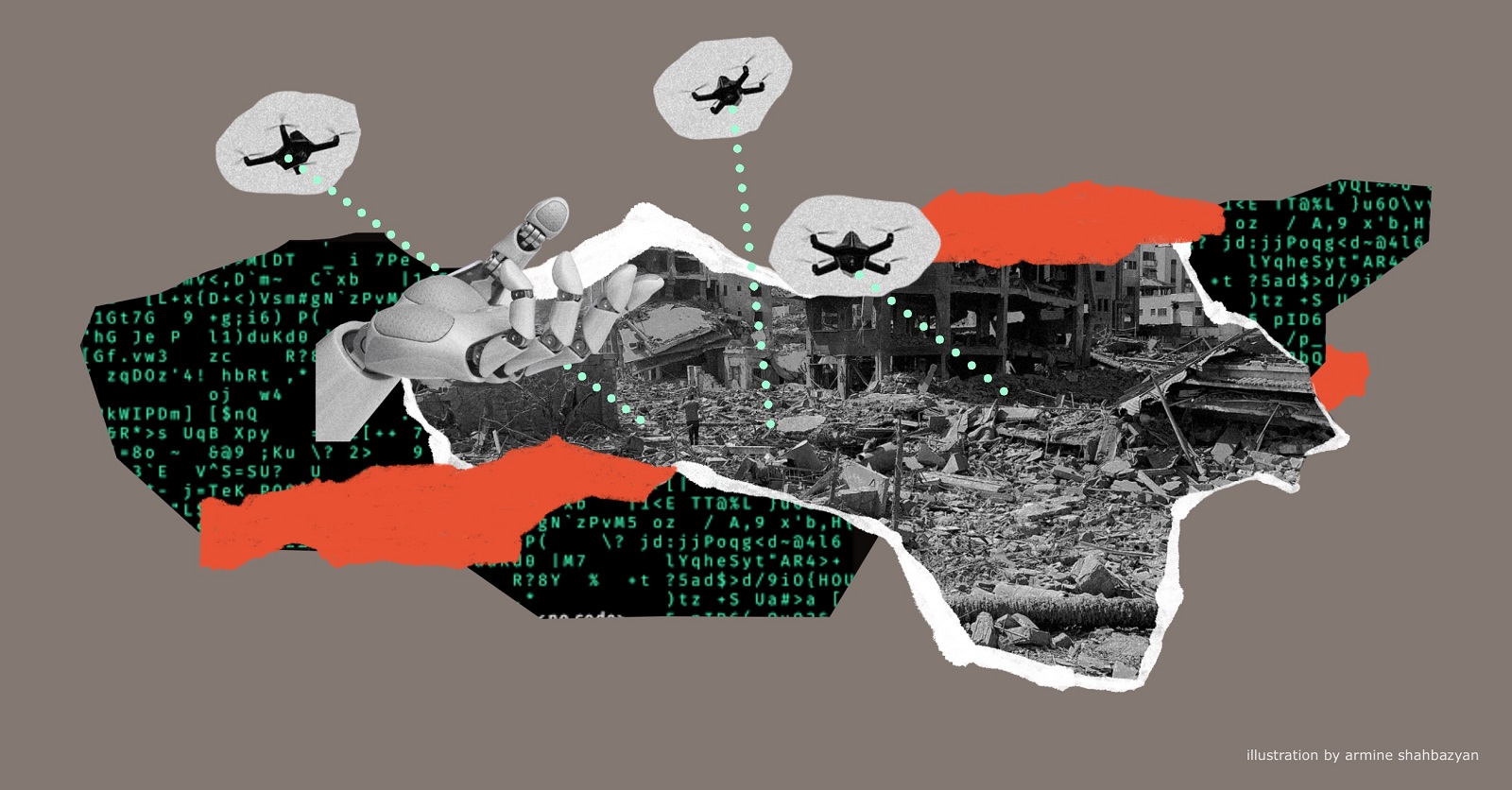
The Iran conflict has turned frontier AI models into contested weapons of state — and the financial and human fallout is only beginning to register.
In the first eleven days of the U.S.-Israeli offensive against Iran, which began on February 28, 2026, American and Israeli forces executed roughly 5,500 strikes on Iranian targets. That is an operational tempo that would have required months in any previous conflict — made possible, in significant part, by artificial intelligence. In the first eleven days of the conflict, America achieved an astonishing 5,500 strikes, using AI on a large-scale battlefield for the first time at this scale. The National The same week those bombs fell, a legal and commercial crisis erupted in Silicon Valley with consequences that will define the AI industry for years. Both events are part of the same story.
We are living through the moment when AI ceased being a future-war thought experiment and became an operational reality — embedded in targeting pipelines, shaping intelligence assessments, and now at the center of a constitutional showdown between a frontier AI company and the United States government. Alfred Nobel, who invented dynamite and then spent the remainder of his life in tortured ambivalence about it, would have recognized the pattern immediately.
The Kill Chain, Accelerated
The joint U.S. and Israeli offensive on Iran revealed how algorithm-based targeting and data-driven intelligence are reforming the mechanics of warfare. In the first twelve hours alone, U.S. and Israeli forces reportedly carried out nearly 900 strikes on Iranian targets — an operational tempo that would have taken days or even weeks in earlier conflicts. Interesting Engineering
At the technological center of this acceleration sits a system most Americans have never heard of: Project Maven. Anthropic’s Claude has become a crucial component of Palantir’s Maven intelligence analysis program, which was also used in the U.S. operation to capture Venezuelan President Nicolás Maduro. Claude is used to help military analysts sort through intelligence and does not directly provide targeting advice, according to a person with knowledge of Anthropic’s work with the Defense Department. NBC News This is a distinction with genuine moral weight — between decision-support and decision-making — but one that is becoming harder to sustain at the speed at which modern targeting now operates.
Critics warn that this trend could compress decision timelines to levels where human judgment is marginalized, ushering in an era of warfare conducted at what has been described as “faster than the speed of thought.” This shortening interval raises fears that human experts may end up merely approving recommendations generated by algorithms. In an environment dictated by speed and automation, the space for hesitation, dissent, or moral restraint may be shrinking just as quickly. Interesting Engineering
The U.S. military’s posture has been notably sanguine about these concerns. Admiral Brad Cooper, head of U.S. Central Command, confirmed that AI is helping soldiers process troves of data, stressing that humans make final targeting decisions — but critics note the gap between that principle and verifiable practice remains wide. Al Jazeera
The Financial Architecture of AI Warfare
The economic dimensions of this transformation are substantial and largely unreported in their full complexity. Understanding them requires holding three separate financial narratives simultaneously.
The direct contract market is the most visible layer. Over the past year, the U.S. Department of Defense signed agreements worth up to $200 million each with several major AI companies, including Anthropic, OpenAI, and Google. CNBC These are not trivial sums in isolation, but they represent the seed capital of a much larger transformation. The military AI market is projected to reach $28.67 billion by 2030, as the speed of military decision-making begins to surpass human cognitive capacity. Emirates 24|7
The collateral economic disruption is less discussed but potentially far larger. On March 1, Iranian drone strikes took out three Amazon Web Services facilities in the Middle East — two in the UAE and one in Bahrain — in what appear to be the first publicly confirmed military attacks on a hyperscale cloud provider. The strikes devastated cloud availability across the region, affecting banks, online payment platforms, and ride-hailing services, with some effects felt by AWS users worldwide. The Motley Fool The IRGC cited the data centers’ support for U.S. military and intelligence networks as justification. This represents a strategic escalation that no risk-management framework in the technology sector adequately anticipated: cloud infrastructure as a legitimate military target.
The reputational and legal costs of AI’s battlefield role may ultimately dwarf both. Anthropic’s court filings stated that the Pentagon’s supply-chain designation could cut the company’s 2026 revenue by several billion dollars and harm its reputation with enterprise clients. A single partner with a multi-million-dollar contract has already switched from Claude to a competing system, eliminating a potential revenue pipeline worth more than $100 million. Negotiations with financial institutions worth approximately $180 million combined have also been disrupted. Itp
The Anthropic-Pentagon Fracture: A Defining Test
The dispute between Anthropic and the U.S. Department of Defense is not merely a contract negotiation gone wrong. It is the first high-profile case in which a frontier AI company drew a public ethical line — and then watched the government attempt to destroy it for doing so.
The sequence of events is now well-documented. The administration’s decisions capped an acrimonious dispute over whether Anthropic could prohibit its tools from being used in mass surveillance of American citizens or to power autonomous weapon systems, as part of a military contract worth up to $200 million. Anthropic said it had tried in good faith to reach an agreement, making clear it supported all lawful uses of AI for national security aside from two narrow exceptions. NPR
When Anthropic held its position, the response was unprecedented in the annals of U.S. technology policy. Defense Secretary Pete Hegseth declared Anthropic a supply chain risk in a statement so broad that it can only be seen as a power play aimed at destroying the company. Shortly thereafter, OpenAI announced it had reached its own deal with the Pentagon, claiming it had secured all the safety terms that Anthropic sought, plus additional guardrails. Council on Foreign Relations
In an extraordinary move, the Pentagon designated Anthropic a supply chain risk — a label historically only applied to foreign adversaries. The designation would require defense vendors and contractors to certify that they don’t use the company’s models in their work with the Pentagon. CNBC That this was applied to a U.S.-headquartered company, founded by former employees of a U.S. nonprofit, and valued at $380 billion, represents a remarkable inversion of the logic the designation was designed to serve.
Meanwhile, Washington was attacking an American frontier AI leader while Chinese labs were on a tear. In the past month alone, five major Chinese models dropped: Alibaba’s Qwen 3.5, Zhipu AI’s GLM-5, MiniMax’s M2.5, ByteDance’s Doubao 2.0, and Moonshot’s Kimi K2.5. Council on Foreign Relations The geopolitical irony is not subtle: in punishing a safety-focused American AI company, the administration may have handed Beijing its most useful competitive gift of the year.
The Human Cost: Social Ramifications No Algorithm Can Compute
Against the financial ledger, the humanitarian accounting is staggering and still incomplete.
The Iranian Red Crescent Society reported that the U.S.-Israeli bombardment campaign damaged nearly 20,000 civilian buildings and 77 healthcare facilities. Strikes also hit oil depots, several street markets, sports venues, schools, and a water desalination plant, according to Iranian officials. Al Jazeera
The case that has attracted the most scrutiny is the bombing of the Shajareh Tayyebeh elementary school in Minab, southern Iran. A strike on the school in the early hours of February 28 killed more than 170 people, most of them children. More than 120 Democratic members of Congress wrote to Defense Secretary Hegseth demanding answers, citing preliminary findings that outdated intelligence may have been to blame for selecting the target. NBC News
The potential connection to AI decision-support systems is explored with forensic precision by experts at the Bulletin of the Atomic Scientists. One analysis notes that the mistargeting could have stemmed from an AI system with access to old intelligence — satellite data that predated the conversion of an IRGC compound into an active school — and that such temporal reasoning failures are a known weakness of large language models. Even with humans nominally “in the loop,” people frequently defer to algorithmic outputs without careful independent examination. Bulletin of the Atomic Scientists
The social fallout extends well beyond individual atrocities. Israel’s Lavender AI-powered database, used to analyze surveillance data and identify potential targets in Gaza, was wrong at least 10 percent of the time, resulting in thousands of civilian casualties. A recent study found that AI models from OpenAI, Anthropic, and Google opted to use nuclear weapons in simulated war games in 95 percent of cases. Rest of World The simulation result does not predict real-world behavior, but it reveals how strategic reasoning models can default toward extreme outcomes under pressure — a finding that ought to unsettle anyone who imagines that algorithmic warfare is inherently more precise than the human kind.
The corrosion of accountability is perhaps the most insidious long-term social effect. “There is no evidence that AI lowers civilian deaths or wrongful targeting decisions — and it may be that the opposite is true,” says Craig Jones, a political geographer at Newcastle University who researches military targeting. Nature Yet the speed and opacity of AI-assisted operations makes it exponentially harder to assign responsibility when things go wrong. Algorithms do not face courts-martial.
Governance: The International Gap
Rapid technological development is outpacing slow international discussions. Academics and legal experts meeting in Geneva in March 2026 to discuss lethal autonomous weapons systems found themselves studying a technology already being used at scale in active conflicts. Nature The gap between the pace of deployment and the pace of governance has never been wider.
The Middle East and North Africa are arguably the most conflict-ridden and militarized regions in the world, with four out of eleven “extreme conflicts” identified in 2024 by the Armed Conflict Location and Event Data organization occurring there. The region has become a testing ground for AI warfare whose lessons — and whose errors — will shape every future conflict. War on the Rocks
The legal framework governing AI in warfare remains, generously described, aspirational. The U.S. military’s stated commitment to keeping “humans in the loop” is a principle that has no internationally binding enforcement mechanism, no agreed definition of what meaningful human control actually entails, and no independent auditing process. One expert observed that the biggest danger with AI is when humans treat it as an all-purpose solution rather than something that can speed up specific processes — and that this habit of over-reliance is particularly lethal in a military context. The National
AI as the New Dynamite: Nobel’s Unresolved Legacy
When Alfred Nobel invented dynamite in 1867, he believed — genuinely — that a weapon so devastatingly efficient would make war unthinkably costly and therefore rare. He was catastrophically wrong. The Franco-Prussian War, the First World War, and the entire industrial-era atrocity that followed proved that more powerful weapons do not deter wars; they escalate them, and they increase civilian mortality relative to combatant casualties.
The parallel to AI is not decorative. The argument for AI in warfare — that algorithmic precision reduces collateral damage, that faster targeting shortens conflicts, that autonomous systems absorb military risk that would otherwise fall on human soldiers — is structurally identical to Nobel’s argument for dynamite. It is the rationalization of a dual-use technology by those with an interest in its proliferation.
Drone technology in the Middle East has already shifted from manual control toward full autonomy, with “kamikaze” drones utilizing computer vision to strike targets independently if communications are severed. As AI becomes more integrated into militaries, the advancements will become even more pronounced with “unpredictable, risky, and lethal consequences,” according to Steve Feldstein, a senior fellow at the Carnegie Endowment for International Peace. Rest of World
The Anthropic dispute, whatever its ultimate legal resolution, has surfaced a question that Silicon Valley has been able to defer until now: can a technology company that builds frontier AI models — systems capable of synthesizing intelligence, generating targeting assessments, and running strategic simulations — genuinely control how those systems are used once deployed by a state? As OpenAI’s own FAQ acknowledged when asked what would happen if the government violated its contract terms: “As with any contract, we could terminate it.” The entire edifice of AI safety in warfare, for now, rests on the contractual leverage of companies that have already agreed to participate. Council on Foreign Relations
Nobel at least had the decency to endow prizes. The AI industry is still working out what it owes.
Policy Recommendations
A minimally adequate governance framework for AI in warfare would need to accomplish several things. Independent verification of “human in the loop” claims — not merely the assertion of it — is the essential starting point. Mandatory after-action reporting on AI involvement in any strike that results in civilian casualties would create accountability where none currently exists. International agreement on a baseline error-rate threshold — above which AI targeting systems may not be used without additional human review — would translate abstract humanitarian law into operational reality.
The technology companies themselves bear responsibility that no contract clause can fully discharge. Researchers from OpenAI, Google DeepMind, and other labs submitted a court filing supporting Anthropic’s position, arguing that restrictions on domestic surveillance and autonomous weapons are reasonable until stronger legal safeguards are established. ColombiaOne That the most capable AI builders in the world believe their own technology is not yet reliable enough for autonomous lethal use is information that should be at the center of every policy debate — not buried in court filings.
Discover more from The Economy
Subscribe to get the latest posts sent to your email.



The 2026 smartphone market is doing something unusual. It is shrinking and growing more valuable at the same time.
Fewer phones will ship, but each one costs more. A memory chip shortage, driven by demand from AI data centers, is behind much of the change.
Here is what the data shows, who is winning and what to watch before you buy or invest.
Key Takeaways
- Record decline: IDC forecasts a 16.7% fall in 2026 shipments to just over 1 billion units, the steepest annual drop on record. IDC
- Value still rises: Total market value should grow 6.3% to $613 billion because higher prices offset lower volume. IDC
- Memory is the culprit: Memory costs are up sharply and now dominate the cost of low-end phones.
- Premium wins: Apple and Samsung are holding up better than budget Android brands.
- Foldables are the growth story: Apple’s entry is lifting the category.
Why Smartphone Shipments Are Falling
The main driver is a memory shortage that began in late 2025. Chipmakers have shifted capacity toward data-center and AI products, leaving less for phones.
IDC says memory costs are up nearly 300% from a year ago and now make up over 65% of the bill of materials at the low end. IDC
That is why budget phones are hit hardest. IDC has said the sub-$100 segment, about 171 million devices, is likely to become permanently uneconomical. BizTechReports
Second-quarter data confirms the trend. Q2 2026 shipments fell 7.4% year on year to 276.3 million units, the second straight quarterly decline. IDC expects the second half to be worse, with a forecast 27.2% drop. IDC
The Numbers at a Glance
| Indicator | Figure | Source |
|---|---|---|
| 2026 shipments | Just over 1 billion (down 16.7%) | IDC, latest forecast |
| 2026 market value | $613 billion (up 6.3%) | IDC |
| Record average price | About $550 (June forecast) | IDC |
| Foldables 2026 | 22.9 million units (up 12.6%) | IDC |
| Foldables 2027 | About 27 million units | IDC |
IDC’s June forecast pointed to a record average selling price of $550, up $100 from last year. Forecasts have been revised more than once this year, so check for updates. IDC
AI Integration: Marketing Story or Real Value?
Every major brand now sells “AI phones.” The features fall into three groups.
- On-device features: Summaries, translation, photo editing and voice tools that run locally.
- Cloud-assisted assistants: Features that need a connection and often a subscription.
- Chip and memory upgrades: Phones need more RAM to run AI models well.
There is a paradox here. AI features want more memory, while the AI boom is making memory scarce and expensive.
For buyers, the practical test is simple. Ask whether the AI feature works offline, whether it costs extra and whether it changes your daily use.
Competitor Analysis: Who Is Winning?
The market has split. Samsung and Apple show resilience in premium segments, while Xiaomi, OPPO and vivo face shipment declines. BigGo Finance
| Vendor Group | Position | Key Exposure |
|---|---|---|
| Apple | Strong premium demand; entering foldables | High prices; China competition |
| Samsung | Resilient flagship and foldable line | Memory is also its own business |
| Xiaomi, OPPO, vivo | Under pressure | Heavy low- and mid-range mix |
| Huawei | Growing in China | Ecosystem limits abroad |
Apple and the Foldable Effect
Apple’s move into foldables is the biggest product story of the year. IDC says Apple’s entry turned a segment that was about to decline into the industry’s fastest-growing part. IDC
IDC forecasts Apple will ship more than 17 million foldable iPhones by 2027, roughly 40% of the global foldables market. IDC
Emerging Markets Take the Hit
Cheap phones are where the pain concentrates. IDC notes the decline is heaviest at the bottom of the market, so emerging markets will absorb the most pain. Buyers in regions that rely on entry-level devices face fewer choices and higher prices. IDC
Smartphone Buying Guide for 2026
If you plan to upgrade, consider these steps.
- Buy sooner if you need a mid-range phone. Prices are more likely to rise than fall before mid-2027.
- Check trade-in offers. Carriers and brands use trade-ins to soften higher prices.
- Prioritize storage and battery over headline AI features.
- Compare financing terms. Zero-interest plans can hide higher device prices.
What This Means for the Global Market in 2027
Coverage of the current slump rarely looks past it. Here is what to watch.
A slow recovery. IDC’s June forecast pointed to a further 1.1% decline in 2027 and a 5.5% rebound in 2028 as memory supply normalizes. Expect a long trough rather than a quick bounce. IDC
Consolidation. IDC expects smaller vendors to exit. Investors should look for balance sheet strength.
A new pricing floor. Memory prices are projected to stabilize by mid-2027, but not to return to earlier levels. Cheap smartphones may not come back. BizTechReports
Foldables scaling. With Apple in the category, suppliers of hinges and flexible displays may see rising volumes.
Investment angle. Memory makers benefit from tight supply. Handset makers face margin pressure. Diversified exposure matters.
Frequently Asked Questions
Will smartphone prices go up in 2026?
Yes, on average. IDC expects a record average selling price as memory costs rise and vendors focus on higher-priced models.
Why is the smartphone market shrinking?
A memory chip shortage is the main cause. Chipmakers are prioritizing AI data centers, which raises costs for phone makers.
Which smartphone brands are doing best?
Apple and Samsung are holding up best thanks to premium demand. Budget-focused Android brands are struggling most.
Are foldable phones worth buying in 2026?
They are the one growing category, and Apple’s entry is boosting it. They still cost more, so weigh durability and price first.
Discover more from The Economy
Subscribe to get the latest posts sent to your email.

As rapid demographic aging, falling birth rates, and rising national debt pressures converge, governments worldwide face an unprecedented retirement security crisis. According to comprehensive benchmark research from the Mercer CFA Institute Global Pension Index, national pension architectures vary dramatically in their capacity to deliver adequate retirement income, long-term financial viability, and institutional trust.
While top-performing European and Asian nations have built resilient, multi-pillar retirement models, several major economies lag significantly behind, leaving millions of future retirees exposed to poverty and financial volatility.
The Global Evaluation Framework: How Pensions Are Measured
Comparative pension research published by the Monash University Centre for Financial Studies evaluates national retirement frameworks using 50+ individual indicators divided into three sub-indices:
- Adequacy (40% Weighting): Assesses base benefit levels, net pension replacement rates, tax incentives, homeownership rates, and personal savings structures.
- Sustainability (35% Weighting): Evaluates demographic dependency ratios, mandatory retirement ages, state debt levels, labor force participation among older workers, and economic growth potential.
- Integrity (25% Weighting): Examines regulatory oversight, governance standards, plan communication, operational transparency, and systemic trust.
Systems earning an A-Grade (Score > 80) feature first-class, robust retirement frameworks that deliver comprehensive benefits with strong future viability. Conversely, systems receiving a D-Grade (Score 35–50) exhibit structural vulnerabilities that threaten future retiree welfare without urgent reform.
Global Pension Systems Index Comparison
| Country | Overall Grade | Index Score | Adequacy Score | Sustainability Score | Integrity Score | Primary Architecture Type |
| Netherlands | A | 85.4 | 85.6 | 82.4 | 89.1 | Quasi-Mandatory Occupational / Public State |
| Iceland | A | 83.5 | 82.7 | 84.6 | 86.0 | Universal Mandatory Occupational & State |
| Denmark | A | 81.6 | 81.1 | 82.5 | 81.4 | Fully Funded Mandatory Occupational (ATP) |
| Singapore | A | 80.5 | 79.8 | 74.0 | 88.5 | Central Provident Fund (CPF) Mandatory Savings |
| Israel | A | 80.2 | 73.6 | 76.1 | 83.9 | Mandatory Pension Law & State Safety Net |
| United Kingdom | B | 72.2 | 68.5 | 65.2 | 87.1 | Auto-Enrolment Workplace & State Pension |
| United States | C+ | 61.1 | 63.9 | 60.1 | 59.5 | Social Security + Voluntary 401(k)/IRA |
| Japan | C | 56.3 | 60.2 | 46.5 | 68.1 | Two-Tier Public System & Corporate Plans |
| Argentina | D | 45.5 | 50.7 | 40.0 | 50.0 | Pay-As-You-Go Public Pension |
| Philippines | D | 42.7 | 38.9 | 52.5 | 35.0 | Social Security System (SSS) & Private Plans |
| India | D | 43.8 | 33.5 | 41.8 | 61.0 | National Pension System (NPS) & Provident Fund |
The World’s Top 5 Pension Frameworks (Grade A)
[Level 1: Universal Basic State Safety Net]
                 ↓
[Level 2: Mandatory Occupational / Workplace Pensions]
                 ↓
[Level 3: Voluntary Private Supplemental Savings]
1. Netherlands (Overall Score: 85.4)
The Dutch retirement system consistently sets the benchmark for global excellence. Combining a collective basic state pension (AOW) with quasi-mandatory, industry-wide occupational plans, the Netherlands yields net income replacement rates exceeding 80% for long-term workers. Extensive collective risk-sharing and stringent regulation by the Central Bank ensure high solvency and trust.
2. Iceland (Overall Score: 83.5)
Iceland’s system excels in long-term financial viability and labor participation. It relies on a multi-tiered framework comprising a basic state pension alongside mandatory occupational pension funds where both employers (minimum 11.5%) and employees (4%) contribute. Iceland maintains high labor force participation among workers aged 55 to 74, reinforcing systemic sustainability.
3. Denmark (Overall Score: 81.6)
Denmark relies on a basic public pension supplemented by fully funded occupational schemes (ATP) negotiated through collective labor agreements. High national savings rates, income redistribution for lower-wage earners, and transparent governance yield high marks across all three sub-indices.
4. Singapore (Overall Score: 80.5)
Reaching A-grade status for the first time in recent index evaluations, Singapore’s model centers around the state-administered Central Provident Fund (CPF). Mandatory contribution rates—up to 37% of wages split between employer and employee—are channeled into dedicated accounts for retirement, housing, and healthcare, delivering a high integrity rating.
5. Israel (Overall Score: 80.2)
Israel’s pension infrastructure combines a universal state old-age allowance with mandatory contributions to pension funds, provident funds, or insurance policies established under its Mandatory Pension Law. Strong capital accumulation and clear participant reporting underpin its top-tier status.
The World’s Struggling Pension Frameworks (Grade D)
India (Overall Score: 43.8)
India’s low score stems primarily from limited coverage within its large informal labor force. While the formal sector is served by the Employees’ Provident Fund Organisation (EPFO) and the National Pension System (NPS), the vast majority of workers lack access to formal retirement savings. According to World Bank Pension Data, expanding social pension safety nets for unorganized workers remains an urgent policy challenge.
The Philippines (Overall Score: 42.7)
The Philippine system, governed by the Social Security System (SSS) for private-sector workers and the Government Service Insurance System (GSIS) for public employees, faces challenges regarding benefit adequacy and regulatory integration. Low voluntary savings rates and limited coverage among self-employed individuals constrain its performance.
Argentina (Overall Score: 45.5)
Argentina’s pay-as-you-go (PAYGO) public pension structure has been heavily affected by high inflation, currency devaluation, and fiscal instability. Macroeconomic headwinds periodically erode the real purchasing power of monthly payouts, impacting its overall sustainability score.
Macro Trends Reshaping Retirement Security
   Demographic Aging           DB-to-DC Shift          Economic Volatility
(Higher Dependency Ratio)   (Risk Moves to Worker)    (Inflation & Debt)
           │                         │                         │
           └─────────────────────────┼─────────────────────────┘
                                     ▼
                     [Heightened Longevity & Savings Risk]
Data from the OECD Pensions at a Glance Report highlights three overarching structural pressures impacting pension systems worldwide:
- Shift from Defined Benefit (DB) to Defined Contribution (DC): Governments and employers continue transitioning away from guaranteed DB pensions toward DC plans (like 401(k)s and superannuation). While this reduces liabilities for employers, it transfers market investment, inflation, and longevity risks directly to individual retirees.
- Demographic Aging & Population Inversion: Extended life expectancies paired with declining fertility rates are compressing old-age dependency ratios. In many developed nations, the ratio of active workers supporting each retiree is projected to drop from 3.5:1 down to nearly 1.5:1 over the coming decades.
- The Gender Pension Gap: Policy analysis by the World Economic Forum reveals that women face retirement benefit gaps of 20% to 35% compared to men globally. Career breaks for caregiving, lower lifetime earnings, and part-time employment patterns contribute to lower accumulated retirement balances.
Strategic Blueprint: Policy Recommendations for Reform
To enhance long-term retirement security, policy experts recommend five key structural interventions:
- Implement Auto-Enrolment: Introduce mandatory or auto-enrolment workplace pension schemes to broaden coverage among private and gig-economy workers.
- Increase Retirement Ages: Align statutory retirement ages with life expectancy projections to support system sustainability.
- Protect Minimum Benefits: Establish non-contributory basic pensions to protect low-income and informal workers from poverty in old age.
- Promote Financial Literacy: Provide accessible financial advice and clear, mandatory benefit statements to empower employees in managing Defined Contribution accounts.
- Phase Out Early Withdrawal Provisions: Restrict access to retirement funds prior to official retirement age to prevent capital depletion.
Discover more from The Economy
Subscribe to get the latest posts sent to your email.

Key Takeaways
- The 2026 chip shortage is real but selective — concentrated in High-Bandwidth Memory (HBM), advanced DRAM, and leading-edge logic, not chips broadly.
- Micron has stated the HBM shortage is expected to persist beyond 2026, driven by explosive AI data center demand.
- The critical bottlenecks have shifted downstream from raw fabrication to advanced packaging and memory — meaning more wafer capacity alone won’t solve the problem.
- Maritime risk in the Taiwan Strait and Red Sea has pushed semiconductor logistics costs up an estimated 15–22% in 2026, lengthening Asia-Europe transit times by 7–10 days.
- China’s export restrictions on critical materials like tungsten, germanium, and gallium are creating additional strategic bottlenecks layered on top of the AI-driven memory crunch.
- New CHIPS Act-funded U.S. fabs won’t meaningfully ease the tightest categories until 2027–2028 at the earliest — the physical build time for leading-edge capacity simply can’t be compressed.
Where the Bottleneck Actually Sits
A common misconception is that the 2026 shortage mirrors the 2021–22 pandemic-era chip crunch. It doesn’t. That shortage was broad and driven by a demand shock across consumer electronics and automotive. The 2026 shortage is narrower and structural:
| Bottleneck | Why It’s Constrained |
|---|---|
| High-Bandwidth Memory (HBM) | AI data center demand has created what Micron calls an “unprecedented” shortage |
| Advanced packaging | Needed to assemble high-performance GPUs; capacity hasn’t kept pace with demand |
| Conventional DRAM | Inventories at major suppliers dropped below 10 days’ supply in parts of 2026 |
| Rare/critical materials (tungsten, germanium, gallium) | China export restrictions have tightened global availability |
The Geopolitical Layer
Roughly 60% of the world’s advanced chips are produced in Taiwan, concentrating both manufacturing risk and shipping risk in one geography. Combined with Red Sea shipping disruptions, average Asia-Europe transit times have lengthened by 7–10 days, and semiconductor-specific logistics costs are up an estimated 15–22% in 2026. Add the Middle East conflict’s effect on energy costs (covered in our companion Dow Jones piece), and the picture is one of compounding — not isolated — supply pressure.
The “Just-in-Case” Shift
The response from both governments and companies has been a structural pivot away from decades of “just-in-time” efficiency toward “just-in-case” resilience — building redundant capacity and diversified sourcing even where it’s less cost-efficient. This is the core justification behind trillions of dollars in reshoring investment, including CHIPS Act-funded fabs in the U.S., though most analysts agree the tightest categories (HBM, leading-edge logic) won’t see meaningful relief before 2027–2028.
Who Benefits, and Who’s Exposed
- Beneficiaries: Memory suppliers (Micron, SK Hynix, Samsung) are described as clear financial winners of the current cycle, as scarcity pushes pricing power in their favor.
- Exposed: Automakers and industrial buyers, who compete directly with data-center operators for constrained memory and packaging capacity — and who, as the 2025 Nexperia disruption showed, remain vulnerable even to shortages of low-cost, seemingly minor components.
Why is there a chip shortage in 2026?
The 2026 shortage is concentrated in High-Bandwidth Memory, advanced packaging, and leading-edge logic chips — driven primarily by explosive AI data center demand rather than a broad pandemic-style shortage. Relief for the tightest categories isn’t expected before 2027–2028, as new fab capacity takes years to build and qualify.
Discover more from The Economy
Subscribe to get the latest posts sent to your email.

Fidelity Crypto vs. Traditional Brokerages: A Guide for Modern Investors

The 2026 Global Smartphone Market: AI Integration and Competitor Analysis

SpaceX IPO: How Aerospace Is Reshaping Tech Startup News

Fidelity Investments Review: Maximizing Returns in a Volatile Stock Market

How Crypto Transformed the Trump Fortune: A $1.4 Billion Financial Breakdown

Global Pension Systems Ranked: The World’s Best and Worst Retirement Frameworks

Global Supply Chain Vulnerabilities: From Eurasian Trade Corridors to Food Consumer Recalls

Why 5% U.S. Treasury Yields Signal a Global Market Regime Shift.

Federal Reserve Defies White House Pressure: Inside Trump’s Demand for Sub-1% Interest Rates After Historic 2026 Rate Hike

How Rising Interest Rates Impact Gig Economy Apps: DoorDash, Uber, and Urban Services

GasBuddy Market Insights: How Crude Price Shifts Impact Local Fuel Cost Averages

DoorDash Driver Payouts, Fee Structures, and Market Competition Analysis

OPINION:Breaking the 3.5% Growth Trap: How Pakistan Can Build a High-Productivity Export Economy

Global Equity Market Divergence: US Tech vs. European Dividend Stocks vs. Asian Growth

State Farm’s $5B Dividend 2026: Who Qualifies & Payout Dates

US-China Relations in Q3 2026: Trade Tariffs and Supply Chain Risks

SpaceX Starship Flight 14: First Orbital Attempt & Starlink V3 Launch Explained

Top 30 Stocks for Investment in PSX for Massive ROI in 2026

The 2026 Crypto Regulatory Shift: What It Means for Institutional Investors

AI Chip Stocks 2026: The Best Semiconductor Investments Beyond Marvell

AI-Powered Training: The Next Multi-Billion Dollar Ecosystem in Fitness

Tween Back-to-School Trends 2026: What’s Driving the $85B Season

Oil Prices Break $100 in 2026: Middle East Conflict & Energy Markets

10-Year Treasury Yield Hits 4.80%: What It Means for Rates & Portfolios

Shein Clothes Quality & Safety in 2026: What Lab Tests Show

Fidelity Investments Review 2026: SPAXX Yields & Zero-Fee Funds

MRVL Earnings 2026: Why Marvell Sank Despite Beating Estimates

China’s US$10.8 Billion Trade Shortcut: Why the Pinglu Canal Matters
-

 Markets & Finance9 months ago
Top 15 Stocks for Investment in 2026 in PSX: Your Complete Guide to Pakistan’s Best Investment Opportunities
-

 Analysis7 months ago
Johor’s Investment Boom: The Hidden Costs Behind Malaysia’s Most Ambitious Economic Surge
-

 Analysis7 months ago
Top 10 Stocks for Investment in PSX for Quick Returns in 2026
-

 Analysis7 months ago
Brazil’s Rare Earth Race: US, EU, and China Compete for Critical Minerals as Tensions Rise
-

 Banks8 months ago
Best Investments in Pakistan 2026: Top 10 Low-Price Shares and Long-Term Picks for the PSX
-

 Investment8 months ago
Top 10 Mutual Fund Managers in Pakistan for Investment in 2026: A Comprehensive Guide for Optimal Returns
-

 Global Economy9 months ago
15 Most Lucrative Sectors for Investment in Pakistan: A 2025 Data-Driven Analysis
-

 Global Economy9 months ago
Pakistan’s Export Goldmine: 10 Game-Changing Markets Where Pakistani Businesses Are Winning Big in 2025