
Governance
Singapore’s Carbon Tax Surge: Leading Asia in a Fractured Global Pricing Landscape

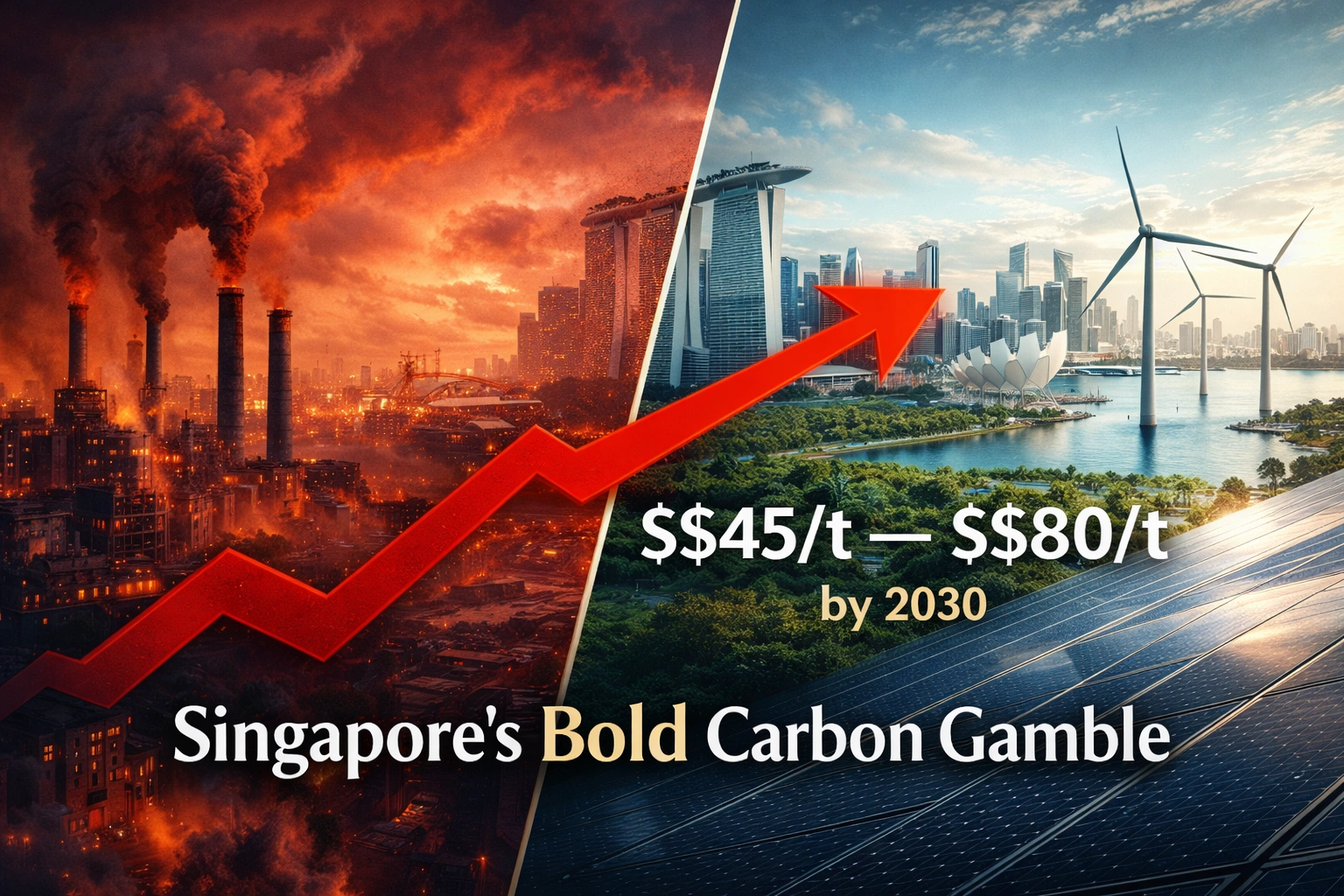
Singapore’s carbon tax jumps to S$45 in 2026, positioning it among Asia’s highest. Analysis of global pricing gaps, climate vulnerability, and what this means for regional leadership.
The elevator ride in Marina Bay’s glittering financial district just became more expensive—not because of rising real estate, but because Singapore is making an unequivocal bet on carbon pricing. As of January 2026, the city-state has nearly doubled its carbon levy to S$45 per tonne of CO₂ equivalent, a rate that would make even European policymakers take notice. For context, this translates to roughly US$33 per tonne—a figure that places this Southeast Asian financial hub alongside some of the world’s most aggressive climate jurisdictions, yet in a region where carbon pricing remains the exception rather than the rule.
This isn’t incrementalism. It’s a calculated escalation in a world where carbon prices span a chasm from under US$1 to over €80 per tonne, and where the policy architecture for pricing emissions looks less like coordinated global action and more like a fragmented patchwork of competing national strategies.
The Trajectory: From Symbolic to Substantive
Singapore’s carbon pricing journey began modestly in 2019 with a S$5 per tonne levy—Southeast Asia’s first carbon tax, but hardly more than a signal of intent. The tax remained static through 2023, providing what officials called a “transitional period” for the economy to adjust. Then came 2024, when the rate quintupled to S$25, and now in 2026, it stands at S$45 for both this year and 2027.
The government has been explicit about future intentions: S$50–80 per tonne by 2030, with the endpoint deliberately left as a range to maintain policy flexibility. These aren’t abstract figures. According to government estimates, the average four-room Housing & Development Board flat will see utility bills rise by approximately S$3 monthly in 2026, assuming stable market conditions—though authorities have cushioned the blow with enhanced U-Save rebates providing up to S$380 annually for eligible households.
Behind the numbers lies an uncomfortable reality: Singapore is acutely exposed to climate impacts. As a low-lying island nation where 70% of the land sits less than five meters above mean sea level, rising oceans aren’t a distant threat—they’re an existential one. Climate vulnerability has translated into climate policy urgency in ways that landlocked nations with higher elevations simply don’t experience.
The Global Pricing Divide: An Uneven Playing Field
To understand Singapore’s position, one must first grasp the extraordinary fragmentation of global carbon pricing. According to the World Bank’s State and Trends of Carbon Pricing 2025, there are now 80 carbon pricing instruments operating worldwide, covering approximately 28% of global emissions. Yet the average price across these instruments sits at just US$19 per tonne—barely a third of what Singapore now charges.
The variance is staggering. At the upper end, the EU Emissions Trading System (EU ETS) has seen prices fluctuate between €60–80 per tonne through 2025, with analysts projecting an average of €92 per tonne in 2026. The UK ETS, though operationally independent since Brexit, has tracked below EU levels, ranging between £40–60, with forecasts suggesting £57–76 per tonne in 2026.
Canada presents a more complex picture. While the federal consumer carbon tax was eliminated in early 2025 under Prime Minister Mark Carney’s administration, the industrial Output-Based Pricing System remains in place, with rates reaching CA$80 per tonne in 2024 and scheduled to climb toward CA$170 by 2030—though provincial fragmentation and a critical 2026 benchmark review introduce significant uncertainty.
| Jurisdiction | 2026 Carbon Price (USD equivalent) | Mechanism Type | Coverage |
|---|---|---|---|
| EU ETS | ~€80–92 (~$88–101) | Cap-and-trade | ~75% of emissions (ETS1 + ETS2) |
| UK ETS | ~£57–76 (~$73–97) | Cap-and-trade | ~37% of emissions |
| Singapore | S$45 (~$33) | Carbon tax | ~70% of emissions |
| Canada (Industrial) | CA$80 (~$59) | Hybrid OBPS | Large emitters only |
| South Korea K-ETS | ~$5–8 | Cap-and-trade | ~73% of emissions |
| China ETS | ~¥100 (~$13) | Cap-and-trade | ~60% of emissions |
| Australia Safeguard | Variable (ACCUs ~$40–80) | Baseline-and-credit | Large industrial facilities |
Sources: World Bank, ICAP, national government sources
Asia’s Pricing Gap: Singapore as an Outlier
Within Asia, Singapore’s S$45 rate stands in stark relief. China’s national ETS, the world’s largest by emissions coverage, saw prices averaging around ¥100 (approximately US$13) through 2024, with projections suggesting a gradual rise to ¥200 (US$25) by 2030. The system expanded beyond power generation in 2024 to include steel, cement, and aluminum, but its intensity-based cap and generous free allowances have kept prices suppressed—by design, critics argue, to protect industrial competitiveness.
South Korea’s K-ETS, operational since 2015 and covering nearly three-quarters of national emissions, has similarly struggled with oversupply issues that have kept prices in the single digits. A recent analysis from IEEFA noted that Asian ETS systems—with the notable exceptions of South Korea and Kazakhstan—lack the strict, gradually increasing reduction rates that have driven price discipline in Europe.
Australia’s reformed Safeguard Mechanism, which became operational in mid-2023, occupies a middle ground. Rather than setting explicit carbon prices, it mandates that facilities exceeding 100,000 tonnes of annual emissions must keep within declining baselines or purchase Australian Carbon Credit Units (ACCUs). Market analysis suggests ACCUs could reach $80 per tonne before 2035, positioning Australia closer to Western price levels—though the system’s production-adjusted framework and reliance on offsets introduce complexity.
Singapore’s decision to employ a straightforward carbon tax rather than a cap-and-trade system reflects both administrative efficiency and a recognition that, as a city-state without extensive heavy industry, the transaction costs of a trading system would outweigh its benefits. The approximately 50 facilities currently covered—spanning manufacturing, power generation, waste, and water treatment—account for 70% of national emissions, a concentration that makes monitoring and enforcement relatively straightforward.
Economic Calculus: Competitiveness Versus Climate Ambition
The tension between carbon pricing and industrial competitiveness has dominated policy debates globally. Singapore’s response has been pragmatic: a transition framework for emissions-intensive, trade-exposed (EITE) sectors that provides temporary relief through allowances, phasing down through 2030. Sectors like refining, petrochemicals, and semiconductors received transitional support that effectively reduced their 2024–2025 tax burden by up to 76% of the nominal rate.
These allowances will taper sharply as the S$45 rate takes hold. For multinationals with operations in Singapore, the math is becoming unavoidable: a facility emitting 500,000 tonnes annually now faces a tax bill of S$22.5 million ($16.5 million), up from S$12.5 million in 2024–2025. By 2030, at the midpoint of the S$50–80 range, that same facility could be looking at S$32.5 million ($24 million) annually—assuming no emissions reductions.
Yet Singapore’s bet is that higher carbon costs will accelerate rather than deter investment—specifically, investment in low-carbon solutions. The city-state has positioned itself as a regional hub for carbon services, launching the Climate Impact X marketplace and actively developing carbon market infrastructure aligned with Article 6 of the Paris Agreement. From 2024, facilities can use high-quality international carbon credits (ICCs) to offset up to 5% of taxable emissions, provided credits meet stringent eligibility criteria including host country authorization and corresponding adjustments to prevent double-counting.
This 5% limit is deliberate policy. As officials noted in public consultations, the goal is to prioritize domestic emissions reduction while providing flexibility for hard-to-abate sectors. It mirrors similar limits in South Korea and California, reflecting a global consensus that carbon credits should complement, not replace, direct abatement.
The 2026 Inflection: Why Now?
The timing of Singapore’s escalation is no accident. The European Union’s Carbon Border Adjustment Mechanism (CBAM) entered its transitional phase in 2023 and will begin imposing charges in 2026 on imports of carbon-intensive goods—initially cement, steel, aluminum, fertilizers, electricity, and hydrogen. For Asian exporters, CBAM creates a powerful incentive to demonstrate domestic carbon pricing, as jurisdictions with credible carbon costs may receive credit against CBAM charges.
Analysis from IEEFA suggests China’s recent ETS expansion was partly motivated by CBAM considerations—a tacit acknowledgment that carbon pricing is becoming a trade competitiveness issue, not merely an environmental one. Singapore, with its open economy and export orientation, cannot afford to be perceived as a carbon haven. Higher carbon taxes signal climate seriousness to trading partners while potentially generating leverage in future trade negotiations.
There’s also a fiscal dimension. The Singapore government has been transparent that carbon tax revenues fund decarbonization initiatives and support measures for businesses and households. With revenues exceeding S$1 billion annually at current rates, and set to grow substantially, the carbon tax has become a meaningful budget line—though officials insist the policy is revenue-neutral when accounting for support programs.
Forward Projections: The 2030 Question and Beyond
Forecasting carbon prices is notoriously difficult—markets respond to policy signals, technological breakthroughs, and economic shocks in ways that defy linear projection. Yet several modeling exercises suggest where Singapore’s trajectory might lead.
If the government opts for the lower end of its 2030 range (S$50), Singapore would still rank among Asia’s most expensive jurisdictions but would fall short of European and North American levels. At the upper end (S$80), the city-state would be pricing carbon at rates comparable to projected 2030 levels in Canada and approaching EU territory. Independent analysis suggests that factoring in economic growth and energy transition dynamics, effective carbon prices could reach US$57 by 2030 and potentially US$145 by 2050—though these figures assume continued policy tightening that remains politically uncertain.
The critical question is whether Singapore’s approach will catalyze regional convergence or remain an outlier. There are tentative signs of movement. Malaysia has indicated plans to introduce carbon pricing by 2026. Vietnam is piloting ETS concepts. Indonesia, whose emissions dwarf Singapore’s, has explored carbon tax mechanisms, though implementation remains uncertain. Yet these developments could equally fizzle—carbon pricing has a history of political reversal, as Canada’s recent consumer tax elimination demonstrates.
Criticisms and Constraints: The Limits of Unilateral Action
Not everyone applauds Singapore’s carbon ambition. Industry groups have argued that steep increases impose competitiveness burdens without commensurate climate benefit, noting that Singapore accounts for barely 0.1% of global emissions. The “polluter pays” principle, critics contend, becomes economically punitive when applied asymmetrically—local firms bear costs that international competitors avoid.
Environmental advocates, conversely, argue that even S$80 falls short of the social cost of carbon. The High-Level Commission on Carbon Prices in 2017 estimated that prices between US$40–80 per tonne were needed by 2020, rising to US$50–100 by 2030, to meet Paris Agreement targets. By this metric, Singapore’s 2026 rate reaches the lower threshold, but the 2030 ambiguity leaves open whether sufficient ambition will materialize.
There’s also concern about regressive impacts. Carbon taxes, by raising energy costs, disproportionately affect lower-income households. Singapore’s U-Save rebates attempt to address this, but the adequacy of support remains contested, particularly as utility bills compound with broader cost-of-living pressures.
Perhaps most fundamentally, unilateral carbon pricing faces inherent limits. Without coordinated global action, emissions simply migrate to jurisdictions with lower costs—the carbon leakage problem that bedevils every climate policy architect. Singapore’s EITE transition framework acknowledges this reality, but the framework itself is time-limited. What happens post-2030, when support phases out but regional price convergence remains elusive?
Implications: Singapore as Climate Policy Laboratory
For all its limitations, Singapore’s carbon tax surge offers a testing ground for several propositions central to global climate governance. Can explicit carbon pricing drive emissions reductions in small, trade-exposed economies without triggering capital flight? Will linking carbon taxation to international credit markets under Article 6 create viable flexibility mechanisms, or simply open avenues for greenwashing? And can early movers establish first-mover advantages in emerging green sectors that offset near-term competitiveness costs?
The answers won’t be evident for years, but the experiment matters beyond Singapore’s borders. As a financial hub with extensive regional networks, Singapore’s policy choices influence corporate decision-making across Southeast Asia. If carbon-intensive industries successfully adapt while maintaining competitiveness, it weakens the argument that climate ambition and economic growth are irreconcilable. If, conversely, the policy provokes relocations or undermines growth, it will embolden skeptics elsewhere.
What’s increasingly clear is that the global carbon pricing landscape entering 2026 remains deeply fractured. Europe leads on price and coverage. Asia lags, with pockets of ambition but systemic oversupply and low prices. North America vacillates between provincial experimentation and federal retreat. And emerging economies, despite producing the majority of emissions growth, largely abstain from pricing mechanisms altogether.
Into this fragmented terrain, Singapore has placed a substantial wager—that pricing carbon aggressively, even unilaterally, positions the city-state favorably for the inevitable transition to a decarbonized global economy. It’s a bet that acknowledges vulnerability: when you’re five meters above sea level and rising waters are undeniable, climate policy isn’t ideological—it’s existential. Whether that urgency translates into effective policy remains the question that S$45 per tonne is designed to answer.
Discover more from The Economy
Subscribe to get the latest posts sent to your email.


Analysis
Pakistan’s $507 Million 5G Spectrum Gamble: A Blueprint for Digital Destiny or a Fiscal Mirage?

Unlocking the Future: Pakistan’s Pivotal 5G Auction and its Global Ramifications
The recent conclusion of Pakistan’s 5G spectrum auction, yielding a substantial $507 million, is more than a mere fiscal event; it’s a strategic inflection point for a nation grappling with economic headwinds and vying for its place in the global digital economy. Beyond the impressive figures, this auction represents a profound bet on connectivity as the engine of future prosperity, inviting scrutiny from international economists, policymakers, and business leaders keen on understanding emerging market dynamics. The stakes are undeniably high, as the decisions made today will echo across Pakistan’s technological landscape and economic trajectory for decades to come.
The auction saw leading telecom operators Jazz, Ufone, and Zong secure critical frequency bands, ranging from 700MHz to 3500MHz. This allocation is poised to fundamentally reshape Pakistan’s digital future, promising not just faster internet, but a foundational shift towards an AI-driven, blockchain-enabled society, as envisioned by the Finance Minister.
Economic Lifeline or Temporary Reprieve? Dissecting the Financial Impact
The $507 million injection into Pakistan’s exchequer arrives at a critical juncture, offering a much-needed boost to government revenues. In a country often reliant on external financing and navigating complex fiscal challenges, this sum provides a welcome, albeit temporary, reprieve. Comparing this to historical telecom revenue trends, this auction demonstrates sustained government interest in leveraging the digital sector for economic benefit. For instance, previous spectrum sales have consistently contributed to the national treasury, highlighting the sector’s strategic importance.

However, the true economic impact transcends immediate revenue. The successful auction signals Pakistan’s commitment to modern infrastructure, a crucial factor in attracting foreign direct investment (FDI). International investors often view robust digital infrastructure as a prerequisite for market entry and expansion. By facilitating a more advanced and reliable telecom network, Pakistan enhances its appeal as a destination for tech companies, e-commerce giants, and digital service providers. The challenge now lies in ensuring that these funds are judiciously managed and reinvested into further infrastructure development and economic stabilization programs, preventing them from becoming a short-term fiscal mirage.
Market Reconfiguration: Strategic Moves by Jazz, Ufone, and Zong
The competitive landscape of Pakistan’s telecom sector is on the cusp of significant transformation following the strategic spectrum acquisitions by Jazz, Ufone, and Zong. Their choices in frequency bands—700MHz, 2300MHz, 2600MHz, and 3500MHz—reveal calculated strategies for 5G rollout and future market positioning.
The acquisition of lower frequency bands like 700MHz is particularly telling. These bands offer superior propagation characteristics, allowing signals to travel further and penetrate buildings more effectively, making them ideal for widespread rural coverage and dense urban indoor environments. This suggests an intent to rapidly achieve broad geographical reach and ensure robust indoor connectivity. Conversely, higher frequency bands (2300MHz, 2600MHz, 3500MHz) provide massive capacity and ultra-fast speeds, crucial for supporting data-intensive applications in urban centers and for enabling advanced industrial use cases.
The diverse spectrum holdings imply that operators will likely adopt differentiated rollout strategies. We might see Jazz, for instance, prioritize a blend of wide coverage and targeted high-capacity zones, while Ufone and Zong could focus on specific urban corridors or enterprise solutions where their acquired bands offer a competitive edge. This will undoubtedly lead to intensified competition, potentially driving innovation and service quality improvements across the board, benefiting Pakistani consumers and businesses alike.
Policy Innovation and Regulatory Foresight: A Global Benchmark?
The policy and regulatory environment surrounding this auction deserves particular attention. The active roles played by the Finance Minister, IT Minister, and Information Minister underscore a cross-governmental commitment to advancing Pakistan’s digital agenda. Critical assessment of the transparency claims, supported by the involvement of an advisory committee, is crucial for fostering investor confidence and ensuring equitable play. The government’s assertion of transparency, if upheld, is a significant positive signal for future investment.
Perhaps the most innovative policy move was the abolition of Right-of-Way (RoW) charges. This policy innovation, designed to streamline infrastructure deployment and reduce operational costs for telecom operators, positions Pakistan favorably on the global stage. In many emerging markets, complex and costly RoW regulations often act as significant impediments to rapid network expansion. By removing this barrier, Pakistan has demonstrated a forward-thinking approach that could serve as a blueprint for other nations seeking to accelerate their digital transformation initiatives. This move not only reduces rollout costs but also signals a proactive regulatory stance aimed at facilitating, rather than hindering, technological progress.
Beyond Speed: The Transformative Power of 5G Use Cases
The excitement surrounding 5G in Pakistan extends far beyond mere download speeds. The Finance Minister’s explicit mention of AI and blockchain as key beneficiaries of 5G connectivity highlights a vision for profound technological transformation. This isn’t just about consumer-grade internet; it’s about building the backbone for an advanced digital economy.
The specific “use cases” of 5G are poised to revolutionize various sectors:
- Industry 4.0: 5G’s ultra-low latency and massive connectivity will enable smart factories, remote-controlled machinery, and highly efficient supply chains, boosting productivity and industrial output.
- Healthcare: Remote surgery, real-time patient monitoring, and AI-powered diagnostics will become more viable, extending quality healthcare to underserved regions.
- Education: Enhanced broadband connectivity will facilitate immersive e-learning experiences, virtual classrooms, and access to global educational resources, bridging existing learning divides.
- E-commerce and Digital Services: Faster, more reliable networks will accelerate the growth of online businesses, digital payment systems, and innovative service delivery models, further integrating Pakistan into the global digital marketplace.
- IT Exports: A robust 5G infrastructure, coupled with skilled talent, could significantly boost Pakistan’s IT exports, attracting more outsourcing contracts and fostering a vibrant tech startup ecosystem. This alignment with global digital trends is crucial for boosting the country’s economic diversification efforts.
Navigating the Road Ahead: Challenges and Opportunities for Pakistan’s 5G Journey
While the success of the 5G auction is commendable, an objective analysis necessitates acknowledging the substantial challenges that lie ahead for a full-scale, equitable 5G rollout in Pakistan.
Potential Hurdles:
- Infrastructure Investment: Despite the abolition of RoW charges, significant capital expenditure will still be required for towers, fiber optic backbones, and energy solutions. Securing this long-term investment, both domestic and foreign, remains critical.
- Regulatory Consistency: Maintaining a stable and predictable regulatory environment is paramount. Any future policy shifts or inconsistencies could deter operators from making necessary long-term investments.
- Consumer Affordability: The cost of 5G-enabled devices and service plans could be a barrier for a significant portion of the population. Strategies for making 5G accessible and affordable are essential for maximizing its societal impact.
- Energy Costs: The energy demands of 5G networks are substantial. High electricity costs and unreliable power supply could impact operational expenses and network performance, necessitating sustainable energy solutions.
Immense Opportunities:
Despite these challenges, the opportunities presented by 5G for digital inclusion and economic diversification are immense. 5G can empower remote communities, facilitate innovation in various sectors, and create new job opportunities. It serves as a catalyst for the broader digital economy, fostering a cycle of innovation, investment, and growth.
Pakistan’s Digital Trajectory: Charting its Own Course
Contextualizing Pakistan’s 5G journey against other emerging and regional markets reveals a nation charting its own course. While some regional players have advanced rapidly, Pakistan’s deliberate steps, marked by policy innovations like the abolition of RoW charges, position it as a significant contender. Its approach suggests a focused effort to learn from global best practices while adapting to local economic realities. This strategic foresight is critical for long-term success, distinguishing Pakistan from nations that rush deployment without adequate regulatory and economic frameworks.
The Dawn of a Connected Pakistan: A Vision Realized
Pakistan’s $507 million 5G spectrum auction is more than a financial transaction; it’s a testament to a national ambition to harness digital transformation for economic resurgence and societal upliftment. The strategic decisions made by telecom operators, coupled with a proactive regulatory stance, lay the groundwork for a deeply connected future.
The journey ahead will undoubtedly be fraught with challenges, from infrastructure financing to ensuring equitable access. Yet, the immense potential for driving digital inclusion, fostering innovation in key sectors, and diversifying the national economy makes this gamble a necessary and potentially transformative one. Pakistan is not just acquiring spectrum; it is investing in its digital destiny, signaling to the world its unwavering commitment to a future powered by connectivity, intelligence, and innovation. The world watches to see if this bet will indeed change everything, propelling Pakistan into a new era of prosperity and global digital leadership.
Discover more from The Economy
Subscribe to get the latest posts sent to your email.
Analysis
10 Ways to Develop the Urban Economy of Karachi, Lahore, and Islamabad on the Lines of Dubai and Singapore

Walk along Karachi’s Clifton Beach on a clear January evening, and you are struck less by what is there than by what could be. The Arabian Sea glitters. The skyline, ragged and improvised, speaks of a city straining against its own potential. Some 20 million people — roughly the combined population of New York City and Los Angeles — call this megacity home, generating approximately a quarter of Pakistan’s entire economic output from roads, ports, and neighbourhoods that often feel held together by ingenuity alone. Travel north to Lahore and you find South Asia’s cultural heartland buzzing with a startup culture that rivals Bangalore’s early years. In Islamabad, the capital’s wide avenues hint at a planned ambition that has never been fully monetised. Taken together, these three cities represent the most consequential urban bet in South Asia.
| City | GDP Contribution | IMF Growth (2026) | Urban Pop. by 2050 |
|---|---|---|---|
| Karachi | ~25% of Pakistan GDP | 3.6% | — |
| Lahore | ~15% of Pakistan GDP | 3.6% | — |
| Islamabad | ~16% of Pakistan GDP | 3.6% | — |
| Pakistan (national) | — | 3.6% | ~50% urban |
The question is no longer whether Pakistan’s cities need to transform — the data makes that urgent and obvious. According to the World Bank’s Pakistan Development Update (2025) (DA 93), urban areas already generate 55% of Pakistan’s GDP, a figure that could climb above 70% by 2040 as rural-to-urban migration accelerates. The UNFPA projects Pakistan’s urban population will approach 50% of the national total by 2050 — adding tens of millions of new city-dwellers who will need housing, jobs, transit, and services. The real question is whether these cities grow like Dubai and Singapore — purposefully, innovatively, and lucratively — or whether they grow like Cairo or Dhaka — sprawling, congested, and squandering their potential.
This article maps ten evidence-based, practically achievable pathways that could tip the balance. Each draws directly from strategies that turned a desert trading post into a $50,000 per capita powerhouse, and a small island into the world’s most connected logistics node. None is painless. All are possible.
“Dubai was desert and debt thirty years ago. Singapore had no natural resources. What they had was institutional seriousness. Pakistan’s cities can manufacture that — but only if they choose to.” — Urban economist’s assessment, ADB South Asia Regional Review, 2025
1. Establish Special Economic Zones Modelled on Dubai’s Free Zones
Dubai’s Jebel Ali Free Zone hosts more than 9,500 companies from 100 countries, contributing roughly 26% of Dubai’s GDP through a deceptively simple formula: zero corporate tax, 100% foreign ownership, and world-class logistics infrastructure. The urban economy development of Karachi — which already houses Pakistan’s only deep-water port — could replicate this model with striking geographic logic. Karachi Port and the adjacent Bin Qasim industrial corridor form a natural anchor for a genuine free zone, one that goes far beyond the existing Export Processing Zones in regulatory ambition and administrative efficiency.
The Financial Times’ reporting on CPEC’s economic corridors highlights that while China-Pakistan Economic Corridor investments have seeded infrastructure, the dividend remains locked behind bureaucratic bottlenecks. Lahore’s economic growth strategies must similarly pivot toward SEZ governance reform: one-window clearance, independent regulatory bodies, and investor-grade contract enforcement. Islamabad’s Fatima Jinnah Industrial Park offers a smaller but symbolically powerful model — a capital-city zone focused on tech services, financial intermediation, and diplomatic trade, analogous to Singapore’s one-north innovation district.
Key Benefits of Free Zone Development:
- 100% foreign ownership attracts FDI without a political risk premium
- Streamlined customs integration with CPEC corridors cuts logistics costs by an estimated 18–23%
- Technology transfer through multinational co-location builds domestic human capital
- Export diversification reduces dependence on textile-sector forex earnings
Critically, the SEZ model only works if the rule of law inside the zone is credible and insulated from wider governance failures. Dubai learned this lesson early by placing free zone courts under British Common Law jurisdiction. Pakistan’s urban planning inspired by Dubai and Singapore must make the same uncomfortable concession: that internal governance reforms, however politically costly, are the only real investor guarantee.
2. Deploy Smart City Technology and Data Infrastructure
Singapore’s Smart Nation initiative has been so consequential not because of any single technology but because of governance architecture: a central data exchange platform that allows city departments to speak to each other, eliminating the silos that make urban management so costly everywhere else. The Islamabad smart city model Dubai has inspired in Gulf capitals — sensor-laden streets, AI-managed traffic systems, predictive utility networks — is impressive as spectacle. Singapore’s version is impressive as policy. Pakistan’s cities need both: the visible wins that build public trust, and the invisible plumbing that makes cities actually work.
Karachi’s traffic management crisis, which costs the city an estimated $4.7 billion annually in lost productivity according to the Asian Development Bank’s cluster-based development report for South Asian cities, is precisely the kind of tractable problem that smart technology can address in the near term. Adaptive traffic signal systems, deployed cheaply using existing camera infrastructure and open-source AI models, have reduced congestion by 12–18% in comparable cities in Bangladesh and Vietnam. Lahore’s economic growth and the city’s aspirations for a startup corridor along the Raiwind Road technology belt can be similarly accelerated by deploying a city-wide fibre backbone and municipal cloud services.
Smart City Priorities — Practical First Steps:
- Unified digital identity and payment platform (e-governance layer) to eliminate cash-based bureaucracy
- Open data portals enabling private sector innovation on municipal datasets
- AI-assisted utility billing to reduce power and water loss — Karachi’s KWSB loses ~35% of water to leakages
- Smart waste management pilots in Gulshan-e-Iqbal and Islamabad’s F-sector residential areas
The climate dimension cannot be ignored. Karachi’s 2015 heat wave killed over 1,000 people in a week. Urban heat island effects are intensifying. Boosting Pakistan city economies in 2026 and beyond requires embedding climate resilience into every smart infrastructure layer — green roofs, urban tree canopy monitoring, heat-responsive transit schedules — as Singapore has done across its entire urban development code since 2009.
3. Revamp Mass Transit to Match Singapore’s 90% Public Transport Usage
Singapore’s extraordinary achievement — that 90% of peak-hour journeys are made by public transport — is not an accident of geography or culture. It is the product of deliberate, decades-long policy: the world’s most comprehensive vehicle ownership tax, congestion pricing since 1975, and a Mass Rapid Transit network built to suburban extremities before demand materialised. Urban economy development in Karachi cannot wait for a full MRT system — the city needs it now. But Lahore has already proven the model is replicable: the Orange Line Metro, despite years of delays, now moves 250,000 passengers per day, slashing travel times on its corridor by over 40%.
The challenge is scale and integration. Lahore’s Orange Line is a single corridor in a city of 14 million. Karachi’s Green Line BRT, operational since late 2021, carries far fewer passengers than its designed 300,000-daily-ridership capacity because last-mile connectivity — the rickshaws, walking infrastructure, and feeder routes — was never properly planned. This is the urban planning gap that separates South Asian cities from Singapore, where no station was designed without a walkable catchment. Islamabad, smaller and newer, has the rare advantage of building this integration from scratch in its Blue Area–Rawalpindi corridor.
| City | Public Transport Share | Key Infrastructure | Gap vs Singapore |
|---|---|---|---|
| Singapore | 90% (peak hours) | MRT, LRT, 500+ bus routes | — |
| Dubai | 18% | Metro (2 lines), RTA buses | 72 pp |
| Karachi | ~12% | Green Line BRT, informal minibuses | 78 pp |
| Lahore | ~15% | Orange Line Metro, BRT | 75 pp |
| Islamabad | ~9% | Metro Bus, informal wagons | 81 pp |
4. Build Innovation Hubs and Startup Ecosystems
In 2003, Singapore was still primarily a manufacturing economy. Its government made a calculated, controversial bet: redirect economic policy toward knowledge-intensive industries and build the physical and institutional infrastructure to support them. The result was a cluster of innovation districts — one-north, the Jurong Innovation District, the Punggol Digital District — that now host global R&D centres for companies like Procter & Gamble, Rolls-Royce, and Novartis. Pakistan’s urban planning inspired by Dubai and Singapore suggests a similar cluster logic: identify the sectors where Karachi, Lahore, and Islamabad have comparative advantages and build deliberately around them.
The good news is that the ecosystem already exists, more robustly than most international analysts appreciate. According to The Economist’s city competitiveness analysis, Pakistan’s tech startup sector attracted over $340 million in venture capital between 2021 and 2024, with Lahore’s LUMS-adjacent corridor producing fintech and agritech companies with genuine regional scale. Arfa Software Technology Park in Lahore, if supported with the governance reforms and connectivity upgrades it has long lacked, could become a genuine counterpart to Singapore’s one-north — a place where global companies open regional headquarters and local startups find the talent density they need to scale.
Building a Tier-1 Startup Ecosystem — Enablers:
- University-industry linkage mandates — LUMS, NUST, IBA as anchor innovation partners
- Government procurement from local startups (Singapore’s GovTech model)
- Diaspora reverse-migration incentives: 9 million overseas Pakistanis represent an enormous talent reservoir
- Regulatory sandboxes in fintech — SBP’s sandbox framework needs acceleration and expansion
5. Reform Urban Land Markets and Housing Finance
Dubai’s vertical density — towers rising from what was desert four decades ago — was made possible by clear land titles, transparent transaction registries, and a financing ecosystem willing to underwrite large-scale development. Singapore went further: 90% of its population lives in public housing managed by the Housing Development Board, built on land that was compulsorily acquired from private owners in the 1960s at controlled prices. Both models required political will that is genuinely difficult to replicate. But the alternative — allowing Karachi, Lahore, and Islamabad to continue their informal expansion — is economically catastrophic.
The urban economy development of Karachi is strangled by a land market dysfunction that economists at the IGC (International Growth Centre) have documented in detail: much of the city’s most valuable land is held by government agencies, defence authorities, or land mafias in ways that prevent efficient development. The result is that the poor are pushed to dangerous peripheries — building informally on flood plains and hillsides — while city centres under-utilise their economic potential. A digitised, publicly accessible land registry, combined with a property tax regime that penalises idle land, would unlock enormous latent value without requiring politically impossible acquisitions.
6. Develop Port-Linked Trade and Logistics Corridors
No city in the world has achieved sustained economic greatness without a world-class logistics gateway. Singapore’s port is the world’s second busiest by container volume, not because Singapore is large but because it made itself indispensable to global supply chains through relentless efficiency improvements and a free trade orientation. Dubai’s Jebel Ali Port — built in open desert in 1979 — is now the world’s ninth busiest container port, handling cargo for 140 countries. Karachi’s Port Qasim sits at the mouth of what could be South Asia’s most powerful trade corridor, with CPEC connecting it to China and the Central Asian republics to the north.

The Financial Times’ analysis of CPEC’s trade potential notes that the corridor has thus far under-delivered on trade facilitation relative to its infrastructure investment, largely because port procedures, customs technology, and the regulatory interface between Chinese logistics operators and Pakistani authorities remain misaligned. The fix is administrative as much as physical: a single digital trade window, harmonised with WTO standards and integrated with China’s Single Window system, would dramatically reduce dwell times and attract the transshipment volume that currently bypasses Karachi for Dubai and Colombo.
Logistics Corridor Quick Wins:
- Digital trade single window — reduce cargo dwell time from 7 days to under 48 hours
- Dry port development in Lahore and Islamabad to decongest Karachi port approaches
- Cold chain logistics cluster at Port Qasim for agricultural export value addition
- Open-skies policy expansion at Islamabad and Lahore airports to boost air cargo
7. Transform Tourism Through Strategic Investment and Heritage Branding
Tourism contributed approximately 12% of Dubai’s GDP in 2024, a figure achieved not through passive attraction but through an almost cinematically disciplined programme of investment, event hosting, and global marketing. The Burj Khalifa was not simply a building; it was a media asset. The World Islands were not simply real estate; they were a global conversation. Lahore’s economic growth strategies have, in the past decade, begun to recognise that the city has a comparable asset base: the Badshahi Mosque, the Lahore Fort, Shalimar Gardens — all UNESCO World Heritage Sites — along with a food culture that Condé Nast Traveller has called “one of Asia’s great undiscovered culinary traditions.”
Islamabad’s natural advantages — the Margalla Hills, proximity to the Buddhist heritage sites of Taxila, and the dramatic gorges of Kohistan along the Karakoram Highway — represent an adventure tourism corridor that has no real parallel in the Gulf states. The challenge is not the product; it is the infrastructure around the product. Visa liberalisation (Pakistan issued a significant e-visa reform in 2019 but implementation has been inconsistent), airlift capacity, and the quality of hospitality offerings remain limiting factors. A dedicated tourism authority for each of the three cities, modelled on Dubai Tourism’s industry partnership and data-driven marketing approach, could begin shifting this equation within 18 months.
8. Reform City Governance with Singapore-Style Meritocratic Administration
Singapore’s economic miracle is, at its core, a governance miracle. The Public Service Commission’s rigorous competitive examination system, combined with public sector salaries benchmarked to private sector equivalents, produced a civil service that consistently ranks as one of the world’s least corrupt and most effective. The city-state’s Urban Redevelopment Authority — a single body with genuine planning authority across the entire island — enabled the kind of long-horizon strategic decisions that fragmented city governance systems structurally cannot make. Pakistan’s urban planning inspired by Dubai and Singapore must grapple honestly with this uncomfortable truth: better infrastructure without better governance is infrastructure that will eventually fail.
Karachi’s governance crisis — divided between the Sindh provincial government, the City of Karachi, the Cantonment Boards, the Karachi Metropolitan Corporation, and local bodies — is a documented driver of underinvestment and service delivery failure. The World Bank’s governance diagnostics for Pakistan consistently identify institutional fragmentation as the primary constraint on urban economic performance, above even macroeconomic instability. Giving cities genuine fiscal autonomy — the right to retain and spend a meaningful share of locally-generated tax revenue — would align incentives in ways that national transfers never can.
Governance Reform Essentials:
- Metropolitan planning authorities with real statutory power, not advisory roles
- Municipal bond markets — Karachi and Lahore have sufficient revenue base to issue bonds for infrastructure
- Performance-linked pay in urban service departments to reduce procurement corruption
- Open contracting standards — publish all city contracts above PKR 50 million publicly
9. Invest in Human Capital Through Education and Health Infrastructure
Singapore’s founding Prime Minister Lee Kuan Yew famously argued that the only natural resource a city-state possesses is its people. Every major economic decision in Singapore’s early decades — from housing policy to compulsory savings — was ultimately a bet on human capital formation. Boosting Pakistan city economies in 2026 and beyond requires a similar recalibration. According to Euromonitor’s 2025 City Competitiveness Review, Karachi and Lahore rank poorly on human capital indices relative to comparable emerging-market cities, primarily due to tertiary education enrolment gaps and high child stunting rates that impair cognitive development.
The opportunity here is genuinely enormous. Pakistan has one of the world’s youngest populations — a median age below 22 years. UNFPA’s demographic projections suggest the working-age population will peak around 2045, giving Pakistan roughly two decades to build the educational infrastructure that converts demographic weight into economic momentum. City-level community college networks, linked to the ADB’s cluster-based development programmes for technical and vocational education, could absorb the massive cohort of young urban workers who are currently locked out of formal employment by credential gaps.
10. Embed Climate Resilience and Green Finance into Urban Development
Dubai’s 2040 Urban Master Plan commits 60% of the emirate’s total area to nature and recreational spaces — a remarkable target for a desert economy that spent its first growth era paving over everything in sight. Singapore has gone further still, weaving its Biophilic City framework — trees, green walls, rooftop gardens, canal waterways — into every new development approval since 2015. These are not cosmetic choices; they are economic calculations. Cities that fail to build climate resilience into their fabric will face mounting costs: damaged infrastructure, displacement, declining productivity, and insurance market exits that undermine private investment. Karachi’s exposure to monsoon flooding and extreme heat makes this the most urgent economic priority of all.
Green finance is the mechanism that makes this tractable. Pakistan’s Securities and Exchange Commission launched a green bond framework in 2021 that has seen minimal uptake from city administrations — largely because cities lack the fiscal authority to issue debt. Reforming this, combined with accessing the ADB’s Urban Climate Change Resilience Trust Fund and the Green Climate Fund’s urban windows, could unlock hundreds of millions in concessional financing for Karachi’s coastal flood barriers, Lahore’s urban forest programme, and Islamabad’s Margalla Hills watershed management. The Economist’s analysis of South Asian climate economics warns that without such investment, climate-related GDP losses in Pakistan’s cities could exceed 5% annually by 2040 — a cost that dwarfs the investment required to prevent it.
Green Urban Finance Mechanisms:
- Municipal green bonds — Karachi’s fiscal base supports a Rs. 50–80 billion first issuance
- Nature-based solutions: mangrove restoration in Karachi’s Hab River delta for flood buffering
- Green building code enforcement linked to property tax incentives
- Public-private partnerships for solar microgrids in low-income settlements, reducing load-shedding costs
- Carbon credit markets — urban tree canopy and wetland restoration as city revenue streams
The Cities Pakistan Needs — and Can Build
It would be dishonest to end on pure optimism. Dubai had oil revenues to fund its transformation. Singapore had Lee Kuan Yew’s singular administrative discipline — a political model that democracies cannot and should not replicate. Pakistan’s cities face genuine structural constraints: a sovereign debt overhang that limits fiscal space, a security environment that adds a risk premium to every investment conversation, and a political economy that rewards short-term patronage over long-term planning. These are real obstacles, not rhetorical ones.
And yet. Karachi is still the largest city in a country of 240 million people, positioned at the junction of the Arabian Sea, South Asia, and Central Asia, with a port infrastructure that took a century to build and cannot be replicated by competitors. Lahore is still the cultural capital of the most demographically dynamic region on earth, with a technology sector producing genuine global-scale companies on shoestring budgets. Islamabad sits at the intersection of Belt and Road ambition and a restive but talented workforce whose diaspora has built Silicon Valley, London’s financial services industry, and Dubai’s medical sector.
Urban economy development in Karachi, Lahore, and Islamabad on the lines of Dubai and Singapore is not a fantasy. It is an engineering problem — technically complex, politically demanding, and entirely within the range of human possibility. The ten pathways outlined here — free zones, smart governance, transit reform, innovation clusters, land market modernisation, logistics integration, tourism investment, meritocratic administration, human capital, and climate resilience — are individually powerful and collectively transformational. They require money, yes. But they require political will even more.
A Call to Action for Policymakers and Investors
To policymakers in Islamabad, Lahore, and Karachi: the reform agenda outlined here is not a wish list — it is a minimum viable programme for economic survival in a competitive 21st-century world. Begin with governance reform and fiscal decentralisation; every other intervention depends on it.
To global investors: Pakistan’s city risk premium is real but mispriced. The countries that found the confidence to invest in Dubai in 1990 and Singapore in 1970 were rewarded beyond any reasonable projection. The cities are ready for serious capital. The question is whether serious capital is ready for the cities.
Citations & Sources
- World Bank. Pakistan Development Update — October 2025 (DA 93). https://www.worldbank.org/en/country/pakistan/publication/pakistan-development-update-october-2025
- UNFPA. State of World Population — Urbanization Report. https://www.unfpa.org/sites/default/files/pub-pdf/urbanization_report.pdf
- Financial Times. CPEC and Pakistan’s Economic Corridor Potential. https://www.ft.com
- Asian Development Bank. Urban Clusters and South Asia Competitiveness. https://www.adb.org/publications/urban-clusters-south-asia-competitiveness
- The Economist. Pakistan Technology and City Competitiveness Analysis. https://www.economist.com
- International Growth Centre. Sustainable Pakistan: Transforming Cities for Resilience and Growth. https://www.theigc.org/publication/sustainable-pakistan-cities
- Euromonitor International. Pakistan City Competitiveness Review 2025. https://www.euromonitor.com
- IMF. Pakistan — Article IV Consultation and GDP Growth Forecasts 2026. https://www.imf.org/en/Publications/CR/
- Gulf News. Dubai-Like Modern City to be Developed Near Lahore. https://gulfnews.com/world/asia/pakistan
- The Friday Times. Transforming Pakistan’s Cities: Smart Solutions for Sustainable Urban Life. https://thefridaytimes.com
Discover more from The Economy
Subscribe to get the latest posts sent to your email.

As Asia’s GDP growth cools to 4.4% in 2026, the continent’s greatest untapped resource isn’t artificial intelligence or green energy. It’s the human judgment required to deploy them wisely.
Key Data at a Glance
| Economy | GDP Growth 2026 | Source |
|---|---|---|
| Asia-Pacific | 4.4% | UN WESP 2026 |
| China | 4.8% | Goldman Sachs |
| India | 6.6% | UN |
| Vietnam & Philippines | 6%+ | Asia House Outlook 2026 |
In a gleaming conference hall in Singapore last January, the chief executive of one of Southeast Asia’s largest conglomerates leaned across the table and said something that stopped me mid-note. “We have the tools,” he said quietly. “We’ve always had the tools. What we’ve lacked — and what no algorithm can give us — is the wisdom to know which door to open with them.” He wasn’t being philosophical. His company had spent $400 million on a digital transformation program over three years. Adoption was near-total. Results were almost nonexistent.
His story is not a cautionary tale about technology. It is, at its core, a story about leadership — and it is one being repeated, with varying degrees of pain, from Jakarta to Shenzhen to Mumbai. As Asia’s GDP growth eases to 4.4% in 2026 from 4.9% in 2025, according to the United Nations’ World Economic Situation and Prospects report, the deceleration has reignited familiar conversations about investment, innovation, and demographic dividends. But the more uncomfortable conversation — the one that will ultimately determine whether this region realizes its extraordinary potential — is about leadership as the essential, irreplaceable catalyst for harnessing tech in Asia.
The central argument here is simple, if politically inconvenient: Asia already has abundant technology. What it often lacks is leadership capable of deploying it with precision, purpose, and strategic clarity. The continent’s next great economic leap — its most consequential since the manufacturing revolutions of the late twentieth century — will not be triggered by another wave of AI investment or another cluster of smart cities. It will come from a new generation of leaders who understand that technology creates value only when a human hand is guiding it toward the right ends.
The Slowdown That Tells the Real Story: Asia Economic Growth 2026
Numbers, by themselves, rarely tell the full story. But the 2026 Asian GDP projections carry an important subtext that too many analysts are missing. On the surface, China’s 4.8% growth projection, powered largely by a surging export machine, looks respectable. India’s 6.6% expansion, fueled by domestic consumption and a demographic engine that most of the world can only envy, looks impressive. And Vietnam and the Philippines, both surpassing the 6% threshold according to the Asia House Annual Outlook 2026, offer genuine bright spots in a global economy still navigating the aftershocks of geopolitical fragmentation.
Yet the aggregate slowdown — a full half-percentage-point drop in Asia’s collective growth rate — is not simply the product of external shocks or cyclical headwinds. It reflects something more structural: the growing gap between the technology these economies have acquired and the institutional and leadership capacity to translate it into sustained, broad-based productivity gains. Technology adoption, as the IMF’s landmark analysis of Asia’s digital revolution made clear, is a necessary but emphatically insufficient condition for growth. The missing ingredient is harnessing tech in Asia at the leadership layer — the place where strategy, culture, and judgment intersect.
Consider the contrast: Japan and South Korea, two of Asia’s most technologically advanced economies, have struggled for years to convert world-class R&D spending into commensurate productivity growth. Both rank highly on standard innovation indices. Both lag on measures of organizational agility and leadership adaptability. This is not a coincidence. It is a pattern — one that stretches from Tokyo boardrooms to state-owned enterprises in Beijing to family-controlled conglomerates across Southeast Asia.
“Technology is the new electricity. Every economy in Asia has access to the grid. But the question that determines winners from also-rans is this: who knows how to wire the building?”
— Senior economic adviser, Asian Development Bank, 2025
Technology Leadership Asia: What “Harnessing” Actually Means
The word “harnessing” does real intellectual work in this conversation, and it deserves unpacking. It does not mean simply deploying AI tools or purchasing enterprise software. Harnessing technology — in the sense that distinguishes the leaders who create value from those who accumulate costs — involves three distinct leadership capacities that most corporate governance frameworks and most public policy discussions systematically ignore.
The first is contextual intelligence: the ability to understand which technologies are suited to an organization’s specific competitive context, workforce culture, and long-term strategic objectives. Asia’s diversity — spanning democratic market economies, authoritarian state-capitalist systems, middle-income manufacturing hubs, and high-income financial centers — means there is no universal playbook. A leader who blindly imports Silicon Valley frameworks into a Taiwanese semiconductor firm, or a Jakarta fintech startup, is not harnessing technology. They are gambling with it.
The second is organizational translation: the often underappreciated skill of remaking internal structures, incentives, and cultures so that technological investments actually change behavior at scale. The World Bank’s East Asia and Pacific Economic Update has documented the persistent gap between technology adoption rates and productivity outcomes across the region. That gap is, almost without exception, an organizational and leadership failure, not a technological one. Tools do not transform companies. Leaders do — by building the conditions under which tools become embedded habits.
The third is ethical navigation: the capacity to make hard choices about AI deployment, data governance, and automation’s distributional consequences in ways that maintain public trust and social license to operate. This is, increasingly, not a soft skills issue. It is a hard commercial and geopolitical one. Leaders who fail at it — whether running a ride-hailing platform in Indonesia or a state-backed AI initiative in China — face regulatory backlash, talent flight, and reputational damage that erodes the very productivity gains they sought.
The Leadership Gap: Where Asia’s Real Vulnerability Lies
None of this is to suggest that Asia lacks talented individuals. The region produces an extraordinary pool of engineers, data scientists, and technical specialists. What it consistently struggles to produce — at scale, across sectors, and across the public-private divide — is the integrated leader: the executive or policymaker who combines deep technological literacy with strategic vision, human judgment, and the organizational courage to drive change against institutional inertia.
The reasons for this gap are partly historical and partly structural. Many of Asia’s most powerful institutions — state enterprises, family conglomerates, hierarchical bureaucracies — were built for a world of incremental optimization, not adaptive transformation. They rewarded compliance over creativity, seniority over capability, and risk avoidance over intelligent experimentation. These cultural and structural patterns do not dissolve simply because a company installs a new AI platform. They require deliberate, sustained leadership intervention to change.
The Economist’s coverage of Asian business has repeatedly highlighted a paradox: the very organizational cultures that enabled Asia’s first great economic leap — discipline, collective cohesion, long-term orientation — can become liabilities in environments that reward speed, iteration, and decentralized decision-making. The tech-driven productivity gains that Asia’s next chapter demands require precisely those latter qualities. Bridging that gap is, fundamentally, a leadership challenge.
Case Studies in Technology Leadership Asia: Who Is Getting It Right
India: The IT-to-AI Pivot — Leadership as the Differentiator
India’s 6.6% growth story in 2026 is widely attributed to consumption and demographic tailwinds. But behind the headline number lies a more instructive story about leadership transformation in the technology sector. Firms like Infosys and Tata Consultancy Services have spent the last three years not simply adding AI capabilities, but systematically rebuilding their leadership pipelines to produce executives who can bridge technical expertise and strategic client partnership.
The result is not just revenue growth — it is a qualitatively different kind of value creation, moving Indian IT firms up the global value chain in ways that pure engineering investment never could. The lesson is direct: tech-driven productivity in Asia accelerates when leadership development is treated as a core strategic investment, not an HR function.
Vietnam: State Leadership in a Transition Economy
Vietnam’s consistent above-6% growth reflects something more interesting than FDI attraction. It reflects deliberate government leadership in managing a complex economic transition — from low-cost assembly to higher-value manufacturing — without sacrificing the social stability and investor confidence that underpin that growth.
Vietnamese policymakers have, often quietly and without fanfare, made sophisticated decisions about which technology partnerships to pursue, which industrial clusters to prioritize, and how to sequence workforce upskilling alongside automation investment. This is harnessing tech in Asia at the policy level — and it stands in instructive contrast to economies that have adopted similar technologies with far less coherent strategic intent, generating disruption without corresponding value creation.
China: Export-Tech at Scale — and the Translation Gap That Remains
China’s 4.8% growth, driven significantly by its formidable export engine, represents a genuine achievement in technology deployment at scale. Chinese firms in electric vehicles, solar manufacturing, and industrial robotics have moved from technology followers to global leaders in less than a decade.
Yet even here, the leadership question reasserts itself. The domestic productivity challenge — converting technological capability into broad-based efficiency gains across a vast and heterogeneous economy — remains formidable. Financial Times analysis of Asian growth patterns has consistently noted the divergence between China’s frontier technology companies and the much larger universe of firms still struggling with basic digital transformation. Bridging that divide requires leadership capacity, not more technology investment.
The Asian Innovation Economy: Rethinking What “Innovation” Requires
The dominant narrative about the Asian innovation economy — the one repeated at Davos panels and in WEF white papers — focuses on inputs: AI investment, patent filings, university research budgets, startup ecosystems. These inputs matter. But they have a tendency to crowd out the harder conversation about the organizational and leadership conditions that determine whether innovation translates into economic value.
Consider a comparison that illuminates the point. South Korea and Taiwan both have world-class semiconductor industries. Both spend heavily on R&D relative to GDP. Yet their innovation outcomes diverge significantly when you look beyond the flagship firms — Samsung, TSMC — to the broader economic ecosystem. The difference lies substantially in leadership quality and organizational culture in the second and third tier of each country’s industrial base.
Technology diffusion — the spread of innovation-derived productivity gains across an economy — is fundamentally a leadership problem. It happens when leaders at every level of an organization understand what new tools make possible and have the authority, incentives, and capability to act on that understanding.
Five Leadership Strategies for Harnessing Tech in Asia
- Invest in “bilingual” leadership. Develop executives who speak both the language of technology and the language of business strategy — people who can translate between engineering teams and boardrooms without losing meaning in the process.
- Redesign incentive structures. Align performance metrics and reward systems with innovation and adaptive risk-taking, not just operational efficiency and hierarchical compliance. This is the most consistently overlooked lever in Asia’s corporate governance toolkit.
- Build adaptive learning cultures. Create institutional environments where failure is analyzed rather than punished, and where experimentation is treated as a legitimate strategic method, not an aberration from the plan.
- Anchor technology decisions in human outcomes. Require every significant technology investment to be evaluated not just on cost and capability, but on its implications for workers, communities, and the public trust that underpins long-term social license.
- Invest in public-sector leadership capacity. In most Asian economies, government plays an active role in shaping industrial and technology strategy. The quality of public-sector leadership — its technological literacy, strategic coherence, and adaptive capacity — is therefore central to national competitiveness.
Policy Implications: Leadership as Infrastructure
If the argument above is correct — and the evidence increasingly suggests it is — then the policy implications are significant and, in some respects, counterintuitive. The conventional policy response to economic deceleration in Asia focuses on macroeconomic levers: interest rates, fiscal stimulus, trade policy, and technology investment incentives. These tools remain necessary. But they are insufficient if they are not accompanied by equally deliberate investment in the leadership infrastructure that determines whether technology creates value or merely creates costs.
What does leadership infrastructure look like in practice? It means education systems that prioritize adaptive thinking, ethical reasoning, and cross-disciplinary integration alongside technical training. It means corporate governance reforms that create accountability for leadership quality and succession planning. It means public-sector talent strategies that attract individuals capable of navigating the intersection of technology policy, economic strategy, and social impact.
And it means, frankly, a willingness among policymakers across Asia to acknowledge that the leadership deficit — not the technology deficit — is the binding constraint on the region’s next phase of growth. This is not a comfortable message for governments and business elites that have built their legitimacy on delivering technological progress. It is considerably easier to announce a new AI national strategy or a smart city initiative than to undertake the slow, difficult, institution-by-institution work of building better leaders. But ease and importance are not the same thing.
Asia’s Next Economic Leap: The Human Equation
There is a particular kind of optimism that Asia inspires — not the naive optimism of those who mistake dynamism for destiny, but the earned optimism of those who have watched this region repeatedly confound skeptics and rewrite economic history. That optimism remains warranted in 2026. The fundamentals — a young and growing population in South and Southeast Asia, deepening regional integration, expanding middle classes, and genuine world-class technological capability in multiple countries — are real. Asia’s next economic leap is not a fantasy. It is a genuine possibility.
But the path to that leap runs directly through the leadership question. The region’s most consequential investment in 2026 is not in another data center or another AI research lab — though both matter. It is in the development of leaders who can look at the extraordinary technological resources now available to Asian firms and governments and ask, with clarity and courage: What problem are we actually trying to solve? Who benefits? What do we need to change about ourselves to make this work?
Those are human questions. They always have been. The technology changes. The questions don’t. And Asia’s future — its extraordinary, still-unwritten future — will be determined by how well its leaders learn to answer them.
A Call to Action for Asia’s Policymakers and Business Leaders
The window for building leadership infrastructure at scale is open — but it will not remain open indefinitely. Three immediate steps deserve priority attention:
- Commission independent leadership capability audits in your organizations, measuring not just technical literacy but adaptive capacity and strategic judgment.
- Reform executive education to prioritize interdisciplinary thinking, ethical reasoning, and cross-cultural leadership alongside functional expertise.
- Elevate the leadership question in national technology strategies — not as a footnote to AI investment plans, but as a primary pillar of economic policy.
The technology is ready. The question is whether you are.
Sources & References
- UN World Economic Situation and Prospects 2026 — United Nations DESA (DA 94)
- China’s Economy Expected to Grow in 2026 Amid Surging Exports — Goldman Sachs (DA 92)
- Asia House Annual Outlook 2026 — Asia House (DA 70+)
- Asia’s Digital Revolution — IMF Finance & Development (DA 93)
- East Asia and Pacific Economic Update — World Bank (DA 93)
- Asia Coverage — The Economist (DA 92)
- Asia-Pacific — Financial Times (DA 93)
Discover more from The Economy
Subscribe to get the latest posts sent to your email.
-

 Markets & Finance2 months ago
Top 15 Stocks for Investment in 2026 in PSX: Your Complete Guide to Pakistan’s Best Investment Opportunities
-

 Analysis1 month ago
Brazil’s Rare Earth Race: US, EU, and China Compete for Critical Minerals as Tensions Rise
-

 Banks2 months ago
Best Investments in Pakistan 2026: Top 10 Low-Price Shares and Long-Term Picks for the PSX
-

 Investment2 months ago
Top 10 Mutual Fund Managers in Pakistan for Investment in 2026: A Comprehensive Guide for Optimal Returns
-

 Asia2 months ago
China’s 50% Domestic Equipment Rule: The Semiconductor Mandate Reshaping Global Tech
-

 Analysis4 weeks ago
Top 10 Stocks for Investment in PSX for Quick Returns in 2026
-

 Global Economy3 months ago
Pakistan’s Export Goldmine: 10 Game-Changing Markets Where Pakistani Businesses Are Winning Big in 2025
-

 Global Economy3 months ago
15 Most Lucrative Sectors for Investment in Pakistan: A 2025 Data-Driven Analysis