
Analysis
Shared Vision Fueling the Saudi-Turkish Economic Surge: Beyond Trade to Strategic Alliance

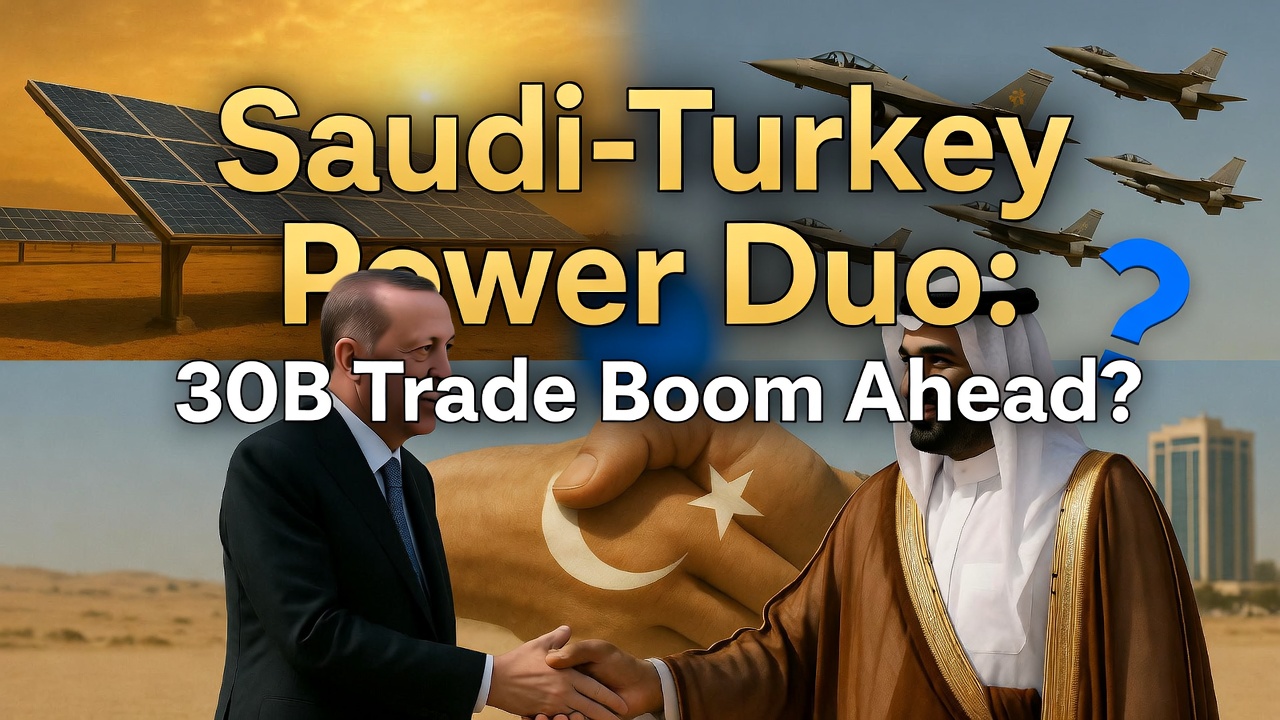
Turkish President Recep Tayyip Erdogan and Saudi Crown Prince Mohammed bin Salman shook hands in early February 2026. It wasn’t just a photo op; it was a symbol of a seismic shift in Middle Eastern dynamics. After years of frosty relations marked by ideological clashes and proxy rivalries, Saudi Arabia and Turkey are now charting a course toward a robust strategic alliance, driven by shared economic visions and pragmatic geopolitics. This surge in Saudi-Turkish economic ties isn’t merely about boosting trade figures—it’s about reshaping regional stability in an era of global uncertainty, much like how the U.S. and China navigate their tense interdependence.
As someone who’s tracked international affairs from the corridors of power in Washington to the bustling souks of Istanbul, I’ve seen alliances form and fracture. But this one feels different: a blend of ambition and necessity. With bilateral trade already hitting $8 billion in 2025, the duo aims for $10 billion by the end of 2026 and a staggering $30 billion in the long term. It’s a narrative of renewal, where Vision 2030 meets Turkey’s Century, promising jobs, innovation, and a counterweight to chaos in places like Syria and Yemen.
The Thaw: From Rivals to Partners in a Post-Pandemic World
To understand this economic momentum, let’s rewind a bit. Relations between Riyadh and Ankara hit rock bottom after the 2018 murder of journalist Jamal Khashoggi in Istanbul, which Turkey blamed on Saudi operatives. Add to that diverging stances on the Muslim Brotherhood and the Qatar blockade, and you had a recipe for estrangement. But economics has a way of healing wounds. By 2021, both nations began mending fences, accelerated by Turkey’s currency crisis and Saudi Arabia’s push to diversify beyond oil.
Fast-forward to 2026: Erdogan’s Riyadh visit on February 3 marked his first overseas trip of the year, underscoring the priority. Accompanied by a delegation of ministers and business leaders, Erdogan met Crown Prince Mohammed to ink deals that go beyond handshakes. The talks zeroed in on renewable energy, defense, and trade, with Ankara pushing to finalize a free trade agreement with the Gulf Cooperation Council (GCC).
What sparked this turnaround? For Turkey, reeling from inflation and a need for foreign investment, Saudi capital is a lifeline. Riyadh, meanwhile, sees Turkey as a gateway to European markets and a partner in tech-savvy industries. As Dr. Sinem Cengiz, a noted Turkey-Gulf expert, has observed in her analyses, this isn’t just opportunism—it’s a convergence of visions where Saudi Arabia’s Vision 2030 (aiming for a post-oil economy) aligns with Turkey’s “Turkey Century” blueprint for global influence through trade and tech.
Real-time data paints a vivid picture. Bilateral trade surged 14% in the past year alone, fueled by Turkish exports of machinery and textiles, and Saudi inflows of petrochemicals. At the Saudi-Turkish Investment Forum in Riyadh, attended by over 700 executives, officials hailed the “unprecedented level” of ties. For everyday people, this means tangible benefits: more jobs in Istanbul’s factories and Riyadh’s megaprojects.
Key Economic Deals: Solar Power, Trade Targets, and Beyond
At the heart of this surge are concrete agreements that blend ambition with execution. Take the headline-grabbing Turkey-Saudi solar deal: Saudi Arabia committed $2 billion to build two solar farms in Turkey with a combined 2,000 MW capacity, the first phase of a potential 5 GW rollout. This isn’t just green energy—it’s a strategic pivot. For Saudi Arabia, it diversifies investments away from hydrocarbons; for Turkey, it bolsters renewable goals amid energy import dependencies.
But the deals don’t stop there. Discussions on oil, petroleum products, and petrochemicals aim to stabilize supply chains in a volatile market. And then there’s defense: Erdogan revealed potential Saudi investment in Turkey’s KAAN fighter jet program, a fifth-generation stealth aircraft that’s drawn global buzz. If realized, this could see Riyadh acquiring up to 100 jets, cementing a defense pact that rivals U.S.-led alliances.
To put this in perspective, here’s a timeline of recent milestones in Saudi-Turkish economic ties:
| Year | Key Development | Impact |
|---|---|---|
| 2021 | Initial reconciliation talks post-Khashoggi fallout | Laid groundwork for trust-building |
| 2023 | Erdogan’s Gulf tour secures $50B+ in deals (including UAE) | Boosted Turkish reserves amid economic crisis |
| 2024 | Trade hits $8B; Turkey returns $5B Saudi deposit as confidence sign | Symbolized financial stability |
| 2025 | Defense agreements signed for drones and warships | Elevated ties to strategic level |
| 2026 | Erdogan’s Riyadh visit; $2B solar investment; KAAN talks | Targets $10B trade by year-end, $30B long-term |
This table highlights the steady build-up, with 2026 as a potential inflection point. Saudi investment in Turkey has already topped $2 billion, while Turkish firms eye Vision 2030 projects like NEOM and the Red Sea developments. It’s a win-win: Turkey offers manufacturing prowess; Saudi Arabia provides capital.
Shared Visions: Vision 2030 and Turkey Century in Harmony
What truly fuels this alliance is ideological synergy. Saudi Arabia’s Vision 2030, launched in 2016, seeks to transform the kingdom into a hub for tourism, tech, and entertainment—shedding oil reliance. Turkey’s “Turkey Century,” Erdogan’s post-2023 election mantra, emphasizes self-reliance through innovation and regional leadership.
The overlap is striking. Both visions prioritize diversification: Riyadh invests in AI and renewables; Ankara pushes for advanced manufacturing and defense tech. Compare this to U.S.-China dynamics, where economic interdependence tempers rivalry—Saudi-Turkey ties could similarly stabilize the Middle East. As Erdogan noted post-visit, “We have deep-rooted relations with cultural and historical dimensions.”
On the ground, this means joint ventures. In energy, the solar pact aligns with both nations’ net-zero ambitions. In defense, KAAN collaboration could foster knowledge transfer, helping Saudi localize production. Regionally, they’re syncing on stability: Cooperating on Syria’s reconstruction, where Turkey’s military presence meets Saudi funding, could rebuild infrastructure and curb extremism. In Yemen, aligned efforts support dialogue, easing humanitarian crises.
Yet, it’s not all rosy. Challenges loom, from currency fluctuations to differing views on Iran. But the shared vision—economic resilience amid global headwinds—provides a sturdy foundation.
Navigating Challenges: Geopolitical Risks and the Path Ahead
No alliance is without hurdles. Geopolitical instability remains a wildcard. Syria’s fragile post-Assad landscape could spark tensions if Turkish and Saudi interests diverge—Ankara prioritizes border security, Riyadh focuses on anti-Iran influence. Yemen’s conflict, though de-escalating, could flare up. And broader Mideast chaos, like the Gaza crisis, tests unity.
Economically, predictability is key. Turkey’s inflation battles and Saudi’s oil price vulnerabilities could derail targets. Falling global oil demand might strain Riyadh’s investments, while Turkey’s lira woes deter long-term commitments.
Still, the forward-looking outlook is optimistic. Experts like those at the Arab Gulf States Institute see this as a “game changer,” potentially shifting power balances. If sustained, it could foster a MENA economic bloc, rivaling EU models. For businesses, opportunities abound: Saudi firms in Turkish health and tourism; Turkish contractors in Riyadh’s megacities.
In a world where superpowers like China and the U.S. jostle for influence, this alliance offers a regional antidote—pragmatic, vision-driven, and human-centered. As one Saudi official put it at the forum, “We aspire to become the largest economic partners in the region.”
Conclusion: A Blueprint for Regional Renaissance
The Saudi-Turkish economic surge is more than numbers—it’s a story of reinvention. From $8 billion in trade today to $30 billion tomorrow, fueled by solar deals, KAAN jets, and shared visions, this partnership could redefine the Middle East. But success hinges on navigating risks with the same pragmatism that birthed it.
Looking ahead, 2026 could be the year it all crystallizes: Free trade pacts sealed, investments flowing, stability spreading. For millions across the region, this means hope—cleaner air from solar panels, jobs from joint projects, peace from aligned diplomacy. In an unpredictable world, Saudi-Turkey ties remind us that shared ambition can turn rivals into allies. Watch this space; the surge is just beginning.
Discover more from The Economy
Subscribe to get the latest posts sent to your email.



Key Takeaways
- Rolex’s secondary market rose approximately 7.9% year-over-year as of 2026 (per WatchCharts data) — trailing Patek Philippe (+16.2%) and Tudor (+11.4%) but still outperforming Audemars Piguet (+3.4%).
- Rolex raised U.S. retail prices 4–9% in January 2026 (steel models ~5.6%, gold models ~8.7%), narrowing the historical gap between retail and pre-owned pricing.
- Not every model appreciates: steel sports references (Submariner, GMT-Master II, Daytona) have held value far better than two-tone or widely available dress references like the standard Datejust.
- The Lady-Datejust posted the sharpest 2026 gain among tracked collections — up 22.73%, from roughly $9,269 to $11,376 — driven by demand for smaller, “everyday luxury” watches.
- Gold’s rise past $2,400/oz has directly lifted the investment case for Rolex’s precious-metal references (Day-Date, Sky-Dweller, Yacht-Master).
The Model-by-Model Picture
| Category | 2026 Trend |
|---|---|
| Lady-Datejust | +22.73% (strongest performer among tracked collections) |
| Steel sports models (Submariner, GMT-Master II) | Held value well; corrected from 2022 peak but stabilized above retail |
| Daytona | Corrected from highs above $50,000 to the mid-$30,000s; still among the most sought-after references |
| Two-tone/widely available Datejust | Flat to negative — “holds value” is an overstatement for this category |
| Gold references (Day-Date, Sky-Dweller) | Lifted by gold’s rise above $2,400/oz |
Why the “Rolex Always Appreciates” Myth Is Fading
The pandemic-era boom pushed some references — the Daytona above all — to speculative highs disconnected from historical norms. Since the March 2022 peak, steel sports models have compressed meaningfully, and dealers who bought inventory near the top have in some cases faced 20–40% markdowns on liquidation. The lesson for 2026 buyers: Rolex as a category is not a monolith. Value retention depends heavily on specific reference, condition, and whether the piece comes with box and papers (“full set”).
What’s Actually Driving 2026 Strength
- Retail price increases raise the floor. When a new Submariner retails at $10,050 (up from $9,500), a pre-owned example at $11,000–$12,000 suddenly represents a smaller premium — narrowing the gap without secondary prices actually moving.
- Supply discipline remains Rolex’s core lever. The brand has never confirmed production numbers, and secondary-market premiums remain entirely a function of Rolex’s own manufacturing decisions — a risk factor as much as a support.
- Certified Pre-Owned rollout. Rolex’s now fully rolled-out CPO program has changed how buyers transact in the used market, adding a layer of brand-verified legitimacy that supports pricing.
The Case for Rolex as a Portfolio Diversifier
Financial advisors increasingly frame luxury watches not as a replacement for equities or bonds, but as a tangible, historically low-correlation diversifier — one that carries its own risks (illiquidity, condition-dependent pricing, no yield) but has demonstrated multi-decade resilience for specific references.
Is Rolex a good investment in 2026?
It depends heavily on the specific reference. Steel sports models like the Submariner and Daytona have held or grown in value; two-tone and widely available dress models generally have not. Overall, Rolex’s secondary market rose about 7.9% year-over-year in 2026, trailing Patek Philippe but ahead of Audemars Piguet.
Discover more from The Economy
Subscribe to get the latest posts sent to your email.

Navigating Mortgage and Loan Refinancing in a High-Yield Environment
Global public debt crossing critical thresholds has kept central bank policies volatile, resulting in fluctuating US Treasury yields throughout 2026. For homeowners and commercial property holders burdened by previous high-interest borrowing cycles, finding optimal refinance windows has become a high-stakes financial puzzle. Stalled disinflation and stubborn employment numbers mean rate cuts are incremental, requiring borrowers to act with precision.
Timing your mortgage or commercial loan refinance in this environment requires a deep understanding of yield curve movements and lender risk appetites.
Decoding 2026 Refinance Dynamics
The 10-Year Treasury Yield Benchmark
Mortgage rates continue to track closely with the 10-year US Treasury yield. When macroeconomic anxiety spikes debt issuance, yields rise, tightening consumer borrowing capacity. Savvy borrowers monitor weekly Treasury auctions to lock in rates during brief dip windows.
Hybrid ARMs and Alternative Structures
With fixed rates remaining elevated, 7/1 and 10/1 adjustable-rate mortgages (ARMs) have surged in popularity. These products offer lower initial monthly payments, giving borrowers breathing room until central bank easing cycles fully materialize.
| Loan Product | Current Rate Range | Best For | Key Risk Factor |
| 30-Year Fixed Mortgage | 6.2% – 6.8% | Long-term predictability | Higher initial monthly outlay |
| 7/1 Hybrid ARM | 5.5% – 5.9% | Short-term ownership / flipping | Rate reset risk after year 7 |
| Commercial Refinance | 7.0% – 8.2% | Corporate asset restructuring | Strict DSCR lender covenants |
Actionable Steps for Successful Refinancing
To maximize your chances of securing favorable refinance terms in a volatile market, follow a disciplined preparation strategy.
Boost Your Credit Score Immediately: Lenders in 2026 are applying stringent credit tiering; a 20-point increase can drop your APR by a crucial quarter-point.
Shop Regional Credit Unions: Smaller financial institutions often offer portfolio loans with more flexible underwriting than major national banks.
Calculate the Break-Even Point: Ensure your total closing costs are recouped through monthly savings within 24 months of closing.
“Market Strategist View: Refinancing in 2026 is an exercise in opportunistic timing. Borrowers must maintain immaculate financial profiles ready to strike the moment Treasury yields dip.”
Mastering the complexities of today’s debt environment ensures you can successfully lower your debt service costs and protect your long-term financial stability.
Discover more from The Economy
Subscribe to get the latest posts sent to your email.

The days of pulling generic auto insurance quotes based purely on your zip code and age are officially over. In 2026, insurance comparison engines are powered entirely by generative AI and real-time telematics. These platforms digest thousands of live data points—ranging from your driving smoothness via connected vehicle sensors to real-time traffic congestion patterns—to generate hyper-personalized premiums instantly.
For consumers, this evolution represents both a massive opportunity for savings and a hidden trap for penalty pricing. Understanding how AI algorithms evaluate risk is essential for anyone looking to lower their monthly auto insurance premiums.
How AI Comparison Engines Evaluate Your Risk Profile
Behavioral Telematics and Connected Cars
Modern cars stream performance data directly to insurance aggregators. Generative AI models analyze braking sharpness, acceleration curves, cornering G-forces, and phone distraction metrics. Drivers who maintain smooth, defensive habits are rewarded with dynamic rate cuts of up to 40% compared to traditional rating tiers.
Predictive Traffic and Weather Modeling
AI tools now cross-reference your daily commute route with predictive weather and accident probability models. If your standard parking location or driving corridor has a statistically higher incidence of uninsured motorist claims, your quotes will reflect that hyper-local risk assessment.
| Comparison Factor | Traditional Rating Model | 2026 Generative AI Model | Impact on Premium |
| Mileage & Usage | Annual estimated odometer reading | GPS tracking & live trip duration | High (up to 35% savings) |
| Driving Behavior | MVR driving record & accidents | Real-time braking, speed, & G-force | Critical (determines tier) |
| Vehicle Tech | Make, model, and safety rating | ADAS calibration & repair cost data | Moderate |
Strategies to Lower Your AI-Driven Insurance Quote
To outsmart the algorithm and secure the lowest possible premium in 2026, drivers must proactively manage their digital footprint on insurance platforms.
Opt-In for Telematics Trial Periods: Many insurers offer immediate 15% discounts just for installing their driving app; let it track safe habits for 30 days to lock in permanent savings.
Scrub Unverified Public Records: Ensure your motor vehicle report is free of clerical errors that AI risk models misinterpret as reckless behavior.
Compare AI Aggregators: Use platforms that integrate multi-carrier API feeds rather than single-brand comparison sites to find the best risk-adjusted rate.
“Industry Note: AI-driven pricing rewards transparency and precision. Drivers who actively manage their telematics data consistently out-save those relying on legacy quote calculators.”
Embracing AI comparison tools allows savvy policyholders to customize coverage limits precisely to their driving habits, eliminating wasted premium spend while ensuring robust protection.
Discover more from The Economy
Subscribe to get the latest posts sent to your email.

SpaceX Starship Achieves First Full Orbit on Historic 10-Hour Test Flight 14

Google’s $15B Finland AI Investment: Data Centers, Nuclear Power & Jobs

Fast Invoice Factoring: Rates, APR Math & Contract Traps

SOC 2 Type II Guide: Cost, Timeline & Compliance Companies

Hong Kong Wages Surge 3.4% in June: Sector Data & Analysis

Silver Price Today: Why the Xi-Trump AI Standoff Is Fueling a Safe-Haven Rally

Citibank & Dólar Estadounidense: Forex Playbook After the Xi-Trump Truce

How the Trump-Xi White House Summit Is Reshaping Mortgage Rates Today for Real Estate Investors

Indonesia Navigates Mega-Project Risks as China and Russia Eye the 2,772km Trans-Kalimantan Railway

Trump-Xi 2026 Summit Takeaways: The Trade Truce, Taiwan, and the AI Divide

Solar Panel Installation Cost in 2026: Why the Math Changed Overnight

Business Insurance: What Coverage You Actually Need and What It Costs in 2026

Auto Insurance Quotes: How to Get the Lowest Rate Without Losing Coverage

Huntington Online Banking: Full Features, Fees, and How It Compares in 2026

Top 30 Stocks for Investment in PSX for Massive ROI in 2026

SpaceX Starship Flight 14: First Orbital Attempt & Starlink V3 Launch Explained

Oil Prices Break $100 in 2026: Middle East Conflict & Energy Markets

BRICS+ Cross-Border Payments 2026: Interoperability Explained

Fidelity Investments Review 2026: SPAXX Yields & Zero-Fee Funds

Tween Back-to-School Trends 2026: What’s Driving the $85B Season

10-Year Treasury Yield Hits 4.80%: What It Means for Rates & Portfolios

Shein Clothes Quality & Safety in 2026: What Lab Tests Show

IMF & World Bank 2026 Global Economic Outlook: Growth, Inflation, Debt

China’s US$10.8 Billion Trade Shortcut: Why the Pinglu Canal Matters

High-CPM Finance Niches 2026: Publisher Monetization Blueprint

Middle East War Economics 2026: Oil Prices & Energy Markets

China Stocks Today: Are Big Economies in Asia Nearing a Market Bottom?

Social Security Trust Fund 2032: OASI Depletion Timeline Explained
-

 Markets & Finance9 months ago
Top 15 Stocks for Investment in 2026 in PSX: Your Complete Guide to Pakistan’s Best Investment Opportunities
-

 Analysis7 months ago
Johor’s Investment Boom: The Hidden Costs Behind Malaysia’s Most Ambitious Economic Surge
-

 Analysis7 months ago
Top 10 Stocks for Investment in PSX for Quick Returns in 2026
-

 Banks8 months ago
Best Investments in Pakistan 2026: Top 10 Low-Price Shares and Long-Term Picks for the PSX
-

 Analysis8 months ago
Brazil’s Rare Earth Race: US, EU, and China Compete for Critical Minerals as Tensions Rise
-

 Investment9 months ago
Top 10 Mutual Fund Managers in Pakistan for Investment in 2026: A Comprehensive Guide for Optimal Returns
-

 Global Economy9 months ago
15 Most Lucrative Sectors for Investment in Pakistan: A 2025 Data-Driven Analysis
-

 Global Economy9 months ago
Pakistan’s Export Goldmine: 10 Game-Changing Markets Where Pakistani Businesses Are Winning Big in 2025