
Asia
Shanghai’s Bold Bid to Become a Global Financial Powerhouse by 2035


Shanghai’s 2035 plan to become a global financial hub leverages AI, RMB internationalization, and national backing—but faces geopolitical, demographic, and institutional challenges.
How China’s commercial capital is leveraging unprecedented national backing, AI innovation, and RMB internationalization to challenge New York, London, and Hong Kong—while navigating geopolitical headwinds and demographic realities
The Lujiazui skyline glows against the Huangpu River at dusk, its trio of supertall towers—Shanghai Tower, the World Financial Center, and Jin Mao—rising like sentinels over the Bund’s neocolonial facades. This juxtaposition of eras captures Shanghai’s perpetual dance between past and future, between China’s century of humiliation and its ambitions for the century ahead. In December 2025, as city planners presented their proposals for the 15th Five-Year Plan, that future came into sharper focus: by 2035, Shanghai aims to establish itself as a “socialist modern international metropolis with global influence,” with its Shanghai international financial center 2035 vision receiving explicit national endorsement for the first time in years.
The stakes extend far beyond municipal pride. Shanghai’s roadmap—encompassing AI-driven manufacturing, green finance, semiconductor self-sufficiency, and offshore yuan markets—represents Beijing’s most comprehensive attempt yet to build financial infrastructure capable of withstanding Western economic pressure while capturing the commanding heights of 21st-century innovation. Whether this vision succeeds or stumbles will shape not only China’s economic trajectory but the broader contest between competing models of state capitalism and liberal market economies.
National Mandate Meets Local Ambition
Shanghai’s latest planning cycle arrives at a pivotal juncture. The 15th Five-Year Plan recommendations adopted by China’s Central Committee in October 2025 explicitly identify advancing Shanghai as an international financial center as a national priority—a designation that carries both prestige and resources. This marks a notable shift from the more muted treatment in previous planning documents, reflecting Beijing’s recognition that financial power remains inseparable from technological sovereignty and geopolitical resilience.

The Shanghai 15th Five-Year Plan financial ambitions center on what local officials call the “Five Centers” strategy: positioning the city as the preeminent hub for international economic activity, finance, trade, shipping, and science-technology innovation. Published in January 2026, the detailed recommendations outline concrete targets across each pillar. The plan sets a long-term objective of doubling Shanghai’s per capita GDP from 2020 levels to approximately 313,600 yuan ($45,000) by 2035—requiring sustained annual growth of roughly six percent, a challenging target given China’s broader demographic and debt headwinds.
Yet the China Shanghai financial center push is about more than numbers. Beijing views Shanghai as essential to an alternative financial architecture that reduces vulnerability to dollar-based sanctions and Western payment systems. As one analysis of the broader 15th Five-Year Plan notes, “finance must serve industry, technology and the domestic market—not become an independent driver that risks systemic vulnerability.” This philosophy distinguishes Shanghai’s model from the more freewheeling approaches of New York or London, embedding financial development within broader industrial and technological strategies rather than treating it as an end in itself.
The plan’s timing reflects careful calculation. Trump’s return to the White House in January 2025 initially triggered fears of renewed trade warfare, but by late 2025, U.S.-China relations had stabilized around managed competition rather than open confrontation. The November 2025 trade truce, extended after multiple rounds of negotiation, bought Beijing breathing room to pursue longer-term strategic objectives. Shanghai’s 2035 blueprint assumes not détente but a durable pattern of competitive coexistence—what Chinese strategists call “de-risking” rather than decoupling.
The “Five Centers” Architecture: From Global Resource Allocation to RMB Innovation
At the heart of Shanghai’s transformation lies an interconnected system designed to concentrate capital, talent, technology, and trade flows. The Shanghai global financial hub plan envisions these five pillars reinforcing one another: financial markets channeling capital to advanced manufacturers, shipping networks distributing high-value exports, and innovation clusters generating IP that can be commercialized through both domestic and offshore financing.
International Financial Center: This remains the cornerstone. Shanghai’s financial markets already command impressive scale—the Shanghai Stock Exchange ranks third globally by market capitalization, while the bond market under custody ranks first among exchange-based systems worldwide. The Shanghai Gold Exchange leads in physical gold trading, and several Shanghai Futures Exchange commodities top global volume rankings. Total annual transaction value across Shanghai’s financial markets exceeds 2,800 trillion yuan.
The 15th Five-Year Plan pushes further, calling for Shanghai to become a global renminbi asset allocation center and risk management hub. This means expanding cross-border and offshore financial services while developing sophisticated derivatives markets that allow international investors to hedge yuan exposure. The expansion of Bond Connect now permits overseas retail investors to participate, broadening RMB repatriation channels. The RMB Cross-Border Interbank Payment System (CIPS) has reached over 120 countries and regions, providing alternatives to SWIFT for Belt and Road transactions.
Shanghai’s fintech ecosystem offers particular competitive advantages. Recent rankings placed Shanghai ahead of London in research and development investment, innovation outcomes, and information technology industry scale. The city has outperformed all competitors in fintech application metrics while climbing to fourth globally in fintech growth potential. Districts like Pudong specialize in financial services, Xuhui in AI foundation models and privacy computing, Huangpu in asset management and insurance tech, and Hongkou in innovative financial companies—creating a distributed yet interconnected fintech landscape.
International Trade and Shipping Center: Shanghai’s port infrastructure provides the physical backbone for its financial ambitions. The Yangshan Deep Water Port, connected to the mainland by the world’s longest sea bridge, handles over 47 million twenty-foot equivalent units annually, making Shanghai the world’s busiest container port. The plan calls for strengthening trade hub functions, accelerating innovation in trade formats, and improving global supply chain management—essentially positioning Shanghai as the node where goods, capital, and information intersect.
The Lin-gang Special Area, established within the Shanghai Free Trade Zone, exemplifies this integration. It introduced China’s first offshore RMB tax guidelines and piloted offshore trade tax incentives, while the offshore RMB bond market surpassed 600 billion yuan in value. An international reinsurance trading platform positions Shanghai as a hub for dispersing Asian catastrophe risks—a role previously dominated by Bermuda and Lloyd’s of London.
Science and Technology Innovation Center: This pillar distinguishes the Shanghai 2035 socialist metropolis vision from purely financial ambitions. The plan identifies six emerging sectors for cultivation: intelligent and hydrogen-powered vehicles, high-end equipment manufacturing, advanced materials, low-carbon industries, and fashion/consumer goods. Particular emphasis falls on quantum technology, brain-computer interfaces, controlled nuclear fusion, biomanufacturing, and mobile communications—domains where China seeks to close gaps with or leapfrog Western competitors.
Shanghai’s AI ecosystem has achieved critical mass. The Shanghai Foundation Model Innovation Center, inaugurated in September 2023, became China’s first and the world’s largest incubator dedicated to foundation models. Located in Xuhui district, it houses technology giants including the Shanghai AI Laboratory, Tencent, Alibaba, Microsoft, SenseTime, and the Hong Kong University of Science and Technology Shanghai Center, plus AI startups like Infinigence, Yitu, and PAI—all within one kilometer of each other. The center features a computing power scheduling platform partnering with nine providers, and attracted over 100 billion yuan in investment funds including the 60-billion-yuan National AI Industry Investment Fund.
By 2024, Shanghai’s AI industry exceeded 450 billion yuan in total output, positioning the city as a serious contender in the global race for AI supremacy. The integration of AI across finance, manufacturing, logistics, and urban governance creates feedback loops that accelerate adoption and refinement—a dynamic that Silicon Valley pioneered but Shanghai now replicates at greater scale.
The Shanghai AI and Advanced Manufacturing Hub: Chips, Green Tech, and Industrial Modernization
Shanghai’s industrial strategy centers on building a “modern industrial system with advanced manufacturing as its backbone”—recognizing that financial power without manufacturing depth proves hollow. The city’s approach differs markedly from Western deindustrialization patterns, instead pursuing simultaneous upgrades across traditional industries and cultivation of next-generation sectors.
Semiconductor Self-Sufficiency: Few domains matter more to Beijing than chips. U.S. export controls have choked access to cutting-edge lithography equipment and advanced nodes, making domestic capability an existential priority. Shanghai hosts major fabs including Semiconductor Manufacturing International Corporation (SMIC) and plays anchor roles in both national and local semiconductor funds.
The Shanghai Science and Technology Innovation Investment Fund received a capital boost of $1 billion in September 2024, bolstering capacity to finance projects vital to China’s semiconductor self-reliance. This builds on the first phase dating to 2016, which invested billions into major foundries and equipment makers. Nationally, the China Integrated Circuit Industry Investment Fund Phase III established in May 2024 boasts registered capital of 344 billion yuan ($47.5 billion)—larger than the first two phases combined. Phase III focuses on large-scale manufacturing, equipment, materials, and high-bandwidth memory for AI semiconductors.
Shanghai’s chip ecosystem benefits from concentration: research institutes, fabs, equipment suppliers, and design houses cluster in Zhangjiang, Pudong, and Lin-gang, enabling rapid iteration and knowledge spillovers. While Western sanctions limit access to extreme ultraviolet lithography needed for sub-7nm nodes, Shanghai’s ecosystem excels at mature-node innovation and packaging technologies that remain crucial for automotive, industrial, and consumer electronics.
Green Finance and Low-Carbon Industries: Shanghai positions itself as the nexus for China’s climate transition. The city issued implementation plans for carbon peak and carbon neutrality, established one of the first national climate investment and financing pilots in Pudong, and operates China’s national emissions trading scheme from Shanghai. By end-2022, carbon trading quotas reached 230 million metric tons with cumulative volume of 10.48 billion yuan.
The “technology + finance” model established green technology equity investment funds to promote coordinated development. A collaborative network involving research institutions, international organizations, and leading companies develops green technologies, supported by over 1,600 experts and 119 service agencies. Shanghai rapidly advances offshore wind power and “photovoltaic+” projects while building integrated energy management platforms covering water, electricity, oil, gas, and hydrogen.
This infrastructure supports growing green bond issuance, ESG-linked lending, and climate derivatives—positioning Shanghai to capture capital flows as global investors increasingly demand sustainable assets. The Shanghai Environment and Energy Exchange provides platforms for carbon trading, green certificates, and environmental rights transactions, creating liquid markets that price externalities and allocate climate-related capital.
Manufacturing Digitalization: The plan sets an ambitious target: by 2025, all manufacturers above designated size will receive digitalization assessments, with at least 80 percent completing digital transformation. The scale of industrial internet core segments should reach 200 billion yuan. Eight municipal-level digital transformation demonstration areas have been established, with 40 smart factories under construction.
This push reflects recognition that manufacturing competitiveness increasingly depends on software, sensors, and analytics rather than just scale or labor costs. Shanghai leverages its concentrations of both industrial firms and tech companies to pioneer applications in predictive maintenance, supply chain optimization, and lights-out production. The integration of 5G networks, industrial IoT devices, and AI-powered control systems transforms factories into nodes within larger cyber-physical systems.
RMB Internationalization: Shanghai as the Offshore Yuan Anchor
Perhaps no element of the Shanghai international financial center 2035 blueprint carries greater geopolitical significance than advancing renminbi internationalization. While Hong Kong remains the largest offshore yuan hub, Shanghai serves as the onshore anchor—the deep, liquid market from which offshore activity ultimately derives.
Current State of RMB Globalization: The yuan’s international role has expanded meaningfully but remains far from displacing the dollar. By February 2025, RMB accounted for 4.33 percent of global payments by value according to SWIFT—up from negligible shares two decades ago but still dwarfed by the dollar’s roughly 40 percent share. More than 70 central banks hold yuan reserves, yet RMB constitutes only 2-3 percent of global foreign exchange reserves.
The People’s Bank of China reports that cross-border RMB receipts and payments totaled 35 trillion yuan in first-half 2025, up 14 percent year-on-year. RMB-denominated trade in goods reached 6.4 trillion yuan, accounting for 28 percent of total cross-border transactions—both record highs. As exchange rate flexibility increases, more enterprises choose RMB for settlement to hedge currency risk and reduce transaction costs.
China’s approach emphasizes gradual, trade-based internationalization rather than full capital account liberalization. The PBOC has signed bilateral currency swap agreements with over 40 foreign central banks, with 31 agreements totaling around 4.31 trillion yuan currently in force. Some have been activated by counterparty authorities (Argentina, Russia) to meet international financing needs when cut off from other funding sources—demonstrating RMB’s growing utility as a geopolitical hedge.
Shanghai’s Infrastructure for Yuan Flows: The city’s role centers on providing deep, sophisticated markets where international actors can access, deploy, and hedge yuan exposures. The Shanghai Free Trade Zone operates under a “liberalizing the first line, efficient control of the second line, and free circulation within the zone” model that enables innovation in bonds, repos, derivatives, and insurance while maintaining regulatory firewalls between onshore and offshore systems.
The expansion of financial openness includes allowing qualified non-financial groups to establish financial holding companies and participate in interbank foreign exchange markets. FinTech companies in Lin-gang push innovation in AI, big data, cloud computing, and blockchain for financial applications. Financial institutions and insurers provide long-term credit, investment funds, and direct investment for technology research, while the Shanghai Stock Exchange’s STAR Market facilitates tech company listings.
The reinsurance International Board launched at the 2024 Lujiazui Forum transforms the reinsurance market from “one-way openness” to “two-way openness”—allowing foreign reinsurers to access Chinese risk while Chinese carriers diversify internationally. This creates yuan-denominated flows in a massive global market previously dominated by Western carriers.
Blockchain and AI technologies enhance oversight of cross-border funds through a “digital regulatory sandbox” while optimizing anti-money laundering and anti-fraud systems. The goal: maintain financial stability and regulatory control while expanding yuan’s international footprint—a balancing act that distinguishes Shanghai’s model from the laissez-faire approaches of traditional offshore centers.
Petroyuan and Alternative Payment Rails: Beyond conventional financial instruments, Shanghai’s International Energy Exchange launched yuan-denominated crude oil futures in 2018, creating an alternative to dollar-based benchmarks. While still modest in global terms, petroyuan contracts provide energy exporters—particularly those facing Western sanctions—with options for settling trades outside dollar systems.
The Cross-Border Interbank Payment System (CIPS), headquartered in Shanghai, processes daily RMB transactions reaching $60 billion as of 2025—still far behind SWIFT’s dollar volumes but growing steadily. CIPS provides critical infrastructure for Belt and Road transactions and offers sanctioned entities alternatives to Western-controlled payment networks.
Global Competition: Shanghai vs. New York, London, Hong Kong, and Singapore
Shanghai’s aspirations inevitably invite comparisons with established financial centers. The Global Financial Centres Index (GFCI 38), published September 2025, ranks New York first, London second, Hong Kong third, and Singapore fourth—with Shanghai placing eighth globally, ahead of Shenzhen (ninth) and Beijing (tenth).
New York and London: These centers remain dominant due to deep capital markets, predictable legal systems, full currency convertibility, and concentration of multinational corporations and global talent. New York benefits from dollar hegemony and the world’s largest economy, while London leverages time-zone positioning, English common law, and historic ties across Commonwealth nations and former colonies.
Shanghai cannot replicate these advantages. Capital controls limit convertibility, constraining foreign institutional participation. The legal system, while modernizing, operates under party oversight rather than fully independent courts. English language proficiency lags despite improvements. State influence over major financial institutions reduces perceptions of market-driven pricing.
Yet Shanghai possesses countervailing strengths: proximity to the world’s second-largest economy and largest manufacturer, government coordination capacity to mobilize resources rapidly, concentration of high-quality STEM talent at competitive costs, and—increasingly—technological sophistication in fintech and AI applications. Where New York and London excel at allocating existing capital, Shanghai integrates financial services with industrial policy and technological development in ways Western centers abandoned decades ago.
Hong Kong: The comparison here cuts deepest. Hong Kong long served as China’s window to global capital—the place where yuan could move freely, where Chinese companies listed to access international investors, where expatriates managed Asia portfolios under familiar legal frameworks. The Global Financial Centres Index shows Hong Kong widening its lead over Singapore in March 2025, reinforcing its position as Asia’s preeminent financial hub.
Yet Hong Kong’s advantages are also vulnerabilities. The 2019 protests, followed by the National Security Law and pandemic-era border closures, prompted some capital to relocate to Singapore. While Hong Kong remains indispensable for certain functions—IPO gateway, offshore yuan anchor, asset management hub—Beijing increasingly views Shanghai as the strategic alternative. If external pressures or internal instability compromise Hong Kong, Shanghai must be ready.
The relationship is less zero-sum than complementary asymmetry. Hong Kong provides the offshore platform where capital moves freely; Shanghai supplies the onshore depth, industrial linkages, and policy coordination. Together they form what Beijing envisions as a dual-hub system—though the balance of influence gradually tilts northward.
Singapore: Singapore versus Hong Kong represents Asia’s most watched financial rivalry. Singapore specializes in wealth management and serves as ASEAN’s gateway; Hong Kong dominates investment banking and links to mainland China. Post-2019, Singapore gained from Hong Kong’s troubles, attracting family offices and regional headquarters.
Shanghai’s relationship with Singapore differs. Rather than direct competition, Shanghai competes for similar functions: becoming the RMB hub, the AI innovation center, the shipping and logistics node. Singapore’s advantages—rule of law, English language, international talent—mirror those Shanghai lacks. Yet Singapore’s small size limits industrial depth and technological ecosystems that Shanghai can leverage.
The broader pattern suggests specialization more than winner-takes-all. New York and London dominate truly global functions. Hong Kong and Singapore serve as regional hubs with particular strengths. Shanghai emerges as the command center for China’s economic system—massive domestic markets, industrial policy coordination, technology-finance integration—seeking to project that model internationally through BRI and yuan internationalization.
The Shanghai Five Centers Strategy: Reinforcing Interdependencies
What distinguishes Shanghai’s approach is the deliberate cultivation of mutually reinforcing capabilities. The Shanghai Five Centers strategy operates on the premise that genuine financial power requires multiple supporting pillars:
Economic Center → Financial Center: Concentration of corporate headquarters, R&D facilities, and high-value manufacturing provides deal flow, lending opportunities, and equity offerings that sustain financial markets. Shanghai hosts regional headquarters for 891 multinational corporations and Chinese headquarters for 531 foreign-invested companies as of 2023, creating dense networks of cross-border capital flows.
Trade/Shipping Center → Financial Center: Physical goods flows generate demand for trade finance, commodity derivatives, insurance, and logistics optimization. Shanghai’s port volumes create opportunities for fintech innovations in customs clearance, supply chain finance, and blockchain-based bill of lading systems.
Innovation Center → Financial Center: Technology companies require venture capital, growth equity, and IPO markets, while generating innovations—AI credit scoring, biometric payments, quantum encryption—that reshape financial services themselves. The Shanghai Stock Exchange’s STAR Market, launched 2019, provides listing venue for tech firms, while innovation centers incubate startups that foreign VCs increasingly co-invest in.
Financial Center → All Others: Conversely, sophisticated capital markets allocate resources to the most productive uses—funding R&D, financing port expansion, underwriting trade receivables. The ability to issue yuan-denominated bonds, structure complex derivatives, and provide international payment settlement supports all other center functions.
This systemic thinking reflects Chinese planning traditions: rather than allowing markets alone to determine outcomes, authorities deliberately construct ecosystems where desired activities cluster and reinforce. Critics see inefficiency and misallocation; proponents point to rapid infrastructure deployment, coordinated industrial upgrading, and avoidance of boom-bust financial cycles that plague pure market systems.
Headwinds: Geopolitics, Demographics, Debt, and Institutional Constraints
For all its ambitions, Shanghai’s 2035 vision confronts formidable obstacles that could derail or delay progress.
Geopolitical Tensions: U.S.-China relations stabilized in late 2025 but remain fundamentally competitive. Technology restrictions limiting access to advanced chips, AI systems, and manufacturing equipment constrain Shanghai’s innovation ambitions. Financial sanctions—actual or threatened—deter international firms from deepening Shanghai exposure. Taiwan tensions create tail risks of conflict that would devastate cross-strait capital flows and potentially trigger Western sanctions similar to those imposed on Russia.
The January 2026 survey by AmCham China found 79 percent of respondents held neutral or positive views on U.S.-China relations for 2026—a 30-percentage-point improvement—yet anxiety over uncertainty persists. Companies increasingly embed geopolitical risk into investment decisions, diversifying supply chains and building resilience rather than concentrating operations. This structural caution limits the depth of international financial integration Shanghai can achieve.
Demographic Decline: Shanghai, like China broadly, faces population aging and shrinkage that threatens labor supply and consumption growth. The city’s population ceiling policies, designed to manage “big city disease,” cap growth precisely when attracting global talent matters most. Compared to Singapore or Hong Kong, Shanghai’s immigration policies remain restrictive, limiting access to the international professionals who make financial centers truly global.
Debt Overhang: China’s total debt—government, corporate, household—exceeds 280 percent of GDP, among the highest in major economies. Local government financing vehicles carry hidden liabilities from infrastructure binges. Property developers’ distress, while contained, creates banking system fragility. Shanghai’s ability to mobilize capital for 15th Five-Year Plan priorities depends on resolving these debt problems without triggering deflation or financial crisis.
The analysis of China’s 15th Five-Year Plan notes Beijing’s determination to avoid Japan’s 1990s stagnation or Asian financial crisis patterns through “controlled financial vitality”—yet achieving growth without debt accumulation or asset bubbles requires extraordinary policy calibration.
Institutional Constraints: Capital controls that protect monetary sovereignty also limit Shanghai’s appeal to international investors who demand free capital movement. State influence over major financial institutions raises questions about market pricing and credit allocation efficiency. The legal system, while improving, lacks the complete independence and precedent-based predictability that common-law jurisdictions provide.
These constraints are not temporary bugs but structural features of China’s system. Removing them—full capital account opening, judicial independence, reduced state ownership—would undermine party control. Shanghai’s challenge is achieving international financial center status within these constraints, not despite them.
Scenario Analysis: Pathways to 2035
Optimistic Scenario – “The Shanghai Ascent”: China sustains 4-5 percent annual growth through productivity gains and consumption rebalancing. U.S.-China relations remain competitive but stable, with limited escalation. RMB gradually captures 10-15 percent of global payment share as BRI countries and Global South economies diversify from dollar dependence. Shanghai’s AI and chip industries achieve breakthroughs in mature nodes and specialized applications, if not cutting-edge lithography. Financial reforms proceed incrementally—expanded Bond Connect, deeper derivatives markets, more foreign participation—without full capital account opening. By 2035, Shanghai solidly ranks as the world’s third or fourth financial center behind New York and London but ahead of or level with Hong Kong and Singapore, serving as the undisputed RMB hub and technology-finance nexus.
Base Case – “Managed Middle Power”: Growth moderates to 3-4 percent as structural headwinds intensify. Geopolitical tensions oscillate without major crises. RMB internationalization continues but plateaus at 6-8 percent of global payments—useful for regional trade and sanctions-circumvention but not a true alternative to the dollar. Shanghai makes steady progress on all Five Centers but doesn’t dramatically close gaps with leading Western hubs. Capital controls and institutional constraints limit international appeal, while Hong Kong and Singapore retain key niches. By 2035, Shanghai functions as China’s primary financial center and a significant Asian hub, but the “global influence” remains more aspirational than realized. This scenario approximates current trajectories extended forward—meaningful progress but not transformation.
Pessimistic Scenario – “The Premature Peak”: A perfect storm: Taiwan crisis triggers Western sanctions, property sector distress metastasizes into banking crisis, demographic decline accelerates, and technological decoupling intensifies. RMB internationalization stalls or reverses as confidence erodes. Foreign capital exits, multinationals relocate regional headquarters to Singapore or Tokyo, and Shanghai’s ambitions contract to serving primarily domestic markets. This scenario, while unlikely as a comprehensive package, illustrates how interconnected risks could compound. Even partial realization—say, a limited Taiwan conflict without invasion but with sustained tensions—could derail Shanghai’s international aspirations for a decade or more.
Wild Card – “The Digital Disruption”: Central bank digital currencies, AI-powered autonomous finance, and blockchain-based settlement systems fundamentally reshape global finance in ways that advantage Shanghai’s technological sophistication over Western incumbents’ legacy infrastructure. China’s lead in digital yuan, experience with mobile payments, and regulatory willingness to experiment with novel structures position Shanghai as the hub for next-generation finance—much as the U.S. leveraged telegraph and telephone to build New York’s dominance over London in the early 20th century. This scenario requires both technological breakthroughs and regulatory openness that current trends suggest but don’t guarantee.
Implications for Global Markets and Investors
Shanghai’s 2035 trajectory, regardless of which scenario unfolds, carries consequences beyond China’s borders.
For Multinationals: Companies must navigate a bifurcating financial landscape where Shanghai-centric yuan systems operate in partial parallel to dollar-based networks. Maintaining relationships with both requires redundant infrastructure—dual treasury operations, separate compliance frameworks, complex hedging strategies. Early movers who establish Shanghai presence and yuan competency may gain advantages as Chinese companies globalize and BRI countries increase yuan usage.
For Asset Managers: China’s bond and equity markets, while enormous domestically, remain underrepresented in global portfolios. If Shanghai’s financial opening continues and RMB internationalizes, allocations could shift significantly—particularly if index providers increase China weightings. Yet political risk, capital control uncertainty, and corporate governance concerns create volatility that passive strategies may underestimate.
For Financial Institutions: The question isn’t whether to engage Shanghai but how deeply. Establishing operations provides market access and positions for yuan internationalization, but regulatory complexity, competition with state-backed champions, and geopolitical risks create hazards. The optimal strategy likely involves selective participation in areas where foreign expertise commands premiums—wealth management for ultra-high-net-worth Chinese, cross-border M&A advisory, structured products—while avoiding head-to-head competition with domestic banks in retail or SME lending.
For Policymakers: Shanghai’s rise challenges Western assumptions about the indispensability of liberal democratic institutions for financial center success. If Shanghai achieves even the base-case scenario, it demonstrates that state-directed capitalism with capital controls can create formidable financial infrastructure—particularly when integrated with industrial policy and technological development. This doesn’t prove superiority but does complicate narratives about inevitable convergence toward Western models.
The broader trend toward a multipolar currency system—neither dollar hegemony nor yuan dominance but fragmentation across regional and functional spheres—seems most plausible. In this world, Shanghai serves as the yuan and Asian manufacturing hub, New York as the dollar and Western tech hub, London as the European time-zone and legal hub, with Hong Kong and Singapore bridging East and West. Competition intensifies but doesn’t produce a single winner.
Conclusion: Ambition Tempered by Reality
Shanghai’s roadmap to becoming a global financial powerhouse by 2035 represents one of the most ambitious municipal development programs ever conceived. The integration of the Shanghai international financial center 2035 vision with national priorities, the scale of resources committed, and the sophistication of strategic thinking all warrant serious attention. Unlike hype-driven smart city projects or vanity mega-developments, Shanghai’s Five Centers strategy builds on genuine competitive advantages: manufacturing depth, technological capacity, policy coordination, and enormous domestic markets.
Yet ambition alone doesn’t guarantee success. The geopolitical environment remains fraught, with U.S.-China competition likely to intensify even if outright conflict is avoided. Demographic and debt challenges constrain growth and fiscal capacity. Institutional barriers—capital controls, legal system constraints, state dominance—limit international appeal. Shanghai’s model, successful at mobilizing resources and coordinating action, proves less adept at generating the entrepreneurial dynamism, regulatory flexibility, and genuine openness that characterize leading global centers.
The most likely outcome falls between transformation and stagnation: Shanghai will strengthen its position as China’s premier financial center, expand its regional influence, and make yuan internationalization meaningful if not dominant. It will excel at integrating finance with manufacturing and technology in ways Western centers abandoned. But it will struggle to attract the international talent, capital, and institutions that would make it truly global rather than Chinese-global.
For observers, the Shanghai story offers lessons beyond China. It demonstrates how state capacity and strategic planning can achieve rapid infrastructure development and ecosystem building—capabilities that market-led Western approaches increasingly lack. It shows how financial power and technological innovation intertwine in the 21st century. And it illustrates how geopolitical competition now extends beyond military domains to encompass financial architecture, payment systems, and the infrastructure of global commerce.
Whether Shanghai’s 2035 vision succeeds, stumbles, or achieves something between, the attempt itself reshapes the landscape of global finance. The era of uncontested Western dominance of international financial centers is ending—not because the West is collapsing but because China has built, with deliberation and enormous resources, an alternative. That alternative may prove inferior in some respects, superior in others, and simply different in most. The decade ahead will reveal which assessments prove accurate.
For now, along the Huangpu River, construction cranes still crowd the skyline, LED facades illuminate the night, and planners debate the details of how to allocate the next trillion yuan in investment. The gap between vision and reality remains vast. But if history offers any lesson, it is that discounting Shanghai’s ability to exceed expectations—or Beijing’s determination to see the vision realized—is a wager few should make lightly.
Discover more from The Economy
Subscribe to get the latest posts sent to your email.


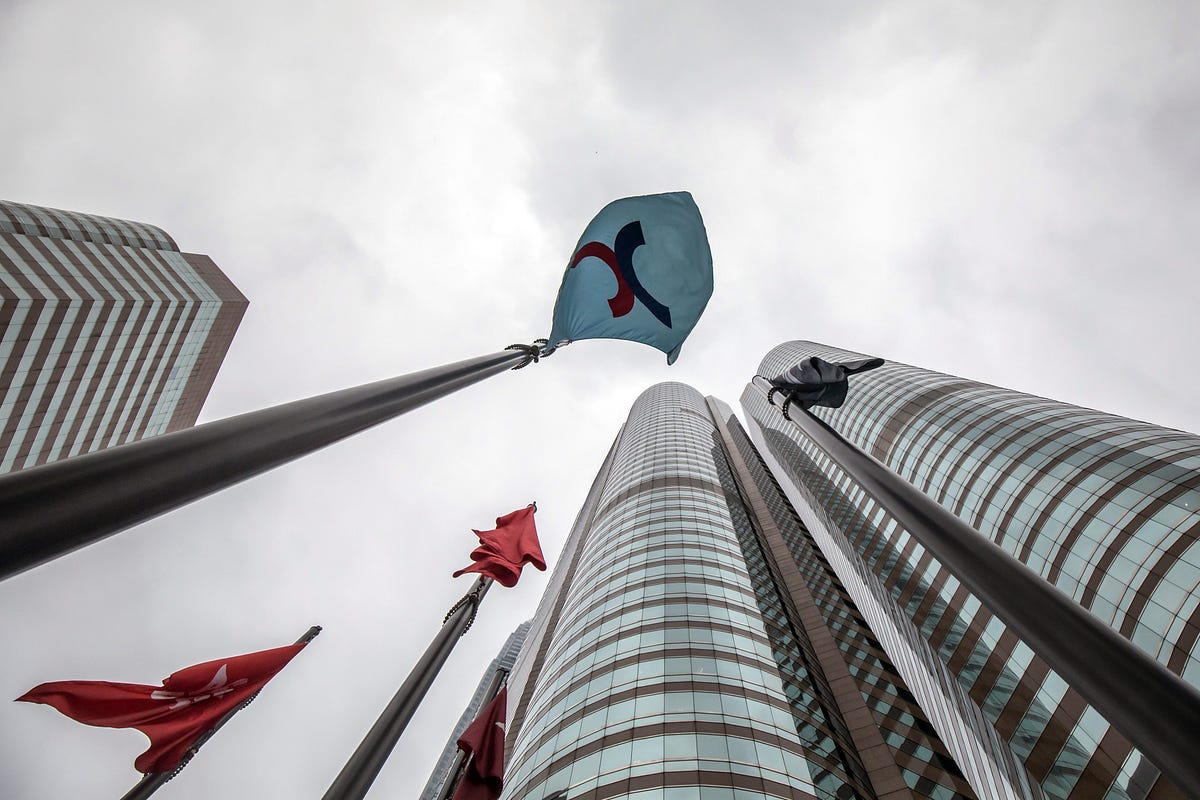
Beijing is formally repositioning Hong Kong from a neutral intermediary between Chinese and global capital into a ‘vanguard’ of the state’s financial security architecture — and the infrastructure to do exactly that is already operational.
For decades, the working assumption in global finance was that Hong Kong’s value lay in its studied neutrality. It was the threshold between two monetary worlds — a place where mainland capital could breathe the same air as Western institutional money without either being contaminated by the other. That assumption is now obsolete.
The Hong Kong Beijing vanguard financial sovereignty dynamic crystallised quietly across a string of policy announcements that, viewed individually, read as routine bureaucratic coordination. Viewed together, they mark one of the more consequential strategic reorientations in contemporary Asian finance. Under Xi Jinping’s “strong financial nation” doctrine, Beijing is no longer content to treat Hong Kong as a convenient pass-through. It is redesigning the city as an active instrument — a forward position in what Chinese state media and senior officials now explicitly call the construction of a “financially strong nation.” The word in circulation among pro-Beijing commentators is no longer “bridge.” It is vanguard.
The Ideological Turn: From Bridge to Vanguard
The language shift matters enormously. A bridge is passive infrastructure; it serves whoever crosses it. A vanguard has a mission, an adversary, and a direction of march. The semantic pivot reflects an ideological evolution at the highest levels of Chinese statecraft that arguably began crystallising at the Central Financial Work Conference in October 2023, where Xi articulated the ambition of building China into a qiánjìn guójiā — a strong financial nation. That formulation elevated monetary sovereignty and payment infrastructure from commercial concerns to instruments of national security.
Beijing financial sovereignty Hong Kong — the concept is no longer abstract. By late 2025, senior officials were writing in People’s Daily that China’s forthcoming 15th Five-Year Plan must “accelerate the construction of a financially strong nation” and explicitly support Hong Kong in consolidating its offshore renminbi hub function. The 15th Five-Year Plan, expected to receive formal National People’s Congress endorsement imminently, will set China’s strategic coordinates through 2030 — and Hong Kong figures with unusual prominence in the financial architecture chapters.
What emerges from a careful reading of that framework, alongside Hong Kong’s 2026-27 Budget speech delivered by Financial Secretary Paul Chan on February 25, is a document of strategic alignment that goes well beyond typical intergovernmental coordination. The Budget commits Hong Kong to contribute to the national objective of accelerating the construction of a financially strong nation. More strikingly, it is the first time Hong Kong has committed to producing its own five-year plan in coordination with the national blueprint — a structural embedding of the SAR into Beijing’s planning cycle with no precedent under “One Country, Two Systems.”
The Infrastructure Already in Place
mBridge, CIPS, and the Architecture of Dollar Independence
The most consequential developments are not rhetorical. They are engineered. The mBridge multilateral CBDC platform, developed through a collaboration between the HKMA, the People’s Bank of China, and the central banks of the UAE and Thailand, processed over US$55.5 billion in cross-border transactions by late 2025 — with the digital yuan accounting for roughly 95 percent of settlement volume. That figure represents a system at operational scale, not a proof-of-concept experiment.
Simultaneously, the PBoC’s Cross-Border Interbank Payment System (CIPS) continues its expansion in Hong Kong, deepening a renminbi-denominated settlement infrastructure that, in aggregate with mBridge, constitutes the foundations of a payments architecture capable of operating independently of dollar-denominated correspondent banking. This is not speculative. It is the explicit design intention behind what Beijing describes as its Hong Kong financial security architecture — a redundant settlement layer that can route Chinese trade and financial flows without touching the SWIFT-dollar nexus if geopolitical conditions ever demand it.
The RMB Liquidity Doubling and What It Actually Signals
On January 26, the HKMA announced that its RMB Business Facility — the mechanism through which onshore renminbi liquidity is channelled into offshore markets via a “hub-and-spoke” model with Hong Kong at the centre — would double from RMB 100 billion to RMB 200 billion (approximately US$27.8 billion), effective February 2. The expansion followed overwhelming demand: all 40 participating banks had exhausted their initial quotas within three months of the facility’s October 2025 launch.
HKMA Chief Executive Eddie Yue described the expansion as designed to “provide timely and sufficient RMB liquidity to meet market development needs.” What the statement elides, but the architecture makes explicit, is the geographic reach of that liquidity. According to the HKMA, participating banks are not merely recycling yuan within Hong Kong. They are channelling it to corporate clients across ASEAN, the Middle East, and Europe — precisely the corridors that the offshore RMB hub vanguard model was designed to penetrate. A Hong Kong bank can now funnel cheaper RMB liquidity to its Singapore or London subsidiaries, extending Beijing’s monetary infrastructure into the deepest capillaries of Western finance.
Complementing the facility doubling, the 2026-27 Budget outlined measures to construct an offshore RMB yield curve through regular bond issuances across maturities, facilitate RMB foreign exchange quotations against regional currencies, and accelerate research into incorporating RMB counters into the Southbound Stock Connect. Together, these constitute what analysts at FOFA Group describe as “systemic measures to reduce corporate exchange rate risks and increase the proportion of RMB invoicing and settlement” — currently around 30 percent of China’s goods trade, a figure Beijing intends to raise materially.
The IPO Revival as Strategic Capital Mobilisation
Hong Kong Reclaims the Global Crown
The numbers are striking enough to arrest even the most seasoned equity strategist. According to KPMG’s 2025 IPO Markets Review, Hong Kong reclaimed the top spot in global IPO rankings for the first time since 2019, driven by a record number of A+H share-listings that contributed over half of total funds raised. The London Stock Exchange Group confirmed that 114 companies raised US$37.22 billion on the HKEX main board in 2025 — a 229 percent increase from US$11.3 billion in 2024, placing Hong Kong well ahead of Nasdaq’s US$27.53 billion. Four of the world’s ten largest IPOs that year were Hong Kong listings. As of December 7, 2025, HKEX had an all-time high of over 300 active IPO applications in its pipeline, including 92 A+H listing applicants.
The CATL moment. When Contemporary Amperex Technology Co. — the world’s largest electric vehicle battery maker — raised US$4.6 billion on debut in June 2025, its H-share tranche priced at a premium to its A-shares, a rare occurrence that signalled something deeper than sentiment recovery. International institutional investors were expressing, through price discovery, confidence in Hong Kong’s continued capacity to deliver credible valuations on China’s most strategically important industrial companies. That confidence has since been replicated across Hengrui Pharmaceutical, Haitian Flavouring & Food, and Sanhua Intelligent Controls — collectively accounting for four of the world’s ten largest IPOs.
The “Going Global” Strategy Hardens Into Architecture
The commercial logic of this IPO surge is inseparable from Beijing’s political economy. The Hong Kong 15th Five-Year Plan coordination framework explicitly designates the city as the primary offshore platform for mainland enterprises pursuing international expansion under the “going global” strategy. The GoGlobal Task Force, established under the 2025 Policy Address and coordinated by InvestHK, now operates as a one-stop platform marshaling legal, accounting, and financial advisory functions to position Hong Kong as the base from which Chinese firms access global markets. The 2026-27 Budget entrenched this with a cross-sectoral professional services platform and targeted promotional campaigns.
For international investors, the implication is nuanced but important: the Hong Kong international financial centre 2026 is not a market recovering its pre-2019 identity. It is a market acquiring a new one — one in which the dominant issuer class is strategically aligned mainland enterprises, the dominant growth sectors are those embedded in China’s 15th Five-Year Plan priorities (AI, biotech, new energy, advanced manufacturing), and the dominant policy imperative is Beijing’s, not the SAR’s.
The Virtual Asset Divergence: A Regulatory Laboratory
Nowhere is Hong Kong’s new function as Beijing’s financial laboratory more transparent than in the city’s treatment of virtual assets. Since its comprehensive ban on cryptocurrency trading in 2021, the PBoC has maintained an adversarial posture toward privately issued digital assets. In February 2026, the PBoC together with seven central authorities issued a joint notice classifying most virtual currency activity and real-world asset tokenization as illegal absent explicit state approval — extending liability to intermediaries and technology providers and imposing strict supervision over cross-border issuance structures.
Hong Kong, simultaneously, has moved in precisely the opposite direction: licensing crypto exchanges, issuing regulatory frameworks for stablecoin issuers, and advertising itself as Asia’s virtual asset hub. This regulatory divergence is so deliberate it can only be read as coordinated. Hong Kong acts as the state’s controlled experiment — piloting the integration of digital asset infrastructure with RMB payment rails in a jurisdiction where failure can be contained and success can be replicated. The longer-term implication — a Hong Kong-licensed stablecoin operating as an offshore RMB proxy, connecting RMB internationalization Hong Kong with emerging digital finance corridors — is not speculative fiction. It is the logical terminus of the current regulatory architecture.
Singapore, the West, and the Impossible Middle Ground
The Divergence With Singapore
The comparison with Singapore illuminates Hong Kong’s trajectory by contrast. Singapore has spent the post-2020 period consolidating what might be called studied ambiguity: a financial centre that is deeply integrated into both Western and Chinese capital flows without being directionally committed to either. According to InCorp’s 2025-2026 analysis, Singapore’s economy grew 4.2 percent year-on-year in Q3 2025, with predictable inflation at 0.5-1.5 percent for 2026 — a macroeconomic profile that appeals precisely to Western multinationals seeking stable regional headquarters removed from US-China friction.
Singapore’s weakness, as the Anbound Think Tank has noted, is structural: as a city-state with a population of several million and no hinterland of the scale China offers, it cannot generate IPO pipelines of comparable depth or provide the kind of renminbi liquidity infrastructure that Hong Kong’s PBoC-backed facilities now deliver. Singapore competes on neutrality. Hong Kong is now competing on alignment — and betting that, in a bifurcating world, alignment with the world’s second-largest economy is the stronger hand.
What Western Banks Face
For global banks — HSBC, Standard Chartered, Citigroup, JPMorgan — the repositioning of Hong Kong creates a structurally uncomfortable operating environment. Over 70 of the world’s top 100 banks maintain a presence in Hong Kong. That presence was premised on the city’s capacity to intermediate between two capital systems without imposing a political tariff on the transaction. As that neutrality erodes, Western institutions face a binary they have been studiously avoiding: participate in Hong Kong’s deepening integration into Beijing’s financial architecture and accept the associated secondary sanctions exposure, or reduce their footprint and cede one of Asia’s richest revenue pools to Chinese and regional competitors.
The Bloomberg Professional analysis on Hong Kong’s wealth management outlook put it with characteristic precision: more Western investors may continue shifting assets to Singapore and elsewhere as geopolitical risks persist, leaving the city’s private wealth growth constrained in the near term. The risk is asymmetric. If US-China tensions escalate toward financial decoupling, the cost of having both a large Hong Kong operation and robust SWIFT-dollar compliance infrastructure could become prohibitive. The question is not whether that scenario will arrive but how quickly institutions are building contingency capacity for when it does.
The Structural Constraint Beijing Cannot Resolve Without Hong Kong
The extraordinary thing about Beijing’s China 15th Five-Year Plan Hong Kong finance ambitions is that they are driven as much by vulnerability as by confidence. Despite more than a decade of active promotion, the renminbi’s share of global foreign exchange reserves has declined, from approximately 2.8 percent in early 2022 to roughly 1.9 percent by late 2025, according to IMF COFER data. China’s capital account remains substantially closed. A fully open renminbi is structurally incompatible with the Communist Party’s political economy — it would require subordinating monetary policy to market forces and accepting the wealth transfer mechanisms that full convertibility entails.
Hong Kong resolves this dilemma with elegant precision. As an offshore platform under Chinese jurisdiction with residual common law credibility — enough, at least, to maintain international institutional confidence in its clearing and custody infrastructure — it can pilot instruments that cannot be tested on the mainland without exposing the domestic financial system to associated risks. The Hong Kong renminbi offshore hub function is not merely a commercial service. It is a controlled decompression valve through which Beijing can internationalise its currency, its payment infrastructure, and its capital market access without conceding the internal monetary sovereignty that the Party regards as existential.
The RMB internationalization Hong Kong pipeline is thus a geopolitical instrument dressed in the clothing of financial services — and increasingly, even the disguise is being shed. The 2026-27 Budget’s explicit alignment with the 15th Five-Year Plan’s financial sovereignty objectives is the first time a Hong Kong budget document has openly acknowledged this dual function.
The Investor Verdict: What the Numbers Cannot Fully Capture
Featured snippet: Beijing is repositioning Hong Kong as a ‘vanguard’ of its financial security architecture by embedding the city’s regulatory, monetary, and capital market infrastructure into the 15th Five-Year Plan framework — a shift that transforms Hong Kong from a neutral intermediary into an active instrument of RMB internationalization and dollar-independent settlement architecture.
The headline figures — Hong Kong ranked first globally in IPO fundraising in 2025, the HKEX pipeline at over 300 applicants, RMB Business Facility doubled to RMB 200 billion, mBridge processing over US$55.5 billion in settlements — create an impression of unambiguous momentum. And in commercial terms, that impression is not wrong. Deloitte forecasts Hong Kong will raise at least HK$300 billion in IPO proceeds in 2026. UBS’s vice-chairman in Hong Kong describes the pipeline as “very strong.”
But the momentum is directional in a way that has not fully priced into Western institutional thinking. The Hong Kong international financial centre 2026 that is emerging from this policy moment is a significantly more capable financial hub than its 2020-2023 nadir — but it is a hub serving a strategic agenda that differs from the open, neutral intermediary model on which its original international reputation was built.
For international investors and multinational financial institutions, this creates a set of questions that are not yet fully embedded in standard risk frameworks. How will secondary sanctions exposure evolve as Hong Kong’s mBridge and CIPS participation deepens? How will US-China financial decoupling scenarios affect the liquidity of H-share positions held by Western institutional funds? How should capital allocation between Hong Kong and Singapore — or Hong Kong and Tokyo, or Hong Kong and London — be recalibrated in a world where Hong Kong’s regulatory architecture is increasingly coordinates with Beijing’s security priorities rather than responding to market forces alone?
None of these questions have clean answers today. But the framework for thinking about them has permanently shifted. The “bridge” model that gave global finance its comfortable relationship with Hong Kong is being methodically replaced by something far more purposeful — and far more geopolitically consequential.
Conclusion: The Vanguard Doctrine and Its Implications
The word vanguard has a specific meaning in the Chinese political tradition. It is the term Mao reserved for the Communist Party itself — the leading force that preceded the masses into territory not yet secured. Its application to Hong Kong’s financial role under the 15th Five-Year Plan is not accidental. It signals that Beijing no longer views the city’s international financial function as a legacy arrangement to be managed but as an active instrument to be deployed.
For policymakers in Washington, Brussels, and London — and for the compliance officers, risk committees, and board directors of every major financial institution with a Hong Kong presence — the strategic reconfiguration underway demands a correspondingly strategic response. Incremental adjustments to existing frameworks will not suffice. The “strong financial nation” doctrine has graduated from slogan to architecture, and Hong Kong is where that architecture is being built.
The city’s financial mojo, to borrow the Economist’s phrase, is not in question. What is in question is whose agenda that mojo now serves — and at what cost to those who assumed the answer would always be: everyone’s.
Discover more from The Economy
Subscribe to get the latest posts sent to your email.
When a former employee quietly began extracting data from Coupang’s servers on June 24, 2025, the act looked, on its face, like a textbook insider-threat case—disgruntled, technically savvy, geographically mobile. What nobody in Seoul or Seattle anticipated was that the Coupang data breach would, within six months, detonate inside one of the most consequential bilateral trade relationships in the Asia-Pacific.
By early 2026, the episode had dragged in the White House, the U.S. Trade Representative, a bipartisan congressional hearing, five American hedge funds, and a potential tariff hike that rattled South Korea’s fragile currency. The Coupang South Korea data breach exposed not merely the personal information of 33.7 million customers—nearly two-thirds of the country’s entire population—but a structural fault line in how democratic allies govern data, enforce privacy law, and resolve disputes when corporate accountability crosses national borders.
That fault line, it turns out, is deep enough to swallow a trade relationship.
The Anatomy of a Breach: Five Months of Silence, One Smashed MacBook
The intrusion, as reconstructed by South Korean government investigators and third-party forensic firms Mandiant and Palo Alto Networks, was neither sophisticated nor spectacular. A former Coupang engineer—later identified as a Chinese national who had worked on the company’s authentication systems—used unrevoked access credentials to connect to customer data repositories through overseas servers. The breach continued, undetected, from late June to November 8, 2025: approximately 137 days of unauthorized access to names, phone numbers, email addresses, delivery addresses, and partial order histories belonging to 33.7 million Korean accounts.
The discovery came not from Coupang’s own security monitoring but because the perpetrator sent threatening, anonymous emails to the company and individual users. Only then did internal teams identify the compromise—initially estimating just 4,500 affected accounts. The true scale, confirmed via forensic investigation, was roughly 7,500 times larger.
Key Timeline of Events
| Date | Event |
|---|---|
| June 24, 2025 | Unauthorized access begins via overseas servers |
| November 6, 2025 | Coupang detects unusual access at 6:38 PM KST |
| November 8, 2025 | Last date of unauthorized access |
| November 18, 2025 | Full identification; KISA, PIPC, and National Police Agency notified—53+ hours after internal detection, violating the 24-hour reporting rule |
| November 29, 2025 | Coupang publicly discloses the breach |
| December 15, 2025 | Coupang files SEC 8-K; former CEO Park Dae-jun resigns |
| December 29, 2025 | Company announces 1.685 trillion won ($1.17B) compensation plan |
| January 13, 2026 | U.S. House Ways and Means Trade Subcommittee holds bipartisan hearing |
| January 23, 2026 | Greenoaks and Altimeter file ISDS notice with South Korea’s Ministry of Justice |
| January 26, 2026 | Trump administration raises tariffs on South Korea from 15% to 25% |
| February 12, 2026 | Three more U.S. investors—Abrams Capital, Durable Capital, Foxhaven—join ISDS action |
The cover-up attempt was equally cinematic: authorities recovered a MacBook Air the perpetrator had submerged in a canvas bag weighted with bricks. Forensic analysis of the retrieved device confirmed that while data from over 33 million accounts had been accessed, only approximately 3,000 records were retained, none of which appear to have circulated on the dark web. That distinction—between access and retention—would become one of the most contested technical arguments in the ensuing international dispute.
Management Failure, Not Sophisticated Attack: Seoul’s Damning Verdict
South Korean regulators delivered a judgment that was unsparing in its directness. The Coupang management failure data breach finding, published in a government-led investigation in February 2026, concluded that the breach was not the product of a nation-state cyberattack or advanced persistent threat. It was, in the investigators’ framing, an organizational failure: a company that had not properly revoked authentication credentials upon an employee’s departure, had failed to encrypt non-payment customer data despite having the capacity to do so, and had not fully implemented a data preservation order issued upon breach disclosure—resulting in the deletion of critical web and app access logs before outside parties could examine them.
The Personal Information Protection Commission (PIPC), South Korea’s principal privacy watchdog, further demanded that Coupang correct its public communications: the company had described the incident as data “exposure,” a characterization regulators rejected in favor of “leak”—a distinction laden with legal consequence under the country’s information network law.
For a company that had spent years presenting itself as the crown jewel of Korean e-commerce—an Amazon-equivalent with $34.5 billion in 2025 revenue and a NYSE listing that generated euphoric headlines in 2021—the regulatory verdict was stinging. South Korean President Lee Jae-myung publicly called for heavy penalties, describing personal data protection as “a key asset in the age of AI and digitalization” during a cabinet meeting. One Democratic Party lawmaker floated the possibility of punitive fines through special parliamentary legislation, an idea the PIPC endorsed publicly.
Under existing law, penalties are capped at 3% of annual revenue—a figure that, for a company of Coupang’s scale, could exceed $800 million. Some lawmakers were seeking to raise that ceiling to 10%.
Why the Coupang Breach Became an International Trade Issue
The escalation from domestic regulatory matter to international flashpoint followed a logic that, in retrospect, looks almost inevitable—though it required a specific convergence of corporate structure, investor geography, and geopolitical temperature.
Coupang’s corporate identity is inherently binational. Although the company operates as South Korea’s largest e-commerce platform—employing 95,000 people and serving consumers through its celebrated “Rocket Delivery” logistics network—its global headquarters sits in Seattle, Washington. It trades on the NYSE. Its largest shareholders are American. When South Korean regulators moved against the company, they were, from the investors’ perspective, effectively moving against a U.S.-headquartered enterprise operating in a foreign market.
U.S. investors activated treaty mechanisms that Seoul had not anticipated. On January 23, 2026, investment firms Greenoaks and Altimeter—together holding approximately $1.5 billion in Coupang stock—filed a formal notice of intent with South Korea’s Ministry of Justice, invoking the investor-state dispute settlement (ISDS) provisions of the U.S.-Korea Free Trade Agreement (KORUS FTA). Their central claim: that the Korean government’s response to the Coupang data breach was disproportionate, discriminatory, and designed to benefit domestic and Chinese competitors at the expense of an American company. By February 12, 2026, three additional U.S. investors—Abrams Capital, Durable Capital Partners, and Foxhaven Asset Management—had joined the action, according to a report by TechCrunch.
ISDS arbitration, for the uninitiated, is a provision embedded in most modern trade agreements that allows foreign investors to sue sovereign governments before international arbitral tribunals—bypassing domestic courts entirely. The mechanism was designed to protect cross-border investment from arbitrary government interference. In the Coupang case, the investors are alleging that South Korea violated the treaty’s guarantees of fair and equitable treatment, most-favored-nation status, and protection against expropriation. If the mandatory 90-day consultation period fails to produce resolution, the dispute proceeds to formal arbitration, with damages potentially running into billions of dollars charged against Seoul’s government.
Washington amplified the pressure through multiple channels. The U.S. investors also petitioned the U.S. Trade Representative to investigate under Section 301 of the Trade Act of 1974, requesting that “appropriate trade remedies”—including tariffs—be applied if Korea’s conduct was found to constitute discriminatory enforcement. The Korea Herald reported that U.S. Vice President J.D. Vance personally warned South Korean Prime Minister Kim Min-seok that the investigation appeared discriminatory. At a January 13 House Ways and Means Trade Subcommittee hearing, Republican Chair Adrian Smith characterized Korean regulators as pursuing “legislative efforts explicitly targeting U.S. companies,” with fellow lawmaker Rep. Scott Fitzgerald describing the government’s conduct as a “politically motivated witch hunt.”
On January 26, 2026, the Trump administration announced a tariff increase on South Korean goods from 15% to 25%—officially attributed to Seoul’s slow ratification of the bilateral trade deal reached the previous year. But the timing was precise enough that the official House Judiciary Committee account posted on X: “This is what happens when you unfairly target American companies like Coupang.” The Diplomat’s analysis concluded that while Trump’s tariff calculus encompasses broader investment commitments, the Coupang episode had provided political and rhetorical scaffolding for the escalation.
The Discrimination Argument: A Contested Ledger
The investors’ discrimination claim hinges on comparative enforcement: they argue that Korean and Chinese companies involved in comparable data incidents faced significantly lighter regulatory responses. This contention deserves scrutiny rather than uncritical acceptance, because the record is genuinely mixed.
CPO Magazine documented that South Korea’s largest mobile carrier, SK Telecom, received a record ₩134.5 billion ($97 million) fine following a breach of USIM identity data for approximately 27 million subscribers—a penalty that regulators imposed only after finding that SK Telecom “did not even implement basic access controls.” The SK Telecom enforcement, then, was itself unprecedented for a Korean incumbent. The Coupang investors counter that the scope of regulatory intervention—including executive travel restrictions, operational suspension threats, and parliamentary summons—far exceeded what any domestic Korean company had faced for equivalent or larger breaches.
There is no clean answer here. Regulatory severity is shaped by political context, media coverage, the identity of the company, and the temperament of individual legislators. What is demonstrably true is that Coupang’s delayed reporting (53-plus hours against a 24-hour requirement), its failure to implement the data preservation order, and the sheer demographic scale of the breach (affecting 65% of the national population) would have attracted intense scrutiny in any jurisdiction operating under modern data protection law.
The Data Governance Gap: Comparing South Korea to Its Peers
The Coupang episode has crystallized a conversation that South Korean policymakers have deferred for years: their data protection framework, while nominally robust, contains structural gaps that both enabled the breach and complicated the regulatory response.
Comparative Data Governance Frameworks
| Jurisdiction | Law | Max Penalty | Encryption Mandate | Breach Notification |
|---|---|---|---|---|
| European Union | GDPR (2018) | 4% of global revenue | Risk-based requirement | 72 hours to authority |
| China | PIPL (2021) | ¥50 million / 5% revenue | Mandatory for sensitive data | Immediate notification |
| California, USA | CPRA (2020) | $7,500 per intentional violation | Required for sensitive data | “Expedient” notification |
| South Korea | PIPA (2011, amended) | 3% of revenue | Required for financial data only | 24 hours |
The gap is instructive: South Korea does not mandate encryption for non-payment personal data. Had Coupang been operating under GDPR, the absence of encryption for names, addresses, and order histories would have constituted an aggravating factor attracting enhanced penalties—and a legal requirement, not merely a best-practice recommendation. The PIPC’s investigation explicitly cited this absence as a contributing factor to the breach’s impact.
The South Korea data privacy law reform after Coupang is now a live legislative debate. President Lee’s call for stronger penalties, the PIPC’s support for punitive fines, and the 3%-to-10% penalty ceiling proposal all represent pressure for alignment with international norms. But the investors’ ISDS action complicates that reform: any retroactive application of harsher penalties would, in the investors’ view, compound the treaty violation rather than resolve it.
Coupang’s Washington Wager
The company’s political footprint in Washington has added a dimension that South Korean civic groups find troubling—and that American trade lawyers find legally consequential. Since its 2021 NYSE listing, Coupang has reportedly spent more than $10.75 million on federal lobbying, targeting agencies across the executive branch and Congress. Following Donald Trump’s reelection in November 2024, the company donated $1 million to the Trump-Vance inaugural committee and positioned itself as a conduit for American export interests through a partnership with the Commerce Department’s International Trade Administration.
Coupang has publicly stated it has no connection to the investors’ ISDS filings, insisting it has been “fully complying with the Korean government’s requests.” Yet the political infrastructure built over five years has, at minimum, created the architecture through which investor grievances could be amplified into government-level intervention. Whether this constitutes sophisticated stakeholder management or a structural conflict of interest for a company operating under Korean regulatory jurisdiction is a question Seoul’s policymakers are beginning to ask with increasing urgency.
Financial Fallout: A $8 Billion Market Cap Erasure
The breach’s financial consequences have been severe. Following public disclosure in late November 2025, Coupang’s stock (NYSE: CPNG) fell sharply, erasing more than $8 billion in market capitalization, with shares declining roughly 50% from their pre-breach highs. The company swung from a Q4 2024 net income of $156 million to a Q4 2025 net loss of $26 million, missing analyst consensus estimates, as active customers slipped and December growth decelerated to approximately 4% in constant currency terms—down from 16% in the prior three months.
The 1.685 trillion won ($1.17 billion) compensation package—issued as 50,000-won platform-use vouchers to all 33.7 million affected users—has been criticized by lawmakers as a mechanism that recirculates money within Coupang’s own ecosystem rather than providing genuine restitution. It is, simultaneously, the largest corporate data breach compensation in South Korean history. Coupang’s full-year 2025 revenue nonetheless reached $34.5 billion, and the company retains over $7 billion in cash—a balance sheet that provides resilience, if not immunity, from the regulatory and legal storm surrounding it.
In Taiwan, where Coupang has been aggressively expanding, the forensic investigation confirmed that one user account was accessed—though earlier reports suggested a spillover affecting approximately 200,000 Taiwanese accounts, a figure Coupang has disputed.
What Reform Looks Like: A Policy Agenda for Seoul and Beyond
The Coupang case offers several policy imperatives that extend beyond Korea’s borders:
First, South Korea must close the encryption gap. The absence of a mandatory encryption standard for non-financial personal data is an anachronism in a country that hosts some of the world’s most sophisticated digital infrastructure. Alignment with GDPR-equivalent standards is not merely a trade relations gesture—it is an essential infrastructure investment in the age of AI data dependency.
Second, ISDS provisions must be examined for fitness-of-purpose in the digital economy context. The original ISDS architecture was designed to protect physical-asset investments—factories, mines, infrastructure—from expropriation by host governments. Applying that framework to data enforcement actions against technology companies creates perverse incentives: it effectively allows investors to convert regulatory pressure into trade litigation, circumventing the very domestic accountability mechanisms that consumers require. The KORUS FTA’s digital trade provisions were cited in both investor filings and congressional testimony; renegotiating their scope deserves attention from both trade ministries.
Third, breach notification timelines must have teeth. Coupang reported the breach to authorities more than 53 hours after internal identification—more than double the 24-hour requirement. That delay destroyed evidentiary logs. Any reformed framework should mandate automated, cryptographically verifiable notification to regulators at the moment of internal breach confirmation, not at the company’s discretion.
Fourth, the distinction between “access” and “harm” requires legislative clarity. The central factual dispute in the Coupang case—33.7 million accounts accessed versus approximately 3,000 records retained—has no clean resolution under current Korean law. A mature data governance framework would define the spectrum between these poles and prescribe proportionate enforcement accordingly, reducing both regulatory overreach and corporate minimization.
The Broader Geopolitical Resonance
The Coupang episode is not an isolated incident. It belongs to a wider pattern in which digital companies—structurally transnational but operationally concentrated in single markets—are caught between the sovereign enforcement prerogatives of their host nations and the financial interests of their investor base, which is increasingly cross-border, treaty-protected, and politically connected.
South Korea is not alone in navigating this terrain. France has faced analogous tensions over GDPR enforcement against American platforms. India’s data localization rules have generated investor concern under its bilateral investment treaties. China’s PIPL, despite its severity on paper, has been selectively enforced in ways that draw diplomatic complaints. The Coupang data governance reform South Korea conversation is, at its core, a version of a global argument: in a world where data is the primary asset of the digital economy, whose law governs it, who enforces that law, and what recourse exists when the answers conflict?
Seoul has a specific reason to resolve this question urgently. Its status as a trusted partner for foreign investment—particularly American capital—depends on the perception of consistent, proportionate, and non-discriminatory enforcement. President Lee’s calls for heavy penalties may play well in domestic politics. But if they are perceived internationally as retroactive, targeted, or politically motivated, the reputational cost will be measured not only in arbitration awards but in the long-term trajectory of foreign direct investment into one of Asia’s most dynamic economies.
Conclusion: The Governance Dividend
The Coupang case will likely be resolved through negotiation—the 90-day consultation period, political back-channels, and the mutual interest both governments have in de-escalation suggest that formal ISDS arbitration, with its multi-year timeline and uncertain outcomes, is a last resort rather than a destination. The tariff issue is governed by economics larger than any single company. Trade ministers on both sides have urged restraint.
But resolution of the immediate dispute should not be confused with resolution of the underlying problem. South Korea has a data governance framework that is partially adequate for the digital economy it has built. It lacks mandatory encryption standards for the most commonly collected personal data. It has penalty caps that, paradoxically, invite both regulatory maximalism and investor challenges. It has notification timelines that exist on paper and evaporate under corporate pressure.
The citizens whose data was accessed—not sold, perhaps, but accessed without consent, for 137 days, by someone who then submerged a laptop in a river to escape accountability—did not generate this geopolitical drama. They were its precondition. Any reform that emerges from the Coupang episode owes its first obligation to them: not to Washington, not to Seoul’s trade ministry, and certainly not to the shareholders whose portfolio values informed the language of “expropriation.”
Data governance, in the end, is not a trade issue. It is a social contract. South Korea, one of the world’s most digitally sophisticated societies, has the institutional capacity to write that contract properly. The Coupang breach made the cost of delay unmistakably visible.
Discover more from The Economy
Subscribe to get the latest posts sent to your email.

On a Friday afternoon in early March, Boeing’s stock did something it hadn’t done in months: it surged. Shares of the aerospace giant jumped as much as 4 percent — the best performance on the Dow Jones Industrial Average that day — after Bloomberg reported that the company is closing in on one of the largest aircraft sales in its 109-year history. The prize: a 500-aircraft order for 737 Max jets from China, to be unveiled when President Donald Trump makes his first state visit to Beijing since 2017 — scheduled for March 31 to April 2.
If confirmed, the deal would represent nothing less than Boeing’s formal re-entry into the world’s second-largest aviation market after years of diplomatic cold-shouldering, safety-related groundings, and trade-war turbulence. It would also cement a pattern that has quietly defined Trump’s second term: the systematic use of America’s largest exporter as a diplomatic sweetener in geopolitical negotiations.
The Numbers Behind the Boeing 737 Max China Deal
Let’s be precise about what is reportedly on the table. According to people familiar with the negotiations cited by Bloomberg, the headline figure is 500 Boeing 737 Max jets — narrowbody, single-aisle workhorses that form the backbone of Chinese domestic aviation. Separately, the two sides are in advanced discussions over a widebody package of approximately 100 Boeing 787 Dreamliners and 777X jets, though that portion of the deal is expected to be announced at a later date and would not feature in the Trump-Xi summit communiqué.
At current list prices — the 737 Max 8 carries a sticker price of roughly $101 million per aircraft — the narrowbody package alone would approach $50 billion in nominal terms before the standard deep discounts that large airline orders attract. Factor in the widebody tranche, and the full package could eventually represent the single largest bilateral aviation deal ever struck between the United States and China.
Boeing itself declined to comment. China’s Ministry of Commerce did not respond to requests outside regular hours. The White House offered no immediate statement. But the market spoke clearly enough.
A Decade of Order Drought — and Why China Needs Boeing Now
To appreciate the magnitude of this potential agreement, consider the context. China once made up roughly 25 percent of Boeing’s order book. Today, Boeing holds only 133 confirmed orders from Chinese airlines — approximately 2 percent of its total book. Investing.com That collapse in Chinese demand was not accidental. It was the deliberate consequence of a cascade of crises: the global grounding of the 737 Max following two fatal crashes in 2018 and 2019, the trade tensions of Trump’s first term, and the pandemic-era freeze on civil aviation procurement.
Yet Chinese airlines have been quietly suffocating under constrained fleet capacity. Aviation analysts and industry sources say China needs at least 1,000 imported planes to maintain growth and replace older aircraft. WKZO The country’s carriers — Air China, China Eastern, China Southern — are operating aging fleets while passenger demand has rebounded sharply. The arithmetic of Chinese aviation is unforgiving: a country of 1.4 billion people, a rapidly expanding middle class, and a domestic network that still relies heavily on Western-certified jet technology cannot simply wait indefinitely for political stars to align.
Beijing has also been hedging. China is simultaneously in talks for another 500-jet order with Airbus that would be in addition to any Boeing deal — negotiations that have been in on-off discussions since at least 2024. WKZO But Airbus has its own capacity constraints and delivery backlogs. The reality is that both European and American planemakers are needed to feed China’s aviation appetite, which gives Boeing considerable strategic leverage — if it can navigate the politics.
Trump’s Boeing Diplomacy: A Playbook Refined
There is a recognizable pattern here, and it is worth naming explicitly. Trump has used Boeing as a tool to sweeten accords with other governments Yahoo Finance, and the China deal fits squarely within that framework. Earlier in his second term, large Boeing orders from Gulf carriers and Southeast Asian airlines followed Trump diplomatic visits — deals that generated political headlines and tangible employment commitments in American manufacturing states.
The Beijing summit, however, would be the most significant deployment of this strategy yet. US-China trade tensions have been acute in early 2026. Trump threatened to impose export controls on Boeing plane parts in Washington’s response to Chinese export limits on rare earth minerals. Yahoo Finance During earlier trade clashes, Beijing ordered Chinese airlines to temporarily stop taking deliveries of new Boeing jets — before resuming later that spring. WKZO
That on-off pattern illustrates the extraordinary vulnerability of commercial aviation to geopolitical temperature. Unlike soybeans or semiconductors, a Boeing 737 Max is not a fungible commodity. It requires years of certified maintenance infrastructure, pilot training, and regulatory framework built around American aviation standards. Both sides know this, which is precisely why aircraft orders have become such potent bargaining chips.
The planned summit structure — Trump in Beijing from March 31 to April 2, followed by Xi visiting Washington later in the year — also suggests a two-stage negotiation architecture. The 737 Max order would serve as a confidence-building gesture at the first meeting; the widebody 787 and 777X tranche would follow as trust is consolidated.
Boeing’s Recovery Trajectory: Why Timing Matters
For Boeing CEO Kelly Ortberg, the timing of a China breakthrough could scarcely be more critical. Boeing’s total company backlog grew to a record $682 billion in 2025, primarily reflecting 1,173 commercial aircraft net orders for the year, with all three segments at record levels. Boeing Yet the Chinese market has remained conspicuously absent from that recovery story.
Boeing has achieved FAA approval to increase 737 Max production to 42 jets per month, a significant step toward restoring manufacturing capacity, and the company plans to raise 787 Dreamliner output to 10 aircraft per month during 2026. Investing.com In short, for the first time in several years, Boeing actually has the industrial capacity to absorb a massive new order. Management has targeted approximately 500 737 deliveries in 2026 and 787 deliveries of roughly 90–100 aircraft, while targeting positive free cash flow of $1–3 billion for the year. TipRanks
A confirmed China order of this scale would not merely boost the backlog — it would validate the entire recovery narrative. It would signal to Wall Street that the 737 Max safety rebound is complete, that Chinese regulators have definitively recertified the aircraft, and that geopolitical risk has sufficiently receded to justify multi-year procurement commitments. As Reuters reported, Boeing’s share price rose 3.7 percent on the news — but analysts caution that several sticking points remain unresolved, and a deal is not yet assured.
Aviation Ripple Effects: What a China Mega-Deal Means for Global Travelers
The significance of a Boeing 737 Max China order in 2026 extends well beyond corporate balance sheets. Chinese carriers operating newer, more fuel-efficient 737 Max jets would dramatically expand route networks — both domestically and internationally. The 737 Max 10, capable of flying roughly 3,300 nautical miles at maximum range, opens trans-regional routes that older Chinese narrowbody fleets cannot economically serve.
For the global travel industry — and for the Expedia-era traveler booking multi-stop itineraries across Asia — this translates into more competitive airfares, denser flight schedules out of Chinese hub airports, and expanded connectivity between Chinese secondary cities and international destinations. Tourism economists estimate that each percentage point increase in seat capacity on a major international corridor correlates with a 0.6 to 0.8 percent increase in inbound tourist arrivals. A Chinese aviation expansion of this magnitude, fuelled by 500 new-generation jets, would register meaningfully in global travel demand forecasts through the late 2020s.
The geopolitical calculus cuts the other way too. Should talks collapse — perhaps due to escalation over Taiwan, renewed rare-earth export controls, or a postponement of the Trump visit, which Bloomberg noted could occur if the ongoing US-Iran situation deteriorates — Boeing’s China exposure remains an open wound rather than a healed scar.
Historical Context: The Ghosts of Boeing-China Deals Past
This would not be the first time a US presidential visit to China generated a headline Boeing order. In 2015, during Barack Obama’s final engagement with Xi Jinping, Chinese carriers placed orders for over 300 Boeing jets — a deal that at the time was celebrated as a pillar of the bilateral commercial relationship. It took less than four years for that relationship to unravel under the dual pressures of the MAX crisis and Trump’s first-term tariffs.
The lesson is not that such deals are illusory. It is that they are fragile by design — deeply dependent on the political weather. A Boeing 500-plane order tied to Trump’s Beijing summit is, in that sense, simultaneously a genuine commercial transaction and a diplomatic performance. Its durability will depend less on what is signed in Beijing in April than on what is negotiated, month by month, in the trade relationship that follows.
Forward Outlook: Promise, Risk, and the Long Game
Boeing’s aircraft stand to feature prominently in whatever trade framework emerges from the Trump-Xi summit. But seasoned observers of US-China commercial aviation will note that a similar mega-deal euphoria surrounded Airbus last year — and ultimately failed to materialize. Given the fraught geopolitical backdrop, Boeing’s order bonanza is not assured, and two people familiar with the talks have specifically cautioned that deal completion remains uncertain. Yahoo Finance
What is certain is this: the structural demand is real, the production capacity is finally in place, and the political incentive on both sides has rarely been stronger. For Boeing, recapturing even a fraction of what was once a market that constituted a quarter of its order book would represent a transformation of its strategic position. For China’s airlines, new Boeing jets mean competitive fleets, lower operating costs, and the capacity to serve a travelling public that has never stopped wanting to fly.
The planes, as ever, are ready. The question is whether the politics will let them take off.
Discover more from The Economy
Subscribe to get the latest posts sent to your email.
-

 Markets & Finance2 months ago
Top 15 Stocks for Investment in 2026 in PSX: Your Complete Guide to Pakistan’s Best Investment Opportunities
-

 Analysis4 weeks ago
Brazil’s Rare Earth Race: US, EU, and China Compete for Critical Minerals as Tensions Rise
-

 Banks2 months ago
Best Investments in Pakistan 2026: Top 10 Low-Price Shares and Long-Term Picks for the PSX
-

 Investment2 months ago
Top 10 Mutual Fund Managers in Pakistan for Investment in 2026: A Comprehensive Guide for Optimal Returns
-

 Asia2 months ago
China’s 50% Domestic Equipment Rule: The Semiconductor Mandate Reshaping Global Tech
-

 Global Economy2 months ago
Pakistan’s Export Goldmine: 10 Game-Changing Markets Where Pakistani Businesses Are Winning Big in 2025
-

 Global Economy2 months ago
What the U.S. Attack on Venezuela Could Mean for Oil and Canadian Crude Exports: The Economic Impact
-

 Global Economy2 months ago
15 Most Lucrative Sectors for Investment in Pakistan: A 2025 Data-Driven Analysis