
Central Bank
SBP Raises Policy Rate to 12%: What It Means for Your Loans, Savings and Business

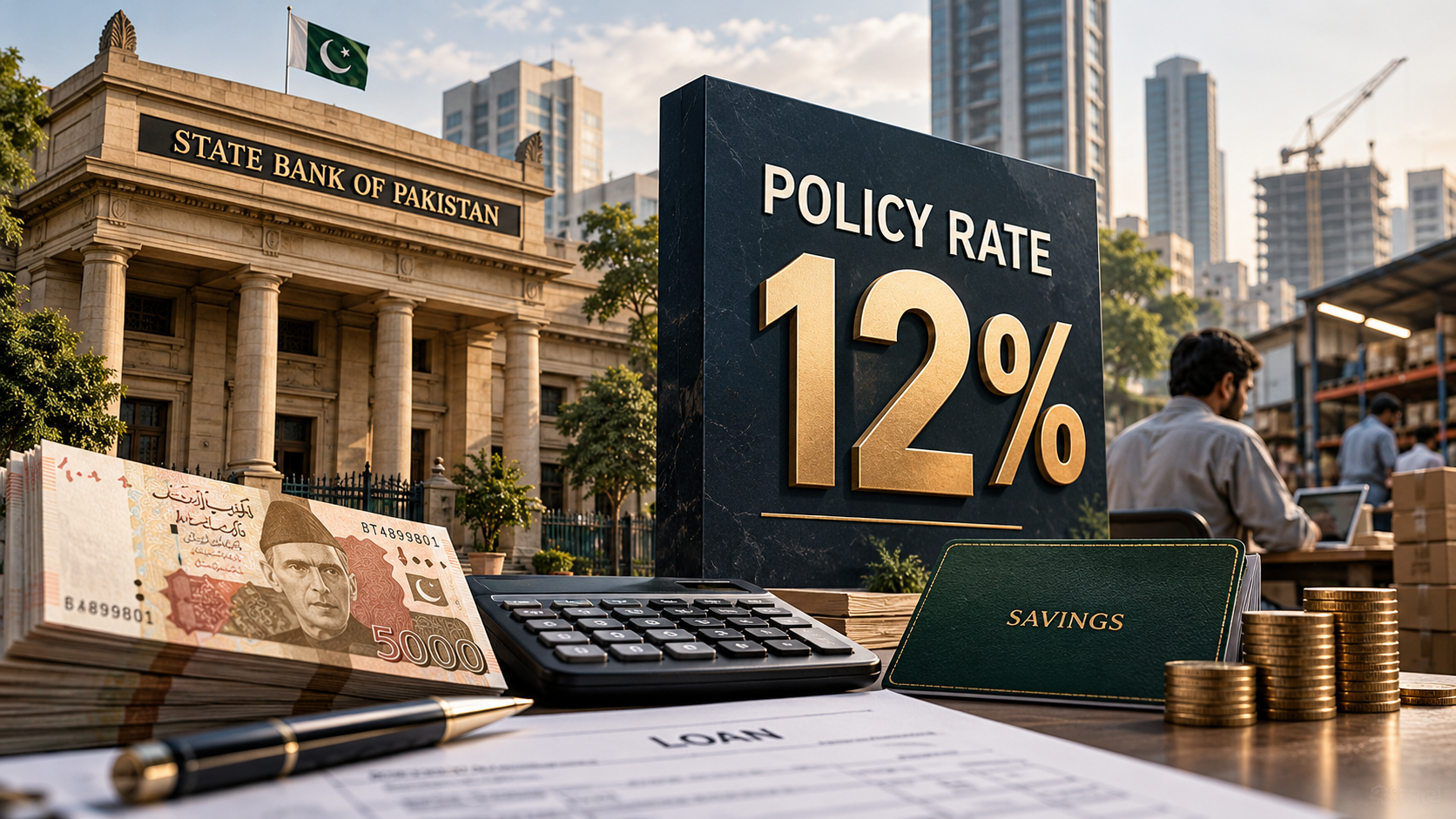
The State Bank of Pakistan’s Monetary Policy Committee raised the policy rate by 50 basis points to 12% on Monday 26 October, effective 27 October. Business Recorder reports the decision matched market expectations, and Dawn-style coverage in Tribune confirms nine of ten members voted for the hike. The interest rate corridor moves with it: the SBP’s site shows an overnight reverse repo ceiling of 13% and a floor of 11%.
This is the first increase since April, when the committee delivered a sharper-than-expected 100 bps rise to 11.5%. Before that the rate had been cut to 10.5% in December 2025, then held in early March after the Middle East war began, according to the IMF’s May country report.
Why the SBP Moved
Governor Jameel Ahmad said the inflation outlook had deteriorated significantly because of the US-Iran conflict and wider Middle East developments. At the post-meeting press conference he pointed to crude oil hovering around $100 per barrel as a source of pressure on domestic prices. Trading Economics summarises the logic as rising energy and food costs threatening to delay disinflation, with the risk of second-round effects across the economy.
The numbers explain the caution. Pakistan’s inflation was 10.26% in September, per Pakistan Bureau of Statistics data cited by Pakera. That is well above the roughly 7.5% the economic team projected to the IMF for the fiscal year in early October, and above the IMF’s May projection of 8.4% for FY27. At a policy rate of 12%, the real rate (policy rate minus latest inflation) is about 1.7 percentage points positive, which is the stance the IMF has been urging. The Fund’s staff-level deal of 7 October said the SBP should keep policy appropriately tight until inflation returns durably to target.
The State Bank of Pakistan raised its policy rate by 50 basis points to 12% on 26 October 2026, effective 27 October. Nine of ten Monetary Policy Committee members backed the move, citing inflation risks from the Middle East conflict and oil prices near $100 a barrel. It is the first increase since April.
What It Means for Borrowers
Most business and consumer loans in Pakistan are priced off KIBOR, which tracks the policy rate. A 50 bps rise typically passes through to floating-rate borrowers over the next repricing date. In practical terms:
- Floating-rate business loans and running finance: expect higher markup at the next reset.
- Home and auto finance on floating rates: monthly instalments or tenor adjust upward; borrowers should ask their bank how repricing is applied.
- Fixed-rate loans: unaffected for existing contracts, but new fixed offers will price higher.
- Importers and capital-intensive firms: the cost of working capital rises just as energy costs are already elevated.
This is general economic reasoning rather than bank-specific data; exact pass-through depends on each lender’s contract terms.
What It Means for Savers
Higher policy rates generally lift returns on savings accounts, term deposits and government securities, though banks adjust deposit rates at their own pace. With inflation above 10%, the more useful comparison for savers is the real return after inflation. A 12% policy rate only modestly exceeds current inflation, so savers should compare deposit and T-bill yields against inflation rather than the headline rate alone.
What It Means for the PSX
Equities reacted immediately. Business Recorder reported selling pressure at the bourse, with the KSE-100 down more than 800 points on the day. Interest-rate-sensitive and leveraged sectors typically feel pressure when borrowing costs rise, while banks can benefit from wider margins. Investors will watch whether the market treats the hike as a one-off or the start of a cycle.
The IMF and Exchange Rate Backdrop
The decision came weeks after the IMF mission stressed a market-based exchange rate and tight monetary policy, while the SBP had told the Fund that 11.5% remained appropriate. Pakistan and the IMF were also split on exchange rate policy, with the government favouring stability. Today’s hike partly closes that gap between the SBP’s stance and the Fund’s guidance.
What to Watch Next
- Monthly CPI releases for October and November: will inflation peak near the IMF’s expected Q4 levels?
- Oil and Hormuz: a Qatari draft deal to end the war is under consideration in Tehran, and any breakdown would push crude and domestic fuel prices higher.
- The 14 December MPC meeting: the IMF has urged readiness to tighten further if pressures intensify.
- IMF Executive Board approval of the staff-level agreement.
Bottom Line
The SBP has chosen to lean against an energy-driven inflation shock rather than wait for it to feed through. For households and firms, the immediate effect is costlier floating-rate credit and a modestly better return on savings. The path from here depends less on Karachi than on the Strait of Hormuz.
Discover more from The Economy
Subscribe to get the latest posts sent to your email.


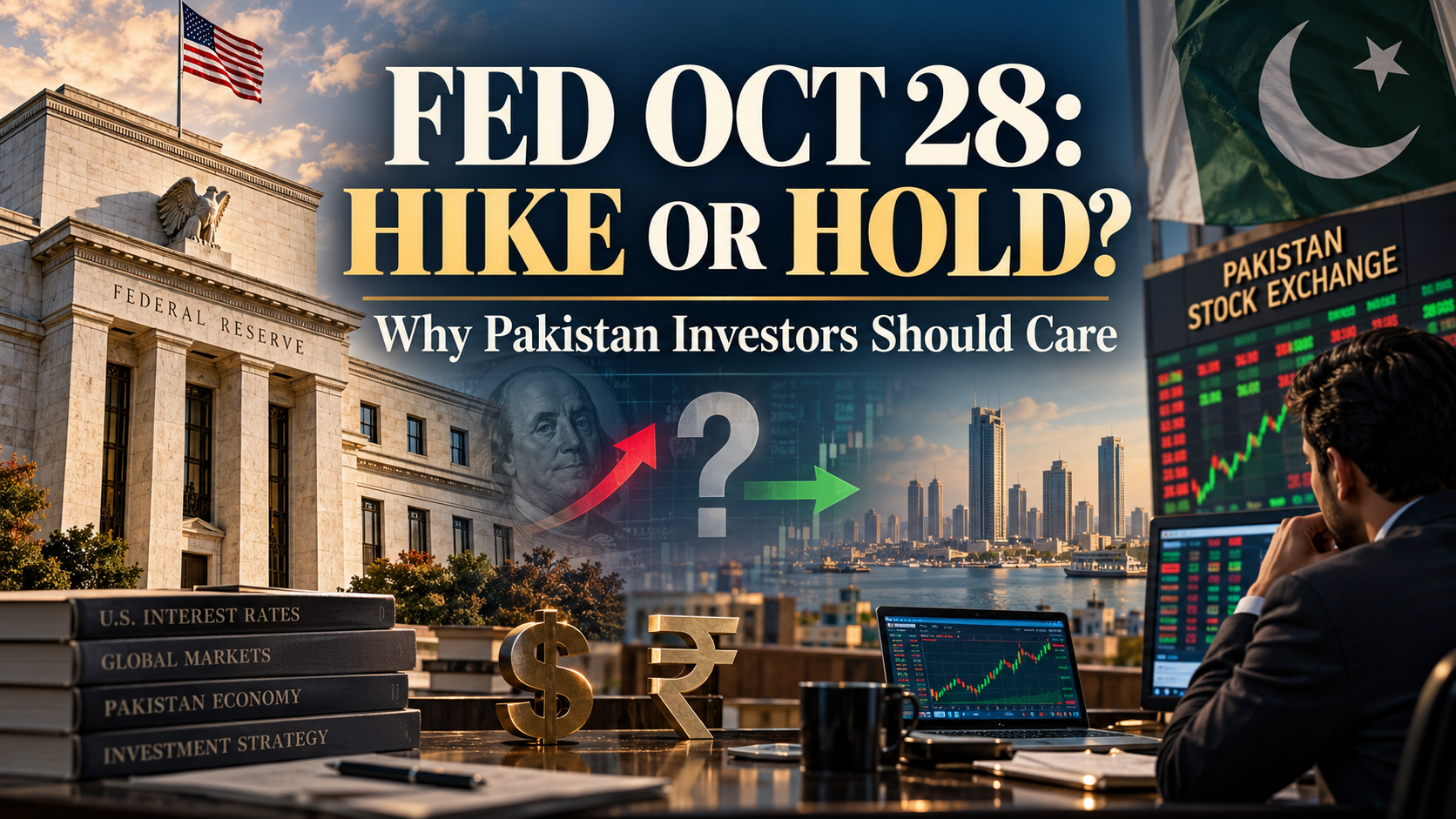
The Federal Reserve’s next interest-rate decision is scheduled for October 28, 2026, at the conclusion of a two-day Federal Open Market Committee meeting. For investors in Karachi, New York or Kuala Lumpur, the question is bigger than whether the Fed raises rates by another quarter point. It is whether persistent inflation and an energy shock will keep global financing conditions restrictive for longer.
The Federal Reserve’s September 16 statement confirmed a 25-basis-point increase in the federal funds target range to 3.75%–4.00%. The official October calendar fixes the next announcement for Wednesday, October 28. Predictions about the decision remain predictions until the statement is published.
Why the market cannot simply assume a hold
The Fed faces two forces pulling in different directions. A resilient US economy can withstand tighter financial conditions better than a slowing one, while high energy prices can feed inflation expectations. At the same time, tightening further risks increasing pressure on rate-sensitive sectors and debt-servicing costs. The September meeting minutes describe concern about elevated inflation and the geopolitical backdrop.
Traders often express their expectations through futures pricing, but a specific percentage quoted earlier in October may no longer be representative on October 25. A responsible preview should avoid presenting an old implied probability as a live market estimate. The announcement, accompanying statement and press conference deserve more attention than any one probability screen.
The three policy scenarios
Hold, with a hawkish message. The Fed leaves its target at 3.75%–4.00% but stresses persistent inflation. Treasury yields and the dollar could remain firm if investors infer that further increases are possible. A hold is not necessarily dovish.
Another 25-basis-point rise. A new increase could push short-term dollar funding costs higher, depending on whether it is already priced in. For emerging markets, this may sharpen competition for capital and raise the hurdle rate for risky assets.
Hold, with a softer outlook. If the language signals growing confidence on inflation, longer yields might ease and investors could reassess the attractiveness of emerging-market equities and bonds. Any such response would also depend on earnings, geopolitics and risk appetite.
How the Fed reaches the Pakistan Stock Exchange
The direct transmission is limited by Pakistan’s domestic policy and market structure, but there are real channels. The first is the US dollar: a stronger dollar can raise the local price of imports and influence emerging-market currency expectations. The second is global yields: investors compare returns across sovereign debt markets and require compensation for currency and credit risks. The third is equity valuation: higher discount rates can reduce the present value of future corporate earnings, particularly for expensive growth assets.
For Pakistan, imported energy complicates that picture. If a Fed hike reflects sticky US inflation linked to oil, local investors must evaluate both international monetary tightening and Pakistan’s own fuel-import exposure. The World Bank’s Pakistan Development Update reports improving macroeconomic conditions but also acknowledges conflict-related pressure.
Bonds versus stocks: the difference matters
Pakistan Treasury bills and investment bonds primarily respond to domestic rates, inflation expectations, liquidity and sovereign risk. Their yields need not mirror US Treasuries day for day. PSX sectors also differ: banks, exporters, highly leveraged firms and energy producers can react quite differently to the same exchange-rate or interest-rate surprise.
A simplistic Fed hikes, PSX falls formula misses positioning. Prices often move on the gap between expectations and the actual decision. Even a rate hike can coincide with a stock rally if the market expected a larger move or welcomes clarity.
A practical announcement-day checklist
| Watch | Why |
|---|---|
| Fed funds target range | Immediate policy decision |
| Statement language on inflation | Signal for coming meetings |
| Treasury yield reaction | Changing dollar discount rates |
| Dollar index and EM currencies | Cross-border risk sentiment |
| Brent crude | Separate but powerful inflation channel |
| Pakistan KIBOR, rupee and SBP communications | Local transmission |
The IMF’s October outlook cautions that energy importers outside the AI investment value chain have a difficult growth outlook. This makes risk diversification and the distinction between nominal yields and real returns especially relevant.
Why the press conference may matter more than the quarter-point move
Central-bank announcements bundle several messages. A policy-rate decision tells markets what the committee did today. The statement signals which risks officials emphasise. The chair’s subsequent explanations can change expectations about the next several meetings. Traders may initially react to the rate itself, then reverse direction as they digest the path implied by the language.
For emerging-market investors, that distinction is crucial. A 25-basis-point increase accompanied by confidence that inflation pressure is subsiding may prove less restrictive for global risk appetite than an unchanged rate accompanied by warnings of more tightening. The yield curve, dollar and market-implied path are useful contemporaneous checks, although each has competing drivers.
Pakistan-based investors should also consider market hours. US decisions may arrive after domestic exchanges have closed, while other Asian markets trade the following session. A next-day index move can reflect overnight global earnings or geopolitical events as well as the Fed. Attribution requires comparing the timing of all material news.
For a rigorous post-meeting update, include the exact target range, vote, key wording changes and a timestamped Treasury yield. Replace the scenarios with the actual decision rather than leaving the preview to masquerade as a live result.
When will the Fed decision be released?
The Fed lists the October 27–28 meeting and a 2 p.m. Eastern announcement on October 28. Verify time conversion and possible schedule changes before publishing a live ticker.
Is a rate hike guaranteed?
No. September’s action and October’s risks do not predetermine the committee’s vote.
Should Pakistani investors sell stocks because of the Fed?
There is no universal answer. Investment time horizon, portfolio concentration, company balance sheets and currency exposure matter more than a one-day headline.
Bottom line: October 28 is a test of the Fed’s inflation tolerance. For Pakistan, the most important signal will be how the decision reshapes the dollar, energy costs and global demand for emerging-market risk—not the label hike or hold alone.
Discover more from The Economy
Subscribe to get the latest posts sent to your email.
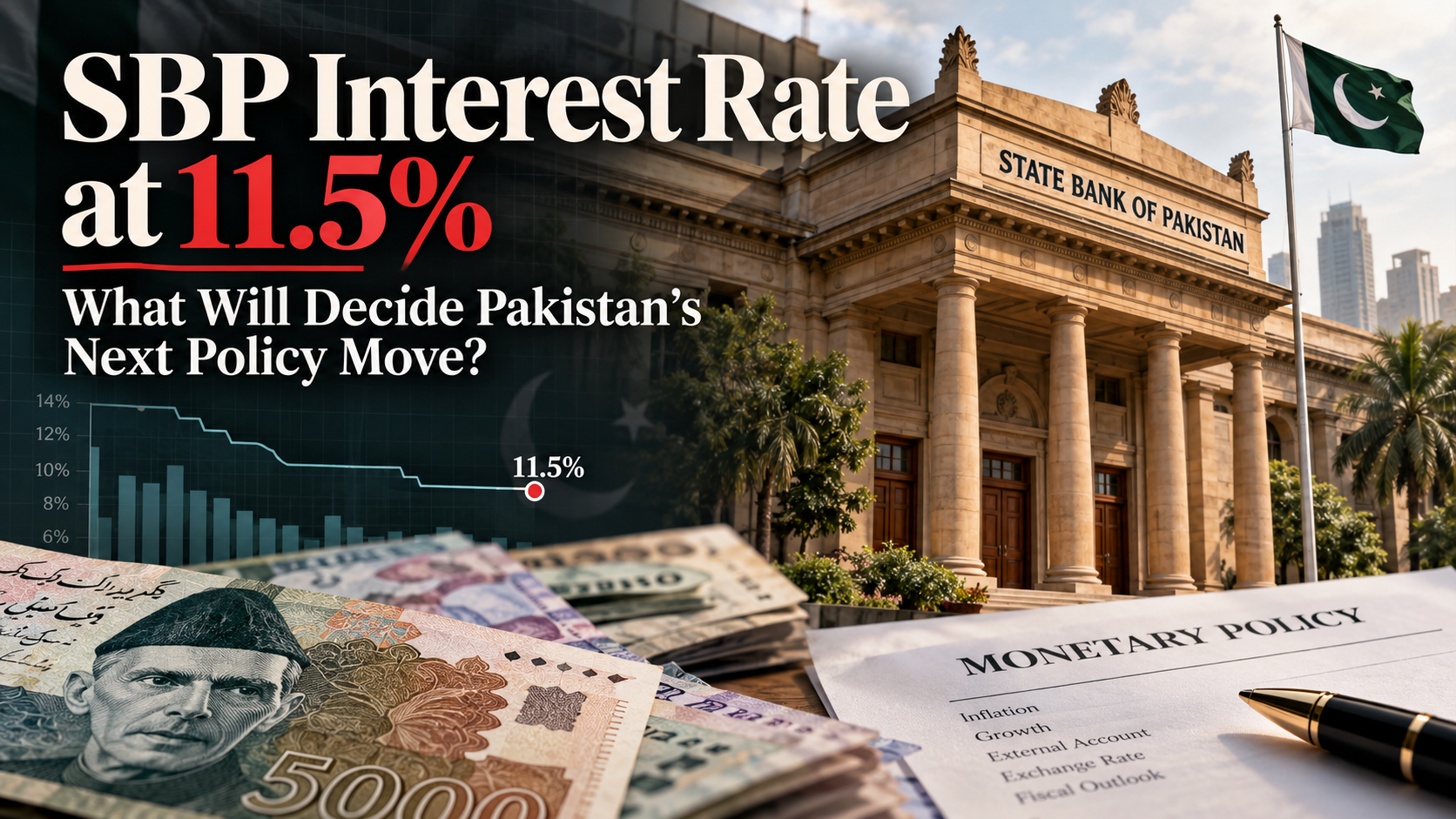
Pakistan’s interest-rate debate has shifted. After an extended period in which households and businesses waited for borrowing costs to fall, a more uncomfortable question is taking shape: how much room does the State Bank of Pakistan have to support growth when energy prices and global borrowing costs are rising?
The State Bank of Pakistan confirmed that its Monetary Policy Committee kept the policy rate at 11.5% on September 14, 2026. That is the established starting point, not a prediction about what the bank will do next. The next decision will depend on inflation momentum, exchange-rate stability, government financing requirements and the external account—not simply on whether consumers would prefer cheaper loans.
The oil-price complication
Pakistan imports a substantial share of the energy it consumes. Oil therefore affects more than petrol-station signs: it changes transport costs, power generation expenses, industrial margins and the amount of foreign currency importers must buy. International Brent crude was above $100 per barrel in October, a sharp risk for an import-dependent economy. The World Bank’s October Pakistan Development Update says stabilization has advanced despite the Middle East conflict, but that is not the same as immunity to another energy shock.
The key for policy is persistence. A one-week spike in crude can be absorbed partly by inventories and pricing lags. Several months of elevated crude can reach the consumer price index, import payments and inflation expectations. If households begin setting wages and prices around another round of cost increases, the central bank becomes less willing to ease.
Four signals worth watching before the next MPC
Headline versus core inflation. Headline inflation reflects food and fuel moves; core readings help judge whether price increases are spreading more widely. A calm headline number alongside rising core inflation is not an easy case for a rate cut.
The rupee and reserve buffers. An exchange-rate shock can raise the local-currency price of imported inputs even when foreign prices are unchanged. The sustainability of remittance inflows, export receipts and foreign financing matters as much as the spot exchange rate.
Market rates: KIBOR, T-bills and PIBs. KIBOR benchmarks bank lending. Treasury-bill auctions indicate near-term sovereign financing costs; longer-dated Pakistan Investment Bonds embed expectations about inflation, future rates and duration risk. These yields may move before the MPC changes its policy rate. None is a guaranteed predictor of a decision.
Growth and credit. A financing squeeze can delay inventories, construction, machinery purchases and hiring. Policymakers must balance these costs against the inflationary damage of lowering rates too soon. The World Bank reported real GDP growth of 3.7% for fiscal 2026, after 3.2% in fiscal 2025; that recovery raises the stakes of a policy mistake in either direction.
What an unchanged rate means on the ground
For a company with floating-rate debt, a policy-rate hold does not guarantee an unchanged interest bill. The actual loan may reprice from KIBOR plus a fixed spread, while repayment schedules and bank fees add complexity. Families considering mortgages should ask for an amortization table under several interest-rate scenarios instead of extrapolating from a single headline.
For savers, quoted deposit returns should be compared after tax, fees and inflation. A nominal return of 11% is not an 11% gain in purchasing power if living costs rise sharply. For government-bond buyers, a high coupon does not eliminate price risk: fixed-rate securities generally lose market value when yields rise.
Three plausible outcomes—not a false forecast
| Scenario | What would make it more plausible | Likely market response |
|---|---|---|
| Hold | Sticky inflation, expensive energy, manageable growth | Short-term yields may remain elevated; borrowers wait |
| Cut | Sustained disinflation, stable reserves and rupee, softer demand | Floating-rate financing could gradually become cheaper |
| Hike | Renewed imported inflation or currency instability | Higher financing cost, but stronger anti-inflation signal |
These are conditions, not assigned probabilities. An accurate forecast must be updated when fresh CPI, reserve, auction and external-account data arrive. The IMF’s October 2026 outlook expects global inflation of 4.7% in 2026, underscoring the difficult international setting.
Practical questions readers are asking
The policy transmission lag that forecasts overlook
A cut announced by the central bank would not instantly reset every Pakistani mortgage, business loan and deposit. Some contracts reprice periodically using an agreed KIBOR tenor; others remain fixed until a renewal date. Banks also consider liquidity and credit risk, which can prevent lending rates from falling as quickly as the benchmark. Borrowers should obtain a written repricing schedule rather than infer savings from the policy-rate headline alone.
Similarly, the MPC must interpret economic data that arrive with delays. A monthly inflation print may be affected by base effects—a comparison with unusually high or low prices one year earlier. Headline disinflation therefore does not necessarily mean that prices are falling, merely that they are increasing more slowly. For businesses, the distinction determines whether inventory and wage costs are genuinely easing.
The quality of the government’s financing programme also matters. If Treasury-bill auctions show that investors demand high returns, a monetary-policy easing cycle may not translate cleanly into cheaper public borrowing. Policymakers must evaluate expectations alongside the immediate inflation rate.
Editorial watchpoint: before describing any meeting as a turning point, publish the newest CPI release date, exchange-rate observation and actual T-bill auction cutoffs. Clear sourcing makes a forecast useful even when it proves wrong.
Is 11.5% the same as a bank’s loan rate?
No. It is the SBP policy rate. A specific loan can be priced using KIBOR, a spread, collateral risk and contractual terms.
Does a rate hold mean petrol and food prices will stop rising?
No. Monetary policy influences demand and financing conditions; it cannot directly reverse a supply shock, an oil-price increase or weather damage.
What should investors check first?
Compare the latest SBP statement, CPI releases, KIBOR quotations, recent T-bill auction results and the timing of the next official MPC announcement. Avoid treating a market rumour as a decision.
Bottom line: The next rate move is a contest between the need to protect a fragile recovery and the need to avoid imported inflation becoming embedded. For Pakistan, the path of oil, the rupee and inflation expectations matters more than any single commentator’s rate-cut call.
Discover more from The Economy
Subscribe to get the latest posts sent to your email.
Central Bank
Bank of England Warns of AI Systemic Risk: How Autonomous Trading Threatens Financial Stability
Key Takeaways
- Central Bank Alert: Bank of England leadership explicitly warned that generative and autonomous AI models represent an emerging structural risk to global macro stability.
- Algorithmic Herd Behavior: Highly correlated AI agents processing similar dataset streams risk triggering simultaneous, automated market selloffs.
- Opacity and Black-Box Risks: The lack of algorithmic transparency makes it nearly impossible for financial regulators to predict automated contagion during black-swan events.
- Regulatory Pushback: UK and European regulatory bodies are drafting mandatory operational resilience rules for AI integration within institutional trading desks.
The AI Liquidity Threat: Why Central Bankers Are Concerned
As financial institutions rapidly transition from traditional rule-based quantitative models to autonomous LLMs and deep reinforcement learning agents, the micro-structure of financial markets is undergoing rapid evolution. While AI promises execution speed and micro-inefficiency discovery, central bank watchdogs warn it creates systemic vulnerabilities.
Official statements published directly by the Bank of England detail how autonomous agents operating at microsecond latencies could accelerate market stress into full-blown flash crashes.
              Cascading Risk Mechanics in AI-Driven Markets

  [Exogenous Market Shock]
            |
            v
  [AI Agents Process Identical Datasets Simultaneously]
            |
            v
  [Synchronized Liquidity Withdrawal & Automated Shorting]
            |
            v
  [Self-Reinforcing Feedback Loop / Instant Flash Crash]
Market Structure Breakdown: Traditional Quant vs. Autonomous AI
As highlighted in technology reports from CNBC, the primary structural distinction between legacy quantitative algorithms and modern autonomous AI lies in adaptability and model opacity.$$\text{Systemic Risk Index} = f(\text{Execution Speed}, \text{Algorithmic Correlation}, \text{Model Opacity})$$
Legacy algorithmic trading followed rigid “if-then” rules programmed by human quantitative traders. Modern AI agents continuously rewrite their internal decision logic based on incoming social media sentiment, news feeds, and order-book imbalances. When thousands of independent AI trading agents converge on similar decision-making parameters, market liquidity can evaporate in milliseconds.
Primary Risk Vectors Identified by Regulators:
- Correlated Model Bias: Because major financial institutions fine-tune models using similar financial datasets, AI models develop identical market blind spots.
- Hallucination-Driven Market Panics: Autonomous news-scraping models risk interpreting false or hallucinated news reports as actionable market signals, executing massive sell orders instantly.
- Regulatory Arbitrage: AI trading models automatically detect and exploit gaps between different national regulatory frameworks, bypassing capital control barriers.
Institutional Adoption vs. Systemic Risk Exposure
Financial analysis from the Financial Times illustrates the speed at which institutional asset managers are integrating autonomous execution infrastructure into high-frequency operations.
AI Integration in Financial Infrastructure
| Financial Function | AI Adoption Rate (2026) | Primary Risk Horizon | Regulatory Oversight Level |
| High-Frequency Execution | $84\%$ | Ultra-Fast Flash Crashes | High (MiFID II / FCA Guidance) |
| Credit Underwriting | $62\%$ | Automated Algorithmic Bias | Moderate (Consumer Protection) |
| Fraud Detection | $91\%$ | False Positives / System Lockout | Low (Internal Controls) |
| Macro Portfolio Hedging | $47\%$ | Sudden Liquidity Withdrawals | Critical (Central Bank Focus) |
Enterprise Risk Mitigation: Building Resilient Markets
To mitigate systemic AI risks without suppressing technological innovation, central banks and institutional firms are adopting defensive frameworks:
- Mandatory Human-in-the-Loop (HITL) Circuit Breakers: Requiring financial institutions to maintain physical execution overrides for autonomous trading engines during high volatility events.
- Algorithmic Stress Testing: Forcing major broker-dealers to subject AI models to simulated market shocks to ensure their decision loops do not execute synchronized liquidity exits.
- Model Explainability Protocols: Instituting strict auditability standards that require institutions to explain the deterministic reasoning behind automated trade executions.
Frequently Asked Questions (FAQ)
How does artificial intelligence threaten global financial stability?
AI threatens stability through correlated decision-making. If major financial institutions use similar AI models trained on similar data, those models may simultaneously sell off assets or withdraw market liquidity during a crisis, triggering severe market crashes before humans can intervene.
What is a “flash crash” in the context of AI trading?
A flash crash is an extremely rapid, deep price drop in a financial market occurring within minutes, often followed by a quick recovery. In AI trading, flash crashes happen when automated execution algorithms process market signals and flood order books with automated sell orders simultaneously.
Are central banks planning to ban AI in stock trading?
No, central banks are not planning total bans. Instead, regulators like the Bank of England, the SEC, and the European Securities and Markets Authority (ESMA) are implementing strict operational resilience rules, algorithmic stress testing, and mandatory “kill switch” mechanisms for automated systems.
Discover more from The Economy
Subscribe to get the latest posts sent to your email.

Gold at the $4,000 Line: Possible December Fed Hike

Oil at $100+: Hormuz, a Qatari Peace Draft and the Iran Deadline

The Fed’s 10-2 Hold: Why Two Dissenters Wanted a Rate Hike

SBP Raises Policy Rate to 12%: What It Means for Your Loans, Savings and Business

IMF’s $1.2bn Staff-Level Deal: What Pakistan Promised on Surplus

Decoding the DBS–BCA Merger Rumour: Market Volatility, Strategic Realities

New Xbox Games October 26–30, 2026: Releases and Game Pass

Tokyo Disneyland Peter Pan’s Flight Closure: January–February 2027 Guide

Neocloud Economics in 2026: GPU Debt, Utilization and Power

What Is a Neocloud? How AI GPU Clouds Work and Compare

Lula Re-elected in 2026: What Changes for the Dollar, Brazilian Stocks, and Interest Rates?

Lula Wins Brazil’s 2026 Election: Five Economic Tests for 2027

SSI November 2026 Payment: Why Benefits Arrive October 30

Russia Sanctions Waiver: What Asian Oil Buyers Gain

Crude Oil & Petroleum Market Analysis: OPEC+ Decisions and Price Forecasts

Top US Convenience Store Chains: Store Counts, EV Charging, and Sales Trends

Social Security Extra $90 Deposit: Who Qualifies for the October 2026 Medicare Rebate?

Who Is Shivon Zilis? The Neuralink Executive at the Center of the Musk–OpenAI Trial

Algorithmic Dogfights: Why the U.S. and China Must Establish Rules of Engagement for Autonomous Air Power

Gold Price Outlook 2026: The Forces Behind the Forecasts—and What Could Reverse Them

Corporate America Faces a New Debt Test as US Borrowing Costs Surge

Global Economic Outlook 2026: 7 Forces Reshaping Markets, Trade and Business

Stock Market Crash in 2026? Warning Signs, Scenarios and a Calm Investor Checklist

Stock Market Today: Dow, S&P 500, and Nasdaq Retreat as Treasury Yields

Geopolitics and Your Portfolio: How International Affairs Move Global Markets

Anthropic Bans Sustained Abuse of Claude AI Under New Usage Policy Effective November 12, 2026

US–Iran Conflict in October 2026: Hormuz, Oil Prices and Diplomacy

Why Did I Get $90 From Social Security? 8 Reasons Behind an Unexpected SSA Payment
-

 Markets & Finance10 months ago
Top 15 Stocks for Investment in 2026 in PSX: Your Complete Guide to Pakistan’s Best Investment Opportunities
-

 Analysis8 months ago
Johor’s Investment Boom: The Hidden Costs Behind Malaysia’s Most Ambitious Economic Surge
-

 Analysis8 months ago
Top 10 Stocks for Investment in PSX for Quick Returns in 2026
-

 Banks10 months ago
Best Investments in Pakistan 2026: Top 10 Low-Price Shares and Long-Term Picks for the PSX
-

 Analysis9 months ago
Brazil’s Rare Earth Race: US, EU, and China Compete for Critical Minerals as Tensions Rise
-

 Investment10 months ago
Top 10 Mutual Fund Managers in Pakistan for Investment in 2026: A Comprehensive Guide for Optimal Returns
-

 Global Economy10 months ago
15 Most Lucrative Sectors for Investment in Pakistan: A 2025 Data-Driven Analysis
-

 Global Economy10 months ago
Pakistan’s Export Goldmine: 10 Game-Changing Markets Where Pakistani Businesses Are Winning Big in 2025