
Analysis
Pakistan Remittances February 2026 Hit $3.29bn — 8MFY26 Soars to $26.49bn as Economic Lifeline Strengthens

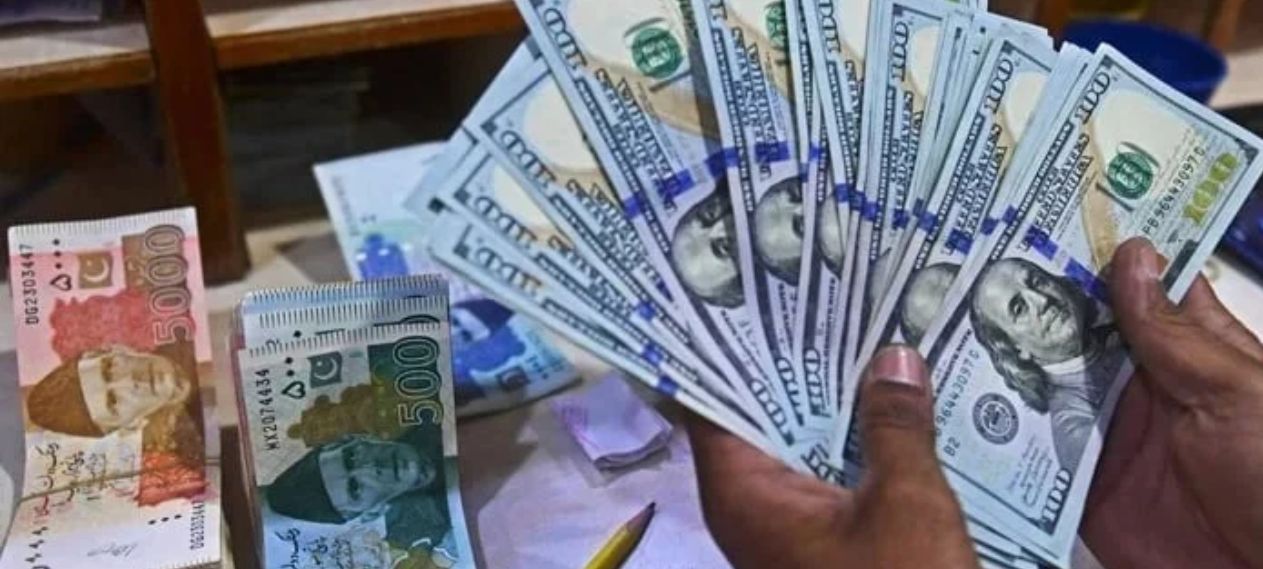
Karachi, March 2026 — In a modest apartment in Karachi’s Gulshan-e-Iqbal neighbourhood, Rukhsana Bibi receives a WhatsApp ping every month that she calls “the good news.” It is her son Tariq’s paycheck transfer from Riyadh — a few hundred dollars that cover school fees, a gas bill, and enough left over to save. Multiply Rukhsana’s family by millions, and you have the architecture of Pakistan’s most durable economic shock-absorber: workers’ remittances.
The State Bank of Pakistan (SBP) confirmed this week that Pakistan received $3.29 billion in workers’ remittances in February 2026, a 5.2 percent increase year-on-year from $3.12 billion in February 2025. The monthly figure represented a seasonal 5 percent pullback from January 2026’s robust $3.46 billion — a dip consistent with post-holiday normalisation patterns rather than any structural weakness. More significantly, cumulative inflows for the first eight months of fiscal year 2026 (July 2025–February 2026) reached $26.49 billion, surging 10.5 percent over the $23.98 billion recorded in the same period of FY25.
For a country navigating a complex IMF programme, a $1.3 billion Eurobond repayment in April, and the lingering scars of devastating floods, the remittance data lands like a quiet act of national resilience. Pakistan’s diaspora, stretched across Gulf capitals, British suburbs, and American tech corridors, is once again doing what governments and multilateral lenders often cannot: supplying predictable, high-volume hard currency with no conditionality attached.
SBP Remittances Data February 2026: What the Numbers Actually Mean
The headline figure deserves disaggregation. Pakistan’s SBP remittances data for February 2026 reveals not just volumes, but a subtle reordering of the geographic architecture of Pakistani migration — and the macro-policy choices those flows reward or punish.
Country-wise breakdown, February 2026:
| Country / Region | Inflow (USD mn) | YoY Change | MoM Change |
|---|---|---|---|
| UAE | $696.2 mn | +6% | +0.3% |
| Saudi Arabia | $685.5 mn | −8% | −7% |
| United Kingdom | $532.0 mn | +7% | −7% |
| European Union | $395.0 mn | +15% | — |
| United States | $319.5 mn | +3% | +8% |
The UAE’s ascent to the top of the ranking — displacing Saudi Arabia, which has historically led — is no accident. Gulf economists and migration analysts attribute it to Abu Dhabi’s infrastructure supercycle (including Expo legacy projects and UAE Vision 2031 construction) pulling in higher-skilled, higher-earning Pakistani professionals who command fatter remittance cheques. That the UAE’s inflows rose 6 percent year-on-year while Saudi Arabia’s fell 8 percent is a structural signal worth watching closely.
Saudi Arabia’s decline is more nuanced than it first appears. Monthly transfers from the Kingdom peaked at $823.7 million in July 2025, buoyed by seasonal factors and a surge in unskilled labour demand around Hajj infrastructure. February’s $685.5 million reflects post-peak normalisation, compounded by a Saudi labour market absorbing Riyadh Vision 2030 volatility and some substitution toward South and Southeast Asian labour. For Islamabad’s economic planners, this is a warning against over-reliance on any single corridor.
The EU’s Quiet Rise: A Structural Shift in Pakistan’s Remittance Map
Among the country-level movements, none is more analytically interesting than the European Union’s 15 percent year-on-year surge to $395 million in February 2026. The EU has rarely commanded headline attention in Pakistani remittance discourse — Gulf corridors dominate the narrative — but the data suggests something meaningful is occurring beneath the surface.
Pakistani skilled migration to Germany, the Netherlands, Spain, and Italy has been accelerating since the EU began expanding its Blue Card programme and bilateral mobility partnerships with South Asian sending countries. Unlike Gulf migrant workers, many of whom remain on fixed-term contracts, EU-based Pakistanis tend to secure longer-term residency, earn higher wages in euros, and increasingly use formal banking channels incentivised by the Pakistan Remittance Initiative (PRI). The euro’s relative strength against the Pakistani rupee amplifies the rupee-equivalent value of each transfer, making EU remitters disproportionately impactful per capita.
The United States also delivered a quietly bullish reading: $319.5 million in February, up 3 percent year-on-year and — crucially — up 8 percent month-on-month from January’s $294.7 million. Pakistani-American professionals, concentrated in information technology, medicine, and finance, are among the highest per-capita remitters globally. Their flows tend to be resilient to macroeconomic cycles, tracking more closely with diaspora sentiment and homeland investment opportunities than with host-country recession risks.
Pakistan Remittance Inflows 8MFY26: Inside a $26.49 Billion Story
To appreciate what $26.49 billion in eight months truly represents, consider the context the IMF’s December 2025 second review of Pakistan’s Extended Fund Facility provides. Pakistan posted its first current account surplus in 14 years in FY25, with reserve rebuilding continuing International Monetary Fund — and remittances were a central pillar of that achievement. Gross reserves stood at $14.5 billion at end-FY25, up from $9.4 billion a year earlier, and are projected to continue to be rebuilt in FY26 and over the medium term. International Monetary Fund
By late February 2026, Pakistan’s total liquid forex reserves stood at $21.43 billion as of February 27, 2026 Profit by Pakistan Today — a number that would have been unthinkable during the currency crisis of 2022–23, when reserves briefly fell below three months of import cover. Remittances have not simply supplemented reserves; they have structurally underwritten the external account’s return to stability.
The SBP’s own Monetary Policy Committee, meeting on March 9, 2026, acknowledged the channel explicitly. The current account posted a surplus of $121 million in January 2026, containing the deficit to $1.1 billion in July–January FY26, with workers’ remittances continuing to finance a significant portion of the trade deficit. SBP In an economy where the trade deficit in goods remains a chronic pressure point, remittances function as a structural offset — a permanent transfer that requires no debt service, no equity dilution, and no policy conditionality.
On a full-year trajectory, the 8MFY26 pace of $26.49 billion implies annualised inflows approaching $39–40 billion — a record that would comfortably surpass the FY25 figure and entrench Pakistan among the world’s top ten remittance-receiving nations. The World Bank’s Migration and Development Brief consistently identifies South Asia as among the most remittance-dependent regions globally, and Pakistan’s data vindicates that framing with renewed force.
How Pakistan’s Remittance Policy Actually Works — and Why It’s Working Better Than Ever
This scale of inflow does not arrive by gravity alone. It is, in significant part, the product of deliberate policy engineering through the Pakistan Remittance Initiative (PRI), launched in 2009 as a government–SBP–commercial bank partnership to incentivise formal-channel transfers.
The evolution of PRI over 17 years reveals how patient institutional reform can compound meaningfully. When PRI launched, roughly 25 financial institutions were registered to process inward remittances and Pakistan worked with perhaps 45 international partner organisations. Today, more than 50 domestic financial institutions participate, international partners exceed 400, and — critically — Electronic Money Institutions (EMIs) are now authorised senders, opening the formal channel to Pakistan’s millions of users of digital wallets such as Western Union’s digital platform, Wise, and regional fintech corridors.
This is not merely bureaucratic expansion. It represents a fundamental shift in the economics of remittance sending. When the cost of sending $200 through a formal bank drops from 5–6 percent to sub-2 percent (as it has across major corridors following competitive pressure and PRI incentives), workers who once defaulted to hawala networks for cost reasons find the formal banking system genuinely competitive. The SBP’s Roshan Digital Account — a foreign currency account accessible to overseas Pakistanis — has further deepened formal channel engagement by offering investment-linked remittance products that combine capital transfer with domestic bond and equity participation.
The Saudi Question: Managing Corridor Concentration Risk
The 8 percent year-on-year decline in Saudi remittances deserves direct policy attention. Saudi Arabia remains Pakistan’s second-largest single-country corridor and, in aggregate terms, represents a concentration risk that Islamabad’s economic managers cannot afford to ignore.
Vision 2030 is reshaping Saudi Arabia’s labour market in ways that may not uniformly benefit Pakistani workers. The Kingdom’s Nitaqat quota system — which mandates minimum levels of Saudi employment in private firms — has periodically squeezed demand for expatriate labour in construction and services. Meanwhile, Saudi Arabia has been deepening labour ties with other South and Southeast Asian countries, including Bangladesh, India, and the Philippines.
The structural response for Pakistan is not to lobby Riyadh but to invest in worker skill upgrading. Pakistani construction workers who arrive in the Gulf as unskilled labourers earn dramatically less — and remit proportionally less — than semi-skilled electricians, plumbers, or equipment operators. The government’s Technical Education and Vocational Training Authority (TEVTA) system, if properly resourced and aligned with Gulf employer demand, could shift the composition of Pakistani migration upward on the value curve, raising the average remittance per worker even as aggregate headcounts fluctuate.
Geopolitical Headwinds: The Middle East Variable
The SBP’s monetary policy statement of March 9, 2026, acknowledged an emerging risk that Pakistan’s remittance planners cannot control from Islamabad: regional conflict in the Middle East. The MPC noted that the conflict in the Middle East has led to a sharp rise in global fuel prices as well as freight and insurance costs, while also affecting cross-border trade and travel. ProPakistani
For Pakistan, the Middle East is not an abstract geopolitical theatre — it is home to an estimated four to five million Pakistani workers and the source of roughly 45 percent of all remittance inflows. Any sustained escalation that disrupts Gulf economic activity, triggers migrant labour displacement, or creates uncertainty in transfer corridors poses a direct threat to Pakistan’s external account arithmetic. The February data, captured before the latest round of regional tensions intensified, may represent a high-water mark that will be tested in the months ahead.
This is precisely why the diversification of remittance corridors — toward the EU, the UK, and the United States, all of which posted positive year-on-year growth in February — carries strategic weight beyond its current numerical scale. A remittance base less dependent on a single geopolitical theatre is a more resilient one.
Pakistan External Account Remittances 2026: The Outlook
Three scenarios deserve consideration as FY26 approaches its closing months.
In the base case, momentum holds. The formal channel infrastructure continues to deepen, the EU and US corridors sustain double-digit growth, and Saudi Arabia stabilises after the seasonal trough. Full-year FY26 remittances approach $38–40 billion — a record — providing ample external account support as Islamabad navigates its IMF third review and the April Eurobond repayment.
In the downside scenario, a prolonged Middle East conflict disrupts Gulf economic activity or forces migrant labour repatriation. Even a 10 percent contraction in Gulf-sourced flows — representing roughly $1.5–2 billion in annual terms — would materially widen the current account deficit and tighten the reserve buffer that the SBP is working hard to rebuild toward the IMF’s $18 billion target by June 2026.
In the upside scenario, the rupee’s relative stability and Pakistan’s improving sovereign credit profile encourages diaspora investors — particularly the Roshan Digital Account community — to deepen homeland investment, lifting remittance-adjacent capital flows and strengthening Pakistan’s overall balance of payments position beyond what workers’ transfers alone suggest.
The IMF’s Extended Fund Facility programme remains Pakistan’s most important external anchor, but the Fund’s own analysis recognises that sustainable external adjustment ultimately depends on durable private inflows — of which remittances are the most reliable and historically resilient component. Unlike FDI, which ebbs with investment sentiment, or portfolio flows, which flee at the first sign of stress, remittances have a deeply human logic: a son in Dubai does not stop supporting his mother in Lahore because Pakistani sovereign spreads have widened.
Why Pakistan Remittances Remain the Economy’s Most Reliable Financing Source
The academic literature on remittance resilience — synthesised in World Bank research and borne out by Pakistan’s own experience across the 2008 financial crisis, the 2019 IMF programme, and the 2022 currency crisis — consistently finds that remittance flows are countercyclical. When destination economies slow, diaspora workers often increase transfers to compensate for deteriorating conditions at home. When host economies boom, rising wages translate into higher transfer volumes. Either way, the receiving country tends to benefit.
Remittance flows account for 9.4 percent of Pakistan’s GDP as of 2024, serving a critical role in enhancing household welfare and significantly boosting access to basic needs while reducing economic vulnerability. Remittance inflows continued to play a significant role in supporting Pakistan’s balance of payments, roughly equaling the value of net imports of goods and services. Displacement Tracking Matrix
That last figure — remittances roughly matching the net import bill — is extraordinary. It means that the millions of Rukhsanas waiting for their monthly WhatsApp ping are not just keeping household budgets afloat. They are, in aggregate, keeping Pakistan’s trade deficit from becoming a balance-of-payments crisis.
As February’s numbers demonstrate, that dynamic remains firmly intact. The $26.49 billion recorded in 8MFY26 is more than a data point. It is evidence of an invisible economy — dispersed across Gulf construction sites, British care homes, and Silicon Valley startups — quietly doing the heavy lifting for 240 million people back home.
The numbers will be tested. The corridors face geopolitical risk, labour market competition, and the ever-present threat of an informal channel resurgence if formal costs creep upward. But for now, Pakistan’s remittance machine is running at a pace that its economic managers, its IMF creditors, and most importantly, its diaspora families, can take genuine encouragement from.
FAQ: Pakistan Remittances February 2026
How much did Pakistan receive in remittances in February 2026? Pakistan received $3.29 billion in workers’ remittances in February 2026, according to State Bank of Pakistan data — a 5.2 percent increase year-on-year.
Which country sent the most remittances to Pakistan in February 2026? The UAE was the top source at $696.2 million, narrowly ahead of Saudi Arabia ($685.5 million), marking a notable shift from Saudi Arabia’s traditional leadership position.
What is the total for 8MFY26 Pakistan remittances? Cumulative remittances for July 2025–February 2026 (8MFY26) reached $26.49 billion, up 10.5 percent from $23.98 billion in the same period of FY25.
Why did remittances fall month-on-month in February 2026? The 5 percent MoM decline from January’s $3.46 billion reflects typical seasonal patterns following year-end and post-holiday transfer peaks, rather than any structural deterioration.
What is Pakistan’s remittance target for FY26? While no official full-year target has been formally disclosed, the 8MFY26 pace implies an annualised run-rate approaching $39–40 billion, which would constitute a record.
What is the Pakistan Remittance Initiative (PRI)? Launched in 2009, PRI is a government-SBP-commercial bank programme that incentivises formal remittance channels. It has expanded from 25 to over 50 domestic financial institutions and grown international partners from roughly 45 to over 400, including electronic money institutions.
Discover more from The Economy
Subscribe to get the latest posts sent to your email.


Analysis of how the Federal Reserve, Bank of England and Bank of Japan could reshape global markets, inflation, currencies and economic growth in 2026.
Executive Summary
The world’s most influential central banks are entering one of the most consequential policy weeks of 2026. Investors are watching closely as the U.S. Federal Reserve, the Bank of England, and the Bank of Japan weigh the competing pressures of easing inflation, geopolitical uncertainty, elevated energy prices, and slowing global growth. Financial markets are also preparing for major corporate earnings and fresh GDP data from several advanced economies. �
Financial Times +1
Unlike the synchronized tightening cycle that dominated recent years, policymakers are increasingly responding to country-specific economic conditions. This divergence is expected to influence capital flows, exchange rates, bond yields, and investment decisions across both developed and emerging markets. �
McKinsey & Company +1
A New Monetary Landscape
Global inflation has moderated from its post-pandemic peaks, yet central banks remain cautious. Recent movements in energy markets and ongoing geopolitical tensions continue to threaten price stability, even as labor markets show signs of cooling. �
McKinsey & Company +1
For investors, the question is no longer whether interest rates have peaked, but how long they will remain elevated.
United States: The Federal Reserve Faces a Delicate Balance
Attention is centered on the Federal Reserve, where policymakers are expected to keep rates steady while evaluating the effects of inflation, consumer demand, and accelerating investment in artificial intelligence infrastructure. Markets are also monitoring whether AI-driven capital spending could contribute to future inflationary pressures. �
Investopedia +1
Bond investors remain sensitive to any shift in the Fed’s language, as Treasury yields continue to reflect expectations about future policy and inflation risks. �
MarketWatch
United Kingdom: Stability Before Growth
The Bank of England is expected to maintain a cautious stance amid moderating wage growth and relatively stable unemployment. However, policymakers continue to weigh external risks, including energy market volatility and global geopolitical developments. �
Financial Times
Businesses remain particularly attentive to borrowing costs, which continue to influence investment decisions across the UK economy.
Japan Ends an Era of Ultra-Loose Money
Japan is undergoing one of its most significant monetary transitions in decades. Rising wages and gradually strengthening inflation have encouraged the Bank of Japan to continue moving away from the ultra-accommodative policies that defined much of the past generation. �
Financial Times
This normalization has implications far beyond Japan, affecting global capital markets and currency dynamics.
Why Emerging Markets Are Watching Closely
Emerging economies including Pakistan, Indonesia, Malaysia, and others remain particularly exposed to decisions made by advanced economy central banks.
Higher U.S. interest rates typically strengthen the dollar, increase external financing costs, and place pressure on countries with significant foreign currency debt.
Conversely, a more stable interest rate environment could improve capital flows into emerging markets while easing exchange rate volatility.
AI Is Becoming a Monetary Policy Variable
One of the most important structural developments in 2026 is the rapid expansion of artificial intelligence infrastructure.
Major technology companies continue investing heavily in data centers, semiconductors, cloud computing, and digital infrastructure. These investments are supporting economic growth but are also creating new questions about inflation, productivity, and long-term financing needs. �
Investopedia +1
Investment Implications
Several themes are emerging:
Higher-for-longer interest rates remain possible.
Government bond markets are likely to remain volatile.
The U.S. dollar could remain relatively strong.
AI-related investment continues attracting capital.
Emerging markets may benefit if inflation continues to moderate.
Competitor Keyword Gap Analysis
Leading publications such as the Financial Times, Reuters, Bloomberg, and CNBC primarily emphasize immediate policy decisions. An opportunity exists to capture additional search traffic by targeting broader intent-based queries.
Key Takeaways
Central bank decisions this week are expected to shape global financial markets.
AI investment is becoming an increasingly important economic driver.
Bond markets remain sensitive to inflation expectations.
Emerging economies face both risks and opportunities from policy divergence.
Investors should monitor GDP releases, corporate earnings, and inflation indicators alongside interest rate announcements.
Frequently Asked Questions
Why are central bank meetings so important?
They influence borrowing costs, inflation expectations, currency values, and investment decisions worldwide.
How do interest rates affect stock markets?
Higher rates generally increase financing costs and can reduce company valuations, while lower rates often support economic activity and equity markets.
Why is AI influencing monetary policy discussions?
Large-scale investment in AI infrastructure is reshaping productivity, corporate spending, and long-term inflation expectations.
Discover more from The Economy
Subscribe to get the latest posts sent to your email.
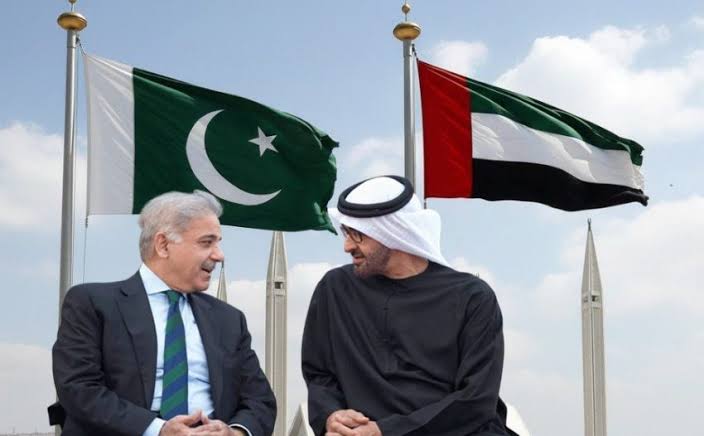
What happened: In early 2026, the United Arab Emirates declined to roll over a $3 billion loan to Pakistan — the first such refusal in seven years. The repayment equalled roughly 18% of Pakistan’s foreign currency reserves, arriving as Islamabad also faced a $1.3 billion bond payment and was waiting on the next IMF tranche.
Why it matters: It’s the clearest sign yet that Gulf sovereign patience with Pakistan’s balance-of-payments cycle is thinning, even as Gulf states simultaneously court China, Saudi Arabia, and each other for capital in a tightening regional liquidity environment.
The Story Nobody’s Connecting
Most coverage of Pakistan’s 2026 external account stress treats the UAE’s loan decision as an isolated liquidity event — a “routine financial transaction,” in the words of Pakistan’s own Ministry of Foreign Affairs. That framing misses the bigger pattern. The same weeks that Abu Dhabi called in its $3 billion, unusual delays began appearing in bank transfers from Saudi Arabia to the UAE itself — friction between the Gulf’s two largest economies, at a moment when both are also managing their own post-war oil price adjustment. (Pakistan & Gulf Economist)
Put those two data points together and a different story emerges: this isn’t just about Pakistan’s creditworthiness. It’s about Gulf capital becoming more selective, more transactional, and less willing to extend informal grace periods across the board — with Pakistan simply the most exposed borrower in the queue.
The Numbers Behind the Pressure
Pakistan’s State Bank held $16.4 billion in reserves as of late March 2026 — enough to cover roughly three months of imports, a threshold economists generally treat as a comfort floor, not a cushion. (Mettis Global News) The UAE’s declined rollover landed at the same time as a looming $1.3 billion international bond payment and dependence on the next $1.2 billion IMF disbursement — a convergence of obligations that left the State Bank with limited room to maneuver beyond import restrictions, rate hikes, or fresh commercial borrowing.
The backdrop matters too. The rupee had been trading in a comparatively narrow 278–282 band before the escalation of the Iran conflict pushed global oil prices higher, squeezing Pakistan’s import bill precisely when its Gulf safety net began to wobble. The KSE-100 benchmark, meanwhile, had already shed around 15% amid the broader pressure. (Mettis Global News)
This is not Pakistan’s first Gulf-dependency cycle. The IMF’s own record shows a now-familiar pattern: staff-level agreements reached in Dubai, UAE pledges of multibillion-dollar investment arriving alongside IMF tranches, and Gulf bridge financing used to stave off sovereign default in periods when reserves cover shrinks toward zero. (Business Standard) What’s different in 2026 is that the bridge itself is showing cracks.
Islamabad’s Official Line vs. the Structural Reality
Pakistan’s government has leaned into a “stability to sustainable growth” narrative around its FY2026–27 federal budget, with the finance minister framing the transition as export-driven rather than reserve-dependent. Business groups have broadly welcomed the budget, and the current account posted a $459 million surplus in May 2026, an improvement attributed to strong remittance inflows. (Business Recorder) The Monetary Policy Committee has held rates steady rather than reaching for emergency tightening, which is itself a signal that the central bank does not yet see the UAE episode as a systemic trigger.
But a current account surplus built substantially on remittances is different from one built on export competitiveness or durable FDI. Pakistan’s trade structure still leans heavily on a narrow set of partners: China supplies over a quarter of its imports and a meaningful share of its exports, the UAE is both a top export destination and its second-largest import source, and Gulf states collectively remain the primary channel for both remittances and emergency liquidity. (Wikipedia — Economy of Pakistan) That concentration is precisely what makes a single Gulf lender’s changed appetite so consequential.
Why the Oil Backdrop Compounds the Risk
None of this is happening in a vacuum. The IMF’s own July 2026 commentary noted that global oil markets “absorbed the war shock” from the Iran conflict, but cautioned that buffers — spare production capacity, strategic reserves, shipping insurance capacity — are running low. (IMF Blog) For an oil-importing, reserve-constrained economy like Pakistan, a second energy price shock without deeper buffers would land directly on the same reserves the UAE loan was meant to protect.
What to Watch Next
- Whether Saudi Arabia steps in as an alternative bridge lender, or whether the Riyadh–Abu Dhabi transfer friction signals a broader Gulf liquidity tightening that limits everyone’s appetite to backstop Pakistan.
- The pace and size of the next IMF tranche, and whether Fund conditionality shifts to demand deeper reserve buffers given the UAE precedent.
- Whether China increases its role as lender of last resort, deepening Pakistan’s dependency in exactly the direction Gulf financing was historically meant to offset.
Discover more from The Economy
Subscribe to get the latest posts sent to your email.
Introduction
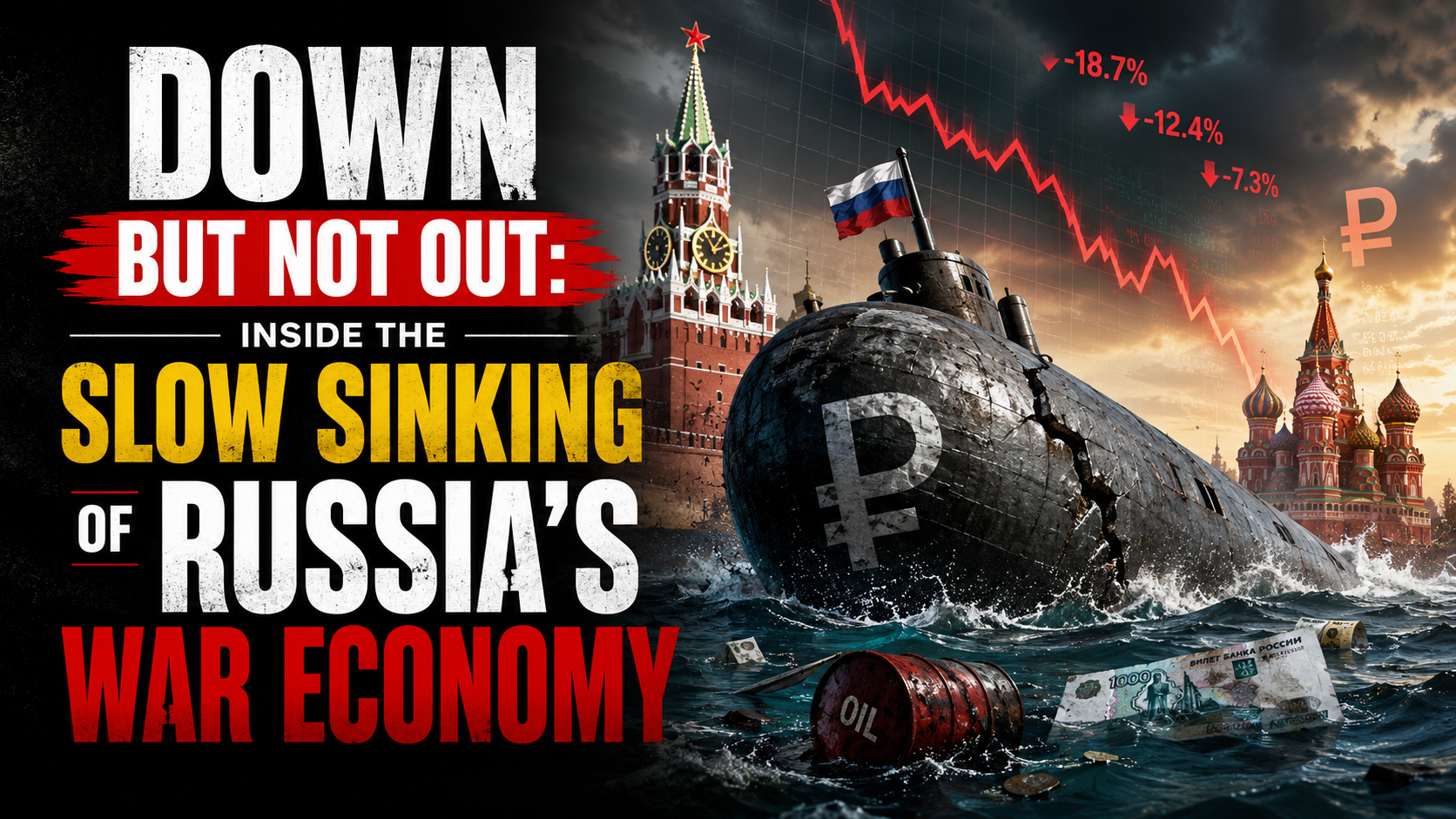
The European Council formally extended its economic sanctions against Russia for another full year on 25 June 2026, keeping restrictive measures in place until 31 July 2027 (Council of the EU). More than four years into the war, the headline story of Russia’s economy has shifted from whether sanctions would work to a more nuanced question: how much longer can the Kremlin keep financing the war before the accumulated strain becomes impossible to hide behind favorable official statistics.
The Sanctions Architecture, Renewed Again
The EU’s economic measures against Russia, first introduced in 2014 and dramatically expanded after the February 2022 full-scale invasion, now span trade, finance, energy and dual-use technology restrictions, alongside asset freezes and travel bans on a broad range of individuals and entities (Council of the EU). Since February 2022, the EU has adopted 20 separate sanctions packages, and the European Council has explicitly stated it remains determined to keep weakening Russia’s war economy by further reducing its energy revenues, curbing shadow-fleet oil shipping operations and constraining its banking system (Council of the EU). Separately, on 3 July 2026 the EU sanctioned six individuals connected to the poisoning and death of opposition figure Alexei Navalny, underscoring that the sanctions regime continues to expand on human-rights grounds as well as economic ones (Council of the EU Sanctions Timeline).
The Headline Numbers Beijing-Style Optimism Can No Longer Explain Away
Russia’s GDP is now put at roughly $2.51 trillion, the world’s eleventh-largest economy — comparable in size to South Korea despite Russia’s vastly larger landmass and resource base — with 2026 growth projected at just 1.0% and inflation running at 5.2% (Statistics of the World). More pessimistic estimates put full-year 2026 growth even lower, at around 0.4%, which would be worse than 2025’s already-weak 1% expansion and would mark a sharp deceleration from the 4.1% growth Russia posted in 2023 as it forged new trading relationships to route around initial sanctions (Forbes).
Oil and gas revenues — historically around half of Russia’s state income — have fallen to roughly a quarter, a deliberate outcome of Western sanctions strategy that targets how much Russia earns from exports rather than blocking those exports outright (Stockholm School of Economics/SITE). Russia’s oil and gas budget revenues reportedly halved in January 2026 alone, with crude prices falling below $73 a barrel before the Middle East conflict briefly reversed the trend, sending Brent surging more than 55% to near $120 a barrel at its peak (Forbes).
The Middle East War: A Temporary Lifeline With Long-Term Costs
The spike in oil prices tied to the Iran conflict, combined with a period of eased US sanctions enforcement on Russian oil under President Trump, offered Moscow unexpected fiscal breathing room in mid-2026 (Forbes). But that same conflict has undermined Russia’s longer-term energy diversification ambitions in the region: two Russian-backed power plant projects in Iran have been put on hold, along with oil and gas exploration work and plans to build new transit routes linking Russia to India via Iran (Forbes).
The Gap Between Official Statistics and Underlying Reality
Perhaps the most important analytical point from recent research is not about any single data point but about the reliability of Russian statistics themselves. Torbjörn Becker of the Stockholm Institute of Transition Economics has argued the real test of sanctions is not whether they end the war overnight, but how much they erode the Kremlin’s capacity to finance it — and by that measure, the evidence points to deeper strain than headline GDP figures suggest (Stockholm School of Economics/SITE). Becker notes that Russia’s economy grew only modestly in 2022 despite oil prices rising sharply that year — a gap between expected and actual performance that implies a considerably larger hidden economic hit than the official contraction figures showed (Stockholm School of Economics/SITE). Compounding the problem, Russian authorities have stopped publishing several key statistics since 2022, making independent assessment of inflation, consumption and real economic conditions increasingly difficult — leading Becker to conclude that “statistics have become part of the narrative” rather than a neutral measure of economic reality (Stockholm School of Economics/SITE).
The Military-Civilian Economic Split
A recurring theme across recent analysis is the growing bifurcation between Russia’s overheating military-industrial sector and a stagnating civilian economy. This imbalance has pushed interest rates higher and forced the liquidation of a striking 71% of Russia’s gold reserves to help fund continued war spending (Forbes). Russia’s total fossil fuel export revenue is estimated at roughly €734 million per day, underscoring just how central hydrocarbon income remains to the entire war financing model even as that revenue stream shrinks (Forbes).
The Counter-Narrative: Wages Still Rising
It would be inaccurate to describe Russia’s economy as in freefall. CSIS research notes that Russian salaries rose 17.8% in nominal terms and 8.7% in real terms in 2024 compared to 2023, with disposable incomes up 6.1% in 2023 and 7.3% in 2024 — growth rates not seen in Russia in almost two decades (CSIS). Government budget projections still expect real salaries to rise, albeit at a decelerating pace: 7% in 2025, 5.7% in 2026 and 4.1% in 2027 — a marked slowdown from the 2024 peak but still roughly double the pre-invasion decade average (CSIS). This wage growth, driven substantially by wartime labor shortages and military-adjacent spending, is precisely the kind of headline-stabilizing data point that has allowed Putin to argue publicly that sanctions have failed to cripple his economy (Fortune) — even as think tanks describe the broader trajectory as pushing Russia toward what one report calls an “economic, political, and military abyss” (Fortune).
What Comes Next
Renewed legislative pressure in Washington — including the Sanctioning Russia Act introduced with strong bipartisan support — signals appetite in the US for tightening the screws further, even as the loss of a key congressional champion for that effort has complicated the political path forward (TIME). Whether the EU’s renewed sanctions regime, continued oil price pressure, and constrained reserves ultimately force a shift in Kremlin calculus toward negotiation remains the central open question for 2027.
Key Takeaways
- The EU has extended Russia sanctions for a further year, through 31 July 2027, continuing a regime built from 20 separate packages since 2022.
- Russia’s 2026 GDP growth is forecast between 0.4% and 1.0%, a sharp deceleration from 2023’s 4.1% post-shock rebound.
- Oil and gas revenue’s share of Russian state income has fallen from roughly half to about a quarter as Western sanctions target export earnings specifically.
- Russia has liquidated a large share of its gold reserves to sustain war financing amid a widening split between an overheating military sector and a stagnating civilian economy.
- Official Russian statistics likely understate the true economic strain, according to independent economists who cite a widening gap between reported and expected performance.
Sources: Council of the EU, Council of the EU Sanctions Timeline, Stockholm School of Economics/SITE, Forbes, Statistics of the World, CSIS, Fortune, TIME
Discover more from The Economy
Subscribe to get the latest posts sent to your email.

Global Central Banks 2026: Fed, BoE and BoJ Decisions Could Reshape Markets

Gulf Capital Retreat From Pakistan 2026: UAE Loan Freeze & What It Means

Pakistan’s Most Reliable Export Is Its People: Remittances Hit $41.6 Billion, Overtaking Total Exports

Indonesia’s Confidence Problem: Record Investment, a Sinking Rupiah, and a Widening Credibility Gap

Down But Not Out: Inside the Slow Sinking of Russia’s War Economy

China’s Growth Slips to a Four-Year Low: Why Beijing Still Won’t Pull the Stimulus Trigger

The Johor-Singapore Corridor: How Malaysia Became Southeast Asia’s AI Infrastructure Powerhouse

Canada’s Economy ‘On Pause’: Inside the CUSMA Deadline That Passed Without a Deal

Dubai’s Millionaire Magnet: How the UAE Turned Middle East Turmoil Into a Capital Safe-Haven Boom

Britain’s Sixth Prime Minister in a Decade: What Starmer’s Exit Means for Gilts, Sterling and Your Portfolio

Anthropic Offers Up to $600,000 Salary for Critical IPO Role as AI Giant Prepares for Wall Street Debut

EU Readies Crisis Team for Potential China Rare Earths Stand-Off as Supply Chain Risks Mount

Singapore Weighs Hedge Fund Tax Cuts to Counter Hong Kong’s Growing Financial Challenge

Facebook and Instagram Experience Global Outage

Carry Trade Unwind 2026: How the Yen’s Snapback Triggered a Global Margin Call

AI Bubble Warning 2026: Why BIS, IMF and Bank of England Fear a Market Crash

BRICS De‑Dollarization Strategy Takes Shape with $15 Billion Local‑Currency Push

Male Labor Force Participation Rate 2026: Why Men Are Leaving & Economic Impact

The AI Super Bubble Is Ready to Burst

Russia Bans Diesel Exports 2026: Global Fuel Market Impact Explained

Strait of Hormuz Blockade 2026: Oil Prices Surge 9% as US-Iran Conflict Reignites

Private Credit Warning: Most BDCs Turn Unprofitable in 2026, Reuters Finds

IMF Cuts Pakistan Growth Forecast, Raises Inflation to 8.4%

Bitcoin $150k Milestone Achieved as US Sovereign Crypto Pivot Looms
Gulf Capital Retreat From Pakistan 2026: UAE Loan Freeze & What It Means

India Economic Rise 2026: How the Subcontinent Toppled Japan

Strait of Hormuz 2026: Why Markets Still Don’t Trust It’s Open

Argentina Economy 2026: Milei’s Fiscal Surplus, Inflation Drop to 29%, and What Comes Next
-

 Markets & Finance7 months ago
Top 15 Stocks for Investment in 2026 in PSX: Your Complete Guide to Pakistan’s Best Investment Opportunities
-

 Analysis5 months ago
Johor’s Investment Boom: The Hidden Costs Behind Malaysia’s Most Ambitious Economic Surge
-

 Analysis5 months ago
Top 10 Stocks for Investment in PSX for Quick Returns in 2026
-

 Analysis6 months ago
Brazil’s Rare Earth Race: US, EU, and China Compete for Critical Minerals as Tensions Rise
-

 Banks6 months ago
Best Investments in Pakistan 2026: Top 10 Low-Price Shares and Long-Term Picks for the PSX
-

 Investment7 months ago
Top 10 Mutual Fund Managers in Pakistan for Investment in 2026: A Comprehensive Guide for Optimal Returns
-

 Global Economy7 months ago
15 Most Lucrative Sectors for Investment in Pakistan: A 2025 Data-Driven Analysis
-

 Global Economy7 months ago
Pakistan’s Export Goldmine: 10 Game-Changing Markets Where Pakistani Businesses Are Winning Big in 2025