
AI
OpenAI Acquires TBPN for “Low Hundreds of Millions”

The AI giant’s first media acquisition isn’t really about a talk show. It’s about who controls the story of the century.
On April 2, 2026, OpenAI announced something that stopped Silicon Valley mid-scroll. The company that built ChatGPT — the most consequential software product in a generation — had purchased TBPN, a live-streaming tech talk show launched just eighteen months ago by two former startup founders. The deal, reported by the Financial Times as priced in the “low hundreds of millions of dollars,” marks OpenAI’s first-ever media acquisition. It is, on its surface, an extraordinary thing: a $300 billion AI behemoth buying a buzzy, eleven-person internet show hosted in the cultural register of ESPN’s SportsCenter, but for venture capital.
Yet reducing this to a curiosity — a quirky acqui-hire dressed up in strategic language — would be a significant analytical error. The OpenAI TBPN acquisition is, in fact, one of the most legible strategic documents that Sam Altman’s organisation has ever produced. Read it carefully and you will find a company that understands something most of its Silicon Valley peers do not: in the attention economy of artificial intelligence, the narrative is the product.
Silicon Valley’s Newest Obsession, Now Owned by Its Biggest Character
TBPN — Technology Business Programming Network — is not, by conventional media metrics, a behemoth. The New York Times has called it “Silicon Valley’s newest obsession,” a description that captures the phenomenon’s cultural weight without fully explaining its mechanics. The show, hosted daily Monday through Friday from 11 a.m. to 2 p.m. Pacific Time, draws roughly 70,000 viewers per episode across YouTube, X, LinkedIn, and Spotify. It generated approximately $5 million in advertising revenue in 2025 and was on pace to exceed $30 million in 2026 — an impressive growth trajectory, though still a rounding error in OpenAI’s financial universe.
What TBPN has built, and what money cannot easily replicate, is access embedded within credibility. Hosts John Coogan and Jordi Hays — both veteran entrepreneurs with personal relationships throughout the Valley — have created a rare forum where Mark Zuckerberg, Satya Nadella, Marc Benioff, and Sam Altman himself come not to give polished press-conference answers but to react, riff, and occasionally say something they probably shouldn’t. It is the place where executive moves are processed like sports trades, where AI announcements are dissected in real time, where the texture of industry thinking is visible in a way that no Bloomberg terminal can capture.
The show has gained a cult following in Silicon Valley, functioning as a kind of safe space where industry power players can speak candidly and be questioned by fellow insiders. TechCrunch That candour — authentic, unmediated, peer-to-peer — is precisely the asset OpenAI has acquired. Not a studio, not a distribution platform, not a subscriber list. A room where the powerful feel comfortable.
The “Side Quests” Irony: OpenAI’s Most Visible Contradiction
The timing of this deal is, to put it diplomatically, awkward.
The acquisition comes after Fidji Simo, who runs OpenAI’s product business, urged staff in a separate memo to stay focused on core business lines such as ChatGPT and coding tools, writing, “We cannot miss this moment because we are distracted by side quests.” PYMNTS.com That memo was circulated weeks before TBPN was announced. The irony was not lost on anyone. Fortune noted the apparent contradiction with characteristic directness, calling the TBPN deal “OpenAI’s surprise side quest” and pointing out that the company had just raised $122 billion and promptly used some of it to buy a podcast.
OpenAI insiders pushed back on this framing. People close to the company rejected the accusation that TBPN is such a side issue, noting that since neither researchers nor engineers would be deployed for the show and it does not constitute a new product, the acquisition is not a distraction. Trending Topics It is a fair technical point. But it misses the deeper political charge embedded in the criticism.
The “side quests” memo was itself a signal — to employees, to investors, to the market — that OpenAI was tightening its focus ahead of what many believe will be an IPO this year. Purchasing a media company weeks later, at a valuation that requires significant financial and managerial capital to justify, disrupts that signal badly. It invites exactly the kind of question that pre-IPO companies dread: Does leadership know what it is doing?
Bloomberg reported that demand is weakening for private shares of OpenAI in the secondary market. If OpenAI intends to go public this year, as many speculate, it needs a narrative reset — fast. And the quickest way to control the narrative is to literally own the medium that distributes it. Fortune
There is the cold, uncomfortable logic of this deal, stated plainly. The OpenAI TBPN acquisition is not, at its core, an editorial investment. It is a pre-IPO communications infrastructure play dressed in the language of authentic discourse.
Chris Lehane, “The Dark Arts,” and the Architecture of Influence
If Fidji Simo’s internal memo represents the deal’s public rationale, the organisational reporting structure reveals its true character. TBPN will sit within OpenAI’s Strategy organisation and report directly to Chris Lehane, the company’s chief global affairs officer.
Lehane, who has been described as a master of the “political dark arts,” is also behind the crypto industry super PAC Fairshake, which spent hundreds of millions to kneecap anti-crypto candidates in the 2024 election. He invented the phrase “vast right-wing conspiracy” as a tool to deflect press scrutiny of the Clinton White House. TechCrunch
This is not a communications hire who will oversee press releases. Lehane is an operator — a man who thinks in terms of information ecosystems, power centres, and long-game influence architecture. In an interview with CNN, Lehane cited the long history of “companies and entities owning and acquiring media properties,” harkening to the days of Westinghouse — a comparison that, in its historical sweep, rather proved critics’ point. CNN
The OpenAI narrative control strategy, as it is emerging, is sophisticated in a way that blunt corporate PR rarely is. The goal is not to produce flattering content about OpenAI — that would destroy TBPN’s value almost immediately. The goal, as Lehane framed it to CNN, is to “scale what they can do and how they do it, so that they are able to really continue to deliver those ideas but to bigger and bigger audiences.” Lehane understands that credibility cannot be manufactured. It can only be preserved, leveraged, and quietly amplified.
TBPN president Dylan Abruscato posted that the show will retain full control over all its editorial decisions and branding. But as The Information‘s Martin Peers noted bluntly, “OpenAI’s promise of editorial independence for TBPN is irrelevant. Independence for what purpose? Can you imagine TBPN doing a hard-hitting piece on OpenAI? It’s not in the show’s DNA.” CNN
This is precisely the point. TBPN has never been adversarial journalism. It is, constitutionally, a celebration of builders and the things they build. Its editorial DNA is not investigative; it is conversational. OpenAI has not purchased a watchdog. It has purchased a microphone that already faces the right direction. The future of tech journalism AI companies are building is not censorship — it is curation at scale, the quieter, more durable form of influence.
The Competitive Context: Why This Is Not Just About Messaging
OpenAI, jostling with Anthropic for enterprise customers, has bought TBPN, an online tech talk show that has built a loyal Silicon Valley following through interviews with industry CEOs. wkzo That competitive framing — OpenAI vs. Anthropic — is the most analytically underexplored dimension of this deal.
Anthropic has, in recent months, managed to position itself as the “responsible AI” company — a brand distinction that has significant commercial consequences as enterprise customers, particularly in regulated sectors, weigh their AI vendor choices on reputational as well as technical grounds. Anthropic’s showdown with the Pentagon this year left OpenAI looking like the bad guy Fortune, a perception that is competitively costly in ways that quarterly revenue figures cannot yet capture but that institutional investors understand deeply.
OpenAI has multiple image problems compounding simultaneously: its evolving corporate structure, the ongoing legal battle with Elon Musk, its defence contracts, and questions about its long-term commercial viability. The deal’s timing, weeks before the Altman-Musk trial, underscores its role in narrative control. TBPN’s reliance on X for distribution adds irony, as OpenAI bolsters a show on a platform owned by its legal adversary while positioning itself to amplify pro-AI voices. MLQ
The OpenAI media empire in formation — and it is fair to call it an empire in its nascent stage — is fundamentally a response to competitive asymmetry. When you cannot win on every dimension of public perception through conventional means, you change the terrain. You do not just participate in the conversation. You own a piece of the room.
The Precedent Problem: What History Teaches Us
OpenAI’s out-of-the-blue acquisition of TBPN continues a pattern that dates back a hundred years, to 1926, when RCA created NBC in part to sell radios. Time and time again, pioneers of new platforms have also bought up content and influenced conversations about those platforms. CNN
The analogy is instructive, and not entirely comfortable. RCA-NBC is the sanitised version of the story. The messier version is CoinDesk, acquired by Digital Currency Group in 2016 to provide credible coverage of the crypto markets that DCG itself was helping to create. CoinDesk maintained editorial independence for years — and then, as the FTX collapse exposed the ecosystem’s rot, the publication’s ownership became a central question in every story it touched. Critics point to earlier cases in which similar assurances faltered under the pressure of economic interests, such as with the crypto news portal CoinDesk. Trending Topics
The counterfactual — what happens to TBPN’s editorial character when OpenAI faces a genuinely damaging story, a real safety incident, an IPO stumble, a regulatory crisis — remains untested. Sam Altman’s pledge that he will “help enable” continued scrutiny of the company through his “occasional stupid decisions” is, in the cold light of corporate history, a charming but structurally inadequate guarantee.
The Geopolitical Dimension: AI, Discourse, and American Soft Power
There is a dimension of this deal that has received insufficient attention in the breathless coverage of the past 48 hours: its global implications for AI discourse and American soft power.
OpenAI is not merely a technology company. It is a geopolitical actor operating at the frontier of what many governments consider a strategic resource comparable to nuclear capability. The U.S. government — through its funding posture, export controls, and regulatory framework — has implicitly positioned OpenAI and its peers as instruments of American technological primacy. The OpenAI TBPN implications extend, therefore, well beyond Silicon Valley’s internal culture.
TBPN, as scaled by OpenAI’s resources and international distribution ambitions, becomes something more than a daily talk show. It becomes a platform — potentially the platform — through which America’s most consequential AI company explains itself to the world. Fidji Simo’s internal memo spoke explicitly about helping people “understand the full impact of this technology on their daily lives.” That is a communications mandate with global reach.
In an era when China’s AI narrative is shaped by state media and Europe’s is shaped by regulatory anxiety, OpenAI shaping the AI conversation through a credible, founder-native media format is a form of soft power that governments and trade bodies should pay attention to. The Financial Times, the Economist, and Reuters will continue to provide independent analysis. But for the large and growing audience of builders, developers, and technology-adjacent investors who shape downstream opinion, TBPN under OpenAI will increasingly define the ambient discourse. That is not nothing. That is, arguably, everything.
What This Means for Independent Tech Media
Let us state the uncomfortable conclusion directly: the future of independent tech media has become more complicated this week.
TBPN’s acquisition, at these valuations, for a company that is eighteen months old and generating $5 million in annual revenue, establishes a price signal that will distort the emerging creator economy in ways both predictable and not. Every founder-hosted talk show, every technically credible Substack, every daily-format YouTube programme covering AI is now implicitly a potential acquisition target. The logic of “going direct” — of AI companies bypassing traditional media to communicate with their most relevant audiences — has been financially ratified in a way it had not been before.
TBPN’s fast ascent is a vote for people who think live-streaming is the media format of the future. While TBPN doesn’t command a huge live audience, the format gives them three hours of content they can then slice up and shoot out in shareable bites, all over the internet. AOL OpenAI will now industrialise that playbook, funding a distribution flywheel that independent competitors cannot match.
The implication for journalism — genuine, adversarial, accountability journalism about AI companies — is a further concentration of the field around a handful of publications with the institutional independence and financial resources to sustain it: the Financial Times, The New York Times, Wired, The Atlantic, and a shrinking list of peers. Everyone else will be navigating an information environment increasingly shaped, at the edges, by the very companies they are ostensibly covering.
The Brutally Honest Verdict
Here is what we know with confidence: OpenAI paid a significant sum for an eleven-person company with $5 million in revenue and no proprietary technology. The deal makes no conventional financial sense. It makes complete strategic sense.
Sam Altman called TBPN’s hosts “genius marketers” and acknowledged that “given the amazing things AI can do, there’s got to be better marketing for AI.” TheWrap That is the most candid sentence Altman has uttered about this deal, and it deserves to sit at the centre of every analysis. This is not, fundamentally, a media company buying a media property. It is a marketing operation conducted at acquisition scale, dressed in the language of editorial values and the aesthetics of authenticity.
That does not make it wrong. Corporations have always sought to shape the environments in which they operate. The question is whether the architecture of influence being built here — TBPN under OpenAI, reporting to a political operator of Lehane’s calibre, on the eve of a potentially historic IPO — is transparent enough in its design for the market, for regulators, and for the public to evaluate on its merits.
The answer, as of today, is not yet. But the story is just beginning. And now, in a meaningful sense, so is OpenAI’s media empire.
Discover more from The Economy
Subscribe to get the latest posts sent to your email.


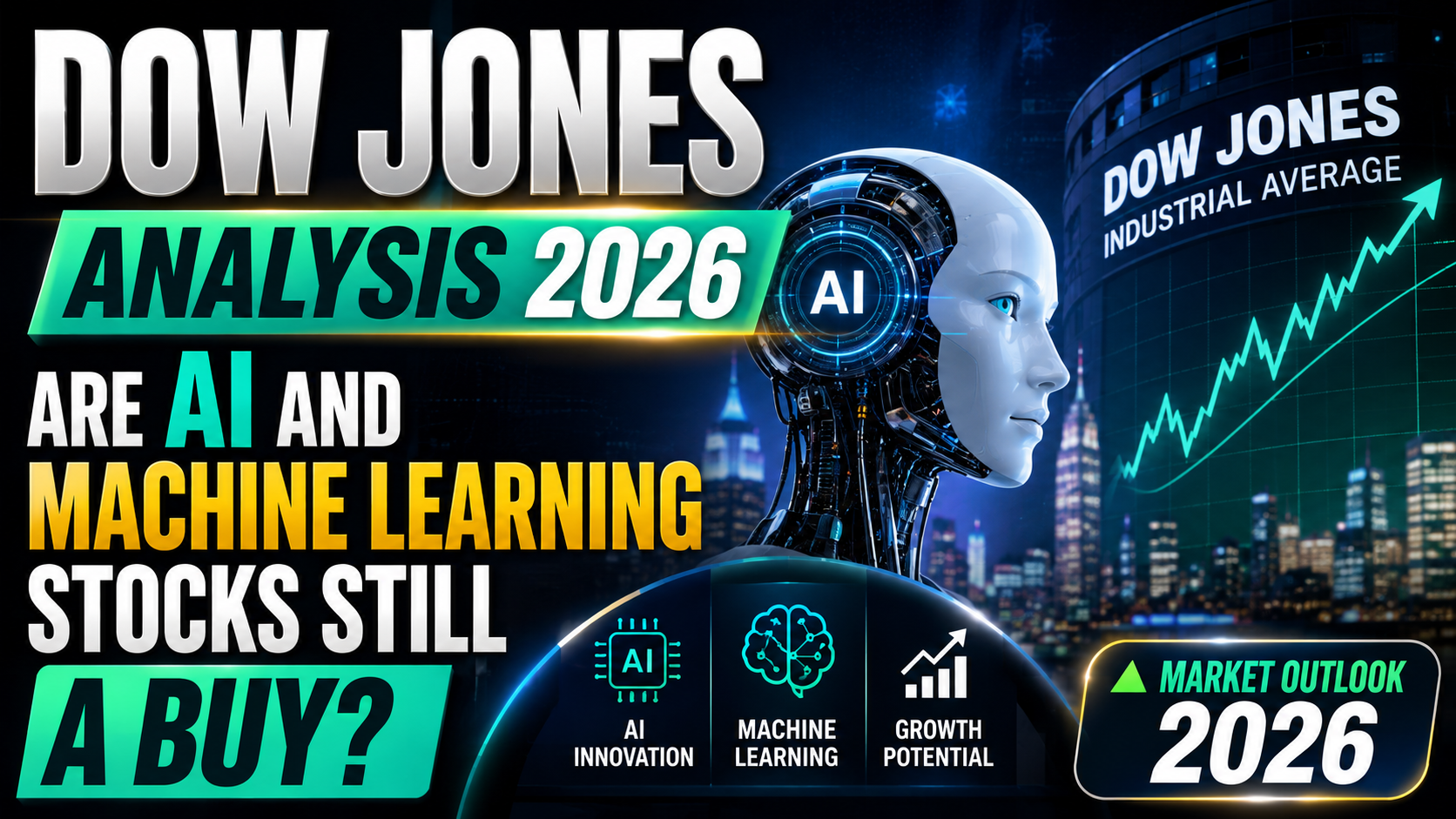
After years of explosive gains, AI and machine learning stocks have entered a more complicated phase — still central to the Dow Jones Industrial Average’s overall performance, but facing sharper questions about valuation, earnings durability, and whether the easy gains have already been captured. For investors trying to decide whether to keep adding to AI positions, trim exposure, or rotate into other sectors, 2026 requires a more nuanced read than the straightforward “buy the dip” narrative that worked reliably in prior years.
This analysis breaks down where AI and machine learning stocks currently stand within the broader Dow Jones and market context, what’s driving continued institutional investment despite valuation concerns, and how to think about position sizing if you’re building or maintaining exposure to this sector in your portfolio. Whether you’re a long-term investor or actively trading around AI-sector volatility, understanding the current landscape matters more than chasing last year’s returns.
Where AI Stocks Stand in the Dow Jones Right Now
AI-adjacent companies — spanning semiconductor manufacturers, cloud infrastructure providers, and enterprise software firms embedding AI capabilities — continue to represent an outsized share of overall market cap growth relative to their weighting in the index. This concentration has been a persistent feature of the market for several years now, and it means Dow Jones performance remains more tied to AI-sector sentiment than the historical diversification of the index would suggest.
What’s changed in 2026 is the market’s patience with growth-at-any-valuation stories. Earnings calls that once got a pass on questions about AI monetization timelines are now facing sharper analyst scrutiny, and companies unable to demonstrate a clear path from AI investment to revenue growth have seen more punishing reactions to earnings misses than in prior years.
The Bull Case for AI and ML Stocks in 2026
Despite valuation concerns, several structural tailwinds continue supporting the bull case for AI-sector investment. Enterprise AI adoption is still in relatively early innings for many industries — healthcare, logistics, and financial services in particular are still ramping infrastructure spending rather than winding it down. Capital expenditure guidance from major cloud and semiconductor companies has largely remained robust, suggesting the largest players still see multi-year runway for AI infrastructure investment rather than a near-term plateau.
Key Bullish Factors
- Continued enterprise adoption – Many industries remain in early-to-mid stages of AI integration, suggesting sustained demand
- Infrastructure capex guidance – Major cloud providers have maintained or increased AI infrastructure spending forecasts
- Margin expansion in software – AI-embedded enterprise software companies are showing improved margins as adoption scales
- International expansion – AI infrastructure investment is accelerating outside the US, broadening the addressable market
- Ongoing chip demand – Semiconductor demand tied to AI training and inference workloads remains structurally elevated
The Bear Case: Why Some Investors Are Cautious
The counterargument centers on valuation multiples that, even after some 2025-2026 volatility, remain elevated relative to historical norms for the broader market. Concerns persist about circular investment relationships between major AI infrastructure players, where the same handful of companies are simultaneously customers and investors in one another’s growth — a dynamic some analysts argue inflates reported demand signals. There’s also a legitimate question about how quickly AI capital expenditure will translate into durable free cash flow versus remaining a perpetually reinvested growth story.
Key Bearish Factors
- Elevated valuations – Price-to-earnings and price-to-sales multiples remain historically high for many AI-adjacent names
- Circular investment concerns – Interlocking investment relationships among major AI infrastructure players raise demand-durability questions
- Interest rate sensitivity – Growth stock valuations remain more sensitive to rate policy shifts than value-oriented sectors
- Monetization timeline uncertainty – Gap between AI infrastructure spend and proven enterprise ROI remains a persistent analyst concern
- Increased regulatory scrutiny – Antitrust and AI-specific regulatory attention has increased globally, adding a layer of policy risk
Sector Comparison: AI/ML Stocks vs. Broader Dow Jones Composition
| Factor | AI/ML Sector Stocks | Broader Dow Jones Average |
|---|---|---|
| Average valuation multiple | Elevated relative to historical norms | Closer to long-term historical average |
| Earnings growth expectations | High, but under increasing scrutiny | Moderate, more stable |
| Volatility | Higher | Lower |
| Capital expenditure trend | Aggressive, ongoing | Mixed by sector |
| Regulatory exposure | Increasing | Sector-dependent |
| Institutional sentiment | Cautiously bullish with rotation risk | Stable |
How to Think About Position Sizing in 2026
Given the more nuanced risk/reward picture, a disciplined approach matters more than it has in prior AI-sector bull runs. Consider these principles when managing exposure:
- Avoid overconcentration in a small handful of mega-cap AI names, even if they’ve driven most of your recent returns
- Diversify across the AI value chain — infrastructure, chips, and application-layer software carry different risk profiles
- Pay closer attention to free cash flow trends, not just revenue growth, as monetization scrutiny increases
- Consider dollar-cost averaging into positions rather than making large single entries given elevated volatility
- Reassess position sizing relative to your overall portfolio risk tolerance, not just recent sector momentum
Watching for Rotation Signals
Beyond the bull and bear fundamentals, it’s worth paying attention to sector rotation signals that often precede broader market sentiment shifts around AI valuations. Institutional fund flow data, options market positioning, and relative performance between AI-heavy growth indices and value-oriented sectors can all offer early signals of shifting sentiment before it fully shows up in individual stock prices. Historically, sharp AI-sector pullbacks have often been triggered less by fundamental deterioration and more by a specific catalyst — a disappointing earnings guidance from a bellwether company, a macro rate shock, or a high-profile regulatory action — that causes previously patient investors to reassess valuation assumptions all at once. Staying attentive to these catalysts, rather than assuming steady-state conditions will persist indefinitely, is part of maintaining a disciplined approach to sector exposure in a still-evolving investment theme.
Frequently Asked Questions
Should I sell my AI stocks if I think the sector is overvalued?
That depends entirely on your investment horizon and risk tolerance rather than a one-size-fits-all answer. Long-term investors with a diversified portfolio may choose to simply trim overconcentrated positions rather than exit entirely, while investors more sensitive to near-term volatility might reduce exposure more aggressively. This isn’t personalized financial advice, and consulting a financial advisor about your specific situation is worth considering before making significant portfolio changes.
How can I tell if an AI company’s revenue growth is sustainable versus inflated by circular investment deals?
Look closely at the customer concentration disclosed in earnings reports and investor filings — if a large share of a company’s reported revenue comes from a small number of other AI infrastructure companies rather than a broad, diversified customer base, that’s worth factoring into your assessment of demand durability.
Are AI stocks more volatile than the broader Dow Jones average?
Generally yes, particularly for higher-growth, less-established names within the sector. More established, cash-flow-positive AI-adjacent companies within the Dow Jones tend to show somewhat lower volatility than smaller, growth-stage AI-focused companies outside the index.
Is it too late to start investing in AI stocks in 2026?
Many analysts view the sector as being in a more mature, selective phase rather than an early-stage opportunity, which changes the risk/reward calculus compared to earlier years but doesn’t necessarily mean the opportunity has fully passed. Position sizing, diversification, and a longer time horizon matter more now than simply timing an entry point.
Final Thoughts
AI and machine learning stocks remain a legitimate long-term investment theme in 2026, but the easy, broad-based gains of previous years have given way to a market that’s demanding more evidence of durable monetization before rewarding further multiple expansion. This doesn’t necessarily mean it’s time to exit the sector — but it does mean position sizing, diversification within the AI value chain, and closer attention to fundamentals matter more now than they did in the earlier stages of the AI investment cycle.
Are you still adding to your AI stock positions in 2026, or have you started rotating into other sectors given the valuation concerns? Share your investment approach in the comments.
Discover more from The Economy
Subscribe to get the latest posts sent to your email.
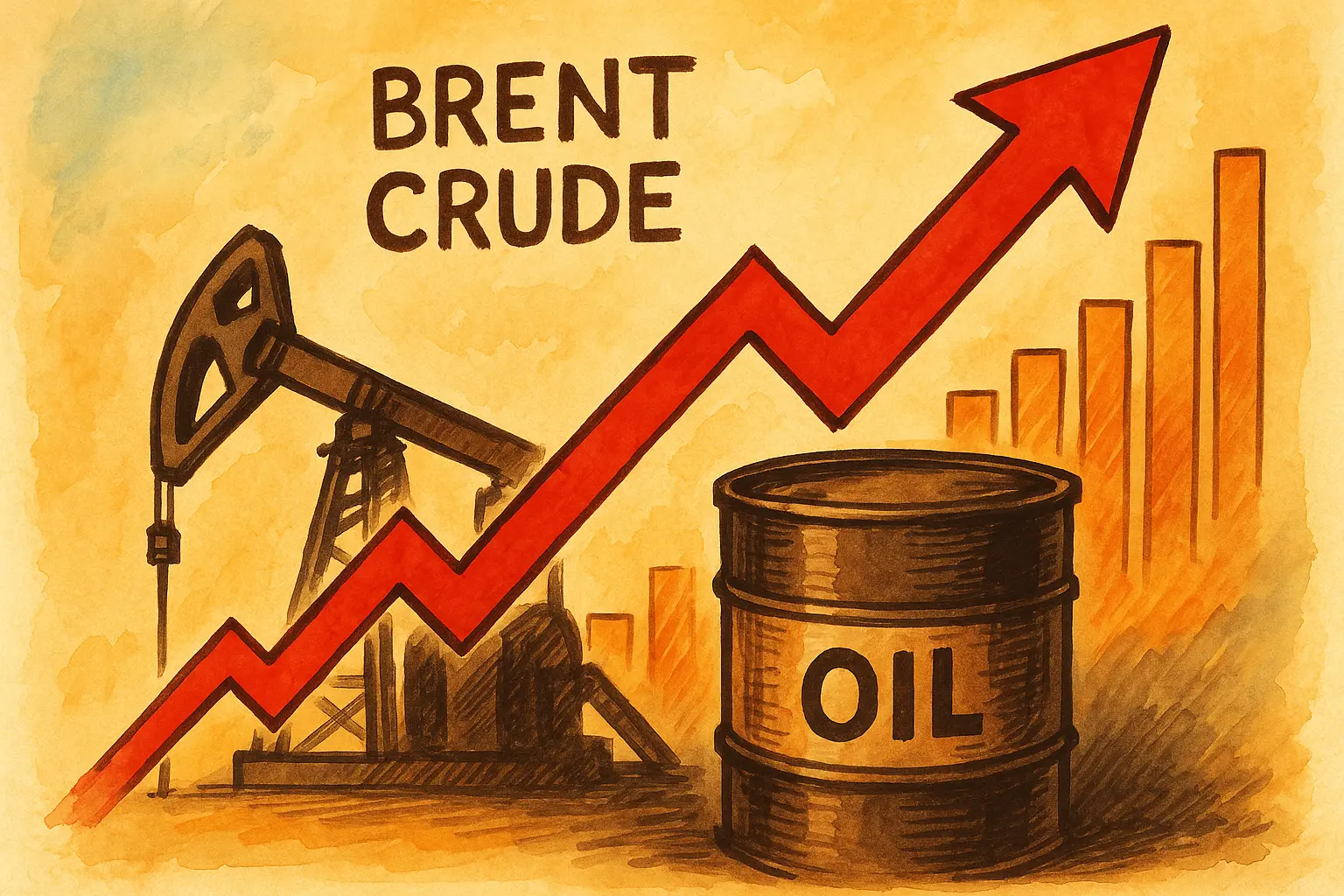
Global investors opened the week of August 17, 2026 with a split screen. On one side, a fresh wave of artificial intelligence optimism — powered by blowout revenue growth at Anthropic — is dragging technology stocks and chipmakers higher and pushing the dollar to a three-month low. On the other, Brent crude is closing in on $90 a barrel as fighting between Israel and Iran-backed Hezbollah threatens to reopen the wider Middle East conflict that has haunted energy markets for most of 2026.
The result is a market that cannot decide whether to celebrate or hedge — and that ambivalence is now the defining feature of the macro landscape heading into the autumn.
The AI Trade Is Back in the Driver’s Seat
Technology shares lifted major indices in early trading after Anthropic PBC posted stellar revenue growth that reinforced investor conviction that the current wave of AI infrastructure spending has staying power rather than fading into a bubble narrative. Nasdaq 100 futures climbed roughly half a percent, with S&P 500 futures inching higher, while storage and memory-chip makers — Sandisk and Micron among them — rallied sharply in premarket trading as the AI capex story once again pulled hardware suppliers along for the ride.
The knock-on effect reached currency markets too: the dollar slipped to its weakest level in three months as capital rotated toward risk assets and traders trimmed expectations for near-term Federal Reserve tightening.
Oil’s War Premium Refuses to Fade
But the same session that celebrated AI earnings also had to reckon with a stubborn geopolitical risk premium in energy markets. Brent crude pushed toward $90 a barrel as renewed fighting between Israel and Iran-backed Hezbollah dealt a fresh setback to efforts to wind down the parallel conflicts that have kept the Middle East on edge for much of the year. A separate briefing on global macro conditions noted Brent was quoted near $88.50 a barrel after a 6% gain the previous week, with traders now pricing only around a 30% chance of a Fed move in September as soft US retail sales and weakening consumer sentiment complicate the rate picture.
That combination — a war premium in crude alongside cooling US consumer data — is an unusual one. Normally, weak consumer spending would argue for lower yields and a dovish central bank stance; an energy shock typically argues the opposite, since it risks reigniting headline inflation. Markets are, for now, betting that the Fed will look past the oil spike as temporary and focus on the softening labor and retail picture instead.
What This Means for the Nine-Market Investor
For readers tracking capital flows across the UK, US, Canada, the Gulf, and Asia, the AI-versus-oil tension has distinct regional read-throughs:
- United States: A weaker dollar and fading Fed hike odds are generally supportive for equities, but a sustained move toward $90 Brent would complicate the disinflation narrative the Fed has been counting on.
- United Kingdom: UK gilt yields have been highly sensitive to the same Middle East oil dynamics for most of 2026, and a fresh leg higher in crude threatens to reverse recent relief in borrowing costs.
- Gulf markets (UAE, and by extension Pakistan’s remittance corridor): Higher-for-longer oil prices are a fiscal tailwind for Gulf exporters and, indirectly, for remittance flows into South Asia.
- Asia (China, Singapore, Malaysia): Semiconductor and AI-hardware exporters stand to benefit from the same capex cycle lifting Micron and Sandisk, reinforcing a theme that has already shown up in Malaysia’s and Singapore’s second-quarter growth data.
The Bigger Picture
Treasury yields were mixed on the session, reflecting the market’s genuine uncertainty about which force — AI-driven risk appetite or oil-driven inflation risk — will dominate positioning into September. Investors have spent much of 2026 whipsawed by exactly this tension, and Monday’s session suggests the pattern is far from resolved.
For now, the AI trade has the louder voice. But energy markets have a way of reasserting themselves quickly, and any escalation in the Israel-Hezbollah front — or renewed disruption risk near the Strait of Hormuz — could quickly overshadow even the strongest earnings story in tech.
Key Takeaways
- Anthropic’s revenue beat is fueling a fresh AI-hardware rally, lifting chip and storage stocks and weakening the dollar to a three-month low.
- Brent crude is approaching $90 a barrel on renewed Israel-Hezbollah fighting, keeping an energy-driven inflation risk alive.
- Fed rate-cut odds for September have fallen to roughly 30% amid the conflicting signals from soft consumer data and firm oil prices.
- The tension between AI optimism and energy risk is likely to remain the dominant cross-asset theme into the autumn.
Frequently Asked Questions
Why are tech stocks rallying today? Strong revenue growth reported by AI company Anthropic has reinforced investor confidence that large-scale AI infrastructure spending will continue, lifting chipmakers and storage companies in premarket trading.
Why is oil near $90 a barrel? Renewed fighting between Israel and Iran-backed Hezbollah has revived fears of a wider Middle East conflict, adding a geopolitical risk premium to crude prices.
What are the odds of a Fed rate move in September 2026? Traders are currently pricing roughly a 30% probability of Fed action in September, reflecting the tension between softer US consumer data and elevated oil-driven inflation risk.
Discover more from The Economy
Subscribe to get the latest posts sent to your email.
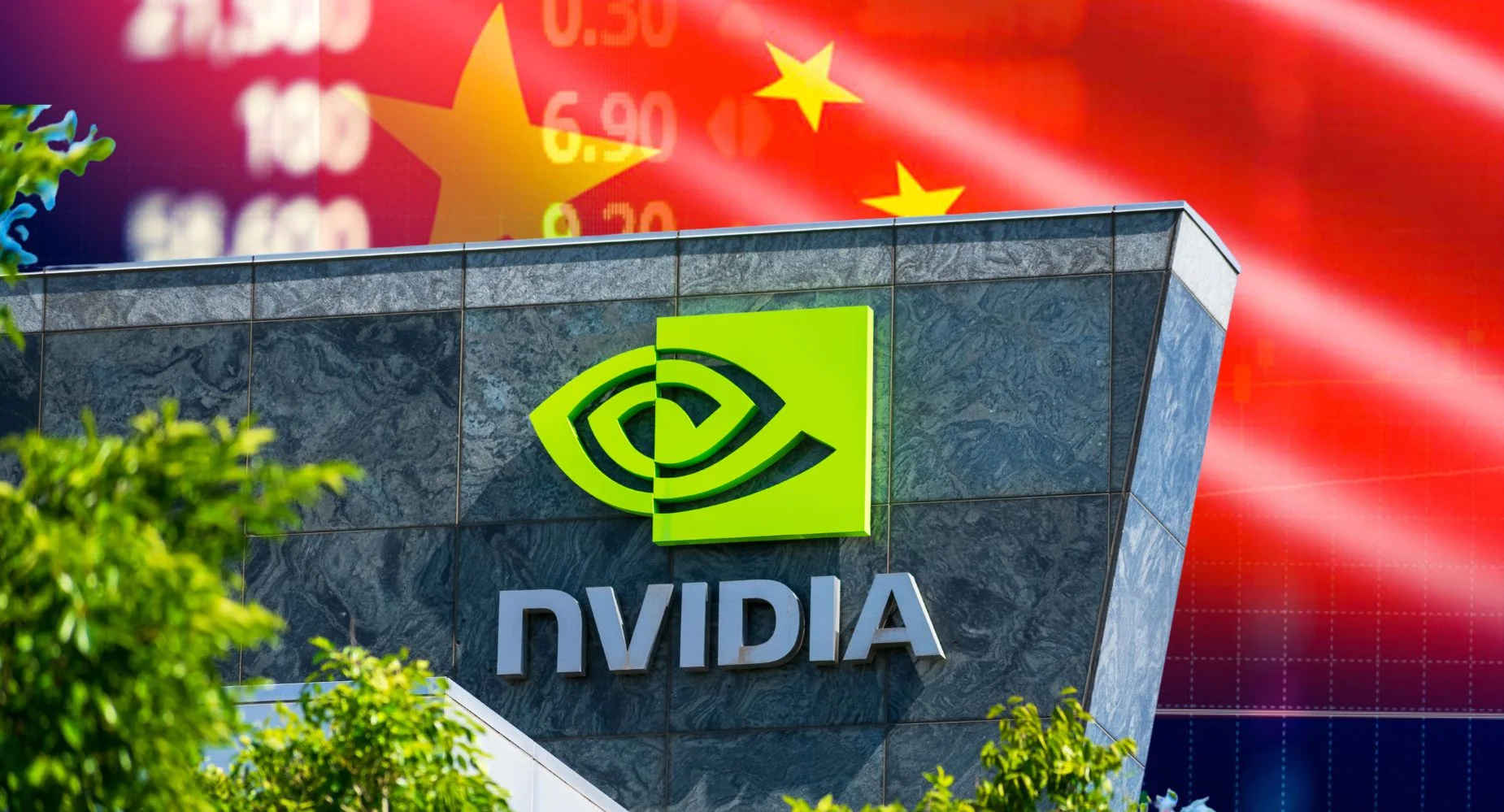
Jensen Huang wants Wall Street to believe a GPU can behave like a Manhattan office tower. This week, six of the largest asset managers on Earth said yes — and quietly bet half a trillion dollars on it.
Nvidia has unveiled agreements with six of the world’s largest asset managers — BlackRock, Blackstone, Apollo, KKR, Brookfield, and Goldman Sachs — aimed at assembling a $500 billion financing pipeline for data centers and GPU clusters. The target customers: unrated AI startups, neocloud providers, and other non-investment-grade firms that can’t buy chips outright.
The pitch, in Huang’s own words: Nvidia’s AI factory platform is “an investable asset, an infrastructure asset,” because it’s productive, revenue-generating, fungible, and runs every AI model across the cloud ecosystem.
The Story
This is aerospace-investment-grade financial engineering applied to silicon — and the entire thesis rests on one assumption that has never been tested at this scale: that a chip can hold value the way a toll road does.
Why Lenders Usually Trust Physical Collateral
In conventional asset-backed lending, banks extend credit because a defaulted borrower’s collateral — a building, a warehouse, a cargo ship — can be repossessed and resold, since such assets typically have established secondary markets and remain useful for decades. GPUs have no such track record.
The China Problem
Here’s where the plan gets fragile. Analysts warn that rapid hardware depreciation, worsened if China floods the market with low-cost compute, could crash the collateral values backing these loans. Credit analyst Ben Emons, founder of FedWatch Advisors, believes the single biggest threat to Nvidia’s financing model comes from China, which is rapidly ramping up domestic compute capacity and could choose to flood the market with cheap silicon in a price war.
The math gets uncomfortable fast:
- High default risk could push investor yield demands to between 11% and 17% — private-credit-level returns for what’s being marketed as infrastructure debt.
- If GPU values plunge while borrowers still owe billions in financing, Wall Street lenders could be left holding collateral worth significantly less than the outstanding debt.
- China’s growing domestic chip industry could eventually produce cheaper AI hardware and push GPU prices down, undercutting the entire collateral thesis from outside the U.S. regulatory perimeter entirely.
Nvidia’s Counter-Argument
Huang isn’t ignoring the risk — he’s betting his software layer solves it. Nvidia argues its CUDA software continuously improves hardware performance after deployment, allowing older chips to stay productive and generate yield longer than traditional accounting models predict, and points to real pricing data: rental rates for Nvidia’s H100 chips rose from roughly $1.70 per GPU-hour in late 2025 to about $2.35 per GPU-hour this year, driven by hyperscaler scarcity.
The Solution — What This Means for Your Portfolio
Whether Huang or the skeptics are right will shape more than Nvidia’s balance sheet. This is now a macro question for anyone with exposure to AI infrastructure, private credit funds, or the six asset managers involved.
Check your exposure: If you hold funds managed by BlackRock, Blackstone, Apollo, KKR, Brookfield, or Goldman Sachs, some portion of new AI-infrastructure lending vehicles may carry this exact collateral risk. Read the fine print on any “AI infrastructure debt” or “digital infrastructure credit” fund before allocating fresh capital.
- Bull case: Nvidia keeps its performance lead, CUDA software extends chip useful life, and $500 billion in financing flows smoothly into data center buildout — supporting the current AI capex supercycle.
- Bear case: Older processors shift from frontier AI training to lower-margin inference workloads, reducing resale value, and Chinese competition accelerates the decline — leaving lenders exposed exactly when the market can least absorb it.
Frequently Asked Questions
What is Nvidia’s $500 billion AI financing plan? A pipeline built with six major asset managers to fund data centers and GPU clusters for companies that lack the credit rating or cash to buy chips outright.
Why does China matter to this deal? China’s expanding domestic chip industry could produce cheaper AI hardware, pushing GPU prices — and the value of the collateral backing these loans — down faster than expected.
What return are investors demanding for this risk? Estimates range from 11% to 17%, depending on where an investor sits in the capital structure — well above traditional infrastructure debt yields.
Discover more from The Economy
Subscribe to get the latest posts sent to your email.

Bessent’s Debt Buybacks Explained: Impact on Your Mortgage

SEC Crypto Regulations 2026: What They Mean for Your Bitcoin Wallet

USPS vs FedEx Tracking 2026: How to Cut E-commerce Shipping Costs

Dow Jones Analysis 2026: Are AI and Machine Learning Stocks Still a Buy?

Amazon Prime vs Walmart+: Which Membership Saves You More in 2026?

Canva vs Adobe: Best Design Software for E-commerce Brands in 2026

Capital One vs Wells Fargo: Best Credit Card for Buying Crypto in 2026

The 2026 Guide to Staking ADA and BNB: How to Earn Passive Crypto Income on the Best Platforms

BigLaw Backlash 2026: Why Top US Firms Are Being Slammed for “Crazy” 1L Hiring

SpaceX Falcon 9 Upper Stage Crashes Into Moon, Creating New Crater Near Einstein

7-Eleven, GameStop, and Grocery Outlet Slash Hundreds of Stores in 2026 Restructuring Wave

Toyota Recalls 508,000 Camrys Over Blank Dashboard Screens That Disable Turn Signals

State Farm Mails Record $5 Billion Dividend to Auto Policyholders: How to Claim Your Check

Indonesia’s Rupiah and FDI Confidence Gap Widens Despite Headline Growth

China Politburo July 2026: Stimulus Signals Explained

Russia Fuel Shortages 2026: Inside a Cracking War Economy

Top 15 Financial Stocks for Investment in PSX

Pakistan Passed Its Third IMF Review

SpaceX Stock Lockup Expiration Explained: Why $123B in Shares Could Hit the Market

Andy Burnham, UK Gilts and Mortgages: July 2026 Explainer

Pakistan IMF Program 2026: Inside the Push Toward an Interest-Free Economy

Russia Oil Revenue 2026: How Sanctions on Rosneft and Lukoil Are Draining the War Chest

Pakistan’s 2026 Monsoon Floods Threaten Fragile Economic Recovery as Inflation Nears 9%

Russia Oil Revenue 2026: The Iran War Windfall and What a Hormuz Deal Means for Moscow

Russia’s Budget Deficit Blew Past Its Full-Year Target in Three Months

Canada US Trade War 2026: Inside Carney’s Push to Cut Ties With Trump’s Tariffs

China Economy 2026: How AI Exports and a Property Crash Are Splitting Growth in Two

Oil Prices Fall as Strait of Hormuz Reopens: 2026 Update
-

 Markets & Finance8 months ago
Top 15 Stocks for Investment in 2026 in PSX: Your Complete Guide to Pakistan’s Best Investment Opportunities
-

 Analysis6 months ago
Johor’s Investment Boom: The Hidden Costs Behind Malaysia’s Most Ambitious Economic Surge
-

 Analysis6 months ago
Top 10 Stocks for Investment in PSX for Quick Returns in 2026
-

 Analysis7 months ago
Brazil’s Rare Earth Race: US, EU, and China Compete for Critical Minerals as Tensions Rise
-

 Banks7 months ago
Best Investments in Pakistan 2026: Top 10 Low-Price Shares and Long-Term Picks for the PSX
-

 Investment7 months ago
Top 10 Mutual Fund Managers in Pakistan for Investment in 2026: A Comprehensive Guide for Optimal Returns
-

 Global Economy8 months ago
15 Most Lucrative Sectors for Investment in Pakistan: A 2025 Data-Driven Analysis
-

 Global Economy8 months ago
Pakistan’s Export Goldmine: 10 Game-Changing Markets Where Pakistani Businesses Are Winning Big in 2025