
Analysis
KOSPI Record Crash: South Korea’s Stock Market Suffers Its Worst Day in History as the US-Iran War Detonates a Global Sell-Off

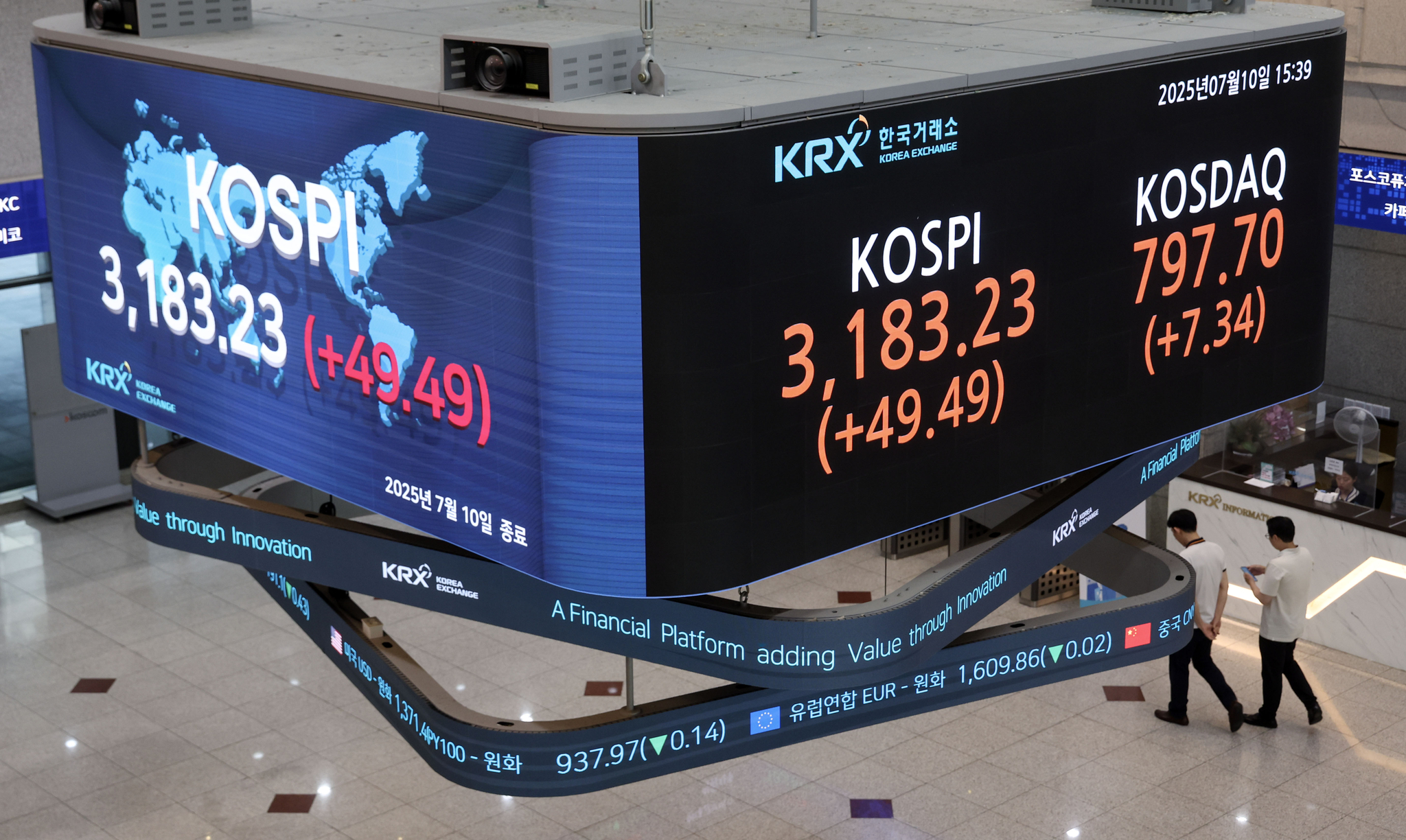
At 9:03 a.m. Korean Standard Time, the screens inside the Korea Exchange trading hall in Yeouido, Seoul, turned a uniform, searing red. Within minutes, the sell orders were not arriving in waves — they were arriving like a flood breaking through a dam. Algorithms fired. Margin calls cascaded. Retail investors, who only weeks ago were borrowing money to buy Samsung Electronics at record highs, watched years of gains dissolve in real time. By 9:17 a.m., trading had been suspended for twenty minutes: the circuit breaker, a mechanism designed for exactly this kind of controlled catastrophe, had triggered for just the seventh time in the KOSPI’s 43-year history.
By the closing bell, South Korea’s benchmark index had shed 12.06 percent — 698.37 points — to close at 5,093.54. It was the worst single day in the KOSPI’s recorded history, surpassing even the paralysing shock of September 11, 2001. The world’s hottest major stock market, up more than 40 percent in just two months, had just been broken — not by a domestic crisis, not by a company scandal, but by missiles fired 6,000 kilometres away in the Persian Gulf.
What Happened: A Minute-by-Minute Collapse
The trigger was a week in the making. On the morning of February 28, 2026, US and Israeli forces launched a coordinated series of airstrikes against Iran, an operation that reportedly included the assassination of Supreme Leader Ali Khamenei. Iran’s response was swift and economically calculated: the Islamic Revolutionary Guard Corps announced a closure of the Strait of Hormuz, the narrow chokepoint through which roughly 20 million barrels of crude oil transit daily — accounting for approximately 20 percent of global supply.
South Korean markets were closed on Monday, March 2, for Independence Movement Day. When trading reopened Tuesday morning, the pent-up global selling pressure — two full days of deteriorating sentiment compressed into a single session — hit simultaneously. The KOSPI fell 7.24 percent on Tuesday, closing at 5,791.91, its largest single-session point drop on record at that time.
Wednesday brought something far worse.
The timeline:
- 09:00 KST — KOSPI opens at 5,592.29, already down sharply from Tuesday’s close.
- 09:08 KST — Circuit breaker triggered on the KOSDAQ after losses exceed 8 percent; trading suspended 20 minutes.
- 09:14 KST — KRX activates sidecar mechanism on the KOSPI as sell orders overwhelm buy-side liquidity.
- 09:17 KST — KOSPI circuit breaker fires. At the time of the halt, the index is down 469.75 points — 8.11 percent — to 5,322.16.
- 09:37 KST — Trading resumes. Selling immediately intensifies.
- 11:20 KST — KOSPI reaches intraday low of 5,059.45, down 12.65 percent — the worst intraday reading in 25 years and 11 months.
- 15:30 KST — Official close: 5,093.54, down 12.06 percent. Of the more than 800 stocks on the benchmark, just 10 finish in the green.
The KOSDAQ, South Korea’s technology-heavy secondary index, fared even worse, closing down 14 percent at 978.44 — its largest single-day decline since its founding in January 1997. The combined two-day equity wipeout erased an estimated $430 billion in market value.
Why South Korea Was Hit Hardest: The Anatomy of a Perfect Storm
Every major economy felt the tremor of the Iran conflict on March 4. But none — not Japan, not Taiwan, not China — fell anything close to what Seoul experienced. The gap is not coincidental. It is structural.
Energy dependence, extreme and existential. South Korea imports approximately 98 percent of its fossil fuels, with around 70 percent of its crude oil sourced from the Middle East, much of it transiting the Strait of Hormuz. According to the US Energy Information Administration, South Korea ranks among the top importers of Hormuz-transit crude globally. When Iran threatened to close — and partially did close — that chokepoint, the calculus for Korean manufacturers and energy utilities changed instantly. Higher oil does not merely raise input costs; it compresses margins across the entire export-driven economy, stokes inflation, and pressures the current account. Nomura estimates that South Korea’s net oil imports represent 2.7 percent of GDP — among the highest of any major economy and a stark vulnerability flag in any energy shock scenario.
Semiconductor concentration, a double-edged sword. The KOSPI’s extraordinary 2026 rally — up more than 40 percent in the first two months of the year, touching an all-time high above 6,347 in late February — was almost entirely the story of two companies: Samsung Electronics and SK Hynix. Together, the two memory chip giants account for close to 50 percent of the index by market capitalisation, according to Morningstar equity research. When sentiment turned, that concentration did not merely reflect the market’s decline — it amplified it. Samsung Electronics fell 11.74 percent to 172,200 won. SK Hynix dropped 9.58 percent to 849,000 won. Hyundai Motor collapsed 15.80 percent. Kia Corp shed 13.82 percent. Shipping stocks Pan Ocean, HMM, and KSS Line — directly exposed to Hormuz route disruption — plunged between 16 and 19 percent.
As Lorraine Tan, Asia director of equity research at Morningstar, noted, “The decline in the KOSPI can broadly be attributable to the single-name concentration that we see in Korean markets.” She added that the drop also implied growing concern that AI data-centre adoption could slow due to significantly higher energy costs — a double hit for chips stocks caught between geopolitical risk and demand uncertainty.
Margin debt: the accelerant. Before the conflict erupted, South Korean retail investors had borrowed heavily to ride the bull market. Margin debt and broker deposits had surged to record highs. When prices began to fall, those leveraged positions triggered forced liquidations, turning an orderly retreat into a rout. “There’s been a lot of buying on credit, especially in the heavyweight stocks,” Kim Dojoon, chief executive of Zian Investment Management, told Bloomberg. “If there’s another drop on Thursday, nobody will catch a falling knife.”
The holiday amplifier. Monday’s market closure meant that South Korean markets absorbed two full days of global deterioration in a single session on Tuesday — and then suffered a second cascading wave on Wednesday, with no circuit of relief between them.
Historical Benchmark: Into Uncharted Territory
To understand the magnitude of what happened in Seoul on March 4, 2026, consider the events it eclipses.
The KOSPI has recorded a decline of 10 percent or more in a single session on only four occasions in its 43-year history. According to the Korea Herald and historical KRX data, those occasions are:
| Date | Event | KOSPI Decline |
|---|---|---|
| April 17, 2000 | Dot-com bubble peak | -11.63% |
| September 12, 2001 | Post-9/11 shock | -12.02% |
| October 24, 2008 | Global Financial Crisis | -10.57% |
| March 4, 2026 | US-Iran War | -12.06% |
The September 12, 2001 session had stood for nearly 25 years as the single worst day in South Korean market history — a day when global commerce froze and the world reoriented around fear. Wednesday’s close eclipsed it by a margin of 0.04 percentage points. The intraday low — 12.65 percent — was the deepest since April 17, 2000.
The KOSDAQ’s 14 percent plunge, meanwhile, surpassed its previous worst session: the 11.71 percent rout of March 19, 2020, at the nadir of the COVID-19 pandemic panic. What happened this week in Seoul did not merely set a record. It rewrote the category entirely.
What makes the comparison to 2001 particularly sobering is context. On September 12, 2001, markets around the world fell together. In 2026, Wall Street is barely flinching: the S&P 500 fell approximately 1 percent overnight. The KOSPI’s collapse is not a global synchronised shock — it is something more targeted, and in some ways more alarming: a geopolitical vulnerability unique to South Korea’s economic structure being stress-tested in real time.
Global Contagion: Oil, Currencies, and the Hormuz Premium
Seoul was the epicentre, but the aftershocks radiated across the region and beyond.
Oil. Brent crude surged 10–13 percent in the days following the initial strikes, trading around $80–82 per barrel by March 2–4, according to energy analysts cited by Reuters. Analysts warned that if the Hormuz disruption proves sustained, prices could breach $100 per barrel — a level that would add an estimated 0.8 percentage points to global inflation, according to projections cited in the economic impact assessment published by Wikipedia. Natural gas prices in Europe surged 38 percent following reported attacks on Qatari LNG export facilities.
The Korean won. The currency markets told the same story in different decimal places. The won briefly pierced 1,500 per dollar on Wednesday — a level not seen since March 10, 2009, at the nadir of the global financial crisis. It was, psychologically, an enormous threshold. Yan Wang, chief of emerging markets at Alpine Macro, told the Korea Herald that the Korean won is historically “one of the most sensitive emerging market currencies to global risk sentiment,” while cautioning that fundamentals do not justify such weakness unless the conflict drags on significantly.
Asian markets. The contagion spread, though nowhere matched Seoul’s severity:
- Japan Nikkei 225: -3.61% to 54,245.54
- Taiwan TAIEX: -4.40% to 32,829
- Hong Kong Hang Seng: -2.00% to 25,249.48
- Shanghai Composite: -1.00% to 4,082.47
The asymmetry is instructive. China, a major oil importer, absorbed the shock with relative composure — partly due to its diversified energy sourcing and partially because domestic policy responses appeared pre-positioned. Japan and Taiwan, similarly dependent on Middle East energy, fell meaningfully but remained far above Korean levels, their indices lacking the same speculative leverage overhang.
Travel and supply chains. Iran’s airspace was closed to civilian aircraft following the initial strikes on February 28. Multiple carriers suspended Middle East routes, with knock-on effects for travel and tourism across the Gulf. Shipping insurance costs for Hormuz-transit tankers surged, with analysts suggesting the “war premium” could add $5–15 per barrel to delivered oil costs regardless of military escort arrangements — a persistent, structural cost increase for energy importers like South Korea.
Three Scenarios: What Comes Next
The trajectory of South Korea’s markets now depends almost entirely on one variable: how long the conflict lasts, and whether the Strait of Hormuz reopens to normal commercial traffic.
Scenario 1 — Rapid Resolution (probability: 30%) The US achieves its stated military objectives within four to five weeks, as President Trump publicly signalled. Iranian counter-retaliation is contained. Oil retreats to sub-$80. In this scenario, the structural case for Korean equities reasserts itself quickly — AI memory demand remains intact, Samsung and SK Hynix resume margin expansion, and the KOSPI, still up approximately 21 percent year-to-date even after the crash, stages a sharp technical rebound. Forced liquidations reverse. Analysts at Seoul-based brokerages place a 10 percent rebound in the first week post-ceasefire as the base case for this outcome.
Scenario 2 — Prolonged Stalemate (probability: 50%) The conflict extends beyond one month. The Strait of Hormuz remains partially disrupted. Oil stabilises in the $85–95 range. South Korea’s current account balance deteriorates. The Bank of Korea is forced to weigh currency intervention against inflation pressures — a familiar but painful dilemma for an open economy. The KOSPI finds a floor in the 4,800–5,000 range as earnings revisions bite. Recovery is slow, uneven, and dependent on semiconductor demand holding firm even as energy costs rise. Foreign investors remain cautious.
Scenario 3 — Full Energy Shock (probability: 20%) The conflict escalates into a sustained regional war. Hormuz closes effectively for multiple months. Crude reaches $100 or beyond. In this scenario, Hyundai Research Institute’s earlier estimate — that sustained $100 crude could shave 0.3 percentage points from South Korea’s 2026 GDP growth — becomes conservative. The KOSPI potentially tests 4,000. The Bank of Korea is forced into emergency rate decisions. The IMF revises Asian growth projections downward across the board. Global stagflation risks — higher energy prices coinciding with slower growth — re-enter the policy conversation for the first time since 2022.
Investor Playbook and Policy Response
What regulators and institutions are doing. The Bank of Korea issued a statement vowing to “respond to herd-like behaviour” in financial markets and pledged liquidity support measures if volatility persisted. The Korea Exchange activated circuit breakers and sidecar mechanisms as designed, but market participants noted that the tools slowed rather than stopped the cascade. Foreign investors, after dumping more than 12 trillion won in equities over the two-session period, ended Wednesday as modest net buyers — 231.2 billion won in net purchases — a tentative signal that some institutional money saw the dislocation as an entry point.
BofA’s take. “The sharp decline reflects the outsized leverage in long positions heading into February 28, 2026, when market sentiment was highly bullish on Korean tech due to the aggressive shortage of memory chips used in AI server production,” BofA strategist Chun Him Cheung told Investing.com. The implication: this was not a fundamental repricing of Korea’s economic future — it was a positioning purge, painful but potentially creating opportunity.
Where rational capital might look. For investors with a six-to-twelve-month horizon, the crash has produced a rare dislocation between price and fundamental value in high-quality names. Samsung Electronics and SK Hynix — despite their catastrophic session — retain structural leadership positions in AI-grade memory chips, a market with no near-term substitute suppliers. Analysts at IM Securities and Renaissance Asset Management both noted that if the conflict resolves within one month, a rebound toward 5,500–5,800 on the KOSPI is plausible. Defensive plays in South Korean energy utilities, domestic-demand retailers, and defence contractors — which have benefited from the same geopolitical tension that crushed the broader market — offer asymmetric positioning.
For retail investors caught in forced liquidations, the message is sobering but familiar: leverage borrowed at the peak of euphoria is the most reliable way to transform a geopolitical shock into a personal financial crisis.
Conclusion: The Price of Being the World’s Hottest Market
There is a painful irony at the heart of what happened to South Korea’s stock market this week. The KOSPI was, by virtually every measure, the world’s best-performing major equity index in early 2026. It rose on the back of genuine structural tailwinds — AI memory demand, corporate governance reforms, a re-rating of Korea’s innovation economy by global fund managers. The 40-percent rally in two months was not pure speculation; it was grounded in earnings.
But markets running that fast accumulate fragility. Leverage builds. Concentration intensifies. The margin for error narrows. When an external shock arrives — not a Korean shock, not a chip-sector shock, but a missile fired in the Persian Gulf — there is no buffer. The circuit breakers fired at 9:17 a.m. and could not stop what came afterward.
The KOSPI’s record-breaking crash is not, in isolation, a verdict on South Korea’s economic future. The structural case for its semiconductor giants remains intact. The reforms that re-rated the market over the past year have not been reversed. What has changed is the risk premium: an economy that earns its export surplus in silicon must pay for its energy in oil, and oil now carries a war premium that markets cannot price with confidence.
The Strait of Hormuz is 39 kilometres wide at its narrowest point. For South Korea, that passage has never felt smaller.
FAQs (FREQUENTLY ASKED QUESTIONS)
Q1: Why did South Korea’s stock market fall more than any other country’s during the US-Iran war? South Korea’s extreme vulnerability stems from three intersecting factors: it imports approximately 98 percent of its fossil fuels, with around 70 percent sourced from the Middle East via the Strait of Hormuz; its benchmark KOSPI index is heavily concentrated in semiconductor stocks (Samsung and SK Hynix account for close to half the index’s market cap) that had rallied more than 40 percent in early 2026 on margin debt; and a public holiday on Monday March 2 compressed two days of global selling into a single catastrophic Tuesday session.
Q2: How does the March 4, 2026 KOSPI crash compare to the September 11, 2001 drop? The KOSPI fell 12.06 percent on March 4, 2026, narrowly eclipsing the 12.02 percent decline recorded on September 12, 2001, the day after the 9/11 attacks. The intraday low of 12.65 percent was the deepest since April 17, 2000. It is now the worst single-day session in the KOSPI’s 43-year recorded history, surpassing four prior instances of 10-percent-plus declines including those during the dot-com bubble, 9/11, and the 2008 global financial crisis.
Q3: What happened to the Korean won during the KOSPI crash? The Korean won fell sharply during the two-day rout, briefly breaching 1,500 per dollar on Wednesday March 4 — a level not seen since March 2009 at the depth of the global financial crisis — before closing around 1,466 per dollar. The Bank of Korea vowed to respond to “herd-like behaviour” in currency markets and signalled readiness for intervention if volatility persisted.
Q4: Will South Korea’s stock market recover from the US-Iran war selloff? The outlook depends heavily on the duration of the conflict and whether the Strait of Hormuz reopens to normal commercial shipping. Most Seoul-based analysts see two primary scenarios: a quick resolution (within four to five weeks) that triggers a sharp technical rebound toward 5,500–5,800 on the KOSPI, or a prolonged stalemate that sees the index finding a floor near 4,800–5,000 as earnings are revised downward. The structural bull case — driven by AI memory chip demand and corporate governance improvements — has not been invalidated, but the energy-price risk premium has risen substantially.
Discover more from The Economy
Subscribe to get the latest posts sent to your email.



Navigating Mortgage and Loan Refinancing in a High-Yield Environment
Global public debt crossing critical thresholds has kept central bank policies volatile, resulting in fluctuating US Treasury yields throughout 2026. For homeowners and commercial property holders burdened by previous high-interest borrowing cycles, finding optimal refinance windows has become a high-stakes financial puzzle. Stalled disinflation and stubborn employment numbers mean rate cuts are incremental, requiring borrowers to act with precision.
Timing your mortgage or commercial loan refinance in this environment requires a deep understanding of yield curve movements and lender risk appetites.
Decoding 2026 Refinance Dynamics
The 10-Year Treasury Yield Benchmark
Mortgage rates continue to track closely with the 10-year US Treasury yield. When macroeconomic anxiety spikes debt issuance, yields rise, tightening consumer borrowing capacity. Savvy borrowers monitor weekly Treasury auctions to lock in rates during brief dip windows.
Hybrid ARMs and Alternative Structures
With fixed rates remaining elevated, 7/1 and 10/1 adjustable-rate mortgages (ARMs) have surged in popularity. These products offer lower initial monthly payments, giving borrowers breathing room until central bank easing cycles fully materialize.
| Loan Product | Current Rate Range | Best For | Key Risk Factor |
| 30-Year Fixed Mortgage | 6.2% – 6.8% | Long-term predictability | Higher initial monthly outlay |
| 7/1 Hybrid ARM | 5.5% – 5.9% | Short-term ownership / flipping | Rate reset risk after year 7 |
| Commercial Refinance | 7.0% – 8.2% | Corporate asset restructuring | Strict DSCR lender covenants |
Actionable Steps for Successful Refinancing
To maximize your chances of securing favorable refinance terms in a volatile market, follow a disciplined preparation strategy.
Boost Your Credit Score Immediately: Lenders in 2026 are applying stringent credit tiering; a 20-point increase can drop your APR by a crucial quarter-point.
Shop Regional Credit Unions: Smaller financial institutions often offer portfolio loans with more flexible underwriting than major national banks.
Calculate the Break-Even Point: Ensure your total closing costs are recouped through monthly savings within 24 months of closing.
“Market Strategist View: Refinancing in 2026 is an exercise in opportunistic timing. Borrowers must maintain immaculate financial profiles ready to strike the moment Treasury yields dip.”
Mastering the complexities of today’s debt environment ensures you can successfully lower your debt service costs and protect your long-term financial stability.
Discover more from The Economy
Subscribe to get the latest posts sent to your email.

The days of pulling generic auto insurance quotes based purely on your zip code and age are officially over. In 2026, insurance comparison engines are powered entirely by generative AI and real-time telematics. These platforms digest thousands of live data points—ranging from your driving smoothness via connected vehicle sensors to real-time traffic congestion patterns—to generate hyper-personalized premiums instantly.
For consumers, this evolution represents both a massive opportunity for savings and a hidden trap for penalty pricing. Understanding how AI algorithms evaluate risk is essential for anyone looking to lower their monthly auto insurance premiums.
How AI Comparison Engines Evaluate Your Risk Profile
Behavioral Telematics and Connected Cars
Modern cars stream performance data directly to insurance aggregators. Generative AI models analyze braking sharpness, acceleration curves, cornering G-forces, and phone distraction metrics. Drivers who maintain smooth, defensive habits are rewarded with dynamic rate cuts of up to 40% compared to traditional rating tiers.
Predictive Traffic and Weather Modeling
AI tools now cross-reference your daily commute route with predictive weather and accident probability models. If your standard parking location or driving corridor has a statistically higher incidence of uninsured motorist claims, your quotes will reflect that hyper-local risk assessment.
| Comparison Factor | Traditional Rating Model | 2026 Generative AI Model | Impact on Premium |
| Mileage & Usage | Annual estimated odometer reading | GPS tracking & live trip duration | High (up to 35% savings) |
| Driving Behavior | MVR driving record & accidents | Real-time braking, speed, & G-force | Critical (determines tier) |
| Vehicle Tech | Make, model, and safety rating | ADAS calibration & repair cost data | Moderate |
Strategies to Lower Your AI-Driven Insurance Quote
To outsmart the algorithm and secure the lowest possible premium in 2026, drivers must proactively manage their digital footprint on insurance platforms.
Opt-In for Telematics Trial Periods: Many insurers offer immediate 15% discounts just for installing their driving app; let it track safe habits for 30 days to lock in permanent savings.
Scrub Unverified Public Records: Ensure your motor vehicle report is free of clerical errors that AI risk models misinterpret as reckless behavior.
Compare AI Aggregators: Use platforms that integrate multi-carrier API feeds rather than single-brand comparison sites to find the best risk-adjusted rate.
“Industry Note: AI-driven pricing rewards transparency and precision. Drivers who actively manage their telematics data consistently out-save those relying on legacy quote calculators.”
Embracing AI comparison tools allows savvy policyholders to customize coverage limits precisely to their driving habits, eliminating wasted premium spend while ensuring robust protection.
Discover more from The Economy
Subscribe to get the latest posts sent to your email.

Despite decades of bans and strict handling mandates, asbestos remains a silent killer across legacy manufacturing plants, shipyards, and modern green-energy infrastructure retrofits. In 2026, regulatory changes by the EPA and tightened occupational health standards have triggered a fresh wave of mesothelioma litigation. Manufacturers attempting to fast-track industrial transitions are encountering catastrophic oversight, exposing workers to legacy toxins and opening corporate parent companies to unprecedented liability.
Navigating a mesothelioma claim in 2026 requires understanding how modern industrial supply chains intersect with historical exposure. Trusts established decades ago are being audited under stricter transparency laws, altering payout ratios and accelerating fast-track settlements for terminally ill plaintiffs.
Modern Industrial Exposure Hotspots
Green Retrofitting and Renewable Energy Infrastructure
A primary source of 2026 asbestos exposure occurs during the decommissioning and retrofitting of older industrial facilities for renewable energy production. Workers insulating electrical grids, modernizing HVAC systems, or upgrading manufacturing floors frequently disturb encapsulated asbestos materials that were improperly documented or ignored during facility audits.
Automotive and Aerospace Supply Chains
With advanced manufacturing booming, workers handling specialized friction materials, gaskets, and heat shields face ongoing risks. Supply chain tracing has become more sophisticated, allowing legal teams to pinpoint exact corporate entities responsible for raw material distribution across multinational borders.
| Industry Sector | Primary Exposure Risk | Legal Venue / Trust | Avg. Claim Value Range |
| Green Energy Retrofit | Disturbed insulation, pipe lagging | Federal Tort / Manufacturer Trust | $1.2M – $3.5M |
| Shipbuilding & Marine | Boiler insulation, structural seals | Asbestos Bankruptcy Trusts | $800K – $2.4M |
| Automotive Manufacturing | Brake components, high-heat gaskets | Third-Party Product Liability | $600K – $1.8M |
Securing Maximum Compensation: Steps for Plaintiffs
Time is of the essence in mesothelioma cases. Plaintiffs and their families must act decisively to secure financial recovery before statutes of limitations expire.
Retain Specialized Counsel: Work exclusively with national mesothelioma law firms possessing deep historical databases of asbestos-containing products.
Audit Employment History: Document every job site, supervisor name, and equipment brand encountered throughout your career.
Expedite Medical Filings: Secure a formal pathological diagnosis quickly to qualify for expedited trust fund distribution and priority trial settings.
“Expert Insight: Modern asbestos litigation is no longer just about historical tracking; it is about holding modern corporations accountable for failing to conduct rigorous environmental safety audits before initiating industrial retrofits.”
By combining meticulous work history reconstruction with aggressive multi-trust filings, victims can secure substantial financial relief to cover specialized immunotherapy and family support.
Discover more from The Economy
Subscribe to get the latest posts sent to your email.

Balance of Payments (BOP)

The Falkland Islands Dispute: Sovereign Wealth, Offshore Drilling, and Market Impacts

Gross Domestic Product (GDP): Nominal vs. Real

What is Inflation and the Consumer Price Index (CPI)?

US-China Trade Competition 2026: Supply Chain Relocation Guide

Oil Prices Break $100 in 2026: Middle East Conflict & Energy Markets

South-South Trade Expansion: Digital Integration and Emerging Market Growth

$166B Tariff Refund Tapering Fast: Is Your Business Missing Out?

Stock Market Today: Dow Climbs 500 Points as Markets Shake Off Inflation Jitters

14th WTO Conference 2026: Tariffs & Global Supply Chain Impact

Swish Secures $24M Funding to Disrupt India’s $100B Food Market

Physical AI and Driverless Tech: The Next Trillion-Dollar Industrial Revolution

Enterprise AI Platforms Disrupting B2B SaaS in 2026: Full Analysis

Crypto vs. Safe Haven Assets 2026: Where Institutions Are Hedging

State Farm’s $5B Dividend 2026: Who Qualifies & Payout Dates

US-China Relations in Q3 2026: Trade Tariffs and Supply Chain Risks

Gold’s Wild 2026: From a Record $5,600 Peak to a 24% Crash and Back Toward $4,500

Oil Surges as Strait of Hormuz Traffic Collapses Again

The Rocket That Won’t Quit: Inside SpaceX’s Falcon 9 Launch Machine

Bank of England Set to Hold Rates Through Year-End, Reuters Poll Shows

SpaceX Starship Flight 14: First Orbital Attempt & Starlink V3 Launch Explained

The 2026 Crypto Regulatory Shift: What It Means for Institutional Investors

AI Chip Stocks 2026: The Best Semiconductor Investments Beyond Marvell

Retail Earnings Week: What Home Depot, Target & Walmart Reveal

AI-Powered Training: The Next Multi-Billion Dollar Ecosystem in Fitness

Russia’s Black Sea Oil Exports Fall for a Fifth Straight Week

Top 30 Stocks for Investment in PSX for Massive ROI in 2026

Tween Back-to-School Trends 2026: What’s Driving the $85B Season
-

 Markets & Finance8 months ago
Top 15 Stocks for Investment in 2026 in PSX: Your Complete Guide to Pakistan’s Best Investment Opportunities
-

 Analysis7 months ago
Johor’s Investment Boom: The Hidden Costs Behind Malaysia’s Most Ambitious Economic Surge
-

 Analysis7 months ago
Top 10 Stocks for Investment in PSX for Quick Returns in 2026
-

 Analysis7 months ago
Brazil’s Rare Earth Race: US, EU, and China Compete for Critical Minerals as Tensions Rise
-

 Banks8 months ago
Best Investments in Pakistan 2026: Top 10 Low-Price Shares and Long-Term Picks for the PSX
-

 Investment8 months ago
Top 10 Mutual Fund Managers in Pakistan for Investment in 2026: A Comprehensive Guide for Optimal Returns
-

 Global Economy9 months ago
15 Most Lucrative Sectors for Investment in Pakistan: A 2025 Data-Driven Analysis
-

 Global Economy9 months ago
Pakistan’s Export Goldmine: 10 Game-Changing Markets Where Pakistani Businesses Are Winning Big in 2025