
Analysis
Indonesia’s Gas Crisis Is Throttling Its Factories — and the Worst May Be Ahead

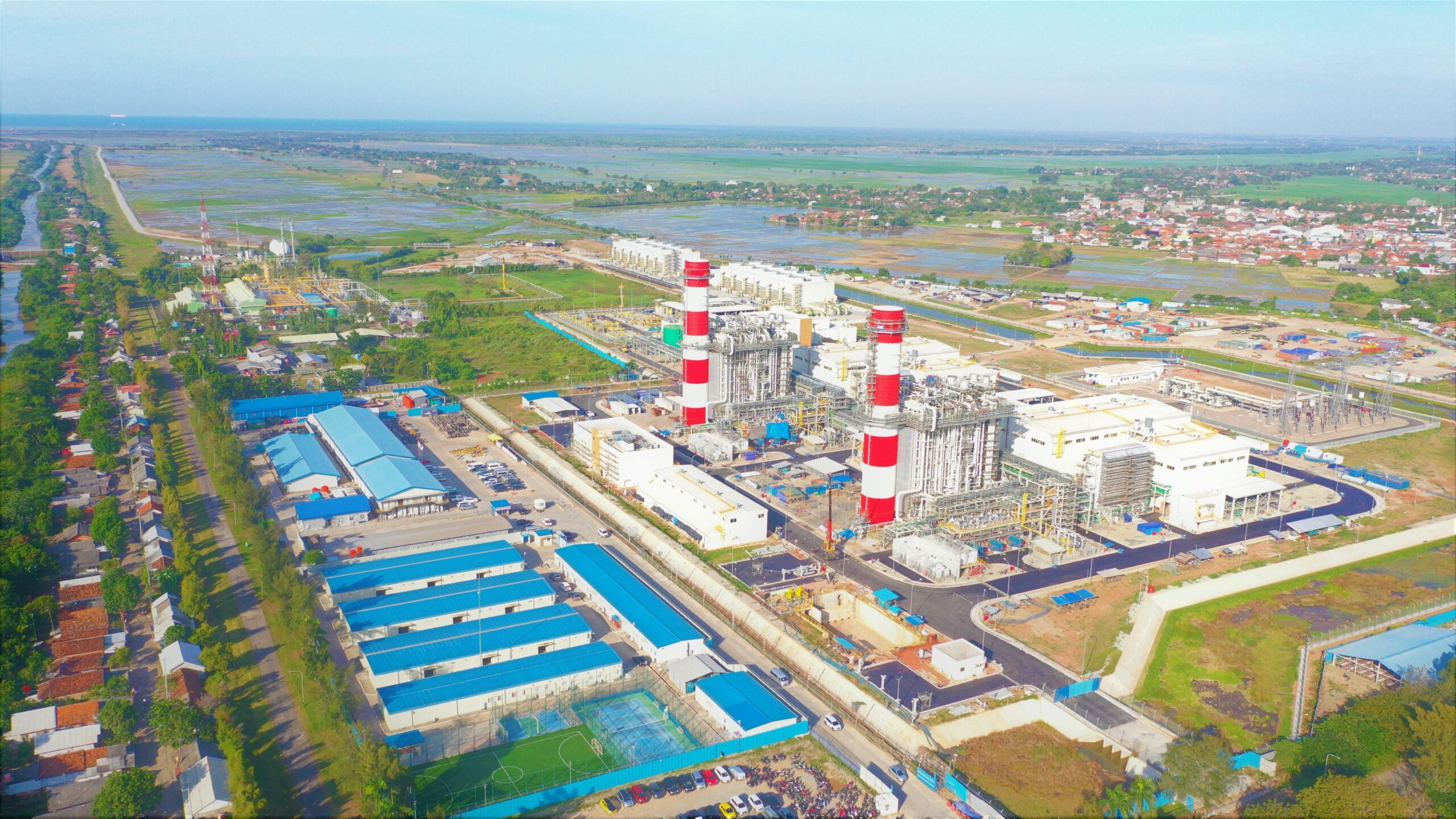
Indonesia’s manufacturers face a double blow: a Middle East energy shock closing the Strait of Hormuz and a deepening domestic gas crunch forcing factories to run well below target capacity.
The kilns at a ceramics plant on the outskirts of Surabaya have been running at barely two-thirds of their normal capacity for three weeks. The gas pressure gauge — usually a reassuring steady hum — has become an anxiety meter, swinging unpredictably as allocations from the state pipeline operator tighten and then thin out altogether on some days. Workers who normally operate three shifts have been sent home mid-rotation. “We cannot plan production,” says a senior executive at the company, who requested anonymity due to commercial sensitivities. “We are not running a factory anymore. We are running a rationing exercise.”
That factory floor, somewhere in East Java, is a microcosm of what is happening across Indonesia’s industrial heartland in March 2026. The country — Southeast Asia’s largest economy and, until recently, a respectable net gas producer — finds itself caught in a vice: squeezed from without by the most disruptive Middle East energy shock since the 1973 Arab oil embargo, and from within by a structural domestic gas supply crisis years in the making.
The Hormuz Shock: Asia’s Energy Nightmare Materialises
On February 28, 2026, following US-Israeli military strikes on Iran, the Strait of Hormuz — the narrow chokepoint through which roughly one-fifth of global oil and a third of liquefied natural gas transit every day — was effectively shut to commercial traffic. The consequences were immediate and seismic. Brent crude surged nearly 20 percent on Monday morning, breaching $111 per barrel for the first time since July 2022.
For Asia, the closure was catastrophic in a way that cannot be overstated. In 2024 alone, 84% of the oil and 83% of the LNG shipped through the Strait was bound for Asia. The Gulf states’ combined production dropped sharply as strikes hit critical infrastructure. Attacks on Saudi Arabia’s Ras Tanura refinery, Qatar’s Ras Laffan gas processing base, and the UAE’s Ruwais refinery complex, combined with Iran’s blockade, resulted in a drop of Gulf countries’ oil production by 10 million barrels per day compared to March 2025.
Governments and businesses across Southeast Asia scrambled to stave off energy shortages as the Strait of Hormuz remained shut, with government offices in the Philippines moving to a four-day work week and officials in Thailand and Vietnam encouraged to work from home.
Indonesia stood at a particularly precarious intersection. Unlike Japan, which maintains multi-month strategic reserves, or Malaysia, which is a net oil exporter, Indonesia’s exposure was both acute and structural. Twenty-five percent of Indonesia’s oil and gas is imported from the Middle East region, and disruptions to shipping activities in the Strait of Hormuz were predicted to last longer than initially expected.
A Domestic Crisis Hiding in Plain Sight
What makes Indonesia’s predicament uniquely dangerous — and uniquely instructive for regional energy planners — is that the Hormuz shock did not arrive in a vacuum. It landed on top of a pre-existing, chronic domestic gas supply deficit that analysts at Wood Mackenzie and the IEEFA had been warning about for years.
Indonesia’s population of over 250 million and fast-developing economy make it Southeast Asia’s largest gas market. The country has outlined ambitious production targets of 1 million b/d of oil and 12 bcfd of gas by 2030, in support of energy security. However, declining domestic gas supply remains a major concern.
The structural architecture of this crisis is worth dissecting. Indonesia produces, in theory, around twice as much gas as it consumes. Yet factories across Java remain chronically underserved. The paradox lies in decades of policy failure: export commitments locked up volumes in long-term LNG contracts with Japan and South Korea; infrastructure gaps left Java — where 60% of industrial demand is concentrated — physically disconnected from gas fields in Kalimantan and Sumatra; and the Domestic Market Obligation (DMO), set at 25% of production, proved woefully inadequate as industrial demand surged.
State gas distributor Perusahaan Gas Negara (PGN), which controls the bulk of Java’s pipeline network, has been unable to satisfy industrial demand for the better part of a decade. Chemical, ceramics, and textile industries are among the main users of natural gas in Indonesia, and the industrial sector is more exposed to gas supply-side shocks than other sectors.
Wood Mackenzie’s supply scenario suggests that demand and supply would be tightly balanced until 2026, with the ESDM forecasting a gas deficit by 2033 without the development of new fields. The Hormuz crisis has, in effect, compressed that timeline from years into weeks.
Industry on its Knees: The Factory-Floor Reality
The most visible industrial casualty so far is PT Chandra Asri Pacific, Indonesia’s largest integrated petrochemical complex and a critical upstream supplier to packaging, automotive, consumer goods, and construction material manufacturers nationwide. Chandra Asri declared force majeure on all contracts, citing the security situation around the Strait of Hormuz which has resulted in significant disruption to maritime transportation activities and materially disrupted the shipment and delivery of feedstock supplies.
The company is selectively adjusting its operational run rates in accordance with supply conditions and production needs, while diversifying sources of raw materials and maintaining prudent inventory management. In corporate-speak, that means production cuts.
The ripple effects extend far beyond Chandra Asri. A second industry executive — head of operations at a major Java-based ceramic tile manufacturer — was more blunt, speaking on condition of anonymity: “Our gas allocation from PGN has been cut by about 30 percent over the past three weeks. Our kilns need stable pressure to maintain firing temperatures. When pressure drops, you either slow production or you risk product defects and equipment damage. We have chosen to slow down. We are running at around 65 percent of target capacity right now.”
The ceramics sector is emblematic of a broader industrial unravelling. Ceramics production is among the most gas-intensive light manufacturing activities, requiring continuous high-temperature firing. Fertilizer plants face an equally dire calculus: they cannot throttle production gradually the way an assembly line can. Gas shortfalls below a threshold trigger complete shutdowns, as Bangladesh discovered in early March when production activities at two major fertilizer factories were temporarily suspended in compliance with government directives due to gas shortage and a decrease in gas pressure.
| Sector | Gas Dependency | Crisis Exposure | Key Risk |
|---|---|---|---|
| Petrochemicals | Very High | Critical (feedstock) | Supply chain cascade |
| Ceramics/Glass | Very High | High (kiln temps) | Quality, capacity loss |
| Fertilizers | Very High | Critical (process gas) | Potential shutdown |
| Textiles | Moderate–High | High | Output reduction |
| Steel/Metals | Moderate | Medium–High | Cost inflation |
| Palm-oil Processing | Moderate | Medium | Export competitiveness |
The Fiscal Arithmetic Is Brutal
For Jakarta, the energy shock arrives at the worst possible budgetary moment. Indonesia, a net oil importer consuming 1.6 million barrels per day but producing only 608,000, faces punishing fiscal arithmetic. The 2026 state budget assumed an Indonesian crude price of $70. Every single-dollar increase above that adds Rp 10.3 trillion in subsidy costs while returning only Rp 3.6 trillion in revenue. The budget is already underwater.
With Brent at $111 and climbing, the gap between budgeted and actual prices threatens to blow a hole of well over Rp 400 trillion in the fiscal accounts — a sum that dwarfs any credible subsidy reserve. Bank Indonesia has already revised its global growth forecast downward. The central bank cut its 2026 global growth projection to 3.1% on oil-driven inflation risks, while maintaining Indonesia’s GDP outlook at 4.9–5.7% — a gap that analysts privately acknowledge reflects official optimism more than analytical precision.
Currency pressure compounds the problem. Escalating Iran tensions risk pushing the rupiah toward Rp 20,000 per US dollar as oil prices surge and capital outflows intensify. A weaker rupiah raises the cost of every LNG cargo diverted from Middle Eastern to alternative suppliers, creating a vicious feedback loop between energy inflation and currency depreciation.
The Government’s Triage Response
Jakarta’s initial response has been textbook crisis management: reassurance, redirection, and storage pledges. Energy Minister Bahlil Lahadalia acknowledged that Indonesia currently lacks fuel storage with a capacity of more than a month, saying “the storage is insufficient,” and announced plans to construct additional fuel storage while redirecting gas and oil imports from the Middle East to alternative countries.
The reassurance that reserves remain within “safe” national thresholds has done little to calm manufacturers. Indonesia’s fuel reserves stood at roughly 23 days, above the national minimum standard of 20–23 days, reflecting storage capacity constraints rather than an actual shortage — a distinction that matters at the macro level but is cold comfort to a ceramics plant manager rationing kiln time.
On the upstream side, there is some medium-term cause for optimism. Eni took Final Investment Decisions for the Gendalo and Gandang and Geng North and Gehem deep-water gas fields off East Kalimantan, targeting plateau production of up to 2 billion standard cubic feet per day of gas and 90,000 barrels per day of condensate. These projects — leveraging the existing Jangkrik floating production unit and Bontang LNG plant — represent a genuine vote of confidence in Indonesia’s upstream potential. But they will not begin producing until 2028 at the earliest. They offer no relief to a factory running at 65% capacity today.
The 1998 Ghost: Political Stakes Are High
The Council on Foreign Relations’ analysis of the Iran war’s Asian energy impact carries a pointed historical reminder that Jakarta’s policymakers would be wise to absorb: Indonesia’s 1998 popular uprising — violent at times and ultimately resulting in the end of the Suharto regime — was partly sparked by a sharp rise in fuel prices amidst the Asian financial crisis.
President Prabowo Subianto’s government, still consolidating authority after the 2024 election, faces a delicate political economy. Subsidized fuel price increases — almost inevitable given the fiscal math — risk triggering the kind of street-level anger that destabilised prior administrations. The Idul Fitri holiday period, when fuel demand traditionally spikes 12% above baseline, further compresses the political window for painful adjustments.
Industry associations are increasingly vocal. Factory floors running at 60–70% capacity do not merely produce less output; they produce unemployment. Indonesia’s manufacturing sector employs over 18 million workers directly. Even a 10% generalised output reduction — conservative, given present trends — implies millions of person-weeks of lost income rippling through supply chains from raw materials to logistics.
A Structural Reckoning — and a Strategic Opportunity
It would be analytically lazy to frame this purely as an exogenous shock. The Hormuz crisis has exposed, with painful clarity, structural vulnerabilities that Indonesia’s energy policymakers have deferred confronting for two decades: inadequate storage, export commitments that cannibalize domestic supply, infrastructure gaps between gas-producing and gas-consuming regions, and chronic underinvestment in both upstream exploration and demand-side efficiency.
Indonesia’s energy transition has been at a pivotal stage for several years. Progress in 2026 will depend on improving the bankability of renewable energy procurement, advancing grid access reform, and aligning power system planning with industrial demand for clean electricity. The current crisis makes the case — compellingly, if brutally — for accelerating that transition. Every ceramics plant that today cannot fire its kilns for lack of gas could, in principle, be drawing from geothermal or solar-backed process heat within a decade, reducing exposure to both foreign supply shocks and domestic pipeline politics.
The Wood Mackenzie assessment of Indonesia’s undeveloped gas resources — over 35 trillion cubic feet in undeveloped resources from discoveries such as Abadi, Tangkulo, Layaran, Geng North, and Timpan — underscores that the country is not resource-poor. It is policy-poor and infrastructure-poor. Monetising those reserves at speed requires regulatory certainty, contract sanctity, and a pricing regime that makes upstream investment competitive with alternative destinations for global capital.
For international investors watching from London or Singapore, the near-term signal is clear: Indonesia’s energy vulnerability creates both risk and opportunity. The risk is a manufacturing sector contracting faster than official GDP projections assume, currency instability, and the political volatility that energy inflation historically generates in emerging markets. The opportunity lies in the renewables and LNG infrastructure gap — from Sumatra floating storage to Java geothermal expansion — that this crisis has made politically unsustainable to delay.
What Jakarta Must Do — Now and Next
The immediate priority is industrial gas triage: the government needs a transparent, sector-by-sector allocation protocol that prioritises fertilizer plants (whose shutdown has food security consequences) and export-oriented manufacturers (whose contraction damages the current account) over less critical industrial uses. Ad hoc rationing by PGN is already creating arbitrary competitive distortions.
Medium-term, the single most impactful policy intervention would be accelerating LNG regasification capacity on Java — allowing spot LNG cargoes from Australia, the US Gulf Coast, and West Africa to substitute for constrained pipeline supply. Indonesia has the technical expertise; what has been missing is the political urgency. The Hormuz shock has now supplied that.
Longer-term, the crisis should catalyse what years of energy policy debate have failed to deliver: a credible, funded plan to develop the 35+ tcf of undeveloped domestic gas resources, combined with a renewables buildout that reduces industrial gas dependency. Indonesia’s geothermal endowment alone — the world’s largest — could supply substantial industrial process heat if policy barriers to development were removed.
The factory manager in Surabaya is not waiting for grand strategy. He is watching his gas pressure gauge and calculating whether to send more workers home. Jakarta’s job is to ensure that calculation resolves in favour of production — and that the structural vulnerabilities that made it necessary never recur.
Key Data Snapshot
- Strait of Hormuz closure: February 28, 2026 — ongoing
- Brent crude peak: $111/barrel (first since July 2022)
- Indonesia fuel reserves: ~23 days (national minimum: 20–23 days)
- Middle East share of Indonesia’s energy imports: ~25%
- Chandra Asri force majeure: Declared March 2, 2026
- Indonesia’s daily oil consumption: ~1.6 million bpd | Production: ~608,000 bpd
- Fiscal cost per $1 oil price increase above budget: +Rp 10.3 trillion subsidy burden
- Undeveloped Indonesian gas resources: 35+ tcf (Wood Mackenzie estimate)
Discover more from The Economy
Subscribe to get the latest posts sent to your email.


Analysis
Merck’s $6 Billion Cancer Power Move: The Terns Pharma Deal That Rewrites Pharma’s Post-Keytruda Playbook

Merck nears a $6bn all-cash acquisition of Terns Pharma and its CML drug TERN-701. Here’s the full strategic picture—what it means for patients, investors, and Big Pharma’s 2026 M&A wave.
The ink isn’t dry. The deal isn’t signed. But the logic behind Merck’s reported $6 billion pursuit of Terns Pharmaceuticals is already one of the clearest strategic narratives in modern pharma — a $30 billion time bomb called Keytruda, and the urgent search for what comes after.
Merck is nearing a roughly $6 billion all-cash deal to acquire Terns Pharmaceuticals, the Financial Times reported on Tuesday, citing people familiar with the matter. MarketScreener Talks between the two companies are at an advanced stage, and a deal could be reached within days. MarketScreener The target: a Foster City, California clinical-stage company whose lead drug is quietly generating the most excitement in blood cancer treatment since a Novartis blockbuster redrew the CML landscape a generation ago.
For Merck, this is not merely another acquisition. It is an act of strategic triage — and perhaps the most scientifically precise bet the Kenilworth giant has placed since it licensed pembrolizumab from Schering-Plough in 2009 and renamed it Keytruda.
Why Keytruda’s Patent Cliff Is the Most Watched Clock in Global Pharma
To understand why Merck is willing to pay a premium for a drug that has never been approved — and has barely cleared Phase 1 — you must first understand the existential arithmetic of the world’s best-selling medicine.
Keytruda is slated for a loss of exclusivity in 2028, and a growing pipeline of biosimilars is already lining up to take a shot at the drug’s massive market. Fierce Pharma The cancer therapy brought the company $29.5 billion last year C&EN, representing nearly half of Merck’s total revenue. CEO Robert Davis sees about $70 billion in commercial opportunities by the mid-2030s and has described the current pipeline as one of the “deepest and broadest” Merck has ever had. Stocktwits
That confidence, however, must be earned — deal by deal, trial by trial. Merck has predicted Keytruda will collect $35 billion in peak annual sales in 2028, the same year the drug will face an expected patent cliff. Fierce Pharma After that, biosimilar entrants from Samsung Bioepis, Amgen, and Indian manufacturers are expected to erode revenues precipitously. The company needs successors, and it needs them now.
The response has been an M&A blitz of rare intensity. Merck has accelerated dealmaking in recent months, snapping up Verona Pharma for $10 billion and Cidara Therapeutics for $9.2 billion last year Investing.com, adding a first-in-class COPD therapy and a long-acting flu antiviral, respectively. Merck has been building up its late-stage drug pipeline since 2021 and has signed several deals to broaden its portfolio. U.S. News & World Report February brought yet another structural bet: Merck split its core pharmaceutical business in two — one housing its oncology portfolio and the other including all non-cancer medicines Fierce Pharma — a move analysts interpreted as pre-positioning for either a spin-off, a focused acquisition strategy, or both.
The Terns deal, if confirmed, is the latest and sharpest arrow in that quiver.
TERN-701: The Drug That Has CML Specialists Talking in Superlatives
Chronic myeloid leukemia is not a common cancer. Roughly 8,900 new cases are diagnosed in the United States each year. But it is a high-value market — heavily treated with expensive precision medicines — and Terns has built its entire identity around the conviction that the next generation of CML therapy remains conspicuously unfinished.
Terns’ lead cancer drug candidate is TERN-701, which is in development for the treatment of relapsed/refractory CML under the Phase 1 CARDINAL trial. RTTNews The drug’s mechanism is where the science gets genuinely interesting: TERN-701 is active at the myristate pocket of BCR-ABL1, providing it with 10,000 times greater selectivity than active-site tyrosine kinase inhibitors. Onclive
That molecular precision matters enormously in a disease defined by acquired resistance. The current standard of care for later-line CML, Novartis’s asciminib (Scemblix), was itself an allosteric BCR-ABL inhibitor that redrew treatment algorithms when it won approval — but resistance mutations and tolerability issues mean a significant portion of patients still cycle through therapies without achieving durable molecular response. Early study results suggest that TERN-701 could be a successor to Novartis’s blockbuster Scemblix. Statnews
The CARDINAL trial data, presented at the American Society of Hematology annual meeting in December 2025, was what turned heads. At the recommended Phase 2 dose of at least 320 mg once daily, the overall 24-week major molecular response rate was 80% among efficacy-evaluable patients with more than 24 weeks of follow-up. Onclive For patients maintaining MMR, the rate held at 100%. Ternspharma
The safety profile is equally notable. The majority of treatment-emergent adverse effects were low grade, with no apparent dose relationship. Rates of cytopenias were generally low, with less than 10% Grade 3 thrombocytopenia and neutropenia. Onclive No dose-limiting toxicities were observed up to the maximum dose of 500mg QD. Ternspharma
For heavily pre-treated patients — many of whom had previously received asciminib, ponatinib, and investigational next-generation therapies — these numbers are not merely encouraging. They are, by the standards of relapsed/refractory CML, remarkable. “Best-in-disease potential” is the phrase Terns itself has used, and the clinical data does not obviously contradict that claim.
The Valuation Calculus: What Does $6 Billion Actually Buy?
The all-cash deal is expected to value Terns at a premium to its market capitalization of about $5.3 billion. Investing.com That premium, while meaningful, is modest by the standards of 2025–2026 oncology M&A — a sector where bidding wars routinely push acquirers to 60–80% above last close.
Why the relative restraint? Several factors shape the math.
TERN-701 remains in Phase 1. There is no approved product, no commercial infrastructure, and no Phase 3 data. Pivotal trial results — the evidence that would trigger blockbuster valuations and genuine upside scenarios — are still at least two to three years away. For a drug targeting a relatively rare indication, the peak revenue ceiling, while lucrative, is bounded. Analysts covering the CML market typically model mature annual sales for a best-in-class next-generation allosteric inhibitor in the $2–4 billion range globally, depending on label breadth and first-line expansion.
At $6 billion all-cash, Merck is effectively paying two to three times peak sales estimates upfront — aggressive, but not irrational when the acquirer is running a multi-decade oncology platform and values de-risked, validated science over raw market speculation.
The deal also reflects Terns’ strategic leverage. Terns had cash runway into 2028 focused on advancing the CML program internally and partnering metabolic assets Ternspharma — meaning the company was not under existential financial pressure to sell. That negotiating position, combined with competitive interest from other potential suitors, likely shaped the final price.
The Broader Strategic Picture: Merck’s New Oncology Architecture
The Terns acquisition, viewed in isolation, reads as a sensible pipeline bolt-on. Viewed in the context of Merck’s full strategic reshaping, it takes on a different quality — the latest piece in what is becoming one of the most ambitious pharma rebuilding exercises since the post-Lipitor era.
Consider the deal sequencing. Merck’s $11.5 billion deal for Acceleron Pharmaceuticals added the pulmonary arterial hypertension therapy Winrevair; the Verona Pharma acquisition brought Ohtuvayre, a first-in-class COPD treatment; and the Cidara deal added CD388, a long-acting antiviral against all flu strains. Invezz Each transaction has shared a common logic: early enough in commercial life to offer genuine upside, but far enough along in clinical development to substantially de-risk.
TERN-701 fits that template — though the clinical-stage risk is somewhat higher than in those prior deals. What elevates the strategic rationale is the oncology division context. As part of the restructuring, Merck’s human-health business will be split into two — one housing its oncology portfolio and the other including all of its non-cancer medicines. U.S. News & World Report Citi analysts said the split would help to more clearly distinguish Merck’s mature oncology portfolio from its newer, acquisition-driven assets. U.S. News & World Report
Adding a potentially best-in-class CML asset directly strengthens the new oncology unit’s pipeline depth — a consideration that matters not only commercially, but also in how investors and potential partners value the separated entity. If Merck eventually pursues a spin-off or strategic transaction involving the oncology division, a richer pipeline commands a materially higher multiple.
There is also the question of platform. BCR-ABL inhibition in CML has historically served as a scientific and regulatory template for targeted therapies in adjacent hematological malignancies. If TERN-701’s allosteric mechanism proves transferable — to blast phase CML, to Philadelphia chromosome-positive ALL, or to other BCR-ABL-driven contexts — the addressable market expands substantially beyond the initial rare indication.
What It Means for Patients: Access, Pricing, and the CML Treatment Gap
Abstract strategy and valuation calculus exist in tension with a more human question: what does this deal mean for the roughly 30,000 Americans — and hundreds of thousands globally — currently living with CML?
On balance, consolidation under a well-capitalized major pharma is likely to accelerate the path to approval. Merck’s regulatory infrastructure, commercial relationships, and Phase 3 execution capability represent genuine accelerants for a drug that Terns, as a clinical-stage company, would have struggled to advance at comparable speed. The CARDINAL trial needs to expand into a full pivotal program; a major pharma’s resources materially compress that timeline.
The pricing question is less comfortable. Tyrosine kinase inhibitors for CML are already among the most expensive chronic disease therapies in the U.S. market. Novartis’s asciminib lists at over $200,000 annually. Should TERN-701 achieve approval — and the Phase 1 data suggests it is on track to try — it will enter a market where Merck will be under both commercial pressure to recoup its $6 billion investment and political pressure to justify the cost of a rare disease therapy.
The international access picture is sharper still. Keytruda may face “price setting” from the Inflation Reduction Act in 2026 C&EN, and the broader U.S.-China oncology R&D race is intensifying as Chinese biotechs, many partnered with or competing directly against Western majors, rapidly advance their own BCR-ABL and kinase inhibitor portfolios. A Merck-owned TERN-701 will need a global commercialization strategy that balances pricing sustainability in the U.S. against access in markets where affordability remains the defining constraint.
The 2026 M&A Wave: Terns as Precedent, Not Outlier
Industry-watchers have spent the past 18 months watching the pharma M&A pipeline with unusual intensity, and the Terns deal — if it closes — will not be the last deal of this kind in 2026. The conditions for a sustained acquisition wave remain firmly in place.
Patent cliffs are not unique to Merck. AstraZeneca, Bristol-Myers Squibb, and Pfizer all face meaningful revenue transitions in the latter half of the decade. Interest rates, while elevated versus the zero-rate era, remain manageable for investment-grade acquirers with strong cash generation. Biotech valuations, while partially recovered from the 2022–2023 trough, have not returned to the frothy heights that previously priced out strategic acquirers. That creates a window — perhaps 18 to 36 months — in which well-capitalized majors can acquire genuine clinical-stage innovation at multiples that may look cheap in retrospect.
The calculus changes if clinical-stage failures mount, or if the regulatory environment shifts adversely for rare oncology indications. But for now, the structural incentives point toward more deals, not fewer. Merck CEO Robert Davis said as much in February: “Our belief in our ability to have substantial growth once we get closer to the [loss of exclusivity] is as high as it’s ever been. And we’re not done.” Fierce Pharma
The Terns deal, at $6 billion, is arguably modest by the ambitions of that statement — a targeted bet on a validated mechanism in a well-understood disease, dressed in the clinical data that Big Pharma acquirers find most legible. What comes next in Merck’s dealmaking could be considerably larger.
Forward Scenarios: Three Possible Outcomes for TERN-701
Scenario 1 — Accelerated Approval Pathway: If TERN-701’s Phase 1 data is persuasive enough for Breakthrough Therapy Designation (which Terns has not yet obtained), Merck could potentially pursue an accelerated approval pathway using MMR as a surrogate endpoint — a strategy previously used for asciminib. A 2028–2029 approval timeline is not implausible. In this scenario, the deal looks like sharp value creation.
Scenario 2 — Pivotal Trial Success, Standard Path: The more likely route involves a full Phase 3 randomized controlled trial, standard FDA review, and approval in the early 2030s. In this scenario, TERN-701 becomes a useful but not transformative contributor to Merck’s oncology revenue — meaningful for patients, positive but not game-changing for Merck’s post-Keytruda financials.
Scenario 3 — First-Line Expansion: The real prize — the scenario that would vindicate the $6 billion price tag in full — is if TERN-701 demonstrates superiority or equivalence to standard-of-care in earlier lines of CML therapy. A first- or second-line label would multiply the addressable patient population by an order of magnitude, transforming a rare disease asset into a genuine oncology pillar.
The Bottom Line
The Merck–Terns deal is not, by the standards of 2025–2026 Big Pharma dealmaking, extraordinary in size. What makes it significant is its specificity. Merck is not buying a diversified biotech platform or hedging its bets across a sprawling pipeline. It is making a concentrated, scientifically defensible wager on one drug, one mechanism, and one disease — a bet that a next-generation allosteric BCR-ABL inhibitor with 80% major molecular response rates in heavily pre-treated patients represents exactly the kind of targeted, data-driven oncology innovation that commands a premium in any market cycle.
Whether TERN-701 ultimately delivers on its early clinical promise remains genuinely uncertain. Phase 1 data, however spectacular, does not guarantee Phase 3 success. Regulatory hurdles, competitive pressure from asciminib and emerging Chinese generics, and the perennial challenges of rare disease commercialization will all shape the eventual story.
But for the patients cycling through failed CML therapies — people who have exhausted three, four, even six prior tyrosine kinase inhibitors — the prospect of a new mechanism with a favorable safety profile and compelling molecular response rates is not a valuation abstraction. It is the news they have been waiting for.
Merck is betting $6 billion on the proposition that those patients deserve a better option. That, at its core, is the deal.
Key Deal Facts at a Glance
- Deal Value: ~$6 billion, all-cash
- Target: Terns Pharmaceuticals (NASDAQ: TERN), Foster City, CA
- Lead Asset: TERN-701 — oral, allosteric BCR-ABL inhibitor for relapsed/refractory CML
- Clinical Stage: Phase 1 CARDINAL trial (dose expansion ongoing)
- Key Clinical Data: 80% MMR rate at ≥320mg dose, 0 dose-limiting toxicities
- Terns Market Cap Pre-Deal: ~$5.3 billion
- Merck’s M&A Spend Since 2024: $25+ billion (Verona Pharma, Cidara, Terns)
- Keytruda Annual Revenue: ~$30 billion; LOE expected 2028
- Deal Status: Advanced negotiations; expected to close within days
Sources: Financial Times, Reuters, Fierce Pharma, Terns Pharmaceuticals IR, ASH 2025 oral presentation (Blood, 2025;146:901), OncLive, Seeking Alpha, STAT News
Discover more from The Economy
Subscribe to get the latest posts sent to your email.
Beijing’s export-control probe into Meta’s acquisition of the agentic AI startup is the sharpest test yet of who owns the talent and technology produced by China’s restless entrepreneur class.
The transaction had looked like a clean escape. Manus, an artificial intelligence startup founded in Beijing, had spent the better part of two years engineering its own liberation: relocating its headquarters to Singapore, laying off its mainland staff, shuttering its Chinese offices, and raising money from Benchmark, one of Silicon Valley’s most storied venture capital firms. When Meta announced in late December that it would acquire Manus for over $2 billion—the social media giant’s third-largest deal in its history—the founders appeared to have navigated one of the most treacherous passages in global tech. They had moved, adapted, and escaped.
Then Beijing blinked last.
On Wednesday, Reuters confirmed reports from the Financial Times that China has restricted two co-founders of Manus from leaving the country, as regulators formally review whether Meta’s $2 billion acquisition violates China’s investment rules. MarketScreener What began in January as a procedural commerce ministry inquiry has hardened into something far more personal: exit bans on the individuals who built the product, signalling that Beijing regards the transfer of agentic AI capabilities to a Western technology giant not as a routine M&A transaction, but as a matter of national security.
The implications extend far beyond one startup and one deal.
What Is Manus—and Why Does Beijing Care?
Manus AI’s parent entity, Butterfly Effect, was founded in 2022 by serial entrepreneur Xiao Hong in Beijing, with operations in Wuhan. It was originally a fully Chinese company—founded in China, operated domestically, and run by Chinese founders. Triviumchina Its first product, Monica, was an AI-powered browser extension. Manus, its successor, was something more ambitious: an autonomous AI agent capable of independently browsing the web, executing code, generating reports, and managing complex workflows with minimal human direction.
From day one, the company targeted international users rather than the domestic market. Triviumchina Founder Xiao Hong, known professionally as “Red,” was explicit about why: overseas users’ willingness to pay for software was roughly five times that of Chinese users, and with payments denominated in dollars and an exchange rate of seven renminbi to the dollar, the foreign market was at least 35 times larger. Triviumchina
That calculus proved correct. Within eight months of launch, Manus reached $100 million in annual recurring revenue and draws 22 million monthly visits. WinBuzzer Rather than building its own frontier model, Manus focuses on orchestration and reliable task execution atop existing large language models WinBuzzer—a strategy that made it fast, capital-efficient, and deeply attractive to a company like Meta, which already owns the distribution infrastructure to deploy agents at planetary scale.
Worth more than $2 billion, the deal will be assessed for its consistency with relevant laws and regulations, Ministry of Commerce spokesman He Yadong said at a regular briefing. Bloomberg Regulators began examining possible national security implications shortly after the December announcement.
The reason Beijing cares is elementary: the episode highlights a dilemma for the Chinese authorities—how to get the balance right between promoting Chinese technology internationally and retaining some level of control over homegrown AI companies and founders. The Wire China
The Architecture of an Escape—and Its Limits
The Manus story is, at its core, a story about the limits of regulatory arbitrage in an era of competing superpowers.
Despite being founded by Chinese engineers and backed by Chinese investors, the company moved its headquarters to Singapore in June 2025. Its product became unavailable in China in July. Around the same time, Manus reportedly laid off its Chinese staff and closed its offices in the country. Rest of World The move fit a wider pattern that analysts have termed “Singapore-washing”—a strategy where Chinese tech firms move headquarters or core operations to Singapore to attract foreign investment and avoid regulatory constraints back home. Heavyweights like ByteDance and Shein have made this transition in the past. Rest of World
For Manus, the logic was particularly ruthless in its precision. The company took a series of decisive steps: rejecting capital from state-owned investors while raising a $75 million round led by Benchmark in April, and gutting its China operations before relocating to Singapore in June. Triviumchina Corporate records reviewed by The Wire China suggest the Singapore entity was incorporated as early as 2023, when they set up a firm called Butterfly Effect Pte, which is in turn wholly owned by Butterfly Effect Holding, a Cayman Islands company. The Wire China
Yet the escape was structurally incomplete. Data from WireScreen shows that Xiao remains the legal representative of Beijing Butterfly Effect Technology as well as its second-largest shareholder. The Wire China Beijing’s lawyers had their thread. Manus’s mainland-registered parent company, Butterfly Effect, remains under the founders’ control, and early-stage research and development were conducted in China—factors that could strengthen the argument that Chinese regulators still have a say. eWEEK
The charges now under investigation are expansive. Regulators are examining potential violations of rules governing cross-border currency flows, tax accounting, and overseas investments, in addition to the original export-control inquiry. Bloomberg The central legal question is whether Manus needed an export licence when it relocated its technology and team from Beijing to Singapore before Meta’s acquisition was announced. Beijing’s 2020 Export Control Law includes a catch-all provision covering any technology transfer that could endanger “national security or national interests”—terms deliberately left undefined to give regulators broad discretion. byteiota
A Geopolitical Prism, Not a Legal Dispute
To reduce this case to its legal dimensions would be to misunderstand it.
China’s review of Meta’s acquisition of Manus signals Beijing’s intent to more tightly police foreign involvement in sensitive technologies developed by Chinese entrepreneurs, as more founders move operations overseas to sidestep geopolitical scrutiny. South China Morning Post The review, according to analysts, could become a high-profile test case for China’s equivalent of the Committee on Foreign Investment in the United States—CFIUS—which vets and blocks inbound investment on national security grounds.
The valuation optics make Beijing’s frustration palpable. Chinese firms that offered to acquire Manus before Meta’s deal valued it at only tens of millions—two orders of magnitude below what Meta paid. WinBuzzer In other words, the Chinese market entirely failed to recognise or reward what Manus had built. It took a Californian buyer to attach a proper price to Chinese talent. That gap, more than any legal technicality, explains the emotional charge behind Beijing’s intervention.
One source cited by the Financial Times said the deal had drawn attention in Beijing precisely because it could incentivise other startups to relocate abroad to bypass domestic supervision. eWEEK The worry is systemic: if Manus succeeds, it becomes a template. Every ambitious Chinese AI founder with a global product and a Singapore residency permit becomes a potential national security liability.
This is the core tension that Beijing cannot resolve through regulation alone. The fundamental reason Manus AI wanted to move abroad was not U.S. investment restrictions, but weak domestic demand. Triviumchina Fixing that requires economic reforms, not exit bans.
Meta’s Exposure—and Its Strategy
For Meta, the Manus acquisition was never really about Manus alone.
Meta has said it will keep Manus independent while integrating its agents into Facebook, Instagram, and WhatsApp. WinBuzzer Xiao Hong, who goes by “Red,” was expected to report directly to Meta COO Javier Olivan Substack after the deal closed. The 100-person Manus team represented a concentrated bet on agentic AI—systems capable of acting autonomously in the world rather than simply answering questions.
Meta has pledged a clean break. Meta has pledged there will be no continuing Chinese ownership in Manus and that it will discontinue operations in China. WinBuzzer Its spokesperson Andy Stone stated that “the transaction complied fully with applicable law,” adding that Meta anticipates “an appropriate resolution to the inquiry.” WinBuzzer
Yet the company’s relationship with China is complicated by deep-seated mutual suspicion. Facebook has been blocked in mainland China since 2009. Mark Zuckerberg spent years attempting to court Beijing—learning Mandarin, establishing a brief corporate foothold in Hangzhou—before abandoning the effort. The Manus deal may represent a new phase: rather than seeking entry into China, Meta is actively extracting talent and technology from it.
Washington, for its part, views this positively. Chris McGuire, a former National Security official in the Biden administration, noted that what Manus shows is that there are going to be firms that choose to defect, and that their interests in operating at the cutting edge and making money are greater than in inherent fidelity to the Chinese state. The Wire China
Echoes of TikTok—but With a Different Anatomy
The Manus case invites comparison to the TikTok saga, but the parallel is instructive precisely where it breaks down.
ByteDance and TikTok faced American regulatory pressure to sever their Chinese ownership structure. The concern was that a Chinese parent company could access U.S. user data or manipulate the algorithm for political purposes. In the Manus case, the pressure runs in the opposite direction: it is Beijing demanding that a Singapore-registered company with a Chinese parent acknowledge Chinese jurisdiction.
Both cases, however, share a deeper commonality: the collapse of the fiction that corporate domicile determines national allegiance. Governments on both sides of the Pacific have concluded that a startup’s nationality is determined by the passport of its founders and the origin of its intellectual property—not by the address on its certificate of incorporation. The era of regulatory arbitrage through nominal relocation may be ending.
The Benchmark dimension adds yet another layer. The U.S. Treasury Department has reportedly been looking into Benchmark for its investment in Manus last year, before the company shifted its headquarters to Singapore. Rest of World In other words, the same transaction that triggered a Chinese export-control probe also attracted scrutiny from Washington’s outbound investment review framework. Manus finds itself squeezed from both directions—exactly the double bind that “Singapore-washing” was supposed to prevent.
The Exit Ban: A Message to Every Chinese Founder
The imposition of exit bans on Manus’s co-founders carries significance that transcends their personal circumstances.
Exit bans—the practice of prohibiting individuals from leaving China while under investigation—are a well-established instrument of Chinese enforcement. They have been used against foreign executives in financial disputes, against dissidents, and against individuals whose cooperation is sought in criminal or regulatory proceedings. Their application here, to the founders of a Singapore-incorporated AI startup that sold to an American company, suggests that Beijing has decided to treat the outward flow of Chinese AI talent as an enforcement matter rather than an economic question.
Chris Miller, a professor at Tufts University and author of Chip War, warned that if China deters China-founded startups from expanding internationally, that is a bad thing for the startup ecosystem. The more China relies on potential sticks to keep companies in line with its political priorities, the more that has real risks for China’s efforts to build and support its own ecosystem. The Wire China
The Brookings Institution’s Kyle Chan observed, as reported by WinBuzzer, that Beijing appears to be demanding public support from Chinese tech founders, leaving them unable to stay silent. WinBuzzer The message to every ambitious engineer contemplating a Singapore incorporation is unmistakable: your physical body remains subject to Chinese jurisdiction even after your company has been redomiciled elsewhere.
Three Scenarios for Investors and Policymakers
The resolution of the Manus-Meta review will likely follow one of three paths, each with distinct implications for the global AI competitive landscape.
Scenario One: Conditional Approval. Beijing extracts concessions—restrictions on transferring China-developed intellectual property to U.S. servers, ongoing reporting obligations, or a commitment to wind down the Chinese entity on a specified timeline—before granting clearance. This is the most probable outcome. It preserves Beijing’s claim to jurisdiction while allowing the deal to proceed, and avoids the international embarrassment of blocking an acquisition that Manus’s Singapore incorporation was specifically designed to facilitate.
Scenario Two: Protracted Delay. China drags out the investigation for six to twelve months, using regulatory uncertainty as negotiating leverage in broader U.S.-China diplomatic discussions. The uncertainty alone serves Beijing’s interests by making Western acquirers think twice before pursuing future acquisitions of Chinese-origin startups. Meta’s AI integration timeline slips; investor confidence in Singapore-domiciled Chinese AI companies erodes.
Scenario Three: An Unwinding. Regulators determine that Chinese export-control law was violated and seek to reverse or restructure the transaction. This is the least likely outcome—it would damage China’s startup ecosystem, signal that successful exits to Western companies are structurally impossible, and likely accelerate the brain drain it is designed to prevent. But it cannot be entirely discounted. The exit bans suggest Beijing is prepared to apply maximum pressure before revealing how far it is willing to go.
The Deeper Fault Line
The Manus case is, in the final analysis, a consequence of a structural failure rather than a legal dispute.
China built one of the world’s most dynamic AI startup ecosystems—technically sophisticated, capital-efficient, globally ambitious—and then created the conditions that made its best companies want to leave. Regulatory opacity, weak domestic demand for premium software, U.S. chip restrictions, and the ever-present risk of sudden political intervention drove founders like Xiao Hong to conclude that their only viable path to scale ran through Singapore and Silicon Valley.
Beijing now finds itself attempting to retrofit a sovereignty claim onto a company that had been rationally, legally, and methodically exiting its jurisdiction for years. The exit bans on Manus’s founders are less a legal remedy than an admission of failure—a government reaching for coercive tools because the market tools were inadequate, and the founders were smart enough to know it.
For the global AI industry, the lesson is stark. Capital is mobile, code can be moved, and companies can be reincorporated. But people—their bodies, their families, their residual corporate holdings—remain subject to the laws of the countries that produced them. In the age of AI nationalism, talent is the last and most contested asset of all.
Discover more from The Economy
Subscribe to get the latest posts sent to your email.
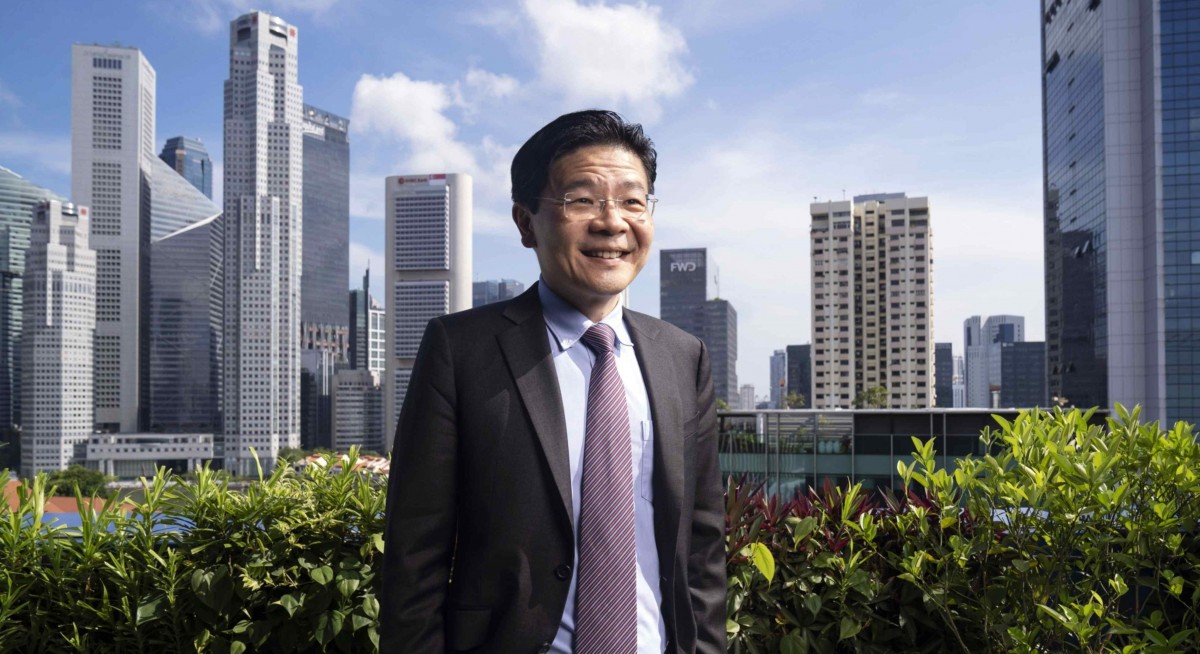
The city-state’s leader heads to “Asian Davos” as US-China rivalry reshapes every calculation in the Indo-Pacific
Every March, the small coastal town of Boao in China’s Hainan Province briefly becomes one of the most important rooms in the world. Finance ministers adjust their ties. Corporate chiefs rehearse their talking points. And the leaders who show up — and what they say — signal something real about where the world’s centre of economic gravity is heading.
This week, Singapore Prime Minister Lawrence Wong will be one of those leaders. Departing on March 25 for a four-day visit, Wong will deliver the keynote address at the Opening Plenary of the 2026 Boao Forum for Asia Annual Conference in Hainan, before travelling to Hong Kong to meet Chief Executive John Lee Ka-chiu and engage the city’s business community. Mothership.SG The itinerary is compact but dense with consequence — a carefully composed diplomatic score played in two movements.
The Stage: “Asian Davos” at 25
The Boao Forum for Asia is not merely China’s answer to Davos. It has become, over 25 years, an increasingly explicit instrument for shaping, not just discussing, Asia’s economic architecture People’s Daily — a forum where China translates its domestic policy ambitions for an international audience. This year, that function is sharper than ever.
The 2026 edition opens less than two weeks after China’s National People’s Congress formally adopted the 15th Five-Year Plan (2026–2030) People’s Daily, a document that will govern Chinese economic life for the rest of the decade. The forum’s theme — “Shaping a Shared Future: New Dynamics, New Opportunities, New Cooperation” — reflects both the profound transformations and growing uncertainties facing the world People’s Daily, with sessions spanning AI governance, green industrial policy, RCEP integration, and cross-border payment systems. Around 2,000 delegates from more than 60 countries and regions are attending, along with over 1,100 journalists People’s Daily.
There is an additional layer of meaning to this year’s venue. On December 18, 2025, Hainan launched island-wide special customs operations, formally becoming the world’s largest free trade port by area. People’s Daily For Singapore — itself a small, trade-dependent city-state whose prosperity is inseparable from the free movement of goods, capital, and ideas — the symbolism of delivering the keynote at that particular forum, on that particular island, in this particular geopolitical moment, is not accidental.
The Itinerary: Bilateral Depth Beyond the Podium
Wong’s Hainan programme extends well beyond the plenary stage. His agenda includes a welcome dinner hosted by the Hainan provincial government and the forum’s secretariat, as well as bilateral meetings with Zhao Leji, Chairman of the Standing Committee of the National People’s Congress, and Feng Fei, the Party Secretary of Hainan Province. The Standard
The meeting with Zhao Leji carries particular weight. As the third-ranking member of China’s Politburo Standing Committee, Zhao is not a figurehead. His portfolio includes legislative oversight and, crucially, inter-parliamentary diplomacy — a channel through which Beijing increasingly manages relationships with states it considers strategic partners rather than transactional counterparts. A bilateral with Zhao, rather than a junior minister, signals that Singapore retains a privileged lane of access in Beijing’s diplomatic hierarchy.
Following his Hainan engagements, Wong will travel to Hong Kong, where he is scheduled to meet Chief Executive John Lee Ka-chiu at Government House over a lunch hosted by Lee. South China Morning Post Wong will also visit key sites in the Northern Metropolis to gain a better understanding of Hong Kong’s economic and development trajectory and explore new opportunities for collaboration between the two cities, South China Morning Post according to Singapore’s Prime Minister’s Office.
The Strategic Context: Hedging as High Art
To understand what Wong is doing in Boao, it helps to understand what he was doing the week before. On March 17-18, Wong completed his first official visit to Japan as prime minister, during which Singapore and Japan announced an upgrade of their bilateral ties to a Strategic Partnership The Online Citizen, deepening cooperation across trade, defence, and emerging technologies.
Wong was direct about the sequencing. China, he noted, was aware of his visit to Japan and had continued to invite him to the Boao Forum in Hainan. The Online Citizen He framed Singapore’s approach with characteristic clarity: “Having good relations with one does not come at the expense of another. We can be friends with both China and Japan and America, for that matter. We want to maintain as many good friends as possible.” The Online Citizen
This is not naivety. It is a sophisticated hedging strategy that Singapore has refined over decades and that Wong is now codifying into a kind of doctrine. The city-state, which sits at the confluence of the world’s busiest shipping lanes and whose Chinese-majority population gives Beijing a perpetual interest in how it is governed, has long understood that its prosperity depends on never being forced to choose sides. In 2026, with US tariffs reshaping global supply chains, a growing string of leaders from developed economies visiting China South China Morning Post, and Washington signalling its own engagement (the White House announced that President Trump would travel to Beijing from March 31 to April 2), that doctrine is being stress-tested in real time.
Wong’s Boao appearance — coming immediately after the Japan Strategic Partnership and immediately before Trump’s China visit — positions Singapore precisely where it has always sought to be: visible, valued, and indispensable to every major player in the room.
The Hong Kong Dimension: More Than a Courtesy Call
The second leg of the trip deserves equal analytical attention. Singapore and Hong Kong occupy a peculiar relationship — they are simultaneously Asia’s two most globally integrated city-states, natural partners in financial services and logistics, and quiet rivals for the same pools of regional capital and talent.
Wong’s planned tour of Hong Kong’s Northern Metropolis is telling. The Northern Metropolis is Hong Kong’s most ambitious development project in a generation — a planned urban corridor stretching from the urban core to the Shenzhen border, envisioned as a technology and innovation hub, a logistics gateway, and a new residential district capable of accommodating 900,000 people. It is, in effect, Hong Kong’s answer to the question of how a city re-engineers its economic model after years of political disruption and capital flight. For a Singapore PM to visit and explicitly explore “new opportunities for collaboration” is a recognition that Hong Kong, under John Lee’s administration, is in the business of rebuilding — and that Singapore sees more to gain from partnership than from competition.
The business community meetings add another layer. Wong’s most recent trip to China was in June 2025, when he met President Xi Jinping and Premier Li Qiang and attended Summer Davos in Tianjin. South China Morning Post That visit was primarily Beijing-facing. This one brackets mainland engagement with substantive Hong Kong outreach — a signal to the private sector in both cities that Singapore views the Hong Kong-Singapore axis as a durable feature of the regional financial architecture, not a casualty of geopolitical anxiety.
The Bigger Picture: Multilateralism Under Pressure
At the BFA New Year Outlook 2026 event, forum chairman and former UN Secretary-General Ban Ki-moon warned that the world is becoming “more divided, more dangerous and less predictable.” CGTN It is against that backdrop that the Boao Forum’s 25th anniversary carries its particular urgency.
The Hainan Free Trade Port, with its island-wide independent customs operations advancing steadily, is emerging as a new gateway for international investment and cooperation. CGTN Sessions on the Regional Comprehensive Economic Partnership, Asia-Pacific integration, and cross-border payment systems reflect a shared determination to build regional “shock absorbers.” People’s Daily For Singapore, whose entire economic model is built on the assumption that rules-based, open trade systems will endure, these are not abstract debates. They are existential questions.
Wong’s keynote address is likely to thread several needles simultaneously: affirm Singapore’s commitment to multilateralism and ASEAN centrality; acknowledge China’s role as Asia’s indispensable economic engine without appearing supplicant; and signal to Western partners watching from afar that engagement is not endorsement. It is a speech that will be read not just in Beijing and Washington but in Jakarta, Kuala Lumpur, and New Delhi — capitals that watch Singapore’s diplomatic moves with the attention of students studying a master class.
Forward Outlook: What This Visit Signals for 2026 and Beyond
Three forward-looking observations bear emphasis.
First, the pace of Wong’s diplomatic engagements — Japan in March, Boao immediately after, and likely a succession of bilateral meetings through the APEC cycle — suggests that Singapore is deliberately front-loading its relationship capital in 2026, a year when US-China dynamics could shift dramatically in either direction depending on the trajectory of trade negotiations and Taiwan flashpoints.
Second, the Northern Metropolis visit hints at a potential deepening of Singapore-Hong Kong cooperation in specific sectors — fintech, green finance, and supply chain digitisation being the most obvious candidates — that would benefit from institutional frameworks rather than ad-hoc deal-making. Watch for announcements from the business community meetings.
Third, and most consequentially, Wong’s ability to be warmly received in Tokyo one week and keynote Boao the next, without apparent diplomatic friction from either capital, validates a model of middle-power statecraft that other ASEAN economies are quietly studying. In a world where the pressure to align is intensifying, Singapore’s demonstrated capacity to remain credibly engaged with all sides without being captured by any of them is, perhaps, its most valuable export.
In the end, the journey from Boao to Hong Kong in four days is less a travel itinerary than a statement of intent: that Singapore’s bet on an interconnected, cooperative Asia is not a relic of a more innocent era, but an active wager — one that Lawrence Wong is placing in real time, on the most watched diplomatic stages in the region.
The spring breeze moves across Boao every March. This year, what it carries is worth listening to carefully.
Discover more from The Economy
Subscribe to get the latest posts sent to your email.
-

 Markets & Finance3 months ago
Top 15 Stocks for Investment in 2026 in PSX: Your Complete Guide to Pakistan’s Best Investment Opportunities
-

 Analysis2 months ago
Brazil’s Rare Earth Race: US, EU, and China Compete for Critical Minerals as Tensions Rise
-

 Banks2 months ago
Best Investments in Pakistan 2026: Top 10 Low-Price Shares and Long-Term Picks for the PSX
-

 Investment2 months ago
Top 10 Mutual Fund Managers in Pakistan for Investment in 2026: A Comprehensive Guide for Optimal Returns
-

 Asia3 months ago
China’s 50% Domestic Equipment Rule: The Semiconductor Mandate Reshaping Global Tech
-

 Analysis1 month ago
Top 10 Stocks for Investment in PSX for Quick Returns in 2026
-

 Global Economy3 months ago
Pakistan’s Export Goldmine: 10 Game-Changing Markets Where Pakistani Businesses Are Winning Big in 2025
-

 Global Economy3 months ago
15 Most Lucrative Sectors for Investment in Pakistan: A 2025 Data-Driven Analysis