
Analysis
Indonesia’s Gas Crisis Is Throttling Its Factories — and the Worst May Be Ahead

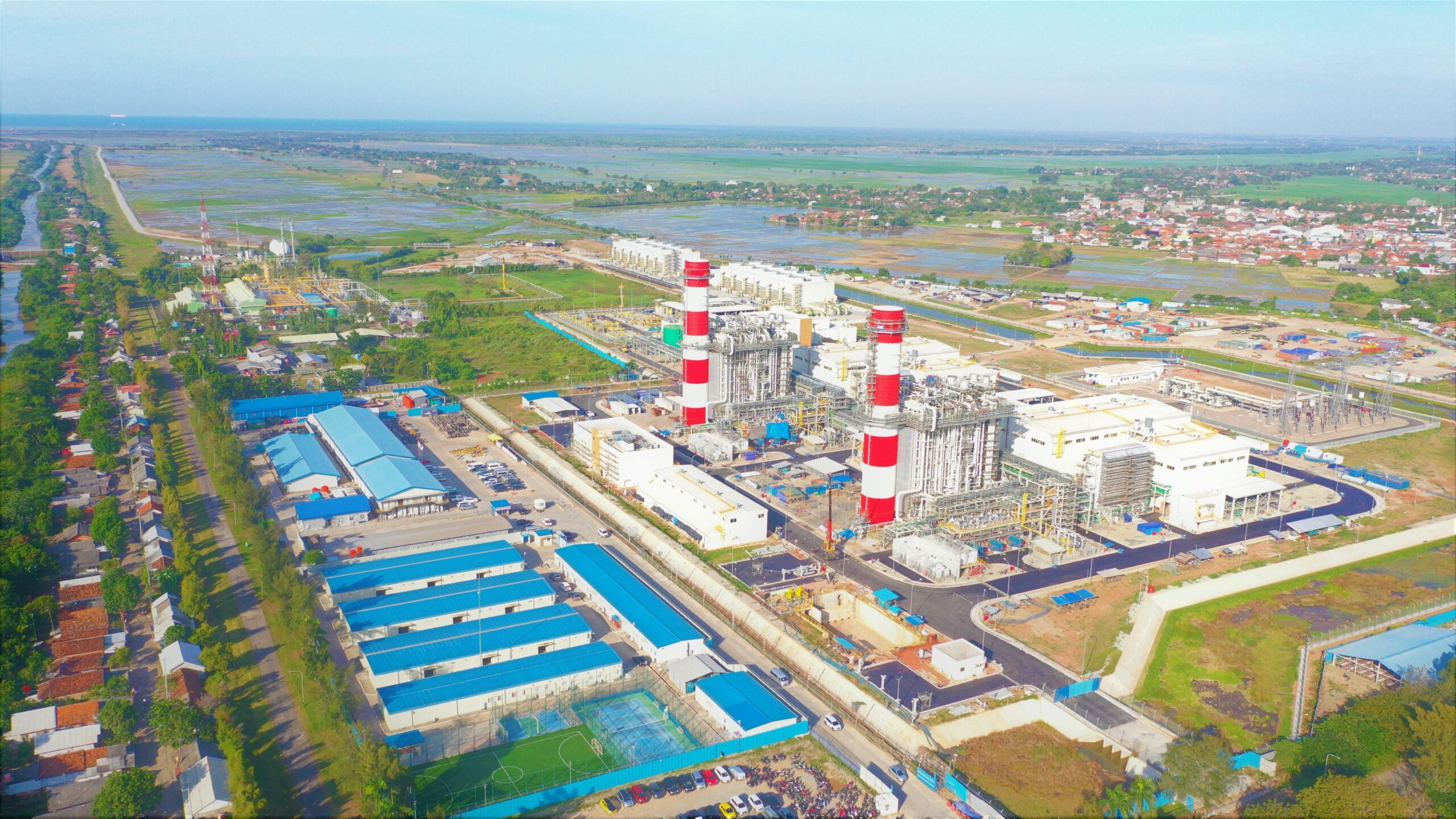
Indonesia’s manufacturers face a double blow: a Middle East energy shock closing the Strait of Hormuz and a deepening domestic gas crunch forcing factories to run well below target capacity.
The kilns at a ceramics plant on the outskirts of Surabaya have been running at barely two-thirds of their normal capacity for three weeks. The gas pressure gauge — usually a reassuring steady hum — has become an anxiety meter, swinging unpredictably as allocations from the state pipeline operator tighten and then thin out altogether on some days. Workers who normally operate three shifts have been sent home mid-rotation. “We cannot plan production,” says a senior executive at the company, who requested anonymity due to commercial sensitivities. “We are not running a factory anymore. We are running a rationing exercise.”
That factory floor, somewhere in East Java, is a microcosm of what is happening across Indonesia’s industrial heartland in March 2026. The country — Southeast Asia’s largest economy and, until recently, a respectable net gas producer — finds itself caught in a vice: squeezed from without by the most disruptive Middle East energy shock since the 1973 Arab oil embargo, and from within by a structural domestic gas supply crisis years in the making.
The Hormuz Shock: Asia’s Energy Nightmare Materialises
On February 28, 2026, following US-Israeli military strikes on Iran, the Strait of Hormuz — the narrow chokepoint through which roughly one-fifth of global oil and a third of liquefied natural gas transit every day — was effectively shut to commercial traffic. The consequences were immediate and seismic. Brent crude surged nearly 20 percent on Monday morning, breaching $111 per barrel for the first time since July 2022.
For Asia, the closure was catastrophic in a way that cannot be overstated. In 2024 alone, 84% of the oil and 83% of the LNG shipped through the Strait was bound for Asia. The Gulf states’ combined production dropped sharply as strikes hit critical infrastructure. Attacks on Saudi Arabia’s Ras Tanura refinery, Qatar’s Ras Laffan gas processing base, and the UAE’s Ruwais refinery complex, combined with Iran’s blockade, resulted in a drop of Gulf countries’ oil production by 10 million barrels per day compared to March 2025.
Governments and businesses across Southeast Asia scrambled to stave off energy shortages as the Strait of Hormuz remained shut, with government offices in the Philippines moving to a four-day work week and officials in Thailand and Vietnam encouraged to work from home.
Indonesia stood at a particularly precarious intersection. Unlike Japan, which maintains multi-month strategic reserves, or Malaysia, which is a net oil exporter, Indonesia’s exposure was both acute and structural. Twenty-five percent of Indonesia’s oil and gas is imported from the Middle East region, and disruptions to shipping activities in the Strait of Hormuz were predicted to last longer than initially expected.
A Domestic Crisis Hiding in Plain Sight
What makes Indonesia’s predicament uniquely dangerous — and uniquely instructive for regional energy planners — is that the Hormuz shock did not arrive in a vacuum. It landed on top of a pre-existing, chronic domestic gas supply deficit that analysts at Wood Mackenzie and the IEEFA had been warning about for years.
Indonesia’s population of over 250 million and fast-developing economy make it Southeast Asia’s largest gas market. The country has outlined ambitious production targets of 1 million b/d of oil and 12 bcfd of gas by 2030, in support of energy security. However, declining domestic gas supply remains a major concern.
The structural architecture of this crisis is worth dissecting. Indonesia produces, in theory, around twice as much gas as it consumes. Yet factories across Java remain chronically underserved. The paradox lies in decades of policy failure: export commitments locked up volumes in long-term LNG contracts with Japan and South Korea; infrastructure gaps left Java — where 60% of industrial demand is concentrated — physically disconnected from gas fields in Kalimantan and Sumatra; and the Domestic Market Obligation (DMO), set at 25% of production, proved woefully inadequate as industrial demand surged.
State gas distributor Perusahaan Gas Negara (PGN), which controls the bulk of Java’s pipeline network, has been unable to satisfy industrial demand for the better part of a decade. Chemical, ceramics, and textile industries are among the main users of natural gas in Indonesia, and the industrial sector is more exposed to gas supply-side shocks than other sectors.
Wood Mackenzie’s supply scenario suggests that demand and supply would be tightly balanced until 2026, with the ESDM forecasting a gas deficit by 2033 without the development of new fields. The Hormuz crisis has, in effect, compressed that timeline from years into weeks.
Industry on its Knees: The Factory-Floor Reality
The most visible industrial casualty so far is PT Chandra Asri Pacific, Indonesia’s largest integrated petrochemical complex and a critical upstream supplier to packaging, automotive, consumer goods, and construction material manufacturers nationwide. Chandra Asri declared force majeure on all contracts, citing the security situation around the Strait of Hormuz which has resulted in significant disruption to maritime transportation activities and materially disrupted the shipment and delivery of feedstock supplies.
The company is selectively adjusting its operational run rates in accordance with supply conditions and production needs, while diversifying sources of raw materials and maintaining prudent inventory management. In corporate-speak, that means production cuts.
The ripple effects extend far beyond Chandra Asri. A second industry executive — head of operations at a major Java-based ceramic tile manufacturer — was more blunt, speaking on condition of anonymity: “Our gas allocation from PGN has been cut by about 30 percent over the past three weeks. Our kilns need stable pressure to maintain firing temperatures. When pressure drops, you either slow production or you risk product defects and equipment damage. We have chosen to slow down. We are running at around 65 percent of target capacity right now.”
The ceramics sector is emblematic of a broader industrial unravelling. Ceramics production is among the most gas-intensive light manufacturing activities, requiring continuous high-temperature firing. Fertilizer plants face an equally dire calculus: they cannot throttle production gradually the way an assembly line can. Gas shortfalls below a threshold trigger complete shutdowns, as Bangladesh discovered in early March when production activities at two major fertilizer factories were temporarily suspended in compliance with government directives due to gas shortage and a decrease in gas pressure.
| Sector | Gas Dependency | Crisis Exposure | Key Risk |
|---|---|---|---|
| Petrochemicals | Very High | Critical (feedstock) | Supply chain cascade |
| Ceramics/Glass | Very High | High (kiln temps) | Quality, capacity loss |
| Fertilizers | Very High | Critical (process gas) | Potential shutdown |
| Textiles | Moderate–High | High | Output reduction |
| Steel/Metals | Moderate | Medium–High | Cost inflation |
| Palm-oil Processing | Moderate | Medium | Export competitiveness |
The Fiscal Arithmetic Is Brutal
For Jakarta, the energy shock arrives at the worst possible budgetary moment. Indonesia, a net oil importer consuming 1.6 million barrels per day but producing only 608,000, faces punishing fiscal arithmetic. The 2026 state budget assumed an Indonesian crude price of $70. Every single-dollar increase above that adds Rp 10.3 trillion in subsidy costs while returning only Rp 3.6 trillion in revenue. The budget is already underwater.
With Brent at $111 and climbing, the gap between budgeted and actual prices threatens to blow a hole of well over Rp 400 trillion in the fiscal accounts — a sum that dwarfs any credible subsidy reserve. Bank Indonesia has already revised its global growth forecast downward. The central bank cut its 2026 global growth projection to 3.1% on oil-driven inflation risks, while maintaining Indonesia’s GDP outlook at 4.9–5.7% — a gap that analysts privately acknowledge reflects official optimism more than analytical precision.
Currency pressure compounds the problem. Escalating Iran tensions risk pushing the rupiah toward Rp 20,000 per US dollar as oil prices surge and capital outflows intensify. A weaker rupiah raises the cost of every LNG cargo diverted from Middle Eastern to alternative suppliers, creating a vicious feedback loop between energy inflation and currency depreciation.
The Government’s Triage Response
Jakarta’s initial response has been textbook crisis management: reassurance, redirection, and storage pledges. Energy Minister Bahlil Lahadalia acknowledged that Indonesia currently lacks fuel storage with a capacity of more than a month, saying “the storage is insufficient,” and announced plans to construct additional fuel storage while redirecting gas and oil imports from the Middle East to alternative countries.
The reassurance that reserves remain within “safe” national thresholds has done little to calm manufacturers. Indonesia’s fuel reserves stood at roughly 23 days, above the national minimum standard of 20–23 days, reflecting storage capacity constraints rather than an actual shortage — a distinction that matters at the macro level but is cold comfort to a ceramics plant manager rationing kiln time.
On the upstream side, there is some medium-term cause for optimism. Eni took Final Investment Decisions for the Gendalo and Gandang and Geng North and Gehem deep-water gas fields off East Kalimantan, targeting plateau production of up to 2 billion standard cubic feet per day of gas and 90,000 barrels per day of condensate. These projects — leveraging the existing Jangkrik floating production unit and Bontang LNG plant — represent a genuine vote of confidence in Indonesia’s upstream potential. But they will not begin producing until 2028 at the earliest. They offer no relief to a factory running at 65% capacity today.
The 1998 Ghost: Political Stakes Are High
The Council on Foreign Relations’ analysis of the Iran war’s Asian energy impact carries a pointed historical reminder that Jakarta’s policymakers would be wise to absorb: Indonesia’s 1998 popular uprising — violent at times and ultimately resulting in the end of the Suharto regime — was partly sparked by a sharp rise in fuel prices amidst the Asian financial crisis.
President Prabowo Subianto’s government, still consolidating authority after the 2024 election, faces a delicate political economy. Subsidized fuel price increases — almost inevitable given the fiscal math — risk triggering the kind of street-level anger that destabilised prior administrations. The Idul Fitri holiday period, when fuel demand traditionally spikes 12% above baseline, further compresses the political window for painful adjustments.
Industry associations are increasingly vocal. Factory floors running at 60–70% capacity do not merely produce less output; they produce unemployment. Indonesia’s manufacturing sector employs over 18 million workers directly. Even a 10% generalised output reduction — conservative, given present trends — implies millions of person-weeks of lost income rippling through supply chains from raw materials to logistics.
A Structural Reckoning — and a Strategic Opportunity
It would be analytically lazy to frame this purely as an exogenous shock. The Hormuz crisis has exposed, with painful clarity, structural vulnerabilities that Indonesia’s energy policymakers have deferred confronting for two decades: inadequate storage, export commitments that cannibalize domestic supply, infrastructure gaps between gas-producing and gas-consuming regions, and chronic underinvestment in both upstream exploration and demand-side efficiency.
Indonesia’s energy transition has been at a pivotal stage for several years. Progress in 2026 will depend on improving the bankability of renewable energy procurement, advancing grid access reform, and aligning power system planning with industrial demand for clean electricity. The current crisis makes the case — compellingly, if brutally — for accelerating that transition. Every ceramics plant that today cannot fire its kilns for lack of gas could, in principle, be drawing from geothermal or solar-backed process heat within a decade, reducing exposure to both foreign supply shocks and domestic pipeline politics.
The Wood Mackenzie assessment of Indonesia’s undeveloped gas resources — over 35 trillion cubic feet in undeveloped resources from discoveries such as Abadi, Tangkulo, Layaran, Geng North, and Timpan — underscores that the country is not resource-poor. It is policy-poor and infrastructure-poor. Monetising those reserves at speed requires regulatory certainty, contract sanctity, and a pricing regime that makes upstream investment competitive with alternative destinations for global capital.
For international investors watching from London or Singapore, the near-term signal is clear: Indonesia’s energy vulnerability creates both risk and opportunity. The risk is a manufacturing sector contracting faster than official GDP projections assume, currency instability, and the political volatility that energy inflation historically generates in emerging markets. The opportunity lies in the renewables and LNG infrastructure gap — from Sumatra floating storage to Java geothermal expansion — that this crisis has made politically unsustainable to delay.
What Jakarta Must Do — Now and Next
The immediate priority is industrial gas triage: the government needs a transparent, sector-by-sector allocation protocol that prioritises fertilizer plants (whose shutdown has food security consequences) and export-oriented manufacturers (whose contraction damages the current account) over less critical industrial uses. Ad hoc rationing by PGN is already creating arbitrary competitive distortions.
Medium-term, the single most impactful policy intervention would be accelerating LNG regasification capacity on Java — allowing spot LNG cargoes from Australia, the US Gulf Coast, and West Africa to substitute for constrained pipeline supply. Indonesia has the technical expertise; what has been missing is the political urgency. The Hormuz shock has now supplied that.
Longer-term, the crisis should catalyse what years of energy policy debate have failed to deliver: a credible, funded plan to develop the 35+ tcf of undeveloped domestic gas resources, combined with a renewables buildout that reduces industrial gas dependency. Indonesia’s geothermal endowment alone — the world’s largest — could supply substantial industrial process heat if policy barriers to development were removed.
The factory manager in Surabaya is not waiting for grand strategy. He is watching his gas pressure gauge and calculating whether to send more workers home. Jakarta’s job is to ensure that calculation resolves in favour of production — and that the structural vulnerabilities that made it necessary never recur.
Key Data Snapshot
- Strait of Hormuz closure: February 28, 2026 — ongoing
- Brent crude peak: $111/barrel (first since July 2022)
- Indonesia fuel reserves: ~23 days (national minimum: 20–23 days)
- Middle East share of Indonesia’s energy imports: ~25%
- Chandra Asri force majeure: Declared March 2, 2026
- Indonesia’s daily oil consumption: ~1.6 million bpd | Production: ~608,000 bpd
- Fiscal cost per $1 oil price increase above budget: +Rp 10.3 trillion subsidy burden
- Undeveloped Indonesian gas resources: 35+ tcf (Wood Mackenzie estimate)
Discover more from The Economy
Subscribe to get the latest posts sent to your email.



Key Takeaways
- Rolex’s secondary market rose approximately 7.9% year-over-year as of 2026 (per WatchCharts data) — trailing Patek Philippe (+16.2%) and Tudor (+11.4%) but still outperforming Audemars Piguet (+3.4%).
- Rolex raised U.S. retail prices 4–9% in January 2026 (steel models ~5.6%, gold models ~8.7%), narrowing the historical gap between retail and pre-owned pricing.
- Not every model appreciates: steel sports references (Submariner, GMT-Master II, Daytona) have held value far better than two-tone or widely available dress references like the standard Datejust.
- The Lady-Datejust posted the sharpest 2026 gain among tracked collections — up 22.73%, from roughly $9,269 to $11,376 — driven by demand for smaller, “everyday luxury” watches.
- Gold’s rise past $2,400/oz has directly lifted the investment case for Rolex’s precious-metal references (Day-Date, Sky-Dweller, Yacht-Master).
The Model-by-Model Picture
| Category | 2026 Trend |
|---|---|
| Lady-Datejust | +22.73% (strongest performer among tracked collections) |
| Steel sports models (Submariner, GMT-Master II) | Held value well; corrected from 2022 peak but stabilized above retail |
| Daytona | Corrected from highs above $50,000 to the mid-$30,000s; still among the most sought-after references |
| Two-tone/widely available Datejust | Flat to negative — “holds value” is an overstatement for this category |
| Gold references (Day-Date, Sky-Dweller) | Lifted by gold’s rise above $2,400/oz |
Why the “Rolex Always Appreciates” Myth Is Fading
The pandemic-era boom pushed some references — the Daytona above all — to speculative highs disconnected from historical norms. Since the March 2022 peak, steel sports models have compressed meaningfully, and dealers who bought inventory near the top have in some cases faced 20–40% markdowns on liquidation. The lesson for 2026 buyers: Rolex as a category is not a monolith. Value retention depends heavily on specific reference, condition, and whether the piece comes with box and papers (“full set”).
What’s Actually Driving 2026 Strength
- Retail price increases raise the floor. When a new Submariner retails at $10,050 (up from $9,500), a pre-owned example at $11,000–$12,000 suddenly represents a smaller premium — narrowing the gap without secondary prices actually moving.
- Supply discipline remains Rolex’s core lever. The brand has never confirmed production numbers, and secondary-market premiums remain entirely a function of Rolex’s own manufacturing decisions — a risk factor as much as a support.
- Certified Pre-Owned rollout. Rolex’s now fully rolled-out CPO program has changed how buyers transact in the used market, adding a layer of brand-verified legitimacy that supports pricing.
The Case for Rolex as a Portfolio Diversifier
Financial advisors increasingly frame luxury watches not as a replacement for equities or bonds, but as a tangible, historically low-correlation diversifier — one that carries its own risks (illiquidity, condition-dependent pricing, no yield) but has demonstrated multi-decade resilience for specific references.
Is Rolex a good investment in 2026?
It depends heavily on the specific reference. Steel sports models like the Submariner and Daytona have held or grown in value; two-tone and widely available dress models generally have not. Overall, Rolex’s secondary market rose about 7.9% year-over-year in 2026, trailing Patek Philippe but ahead of Audemars Piguet.
Discover more from The Economy
Subscribe to get the latest posts sent to your email.

Navigating Mortgage and Loan Refinancing in a High-Yield Environment
Global public debt crossing critical thresholds has kept central bank policies volatile, resulting in fluctuating US Treasury yields throughout 2026. For homeowners and commercial property holders burdened by previous high-interest borrowing cycles, finding optimal refinance windows has become a high-stakes financial puzzle. Stalled disinflation and stubborn employment numbers mean rate cuts are incremental, requiring borrowers to act with precision.
Timing your mortgage or commercial loan refinance in this environment requires a deep understanding of yield curve movements and lender risk appetites.
Decoding 2026 Refinance Dynamics
The 10-Year Treasury Yield Benchmark
Mortgage rates continue to track closely with the 10-year US Treasury yield. When macroeconomic anxiety spikes debt issuance, yields rise, tightening consumer borrowing capacity. Savvy borrowers monitor weekly Treasury auctions to lock in rates during brief dip windows.
Hybrid ARMs and Alternative Structures
With fixed rates remaining elevated, 7/1 and 10/1 adjustable-rate mortgages (ARMs) have surged in popularity. These products offer lower initial monthly payments, giving borrowers breathing room until central bank easing cycles fully materialize.
| Loan Product | Current Rate Range | Best For | Key Risk Factor |
| 30-Year Fixed Mortgage | 6.2% – 6.8% | Long-term predictability | Higher initial monthly outlay |
| 7/1 Hybrid ARM | 5.5% – 5.9% | Short-term ownership / flipping | Rate reset risk after year 7 |
| Commercial Refinance | 7.0% – 8.2% | Corporate asset restructuring | Strict DSCR lender covenants |
Actionable Steps for Successful Refinancing
To maximize your chances of securing favorable refinance terms in a volatile market, follow a disciplined preparation strategy.
Boost Your Credit Score Immediately: Lenders in 2026 are applying stringent credit tiering; a 20-point increase can drop your APR by a crucial quarter-point.
Shop Regional Credit Unions: Smaller financial institutions often offer portfolio loans with more flexible underwriting than major national banks.
Calculate the Break-Even Point: Ensure your total closing costs are recouped through monthly savings within 24 months of closing.
“Market Strategist View: Refinancing in 2026 is an exercise in opportunistic timing. Borrowers must maintain immaculate financial profiles ready to strike the moment Treasury yields dip.”
Mastering the complexities of today’s debt environment ensures you can successfully lower your debt service costs and protect your long-term financial stability.
Discover more from The Economy
Subscribe to get the latest posts sent to your email.

The days of pulling generic auto insurance quotes based purely on your zip code and age are officially over. In 2026, insurance comparison engines are powered entirely by generative AI and real-time telematics. These platforms digest thousands of live data points—ranging from your driving smoothness via connected vehicle sensors to real-time traffic congestion patterns—to generate hyper-personalized premiums instantly.
For consumers, this evolution represents both a massive opportunity for savings and a hidden trap for penalty pricing. Understanding how AI algorithms evaluate risk is essential for anyone looking to lower their monthly auto insurance premiums.
How AI Comparison Engines Evaluate Your Risk Profile
Behavioral Telematics and Connected Cars
Modern cars stream performance data directly to insurance aggregators. Generative AI models analyze braking sharpness, acceleration curves, cornering G-forces, and phone distraction metrics. Drivers who maintain smooth, defensive habits are rewarded with dynamic rate cuts of up to 40% compared to traditional rating tiers.
Predictive Traffic and Weather Modeling
AI tools now cross-reference your daily commute route with predictive weather and accident probability models. If your standard parking location or driving corridor has a statistically higher incidence of uninsured motorist claims, your quotes will reflect that hyper-local risk assessment.
| Comparison Factor | Traditional Rating Model | 2026 Generative AI Model | Impact on Premium |
| Mileage & Usage | Annual estimated odometer reading | GPS tracking & live trip duration | High (up to 35% savings) |
| Driving Behavior | MVR driving record & accidents | Real-time braking, speed, & G-force | Critical (determines tier) |
| Vehicle Tech | Make, model, and safety rating | ADAS calibration & repair cost data | Moderate |
Strategies to Lower Your AI-Driven Insurance Quote
To outsmart the algorithm and secure the lowest possible premium in 2026, drivers must proactively manage their digital footprint on insurance platforms.
Opt-In for Telematics Trial Periods: Many insurers offer immediate 15% discounts just for installing their driving app; let it track safe habits for 30 days to lock in permanent savings.
Scrub Unverified Public Records: Ensure your motor vehicle report is free of clerical errors that AI risk models misinterpret as reckless behavior.
Compare AI Aggregators: Use platforms that integrate multi-carrier API feeds rather than single-brand comparison sites to find the best risk-adjusted rate.
“Industry Note: AI-driven pricing rewards transparency and precision. Drivers who actively manage their telematics data consistently out-save those relying on legacy quote calculators.”
Embracing AI comparison tools allows savvy policyholders to customize coverage limits precisely to their driving habits, eliminating wasted premium spend while ensuring robust protection.
Discover more from The Economy
Subscribe to get the latest posts sent to your email.

Neocloud Economics in 2026: GPU Debt, Utilization and Power

What Is a Neocloud? How AI GPU Clouds Work and Compare

Lula Re-elected in 2026: What Changes for the Dollar, Brazilian Stocks, and Interest Rates?

Lula Wins Brazil’s 2026 Election: Five Economic Tests for 2027

SSI November 2026 Payment: Why Benefits Arrive October 30

Russia Sanctions Waiver: What Asian Oil Buyers Gain

Asia Markets Weekly: How Oil, US Yields and the Fed Reach Tokyo, Kuala Lumpur and Karachi

Gold Near $4,000: Buy, Hold or Wait? A Pakistan Tola Price Guide

US 10-Year Treasury Yield Near 5%: The Hidden Cost for Pakistani Investors

Fed Meeting on October 28: Hike or Hold—and Why Pakistan Investors Should Care

Can Pakistan Turn US–Iran Mediation Into an Economic Dividend?

Oil Above $100: How Higher Crude Prices Reach Pakistan’s Rupee, Petrol and Imports

SBP Interest Rate at 11.5%: What Will Decide Pakistan’s Next Policy Move?

The Global South: Debt, Climate Finance and Investment in 2026

Crude Oil & Petroleum Market Analysis: OPEC+ Decisions and Price Forecasts

Top US Convenience Store Chains: Store Counts, EV Charging, and Sales Trends

Algorithmic Dogfights: Why the U.S. and China Must Establish Rules of Engagement for Autonomous Air Power

Who Is Shivon Zilis? The Neuralink Executive at the Center of the Musk–OpenAI Trial

Social Security Extra $90 Deposit: Who Qualifies for the October 2026 Medicare Rebate?

Global Economic Outlook 2026: 7 Forces Reshaping Markets, Trade and Business

Corporate America Faces a New Debt Test as US Borrowing Costs Surge

Gold Price Outlook 2026: The Forces Behind the Forecasts—and What Could Reverse Them

Gold Falls 3.7% as Yields Surge: Is Gold Still a Safe Haven in 2026?

Stock Market Crash in 2026? Warning Signs, Scenarios and a Calm Investor Checklist

MAS Allocates S$1.45 Billion to Five Asset Managers in Third EQDP Batch: Total Deployment Reaches S$5.4 Billion

Stock Market Today: Dow, S&P 500, and Nasdaq Retreat as Treasury Yields

Anthropic Bans Sustained Abuse of Claude AI Under New Usage Policy Effective November 12, 2026

Geopolitics and Your Portfolio: How International Affairs Move Global Markets
-

 Markets & Finance10 months ago
Top 15 Stocks for Investment in 2026 in PSX: Your Complete Guide to Pakistan’s Best Investment Opportunities
-

 Analysis8 months ago
Johor’s Investment Boom: The Hidden Costs Behind Malaysia’s Most Ambitious Economic Surge
-

 Analysis8 months ago
Top 10 Stocks for Investment in PSX for Quick Returns in 2026
-

 Banks9 months ago
Best Investments in Pakistan 2026: Top 10 Low-Price Shares and Long-Term Picks for the PSX
-

 Analysis9 months ago
Brazil’s Rare Earth Race: US, EU, and China Compete for Critical Minerals as Tensions Rise
-

 Investment10 months ago
Top 10 Mutual Fund Managers in Pakistan for Investment in 2026: A Comprehensive Guide for Optimal Returns
-

 Global Economy10 months ago
15 Most Lucrative Sectors for Investment in Pakistan: A 2025 Data-Driven Analysis
-

 Global Economy10 months ago
Pakistan’s Export Goldmine: 10 Game-Changing Markets Where Pakistani Businesses Are Winning Big in 2025