
Analysis
How the Iran Conflict Has Rattled Global Energy Markets: Tehran’s Grip on the Strait of Hormuz Fuels Worldwide Disruptions

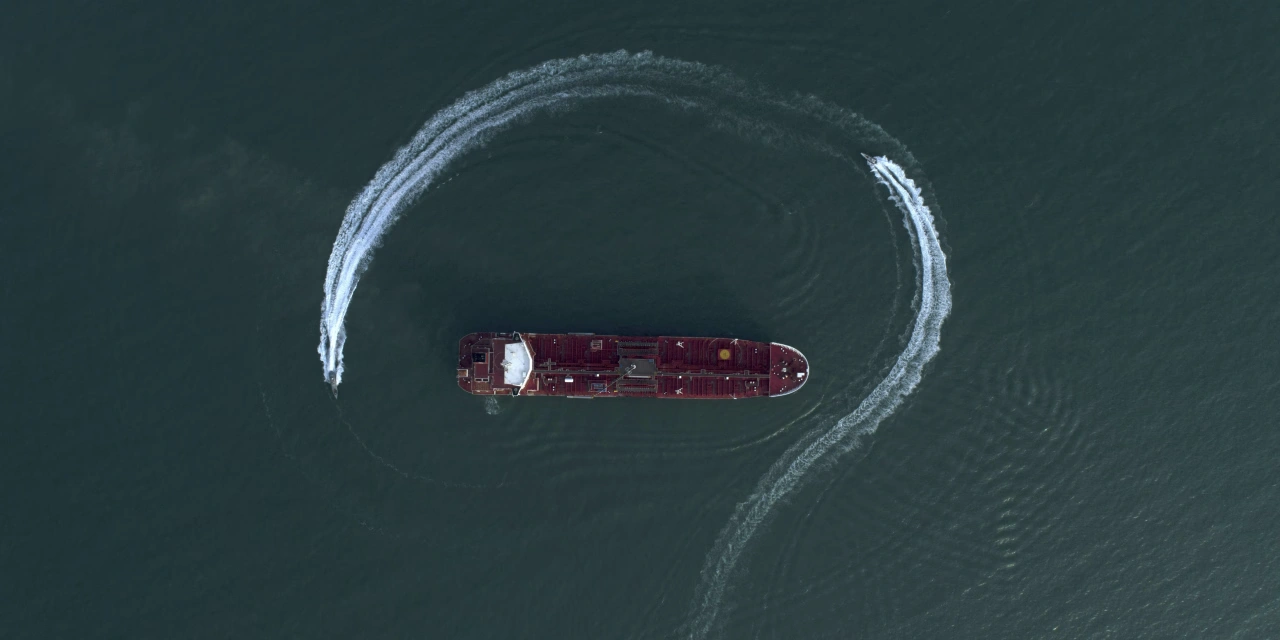
Explore how the 2026 Iran conflict and Strait of Hormuz disruptions are shaking global energy markets, with real-time price surges, supply chain breakdowns, and what comes next for oil, LNG, and the global economy.
For decades, energy analysts have marked the Strait of Hormuz in red on their risk maps — a narrow, 21-mile-wide corridor threading between Iran and Oman through which roughly one-fifth of the world’s oil flows every single day. The scenario they feared most has now arrived. In the span of four days, the Iran conflict global energy markets have been dreading has become a full-blown reality: a waterway that underpins the price of everything from gasoline in Ohio to heating bills in Hamburg to factory output in Guangdong has effectively gone dark.
The catalyst was swift and seismic. A coordinated US-Israeli air campaign launched in late February struck Iranian military and governmental targets with precision, killing Supreme Leader Ali Khamenei. Tehran’s response — retaliatory strikes, naval mobilization, and the threat of asymmetric warfare — has choked off one of the most critical chokepoints in the global trading system. As of March 3, 2026, the Strait of Hormuz blockade effects on oil supply are being felt from Houston to Hanoi. The question now is not whether this hurts — it manifestly does — but how long the pain lasts, and whether the world’s energy architecture can absorb a shock of this magnitude.
The Strategic Chokepoint: Strait of Hormuz Under Siege
To understand why markets have responded with such alarm, consider the geometry. The Strait of Hormuz — barely navigable by supertankers at its narrowest — is not just another shipping lane. It is the jugular vein of global petroleum trade. Approximately 20 million barrels of crude oil pass through it daily, alongside roughly 20% of the world’s liquefied natural gas exports, primarily from Qatar’s colossal North Field operations.
When Iranian naval and missile assets make that corridor too dangerous to traverse, the downstream consequences are near-instantaneous. Tanker insurance premiums — already elevated heading into the crisis — have spiked by multiples. Several major shipping operators have suspended transits entirely. Qatar’s LNG export terminals, operating under threat posture, have curtailed loading. Iraqi oil flowing south through Basra faces disruption. Even Saudi Arabia’s eastern oil fields and their Red Sea-bound pipelines are operating under emergency protocols.
Bloomberg reported that this threatens to be the worst disruption in global gas markets since Russia’s 2022 invasion of Ukraine — a benchmark that, in energy policy circles, carried nearly apocalyptic connotations. That comparison is sobering: the 2022 shock rewired European energy infrastructure, sent utilities to the brink, and triggered a continent-wide scramble for alternative supply that lasted years.
This time, the geographic scope may be even wider.
Surging Prices and Supply Shocks: The Numbers Don’t Lie
Markets have reacted with textbook crisis reflexes, but the scale is striking. As CNBC’s coverage of Strait of Hormuz global oil and gas trade disruptions documented, Brent crude — the global benchmark — surged between 7% and 13% in the first 72 hours of the closure, settling in a range of $80–$83 per barrel as of this writing. That represents a significant re-pricing of risk, though it still sits below the $100-plus levels that analysts warn could materialize if the disruption extends beyond a week.
The downstream effects are already visible at the consumer level:
| Energy Metric | Pre-Conflict Level | Current Level (Mar 3, 2026) | Change |
|---|---|---|---|
| Brent Crude ($/barrel) | ~$72–$74 | $80–$83 | +7–13% |
| US Regular Gasoline ($/gallon) | ~$2.78 | Above $3.00 | +8–10% |
| European TTF Natural Gas (€/MWh) | ~€38 | €46–€49 | +20–30% |
| LNG Spot Prices ($/MMBtu) | ~$11–$12 | ~$14–$16 | +25–35% |
| Global Dry Bulk Shipping Index | Elevated | All-time high | Record |
Sources: Reuters, Bloomberg, CNBC, BBC Energy Desk, March 2026
For American motorists, the gasoline price crossing the psychologically and politically significant $3-per-gallon threshold is an unwelcome reminder that Middle East instability has never been truly distant from the US domestic economy — whatever the strategic independence afforded by shale production. The US Strategic Petroleum Reserve (SPR), partially restocked after the 2022 drawdowns, offers some buffer, but its release would be a political decision as much as an economic one, carrying its own messaging risks amid an ongoing military operation.
European natural gas futures have borne perhaps the sharpest repricing. The continent entered 2026 with storage levels modestly above seasonal averages, but that cushion looks thinner now. Qatar’s LNG — which Europe came to depend on heavily post-Ukraine — has seen loading disruptions, and the timing, still technically late winter, is painfully inconvenient.
Geopolitical Ripples Across Asia and Europe
If the financial mathematics are stark, the geopolitical algebra is even more complex. The Iran conflict global energy market disruption does not affect all nations equally, and the asymmetries matter enormously for diplomatic positioning.
Asia: Maximum Pain, Minimum Leverage
Asia, bluntly, is where this crisis hits hardest. Japan, South Korea, India, and China collectively import a staggering share of their crude oil through the Strait of Hormuz. For Japan and South Korea — both US security allies with negligible domestic production — there is almost no realistic near-term alternative. Their refineries are calibrated for Gulf crude grades; switching supply origin is neither fast nor cheap.
China’s position is particularly nuanced. Beijing imports approximately 40–45% of its crude through Hormuz, and it has long maintained energy relationships with Tehran as a hedge against Western-dominated supply chains. The death of Khamenei and the subsequent power vacuum in Tehran create genuine uncertainty for Chinese planners who valued predictable, if troubled, Iranian partnerships. Xi Jinping faces a situation where condemning the US-Israeli operation risks straining Washington relations at a sensitive moment in trade negotiations, while staying silent signals acquiescence to an action that directly threatens Chinese energy security. Expect Beijing’s diplomatic communications to be measured, multilateral in framing, and ultimately self-interested.
India, for its part, has in recent years secured significant discounts on Russian oil routed around Western sanctions. But the Hormuz disruption is a different problem — it affects the physical movement of tankers, not just pricing arrangements. New Delhi’s government will be watching carefully, managing both inflation risks and the political optics of being seen as dependent on a conflict-ridden supply corridor.
Europe: Higher Bills and Harder Choices
BBC coverage of the crisis noted that gas and oil prices have surged while shares tumble as the crucial shipping lane faces closure — a headline that captures the dual squeeze European governments are navigating. Higher energy costs feed directly into headline inflation, complicating the European Central Bank’s already delicate balancing act between growth support and price stability.
For European consumers, the how Iran war rattles energy supply chains dynamic is not abstract. It means higher heating bills, elevated transport costs, and broader inflationary pressure across supply chains still recovering from the 2022–2024 energy shock cycle. Industrial users — particularly energy-intensive sectors like chemicals, glass, and aluminum smelting — face margin compression that could accelerate the ongoing debate about European industrial competitiveness.
On the geopolitical dimension, European governments that have been cautious about the Iran military operation will now face domestic pressure to publicly distance themselves from a conflict that is directly raising their citizens’ energy costs. This creates awkward dynamics within NATO and the broader Western alliance.
Tehran’s Influence: More Than Just Oil
It would be reductive to frame the Tehran influence on Strait of Hormuz shipping disruptions as purely a petroleum story. The closure — or even the credible threat of closure — of the strait weaponizes Iran’s geographic position in ways that outlast any individual political leadership. Khamenei may be gone, but the Revolutionary Guard’s naval assets, the Houthi proxy networks in Yemen, and the broader architecture of Iranian asymmetric capability remain operational.
The Guardian’s analysis highlighted what disrupting the strait could mean for global cost-of-living pressures — and the answer is: considerably more than just expensive gasoline. Shipping rate spikes propagate through entire supply chains. When it costs dramatically more to move a supertanker from Ras Tanura to Yokohama, those costs eventually appear in manufacturing inputs, finished goods, and ultimately consumer prices across dozens of economies.
There is also the LNG dimension. Global LNG shortages from the Iran crisis represent a newer and in some ways more structurally significant threat than the oil disruption. The 2026 global LNG market is tighter than in previous years, with demand growth from Asia consistently outpacing new supply project completions. A sustained Qatari export curtailment — even partial — would stress-test every LNG supply contract and spot market simultaneously.
Market Forecasts and Mitigation Strategies
What happens next depends on variables that analysts model but cannot predict: the duration of the closure, the trajectory of Iranian political succession, US military objectives, and the diplomatic space available to regional actors like Saudi Arabia, the UAE, and Oman.
The Bull Case for Oil Prices
If the Strait of Hormuz remains effectively closed for two weeks or more, the consensus emerging from energy desks at major banks and trading houses is that $100-per-barrel oil becomes a base case, not a tail risk. Some models, incorporating production halt cascades from Iraq and Kuwait (whose eastern export routes are also affected), project spikes toward $110–$120 under sustained disruption. At those levels, the global economy faces a stagflationary headwind not seen since 2008: energy-driven inflation colliding with weakening consumer sentiment and tightening financial conditions.
Mitigation Levers
The strategic response toolkit is familiar if imperfect. The International Energy Agency (IEA) member countries collectively hold strategic reserves designed for exactly this contingency; a coordinated release announcement would likely exert immediate downward pressure on futures prices, even if physical supply relief takes weeks to materialize. The US has already signaled readiness to tap the SPR; whether European nations coordinate through IEA mechanisms will be a test of multilateral energy governance.
OPEC+ nations with spare capacity — primarily Saudi Arabia and the UAE, whose production is already disrupted but whose political calculus may favor market stabilization — face an unusual situation: production increases that would typically benefit them financially are constrained by the same conflict that is creating the price opportunity. Saudi Aramco’s Ras Tanura complex, facing regional threat postures, cannot easily increase output it cannot export.
Meanwhile, US LNG exporters have received a windfall in the form of soaring spot prices, and American shale producers are accelerating permitting and rig deployments. But the timelines for meaningful new supply are measured in months, not days.
The Long View: Energy Transition in a Conflict World
There is a bitter irony embedded in the current crisis that energy economists are already noting. The global energy transition — the multi-decade shift toward renewables, battery storage, and electrification — has been partly justified on energy security grounds: reducing dependence on volatile petrostates and conflict-prone regions. Yet in 2026, most of the world’s major economies remain profoundly exposed to exactly the kind of Hormuz disruption that renewables advocates have long cited as justification for faster transition.
The crisis will almost certainly accelerate certain policy decisions. European governments will fast-track offshore wind permitting and battery storage investment, citing Hormuz as a national security imperative. Asian economies will revisit nuclear energy timelines. The US will likely see renewed political support for both domestic production and clean energy infrastructure — an unusual alignment of typically opposing interests.
But transitions take decades. In the meantime, the world runs on oil and gas, and a 21-mile strait still holds the global economy partly hostage to the decisions of actors thousands of miles from the financial capitals that price that risk.
Conclusion: The Price of Dependence
Four days into the Strait of Hormuz closure, the full economic damage remains incomplete and still accumulating. What is already clear is that the Iran conflict’s global energy market impact is neither a blip nor a manageable disruption — it is a structural stress test exposing vulnerabilities that years of relative stability had obscured.
Brent crude at $80+ may feel manageable compared to historical peaks. But the trajectory matters more than the current level. If Iranian political succession proves chaotic, if proxy forces escalate in Yemen or Iraq, if the strait closure extends into weeks rather than days, the $100 threshold is not a worst-case scenario — it is a median one.
For policymakers, the coming weeks demand both tactical crisis management and strategic honesty. SPR releases buy time; they do not buy energy independence. The world has known for decades that its dependence on a 21-mile waterway was a systemic risk. The 2026 Iran crisis is not a surprise. It is a reckoning.
Sources:
- Reuters: Global energy prices soar as Iran crisis disrupts shipping
- Bloomberg: Iran Crisis Threatens Worst Gas Market Disruption Since 2022
- CNBC: Strait of Hormuz Global Oil, Gas Trade Disrupted Amid Iran War
- BBC: Gas and oil prices soar and shares tumble as crucial shipping lane threatened
- The Guardian: What disrupting the Strait of Hormuz could mean for global cost-of-living pressures
Discover more from The Economy
Subscribe to get the latest posts sent to your email.



In the high-stakes arena of Hollywood’s streaming wars, Paramount Skydance’s audacious $110 billion bid to swallow Warner Bros. Discovery (WBD) has edged ahead, outmaneuvering Netflix and securing signals of regulatory green lights. Signed last week at $31 per share after a fierce bidding contest, the deal promises to reshape media consolidation amid antitrust concerns and mounting debt.variety+1
Deal Origins and Funding Breakdown
The merger, announced February 27, 2026, values WBD at an enterprise figure of $110 billion, with Paramount paying cash for all shares. It followed Paramount’s revised offer, which included reimbursing WBD’s $1.5 billion to $2.8 billion termination fee to Netflix and hiking its own reverse termination fee to $5.8 billion.cravath+2
Funding mixes $47 billion in equity from the Ellison family and RedBird Capital Partners, potentially bolstered by $24 billion from Arab sovereign funds like those from Saudi Arabia, Abu Dhabi, and Qatar—though Paramount has not confirmed the latter. Oracle co-founder Larry Ellison personally guarantees around $40-43 billion, underscoring commitment amid scrutiny over foreign influence in Hollywood mergers.wiky+2[youtube]
This structure addresses prior hurdles, including a hostile bid phase where Paramount accused WBD of a “tilted” process favoring Netflix.[deadline]
FCC Approval Process for Media Deals 2026
FCC Chair Brendan Carr, speaking at Mobile World Congress, called the Paramount-WBD tie-up “cleaner” than a Netflix-WBD combo, which raised competition red flags by merging two streaming giants. Since WBD holds no broadcast licenses—unlike Paramount’s CBS—the FCC’s role stays minimal, with Carr expecting swift passage if involved at all.seekingalpha+2
This contrasts with broader media merger 2026 dynamics, where regulators eye broadcaster overlaps like CBS and CNN under one roof, though Carr downplayed such issues. Early DOJ clearance under Hart-Scott-Rodino expired without blocks, signaling no U.S. antitrust impediments yet.cnbc+2
Key Regulatory Timeline:
- FCC Review: Minimal; signals positive from Carr (March 2026).[cnbc]
- DOJ/FTC Scrutiny: Initial HSR waiting period cleared (Feb 2026).[bloomberg]
- EU Antitrust: Expected minimal divestitures.[reuters]
- Shareholder Vote: WBD slated for March 20.[deadline]
Antitrust Concerns in Media Industry
While FCC backing appears likely, DOJ/FTC probes loom over market power. The merged entity would command under 4% of U.S. TV viewing via Paramount+ and Max/Discovery+, trailing Netflix (8%), YouTube (12-13%), and others—potentially aiding approval as a counter to dominants.
Critics fear reduced competition in streaming wars, but analysts like TD Securities’ Paul Gallant note a “consumers win” angle: scaling to challenge Netflix. “There’s probably a positive story with Paramount given it could scale up in streaming,” Gallant said.[fortune]
EU approval seems straightforward with minor asset sales possible.[reuters]
Economic Analysis of Paramount WBD Deal
Fitch downgraded Paramount to junk (BB+) post-announcement, citing $79 billion net debt and media sector pressures, with annual interest at $4-5 billion. Yet projections shine: $69 billion fiscal 2026 revenue, $18 billion EBITDA, and $6 billion synergies from tech integration, real estate cuts, and ops streamlining.
| Metric | Pre-Merger (2026 Est.) | Post-Merger Pro Forma |
|---|---|---|
| Revenue | Paramount: ~$30B; WBD: ~$40B | $69B [investing] |
| EBITDA | Combined ~$12B | $18B [investing] |
| Net Debt | – | $79B [finance.yahoo] |
| Streaming Share (US TV) | 2.3% + 1.4% | ~3.7% [thecurrent] |
| Annual Synergies | – | $6B [paramount] |
This table illustrates the scale: synergies offset debt via cost savings, though execution risks persist amid cash-burning streaming.[news.futunn]
Impact on Streaming Services and Industry
The Paramount Warner Bros merger promises a unified platform blending Paramount+, HBO Max, and Discovery+, boosting subscribers and content like Warner’s IP (Matrix, DC). It eyes 30 theatrical films yearly, defying layoff fears by targeting non-labor cuts.
What Does This Mean for Consumers? Bundled streaming could lower prices via scale, but fewer players risk higher fees long-term. Advertisers face less optionality as inventory consolidates.[thecurrent]
Arab sovereign funds in Hollywood mergers spark soft power worries: funding ties to Gulf states could sway narratives on Israel-Palestine or U.S. politics.malaysia.news.
Future of CBS and CNN Under Paramount
Post-deal, CBS news operations merge with CNN, potentially centralizing under Paramount’s banner without FCC broadcast clashes. Hollywood ponders integration: 30 films/year strains studios, but synergies aim for efficiency.
Experts foresee a “next-generation global media” powerhouse rivaling Disney, leveraging Warner’s scale.[paramount]
Forward-Looking Insights
If cleared by mid-2026, this cements media consolidation trends, pressuring independents while fortifying against Big Tech. Debt looms, but $6 billion synergies and streaming heft could stabilize. Watch DOJ moves and Gulf funding disclosures—they’ll define if Paramount WBD deal economic analysis tilts bullish or sparks backlash.
Discover more from The Economy
Subscribe to get the latest posts sent to your email.
Analysis
Amid Iran Tensions, US-China Trade Chiefs Gear Up for Mid-March Talks Ahead of Trump-Xi Summit
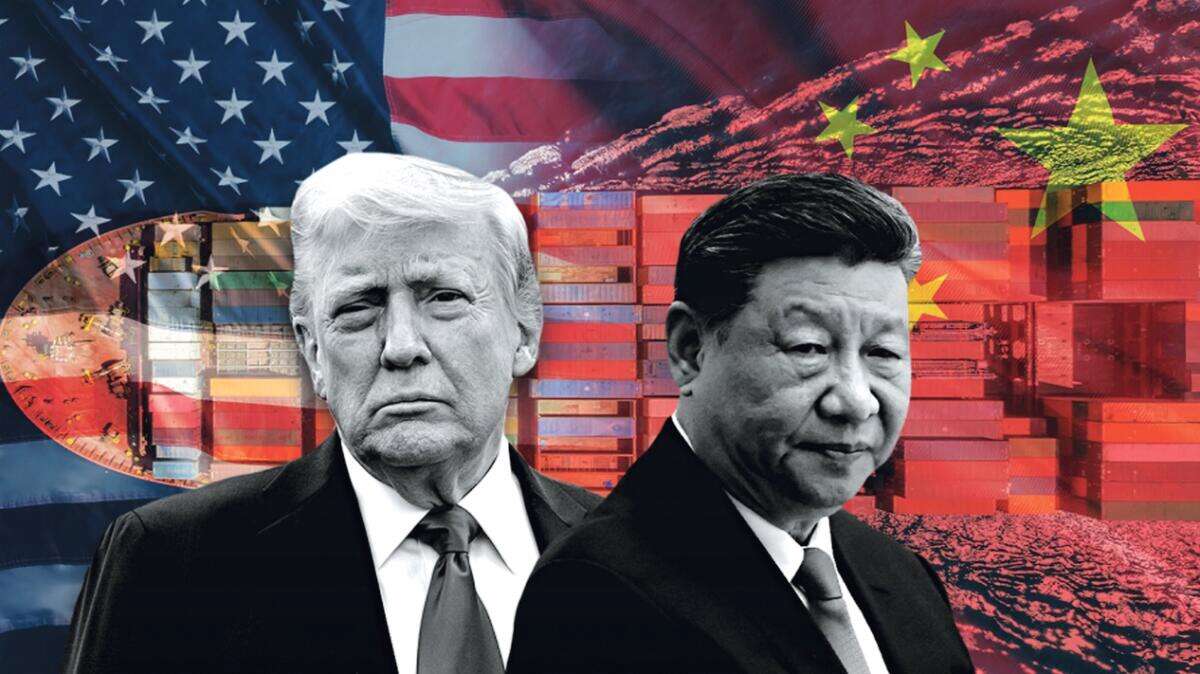
As missiles reshape the Middle East, two of the world’s most consequential economic officials prepare to sit across a table in Paris — and the world is watching.
The Paris Prelude: Bessent and He’s High-Stakes Rendezvous
In the shadow of American strikes on Iran and the death of Ayatollah Ali Khamenei, a quieter but no less consequential drama is unfolding in the back channels of global diplomacy. US Treasury Secretary Scott Bessent and Chinese Vice Premier He Lifeng are expected to convene in Paris at the end of next week, according to sources familiar with the matter, in what amounts to the groundwork session for a planned Trump-Xi summit currently scheduled from March 31 to April 2, 2026, in Beijing.
The meeting — still subject to change in both timing and location — would be the latest in a series of bilateral encounters stretching from Geneva in May 2025 through London, Stockholm, Madrid, and Kuala Lumpur. That itinerary alone tells a story: the US-China trade relationship, for all its seismic tension, has been quietly managed by two officials who have shown a consistent, if carefully choreographed, willingness to talk. As reported by Bloomberg, the mid-March trade talks signal that summit preparations are advancing despite the escalating geopolitical turbulence generated by Washington’s military actions in the Persian Gulf.
Neither the US Treasury nor China’s Ministry of Commerce responded to requests for comment — a silence that, in diplomatic terms, is practically deafening with implication.
Key Agenda Items: From Boeing to Taiwan
The Paris agenda, if it holds, is expected to span a range of contentious and commercially significant issues. Among the most prominent:
| Agenda Item | Stakes | Status |
|---|---|---|
| Chinese purchase of Boeing aircraft | Multi-billion dollar aviation deal; symbolic détente | Under discussion |
| US soybean purchase commitments | Agricultural exports; rural political currency for Trump | Preliminary |
| Taiwan | Sovereignty flashpoint; structural red line for Beijing | Exploratory |
| Post-Supreme Court fentanyl tariffs | Legal vacuum following February ruling; new 10% levies in place | Active negotiation |
| Broader trade deficit rebalancing | Core US demand; “managed trade” framework | Ongoing |
The Boeing question carries particular weight. China’s commercial aviation market — among the fastest-growing in the world despite its economic deceleration — represents an enormous prize for the American aerospace giant, which has spent years navigating regulatory and reputational turbulence. A purchase commitment would offer Beijing a high-visibility concession while giving Washington a tangible win ahead of the summit.
On soybeans, the calculus is similarly political. US exports to China fell a staggering 25.8% in 2025 as the trade war ground on, and American farmers — a bedrock constituency for President Trump — have felt the pain acutely. Renewed purchase commitments would provide both economic relief and narrative momentum heading into what the White House hopes will be a triumphant Beijing summit.
Taiwan, as ever, looms over any discussion. Beijing’s insistence that the self-ruled island is Chinese territory has hardened in recent years, and any American concession — or even ambiguity — on the matter carries enormous strategic weight. Conversely, any perceived US softening on Taiwan in exchange for trade gains would face fierce domestic political scrutiny on Capitol Hill.
The Fentanyl Tariff Wrinkle: A Legal Earthquake Reshapes the Agenda
Perhaps the most technically complex item on the table involves the sudden collapse of the US fentanyl tariff regime. On February 20, 2026, the Supreme Court issued a ruling invalidating the IEEPA-based tariffs that had underpinned Washington’s economic pressure on China over fentanyl trafficking — a decision that sent trade lawyers scrambling and left the administration’s negotiating toolkit notably lighter. The tariffs were formally terminated on February 24, 2026, the same day the administration moved to impose new 10% Section 122 tariffs across all trading partners (with exemptions carved out for civil aviation, a nod, perhaps, to the very Boeing negotiations now underway).
As the Peterson Institute for International Economics has noted, the legal architecture of US trade policy is under increasing strain as presidents reach for expansive executive authorities that courts may not sustain. The fentanyl ruling is the sharpest illustration yet of that vulnerability — and it hands Beijing a modest but meaningful tactical advantage in Paris. Chinese negotiators can now point to an American legal retreat, however involuntary, as evidence of the limits of economic coercion.
The US-China trade deficit, which did narrow in 2025 under the weight of successive tariff rounds, remains a central grievance for the Trump administration. Washington’s 2026 Trade Policy Agenda, released by the USTR, frames its objectives explicitly around what it calls “managed trade” — a deliberate, government-coordinated shaping of bilateral commerce rather than the free-market orthodoxy that once animated US trade doctrine. It is an approach that, ironically, has more in common with Chinese industrial policy than either side is inclined to acknowledge.
Broader Geopolitical Shadows: Iran, Oil, and the Beijing Calculation
Any honest accounting of the Paris talks must grapple with the shadow cast by American military operations in Iran. The killing of Supreme Leader Khamenei and the subsequent US strikes have stoked deep unease in Beijing, which maintains significant economic and strategic relationships with Tehran. China is Iran’s largest oil customer; disruption to Persian Gulf shipping lanes or further escalation in the Strait of Hormuz could send Asian energy markets into convulsions.
The Council on Foreign Relations has flagged precisely this risk: a Middle East conflict that constrains oil flows to Asia forces difficult choices on Beijing, potentially hardening its posture in trade negotiations where it might otherwise have shown flexibility. Chinese officials, for their part, have been careful to compartmentalize their public reactions — condemning the strikes without explicitly threatening retaliatory economic measures — but the tension is palpable and structural.
It would be naive to assume the Bessent-He talks in Paris can proceed in a hermetically sealed bilateral vacuum. The Iranian escalation is not merely a regional crisis; it is a variable that reshapes Chinese threat perceptions, energy economics, and the domestic political environment within which Xi Jinping must calculate his approach to the summit. A Beijing leadership consumed with Middle East uncertainty may drive a harder bargain — or, conversely, may see value in economic stability with Washington precisely because strategic uncertainty is rising elsewhere.
China’s own economic picture adds another layer of complexity. Growth has slowed, exports have surged in ways that have inflamed trade partners globally, and the property sector continues its long, painful deleveraging. Beijing’s suspension of rare earth export restrictions in October 2025 — a concession made as part of an earlier truce — remains a fragile détente that could unravel quickly if negotiations sour. Rare earth leverage is among the most potent cards in Beijing’s hand, and both sides know it.
What Paris Could — and Cannot — Deliver
Tempered expectations are in order. The Paris meeting, should it occur, is a preparatory session, not a deal-closing event. Its function is to narrow the agenda for the Trump-Xi summit, establish the parameters of what is achievable, and reduce the risk of a high-profile failure in Beijing at the end of March.
On that basis, a Chinese commitment to purchase Boeing aircraft and ramp up soybean imports would represent a meaningful deliverable — economically modest, perhaps, but symbolically potent. Progress on the fentanyl replacement framework, now that the IEEPA architecture has been legally dismantled, would address a genuine domestic concern for the administration and offer China a path to reducing tariff pressure under the new Section 122 structure.
Taiwan is, as always, the variable that defies neat packaging. It will be discussed, managed, and almost certainly left unresolved — a structural feature of US-China relations rather than a bug in any particular negotiation.
For global markets, the implications are material. A successful summit outcome — even a partial one — would provide relief to US agricultural exporters, aviation manufacturers, and the broader community of multinationals navigating a bifurcated trade landscape. A breakdown, particularly against the backdrop of Middle East escalation, could accelerate the fragmentation of global supply chains and deepen the decoupling that economists across the political spectrum increasingly view as economically costly for both nations.
As Reuters has reported, the mere fact of the mid-March US-China trade meeting is itself a signal — that both Washington and Beijing retain an interest in managing, rather than severing, the relationship. In a world of narrowing diplomatic bandwidth and expanding geopolitical risk, that signal carries weight.
The olive branches are extended. Whether they hold, in Paris and beyond, is the question that markets, policymakers, and allies from Seoul to Brussels will be watching closely over the weeks ahead.
Discover more from The Economy
Subscribe to get the latest posts sent to your email.
Analysis
The Iran Conflict’s Oil Surge: Why Prices Could Hit $100 and What It Means for Global Economies
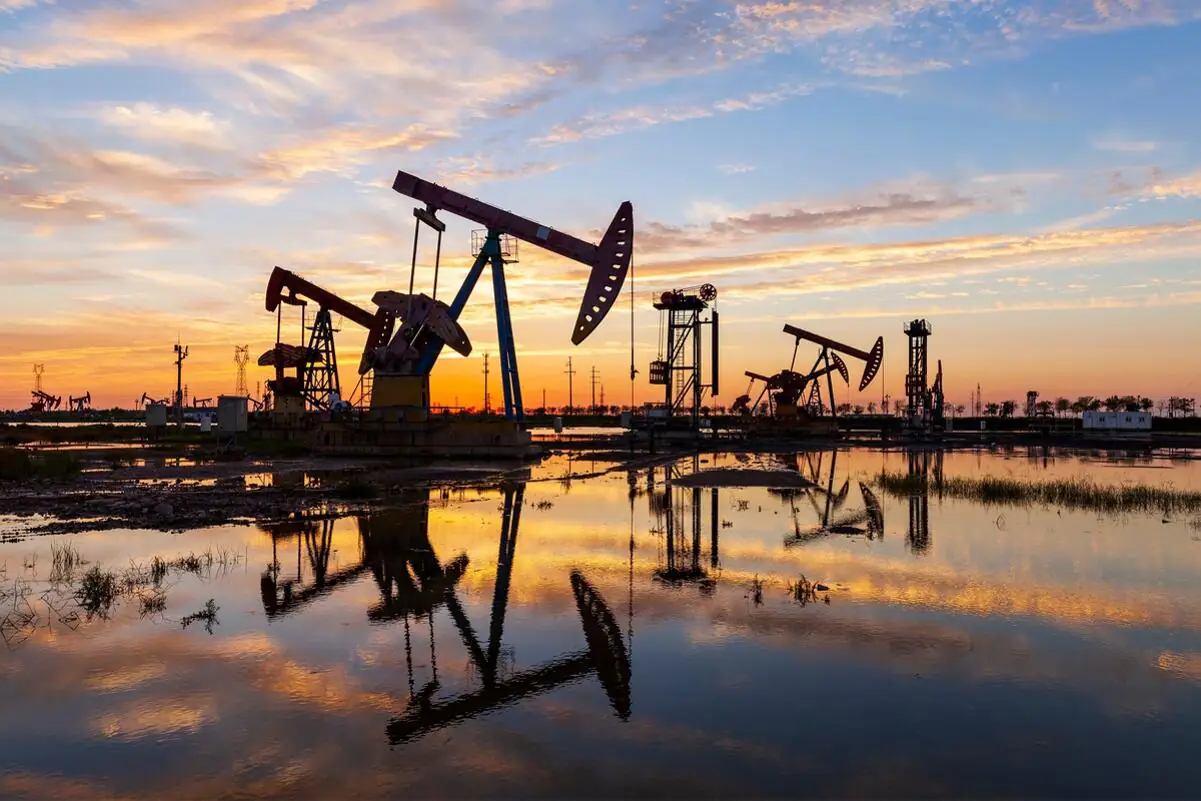
On a cold Tuesday morning in suburban Columbus, Ohio, Sarah Metzger pulled into her usual gas station and stared at the pump display with a feeling she hadn’t experienced since 2022. The price per gallon had jumped nearly 35 cents overnight. “I drive 80 miles a day for work,” she told a local reporter. “That’s an extra $14 a week I simply don’t have.” Twelve time zones away, in Düsseldorf, Germany, the procurement director of a mid-sized ceramics manufacturer received an emergency alert: the company’s natural gas supplier was invoking a force-majeure clause on contracted volumes, citing “extraordinary market conditions.”
Both of them — an Ohio commuter and a German industrialist — are early casualties of the same geopolitical earthquake: the outbreak of direct U.S.-Israeli military conflict with Iran.
Since American and Israeli forces launched coordinated air strikes on Iran on the night of February 28, 2026, the global energy system has entered a state of acute crisis. Global crude prices surged roughly 8–9% when Asian markets opened Sunday evening, with Brent crude crossing $79 a barrel — a 52-week high. By Monday afternoon, analysts at Goldman Sachs were warning clients that $100 oil was not a worst-case scenario but a realistic near-term outcome if the disruption persists.
Market Snapshot: March 2, 2026
| Indicator | Pre-Conflict (Feb 28) | Current (Mar 2) | Change |
|---|---|---|---|
| Brent Crude | $72.87 / bbl | $79.41 / bbl | ▲ +9.0% |
| WTI Crude | $67.00 / bbl | $72.79 / bbl | ▲ +8.6% |
| EU Dutch TTF Gas | ~€32 / MWh | €46.55 / MWh | ▲ +45.7% |
| UK NBP Gas | ~78p / therm | 113.4p / therm | ▲ +45.6% |
| Asian LNG (JKM) | ~$12 / MMBtu | $15.07 / MMBtu | ▲ +25.6% |
| Diesel Futures | Baseline | Intraday surge | ▲ +20%+ |
Key figures at a glance:
- 🛢 $79/bbl — Brent crude, 52-week high
- 📈 +46% — European TTF gas spike in a single session
- 🚢 150+ tankers stranded on both sides of the Strait
- ⚡ 20% of global oil supply now at risk (~20 million bbl/day)
The Strait That Holds the World to Ransom
The Strait of Hormuz — a sliver of water 33 kilometres wide at its narrowest point, flanked by Iran to the north and Oman to the south — has long been described by strategists as the jugular vein of the global economy. Roughly 20 million barrels of crude oil, worth approximately $500 billion in annual trade, transited the strait each day in 2024, according to the U.S. Energy Information Administration. That is not merely a shipping lane. It is the circulatory system through which Saudi Arabia, Iraq, Kuwait, the UAE, and Iran itself pump the lifeblood of the global economy into the arteries of Asian refineries and beyond.
Iran’s response to the strikes was multi-directional and, crucially, economically targeted. Beyond missile barrages aimed at Israeli and American military installations, Tehran’s Islamic Revolutionary Guard Corps (IRGC) began broadcasting VHF radio warnings to commercial vessels that “no ship is allowed to pass the Strait of Hormuz.” Tanker traffic through the strait came to a near standstill, with at least four vessels struck over the weekend — including a U.S.-flagged military fuel supply tanker.
By Monday morning, shipping intelligence firm Kpler confirmed the chilling arithmetic: commercial operators, major oil companies, and marine insurers had effectively withdrawn from the corridor. Insurance withdrawal was “doing the work that physical blockade has not” — and the outcome for cargo flow was, functionally, identical.
“The most immediate and tangible development affecting oil markets is the effective halt of traffic through the Strait of Hormuz, preventing 15 million barrels per day of crude oil from reaching markets.”
— Jorge León, Head of Geopolitical Analysis, Rystad Energy
Qatar’s LNG Shutdown: The Second Shockwave
If the Hormuz shipping halt was the first detonation, Monday brought a second — and for Europe’s winter-depleted energy system, potentially more devastating. Iranian drones struck QatarEnergy’s facilities at the Ras Laffan and Mesaieed Industrial Cities early Monday morning. Within hours, the world’s largest LNG export operation had gone silent. QatarEnergy issued a statement confirming it had “ceased production of liquefied natural gas and associated products” — an unprecedented halt for a facility covering approximately one-fifth of global LNG supply.
The market reaction was immediate and violent. European benchmark Dutch TTF natural gas futures surged as much as 45% to approximately €46 per megawatt-hour in early afternoon trading. European gas markets had not seen a single-day move of this magnitude since the acute phase of the 2022 Russian energy crisis — a comparison that will send cold shivers through the offices of energy ministers in Brussels, Berlin, and Paris.
Europe’s storage deficit compounds the crisis
Europe entered this crisis with gas storage at only around 30% capacity — well below the 60 bcm stored at this point in 2025 and the 77 bcm available in 2024. Spring is normally the season when Europe begins refilling depleted winter reserves. A sustained disruption to Qatari LNG — combined with a Hormuz chokehold — would arrive at the worst possible moment in the European gas storage cycle.
“If LNG and gas markets start to price in an extended period of losses to Qatari LNG supply, TTF could potentially spike to 80–100 euros per megawatt-hour.”
— Warren Patterson, Head of Commodities Strategy, ING
The $14-a-Week Question: America’s Petrol Pain
For American households already navigating a complex inflation landscape shaped by tariffs and tight housing markets, the Iran conflict has introduced a new and unwelcome variable. The widening conflict threatens to escalate the affordability crunch already facing U.S. consumers. Based on current price trajectories and average American driving patterns, analysts estimate the surge adds approximately $14 per week to the average household’s transportation costs — a figure that compounds further if Brent crude approaches $100.
West Texas Intermediate briefly touched $75.33 on Sunday — its highest level since June of the prior year. Citi analysts warned that Brent could trade between $80 and $90 a barrel in the coming days, with further upside risk if the conflict extends.
There is a partial, paradoxical offset: the United States is now the world’s largest LNG exporter, and spiking global gas prices benefit American LNG companies. Shares of Cheniere Energy jumped roughly 6% on Monday, while Venture Global surged more than 14%. But the macroeconomic benefit of windfall LNG profits flows to shareholders and export revenues — not to the household paying $4.50 per gallon at the pump.
Europe’s Double Exposure: Inflation Revived, Growth Imperilled
For Europe, the crisis arrives with cruel timing. The European Central Bank had spent the better part of 2024 and 2025 engineering a gentle landing from the energy-driven inflation wave triggered by Russia’s invasion of Ukraine. Core inflation had returned to manageable levels. Industrial activity was tentatively recovering. And now, analysts are modelling scenarios bearing uncomfortable resemblances to 2022.
Energy economists at Bruegel note that Europe’s most pronounced vulnerability lies in LNG: if flows through Hormuz are curtailed, global spot availability tightens immediately, forcing Europe to compete with Asian buyers on the spot market — the exact dynamic that drove energy bills to crisis levels during 2021–2023. The continent imports relatively little Gulf crude directly, but oil and gas are global markets. A blockage of Hormuz creates immediate price contagion regardless of the physical origin of Europe’s supply.
The European Commission has convened an emergency meeting of its gas coordination group for Wednesday, bringing together member state representatives to assess supply security and coordinate potential demand-reduction measures. The measures under consideration reportedly include:
- Emergency storage refilling protocols
- Industrial demand curtailment mechanisms
- LNG cargo diversion programmes
- Solidarity gas-sharing triggers between member states
The industrial casualties are already accumulating
Energy-intensive industries — ceramics, glass, chemicals, steel — that have only recently returned to viable operating margins after the 2022 shock are facing emergency reviews of production schedules. A sustained return to €74+ per MWh gas prices, as Goldman Sachs projects under a one-month Hormuz closure scenario, would push many European manufacturers back into loss-making territory or force temporary shutdowns. The ECB, which had been cautiously signalling rate cuts for the spring cycle, now faces a potential stagflationary dynamic: energy-driven inflation revival combining with demand destruction from higher industrial costs.
Three Scenarios: From Bad to Catastrophic
The trajectory of energy markets from this point depends almost entirely on one variable: duration. How long will commercial shipping refuse to transit the Strait of Hormuz? Goldman Sachs, Rystad, ING, and Kpler have each modelled scenario frameworks. The range of outcomes is wide — and the worst-case path leads to energy market territory not visited in decades.
🟢 Scenario 1 — Rapid De-escalation (Days): Brent $75–$82
A ceasefire or maritime corridor agreement within 3–5 days. OPEC+ production increase of 206,000 bbl/day provides partial offset. Saudi Arabia’s East-West Pipeline ramps up. Insurance markets re-open to Hormuz passage. Brent retreats to the low $70s within weeks. TTF gas gives back most of its gains.
🟡 Scenario 2 — Prolonged Disruption (Weeks): Brent $90–$100
Conflict extends 2–4 weeks. Iranian tanker strikes continue on an opportunistic basis. Insurance withdrawal persists. Asian refiners scramble for replacement supply from Russia and West Africa. Brent approaches $100. TTF gas closes in on Goldman’s €74/MWh threshold. ECB delays rate cuts; stagflation risk materialises for the eurozone.
🔴 Scenario 3 — Extended Crisis (Months): Brent $100–$120+
Hormuz remains effectively closed for more than 60 days. Qatar LNG output stays offline. Global storage depletes. European gas approaches €100/MWh. Recession risk in energy-importing economies becomes material. Central banks face impossible inflation-growth trade-offs. Global GDP impact measured in full percentage points.
Critical to every scenario is the role of Saudi Arabia and the UAE. Both countries possess substantial alternative export infrastructure — Riyadh’s East-West Pipeline carries up to 7 million barrels per day to Red Sea terminals, and the UAE’s Fujairah pipeline bypasses Hormuz entirely — but terminal infrastructure constraints limit throughput significantly below maximum capacity.
Global spare production capacity stands at an estimated 3.7 million barrels per day, concentrated in Saudi Arabia and the UAE, though a sustained Strait closure would physically impede OPEC’s ability to deploy it. Russia, paradoxically, emerges as one of the few economies positioned to benefit, with China and India facing powerful incentives to deepen reliance on Urals crude.
Goldman Sachs previously estimated that a loss of Iranian barrels alone — without any Hormuz disruption — would cause crude prices to rise by at least $10–12 per barrel, as China is forced to bid for substitute supplies on the global market.
Expert Perspectives
“Roughly one-fifth of global oil supply passes through the Strait of Hormuz — markets are more concerned with whether barrels can move than with spare capacity on paper. If flows through the Gulf are constrained, additional production will provide limited immediate relief.”
— Jorge León, Rystad Energy (via Reuters)
“In modern history, the Strait of Hormuz has never actually been closed. Satellite data shows tanker transit has virtually halted — a precautionary measure by shipping companies that may take weeks to reverse even if a ceasefire is announced.”
— Maurizio Carulli, Global Energy Analyst, Quilter Cheviot (via Euronews)
“The real question is will there be damage to oil infrastructure, and for how long might the Strait of Hormuz be closed? If it’s a couple of days, the premium is somewhat already in prices. But we’re already beyond a couple of days.”
— Amrita Sen, Director of Research, Energy Aspects (via CNBC)
The Reckoning of Fossil Fuel Dependency
There is a deeper, structural story underneath the price charts and tanker GPS coordinates. The crisis of March 2026 is not merely a geopolitical shock — it is a periodic, predictable revelation of the structural fragility embedded in a global economy still overwhelmingly dependent on a handful of shipping corridors for its energy. The 2022 Ukraine war exposed Europe’s dependency on Russian pipeline gas. This conflict is exposing the world’s dependency on a 33-kilometre passage through which $500 billion of annual energy trade flows.
These are not independent accidents. They are recurring symptoms of the same underlying condition.
Energy economists at Bruegel put it plainly: rather than slowing the low-carbon transition, the renewed tensions show that the deployment of clean, domestically produced energy should be accelerated. Only by reducing structural dependence on oil and LNG imports can Europe — and the broader global economy — durably insulate itself from external shocks that originate in the military decisions of a handful of governments.
For now, though, it is March 2026. Sarah Metzger in Columbus will pay more to drive to work this week. The ceramics manufacturer in Düsseldorf is reviewing production schedules. One hundred and fifty tankers sit anchored in the Gulf of Oman, their crews watching GPS trackers and waiting for instructions. And in the global trading rooms where energy prices are set, the screens are still flashing red.
The Energy Security Question That Cannot Wait
As oil prices surge on Iran conflict signals and the global economy braces for sustained disruption, policymakers, businesses, and households face the same fundamental question: how long can a modern economy remain hostage to a 33-kilometre strait?
Track evolving coverage, real-time price data, and in-depth analysis as this story develops.
Sources & Citations
- NPR — “Oil prices surge amid fears over Iran war” (March 2, 2026) — oil price surge and Hormuz traffic data.
- Bloomberg — “Oil Spikes on Hormuz Disruptions as Middle East War Escalates” (March 1–2, 2026) — Brent and diesel futures movements, tanker traffic data.
- CNBC — “Oil soars amid Strait of Hormuz shipping fears” (March 2, 2026) — analyst commentary, WTI and Brent price action.
- Euronews — “European gas prices jump by as much as 45% as Qatar stops LNG production” (March 2, 2026) — TTF price data, QatarEnergy halt details.
- Al Jazeera — “Gas prices soar as QatarEnergy halts LNG production after Iran attacks” (March 2, 2026) — QatarEnergy statement, JKM data.
- Al Jazeera — “How US-Israel attacks on Iran threaten the Strait of Hormuz” (March 1, 2026) — EIA Hormuz volume data, IRGC shipping warnings.
- Bruegel — “How will the Iran conflict hit European energy markets?” (March 2, 2026) — European gas storage data, structural vulnerability analysis, policy recommendations.
- Goldman Sachs / Investing.com — European gas price scenarios under Hormuz disruption (March 2, 2026) — TTF scenario modelling at €74/MWh and €100/MWh thresholds.
© 2026 The Economy .All Rights Reserved .
Discover more from The Economy
Subscribe to get the latest posts sent to your email.
-

 Markets & Finance2 months ago
Top 15 Stocks for Investment in 2026 in PSX: Your Complete Guide to Pakistan’s Best Investment Opportunities
-

 Analysis3 weeks ago
Brazil’s Rare Earth Race: US, EU, and China Compete for Critical Minerals as Tensions Rise
-

 Investment2 months ago
Top 10 Mutual Fund Managers in Pakistan for Investment in 2026: A Comprehensive Guide for Optimal Returns
-

 Banks1 month ago
Best Investments in Pakistan 2026: Top 10 Low-Price Shares and Long-Term Picks for the PSX
-

 Asia2 months ago
China’s 50% Domestic Equipment Rule: The Semiconductor Mandate Reshaping Global Tech
-

 Global Economy2 months ago
What the U.S. Attack on Venezuela Could Mean for Oil and Canadian Crude Exports: The Economic Impact
-

 Global Economy2 months ago
Pakistan’s Export Goldmine: 10 Game-Changing Markets Where Pakistani Businesses Are Winning Big in 2025
-

 Global Economy2 months ago
15 Most Lucrative Sectors for Investment in Pakistan: A 2025 Data-Driven Analysis