
Analysis
How the Iran Conflict Has Rattled Global Energy Markets: Tehran’s Grip on the Strait of Hormuz Fuels Worldwide Disruptions

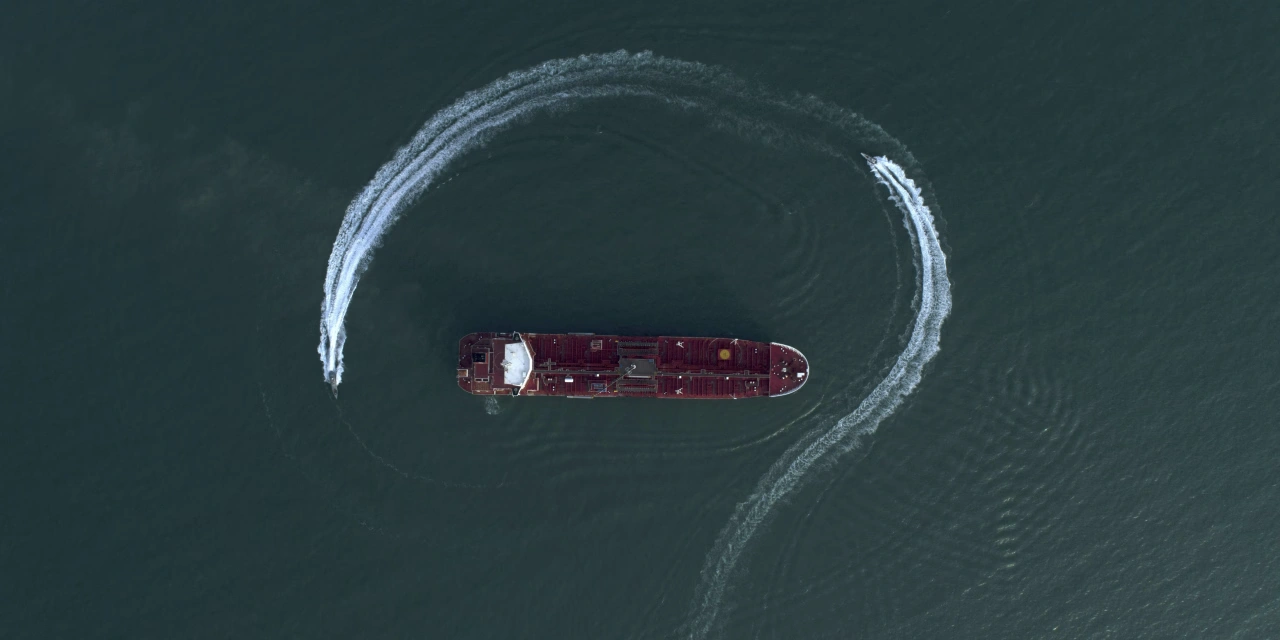
Explore how the 2026 Iran conflict and Strait of Hormuz disruptions are shaking global energy markets, with real-time price surges, supply chain breakdowns, and what comes next for oil, LNG, and the global economy.
For decades, energy analysts have marked the Strait of Hormuz in red on their risk maps — a narrow, 21-mile-wide corridor threading between Iran and Oman through which roughly one-fifth of the world’s oil flows every single day. The scenario they feared most has now arrived. In the span of four days, the Iran conflict global energy markets have been dreading has become a full-blown reality: a waterway that underpins the price of everything from gasoline in Ohio to heating bills in Hamburg to factory output in Guangdong has effectively gone dark.
The catalyst was swift and seismic. A coordinated US-Israeli air campaign launched in late February struck Iranian military and governmental targets with precision, killing Supreme Leader Ali Khamenei. Tehran’s response — retaliatory strikes, naval mobilization, and the threat of asymmetric warfare — has choked off one of the most critical chokepoints in the global trading system. As of March 3, 2026, the Strait of Hormuz blockade effects on oil supply are being felt from Houston to Hanoi. The question now is not whether this hurts — it manifestly does — but how long the pain lasts, and whether the world’s energy architecture can absorb a shock of this magnitude.
The Strategic Chokepoint: Strait of Hormuz Under Siege
To understand why markets have responded with such alarm, consider the geometry. The Strait of Hormuz — barely navigable by supertankers at its narrowest — is not just another shipping lane. It is the jugular vein of global petroleum trade. Approximately 20 million barrels of crude oil pass through it daily, alongside roughly 20% of the world’s liquefied natural gas exports, primarily from Qatar’s colossal North Field operations.
When Iranian naval and missile assets make that corridor too dangerous to traverse, the downstream consequences are near-instantaneous. Tanker insurance premiums — already elevated heading into the crisis — have spiked by multiples. Several major shipping operators have suspended transits entirely. Qatar’s LNG export terminals, operating under threat posture, have curtailed loading. Iraqi oil flowing south through Basra faces disruption. Even Saudi Arabia’s eastern oil fields and their Red Sea-bound pipelines are operating under emergency protocols.
Bloomberg reported that this threatens to be the worst disruption in global gas markets since Russia’s 2022 invasion of Ukraine — a benchmark that, in energy policy circles, carried nearly apocalyptic connotations. That comparison is sobering: the 2022 shock rewired European energy infrastructure, sent utilities to the brink, and triggered a continent-wide scramble for alternative supply that lasted years.
This time, the geographic scope may be even wider.
Surging Prices and Supply Shocks: The Numbers Don’t Lie
Markets have reacted with textbook crisis reflexes, but the scale is striking. As CNBC’s coverage of Strait of Hormuz global oil and gas trade disruptions documented, Brent crude — the global benchmark — surged between 7% and 13% in the first 72 hours of the closure, settling in a range of $80–$83 per barrel as of this writing. That represents a significant re-pricing of risk, though it still sits below the $100-plus levels that analysts warn could materialize if the disruption extends beyond a week.
The downstream effects are already visible at the consumer level:
| Energy Metric | Pre-Conflict Level | Current Level (Mar 3, 2026) | Change |
|---|---|---|---|
| Brent Crude ($/barrel) | ~$72–$74 | $80–$83 | +7–13% |
| US Regular Gasoline ($/gallon) | ~$2.78 | Above $3.00 | +8–10% |
| European TTF Natural Gas (€/MWh) | ~€38 | €46–€49 | +20–30% |
| LNG Spot Prices ($/MMBtu) | ~$11–$12 | ~$14–$16 | +25–35% |
| Global Dry Bulk Shipping Index | Elevated | All-time high | Record |
Sources: Reuters, Bloomberg, CNBC, BBC Energy Desk, March 2026
For American motorists, the gasoline price crossing the psychologically and politically significant $3-per-gallon threshold is an unwelcome reminder that Middle East instability has never been truly distant from the US domestic economy — whatever the strategic independence afforded by shale production. The US Strategic Petroleum Reserve (SPR), partially restocked after the 2022 drawdowns, offers some buffer, but its release would be a political decision as much as an economic one, carrying its own messaging risks amid an ongoing military operation.
European natural gas futures have borne perhaps the sharpest repricing. The continent entered 2026 with storage levels modestly above seasonal averages, but that cushion looks thinner now. Qatar’s LNG — which Europe came to depend on heavily post-Ukraine — has seen loading disruptions, and the timing, still technically late winter, is painfully inconvenient.
Geopolitical Ripples Across Asia and Europe
If the financial mathematics are stark, the geopolitical algebra is even more complex. The Iran conflict global energy market disruption does not affect all nations equally, and the asymmetries matter enormously for diplomatic positioning.
Asia: Maximum Pain, Minimum Leverage
Asia, bluntly, is where this crisis hits hardest. Japan, South Korea, India, and China collectively import a staggering share of their crude oil through the Strait of Hormuz. For Japan and South Korea — both US security allies with negligible domestic production — there is almost no realistic near-term alternative. Their refineries are calibrated for Gulf crude grades; switching supply origin is neither fast nor cheap.
China’s position is particularly nuanced. Beijing imports approximately 40–45% of its crude through Hormuz, and it has long maintained energy relationships with Tehran as a hedge against Western-dominated supply chains. The death of Khamenei and the subsequent power vacuum in Tehran create genuine uncertainty for Chinese planners who valued predictable, if troubled, Iranian partnerships. Xi Jinping faces a situation where condemning the US-Israeli operation risks straining Washington relations at a sensitive moment in trade negotiations, while staying silent signals acquiescence to an action that directly threatens Chinese energy security. Expect Beijing’s diplomatic communications to be measured, multilateral in framing, and ultimately self-interested.
India, for its part, has in recent years secured significant discounts on Russian oil routed around Western sanctions. But the Hormuz disruption is a different problem — it affects the physical movement of tankers, not just pricing arrangements. New Delhi’s government will be watching carefully, managing both inflation risks and the political optics of being seen as dependent on a conflict-ridden supply corridor.
Europe: Higher Bills and Harder Choices
BBC coverage of the crisis noted that gas and oil prices have surged while shares tumble as the crucial shipping lane faces closure — a headline that captures the dual squeeze European governments are navigating. Higher energy costs feed directly into headline inflation, complicating the European Central Bank’s already delicate balancing act between growth support and price stability.
For European consumers, the how Iran war rattles energy supply chains dynamic is not abstract. It means higher heating bills, elevated transport costs, and broader inflationary pressure across supply chains still recovering from the 2022–2024 energy shock cycle. Industrial users — particularly energy-intensive sectors like chemicals, glass, and aluminum smelting — face margin compression that could accelerate the ongoing debate about European industrial competitiveness.
On the geopolitical dimension, European governments that have been cautious about the Iran military operation will now face domestic pressure to publicly distance themselves from a conflict that is directly raising their citizens’ energy costs. This creates awkward dynamics within NATO and the broader Western alliance.
Tehran’s Influence: More Than Just Oil
It would be reductive to frame the Tehran influence on Strait of Hormuz shipping disruptions as purely a petroleum story. The closure — or even the credible threat of closure — of the strait weaponizes Iran’s geographic position in ways that outlast any individual political leadership. Khamenei may be gone, but the Revolutionary Guard’s naval assets, the Houthi proxy networks in Yemen, and the broader architecture of Iranian asymmetric capability remain operational.
The Guardian’s analysis highlighted what disrupting the strait could mean for global cost-of-living pressures — and the answer is: considerably more than just expensive gasoline. Shipping rate spikes propagate through entire supply chains. When it costs dramatically more to move a supertanker from Ras Tanura to Yokohama, those costs eventually appear in manufacturing inputs, finished goods, and ultimately consumer prices across dozens of economies.
There is also the LNG dimension. Global LNG shortages from the Iran crisis represent a newer and in some ways more structurally significant threat than the oil disruption. The 2026 global LNG market is tighter than in previous years, with demand growth from Asia consistently outpacing new supply project completions. A sustained Qatari export curtailment — even partial — would stress-test every LNG supply contract and spot market simultaneously.
Market Forecasts and Mitigation Strategies
What happens next depends on variables that analysts model but cannot predict: the duration of the closure, the trajectory of Iranian political succession, US military objectives, and the diplomatic space available to regional actors like Saudi Arabia, the UAE, and Oman.
The Bull Case for Oil Prices
If the Strait of Hormuz remains effectively closed for two weeks or more, the consensus emerging from energy desks at major banks and trading houses is that $100-per-barrel oil becomes a base case, not a tail risk. Some models, incorporating production halt cascades from Iraq and Kuwait (whose eastern export routes are also affected), project spikes toward $110–$120 under sustained disruption. At those levels, the global economy faces a stagflationary headwind not seen since 2008: energy-driven inflation colliding with weakening consumer sentiment and tightening financial conditions.
Mitigation Levers
The strategic response toolkit is familiar if imperfect. The International Energy Agency (IEA) member countries collectively hold strategic reserves designed for exactly this contingency; a coordinated release announcement would likely exert immediate downward pressure on futures prices, even if physical supply relief takes weeks to materialize. The US has already signaled readiness to tap the SPR; whether European nations coordinate through IEA mechanisms will be a test of multilateral energy governance.
OPEC+ nations with spare capacity — primarily Saudi Arabia and the UAE, whose production is already disrupted but whose political calculus may favor market stabilization — face an unusual situation: production increases that would typically benefit them financially are constrained by the same conflict that is creating the price opportunity. Saudi Aramco’s Ras Tanura complex, facing regional threat postures, cannot easily increase output it cannot export.
Meanwhile, US LNG exporters have received a windfall in the form of soaring spot prices, and American shale producers are accelerating permitting and rig deployments. But the timelines for meaningful new supply are measured in months, not days.
The Long View: Energy Transition in a Conflict World
There is a bitter irony embedded in the current crisis that energy economists are already noting. The global energy transition — the multi-decade shift toward renewables, battery storage, and electrification — has been partly justified on energy security grounds: reducing dependence on volatile petrostates and conflict-prone regions. Yet in 2026, most of the world’s major economies remain profoundly exposed to exactly the kind of Hormuz disruption that renewables advocates have long cited as justification for faster transition.
The crisis will almost certainly accelerate certain policy decisions. European governments will fast-track offshore wind permitting and battery storage investment, citing Hormuz as a national security imperative. Asian economies will revisit nuclear energy timelines. The US will likely see renewed political support for both domestic production and clean energy infrastructure — an unusual alignment of typically opposing interests.
But transitions take decades. In the meantime, the world runs on oil and gas, and a 21-mile strait still holds the global economy partly hostage to the decisions of actors thousands of miles from the financial capitals that price that risk.
Conclusion: The Price of Dependence
Four days into the Strait of Hormuz closure, the full economic damage remains incomplete and still accumulating. What is already clear is that the Iran conflict’s global energy market impact is neither a blip nor a manageable disruption — it is a structural stress test exposing vulnerabilities that years of relative stability had obscured.
Brent crude at $80+ may feel manageable compared to historical peaks. But the trajectory matters more than the current level. If Iranian political succession proves chaotic, if proxy forces escalate in Yemen or Iraq, if the strait closure extends into weeks rather than days, the $100 threshold is not a worst-case scenario — it is a median one.
For policymakers, the coming weeks demand both tactical crisis management and strategic honesty. SPR releases buy time; they do not buy energy independence. The world has known for decades that its dependence on a 21-mile waterway was a systemic risk. The 2026 Iran crisis is not a surprise. It is a reckoning.
Sources:
- Reuters: Global energy prices soar as Iran crisis disrupts shipping
- Bloomberg: Iran Crisis Threatens Worst Gas Market Disruption Since 2022
- CNBC: Strait of Hormuz Global Oil, Gas Trade Disrupted Amid Iran War
- BBC: Gas and oil prices soar and shares tumble as crucial shipping lane threatened
- The Guardian: What disrupting the Strait of Hormuz could mean for global cost-of-living pressures
Discover more from The Economy
Subscribe to get the latest posts sent to your email.



Navigating Mortgage and Loan Refinancing in a High-Yield Environment
Global public debt crossing critical thresholds has kept central bank policies volatile, resulting in fluctuating US Treasury yields throughout 2026. For homeowners and commercial property holders burdened by previous high-interest borrowing cycles, finding optimal refinance windows has become a high-stakes financial puzzle. Stalled disinflation and stubborn employment numbers mean rate cuts are incremental, requiring borrowers to act with precision.
Timing your mortgage or commercial loan refinance in this environment requires a deep understanding of yield curve movements and lender risk appetites.
Decoding 2026 Refinance Dynamics
The 10-Year Treasury Yield Benchmark
Mortgage rates continue to track closely with the 10-year US Treasury yield. When macroeconomic anxiety spikes debt issuance, yields rise, tightening consumer borrowing capacity. Savvy borrowers monitor weekly Treasury auctions to lock in rates during brief dip windows.
Hybrid ARMs and Alternative Structures
With fixed rates remaining elevated, 7/1 and 10/1 adjustable-rate mortgages (ARMs) have surged in popularity. These products offer lower initial monthly payments, giving borrowers breathing room until central bank easing cycles fully materialize.
| Loan Product | Current Rate Range | Best For | Key Risk Factor |
| 30-Year Fixed Mortgage | 6.2% – 6.8% | Long-term predictability | Higher initial monthly outlay |
| 7/1 Hybrid ARM | 5.5% – 5.9% | Short-term ownership / flipping | Rate reset risk after year 7 |
| Commercial Refinance | 7.0% – 8.2% | Corporate asset restructuring | Strict DSCR lender covenants |
Actionable Steps for Successful Refinancing
To maximize your chances of securing favorable refinance terms in a volatile market, follow a disciplined preparation strategy.
Boost Your Credit Score Immediately: Lenders in 2026 are applying stringent credit tiering; a 20-point increase can drop your APR by a crucial quarter-point.
Shop Regional Credit Unions: Smaller financial institutions often offer portfolio loans with more flexible underwriting than major national banks.
Calculate the Break-Even Point: Ensure your total closing costs are recouped through monthly savings within 24 months of closing.
“Market Strategist View: Refinancing in 2026 is an exercise in opportunistic timing. Borrowers must maintain immaculate financial profiles ready to strike the moment Treasury yields dip.”
Mastering the complexities of today’s debt environment ensures you can successfully lower your debt service costs and protect your long-term financial stability.
Discover more from The Economy
Subscribe to get the latest posts sent to your email.

The days of pulling generic auto insurance quotes based purely on your zip code and age are officially over. In 2026, insurance comparison engines are powered entirely by generative AI and real-time telematics. These platforms digest thousands of live data points—ranging from your driving smoothness via connected vehicle sensors to real-time traffic congestion patterns—to generate hyper-personalized premiums instantly.
For consumers, this evolution represents both a massive opportunity for savings and a hidden trap for penalty pricing. Understanding how AI algorithms evaluate risk is essential for anyone looking to lower their monthly auto insurance premiums.
How AI Comparison Engines Evaluate Your Risk Profile
Behavioral Telematics and Connected Cars
Modern cars stream performance data directly to insurance aggregators. Generative AI models analyze braking sharpness, acceleration curves, cornering G-forces, and phone distraction metrics. Drivers who maintain smooth, defensive habits are rewarded with dynamic rate cuts of up to 40% compared to traditional rating tiers.
Predictive Traffic and Weather Modeling
AI tools now cross-reference your daily commute route with predictive weather and accident probability models. If your standard parking location or driving corridor has a statistically higher incidence of uninsured motorist claims, your quotes will reflect that hyper-local risk assessment.
| Comparison Factor | Traditional Rating Model | 2026 Generative AI Model | Impact on Premium |
| Mileage & Usage | Annual estimated odometer reading | GPS tracking & live trip duration | High (up to 35% savings) |
| Driving Behavior | MVR driving record & accidents | Real-time braking, speed, & G-force | Critical (determines tier) |
| Vehicle Tech | Make, model, and safety rating | ADAS calibration & repair cost data | Moderate |
Strategies to Lower Your AI-Driven Insurance Quote
To outsmart the algorithm and secure the lowest possible premium in 2026, drivers must proactively manage their digital footprint on insurance platforms.
Opt-In for Telematics Trial Periods: Many insurers offer immediate 15% discounts just for installing their driving app; let it track safe habits for 30 days to lock in permanent savings.
Scrub Unverified Public Records: Ensure your motor vehicle report is free of clerical errors that AI risk models misinterpret as reckless behavior.
Compare AI Aggregators: Use platforms that integrate multi-carrier API feeds rather than single-brand comparison sites to find the best risk-adjusted rate.
“Industry Note: AI-driven pricing rewards transparency and precision. Drivers who actively manage their telematics data consistently out-save those relying on legacy quote calculators.”
Embracing AI comparison tools allows savvy policyholders to customize coverage limits precisely to their driving habits, eliminating wasted premium spend while ensuring robust protection.
Discover more from The Economy
Subscribe to get the latest posts sent to your email.

Despite decades of bans and strict handling mandates, asbestos remains a silent killer across legacy manufacturing plants, shipyards, and modern green-energy infrastructure retrofits. In 2026, regulatory changes by the EPA and tightened occupational health standards have triggered a fresh wave of mesothelioma litigation. Manufacturers attempting to fast-track industrial transitions are encountering catastrophic oversight, exposing workers to legacy toxins and opening corporate parent companies to unprecedented liability.
Navigating a mesothelioma claim in 2026 requires understanding how modern industrial supply chains intersect with historical exposure. Trusts established decades ago are being audited under stricter transparency laws, altering payout ratios and accelerating fast-track settlements for terminally ill plaintiffs.
Modern Industrial Exposure Hotspots
Green Retrofitting and Renewable Energy Infrastructure
A primary source of 2026 asbestos exposure occurs during the decommissioning and retrofitting of older industrial facilities for renewable energy production. Workers insulating electrical grids, modernizing HVAC systems, or upgrading manufacturing floors frequently disturb encapsulated asbestos materials that were improperly documented or ignored during facility audits.
Automotive and Aerospace Supply Chains
With advanced manufacturing booming, workers handling specialized friction materials, gaskets, and heat shields face ongoing risks. Supply chain tracing has become more sophisticated, allowing legal teams to pinpoint exact corporate entities responsible for raw material distribution across multinational borders.
| Industry Sector | Primary Exposure Risk | Legal Venue / Trust | Avg. Claim Value Range |
| Green Energy Retrofit | Disturbed insulation, pipe lagging | Federal Tort / Manufacturer Trust | $1.2M – $3.5M |
| Shipbuilding & Marine | Boiler insulation, structural seals | Asbestos Bankruptcy Trusts | $800K – $2.4M |
| Automotive Manufacturing | Brake components, high-heat gaskets | Third-Party Product Liability | $600K – $1.8M |
Securing Maximum Compensation: Steps for Plaintiffs
Time is of the essence in mesothelioma cases. Plaintiffs and their families must act decisively to secure financial recovery before statutes of limitations expire.
Retain Specialized Counsel: Work exclusively with national mesothelioma law firms possessing deep historical databases of asbestos-containing products.
Audit Employment History: Document every job site, supervisor name, and equipment brand encountered throughout your career.
Expedite Medical Filings: Secure a formal pathological diagnosis quickly to qualify for expedited trust fund distribution and priority trial settings.
“Expert Insight: Modern asbestos litigation is no longer just about historical tracking; it is about holding modern corporations accountable for failing to conduct rigorous environmental safety audits before initiating industrial retrofits.”
By combining meticulous work history reconstruction with aggressive multi-trust filings, victims can secure substantial financial relief to cover specialized immunotherapy and family support.
Discover more from The Economy
Subscribe to get the latest posts sent to your email.

Balance of Payments (BOP)

The Falkland Islands Dispute: Sovereign Wealth, Offshore Drilling, and Market Impacts

Gross Domestic Product (GDP): Nominal vs. Real

What is Inflation and the Consumer Price Index (CPI)?

US-China Trade Competition 2026: Supply Chain Relocation Guide

Oil Prices Break $100 in 2026: Middle East Conflict & Energy Markets

South-South Trade Expansion: Digital Integration and Emerging Market Growth

$166B Tariff Refund Tapering Fast: Is Your Business Missing Out?

Stock Market Today: Dow Climbs 500 Points as Markets Shake Off Inflation Jitters

14th WTO Conference 2026: Tariffs & Global Supply Chain Impact

Swish Secures $24M Funding to Disrupt India’s $100B Food Market

Physical AI and Driverless Tech: The Next Trillion-Dollar Industrial Revolution

Enterprise AI Platforms Disrupting B2B SaaS in 2026: Full Analysis

Crypto vs. Safe Haven Assets 2026: Where Institutions Are Hedging

State Farm’s $5B Dividend 2026: Who Qualifies & Payout Dates

US-China Relations in Q3 2026: Trade Tariffs and Supply Chain Risks

Gold’s Wild 2026: From a Record $5,600 Peak to a 24% Crash and Back Toward $4,500

Oil Surges as Strait of Hormuz Traffic Collapses Again

The Rocket That Won’t Quit: Inside SpaceX’s Falcon 9 Launch Machine

Bank of England Set to Hold Rates Through Year-End, Reuters Poll Shows

SpaceX Starship Flight 14: First Orbital Attempt & Starlink V3 Launch Explained

The 2026 Crypto Regulatory Shift: What It Means for Institutional Investors

AI Chip Stocks 2026: The Best Semiconductor Investments Beyond Marvell

Retail Earnings Week: What Home Depot, Target & Walmart Reveal

AI-Powered Training: The Next Multi-Billion Dollar Ecosystem in Fitness

Russia’s Black Sea Oil Exports Fall for a Fifth Straight Week

Top 30 Stocks for Investment in PSX for Massive ROI in 2026

Tween Back-to-School Trends 2026: What’s Driving the $85B Season
-

 Markets & Finance8 months ago
Top 15 Stocks for Investment in 2026 in PSX: Your Complete Guide to Pakistan’s Best Investment Opportunities
-

 Analysis7 months ago
Johor’s Investment Boom: The Hidden Costs Behind Malaysia’s Most Ambitious Economic Surge
-

 Analysis7 months ago
Top 10 Stocks for Investment in PSX for Quick Returns in 2026
-

 Analysis7 months ago
Brazil’s Rare Earth Race: US, EU, and China Compete for Critical Minerals as Tensions Rise
-

 Banks8 months ago
Best Investments in Pakistan 2026: Top 10 Low-Price Shares and Long-Term Picks for the PSX
-

 Investment8 months ago
Top 10 Mutual Fund Managers in Pakistan for Investment in 2026: A Comprehensive Guide for Optimal Returns
-

 Global Economy9 months ago
15 Most Lucrative Sectors for Investment in Pakistan: A 2025 Data-Driven Analysis
-

 Global Economy9 months ago
Pakistan’s Export Goldmine: 10 Game-Changing Markets Where Pakistani Businesses Are Winning Big in 2025