
News
The “Breezy” Subpoena: How a Friendly Email Dismantled the Fed’s Wall of Independence


It started not with a bang, nor a constitutional crisis declared from the briefing room podium, but with a casual, almost collegiate email. “The letter couldn’t have been nicer,” a Justice Department official reportedly quipped. Sent by an Assistant U.S. Attorney to the Federal Reserve’s general counsel, the message suggested they just “hop on a call” to discuss some dry, bureaucratic details regarding the renovations of the Marriner S. Eccles Building.
Two days later, the “chat” morphed into a grand jury subpoena.
The criminal probe into Federal Reserve Chair Jerome Powell, ostensibly over testimony regarding building renovation costs, is not merely a legal procedural. It is the crossing of a Rubicon that financial markets have long assumed was impassable. We are witnessing the weaponization of “breezy” administrative procedure to dismantle the last great barrier between executive populism and the world’s reserve currency.
The Renovation Pretext: A $2.5 Billion Trojan Horse
To the uninitiated, the Justice Department’s focus seems banal. The Fed’s headquarters renovation is indeed over budget—ballooning from $1.9 billion to nearly $2.5 billion. However, in the high-stakes theater of Washington political economy, the “what” is rarely as important as the “why now.”
President Donald Trump’s criticism of Powell has been a hallmark of his second term. But the shift from Twitter (now X) broadsides to criminal inquiries marks a tactical evolution. As reported by the Washington Post, the investigation centers on whether Powell “misled” Congress about these costs. Yet, every seasoned analyst knows this is the “Al Capone tax evasion” strategy applied to monetary policy. The goal is not fiscal prudence on building materials; it is interest rate capitulation.
This creates a dangerous asymmetry. If the Fed Chair can be threatened with indictment for administrative oversight whenever interest rates remain “too high” for political comfort, the concept of Operational Independence—the bedrock of modern central banking—evaporates.
The “For Cause” Trap and Market Volatility
The Federal Reserve Act protects the Chair from being fired at the President’s whim, allowing removal only “for cause.” For decades, legal scholars assumed “cause” meant gross malfeasance or corruption.
By framing a budgetary dispute as a criminal matter, the administration is engineering “cause” in real-time. This is a sophisticated legal maneuver designed to bypass the Supreme Court protections that have historically shielded independent agencies.
The economic implications are severe. As noted by The Guardian, the mere threat of removing a Fed Chair introduces a “risk premium” into US Treasuries. If global investors believe the FOMC (Federal Open Market Committee) is setting rates to avoid subpoenas rather than to manage inflation, the dollar’s status as a safe haven is compromised. We are already seeing early signs of this “institutional erosion premium” in the bond markets this week.
The Breezy Email as a Weapon of State
The most chilling detail, however, remains that initial email. It represents the banality of institutional decay. In 2026, the dismantling of norms doesn’t look like a coup; it looks like a calendar invite.
The “breezy” tone serves a dual purpose:
- Plausible Deniability: It frames the prosecutors as “just asking questions,” making the target’s refusal to cooperate look like obstruction.
- Psychological Siege: It signals that the Executive Branch can reach into the most technocratic corners of the state with casual ease.
Conclusion: The End of the Technocratic Era?
If this probe results in an indictment—or even a forced resignation before Powell’s term ends in May—we move from a regime of Rule of Law to one of Rule by Law. The Federal Reserve would effectively become a sub-department of the Treasury, and monetary policy would align with the electoral cycle.
For the investor, the lesson is clear: The era of “Data Dependent” monetary policy is ending. We are entering the era of “Prosecution Dependent” economics.
Discover more from The Economy
Subscribe to get the latest posts sent to your email.


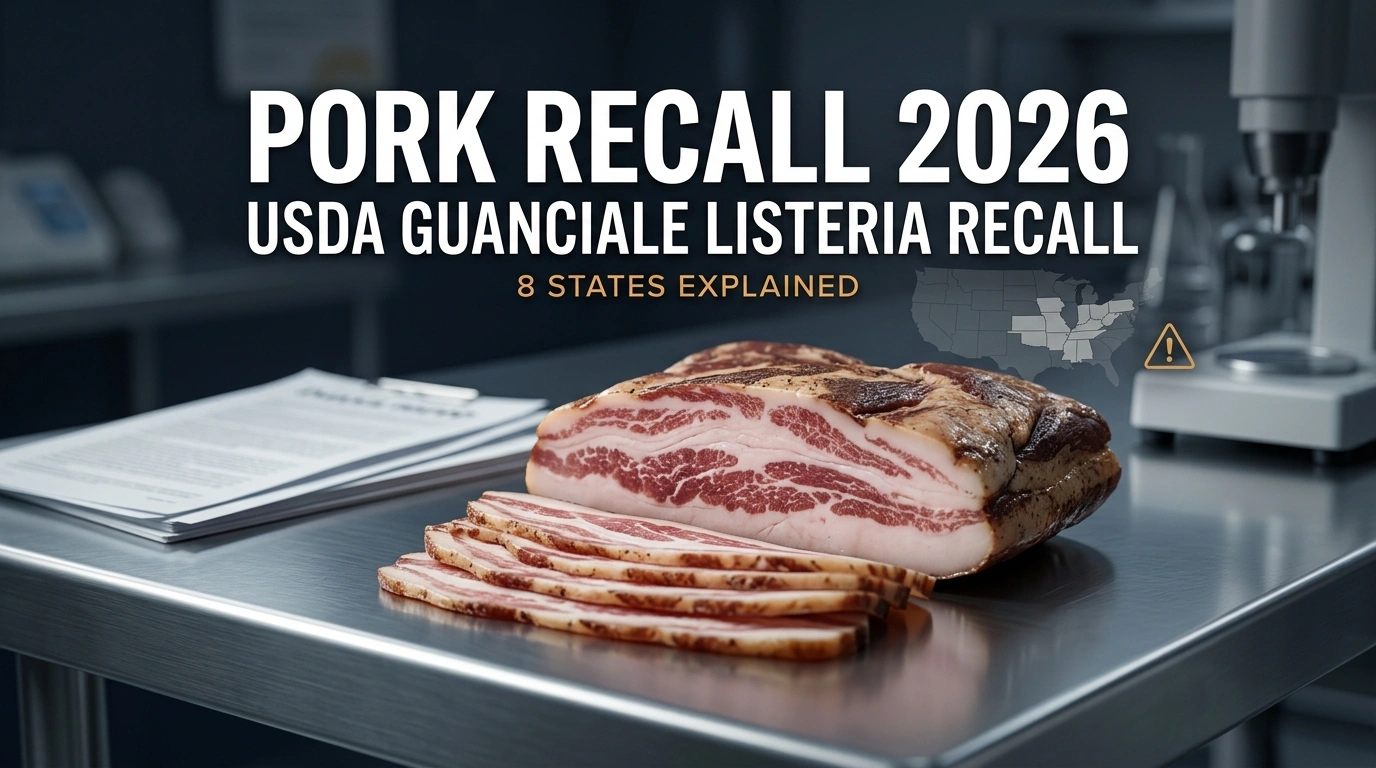
The USDA’s Food Safety and Inspection Service (FSIS) issued a Class I recall — its most serious classification — on September 6, 2026, covering roughly 1,513 pounds of imported ready-to-eat pork guanciale after routine import reinspection testing detected possible Listeria monocytogenes contamination. While the recall’s raw volume is modest, its timing amid a broader 2026 surge in foodborne-illness recalls has amplified its visibility well beyond the affected product line.
The Recall, By the Numbers
| Detail | Data |
|---|---|
| Classification | Class I (most serious FSIS category) |
| Product | Imported ready-to-eat (RTE) dry-cured pork jowl (“guanciale”) |
| Volume | ~1,513 pounds |
| Pathogen | Listeria monocytogenes |
| Lot Number | 263311US |
| Best-By Date | May 16, 2027 |
| Establishment Number | IT 1937 L CE (Bome SRL, Italy) |
| Production Date | May 21, 2026 |
| Import Date | Various dates in July 2026 |
| Announcement Date | September 6, 2026 |
| Reported Illnesses | None, as of the recall announcement |
Companies and Distribution Channels Involved
Two importers/distributors are named in the FSIS recall notice:
- Prime Line Distributors, Inc., based in Fort Lauderdale, Florida.
- Ferrarini USA, Inc., based in Hoboken, New Jersey.
The affected guanciale — a specialty dry-cured pork jowl product widely used in Italian cuisine (notably carbonara and amatriciana preparations) — was distributed to food service, retail, and distributor locations across eight states: California, Florida, Idaho, Illinois, Michigan, New Jersey, New York, and Texas. The multi-channel distribution pattern (restaurants and retail simultaneously) is a standard risk factor FSIS weighs in Class I classifications, since it multiplies the number of potential consumer touchpoints relative to a single-channel recall.
How the Contamination Was Detected
FSIS identified the issue through routine import reinspection testing, not through consumer illness reports or a triggered investigation — a detection pathway that reflects the U.S. import-safety system’s standard practice of sampling foreign-produced ready-to-eat products at the point of entry, prior to widespread distribution. A product sample from the Italian-produced lot tested positive for Listeria monocytogenes, prompting the recall despite the product having already moved through the supply chain to eight states by the time of detection.
Why Listeria in RTE Products Warrants the Highest Classification
Class I recalls are reserved for situations where there is a reasonable probability that use of the product will cause serious adverse health consequences or death. Listeria monocytogenes carries particular risk in ready-to-eat products specifically because:
- Unlike many pathogens, Listeria can grow at refrigeration temperatures, meaning standard cold storage does not neutralize the contamination risk the way it does for many other bacteria.
- RTE products, by definition, are not cooked by the consumer before eating — removing the kill-step that would otherwise eliminate the pathogen in a raw product intended for cooking.
- The resulting infection, listeriosis, disproportionately threatens older adults, pregnant women, newborns, and immunocompromised individuals, with symptoms ranging from fever, muscle aches, and headache to severe outcomes including confusion, loss of balance, and convulsions in serious cases.
Consumer Safety Guidance
- Do not eat any guanciale product matching lot number 263311US, establishment number IT 1937 L CE, or the May 16, 2027 best-by date.
- Discard the product or return it to the point of purchase.
- Consumers who purchased the affected product through food-service channels (restaurants, delis) rather than direct retail should contact FSIS or check the establishment’s own recall notices, since food-service distribution is harder for individual consumers to trace than a retail purchase.
- Anyone in a high-risk group (pregnant, elderly, immunocompromised) who consumed the product and develops fever, muscle aches, or gastrointestinal symptoms should contact a healthcare provider and mention potential Listeria exposure specifically, since diagnosis and treatment protocols differ from typical foodborne illness.
The Broader 2026 Recall Environment
This pork recall did not occur in isolation. It landed amid what several outlets have characterized as a genuine surge in 2026 foodborne-illness recalls, including:
- A large multistate Cyclospora outbreak with over 18,000 reported cases.
- Multiple August 2026 recalls spanning frozen berries, pistachio butter, sprouts, jalapeño peppers, and other produce items, tied to Salmonella, E. coli, and Listeria contamination across different supply chains.
The clustering of recalls across such varied product categories — imported cured meats, frozen produce, fresh produce — suggests the elevated 2026 recall count reflects a combination of genuinely increased contamination incidents and heightened import/domestic reinspection activity, rather than a single supply-chain failure point.
Economic Impact on Producers and Distributors
While a 1,513-pound recall is financially modest in isolation for the companies directly involved, Class I recalls carry costs that extend beyond the recalled volume itself:
- Reputational and retail-relationship costs for Prime Line Distributors and Ferrarini USA, both of which specialize in imported Italian specialty products — a category where consumer and buyer trust in provenance and safety is a core part of the value proposition.
- Downstream costs to retail and food-service partners across the eight affected states, who must audit inventory, remove product, and in some cases notify their own customers — costs that are typically absorbed by the distributor/importer but still create friction in the retail relationship.
- Broader import-scrutiny implications: incidents like this reinforce FSIS’s ongoing emphasis on import reinspection testing as a control point, which can translate into extended inspection timelines for other shipments from the same or similar foreign establishments, indirectly raising compliance costs across the imported specialty-foods supply chain.
The September 2026 guanciale recall is a textbook Class I action: a relatively small volume of product, caught before any reported illnesses, but carrying the pathogen (Listeria) and product type (ready-to-eat) combination that FSIS treats with maximum urgency. Its significance for the broader supply chain lies less in its own scale and more in what it represents — one data point in a wider 2026 pattern of elevated food-safety recalls spanning imported cured meats, frozen produce, and fresh produce, underscoring active reinspection vigilance across both domestic and import food-safety channels.
Discover more from The Economy
Subscribe to get the latest posts sent to your email.

Apple has confirmed a September 9, 2026, keynote event, where the company is widely expected to unveil the iPhone 18 Pro, iPhone 18 Pro Max, and its first-ever foldable iPhone — a lineup built around Apple’s first 2-nanometer chip, variable-aperture cameras, and a genuine architectural break from Apple’s traditional single-launch September cadence, with standard iPhone 18 and 18e models pushed back to spring 2027 for the first time in company history.
The Big Structural Change: A Split Launch
For the first time, Apple is splitting its annual iPhone lineup across two separate release windows rather than launching all four models simultaneously in September. The iPhone 18 Pro, iPhone 18 Pro Max, and the new foldable iPhone are expected to launch together in September 2026, while the standard iPhone 18 and iPhone 18e — along with a second-generation iPhone Air — are confirmed for a spring 2027 release instead. This means anyone specifically waiting for a standard, non-Pro iPhone 18 will need to wait roughly six months longer than usual, while premium-tier buyers get their new hardware on the traditional annual schedule.
Confirmed Event Details
Apple has officially confirmed its September special event for Wednesday, September 9, 2026. According to multiple reports, the company’s U.S. retail employees were invited to enter a lottery for in-person attendance — a detail suggesting Apple is returning to an in-person launch format rather than the prerecorded product reveals used in some recent years. Products are expected to go on sale shortly after the keynote, with some reports pointing to a September 18, 2026, sale date for the Pro models.
The Headline Hardware Upgrade: Apple’s First 2nm Chip
The most significant under-the-hood change across the 2026 lineup is Apple’s shift to a 2-nanometer manufacturing process, down from the 3-nanometer process used for the current A19 chip. The iPhone 18 Pro and Pro Max are expected to be powered by an A20 Pro variant, while the standard iPhone 18 (arriving spring 2027) and the foldable iPhone are expected to use a related A20 chip built on the same 2nm node. Sources cited by MacRumors and Apple analyst Jeff Pu suggest this transition delivers a meaningful real-world speed improvement — roughly 15% faster performance compared to the current A19 — alongside improved power efficiency, which should translate into longer battery life without design compromises.
Camera System: Variable Aperture Arrives
Multiple independent sources converge on one of the most anticipated camera upgrades in years: a variable-aperture main camera on the iPhone 18 Pro models, allowing the lens to dynamically adjust how much light it admits based on shooting conditions — a feature borrowed conceptually from professional photography equipment and, until now, largely absent from smartphone camera systems at this scale. Some reports suggest this feature may initially be limited to the larger Pro Max model, though that detail remains unconfirmed. Front-facing camera rumors point to a 24-megapixel sensor, continuing a pattern of front-camera rumors that, in the case of the iPhone 17 generation, ultimately resulted in 18-megapixel output images due to Apple’s use of pixel-binning technology — a reminder that headline megapixel figures in early rumors don’t always translate directly into final specifications.
Design Changes: A Shrinking Dynamic Island
Design-wise, the iPhone 18 Pro and Pro Max are expected to closely resemble their iPhone 17 Pro predecessors, with one notable refinement: a smaller Dynamic Island, achieved by moving some Face ID sensor components under the display. Full under-display Face ID — eliminating the Dynamic Island cutout entirely — has reportedly been ruled out for this generation, meaning the shrinkage represents an incremental rather than complete redesign. The Pro Max is also rumored to be slightly thicker than its predecessor to accommodate a larger battery.
Connectivity: Apple’s Homegrown C2 Modem
Apple’s next-generation C2 modem is expected to debut alongside the A20 Pro chip, offering meaningfully improved performance over the current C1 and C1X modems and bringing Apple’s in-house modem technology closer in capability to the Qualcomm modems still used in some flagship configurations. One supplier-sourced report suggests Apple may use different modem suppliers by region — a Qualcomm modem in the United States and its own C2 modem elsewhere — reportedly tied to mmWave 5G support requirements that are more strictly enforced in the U.S. market than in most other regions.
The Foldable iPhone: Apple’s Most Significant New Category in Years
Perhaps the most closely watched element of the September 2026 lineup is Apple’s first foldable iPhone, expected to launch alongside the Pro models rather than as a separate later release. Rumored dimensions put the device at roughly 5.5 inches when closed and approximately 7.8 inches when unfolded, positioning it similarly to existing foldable phones from Samsung and Google. Pricing rumors point to a starting price around $1,999 — reflecting the premium positioning Apple has historically assigned to genuinely new device categories at launch. The foldable is expected to use the standard A20 chip (rather than the Pro variant) and may forgo Face ID in favor of a Touch ID side button, a compromise likely driven by the mechanical and space constraints inherent to a folding display design.
Color Options: What’s New and What’s Retiring
Tech reviewer Sonny Dickson reported in May 2026 that the iPhone 18 Pro will introduce a new Dark Cherry color option, joining Black, Silver, and Light Blue, while the Cosmic Orange color from the iPhone 17 Pro generation is rumored to be discontinued. The foldable iPhone’s color options are expected to be considerably more conservative by comparison, with early rumors pointing toward white and black or light silver and dark gray variants — a common pattern for first-generation devices in a genuinely new form factor, where Apple tends to favor understated options over bold color statements.
Software: A Fully Reimagined Siri Powered by Google Gemini
Apple confirmed at WWDC 2026 a comprehensive AI overhaul of Siri as part of iOS 27, and in a genuinely notable partnership shift, the new Siri architecture is officially powered by Google Gemini rather than Apple’s own foundation models exclusively. The revamp introduces a standalone Siri app, a dedicated “Ask Siri” button, a redesigned interface, deeper personal context awareness, on-screen awareness of what a user is currently viewing, and expanded third-party app integration. The iPhone 18 lineup is expected to be marketed heavily around this more capable AI assistant, particularly given that the underlying hardware refinements — while meaningful — are comparatively incremental for this generation.
Pricing Pressure: Why the Pro Models May Cost More
Multiple reports point to rising chip and memory input costs pushing Pro series pricing up by an estimated $200 to $300 compared to the iPhone 17 Pro generation. This would represent one of the more significant year-over-year price increases in recent iPhone history, and reflects broader industry-wide semiconductor and memory cost pressures rather than an Apple-specific pricing decision.
Comparison Table: iPhone 18 Lineup at a Glance
| Model | Expected Launch | Chip | Key Differentiator |
|---|---|---|---|
| iPhone 18 Pro | September 2026 | A20 Pro (2nm) | Variable aperture camera, smaller Dynamic Island |
| iPhone 18 Pro Max | September 2026 | A20 Pro (2nm) | Larger battery, slightly thicker chassis |
| iPhone Fold (foldable) | September 2026 | A20 (2nm) | First-ever foldable iPhone, ~$1,999 starting price |
| iPhone 18 / 18e | Spring 2027 | A20 (2nm), expected | Standard form factor, delayed from usual fall cadence |
| iPhone Air (2nd gen) | Spring 2027 | Not yet detailed | Ultra-thin form factor continuation |
What This Means for Buyers Right Now
For consumers deciding whether to wait for the iPhone 18 lineup, the practical guidance diverges sharply by which model they’re actually interested in. Anyone specifically wanting an 18 Pro, Pro Max, or the new foldable should plan around the September 9 keynote and expect availability shortly after. Anyone who typically buys a standard, non-Pro iPhone model faces a genuinely different calculus this cycle: since the standard iPhone 18 and 18e won’t arrive until spring 2027, a current-generation iPhone 17 model may represent the more sensible purchase in the interim rather than waiting out an unusually long gap for the standard tier’s next refresh.
Key Takeaways
- Apple has confirmed a September 9, 2026, keynote, expected to unveil the iPhone 18 Pro, iPhone 18 Pro Max, and Apple’s first-ever foldable iPhone.
- For the first time, Apple is splitting its iPhone lineup: standard iPhone 18 and 18e models are delayed to spring 2027, while Pro and foldable models launch on the traditional September schedule.
- The Pro models introduce Apple’s first 2-nanometer chip (A20 Pro), a variable-aperture main camera, a smaller Dynamic Island, and a new C2 modem.
- The foldable iPhone is rumored to start around $1,999, with dimensions comparable to existing Samsung and Google foldables.
- iOS 27 introduces a completely overhauled Siri powered by Google Gemini, expected to be a central marketing focus for the 2026 lineup.
Frequently Asked Questions
When is the iPhone 18 Pro release date?
Apple has confirmed a September 9, 2026, keynote event, with the iPhone 18 Pro and Pro Max expected to go on sale shortly after, potentially around September 18, 2026.
Why is the standard iPhone 18 delayed?
Apple is splitting its iPhone lineup for the first time, releasing Pro and foldable models in September 2026 while pushing the standard iPhone 18 and 18e to spring 2027, likely to better distribute sales and production across the year.
How much will the foldable iPhone cost?
Current rumors point to a starting price around $1,999 for Apple’s first foldable iPhone, consistent with the premium positioning of a genuinely new device category.
Discover more from The Economy
Subscribe to get the latest posts sent to your email.

The Bureau of Alcohol, Tobacco, Firearms and Explosives confirmed on August 26, 2026, that a ransomware gang breached a standalone computer system containing active criminal investigation data, a “major incident” under federal guidelines that triggered mandatory Congressional notification — and by September 1, leaked files reviewed by CNN and an independent cybersecurity researcher appeared to expose ATF investigative targets, phone communication analyses, and case details tied to armed robbery, arson, explosives, and homicide investigations, including a significant cluster from the agency’s Houston Field Division.
Timeline: From Ransom Deadline to Public Leak
The breach became public in stages over roughly a week:
August 26, 2026: The Qilin ransomware gang — a Russian-speaking ransomware-as-a-service operation — added ATF to its dark web leak site, listing the federal agency alongside five other victims, primarily from industrial and manufacturing sectors. The same day, ATF issued a press release confirming it was responding to “a cybersecurity incident affecting a standalone system.” The Department of Justice designated the event a “major incident” under federal guidelines, a formal classification requiring notification to Congress.
Late August 2026: Qilin’s initial listing did not include published sample data, file trees, or other typical proof-of-breach materials, and ATF’s own statement did not name Qilin by name at all — the attribution came entirely from the ransomware group’s own leak-site post and subsequent media reporting.
August 31–September 1, 2026: After ATF reportedly missed a 72-hour ransom deadline, Qilin published roughly 6.3GB of data to its dark web leak site. Independent cybersecurity researcher Ron Fabela, along with CNN’s review of the material, found the dumped files appeared to include information on targets of past ATF investigations and analyses of their phone communications, corresponding in some cases to specific ATF agents and the high-profile cases they had apparently worked on.
What the Leaked Files Reportedly Contain
According to Fabela’s analysis, the leaked data covers investigations related to armed robbery, arson, explosives, and homicide. A significant portion of the referenced cases fall under the ATF’s Houston Field Division specifically. ATF itself has been notably cautious in its public characterization of the material, stating it “cannot confirm the authenticity, nature, or scope of the material at issue” and that it is working with the Department of Justice and other federal partners to assess the claims and determine appropriate next steps.
ATF’s Official Position: Containment and Scope Limitations
Throughout its public communications, ATF has consistently emphasized that the breach was contained to a single, isolated system. The agency stated there was “no indication that the incident has affected the ATF enterprise network, the ATF eForms system, or any other ATF system,” and separately confirmed the affected standalone system was not connected to other ATF operational infrastructure, including case management systems or laboratory systems. ATF has maintained that its ability to carry out its core law enforcement mission has not been impacted by the incident.
Immediately upon discovering the intrusion, ATF said it cut off access to the affected system and initiated incident-response and forensic activities. The agency has also asked for public assistance, urging anyone with information about the breach to call its tipline at 1-888-ATF-TIPS.
Why This Breach Carries Unusual National Security Weight
The nature of ATF’s mission gives this particular breach a distinct risk profile compared to many corporate ransomware incidents. ATF investigations routinely target firearms trafficking networks, violent gangs, bomb makers, terror suspects, and individuals under investigation for domestic violence-related firearms offenses. Leaked information about the inner workings of these investigations — including which individuals are under scrutiny and what evidence investigators have gathered against them — could expose confidential informants, compromise ongoing investigations, and in some cases create direct safety risks for both the investigative targets whose data was exposed and the ATF agents who worked those cases.
Under federal law, a “major” cyber incident designation is generally reserved for breaches that could harm U.S. national security, foreign relations, or economic security, or that could result in demonstrable harm to public confidence, civil liberties, or public health and safety — meaning ATF’s classification of this incident reflects a serious assessment of its potential downstream consequences, not merely a bureaucratic formality.
Part of a Broader Pattern of Federal Law Enforcement Breaches
The ATF incident is not occurring in isolation. It lands amid a documented wave of intrusions targeting federal law enforcement and homeland security infrastructure throughout 2026. In March 2026, the FBI disclosed that China-linked hackers had infiltrated its Digital Collection System Network — the infrastructure used to manage court-authorized wiretaps and FISA surveillance warrants — in an incident investigators attributed to a vendor supply-chain compromise. Separately, a broader Cybernews investigation found that more than 75% of U.S. government websites suffered some form of data breach in 2025, exposing everything from employee credentials to sensitive internal information across federal agencies.
Historical precedent within the justice and law enforcement sector reinforces the pattern: a 2023 ransomware attack on the U.S. Marshals Service affected personal information tied to the subjects of the service’s investigations, and that same year, hackers breached an FBI New York field office computer system used in child exploitation investigations, reportedly including a system tied to the Jeffrey Epstein investigation.
Who Is Qilin?
Qilin, previously tracked under the name Agenda, is among the most prolific ransomware-as-a-service operations active in 2025–2026, with reported claims against 885 total victims listed on its dark web leak site as of early August 2026. As a ransomware-as-a-service operation, Qilin provides its ransomware infrastructure to affiliated criminal groups in exchange for a share of any extorted proceeds, a business model that has made it one of the most active and geographically diverse ransomware brands currently tracked by cybersecurity researchers.
Practical Guidance Emerging From the Incident
Cybersecurity analysts and legal commentators tracking the breach have offered specific, audience-targeted guidance in its wake:
- Federal contractors working with justice-sector systems should expect stricter multi-factor authentication and VPN access reviews in the near term.
- Defense attorneys handling firearms-related cases should monitor court dockets for discovery disputes that may arise tied to the incident, since compromised investigative files could affect evidentiary chains in active prosecutions.
- Journalists and members of the public are cautioned against republishing unverified Qilin-sourced samples as authenticated ATF records without independent agency confirmation, given ATF’s own stated inability to confirm the authenticity of the leaked material.
- General public should be skeptical of social media posts claiming to offer “leaked ATF gun owner lists,” a recurring scam pattern that tends to emerge following firearms-agency data breach headlines, regardless of whether such lists have any connection to the actual leaked material.
Key Takeaways
- ATF confirmed a ransomware breach of a standalone system on August 26, 2026, later designated a “major incident” requiring Congressional notification.
- The Qilin ransomware gang published approximately 6.3GB of data after ATF reportedly missed a 72-hour ransom deadline.
- Independent analysis suggests the leaked files include information on ATF investigative targets, phone communication analyses, and cases involving armed robbery, arson, explosives, and homicide, with a concentration tied to the Houston Field Division.
- ATF maintains the breach was isolated to a standalone system and did not affect its core operational infrastructure, including case management or eForms systems.
- The incident is part of a broader documented pattern of cyberattacks against U.S. federal law enforcement and government systems throughout 2025–2026.
Frequently Asked Questions
What data was exposed in the ATF breach?
Leaked files reviewed by independent researchers and journalists appear to include information on ATF investigative targets, phone communication analyses, and case details related to armed robbery, arson, explosives, and homicide investigations, with a significant portion tied to the Houston Field Division.
Who is responsible for the ATF hack?
The Russian-speaking ransomware group Qilin claimed responsibility by listing ATF on its dark web leak site; ATF’s own public statements have not directly named or confirmed Qilin as the responsible party.
Did the ATF breach affect the agency’s core operations?
ATF states the breach was confined to a standalone system not connected to its enterprise network, eForms system, or other operational infrastructure, and that its ability to carry out its mission was not impacted.
Discover more from The Economy
Subscribe to get the latest posts sent to your email.

Balance of Payments (BOP)

The Falkland Islands Dispute: Sovereign Wealth, Offshore Drilling, and Market Impacts

Gross Domestic Product (GDP): Nominal vs. Real

What is Inflation and the Consumer Price Index (CPI)?

US-China Trade Competition 2026: Supply Chain Relocation Guide

Oil Prices Break $100 in 2026: Middle East Conflict & Energy Markets

South-South Trade Expansion: Digital Integration and Emerging Market Growth

$166B Tariff Refund Tapering Fast: Is Your Business Missing Out?

Stock Market Today: Dow Climbs 500 Points as Markets Shake Off Inflation Jitters

14th WTO Conference 2026: Tariffs & Global Supply Chain Impact

Swish Secures $24M Funding to Disrupt India’s $100B Food Market

Physical AI and Driverless Tech: The Next Trillion-Dollar Industrial Revolution

Enterprise AI Platforms Disrupting B2B SaaS in 2026: Full Analysis

Crypto vs. Safe Haven Assets 2026: Where Institutions Are Hedging

State Farm’s $5B Dividend 2026: Who Qualifies & Payout Dates

US-China Relations in Q3 2026: Trade Tariffs and Supply Chain Risks

Gold’s Wild 2026: From a Record $5,600 Peak to a 24% Crash and Back Toward $4,500

Oil Surges as Strait of Hormuz Traffic Collapses Again

The Rocket That Won’t Quit: Inside SpaceX’s Falcon 9 Launch Machine

Bank of England Set to Hold Rates Through Year-End, Reuters Poll Shows

SpaceX Starship Flight 14: First Orbital Attempt & Starlink V3 Launch Explained

The 2026 Crypto Regulatory Shift: What It Means for Institutional Investors

AI Chip Stocks 2026: The Best Semiconductor Investments Beyond Marvell

Retail Earnings Week: What Home Depot, Target & Walmart Reveal

AI-Powered Training: The Next Multi-Billion Dollar Ecosystem in Fitness

Russia’s Black Sea Oil Exports Fall for a Fifth Straight Week

Global Chip Selloff Deepens: What’s Driving the Aug. 19 Semiconductor Rout

Top 30 Stocks for Investment in PSX for Massive ROI in 2026
-

 Markets & Finance8 months ago
Top 15 Stocks for Investment in 2026 in PSX: Your Complete Guide to Pakistan’s Best Investment Opportunities
-

 Analysis7 months ago
Johor’s Investment Boom: The Hidden Costs Behind Malaysia’s Most Ambitious Economic Surge
-

 Analysis7 months ago
Top 10 Stocks for Investment in PSX for Quick Returns in 2026
-

 Analysis7 months ago
Brazil’s Rare Earth Race: US, EU, and China Compete for Critical Minerals as Tensions Rise
-

 Banks8 months ago
Best Investments in Pakistan 2026: Top 10 Low-Price Shares and Long-Term Picks for the PSX
-

 Investment8 months ago
Top 10 Mutual Fund Managers in Pakistan for Investment in 2026: A Comprehensive Guide for Optimal Returns
-

 Global Economy9 months ago
15 Most Lucrative Sectors for Investment in Pakistan: A 2025 Data-Driven Analysis
-

 Global Economy9 months ago
Pakistan’s Export Goldmine: 10 Game-Changing Markets Where Pakistani Businesses Are Winning Big in 2025