
Analysis
The Ferrari Luce Is Finally Here — and It’s Already Dividing the Room

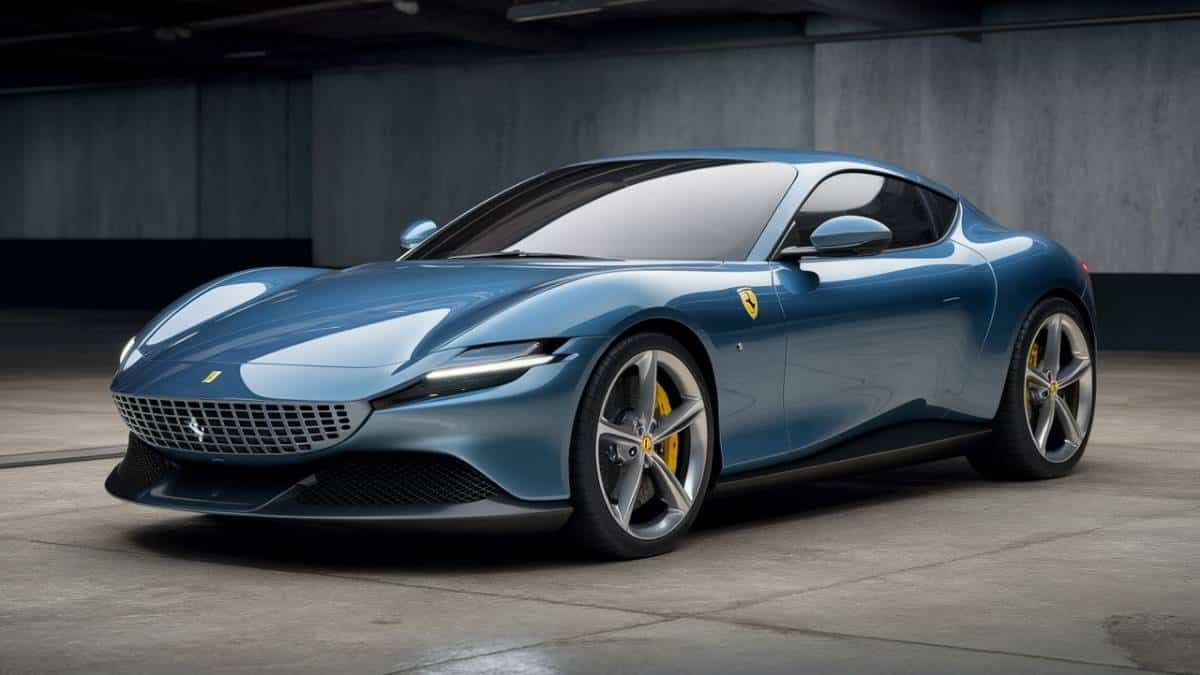
Ferrari’s first electric car was unveiled in Rome on 25 May 2026. It has 1,035 horsepower, a Jony Ive interior, and a silhouette that looks nothing like any Ferrari that came before it. That was entirely the point.
Rome was chosen with deliberate symbolism. The reveal took place on 25 May 2026, exactly 79 years after Ferrari won its first race victory. The company had booked the Città dello Sport — Santiago Calatrava’s vast, sail-shaped sports complex — for an event sealed under near-total secrecy. Behind the curtain sat an object that had been five years in the making: a five-seat, five-door electric sedan conceived in Maranello and refined in San Francisco, wearing a form that the company’s own global head of product marketing freely admitted would be divisive. Wallpaper*
“The reaction we’re going to have among our customer base,” Emanuele Carando told reporters that day, “is going to be very much mixed. People will love it, and people will hate it.” InsideEVs
That may be the most honest thing a car brand has said at a launch event in years.
A Market Moment That Made the Gamble Bigger
Ferrari didn’t arrive at this moment in a vacuum. The luxury EV space it’s entering is at once crowded with ambition and littered with retreated promises. Lamborghini — Ferrari’s most culturally proximate rival — backed off its EV goals earlier this year amid an uncertain market for all-electric supercars, compounded by parent company Volkswagen Group’s precarious financial situation. Rolls-Royce has pressed on with the Spectre but hedged loudly. Aston Martin has gone quiet on electrification timelines. Into that environment, Ferrari arrived in Rome with a car it had been engineering since at least 2021, a price tag north of $640,000, and a design that makes no apology for looking unlike anything the company has produced before. Gizmodo
The broader picture for luxury EVs is genuinely complicated. Range anxiety has faded as a consumer concern at the high end; design differentiation has become the real battlefield. Yet the Luce’s estimated EPA range — likely between 250 and 300 miles once the less generous American testing cycle is applied to the 530-kilometre WLTP figure — isn’t spectacular in a world where 400 miles and 400-kilowatt charging are quickly becoming expected from the likes of BMW and Porsche. Ferrari is betting that its customers won’t care. InsideEVs
That bet is, historically, a reasonable one. The brand has never competed on value. It competes on myth.
1 — What the Ferrari Luce Actually Is
What is the Ferrari Luce?
The Ferrari Luce is a five-seat, four-door electric performance car powered by four electric engines — one on each wheel — producing 1,050 horsepower, capable of reaching 100 km/h in 2.5 seconds, with a top speed of 310 km/h and a range of 530 km fully charged. It is the first all-electric production vehicle from Ferrari in the company’s 79-year history. Ferrari
The Ferrari Luce electric car arrives with hardware that, by any objective measure, belongs among the fastest automobiles on the planet. The rear motors alone produce 620 kW, spinning at up to 25,500 rpm; the front pair adds 210 kW at 30,000 rpm. The 800V architecture supports fast charging up to 350 kW, and the whole package weighs 2,260 kg — kept manageable in part through extensive use of recycled aluminium alloys, with zero steel in the body. Electrek
That last detail matters. The zero-steel body isn’t incidental engineering — it’s structural philosophy made tangible. Ferrari spent years developing what it calls a bespoke electric platform, built entirely at a new dedicated facility within the Maranello complex. A 122 kWh battery pack is built from 210 cells co-developed with South Korean supplier SK On. The motors are derived directly from the F80 hypercar programme — a deliberate bridge between Ferrari’s most extreme limited-series technology and a car that seats five people in everyday comfort. Electrek
Ferrari chairman John Elkann told the 200-plus media members assembled in Rome: “Ferrari Luce is not a response to change. It’s a decision, a deliberate decision, to lead what comes next with clarity, with courage. Five years ago, we asked ourselves: what would Ferrari be if we imagine that again from a blank sheet?” Robb Report
The answer to that question is, physically, a liftback sedan unlike anything Maranello has ever sanctioned. Gone are the short-wheelbase aggression and haunched rear quarters of every iconic Ferrari you can name. In their place: a long, smooth glasshouse, rear-hinged doors, a deep black S-duct carved across the front face, and proportions that — if the badge were removed — would not immediately read as Italian at all. The upper portion of the vehicle, what Ferrari calls the glasshouse, is enclosed in a large curvaceous structure that includes the windscreen, side windows, rear window, and a panoramic glass roof, paired with aluminium body panels that transition into wide aerodynamic wings at front and rear to create the impression of a single teardrop form. Dezeen
Multiple reviewers reached for the same reference point independently. The Ferrari Luce, designed with Jony Ive and Marc Newson of LoveFrom, is the first car from Maranello to carry the silhouette of an Apple Magic Mouse, with a dash-to-axle ratio of essentially none, an enormous sweeping roofline, and a serious wedge to the beltline. The Autopian
2 — The Ive Effect: Why This Interior Is the Real Statement
Why did Ferrari hire Jony Ive to design the Luce?
Ferrari didn’t hire Jony Ive to produce a more beautiful car in the conventional sense. It hired him to solve a philosophical problem: what should the human environment of an electric Ferrari feel like, when the defining sensory input — the noise of a combustion engine — has been removed?
The short answer to that People Also Ask question: Ferrari recruited LoveFrom because Jony Ive had already done something analogous with the Apple Watch — converting an analogue product category into a digital one without destroying its identity. Ferrari chairman John Elkann, a member of the Agnelli family that owns the brand, specifically admired how the Apple Watch had transformed a traditional timepiece into a digital product. He wanted the same thinking applied to Ferrari’s electric future. The collaboration began around 2021. LoveFrom was given creative autonomy across every dimension of the Luce’s design — interior, exterior, interface — working directly alongside Ferrari’s own Centro Stile team under design director Flavio Manzoni. techradar
The interior is where Ive’s influence is most unambiguous and, arguably, most counterintuitive. At a moment when virtually every premium EV maker is filling cabins with ever-larger touchscreens, the Luce pushes hard in the opposite direction. “So much of what we did,” Ive said at the San Francisco interior preview in February, “was so that you could use it intuitively, enjoy it and use it safely. We use some touch in the central screen, but it’s very thoughtful, and the vast majority of the interfaces are physical. Every single switch feels different, so you don’t need to look.” aol
The result, in physical terms, is a cabin machined from recycled aluminium, wrapped in premium leather, with a three-spoke steering wheel that carries the iconic Manettino dial — the driving mode selector that has been a Ferrari signature for decades — alongside torque-control paddles and a binnacle cluster. The analogue needle in the digital speedometer isn’t nostalgia; it’s Ive’s considered answer to the question of how humans maintain situational awareness at speed without reading a number off a screen.
Yet the picture is more complicated than simple retro comfort. An Apple aficionado watching the interior reveal could spot Ive’s handiwork in the Apple Watch-like crown on the screens, the iPad-like infotainment panel, and the use of Gorilla Glass — hardware choices that echo Apple’s philosophy more than Ferrari’s. The Luce isn’t purely analogue. It isn’t purely digital. It’s the product of someone who has spent a career arguing that the two don’t need to be in opposition. aol
3 — What the Luce Means Beyond Maranello
The arrival of the Ferrari first EV carries implications that extend well past the supercar market, which is, by any realistic measure, a rounding error in global automotive volumes. The Luce matters structurally for three reasons.
First, pricing. The Ferrari Luce’s price ranges from $640,000 to $647,000, which puts it in a bracket where the competition isn’t the Porsche Taycan Turbo S or the Rimac Nevera — it’s the Bugatti Chiron and Ferrari’s own limited-series special editions. Ferrari has, in effect, positioned the Luce not as a concession to electrification but as an expansion of its collector-tier offer. That’s a fundamentally different commercial argument than the one Porsche is making with Taycan, or that Lotus made with the Eletre. It’s not “EVs are the future, so here’s ours.” It’s “here is a new kind of Ferrari, available only to those who can afford to ask what a blank-sheet Ferrari could be.” Tech Times
Second, production strategy. Ferrari has been unambiguous that the Luce is an addition, not a transition. CEO Benedetto Vigna has framed it explicitly: “This is an addition to the lineup, not a transition” to all-electric. The automaker’s strategy for 2030 calls for 20% electric vehicles, 40% hybrids, and 40% internal combustion vehicles in annual sales. That’s a company keeping its options open with considerable discipline. Ferrari has watched rivals make sweeping electrification pledges and then retreat under market pressure. It chose instead to move slowly, precisely, and expensively — one car, built at one new factory, delivered to one carefully curated customer list. Go-Electra
Third, the supply chain signal. The decision to co-develop the Luce’s battery cells with SK On — and to assemble the complete pack within Maranello — is a statement about vertical integration at the luxury end of the EV market. Where mainstream brands are increasingly dependent on external cell suppliers for entire packs, Ferrari is insisting on assembly ownership. The Luce stands, in the assessment of Electrek’s Rome correspondent, as the most ambitious performance EV any legacy automaker has attempted, and possibly the strongest endorsement of electrification that a performance legacy brand has ever offered. Electrek
First deliveries are expected in October 2026. US customers won’t receive their cars until spring 2027.
4 — The Counterargument: What Ferrari May Be Getting Wrong
There is a steel-man case against the Luce, and it deserves a serious hearing.
The design, whatever its merits, represents a genuine rupture with the visual language that made Ferrari valuable in the first place. The Luce’s roots lie in tech design rather than automotive design — there is, critics have noted, very little typical Ferrari DNA visible in its form. For a brand whose secondary market prices depend almost entirely on the ability of a car to look like a Ferrari in the rearview mirror of history, that is not a trivial concern. If the Luce fails to appreciate — or worse, depreciates — on the collector market, it damages not just its own resale story but the carefully maintained scarcity narrative that underpins every other car in the range. The Autopian
Then there is the question of what the Luce is actually competing against. Its range and charging figures — impressive in isolation — are not spectacular in a world where 400 miles of EPA range and 400-kilowatt charging are becoming table stakes for luxury offerings from BMW and Porsche. Ferrari’s counterargument is that the Luce was engineered to deliver driving emotions that no spec sheet can capture, and that its customers will not be cross-shopping against a BMW i7. That’s probably true. But the brand has also opened itself to a new kind of buyer — someone drawn by the electric credentials and the Jony Ive cachet — who may well cross-shop on exactly those terms. InsideEVs
And the Ive appointment itself carries risk. Apple’s design language, for all its brilliance, is now omnipresent. When the interior of a $640,000 Ferrari is described by multiple reviewers as looking like an Apple product, that’s not necessarily a compliment. It suggests the car may be too legible — too immediately readable as the output of a known aesthetic — in a segment where the whole point is to be unlike anything else.
Ferrari knows all of this. The fact that Carando said it publicly — “people will love it, and people will hate it” — suggests the company has made its peace with division as the price of ambition.
The Weight of the Blank Sheet
The deeper tension in the Ferrari Luce story isn’t about whether Jony Ive’s design is good or whether the range figure is competitive with the Porsche Taycan. It’s about what happens when a brand built on one sensory world — the scream of a V12, the smell of hot aluminium, the feedback of an unassisted steering rack — attempts to build emotional authority in a world defined by silence and software.
Ferrari’s answer, assembled over five years, is essentially this: we believe the emotions are separable from the engine. That driving a machine of extraordinary capability, wrapped in materials of genuine craft, controlled through interfaces that reward the human hand — that this produces feeling regardless of what propels it. Ive clearly believes the same. His life’s work has been the argument that technology, made right, creates attachment.
Whether the Luce’s buyers agree will become clear in October, when the first cars leave Maranello. Whether the rest of the automotive world agrees will take rather longer to determine.
One thing is not in doubt. On 25 May 2026, in a hall chosen to honour 79 years of racing history, Ferrari put a car on a stage that looks nothing like its past and claimed it nonetheless carries everything that made Ferrari matter.
That is either the bravest thing the company has done in a generation, or the most expensive creative argument in the history of motoring.
Possibly both.
Discover more from The Economy
Subscribe to get the latest posts sent to your email.



Navigating Mortgage and Loan Refinancing in a High-Yield Environment
Global public debt crossing critical thresholds has kept central bank policies volatile, resulting in fluctuating US Treasury yields throughout 2026. For homeowners and commercial property holders burdened by previous high-interest borrowing cycles, finding optimal refinance windows has become a high-stakes financial puzzle. Stalled disinflation and stubborn employment numbers mean rate cuts are incremental, requiring borrowers to act with precision.
Timing your mortgage or commercial loan refinance in this environment requires a deep understanding of yield curve movements and lender risk appetites.
Decoding 2026 Refinance Dynamics
The 10-Year Treasury Yield Benchmark
Mortgage rates continue to track closely with the 10-year US Treasury yield. When macroeconomic anxiety spikes debt issuance, yields rise, tightening consumer borrowing capacity. Savvy borrowers monitor weekly Treasury auctions to lock in rates during brief dip windows.
Hybrid ARMs and Alternative Structures
With fixed rates remaining elevated, 7/1 and 10/1 adjustable-rate mortgages (ARMs) have surged in popularity. These products offer lower initial monthly payments, giving borrowers breathing room until central bank easing cycles fully materialize.
| Loan Product | Current Rate Range | Best For | Key Risk Factor |
| 30-Year Fixed Mortgage | 6.2% – 6.8% | Long-term predictability | Higher initial monthly outlay |
| 7/1 Hybrid ARM | 5.5% – 5.9% | Short-term ownership / flipping | Rate reset risk after year 7 |
| Commercial Refinance | 7.0% – 8.2% | Corporate asset restructuring | Strict DSCR lender covenants |
Actionable Steps for Successful Refinancing
To maximize your chances of securing favorable refinance terms in a volatile market, follow a disciplined preparation strategy.
Boost Your Credit Score Immediately: Lenders in 2026 are applying stringent credit tiering; a 20-point increase can drop your APR by a crucial quarter-point.
Shop Regional Credit Unions: Smaller financial institutions often offer portfolio loans with more flexible underwriting than major national banks.
Calculate the Break-Even Point: Ensure your total closing costs are recouped through monthly savings within 24 months of closing.
“Market Strategist View: Refinancing in 2026 is an exercise in opportunistic timing. Borrowers must maintain immaculate financial profiles ready to strike the moment Treasury yields dip.”
Mastering the complexities of today’s debt environment ensures you can successfully lower your debt service costs and protect your long-term financial stability.
Discover more from The Economy
Subscribe to get the latest posts sent to your email.

The days of pulling generic auto insurance quotes based purely on your zip code and age are officially over. In 2026, insurance comparison engines are powered entirely by generative AI and real-time telematics. These platforms digest thousands of live data points—ranging from your driving smoothness via connected vehicle sensors to real-time traffic congestion patterns—to generate hyper-personalized premiums instantly.
For consumers, this evolution represents both a massive opportunity for savings and a hidden trap for penalty pricing. Understanding how AI algorithms evaluate risk is essential for anyone looking to lower their monthly auto insurance premiums.
How AI Comparison Engines Evaluate Your Risk Profile
Behavioral Telematics and Connected Cars
Modern cars stream performance data directly to insurance aggregators. Generative AI models analyze braking sharpness, acceleration curves, cornering G-forces, and phone distraction metrics. Drivers who maintain smooth, defensive habits are rewarded with dynamic rate cuts of up to 40% compared to traditional rating tiers.
Predictive Traffic and Weather Modeling
AI tools now cross-reference your daily commute route with predictive weather and accident probability models. If your standard parking location or driving corridor has a statistically higher incidence of uninsured motorist claims, your quotes will reflect that hyper-local risk assessment.
| Comparison Factor | Traditional Rating Model | 2026 Generative AI Model | Impact on Premium |
| Mileage & Usage | Annual estimated odometer reading | GPS tracking & live trip duration | High (up to 35% savings) |
| Driving Behavior | MVR driving record & accidents | Real-time braking, speed, & G-force | Critical (determines tier) |
| Vehicle Tech | Make, model, and safety rating | ADAS calibration & repair cost data | Moderate |
Strategies to Lower Your AI-Driven Insurance Quote
To outsmart the algorithm and secure the lowest possible premium in 2026, drivers must proactively manage their digital footprint on insurance platforms.
Opt-In for Telematics Trial Periods: Many insurers offer immediate 15% discounts just for installing their driving app; let it track safe habits for 30 days to lock in permanent savings.
Scrub Unverified Public Records: Ensure your motor vehicle report is free of clerical errors that AI risk models misinterpret as reckless behavior.
Compare AI Aggregators: Use platforms that integrate multi-carrier API feeds rather than single-brand comparison sites to find the best risk-adjusted rate.
“Industry Note: AI-driven pricing rewards transparency and precision. Drivers who actively manage their telematics data consistently out-save those relying on legacy quote calculators.”
Embracing AI comparison tools allows savvy policyholders to customize coverage limits precisely to their driving habits, eliminating wasted premium spend while ensuring robust protection.
Discover more from The Economy
Subscribe to get the latest posts sent to your email.

Despite decades of bans and strict handling mandates, asbestos remains a silent killer across legacy manufacturing plants, shipyards, and modern green-energy infrastructure retrofits. In 2026, regulatory changes by the EPA and tightened occupational health standards have triggered a fresh wave of mesothelioma litigation. Manufacturers attempting to fast-track industrial transitions are encountering catastrophic oversight, exposing workers to legacy toxins and opening corporate parent companies to unprecedented liability.
Navigating a mesothelioma claim in 2026 requires understanding how modern industrial supply chains intersect with historical exposure. Trusts established decades ago are being audited under stricter transparency laws, altering payout ratios and accelerating fast-track settlements for terminally ill plaintiffs.
Modern Industrial Exposure Hotspots
Green Retrofitting and Renewable Energy Infrastructure
A primary source of 2026 asbestos exposure occurs during the decommissioning and retrofitting of older industrial facilities for renewable energy production. Workers insulating electrical grids, modernizing HVAC systems, or upgrading manufacturing floors frequently disturb encapsulated asbestos materials that were improperly documented or ignored during facility audits.
Automotive and Aerospace Supply Chains
With advanced manufacturing booming, workers handling specialized friction materials, gaskets, and heat shields face ongoing risks. Supply chain tracing has become more sophisticated, allowing legal teams to pinpoint exact corporate entities responsible for raw material distribution across multinational borders.
| Industry Sector | Primary Exposure Risk | Legal Venue / Trust | Avg. Claim Value Range |
| Green Energy Retrofit | Disturbed insulation, pipe lagging | Federal Tort / Manufacturer Trust | $1.2M – $3.5M |
| Shipbuilding & Marine | Boiler insulation, structural seals | Asbestos Bankruptcy Trusts | $800K – $2.4M |
| Automotive Manufacturing | Brake components, high-heat gaskets | Third-Party Product Liability | $600K – $1.8M |
Securing Maximum Compensation: Steps for Plaintiffs
Time is of the essence in mesothelioma cases. Plaintiffs and their families must act decisively to secure financial recovery before statutes of limitations expire.
Retain Specialized Counsel: Work exclusively with national mesothelioma law firms possessing deep historical databases of asbestos-containing products.
Audit Employment History: Document every job site, supervisor name, and equipment brand encountered throughout your career.
Expedite Medical Filings: Secure a formal pathological diagnosis quickly to qualify for expedited trust fund distribution and priority trial settings.
“Expert Insight: Modern asbestos litigation is no longer just about historical tracking; it is about holding modern corporations accountable for failing to conduct rigorous environmental safety audits before initiating industrial retrofits.”
By combining meticulous work history reconstruction with aggressive multi-trust filings, victims can secure substantial financial relief to cover specialized immunotherapy and family support.
Discover more from The Economy
Subscribe to get the latest posts sent to your email.

Crypto Daily Outlook: Bitcoin, Altcoins, and the Future of Decentralized Finance

Anthony Scaramucci’s Crypto Prediction: Why MicroStrategy’s Move Is Bitcoin’s “iPhone Moment”

Best Dividend Stocks 2026: European & Asian Blue Chips

World Bank & IMF Reports 2026: Why the “3% Growth” Consensus Is Actually a Debate

Elon Musk’s Boring Company Hits $23B Valuation After UAE-Led $3 Billion Series D

Middle East War Economics 2026: Oil Prices & Energy Markets

PSX Forecast 2026: KSE-100, IMF Reviews & Geopolitics

Asian Markets Outlook 2026: China, Japan & Singapore Stocks

Global Economy 2026: IMF Growth, Inflation & Private Credit

Current Account Deficit (CAD) : Causes and Impact

Balance of Payments (BOP)

The Falkland Islands Dispute: Sovereign Wealth, Offshore Drilling, and Market Impacts

Gross Domestic Product (GDP): Nominal vs. Real

What is Inflation and the Consumer Price Index (CPI)?

State Farm’s $5B Dividend 2026: Who Qualifies & Payout Dates

US-China Relations in Q3 2026: Trade Tariffs and Supply Chain Risks

Gold’s Wild 2026: From a Record $5,600 Peak to a 24% Crash and Back Toward $4,500

Oil Surges as Strait of Hormuz Traffic Collapses Again

The Rocket That Won’t Quit: Inside SpaceX’s Falcon 9 Launch Machine

Bank of England Set to Hold Rates Through Year-End, Reuters Poll Shows

SpaceX Starship Flight 14: First Orbital Attempt & Starlink V3 Launch Explained

The 2026 Crypto Regulatory Shift: What It Means for Institutional Investors

AI Chip Stocks 2026: The Best Semiconductor Investments Beyond Marvell

Retail Earnings Week: What Home Depot, Target & Walmart Reveal

AI-Powered Training: The Next Multi-Billion Dollar Ecosystem in Fitness

Top 30 Stocks for Investment in PSX for Massive ROI in 2026

Russia’s Black Sea Oil Exports Fall for a Fifth Straight Week

Tween Back-to-School Trends 2026: What’s Driving the $85B Season
-

 Markets & Finance8 months ago
Top 15 Stocks for Investment in 2026 in PSX: Your Complete Guide to Pakistan’s Best Investment Opportunities
-

 Analysis7 months ago
Johor’s Investment Boom: The Hidden Costs Behind Malaysia’s Most Ambitious Economic Surge
-

 Analysis7 months ago
Top 10 Stocks for Investment in PSX for Quick Returns in 2026
-

 Analysis7 months ago
Brazil’s Rare Earth Race: US, EU, and China Compete for Critical Minerals as Tensions Rise
-

 Banks8 months ago
Best Investments in Pakistan 2026: Top 10 Low-Price Shares and Long-Term Picks for the PSX
-

 Investment8 months ago
Top 10 Mutual Fund Managers in Pakistan for Investment in 2026: A Comprehensive Guide for Optimal Returns
-

 Global Economy9 months ago
15 Most Lucrative Sectors for Investment in Pakistan: A 2025 Data-Driven Analysis
-

 Global Economy9 months ago
Pakistan’s Export Goldmine: 10 Game-Changing Markets Where Pakistani Businesses Are Winning Big in 2025