
Oil Markets
Oil Trades Close to $100 After Attacks in Gulf — Ships and Energy Infrastructure

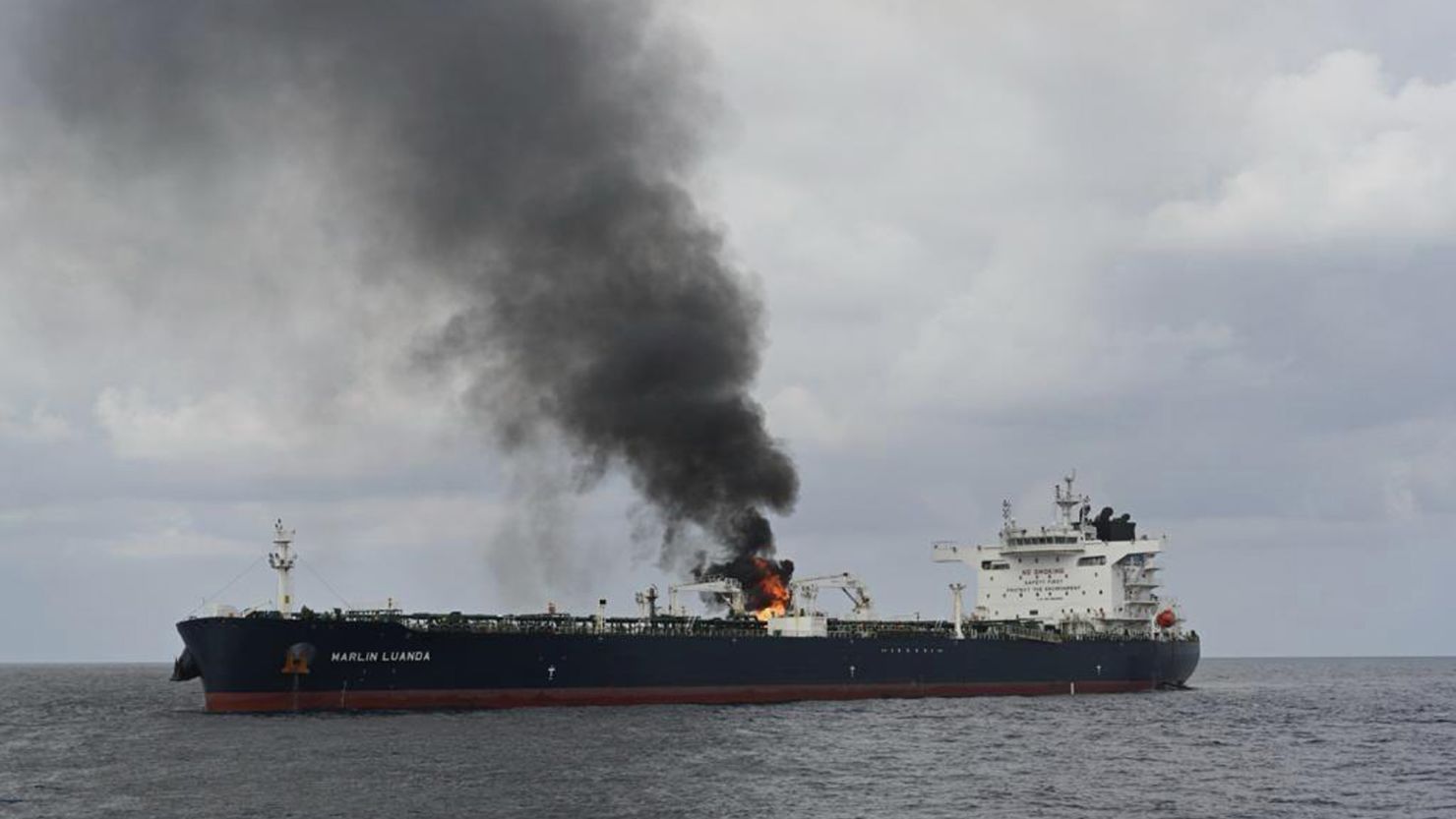
The Persian Gulf woke before dawn to the glow of burning tankers.
By the time London’s oil traders logged their terminals on Thursday morning, Brent crude futures had surged 6.2% to $97.66 a barrel at around midday London time, after earlier breaching the $100 threshold CNBC — a psychologically devastating milestone that analysts had warned of since the first U.S. and Israeli bombs fell on Iranian territory thirteen days ago. Brent is now up approximately 38% over what it cost when the war started on February 28. Spectrum News 1 For the global economy, still nursing the wounds of post-pandemic inflation, the arithmetic is brutal.
This is no longer a regional skirmish. It is a systemic energy shock of a kind not witnessed since the Arab oil embargo of 1973 — and, on several metrics, already surpassing it.
The Anatomy of Thursday’s Attacks: From Basra to Dubai Creek
Three ships were hit by unknown projectiles in the Persian Gulf early Thursday, according to the United Kingdom Maritime Trade Operations Center. One container ship was struck off the coast of Jebel Ali, United Arab Emirates, causing a small fire onboard. Two tankers were also hit near Al Basrah, Iraq, and were set ablaze — though all crew members were reported safe. UPI
Iran’s Islamic Revolutionary Guard Corps claimed one of those strikes with characteristic theatricality. IRGC footage showed the moment the Safesea Vishnu, a Marshall Islands-flagged vessel, was struck. In the footage, a man can be heard shouting declarations of victory in Khamenei’s name. U.S. News & World Report The vessel’s operators and cargo have not been publicly confirmed, but maritime intelligence sources say it was carrying refined products bound for South Asia.
The strikes on Iraqi waters represent a significant escalation. The two tankers hit near Basra’s southern port area marked the first oil-related strike reported in Iraqi waters since the war began. KPBS Iran, which maintains deep influence over Baghdad, appeared willing to inflict economic pain on a nominal ally — a signal of how far Tehran is prepared to go.
Iran also caused a blaze near Bahrain’s international airport on Muharraq Island, targeted a major Saudi oil field with a drone, and forced Iraq to halt operations at all of its oil terminals. In Kuwait, a drone struck a residential building, wounding two people. In Dubai, firefighters extinguished a blaze at a tower in Dubai Creek Harbour after a drone hit. Washington Times
Iran flouted a U.N. Security Council resolution from the previous day demanding that it halt strikes on its Gulf neighbours. Spectrum News 1 Tehran’s message, delivered not in diplomatic cables but in drone wreckage, was unmistakable: no external legal architecture will constrain its campaign.
The Hormuz Chokepoint: 20 Million Barrels a Day on the Knife’s Edge
The Strait of Hormuz — a 33-kilometre-wide channel between the Iranian coast and the tip of Oman — is the jugular vein of the global oil economy. About 20% of global oil consumption passes through the strait. NPR That is roughly 20 million barrels per day, supplying refineries from Rotterdam to Riyadh to Yokohama.
Iran has not needed a formal naval blockade to achieve an effective halt. By deploying selective drone and rocket attacks, Tehran has been enough to make shipping companies and the insurers who underwrite them balk at the risk of sending ships through the strait, resulting in what amounts to a total halt of tanker traffic. NPR
Strategists noted oil prices were trading higher precisely because there appears to be no end in sight to supply disruptions through the Strait of Hormuz. Dutch bank ING stated in a research note: “The only way to see oil prices trade lower on a sustained basis is by getting oil flowing through the Strait of Hormuz. Failing to do so means that the market highs are still ahead of us.” CNBC
Prices have already demonstrated what “ahead of us” can look like. Brent crude spiked to nearly $120 a barrel on Sunday before retreating NBC News — a foretaste of what a prolonged closure portends.
| Brent Crude Price | Date / Context |
|---|---|
| ~$72/barrel | February 27, 2026 (pre-war) |
| ~$80/barrel | March 1–2 (war day 1–2, Hormuz halts) |
| ~$120/barrel | March 8 (Sunday spike, infrastructure fears) |
| $97–100/barrel | March 12 (current, post-IEA release) |
| $120–150/barrel | Analysts’ worst-case if closure persists 60+ days |
The IEA’s Historic Intervention — and Why Markets Are Unconvinced
In an attempt to calm markets, the International Energy Agency announced that its member countries will release a combined 400 million barrels of oil from emergency reserves — the largest coordinated stock drawdown in the organization’s history. IEA Executive Director Fatih Birol called the oil market challenges “unprecedented in scale.” UPI
The U.S. confirmed it will release 172 million barrels from the Strategic Petroleum Reserve, roughly 40% of the total, to be released gradually over about four months. KPBS
And yet: oil remains above $95 a barrel. The market’s verdict on the IEA intervention is, politely, sceptical.
The reasons are structural. Strategic stockpiles are held separately by each IEA member country, meaning technical and logistical constraints could slow the flow of barrels. As one analyst noted: “Four hundred million is a big number… but this is the largest oil supply disruption since at least the 1970s, so we need a lot of oil, and we need it quickly.” CNBC
The intervention also carries an inadvertent signal. The very scale of the release — unprecedented in the IEA’s 52-year history — telegraphs the severity of the threat. Releasing 400 million barrels does not inspire calm when markets understand it implies a supply hole that may be measured in billions.
Iran’s Strategic Logic — and the Pressure Calculus
Understanding Tehran’s campaign requires understanding its objective. Iran is attempting to inflict enough global economic pain to pressure the United States and Israel to halt their bombardment, which started the war on February 28. Iran’s president has said its attacks would continue until Iran receives security guarantees against another assault — indicating that even a ceasefire or U.S. declaration of victory might not halt the conflict. Spectrum News 1
Iran’s parliamentary speaker, Mohammad Bagher Qalibaf, threatened that any attempt to take Iranian islands would “make the Persian Gulf run with the blood of invaders,” adding that “the blood of American soldiers is Trump’s personal responsibility.” Spectrum News 1
President Trump, for his part, has sent contradictory signals. He told supporters “we won” but also vowed to “finish the job,” claiming Iran is “virtually destroyed.” NBC News Markets, which require clarity above all, have responded to this ambiguity with volatility.
Iran has been able to load an estimated 18.5 million barrels of oil for shipment since the start of the war, the vast majority from Kharg Island in the Persian Gulf and bound for China U.S. News & World Report — indicating Tehran retains some export capacity even as it attacks its neighbours’ shipping. The asymmetry is deliberate: Iran exports through the Gulf while making the Gulf uninhabitable for everyone else.
Ripple Effects: Insurance, Inflation, and the Hidden Costs
The price of crude is only the most visible wound. The secondary and tertiary effects are spreading through the global economy with the relentless logic of a supply shock.
War-Risk Insurance Premiums have become prohibitive for voyages anywhere near the Arabian Sea. Lloyd’s of London market sources indicate war-risk surcharges have risen by a factor of ten since February 28 for Gulf-adjacent routes. Ships rerouting around the Cape of Good Hope add 10 to 14 days and roughly $1–2 million in additional fuel and operating costs per voyage.
Aviation Fuel Surcharges are already being quietly implemented by Gulf carriers and Asian airlines with heavy Middle East exposure. Jet fuel, which tracks closely to crude oil, has surged in sympathy. Carriers operating long-haul routes through Dubai, Abu Dhabi, and Doha face acute cost pressures.
Fertiliser and Food Prices face an underappreciated risk. The Gulf region is a critical source of sulphur, a by-product of petroleum refining used to produce sulphuric acid and ultimately fertiliser. Disruptions to Gulf refinery output will tighten sulphur markets within weeks, creating a secondary shock to agricultural input costs that will appear in food prices two to three seasons later.
Emerging Market Vulnerability is acute. India and Pakistan — both heavily dependent on Gulf crude — face twin shocks: higher import bills in depreciating currencies and rising food inflation. South Asian central banks that have spent years rebuilding post-pandemic credibility now face a demand for rate increases at precisely the moment their economies are most fragile.
Meanwhile, banks across the region have stepped up precautions after Iran threatened Gulf banking interests linked to the U.S. and Israel. HSBC closed all branches in Qatar until further notice, and Citibank told staff to evacuate offices in the Dubai International Financial Centre. NBC News The financial system, not just the energy system, is beginning to price in sustained conflict.
Three Scenarios: Where Oil Goes From Here
Base Case ($95–110/barrel, 4–8 weeks): Conflict continues at current intensity. The IEA reserve release provides partial relief. Strait of Hormuz remains de facto closed but Iran does not formally announce a blockade. OPEC’s spare capacity — concentrated in Saudi Arabia and the UAE, both now directly under Iranian drone attack — is partially mobilised but logistics constrain delivery. Brent oscillates between $95 and $110. Global GDP growth loses 0.5–0.8 percentage points. Recession risk remains elevated but contained.
Best Case ($75–85/barrel, 6–10 weeks): A U.S.-brokered ceasefire, possibly via Qatari intermediaries, produces a temporary halt. Iran receives informal security assurances. Hormuz reopens to commercial traffic under a naval escort regime. Reserve releases bridge the supply gap. Markets price relief rapidly and overshoot to the downside before stabilising.
Worst Case ($130–160/barrel, 3–6 months): U.S. strikes on Kharg Island — currently the subject of intense speculation — destroy Iran’s primary export terminal. Tehran responds with a formal naval blockade and mine-laying operation in Hormuz. Saudi Aramco’s Shaybah field suffers serious damage. The global economy enters recession. Central banks face their worst nightmare: a stagflationary spiral demanding simultaneously higher rates to fight inflation and lower rates to combat recession.
ING’s strategists have noted that market highs are “still ahead” if the strait remains blocked CNBC — a warning that the $100 threshold breached Thursday may, in retrospect, look like a modest data point on a chart still heading north.
The Geopolitical Dimension: China, India, and Europe’s Scramble
Iranian oil shipments bound for China continued even as Tehran attacked Gulf shipping U.S. News & World Report, creating an extraordinary diplomatic tension. Beijing has deep financial exposure to Iranian crude under long-standing shadow-fleet arrangements, and a genuine interest in seeing the conflict end — but not at the price of publicly endorsing American military objectives.
For Europe, the calculus is different and more immediately painful. The continent spent three years weaning itself off Russian gas after Ukraine; it cannot afford a parallel crisis in its oil supply chains. German industry, already battered by high energy costs, faces a new existential test.
The Kremlin has said discussions are taking place between Moscow and Washington about ways of cooperating to stabilise energy markets reeling from the effective closure of the Strait of Hormuz NBC News — a geopolitical development of stunning irony, given that Russia and the United States remain adversaries across multiple other theatres.
The Bottom Line
Thirteen days into the most consequential Middle East conflict since the 2003 invasion of Iraq, the global energy system is operating without its most critical artery. Brent crude prices spiked to nearly $120 a barrel on Sunday before retreating UPI, and the forces that drove them there — Iranian drone capacity, Hormuz paralysis, infrastructure vulnerability, and political intransigence on all sides — have not diminished.
The IEA’s 400-million-barrel intervention is historic in scale and admirable in coordination. It is also, as markets are making plain, insufficient in isolation. Reserve releases buy time. They do not move tankers. They do not clear minefields. They do not negotiate peace.
Until a diplomatic architecture emerges that can credibly reopen twenty miles of international waterway, every metric of global economic health — inflation, growth, trade, food security — will be held hostage to the glow of burning ships on the Persian Gulf at dawn.
Discover more from The Economy
Subscribe to get the latest posts sent to your email.


Markets & Finance
Russia Oil Revenue 2026: How Sanctions on Rosneft and Lukoil Are Draining the War Chest
Russia’s oil and gas revenue fell 22% in the first eleven months of 2025, and the pressure has only intensified since the United States imposed primary sanctions on Rosneft and Lukoil in October 2025, according to the Atlantic Council’s Russia Sanctions Database. Moscow is now rerouting exports through smaller companies to work around the sanctions, even as its military-industrial base continues expanding — Russia claims to have localized nearly 90% of drone manufacturing.
The discount on Russian crude is widening
The mechanism behind the revenue drop is the widening discount Russian oil must offer to find buyers. Urals crude traded at roughly a 10% discount to global benchmarks through much of 2024 as sanctions normalized, but that discount exceeded 15% in November 2025 after the Rosneft and Lukoil sanctions were announced, and jumped further to around 30% by year-end, according to analysis from the New Eurasian Strategies Centre. Sanctions have not meaningfully reduced the volume of oil Russia exports — production in 2025 was only 2.5% below 2021 levels — but they have reshaped how, and at what price, that oil moves.
How Moscow is compensating
Faced with declining oil revenue, the Kremlin has raised taxes across the board: increasing the income tax burden, lifting VAT from 20% to 22%, raising the profit tax from 20% to 25%, and pushing the profit tax on oil transport to 40%, according to the Atlantic Council database. Russia has also issued $2.8 billion in yuan-denominated bonds to raise financing, while corporate debt has surged 71% since 2022 as businesses absorb the fiscal strain.
Despite the tax increases, Russia’s total federal budget revenue rose only 1.6% year-on-year in ruble terms during 2025, reaching 37.3 trillion rubles ($446 billion), according to the Oxford Institute for Energy Studies. A stronger ruble through the year meant the dollar-value increase was more pronounced than the ruble figures suggest, but that currency strength itself became a fiscal headwind — the same Oxford analysis estimates rouble appreciation alone cost Russia’s oil revenue 0.6% of GDP.
What’s changed since the Rosneft-Lukoil sanctions
The picture has deteriorated further into 2026. Russia’s oil and gas cash flows dwindled to their lowest levels in years by February 2026, pushing Putin to borrow more heavily from domestic banks and raise taxes further just to keep state finances stable, according to Euronews. Analysis from RE-Russia projects that if sanctions pressure holds and oil prices continue falling, Russia’s 2026 oil and gas revenues could see a decline comparable to or exceeding the current downturn, with Urals prices potentially settling in the $40-45 per barrel range, per RE-Russia’s assessment.
The enforcement gap that keeps the war funded
Even so, sanctions remain incomplete. Since the 2022 invasion, EU countries have paid an estimated €220 billion for Russian coal, oil, and gas — roughly 20% of Russia’s total energy earnings during that period — even as the bloc has simultaneously imposed restrictions, according to the International Centre for Defence and Security. That analysis argues Western sanctions enforcement, not sanctions design, remains the binding constraint on their effectiveness.
Discover more from The Economy
Subscribe to get the latest posts sent to your email.
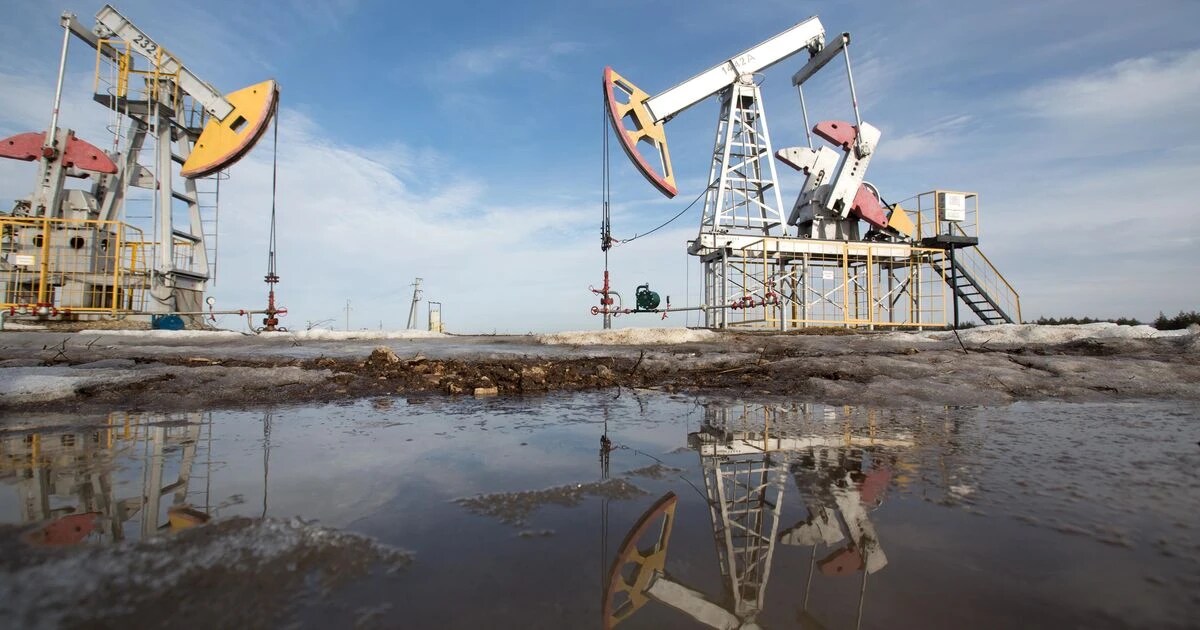
Two contradictory forces are shaping the 2026 oil market simultaneously: a structural glut large enough to keep prices depressed for years, and a live geopolitical risk premium large enough to send prices toward levels not seen in over a decade. Both are true at once, and understanding why matters for anyone pricing energy, currency, or emerging-market risk this year.
The Oversupply Case
The consensus view among major forecasters is bearish. The IEA has projected a 2026 surplus of up to 4.09 million barrels per day, later revising it slightly down to 3.84 million barrels per day as sanctions on Russian and Venezuelan supply offset some of the glut, according to Forex.com’s 2026 outlook. Goldman Sachs has forecast Brent averaging $56 per barrel and WTI $52 in 2026, driven by long-delayed pandemic-era projects coming online in clusters alongside OPEC+’s gradual unwinding of production cuts, per coverage from iTiger. The bank has flagged Brent could fall into the $40 range if non-OPEC supply proves more resilient than expected or a recession hits in 2026-2027.
EBC Financial Group’s analysis similarly expects Brent to average $58-60, with the IMF projecting global growth of 3.3% for 2026 — a supportive but not booming demand backdrop. Crucially, forecasters diverge sharply on demand growth itself: the IEA projects roughly 930,000 barrels per day of additional 2026 demand, while OPEC is far more bullish at 1.4 million barrels per day — a gap that alone could determine whether the market tightens faster than consensus expects.
The Geopolitical Premium
Layered on top of that oversupply is acute conflict risk. The 2026 U.S.-Israeli military conflict with Iran and the effective closure of the Strait of Hormuz triggered what one analysis calls a “historic geopolitical supply shock” against the oversupply backdrop, according to Just2Trade’s market review. The IMF has characterized an “adverse scenario” of 2.5% global growth and 5.4% inflation as a live operating risk, warning that prolonged conflict with oil near $125 a barrel could de-anchor global inflation expectations entirely. Notably, oil and equity markets have diverged during the crisis — Brent fell sharply during a late-May ceasefire period even as equities rallied, illustrating how regime-dependent the correlation between crude and financial markets has become.
Setting Up the Next Shortage
Perhaps the most underreported angle is the setup for what comes after 2026. Lower prices are already deferring investment, particularly in U.S. shale — the EIA forecasts flat 2026 output with potential declines if prices stay below $60, according to Fort Worth Inc.’s analysis of Saxo Bank data. Goldman Sachs projects prices could rebound toward $80/$76 (Brent/WTI) by end-2028 specifically because low 2025-2026 prices will curb non-OPEC supply growth while minimal new long-cycle projects come online post-2026, following roughly 15 years of underinvestment.
Who This Hits Hardest
The oversupply-plus-risk-premium combination lands unevenly. Producers with high fiscal breakeven prices and limited buffers — Russia chief among them, whose Q1 2026 oil and gas revenue collapsed 45% year-on-year — are exposed on the downside even as they occasionally benefit from conflict-driven price spikes. Gulf producers, by contrast, are using current elevated-but-volatile pricing to accelerate diversification of their sovereign wealth into non-oil assets, a hedge against exactly this kind of structural oversupply persisting into the 2030s.
Discover more from The Economy
Subscribe to get the latest posts sent to your email.
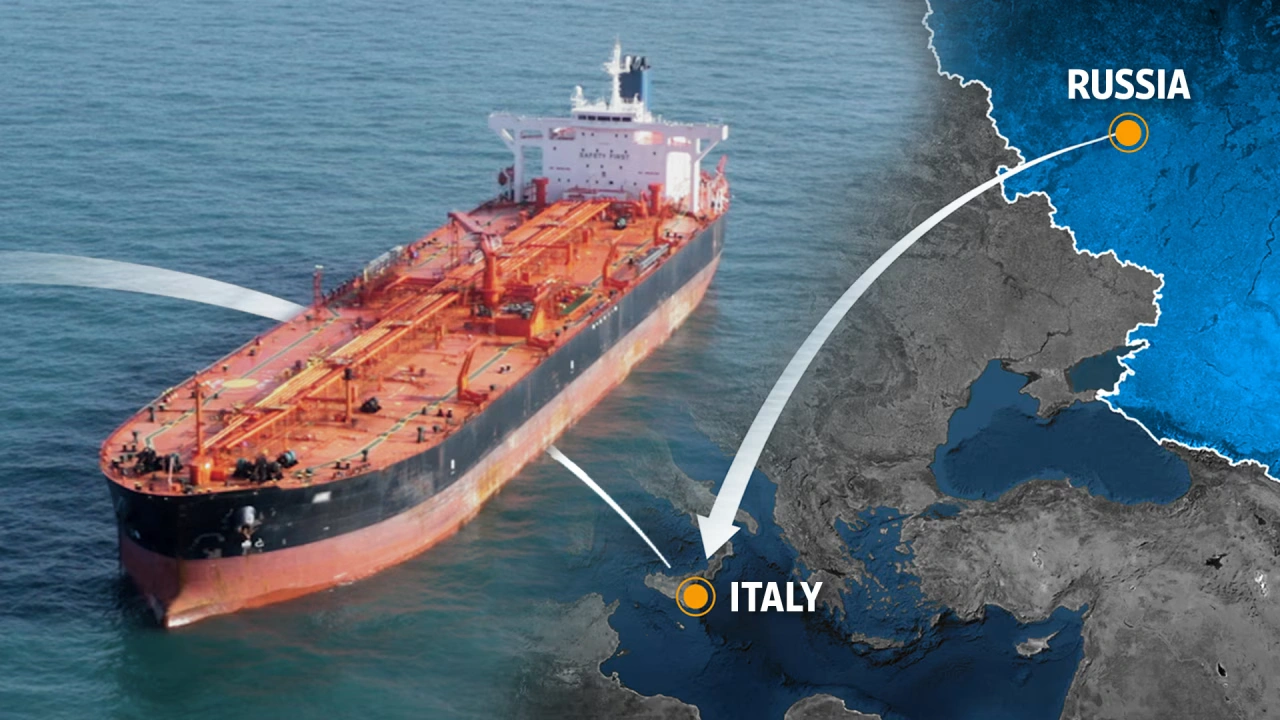
On July 15, 2026, during a routine Chinese foreign ministry press briefing, spokesperson comments took on unusual significance for global energy and trade watchers: Beijing strongly criticized recent US sanctions measures affecting Cuba and, more consequentially, proposed US legislation specifically targeting major purchasers of Russian energy, according to sanctions-tracking analysis from law firm Steptoe. The pairing of Cuba sanctions criticism with concern over Russian-energy-buyer legislation is not coincidental — both represent the kind of secondary sanctions architecture that could eventually be extended to reach China’s own energy trade.
Why China has reason to be worried
China has emerged as one of the largest buyers of discounted Russian crude since 2022, alongside India, as Moscow redirected exports away from European markets closed off by sanctions. That trading relationship has functioned largely outside direct US sanctions exposure because existing measures have focused on Russian entities, vessels, and price-cap compliance rather than directly penalizing the buying countries themselves. Proposed legislation targeting “major purchasers of Russian energy” would represent a meaningful escalation — shifting from supply-side sanctions on Russia to demand-side sanctions on Russia’s customers, a category in which China is unambiguously the largest player.
The broader sanctions context this fits into
This is not an isolated legislative proposal. The EU Council has separately been expanding its own sanctions lists to include entities active in Russia’s energy sector, specifically firms producing automated control systems for oil and gas infrastructure — a sector the EU explicitly identifies as a substantial source of Russian government revenue, with designated entities subject to asset freezes and travel bans. That EU action, combined with the US legislative proposal China is objecting to, suggests a coordinated Western push in mid-2026 toward tightening the demand side of Russian energy sanctions after several years of focusing primarily on supply-side measures — price caps, shipping insurance restrictions, and tanker interdiction — that CREA’s own monthly tracking has repeatedly shown to be only partially effective.
Why demand-side sanctions would be harder for China to absorb than supply-side measures
China’s exposure to a demand-side sanctions regime differs meaningfully from Russia’s own exposure to supply-side measures. Russia has adapted to supply-side sanctions through shadow-fleet shipping, price discounting, and using non-sanctioned intermediary buyers — mechanisms that work precisely because the penalty falls on specific vessels, entities, or transactions rather than on the buying country’s broader economy. A US measure targeting “major purchasers” as a category would be far harder for China to route around through the kind of intermediary and shadow-fleet workarounds Russia itself has relied on, since it would target China’s status as a buyer directly rather than any specific transaction or vessel.
The timing question: why July 2026 specifically
The proposed legislation surfaces at a moment when Russian oil revenues are themselves in flux — recovering somewhat due to the Iran-war-driven price spike after falling to some of their lowest levels since the 2022 invasion earlier in 2026. A US Congress moving to tighten sanctions on Russia’s energy customers at precisely the moment Iran-war-driven prices are already inflating Russian oil revenue suggests lawmakers are attempting to prevent Moscow’s accidental windfall from becoming a durable financing lifeline — a goal that requires closing the demand-side gap that has persisted throughout the supply-side sanctions era to date.
What China’s public criticism signals diplomatically
Beijing’s decision to criticize the proposal publicly, rather than simply lobbying against it through diplomatic channels, is itself a signal. Chinese foreign ministry statements on sanctions issues are typically measured and procedural; explicit public criticism paired with a separate objection to Cuba sanctions suggests Beijing is framing this as part of a broader pattern of what it characterizes as unilateral US extraterritorial sanctions overreach, a framing China has used consistently in disputes over technology export controls and is now extending to energy trade.
What comes next
The practical test will be whether the proposed legislation advances through Congress with enough bipartisan and administration support to become binding policy, or whether it remains a negotiating lever — a credible threat used to extract concessions from China on other fronts (trade, technology, Taiwan) without ever being formally enacted. Given the scale of China’s Russian energy imports and the diplomatic and economic disruption a genuine demand-side sanctions regime would cause, most sanctions analysts view near-term full enactment as unlikely, though the legislative threat itself already appears to be shaping Chinese diplomatic posture.
Discover more from The Economy
Subscribe to get the latest posts sent to your email.

The Taxman Cometh from Beijing

Pakistan IMF Program 2026: Inside the Push Toward an Interest-Free Economy

Russia Oil Revenue 2026: How Sanctions on Rosneft and Lukoil Are Draining the War Chest

Canada US Trade War 2026: Inside Carney’s Push to Cut Ties With Trump’s Tariffs

Rachel Reeves’s £25 Billion Problem: What the Autumn Budget Gap Means for Britain

Inside the Fed’s Most Divided Vote in Years: Why Warsh Held the Line on Rates

Pakistan Passed Its Third IMF Review

The Fed Is Fractured — And a New Chair Just Made It Louder, Not Quieter

The UK Economy in 2026 Is Neither Recession Nor Recovery :Stagflaton

Indonesia’s $121 Billion Nickel Bet Is Facing a Battery Chemistry

Why Ultra-Wealthy Families Are Splitting Between Singapore and Dubai inmarkets 2026

China Chose Political Control Over Fixing Its Deflation Trap in 2026

Oil Markets Are Oversupplied and Geopolitically Explosive at the Same Time

Russia’s Budget Deficit Blew Past Its Full-Year Target in Three Months

Russia Bans Diesel Exports 2026: Global Fuel Market Impact Explained

Gold Price Forecast 2026: Fed’s July 29 Decision and Record Central Bank Buying Explained

Strait of Hormuz Blockade 2026: Oil Prices Surge 9% as US-Iran Conflict Reignites

Strait of Hormuz 2026: Why Markets Still Don’t Trust It’s Open

China Politburo July 2026: Stimulus Signals Explained

Pakistan Economy 2026: GDP Grows 3.7% as IMF Completes EFF Review Amid Middle East Risk

Down But Not Out: Inside the Slow Sinking of Russia’s War Economy

Gulf Capital Retreat From Pakistan 2026: UAE Loan Freeze & What It Means

Apple vs OpenAI Lawsuit: The Economic Story Behind the Headline

Global Stock Market Selloff 2026: Stagflation Fears Return as Iran Conflict Reignites

Indonesia Russian Oil Imports 2026: Why Jakarta Is Diversifying Crude Supply

The Yuan Now Settles 67% of Russian Oil Payments — Quiet De-Dollarization in Action

AI Capex Bubble 2026: The Hidden $662B Debt Nobody Reports

Pakistan’s Economic Survey FY26: Inflation Spike Insights
-

 Markets & Finance7 months ago
Top 15 Stocks for Investment in 2026 in PSX: Your Complete Guide to Pakistan’s Best Investment Opportunities
-

 Analysis5 months ago
Johor’s Investment Boom: The Hidden Costs Behind Malaysia’s Most Ambitious Economic Surge
-

 Analysis6 months ago
Top 10 Stocks for Investment in PSX for Quick Returns in 2026
-

 Analysis6 months ago
Brazil’s Rare Earth Race: US, EU, and China Compete for Critical Minerals as Tensions Rise
-

 Banks7 months ago
Best Investments in Pakistan 2026: Top 10 Low-Price Shares and Long-Term Picks for the PSX
-

 Investment7 months ago
Top 10 Mutual Fund Managers in Pakistan for Investment in 2026: A Comprehensive Guide for Optimal Returns
-

 Global Economy7 months ago
15 Most Lucrative Sectors for Investment in Pakistan: A 2025 Data-Driven Analysis
-

 Global Economy7 months ago
Pakistan’s Export Goldmine: 10 Game-Changing Markets Where Pakistani Businesses Are Winning Big in 2025