Connect with us

Analysis

SBP Holds Policy Rate at 10.5% as Middle East War Reshapes Pakistan’s Economic Calculus

Published

on

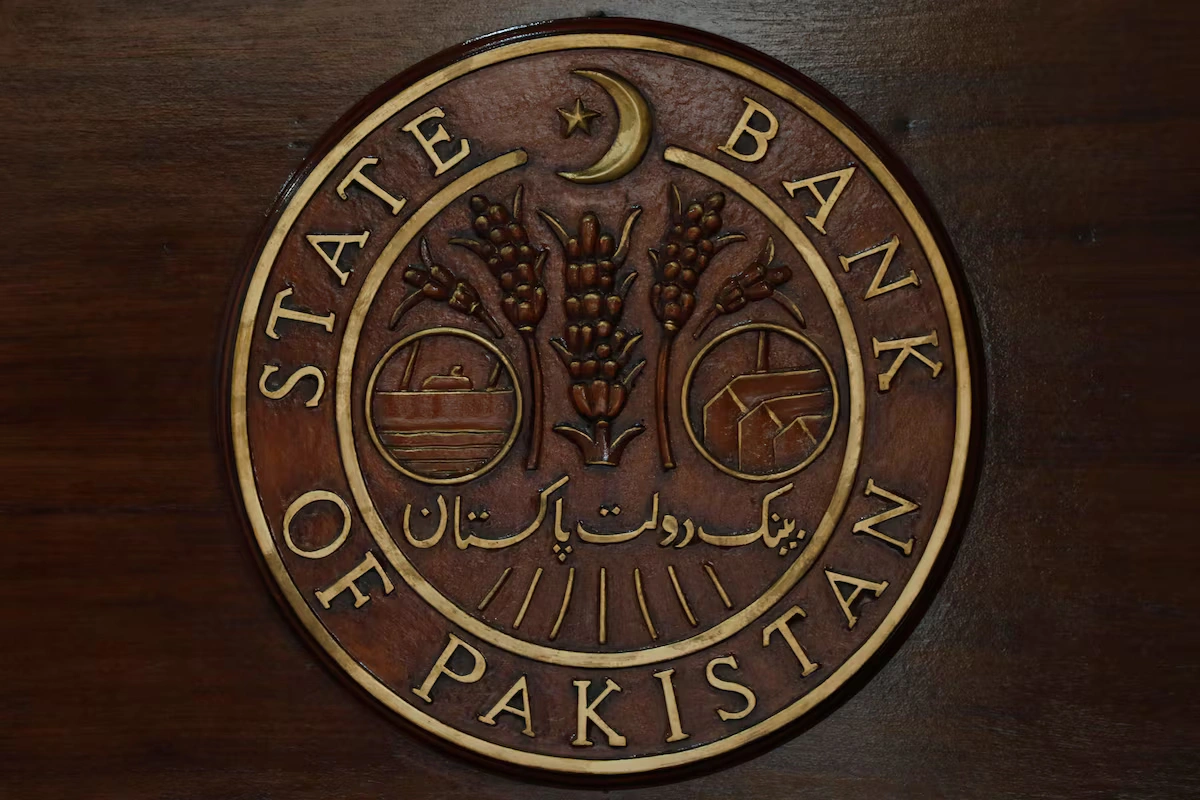
The room at the State Bank of Pakistan’s Karachi headquarters may have been airconditioned on a warm Monday morning, but the temperature in global energy markets was anything but. As Governor Jameel Ahmad chaired the second Monetary Policy Committee meeting of 2026, Brent crude was careening past $103 a barrel — its highest since 2022 — while tanker traffic through the Strait of Hormuz had ground to a near-halt under the shadow of the US-Israeli war on Iran. The MPC’s decision, telegraphed by virtually every analyst in the market, arrived with unusual unanimity: the benchmark policy rate would stay unchanged at 10.5%.

It was a pause born not of confidence, but of calibrated caution — and perhaps the most consequential hold in Pakistan’s two-year monetary easing cycle.

SBP MPC Decision March 2026: What the Statement Actually Says

The official Monetary Policy Statement was diplomatically precise in framing the dilemma. “While the incoming data was largely consistent with the macroeconomic projections shared after the January meeting,” the MPC noted, “the Committee observed that the macroeconomic outlook has become quite uncertain following outbreak of the war in the Middle East.”

That single sentence encapsulates the entire complexity facing Pakistan’s central bank in March 2026: the domestic data looks broadly fine; the external world does not.

The MPC went further, identifying three concrete transmission channels through which the conflict is striking the Pakistani economy: a sharp rise in global fuel prices, elevated freight and insurance costs, and disruptions to cross-border trade and travel. “Given the evolving nature of events,” it added, “the intensity and duration of the conflict will both be important determinants of the impact on the domestic economy.”

In other words, the SBP is watching, not acting — and deliberately so.

Pakistan Interest Rate Hold: The Numbers Behind the Decision

To understand why the MPC held, it helps to survey the macroeconomic landscape that informed the room.

Inflation rebounding, but manageable — for now. After dipping as low as 3% mid-2025, Pakistani consumer price inflation climbed to 5.8% year-on-year in January 2026 and further to 7% in February — the upper edge of the SBP’s 5–7% medium-term target range. Core inflation has remained persistently sticky, hovering around 7.4% in recent months. The MPC had flagged at the January meeting that some months in the second half of FY26 could breach 7%; February’s print validated that warning precisely. With petrol prices raised by Rs55 per litre to Rs321.17 in the days before the meeting — a direct pass-through of the global energy shock — the domestic inflation trajectory has become materially more uncertain.

The external account: resilience with caveats. The current account posted a surplus of $121 million in January 2026, compressing the cumulative July–January FY26 deficit to just $1.1 billion. Workers’ remittances — a structural pillar of Pakistan’s external financing — continued to absorb a significant share of the trade deficit, while the SBP’s ongoing interbank foreign exchange purchases helped drive liquid FX reserves to $16.3 billion as of February 27, up from $16.1 billion in mid-January. The committee set a firm target of reaching $18 billion by June 2026 — a milestone that now depends critically on the timely realisation of planned official inflows, including disbursements under Pakistan’s $7 billion IMF Extended Fund Facility.

GDP momentum intact but under threat. Large-scale manufacturing growth has surprised to the upside this fiscal year, and the SBP maintained its GDP growth projection at 3.75–4.75% for FY26. Private sector credit expanded by Rs187 billion between July and November FY25, led by textiles, wholesale & retail, and chemicals. Consumer financing — particularly auto loans — has strengthened as financial conditions eased. But the current oil shock introduces a significant headwind: higher input costs, squeezed margins, and the prospect of renewed monetary tightening if inflation reaccelerates.

Pakistan Economy Risks: The Gulf Conflict Inflation Channel

The geopolitical backdrop informing this decision is arguably the most volatile since Russia’s invasion of Ukraine in February 2022, and the MPC explicitly drew that parallel. “The macroeconomic fundamentals, especially in terms of inflation and the country’s FX and fiscal buffers, are better compared to the time of the start of the Russia-Ukraine war in early 2022,” the statement noted — a reassuring comparison, but one that implicitly acknowledges the severity of the threat.

Here is what has unfolded in the space of roughly ten days:

EventMarket Impact
US-Israeli strikes on Iran begin (Feb 28)Brent crude +25% in two weeks
Strait of Hormuz shipping near-haltedFreight & war-risk insurance surges
Iraq output collapses 60–70%Global supply shortfall ~20 mb/d
Brent crude surpasses $103/bbl (Mar 9)Highest since Russia-Ukraine shock
Qatar warns of $150/bbl riskG7 emergency reserve discussions begin

For Pakistan specifically, the pass-through arithmetic is sobering. The country imports virtually all of its crude oil requirements; historically, a $10 rise in Brent crude adds approximately 0.5–0.6 percentage points to Pakistan’s CPI within two to three quarters. With Brent having surged nearly $30 above its pre-conflict baseline, the potential inflation add-on over the coming two quarters — absent countervailing fiscal measures — could be 1.5–1.8 percentage points. That alone would push headline inflation toward 8.5–9%, well outside the target range and into territory that could force the SBP’s hand toward a rate increase.

The freight and insurance channel matters too. Pakistan’s exports — textiles, leather goods, surgical instruments — predominantly move by sea. War-risk insurance premiums for vessels transiting the Gulf region have spiked dramatically since late February, compressing export margins and threatening the competitiveness that the country has painstakingly rebuilt over the past eighteen months. Importers face mirror-image pressures: higher landed costs for energy, industrial inputs, and food commodities.

SBP Rate Decision Analysis: Why the Easing Cycle Has Effectively Paused

This is the SBP’s second consecutive hold — a sharp turn from the aggressive easing trajectory of the previous eighteen months. Between June 2024 and December 2025, the Monetary Policy Committee delivered a cumulative 1,150 basis points of rate cuts, bringing the policy rate down from a record 22% to 10.5%. That was one of the most dramatic easing cycles in any major emerging market during that period, and it was earned: inflation collapsed from multi-decade highs above 38% to the lower single digits, the rupee stabilised, and FX reserves rebuilt from critical lows.

The January 2026 hold surprised many analysts — Arif Habib Limited had pencilled in a 75bps cut to 9.75%, and a Reuters poll had pointed to a 50bps reduction — but it now reads as prescient caution. Governor Ahmad flagged at that press conference that inflation could breach 7% in some second-half months. It did, in February. The Middle East crisis then eliminated whatever residual space for cuts remained.

A Reuters poll conducted ahead of Monday’s meeting found near-unanimous consensus for a hold, with Topline Securities reporting that 96% of survey respondents expected no rate cut — a remarkable about-face from the 80% who had anticipated a cut ahead of January’s meeting. The shift in market expectations speaks to how quickly the geopolitical risk premium has repriced Pakistan’s monetary outlook.

The IMF’s own guidance reinforces the SBP’s caution. During its second programme review, the Fund urged that monetary policy remain “appropriately tight and data-dependent” to keep inflation expectations anchored and external buffers intact — language that sits uncomfortably with near-term rate cuts.

SBP FX Reserves and the External Account: A Fragile Resilience

Perhaps the most reassuring aspect of Monday’s statement was its treatment of the external account. The current account surplus in January, continued SBP interbank purchases, and the gradual rebuild of FX reserves to $16.3 billion all suggest that Pakistan enters this shock with considerably better buffers than it possessed in 2022 — when reserves plunged below $4 billion and the country teetered on the edge of sovereign default.

That buffer is real, but it is not inexhaustible. Three risks loom:

Oil import bill expansion. Pakistan’s monthly crude import bill will rise sharply if prices sustain above $100/bbl. The SBP’s current account deficit projection of 0–1% of GDP for FY26 was modelled on oil in the $70–80 range. A prolonged Hormuz closure tilts that range meaningfully toward the upper bound — or beyond it.

Remittance disruptions. A significant portion of Pakistani workers are employed in Gulf states — Saudi Arabia, the UAE, Qatar, and Kuwait collectively host over 4 million Pakistani expatriates. Gulf economic disruption, energy revenue compression, and potential labour-market contraction in those countries could dampen remittance flows, removing a critical current account stabiliser.

Official inflow timing. The SBP’s $18 billion FX reserve target for June 2026 hinges on planned official inflows materialising on schedule. Geopolitical turbulence has historically caused IMF disbursement delays and bilateral lending hesitancy. Any slippage here would tighten the external constraint and, with it, the SBP’s room for manoeuvre.

Pakistan Economy Risks and Scenarios: Three Paths From Here

Scenario 1 — Rapid de-escalation (probability: low-medium). A swift US-Iran deal and Hormuz reopening within two to four weeks would allow oil prices to retreat toward $70–80/bbl, stabilise Pakistan’s import bill, and potentially reopen the door to a 25–50bps cut at the May 2026 MPC meeting. This is the base case for FY26 projections remaining intact.

Scenario 2 — Prolonged but contained conflict (probability: high). A six-to-eight week Hormuz disruption, with Brent stabilising in the $90–110 range, would push Pakistan’s CPI toward 8–9% in Q4 FY26 and FY27 Q1. The SBP holds through May and likely through July, pausing the easing cycle for two to three meetings. GDP growth dips toward the lower end of the 3.75–4.75% range.

Scenario 3 — Escalation and infrastructure damage (probability: low but non-trivial). Qatar’s energy minister has warned publicly that sustained Hormuz closure could drive Brent to $150/barrel — a scenario that Goldman Sachs estimates could add 0.7 percentage points to Asian inflation for every $15 oil price increase under a six-week closure. For Pakistan, that arithmetic implies a potential CPI overshoot to 10–12%. The SBP would be forced to consider a rate increase — a reversal that would set back the economic recovery significantly, pressure fiscal consolidation, and complicate the IMF programme.

Implications for Pakistani Borrowers, Investors, and Exporters

Corporate borrowers and SMEs: The 10.5% policy rate, while materially lower than the 22% peak, still represents a significant real financing cost for businesses. The hold — and the likelihood of an extended pause — delays the relief that industry bodies had anticipated from a return to single-digit rates. The Pakistan Business Council and various textile associations had lobbied for further cuts to restore export competitiveness.

Fixed-income investors: Government securities yields, which had been compressing in anticipation of further rate cuts, will likely stabilise or widen slightly at the short end as the hold extends. T-bill yields in the 10.5–11% range remain attractive in real terms relative to expected near-term inflation, but the duration risk on longer-tenor PIBs rises in a scenario where rate hikes become plausible.

Equity markets: The KSE-100 index, which had benefited significantly from falling rates and improving macro fundamentals, faces a more challenging environment. Energy sector stocks — particularly downstream oil marketing companies — face margin compression as import costs rise. However, the broader index may find some support from the fact that the SBP is holding rather than hiking, signalling that it views FY26 macroeconomic projections as still broadly achievable.

Exporters and remittance recipients: The PKR/USD exchange rate — which had stabilised in the 278–285 range — faces upward pressure from the widening trade balance. Topline Securities’ pre-MPC survey projected PKR stability in the 280–285 range through June 2026, a projection that assumes oil prices partially retrace from current peaks. Any significant rupee depreciation would create an imported inflation feedback loop that complicates the SBP’s task further.

Structural Reforms: The SBP’s Unanswered Question

Monday’s statement, like its January predecessor, reiterated the need for a “coordinated and prudent monetary and fiscal policy mix — as well as productivity-enhancing structural reforms — to increase exports and achieve high growth on a sustainable basis.” That language has appeared in virtually every MPC statement for years. It points to a fundamental vulnerability that no interest rate decision can resolve.

Pakistan’s export base, dominated by low-value-added textiles, has shown structural stagnation relative to regional peers. Its tax-to-GDP ratio — with FBR revenue growth decelerating to 7.3% in December 2025, well short of budgeted targets — remains among the lowest in Asia. Its energy import dependency leaves the current account structurally exposed to precisely the kind of shock that has arrived this week.

The SBP can hold rates, build reserves, and manage the short-term pass-through of oil prices. What it cannot do is substitute for the fiscal discipline, industrial policy, and governance improvements that would reduce Pakistan’s structural vulnerability to external shocks. The Gulf war has exposed that vulnerability with stark clarity.

Outlook: Cautious Resilience, Rising Risks

The SBP’s decision to hold at 10.5% was the right call for a central bank navigating a crisis of uncertain magnitude and duration. Pakistan enters this shock with better buffers than it possessed in 2022 — higher reserves, lower inflation, a stabilised currency, and an active IMF backstop. Those are not trivial advantages.

But the window for complacency is narrow. Brent crude at $103 and rising, a Hormuz chokepoint under active military threat, and a domestic inflation trajectory already touching the upper edge of the target range leave the SBP with limited runway. Governor Ahmad and his committee have effectively entered a watchful holding pattern: data-dependent, geopolitics-sensitive, and acutely aware that the next move could be a hike rather than a cut.

For global investors watching Pakistan’s emerging-market trajectory, the message is nuanced: the macro stabilisation story remains intact, but the risk premium has risen meaningfully. Sovereign spreads, equity valuations, and the rupee will all need to reprice for a world where $100+ oil is not a tail risk but a baseline.

The easing cycle that began in June 2024 is, for now, on hold. Whether it resumes — or reverses — depends on decisions being made not in Karachi, but in Washington, Tel Aviv, and Tehran.


Discover more from The Economy

Subscribe to get the latest posts sent to your email.

Analysis

Safe Havens No More: The $120 Billion Collapse of Dubai and Abu Dhabi’s Financial Myth

Published

on

The US-Israel-Iran conflict has exposed a structural fault line beneath the Gulf’s gilded markets. What investors called safe havens are now ground zero for the most violent emerging market sell-off of the decade.

For two decades, Dubai and Abu Dhabi have sold the world a compelling narrative: that Gulf capital markets could transcend regional geopolitics, that gleaming towers and diversified economies had immunised them from the volatility that haunts their neighbours. That story is now in ruins — buried beneath $120 billion in erased market capitalisation, 18,400 cancelled flights, and the low drone of Iranian missiles over the Arabian Gulf.

Since the United States and Israel launched coordinated military strikes against Iranian missile sites and nuclear facilities on February 28, 2026, the Dubai Financial Market General Index (DFMGI) has plunged approximately 17 percent — its steepest sustained decline in a generation. The Abu Dhabi Securities Exchange (ADX) has shed 9 percent over the same period, shedding roughly $75 billion in market value. Together, the two exchanges have vaporised an estimated $120–$124 billion in market capitalisation, according to data from Gulf Business News. For comparison, the S&P 500 fell approximately 7 percent over the same interval — a painful correction, but nowhere near the structural shock coursing through the Emirates.

This is not a rout driven by sentiment alone. It is a geopolitical repricing — the markets finally doing what analysts long warned they might: acknowledging that no amount of architectural ambition or sovereign wealth can fully insulate an open economy from a war being fought within missile range of its airports.

The Anatomy of a $120 Billion Loss

When the Dubai Financial Market reopened on March 4 after a two-session regulatory closure ordered by the UAE Securities and Commodities Authority, the index immediately plunged 4.65 percent — shedding 302 points in a single session. The ADX fell a further 2.78 percent, or 309 index points, to 10,156. Banking and real estate counters, long the twin pillars of the UAE’s equity story, bore the sharpest selling pressure. Emaar Properties, the developer behind the Burj Khalifa and a bellwether for Dubai’s property ambitions, has fallen by more than 25 percent since the conflict began, according to Middle East Eye. Aldar Properties, Abu Dhabi National Hotels, and ADNOC Distribution each declined nearly 5 percent in a single session.

The losses represent more than a correction. They represent a fundamental reassessment of the risk premium attached to Gulf equity markets — what traders call the geopolitical risk premium — that had, for years, been dramatically underpriced. As Ashish Marwah, Chief Investment Officer at Abu Dhabi’s Neovision Wealth Management, told AGBI: “Our markets have a structural concentration in asset-heavy sectors like banking and real estate. These sectors are naturally sensitive to global macro cycles and interest rate environments.” When geopolitical shock is layered on top of macro uncertainty, the effect is compounding and brutal.

The Strait of Hormuz: Where Economics Meets Naval Blockade

The proximate cause of the UAE’s distress is not simply the war itself, but what Iran did with it. On March 4, 2026, Iran effectively closed the Strait of Hormuz — the 21-mile chokepoint through which approximately 20–21 million barrels of oil per day, or nearly 30 percent of global seaborne crude trade, normally flows. The closure was, as the International Energy Agency characterised it, the “largest supply disruption in the history of the global oil market” — eclipsing even the 1973 Arab oil embargo in its potential economic reach.

The consequences cascaded rapidly. Brent Crude surged past $120 per barrel almost immediately. QatarEnergy declared force majeure on all LNG exports. Iraq was forced to shut operations at the Rumaila oil field — one of the world’s largest — for lack of storage space as tankers remained stranded in the Gulf. War-risk insurance premiums for vessels attempting Hormuz transit spiked to levels that made commercial shipping economically nonviable.

According to analysis by SolAbility, the daily economic cost of the Hormuz closure approaches $20 billion in global GDP losses, with scenarios ranging from a $2.41 trillion hit under an optimistic reopening to $6.95 trillion under full escalation. The UN’s trade agency, UNCTAD, has warned that global merchandise trade growth is expected to decelerate sharply, from 4.7 percent in 2025 to between 1.5 and 2.5 percent in 2026, with the financial stress rippling outward to developing economies already stretched thin by post-pandemic debt burdens.

Here lies the central paradox: the UAE, unlike Qatar or Kuwait, has alternative pipeline routes — the Abu Dhabi Crude Oil Pipeline can carry up to 1.5 million barrels per day to the Port of Fujairah, bypassing Hormuz. And yet Dubai and Abu Dhabi have been more damaged by the conflict than almost any other Gulf market. The reason illuminates the UAE’s fundamental vulnerability: this economy was never primarily about oil.

Brand Dubai, Grounded

Tourism generated approximately $70 billion for the UAE economy in 2025 — fully 13 percent of gross domestic product — according to UAE state media. That industry is now in freefall. More than 18,400 flights have been cancelled since the conflict began. Dubai International Airport — the world’s busiest by international passenger volume, handling approximately 95 million passengers annually — was struck during Iranian drone offensives and shut down entirely on March 1. Emirates and Etihad suspended operations simultaneously. In a single day, more than 3,400 flights were cancelled across Dubai, Al Maktoum, Abu Dhabi, and Sharjah.

The scenes that followed were dissonant with every marketing image Dubai has ever projected. Wealthy expatriates, many of whom moved to the Emirates partly for its sense of security, reportedly paid up to $250,000 for private evacuation flights. Hotel bookings collapsed. Real estate brokers began offloading property at discounts of 10 to 15 percent to secure rapid exits, according to Reuters. Goldman Sachs analysts estimate that real estate transactions have dropped 37 percent year-on-year, with sales plunging more than 50 percent compared to February 2026. Dubai’s real estate index, which only weeks earlier had been praised by Savills as “one of the most dynamic property markets in the world” following record transaction volumes of $147 billion in 2025, has fallen by at least 16 percent.

By March 28, Iran had launched 398 ballistic missiles, 1,872 drones, and 15 cruise missiles at UAE targets — making the UAE the most heavily targeted country after Israel itself. While the majority were intercepted, debris caused material damage in both Abu Dhabi and Dubai, including strikes on or near the Burj Al Arab, Palm Jumeirah, Dubai International Airport, and the Fujairah oil industrial zone.

The Structural Fault Lines Now Exposed

For years, the UAE’s economic model was celebrated as a masterclass in post-oil diversification. Under the 10-year plan unveiled in 2023, UAE leaders set an ambition to position Dubai among the world’s top four global financial centres by 2033. That goal now looks distant — not because it was unachievable in peacetime, but because the model assumed something that geopolitics has violently undone: perpetual regional stability as a passive backdrop.

The UAE built its wealth on four pillars — finance, aviation, real estate, and tourism — all of which are acutely sensitive to conflict. Each of those pillars is now under simultaneous pressure. That is not the profile of a safe haven. It is the profile of a highly leveraged bet on stability. As Haytham Aoun, assistant professor of finance at the American University in Dubai, acknowledged to Al Jazeera, the sell-off should be seen as a “temporary shock” rather than evidence of structural economic damage — a framing that may be correct in the long run, but offers cold comfort to investors watching their portfolios contract by double digits in real time.

There are also governance concerns surfacing. Reports suggest Dubai authorities have arrested at least 70 British nationals for filming the aftermath of Iranian strikes, with fines of up to $260,000 and prison sentences of up to 10 years threatened for sharing footage. Whatever the security rationale, that posture sends precisely the wrong signal to the international investor and expatriate community the UAE has spent decades cultivating.

Forward Look: Capital Flight, Investor Confidence, and the Road to Recovery

The immediate prognosis for emerging market volatility in the Gulf is sobering. Unlike the 2008 financial crisis — which struck the UAE via liquidity channels and was eventually resolved by sovereign intervention — the current shock is kinetic and ongoing. Resolution depends not on central bank policy, but on the conclusion of an active military conflict whose timeline even US President Donald Trump has suggested could extend “four to five weeks” or beyond.

That said, there are structural reasons to resist full pessimism. The UAE’s sovereign wealth funds — including Abu Dhabi Investment Authority, one of the world’s largest at an estimated $1 trillion in assets under management — provide an extraordinary buffer that few emerging markets can match. Burdin Hickok, a professor at New York University School of Professional Studies and former US State Department official, noted that markets in Dubai and Abu Dhabi are likely to rebound strongly once the conflict is resolved, pointing to the fundamental quality of the underlying economic architecture.

The medium-term question is more pointed: will capital that has fled the Gulf during this crisis return? Or will the episode permanently recalibrate global investors’ risk models for the region, institutionalising a higher geopolitical risk premium that raises the cost of capital for Gulf markets for years to come?

The answer will hinge on several variables: the speed and terms of conflict resolution, the condition of Hormuz shipping lanes, the resilience of the UAE’s aviation and hospitality sectors, and — perhaps most importantly — whether the UAE government can restore the narrative of institutional transparency and rule of law that underpins long-term foreign direct investment.

What is already clear is that the comfortable myth of the Gulf safe haven — the idea that Dubai and Abu Dhabi somehow existed outside the arc of regional conflict — has been definitively and expensively dismantled. The $120 billion cost of that illusion will be measured not only in lost market capitalisation, but in the harder-to-quantify erosion of confidence that takes years to rebuild.

The Gulf, it turns out, is not beyond geography. And markets, however gilded, are not beyond war.


Discover more from The Economy

Subscribe to get the latest posts sent to your email.

Continue Reading

Analysis

Pakistan’s $3.45 Billion UAE Repayment: A Quiet Milestone in Debt Discipline or a Signal of Shifting Gulf Alliances?

Published

on

There is a particular kind of silence that follows the settlement of a long-overdue debt—not the silence of resolution, but of recalibration. When the State Bank of Pakistan quietly announced this week that it had completed the full repayment of $3.45 billion in UAE deposits—$2.45 billion transferred last week, and a final $1 billion wired to the Abu Dhabi Fund for Development on April 23—the transaction barely registered above the din of daily financial news. It deserved more scrutiny. Pakistan’s UAE repayment is not merely an accounting closure; it is a geopolitical signal, a stress test passed, and a cautionary tale compressed into a single wire transfer. Whether it marks the beginning of a more disciplined chapter in Pakistan’s external financing story—or merely the latest improvisation in a long-running drama of borrowed time—depends entirely on what Islamabad does next.

The Transaction in Context: What the Numbers Actually Mean

To understand the significance of the Pakistan UAE repayment, one must first appreciate what these deposits represented. The UAE funds were not conventional sovereign loans with rigid amortization schedules. They were bilateral support deposits—a form of quasi-balance-of-payments assistance that Gulf states have used to extend financial lifelines to Pakistan in exchange for strategic goodwill and, in this case, an interest rate of approximately 6% per annum. They had been rolled over repeatedly, functioning less like debt and more like a perennial line of diplomatic credit.

That arrangement ended. Reuters reported in late 2025 that the UAE had declined to extend further rollovers, a decision that injected considerable urgency into Pakistan’s reserve management calculus. The SBP’s foreign exchange reserves, which stood at approximately $15.1 billion as of mid-April 2026—with total liquid reserves (including commercial banks) near $20.6 billion—have been rebuilt painstakingly over the past two years from a nadir that came dangerously close to default territory in 2023.

The repayment of $3.45 billion represents roughly 22% of SBP’s current gross reserves. In isolation, that is a substantial drawdown. The critical question is: how was it financed without triggering another reserve crisis?

The answer lies in a now-familiar triangulation. Saudi Arabia provided a fresh $3 billion deposit—including recent tranches that effectively backstopped the UAE repayment. The IMF’s ongoing Extended Fund Facility (EFF), under which a disbursement of approximately $1.2 billion is expected imminently, provided additional breathing room. And Pakistan’s improved current account position—driven by remittance inflows and recovering exports—has reduced the monthly pressure on gross reserves that characterized the 2022–2023 crisis period.

Key reserve dynamics at a glance:

  • SBP gross reserves (mid-April 2026): ~$15.1 billion
  • Total liquid reserves: ~$20.6 billion
  • UAE deposits repaid: $3.45 billion (cleared in full)
  • Saudi deposit backstop: $3 billion (offsetting the drawdown)
  • IMF EFF tranche (expected): ~$1.2 billion

The net reserve impact, while non-trivial, is manageable—provided the Saudi deposit holds and the IMF program stays on track. Bloomberg has noted that Pakistan’s reserve coverage of import months has improved significantly from lows below two months in early 2023 to above three months today, a threshold that marks the boundary between acute vulnerability and cautious stability.

Geopolitical Subtext: Why the UAE Said No More

The UAE’s decision not to roll over its deposits—and Pakistan’s subsequent urgency to repay—deserves deeper examination than most coverage has afforded it. This was not a routine financial decision made by a technocrat in Abu Dhabi. It was, in all probability, a deliberate recalibration of the UAE’s strategic posture toward Pakistan.

Several threads converge here. First, Abu Dhabi has grown increasingly assertive in demanding returns—economic and diplomatic—on its bilateral financial commitments. The era of unconditional Gulf patronage, rooted in Cold War-era solidarity with Muslim-majority states, has given way to a more transactional worldview under Mohammed bin Zayed’s leadership. The UAE’s sovereign wealth and development finance arms have been reoriented toward projects that generate visible economic dividends: infrastructure concessions, logistics hubs, food security corridors. A deposit earning 6% and being perpetually rolled over does not fit that framework.

Second, there are whispers—louder in Islamabad’s policy circles than in international press—that the UAE’s appetite for Pakistan exposure has been tempered by frustration over the slow progress on a previously announced $10 billion investment framework. Pakistani officials have repeatedly cited Gulf FDI commitments in press conferences; the UAE’s private posture has reportedly been more restrained, pending structural reforms that would protect investor rights and reduce bureaucratic friction.

Third, and perhaps most intriguingly, the contrasting behavior of Saudi Arabia and the UAE reflects a subtle but meaningful divergence in Gulf strategy toward South Asia. Riyadh remains deeply invested in Pakistan’s stability—economically, through the three-million-strong Pakistani diaspora that remits billions annually, and strategically, through a security relationship that predates CPEC and will outlast it. The Saudi decision to provide a fresh $3 billion deposit at a moment of Pakistani vulnerability was not charity; it was the exercise of a long-cultivated strategic option. The UAE, meanwhile, is signaling that it wants a different kind of relationship: one based on investment returns rather than deposit patronage.

For Pakistan, the implications are double-edged. The loss of UAE deposit support is a vulnerability, but the pressure it generated also forced a degree of financial discipline that years of IMF conditionality had struggled to impose. There is a perverse logic to external pressure as a reform catalyst—and Pakistan’s Pakistan UAE repayment may ultimately be remembered as the moment when bilateral goodwill stopped being a substitute for structural adjustment.

Macro Implications: Credibility Restored, Fragility Unresolved

The repayment will register positively in several dimensions that matter for Pakistan’s medium-term financial credibility.

IMF compliance and program continuity. The IMF’s EFF for Pakistan has placed significant emphasis on reserve adequacy and the reduction of “exceptional financing” dependencies—a category that bilateral deposits from Gulf states comfortably fall into. The clearance of UAE deposits, while technically a reserve drawdown, signals to the IMF’s Executive Board that Pakistan is capable of meeting obligations without emergency renegotiation. This matters enormously for the next review and for Pakistan’s credibility as a program participant. IMF staff reports have consistently flagged the risk concentration in bilateral Gulf deposits as a structural vulnerability; their elimination strengthens the external balance sheet’s quality, even if headline numbers temporarily dip.

Borrowing costs and Eurobond markets. Pakistan has been effectively shut out of international capital markets for the better part of three years. The successful repayment of Gulf deposits—without a crisis, without a default, and without a destabilizing reserve drawdown—is precisely the kind of signal that sovereign credit analysts look for when reassessing risk. Pakistan’s sovereign credit ratings, currently deep in speculative territory with a negative outlook from major agencies as recently as 2024, may receive modest upward pressure. A Eurobond issuance—tentatively discussed for late 2026 if reform momentum holds—would benefit from this restored credibility.

Interest savings. The 6% rate on UAE deposits was not punitive by global standards, but it was meaningful. Retiring $3.45 billion in 6% deposits eliminates approximately $207 million in annual interest expense—funds that can be redirected, at least in principle, toward development spending or reserve accumulation. The opportunity cost argument cuts both ways, however: Pakistan had to mobilize Saudi deposits and IMF disbursements to fund the repayment, and those arrangements carry their own conditions and costs.

The rollover trap. Perhaps the most important macro implication is conceptual. Pakistan’s repeated reliance on rollover financing—from Gulf bilaterals, from commercial banks through swap arrangements, from the IMF itself—created a sovereign balance sheet that was simultaneously over-leveraged and under-transparent. The UAE’s refusal to roll over forced Pakistan to confront the true maturity profile of its liabilities. That confrontation, painful as it was, is healthy. Emerging market economies that normalize rollover dependency tend to accumulate what economists call “hidden” short-term liabilities—debt that appears manageable until it isn’t.

Broader Lessons for Emerging Markets

Pakistan’s experience with UAE deposits contains several lessons that resonate well beyond the Indus basin.

Bilateral deposits are not reserves. For years, Pakistan included Gulf bilateral deposits in its headline reserve figures—a practice that technically complied with IMF reserve definitions but obscured the contingent nature of those funds. When the UAE declined to roll over, the “asset” evaporated. Emerging markets that rely on bilateral swap lines and deposit arrangements should distinguish carefully between genuinely usable reserves and politically contingent liquidity.

Strategic patience has a price. Gulf states have extended financial support to Pakistan for decades in exchange for labor market access, security cooperation, and diplomatic alignment. That arrangement has served both parties—but it has also insulated Pakistani policymakers from the discipline that market-based financing imposes. The UAE’s pivot toward investment-conditioned engagement is a signal that the old model is evolving. Countries that adapted early—Bangladesh with export diversification, Vietnam with FDI governance reforms—achieved financing independence faster than those who remained in the patron-client groove.

The IMF as anchor, not lifeline. Pakistan’s EFF has been criticized domestically for its austerity conditions. But the program’s most valuable contribution may be structural rather than financial: it provides a credible external commitment device that makes it harder for governments to reverse reforms. The UAE repayment was made possible, in part, because the IMF program gave international creditors confidence that Pakistan’s policy trajectory was supervised. That confidence is worth more than any single disbursement.

Forward Outlook: What Comes After the Wire Transfer

The Pakistan UAE repayment is a closing act in one chapter and an opening gambit in another. The question now is whether Islamabad can convert this moment of restored credibility into durable financial architecture.

Several developments warrant close attention in the months ahead:

  • UAE investment framework reactivation. Pakistani officials have long cited a $10 billion UAE investment commitment spanning agriculture, real estate, logistics, and energy. With the deposit obligation cleared, the relationship resets to a cleaner footing. Abu Dhabi is more likely to engage on commercial investment if the precedent of perpetual deposit dependency has been broken. Negotiations over specific project structures—particularly around Karachi port logistics and solar energy concessions—should be watched as an indicator of whether the relationship has genuinely evolved.
  • Reserve diversification. Pakistan’s SBP has been, by necessity, a passive manager of a thin reserve pool. As reserves stabilize above $15 billion, there is space to begin thinking about reserve composition—longer-duration instruments, modest yield enhancement—without compromising liquidity. This is a second-order consideration, but it reflects the kind of institutional maturation that transforms a country from a perpetual crisis manager into a credible emerging market.
  • Structural reform momentum. The IMF’s EFF conditions include SOE privatization, energy sector circular debt reduction, and tax base broadening. Progress on these fronts will determine whether Pakistan’s improved reserve position is a durable achievement or a temporary reprieve. The history of Pakistani reform cycles—promising starts, political reversals, crises—counsels caution. But the external pressure from Gulf states, combined with IMF surveillance and a more hawkish SBP, creates a more constraining environment than Pakistan has faced in previous cycles.
  • CPEC and China’s shadow. No analysis of Pakistan’s external financing is complete without acknowledging the China dimension. Chinese commercial loans and CPEC-related financing represent significant contingent liabilities that do not appear in headline bilateral deposit figures but loom large in Pakistan’s actual debt service calendar. The clearance of UAE obligations does not reduce China’s leverage; if anything, it may increase it by narrowing Pakistan’s Gulf alternative. Islamabad’s ability to maintain productive relationships with Beijing, Riyadh, Abu Dhabi, and Washington simultaneously—without being captured by any single patron—is the central foreign policy challenge of the decade.

Conclusion: The Discipline of Necessity

There is an old observation in sovereign debt circles: countries don’t reform because they want to; they reform because they must. Pakistan’s Pakistan UAE repayment fits uncomfortably but accurately into that frame. The UAE did not extend its support indefinitely, and Pakistan found a way to repay—not through transformative fiscal discipline, but through a combination of Saudi goodwill, IMF programming, and improved current account dynamics. The outcome is positive; the process was improvised.

That distinction matters. A country that repays debt because it has built the underlying capacity to do so occupies a fundamentally different position than one that repays because a Saudi backstop happened to be available at the right moment. Pakistan is, today, somewhere between those two positions—closer to sustainability than it was three years ago, but not yet at the point where its external financing story can be told without reference to the generosity of allies.

The wire transfer to Abu Dhabi is a milestone. Milestones, however, are only meaningful if they mark genuine progress on a journey that continues. The question Pakistan must now answer—more for itself than for its creditors—is whether this repayment is the beginning of financial maturity, or merely the latest successful improvisation before the next crisis finds it unprepared.

History, in this part of the world, has a long memory and a short patience. The next test is already being written.


Discover more from The Economy

Subscribe to get the latest posts sent to your email.

Continue Reading

Analysis

Has the World Bank Performed a U-turn on Industrial Policy? Interventionists Who Think So Should Read Its New Report More Closely

Published

on

The Bank’s landmark 2026 report is a significant intellectual evolution—but it is no blank cheque for state intervention. A careful reading reveals something more interesting, and more demanding, than either its cheerleaders or critics will admit.

When the Priest Revises the Catechism

When The Economist declared in April 2026 that the World Bank had abandoned three decades of stigma against industrial policy, the think-tank circuit lit up like a Christmas tree. Industrial policy advocates who had spent years being lectured about market distortions and government failure finally had what they thought was institutional absolution—from the very institution that had long served as the high church of the Washington Consensus. The Wall Street Journal, not typically given to rooting for state intervention, ran its own headline pronouncing that the World Bank had “embraced industrial policy.” The triumphalism from certain quarters of the development community was immediate, effusive, and—on closer inspection—substantially overblown.

The report in question, Industrial Policy for Development: Approaches in the 21st Century (March 2026), authored by economists Ana Margarida Fernandes and Tristan Reed, is a serious, carefully qualified, empirically grounded document that runs to several hundred pages of analysis drawn from 183 national development plans and evidence across more than 60 economies. It represents a genuine intellectual shift at the Bank—one worth examining in detail. But it is emphatically not the unconditional surrender to interventionism that its more excitable admirers have proclaimed. Those who are reading it that way are, to borrow a phrase, looking at a compass and claiming they’ve found a treasure map.

The Long Shadow of the Washington Consensus

To appreciate what has actually changed, it is necessary to recall what the old orthodoxy looked like—and how it came to feel so shopworn.

The Washington Consensus, the policy framework associated with John Williamson’s 1989 synthesis and subsequently operationalised by the World Bank and IMF across the developing world, was not a monolith of stupidity. It correctly identified the fiscal chaos, runaway inflation, and state capture that had ravaged Latin America and sub-Saharan Africa through the 1970s and 1980s. Privatisation, trade liberalisation, and macroeconomic stabilisation delivered genuine benefits in countries where the prior alternative had been kleptocratic mismanagement. To dismiss it entirely is intellectually dishonest.

But its treatment of industrial policy—the deliberate use of government instruments to shape the structure of an economy toward particular sectors, technologies, or firms—was always its weakest limb. The 1993 World Bank report, The East Asian Miracle, was compelled by the sheer empirical weight of South Korea, Taiwan, and Japan to concede that some forms of selective intervention had, in fact, accompanied extraordinary growth. Yet the report then executed what remains one of the more remarkable intellectual contortions in development economics: it simultaneously acknowledged that directed credit, export discipline, and sectoral targeting had been central to East Asia’s ascent, and concluded that this held “little promise” for most other countries. The reasoning—that East Asia’s state capacity was exceptional and unreplicable—was not without merit. But it served, conveniently, to leave the core doctrine of market supremacy largely intact.

That convenient wall has been crumbling for years. China’s state-led industrial rise, the CHIPS and Science Act in the United States, the European Union’s Green Deal Industrial Plan, the Inflation Reduction Act’s industrial subsidies—all represent major market economies abandoning the posture that selective state support for industries is inherently distortionary and therefore illegitimate. Against that backdrop, the World Bank clinging to the 1993 catechism would have rendered it not principled but simply irrelevant.

What the 2026 Report Actually Says—And What It Doesn’t

Indermit Gill, the Bank’s Chief Economist, frames the intellectual moment with admirable candour in his foreword. The 1993 report’s dismissal of selective industrial policy, he writes, has “the practical value of a floppy disk today.” It is a striking admission—frank to the point of self-deprecation—and it is why the headlines were understandable, if ultimately misleading.

Because when you move beyond Gill’s foreword and into the analytical body of the Fernandes-Reed report itself, what you find is not a celebration of state intervention but a sophisticated, heavily conditional framework for thinking about when and how industrial policy can work—and when it reliably fails.

Several findings deserve particular attention:

The tools are more diverse than the debate admits. The report catalogues 15 distinct policy instruments that governments deploy under the banner of industrial policy—ranging from performance-based subsidies and special economic zones to export promotion agencies, public procurement, and investment incentives. This taxonomy matters because much of the political debate treats industrial policy as synonymous with tariff walls and targeted subsidies. The Bank’s analysis suggests that the more successful contemporary interventions tend to operate through less blunt instruments: co-investment vehicles, matching grants conditional on export performance, and sector-specific infrastructure.

Upper-middle-income countries are already intervening heavily—and badly. One of the more arresting data points in the report is that upper-middle-income countries spend approximately 4.2% of GDP on business subsidies—a figure that rivals or exceeds what advanced economies deployed during the peak of post-war industrial planning. Developing economies, the report finds, are among the heaviest users of industrial policy instruments. The problem is not too little intervention; in many cases, it is poorly designed, poorly targeted, and poorly monitored intervention. This finding subtly reframes the policy debate: the question is not whether governments should engage in industrial policy but whether they should do it more intelligently.

Performance conditionality is non-negotiable. The Bank’s framework is insistent on what might be called the discipline condition. Effective industrial policy, the report argues, requires that support be time-bound, subject to measurable performance benchmarks, and genuinely withdrawable when those benchmarks are not met. The cautionary tale of subsidies that metastasise into permanent entitlements—zombifying industries rather than catalysing them—runs through the analysis as a recurring theme. This is not a departure from the Bank’s long-standing emphasis on institutional quality and accountability; it is a restatement of it in a new context.

Goals have multiplied beyond productivity. The 21st-century industrial policy toolkit, the report acknowledges, is being deployed in pursuit of objectives that would have seemed peripheral to the 1993 debate: job creation in specific regions, foreign exchange generation, green industrial transition, and national security resilience. The fusion of climate policy and industrial policy—manifest in the extraordinary state investments being made in clean energy supply chains across the US, Europe, China, and increasingly India—represents a structural shift in what governments are asking industrial policy to accomplish. The Bank’s framework attempts to provide analytical guidance across all these goals, though the tension between them is not always fully resolved.

Institutions still precede everything. For all the evolution in tone, the report is emphatic that the preconditions for successful industrial policy remain demanding. Strong bureaucratic capacity, credible commitment mechanisms, insulation from political capture, and a competitive domestic market environment are all listed as prerequisites rather than outcomes. This is where the interventionist reading tends to break down. The report is not telling governments with weak institutions, endemic corruption, and captured regulatory bodies that they should now feel liberated to pick winners. It is telling them, more carefully, that success under those conditions remains extremely unlikely—and that the sequencing question (fundamentals first) has not changed.

The Risks That Have Not Disappeared

None of the 20th century’s cautionary lessons about industrial policy have been repealed by the 2026 report. The risks of regulatory capture—where the industries being promoted come to shape the policies promoting them—remain as real as ever. The political economy of withdrawing support from failing industries has not become easier simply because the Bank has published a nuanced framework; it has, if anything, become harder in an era of economic nationalism where the political costs of being seen to abandon domestic producers are higher than ever.

The challenge of enforcement in low-capacity states deserves more attention than the report gives it. It is one thing to design performance conditionalities in theory; it is quite another to enforce them when the industry being supported employs 40,000 workers in a swing constituency, and when the monitoring agency lacks both the data systems and the political independence to apply sanctions. South Korea’s famous export discipline worked in part because the Park government was genuinely willing to withdraw credit from underperforming chaebol—a willingness that is historically unusual and politically contingent in ways that resist replication.

The report also underplays, perhaps intentionally, the geopolitical drivers of the current industrial policy revival. The CHIPS Act was not primarily a development economics exercise; it was a strategic response to China’s dominance of semiconductor supply chains and the perceived vulnerabilities that dependence exposed during the COVID-19 pandemic. The EU’s Critical Raw Materials Act is similarly animated by concerns about strategic autonomy that sit uncomfortably within a conventional welfare economics framework. When major powers justify industrial policy on national security grounds, they are not primarily inviting replication by developing countries—they are, in some respects, restructuring global supply chains in ways that create new dependencies for exactly those countries.

This is a significant gap. The World Bank’s mandate centres on development in the Global South, yet the industrial policy revolution currently reshaping global trade is being driven by the Global North for strategic reasons that may be actively harmful to developing country interests. A Bangladeshi garment manufacturer or a Kenyan software firm is not the primary beneficiary of the Inflation Reduction Act’s domestic content requirements; they may, in fact, be among its victims.

What the Report Gets Right

Sceptics who dismiss the 2026 report as ideological window-dressing—or as an institution capitulating to political fashion—are missing its genuine contributions.

The most important is evidentiary. The systematic review of 183 national development plans and the cross-country econometric evidence on policy effectiveness is the most comprehensive analytical exercise the Bank has conducted on this topic. It moves the debate beyond the anecdotal—beyond the duelling citations of Singapore’s success and Brazil’s Embraer against the failures of Tanzania’s groundnut scheme and India’s licence raj—and toward something more methodologically rigorous. The finding that well-designed export promotion agencies have positive effects on trade performance across diverse country contexts, for instance, is a useful practical contribution that deserves more attention than the headline debate about whether the Bank has “changed its mind.”

The 15-tool taxonomy is similarly valuable. It forces a more granular conversation. Blanket arguments for or against “industrial policy” obscure enormous variation in instrument design, targeting precision, conditionality structure, and institutional context. A matching grant for small manufacturing exporters in Vietnam is a fundamentally different policy animal from a permanent tariff wall protecting a state-owned steel company in Argentina, even if both travel under the same banner.

The report is also right to note that the conditions under which industrial policy operates have changed since 1993 in ways that are not purely political. Education levels and institutional baselines in many developing countries are substantially higher than they were 30 years ago. The technological infrastructure for monitoring and evaluation—the data systems, the satellite imagery for industrial zone oversight, the digital payment rails for conditional transfer programmes—has improved dramatically. The argument that East Asian-style industrial policy was uniquely unreplicable rested partly on state capacity arguments that are less universally true than they once were.

Implications for Developing Countries

For policymakers in developing economies, the 2026 report offers something more useful than either the old orthodoxy or the new triumphalism: a structured decision framework. The key questions it poses deserve wide circulation.

Which sectors or activities exhibit genuine market failures—information externalities, coordination problems, learning-by-doing spillovers—that justify intervention? Is the institutional capacity to design, monitor, and enforce conditionalities actually present? Are competition disciplines—from domestic rivalry or export markets—in place to prevent the support from degenerating into rent extraction? And is there a credible sunset mechanism, or is this a policy that will be permanent from the moment of its announcement?

These are demanding questions. They will not produce comfortable answers in many contexts. But they are the right questions—and the fact that the World Bank is now asking them openly, rather than simply proscribing the entire enterprise, is a genuine advance.

A Toolkit, Not a Theology

The appropriate metaphor for what the World Bank has done in March 2026 is not a U-turn. It is more like a careful renovation of a building that had become structurally unsound in certain sections while remaining sound in others. The macroeconomic fundamentals—fiscal discipline, monetary credibility, competitive exchange rates, strong property rights—remain in place as the ground floor. What the Bank has done is admit that the upper floors, specifically its prescriptions about the role of the state in shaping economic structure, need significant reconstruction.

Industrial policy, the 2026 report concludes, belongs in the development toolkit. But a toolkit is not an ideology. A skilled carpenter does not use a hammer for every job simply because a hammer is now considered acceptable; they use the tool that fits the problem, with the precision the job demands.

The interventionists celebrating a full reversal at the World Bank are indulging in the same binary thinking they correctly criticise in their opponents—they have simply flipped the polarity. The Bank’s new report is asking harder questions, not providing easier answers. For developing countries navigating a world of rising protectionism, accelerating automation, and green transition imperatives, that analytical discipline is precisely what is needed.

Whether governments will apply it with the rigour the Bank prescribes is, of course, an altogether different question. And it is the one that will determine whether the 21st century’s industrial policy renaissance looks more like South Korea in 1970 or Brazil in 1980. History suggests the answer will vary by country, by decade, and by the quality of the institutions doing the intervening. The World Bank has, to its credit, stopped pretending otherwise.


The market did not build the internet. It did not sequence the human genome. And it will not, on its own, decarbonise industrial civilisation on any timeline that matters. But governments that have failed to build functioning tax systems, independent judiciaries, and competitive markets are unlikely to succeed where markets have not. The World Bank’s new report understands this. The question is whether its readers do.

Further Reading and Sources:


Discover more from The Economy

Subscribe to get the latest posts sent to your email.

Continue Reading

Trending

Copyright © 2025 The Economy, Inc . All rights reserved .

Discover more from The Economy

Subscribe now to keep reading and get access to the full archive.

Continue reading