
Analysis
Trump Nominates Kevin Warsh as Next Fed Chair: A Conventional Choice with Unconventional Implications

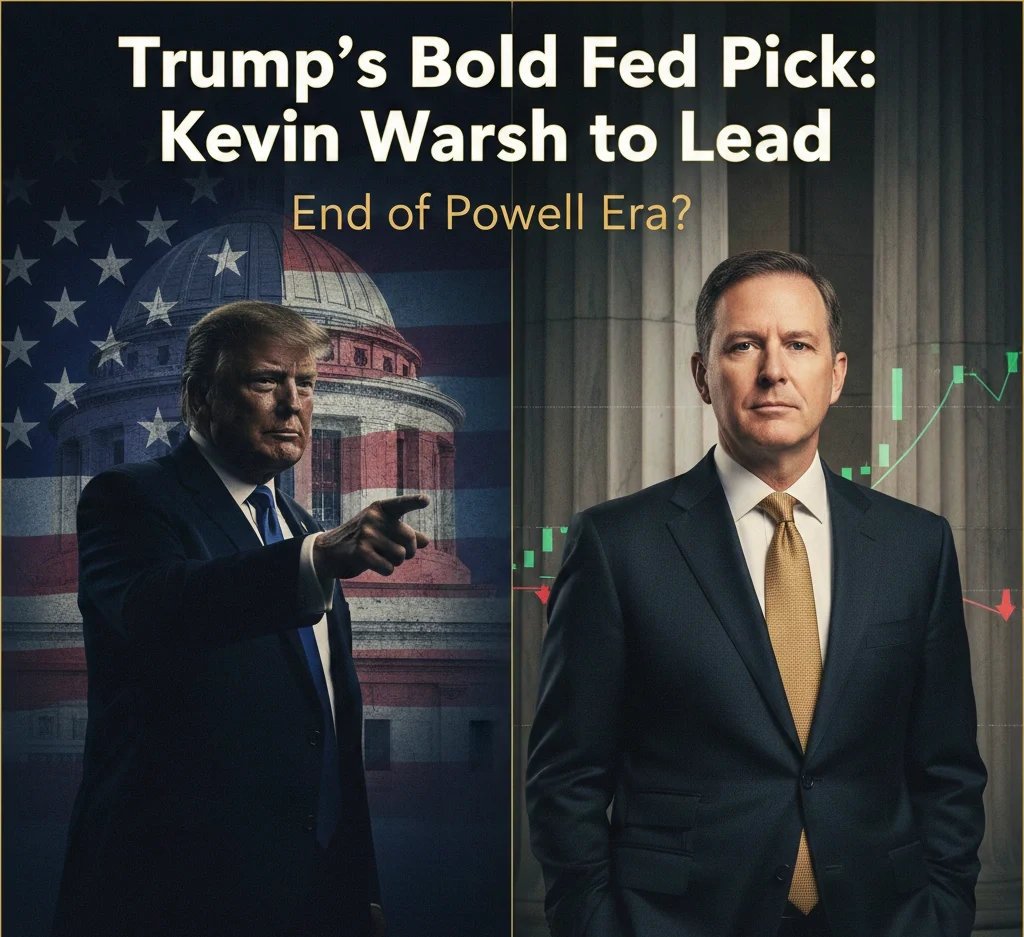
President Donald Trump announced Friday morning that he is nominating Kevin Warsh to succeed Jerome Powell as Federal Reserve Chair CNBC, bringing to a close a five-month search process that has been as much political theater as personnel decision. The choice represents a superficially conventional selection—Warsh is a former Fed governor with crisis-era credentials—yet it arrives at one of the most fraught moments in the central bank’s modern history, raising fundamental questions about monetary policy independence, interest rate trajectory, and the future of American economic governance.
“I have known Kevin for a long period of time, and have no doubt that he will go down as one of the GREAT Fed Chairmen, maybe the best,” CNBC Trump wrote on Truth Social. “On top of everything else, he is ‘central casting,’ and he will never let you down.” CNBC
The nomination of the 55-year-old economist, Wall Street veteran, and Stanford scholar marks a homecoming of sorts for someone who nearly secured the role eight years ago. Yet Warsh returns to a Federal Reserve under siege—facing a Justice Department criminal investigation of Powell, a Supreme Court case testing presidential power over Fed governors, and relentless political pressure from a president who has made aggressive rate cuts a centerpiece of his economic agenda.
Who Is Kevin Warsh?
Warsh’s biography reads like a textbook case study in American financial elite formation. Born in Albany, New York, in 1970, he earned his undergraduate degree in public policy from Stanford University and a law degree from Harvard before joining Morgan Stanley’s mergers and acquisitions department in 1995, where he rose to executive director.
His transition to public service came in 2002 when President George W. Bush appointed him Special Assistant for Economic Policy and Executive Secretary of the National Economic Council. Four years later, at just 35, Bush nominated him to the Federal Reserve Board of Governors, making him the youngest person ever to hold that position—a distinction that remains today.
Warsh’s tenure coincided with the eruption of the 2008 financial crisis, where he served as Chairman Ben Bernanke’s primary liaison to Wall Street Wikipedia and played a pivotal role in crisis management. Bernanke later wrote that Warsh, “with his many Wall Street and political contacts and his knowledge of practical finance,” was among his “most frequent companions on the endless conference calls through which we shaped our crisis-fighting strategy.” Wikipedia
During the September 2008 chaos, Warsh helped engineer the conversion of his former employer Morgan Stanley into a bank holding company, effectively saving the firm from collapse. His Wall Street pedigree and Republican credentials made him invaluable during a crisis that required swift, unconventional action.
Yet Warsh’s Fed tenure ended in controversy. By 2011, he had become increasingly concerned that quantitative easing would lead to inflation Britannica and publicly broke with Bernanke over the second round of bond purchases (QE2). His resignation that March, seven years before his term was set to expire, signaled a fundamental disagreement over the central bank’s post-crisis direction.
Since leaving the Fed, Warsh has served as a Distinguished Visiting Fellow at Stanford’s Hoover Institution, worked with billionaire investor Stanley Druckenmiller at Duquesne Family Office, and sat on the board of directors for UPS. He also conducted an influential independent review of the Bank of England’s monetary policy framework, whose recommendations were adopted by Parliament.
The Nomination Process: A Reality-Show Search
Trump’s search for Powell’s successor has been anything but conventional. Treasury Secretary Scott Bessent led a process that at one point considered eleven candidates spanning from former and current Fed officials to prominent economists and Wall Street pros CNBC. The field was eventually narrowed to four finalists: Warsh, current Fed Governor Christopher Waller, BlackRock fixed income executive Rick Rieder, and National Economic Council Director Kevin Hassett.
For months, Hassett appeared to be the front-runner—a veteran Republican economist with strong White House visibility. But Trump’s frequent media appearances praising “the two Kevins” kept Warsh in contention, and the president ultimately decided he couldn’t afford to lose Hassett from his current role. “A lot of people think that this is somebody that could have been there a few years ago,” Euronews Trump told reporters Thursday evening, fueling speculation that had already reached fever pitch.
Bloomberg reported Thursday night that Warsh had visited the White House, sending prediction markets into overdrive. By Friday morning, betting platforms showed Warsh’s odds exceeding 85%.
Market Reaction: Hawkish Credentials Meet Dovish Expectations
Financial markets responded to Warsh’s likely nomination with a complex mixture of relief and apprehension. Stocks fell with US Treasuries as the administration prepared the announcement, a choice viewed as more hawkish than other contenders. Gold slid 2.8% and the dollar gained Bloomberg on Thursday evening as speculation mounted.
The market’s ambivalence reflects Warsh’s inherent contradictions. His historical reputation is that of an inflation hawk who consistently warned of price pressures that never materialized during his 2006-2011 tenure. In September 2009, with unemployment at 9.5% and climbing, Warsh argued that the Fed should begin pulling back on its recovery efforts Wikipedia, warning of an “excessive surge in lending” that could fuel inflation. That inflation never appeared, leading critics like University of Oregon Professor Tim Duy to suggest Warsh prioritized Wall Street over Main Street.
Yet Warsh’s recent rhetoric has shifted markedly. In a Wall Street Journal op-ed last year, he argued that the Fed should “discard its forecast of stagflation” Yahoo! and acknowledged that artificial intelligence would be a “significant” disinflationary force boosting productivity. He has publicly supported lower interest rates—precisely what Trump demands.
This hawkish-to-dovish evolution has left analysts divided. “If the nominee is indeed Warsh, we could actually end up with a Fed that tilts hawkish at the margin,” MarketScreener said Sonu Varghese, global macro strategist at Carson Group. Yet Trump himself has insisted, “He thinks you have to lower interest rates” Yahoo!—his key litmus test for the role.
Commonwealth Bank strategist Kristina Clifton noted the dollar’s rise reflected expectations that Warsh “is a little bit less dovish than perhaps Kevin Hassett” and would “perhaps preserve a little bit more of the Fed’s independence than some of the other candidates would.” MarketScreener
The Independence Question: A Central Bank Under Siege
Warsh’s nomination arrives at a moment of unprecedented political pressure on the Federal Reserve. The Justice Department’s criminal investigation of Powell over testimony regarding the Fed’s $2.5 billion headquarters renovation—the first such probe of a sitting Fed chair—has shocked senators from both parties and raised alarms about central bank independence.
Powell argued the investigation was part of an attempt to intimidate the Fed for its interest rate decisions, undermining its independence. Euronews The probe has created a toxic confirmation environment, with Republican Senator Thom Tillis of North Carolina vowing to block any Fed nominee until the investigation is resolved. “I will oppose the confirmation of any nominee for the Fed—including the upcoming Fed Chair vacancy—until this legal matter is fully resolved,” CNBC Tillis declared.
Alaska Senator Lisa Murkowski has joined Tillis in opposition, potentially creating a mathematical problem for Warsh’s confirmation. With 53 Republicans in the Senate but at least two defections, passage is no longer assured—particularly given likely united Democratic opposition, intensified by Trump’s attempt to fire Fed Governor Lisa Cook.
Warsh himself has sent mixed signals on independence. In an April 2025 speech to the Group of Thirty and International Monetary Fund, he called Fed independence “important and worthy” NPR but argued the central bank had weakened its case by overreaching its mandate. “Our constitutional republic accepts an independent central bank only if it sticks closely to its congressionally-directed duty and successfully performs its tasks,” NPR he stated.
More provocatively, Warsh has accused the Fed under Powell of “using independence as a shield from accountability” and said members should “grow up” and “be tough” in the face of criticism. The Hill Such rhetoric suggests a willingness to challenge institutional norms—precisely what troubles defenders of Fed autonomy.
Monetary Policy Implications: Lower Rates, Smaller Balance Sheet
If confirmed, Warsh would inherit a Federal Reserve navigating treacherous terrain. The central bank has cut its benchmark rate by 1.75 percentage points since September 2024, bringing it to a range of 3.5% to 3.75%. Yet inflation remains a good deal from the Fed’s 2% target CNBC, while the labor market has cooled into what economists describe as a “no-fire, no-hire” equilibrium.
Trump wants rates far lower—he has called for rates as low as 1%, compared to the current 3.6% range. Markets, however, expect caution. Traders are pricing in at most two more cuts this year before the benchmark fed funds rate lands around 3% CNBC, which policymakers view as the long-run neutral rate.
Warsh’s distinctive policy combination—lower rates paired with aggressive balance sheet reduction—sets him apart from conventional dovishness. He believes AI-driven productivity gains are disinflationary, justifying aggressive rate cuts, while arguing the Fed’s balance sheet has subsidized Wall Street and should shrink significantly. Yahoo Finance
This approach could reshape the liquidity environment that has supported risk assets since 2008. The Fed’s balance sheet currently stands at roughly $6.5 trillion, down from $8.9 trillion in 2022. Warsh’s anti-quantitative easing stance suggests further reductions ahead, potentially pressuring equity valuations and cryptocurrencies that have historically risen alongside Fed balance sheet expansion.
Australian strategist Damien Boey captured market uncertainty: “The trade-off that he makes with lower rates is that he wants the Fed to have a smaller balance sheet. The markets are reacting as if thinking: ‘What would the world look like with a smaller Fed balance sheet?'” MarketScreener
Historical Context: Echoes of Volcker, Bernanke, and Powell
Warsh’s nomination invites comparison to previous Fed leadership transitions. Like Paul Volcker before Ronald Reagan appointed Alan Greenspan, Powell faces replacement by a president demanding different priorities. Yet unlike Volcker, who left voluntarily after taming inflation, Powell is being ousted while price pressures remain elevated and his term as governor extends until early 2028.
Powell could follow the unconventional path of staying on as a regular governor—a move that would allow him to serve as what some describe as “a bulwark against Trump’s efforts to compromise Fed independence.” CNBC Most Fed chairs have resigned their board positions upon losing the chairmanship, but Powell’s potential decision to remain would reflect the extraordinary circumstances of Trump’s pressure campaign.
Warsh’s relationship with his own mentor, Ben Bernanke, offers instructive precedent. Despite working closely during the crisis, Warsh ultimately broke with Bernanke over QE2, suggesting an independent streak. Yet his recent alignment with Trump’s preferences raises questions about whether he would resist presidential pressure more effectively than Powell has.
JPMorgan Chase CEO Jamie Dimon—rarely effusive about Fed nominees—reportedly said at a private December conference that Warsh would make “a great chair,” a rare endorsement carrying significant weight in financial circles.
Global Ramifications and the Dollar’s Future
Warsh’s potential Fed leadership extends beyond domestic implications. As a former Fed representative to the G-20 and emissary to Asian economies, he brings international credentials that could prove valuable as Trump pursues an aggressive tariff agenda.
“A Warsh appointment would not only play to the view that Fed independence will be protected, it would also play to the view that whilst some reforms should be expected, it’s not going to really dramatically change the Fed,” MarketScreener noted a strategist at Oversea-Chinese Banking Corp.
The dollar’s initial strength following Warsh speculation reflected confidence in his hawkish pedigree. Yet sustained dollar performance will depend on whether Warsh delivers the aggressive rate cuts Trump demands or maintains the data-dependent approach that has characterized modern Fed policy.
The Path Forward: Confirmation, Implementation, and Consequences
Warsh’s confirmation hearing will likely prove contentious. Senators will probe his evolution from inflation hawk to rate-cut advocate, question his ties to Trump through his father-in-law Ronald Lauder (a major Republican donor), and press him on Fed independence. The Tillis blockade adds procedural complexity, potentially delaying confirmation until the Powell investigation concludes—if it ever does.
Should Warsh clear the Senate, he would face immediate challenges. The Federal Open Market Committee consists of 12 members—seven governors and five rotating regional Fed bank presidents. Building consensus for Trump’s preferred policies among career central bankers skeptical of political interference will test Warsh’s leadership and diplomatic skills.
Moreover, Powell’s potential decision to remain as a governor would create an unusual dynamic: a displaced chair serving alongside his successor, potentially marshaling opposition to policies he views as imprudent. This scenario has no modern precedent and could produce public disagreements that undermine market confidence.
The broader economic backdrop compounds these challenges. Trump’s tariff policies are widely viewed as inflationary, creating tension between the president’s demand for lower rates and the Fed’s price stability mandate. Warsh’s argument that tariffs represent one-time price level adjustments—a view increasingly echoed by some Fed officials—could provide intellectual cover for rate cuts despite elevated inflation. Yet if price pressures persist, Warsh would face the uncomfortable choice between accommodating presidential preferences and fulfilling his statutory mandate.
Conclusion: Continuity, Disruption, or Something In Between?
Kevin Warsh’s nomination represents a paradox wrapped in conventional credentials. On paper, he is precisely the sort of figure markets should find reassuring: a former Fed governor with crisis management experience, academic standing, and bipartisan relationships. His selection over more unconventional candidates like Hassett or outsiders without central banking experience suggests Trump ultimately opted for establishment continuity.
Yet Warsh’s recent rhetoric, his willingness to challenge institutional norms, and his alignment with Trump’s policy preferences signal potential disruption ahead. The combination of lower rates and aggressive balance sheet reduction could reshape American monetary policy in ways that echo his earlier opposition to quantitative easing—only now with presidential blessing rather than opposition.
The ultimate test will be whether Warsh can reconcile his historical hawkishness with Trump’s dovish demands, maintain the Fed’s credibility amid unprecedented political pressure, and navigate economic conditions that may not cooperate with anyone’s preferred policy path. As Financial Times readers know, central banking is ultimately about expectations management—and Warsh inherits an institution whose independence, credibility, and policy framework are all under question.
Markets appear to be pricing in cautious optimism: a Chair who understands financial stability, respects institutional process, yet remains sympathetic to growth-oriented policies. Whether that optimism proves justified may depend less on Warsh’s intentions than on economic realities, political pressures, and the still-unresolved question of what Fed independence means in the Trump era.
The coming months will reveal whether this conventional choice produces unconventional outcomes—or whether the guardrails of institutional process, market discipline, and economic constraints ultimately force convergence toward the cautious, data-dependent approach that has characterized modern central banking. For investors, policymakers, and citizens alike, Warsh’s tenure—should he be confirmed—will offer a defining test of American economic governance at a moment when both inflation and political pressure remain uncomfortably elevated.
Discover more from The Economy
Subscribe to get the latest posts sent to your email.


In an era defined by global economic volatility, supply chain fracturing, and the relentless search for post-pandemic growth drivers, middle powers face a stark choice: passively import technological paradigms dictated by foreign tech superpowers or aggressively architect a sovereign framework that harnesses next-generation efficiencies. Under Prime Minister Anthony Albanese, Australia has chosen the latter.
Navigating the delicate equilibrium between accelerating productivity gains and enforcing robust governance, the Albanese administration’s strategic pivot toward artificial intelligence (AI) has emerged as a compelling blueprint for modern statecraft. Far from a mere policy footnote, Australia’s calculated embrace of AI integration is positioning the nation’s economy for an unprecedented transformation—one projected to inject billions into the domestic ledger while safeguarding social cohesion.
The Productivity Imperative: Bridging the Gap
For years, advanced economies have grappled with sluggish productivity growth—a trend that has severely tested traditional fiscal and monetary levers. Australia has been no exception, confronting multi-decade lows in labour productivity growth that have squeezed profit margins, constrained real wage progression, and fueled cost-of-living anxieties.
Enter artificial intelligence. Economic modelling highlights that large-scale AI adoption could unlock up to AUD $142 billion annually for the Australian economy by 2030, serving as a multi-factor productivity catalyst. Rather than viewing technological automation as a displacement threat, Canberra’s policy machinery has reframed AI as an essential force multiplier across key national sectors—from mining optimisation and agricultural tech to precision manufacturing under the Future Made in Australia agenda.
Small and medium-sized enterprises (SMEs)—the lifeblood of the domestic economy—stand to gain immensely. By automating administrative burdens, streamlining compliance, and optimising supply chain logistics, AI integration allows local businesses to redirect capital toward innovation and high-value creation.
Pioneering a World-First Regulatory Framework
What separates Australia’s approach from the fragmented regulatory environments of the United States or the heavy-handed compliance models of the European Union is its proactive, harmonised architecture.
In July 2026, the Albanese government unveiled a world-leading national AI framework designed to provide certainty for investors while establishing strict guardrails for ethical deployment. Key pillars of this strategy include:
- Sovereign Standards and Intellectual Property Protection: Australia became a global pioneer by enacting clear protections ensuring that local creative works, literature, music, and journalistic output cannot be scraped for AI training models without explicit artist consent and compensation.
- Streamlined Compliance for Frontier Investments: By establishing unified national standards, the framework cuts through bureaucratic red tape, offering international investors expedited approval pathways conditional on adherence to safety and security benchmarks.
- A Binding Social Licence: The framework emphasises that technology must serve human agency. Ensuring public trust remains paramount; algorithms cannot operate as black boxes when critical public services, employment markets, and national security are involved.
Navigating the Geopolitical and Economic Crosswinds
Australia’s economic strategy does not exist in a vacuum. As great power competition reshapes global trade and globalisation pivots toward regional resilience, Canberra is leveraging its vast reserves of critical minerals, rare earths, and clean energy assets.
AI acts as the computational glue binding these traditional resource strengths with future-facing capabilities. For instance, optimising the extraction and processing of critical minerals required for global energy transitions relies heavily on advanced machine learning models and automated logistics. By coupling its natural resource abundance with top-tier university research and skilled graduate pipelines, Australia is making a compelling pitch to global venture capital: come build here, on Australian terms.
Comparative Strategic Advantages
| Strategic Pillar | Traditional Model | Australia’s AI-Integrated Approach |
| Productivity Driver | Capital investment & raw volume expansion | Multi-factor efficiency via sovereign AI deployment |
| Regulatory Stance | Reactive policy or unbridled laissez-faire | Proactive, world-first unified national standards |
| Workforce Strategy | Reliance on lagging skills adaptation | Empowering workers through institutional AI literacy and secure transitions |
| IP & Innovation | Lax protections for digital creators | Enforceable ownership rights over AI training inputs |
The Road Ahead: Can Australia Stick the Landing?
While the macroeconomic projections are dazzling, translating policy ambition into structural reality carries inherent risks. The success of Albanese’s vision will ultimately be judged by execution metrics over the remainder of the decade:
- Skills Alignment: Ensuring that the national education and vocational training sectors can rapidly upskill workers to meet the demands of an AI-augmented labour market.
- Cybersecurity Resilience: As critical infrastructure becomes increasingly digitised and reliant on automated machine-learning networks, national security frameworks must scale defensively to prevent state-sponsored cyber exploitation.
- Equitable Distribution: Ensuring that productivity dividends do not concentrate solely within major metropolitan tech hubs, but actively flow to regional communities and working-class Australians.
Conclusion
Australia’s economic narrative under the Albanese administration is shedding the old tropes of the “lucky country” relying purely on cyclical commodity booms. Instead, it is writing a new chapter of purposeful economic design. By harmonising technological disruption with rigorous ethical standards and worker-centric policies, Australia is proving that middle powers do not have to be passive spectators in the digital revolution—they can help write the rules of the game.
Discover more from The Economy
Subscribe to get the latest posts sent to your email.

For decades, the global dominance of the U.S. dollar has rested on two primary pillars: deep, unencumbered liquid capital markets and an indispensable global financial messaging protocol known as SWIFT. When Beijing launched its e-CNY initiative, Western observers initially framed it as a central bank digital currency (CBDC) designed primarily for domestic surveillance, retail convenience, and financial inclusion.
However, recent strategic moves highlight a far more ambitious objective. As documented by the South China Morning Post, Beijing is actively leveraging Hong Kong as its central offshore laboratory to establish the infrastructure required for international cross-border digital yuan adoption.
The crucial strategic question is no longer whether China can engineer robust distributed ledger architecture, but whether an offshore financial hub operating under “One Country, Two Systems” can bridge the gap between rigid domestic capital controls and global institutional acceptance. To succeed, China must resolve the fundamental tension between absolute monetary sovereignty and the open networks required for international currency adoption.
1. The Paradox of the Offshore Laboratory
China’s monetary expansion faces a well-documented structural paradox. According to macroeconomic research from the Carnegie Endowment for International Peace, no currency can achieve true international reserve status without offering open capital accounts and deep, freely convertible liquidity. Yet, completely relaxing capital controls would expose China’s domestic banking system to volatile international capital flows and speculative pressures.
Hong Kong serves as the pressure valve and testing ground for this paradox:
- Legal & Regulatory Buffer: Hong Kong maintains a trusted common law judicial system and an independent monetary authority (Hong Kong Monetary Authority).
- Convertibility Bridge: It allows mainland authorities to test e-CNY settlement, cross-border retail links, and digital asset integration without opening mainland financial markets directly to global speculative shocks.
- Institutional Liquidity: As the world’s premier offshore renminbi hub, Hong Kong provides the institutional counterparties necessary to build real-world transaction volume.
“The digital yuan’s true test lies not in domestic retail adoption, but in whether foreign counterparties can settle cross-border trade without taking on unacceptable regulatory or capital risks.”
2. Wholesale Settlement and Project mBridge
While retail consumer wallets attract considerable media attention, the real geopolitical shift is occurring at the wholesale institutional level. Strategic initiatives like Project mBridge—developed in partnership with the Bank for International Settlements (BIS), the People’s Bank of China, and regional central banks—demonstrate how multi-CBDC platforms can streamline international trade.
As reported in market analyses by Bloomberg and trade finance studies covered by Reuters, multi-lateral CBDC platforms offer significant operational advantages:
- Elimination of Intermediaries: Direct ledger-to-ledger transactions bypass traditional correspondent banking networks.
- Speed and Efficiency: Cross-border settlement times are reduced from days to seconds.
- Cost Reduction: Transaction costs and foreign exchange spreads across regional trade corridors in Asia and the Middle East are dramatically lowered.
If commercial enterprises operating in Hong Kong can settle trade directly in e-CNY with instant finality, Beijing creates a compelling economic incentive for trade partners that operates independently of Western clearing networks.
3. Geopolitical Implications & The Road Ahead
Western policymakers and central bankers are monitoring these developments closely. Recent congressional testimony and Treasury reviews highlighted by Reuters reflect growing concern in Washington that alternative settlement rails could gradually erode the reach and enforcement of Western financial sanctions.
However, technological capability alone does not guarantee global currency dominance. Until foreign corporate treasuries and central banks have full confidence in converted currency liquidity, property rights, and transparent legal protections, the digital yuan will serve primarily as an efficient alternative mechanism for bilateral trade rather than an immediate replacement for the U.S. dollar.
Institutional Summary & Comparison
| Dimension | Conventional Retail Focus | Wholesale / Strategic Reality |
| Primary Mechanism | Retail e-CNY wallets for tourists & merchants | Multi-CBDC corridors (Project mBridge) & Project Ensemble |
| Core Objective | Domestic payments & payment app competition | Disintermediation of correspondent banking and SWIFT rails |
| Primary Barrier | Consumer habituation & merchant readiness | Capital controls, currency convertibility, and institutional trust |
Sources & Citations
- South China Morning Post: Beijing wants Hong Kong to sow the seeds for the digital yuan
- Bank for International Settlements (BIS): Central Bank Digital Currency (CBDC) & Cross-Border Payments Research
- Carnegie Endowment for International Peace: China’s Financial System and Capital Account Dynamics
- Bloomberg Financial Analysis: Global Macro & Digital Currency Integration
- Reuters News & Analysis: Cross-Border Settlement and Global Trade Finance
Discover more from The Economy
Subscribe to get the latest posts sent to your email.
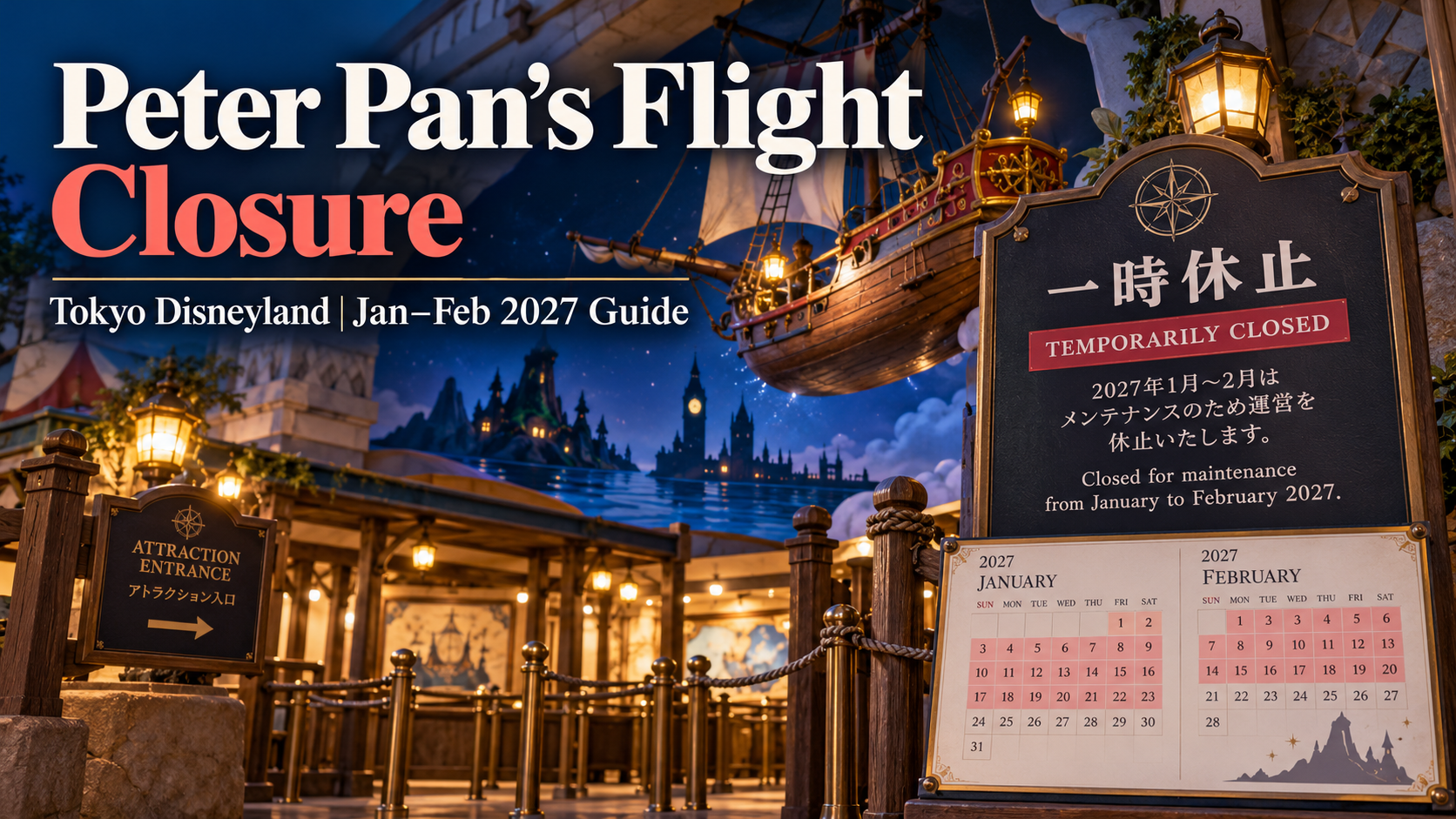
Guests planning a visit to Tokyo Disneyland in early 2027 should put one easily missed detail on their itinerary: Peter Pan’s Flight is scheduled to be temporarily closed from January 6 through February 2, 2027. The operator lists the dates both on its official attraction page and in the Tokyo Disneyland closure schedule. This is a scheduled interruption, not an announcement that the classic ride is being removed permanently. Travelers visiting on dates inside that window should assume the attraction will not be available unless Tokyo Disney Resort publishes a change.
The distinction matters because online references to “Peter Pan closing at Tokyo Disney” can confuse two different parks and two different experiences. Tokyo Disneyland’s Peter Pan’s Flight is a compact Fantasyland ride. Tokyo DisneySea has a separate, newer attraction called Peter Pan’s Never Land Adventure, with its own planned March 2027 maintenance period. The first planning step is making sure the information applies to the ticket you actually bought.
At a glance: what the operator currently says
| Planning question | Verified answer |
|---|---|
| Which attraction? | Peter Pan’s Flight |
| Which park? | Tokyo Disneyland, Fantasyland |
| Scheduled closure starts | January 6, 2027 |
| Scheduled closure ends | February 2, 2027 |
| Reopening expectation | After the listed closure window, subject to operator changes |
| Type of notice | Temporary closure; not announced as permanent |
| Where to recheck | Official attraction listing |
The dates are explicitly labeled as a temporary closure by Tokyo Disney Resort. Do not treat February 3 as an unconditional reopening guarantee: an operator may update maintenance information or temporarily suspend operations for other reasons. Check again shortly before travel and on the day you enter the park.
What is Peter Pan’s Flight?
Peter Pan’s Flight is a dark ride based on the familiar journey from London to Never Land. Guests sit in a flying pirate-ship vehicle that travels through a storybook environment. According to the operator’s ride information, it is in Fantasyland, lasts about two and a half minutes and carries two people per vehicle. It operates indoors and includes dark spaces. These details make it particularly appealing to families who want a gentle, classic Disney experience rather than a high-speed thrill ride.
There are restrictions worth noting even on operating days. The published guidance says a guest must be able to maintain a stable seated position independently and that children may not be held on an adult’s lap during the ride. If your group includes young children, anyone needing seating assistance or visitors uncomfortable with darkness, read the official description and accessibility guidance rather than assuming that the attraction suits everyone because it is short.
Short ride duration is not the same as short waiting time. Demand for well-known classics can vary with crowds, operating conditions and holiday schedules, so it is unwise to schedule a tight sequence of unrelated bookings around a predicted queue. The operator’s app and in-park staff can provide current operating information when the ride is available.
The dates around the closure are not interchangeable
A guest visiting January 5 has a fundamentally different planning position from someone arriving January 6. January 5 falls before the currently listed closure, while January 6 is its opening day. A February 2 visit falls on the final listed day of the maintenance window; February 3 is the earliest day after that window, not a contractual promise that the ride will run.
For a family staying at the resort for multiple days, the difference might be worth changing which day is assigned to Tokyo Disneyland. If one day is before January 6 and another is inside the closure, put Disneyland first if the classic Peter Pan ride is a must-do. But do not swap a park ticket or hotel reservation until you understand the applicable change and cancellation conditions. The economic cost of reshuffling an entire trip can exceed the benefit of experiencing one short ride.
A visitor traveling from overseas may be choosing between a single Disneyland day and a DisneySea day. In that case, consider the trip’s overall priorities. Someone who values vintage Fantasyland attractions may still prefer Disneyland even during the closure. Someone traveling expressly for an immersive Peter Pan adventure could be more interested in the DisneySea attraction—but must buy admission to that different park and verify its own operating schedule.
Other Tokyo Disneyland closures during the same period
The official park maintenance listing shows other attractions with early-2027 closure windows that may overlap your visit. At the time of this review, it lists Jungle Cruise: Wildlife Expeditions from January 6 through March 31, Splash Mountain from January 7 through February 4, and Haunted Mansion from January 8 through February 4. These are operator-published schedules, not independent predictions about refurbishment completion.
This makes the Peter Pan closure more significant for certain visitors than a single unavailable ride might suggest. A group that expected several classic experiences in one afternoon could find multiple priorities temporarily inaccessible. Conversely, the park contains many other attractions and entertainment offerings, and the attractions that remain open should be evaluated on their own current descriptions rather than guessed from historical schedules.
It is worth making a small “must ride / would enjoy / optional” list. Mark each attraction against the closure page. Then build flexibility around weather, performance calendars and queue variation. A plan with alternatives is more resilient than a rigid minute-by-minute schedule.
Better alternatives for different kinds of visitors
If the attraction’s appeal is gentle fantasy storytelling, explore other Fantasyland offerings listed in the official Tokyo Disneyland attraction directory. Filter for ride type and height or access restrictions, and read the current operating details. Do not assume that a neighboring attraction will be open merely because it is not listed in an older travel blog.
If the main attraction is Disney character immersion, devote time to character experiences, themed areas, shopping or scheduled entertainment that is actually available on your day. These can preserve the spirit of the trip without pretending they are substitutes for the ride itself. Some guests will prefer to spend the recovered time on a longer headliner; others may value an unhurried lunch and a park exploration that is less vulnerable to queues.
If the trip is built around Peter Pan specifically, Tokyo DisneySea’s Never Land Adventure may appear attractive. But it is not the same ride: it is a 3D boat-based experience in Fantasy Springs, with different restrictions and a different length. Tokyo Disney Resort’s DisneySea attraction page is the reliable way to compare them. Admission, access arrangements and the day’s capacity remain separate questions.
Parents should also avoid overstating the value of a replacement to children. “Another attraction has pirates” does not make it the planned Peter Pan experience. Setting expectations before entering the park is often more effective than negotiating disappointment in a crowded queue area.
Are refunds or ticket changes automatic?
The announcement of an attraction’s temporary closure does not itself demonstrate that every guest is entitled to a ticket refund or a date change. Theme-park tickets ordinarily grant admission subject to operating conditions, not a binding guarantee that every individual ride will operate. Actual ticket terms, package conditions and any operator-specific accommodation policy govern what can be changed.
Before buying or modifying a pass, review the official Tokyo Disney Resort ticket and reservations guidance and any reseller’s terms. A third-party package might combine transport, hotel rooms and tickets under separate cancellation rules. You should not rely on the statement “ride closed” as a universal reason for a penalty-free cancellation.
If your booking is complex, write down the name of the supplier, reservation reference, exact park date and type of admission. Seek a written answer before paying a change fee. This is particularly important if you plan to move only one day of a multi-day trip and keep the remainder unchanged.
Does Disney Premier Access help during the closure?
No paid queue-management product can make an attraction operate while it is closed. Disney Premier Access is a separate, paid tool for eligible operating experiences; eligibility and availability can change. The official Premier Access guide explains that places may sell out and that the price does not include park admission. It should not be marketed to families as a guaranteed workaround for a published maintenance closure.
The app can nevertheless be useful for other attractions and live operating information. If a ride is unavailable, remove it from the day’s queue-management plan and redirect attention to attractions genuinely offered that day. Check the current product terms before purchasing any additional access.
How to build a more reliable 2027 itinerary
Start with the official attraction closure list rather than the social-media version of it. Choose a date, read the list for the correct park, then check the pages for the two or three attractions most important to your group. If several favorites overlap with closures, compare another travel day, but preserve buffer time and cost limits.
Once you have a provisional itinerary, check whether your whole group can experience the alternatives. A family with a toddler and grandparents may have different needs from a group of teenagers. Ride seating rules, dark environments, height restrictions and walking distances deserve attention before buying optional upgrades.
A week before departure, look at the operator’s park calendar and attraction pages again. On the morning of your visit, follow current app information and staff instructions. Write down a backup plan that does not depend on a single ride reopening on the first conceivable day.
Quick visitor questions
Is Peter Pan’s Flight shutting permanently? The published notice says temporary closure January 6–February 2, 2027. It does not announce permanent removal.
Is it in Tokyo Disneyland or DisneySea? Peter Pan’s Flight is in Tokyo Disneyland’s Fantasyland. DisneySea has the separate Never Land Adventure.
Can I ride on February 2? The current listing includes February 2 in the closure window. Do not plan on riding that day.
Is February 3 the official reopening day? It is the first day after the presently announced closure period, assuming the dates are unchanged. Confirm the park’s live information rather than treating operation as guaranteed.
Should I change my trip? That depends on how important this specific ride is compared with hotel, flights, admission and other attractions. For most travelers, adjusting priorities within the same park is the lower-risk first option.
Final planning advice
This news is not a farewell to Peter Pan’s Flight. It is a defined, temporary gap in the operating calendar. The useful response is to check your exact visit date, compare the rides your family actually cares about and keep a realistic alternative ready. Tokyo Disneyland can still be an appealing destination during the listed closure; the difference between an enjoyable trip and a frustrating one may simply be accurate expectations.
Discover more from The Economy
Subscribe to get the latest posts sent to your email.

Economic Globalization: How Global Trade Shapes the US Economy, Jobs, and Consumers

Best Life Insurance Companies in the United States 2026: Our Top 5 Picks

Pakistan Auto Policy 2026-31 Explained: EV Tax Cuts, $6 Billion Export Target

When Dollar Debt and Food Imports Collide: The Currency Squeeze

Why Freight and Storage Costs Keep Food Prices High After Oil Falls

Personal Injury Lawyer Near Me in NYC: How to Find the Right Attorney After an Accident

Why Falling World Food Prices Do Not Always Lower Grocery Bills

Oil Shocks and Core Inflation: Why the Two Move Differently

Singapore Cannot Fight Financial Fraud by Making Victims Bear the Risk Alone

Singapore Banking’s Real Test: Beyond Profits, Who Will Safeguard Financial Trust?

Nvidia’s Share Price Is Not a Scorecard for Singapore’s AI Future

The Australian Dollar Is Not Asia’s Oracle. Singapore Should Listen Anyway

Singapore’s Bank Sell-Off Is Really a Test of What Stability Is Worth

Why a Weaker Currency Makes Imported Food More Expensive

Dow Jones Today: Dow Slips 237 Points After the Worst Day Since April 2025

US–Iran Conflict in October 2026: Hormuz, Oil Prices and Diplomacy

Pakistan IMF Programme 2026: Why Bailouts Keep Returning

SSI November 2026 Payment: Why Benefits Arrive October 30

US–China AI Export Controls in 2026: Chips, Testing Rules and Corporate Risk

2027 Federal Tax Brackets: New IRS Rates and Standard Deductions Explained

Singapore Stock Market Outlook 2027: The STI’s Bank-and-Yield Test

World Bank Debt Report 2026: The $9.4 Trillion Burden Behind the Recovery

Stock Market Crash 2026? What the November Rout Actually Tells Us

IMF Global Outlook 2027: The Recovery Is Real, but the Divide Is Growing

KSE-100 Index 2026: Is Pakistan’s Stock-Market Recovery Sustainable?

Germany–France ‘Made in Europe’ Deal Could Reshape China’s EV Ambitions

Power Grid Emergency Across 13 States? What the October 2026 PJM Order Actually Says

Global Finance 2027: Debt, Inflation and AI Are Pulling the Economy Apart
-

 Markets & Finance10 months ago
Top 15 Stocks for Investment in 2026 in PSX: Your Complete Guide to Pakistan’s Best Investment Opportunities
-

 Analysis9 months ago
Johor’s Investment Boom: The Hidden Costs Behind Malaysia’s Most Ambitious Economic Surge
-

 Analysis9 months ago
Top 10 Stocks for Investment in PSX for Quick Returns in 2026
-

 Banks10 months ago
Best Investments in Pakistan 2026: Top 10 Low-Price Shares and Long-Term Picks for the PSX
-

 Analysis9 months ago
Brazil’s Rare Earth Race: US, EU, and China Compete for Critical Minerals as Tensions Rise
-

 Investment10 months ago
Top 10 Mutual Fund Managers in Pakistan for Investment in 2026: A Comprehensive Guide for Optimal Returns
-

 Global Economy11 months ago
15 Most Lucrative Sectors for Investment in Pakistan: A 2025 Data-Driven Analysis
-

 Global Economy11 months ago
Pakistan’s Export Goldmine: 10 Game-Changing Markets Where Pakistani Businesses Are Winning Big in 2025