
Insurance
Best Life Insurance Companies in the United States 2026: Our Top 5 Picks


Our 2026 shortlist of the best life insurance companies in the United States: Northwestern Mutual, New York Life, MassMutual, State Farm and Prudential, and how to choose between them.
The best life insurance company in the United States depends far less on the name on the policy than on the type of cover you need and the person who sells it to you. For 2026, we would shortlist five:
- Northwestern Mutual and New York Life for permanent, dividend-paying whole life from two of the strongest balance sheets in the industry. Both hold the top financial-strength rating from all four major agencies (Northwestern Mutual, New York Life).
- MassMutual for whole life with a dividend history and an online term option through its Haven Life arm (MassMutual).
- State Farm if you would rather add life coverage to the home and auto policies you already have (State Farm).
- Prudential for fast, no-medical-exam term life, quoted online (Prudential).
Here is the catch, and it is the whole point of this piece: the J.D. Power 2026 U.S. Individual Life Insurance Study puts Nationwide (701), State Farm (692) and Mutual of Omaha (680) on top for customer satisfaction, against an industry average of 649. Two of the three strongest brands on that list do not appear in most “biggest insurer” rankings, and the two safest balance sheets on ours (Northwestern Mutual and New York Life) do not top the satisfaction list. For most buyers, the policy you choose and the agent you get matter more than the company badge.
How we ranked the best life insurance companies in the United States
We compared the five on four things:
- Financial strength – the ratings from agencies like AM Best, Fitch, Moody’s and S&P that decide whether a claim decades from now actually gets paid.
- Product range and how easy it is to buy – from a same-day approved whole life application to a five-minute online term quote.
- Scale and longevity – revenue, assets and how long the company has been paying claims and dividends.
- What customers say – taken from the J.D. Power 2026 U.S. Individual Life Insurance Study, which surveyed 6,145 life-insurance customers between July 2025 and July 2026.
Where a company does not publish something, we say so rather than guess. Every figure below links to the source it came from. This is independent editorial, not financial advice, and no insurer paid for its place.
| Company | Best for | Ownership | Financial strength | How you buy |
|---|---|---|---|---|
| Northwestern Mutual | Dividend-paying whole life | Mutual (policyholder-owned) | Top rating from all four agencies – A++, Aa1, AA+ | Through an advisor |
| New York Life | Whole life from the largest US mutual | Mutual (policyholder-owned) | A++ (AM Best), AAA (Fitch), Aaa (Moody’s), AA+ (S&P) | Through an agent |
| MassMutual | Whole life plus an online term option | Mutual (policyholder-owned) | Not stated in the sources we reviewed | Through a financial professional, or Haven Life online for term |
| State Farm | Bundling life with home and auto | Mutual (policyholder-owned) | Not stated in the sources we reviewed | Through a 19,000-agent network (Wikipedia) |
| Prudential | Fast, no-medical-exam term life | Public (NYSE: PRU) | Not stated in the sources we reviewed | Online quote, or through an advisor |
1. Northwestern Mutual – best for dividend-paying whole life
Best for: buyers who want a permanent policy that builds guaranteed cash value and has shared profits with policyholders since 1872 (Northwestern Mutual).Northwestern Mutual’s life insurance page, captured live from northwesternmutual.com
Northwestern Mutual is a mutual, which means it is owned by its policyholders rather than shareholders, and it has paid dividends every year since 1872. It expects to pay $10.4 billion in dividends in 2027 (Northwestern Mutual). The company sells whole, universal, variable universal and term life; term is written for a set period such as 10 or 20 years and can be converted to permanent cover later (Northwestern Mutual).
Its balance sheet is the reason it tops this list. It holds the highest financial-strength ratings awarded to any US life insurer by all four major agencies – cited as A++, Aa1 and AA+ – and reported $41.2 billion in revenue and $497 million in net income for 2025, ranking No. 110 on the Fortune 500 and in the top 30 US companies by assets held (Northwestern Mutual, Wikipedia). Named riders include Waiver of Premium, an Additional Purchase Benefit that lets you buy more cover at set ages or life events regardless of health changes, and an Accelerated Care Benefit that lets you draw on the death benefit early for qualified long-term care (Northwestern Mutual).
Northwestern Mutual does not publish premiums; they are set case by case through health and lifestyle questions during the advisory process, though some applications can be approved as soon as the same day (Northwestern Mutual).
Our take: the strongest overall choice if you have already decided on permanent cover and want a mutual’s dividend record behind it. It is a poor fit if you want cheap term life and a five-minute online quote, since everything here runs through an agent. Worth knowing: in 2025 a Guardian investigation alleged the company pushed interns into aggressive sales of expensive whole life policies to their personal contacts (Wikipedia) – which is a reason to be clear about what you are buying, not a reason to avoid the balance sheet.
2. New York Life – best for whole life from the largest US mutual
Best for: buyers who want a straightforward, permanent whole life policy from the largest mutual life insurer in the country.New York Life’s life insurance page, captured live from newyorklife.com
New York Life is the second-largest life insurer and the largest mutual life insurer in the United States, founded in 1845 and owned by its policyholders with no outside shareholders (Wikipedia). Like Northwestern Mutual it holds the best possible rating from all four agencies in 2025 – A++ from AM Best, AAA from Fitch, Aaa from Moody’s and AA+ from S&P – and it has paid a dividend every year since 1854 (Wikipedia).
It writes term, whole, universal and variable universal life, plus an “accumulation-focused” category aimed at longer-term goals such as retirement, alongside the core whole life product. Its own comparison table is refreshingly blunt about the difference between the types: term premiums “gradually increase after a certain period”, whole life premiums are “always the same amount”, and only whole life lists potential dividend earnings (New York Life).
The financials are large and stable: $27.19 billion in revenue and $470 million in net income for 2024, total assets of $244.9 billion, and a No. 69 rank on the 2025 Fortune 500 (Wikipedia). Distribution is agent-led – the main call to action on its site is “Connect with an agent” – and prices are not published (New York Life).
Our take: the pick if you want whole life from a household-name mutual and are happy to work with an agent. If a fast online term quote is what you are after, this is the wrong door; go to Prudential or MassMutual’s Haven Life. The company’s own history is also worth naming: it insured enslaved people’s lives for their owners in 1846-1848 before the board ended the practice, and its president was forced out in 1905-06 after the Armstrong investigation into bribery (Wikipedia).
3. MassMutual – best for whole life with an online term option
Best for: buyers who want a dividend-paying whole life policy for the long haul, but would like a no-fuss online route for simple term cover.MassMutual’s life insurance page, captured live from massmutual.com
MassMutual is a mutual insurer founded in 1851 in Springfield, Massachusetts, with the same policyholder-owned structure as the others (Wikipedia). It offers four types: term (often 10, 20 or 30 years), whole life, universal life and variable universal life. Of the four, only whole life is explicitly linked to dividends, and the page says plainly that “dividends are not guaranteed” (MassMutual).
Two details matter for a buyer. First, its term policies carry guaranteed premiums, while its universal life policies have flexible premiums with only “some” guarantees (MassMutual). Second, MassMutual owns Haven Life, a 2015 subsidiary that sells term life only, aimed at the online, no-medical-exam market (Wikipedia) – a useful middle path if you want a mutual behind the policy without a sit-down with an agent.
On scale, MassMutual recorded $10.7 billion in revenue in 2022 and ranked 100th on that year’s Fortune 500, with over 8,000 financial professionals (Wikipedia, MassMutual). Its financial-strength ratings did not appear in the sources we reviewed, and its Wikipedia entry is internally inconsistent on assets under management ($466 billion in the infobox against $312 billion in the body) (Wikipedia) – so treat the headline size numbers with a little caution.
Our take: a strong whole life option with a genuine online escape hatch for term. The dividend record is shorter than New York Life’s or Northwestern Mutual’s, and the company’s history includes Tremont Capital, a Madoff feeder fund that lost $3.3 billion (Wikipedia).
4. State Farm – best for bundling life coverage with home and auto
Best for: existing State Farm customers who want life cover in the same place as their home and car insurance and who value a local agent.State Farm’s life insurance page, captured live from statefarm.com
State Farm is the largest property and casualty insurer and the largest auto insurer in the United States, so life insurance is a smaller line inside a very large business (Wikipedia). It sells term, whole and universal life through more than 19,000 agents (Wikipedia), and its permanent policies carry tax-deferred cash value with level premiums (State Farm).
The bundling case is the whole point. If you already hold State Farm home and auto policies, adding life cover keeps one agent, one billing relationship and one claim process. Customers who bought a new life policy since 1 January 2022 can also earn rewards through the Life Enhanced app, though policyholders in Florida, New York and South Dakota are not eligible for the full programme (State Farm).
The company’s size is not in doubt: $104.2 billion in revenue in 2023 and a No. 39 rank on the 2024 Fortune 500 (Wikipedia). But that same year it posted a net loss of $6.3 billion, driven by its property-casualty book (Wikipedia). It does not publish life premiums or term lengths on the hub page; quotes start by selecting your state.
It also does well where customers notice: second place, at 692, in the J.D. Power 2026 study (J.D. Power).
Our take: the pick if convenience and an existing relationship matter more than a specialist’s product depth. It is not the cheapest way to buy pure term life, and a property-casualty-heavy balance sheet is a different kind of risk from a life-only mutual.
5. Prudential – best for fast, no-medical-exam term life
Best for: healthy buyers who want a term policy sorted out online, today, with a big name behind it.

Prudential is the odd one out here as a public company, traded on the NYSE as PRU (Wikipedia). It sells the widest spread of permanent products on this list – universal, indexed universal, indexed variable universal and variable universal life, all carrying no-lapse guarantees – but its most distinctive offer is on the term side: no-medical-exam term life up to $1 million, starting at $10 a month, positioned as going “from quote to covered in minutes” (Prudential).
Two caveats. Issuance can still depend on the health answers in the application, and the on-page quote funnels you to Prudential’s partner, SelectQuote (Prudential). One genuinely useful feature is the BenefitAccess rider, which lets you draw on the policy if you are diagnosed with a chronic illness (Prudential).
As a public company Prudential is large but has a messier record than the mutuals: $60.8 billion in revenue and $3.58 billion in net income for 2025, with $1.512 trillion in assets under management – yet its history also includes an $8 billion investor-fraud finding at Prudential Securities in the 1990s and a 1997 class action over unnecessary life insurance sales that called for roughly $2 billion in repayments (Wikipedia). More recently, its Japanese life subsidiary suspended new sales through November 2026 after an employee-misconduct investigation (Wikipedia).
Our take: the best route on this list if you want term life quickly and without a medical exam. If you want permanent cover and a mutual’s dividend record, you are in the wrong section.
The catch: “best” depends on the kind of life insurance you need

All five companies above are strong. But the gap between them matters far less than the gap between the three kinds of policy they sell. Buying the wrong type of life insurance from a great company costs more than buying the right type from a good one. The policy type is the decision; the brand is the detail.
- Term life covers a set period (often 10, 20 or 30 years) and builds no cash value. It is, by a wide margin, the cheapest way to protect a mortgage and young children for the years they depend on you. Every company on this list sells it.
- Whole life is permanent, with level premiums, guaranteed cash value and, at a mutual, dividends. It costs several times more than term for the same death benefit, and it only makes sense for a need that never goes away – an estate bill, a lifelong dependent, or a business succession plan.
- Universal life sits in between: flexible premiums and cash value tied to interest rates, with guarantees that vary by policy.
The insurers make the trade-off unusually clear themselves. New York Life’s own comparison table notes that term premiums “gradually increase after a certain period” while whole life premiums are “always the same amount”, and that only whole life lists potential dividend earnings. MassMutual makes the same point from the other direction, stating twice on its life insurance page that dividends are not guaranteed.
What customers actually say about life insurance companies

Ratings and balance sheets tell you whether a claim will be paid. They do not tell you whether the experience will be pleasant, and the J.D. Power 2026 U.S. Individual Life Insurance Study is the best window into that. It surveyed 6,145 customers between July 2025 and July 2026 across eight dimensions, with trust ranked first.
Two findings are worth carrying into any purchase. First, distribution matters more than branding: centrally distributed and direct-to-consumer plans scored 684, twelve points lower than a year earlier, while distributor-sold policies scored 645, six points higher (J.D. Power). Second, a single bad experience wrecks trust: one negative interaction drops overall trust satisfaction by 96 points (J.D. Power).
Review sites, which capture the unhappy tail that studies average out, can look much darker. New York Life, for example, holds a TrustScore of 1.3 out of 5 from 71 reviews on Trustpilot, and 1.1 out of 5 from 207 reviews on ConsumerAffairs – even as it holds the top financial-strength rating from all four agencies (Trustpilot, ConsumerAffairs). The lesson is not that the company is bad; it is that the strongest balance sheet and the happiest customers are rarely the same company, and you should weigh the two separately.
“Customer service is horrible. It seems to be impossible to connect with my mother’s agent. I have sent documents via email which were received, but apparently, they now have none on file. They will easily take your money but good luck if you need anything from this company.”
- Trustpilot review of New York Life, 21 September 2026 (permalink)
How to buy life insurance without getting oversold

The forums are blunt about where this goes wrong. The most-repeated line in US personal-finance communities is “buy term and invest the difference”, and the objection is rarely to the companies – it is to the advice:
“Why whole life? Whole life policies are one of the worst insurance products on the market. Buy term and invest the difference.”
- r/LifeInsurance, thread on a Northwestern Mutual whole life offer
A former agent put the sales dynamic more plainly:
“As a former NYL ins agent, we were trained to tell you life insurance is an investment.”
- r/LifeInsurance, thread “Please help me understand my NYL whole life insurance.”
So here is the order of operations we would follow:
- Decide the type before you talk to anyone. Term, whole or universal. If you have a mortgage and children at home, term almost always wins on cost.
- Work out how much cover you actually need – a common rule of thumb is 10 to 15 times your income, and you can check it against Prudential’s needs calculator.
- Get at least three quotes, and get at least one from an independent broker rather than a captive agent who can only sell one company’s products.
- Ask the agent how they are paid. A commission on a permanent policy is several times the commission on term, which tells you why the recommendation often points one way.
- Check the insurer, not just the price. Look at financial-strength ratings and at a consumer-review profile for complaint patterns, the same way you would before choosing a bank.
- Insurance is not an investment. If a policy is being sold to you as a way to save or retire, get a second opinion before you sign – the tax treatment of the death benefit is real, and so is the 2027 federal tax picture if you are thinking about what your family inherits.
- Buy only for the years someone depends on your income. Cover for a period of life, not forever, is often the honest answer.
More on money and policy from The Economy
The same discipline that applies to a life policy applies across your finances. If you want the background on the safety nets and market questions that shape these decisions, why SSI payments arrive when they do and our calm-investor checklist for a 2026 market wobble are good next reads. For the macro picture behind many of these products, start from The Economy’s front page.
Frequently asked questions about life insurance companies
What is the best life insurance company in the United States?
There is no single best company for everyone, because the type of policy matters more than the name on it. For dividend-paying whole life, Northwestern Mutual and New York Life top this list on financial strength, each holding the highest ratings from all four major agencies. For fast, no-medical-exam term life, Prudential is the easiest place to start, and for bundling life cover with home and auto, State Farm is the natural fit.
Is term or whole life insurance better?
Term life is far cheaper for the same death benefit and is usually the right choice while a mortgage and dependent children are why you need cover. Whole life is permanent, builds guaranteed cash value and, at a mutual insurer, may pay dividends, which suits needs that never go away, such as estate costs or a lifelong dependent. New York Life’s own comparison notes that term premiums rise after a set period while whole life premiums stay level.
Which life insurance company has the best customer satisfaction?
In the J.D. Power 2026 U.S. Individual Life Insurance Study, Nationwide scored highest at 701, followed by State Farm at 692 and Mutual of Omaha at 680, against an industry average of 649. The strongest balance sheets and the happiest customers are often different companies, so weigh financial strength and service quality separately.
Do I need a medical exam to get life insurance?
Not always. Prudential sells no-medical-exam term life up to $1 million starting at $10 a month, and MassMutual’s Haven Life arm is built around online, simplified-issue term cover. Issuance can still depend on the health answers in your application, and larger or permanent policies more often require full underwriting.
How much life insurance do I need?
A common rule of thumb is 10 to 15 times your annual income, adjusted for your mortgage, other debts, childcare and the number of years your family would need the money. The exact figure matters less than buying the right type of cover for the years someone depends on your income. For the wider picture, see The Economy.
Discover more from The Economy
Subscribe to get the latest posts sent to your email.



A single slip-and-fall lawsuit against an uninsured small business can wipe out years of profit in one settlement — yet a large share of small business owners still operate without even basic general liability coverage, often simply because no one ever explained clearly what’s actually required versus optional.
Business insurance isn’t a single product — it’s a category spanning general liability, workers’ compensation, professional liability, commercial property, and more, each protecting against different risks. Figuring out which coverage your specific business actually needs, and what it should reasonably cost, is one of the most commonly delayed and misunderstood decisions small business owners face.
This guide breaks down the core types of business insurance, current 2026 cost benchmarks, and how to build the right coverage package without overpaying.
How Business Insurance Actually Works: The Core Coverage Types
Most small businesses don’t need every type of commercial insurance — the right combination depends heavily on industry, whether you have employees, and whether you interact with the public or handle client data.
Key takeaway: General liability insurance isn’t legally required in most states, but it’s often necessary to secure a client contract, obtain a business license, or sign a commercial lease — meaning many business owners end up needing it as a practical requirement of doing business, even without a legal mandate.
The Core Business Insurance Types
- General liability insurance — covers third-party bodily injury, property damage, and personal injury claims arising from your business operations.
- Workers’ compensation insurance — required in most states once you hire employees, covering medical costs and lost wages for work-related injuries.
- Professional liability insurance (errors & omissions) — protects service-based businesses against claims of negligence, mistakes, or failure to deliver promised services.
- Commercial property insurance — covers physical business assets (equipment, inventory, the building itself) against fire, theft, and other covered perils.
- Business Owner’s Policy (BOP) — bundles general liability and commercial property coverage into a single, typically discounted policy.
- Cyber liability insurance — increasingly essential for businesses handling customer payment data or sensitive personal information.
Step-by-Step: Building Your Business Insurance Package
- Assess your specific risk profile — client-facing businesses, those with employees, and those handling sensitive data each face different primary risks.
- Determine legal and contractual requirements — workers’ comp is state-mandated once you have employees, and many commercial leases and client contracts require proof of general liability coverage.
- Get quotes for a Business Owner’s Policy first, since bundling liability and property coverage is typically more cost-effective than purchasing separately.
- Add specialized coverage as needed — professional liability for advice-based businesses, cyber liability for data-handling businesses, commercial auto for businesses with vehicles.
- Review coverage limits against your actual risk exposure, not just the cheapest available policy, since underinsurance can be as costly as no insurance in a serious claim.
- Reassess annually as your business grows, since coverage needs — and available discounts — change as revenue, staff count, and operations evolve.
Financial and Strategic Implications: 2026 Business Insurance Cost Benchmarks
Costs vary substantially by industry, business size, and claims history, but understanding typical ranges helps set realistic budget expectations.
| Coverage Type | Typical Monthly Cost (2026) | Notes |
|---|---|---|
| General liability insurance | $40–$100/month for most small businesses | Median new-customer rate around $55/month per Progressive Commercial data |
| Workers’ compensation | $45–$70/month median, varies heavily by industry risk | Office-based businesses pay far less than construction or manual-labor industries |
| Business Owner’s Policy (BOP) | $57–$150/month | Bundled liability + property, typically cheaper than separate policies |
| Professional liability (E&O) | Varies by profession and revenue | Higher for advice-heavy professions (consulting, financial services, healthcare-adjacent) |
Expert insight: Most small businesses pay roughly $500 to $2,000 a year for general liability or a BOP, with total costs climbing meaningfully once workers’ compensation, commercial auto, or professional liability are added — meaning a realistic total insurance budget should account for the full coverage stack your business actually needs, not just a single policy.
Why Cost Varies So Much by Industry
A home-based bookkeeper and a residential construction crew face fundamentally different risk profiles, and insurers price accordingly. A small consulting firm with a clean claims history might pay $750 to $1,200 per year for general liability coverage, while a construction company with similar revenue could pay $3,000 to $5,000 or more for the same coverage type, reflecting the materially higher claims frequency and severity in higher-risk industries.
Bundling and Discount Strategies
Bundling multiple policies with a single insurer commonly produces automatic discounts of 10% to 15%, and choosing a higher deductible — when cash flow allows — can meaningfully lower monthly premiums for businesses confident in their ability to absorb a modest out-of-pocket cost in the event of a claim.
How to Choose the Right Business Insurance
- Start with a Business Owner’s Policy if you qualify — most small businesses without significant specialized risk exposure fit within a standard BOP more cost-effectively than piecing together separate policies.
- Don’t skip workers’ compensation once you hire employees — it’s legally required in nearly every state and the penalties for non-compliance can be severe.
- Get quotes from at least three insurers, since — as with other insurance categories — identical coverage can price very differently between carriers for the same business profile.
- Work with an independent broker for complex risk profiles, since brokers can shop multiple insurers and identify industry-specific coverage gaps a single-carrier quote might miss.
- Review your policy annually as your business changes — added employees, new locations, or expanded services can all create coverage gaps if the policy isn’t updated.
- Don’t assume a personal umbrella policy covers business activity — business risks generally require dedicated commercial coverage, and mixing personal and business insurance can leave real gaps.
Key takeaway: The businesses that get burned by inadequate insurance are rarely the ones that skipped coverage entirely — they’re far more often the ones that bought a policy years ago and never revisited it as the business grew, leaving real gaps between what’s covered and what the business now actually does.
Future Outlook: Business Insurance Trends Through 2027
- “Social inflation” continues to pressure premiums upward. Rising litigation costs and larger jury awards continue to put upward pressure on general liability premiums nationally, a trend insurers refer to as social inflation, meaning even businesses with clean claims histories may see gradual rate increases independent of their own risk profile.
- Cyber liability coverage is shifting from optional to expected. As data breach costs and regulatory penalties continue rising, more commercial leases, client contracts, and vendor agreements are beginning to require proof of cyber liability coverage alongside traditional general liability.
- Digital-first insurers continue to compress quote-to-bind timelines. More small business insurance providers now offer instant online quotes and same-day coverage, reducing a process that historically took days or weeks through a traditional broker.
- State-level regulatory divergence on liability rules continues. States with joint-and-several-liability frameworks and higher litigation rates continue to see meaningfully higher general liability premiums than lower-litigation states, reinforcing the value of location-aware comparison shopping.
Frequently Asked Questions
Is business insurance legally required?
It depends on the type. Workers’ compensation is legally required in nearly every state once you have employees, while general liability insurance is not legally mandated in most states but is frequently required by landlords, lenders, and client contracts.
What’s the difference between general liability and professional liability insurance? General liability covers third-party bodily injury and property damage claims, while professional liability (errors & omissions) covers claims of negligence, mistakes, or failure to deliver services as promised — the coverage most relevant to service and advice-based businesses.
How much does small business insurance typically cost?
Most small businesses pay roughly $500 to $2,000 a year for general liability or a bundled Business Owner’s Policy, with total costs increasing once workers’ compensation, professional liability, or commercial auto coverage is added.
What is a Business Owner’s Policy (BOP)?
It’s a bundled policy combining general liability and commercial property coverage into a single, typically discounted package, well-suited to most small businesses without highly specialized risk exposure.
Do I need cyber liability insurance for a small business?
Increasingly yes, particularly if your business handles customer payment information or sensitive personal data, as data breach costs and related legal exposure have grown substantially in recent years.
Discover more from The Economy
Subscribe to get the latest posts sent to your email.
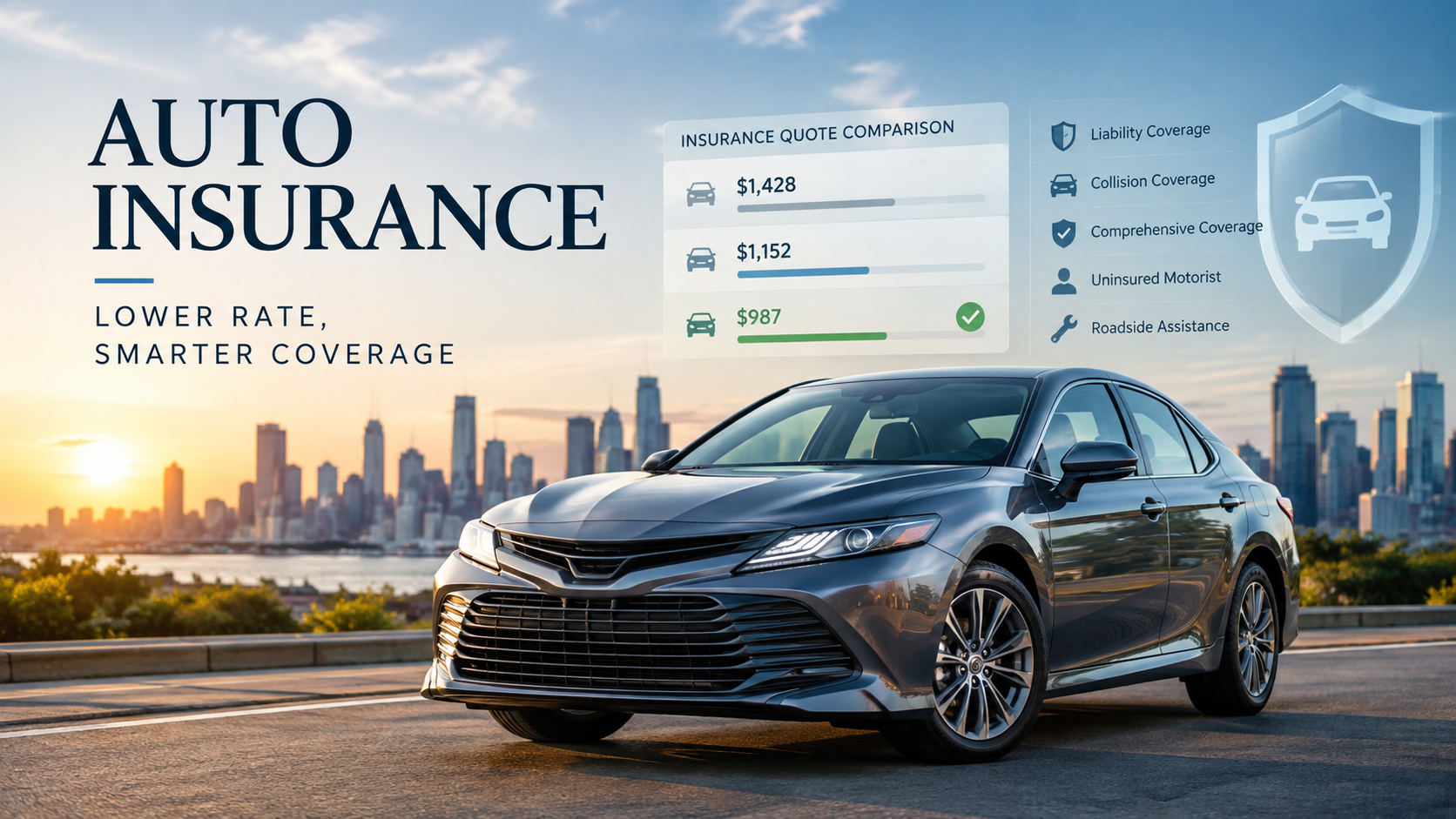
The gap between the cheapest and most expensive auto insurer for the exact same driver and the exact same coverage can exceed $500 a year — meaning the single highest-leverage financial decision most drivers never make is simply comparing quotes before renewal.
Auto insurance pricing isn’t a fixed number set by the market; it’s a highly individualized calculation that varies dramatically between insurers for identical coverage. Two drivers with the same age, location, and driving record can receive wildly different quotes from the same set of companies, which is precisely why shopping multiple quotes — rather than auto-renewing with a single carrier — remains one of the most reliable ways to reduce a major recurring household expense.
This guide covers how auto insurance quotes are actually calculated, current 2026 rate benchmarks, and how to compare quotes effectively without accidentally under-insuring yourself.
How Auto Insurance Quotes Are Actually Calculated
Insurers use dozens of variables to price a policy, and because each company weighs these factors differently, the “best” insurer for one driver is frequently not the best for another.
Key takeaway: The national average cost of full coverage car insurance is $2,315 per year, or about $193 per month, while minimum coverage averages $621 per year, according to NerdWallet’s 2026 rate analysis — but your own quote will likely differ substantially based on factors specific to you.
The Core Factors That Drive Your Quote
- Location — state and even ZIP code meaningfully affect rates, with full coverage ranging from roughly $128 per month in the cheapest states to over $330 per month in the most expensive.
- Driving record — accidents, violations, and DUIs are among the largest individual rate drivers.
- Credit-based insurance score — used in most states (though prohibited in a handful) as a statistically validated predictor of claims likelihood.
- Age and driving experience — younger, less experienced drivers consistently pay significantly more.
- Vehicle make, model, and year — repair costs, safety ratings, and theft rates all factor into pricing.
- Coverage limits and deductibles — higher liability limits and lower deductibles increase premiums.
Step-by-Step: How to Shop Auto Insurance Quotes Effectively
- Gather your current policy details — coverage limits, deductibles, and driver information — so you’re comparing equivalent coverage across quotes.
- Get quotes from at least three to five insurers, including both large national carriers and regional companies, since regional insurers frequently beat national rates in specific states.
- Request identical coverage limits on every quote — comparing a $500 deductible quote against a $1,000 deductible quote will produce a misleading price comparison.
- Ask about all available discounts explicitly, since not every discount is applied automatically.
- Compare the final out-the-door price, including fees, not just the advertised premium.
- Review coverage details, not just price — the cheapest quote sometimes reflects lower liability limits or missing coverage types.
Financial and Strategic Implications: 2026 Rate Benchmarks
Understanding current market rates helps you evaluate whether a quote you’ve received is actually competitive.
| Coverage Level / Company | 2026 Rate Benchmark | Source |
|---|---|---|
| National average, full coverage | $193/month ($2,315/year) | NerdWallet April 2026 analysis |
| National average, minimum coverage | $52/month ($621/year) | NerdWallet April 2026 analysis |
| Cheapest large insurer, full coverage | Travelers, ~$139/month | NerdWallet March 2026 analysis |
| Cheapest large insurer, liability-only | GEICO, ~$41/month | NerdWallet March 2026 analysis |
| Most expensive state (full coverage) | Nevada, ~$335/month | ValuePenguin 2026 State of Auto Insurance |
| Cheapest state (full coverage) | Vermont, ~$128/month | ValuePenguin 2026 State of Auto Insurance |
Expert insight: 2026 is shaping up to be the calmest year for auto insurance pricing since 2022, with national rates projected to rise less than 1% on average — following double-digit annual increases in 2023 and 2024. That relative stability makes this a favorable year to shop aggressively, since insurers competing for market share in a flatter-rate environment are often more willing to offer competitive new-customer pricing.
Why Identical Coverage Can Still Produce Very Different Quotes
Because each insurer’s underwriting model weighs risk factors differently — one company might penalize a recent speeding ticket heavily while barely adjusting for credit score, while another does the reverse — your price can vary meaningfully between insurers even for the same driver and coverage, which is exactly why comparison shopping consistently produces savings that simply renewing with the same insurer does not.
How to Choose the Right Auto Insurance Quote
- Don’t default to price alone — verify the liability limits, comprehensive/collision deductibles, and any exclusions match across every quote you’re comparing.
- Ask about bundling discounts — combining auto with homeowners or renters insurance frequently produces a meaningful discount with the same carrier.
- Check for usage-based/telematics programs — safe drivers can often secure additional discounts through an insurer’s driving-monitoring app.
- Re-shop annually, not just at renewal notice, since insurer pricing models shift and a company that was competitive last year may not be this year.
- Confirm the insurer’s claims-handling reputation, not just price, using state insurance department complaint ratios or third-party satisfaction surveys.
- Review minimum coverage carefully — the cheapest liability-only policy may leave you underinsured relative to your actual assets in a serious at-fault accident.
Key takeaway: The single biggest mistake drivers make isn’t picking the wrong insurer — it’s not requoting at all. Insurance pricing models change frequently enough that a policy competitive two years ago can quietly become overpriced relative to the current market, with no notification from your current insurer.
Future Outlook: Auto Insurance Rate Trends Through 2027
- Rate growth is expected to remain unusually flat. ValuePenguin projects national auto insurance rates to rise by less than 1% on average in 2026, the smallest increase since 2022, though state-level trends diverge significantly — some states are projected to see rates fall by several percentage points while others, led by New Jersey, are projected to rise more sharply.
- State-level divergence is widening. More than half of states are expected to see rates decline in 2026, even as a handful of states see continued increases, making location-specific comparison shopping more valuable than ever.
- Usage-based insurance adoption continues to grow. As more insurers expand telematics-based discount programs, safe drivers increasingly have access to meaningfully lower rates than standard pricing models would otherwise offer.
- Credit-based insurance scoring remains a contested policy issue. Several states continue to debate restricting or eliminating the use of credit history in auto insurance pricing, a change that could meaningfully shift relative pricing among insurers if enacted more broadly.
Frequently Asked Questions
How many auto insurance quotes should I get before choosing a policy? Most experts recommend comparing quotes from at least three to five insurers, including a mix of large national carriers and regional companies, since regional insurers can significantly undercut national pricing in specific states.
Will getting multiple auto insurance quotes hurt my credit score?
Generally no. Auto insurance quotes typically use a “soft pull” that doesn’t affect your credit score, unlike a hard inquiry from a loan or credit card application.
Why did my auto insurance quote go up even though I haven’t had any accidents?
Rate changes can reflect broader factors unrelated to your personal driving record, including inflation in vehicle repair costs, regional claims trends, and insurer-wide rate filings approved by state regulators.
Is the cheapest auto insurance quote always the best choice?
Not necessarily. A lower price can reflect reduced liability limits, higher deductibles, or missing coverage types, so it’s important to confirm you’re comparing genuinely equivalent coverage before choosing based on price alone.
How often should I shop for new auto insurance quotes?
Annually is a reasonable standard practice, since insurer pricing models and competitive positioning change over time, and a policy that was competitively priced in a prior year may no longer be.
Discover more from The Economy
Subscribe to get the latest posts sent to your email.

Insurance renewal season is landing on households at the worst possible moment: auto insurance quotes are climbing again after a brief 2025 reprieve, health insurance plans on the ACA marketplace are seeing the steepest premium jump since 2018, and inflation in medical, repair, and litigation costs is compounding across every line of coverage simultaneously. This is not a single-cause story. It is three distinct inflationary engines — repair-cost inflation, medical-cost inflation, and legal/regulatory disruption — converging on the same renewal notices at the same time.
Key Takeaways
- Auto insurance premiums are projected to rise in 32 states by the end of 2026, reversing 2025’s national 6% decline, with the average full-coverage premium reaching approximately $2,158–$2,256 annually.
- ACA marketplace health insurance plans show a 26% average premium increase for 2026 — the largest since 2018 — driven by rising hospital costs, GLP-1 weight-management drug spending, and the expiration of enhanced premium tax credits.
- If enhanced subsidies are not extended, marketplace enrollees could see net premium payments more than double, with some households spending over half their income on coverage.
- Employer-sponsored health coverage costs are projected to rise another 6–7% in 2026 after already increasing 5.6% in 2025.
- High-risk driver categories (DUI history, low credit, teen drivers) are seeing disproportionately large increases even in states where average premiums are stabilizing.
Auto Insurance: The 2025 Relief Was Temporary
After auto insurance quotes fell nationally by about 6% in 2025 — with 39 states seeing declines and several cutting rates by more than 20% — 2026 has reversed that trend. Insurify’s midyear data shows 27 states already recording increases in the first half of the year, with 32 states projected to see higher rates by year-end. The average full-coverage premium is tracking toward $2,158–$2,256 annually, a modest 1–3% increase depending on the data source, but the state-level variance tells the real story.
| State Trend | Example States | Driver |
|---|---|---|
| Largest projected increases | Connecticut (+4%), West Virginia (+3%) | Rate “normalization” after historically low pricing |
| Largest historical 3-year increases | Illinois (+41% over 3 years) | Nearly double the national average pace |
| States still seeing relief | New York (-13% past 12 months) | Falling fatal crash rates, improved loss ratios |
| Highest absolute premiums | Washington D.C. (~$4,017/year in 2025) | Density, litigation costs, claims frequency |
Three structural forces are driving the reversal:
- Repair-cost inflation tied to tariffs. Auto insurers have publicly flagged that tariff-driven increases in parts costs have not yet been fully passed through to consumers — meaning 2026 premium filings are likely understating the eventual impact.
- Rising medical/bodily-injury claim costs. Medical inflation has pushed up the cost of bodily injury liability claims substantially through 2024–2026, with higher ER visits and long-term treatment costs flowing directly into liability coverage pricing.
- “Social inflation.” Rising jury awards and legal settlement costs, particularly concentrated in states like Louisiana and Florida, are pushing insurers to reprice risk more aggressively regardless of an individual driver’s claims history.
A Widening Risk-Based Pricing Gap
The most important trend for consumers shopping auto insurance quotes in Q4 2026 is the divergence between low-risk and high-risk pricing. While full-coverage premiums for clean-record drivers dipped modestly, DUI-related premiums jumped roughly 35% and teen driver premiums rose about 17% in the same period. Insurers are moving away from broad, blanket rate hikes toward sharply targeted, risk-based pricing — meaning the “average premium” figure increasingly understates what any specific household will actually pay.
Health Insurance: The Subsidy Cliff Returns
The health insurance plans story for 2026 is dominated by one policy event: the expiration of enhanced Affordable Care Act premium tax credits that have kept marketplace coverage affordable since 2021. The numbers are stark:
| Metric | 2026 Figure |
|---|---|
| Average ACA marketplace premium increase | 26% (30% in federal Healthcare.gov states, 17% in state-run exchanges) |
| Median proposed insurer rate increase | 18% |
| Portion of increase attributable to subsidy-expiration assumptions | ~4 percentage points |
| Potential net premium increase for subsidized enrollees if credits expire fully | 114%+ (more than double) |
| Subsidy eligibility cliff | 400% of Federal Poverty Level ($62,600 individual / $128,600 family of four) |
| Marketplace enrollees currently receiving subsidies | ~87–92% |
This is the largest ACA rate increase since 2018, the last time comparable federal policy uncertainty disrupted the market. The mechanism is a textbook “adverse selection” spiral: as premiums rise for those losing subsidies, healthier enrollees are expected to exit the marketplace at a disproportionately higher rate than sicker enrollees, which pushes insurers to price in an even less healthy risk pool — a dynamic insurers and policy experts have explicitly warned could become a “death spiral” without legislative intervention.
Illustrative case: A 40-year-old in Indianapolis earning $65,000 on a mid-tier Silver plan saw their subsidized monthly premium of $316 (versus an unsubsidized $388) climb sharply once the enhanced credits expired — with some households above the 400% FPL threshold facing bronze-plan costs exceeding half their household income.
Employer-Sponsored Coverage Is Not Immune
While ACA marketplace changes dominate headlines, employer-sponsored health insurance plans are compounding the same underlying cost pressures. Average annual premiums reached roughly $9,300 for single coverage and $27,000 for family coverage in 2025 — up 5.6% — with a further 6–7% increase projected for 2026, driven by specialty drug costs (notably GLP-1 medications), higher utilization, and healthcare wage inflation. Employers passing along even a portion of that increase means higher payroll deductions, higher deductibles, and narrower networks for millions of covered workers who never touch the ACA marketplace at all.
Life Insurance: The Quiet Line in an Inflationary Environment
Term life insurance has been less volatile than auto or health coverage in 2026, but it is not immune to the same underlying cost pressures. Underwriting costs tied to medical examination and actuarial mortality assumptions are gradually reflecting the same medical-cost inflation hitting health insurers, while insurers’ own investment portfolios — sensitive to the same Treasury yield volatility driving mortgage rates — affect how aggressively term life products are priced and how competitively insurers can guarantee long-duration rate locks. For consumers, the practical implication is straightforward: locking in a term life policy sooner rather than later insulates against future underwriting-cost inflation, particularly for buyers over 50, where premiums are most sensitive to medical-cost trends.
A Household Insurance Cost-Management Framework for Q4 2026
| Coverage Type | Primary 2026 Risk | Recommended Action |
|---|---|---|
| Auto insurance | Risk-based repricing; state-level variance | Shop annually; ask specifically about DUI/teen-driver surcharges |
| ACA health insurance | Subsidy-cliff exposure above 400% FPL | Model both subsidized and full-price scenarios before open enrollment |
| Employer health insurance | Passthrough of 6–7% cost growth | Review HSA/FSA contribution levels; evaluate high-deductible tradeoffs |
| Term life insurance | Gradual underwriting-cost inflation | Lock in coverage now rather than deferring to a later renewal cycle |
FAQ
Why are auto insurance quotes rising again in 2026 after falling in 2025? 2025’s rate declines were largely a correction after insurers had already repriced for pandemic-era claims inflation. In 2026, rising repair costs (partly tariff-driven), medical-cost inflation on bodily injury claims, and “social inflation” from rising legal settlements are pushing rates back up in most states.
How much will my ACA health insurance plan premium increase in 2026? The average marketplace premium increase is 26%, but the actual impact depends heavily on your income relative to 400% of the federal poverty level. Enrollees below that threshold retain some subsidy protection; those above it face the full, unsubsidized rate increase.
Is now a good time to buy term life insurance? Yes — underwriting costs are gradually rising alongside broader medical-cost inflation, so locking in a term life policy now generally secures a more favorable long-term rate than waiting for a future renewal cycle.
Which drivers are seeing the biggest auto insurance increases? High-risk categories are seeing disproportionate increases: DUI-related premiums rose roughly 35% and teen driver premiums rose roughly 17% in the most recent reporting period, even in states where average premiums for low-risk drivers were flat or falling.
Discover more from The Economy
Subscribe to get the latest posts sent to your email.

Best Life Insurance Companies in the United States 2026: Our Top 5 Picks

Pakistan Auto Policy 2026-31 Explained: EV Tax Cuts, $6 Billion Export Target

When Dollar Debt and Food Imports Collide: The Currency Squeeze

Why Freight and Storage Costs Keep Food Prices High After Oil Falls

Personal Injury Lawyer Near Me in NYC: How to Find the Right Attorney After an Accident

Why Falling World Food Prices Do Not Always Lower Grocery Bills

Oil Shocks and Core Inflation: Why the Two Move Differently

Singapore Cannot Fight Financial Fraud by Making Victims Bear the Risk Alone

Singapore Banking’s Real Test: Beyond Profits, Who Will Safeguard Financial Trust?

Nvidia’s Share Price Is Not a Scorecard for Singapore’s AI Future

The Australian Dollar Is Not Asia’s Oracle. Singapore Should Listen Anyway

Singapore’s Bank Sell-Off Is Really a Test of What Stability Is Worth

Why a Weaker Currency Makes Imported Food More Expensive

How Oil Price Shocks Raise Food Prices in Importing Countries

Stock Market Crash in 2026? Warning Signs, Scenarios and a Calm Investor Checklist

US–Iran Conflict in October 2026: Hormuz, Oil Prices and Diplomacy

Dow Jones Today: Dow Slips 237 Points After the Worst Day Since April 2025

Pakistan IMF Programme 2026: Why Bailouts Keep Returning

SSI November 2026 Payment: Why Benefits Arrive October 30

US–China AI Export Controls in 2026: Chips, Testing Rules and Corporate Risk

2027 Federal Tax Brackets: New IRS Rates and Standard Deductions Explained

Singapore Stock Market Outlook 2027: The STI’s Bank-and-Yield Test

Stock Market Crash 2026? What the November Rout Actually Tells Us

World Bank Debt Report 2026: The $9.4 Trillion Burden Behind the Recovery

IMF Global Outlook 2027: The Recovery Is Real, but the Divide Is Growing

KSE-100 Index 2026: Is Pakistan’s Stock-Market Recovery Sustainable?

Germany–France ‘Made in Europe’ Deal Could Reshape China’s EV Ambitions

Power Grid Emergency Across 13 States? What the October 2026 PJM Order Actually Says
-

 Markets & Finance10 months ago
Top 15 Stocks for Investment in 2026 in PSX: Your Complete Guide to Pakistan’s Best Investment Opportunities
-

 Analysis9 months ago
Johor’s Investment Boom: The Hidden Costs Behind Malaysia’s Most Ambitious Economic Surge
-

 Analysis9 months ago
Top 10 Stocks for Investment in PSX for Quick Returns in 2026
-

 Banks10 months ago
Best Investments in Pakistan 2026: Top 10 Low-Price Shares and Long-Term Picks for the PSX
-

 Analysis9 months ago
Brazil’s Rare Earth Race: US, EU, and China Compete for Critical Minerals as Tensions Rise
-

 Investment10 months ago
Top 10 Mutual Fund Managers in Pakistan for Investment in 2026: A Comprehensive Guide for Optimal Returns
-

 Global Economy11 months ago
15 Most Lucrative Sectors for Investment in Pakistan: A 2025 Data-Driven Analysis
-

 Global Economy11 months ago
Pakistan’s Export Goldmine: 10 Game-Changing Markets Where Pakistani Businesses Are Winning Big in 2025