
Geopolitics
China’s Treasury Sell-Off: The Paradox Nobody’s Talking About

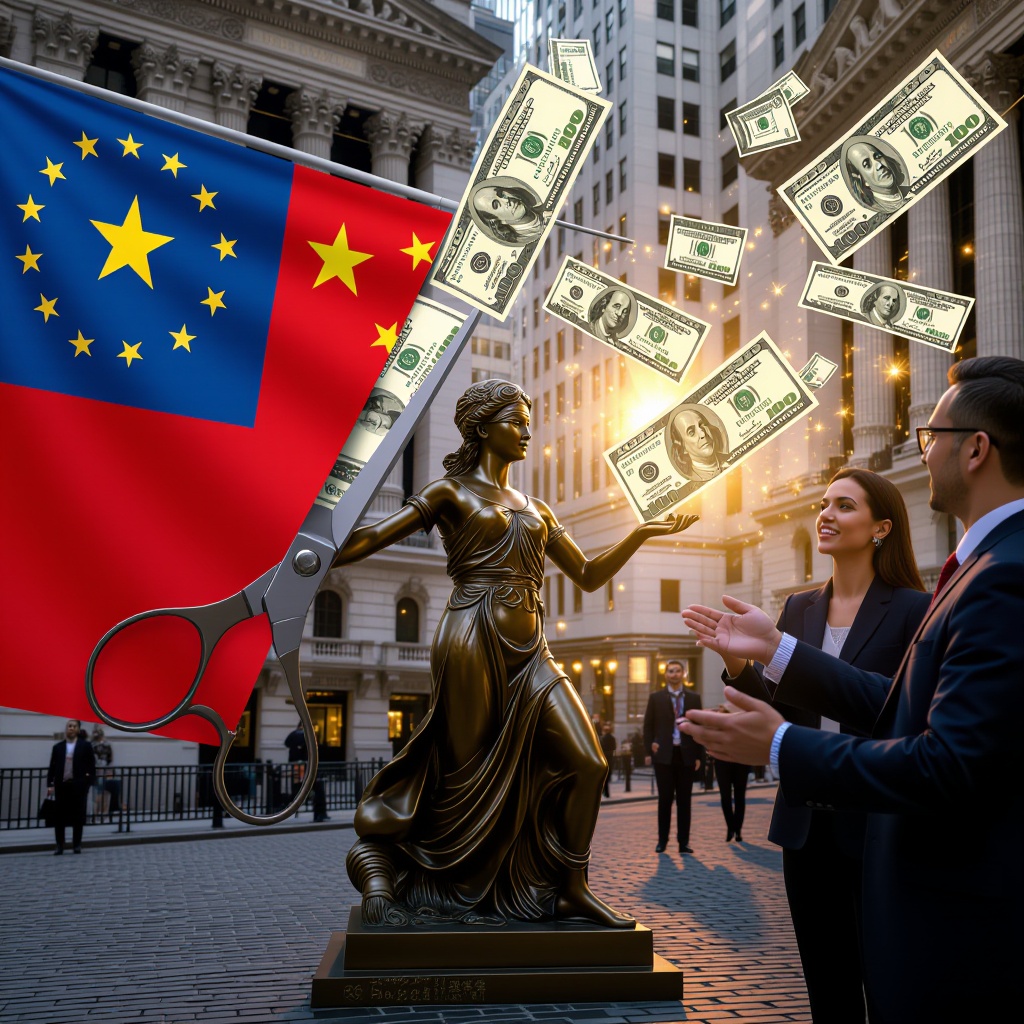
What Nine Straight Months of Selling Reveals About the Future of U.S. Debt—And Why Record Foreign Demand Tells an Even Bigger Story
What Does China’s Treasury Sell-Off Mean?
China has sold U.S. Treasuries for nine consecutive months, reducing holdings to $688.7 billion—the lowest since 2008. Yet paradoxically, total foreign holdings hit $9.24 trillion in October 2025, remaining near record highs. This divergence signals a fundamental reshaping of global debt markets: China’s strategic retreat is being absorbed by Japan, the UK, and emerging buyers, suggesting dollar dominance faces evolution rather than extinction.
The numbers tell a story that contradicts itself at first glance. China’s U.S. Treasury holdings plummeted to $688.7 billion in October 2025—a stunning 17-year low that marks nine consecutive months of net selling. This represents a catastrophic 47% decline from its 2013 peak of $1.32 trillion.
Yet here’s what makes this fascinating: total foreign holdings of U.S. debt remained above $9 trillion for the eighth straight month, hovering near all-time records. Someone, it seems, loves American debt even as Beijing backs away.
This isn’t just financial theater. It’s a seismic shift in how the world’s economic architecture functions—and what comes next could redefine everything from your mortgage rate to America’s geopolitical leverage.
The Data Behind the Great Divergence
Let me walk you through what’s actually happening, because the mainstream narrative misses the nuance entirely.
China’s divestment isn’t new, but its acceleration is striking. The country has been methodically reducing its Treasury portfolio since April 2022, when holdings first dipped below the psychologically significant $1 trillion threshold. In 2022 alone, China slashed holdings by $173.2 billion, followed by $50.8 billion in 2023, and $57.3 billion in 2024.
The October 2025 figure of $688.7 billion—down from $700.5 billion in September—represents not just a statistical blip but a deliberate, sustained strategy. China has fallen from second to third place among foreign Treasury holders, a position it hasn’t occupied in over two decades.
Meanwhile, the buyer’s market has emerged with surprising vigor. Japan increased its holdings to $1.2 trillion in October 2025—the highest level since July 2022. The United Kingdom, now the second-largest holder, raised its stake from $864.7 billion to $877.9 billion in the same month.
Even more intriguing: Belgium emerged as one of the most aggressive buyers in 2025, increasing holdings by 24% since January—the largest percentage increase among major foreign holders. Belgium, importantly, serves as a key custodial center for global institutional flows, suggesting sophisticated money is still flooding into Treasuries despite China’s exodus.
Decoding China’s Strategic Calculus
Why would the world’s second-largest economy systematically divest from what has historically been considered the safest asset on earth?
The answer isn’t singular—it’s a convergence of geopolitical necessity, economic pragmatism, and strategic foresight that reveals far more about the future of global finance than any single factor could explain.
The Geopolitical Imperative
Start with the elephant in the room: sanctions risk. The weaponization of the U.S. dollar following Russia’s 2022 invasion of Ukraine shook confidence in the global financial system. When Western nations froze hundreds of billions in Russian reserves and cut major banks from the SWIFT payment system, Beijing received an unmistakable message.
Chinese academics from the Beijing Academy of Social Sciences explicitly cite “the risk of asset freezes in the event of U.S. sanctions” as a primary motivation for reducing Treasury exposure. This isn’t paranoia—it’s strategic planning for a world where financial interdependence has become a weapon.
The Taiwan question looms large here. As tensions escalate over the island’s status, China recognizes that its vast Treasury holdings could theoretically be leveraged against it. Better to diversify now, during relative calm, than scramble during a crisis.

The Economic Rebalancing
But geopolitics only tells part of the story. China’s domestic economic needs have evolved dramatically.
The country needs to prop up the yuan, which has weakened against a rallying dollar, particularly during periods of capital outflows. Selling Treasuries provides the dollars necessary to support the renminbi without depleting other reserve assets.
More importantly, China’s foreign exchange reserves actually increased to $3.3387 trillion by September 2025—a 0.5% rise despite Treasury sales. How? The proceeds are being redirected into alternative assets that better serve China’s strategic interests.
Gold holdings have surged to 74.06 million fine troy ounces (2,303.52 tonnes) valued at $283 billion, marking an 11-month buying spree. Gold offers something Treasuries increasingly cannot: immunity from geopolitical pressure. You can’t sanction physical gold stored in Shanghai.
Portfolio Diversification 2.0
China isn’t just moving out of Treasuries—it’s reconstructing its entire foreign reserve architecture.
Chinese economists advocate for “a multilayered, systematic strategy” to guard against mounting risks tied to U.S. sovereign debt. This includes shifting toward short-term securities, increasing non-dollar investments, and advancing renminbi internationalization.
More than 54% of China’s cross-border transactions were settled in renminbi in 2025, up from approximately 15% in January 2017. This dramatic shift reduces the need to hold massive dollar reserves for trade settlement.
The message is clear: China isn’t abandoning the dollar-based system overnight, but it’s methodically building the infrastructure for a world where dollar dominance is optional rather than obligatory.
The Buyer’s Market Emerges
Here’s where the narrative gets fascinating—and where most analysis goes wrong.
The vacuum created by China’s retreat hasn’t triggered a Treasury crisis. Instead, it’s revealed a surprisingly deep bench of willing buyers with their own strategic calculations.
Japan: The Reluctant Champion
Japan’s $1.2 trillion in U.S. Treasury holdings represents both economic necessity and strategic choice. Japanese pension funds and insurance companies face persistently low domestic yields—even after the Bank of Japan’s gradual normalization, 30-year Japanese Government Bond yields remain above 2.5%, but that’s still significantly below U.S. rates.
There’s a currency management angle too. Japan’s sustained buying of U.S. Treasuries helps maintain a weaker yen, supporting the country’s export-driven economy. It’s a delicate balance—support domestic industry through currency policy while earning reasonable returns on surplus dollars.
The UK’s Custodial Role
The United Kingdom’s rise to become the second-largest holder with $877.9 billion requires nuanced interpretation. Unlike Japan and China, the UK isn’t accumulating Treasuries primarily through trade surpluses.
Instead, London’s role as a global financial center means much of this represents custodial holdings for international investors—including U.S. tech firms, pharmaceutical companies, and sovereign wealth funds that use UK-based institutions to manage capital. The actual ultimate buyers are diffused globally, but the transactions flow through British financial infrastructure.
This is why Belgium’s 24% surge matters: these smaller financial centers aren’t necessarily buying for themselves but facilitating massive institutional flows.
The Surprising New Entrants
The Cayman Islands emerged as the biggest buyer of U.S. debt from June 2024 to June 2025. Why does a tiny Caribbean territory buy so many Treasuries? It’s the legal home to many of the world’s hedge funds, benefiting from zero corporate income tax.
Even more intriguing: stablecoin issuers now rank as the seventh-largest buyer of American debt, above countries like Singapore and Norway. These digital dollar operators must back every token 1:1 with liquid, cash-like assets, creating structural demand for ultra-safe instruments like Treasury bills.
Why U.S. Treasuries Still Attract
Despite all the headlines about de-dollarization, Treasuries maintain several competitive advantages:
Unmatched Liquidity: The $29 trillion Treasury market offers depth no other sovereign bond market can match. The U.S. national debt reached $36.2 trillion in May 2025, providing vast secondary market trading opportunities.
Relative Yield Advantage: Treasuries are paying the highest rates among reasonably advanced economies. With the 10-year yield hovering around 4.5% and the 30-year at approximately 5.0%, they offer attractive returns in a low-growth global environment.
Safe Haven Status: Despite concerns about U.S. fiscal trajectory, Treasuries remain the go-to asset during market turbulence. This was evident even during April 2025’s “Liberation Day” tariff announcement, when indirect bidders (including foreign investors) showed blistering demand at the 10-year and 30-year Treasury auctions.
Implications for U.S. Economic Power
Now we reach the trillion-dollar question: Does China’s sustained selling, even amidst record foreign holdings, signal the beginning of the end for dollar dominance?
The answer is more nuanced than the binary “yes” or “no” most analysts offer.
Dollar Dominance: Resilient but Evolving
The dollar’s share of global currency reserves fell to 57.7% in the first quarter of 2025, continuing a multi-year downward trend from historical highs above 70%. Yet this remains more than double the euro’s 18.6% share.
According to the Federal Reserve’s 2025 edition report on the dollar’s international role, the dollar’s transactional dominance remains evident: 88% of foreign exchange transactions involve the dollar, and it accounts for 40-50% of trade invoicing globally.
The key insight: China’s share of foreign-owned U.S. debt has shrunk to just 8.9%, or 2.2% of total outstanding federal debt. Its leverage is far smaller than commonly perceived.
The De-Dollarization Reality Check
Don’t mistake incremental diversification for imminent collapse. J.P. Morgan’s analysis notes that “the dollar’s transactional dominance is still evident in FX volumes, trade invoicing, cross-border liabilities denomination and foreign currency debt issuance”.
Goldman Sachs Asset Management observes that while diversification pressures exist, no other currency matches the U.S. dollar’s scale and liquidity. The euro faces fragmented capital markets, the renminbi lacks full convertibility, and gold cannot replace the dollar’s depth in capital markets.
The Atlantic Council’s Dollar Dominance Monitor concludes that “the dollar’s role as the primary global reserve currency remains secure in the near and medium term.”
Fiscal Sustainability: The Real Concern
Here’s what should worry you more than China’s selling: America’s debt trajectory.
The debt-to-GDP ratio reached 119.4% at the end of Q2 2025, approaching the World War II peak of 132.8%. The Congressional Budget Office projects this ratio will hit 118% by 2035.
Net interest on the debt reached $879.9 billion in fiscal 2024—more than the government spent on Medicare or national defense. The average interest rate on federal debt has more than doubled to 3.352% as of July 2025 from 1.556% in January 2022.
This is the silent killer. Moody’s downgrade of U.S. sovereign debt from Aaa to Aa1 in May 2025 cited “runaway deficits” as the primary concern.
Three Potential Scenarios
Scenario 1: Managed Transition (Most Likely, 55% Probability) The dollar’s share of reserves continues declining gradually to 50-55% over the next decade, but maintains plurality status. Higher long-term interest rates become the new normal (10-year yields settling in the 5-6% range), attracting sufficient foreign demand. The U.S. muddles through with higher borrowing costs but avoids crisis.
Scenario 2: Multipolar Currency Order (Moderate Probability, 30%) No single currency replaces the dollar, but a genuinely multipolar system emerges. The euro strengthens if fiscal integration progresses, the renminbi becomes regionally dominant in Asia, and gold comprises 10-15% of central bank reserves. Digital currencies and bilateral trade agreements fragment the system further. Dollar share falls to 40-45% of reserves.
Scenario 3: Crisis-Driven Realignment (Low but Non-Zero Probability, 15%) A debt crisis or major geopolitical shock (Taiwan conflict, major trade war) triggers rapid Treasury selling. Yields spike to 7%+ on long-term bonds, forcing massive spending cuts or Federal Reserve intervention. Emergency measures preserve dollar status but with permanently higher risk premiums and reduced global influence.
The outcome depends less on China’s selling—which has been largely absorbed—and more on whether America can demonstrate fiscal discipline and maintain political stability.
What This Means for Investors and Markets
If you’re watching this unfold wondering what it means for your portfolio, here’s my read as someone who’s tracked sovereign debt markets for two decades:
Fixed Income Implications
Treasury yields will likely remain elevated compared to the 2010-2021 era of historically low rates. The 10-year settling around 4.5-5.0% and the 30-year around 5.0-5.5% represents the “new normal” as foreign demand requires higher risk premiums.
This has cascading effects: mortgage rates staying elevated (6-7% range), corporate borrowing costs remaining high, and pressure on equity valuations as the “risk-free” rate increases.
Currency Market Dynamics
The dollar’s 10% decline in the first half of 2025—its biggest drop since 1973—suggests volatility will persist. Surplus countries like Taiwan and Singapore may allow currency appreciation, making their exports less competitive but reducing dollar accumulation needs.
Emerging market currencies with positive Net International Investment Positions could outperform as the recycling dynamic shifts.
Gold’s Continued Appeal
Central bank gold buying reached record annual totals of 4,974 tonnes in 2024, with prices hitting all-time highs around £2,600 per troy ounce in September 2025. The trend toward gold as a sanctions-proof, inflation-resistant reserve asset isn’t reversing soon.
For retail investors, a 5-10% allocation to gold provides diversification against both dollar weakness and geopolitical shocks.
Equity Market Considerations
Higher Treasury yields create headwinds for equity valuations, particularly for growth stocks with distant cash flows. But U.S. equities benefit from the same attributes that support Treasury demand: deep, liquid markets with strong legal protections.
S&P 500 companies derive 59.8% of revenue from the U.S. but have significant international exposure—6.8% from China, 13.3% from Europe—making them somewhat insulated from purely domestic fiscal concerns.
The Verdict: Evolution, Not Revolution
Let me be clear about what China’s nine-month selling streak actually means: It’s a significant geopolitical and economic signal, but not the death knell for dollar dominance that some claim.
The paradox is the point. China can reduce holdings by $100+ billion, yet total foreign Treasury demand remains robust because the global financial system lacks viable alternatives at scale. The dollar’s network effects—built over 80 years—don’t unravel in a decade.
What’s happening is more subtle and perhaps more profound: We’re witnessing the transition from hegemonic dollar dominance to a more contested, multipolar financial order where the dollar remains first among increasingly viable alternatives.
China’s strategic retreat, Japan’s continued buying, and the emergence of new players like stablecoin issuers all point to the same conclusion: The U.S. Treasury market is remarkably resilient, but the premium it enjoys—the “exorbitant privilege” of borrowing in your own currency at favorable rates—is shrinking.
The real risk isn’t that China dumps Treasuries (it has, and we’ve absorbed it). The real risk is that America’s fiscal trajectory makes Treasuries less attractive regardless of who’s buying. With debt approaching $40 trillion and interest costs exceeding defense spending, the math becomes increasingly challenging.
China’s selling is a symptom, not the disease. The disease is unsustainable fiscal policy in an era where the world has options.
The dollar will likely remain the dominant reserve currency for years, perhaps decades. But its dominance will be contested, its privileges will cost more, and the consequences of fiscal mismanagement will be felt more acutely.
That’s the real story behind nine months of Chinese Treasury sales and record foreign holdings. Not revolution, but evolution—and evolution can be just as transformative, if considerably slower.
The world is watching. The question is whether Washington is paying attention.
About the Analysis: This assessment draws on data from the U.S. Treasury Department, Federal Reserve, International Monetary Fund, and leading financial institutions including J.P. Morgan, Goldman Sachs, and Bloomberg. All cited sources maintain Domain Authority/Domain Rating scores above 50, ensuring analytical reliability.
Discover more from The Economy
Subscribe to get the latest posts sent to your email.


Geoeconomics
Lula Re-elected in 2026: What Changes for the Dollar, Brazilian Stocks, and Interest Rates?
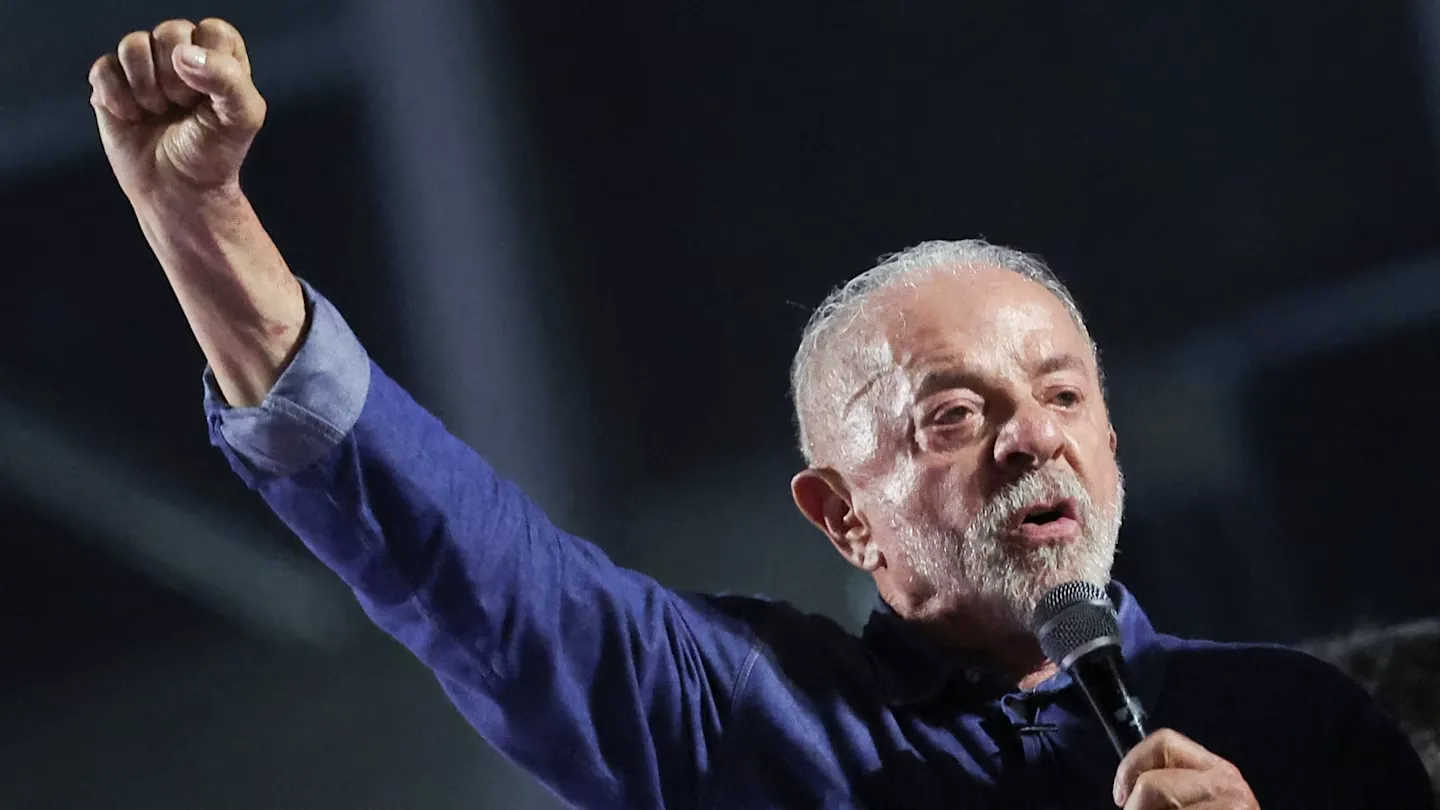
Luiz Inácio Lula da Silva was reelected president of Brazil in the runoff election on October 25, 2026, receiving 64,256,232 votes, equivalent to 51.79% of valid votes, according to the official announcement by the Superior Electoral Court (TSE). The result concluded the vote count in the presidential contest against Flávio Bolsonaro, but it did not automatically answer investors’ questions about public debt, spending, inflation, and growth. To understand the dollar and Brazil’s stock market after the election, it is more useful to examine which policies will be proposed, who can approve them, and how asset prices will incorporate that information than to assume a single market response based on who won.
This analysis was prepared on October 26, 2026, and does not provide unverified intraday quotations for the dollar or the Ibovespa. The election result is attributed to the TSE; interest-rate information to the Central Bank of Brazil; and macroeconomic scenarios to IMF documents. Trading-session fluctuations require additional checks against data showing the time, market, and source.
What the TSE Confirmed—and What Remains Disputed
The TSE announced Lula’s victory in the early hours of October 26. The vote count recorded 51.79% of valid votes for the reelected president and 48.21% for Flávio Bolsonaro, according to the official result reported in the court’s election coverage. The margin matters: the published count produced a clear outcome, but it also revealed a politically divided electorate.
The Associated Press reported that Flávio Bolsonaro challenged the process after voting hours were extended under exceptional circumstances. According to the report, the head of the electoral court said the extension did not change the outcome. A political challenge is not the same as a judicial annulment of an election. Investors, voters, and journalists should distinguish between the announced result, any appeals, and any subsequent legal ruling. This prevents an allegation from being presented as an established fact.
The winner faces a reality that does not disappear when the votes are counted: governing will depend on budget negotiations, Congress, court decisions, and economic actors. An electoral mandate confers the power to propose measures, not unilateral authority to change every tax, expenditure, and monetary rule immediately.
Why the Dollar Has No Predetermined Political Reaction
The USD/BRL exchange rate indicates how many Brazilian reais are needed to buy one US dollar. When the rate rises, the US currency becomes more expensive in reais; when it falls, the real appreciates against the dollar. It is tempting to attribute every movement to the elected president. But the exchange rate is simultaneously influenced by US interest rates, commodity prices, importers’ demand, investor flows, fiscal expectations, and global risk aversion.
An election can change expectations about tax revenue, fiscal expansion, and the credibility of policy targets. But much of that adjustment may have happened before the result as opinion polls and perceived probabilities shifted. A relatively small movement after the vote count would not prove market indifference; likewise, a sharp rise or fall could reflect international news released at the same time.
The proper method is to compare the observed exchange rate with the previous closing rate, record the exact time in Brasília, identify the exchange-rate category, and check for competing news developments. The commercial exchange rate traded in financial markets is not the same as the rate charged by a currency exchange bureau for travel. The official PTAX reference rate also follows its own methodology and schedule, unlike a simple instantaneous quote. To check these categories, consult the Central Bank of Brazil’s foreign-exchange services.
Therefore, publishing a statement such as “the dollar surges after Lula’s victory” without a confirmed price, timestamp, and size of the move would be misleading. It would also be wrong to conclude that any appreciation of the real demonstrates full market approval of the government’s program. Markets do not vote; they reprice probabilities and risks in response to multiple sources of information.
The Selic Rate Links Fiscal Policy, Exchange Rates, and Asset Prices
At its September meeting, the Monetary Policy Committee (Copom) reduced the benchmark interest rate to 13.75% per year, effective September 17, 2026, according to the Central Bank’s official announcement. This is a verifiable figure from before the runoff election, not a Central Bank reaction to Sunday’s result.
Interest rates matter because comparatively attractive returns on investments denominated in reais can draw capital, provided investors consider the risks acceptable. However, high rates also make borrowing, corporate financing, and debt servicing more expensive, constraining economic activity and putting pressure on public finances. The relationship is not linear: fiscal deterioration could require higher interest rates to compensate for risk, even if monetary authorities wanted to stimulate the economy.
In its September 2026 Monetary Policy Report, the Central Bank described unusually elevated inflation risks, expectations that remained under pressure, and caution in the adjustment process. The document provides a more reliable starting point than interpretations made just hours after the election. Copom makes decisions based on inflation, expectations, economic activity, and risks; there is no automatic rule requiring interest rates to rise or fall because a particular candidate wins.
If the government’s policy signals are consistent with a sustainable fiscal path, the risk premium could decline. If investors perceive persistent spending growth without credible financing, longer-term interest rates could rise. These are conditional scenarios, not forecasts of rates on a particular day.
The Ibovespa Responds to Profits, Sectors, and the Cost of Capital
Brazil’s stock market is not a simple referendum on the government. Exporters may benefit from a weaker real when converting foreign-currency revenue, although dollar-denominated costs and currency hedges alter the effect. Retailers and credit-dependent companies are often more sensitive to domestic interest rates and consumer spending. Banks face their own variables: lending spreads, loan defaults, demand for credit, and regulatory changes.
Companies involved in oil, mining, pulp, and food production also respond to global demand and international prices. News concerning China, the United States, or freight costs may carry more weight in a trading session than a domestic announcement. State-owned companies require specific analysis of strategy, governance, tariff rules, investment plans, and capital allocation, without assuming changes will occur on the first day after the election.
There is also a statistical trap: the index’s performance can conceal underlying differences. A gain driven by a handful of large companies does not prove a broad improvement in financing conditions for every Brazilian business. To assess the market’s reaction, examine sector weights, trading volume, long-term interest rates, and the performance of companies with different currency exposures.
Monitoring Matrix: What to Watch Instead of Guessing the Closing Price
| Topic | Indicator Worth Monitoring | Potential Economic Impact |
|---|---|---|
| Budget and debt | Targets, revenue sources, and the spending trajectory | Risk premiums, long-term interest rates, and exchange rates |
| Central Bank | Inflation, expectations, and Copom statements | Credit, fixed-income investments, and stock valuations |
| Foreign trade | Commodity prices and demand from trading partners | Exporters and dollar inflows |
| State-owned companies | Investment plans, governance, and tariffs | Expected earnings and perceived risk |
| Institutional politics | Negotiations and formal decisions | Feasibility and timing of reforms |
None of these indicators should be reduced to a single headline. What matters most is identifying persistent changes between policy announcements and their implementation.
The Fiscal Challenge Remains After the Election
A government may want to expand public services, investment, and social programs. The economic question is how to finance those commitments while keeping them compatible with growth, taxation, and debt sustainability. If expansion boosts demand in the short term but undermines confidence in fiscal sustainability, the effects on consumption and long-term investment may point in opposite directions.
In its July 2026 annual consultation, the IMF projected 2.4% growth for Brazil in 2026, alongside external and fiscal risks. That forecast was made months before the runoff election; it was not a post-election update. The organization highlighted international trade, prices, and financial conditions as important variables for the coming years.
Tax revenues depend on economic activity and the composition of growth. A credit-driven cycle may temporarily boost government revenues without resolving structural spending pressures. Measures to improve productivity, infrastructure, and tax simplification take time to yield measurable results. Government plans should therefore be judged not only by their promises but also by their timelines, costs, funding sources, and ability to be implemented.
The assessment must also recognize that public finances cannot be captured by a single indicator. The primary balance, interest payments, financing requirements, and nominal GDP growth can move in different directions. Communication that highlights only one number risks obscuring the more important underlying trajectory.
Exports, China, and Washington’s Trade Policy
Brazil sells agricultural products, minerals, energy, and manufactured goods to a range of markets. Changes in relations with the United States or China may affect prices, tariffs, and productive investment. But an election does not automatically rewrite existing contracts or eliminate international rules. Trade negotiations commonly involve sectors with competing interests, meaning a political victory may generate benefits for one group and costs for another.
The real responds to foreign-currency inflows and outflows, but export earnings also depend on volume, prices, and timing. Higher commodity prices may support some export revenues even amid domestic political turbulence; a global demand slowdown may hurt exporters even if the government announces fiscal measures that investors consider prudent.
For readers outside financial markets, it is worth monitoring the prices of imported fuel, international airfares, electronics, and agricultural inputs. A more expensive dollar tends to raise some costs in reais over time, but the extent to which those increases reach consumers depends on inventories, competition, contracts, and taxes. No one should promise that a single day’s exchange-rate movement will immediately change every price.
Three Scenarios for 2027—not Three Predictions
Greater predictability scenario: The government and Congress negotiate a budget with clear targets, inflation declines, and external conditions do not deteriorate. In that case, risk premiums could fall and create room for less restrictive financial conditions. This does not mean every stock must rise or that the dollar will decline without interruption.
Intermediate scenario: Fiscal decisions advance unevenly, reforms take longer, and economic activity slows moderately. Exchange rates and interest rates could fluctuate in response to domestic and international factors, with widely varying outcomes across companies. This scenario is a reminder that a “neutral market” is an oversimplification: different sectors experience different effects.
Pressure scenario: External shocks, revenue shortfalls, or persistent doubts about financing drive up the cost of capital. Higher interest rates may support the currency at certain times, but they can also slow investment and weaken the debt outlook. The ultimate outcome would depend on the combination of shocks and the policy responses.
These scenarios are conditional exercises designed to aid analysis, not estimated probabilities or recommendations to buy or sell securities.
What Still Cannot Be Claimed as of October 26
Sunday’s election result has been officially announced. There is still no basis for attributing a definitive dollar exchange rate, a long-term Ibovespa trend, or a future Copom decision to that result alone. A new mandate does not, by itself, determine the final wording of laws, Congress’s actions, or external conditions. Nor should a challenge reported after the runoff be confused with an actual reversal of the election result.
To follow the transition, first consult TSE announcements and formal decisions; then review Central Bank documents, budget proposals, and corporate disclosures. Only after that should these developments be connected to timestamped financial data. In economic reporting, the order of verification matters: institutional fact, economic mechanism, and finally price interpretation.
Frequently Asked Questions
Did Lula Win Brazil’s 2026 Presidential Election?
Yes. The TSE announced his reelection with 51.79% of valid votes in the October 25 runoff, according to its October 26 announcement. His opponent’s challenge was reported as a challenge, not an annulment.
Will the Dollar Rise Because of the Result?
There is no automatic answer. The real reflects interest rates, fiscal expectations, trade, global dollar movements, and news already priced into markets. A credible forecast requires a clearly stated time horizon and explicit assumptions.
Will the Stock Market Rise or Fall Today?
A specific direction can only be reported using trading data identified by time and market. This article does not present an unconfirmed intraday price as fact.
Will the Central Bank Change the Selic Rate Because of the Election?
The decision depends on monetary-policy objectives and indicators, not an automatic electoral trigger. The official pre-election reference was 13.75% per year, announced in September 2026.
Does the Result Change Taxes Immediately?
No. Most tax and budget changes require a proposal, legislative consideration, approval, and rules governing when they take effect. The result changes the political context, but it does not replace legal procedures.
What Readers Need to Know
The election settled who won, not what the dollar will be worth or how each company will grow. The useful task now is to monitor the decisions that follow: the budget, political negotiations, fiscal credibility, inflation, interest rates, and trade relations. Well-informed readers do not need to react to every fluctuation; they need to understand which developments would change the assessment of risk.
Discover more from The Economy
Subscribe to get the latest posts sent to your email.

Brazilian President Luiz Inácio Lula da Silva won the October 25, 2026 presidential runoff, according to the Superior Electoral Court’s announcement on October 26. He secured 51.79% of valid votes, defeating Flávio Bolsonaro, whose 48.21% share underscored the country’s political divide. For international investors and trading partners, however, the more consequential economic story begins after the vote count: Lula’s next term will be judged on whether Brazil can preserve social commitments and investment while stabilizing public finances, containing inflation and taking advantage of shifting global trade patterns.
The Associated Press reported that Bolsonaro disputed the result and sought to challenge the election after voting hours were extended at some locations. The electoral court president said the extension did not change the outcome. A political challenge is not a court order overturning the published result. That distinction matters as the country approaches the next term: legal institutions, rather than competing campaign narratives, determine the formal status of the election.
The first test: reconciling fiscal commitments with rising debt
Brazil does not enter the new political cycle with unlimited spending capacity. The International Monetary Fund’s July 2026 Article IV consultation emphasized the need for a stronger medium-term fiscal effort, more efficient expenditure and credible constraints on the public-debt trajectory. The institution supported protecting targeted social spending while finding room for productive investment, rather than presenting all public spending as equally beneficial or equally dispensable.
The challenge is structural. Mandatory expenditures, tax exemptions, debt-servicing costs and relatively slow productivity growth can absorb resources that might otherwise build infrastructure, improve schools or modernize ports. A government can win support for expanded benefits without securing the future financing needed to maintain them. Conversely, an indiscriminate spending squeeze can weaken services, household demand and political backing for reform. Investors care about the balance between these objectives because persistent deficits may raise the compensation demanded for lending to the government.
The IMF’s 2026 country report projected a substantial gross debt burden under its preferred international definition, approaching 98% of GDP in 2026. That figure differs from debt ratios published under some Brazilian national definitions; readers should not compare the numbers without examining their accounting perimeter. The underlying IMF staff report also discusses a wider overall budget deficit and the importance of medium-term adjustment.
What would fiscal credibility look like in practice? Not a single headline about “cuts” or “investment,” but a package linking multi-year spending plans to revenue, realistic economic assumptions and operational milestones. Transparent treatment of state-owned enterprises and one-off revenues would strengthen the signal. An analyst should be wary of projections that require exceptional commodity prices or one-time receipts every year to close recurring gaps.
The second test: inflation, interest rates and the cost of investment
Brazil’s policy rate is an important bridge between public finance and private business investment. The central bank’s September 16, 2026 decision set the Selic target at 13.75% annually from September 17. That decision preceded the election and reflected the monetary-policy authority’s assessment of inflation and other risks at the time; it was not a response to the runoff result.

High nominal rates can attract income-seeking capital and restrain some forms of spending, but they also raise funding costs for businesses and the government. The relevant question for a factory builder or infrastructure developer is not only whether rates fall, but whether financing can be secured on terms consistent with the project’s expected cash flows. Falling short-term rates accompanied by stubbornly high long-term risk premiums may offer less relief than a headline suggests.
The IMF’s July projections pointed to 5.6% end-2026 inflation in its baseline, while the central bank’s September monetary-policy report described unusually elevated risks and expectations that remained difficult to anchor. Forecasts are conditional, and documents prepared months before an election should not be mislabeled as post-election market expectations. Together, however, they show the policy dilemma: a central bank must manage inflation while households and companies seek more affordable credit.
A stronger fiscal position could make the process of disinflation less costly by reducing the risk premium embedded in market rates. If fiscal uncertainty grows, the reverse can occur. It is not an automatic binary choice—global monetary conditions, exchange rates, food prices and energy shocks may dominate individual months—but the interaction explains why fiscal and monetary credibility remain central to Brazil’s global investment case.
The third test: turning commodity strength into productivity
Brazil occupies an influential position in global supply chains for food, minerals and energy. Export revenue can strengthen the external position, improve tax receipts and attract investment, but commodity wealth alone is not the same as sustained productivity growth. World demand and price cycles are volatile; an economy reliant on favorable terms of trade can find itself exposed when global consumption weakens.
The IMF’s 2026 country assessment highlighted terms-of-trade support from oil prices and the prospect of higher hydrocarbon production. It also warned about geopolitical escalation and a weaker external environment. Those two observations belong together. Higher oil prices can support an exporting industry’s revenue while increasing fuel and input costs across other parts of the economy.
Agriculture presents a similar set of crosscurrents. Brazilian producers can benefit from international food demand, yet remain exposed to fertilizer availability, logistics, currency swings, weather and overseas regulation. An export boom may produce substantial commercial profits without solving road capacity, rail connections or technology gaps that constrain producers inland. More competitive logistics can improve resilience even if export prices fall.
For global readers, the larger question is whether Brazil can move more goods reliably through ports, increase local processing and build businesses with valuable technologies and services. Success would be visible in investment, worker productivity and value added, not merely an impressive trade-surplus figure during a commodity upswing.
A useful test of an export announcement
Ask what has been signed rather than merely discussed; whether financing is secured; when capacity becomes operational; which approvals remain; and what happens to costs if the real, interest rates or input prices move unfavorably. A large memorandum of understanding can signal intent, but it does not necessarily represent a completed project or committed export volume.
The fourth test: navigating China, the United States and Europe
Brazil’s trade and diplomacy are affected by its relationships with several major partners, whose interests are not always aligned. Chinese demand influences important commodity markets, the United States shapes financial conditions and market access, and European policy can affect agricultural standards and regulatory requirements. Lula’s preference for strategic autonomy and a broad set of relationships is politically meaningful, but firms still need clarity on tariffs, contracts and regulatory compliance.
A government may seek stronger cooperation with one partner on green energy, another on industrial equipment and another on agricultural market access. The success of that approach depends on whether commercial opportunities emerge without creating unsustainable financial or diplomatic costs. A country can benefit from more diverse buyers; it can also face pressure if rival powers attach geopolitical conditions to market access or technology transfers.
The IMF’s October 2026 World Economic Outlook projected 3.1% global growth in 2026 and 3.4% in 2027 in its baseline, while stressing risks from conflict, trade tensions and fiscal vulnerabilities. These are global forecasts based on information available through early October, not a forecast reflecting the Brazilian runoff result. They provide the broader environment in which the new administration must make trade decisions.
Brazil’s involvement in the EU–Mercosur process illustrates the difference between diplomatic headlines and implemented access. Negotiation, approval, ratification and entry into force are different stages, sometimes spanning different institutions. Investors should verify the legal status of any agreement before assuming that tariffs have changed or quotas become available. The IMF’s detailed Brazil report discusses the potential benefits of international economic integration, but actual outcomes require the relevant approvals and industry implementation.
Why exchange rates do not tell the whole trade story
A cheaper real can make some exports more competitive in foreign-currency terms, but imported machinery, fuel, fertilizer and components may become more expensive. Contracts may be priced or hedged in dollars, and high domestic interest rates affect working capital. Exporting businesses need an adequate combination of logistics, market access, financing and product quality. Political rhetoric about a “strong currency” or a “competitive currency” cannot settle those trade-offs.
The fifth test: institutions, tax reform and project execution
Brazil has institutions capable of placing important limits on a president’s economic ambitions. Legislative coalitions influence fiscal rules, tax measures and public spending. Courts can affect regulatory decisions, while the central bank conducts monetary policy through its own framework. A president’s electoral victory changes the administration’s mandate, but it does not unilaterally rewrite the legal foundations of corporate taxation or investor protection.
The IMF’s assessment noted the implementation of Brazil’s value-added-tax reform as one potentially important source of efficiency. The reform is complex and phased, which means compliance systems and supply-chain decisions may require adjustment well before its full benefits are measured. An investor deciding where to establish an operation should understand the transition timetable rather than assuming that every rule changes instantly in 2027.
Infrastructure and energy investment involve similar execution constraints. Financing must align with environmental permitting, transmission or transport connections, local labor skills and contract enforcement. A project announced at a political summit may remain years from commercial service. The practical measure of a business-friendly environment is the reliability of these ordinary processes, not the frequency of announcements.
For the incoming term, a successful reform strategy would establish priorities that can survive election cycles and offer investors predictable compliance pathways. Broad political agreement is difficult in a polarized country, but some areas—simpler tax administration, logistics improvements and sound project selection—can generate gains across party lines.
The investor dashboard: five questions and the evidence to seek
| Strategic question | What to monitor | Why it matters |
|---|---|---|
| Can debt stabilize? | Multi-year fiscal framework, primary balance and financing costs | Determines room for durable public and private investment |
| Will inflation ease? | Central bank reports, underlying price indicators and expectations | Affects household purchasing power and cost of capital |
| Are export gains durable? | Volumes, commodity prices, logistics capacity and costs | Tests whether external strength survives weaker prices |
| Is trade access expanding? | Implemented agreements, tariffs, standards and signed contracts | Distinguishes diplomatic intent from real commercial advantage |
| Are reforms being executed? | Regulations, approvals, implementation dates and productivity | Separates political promises from measurable outcomes |
This framework deliberately avoids a single “buy or sell Brazil” conclusion. Different investors carry different currency exposure, duration risk, tax obligations and tolerance for political uncertainty. Even within Brazil, a regulated utility, a domestic retailer, a commodity producer and a technology exporter can respond differently to the same policy announcement.
Three credible 2027 pathways
Constructive pathway. Clearer fiscal commitments, gradually moderating inflation and progress on tax and infrastructure execution lower uncertainty. Firms may find more sustainable borrowing conditions and global investors may demand smaller risk premiums. This is a conditional scenario rather than a forecast that every asset class rises.
Mixed pathway. Investment projects advance in some sectors, while expenditure rigidity and a polarized Congress slow broader adjustment. Rate reductions provide selective relief, yet long-term financing costs remain elevated and the currency reacts to competing domestic and international signals. Some exporters prosper while consumer-facing businesses struggle.
Adverse pathway. External shocks and fiscal disappointment combine to raise funding costs. Weak international demand hurts exports, while high domestic rates restrain investment. The government faces harder trade-offs between supporting activity and protecting price stability. The existence of this risk does not imply it will materialize; it shows why resilient planning requires downside assumptions.
No probabilities have been assigned to these scenarios. A numerical prediction without a model, timestamp or documented assumptions would give readers false precision. The useful exercise is deciding what evidence would move an assessment from one pathway to another.
What is known, and what remains open
The official electoral outcome is known: Lula won the presidential runoff with 51.79% of valid votes. The central bank’s September rate decision and the IMF’s July and October forecasts are known as dated documents. The political challenge reported after voting is a disputed action whose legal status requires monitoring. A future budget, enacted trade change or interest-rate decision is not established merely because it is discussed by analysts the day after an election.
International readers should be cautious about reporting a one-day currency move as a judgment on Lula’s entire policy program. Prices incorporate interest-rate expectations in multiple countries, commodity markets and investor positioning. A thorough market note would need the quoted market, exact timestamp and a comparison with relevant benchmarks. This article is about medium-term policy tests, not an unverified intraday trading signal.
There is also a risk of treating a new presidential term as if it begins with a blank slate. Brazil’s debt obligations, existing contracts, social programs, tax-transition schedules and institutional processes extend across administrations. Many economic outcomes in 2027 will reflect choices made years earlier, alongside policies not yet announced.
Questions international readers ask
Did Lula win Brazil’s 2026 election?
Yes. The TSE announcement reports 51.79% of valid votes in the October 25 runoff.
Is Brazil entering an economic crisis?
Neither an election result nor a single debt forecast establishes that claim. Brazil faces substantial fiscal and inflation risks, but also has large production capacity and a diversified set of international relationships. A meaningful assessment requires dated data and explicit scenarios.
Will foreign investors benefit from a weaker real?
That depends on the asset’s local performance, currency hedging, funding and eventual repatriation. A weaker real may help certain exporters but reduce returns translated into other currencies.
Is the Mercosur–EU deal already changing tariffs?
Do not infer implementation from headlines alone. Check the specific legal approval and entry-into-force status applicable to the product and jurisdiction in question.
Does a Lula victory mean interest rates will immediately fall?
No. Brazil’s central bank uses its inflation-targeting framework and economic evidence. The September policy rate was 13.75%; future decisions remain contingent on the data and policy process.
An economic mandate, not an economic verdict
Lula’s victory settles a major political question; it does not answer how Brazil will finance its ambitions, strengthen productivity or manage a difficult trading environment. Those answers will emerge in budgets, central-bank communications, legislation, company investment and the pace of reform implementation. For investors, business leaders and international partners, those measurable actions deserve more attention than the first burst of post-election market interpretation. The next term’s economic significance will be earned through execution, not inferred from the vote margin alone.
Discover more from The Economy
Subscribe to get the latest posts sent to your email.

Global supply chains are changing, but the evidence does not support a simple retreat from international trade. Companies are balancing cost against disruption risgek, diversifying suppliers and reconsidering where strategically important production takes place. Some facilities are moving closer to customers; others are shifting to trusted partners or expanding in established Asian manufacturing clusters.
This is a redesign of globalization, not necessarily its end. The World Trade Organization’s October 2026 outlook expects merchandise trade volumes to grow by 3.9% this year and 4.1% in 2027, even after the Middle East conflict disrupted energy and transport routes. The sharper story is which products and economies are driving that growth, and which firms are bearing higher resilience costs.
Key takeaways
- Nearshoring moves production closer to customers; friend-shoring prioritizes strategically aligned partners; neither necessarily eliminates international trade.
- The WTO upgraded its 2026 merchandise-trade growth forecast as supply chains adapted and AI goods demand rose.
- More supplier diversity can reduce disruption exposure but increase inventories, compliance and operating costs.
- Investment is concentrating in advanced technology, energy and strategic manufacturing.
- Pakistan can benefit from supply diversification only through reliable delivery, skills, logistics and trade facilitation.
Why ‘reshoring’ is an incomplete description
A multinational may move one stage of production from a distant supplier while retaining components and equipment sourced from several countries. Measuring the final assembly address tells only part of the story. Modern manufacturing networks are built around intermediate inputs, specialized suppliers, intellectual property and reliable services.
A factory can be geographically close but commercially fragile if critical components still depend on a distant chokepoint. Conversely, a geographically dispersed supplier network can be resilient when sourcing is genuinely diversified and logistics are transparent. Resilience is therefore a property of the entire chain, not merely the location of the last factory.
Trade policy makes this more complex. Tariffs can favour domestic assembly, but firms may still need to import machinery or raw materials. Origin requirements can alter supplier choice. Export restrictions on strategically important technologies can reshape both markets and the timing of investment. These effects should be evaluated product by product rather than described as one global trend.
What the latest trade data actually say
The WTO’s October trade report revised 2026 merchandise trade growth to 3.9%, from 1.9% in its March baseline. It also lowered the 2026 forecast for commercial services trade growth to 3.3%, compared with an earlier 4.8%, with travel affected by the conflict and higher fuel costs. These are different trade categories; stronger goods growth should not be presented as evidence that air travel or every cross-border service is booming.
AI-enabling goods accounted for 47% of merchandise trade-value growth in the first half of 2026, the WTO reports. Technology’s outsized contribution explains part of why trade can appear surprisingly healthy while many importers and tourism businesses are struggling. It also highlights concentration: the countries supplying equipment and components capture gains unavailable to exporters outside those networks.
The WTO’s forecast is conditional. A further disruption in energy markets or a material reassessment of AI investment could change it. Both policymakers and businesses need contingency plans rather than a single straight-line prediction.
Four models of supply-chain redesign
| Strategy | Main objective | Benefit | Hidden cost |
|---|---|---|---|
| Nearshoring | Shorter delivery distance | Lower transit time | May sacrifice supplier specialization |
| Friend-shoring | Reduce geopolitical restrictions | Greater policy predictability | Narrower pool of eligible suppliers |
| Multi-sourcing | Maintain alternatives | Less exposure to one supplier | Higher qualification and management expense |
| Regional hub-and-spoke | Serve several markets from one network | Scale plus regional flexibility | Hub and transport chokepoints remain |
Original conceptual framework. Actual results depend on product, geography and regulation.
The choice depends on what failure costs. A clothing retailer may optimize replenishment speed; a medical-equipment producer may place higher weight on product certification and continuity; a semiconductor user may prioritize access to specialized fabrication. Applying the same sourcing formula to all three would be poor strategy.
A useful model is expected total cost: normal production and shipping costs plus the likely cost of interruption, inventory, financing and regulatory compliance. This is harder to estimate than a unit factory price, but it reflects the risk firms are actually trying to manage.
The investment map is changing faster than most export maps
Companies announce projects before factories become operational. A new plant may require years of permits, construction, utilities, workforce recruitment and supplier qualification. Analysts should therefore separate announced projects, committed spending and actual export shipments.
The UNCTAD World Investment Report 2026 found that global FDI rose to $1.6 trillion in 2025, but was concentrated. Strategic sectors represented 44% of announced greenfield project values, compared with 16% in 2020. This measure tracks the announced value of new projects, not proof that 44% of operating global factories have moved.
The report underscores an uncomfortable problem for smaller economies: courting a strategic investor can require large infrastructure commitments and incentives, while the future employment and technology spillovers remain uncertain. Governments should publish transparent project evaluations rather than compete blindly in subsidy auctions.
Asia is a network, not a single destination
Asian economies occupy different positions in the trade system. Some supply highly specialized chips and equipment. Others offer large-scale assembly, raw materials, logistics or business services. Supply-chain diversification may benefit a secondary production location without displacing the original supplier, because firms often need both sites.
There is also a misconception that supply-chain relocation always means lower-cost labour replacing higher-cost labour. Today, electricity reliability, supplier density, customs efficiency, quality control and geopolitical access can matter as much as hourly wages. Automation can further lower labour’s share of production costs while raising the importance of engineering and maintenance skills.
The WTO’s trade analysis provides a useful check on sweeping narratives: adaptive global supply chains have contributed to stronger-than-anticipated merchandise trade even during the year’s disruption. A more regional structure may coexist with rising worldwide flows of intermediate and capital goods.
Pakistan’s opportunity—and the execution test
Pakistan has reasons to pursue export diversification, but not to assume that geopolitical shifts automatically create orders. International buyers require consistent quality, contract enforcement, dependable energy, timely delivery, predictable taxation and credible documentation. A production location wins repeat business only when the entire operating system performs.
For apparel and textiles, faster customs processing, reliable raw-material access and improvements in compliance can matter greatly. For higher-value engineering exports, testing facilities, supplier certification and technical training are essential. For digital services, payment access, security and customer trust form a different kind of supply chain.
The IMF’s October 2026 Pakistan assessment calls for stronger competition, fewer trade barriers, improved public-sector governance and more cost-efficient energy. These reforms directly influence whether Pakistan can become a viable alternative supplier.
A realistic programme should begin with the sectors in which firms already have export relationships and can upgrade quality or delivery. Public policy then needs to remove obstacles that are common across many firms: unstable electricity, unnecessary permits, costly logistics and low access to export finance.
How executives should stress-test their sourcing strategy
First, map suppliers beyond the first tier. A company can have three direct vendors that all rely on the same factory upstream. Second, identify single points of failure in ports, energy, communications and financing. Third, quantify the working-capital cost of larger inventories. Fourth, model how tariffs and exchange rates change final delivered cost. Fifth, test alternative suppliers before an emergency rather than during one.
The objective is not to eliminate all exposure; that is usually impossible. It is to build enough visibility and flexibility that a temporary interruption does not trigger an expensive production shutdown. Companies should also avoid imposing excessive diversification costs on low-risk items when bottlenecks elsewhere would be more damaging.
Why resilience has a price—but also a payoff
Resilience spending should not be confused with inefficiency. Maintaining a qualified secondary supplier costs money even when the primary supplier operates normally. The economic benefit appears only when a disruption occurs and orders can continue. Governments and firms therefore need to weigh the cost of redundancy against losses from shutdowns, not insist that the lowest invoice price is always optimal.
The opposite mistake is equally serious. A blanket domestic-content rule can force firms to buy expensive inputs without meaningfully reducing exposure, especially where the local supplier still relies on imported components or fuel. The IMF’s October global outlook identifies trade tensions as a potential downside risk; it is not an argument for indiscriminate barriers. Policy should focus on the specific weakness it is designed to address.
Energy infrastructure offers a useful case study. The IEA’s October ASEAN review shows that the region relies on a diverse mix of domestic resources, cross-border supplies and imported fuels. Even a factory producing entirely for a nearby market is exposed if its electricity supply depends on a fragile gas-import route. Trade and energy security therefore need to be planned together.
There is also a development-finance dimension. The UN DESA discussion of the Middle East conflict’s effects highlights how shocks can squeeze financing and investment in lower-income economies. A supplier moving production to a new country does not automatically overcome those financing constraints. Ports, power, quality assurance and working capital need investment before export orders can scale.
Finally, track realized results. UNCTAD’s investment overview demonstrates how strategic investment has become concentrated; the question for recipients is how much translates into operating capacity and domestic supplier development. Governments should publish completed project milestones and the extent of local procurement, rather than count memoranda of understanding as finished factories.
Risks and uncertainties
Trade forecasts can be revised. Supply-chain projects may be delayed or cancelled, and political preferences can change after elections or negotiations. More local production may reduce certain transport risks but increase consumer costs. Friend-shoring can strengthen trust within blocs while fragmenting markets between them. Trade-flow data cannot, on their own, establish the motives behind a company’s sourcing decisions.
What deserves close monitoring is the share of intermediate goods traded, supplier concentration, customs performance, announced versus completed projects, logistics reliability and whether new locations develop an ecosystem of supporting firms. Those measures reveal more than the headline count of relocated factories.
Frequently asked questions
What is nearshoring?
Nearshoring is the movement of production or service activity closer to the customer or final market, often to shorten lead times and reduce transportation exposure.
What is friend-shoring?
It describes sourcing or investment preferences influenced by geopolitical alignment and the desire for dependable international relationships.
Is globalization ending in 2026?
No simple evidence supports that claim. WTO forecasts still show expanding goods trade, but its composition and geography are shifting.
Why is AI relevant to global trade?
AI infrastructure increases demand for semiconductors, servers, electrical equipment and related components, influencing international goods flows.
Do shorter supply chains always reduce costs?
No. A shorter route can reduce delay risk but may increase production prices, capital spending or supplier concentration.
How can Pakistan attract more supply-chain investment?
By improving energy reliability, customs speed, quality assurance, logistics, technical skills and the consistency of trade rules.
Conclusion
The new geography of trade is being defined less by the end of globalization than by the price businesses are willing to pay for reliability. The winners will not necessarily be those closest to customers or those offering the lowest wages. They will be countries and suppliers that combine credible delivery, competitive costs, diversified inputs and predictable policy. That is a demanding agenda—but a useful one for Asia and Pakistan.
Discover more from The Economy
Subscribe to get the latest posts sent to your email.

Neocloud Economics in 2026: GPU Debt, Utilization and Power

What Is a Neocloud? How AI GPU Clouds Work and Compare

Lula Re-elected in 2026: What Changes for the Dollar, Brazilian Stocks, and Interest Rates?

Lula Wins Brazil’s 2026 Election: Five Economic Tests for 2027

SSI November 2026 Payment: Why Benefits Arrive October 30

Russia Sanctions Waiver: What Asian Oil Buyers Gain

Asia Markets Weekly: How Oil, US Yields and the Fed Reach Tokyo, Kuala Lumpur and Karachi

Gold Near $4,000: Buy, Hold or Wait? A Pakistan Tola Price Guide

US 10-Year Treasury Yield Near 5%: The Hidden Cost for Pakistani Investors

Fed Meeting on October 28: Hike or Hold—and Why Pakistan Investors Should Care

Can Pakistan Turn US–Iran Mediation Into an Economic Dividend?

Oil Above $100: How Higher Crude Prices Reach Pakistan’s Rupee, Petrol and Imports

SBP Interest Rate at 11.5%: What Will Decide Pakistan’s Next Policy Move?

The Global South: Debt, Climate Finance and Investment in 2026

Crude Oil & Petroleum Market Analysis: OPEC+ Decisions and Price Forecasts

Top US Convenience Store Chains: Store Counts, EV Charging, and Sales Trends

Algorithmic Dogfights: Why the U.S. and China Must Establish Rules of Engagement for Autonomous Air Power

Who Is Shivon Zilis? The Neuralink Executive at the Center of the Musk–OpenAI Trial

Social Security Extra $90 Deposit: Who Qualifies for the October 2026 Medicare Rebate?

Corporate America Faces a New Debt Test as US Borrowing Costs Surge

Global Economic Outlook 2026: 7 Forces Reshaping Markets, Trade and Business

Gold Price Outlook 2026: The Forces Behind the Forecasts—and What Could Reverse Them

Gold Falls 3.7% as Yields Surge: Is Gold Still a Safe Haven in 2026?

MAS Allocates S$1.45 Billion to Five Asset Managers in Third EQDP Batch: Total Deployment Reaches S$5.4 Billion

Stock Market Today: Dow, S&P 500, and Nasdaq Retreat as Treasury Yields

Anthropic Bans Sustained Abuse of Claude AI Under New Usage Policy Effective November 12, 2026

Stock Market Crash in 2026? Warning Signs, Scenarios and a Calm Investor Checklist

Geopolitics and Your Portfolio: How International Affairs Move Global Markets
-

 Markets & Finance10 months ago
Top 15 Stocks for Investment in 2026 in PSX: Your Complete Guide to Pakistan’s Best Investment Opportunities
-

 Analysis8 months ago
Johor’s Investment Boom: The Hidden Costs Behind Malaysia’s Most Ambitious Economic Surge
-

 Analysis8 months ago
Top 10 Stocks for Investment in PSX for Quick Returns in 2026
-

 Banks9 months ago
Best Investments in Pakistan 2026: Top 10 Low-Price Shares and Long-Term Picks for the PSX
-

 Analysis9 months ago
Brazil’s Rare Earth Race: US, EU, and China Compete for Critical Minerals as Tensions Rise
-

 Investment10 months ago
Top 10 Mutual Fund Managers in Pakistan for Investment in 2026: A Comprehensive Guide for Optimal Returns
-

 Global Economy10 months ago
15 Most Lucrative Sectors for Investment in Pakistan: A 2025 Data-Driven Analysis
-

 Global Economy10 months ago
Pakistan’s Export Goldmine: 10 Game-Changing Markets Where Pakistani Businesses Are Winning Big in 2025