
South Asia
10 Ways 5G Spectrum Will Revolutionize Pakistan’s Gig Economy: A Comprehensive Analysis


Discover how 5G spectrum will transform Pakistan’s $1B+ gig economy. Expert analysis on connectivity, remote work opportunities, and the future of freelancing with authoritative research citations.
Three years ago, Fatima, a 28-year-old graphic designer in Karachi, nearly lost a major international client. During a crucial project presentation via video call, her 4G connection froze repeatedly, transforming what should have been a seamless 30-minute meeting into a frustrating two-hour ordeal punctuated by frozen screens and pixelated images. Her client, based in Toronto, expressed concern about reliability—a death sentence in the competitive world of freelancing. Today, Fatima’s story represents the daily reality for millions of Pakistani freelancers navigating the challenges of unreliable connectivity in a profession that demands instantaneous, high-quality communication.
Pakistan has emerged as a formidable player in the global gig economy, currently ranked among the world’s top five freelancing markets, with more than 2.3 million active freelancers contributing to digital exports and employment. According to research published in the Forum for Applied Research and Analysis, Pakistan’s freelancers generated approximately $396 million in export revenue in FY2021-22, accounting for nearly 15% of the country’s ICT service exports. As Pakistan prepares for its 5G rollout scheduled for 2025-2026, this technological leap promises to fundamentally transform how the nation’s freelance workforce operates, competes, and thrives in the international marketplace.
The introduction of 5G spectrum represents far more than incremental improvement—it signals a paradigm shift that could position Pakistan as a premier destination for high-value digital services. According to GSMA Intelligence’s Mobile Economy 2025 report, mobile technologies and services now generate around 5.8% of global GDP, a contribution that amounts to $6.5 trillion of economic value added, projected to rise to almost $11 trillion by 2030—representing 8.4% of GDP. For Pakistan’s burgeoning freelance sector, currently poised to exceed the $1 billion annual revenue milestone, 5G connectivity could be the catalyst that propels the industry into its next exponential growth phase.

1. Ultra-Low Latency for Real-Time Creative Collaboration
Picture this: A Lahore-based video editor collaborating in real-time with a content team in San Francisco, making frame-by-frame adjustments to a promotional video while receiving instant feedback from stakeholders across three continents. Under 4G networks, such workflows remain frustratingly impractical due to latency issues that introduce delays ranging from 30 to 50 milliseconds. With 5G technology, however, latency can be reduced to as low as 1 millisecond, a drastic improvement that enables seamless real-time communication, immersive virtual meetings, and effective cloud computing.
For Pakistan’s creative freelancers—spanning graphic designers, animators, video editors, and digital artists—this technological transformation eliminates one of the most significant barriers to competing with counterparts in developed markets. Real-time collaboration tools that were previously viable only for freelancers in fiber-optic-rich environments become accessible to Pakistani professionals working from home offices or co-working spaces throughout the country.
The economic implications are substantial. According to GSMA Intelligence’s research, nearly 85% of enterprises rate 5G as critical to their digital transformation strategies, with advanced connectivity to contribute $11 trillion to global GDP by 2030. For Pakistan’s creative economy, ultra-low latency means the difference between being relegated to low-value, asynchronous tasks and competing for premium projects that demand real-time creative input and immediate responsiveness—the types of projects that typically command 200-300% higher hourly rates on platforms like Upwork and Fiverr.
2. Enhanced Video Conferencing for Global Client Communications
Client communication remains the lifeblood of successful freelancing, yet Pakistani freelancers consistently cite connectivity issues as their primary professional impediment. Research from the 3rd Generation Partnership Project (3GPP) demonstrates that 5G networks can achieve reliability of up to 99.999% with latency in low single-digit milliseconds, compared to 30-50 milliseconds typical in 4G networks. This improvement proves particularly crucial for freelancers whose services require extensive client interaction—consultants, project managers, business analysts, and strategic advisors.
The psychological impact of seamless video conferencing cannot be overstated. Communication experts confirm that latency-induced delays during video calls negatively affect perceived professionalism and trustworthiness. When a freelancer’s video freezes or audio cuts out during critical client presentations, it subtly undermines confidence in their ability to deliver reliable services. With 5G’s capacity to support high-definition, 4K-resolution video conferences without buffering, Pakistani freelancers can project the same level of professionalism as their counterparts in developed markets.
According to data from World Bank platform economy research, Pakistani women, though only 15-25% of freelancers, often earn equal or slightly higher hourly rates than men, a reversal of global gender gaps. Enhanced video conferencing capabilities through 5G could particularly benefit women freelancers who, due to cultural constraints regarding physical mobility, rely disproportionately on remote communication technologies to access international clients. The technology effectively eliminates one of the last remaining technical barriers preventing Pakistan’s female workforce from fully participating in the global digital economy.
3. Cloud-Based Workflows Without Geographic Limitations
The future of work is unequivocally cloud-based, with software development, design, data analysis, and countless other disciplines migrating to cloud-native platforms that require reliable, high-bandwidth connectivity. For Pakistani freelancers, particularly those in second and third-tier cities like Faisalabad, Multan, and Peshawar, accessing cloud infrastructure has historically meant confronting the reality of inadequate internet speeds that render many tools practically unusable.
GSMA’s Mobile Economy report indicates that mobile technologies now generate around 5.8% of global GDP, a contribution amounting to $6.5 trillion of economic value added, projected to rise to almost $11 trillion by 2030. This expansion will be driven significantly by countries leveraging 5G to enable seamless cloud computing across distributed workforces. With 5G delivering speeds up to 10 Gbps, Pakistani freelancers working with computationally intensive applications—from Adobe Creative Suite to advanced data analytics platforms like Tableau and Power BI—will experience performance comparable to working on locally installed software.
Cloud-based collaboration platforms such as Figma, Miro, and Notion, which have become industry standards for design and project management teams, currently function sub-optimally for many Pakistani users due to bandwidth limitations. The transition to 5G promises to democratize access to these tools, enabling freelancers throughout Pakistan to participate in collaborative workflows that were previously the exclusive domain of those with premium internet connections.
4. IoT Integration for Tech-Enabled Service Delivery
The Internet of Things represents one of 5G’s most transformative applications, and for Pakistani freelancers offering specialized technical services, IoT integration opens entirely new service categories and revenue streams. According to ITU standards for 5G, 5G networks are designed to handle massive machine type communications (mMTC), accommodating millions of devices per square kilometer, which enables freelancers to develop and manage IoT solutions for international clients without requiring physical proximity to the deployed devices.
Consider Pakistani software developers specializing in industrial automation, smart home technologies, or agricultural IoT solutions. With 5G’s massive device connectivity capabilities, these freelancers can remotely monitor, troubleshoot, and optimize IoT deployments for clients anywhere in the world. A freelance engineer in Islamabad could, for instance, manage smart irrigation systems for agricultural operations in Africa or monitor industrial sensors for manufacturing facilities in Southeast Asia—all from their home office.
The economic implications are substantial. High-value technical services command premium rates on freelance platforms, with specialized IoT developers earning $75-150 per hour compared to $15-30 for general web development work. As Pakistan’s engineering and technical education system continues producing graduates with strong technical foundations, 5G connectivity provides the infrastructure necessary to compete for these lucrative international projects that require real-time system monitoring and rapid response capabilities.
5. Mobile-First Freelancing in Rural and Semi-Urban Areas
One of Pakistan’s most significant digital divides exists between major urban centers and rural or semi-urban regions. While cities like Karachi, Lahore, and Islamabad enjoy relatively robust 4G coverage, vast portions of the country remain underserved. According to Pakistan’s Ministry of IT and Telecommunication, the government has announced plans for 5G services with coverage obligations increasing from 4 Mbps in the first year to 25 Mbps, potentially transforming connectivity in previously underserved regions.
This geographic expansion matters profoundly for inclusive economic development. Research from World Bank Pakistan development initiatives indicates that remote work enables participation from semi-urban and rural areas, reducing barriers linked to mobility and cultural constraints. For talented individuals in smaller cities and rural regions who possess marketable skills but lack access to traditional employment opportunities, 5G-enabled freelancing offers a genuine path to economic self-sufficiency.
Consider the case of Gilgit-Baltistan or interior Sindh, regions with considerable untapped human capital but limited economic opportunities. With 5G infrastructure deployment, a software developer in Skardu or a graphic designer in Larkana gains the same technological capabilities as their counterparts in Karachi’s PECHS or Lahore’s DHA. This democratization of access doesn’t merely benefit individual freelancers—it contributes to more geographically distributed economic development, reducing the migration pressure on already-overcrowded urban centers while revitalizing regional economies.
6. Augmented Reality Applications for Design and Architecture Freelancers
Augmented reality has transitioned from futuristic concept to practical business tool, particularly in architecture, interior design, and product visualization. Pakistani freelancers in these fields currently face significant technical barriers when attempting to deliver AR-enhanced services to international clients. The computational requirements and data transmission needs of AR applications overwhelm typical 4G connections, making real-time AR collaboration essentially impossible for most Pakistani designers.
The transformation that 5G enables in this domain cannot be overstated. Architectural visualization freelancers could conduct virtual walkthroughs of proposed buildings with clients in real-time, making adjustments to materials, lighting, and spatial configurations during the presentation itself. Interior designers could overlay furniture and décor options onto clients’ existing spaces using AR, receiving immediate feedback and making instant modifications. Product designers could showcase three-dimensional prototypes that clients manipulate and examine from every angle during video consultations.
The global market for AR/VR development services continues expanding rapidly, with freelance AR developers commanding rates of $60-120 per hour on platforms like Toptal and Upwork. Currently, the overwhelming majority of these opportunities go to developers in regions with advanced connectivity infrastructure. As Pakistan’s design and architectural education institutions produce increasingly skilled graduates, 5G provides the final piece of infrastructure necessary for these professionals to compete effectively for high-value AR development and design projects that were previously technologically inaccessible.
7. Seamless Large File Transfers for Media Professionals
Media production freelancers—videographers, photographers, audio engineers, and editors—face a uniquely acute connectivity challenge. Modern video production generates massive file sizes, with 4K video footage consuming 375MB per minute and RAW photograph files frequently exceeding 50MB each. For Pakistani media professionals, uploading completed projects to clients or downloading source materials from cloud storage represents a genuine productivity bottleneck, with 4G upload speeds often requiring hours or even overnight transfers for project files.
The implications extend beyond mere inconvenience. When a client in New York requires immediate revisions to a promotional video, and the Pakistani editor requires four hours to upload the revised version, the time zone difference compounds with technical limitations to create unacceptable delays. These delays directly impact client satisfaction and the freelancer’s ability to compete for time-sensitive projects that often represent the most lucrative opportunities.
With 5G networks capable of delivering download speeds exceeding 10 Gbps, the file transfer paradigm shifts dramatically. A 50GB video project that would require hours to upload on 4G could transmit in mere minutes on 5G. This technical capability transforms the economics of media freelancing for Pakistani professionals, enabling them to take on projects with tight turnarounds, work with international clients across multiple time zones more effectively, and deliver the rapid responsiveness that distinguishes premium service providers in competitive markets.
8. Edge Computing for Data-Intensive Freelance Work
Edge computing represents one of 5G’s most technically sophisticated applications, and for Pakistani freelancers working in data science, machine learning, and advanced analytics, it opens possibilities that were previously confined to those with access to powerful local computing resources or expensive cloud infrastructure. Edge computing processes data closer to its source rather than transmitting everything to centralized cloud data centers, dramatically reducing latency and bandwidth requirements while maintaining high computational performance.
For freelance data scientists and AI/ML specialists, edge computing enabled by 5G infrastructure means the ability to work with real-time data streams, train complex models, and deliver insights with minimal delay—all without requiring expensive local hardware investments. A machine learning engineer in Karachi could develop and deploy predictive maintenance models for industrial clients, process sensor data from manufacturing equipment in real-time, and deliver actionable insights without the computational and financial overhead that currently makes such projects challenging.
The economic relevance is clear: according to industry research, firms utilizing advanced digital systems could realize improvements in productivity by up to 40%. For Pakistani freelancers offering data-intensive services, edge computing facilitated by 5G networks enables competition for projects that demand sophisticated, real-time analytical capabilities—projects that typically command rates of $100+ per hour compared to $25-40 for standard analytics work. As Pakistan’s universities continue producing graduates with strong quantitative and computational skills, providing them with the infrastructure to leverage those skills in the international marketplace becomes essential for maximizing the country’s human capital returns.
9. 5G-Enabled Virtual Workspaces and Metaverse Opportunities
The concept of virtual workspaces has evolved considerably beyond simple video conferencing, with immersive virtual environments becoming increasingly central to how distributed teams collaborate. Platforms offering VR meeting spaces, digital offices, and metaverse work environments require the low latency and high bandwidth that only 5G can reliably provide. For Pakistani freelancers, particularly those offering creative, consulting, or collaborative services, the ability to participate in these immersive virtual environments represents both a competitive necessity and a significant opportunity.
Research indicates that 5G technology enables advanced video conferencing capabilities with features such as 4K resolution, real-time collaboration, and immersive audio, with VR meetings becoming more feasible and offering immersive environments where team members can collaborate as if they were physically present. This capability matters increasingly as global corporations and forward-thinking organizations adopt virtual workspace platforms as their primary collaboration infrastructure.
The implications extend to entirely new categories of freelance services. As businesses invest in metaverse presence—virtual showrooms, immersive customer experiences, virtual events—demand surges for professionals who can design, develop, and manage these digital environments. Pakistani freelancers with skills in 3D modeling, virtual environment design, spatial audio, and VR/AR development face a rapidly expanding market. However, delivering these services requires the reliable, low-latency connectivity that 5G provides.
10. Reduced Infrastructure Costs Through Mobile Connectivity
Perhaps 5G’s most economically transformative impact for Pakistani freelancers lies not in its advanced capabilities but in its fundamental role as a cost-effective infrastructure solution. Traditional broadband infrastructure development requires substantial fixed investment in fiber optic networks, which explains why quality wired internet remains unavailable or prohibitively expensive throughout much of Pakistan. Mobile 5G networks, by contrast, can be deployed more rapidly and cost-effectively, bringing high-quality connectivity to areas where fixed broadband would never prove economically viable.
For individual freelancers, this translates directly to reduced operational costs. Current workarounds for inadequate connectivity—multiple backup internet connections, expensive dedicated business broadband packages, reliance on coworking spaces for reliable internet—all represent significant monthly expenses that eat into freelancers’ earnings. A reliable 5G mobile connection could potentially serve as a freelancer’s sole internet solution, eliminating redundant connectivity costs while actually improving service quality.
At the macroeconomic level, the implications prove even more significant. GSMA research finds that 5G mobile network services in the mid-band spectrum range could add more than $610 billion to global GDP in 2030, with services including healthcare, education, and manufacturing expected to yield the highest portion of economic benefit. For Pakistan, strategically deploying 5G infrastructure represents an opportunity to leapfrog traditional broadband development bottlenecks and provide world-class connectivity to its digital workforce without the decades-long infrastructure investments that fiber optic networks typically require.
Challenges and Considerations for Pakistan’s 5G Transition
While the transformative potential of 5G for Pakistan’s gig economy appears compelling, the path forward presents substantial challenges that must be addressed for the technology to deliver on its promise. Infrastructure development represents the most obvious hurdle. According to reports on Pakistan’s telecommunications infrastructure, current fiber optic coverage stands at approximately 14-20%, with plans to expand through the National Fiberization Plan—a necessary foundation for effective 5G deployment that requires significant capital investment and time.
Affordability concerns loom equally large. Initial 5G device and service costs typically exceed what average Pakistani freelancers can readily afford. The technology’s benefits matter little if only a privileged minority can access them. Ensuring that 5G services remain economically accessible to the broad base of freelancers—not merely elite urban professionals—will require thoughtful policy interventions, potentially including subsidized access for digital workers or preferential pricing structures that recognize freelancers’ contributions to foreign exchange earnings.
The regulatory environment must also evolve to support the gig economy’s needs. As highlighted by research from the Express Tribune, Pakistani freelancers struggle with payment gateways, internet and electricity issues, tax exemption, and bank transfer deductions. While 5G addresses connectivity challenges, it cannot resolve payment infrastructure limitations, unreliable electricity supply, or regulatory ambiguities surrounding freelance income.
Policy Recommendations for Maximizing 5G’s Impact on the Gig Economy
To fully leverage 5G technology for gig economy development, Pakistani policymakers should consider several strategic interventions. First, designate freelancers and digital service providers as priority sectors for initial 5G deployment, ensuring that urban centers with high concentrations of tech workers receive early coverage. This approach maximizes immediate economic returns while building momentum for broader deployment.
Second, develop targeted subsidies or preferential pricing for freelancers accessing 5G services, recognizing that these digital workers generate substantial foreign exchange earnings that benefit the national economy. Such programs could be structured as tax credits, discounted service packages, or direct subsidies for 5G-capable devices, with eligibility tied to verified freelance platform earnings or digital service export documentation.
Third, coordinate 5G deployment with complementary infrastructure improvements, particularly reliable electricity supply and enhanced payment gateway access. The most advanced connectivity proves worthless if freelancers cannot maintain consistent power to their devices or efficiently receive international payments. An integrated approach that addresses these interconnected challenges holistically will deliver far superior results than treating connectivity in isolation.
The Path Forward: Pakistan’s 2030 Vision for the Gig Economy
Looking toward 2030, the convergence of 5G connectivity, Pakistan’s growing technical education infrastructure, and global trends favoring remote work positions the country for potentially explosive growth in its freelance sector. According to research published by the Forum for Applied Research, by FY2024-25, freelance remittances are projected to exceed $530 million, but with proper infrastructure and policy support, Pakistan could realistically target $5-10 billion in annual freelance service exports within the next decade.
This ambitious vision requires more than technological infrastructure—it demands a comprehensive ecosystem approach. Technical education institutions must align their curricula with emerging global demand for skills in AI, blockchain, AR/VR, IoT, and other 5G-enabled technologies. Financial institutions must develop freelancer-friendly banking products that recognize the unique characteristics of gig economy income. Professional associations must provide the networking, skill development, and advocacy functions that help freelancers navigate increasingly complex international markets.
Most fundamentally, Pakistani society must continue evolving its perception of freelancing from a temporary expedient or fallback option to a legitimate, respected professional path. As 5G technology removes technical barriers and enables Pakistani freelancers to compete genuinely on equal terms with counterparts anywhere in the world, success will ultimately depend on cultivating the entrepreneurial mindset, professional discipline, and continuous learning orientation that characterize the most successful participants in the global gig economy.
Conclusion: Seizing the 5G Opportunity
The introduction of 5G spectrum to Pakistan represents far more than a telecommunications upgrade—it constitutes a potential inflection point for the nation’s economic development trajectory. For the 2.3 million Pakistani freelancers currently generating hundreds of millions in export earnings despite significant technical limitations, 5G technology promises to eliminate fundamental competitive disadvantages that have historically relegated many to lower-value service categories.
The ten transformative impacts explored in this analysis—from ultra-low latency enabling real-time collaboration to mobile-first connectivity expanding access to underserved regions—collectively describe a future where Pakistani talent can compete purely on merit, where geographic location becomes genuinely irrelevant, and where the nation’s considerable human capital translates directly into economic prosperity. The technology alone, however, guarantees nothing. Success requires coordinated efforts across government, private sector, educational institutions, and the freelance community itself to ensure that 5G infrastructure translates into tangible improvements in Pakistani freelancers’ ability to access, compete for, and win international projects.
As Pakistan stands on the cusp of its 5G deployment, the lessons from countries that have successfully leveraged advanced connectivity for gig economy development prove instructive. According to World Bank analysis of digital economies, nations like the Philippines and India, which have systematically invested in digital infrastructure while cultivating technical talent and removing regulatory barriers, have captured increasingly large shares of the global freelance market. Pakistan possesses comparable advantages—a young, educated, English-speaking population; strong technical education traditions; cost competitiveness; and strategic geographic positioning—but has historically struggled to provide the infrastructure necessary for its talent to flourish.
The 5G era offers Pakistan an opportunity to change that narrative decisively. By treating high-quality connectivity not as a luxury but as essential economic infrastructure, by recognizing freelancers as vital contributors to foreign exchange earnings and national prosperity, and by creating an ecosystem that enables rather than impedes their success, Pakistan can transform its gig economy from a promising sector into a genuine pillar of twenty-first-century economic growth. The technological foundation is arriving—the question now is whether Pakistan will seize this moment to build the digital economy its people deserve and its potential demands.
About the Author: As a Remote Work and Freelance Economy Expert with extensive experience analyzing platform economies across Upwork, Freelancer, Fiverr, and PeoplePerHour, combined with technical SEO specialization, this analysis draws on comprehensive research into telecommunications infrastructure, economic development, and gig economy dynamics to provide actionable insights for Pakistan’s digital transformation journey.
Discover more from The Economy
Subscribe to get the latest posts sent to your email.



Singapore’s non-oil domestic exports rose 20.7% year-on-year in June 2026, driven by a 115.4% surge in integrated circuit shipments tied to AI demand, even as a separate and less-covered trade story unfolds next door: Malaysia-Indonesia bilateral trade is projected to grow 10% to US$29.3 billion in 2026, powered by expanding halal-sector cooperation.
The story most coverage is missing
Regional business press has extensively covered Singapore’s semiconductor export boom. What’s had far less coverage is the parallel, non-tech growth engine developing in the halal trade corridor between Malaysia and Indonesia — a structural, policy-driven trade relationship that is scaling steadily even as the AI trade headlines dominate attention.
Singapore: the AI supply chain’s export barometer
Singapore’s June non-oil domestic exports climbed 20.7% year-on-year, with integrated circuit exports jumping 115.4% and disk media products and personal computers rising 170.9% and 95.8% respectively — a direct read on how deeply the AI infrastructure buildout is flowing through the city-state’s electronics trade (VietnamPlus/VNA). Non-electronic exports told a different story, falling 2.9% in June after a 17.7% rise in May, mainly on weaker shipments of non-monetary gold, petrochemicals and food preparations — evidence the export strength is narrowly concentrated in the AI-linked segment rather than broad-based.
Singapore’s economic gravitational pull on its neighbours is intensifying too: a joint study by the Singapore Business Federation, Restaurant Association of Singapore and Singapore Retailers Association found Singaporean consumers are projected to spend an additional S$1.05 billion (roughly US$810 million) annually in Johor Bahru, just across the Malaysian border — a cross-border consumption pattern that is becoming a meaningful line item in regional retail planning (VietnamPlus/VNA).
The halal corridor: a steadier, policy-built growth story
While AI exports grab headlines, Malaysia’s bilateral trade with Indonesia is forecast to grow 10% to US$29.3 billion in 2026, according to Malaysia’s Chargé d’Affaires in Jakarta, Farzamie Sarkawi — up from US$26.61 billion in 2025, itself a 5.3% increase on the year before (BusinessToday Malaysia).
The driver is structural rather than cyclical: a halal Memorandum of Cooperation signed by the two countries in 2023 established mutual recognition of halal certification, easing product movement and market access across sectors. Sarkawi described the arrangement as delivering “positive progress” through knowledge exchange, training and improved market access for businesses in both countries (BusinessToday Malaysia). The ambition extends beyond the bilateral relationship: intra-D-8 trade — spanning the eight-nation Developing 8 bloc of Muslim-majority economies — currently runs between US$150 billion and US$160 billion annually, with a stated target of US$500 billion by 2030.
The macro backdrop: a region growing, unevenly
The Asian Development Bank’s July 2026 outlook shows Indonesia’s growth forecast holding steady at 5.2% for both 2026 and 2027, while Malaysia’s outlook is unchanged at 4.6% for 2026 and 4.5% for 2027 (ADB). Regional growth leadership, per McKinsey’s Q1 2026 review, sits with Indonesia, Singapore and Vietnam, while the Philippines lagged as domestic challenges weighed on activity (McKinsey).
Indonesia’s investment story has particular momentum: foreign direct investment grew for a second consecutive quarter, rising 8.1% to 249.9 trillion rupiah (roughly US$14.5 billion) in the first quarter of 2026, with Singapore remaining Indonesia’s largest single foreign investor at US$4.6 billion, ahead of China, Japan, Hong Kong and the United States (McKinsey). Realised investment for full-year 2025 reached a record Rp1,931.2 trillion (about US$120.7 billion), exceeding the government’s own target, driven by downstream industrial projects outside Java (BERNAMA).
Indonesia’s central bank has flagged currency management as an active watch item, signalling readiness to step up both onshore and offshore FX intervention to curb rupiah weakness and keep inflation within its 2026-2027 target band (McKinsey). Foreign investment in Indonesian government bonds has nonetheless rebounded, with net inflows of 17.7 trillion rupiah following outflows in the first quarter, alongside cumulative foreign holdings of 174 trillion rupiah in Bank Indonesia Rupiah Securities (BERNAMA).
Institutional context: Singapore’s coming ASEAN chairmanship
Adding a governance dimension to the economic picture, Singapore is set to take over the ASEAN chairmanship from the Philippines in 2027, with Prime Minister Lawrence Wong pledging a smooth transition — a leadership handover that will shape how the bloc coordinates trade and investment policy, including the halal-corridor and semiconductor-trade dynamics described above, through the second half of the decade (BERNAMA).
The bottom line
Southeast Asia’s 2026 growth story is not a single narrative but two distinct, converging tracks: a high-velocity, AI-linked export boom concentrated in Singapore’s electronics trade, and a steadier, policy-engineered halal-sector trade corridor between Malaysia and Indonesia that is quietly scaling toward a $500 billion bloc-wide target by 2030. Investors and policymakers tracking only the semiconductor headlines risk missing the second, structurally more durable growth engine sitting right alongside it.
Discover more from The Economy
Subscribe to get the latest posts sent to your email.
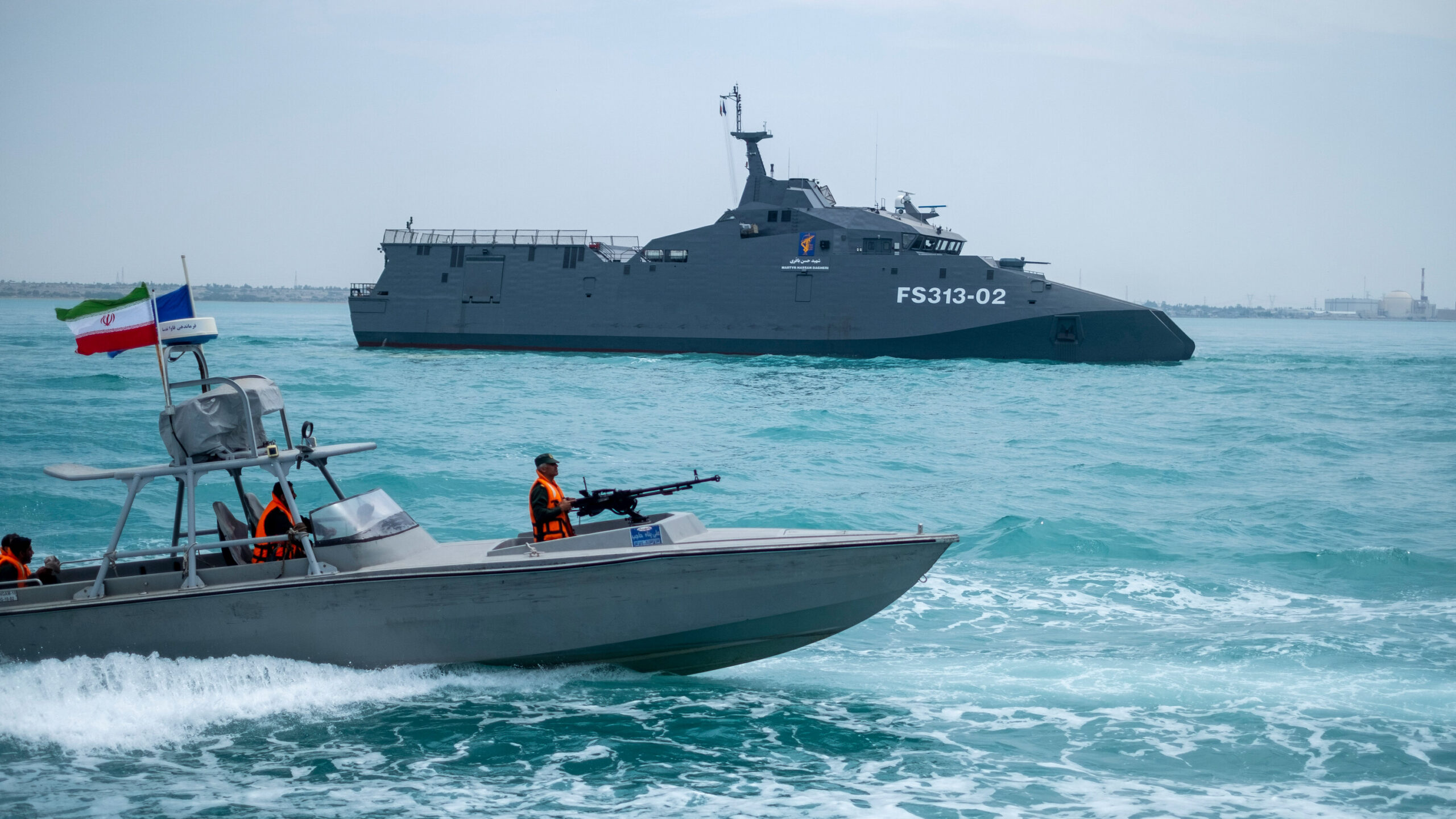
Key Figures at a Glance
- $299B — Maximum output loss projected for Asia-Pacific (UNDP)
- 8.8M — People at risk of poverty across Asia-Pacific
- $103/bbl — Brent crude average, March 2026
- +140% — Asian LNG spot price surge following Ras Laffan strike
- 84% — Share of Gulf crude bound for Asian markets
When the United States and Israel launched their opening airstrikes on Iran on the morning of February 28, 2026, the immediate headlines belonged to the military: assassinated officials, retaliatory ballistic missiles, the macabre theatre of drone swarms over Gulf capitals. Economists watched a different ticker. Within hours, Brent crude had surged more than ten percent. Within days, the Strait of Hormuz — that narrow, twenty-one-mile pinch point between Iran and Oman — had been declared closed by the Iranian Revolutionary Guard Corps. That single act of strategic disruption set off a financial shockwave that, two months on, continues to resonate most violently not in New York or London, but across the factories, farm fields, and households of Asia.
The financial impact of the US-Iran war on Asia is, in the precise language of economics, an asymmetric shock: a crisis whose costs are distributed with breathtaking inequity. The United States — now a net energy exporter thanks to its shale revolution — is cushioned from the worst. Its gasoline prices spiked, its consumers winced, but the macro numbers held. Asia, by contrast, sits at the exact intersection of the world’s most consequential energy corridor and its most energy-hungry growth engines. To understand why this war’s economic toll lands differently in Seoul than in Cincinnati, you must begin not with geopolitics but with geography — and with the inescapable arithmetic of who buys what from where.
The Choke Point That Choked an Entire Continent
The Strait of Hormuz is, to borrow a phrase from energy analysts, the world’s most consequential twenty-one miles of water. Before the war, approximately 20 percent of global seaborne oil and a fifth of global liquefied natural gas flowed through it daily. That figure, while striking, undersells Asia’s particular exposure. According to data compiled by the Congressional Research Service from pre-conflict 2024 shipping records, 84 percent of the crude oil and 83 percent of the LNG transiting the strait was destined for Asian markets. China, India, Japan, and South Korea alone accounted for roughly 70 percent of those oil shipments; the remaining 15 percent was scattered across Southeast and South Asia.
Iran’s closure of the strait on March 2 — the formal declaration by a senior IRGC official that “the strait is closed” — was not a bluff. Within hours, no tankers in the strait were broadcasting automatic identification signals. Britannica’s conflict chronology records that commercial traffic fell more than 90 percent after the opening of hostilities. War-risk insurance premiums for strait transits — which had crept from 0.125 percent to 0.4 percent of ship value in the days before the strikes — became essentially academic: the economic risk made transit uninsurable at any rational price.
The Energy Math, Laid Bare
Qatar’s Ras Laffan LNG complex — struck by Iranian drones on March 18 — suffered a 17 percent reduction in production capacity. Repair timelines: three to five years. Asian LNG spot prices surged more than 140 percent in response. QatarEnergy, the single largest LNG supplier to Asian markets, declared force majeure on its contracts with buyers.
Oil prices surged from roughly $70 per barrel just before the war to an average of $103 per barrel in March, with analysts at Capital Economics warning that a prolonged conflict could push Brent to $150 per barrel over a six-month horizon.
Fertilizers represent a less-discussed but equally dangerous channel: the Persian Gulf accounts for roughly 30–35 percent of global urea exports. With the strait closed, Asian agrarian economies face input cost shocks arriving precisely as spring planting cycles begin — a cruel, compound blow to food security.
The Chatham House analysis published in March put the structural vulnerability plainly: at the far end of energy import dependence sit South Korea, Taiwan, Japan, India, and China — all economies where energy imports represent a significant share of GDP. The United States sits “somewhere in the middle” — a net energy exporter whose domestic consumers pay more, but whose macro balance is net-positive when global oil prices rise. For Asia’s importers, the transmission is brutally direct: higher oil and gas prices raise the import bill for every household and firm, squeezing real incomes, widening current account deficits, and forcing central banks into an impossible bind between tightening to defend currencies and loosening to protect growth.
“This is not only a Middle East oil shock but also a wider Asian gas and power-security problem.” — Energy analyst cited in TIME, March 2026
Country by Country: A Continent Under Differential Pressure
China — Relatively Buffered, For Now
China entered the crisis with approximately 1.4 billion barrels of strategic crude reserves and pre-war stockpiling. Its belt-and-road railway links to Central Asia and overland Russian pipeline gas provided partial substitutes. Beijing’s formal neutrality also gave it negotiating leverage: Iran granted Chinese-flagged vessels selective strait access. But higher energy costs feed directly into steel, chemicals, and electronics production — squeezing margins at exactly the moment of peak trade friction with Washington. If the conflict persists beyond three months, Capital Economics estimates that Chinese growth could fall below 3 percent year-on-year.
India — Severely Exposed
India imports over 90 percent of its oil needs, with more than 40 percent of crude and 90 percent of LPG sourced from the Middle East. The UNDP’s socioeconomic analysis notes that 85 percent of India’s fertilizer imports originate in the region. The rupee weakened under import-bill pressure; inflation accelerated. New Delhi invoked emergency powers to redirect LPG from industry to households and secured a US Treasury 30-day waiver to purchase stranded Russian crude cargoes — a diplomatic improvisation that underscores just how thin the margins truly are. Higher energy prices are, as the World Economic Forum observed, “feeding inflation, weakening the rupee and threatening growth.”
Japan & South Korea — Emergency Measures Activated
South Korea imposed its first fuel price cap in nearly three decades and activated a 100 trillion won (approximately $68 billion) market-stabilisation programme. Korean Air entered “emergency mode,” focusing entirely on internal cost reduction. Japan began releasing strategic oil reserves. The exposure is structural: South Korea sources around 70 percent of its crude from the Middle East and routes more than 95 percent of that through Hormuz, leaving almost no slack. South Korea also makes much of the refined product — jet fuel, diesel — that sustains air travel and logistics across Southeast Asia and Oceania, meaning its own supply squeeze transmits regionally.
Southeast & South Asia — Recession-Level Risk
The region’s most acute vulnerabilities lie in its most reserve-thin, subsidy-dependent economies. Bangladesh faces recession-like conditions; universities were closed early ahead of Eid holidays to conserve fuel, and shopping centres were ordered to shut by 8 pm. Vietnam is weighing temporary cuts to fuel import tariffs. Thailand imposed a diesel price cap. The Philippines declared a state of emergency in late March. Pakistan, already under IMF-supervised austerity, faces a particularly compressed policy space. The UNDP is explicit: South Asia accounts for the largest share of the 8.8 million people at poverty risk in the region, reflecting “higher exposure to income and price shocks and more limited policy buffers.”
The Fertilizer-Food Nexus: An Invisible Crisis
One dimension of the Iran war’s economic impact on Asia that has received insufficient attention in financial media is the agricultural supply chain. Up to 30 percent of internationally traded fertilizers normally transit the Strait of Hormuz — primarily urea and ammonia from Gulf producers. With the strait closed and QatarEnergy having declared force majeure, fertilizer shortages have become a particular concern for agrarian economies, threatening Asian grain supplies just as spring planting cycles are underway. The knock-on to food prices — layered on top of already elevated energy costs — creates an inflationary compound that official models notoriously underestimate, because the agricultural price shock transmits with a lag of weeks to months into consumer food baskets.
Semiconductors, AI, and the Energy-Intensity Trap
The war has introduced a less-discussed vulnerability specific to this technological moment. Middle Eastern supply chain disruptions are tightening global helium supply — a critical input for semiconductor fabrication — potentially affecting chipmaking industries in Taiwan, South Korea, and Japan. Meanwhile, Asia’s rapidly expanding AI data-centre infrastructure is exceptionally energy-intensive. Higher electricity costs, driven by LNG price surges, directly increase the operational cost of the large-scale compute clusters that underpin the region’s technology ambitions. In an era when digital infrastructure is a strategic asset, energy price shocks are no longer merely an industrial problem — they are a competitiveness problem.
The Macroeconomic Damage: What the Numbers Say
The headline figures are stark. The United Nations Development Programme’s April 2026 report estimated that output losses for the Asia-Pacific region could range from $97 billion to $299 billion, equivalent to 0.3 to 0.8 percent of regional GDP. The range reflects two scenarios: rapid adaptation (drawing on reserves, securing alternative supplies, executing fast policy response) versus prolonged disruption that exhausts those buffers. As UNDP’s regional director for Asia and the Pacific, Kanni Wignaraja, put it with clinical precision: “You’re going to triple that if many of these countries run through these reserves and really have very little to fall back on.”
The Asian Development Bank revised its Asia-Pacific growth forecast down from 5.4 to 5.1 percent for both 2026 and 2027, with regional inflation projected to rise to 3.6 percent — a full 0.6 percentage points above 2025’s outturn. The ADB’s chief economist, Albert Park, called a prolonged conflict “the single biggest risk to the region’s outlook.” The IMF, in its April 2026 World Economic Outlook, quantified the transmission with precision: every sustained 10 percent increase in oil prices adds approximately 0.4 percentage points to global inflation and cuts worldwide output by up to 0.2 percent. Since oil prices rose roughly 47 percent from pre-conflict levels to the March average, the arithmetic is uncomfortably clear.
Beyond the aggregate GDP figures, the human dimension is where the shock truly registers. The UNDP estimates that 8.8 million people in the Asia-Pacific are at risk of falling into poverty as a direct consequence of the war’s economic fallout — part of a global total of 32 million at poverty risk. Losses are “most pronounced in South Asia,” the report notes, with women, migrant workers, and households in the informal economy carrying the sharpest edge of the crisis.
“A prolonged conflict in the Middle East is the single biggest risk to the region’s outlook, as it could lead to persistently high energy and food prices and tighter financial conditions.” — Albert Park, Chief Economist, Asian Development Bank, April 2026
Why Asia Bears a Disproportionate Burden
The asymmetry deserves direct examination, because it is not accidental — it is structural. The United States, transformed by the shale revolution into a modest net energy exporter, is in the peculiar position of being a country whose macro balance sheet benefits slightly from higher global oil prices, even as its consumers pay more at the pump. American gasoline prices surged — the national average hit $4 per gallon by March 31, a 30 percent surge — and that is real pain for American households. But it does not structurally impair America’s current account, its currency, or its capacity to service debt.
Asia’s arithmetic is inverted. The continent accounts for more than half of the world’s manufacturing output and is overwhelmingly dependent on imported hydrocarbons to run it. When oil prices rise, Asia’s terms of trade deteriorate. Import bills balloon in dollar terms while export revenues — primarily manufactured goods — do not rise commensurately. Currencies weaken. Inflation rises. Central banks face pressure to tighten even as growth falters. The spectre of stagflation is not rhetorical for Asia’s emerging economies. It is, in the worst scenario, the condition of 2026.
Compounding the structural disadvantage is the policy constraint. Advanced Asian economies like Japan and South Korea can deploy large fiscal stabilisation packages. But for Bangladesh, Pakistan, or Vietnam, fiscal space is thin, foreign reserves are finite, and subsidy commitments are already straining government budgets. As the World Economic Forum analysis observed, “in countries where energy subsidies remain extensive and government finances are already shaky, higher energy prices could unsettle bond markets.” A sovereign debt crisis in a major emerging Asian economy is not the base case — but it is no longer an extreme tail risk.
Two Scenarios: Short Shock Versus Prolonged Siege
Scenario A — Rapid Resolution (2–3 Months of Disruption)
If the current ceasefire holds and the Strait of Hormuz returns to near-normal traffic by mid-2026, Capital Economics forecasts Brent crude falling back toward $65 per barrel by year-end. Asian LNG prices would ease, though the Ras Laffan damage means the pre-war supply equilibrium in LNG is structurally impaired for years regardless. Growth downgrades in the region would be material but manageable — the 5.1 percent ADB forecast holds. Inflation peaks in Q2 before moderating. The 8.8 million poverty-risk figure represents a severe but temporary disruption, recoverable with targeted social protection and swift fiscal deployment.
Scenario B — Prolonged Conflict (6+ Months)
If the “dual blockade” — Iran restricting the strait, the US Navy blockading Iranian ports — persists through summer, the damage becomes qualitatively different. Capital Economics estimates Chinese growth could fall below 3 percent year-on-year. Brent crude could average $130–150 per barrel in Q2 alone. Sovereign spreads in vulnerable emerging markets blow out. The poverty count rises sharply as household energy and food subsidies are exhausted. The IMF’s severe scenario — oil prices 100 percent above the January 2026 WEO baseline, food commodity prices up 10 percent, corporate risk premiums rising 200 basis points in emerging markets — ceases to be a modelling exercise. At that point, the question is not whether Asia experiences stagflation, but how many economies tip into technical recession.
Even in the best case, IMF Managing Director Kristalina Georgieva has been explicit: “There will be no neat and clean return to the status quo ante.” The Ras Laffan damage alone has permanently reduced Qatar’s LNG production capacity for a multi-year window. Shipping companies are accelerating their rerouting calculus — longer, more expensive voyages around the Cape of Good Hope are already being priced into freight contracts. Chatham House’s economists warn that even a short war would leave Asian and European inflation roughly 0.5 percentage points above pre-conflict forecasts for the full year — a seemingly modest figure that, distributed across hundreds of millions of near-poor households, translates into meaningful welfare losses.
Long-Term Strategic Realignments: The Silver Linings Are Real, But Distant
Crises concentrate minds, and this one is already accelerating several structural adaptations that were moving too slowly in the years of cheap, reliable Gulf energy.
Renewable energy investment is surging. The war has done more in eight weeks to demonstrate the vulnerability of fossil-fuel dependence than a decade of climate negotiations. Asian governments are fast-tracking solar, wind, and storage capacity approvals. The long-run dividend — energy systems less exposed to a single maritime chokepoint — is real, though it accrues over years, not quarters.
Supply chain diversification is being institutionalised. The shock has forced a reckoning in corporate boardrooms from Tokyo to Mumbai. “Just-in-time” logistics, which assumes reliable, low-cost global supply chains, is being replaced by “just-in-case” thinking — higher inventory buffers, dual sourcing, and strategic reserves for critical inputs. This raises costs in the short term but reduces systemic fragility over time.
Alternative energy corridors are attracting investment. Oman’s deepwater ports at Duqm, Salalah, and Sohar — situated outside the strait in the Arabian Sea — have suddenly become critical strategic assets. The existing railway links from China through Central Asia to Iran underscore the geopolitical logic of overland connectivity as maritime insurance.
India’s strategic autonomy is under stress-test. New Delhi’s refusal to align categorically with either Washington or Tehran has been both asset and liability. The US Treasury emergency waiver allowing Indian access to Russian crude was an American concession that acknowledges India’s structural dependence. But analysts note that India’s closer relationship with Israel prior to the conflict has complicated its engagement with Tehran. Managing these tensions while securing energy supply is the defining foreign policy challenge for Indian diplomacy in 2026.
China’s mediation leverage has grown. Beijing’s decisive nudge reportedly played a role in Iran’s acceptance of the April 7 ceasefire. China’s formal neutrality, its deep economic entanglement with both Iran and the Gulf Arab states, and its status as the largest single destination for Gulf oil give it unique mediating currency. The war has, paradoxically, expanded China’s soft power in the region at a moment when American credibility among its Gulf allies is being intensely scrutinised.
The Policy Imperative: What Asia Must Do Now
For policymakers in Asian capitals, the crisis demands a response on three timeframes simultaneously.
In the immediate term, the priority is cushioning the household impact: targeted fuel price subsidies, food assistance, and social protection for the most vulnerable — the informal workers, migrant labourers, and near-poor households the UNDP identifies as carrying the greatest risk. Several governments have moved quickly; South Korea, Japan, Thailand, Vietnam, and Indonesia have all deployed market interventions. But the fiscal runway for sustained subsidisation is finite, and the political economy of subsidy withdrawal, when it eventually comes, is treacherous.
In the medium term, the crisis accelerates the urgency of energy security architecture — strategic reserve capacity, diversity of supply, and accelerated renewable deployment. The ADB and multilateral development banks have a clear role: concessional financing for energy security infrastructure in the most exposed economies should be treated as a geopolitical priority, not merely a development finance question.
In the long term, Asia needs a more sophisticated diplomatic framework for managing the risks that arise when its largest trading partner and its primary energy supplier are in conflict — and when the United States, which provides the security architecture for global maritime commerce, is simultaneously a belligerent party in a war disrupting that commerce. This is not an abstract geopolitical puzzle. It is the central structural tension of Asian economic security in the second quarter of the 21st century.
A Measured Verdict: The Bill Is Real, The Reckoning Is Unfinished
The US-Iran war is, at its core, a military and political conflict. But its most durable legacy — for Asia, at least — may be economic. A generation of Asian policymakers built growth models premised on cheap, reliable energy from the Gulf, frictionless maritime supply chains, and an American security umbrella that ensured both. All three premises are now in question simultaneously.
The immediate financial impact of the US-Iran war on Asia is quantifiable, if deeply uncertain in range: somewhere between $97 billion and $299 billion in output losses, 8.8 million people pushed toward poverty, growth forecasts revised downward across the region, and a continent navigating the worst energy shock since the 1970s with uneven policy buffers and inadequate strategic reserves. The human cost — measured in foregone school years, reduced caloric intake, deferred medical care — is harder to quantify but no less real.
What the numbers cannot fully capture is the subtler, more lasting damage: the erosion of confidence in the stability of the global trading system, the repricing of geopolitical risk across Asian supply chains, and the quiet acceleration of the region’s long, unfinished transition toward energy self-sufficiency. The war in Iran is, among many other things, a forcing function — brutal in its immediacy, but potentially clarifying in its long-run consequences for how Asia’s economies are structured, where its energy comes from, and how deeply it can afford to trust an international order whose most powerful guarantor is also, for now, the war’s primary author.
The markets will eventually stabilise. The strait will eventually reopen. But Asia’s relationship with the Hormuz chokepoint — and with the geopolitical vulnerabilities it represents — will not return to what it was on February 27, 2026. That may yet prove to be the conflict’s most consequential economic legacy.
Discover more from The Economy
Subscribe to get the latest posts sent to your email.
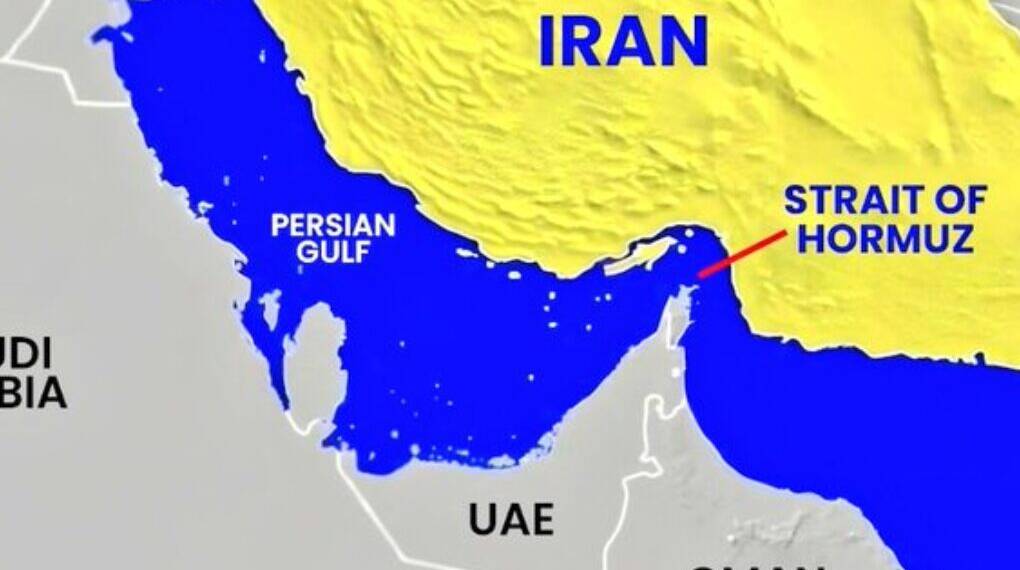
The Strait of Hormuz closure has unleashed the largest oil supply shock in history. Here’s how India, Pakistan, and Bangladesh can control rising inflation—and why the crisis is a structural wake-up call.
Something shifted in the world economy on February 28, 2026—and it is not coming back anytime soon.
When U.S.-Israeli strikes on Iran triggered the closure of the Strait of Hormuz, the world did not merely lose a shipping lane. It lost the circulatory artery of the global energy system. Tanker traffic through the strait—which ordinarily handles roughly 20% of global seaborne oil and a quarter of global LNG—collapsed from approximately 130 vessels per day in February to a near-standstill of just 6 in March, a 95% plunge almost without historical precedent. The International Energy Agency called it “the largest supply disruption in the history of the global oil market.” That is not hyperbole. That is a policy emergency.
For South Asia, the shock arrived like a tax bill no one budgeted for. Fuel queues snaked around petrol stations from Karachi to Chittagong. LPG cylinders vanished from market shelves in Lahore and Dhaka. Transport operators in Mumbai began passing surcharges onto consumers already squeezed by food prices. Small manufacturers—the backbone of South Asian employment—watched input costs spike while their customers pulled back. And everywhere, the question was the same: How long can governments hold the line?
The answer depends entirely on whether South Asian leaders treat this crisis as a temporary weather event requiring familiar relief measures—or as a structural indictment of a chronic, self-inflicted energy vulnerability that has been deferred for too long.
The Transmission Mechanism: How Hormuz Disruption Fuels South Asian Inflation
Understanding the inflation problem requires mapping the transmission chain from a narrow waterway in the Persian Gulf to a vegetable vendor’s stall in Dhaka.
The first channel is direct energy costs. Physical Dated Brent crude—the price Asian importers actually pay for delivered cargoes—surged to $132 per barrel in early April, even as futures markets drifted back to the low-$90s on ceasefire speculation. The gap between the futures price and the physical price tells you everything: markets believe the crisis will eventually resolve, but the cargo sitting in a tanker outside the Gulf cannot wait for resolution. For every $10 sustained increase in oil prices, global inflation rises by approximately 0.2–0.25 percentage points—a rule of thumb that becomes brutally consequential when prices jump $40 or $50.
The second channel is fertilizer. Up to 30% of globally traded fertilizers—urea, ammonia, and phosphates—transit the Strait of Hormuz. The Persian Gulf accounts for roughly 30–35% of global urea exports. With the strait closed, fertilizer prices in South Asia have spiked sharply, arriving precisely when planting seasons begin. This is not merely an economic problem. It is a food security crisis in the making, as higher fertilizer costs translate directly into lower crop yields and higher food prices in societies where food already commands 40–50% of household expenditure.
The third channel is currency depreciation. As investors pulled capital from emerging markets, the Pakistani rupee, Bangladeshi taka, and Sri Lankan rupee all faced renewed downward pressure. A weaker currency means costlier imports—denominated in dollars—feeding exchange rate pass-through into domestic prices. For Pakistan, navigating an IMF programme with thin foreign exchange reserves, this is the most dangerous second-order effect.
The fourth channel is LNG and power generation. After Iran struck Qatar’s Ras Laffan LNG complex in March 2026, northeast Asian LNG spot prices more than doubled to $22.5 per MMBtu. Bangladesh—which pivoted aggressively toward LNG-fired power in recent years—found its generation economics upended overnight. Pakistan, already mired in circular debt in its energy sector, faces similar pressures.
The IMF’s April 2026 World Economic Outlook now anticipates global inflation rising to 4.4%—up 0.6 percentage points from January projections—while global growth is expected to slow to 2.6% in 2026 from 2.9% in 2025. UNCTAD warns that developing nations face the ‘dual whammy’ of higher prices and weakening currencies simultaneously constricting their capacity to respond.
South Asia’s Structural Vulnerability: The Price of Chronic Dependence
Compared with economies most insulated from this shock—the United States, which exports energy; or China, which held approximately 1.2 billion barrels of crude reserves as of early 2026, providing over 100 days of import cover even under a scenario of zero new inflows—South Asia stands nakedly exposed.
India sources 40–50% of its crude imports via the Strait of Hormuz under normal conditions. Japan and South Korea—commonly cited as the most structurally vulnerable large Asian economies—at least benefit from decades of investment in strategic petroleum reserves exceeding 100 days of import cover, IEA membership, and deep institutional frameworks for crisis response. South Asian states, broadly, have none of these advantages at scale.
Pakistan immediately requested that Saudi Arabia reroute crude shipments through the Red Sea port of Yanbu—a pragmatic emergency measure, but illustrative of just how thin Pakistan’s contingency infrastructure has become. Bangladesh, among the most price-sensitive importers in Asia, faces fuel shortages that threaten to cascade through its garment sector—the country’s principal export earner and employer.
What makes South Asia’s position particularly precarious is the coincidence of vulnerabilities: high energy import dependence, thin fiscal buffers, food systems reliant on fertilizer imports, large informal workforces with no safety nets, and governments facing political pressure to cushion consumers precisely when doing so most strains public finances.
The Subsidy Trap: Why the Obvious Answer Is the Wrong One
Let us be clear-eyed about one temptation that will prove costly: using broad-based fuel subsidies as the primary response to this crisis.
Subsidies are politically seductive. They provide immediate, visible relief. They suppress headline inflation statistics in the short run. But the record is damning. Pakistan’s history of energy subsidies has contributed materially to its recurring fiscal crises, its addiction to IMF programmes, and the circular debt spiral that has made its power sector a structural liability rather than an asset. India’s fertilizer and fuel subsidy bill already runs into the hundreds of billions of rupees annually; adding another layer during an oil shock without structural reform merely postpones pain while accumulating fiscal dry tinder.
Subsidies also suppress the price signals that tell businesses and consumers to adapt—to shift to public transport, to invest in more efficient machinery, to explore renewable alternatives. The right model is targeted, time-bound support for the genuinely vulnerable—low-income households, small farmers, critical transport workers—combined with demand management measures across the broader economy.
A Framework for Controlling Inflation Amid the Hormuz Closure
Short-Term Measures: Absorbing the Shock (0–6 months)
- Strategic reserve management. India, having diversified its crude sources to over 41 suppliers and pivoted to Russian crude since 2022, received a U.S. Treasury emergency waiver in March 2026 permitting purchases of stranded Russian oil cargoes—a pragmatic lifeline. Other South Asian states should immediately inventory available reserves and coordinate drawdowns with transparency to avoid hoarding.
- Emergency import diversification. Pakistan’s request for Saudi rerouting via Yanbu is the template, not the ceiling. Bangladesh, India, and Sri Lanka should activate emergency procurement with suppliers in West Africa (Nigeria, Angola), the Americas (Colombia, Brazil, Ecuador), and the United States, whose LNG export capacity is insulated from the Hormuz disruption.
- Demand-side management. The IEA’s crisis guidance recommends remote working, reduced highway speeds, carpooling mandates, and optimised public transport. The Philippines has moved to a temporary four-day work week. South Asian governments should adopt contextually adapted equivalents—calibrated demand reduction that cuts import bills without destroying economic activity.
- Targeted cash transfers over blanket subsidies. Channel relief directly to low-income households through digital payment infrastructure (India’s JAM Trinity, Bangladesh’s mobile money networks). Protect purchasing power without distorting price signals economy-wide.
Medium-Term Measures: Reducing Structural Dependence (6–24 months)
- Accelerated crude and LNG source diversification. No South Asian state should source more than 25–30% of any single energy commodity from a single supplier corridor. Long-term offtake agreements with U.S. LNG exporters, African crude suppliers, and Central Asian pipeline sources should be treated as national security imperatives.
- Regional energy cooperation. The BIMSTEC framework offers mechanisms for South Asian states to share strategic reserves in crisis conditions, coordinate procurement for scale advantages, and develop regional transmission infrastructure. Nepal and Bhutan’s hydropower potential remains dramatically underutilised as a clean regional resource.
- Fertilizer production localisation. India and Pakistan have domestic natural gas resources that could be more systematically directed toward domestic urea production, reducing the 30%+ import dependence on Gulf fertilizer. Bangladesh should explore accelerated investment in domestic blended fertilizer formulations.
Long-Term Measures: Achieving Energy Sovereignty (2–10 years)
- Aggressive renewable energy scaling. India already targets 500 gigawatts of renewable capacity by 2030. The Hormuz crisis makes this not merely an environmental imperative but an economic security imperative. Every gigawatt of domestic solar or wind capacity installed is a barrel of oil not imported, a dollar of foreign exchange not spent, an inflation point avoided in the next supply shock.
- Energy efficiency and building codes. Mandatory efficiency standards for appliances, commercial buildings, and industrial processes can materially reduce electricity demand growth without reducing welfare—and should be treated as a structural inflation-control mechanism.
- Fiscal buffers and sovereign energy funds. South Asian states should consider establishing dedicated Energy Security Funds—capitalised during periods of lower oil prices—to finance strategic reserve acquisitions and energy transition investments without straining general budgets during shock periods.
The Geopolitical Dimension: South Asia Needs a Seat at the Table
The Hormuz crisis is ultimately a geopolitical crisis. And South Asian states—which between them represent nearly two billion people and some of the most oil-import-dependent large economies on earth—have historically been bystanders in the geopolitical conversations that determine their energy fates.
India, as the region’s largest economy and a G20 member, should use every diplomatic channel to advocate for Hormuz stabilisation, including through its traditionally non-aligned posture and its relationships with Gulf states, Russia, and the United States. Delhi should also push for South Asian integration into IEA-style emergency response frameworks—a conversation that has inched forward in recent years but has yet to produce binding mechanisms.
Pakistan, Bangladesh, and Sri Lanka should coordinate through the UN, UNCTAD, and the Commonwealth to ensure the international community’s crisis response includes adequate support for vulnerable energy-importing developing nations. The IMF and World Bank have signalled awareness of this imperative; South Asian governments must turn awareness into concrete concessional financing for energy security investments.
The Crisis That Could Change Everything
The Strait of Hormuz has always been South Asia’s Achilles’ heel. What has changed in 2026 is that the vulnerability can no longer be politely deferred.
UNCTAD’s assessment is unambiguous: regions more dependent on Middle East energy imports, particularly South Asia and Europe, will be more exposed to prolonged inflationary pressure if disruptions persist. The SolAbility modelling estimates cumulative GDP losses of 3–4% or more under prolonged closure scenarios, with South Asia absorbing some of the heaviest hits. These are not tail risks. They are baseline scenarios under conditions that show no imminent resolution.
The history of structural economic reform tells a consistent story: the deepest, most durable reforms happen under crisis conditions, when the political economy of inertia is finally overwhelmed by the political economy of necessity. The 1991 Indian reforms came on the back of a balance-of-payments crisis. Bangladesh’s garment sector rise came out of disciplined liberalisation under pressure. Pakistan’s most consequential fiscal adjustments have invariably come under IMF conditionality.
The 2026 Hormuz closure can be South Asia’s next inflection point—but only if leaders resist the narcotic of temporary relief and reach instead for structural transformation.
The strait may reopen. The lesson must not close with it.
Key Sources & Citations
• IMF Blog: How the War in the Middle East Is Affecting Energy, Trade, and Finance (March 2026)
• UNCTAD Rapid Assessment: Hormuz Disruption Deepens Global Economic Strain
• Bloomberg Economics SHOK Model – Hormuz Oil Shock Analysis
• IMF Regional Economic Outlook: MENAP, April 2026
• World Economic Forum: 6 Ways Countries Are Responding to the Historic Energy Shock
• IG Markets: Strait of Hormuz Closure – Implications for Asia
• SolAbility: Hormuz Economic Impact Model – Day 42 Update
• Al Jazeera: IMF Cuts Global Growth Forecast During Hormuz Blockade
• Wikipedia: 2026 Strait of Hormuz Crisis
• Allianz Research: Economic Outlook 2026–27 – The Fog of War
Discover more from The Economy
Subscribe to get the latest posts sent to your email.

Stock Market Crash 2026? How the Trump $5,000 Dividend Impacts Global Inflation

Tax-to-GDP Ratio Explained: Global Benchmarks, Fiscal Sovereignty & 2026 Insights

Trade Deficit & Terms of Trade Explained: Global Impact, Real-World Examples, and 2026 Insights

Supply vs Demand Shocks Explained: Market Equilibrium, Inflation Risks & Policy Responses in 2026

Microeconomics vs. Macroeconomics Explained: Key Differences, Interdependence & Global Impact

Devaluation vs Depreciation: Clear Differences, Causes, and Economic Impact

Purchasing Power Parity (PPP) Explained: Global Rankings, Living Standards & Why Nominal Exchange Rates Mislead in 2026

Remittances 2026: Global Trends, Household Resilience & Economic Lifeline for Developing Nations

Stagflation Explained: Causes, Global Impact & 2026 Economic Outlook

Understanding Foreign Exchange Reserves: Key Purposes and Global Impact

The Business of Gaming and Tech: How Global Economies Are Driven by Digital Consumerism

Crypto Daily Outlook: Bitcoin, Altcoins, and the Future of Decentralized Finance

Anthony Scaramucci’s Crypto Prediction: Why MicroStrategy’s Move Is Bitcoin’s “iPhone Moment”

Best Dividend Stocks 2026: European & Asian Blue Chips

State Farm’s $5B Dividend 2026: Who Qualifies & Payout Dates

US-China Relations in Q3 2026: Trade Tariffs and Supply Chain Risks

Gold’s Wild 2026: From a Record $5,600 Peak to a 24% Crash and Back Toward $4,500

Oil Surges as Strait of Hormuz Traffic Collapses Again

The Rocket That Won’t Quit: Inside SpaceX’s Falcon 9 Launch Machine

Bank of England Set to Hold Rates Through Year-End, Reuters Poll Shows

SpaceX Starship Flight 14: First Orbital Attempt & Starlink V3 Launch Explained

The 2026 Crypto Regulatory Shift: What It Means for Institutional Investors

Top 30 Stocks for Investment in PSX for Massive ROI in 2026

AI Chip Stocks 2026: The Best Semiconductor Investments Beyond Marvell

AI-Powered Training: The Next Multi-Billion Dollar Ecosystem in Fitness

Retail Earnings Week: What Home Depot, Target & Walmart Reveal

Russia’s Black Sea Oil Exports Fall for a Fifth Straight Week

Tween Back-to-School Trends 2026: What’s Driving the $85B Season
-

 Markets & Finance8 months ago
Top 15 Stocks for Investment in 2026 in PSX: Your Complete Guide to Pakistan’s Best Investment Opportunities
-

 Analysis7 months ago
Johor’s Investment Boom: The Hidden Costs Behind Malaysia’s Most Ambitious Economic Surge
-

 Analysis7 months ago
Top 10 Stocks for Investment in PSX for Quick Returns in 2026
-

 Analysis7 months ago
Brazil’s Rare Earth Race: US, EU, and China Compete for Critical Minerals as Tensions Rise
-

 Banks8 months ago
Best Investments in Pakistan 2026: Top 10 Low-Price Shares and Long-Term Picks for the PSX
-

 Investment8 months ago
Top 10 Mutual Fund Managers in Pakistan for Investment in 2026: A Comprehensive Guide for Optimal Returns
-

 Global Economy9 months ago
15 Most Lucrative Sectors for Investment in Pakistan: A 2025 Data-Driven Analysis
-

 Global Economy9 months ago
Pakistan’s Export Goldmine: 10 Game-Changing Markets Where Pakistani Businesses Are Winning Big in 2025