
Global Economy
What the U.S. Attack on Venezuela Could Mean for Oil and Canadian Crude Exports: The Economic Impact

The aggressive U.S. pressure campaign against Venezuela’s oil sector is reshaping North American energy markets in ways few anticipated. The U.S. Treasury Department sanctioned four companies and oil tankers on December 31, 2025, as part of President Trump’s intensifying blockade against the Maduro regime, triggering a domino effect that positions Canada as an unexpected beneficiary in the global crude oil trade.
Here’s what this geopolitical shake-up means for oil prices, supply chains, and the $150 billion Canadian energy sector—and why investors, refiners, and policymakers are watching closely.
Understanding the U.S.-Venezuela Oil Relationship
The Escalating Sanctions Campaign
The Trump administration has sanctioned multiple vessels and companies involved in Venezuela’s shadow fleet operations, disrupting what remains of the country’s oil export capability. This isn’t just diplomatic posturing—it represents a fundamental disruption to hemispheric energy flows that have existed for decades.
Venezuela exports less than 1 million barrels per day, a small fraction of the 106 million barrels per day global oil market, according to analysis from the Center for Strategic and International Studies. Yet the strategic importance of Venezuelan heavy crude far exceeds its volume.
Venezuela’s Diminished Production Capacity
Venezuela’s oil production topped 3 million barrels per day in the early 2000s but has fallen sharply in recent decades due to declining investment and U.S. sanctions. The country once held the world’s largest proven oil reserves, but production infrastructure has deteriorated dramatically under years of economic mismanagement and international isolation.
Rebuilding Venezuela’s oil infrastructure would require investments of more than $100 billion and take at least a decade to lift production to 4 million barrels per day, according to Francisco Monaldi, director of the Latin America energy program at Rice University.
The Immediate Impact on Global Oil Markets
Gulf Coast Refineries Face a Critical Supply Gap
The reality facing U.S. refiners is more complex than simple supply and demand. Gulf Coast refiners favor heavy crude like Mexican Maya, as they typically run medium and heavy oil configurations, according to Wood Mackenzie analysis. Venezuelan heavy crude has historically filled a specific niche—high sulfur content, low API gravity—that perfectly matches the coking capabilities of sophisticated Gulf Coast refineries.
Gulf Coast refinery utilization started 2025 at 93% but has drifted to the mid-80% range as several mid-sized refineries cut runs by 5% to 10%. This decline isn’t entirely about Venezuelan supply disruptions—oversupply of light crude from the Permian Basin and compressed refining margins play significant roles—but the loss of heavy crude optionality constrains operational flexibility.
Price Volatility Remains Muted Despite Geopolitical Tensions
A continuing crackdown could throttle most or all of Venezuela’s exports and associated revenues, yet less than 20 percent of Venezuelan crude exports are transported on shadow tankers—a smaller proportion than Russian and Iranian barrels utilizing the same fleet.
West Texas Intermediate crude fell to $57.32 a barrel in January 2026, down from nearly $80 in January 2025, demonstrating that broader market factors currently outweigh Venezuela-specific disruptions. The International Energy Agency projects the oil market could see a surplus of 3.8 million barrels per day in 2026—the largest glut since the pandemic.
The Diesel Dilemma
There’s one product where Venezuelan supply matters disproportionately: diesel fuel. Venezuela produces a form of crude suitable for making diesel, which is widely used across industries. Removing Venezuela’s oil input from global markets could push up diesel costs in the U.S. and boost inflation, according to Atlantic Council analysis.
This creates an interesting paradox. While overall crude oil supply remains abundant, specific refined product markets could tighten, creating regional price dislocations that sophisticated traders will exploit.
Canada’s Strategic Opportunity in the Energy Landscape
Western Canadian Select Emerges as the Alternative
Enter Canada—and specifically, Western Canadian Select heavy crude. The characteristics that once made WCS a challenging product to market now make it invaluable. With API gravity between 20.5 and 21.5 degrees and sulfur content of 3.0 to 3.5 percent, WCS offers similar processing characteristics to Venezuelan crude.
The WTI-WCS price differential narrowed from $18.65 per barrel in 2023 to $14.73 per barrel in 2024, attributed to the commissioning of the Trans Mountain Pipeline Expansion in May 2024, according to the Alberta Energy Regulator.
The differential has been trading in a tight band between $10.25 and $11.70 under WTI since September 2025, with analysts pointing to strong international buying of Canadian crude off the Pacific coast. Even with seasonal widening, these differentials represent historically favorable pricing for Canadian producers.
Trans Mountain Pipeline: The Game-Changing Infrastructure
The Trans Mountain Pipeline Expansion isn’t just another infrastructure project—it fundamentally rewires North American energy geography. The expansion increased capacity from 300,000 to 890,000 barrels per day, nearly tripling throughput and increasing total western Canadian crude oil export pipeline capacity by 13%.
Within the first 12 months of operation, average pipeline movements of crude oil from Alberta to British Columbia increased more than fivefold, with total crude oil volumes exported through British Columbia surging by more than sixfold, according to Statistics Canada data.
The geographic diversification is remarkable. From May 2024 to April 2025, crude oil shipments to non-U.S. destinations accounted for 48.1% of exports by volume from British Columbia, compared to 100% going to the U.S. in the previous 12-month period.
Production Capacity Ramping Aggressively
Canadian crude oil production rose 9.4% year-over-year to 150 million barrels in January 2025, with exports totaling 129 million barrels, up from 125.5 million barrels a year earlier, according to data from Mansfield Energy citing Statistics Canada.
This production growth trajectory positions Canada as one of the most significant non-OPEC+ crude output growth stories globally. Oil sands producers are capitalizing on improved market access, ramping up production to fill new pipeline capacity.
Economic Implications for North America
U.S. Energy Security Gets More Complex
The U.S. relationship with Canadian crude isn’t simply transactional—it’s deeply integrated through decades of infrastructure investment and refinery optimization. In 2022, 79.2 percent of Canada’s refined oil came from the U.S., with Canadian crude refined in the Midwest and then sold back to Canada and the rest of the world, according to data from the Observatory of Economic Complexity.
This creates a fascinating interdependency. As Venezuela falls further out of the supply picture, U.S. refiners need Canadian heavy crude more than ever. Yet simultaneously, Canadian producers have new leverage through Pacific export options that didn’t exist two years ago.
The U.S. tariff threat that dominated headlines in early 2025 demonstrated this tension. Under the tariff case, the WCS price was expected to be 18% below the base case forecast at $45 per barrel due to a 10% U.S. tariff on Canadian energy products, resulting in a widening WCS-WTI differential.
Canadian Economic Growth Projections Improve
Since the expanded Trans Mountain pipeline came online, non-U.S. oil exports rose from about 2.5 percent of total exports to about 6.5 percent, according to Alberta Central economist Charles St-Arnaud. This diversification reduces Canada’s vulnerability to U.S. market dynamics and policy uncertainty.
The Alberta government expects the average WTI price to be $76.50 US, up $2.50 US per barrel from originally forecast, demonstrating the economic significance of improved market access.
The multiplier effects extend beyond direct oil revenues. Pipeline operations, tanker loading facilities, refinery upgrades, and related services generate substantial employment and tax revenue across Western Canada.
Investment Flows Redirect Northward
Canadian production is averaging five million barrels per day as of July 2025—up from 4.8 million in 2023—and is set to grow further into 2026, according to ATB Financial. This production growth requires billions in capital investment across the oil sands complex.
Energy analyst Rory Johnston projects year-over-year growth of 100,000 to 300,000 barrels per day through 2025, making Canada one of the largest sources of crude output growth globally. In a world where major international oil companies face pressure to constrain capital deployment, Canadian oil sands represent one of the few jurisdictions seeing significant production increases.
Geopolitical Ramifications Beyond North America
China Emerges as Canada’s Largest Pacific Buyer
China has become the top buyer of Canadian oil via the Trans Mountain pipeline at 207,000 barrels per day—a massive increase from an average of 7,000 barrels per day in the decade to 2023, according to Institute for Energy Research data.
This shift carries profound implications. Chinese refiners gain access to reliable heavy crude supplies outside U.S. jurisdictional reach, reducing their dependence on sanctioned sources like Iran and Venezuela. For Canada, Chinese demand provides price support and market optionality that didn’t exist when the U.S. was effectively the only customer.
Chinese oil purchases through the port near Vancouver soared to more than seven million barrels in March 2025 and were on pace to exceed that figure in April, while Chinese imports of U.S. oil dropped to three million barrels a month from 29 million barrels in June 2024.
Regional Stability Questions in Latin America
The U.S. seizure of shadow fleet tankers demonstrates that Washington is willing to physically halt exports of sanctioned oil, potentially throttling most or all of Venezuela’s exports. This aggressive enforcement creates precedents that extend beyond Venezuela.
Russia and China face outsized vulnerabilities in a world of greater sanctions enforcement that may include physical seizures. Washington’s actions could inspire other sanctioning authorities to implement similar operations, particularly in strategic chokepoints like the Danish straits.
OPEC+ Calculations Shift
Venezuela’s production decline removes a historically significant OPEC member from market balancing equations. While current Venezuelan output is modest, the country’s vast reserves and potential production capacity have always factored into long-term OPEC+ strategy.
Canada isn’t an OPEC member and has no production coordination with the cartel. Increased Canadian output essentially represents non-OPEC supply growth that OPEC+ must account for in its own production decisions. This dynamic could contribute to persistent oversupply conditions that depress prices.
Challenges and Risks Ahead
Infrastructure Bottlenecks Remain
Canadian crude exports from the Trans Mountain pipeline fell to 407 thousand barrels per day in June 2025, down 10.5% from May and 23.5% below the March record of 532 thousand barrels per day, according to Kpler data.
Peak seasonal maintenance and wildfire-related production disruptions that began in late May caused the decline, while strong inland U.S. demand from the Midwest and Gulf Coast reduced export availability. These operational realities demonstrate that even with new infrastructure, Canadian exports face constraints.
Enbridge Mainline was apportioned 4% in June 2025, with further apportionment expected in July, as demand from the Midwest and Gulf Coast competes for the same crude pool.
Environmental and Regulatory Headwinds
Canadian oil sands remain among the most carbon-intensive crude sources globally. As climate policies tighten—particularly in key markets like California and the European Union—carbon intensity creates both regulatory risk and reputational challenges.
California’s low-carbon fuel standards explicitly penalize high-carbon crude sources. While Asian buyers currently show less concern about carbon intensity, this could change as climate policies evolve. The $34 billion Trans Mountain expansion faced years of environmental opposition, demonstrating that future infrastructure projects will face significant regulatory hurdles.
Market Volatility Creates Planning Uncertainty
Oil prices fell to $57.32 per barrel in January 2026, dropping roughly 20% in 2025 and extending a decline over the previous two years. This price environment challenges the economics of capital-intensive oil sands development.
Oil sands projects require multi-billion-dollar investments with decades-long payback periods. Price volatility makes financial planning extraordinarily difficult. While improved market access through Trans Mountain helps, it doesn’t eliminate exposure to global price cycles.
Trans Mountain has become one of the most expensive routes for oil shippers due to toll increases necessary to cover construction cost overruns exceeding $34 billion. Higher transportation costs eat into producer netbacks, reducing the competitiveness of Canadian crude.
Expert Predictions and Future Outlook
Growing Asian Demand for Heavy Crude
Market analysts project continued growth in Asian demand for Canadian heavy crude, particularly as refineries complete infrastructure adaptations and develop expertise in processing oil sands products. This represents a fundamental shift in global crude trade flows.
Chinese and Indian refiners have invested billions in coking capacity specifically designed to handle heavy, high-sulfur crudes. As these facilities ramp up, they create structural demand for exactly the type of crude Canada produces in abundance.
Infrastructure Expansion Plans
Trans Mountain Corp is reviewing expansion projects for the line, with goals of increasing exports to Asian markets by adding between 200,000 and 300,000 barrels per day of capacity. Most of this additional capacity would likely target Asian rather than U.S. West Coast markets.
These expansion plans indicate confidence in long-term demand, but they also face the same political and environmental challenges that made the initial Trans Mountain expansion so contentious. Whether Canada can sustain the political will to approve major new energy infrastructure remains uncertain.
Long-Term Supply-Demand Balance Questions
Based on futures markets, the average price for WTI in 2026 is roughly $61 per barrel, down from the 2024 average of $76 per barrel, largely driven by concerns of slowing demand and an escalating global trade war, according to CAPP analysis.
The fundamental challenge facing the oil industry is that supply growth—from the U.S. shale, Canadian oil sands, Brazilian pre-salt, and Guyana—continues outpacing demand growth. Even with Venezuelan production effectively removed from the market, global oversupply persists.
This creates a paradoxical situation: Canadian producers gain market share and improve their strategic position while operating in an environment of depressed prices and margin pressure.
Key Takeaways: What This Means for Stakeholders
For U.S. Refiners: The loss of Venezuelan heavy crude creates dependency on Canadian and Mexican sources. Smart refiners are securing long-term Canadian crude supply contracts while the market remains oversupplied.
For Canadian Producers: The Trans Mountain expansion has created genuine optionality and improved netbacks, but success requires continued production efficiency improvements and market development in Asia.
For Investors: Canadian energy companies with low-cost oil sands operations and strong balance sheets look increasingly attractive. The sector faces headwinds from overall price weakness but structural advantages from improved market access.
For Policymakers: Energy security considerations increasingly favor North American supply chains. The U.S.-Canada energy relationship, despite periodic tensions, represents a strategic asset in an uncertain geopolitical environment.
For Asia’s Energy Buyers: Canadian crude offers reliable supply outside U.S. sanctions risk, though at the cost of higher transportation expenses and carbon intensity concerns.
The Bottom Line
The U.S. pressure campaign against Venezuela is accelerating a transformation already underway in North American energy markets. Canada isn’t simply filling a gap left by Venezuelan supply disruptions—it’s fundamentally repositioning as a globally connected crude exporter with options beyond its traditional U.S.-centric model.
The WTI-WCS price differential is anticipated to average $11 per barrel in 2025 as Trans Mountain enters its first full calendar year of operation. This represents the narrowest differential in years and reflects improved market access.
Yet significant uncertainties remain. Trade policy tensions between the U.S. and Canada could resurface. Global oil demand growth faces headwinds from electric vehicle adoption and efficiency improvements. Climate policies could penalize carbon-intensive crude sources.
What’s clear is that the era of Canadian crude as a captive supply to U.S. refineries has ended. The strategic implications of this shift—for energy security, geopolitics, and market dynamics—will play out over the coming decade.
For now, Canadian producers are capitalizing on a unique moment: Venezuelan production constrained by sanctions, new export infrastructure creating Asian market access, and global refiners seeking reliable heavy crude supplies. Whether this opportunity translates into sustained economic benefits depends on execution, market conditions, and policy developments that remain highly uncertain.
Frequently Asked Questions
Q: What is the impact of US sanctions on Venezuelan oil?
The U.S. has sanctioned multiple companies and vessels in Venezuela’s shadow fleet, disrupting the country’s ability to export crude oil and generating revenue for the Maduro regime. These sanctions effectively cut Venezuela off from most international oil markets, though some exports continue through sanctions evasion.
Q: How will Canadian crude exports benefit from the Venezuela situation?
Canadian crude benefits through five key mechanisms:
- Reduced competition from Venezuelan heavy crude in Gulf Coast refineries
- Trans Mountain Pipeline providing Asian market access
- Narrower price differentials due to improved market access
- Increased production justified by reliable export capacity
- Strategic positioning as a sanctions-free alternative to Venezuelan supply
Q: Why do Gulf Coast refineries need heavy crude oil?
Gulf Coast refineries invested billions in coking and conversion units specifically designed to process heavy, high-sulfur crude into valuable products like gasoline and diesel. These complex refinery configurations achieve higher margins when processing discounted heavy crude rather than more expensive light crude, making heavy crude supplies strategically important to their operations.
Discover more from The Economy
Subscribe to get the latest posts sent to your email.


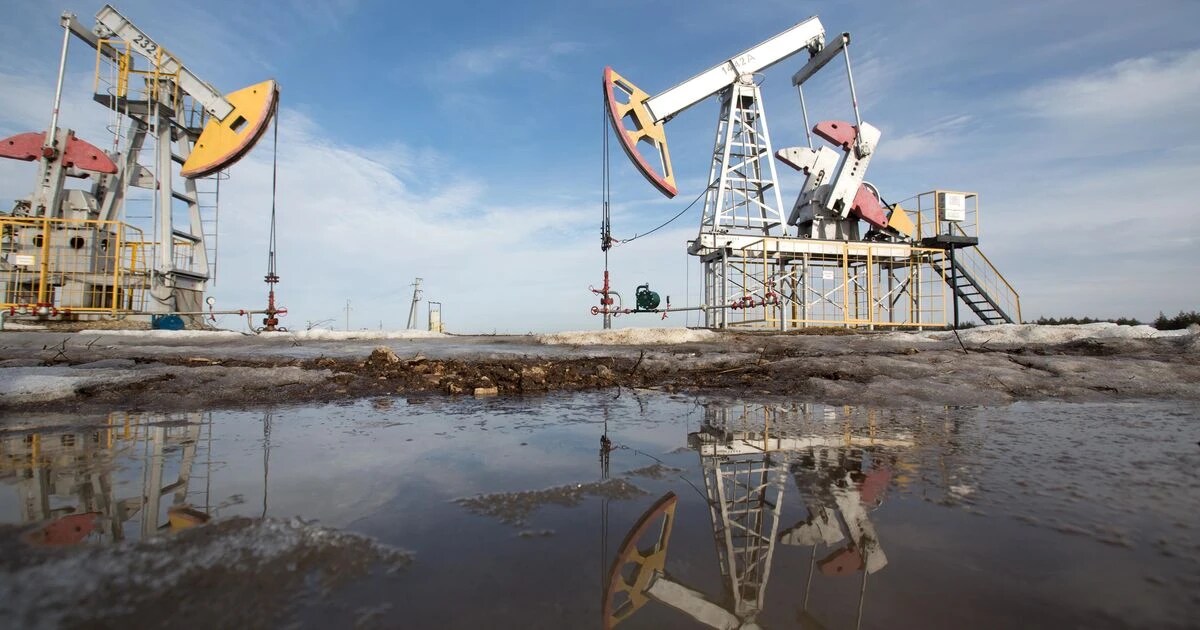
Two contradictory forces are shaping the 2026 oil market simultaneously: a structural glut large enough to keep prices depressed for years, and a live geopolitical risk premium large enough to send prices toward levels not seen in over a decade. Both are true at once, and understanding why matters for anyone pricing energy, currency, or emerging-market risk this year.
The Oversupply Case
The consensus view among major forecasters is bearish. The IEA has projected a 2026 surplus of up to 4.09 million barrels per day, later revising it slightly down to 3.84 million barrels per day as sanctions on Russian and Venezuelan supply offset some of the glut, according to Forex.com’s 2026 outlook. Goldman Sachs has forecast Brent averaging $56 per barrel and WTI $52 in 2026, driven by long-delayed pandemic-era projects coming online in clusters alongside OPEC+’s gradual unwinding of production cuts, per coverage from iTiger. The bank has flagged Brent could fall into the $40 range if non-OPEC supply proves more resilient than expected or a recession hits in 2026-2027.
EBC Financial Group’s analysis similarly expects Brent to average $58-60, with the IMF projecting global growth of 3.3% for 2026 — a supportive but not booming demand backdrop. Crucially, forecasters diverge sharply on demand growth itself: the IEA projects roughly 930,000 barrels per day of additional 2026 demand, while OPEC is far more bullish at 1.4 million barrels per day — a gap that alone could determine whether the market tightens faster than consensus expects.
The Geopolitical Premium
Layered on top of that oversupply is acute conflict risk. The 2026 U.S.-Israeli military conflict with Iran and the effective closure of the Strait of Hormuz triggered what one analysis calls a “historic geopolitical supply shock” against the oversupply backdrop, according to Just2Trade’s market review. The IMF has characterized an “adverse scenario” of 2.5% global growth and 5.4% inflation as a live operating risk, warning that prolonged conflict with oil near $125 a barrel could de-anchor global inflation expectations entirely. Notably, oil and equity markets have diverged during the crisis — Brent fell sharply during a late-May ceasefire period even as equities rallied, illustrating how regime-dependent the correlation between crude and financial markets has become.
Setting Up the Next Shortage
Perhaps the most underreported angle is the setup for what comes after 2026. Lower prices are already deferring investment, particularly in U.S. shale — the EIA forecasts flat 2026 output with potential declines if prices stay below $60, according to Fort Worth Inc.’s analysis of Saxo Bank data. Goldman Sachs projects prices could rebound toward $80/$76 (Brent/WTI) by end-2028 specifically because low 2025-2026 prices will curb non-OPEC supply growth while minimal new long-cycle projects come online post-2026, following roughly 15 years of underinvestment.
Who This Hits Hardest
The oversupply-plus-risk-premium combination lands unevenly. Producers with high fiscal breakeven prices and limited buffers — Russia chief among them, whose Q1 2026 oil and gas revenue collapsed 45% year-on-year — are exposed on the downside even as they occasionally benefit from conflict-driven price spikes. Gulf producers, by contrast, are using current elevated-but-volatile pricing to accelerate diversification of their sovereign wealth into non-oil assets, a hedge against exactly this kind of structural oversupply persisting into the 2030s.
Discover more from The Economy
Subscribe to get the latest posts sent to your email.

Indonesia has taken its first concrete legislative step toward building a financial centre intended to compete with Singapore, Hong Kong, and Dubai, as President Prabowo Subianto pushes an ambitious plan to draw foreign capital into Southeast Asia’s largest economy and lift growth toward 8% by the end of his term in 2029.
Parliament Passes Enabling Legislation
Indonesia’s parliament passed the enabling legislation for the new financial hub, laying its legal foundation, according to reporting by the South China Morning Post. The milestone marks the most tangible progress yet on a project analysts say is projected to attract billions of dollars in investment — though they caution that crucial details on tax incentives, investor eligibility requirements, and regulatory safeguards still need to be finalised before the centre can credibly compete with established regional players.
The ambition is unmistakable: a financial centre capable of pulling capital away from Singapore’s deep, established markets, Hong Kong’s China-gateway status, and Dubai’s fast-growing wealth-management ecosystem is a tall order, and observers note that persuading global institutional investors to relocate meaningful operations to a new jurisdiction is a multi-year undertaking that has only just begun in earnest.
Indonesia’s parliament passed enabling legislation in July 2026 for a new financial hub designed to rival Singapore, Hong Kong, and Dubai, as President Prabowo Subianto targets 8% GDP growth by 2029. Singapore remains Indonesia’s top foreign investor at $8.8 billion in H1 2026, ahead of Hong Kong and China.
A Broader Investment Story Already Taking Shape
The financial-hub push arrives alongside signs that Indonesia is already deepening its role as a regional investment destination. Singapore remained Indonesia’s largest foreign investor in the first half of 2026, contributing $8.8 billion, followed by Hong Kong at $7.8 billion, China at $3.9 billion, Japan at $1.9 billion, and the United States at $1.7 billion, according to investment data reported by the New Straits Times. Malaysia ranked fifth, contributing $700 million in the second quarter alone, as Indonesia’s total realised investment reached Rp511.8 trillion.
Indonesian Investment Minister Rosan Roeslani has pointed to regulatory reform — including Government Regulation No. 28, introduced last October, which he said has provided greater licensing certainty — as a key driver of investor interest, while explicitly acknowledging that neighbouring economies are reforming in parallel, requiring Indonesia to keep pace.
Growth Outlook Holds Steady Amid Regional Headwinds
The financial-hub push comes as Indonesia’s broader macroeconomic backdrop remains comparatively resilient. The Asian Development Bank’s July 2026 outlook kept Indonesia’s growth forecast unchanged at 5.2% for both 2026 and 2027, even as the bank lowered its overall developing Asia and Pacific growth projection to 4.9% amid Middle East-driven energy cost pressures. That stability stands in contrast to Malaysia, whose 2026 growth forecast was revised only marginally higher to 2%, according to the same ADB report — even as Maybank Investment Banking Group separately upgraded its own Malaysia forecast more aggressively, to 4.9%, citing strong regional investor interest at July’s Invest ASEAN conference in Singapore, which drew 200 institutional investors managing a combined $23 trillion in assets.
Rice Diplomacy as a Parallel Economic Thread
Indonesia’s regional economic engagement extends beyond high finance. State logistics agency Bulog is continuing negotiations with Malaysia and Singapore over proposed rice export deals, with pricing and commercial terms still under discussion as of mid-July, according to The Star. The talks illustrate the breadth of Indonesia’s economic diplomacy push across ASEAN even as its flagship financial-hub ambitions dominate headlines.
What It Means for Global Investors
For asset managers and multinationals weighing where to locate Southeast Asian operations, Indonesia’s financial-hub legislation is a signal of intent rather than an immediate call to relocate. The real test will come as tax-incentive structures, licensing rules, and investor-protection frameworks are finalised over the coming months — details that will determine whether Jakarta can credibly compete with Singapore’s decades-long regulatory head start, or whether the hub instead becomes a complementary gateway focused on domestic Indonesian capital markets and Belt-and-Road-adjacent regional flows.
Discover more from The Economy
Subscribe to get the latest posts sent to your email.

China’s leadership used its closely watched late-July Politburo meeting to strike a more supportive tone on the economy without committing to the kind of sweeping stimulus package investors had hoped might follow a sharp second-quarter slowdown, reinforcing Beijing’s preference for targeted, precision-guided policy support over broad-based easing.
Growth Slows Below Beijing’s Own Target Range
China’s economy expanded 4.3% year-on-year in the second quarter of 2026, a marked deceleration from the 5.0% pace recorded in the first quarter and a figure that sits below the lower bound of Beijing’s own 4.5–5% full-year growth target — the lowest such target range Beijing has set since the early 1990s, according to CryptoBriefing’s analysis of the data. Consumer demand has remained persistently weak, and deflationary pressure has now been a recurring theme in the Chinese economy for several consecutive quarters.
A Reuters poll of economists ahead of the meeting found growth for 2026 as a whole is expected to cool to around 4.6%, before easing further to roughly 4.4% in 2027, as weak domestic demand offsets the boost from resilient exports recorded during a global oil-price shock earlier this year.
Fiscal Firepower Exists — But Beijing Is Choosing Restraint
Perhaps the most consequential signal from analysts previewing the meeting was not about new money, but about unused capacity. China retains roughly RMB 6.8 trillion of this year’s approved government bond issuance quota still undeployed as of the end of June, alongside an RMB 800 billion quasi-policy financing instrument and an estimated RMB 1.8 trillion in unused bond quota carried over from prior years, according to analysis published on Substack’s macro research platform. The implication: Beijing does not lack tools, it is choosing to prioritise faster execution of existing plans over announcing a new headline package.
Standard Chartered economists have argued the meeting was likely to emphasise accelerating fiscal execution in the second half rather than expanding the overall scope of policy support, with monetary policy relegated to a supplementary role. That reading is consistent with the People’s Bank of China’s approach since May 2025, when it last adjusted policy rates or reserve requirements, opting instead for short-term liquidity operations.
China’s July 2026 Politburo meeting signalled stronger support language without a large new stimulus package, after Q2 GDP growth slowed to 4.3% — below Beijing’s 4.5–5% target. With RMB 6.8 trillion in unused bond quota available, policymakers are prioritising faster fiscal execution over broad-based monetary or fiscal easing.
Property Downturn and Overcapacity Remain the Structural Drag
Beneath the headline growth numbers lies a widening bifurcation. New growth drivers — high-end manufacturing, the digital economy, and modern services — accounted for more than 40% of growth in the first half, with high-tech manufacturing value-added up 13.3%. Yet retail sales grew just 1.3% year-on-year in the same period, and fixed-asset investment fell 5.7%, according to detailed policy analysis from independent China economy newsletter Fred Gao. That divergence — a resilient “new economy” propping up an ailing “old economy” — is precisely the dynamic policymakers appear determined not to paper over with indiscriminate stimulus that could derail the structural transition central to the 15th Five-Year Plan’s opening year.
Markets Should Watch Implementation, Not Rhetoric
The consistent message from economists across Citi, Standard Chartered, and independent research houses ahead of the meeting was that markets should discount policy language and instead track fiscal execution data in the coming months — the pace of local government bond issuance, infrastructure project approvals, and any loosening of housing-related restrictions in major cities. Beijing’s playbook, as one analyst close to policymaking circles put it, increasingly resembles precision-guided support rather than the credit-fuelled stimulus waves of 2008–09 or 2015–16.
What It Means for Investors
For global investors positioned in Chinese equities, the yuan, or commodities exposed to Chinese infrastructure demand, the takeaway is one of managed disappointment: meaningful policy support is coming, but gradually, and calibrated to avoid reigniting the property-sector excesses Beijing spent years trying to unwind. A weaker yuan remains the most likely near-term consequence of any incremental stimulus, while a sharper-than-expected growth slowdown in the third quarter remains the primary catalyst that could force Beijing’s hand toward broader action.
Discover more from The Economy
Subscribe to get the latest posts sent to your email.

Canada US Trade War 2026: Inside Carney’s Push to Cut Ties With Trump’s Tariffs

Rachel Reeves’s £25 Billion Problem: What the Autumn Budget Gap Means for Britain

Inside the Fed’s Most Divided Vote in Years: Why Warsh Held the Line on Rates

Pakistan Passed Its Third IMF Review

The Fed Is Fractured — And a New Chair Just Made It Louder, Not Quieter

The UK Economy in 2026 Is Neither Recession Nor Recovery :Stagflaton

Indonesia’s $121 Billion Nickel Bet Is Facing a Battery Chemistry

Why Ultra-Wealthy Families Are Splitting Between Singapore and Dubai inmarkets 2026

China Chose Political Control Over Fixing Its Deflation Trap in 2026

Oil Markets Are Oversupplied and Geopolitically Explosive at the Same Time

Russia’s Budget Deficit Blew Past Its Full-Year Target in Three Months

Malaysia’s Rare Earth Bet: Six Powers Are Negotiating for Kuantan at Once

Gulf Sovereign Capital Bypasses Pakistan Despite Record 2026 Spending Spree

Pakistan’s $10bn US Facility Request: Inside the New Gulf Capital Triangle

Russia Bans Diesel Exports 2026: Global Fuel Market Impact Explained

Gold Price Forecast 2026: Fed’s July 29 Decision and Record Central Bank Buying Explained

Strait of Hormuz Blockade 2026: Oil Prices Surge 9% as US-Iran Conflict Reignites

Strait of Hormuz 2026: Why Markets Still Don’t Trust It’s Open

Down But Not Out: Inside the Slow Sinking of Russia’s War Economy

Gulf Capital Retreat From Pakistan 2026: UAE Loan Freeze & What It Means

China Politburo July 2026: Stimulus Signals Explained

Pakistan IMF Deal 2026: Third Review Cleared, Budget 2026-27 and Inflation Outlook

Pakistan Economy 2026: GDP Grows 3.7% as IMF Completes EFF Review Amid Middle East Risk

Apple vs OpenAI Lawsuit: The Economic Story Behind the Headline

Global Stock Market Selloff 2026: Stagflation Fears Return as Iran Conflict Reignites

Indonesia Russian Oil Imports 2026: Why Jakarta Is Diversifying Crude Supply

The Yuan Now Settles 67% of Russian Oil Payments — Quiet De-Dollarization in Action

AI Capex Bubble 2026: The Hidden $662B Debt Nobody Reports
-

 Markets & Finance7 months ago
Top 15 Stocks for Investment in 2026 in PSX: Your Complete Guide to Pakistan’s Best Investment Opportunities
-

 Analysis5 months ago
Johor’s Investment Boom: The Hidden Costs Behind Malaysia’s Most Ambitious Economic Surge
-

 Analysis6 months ago
Top 10 Stocks for Investment in PSX for Quick Returns in 2026
-

 Analysis6 months ago
Brazil’s Rare Earth Race: US, EU, and China Compete for Critical Minerals as Tensions Rise
-

 Banks7 months ago
Best Investments in Pakistan 2026: Top 10 Low-Price Shares and Long-Term Picks for the PSX
-

 Investment7 months ago
Top 10 Mutual Fund Managers in Pakistan for Investment in 2026: A Comprehensive Guide for Optimal Returns
-

 Global Economy7 months ago
15 Most Lucrative Sectors for Investment in Pakistan: A 2025 Data-Driven Analysis
-

 Global Economy7 months ago
Pakistan’s Export Goldmine: 10 Game-Changing Markets Where Pakistani Businesses Are Winning Big in 2025