
Data Centers
AI vs. the Manhattan Project: Why the Comparison Breaks Down in 2026


The race to develop increasingly powerful artificial intelligence is frequently compared with the Manhattan Project, the secret US-led effort that produced the first atomic bombs during the Second World War.
The analogy is compelling at first glance. Both involve technologies with potentially enormous consequences. Both raise questions about national security, scientific responsibility and the ability of governments to control technologies that can reshape the balance of power.
But the similarities become much weaker when the underlying economics and institutional structures are examined.
The Manhattan Project was a centralized, classified military undertaking controlled by the US government. Frontier AI in 2026 is being developed largely through commercial competition involving technology companies, venture capital, cloud providers, semiconductor manufacturers, universities and governments across multiple countries.
That distinction matters.
According to Stanford University’s 2026 AI Index, industry produced more than 90% of notable frontier AI models in 2025, while global corporate AI investment more than doubled during the year. Private investment accounted for about 60% of total AI investment. Stanford HAI’s 2026 AI Index
The more useful question, therefore, may not be whether AI is another Manhattan Project.
It is whether society is trying to govern a technology whose development model is fundamentally different from anything governments previously confronted.
What the Manhattan Project Actually Was
The Manhattan Project was not simply a collection of scientists racing toward a major scientific breakthrough.
It was a wartime state program.
The US Department of Energy describes the project as an enormous research and development effort operating under the control of the War Department’s Army Corps of Engineers. Its classified nature and logistical requirements produced a large scientific and industrial infrastructure that later contributed to the creation of America’s national laboratory system. U.S. Department of Energy: Manhattan Project history
Its objective was also unusually specific: develop an atomic weapon before Nazi Germany or another adversary could do so.
The structure was therefore highly centralized:
- Government provided the funding.
- Military authorities controlled the project.
- Scientists and engineers were recruited into a classified program.
- Facilities were organized around a specific strategic objective.
- Information was compartmentalized.
- The end product was a physical weapon under government control.
This is fundamentally different from the modern AI ecosystem.
Today’s AI Race Is Distributed Across an Entire Economy
Frontier AI development does not take place inside a single government program.
Instead, it involves an ecosystem.
Technology companies develop foundation models. Cloud providers supply computing infrastructure. Semiconductor companies manufacture accelerators. Universities conduct research and train specialists. Investors finance startups. Governments provide research funding, procurement contracts and regulatory frameworks.
Stanford’s 2026 AI Index illustrates just how strongly the commercial sector now shapes frontier AI. Industry produced over 90% of notable frontier models in 2025, while AI investment and corporate spending continued to accelerate.
This creates a very different incentive structure.
A government weapons program can define success as accomplishing a strategic objective.
A commercial AI company must simultaneously consider:
Capability + revenue + computing costs + customers + competition + regulation + investor expectations.
That makes the AI race less like a single military project and more like an emerging industrial ecosystem.
But Saying AI Is Entirely Private Would Also Be Wrong
This is where simplistic versions of the argument can become misleading.
Although today’s frontier-model race is heavily commercial, the history of artificial intelligence contains decades of government-funded research.
The US National Science Foundation says it has invested in AI research since the early 1960s, helping establish technical foundations behind modern AI technologies. NSF: Artificial Intelligence
DARPA’s role is even more direct.
The agency says its AI research stretches back to the 1960s and that its investments helped advance areas including natural-language understanding, navigation, machine learning and computer vision. DARPA subsequently launched its AI Next campaign, committing more than $2 billion across a portfolio of AI research programs. DARPA AI Next
In 2026, DARPA and the National Science Foundation are also collaborating on AI Forge, designed to address national-security AI problems and strengthen connections among government, academia and frontier AI companies.
So the better description is not:
Government versus private AI.
It is:
Private-sector frontier development operating inside a much larger public-private technological ecosystem.
That distinction makes the debate more accurate.
Why AI Moves Differently From Nuclear Weapons
There is another fundamental difference: AI is a general-purpose technology.
A nuclear weapon is a physical object requiring specialized materials, facilities, engineering and manufacturing.
AI capabilities can spread through software, models, APIs, research papers, algorithms, computing infrastructure and talent.
That does not make advanced AI easy to reproduce. Frontier systems require enormous amounts of computing power, data, specialized chips, engineering talent and capital.
But the diffusion mechanism is different.
Once a software capability exists, copies can potentially be deployed across thousands or millions of systems.
That creates a governance problem unlike the one faced by the Manhattan Project.
Governments could control access to uranium enrichment facilities and weapons production much more directly than they can control every algorithm, researcher, server cluster, application and model derived from AI research.
The Speed of AI Development Is Another Major Difference
The pace of AI progress has also complicated traditional approaches to technology regulation.
Stanford’s 2026 AI Index reports that AI performance continues to advance rapidly and that benchmark saturation is occurring much faster than many previous evaluations were designed to accommodate. It also reports that organizational AI adoption reached 88%.
The UK’s AI Security Institute has similarly reported rapid improvement across several tested frontier-AI capabilities. Its research found that performance in some areas has been improving at a rate equivalent to roughly doubling every eight months. UK AI Security Institute Frontier AI Trends Report
This creates a policy problem.
If a government spends years designing a regulatory framework, the technology being regulated may look substantially different by the time the framework becomes operational.
That is very different from a wartime weapons project operating toward one defined technical objective.
The Most Important Similarity Is National Security
Despite the differences, dismissing the Manhattan Project analogy completely would also miss something important.
AI is increasingly becoming a national-security technology.
Governments are concerned about AI-enabled cyber operations, intelligence analysis, autonomous systems, disinformation, military decision support, biotechnology and the strategic consequences of advanced computing.
DARPA’s current AI programs explicitly connect AI development with national-security requirements, including trustworthy systems, security and human-AI collaboration.
The analogy therefore has some value when discussing strategic competition.
Where it becomes problematic is when the historical comparison is treated as an exact institutional blueprint.
AI’s Economic Incentives Change the Equation
One of the defining features of modern AI is the scale of private capital involved.
Stanford’s 2026 AI Index says global corporate AI investment more than doubled in 2025, with private investment growing 127.5% and accounting for roughly 60% of total AI investment. Generative AI was responsible for a particularly large share of the increase.
This means the incentives surrounding AI development are not exclusively strategic or scientific.
They are also commercial.
Companies are competing for:
- Enterprise customers
- Cloud consumption
- Developer ecosystems
- Advertising revenue
- Consumer subscriptions
- AI agents and applications
- Semiconductor capacity
- Data-center infrastructure
- Highly skilled researchers
- Investor capital
The result is an unusual combination: AI is simultaneously a commercial product, scientific research field, infrastructure industry and national-security technology.
The Manhattan Project was primarily organized around a military objective.
AI does not have one objective.
AI Safety Is Also Different From Nuclear Security
Nuclear security historically focuses heavily on controlling physical materials, facilities and weapons.
AI safety involves a much broader set of risks.
The National Institute of Standards and Technology’s AI Risk Management Framework identifies risks that can arise during the design, development, deployment, operation and eventual retirement of AI systems. Its generative-AI profile highlights risks that can emerge at the model, application and broader ecosystem levels. NIST AI Risk Management Framework
That creates a different governance architecture.
AI regulation has to consider questions such as:
Who developed the model?
What data was used?
How capable is the system?
Where can it be deployed?
Who has access to it?
How is it monitored after release?
Can it be misused?
How transparent should the developer be?
These questions cannot be answered simply by controlling one physical facility.
The Transparency Problem Is Growing
One of the most important differences between AI and the Manhattan Project concerns the visibility of technological development.
The Manhattan Project was deliberately secret.
Modern AI research exists in a more complicated environment.
Some research is openly published. Some models are openly released. Others are proprietary. Companies increasingly compete on capabilities while protecting information about training data, computing resources, model architecture and commercial strategy.
Stanford’s 2026 AI Index found that foundation-model transparency declined after improvements recorded in earlier years, with persistent gaps concerning training data, compute resources and post-deployment impacts.
That creates a paradox.
AI is simultaneously becoming more influential and, in some respects, less transparent.
For policymakers, that can make meaningful oversight difficult.
AI Risks Are No Longer Entirely Theoretical
The debate over AI safety is also moving from hypothetical scenarios toward measurable incidents.
Stanford’s 2026 AI Index reports that documented AI incidents increased to 362 in 2025, compared with 233 in 2024.
That statistic does not mean that AI poses the same kind of physical threat as nuclear weapons.
It does show, however, why governments and companies are building formal AI-risk-management systems.
The relevant risks range from misinformation and privacy failures to cybersecurity, unsafe autonomous behavior and failures in high-stakes applications.
The challenge is therefore not simply predicting a distant future.
It is managing systems already entering workplaces, governments, schools and critical infrastructure.
Why the Manhattan Project Analogy Still Persists
If the comparison is so imperfect, why does it keep returning?
Because the Manhattan Project represents something psychologically and historically powerful: a moment when scientists created a technology that dramatically changed national security and forced governments to confront consequences they could not easily reverse.
The analogy provides a shorthand for three concerns:
- Technological acceleration
- Strategic competition
- The possibility that scientific progress can outrun governance
Those concerns are relevant to AI.
The institutional solution, however, cannot simply be copied from 1940s nuclear research.
AI requires a different governance model because its development is distributed, international, commercially driven and deeply embedded in civilian technology.
What Policymakers Can Learn From the Manhattan Project
The useful lesson is not that governments should recreate the Manhattan Project.
It is that transformative technologies require institutions capable of responding at the same speed as technological change.
That means governments need stronger technical expertise, better testing standards, international cooperation and mechanisms for monitoring rapidly evolving AI systems.
It also means policymakers need to distinguish between different categories of AI risk.
A consumer chatbot, an AI coding agent, a medical system, a military targeting system and a frontier general-purpose model do not create identical risks.
NIST’s AI Risk Management Framework reflects this more flexible approach by encouraging organizations to evaluate trustworthiness throughout the AI lifecycle rather than treating AI risk as a single problem.
The Real AI Race Is Bigger Than the Manhattan Project
The most revealing difference between the two eras may be scale.
The Manhattan Project was a project.
AI is an ecosystem.
It spans semiconductor factories in Asia, data centers in the United States and other countries, research laboratories, universities, cloud platforms, startups, governments, investors and millions of users.
That makes AI harder to govern but potentially more economically transformative.
It also means that no single institution is likely to control the entire trajectory of the technology.
Final Takeaway: A Better Analogy for AI
The Manhattan Project remains a useful historical reference, but it should be treated as a comparison—not a blueprint.
The atomic-bomb project was a secret, centralized, government-controlled wartime effort pursuing a specific military objective. Today’s AI revolution is characterized by intense private-sector competition, global research, enormous commercial investment and continuing government involvement.
The numbers underline the distinction. Industry produced more than 90% of notable frontier models in 2025, while private AI investment became the dominant component of global AI investment. At the same time, organizations such as DARPA, NSF and NIST continue to shape research, national-security applications and AI risk management.
The deeper lesson is therefore not that AI is another atomic bomb.
It is that society is dealing with a technology that combines characteristics of several previous revolutions at once: scientific research, industrial infrastructure, commercial software, national security and mass-market consumer technology.
That is why the AI governance challenge may ultimately require something different from a new Manhattan Project.
It may require an entirely new model of technological governance.
Discover more from The Economy
Subscribe to get the latest posts sent to your email.


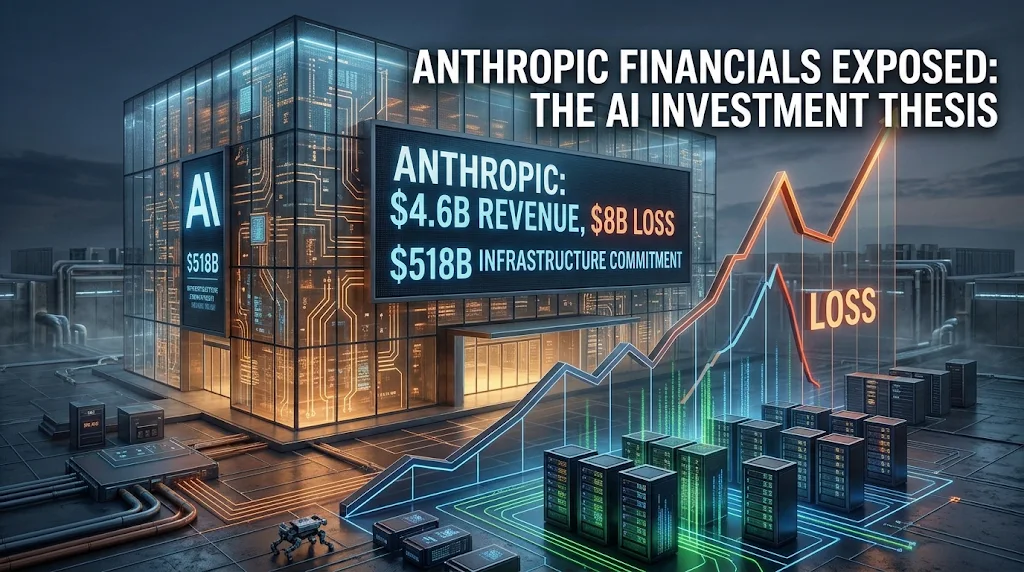
Anthropic’s draft IPO prospectus, reviewed by Reuters in late September 2026, shows revenue growing roughly twelvefold in 2025 to about $4.59 billion, alongside an operating loss of $8.06 billion and a reported $518 billion in future cloud and infrastructure commitments. The figures make Anthropic a useful test case for the broader AI investment thesis: can revenue growth outpace the cost of building frontier capacity? The answer so far is that growth is real, but spending and losses are growing faster.
Key Takeaways
- Anthropic’s 2025 revenue was about $4.59 billion, roughly twelve times the prior year, according to the Reuters-reviewed prospectus.
- The operating loss widened to $8.06 billion in 2025 from $2.98 billion in 2024, per the same reporting.
- Compute costs were about $7.33 billion in 2025, a major share of the company’s expense base, according to The Neuron’s summary of the prospectus.
- The company reported a net loss of nearly $42 billion for 2025 on an accounting basis, which is far larger than the operating loss and needs explanation from the full filing.
- Reports cite $518 billion in planned cloud, computing, and infrastructure obligations in coming years.
What the Prospectus Reveals
The draft prospectus, which Reuters reviewed and reported on September 28, 2026, is the first detailed public look at Anthropic’s finances. Reporting on the filing emphasized three things: rapid revenue growth, widening losses, and very large future commitments.
Revenue growth was concentrated in the U.S., which accounted for nearly two-thirds of sales, according to Reuters coverage. The company also reported that its annualized revenue passed $30 billion in April 2026, up from about $9 billion at the end of 2025, a figure the company stated publicly, per The Neuron.
The losses are the more striking part. An operating loss of $8.06 billion on revenue of $4.59 billion means the company spent roughly $12.6 billion to earn $4.6 billion in 2025, according to figures summarized by Stocktwits and other outlets. Compute, rather than sales and marketing, dominated the cost base.
Reading the Net Loss Carefully
The reported net loss of nearly $42 billion is far larger than the operating loss. Accounting net loss can include non-operating items such as fair value changes, financing costs, or other adjustments. Reports do not fully explain the gap in the sources reviewed, so editors should check the complete filing before drawing conclusions about cash burn.
Readers should distinguish between operating losses, which reflect the core business, and net losses, which reflect everything reported under accounting rules. Both matter, but they tell different stories.
The Infrastructure Commitment
The $518 billion figure is the most important forward-looking number. It refers to cloud, computing, and infrastructure obligations the company says it expects to incur. Such commitments are a common feature of frontier AI companies, which must secure capacity years in advance because chips, data centers, and power take time to build.
Commitments of this size create several risks:
- Revenue must grow fast enough to cover them. If growth slows, fixed commitments become a burden.
- Financing must remain available. Large obligations depend on access to debt and equity markets.
- Supplier concentration. Anthropic’s prospectus reportedly emphasized deep dependence on large technology partners, which provide capacity but also shape pricing and terms.
- Market timing. If demand for AI services softens, the company could face excess capacity.
Other reports in November described large financing arrangements tied to AI chips and networking equipment associated with Anthropic, including a $63 billion package from Blackstone and major banks. Those figures come from secondary reporting and should be confirmed in primary sources.
Valuation and the IPO
Reports say Anthropic is targeting a valuation of about $2 trillion in its public listing. That would be a large step up from a private valuation of about $965 billion in May 2026, according to 24/7 Wall St. Analysts note that the valuation reflects expectations about future growth more than current profitability.
Valuation comparisons are sensitive to the metric used. Dividing a $2 trillion valuation by 2025 revenue of $4.59 billion produces a multiple in the hundreds, which only makes sense if growth continues at extraordinary rates for years. Critics have argued that this is a bet on the company’s future, not its present financial position.
Note on status: Some outlets describe the prospectus as public, while Reuters and others describe it as a confidential or draft filing. Verify the current filing status on the SEC’s EDGAR database before publication.
A Reported Half-Year Figure Needs Verification
A Wall Street Journal report, summarized by an aggregator, cited a net loss of about $80.7 billion for the first half of 2026 on revenue of about $16.3 billion. If accurate, that would represent a steep acceleration in losses. Because the figure comes from secondary aggregation, it should not be published without confirmation from the WSJ original or the filed prospectus.
What This Means for the AI Investment Thesis
Anthropic’s financials sharpen the central debate about AI investment. The bull case is that revenue is compounding fast, customers are paying for models, and today’s losses are the cost of building capacity for a much larger market. The bear case is that spending is outrunning revenue, that commitments are fixed while revenue is not, and that the economics of frontier models may not support today’s valuations.
The Anthropic case is especially relevant because it links to the broader sector. Its infrastructure commitments flow to chip makers, data center operators, and utilities, which is why the company’s financial health affects Nvidia, cloud providers, and the power sector. Anthropic’s own spending is one of the demand signals that the rest of the AI supply chain depends on.
Three questions frame the thesis:
- Can revenue growth stay well above spending growth? The H1 2026 data, if confirmed, would suggest losses are still widening.
- Can unit economics improve? Compute costs must fall per unit of revenue as models and chips improve.
- Will financing remain open? Large commitments require continued access to capital.
What to Watch
- The final public S-1 filing, which will provide audited figures and risk disclosures
- Operating loss trends in the first half of 2026 and beyond
- Compute cost per unit of revenue and gross margin trends
- Disclosures about the $518 billion commitments and their timing
- Demand for AI services from enterprises and developers
Frequently Asked Questions
How much revenue did Anthropic make in 2025? About $4.59 billion, according to the draft prospectus reviewed by Reuters. The company reported roughly twelvefold growth from 2024.
Is Anthropic profitable? No. The draft prospectus shows an operating loss of $8.06 billion in 2025, and an accounting net loss of nearly $42 billion.
What is the $518 billion figure? It refers to planned cloud, computing, and infrastructure obligations reported in the prospectus. Such commitments are typically spread over years.
What is Anthropic’s valuation target? Reports cite a target of about $2 trillion for its IPO. The company’s private valuation was about $965 billion in May 2026, per 24/7 Wall St.
Why are losses so large? Frontier AI models require enormous compute to train and run. Compute costs were about $7.33 billion in 2025, according to reporting on the prospectus.
Does Anthropic’s financial situation affect other AI companies? Yes. Its infrastructure commitments support demand for chips, cloud capacity, and data centers, which links it to suppliers such as Nvidia and to utilities and developers.
Conclusion: Growth Is Real, the Test Is Economics
Anthropic’s prospectus shows a company growing extremely fast while spending heavily on the infrastructure that makes its growth possible. The key question for investors and policymakers is whether revenue can catch up with commitments before financing conditions tighten. Until the final filing is public and verified, treat the reported figures as indicative and watch the operating loss and cost trends most closely.
Discover more from The Economy
Subscribe to get the latest posts sent to your email.

Nvidia’s stock has fallen sharply in November 2026, driven by governance reports involving CEO Jensen Huang, concern about slower U.S. data center construction, and doubts about whether hyperscaler AI spending can keep rising. The company reports fiscal third-quarter results on November 17, and options markets were pricing an unusually large move of about 10.6% in either direction. Investors now need to separate the business, which remains strong on reported guidance, from the sentiment and governance risks that drove the selloff.
Key Takeaways
- Nvidia shares fell about 9.3% on November 5, 2026, their largest one-day drop in a year, according to Trefis.
- On November 9, shares fell 4.3%, wiping out roughly $190 billion in market value, after reports of an investigation into whether an alleged Chinese intelligence operation targeted Huang, per MarketPulse.
- Nvidia’s board announced an independent investigation on November 8 while expressing confidence in Huang, according to InvestingLive.
- Nvidia’s revenue guidance for the quarter was about $108 billion, plus or minus 2%.
- Options markets priced a move of about ±10.6% around earnings, above the stock’s 10-year average earnings-day move of ±7.8%.
What Happened in November
The selloff came in stages. Nvidia fell 4.22% on October 30, then about 7% over the five sessions ending November 4, according to Crypto Briefing. The 9.3% drop on November 5 was the largest in a year.
Three drivers overlapped:
- AI spending doubts. Investors questioned whether hyperscaler capex, which has been Nvidia’s main demand driver, can keep growing as cash flow tightens. (See our article on AI infrastructure sustainability for detail.)
- Data center constraints. Local moratoriums and ballot measures against data centers threaten to slow construction, and construction timing drives chip orders. (See our article on data center backlash.)
- Governance headlines. Reports about the investigation and about the board’s deliberations over Huang’s leadership added a company-specific risk premium.
Reports have said that Nvidia’s board was preparing to consider changes in leadership, according to a Wall Street Journal report summarized by InvestingLive. That report is unconfirmed by the company as of this writing, and editors should verify the latest board statements before publication.
The Business Picture Has Not Broken
Nvidia’s operating results remain strong by most measures. Analysts expect revenue and earnings per share to rise roughly 90% year over year for the quarter, and guidance points to continued growth. The stock’s forward price-to-earnings ratio has also been described as near a five-year low, which some investors see as a sign that expectations have reset.
Still, guidance quality matters more than the headline. Investors will focus on three items.
Data center revenue and hyperscaler orders. Growth in sales to large cloud customers is the clearest signal of whether AI infrastructure spending is sustaining.
Gross margin. Analysts have flagged rising memory prices as a pressure on gross margin, which some estimates place in the 71% to 72% range. A margin decline would matter as much as a revenue miss.
China exposure. Nvidia’s guidance has excluded most China data center sales, according to coverage from TIKR. Any update on export restrictions or China demand could move the stock.
What to Watch on November 17
Earnings are scheduled for about 4:20 p.m. Eastern Time, with a conference call at 5 p.m. Eastern. Focus on the following:
- Actual revenue versus the roughly $108 billion guide, and the size of the next-quarter guide
- Commentary on customer demand, particularly from hyperscalers and enterprises
- Data center timing and power constraints, which determine when orders convert to revenue
- Any update on the governance investigation, including statements about leadership
- Capital allocation, including buybacks and any change in investment plans
Expect volatility. The options-implied move of about 10.6% means a double-digit change is plausible in either direction.
Valuation: Why Some Analysts See Value
Valuation is the main debate. Bulls argue that the stock trades near its cheapest forward earnings multiple in five years while earnings have roughly doubled. Bears argue that the multiple is cheap only if earnings keep growing, which depends on AI spending that is now under scrutiny.
Two points keep this debate balanced. First, a lower multiple can reflect legitimate concerns rather than a bargain. Second, a strong quarterly report does not resolve longer-term questions about demand durability and competition. Nvidia has faced competitors such as AMD and Broadcom, and some investors rotated toward those names during the selloff.
Risks to Keep in View
- Concentration. Nvidia is one of the largest companies in the market, so its moves affect index funds and retirement accounts.
- Governance uncertainty. An unresolved investigation or leadership change could cause further volatility regardless of operating results.
- Customer concentration. A large share of revenue comes from a small number of hyperscalers, whose spending plans can shift.
- Policy risk. Export controls, data center moratoriums, and AI regulation could slow demand.
Frequently Asked Questions
Why did Nvidia stock fall in November 2026? Several factors combined: a sharp drop on November 5 tied to AI spending doubts, reports about an investigation involving CEO Jensen Huang, and concern that data center construction could slow due to local opposition.
When does Nvidia report earnings? Nvidia is scheduled to release fiscal third-quarter 2027 results on November 17, 2026, at about 4:20 p.m. Eastern Time, with a call at 5 p.m. Eastern.
What is Nvidia’s revenue guidance? Coverage cites guidance of about $108 billion, plus or minus 2%, for the quarter. Check the company’s official release for the exact figure.
Is Jensen Huang leaving Nvidia? Nvidia’s board announced an independent investigation and expressed confidence in Huang on November 8. A Wall Street Journal report said the board was preparing to consider leadership changes. No change had been confirmed by the company as of this writing.
Is Nvidia stock cheap now? Analysts disagree. Some point to a forward multiple near a five-year low. Others argue the multiple reflects risks to growth. This article does not offer investment advice.
What should I watch besides the headline earnings number? Gross margin, data center revenue, guidance for the next quarter, and any update on the governance investigation.
Conclusion: The Report Will Not End the Debate
Nvidia’s November 17 report is important, but no single quarter will settle whether the AI investment cycle is durable. Investors should look for evidence of continued demand, margin stability, and clarity on governance. Expect volatility around the report, and avoid making large decisions based on a single day’s price action.
Discover more from The Economy
Subscribe to get the latest posts sent to your email.
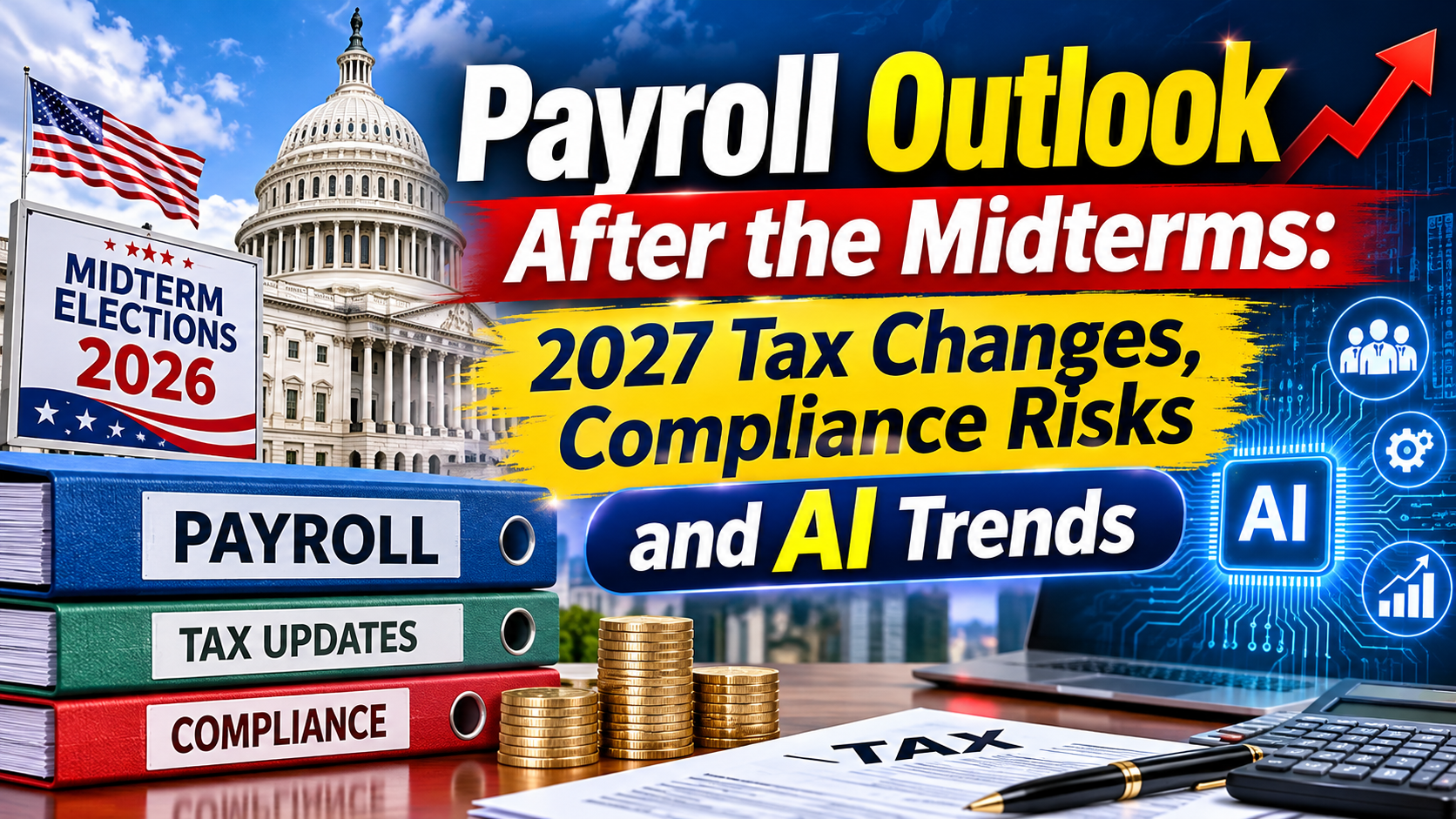
With the 2026 US midterm elections concluded, payroll departments are turning their attention to year-end processing and the possibility of late legislative changes that could alter 2027 withholding or reporting requirements. The IRS has already released inflation-adjusted figures for tax year 2027, but any lame-duck bill enacted with a 1 January effective date would compress the implementation window. Thomson Reuters Checkpoint
At the same time, industry surveys show continued acceleration in adopting AI and automation for payroll calculations, employee self-service, and compliance monitoring, along with growing interest in faster pay cycles such as weekly payroll.
Table of Contents
- What Are the Immediate Post-Election Priorities for Payroll Teams?
- Which 2027 Tax Adjustments Are Already Confirmed?
- Why Does Legislative Timing Create Implementation Risk?
- How Is Artificial Intelligence Changing Payroll Operations?
- What Is Happening with Faster Pay Cycles and Weekly Payroll?
- What Practical Steps Should Employers Take Now?
- How Should Organizations Prepare for Multi-State and Local Changes?
- Key Takeaways
- Frequently Asked Questions
What Are the Immediate Post-Election Priorities for Payroll Teams?
Monitor any tax legislation that emerges in the lame-duck session, finalise 2026 year-end reporting, load confirmed 2027 withholding tables, and prepare employee communications. Practitioners note that “timing is almost as important as the substance of the law” when changes arrive late in the calendar year. Thomson Reuters
Which 2027 Tax Adjustments Are Already Confirmed?
The IRS announced inflation adjustments for nearly 70 provisions. Illustrative standard-deduction amounts for 2027 include $33,200 for married couples filing jointly, $16,600 for single filers and $24,925 for heads of household. These figures flow directly into withholding calculations and Form W-4 processing and must be implemented for the first payroll of 2027. Thomson Reuters
Why Does Legislative Timing Create Implementation Risk?
Payroll systems, tax engines and year-beginning employee notices must be updated before the first 2027 pay date. A bill passed in December with a 1 January effective date leaves little room for testing and training, raising the probability of under- or over-withholding and subsequent corrections.
How Is Artificial Intelligence Changing Payroll Operations?
Industry research indicates that organisations are deploying AI for anomaly detection, predictive compliance, employee query handling and report generation. The technology is viewed both as a productivity tool and as a means of improving accuracy in multi-jurisdictional environments. Adoption continues to accelerate through 2026.
What Is Happening with Faster Pay Cycles and Weekly Payroll?
Search interest and employer adoption of weekly payroll and on-demand pay options continue to rise. Workers increasingly expect more frequent access to earned wages. Payroll teams must ensure that faster cycles remain compliant with tax-deposit schedules and reporting rules.
What Practical Steps Should Employers Take Now?
- Load the published 2027 IRS inflation adjustments into payroll systems.
- Establish a rapid-response protocol for any lame-duck legislation.
- Review state and local withholding changes effective 1 January.
- Audit AI and automation tools for accuracy and audit-trail capability.
- Communicate any material withholding changes to employees before the first 2027 payroll.
How Should Organizations Prepare for Multi-State and Local Changes?
Maintain updated tables for every jurisdiction in which employees work or reside, confirm reciprocity agreements, and test year-beginning payroll runs well before the first pay date of 2027.
2027 Standard Deduction Examples (IRS)
| Filing Status | 2027 Standard Deduction |
|---|---|
| Married filing jointly | $33,200 |
| Single | $16,600 |
| Head of household | $24,925 |
Key Takeaways
- Post-midterm focus shifts to 2027 implementation and year-end close.
- IRS inflation adjustments for 2027 are already published and must be loaded.
- Lame-duck legislation with short effective dates is the largest near-term risk.
- AI and automation adoption in payroll continues to accelerate.
- Weekly and faster-pay models are gaining traction.
- Proactive system updates and employee communication reduce compliance exposure.
Frequently Asked Questions
Do the midterm results immediately change federal payroll rules?
No. Existing law remains in force until new legislation is enacted and becomes effective.
When must the 2027 IRS adjustments be implemented?
In time for the first payroll of tax year 2027.
What is the biggest compliance danger right now?
Last-minute federal changes that alter withholding or reporting with a 1 January start date.
Is AI already handling core payroll calculations at most companies?
Adoption is growing rapidly but varies; many organisations still use AI mainly for ancillary tasks and exception handling.
Should employers delay updates until Congress adjourns?
No. Implement the known inflation adjustments now and retain flexibility for possible late changes.
Are weekly payroll cycles compliant with federal deposit rules?
Yes, provided deposit schedules and reporting are handled correctly by the payroll system.
Conclusion
Payroll professionals face a familiar but heightened post-election workload: absorb the already-published 2027 inflation adjustments while remaining ready for any surprise lame-duck provisions. For finance, HR and compliance audiences, the combination of legislative uncertainty and accelerating AI adoption makes disciplined change-management and testing essential. Organisations that prepare both their systems and their employee communications in advance will navigate the transition to 2027 with the least disruption.
Discover more from The Economy
Subscribe to get the latest posts sent to your email.

Tesla Cybercab and Robotaxi Economics in a Post-Midterm Environment

Impact of Pakistan’s Auto Policy on Local Manufacturers and Importers

Anthropic’s Financials and the AI Investment Thesis

Open Banking Trends 2026: What Consumers Should Know

Nvidia After the Selloff: What to Watch Before Earnings

Black Friday 2026 Early Deals: A Data-Driven Shopping Guide

Fed Policy Path 2027: Rate Expectations After the Hold

Asia’s Economic Resilience in 2026: The Strategic Blueprint for Sustaining the Global Growth Engine

Credit Scoring Changes 2026: What Mortgage Buyers Need to Know

10-Year Treasury Yield Outlook for 2027 After the Democratic Sweep

Is the AI Infrastructure Boom Sustainable? A Reality Check

Disability Insurance Demand in 2026: Who’s Buying and Why

What the 2026 Midterms Mean for Treasury Yields and Bond Markets

Payroll Outlook After the Midterms: 2027 Tax Changes, Compliance Risks and AI Trends

Dow Jones Today: Dow Slips 237 Points After the Worst Day Since April 2025

US–Iran Conflict in October 2026: Hormuz, Oil Prices and Diplomacy

Pakistan IMF Programme 2026: Why Bailouts Keep Returning

Singapore Stock Market Outlook 2027: The STI’s Bank-and-Yield Test

SSI November 2026 Payment: Why Benefits Arrive October 30

IMF Global Outlook 2027: The Recovery Is Real, but the Divide Is Growing

2027 Federal Tax Brackets: New IRS Rates and Standard Deductions Explained

World Bank Debt Report 2026: The $9.4 Trillion Burden Behind the Recovery

Stock Market Crash 2026? What the November Rout Actually Tells Us

KSE-100 Index 2026: Is Pakistan’s Stock-Market Recovery Sustainable?

Germany–France ‘Made in Europe’ Deal Could Reshape China’s EV Ambitions

Zhuhai Airshow 2026: How China’s Stealth Jets, Drones and Missiles Are Redrawing Global Air Power

Global Markets Today: The AI Sell-Off Has Become a Test of Liquidity

Singapore’s Bank Sell-Off Is Really a Test of What Stability Is Worth
-

 Markets & Finance10 months ago
Top 15 Stocks for Investment in 2026 in PSX: Your Complete Guide to Pakistan’s Best Investment Opportunities
-

 Analysis9 months ago
Johor’s Investment Boom: The Hidden Costs Behind Malaysia’s Most Ambitious Economic Surge
-

 Analysis9 months ago
Top 10 Stocks for Investment in PSX for Quick Returns in 2026
-

 Banks10 months ago
Best Investments in Pakistan 2026: Top 10 Low-Price Shares and Long-Term Picks for the PSX
-

 Analysis9 months ago
Brazil’s Rare Earth Race: US, EU, and China Compete for Critical Minerals as Tensions Rise
-

 Investment10 months ago
Top 10 Mutual Fund Managers in Pakistan for Investment in 2026: A Comprehensive Guide for Optimal Returns
-

 Global Economy11 months ago
15 Most Lucrative Sectors for Investment in Pakistan: A 2025 Data-Driven Analysis
-

 Global Economy11 months ago
Pakistan’s Export Goldmine: 10 Game-Changing Markets Where Pakistani Businesses Are Winning Big in 2025