
Analysis
Walmart’s New Streaming Stick Is the Quiet Disruption Big Tech Didn’t See Coming

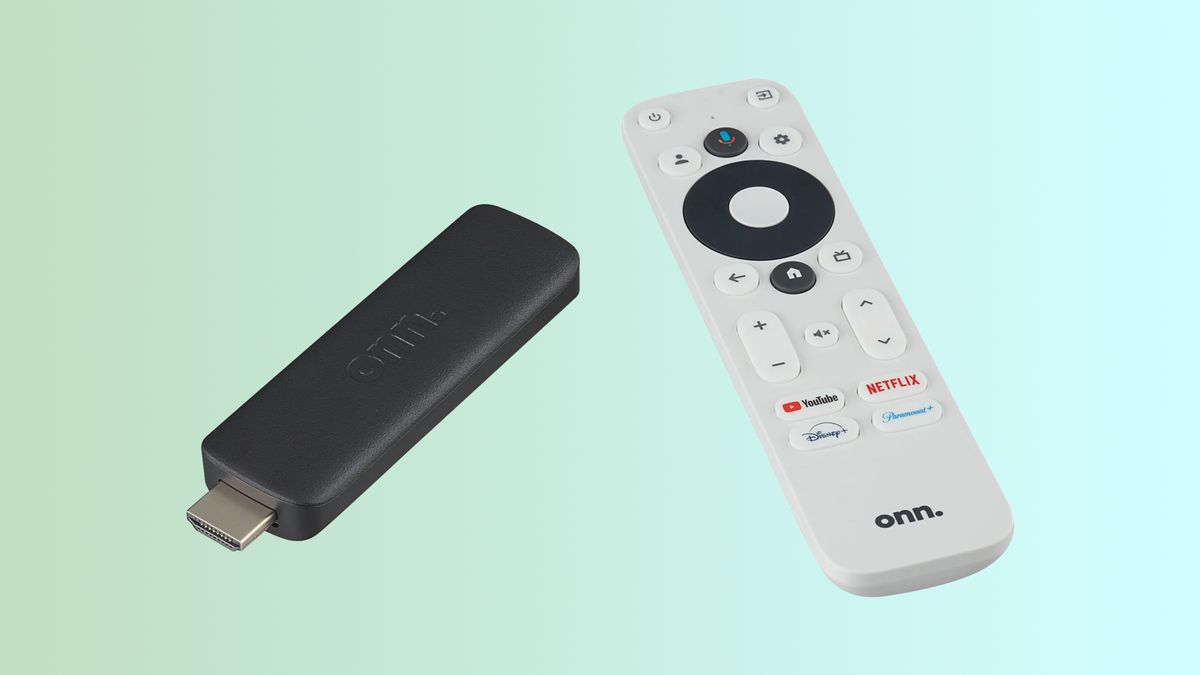
The Onn 4K Streaming Stick doesn’t arrive with fanfare. It doesn’t need it.
There were no press invites. No breathless product launches livestreamed to a million viewers. No carefully rehearsed executives in black turtlenecks. Sometime in early April 2026, a Reddit user in Texas walked into their local Walmart, spotted a compact HDMI dongle on the shelf — the Onn 4K Streaming Device — and bought it for roughly $30. Within days, the post had gone viral in streaming enthusiast circles. By week two, benchmark sites had torn it apart. By week three, analysts were quietly asking a question that felt almost impertinent: Has Walmart just upended the streaming hardware market without saying a single word about it?
The answer, this columnist argues, is essentially yes — and the implications run deeper than silicon and software.
The Walmart new streaming stick is not a toy. It is not a charity product or a loss leader dressed in plastic. It is, beneath its understated exterior, a pointed statement about who owns the future of home entertainment, how accessible that future should be, and whether Silicon Valley’s approach to streaming hardware — iterative, incremental, and increasingly expensive — is starting to run out of road.
The Spec Sheet That Should Make Roku Nervous
Let’s begin with the basics, because the basics are where this story gets interesting.
The Onn 4K Streaming Device (2026) — Walmart’s first-ever 4K streaming stick, as opposed to its existing set-top boxes — runs Google TV, supports 4K Ultra HD resolution, decodes AV1, delivers Dolby Atmos audio, and ships with a voice remote that puts Google’s Gemini assistant at the tip of your tongue. Under the hood, it is powered by a Realtek RTD1325 processor with a quad-core 1.7 GHz ARM Cortex-A55 CPU and an ARM Mali-G57 GPU, paired with 2GB of RAM and 8GB of storage. Connectivity is handled via dual-band Wi-Fi 5 and Bluetooth 5.2. Power and accessories run through a single USB-C port — a welcome upgrade from the Micro-USB common on budget devices of a generation ago.
The price? Approximately $19.88 to $30, depending on store location and timing.
Compare that to its nearest competitors. The Amazon Fire TV Stick 4K Plus retails at roughly $50 and, in benchmark testing conducted by AFTVNews, outperforms the Onn 4K Stick by approximately 15 percent in raw processing power. The Roku Streaming Stick 4K sits at a similar price tier. And Google’s own Chromecast successor, the Google TV Streamer, costs $79.99 — a device that the newer, pricier Onn 4K Pro (2026) reportedly bests in benchmark performance at two-thirds the price.
The Onn 4K Stick, to be precise, is not the fastest device on the market. It trades raw horsepower for something arguably more valuable in 2026: radical affordability at 4K capability. For tens of millions of households who want to upgrade an aging 4K television without committing to a $50–$80 streaming device, this stick represents a genuinely new entry point.
The Unremarkable Launch That Says Everything
The way Walmart launched — or rather, didn’t launch — the Onn 4K Streaming Stick is itself a lesson in retail philosophy.
There was no announcement. No coordinated press push. Units simply appeared in select stores, were purchased by curious early adopters, photographed, shared on Reddit and YouTube, stress-tested by enthusiast communities, and covered by tech outlets weeks before Walmart acknowledged the product’s existence online. As of late April 2026, the company’s website listings for the device have only recently gone live for most users, and a formal launch is still pending in many markets.
This is not an accident. Walmart has a documented pattern of soft-launching Onn devices — the 4K Plus, the previous 4K Pro — in exactly this manner. But the effect goes beyond mere supply chain staggering. What Walmart achieves through this approach is something more valuable in the attention economy: organic credibility. When a product is found rather than marketed to you, when enthusiasts dissect it of their own volition, when the first reviews come from real buyers rather than brand ambassadors, the resulting coverage is qualitatively different. It reads as discovery. It feels like truth.
For a company that has struggled — as all major retailers have — to position itself as a technology innovator rather than a discount warehouse, that credibility matters enormously.
The Real Competition: Not Amazon or Roku, But the Cost of Streaming Itself
Here is the context that most reviews of the Onn 4K Stick have missed, buried as they are in chipset comparisons and frame-rate analyses.
The average American household now pays more than $100 per month in combined streaming subscriptions. Between Netflix, Disney+, Max, Peacock, Paramount+, Apple TV+, and the array of sports streaming services that have migrated from traditional cable — the economics of cord-cutting no longer deliver the savings they once promised. The great unbundling of cable television, celebrated as a consumer liberation a decade ago, has quietly re-bundled itself at roughly the same price, minus the sports and local news that many viewers actually want.
In this context, hardware costs matter more than they used to. When you are already paying $120 a month in subscriptions, the difference between a $30 streaming stick and an $80 one isn’t trivial. It’s three weeks of a streaming service. It’s a family dinner. It’s the kind of money that is genuinely meaningful to the median American household — whose real income has grown modestly while its entertainment bill has expanded considerably.
Walmart understands this arithmetic better than almost any other technology distributor on earth. Its core customer — middle-income, value-conscious, deeply embedded in the service’s ecosystem through Walmart+ — is precisely the person for whom a $30 4K streaming stick isn’t a compromise. It’s the right choice.
This is why the Onn 4K Streaming Device should not be read as a product primarily competing with the Fire TV Stick or Roku. It is, at a deeper level, competing with the psychological friction of streaming itself — the sense that premium home entertainment requires ongoing premium investment. It argues, in silicon and software, that it doesn’t.
Google TV’s Unlikely Beneficiary
There is a secondary story here, equally significant, about the fate of Google TV as a platform.
Google’s own streaming hardware ambitions have had a complicated decade. The original Chromecast redefined how people thought about wireless media casting. The Chromecast with Google TV 4K, launched in 2020, was a genuine breakthrough. But subsequent iterations have been incremental, overpriced relative to their performance, and undermined by the quiet sidelining of the Chromecast brand itself — which Google has, for all practical purposes, discontinued as a named product line.
Into this vacuum have stepped third-party manufacturers running Google TV. And of those manufacturers, Walmart’s Onn brand has become, arguably, the most consequential champion of the platform in the United States. The new Onn 4K Stick ships with Gemini pre-installed as the default AI assistant — positioning Google’s latest AI offering not on a Google-branded device, but on a $30 Walmart dongle. The irony is sharp, and entirely intentional on Google’s part: they need distribution, and Walmart provides it at a scale no tech company can match organically.
Google TV now reaches more homes through Onn than through its own hardware. That is a remarkable state of affairs, and it speaks to the fundamental restructuring of the streaming platform wars — where the battle is no longer primarily about hardware design but about operating system reach and data access.
For Google, every Onn device activated is a Google account signed in, a voice search conducted, a YouTube Premium promotion delivered, a Google Play purchase made. The economics of platform distribution have never been clearer: it is better to be the operating system on a $30 device in 50 million homes than the premium hardware in 5 million living rooms.
What the Onn 4K Stick Does Well — and Where It Falls Short
Balanced analysis demands honesty. The Onn 4K Streaming Device has real strengths, but also real limitations worth examining carefully before purchase.
Strengths:
- Price-to-feature ratio: At $30, the combination of 4K output, Dolby Atmos, AV1 decoding, Google TV, and Gemini assistant is genuinely difficult to match in the market.
- Google TV ecosystem: Access to the Google Play Store, 700,000+ movies and shows, 10,000+ apps, and 1,700+ free live TV channels — all unified under Google TV’s content-aggregation interface — represents a vast and well-maintained ecosystem.
- USB-C power: The upgrade from Micro-USB is functionally significant; USB-C is universal, durable, and future-proof at this price point.
- Gemini integration: AI-powered search and discovery on a budget device is a meaningful differentiator as voice control becomes increasingly central to how viewers navigate fragmented content libraries.
- AV1 decoding: Support for this next-generation codec, used by YouTube, Netflix, and others for superior compression efficiency, suggests the device is built with at least some longevity in mind.
Weaknesses and Caveats:
- Benchmark performance gap: As AFTVNews benchmarking confirms, the Onn 4K Stick trails the Fire TV Stick 4K Plus by approximately 15 percent in raw processing power, and the Xiaomi TV Stick 4K by around 27 percent. For casual viewers, this gap will be invisible. For those who run multiple apps simultaneously or demand instantaneous UI response, it may be perceptible.
- No Dolby Vision: Unlike the Onn 4K Pro, the stick variant does not appear to support Dolby Vision HDR — a meaningful omission for viewers with Dolby Vision-capable televisions who wish to see colour at its most accurate.
- Limited storage: 8GB is functional but not generous. Aggressive app installers will feel the constraint.
- Build quality unknowns: Walmart has not publicized third-party quality certification data, and early user reports — while generally positive — come from a limited sample. Long-term durability remains an open question.
- Software update longevity: This is, for this analyst, the most significant unknown. Budget devices from retail brands have a mixed history of OS support. Whether Walmart commits to multi-year Android security patches and Google TV updates for the Onn 4K Stick will determine its value proposition considerably.
A Comparison Worth Making
| Device | Price (approx.) | Resolution | Dolby Vision | Dolby Atmos | RAM | Storage | Platform |
|---|---|---|---|---|---|---|---|
| Onn 4K Streaming Stick (2026) | ~$30 | 4K UHD | ❌ | ✅ | 2GB | 8GB | Google TV |
| Amazon Fire TV Stick 4K Plus | ~$50 | 4K UHD | ✅ | ✅ | 2GB | 8GB | Fire OS |
| Roku Streaming Stick 4K | ~$50 | 4K UHD | ✅ | ✅ | — | — | Roku OS |
| Google TV Streamer | ~$80 | 4K UHD | ✅ | ✅ | 4GB | 32GB | Google TV |
| Onn 4K Pro (2026) | ~$60 | 4K UHD | ✅ | ✅ | 3GB | 32GB | Google TV |
The table is instructive. At $30, the Onn 4K Stick competes meaningfully — even if not identically — with devices costing significantly more. For first-time 4K upgraders, secondary television rooms, student apartments, or households prioritizing subscription costs over hardware investment, the calculus tilts clearly in Onn’s favour.
The Walmart Advantage: Distribution as Strategy
There is a dimension to this story that is almost never discussed in gadget-focused coverage: the strategic significance of Walmart’s physical retail footprint.
Walmart operates approximately 4,600 stores in the United States. It reaches more American communities — including rural towns where broadband infrastructure and consumer electronics options are limited — than any other retailer on earth. When Walmart puts the Onn 4K Stick on its shelves, it doesn’t just sell a product. It introduces the possibility of 4K streaming to communities that may have no Best Buy, no Target with a substantial electronics section, and whose residents may not routinely shop technology on Amazon.
This is the dimension that gives the Walmart new streaming stick genuine cultural significance. In an era when the digital divide — between households with rich, full-spectrum media access and those without — remains a live and serious challenge, a $30 4K streaming device distributed through 4,600 stores is not merely a consumer product. It is infrastructure, of a kind. Not perfect infrastructure, not a complete solution to the access problem, but a meaningful step in the direction of equalization.
Entertainment, particularly in times of economic stress, functions as more than leisure. It is social cohesion. It is cultural participation. It is, in households with children, an educational resource. The democratization of access to it — even imperfectly, even with caveats — matters in ways that benchmark scores cannot quantify.
The Broader Reckoning for Streaming Hardware
The Onn 4K Stick’s emergence coincides with what appears to be a genuine inflection point in the streaming hardware market.
Amazon’s Fire TV has slowly drifted away from Android in favour of its proprietary Fire OS — a decision that has constrained sideloading capabilities and made the platform more walled than it was in its earlier, more open years. Roku, for all its interface elegance, operates a closed ecosystem with limited customization. Google’s own hardware ambitions, as noted, have stalled. Apple TV 4K remains premium, powerful, and priced accordingly for a market segment that is not expanding.
Into this landscape comes an open, Google TV-powered device, sold through the world’s largest retailer, at a price point that functionally removes cost as a barrier to 4K streaming adoption. That is a meaningful competitive event — not merely a product launch.
The incumbents are not blind to this. Amazon’s Fire TV team will have seen the benchmark numbers. Roku’s strategists will have noted the price. But the structural advantage Walmart possesses — its supply chain, its store network, its customer relationships, and its willingness to use hardware as a tool of ecosystem building rather than a profit centre in itself — is not easily replicated by companies whose hardware divisions are expected to be standalone businesses.
The Question No One Is Asking Yet
As this columnist writes, the Onn 4K Streaming Stick is still making its way to store shelves nationwide, its official launch yet to be formally announced. In a few weeks, it will be reviewed comprehensively, benchmarked exhaustively, and discussed at length on every major technology platform.
Most of that coverage will focus on the right questions: Is the picture quality good? Does the remote feel cheap? Will it handle Netflix 4K without buffering?
But the question worth sitting with — the one that this particular product, at this particular moment, forces into view — is a different one entirely.
What does it mean when the most consequential advancement in the democratization of premium streaming comes not from a Silicon Valley lab or a Big Tech product event, but from the electronics shelf of a big-box retailer, launched without a press release, discovered by a Reddit user in Texas?
It means, perhaps, that the future of accessible technology has always been less about innovation and more about distribution. Less about the bleeding edge and more about the trailing hundreds of millions. Less about who can make the most sophisticated device and more about who can make a good-enough device available to everyone, everywhere, at a price that asks nothing of them beyond showing up.
Walmart has been doing that for seventy years. The Onn 4K Streaming Stick is simply the latest, most quietly radical expression of it.
The streaming wars, it turns out, may not be won by the company with the best algorithm or the most exclusive content. They may be won by the company with the most parking spaces.
Discover more from The Economy
Subscribe to get the latest posts sent to your email.



Navigating Mortgage and Loan Refinancing in a High-Yield Environment
Global public debt crossing critical thresholds has kept central bank policies volatile, resulting in fluctuating US Treasury yields throughout 2026. For homeowners and commercial property holders burdened by previous high-interest borrowing cycles, finding optimal refinance windows has become a high-stakes financial puzzle. Stalled disinflation and stubborn employment numbers mean rate cuts are incremental, requiring borrowers to act with precision.
Timing your mortgage or commercial loan refinance in this environment requires a deep understanding of yield curve movements and lender risk appetites.
Decoding 2026 Refinance Dynamics
The 10-Year Treasury Yield Benchmark
Mortgage rates continue to track closely with the 10-year US Treasury yield. When macroeconomic anxiety spikes debt issuance, yields rise, tightening consumer borrowing capacity. Savvy borrowers monitor weekly Treasury auctions to lock in rates during brief dip windows.
Hybrid ARMs and Alternative Structures
With fixed rates remaining elevated, 7/1 and 10/1 adjustable-rate mortgages (ARMs) have surged in popularity. These products offer lower initial monthly payments, giving borrowers breathing room until central bank easing cycles fully materialize.
| Loan Product | Current Rate Range | Best For | Key Risk Factor |
| 30-Year Fixed Mortgage | 6.2% – 6.8% | Long-term predictability | Higher initial monthly outlay |
| 7/1 Hybrid ARM | 5.5% – 5.9% | Short-term ownership / flipping | Rate reset risk after year 7 |
| Commercial Refinance | 7.0% – 8.2% | Corporate asset restructuring | Strict DSCR lender covenants |
Actionable Steps for Successful Refinancing
To maximize your chances of securing favorable refinance terms in a volatile market, follow a disciplined preparation strategy.
Boost Your Credit Score Immediately: Lenders in 2026 are applying stringent credit tiering; a 20-point increase can drop your APR by a crucial quarter-point.
Shop Regional Credit Unions: Smaller financial institutions often offer portfolio loans with more flexible underwriting than major national banks.
Calculate the Break-Even Point: Ensure your total closing costs are recouped through monthly savings within 24 months of closing.
“Market Strategist View: Refinancing in 2026 is an exercise in opportunistic timing. Borrowers must maintain immaculate financial profiles ready to strike the moment Treasury yields dip.”
Mastering the complexities of today’s debt environment ensures you can successfully lower your debt service costs and protect your long-term financial stability.
Discover more from The Economy
Subscribe to get the latest posts sent to your email.

The days of pulling generic auto insurance quotes based purely on your zip code and age are officially over. In 2026, insurance comparison engines are powered entirely by generative AI and real-time telematics. These platforms digest thousands of live data points—ranging from your driving smoothness via connected vehicle sensors to real-time traffic congestion patterns—to generate hyper-personalized premiums instantly.
For consumers, this evolution represents both a massive opportunity for savings and a hidden trap for penalty pricing. Understanding how AI algorithms evaluate risk is essential for anyone looking to lower their monthly auto insurance premiums.
How AI Comparison Engines Evaluate Your Risk Profile
Behavioral Telematics and Connected Cars
Modern cars stream performance data directly to insurance aggregators. Generative AI models analyze braking sharpness, acceleration curves, cornering G-forces, and phone distraction metrics. Drivers who maintain smooth, defensive habits are rewarded with dynamic rate cuts of up to 40% compared to traditional rating tiers.
Predictive Traffic and Weather Modeling
AI tools now cross-reference your daily commute route with predictive weather and accident probability models. If your standard parking location or driving corridor has a statistically higher incidence of uninsured motorist claims, your quotes will reflect that hyper-local risk assessment.
| Comparison Factor | Traditional Rating Model | 2026 Generative AI Model | Impact on Premium |
| Mileage & Usage | Annual estimated odometer reading | GPS tracking & live trip duration | High (up to 35% savings) |
| Driving Behavior | MVR driving record & accidents | Real-time braking, speed, & G-force | Critical (determines tier) |
| Vehicle Tech | Make, model, and safety rating | ADAS calibration & repair cost data | Moderate |
Strategies to Lower Your AI-Driven Insurance Quote
To outsmart the algorithm and secure the lowest possible premium in 2026, drivers must proactively manage their digital footprint on insurance platforms.
Opt-In for Telematics Trial Periods: Many insurers offer immediate 15% discounts just for installing their driving app; let it track safe habits for 30 days to lock in permanent savings.
Scrub Unverified Public Records: Ensure your motor vehicle report is free of clerical errors that AI risk models misinterpret as reckless behavior.
Compare AI Aggregators: Use platforms that integrate multi-carrier API feeds rather than single-brand comparison sites to find the best risk-adjusted rate.
“Industry Note: AI-driven pricing rewards transparency and precision. Drivers who actively manage their telematics data consistently out-save those relying on legacy quote calculators.”
Embracing AI comparison tools allows savvy policyholders to customize coverage limits precisely to their driving habits, eliminating wasted premium spend while ensuring robust protection.
Discover more from The Economy
Subscribe to get the latest posts sent to your email.

Despite decades of bans and strict handling mandates, asbestos remains a silent killer across legacy manufacturing plants, shipyards, and modern green-energy infrastructure retrofits. In 2026, regulatory changes by the EPA and tightened occupational health standards have triggered a fresh wave of mesothelioma litigation. Manufacturers attempting to fast-track industrial transitions are encountering catastrophic oversight, exposing workers to legacy toxins and opening corporate parent companies to unprecedented liability.
Navigating a mesothelioma claim in 2026 requires understanding how modern industrial supply chains intersect with historical exposure. Trusts established decades ago are being audited under stricter transparency laws, altering payout ratios and accelerating fast-track settlements for terminally ill plaintiffs.
Modern Industrial Exposure Hotspots
Green Retrofitting and Renewable Energy Infrastructure
A primary source of 2026 asbestos exposure occurs during the decommissioning and retrofitting of older industrial facilities for renewable energy production. Workers insulating electrical grids, modernizing HVAC systems, or upgrading manufacturing floors frequently disturb encapsulated asbestos materials that were improperly documented or ignored during facility audits.
Automotive and Aerospace Supply Chains
With advanced manufacturing booming, workers handling specialized friction materials, gaskets, and heat shields face ongoing risks. Supply chain tracing has become more sophisticated, allowing legal teams to pinpoint exact corporate entities responsible for raw material distribution across multinational borders.
| Industry Sector | Primary Exposure Risk | Legal Venue / Trust | Avg. Claim Value Range |
| Green Energy Retrofit | Disturbed insulation, pipe lagging | Federal Tort / Manufacturer Trust | $1.2M – $3.5M |
| Shipbuilding & Marine | Boiler insulation, structural seals | Asbestos Bankruptcy Trusts | $800K – $2.4M |
| Automotive Manufacturing | Brake components, high-heat gaskets | Third-Party Product Liability | $600K – $1.8M |
Securing Maximum Compensation: Steps for Plaintiffs
Time is of the essence in mesothelioma cases. Plaintiffs and their families must act decisively to secure financial recovery before statutes of limitations expire.
Retain Specialized Counsel: Work exclusively with national mesothelioma law firms possessing deep historical databases of asbestos-containing products.
Audit Employment History: Document every job site, supervisor name, and equipment brand encountered throughout your career.
Expedite Medical Filings: Secure a formal pathological diagnosis quickly to qualify for expedited trust fund distribution and priority trial settings.
“Expert Insight: Modern asbestos litigation is no longer just about historical tracking; it is about holding modern corporations accountable for failing to conduct rigorous environmental safety audits before initiating industrial retrofits.”
By combining meticulous work history reconstruction with aggressive multi-trust filings, victims can secure substantial financial relief to cover specialized immunotherapy and family support.
Discover more from The Economy
Subscribe to get the latest posts sent to your email.

Balance of Payments (BOP)

The Falkland Islands Dispute: Sovereign Wealth, Offshore Drilling, and Market Impacts

Gross Domestic Product (GDP): Nominal vs. Real

What is Inflation and the Consumer Price Index (CPI)?

US-China Trade Competition 2026: Supply Chain Relocation Guide

Oil Prices Break $100 in 2026: Middle East Conflict & Energy Markets

South-South Trade Expansion: Digital Integration and Emerging Market Growth

$166B Tariff Refund Tapering Fast: Is Your Business Missing Out?

Stock Market Today: Dow Climbs 500 Points as Markets Shake Off Inflation Jitters

14th WTO Conference 2026: Tariffs & Global Supply Chain Impact

Swish Secures $24M Funding to Disrupt India’s $100B Food Market

Physical AI and Driverless Tech: The Next Trillion-Dollar Industrial Revolution

Enterprise AI Platforms Disrupting B2B SaaS in 2026: Full Analysis

Crypto vs. Safe Haven Assets 2026: Where Institutions Are Hedging

State Farm’s $5B Dividend 2026: Who Qualifies & Payout Dates

US-China Relations in Q3 2026: Trade Tariffs and Supply Chain Risks

Gold’s Wild 2026: From a Record $5,600 Peak to a 24% Crash and Back Toward $4,500

Oil Surges as Strait of Hormuz Traffic Collapses Again

The Rocket That Won’t Quit: Inside SpaceX’s Falcon 9 Launch Machine

Bank of England Set to Hold Rates Through Year-End, Reuters Poll Shows

SpaceX Starship Flight 14: First Orbital Attempt & Starlink V3 Launch Explained

The 2026 Crypto Regulatory Shift: What It Means for Institutional Investors

AI Chip Stocks 2026: The Best Semiconductor Investments Beyond Marvell

Retail Earnings Week: What Home Depot, Target & Walmart Reveal

AI-Powered Training: The Next Multi-Billion Dollar Ecosystem in Fitness

Russia’s Black Sea Oil Exports Fall for a Fifth Straight Week

Global Chip Selloff Deepens: What’s Driving the Aug. 19 Semiconductor Rout

Tween Back-to-School Trends 2026: What’s Driving the $85B Season
-

 Markets & Finance8 months ago
Top 15 Stocks for Investment in 2026 in PSX: Your Complete Guide to Pakistan’s Best Investment Opportunities
-

 Analysis7 months ago
Johor’s Investment Boom: The Hidden Costs Behind Malaysia’s Most Ambitious Economic Surge
-

 Analysis7 months ago
Top 10 Stocks for Investment in PSX for Quick Returns in 2026
-

 Analysis7 months ago
Brazil’s Rare Earth Race: US, EU, and China Compete for Critical Minerals as Tensions Rise
-

 Banks8 months ago
Best Investments in Pakistan 2026: Top 10 Low-Price Shares and Long-Term Picks for the PSX
-

 Investment8 months ago
Top 10 Mutual Fund Managers in Pakistan for Investment in 2026: A Comprehensive Guide for Optimal Returns
-

 Global Economy9 months ago
15 Most Lucrative Sectors for Investment in Pakistan: A 2025 Data-Driven Analysis
-

 Global Economy9 months ago
Pakistan’s Export Goldmine: 10 Game-Changing Markets Where Pakistani Businesses Are Winning Big in 2025