
Opinion
US Economy to Ride Tax Cut Tailwind—But Tariff Turbulence Complicates the Flight Path

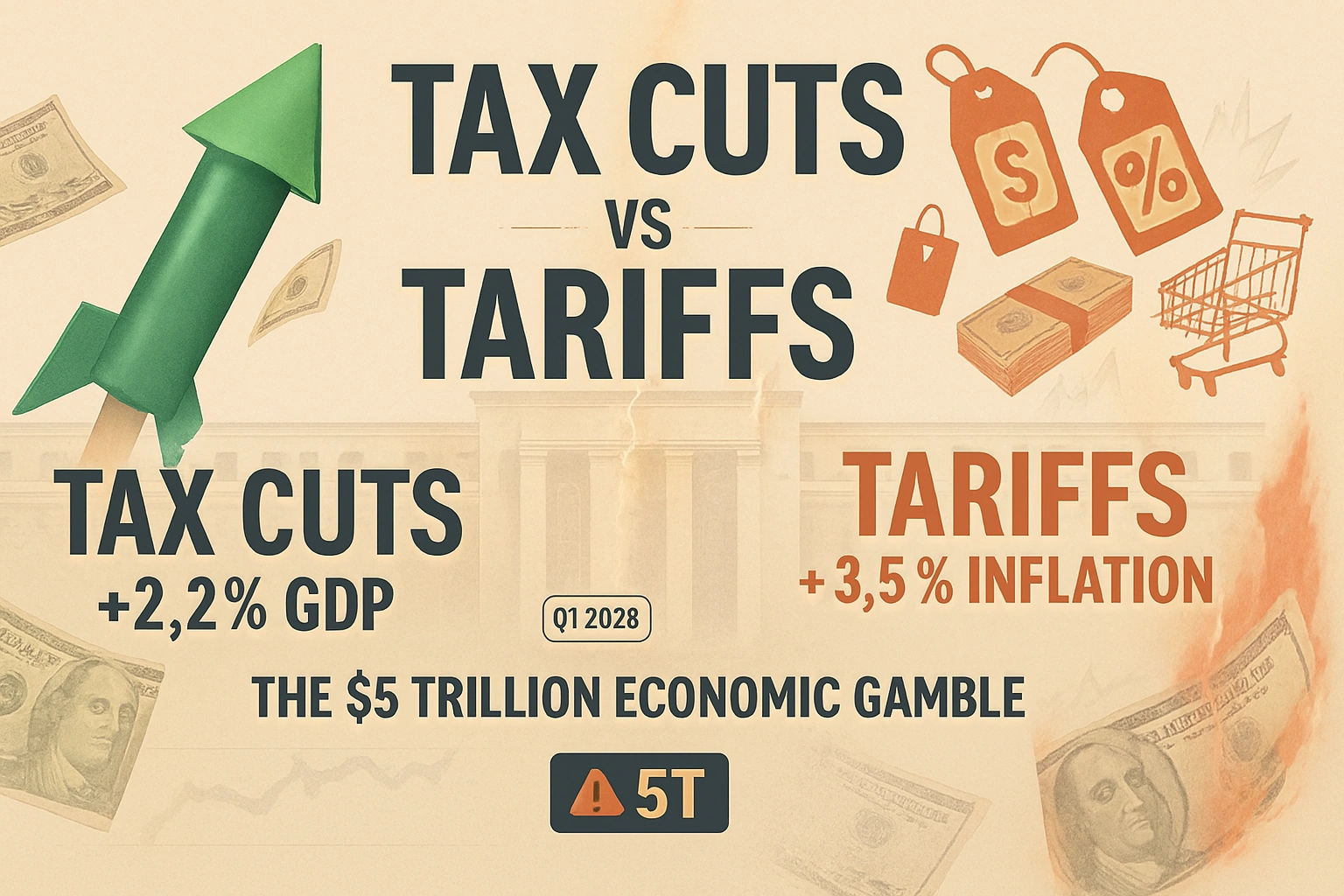
The impact of Trump’s tariffs on prices is projected to peak in the first half of the year, but the $5 trillion tax stimulus may propel growth despite short-term inflationary pressures
When Sarah Chen opened the invoice for her Chicago manufacturing firm’s imported steel components in March 2025, the numbers told a story playing out across American boardrooms: a 15% tariff-induced price increase that would squeeze margins through the spring. But when her accountant calculated the company’s 2025 tax liability in July—after the One Big Beautiful Bill Act became law—she discovered her effective tax rate had dropped by 2.3 percentage points, freeing up capital for the equipment investment she’d postponed for two years.
Chen’s experience captures the dual economic forces shaping 2025 and beyond: historic tax cuts colliding with the most aggressive tariff regime since the 1930s. The Congressional Budget Office projects real GDP growth of 1.4 percent in 2025 and 2.2 percent in 2026, reflecting a near-term drag from trade barriers followed by a tax-fueled acceleration. But beneath these headline numbers lies a more complex reality—one where the timing, magnitude, and distribution of benefits and costs will determine whether America’s economy enters 2027 on strengthened footing or stumbles under the weight of elevated borrowing costs and persistent inflation.
The Tax Cut Engine: $5 Trillion in Fuel
On July 4, 2025, President Trump signed the One Big Beautiful Bill Act, the most sweeping fiscal legislation of his second term. According to the Tax Foundation, the major tax provisions would reduce federal tax revenue by $5 trillion between 2025 and 2034 on a conventional basis. When accounting for economic growth effects, the dynamic score falls to $4 trillion, meaning economic growth pays for about 19 percent of the major tax cuts.
The legislation extends and expands the 2017 Tax Cuts and Jobs Act provisions that were scheduled to expire. For individual filers, the standard deduction will jump by $750 to $16,100 for single filers in 2026. The seven individual income tax brackets remain at their reduced rates, preventing what would have been an automatic tax increase for millions of Americans.
But the law goes further with targeted provisions that benefit specific constituencies. Workers receiving tips can now deduct up to $25,000 of tip income from their taxable income, a provision Trump campaigned on extensively. The child tax credit increased from $2,000 to $2,200 per child for 2025, while parents of children born between 2025 and early 2029 gain access to government-seeded savings accounts with an initial $1,000 deposit.
For businesses, the impact is substantial. The legislation makes permanent the 20% deduction for pass-through entities like partnerships and sole proprietorships, alongside 100% bonus depreciation for equipment investments. These provisions address long-standing complaints from the business community about the uncertainty created by temporary tax code provisions.
The Penn Wharton Budget Model estimates that before economic effects, these proposals would reduce revenues by $6.8 trillion over the 2025-2034 budget window. The discrepancy between various estimates reflects different assumptions about behavioral responses and the scope of provisions modeled.
“J.P. Morgan estimates the announced measures could boost Personal Consumption Expenditures prices by 1–1.5% this year, and the inflationary effects would mostly be realized in the middle quarters of the year. Fed Chair Jerome Powell emphasized that inflation from goods should peak in the first quarter or so, effectively a one-time shift in the price level rather than an ongoing inflation problem.”
How this translates into economic growth depends on several transmission mechanisms. Lower marginal tax rates increase the after-tax return to work, potentially boosting labor supply. Reduced corporate taxation raises the after-tax return on investment, encouraging capital formation. And households with more disposable income tend to increase consumption, stimulating aggregate demand.
The Tax Foundation projects the One Big Beautiful Bill Act would increase long-run GDP by 1.2 percent—a meaningful but not transformative boost. Historical precedent from the 2017 tax cuts offers a reality check. Research found that the corporate tax cut reduced corporate tax revenue by 40 percent and increased corporate investment by 11 percent, while the tax cut increased economic growth and wages by less than advertised by the Act’s proponents.
The Tariff Headwind: Inflation’s Spring Surge
If tax cuts represent the economy’s accelerator, tariffs function as a brake—one applied with increasing force through early 2025. President Trump invoked emergency economic powers to implement what J.P. Morgan chief U.S. economist Michael Feroli describes as a dramatic escalation: This takes the average effective tariff rate from around 10% to just over 23%.
The architecture is complex. A baseline 10% universal tariff applies to nearly all trading partners, with significantly higher rates targeting specific countries and products. The effects ripple through the economy in ways that are only partially visible in real-time data.
Federal Reserve Bank of St. Louis researchers quantified the impact using personal consumption expenditures data. They found that over the June-August 2025 period, tariffs explain roughly 0.5 percentage points of headline PCE annualized inflation and around 0.4 percentage points of core PCE inflation. This represents a meaningful but not catastrophic contribution to inflation running above the Federal Reserve’s 2% target.
The Tax Foundation calculates that the tariffs amount to an average tax increase of $1,200 per US household in 2025 and $1,400 in 2026—a hidden levy that falls disproportionately on lower-income households who spend a larger share of their budgets on goods.
Harvard Business School’s Pricing Lab documented the differential impact across product categories. Between March and September 2025, the price of imported goods rose about 4.0 percent while domestic goods rose 2.0 percent. Categories showing especially steep increases include clothing accessories, jewelry, and household tools—items that feature prominently in household budgets.
How will Trump’s tax cuts affect the economy?
The Tax Foundation projects Trump’s One Big Beautiful Bill Act will reduce federal revenue by $5 trillion between 2025-2034, increasing long-run GDP by 1.2 percent. The Congressional Budget Office forecasts real GDP growth of 1.4% in 2025, rising to 2.2% in 2026 as tax provisions that reduce effective marginal rates on labor income boost work incentives and business investment accelerates.
The inflation impact exhibits a distinct timeline. J.P. Morgan estimates the announced measures could boost Personal Consumption Expenditures prices by 1–1.5% this year, and the inflationary effects would mostly be realized in the middle quarters of the year. This timing reflects the lag between tariff implementation and the pass-through to consumer prices as businesses work through existing inventories and negotiate new supply arrangements.
Fed Chair Jerome Powell emphasized this temporal dimension in his December press conference, noting that inflation from goods should peak in the first quarter or so assuming no major new tariff announcements. He characterized tariffs as likely to be relatively short lived, effectively a one time shift in the price level rather than an ongoing inflation problem.
This distinction—between a one-time price level increase and sustained inflation—matters profoundly for monetary policy. If Powell’s assessment proves correct, the tariff shock will fade from year-over-year inflation calculations by late 2026, allowing price pressures to normalize. But if tariffs trigger second-round effects through wage increases or inflation expectations becoming unanchored, the problem becomes more persistent.
The Federal Reserve’s Impossible Calculus
Perhaps no institution faces a more difficult navigation challenge than the Federal Reserve, which confronts simultaneous threats to both sides of its dual mandate: maximum employment and stable prices.
In December 2025, the Federal Open Market Committee lowered its key overnight borrowing rate by a quarter percentage point, putting it in a range between 3.5%-3.75%. But the decision was anything but unanimous—three members dissented, the highest number since September 2019. Governor Stephen Miran favored a larger half-point cut to support the weakening labor market, while Kansas City Fed President Jeffrey Schmid and Chicago Fed President Austan Goolsbee preferred holding rates steady out of inflation concerns.
This division reflects genuine uncertainty about the economy’s trajectory. The Congressional Budget Office projects the unemployment rate will rise from 4.1 percent at the end of 2024 to 4.5 percent by the end of 2025 and then fall to 4.2 percent by the end of 2026 as tax cut provisions that reduce effective marginal tax rates on labor income increase work incentives.
Powell acknowledged the bind directly: There’s no risk-free path for policy as we navigate this tension between our employment and inflation goals. If the Fed maintains elevated rates to combat tariff-induced inflation, it risks deepening labor market weakness. But if it cuts rates aggressively to support employment, it could validate higher inflation expectations and lose credibility.
The Committee’s latest economic projections show the committee continues to expect inflation to hold above its 2% target until 2028, a sobering assessment that reflects both tariff impacts and the stimulative effects of tax cuts on aggregate demand. For 2026, the Fed penciled in just one additional rate cut—a stark contrast with market expectations earlier in the year for more aggressive easing.
Powell repeatedly blamed tariffs for the inflation overshoot, stating that it is really tariffs that are causing most of the inflation overshoot. But he also stressed the Fed’s commitment to its mandate: Everyone should understand that we are committed to 2% inflation, and we will deliver 2% inflation.
The Fed finds itself in the uncomfortable position of having to look through supply-side price increases caused by tariffs while remaining vigilant that these don’t morph into broader inflation. Historical precedent from the 1970s oil shocks—when the Fed initially accommodated supply-driven inflation, only to face a far more painful disinflation later—weighs heavily on policymakers’ minds.
Net Economic Impact: Reading the Scorecard Through 2027
Synthesizing these opposing forces requires examining consensus forecasts from institutions with different methodological approaches. The picture that emerges shows near-term weakness giving way to moderate acceleration, but with considerable uncertainty bands.
The Congressional Budget Office, in projections released in September 2025, shows real GDP growth decreasing from 2.5% in 2024 to 1.4% this year. The downgrade from its January forecast reflects the negative effects on output stemming from new tariffs and lower net immigration more than offset the positive effects of provisions of the reconciliation act this year.
But 2026 tells a different story. CBO projects real GDP growth rises to 2.2 percent, reflecting the reconciliation act’s boost to consumption, private investment, and federal purchases and the diminishing effects of uncertainty about tariffs. The Federal Reserve Bank of Philadelphia’s Survey of Professional Forecasters, polling 33 economists, found consensus expectations of real GDP to grow at an annual rate of 1.9 percent in 2025 and 1.8 percent in 2026.
Goldman Sachs takes a more optimistic view in its 2026 outlook, forecasting 2.6% GDP growth driven by three factors: fading tariff impacts, tax cut stimulus (including an estimated $100 billion in additional tax refunds), and more favorable financial conditions from Fed rate cuts and deregulation initiatives.
On employment, the outlook remains mixed. The unemployment rate has drifted higher through 2025 as businesses navigate policy uncertainty around trade, immigration, and government downsizing. While the tax cuts’ labor supply incentives should support employment growth, the adjustment process takes time.
Real wage growth—nominal wage increases adjusted for inflation—represents perhaps the most important metric for household welfare. The CBO expects nominal wage growth to moderate but remain positive, while inflation gradually declines toward target. This implies modest real wage gains for workers, though the distribution varies significantly by income level and industry exposure to tariffs.
Corporate earnings present a sector-specific picture. Companies with primarily domestic operations and low import dependency benefit from both lower tax rates and reduced competition from foreign producers. The S&P 500 reached new highs in late 2025, reflecting optimism about tax-enhanced profitability. But retailers, manufacturers dependent on imported components, and export-oriented firms face margin compression from tariffs and potential foreign retaliation.
Winners, Losers, and the Distribution Question
No fiscal policy of this magnitude affects all Americans equally. The distributional consequences reveal important equity considerations that transcend partisan debates.
The Urban-Brookings Tax Policy Center analyzed the original 2017 tax cuts and found that the top 5% of earners would get 45% of the benefits if extended. While the 2025 legislation adds provisions like tip income deductions that benefit lower earners, the basic structure remains tilted toward higher-income households who pay the lion’s share of income taxes.
Consider the math for different household types. A single parent earning $45,000 annually receives modest benefit from the slightly higher standard deduction and child tax credit—perhaps $300-500 in reduced tax liability. A married couple earning $250,000 sees benefits exceeding $5,000 from bracket relief alone, before accounting for other provisions.
Meanwhile, tariff costs fall regressively. Lower-income households spend a larger share of their budgets on goods subject to tariffs—clothing, household items, electronics. The Tax Foundation’s estimate of $1,200-1,400 in average household costs masks wide variation: a $35,000 household loses 3-4% of purchasing power, while a $150,000 household loses 0.8-1%.
Industry and occupational groups face divergent fortunes. Domestic manufacturers without import dependencies—particularly in industries protected by tariffs—gain on multiple fronts: lower taxes, reduced foreign competition, and potentially higher prices. Construction workers benefit from permanent full expensing provisions that encourage building investment. Financial services firms profit from increased lending as businesses deploy tax savings.
Conversely, retailers dependent on imported goods face a squeeze. Major companies including Walmart and Dollar General have announced price increases as they pass costs to consumers. Consumer goods companies like Procter & Gamble, Kraft Heinz, and Conagra have announced they are raising prices as a result of tariff costs.
Geographic distribution matters too. High-tax states like New York, California, and New Jersey see residents benefit from the increased SALT deduction cap, raising the deduction to $40,000 from $10,000. But these states also contain concentrations of import-dependent businesses and price-sensitive consumers.
Global Ripples: Trade Partners React
America’s fiscal choices reverberate globally through multiple channels. The tariff regime has already triggered retaliatory measures from major trading partners. China, the EU, and others have implemented countermeasures targeting U.S. exports, with agriculture particularly vulnerable.
The Peterson Institute for International Economics models suggest the combined effect of U.S. tariffs and foreign retaliation could offset more than two-thirds of the long-run economic benefit of Trump’s proposed tax cuts. This underscores how trade policy can substantially erode the gains from pro-growth tax reform.
Currency markets have responded to the shifting policy mix. The dollar initially strengthened on expectations of higher growth and interest rates, but then by May 10, it had depreciated by 5 percent relative to most major currencies, reflecting concerns about fiscal sustainability and potential capital outflows.
For Europe, the impact manifests through reduced export demand and investment uncertainty. J.P. Morgan’s Raphael Brun-Aguerre noted that activity has been running at an annualized rate of 0.9% in the first half of 2025, and we expect activity to moderate in the second half of the year with a negative direct and indirect impact from tariffs.
Supply chain realignment represents perhaps the most significant long-term effect. Businesses are reassessing their global footprints, with many considering nearshoring to Mexico or friendshoring to allied nations. This restructuring involves substantial costs and takes years to fully implement, creating ongoing uncertainty that weighs on investment decisions.
Scenarios: Base, Bull, and Bear Cases
Given the interplay of tax cuts, tariffs, monetary policy, and unpredictable factors like geopolitical developments, economic forecasting requires scenario analysis with assigned probabilities.
Base Case (55% probability): Tax cuts drive GDP growth to 2.0-2.3% in 2026 after a sluggish 1.4-1.5% in 2025. Tariff inflation peaks in Q1 2026 around 3.5% (core PCE) before moderating to 2.4-2.6% by year-end. The Federal Reserve cuts rates modestly—two quarter-point reductions in 2026—while maintaining a cautious stance. Unemployment stabilizes around 4.3-4.5% as labor market adjusts. The combined deficit impact reaches approximately $3.4 trillion over a decade after accounting for tariff revenues and economic growth effects. Stock markets continue gradual appreciation on earnings growth, though volatility persists around policy announcements.
Bull Case (25% probability): Trade negotiations produce meaningful tariff rollbacks by mid-2026, reducing inflation pressures faster than expected. Tax cut stimulus exceeds consensus forecasts as business investment responds strongly to full expensing provisions. GDP growth reaches 2.6-2.8% in 2026, unemployment falls to 4.1%, and inflation returns to near-target by late 2026. The Fed cuts rates more aggressively—four reductions through 2026—as dual mandate tensions ease. Productivity gains from AI and technology adoption begin materializing. Fiscal costs come in lower than projected as dynamic revenue effects prove stronger. Markets rally 12-15% in 2026 on improving fundamentals.
Bear Case (20% probability): Tariffs escalate further with major retaliation from trading partners, pushing peak inflation to 4.5-5% in early 2026. Tax cuts fail to generate expected investment response as elevated uncertainty keeps businesses cautious. GDP growth stagnates at 1.0-1.3% through 2026, while unemployment rises to 4.8-5.0%. The Federal Reserve faces impossible tradeoff: cutting rates risks unanchoring inflation expectations, while holding firm deepens recession risk. Long-term interest rates spike as bond markets react to ballooning deficits, adding $725 billion in extra debt service over the decade. Markets correct 15-20% on stagflation concerns. Political gridlock prevents policy adjustments.
Timeline: Quarter-by-Quarter Roadmap
Q1 2026 (January-March): Peak tariff inflation pressure as businesses fully pass through costs accumulated in 2025. Core PCE inflation likely reaches 3.3-3.5%. Tax refund season delivers approximately $100 billion to households from 2025 provisions. Federal Reserve holds rates steady at January meeting, evaluating incoming data. Labor market shows early stabilization with unemployment around 4.4%. Congressional debates over deficit begin intensifying.
Q2 2026 (April-June): Inflation begins moderating as tariff base effects fade from year-over-year calculations. GDP growth accelerates to 2.3-2.5% annualized rate as tax cut stimulus gains traction and businesses complete inventory adjustments. Federal Reserve likely implements first rate cut of the year, signaling confidence that tariff inflation is transitory. Consumer spending strengthens on improved real wage growth. Housing market shows renewed activity on lower mortgage rates.
Q3 2026 (July-September): Economic picture clarifies with six months of post-tax-cut data. Inflation target of 2.5-2.7% core PCE suggests Fed successfully navigated dual mandate tensions. Business investment data reveals whether full expensing provisions are generating anticipated capital formation. Trade deficit trends indicate whether tariffs achieved administration’s rebalancing goals. Unemployment stabilizes around 4.2-4.3%.
Q4 2026 (October-December): Fed delivers potential second rate cut if inflation and labor market data cooperate. Markets begin pricing 2027 outlook. Congressional Budget Office releases updated 10-year projections incorporating actual policy effects. Financial markets assess whether deficit trajectory is sustainable. Holiday retail sales provide critical real-time indicator of consumer health.
Critical Indicators to Monitor
Several data points will provide early signals of which scenario is unfolding:
Monthly CPI and PCE Reports: Track month-over-month changes in core inflation, particularly goods categories most exposed to tariffs. Sequential deceleration would confirm Powell’s transitory thesis.
Employment Situation Reports: Beyond headline payroll numbers, watch labor force participation rates and real wage growth (nominal wages minus inflation). Strong participation suggests tax cuts are incentivizing work.
Business Investment Data: Equipment and intellectual property investment figures reveal whether companies are deploying tax savings productively or hoarding cash amid uncertainty.
Import/Export Prices: Leading indicators of tariff pass-through and retaliation effects. Stabilization would signal trade tensions easing.
Consumer Confidence Surveys: Forward-looking household sentiment about income prospects and inflation expectations.
Federal Reserve Minutes and Fed Speak: Watch for shifts in committee consensus about inflation persistence versus labor market fragility.
Long-term Treasury Yields: Bond market’s assessment of fiscal sustainability. Sustained moves above 4.5% on 10-year notes would signal deficit concerns.
The Fiscal Reckoning Ahead
Beyond 2026 lies a longer-term question that transcends the immediate growth-versus-inflation debate: fiscal sustainability. The CBO projects debt held by the public will rise from 100 percent of GDP in 2025 to 118 percent by 2035, exceeding any level in American history.
The One Big Beautiful Bill Act adds materially to this trajectory. On a dynamic basis—accounting for economic growth effects—the Tax Foundation estimates the OBBB would increase federal budget deficits by $3.0 trillion from 2025 through 2034, and increased borrowing would add $725 billion in higher interest costs over the decade.
This matters because bond markets have finite patience for fiscal expansion, particularly when growth expectations don’t justify borrowing levels. The experience of the United Kingdom in 2022, when ambitious tax cuts sparked bond market turmoil and forced policy reversal within weeks, serves as a cautionary tale.
The counter-argument holds that reasonable debt-to-GDP ratios depend on growth rates and borrowing costs. If tax cuts generate sustained productivity improvements and GDP growth remains above interest rates, the debt dynamics remain manageable. Proponents point to decades of fiscal space afforded by reserve currency status and deep capital markets.
What’s incontrovertible is that interest costs are rising rapidly as a share of the federal budget. This crowds out other spending priorities and reduces fiscal flexibility for future crises. The political economy challenge—how to address long-term fiscal imbalances when short-term incentives favor tax cuts and spending increases—remains unresolved.
What This Means for Stakeholders
For Households: The net effect depends critically on income level and consumption patterns. Higher earners with diversified investments and professional incomes gain unambiguously from tax cuts. Middle-income families see modest benefits that may be partially offset by tariff-driven price increases on goods. Lower-income households face challenging math: nominal tax benefits often prove smaller than real income erosion from inflation.
The prudent household strategy involves locking in lower borrowing costs where possible (refinancing mortgages, consolidating high-interest debt), building emergency savings to weather labor market volatility, and maintaining flexibility in spending patterns as relative prices shift.
For Businesses: The calculus varies dramatically by sector, import dependency, and customer base. Companies should scenario-plan across tariff persistence versus rollback, model cash flows under different Fed rate paths, and evaluate whether full expensing provisions justify accelerated capital investment. Supply chain diversification—while costly—may provide valuable optionality if trade policy remains volatile.
Service businesses with domestic operations benefit cleanly from tax cuts without significant tariff exposure. Manufacturers must weigh reduced tax rates against higher input costs. Retailers face margin compression that may require pricing power or operational efficiency gains to offset.
For Investors: Portfolio construction should account for regime change from the low-rate, low-inflation era. Fixed income faces ongoing repricing as long-term rates adjust to fiscal realities. Equity valuations near record highs embed optimistic assumptions about earnings growth that may not materialize if stagflation risks increase.
Sector rotation strategies favor domestically-oriented companies with pricing power and low import sensitivity. Technology companies face mixed signals: tax benefits and deregulation support valuations, but some face tariff headwinds on components and consumer electronics. Defensive sectors with inflation-linked revenues (utilities, real estate) may outperform if inflation persists above target.
For Policymakers: The challenge is navigating political economy constraints while addressing legitimate economic concerns. Tariffs provide visible action on trade imbalances but carry significant welfare costs. Tax cuts deliver tangible benefits to constituents but worsen long-term fiscal position.
The optimal policy package would likely involve targeted rather than universal tariffs, offsetting revenue losses from tax cuts with base-broadening reforms rather than deficit spending, and pairing near-term stimulus with credible long-term fiscal consolidation. Political realities make such packages difficult to assemble.
Conclusion: Threading the Needle
As 2026 unfolds, the U.S. economy faces an unusual combination of forces: aggressive fiscal stimulus colliding with trade-induced inflation, an uncertain monetary policy response, and longer-term fiscal clouds on the horizon. The most likely outcome—captured in the base case scenario—sees the tax cut tailwind eventually overcoming tariff headwinds after a bumpy first half, delivering moderate growth with inflation gradually returning toward target.
But the probability distribution is wide. Success requires multiple things going right simultaneously: tariffs causing only temporary inflation without second-round effects, tax cuts spurring productive investment rather than consumption or financial engineering, the Federal Reserve threading its dual mandate needle, and fiscal discipline emerging before bond markets force it.
History offers mixed lessons. Supply-side tax cuts in the 1980s coincided with strong growth but also soaring deficits and eventual tax increases. The 2017 tax cuts generated modest economic gains less dramatic than advertised. Tariff regimes—from Smoot-Hawley in the 1930s to more recent steel tariffs—typically impose welfare costs exceeding any protection benefits.
What’s different this time is scale and simultaneity. Never since World War II has the United States combined such aggressive fiscal expansion with trade barriers of this magnitude while starting from elevated debt levels and near-full employment. We are, in a meaningful sense, conducting a macroeconomic experiment in real time.
The most honest assessment acknowledges uncertainty while identifying mechanisms and monitoring signals. The tax cuts will boost after-tax incomes and may spur investment—that’s economically sound. Tariffs will raise prices and distort resource allocation—that’s equally certain. The Federal Reserve can manage one-time price level shifts if inflation expectations remain anchored—that’s theoretically correct but operationally challenging.
For businesses and households, the prudent response involves flexibility: maintaining liquidity, diversifying risk, and avoiding bets that require a specific policy outcome. For policymakers, it demands intellectual honesty about tradeoffs, responsiveness to incoming data, and willingness to adjust course if outcomes diverge from forecasts.
The U.S. economy enters 2026 with considerable underlying strength: dynamic businesses, flexible labor markets, technological leadership, and resilient consumers. The question is whether policy choices harness these strengths or create headwinds that offset them. The answer will emerge quarter by quarter through 2026, providing lessons for generations of economists and policymakers to study.
One thing seems certain: the debate over whether tax cuts or tariffs represent sound economic policy will continue long after we know which forecast proved most accurate. What matters now is clear-eyed analysis of facts as they emerge, rigorous assessment of competing interpretations, and humility about the limits of economic prediction in a complex, dynamic system.
The economy is about to tell us which story is correct. We should listen carefully to what it says.
Discover more from The Economy
Subscribe to get the latest posts sent to your email.


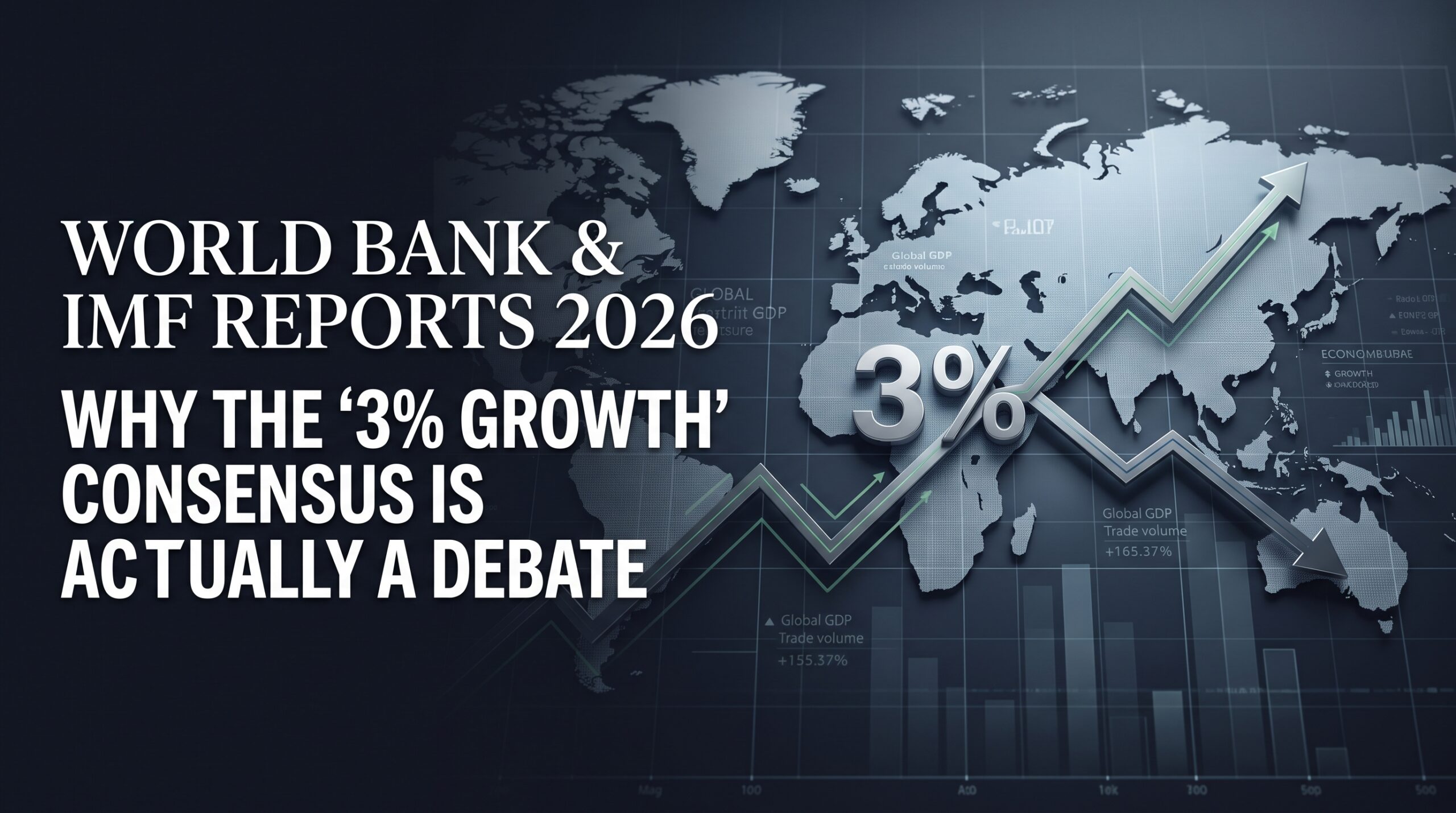
Two of the world’s most authoritative economic institutions have published starkly different verdicts on the global economy in 2026 — and the gap between them tells you more about the state of the world than either number alone. The IMF’s most recent projection puts global growth at 3.0% for 2026. The World Bank, using a different methodology and a more pessimistic read on the Middle East war’s fallout, puts the same year at 2.5% — the weakest rate since the COVID-19 pandemic. Understanding why these two numbers diverge is essential for anyone allocating capital across the world’s largest economies in the second half of 2026.
The IMF’s Case: Resilience Interrupted, Not Broken
The IMF entered 2026 with genuine optimism. Its January 2026 World Economic Outlook Update projected 3.3% global growth for the year — a small upward revision from October 2025 — crediting technology investment, fiscal and monetary support, and private-sector adaptability for offsetting ongoing trade-policy disruption.
The outbreak of war in the Middle East on February 28 forced a rapid downward revision. The April 2026 World Economic Outlook, titled pointedly “Global Economy in the Shadow of War,” cut the 2026 forecast to 3.1%, warning that a longer or broader conflict, a reassessment of AI-driven productivity expectations, or renewed trade tensions could weaken growth significantly further. By the July 2026 update, the figure had settled at 3.0% for 2026, rising to 3.4% in 2027 — a forecast the IMF frames as “broadly unchanged cumulatively” from April, arguing that AI-driven demand lifting technology-integrated economies is offsetting the war’s drag on energy importers.
IMF global growth revisions through 2026:
| Report Date | 2026 Projection | 2027 Projection | Key Framing |
|---|---|---|---|
| January 2026 | 3.3% | 3.2% | “Steady amid Divergent Forces” |
| April 2026 | 3.1% | 3.2% | “Shadow of War” |
| July 2026 | 3.0% | 3.4% | “Crosscurrents of War and Technology” |
The World Bank’s Case: The Weakest Growth Since COVID
The World Bank’s Global Economic Prospects report tells a more sobering story. Its June 2026 edition cut global growth to 2.5% for 2026, down from 2.9% in 2025 — explicitly the lowest rate since the onset of the COVID-19 pandemic. Forecasts for two-thirds of the world’s economies were downgraded relative to the World Bank’s own January 2026 report, which had initially projected 2.6% growth for the year.
World Bank Group Chief Economist Indermit Gill did not mince words in the report’s foreword, warning per the World Bank’s own press release that the 2020s remain on track to be the weakest decade for global growth since the 1960s, and that “virtually half of all developing economies have failed since 2019 to advance on the most rudimentary promise of development: narrowing the income gap with the world’s most prosperous economies.”
World Bank global growth revisions:
| Report Date | 2026 Projection | Context |
|---|---|---|
| January 2026 | 2.6% | Up from June 2025 forecast, driven by U.S. strength |
| June 2026 | 2.5% | Lowest since COVID-19; Middle East war impact |
| 2027 (June forecast) | 2.8% | Still 0.4pp below 2010s average |
Why the Numbers Don’t Match: Methodology, Not Disagreement on Facts
The roughly half-a-percentage-point gap between the IMF’s 3.0% and the World Bank’s 2.5% is not really a disagreement about the war’s severity — both institutions cite the same core shock. It reflects different weighting of technology-driven offsetting growth versus energy-importer drag, and different treatment of emerging-market vulnerability. The World Bank’s framing emphasizes that growth in low-income countries (LICs) is expected to reach 5.4% in 2026, 0.3 percentage points lower than previous forecasts specifically because of the conflict, with real per-capita GDP growth across LICs averaging only about 2.7% through 2026–28 — insufficient, in the Bank’s own assessment, to meaningfully reduce poverty.
Breaking Down the Big Economies
Both institutions converge more closely at the country level than at the global aggregate, which is instructive for investors trying to translate the headline debate into portfolio decisions.
2026 growth projections by major economy/bloc:
| Economy/Bloc | Projection | Source |
|---|---|---|
| United States | 2.2%–2.4% | World Bank (2.2%) / IMF (2.4%) |
| Advanced economies (aggregate) | 1.7%–1.8% | IMF |
| GCC states | 4.4% | World Bank |
| MENAP region (incl. Pakistan) | 3.6% | World Bank |
| Low-income countries | 5.4% | World Bank / IMF |
| Global (IMF) | 3.0% | IMF, July 2026 |
| Global (World Bank) | 2.5% | World Bank, June 2026 |
The United States is the one major economy where both institutions agree growth is holding up better than expected, with the World Bank crediting the U.S. for roughly two-thirds of its own upward revision to global growth back in January — before the war reversed some of that optimism. Gulf Cooperation Council economies are the other standout, benefiting directly from elevated oil prices even as the same conflict drags down oil-importing peers.
Inflation: The Shared Warning
Both reports converge on inflation risk. The IMF’s April 2026 outlook explicitly modeled inflation rising to 4.4% globally under its reference war scenario, a sharp reversal from the disinflation trend of 2024–25. The World Bank similarly flagged that headline inflation expectations have risen broadly across emerging markets and developing economies, with local-currency bond yields and external spreads remaining elevated in commodity-importing nations specifically because of the conflict’s pass-through to energy and food costs.
What This Means for Asset Allocation
The practical takeaway from the IMF-World Bank gap is that “global growth” is now a genuinely bimodal concept in 2026: technology-exposed and energy-exporting economies are outperforming, while energy-importing emerging markets and low-income countries are absorbing a disproportionate share of the war-driven slowdown. A portfolio built around a single “global growth” assumption risks missing this bifurcation entirely — the more useful lens for 2026 is regional and sectoral, not aggregate.
Final Verdict
The IMF’s 3.0% and the World Bank’s 2.5% are not competing predictions so much as two honest readings of the same uncertain war-affected environment, filtered through different modeling emphasis. What both institutions agree on matters more than where they diverge: growth in 2026 is meaningfully weaker than it would have been absent the Middle East conflict, inflation risk has returned after two years of disinflation, and the burden of the shock is falling disproportionately on energy-importing emerging markets rather than being evenly distributed. Investors and policymakers should treat both the 3.0% and 2.5% figures as bookends of a realistic range rather than seeking a single “correct” number — and should watch the IMF’s next scheduled update for whether the numbers converge toward the optimistic or pessimistic end as the war’s duration becomes clearer.
Discover more from The Economy
Subscribe to get the latest posts sent to your email.

Six months into the war between the United States, Israel, and Iran, one pattern has become unmistakable to energy traders: every reported ceasefire has been followed, sooner or later, by a fresh escalation. What started as a limited conflict on February 28, 2026, has evolved into the most disruptive geopolitical shock to global oil supply since Russia’s invasion of Ukraine — and as of September 2026, it is still actively reshaping energy markets, shipping routes, and inflation forecasts worldwide.
The Ceasefire-and-Relapse Cycle
The conflict has produced at least three distinct ceasefire announcements since February, and none has held for more than a few weeks. In April 2026, a US-Iran arrangement briefly reopened the Strait of Hormuz and sent oil plunging below $100 a barrel, as reported by Euronews. Gold, which had surged as a safe haven, still traded near $4,750 an ounce that same week as investors openly doubted the truce would last, according to Trading Economics — key disputes remained unresolved and the Strait stayed effectively closed even after the announcement.
That skepticism proved warranted. By September 2026, oil had round-tripped decisively higher. Brent crude surpassed $100 a barrel for the first time in nearly six weeks after fresh attacks on oil facilities and tankers, settling at $97.89 before jumping 2.4% to $100.29, with WTI gaining to $94.77, according to reporting carried by the Washington Times. The proximate trigger: the U.S. military struck five Iranian tankers in response to attempted missile attacks on a Navy warship, while Iranian-backed Houthi forces ignited fires at Saudi Arabian oil facilities.
Oil price trajectory during the conflict:
| Date | Brent Crude | Context |
|---|---|---|
| Mar 21, 2026 | ~$106.77 | Fifth straight weekly gain amid escalation |
| Mar 20, 2026 | Forecast warning of $180+ | Saudi Aramco officials warned WSJ of extreme scenario |
| Apr 8, 2026 | Below $100 | Ceasefire announcement, Strait reopening pledge |
| Sept 7, 2026 | $97.31 | Six-week high; Iran vows to strike energy infrastructure |
| Sept 9, 2026 | $100.29 | Attacks on tankers and Saudi refineries |
| Sept 11, 2026 | ~$100, +9% week | Diplomatic talks announced on Hormuz shipping |
Why the Strait of Hormuz Is the Real Story
The Strait of Hormuz is the fulcrum of this entire crisis. Roughly 20% of the world’s oil supply passes through this chokepoint, including about half of Asia’s oil imports and a quarter of its LNG imports, according to TD Economics. Since the war began, fighting has halted most shipping through the strait, and — critically — markets have stopped believing repeated U.S. government proclamations that reopening is imminent. As one energy analyst told Marketplace, “The Strait of Hormuz won’t be what it was before. Now, we understand that Iran can and will block it.”
The physical impact on trade flows has been severe. Oil shipments out of the Middle East are running roughly 65% below year-ago levels, and the cost of shipping crude to Asia on the largest tankers has hit a record high, per the same Marketplace reporting. The United Arab Emirates has responded by actively building alternative export routes and trade corridors to avoid having its energy exports “held hostage” by the conflict, a senior UAE presidential adviser confirmed to Reuters in early September.
Demand Destruction Is Now the Dominant Theme
While supply disruption drove the initial price spike, the market’s focus by September 2026 has shifted decisively toward demand destruction. The International Energy Agency sharply lowered its 2026 global oil demand outlook, forecasting a contraction of 2.5 million barrels per day — the largest annual decline since the COVID-19 pandemic — as higher prices and tighter supply weigh on consumption, according to Trading Economics. OPEC has cut its own demand-growth forecast for a fifth consecutive month. Both organizations now agree that sustained triple-digit oil is actively destroying the demand it was created by.
OPEC+ itself has opted for caution rather than aggressive supply response, keeping its October output policy unchanged at its early-September meeting, pending agreement on new quotas before any further steps, Reuters reported.
The Inflation and Consumer Pass-Through
The war’s inflationary impact has already shown up in hard data. U.S. gasoline prices surged in March 2026 to an EIA-reported average of $3.638 per gallon, the highest since September 2023, with AAA data showing the national average briefly topping $4.02 per gallon — a monthly jump described by Trading Economics as exceeding even the spikes following Hurricane Katrina and Russia’s 2022 invasion of Ukraine. Euro-area inflation jumped to 2.5% in the same window, well above the European Central Bank’s 2% target, driven almost entirely by the energy component.
Who is most exposed:
| Category | Exposure | Why |
|---|---|---|
| Asian oil importers (Japan, India, Pakistan, China) | Very high | ~50% of Asia’s oil, 25% of LNG via Hormuz |
| European energy consumers | High | Already strained post-Russia diversification |
| Gulf oil exporters (Saudi, UAE, Qatar) | Mixed | Higher prices offset by direct attack risk on infrastructure |
| U.S. consumers | Moderate-high | Domestic production buffers some but not all of the shock |
| Global shipping/logistics | High | Record tanker rates, rerouting costs |
Diplomatic Off-Ramps Being Tested
The most significant near-term catalyst for de-escalation is the diplomatic track around Strait of Hormuz shipping management. Top diplomats from the six-member Gulf Cooperation Council were scheduled to meet their Iranian counterpart to negotiate a possible temporary arrangement for managing transit through the strait, according to Trading Economics. Iranian state media separately indicated Tehran would meet Gulf states in Oman for related talks. Markets have priced in modest optimism around these talks — crude paused its rally and settled near $100 on the news — but given the track record of failed ceasefires since February, traders are treating any de-escalation as tactical rather than durable until physical shipping data confirms a sustained reopening.
Final Verdict
The “ceasefire economics” of the 2026 Middle East war have proven to be a recurring, not a resolving, phenomenon: each truce has produced a short-lived relief rally in oil and a corresponding dip in inflation expectations, followed by renewed escalation that erases the gains. As of September 2026, Brent and WTI sit near six-week highs above $90–100, the Strait of Hormuz remains functionally impaired, and both the IEA and OPEC now forecast the sharpest demand contraction since the pandemic. For investors and policymakers, the actionable conclusion is that oil-price volatility itself — not a stable higher or lower price level — is the defining condition of this market, and near-term direction hinges almost entirely on whether the current Gulf-Iran diplomatic track produces a verifiable, physically confirmed reopening of shipping lanes rather than another rhetorical ceasefire.
Discover more from The Economy
Subscribe to get the latest posts sent to your email.
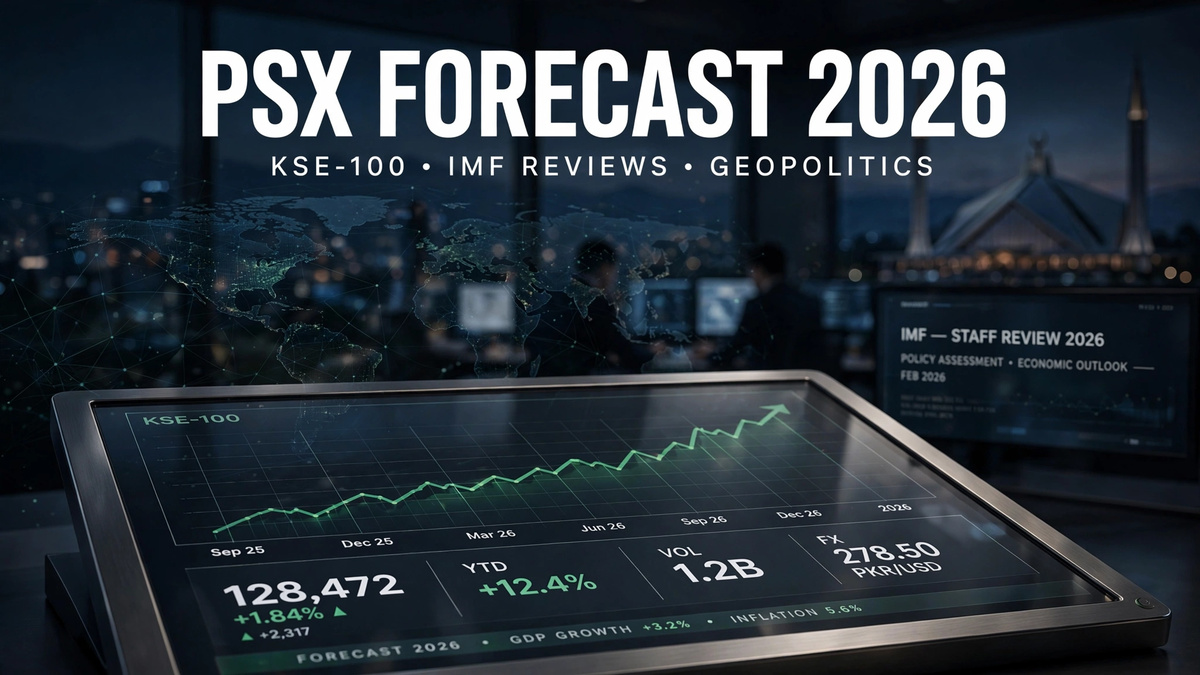
The KSE-100 Index just delivered its third consecutive year as the best-performing major asset class available to Pakistani investors — a 44% rupee-terms gain in FY2026 that outpaced gold, real estate, and fixed income. Yet the same index spent the back half of that fiscal year lurching between rallies triggered by IMF tranche approvals and sell-offs triggered by missile strikes 2,000 kilometers away. For domestic and expat investors weighing exposure to Pakistan’s frontier equity market, the story of 2026 is a tug-of-war between genuine macroeconomic reform and a regional war that keeps interrupting it.
FY26 in Numbers: A Historic Rally, Delivered in Two Very Different Halves
The KSE-100 closed FY2026 (ended June 30) at 180,302 points, a 44% gain in rupee terms and 46% in U.S. dollar terms, according to year-end reports from AKD Research and Topline Securities cited by Profit Pakistan Today. Stack that on top of FY24 and FY25, and the index has delivered a cumulative 335% return in rupee terms — 347% in dollar terms — over three straight years, driven by policy continuity, macroeconomic stabilization, record trading volumes, and Pakistan’s return to international debt markets.
But the FY26 rally was not a straight line. As Business Recorder reported, the first half of FY26 (July–December 2025) delivered a 39% gain, driven by improving economic indicators despite flood-related disruptions. The second half turned sharply volatile: the index touched an intra-period high of 189,167 on January 23, 2026, before the outbreak of the Middle East war in late February triggered a sustained bout of selling that erased much of the gain before a partial recovery into fiscal year-end.
KSE-100 FY26 timeline:
| Period | Level/Move | Driver |
|---|---|---|
| H1 FY26 (Jul–Dec 2025) | +39% | Macro stability, IMF program progress |
| Jan 23, 2026 | Intra-period high: 189,167 | Pre-war peak |
| Feb 28, 2026 | War begins | Middle East conflict onset |
| April 2026 | +14,251 points (+9.6%) to 162,994 | US–Iran ceasefire optimism (short-lived) |
| May 2026 | IMF approves $1.2bn tranche (May 8) | Sentiment recovery |
| June 30, 2026 (FY26 close) | 180,302 | Full-year: +44% |
| September 2026 | ~170,000–171,000 range | Renewed oil shock, Houthi attacks on Saudi facilities |
The IMF Program: Pakistan’s Structural Anchor
Unlike prior boom-bust cycles on the PSX, the FY26 rally has an institutional anchor: Pakistan’s ongoing IMF Extended Fund Facility (EFF) and Resilience and Sustainability Facility (RSF) programs. Pakistan cleared its second and third EFF/RSF reviews in December 2025 and May 2026 respectively, unlocking total disbursements of roughly $4.8 billion, according to Profit Pakistan Today’s FY26 wrap-up.
The next test is imminent. An IMF staff mission was expected to arrive in Pakistan around September 23, 2026, to conduct the fourth EFF review and third RSF review, covering the $7 billion EFF and $1.4 billion RSF programs, according to the Express Tribune. For FY27, the IMF has set an underlying primary balance target of 2% of GDP and an FBR tax revenue target of Rs15.3 trillion — both of which will be closely watched by the market as proxies for continued program compliance.
Pakistan’s external buffers have also strengthened materially. Total liquid foreign exchange reserves rose 5.3% week-on-week to $23.7 billion as of early September 2026, with State Bank of Pakistan reserves at $18.3 billion, pushing import cover up to 2.74 months from 2.56 months, per Tribune reporting. Remittances have been an unsung support: workers’ remittances hit a record $4.3 billion in May 2026, helping the rupee and easing external-account pressure even as the trade balance absorbed a higher energy import bill.
Geopolitics: The Recurring Interruption
Every rally attempt on the PSX in 2026 has been vulnerable to the same external shock: Middle East oil-price spikes. AKD Research’s own commentary has been explicit that “a constructive resolution to ongoing geopolitical tensions remains the key near-term catalyst for direction, with any easing in oil prices expected to trigger a recovery,” as noted in Profit Pakistan Today’s May 2026 outlook.
That pattern has persisted into September. As of the most recent trading sessions, Houthi assaults on Saudi energy facilities pushed crude oil prices higher, weighing directly on investor sentiment on the PSX, according to the Express Tribune’s latest market wrap. A six-member Gulf Cooperation Council bloc was reported to be considering direct talks with Iranian officials over the future of the Strait of Hormuz — a diplomatic track that, if successful, would be the single biggest near-term catalyst for a PSX re-rating, given how tightly correlated the index has become to global crude benchmarks.
Valuation and 2026 Targets
Despite the rally, brokerages continue to argue Pakistani equities remain undervalued relative to history. The KSE-100 was trading at a price-to-earnings ratio of roughly 6.9x as of April 2026, against a longer-run historical average closer to 8.0x, according to AKD Research commentary cited by Profit Pakistan Today.
Brokerage KSE-100 targets for December 2026:
| Brokerage | Target Level | Implied Framing |
|---|---|---|
| Topline Securities | 203,000 | Base case, ~13% total return from mid-2026 levels |
| AKD Research | 263,800 | Bull case, contingent on sustained reform and oil relief |
| Trading Economics (conservative model) | 155,000–156,000 | Short-term stability scenario |
Sector-level positioning matters as much as the index target. Banking (UBL, HBL, Meezan Bank), oil and gas exploration (OGDC, PPL), fertilizers, and cement have been flagged repeatedly by local brokerages as the highest-upside sectors heading into FY27, benefiting respectively from a still-elevated (though easing) policy rate, higher global energy prices, and continued infrastructure and construction demand.
Final Verdict
The KSE-100’s FY26 performance confirms that Pakistan’s macro reform story — anchored in a credible, disbursing IMF program, strengthening FX reserves, and record remittance inflows — is real and durable. But 2026 has also demonstrated that the index’s near-term direction is now a leveraged bet on Middle East de-escalation as much as on domestic policy execution. For frontier-market investors, the base case remains constructive: single-digit trailing P/E multiples, an IMF anchor into FY27, and a currency backed by improving reserves argue for continued exposure. The tactical risk to monitor closely is the September 23 IMF mission outcome and any material escalation around the Strait of Hormuz, either of which could swing the index by double-digit percentages within weeks.
Discover more from The Economy
Subscribe to get the latest posts sent to your email.

Crypto Daily Outlook: Bitcoin, Altcoins, and the Future of Decentralized Finance

Anthony Scaramucci’s Crypto Prediction: Why MicroStrategy’s Move Is Bitcoin’s “iPhone Moment”

Best Dividend Stocks 2026: European & Asian Blue Chips

World Bank & IMF Reports 2026: Why the “3% Growth” Consensus Is Actually a Debate

Elon Musk’s Boring Company Hits $23B Valuation After UAE-Led $3 Billion Series D

Middle East War Economics 2026: Oil Prices & Energy Markets

PSX Forecast 2026: KSE-100, IMF Reviews & Geopolitics

Asian Markets Outlook 2026: China, Japan & Singapore Stocks

Global Economy 2026: IMF Growth, Inflation & Private Credit

Current Account Deficit (CAD) : Causes and Impact

Balance of Payments (BOP)

The Falkland Islands Dispute: Sovereign Wealth, Offshore Drilling, and Market Impacts

Gross Domestic Product (GDP): Nominal vs. Real

What is Inflation and the Consumer Price Index (CPI)?

State Farm’s $5B Dividend 2026: Who Qualifies & Payout Dates

US-China Relations in Q3 2026: Trade Tariffs and Supply Chain Risks

Gold’s Wild 2026: From a Record $5,600 Peak to a 24% Crash and Back Toward $4,500

Oil Surges as Strait of Hormuz Traffic Collapses Again

The Rocket That Won’t Quit: Inside SpaceX’s Falcon 9 Launch Machine

Bank of England Set to Hold Rates Through Year-End, Reuters Poll Shows

SpaceX Starship Flight 14: First Orbital Attempt & Starlink V3 Launch Explained

The 2026 Crypto Regulatory Shift: What It Means for Institutional Investors

AI Chip Stocks 2026: The Best Semiconductor Investments Beyond Marvell

Retail Earnings Week: What Home Depot, Target & Walmart Reveal

AI-Powered Training: The Next Multi-Billion Dollar Ecosystem in Fitness

Top 30 Stocks for Investment in PSX for Massive ROI in 2026

Tween Back-to-School Trends 2026: What’s Driving the $85B Season

Russia’s Black Sea Oil Exports Fall for a Fifth Straight Week
-

 Markets & Finance8 months ago
Top 15 Stocks for Investment in 2026 in PSX: Your Complete Guide to Pakistan’s Best Investment Opportunities
-

 Analysis7 months ago
Johor’s Investment Boom: The Hidden Costs Behind Malaysia’s Most Ambitious Economic Surge
-

 Analysis7 months ago
Top 10 Stocks for Investment in PSX for Quick Returns in 2026
-

 Analysis7 months ago
Brazil’s Rare Earth Race: US, EU, and China Compete for Critical Minerals as Tensions Rise
-

 Banks8 months ago
Best Investments in Pakistan 2026: Top 10 Low-Price Shares and Long-Term Picks for the PSX
-

 Investment8 months ago
Top 10 Mutual Fund Managers in Pakistan for Investment in 2026: A Comprehensive Guide for Optimal Returns
-

 Global Economy9 months ago
15 Most Lucrative Sectors for Investment in Pakistan: A 2025 Data-Driven Analysis
-

 Global Economy9 months ago
Pakistan’s Export Goldmine: 10 Game-Changing Markets Where Pakistani Businesses Are Winning Big in 2025