
Asia
Trump’s 2025-2026 Tariffs on Asia and Europe: Justified Protectionism or Self-Inflicted Economic Wound?

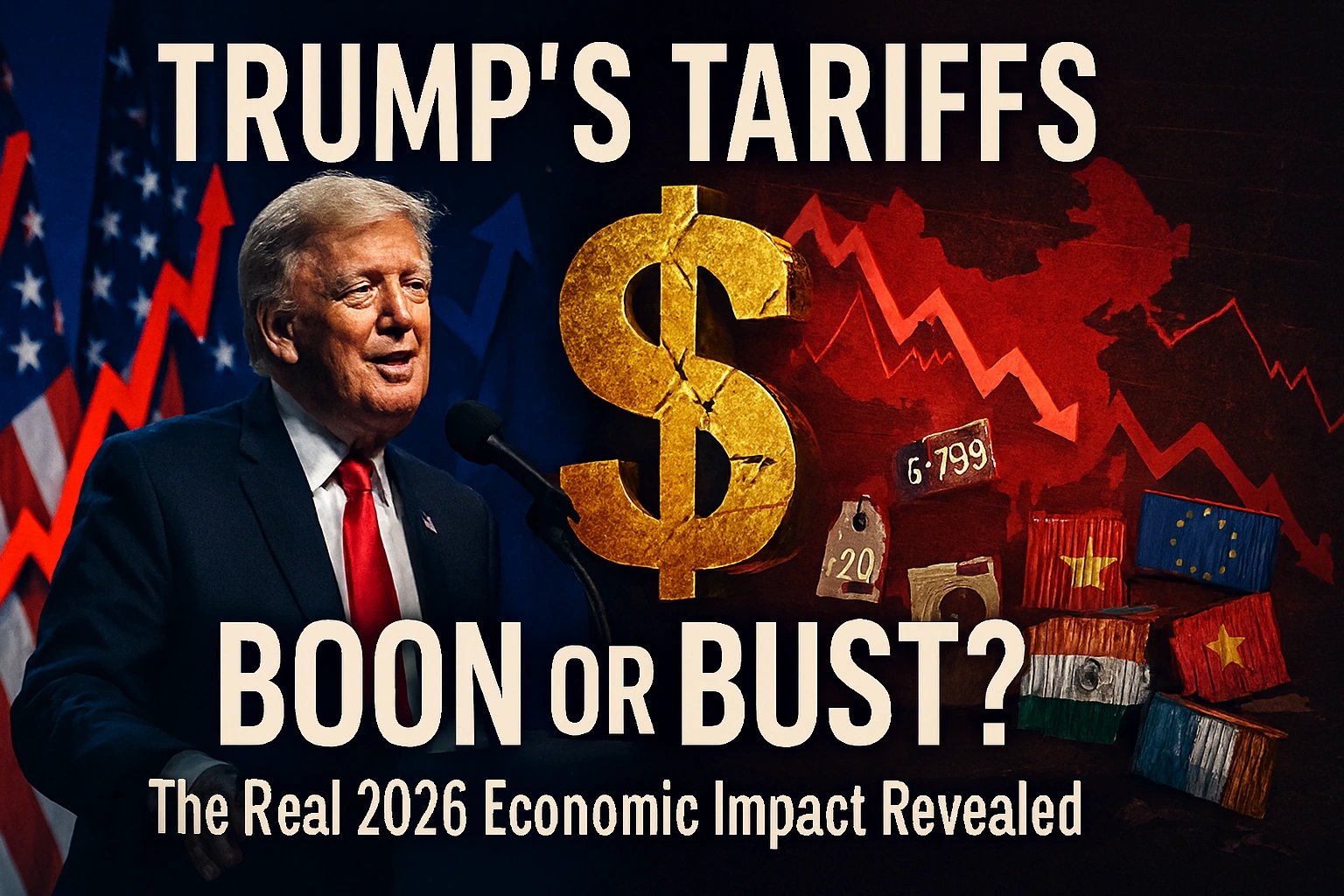
On a frigid January morning in Cincinnati, Sarah Chen stands in the aisles of her family’s small electronics shop, calculator in hand, recalculating profit margins for the third time this quarter. The wholesale price of the Chinese-made tablets that once flew off her shelves has jumped 34% since spring 2025. “I either absorb the hit or pass it to customers who are already stretched thin,” she tells me, her frustration palpable. “Either way, I lose.” Three thousand miles away, in a gleaming Tesla factory outside Austin, workers celebrate a modest expansion—twenty new jobs assembling battery components that once came exclusively from South Korea, now partially sourced domestically to sidestep tariff costs. Two stories, one policy: President Trump’s sweeping 2025-2026 tariff regime, the most aggressive protectionist turn in American trade policy since the Smoot-Hawley era.
Nearly two years into Trump’s second-term trade war, the economic verdict remains deeply contested. The administration points to $287 billion in tariff revenue collected in 2025—a dramatic increase from pre-2025 levels—and argues that reciprocal tariffs are finally leveling a playing field long tilted against American workers. Critics counter with mounting evidence of inflationary pressures, widening trade deficits, and minimal manufacturing gains that suggest the cure may be worse than the disease. As we approach the midpoint of 2026, the fundamental question persists: Are Trump’s tariffs justified protectionism reclaiming economic sovereignty, or a self-inflicted wound bleeding American consumers and competitiveness?
The Architecture of Trump’s Trade Offensive
The current tariff structure represents an unprecedented escalation in postwar American trade policy. Beginning in early 2025, the Trump administration implemented a multi-tiered system: a universal baseline tariff of 10-20% on virtually all imports, elevated rates of 60-125% on Chinese goods, and targeted duties of 25-50% on European automobiles, steel, and select agricultural products. The average effective U.S. tariff rate—hovering around 2.5% for decades—rocketed to approximately 27% by late 2025, according to Peterson Institute for International Economics analysis.
The stated rationale rests on three pillars. First, reciprocity: matching trading partners’ tariff levels to force negotiations toward lower barriers globally. Second, revenue generation: using import duties to offset income tax cuts and fund domestic priorities. Third, industrial policy: reshoring critical supply chains in semiconductors, pharmaceuticals, and defense materials deemed vital to national security. In Trump’s framing, decades of “unfair” trade deals hollowed out the Rust Belt, enriched China, and left America dangerously dependent on adversaries for essential goods.
There’s historical precedent for this worldview. Alexander Hamilton championed tariffs to nurture infant American industries. The post-Civil War “American System” used protectionism to fuel industrialization. Even modern economic giants like South Korea and Japan deployed strategic tariffs during development. The question isn’t whether protectionism can ever work—it’s whether Trump’s specific implementation, in today’s deeply integrated global economy, achieves its goals without prohibitive costs.
Revenue Gains: Real but Misleading
The Trump administration’s headline achievement is undeniable: tariff revenue surged to $287 billion in 2025, compared to roughly $80 billion annually in the pre-Trump era. Treasury Secretary Scott Bessent hailed this as vindication, arguing tariffs function as a “consumption tax on foreign goods” that funds government without burdening American workers.
Yet this framing obscures crucial economic reality. Unlike income taxes paid by high earners, tariffs function as regressive consumption taxes. When importers pay the tariff at the border, those costs cascade through supply chains, ultimately landing on retail prices. A Brookings Institution study estimated that Trump’s 2025 tariffs cost the average American household between $1,800 and $2,400 annually through higher prices on everything from smartphones to sneakers to strawberries. Low-income families, who spend proportionally more on goods than services, bear the heaviest burden.
Moreover, tariff revenue must be weighed against offsetting economic drags:
- Reduced import volumes: As prices rise, Americans buy fewer foreign goods, eventually shrinking the tariff base itself
- Retaliation costs: European Union and Chinese counter-tariffs hammered U.S. agricultural exports, requiring $12 billion in emergency farm aid in 2025
- Productivity losses: Inefficient domestic production substituting for cheaper foreign goods reduces overall economic output
- Administrative burden: Customs enforcement, trade dispute litigation, and exemption processes consume billions annually
When accounting for these factors, Yale Budget Lab economists calculate that each dollar of tariff revenue corresponds to $1.80 in total economic cost—hardly the free lunch portrayed.
The Manufacturing Renaissance That Wasn’t
Perhaps the most politically salient promise of Trump’s tariff regime was a renaissance in American manufacturing—factories returning from Shenzhen and Stuttgart, blue-collar jobs reviving the Midwest. The empirical record shows modest gains at best, illusions at worst.
U.S. manufacturing employment did tick upward in 2025, adding approximately 140,000 jobs according to Bureau of Labor Statistics data. Specific sectors saw notable activity: semiconductor fabrication plants broke ground in Arizona and Ohio, battery component production expanded in Michigan, and some textile operations relocated from Vietnam to North Carolina. The administration trumpets these wins as proof of concept.
Dig deeper, however, and the picture complicates. Federal Reserve analysis reveals that many “reshored” jobs represent capital-intensive automation rather than labor-intensive production. A chip fab employing 800 engineers and technicians replaces a Chinese factory employing 15,000 assembly workers—beneficial for high-skilled employment, but not the working-class bonanza promised. Meanwhile, manufacturing output as a percentage of GDP remained essentially flat in 2025, suggesting production gains merely kept pace with overall economic growth rather than outperforming.
More troubling, supply chains proved far more complex than tariff architects anticipated. Rather than returning to the U.S., many manufacturers simply rerouted through third countries to evade duties—China ships steel through Mexico, electronics route via Malaysia, pharmaceuticals detour through India. World Bank trade flow data documents this “trade deflection” phenomenon, which preserves Chinese production while generating paperwork, transportation costs, and environmental waste without yielding American jobs.
The hardest-hit were small and medium manufacturers dependent on imported components. A Michigan auto parts supplier I spoke with last fall described the squeeze: “We import specialized steel from Germany because no American mill produces it. The 40% tariff tripled our costs overnight. We laid off twelve people and cancelled our expansion.” For every factory celebrating tariff protection, another curses tariff-induced input costs.
Consumer Costs and Inflation’s Quiet Bite
The most direct economic impact of Trump’s tariffs landed at checkout counters nationwide. While headline inflation moderated from 2022-2023 peaks, consumer price data reveals tariff-specific spikes in key categories throughout 2025:
- Electronics: Laptops, smartphones, and televisions rose 12-18% on average, disproportionately affecting middle-class families and students
- Apparel and footwear: Clothing prices increased 8-11%, hitting budget-conscious shoppers hardest
- Automobiles: Both imported and domestic vehicles jumped 6-9% as automakers passed through tariff costs and faced reduced foreign competition
- Home appliances: Washing machines, refrigerators, and HVAC systems climbed 7-13%, devastating first-time homebuyers
Research from the National Bureau of Economic Research quantified the phenomenon: for every percentage point increase in effective tariff rates, consumer prices rise approximately 0.3 percentage points within 12-18 months. Applied to Trump’s 24-point tariff increase (from ~3% to ~27%), the model predicts a 7-point inflationary contribution—precisely what Federal Reserve economists privately estimate, according to sources familiar with internal models.
The Federal Reserve faced an impossible bind. Raising interest rates to combat tariff-driven inflation would choke economic growth and employment. Accommodating higher prices would erode purchasing power and risk unanchored expectations. Chairman Jerome Powell’s carefully parsed statements throughout 2025 reflected this dilemma: acknowledging “supply-side price pressures from trade policy” while maintaining data-dependent gradualism.
For millions of Americans like Sarah Chen in Cincinnati, macroeconomic abstractions translate to lived hardship. Tariffs don’t feel like abstract policy—they feel like shrinking purchasing power, deferred family vacations, and anxiety about making ends meet.
Asia’s Response: Adaptation and Defiance
China’s reaction to Trump’s tariff offensive underscored the limits of unilateral trade pressure. Rather than capitulating to U.S. demands, Beijing doubled down on industrial strategy and supply chain resilience. Chinese customs data revealed a record $1.2 trillion trade surplus in 2025—up from $823 billion in 2024—driven by surging exports to Europe, Southeast Asia, and Africa that offset declining U.S. sales.
The Communist Party framed Trump’s tariffs as vindication of Xi Jinping’s “dual circulation” strategy: reducing dependence on Western markets while dominating critical technology supply chains. Massive subsidies flowed to electric vehicles, solar panels, and advanced semiconductors, flooding global markets and undercutting both American and European competitors. The European Union, initially sympathetic to U.S. complaints about Chinese overcapacity, found itself imposing its own duties on Chinese EVs to protect nascent industries—fragmenting rather than unifying the Western response.
Meanwhile, Southeast Asian economies emerged as clear winners. Vietnam, Thailand, and Malaysia attracted factories fleeing both Chinese tariffs and rising Chinese labor costs, positioning themselves as neutral intermediaries in the U.S.-China rivalry. The ASEAN bloc’s combined exports to the U.S. jumped 23% in 2025, with Vietnamese electronics and Thai auto parts capturing market share. Ironically, Trump’s tariffs accelerated precisely the regional supply chain diversification China had resisted for years—but without returning production to American soil.
Japan and South Korea navigated cautiously, securing partial tariff exemptions through bilateral negotiations while deepening technological partnerships with China despite U.S. pressure. The administration’s transactional approach—threatening allies with tariffs, then granting reprieves in exchange for concessions—bred resentment even among traditional partners. Seoul’s decision to join China’s Regional Comprehensive Economic Partnership framework in late 2025, after decades of resistance, signaled eroding American influence.
Europe’s Dilemma: Retaliation and Recession Fears
Transatlantic relations, already strained over climate policy and defense spending, deteriorated sharply under Trump’s tariff regime. The European Union, facing 25-50% duties on automobiles, machinery, and luxury goods, retaliated with €48 billion in counter-tariffs targeting politically sensitive American exports: Kentucky bourbon, Florida orange juice, Iowa pork, California wine, and Harley-Davidson motorcycles.
The economic damage proved mutual. German automakers BMW, Volkswagen, and Mercedes-Benz—major employers in South Carolina, Alabama, and Georgia—cut U.S. production plans, citing tariff uncertainty and retaliatory costs. French luxury conglomerate LVMH postponed a Texas expansion. Italian food exporters scrambled to find alternatives to the lucrative American market. The International Monetary Fund downgraded eurozone growth forecasts by 0.4 percentage points for 2026, attributing half the revision to U.S. trade disruptions.
Yet Europe’s response also revealed deeper fractures. Hungary and Italy, led by populist governments sympathetic to Trump’s nationalism, resisted aggressive retaliation. France and Germany pushed for tougher measures to defend European industry. The disunity emboldened the Trump administration to negotiate bilaterally, offering Germany partial auto tariff relief in exchange for increased defense spending—undermining EU cohesion and empowering American divide-and-conquer tactics.
The strategic irony was profound: at the very moment Western democracies confronted authoritarian China’s economic coercion and Russia’s military aggression, Trump’s tariffs fractured the alliance that built the postwar liberal order. Brussels officials privately despaired that America’s turn inward left Europe geopolitically isolated and economically vulnerable—precisely the outcome Beijing and Moscow desired.
The Bigger Picture: Protection or Economic Drag?
Stepping back from sectoral details, what does the macroeconomic evidence reveal about Trump tariffs’ net impact? Three overarching conclusions emerge from academic research and institutional analysis:
First, costs substantially exceed benefits for the overall economy. The Tax Foundation’s comprehensive modeling estimates Trump’s 2025-2026 tariff regime will reduce long-run GDP by 0.7%, eliminate approximately 650,000 jobs across all sectors (even accounting for manufacturing gains), and decrease average household incomes by $2,100 annually. These aggregate losses swamp the gains to protected industries and tariff revenue collected.
Second, distributional effects are starkly regressive. While some manufacturing workers in specific sectors benefit through higher wages and job security, far more Americans lose through higher consumer prices, reduced employment in trade-dependent services, and diminished investment returns. The bottom income quintile bears 2.8 times the proportional burden of the top quintile, according to Congressional Budget Office incidence analysis—exacerbating inequality Trump claimed to remedy.
Third, geopolitical blowback undermines national security aims. Rather than compelling adversaries to change behavior, tariffs accelerated Chinese self-sufficiency, alienated European allies, and fragmented global supply chains in ways that reduce American leverage. The semiconductor supply chain, ostensibly protected for national security, grew more vulnerable as Asian partners hedged against U.S. reliability and Chinese competitors received massive state support to catch up technologically.
These findings align with historical experience. The Smoot-Hawley tariffs of 1930, enacted during the Great Depression to protect American jobs, instead deepened the crisis as trading partners retaliated and global commerce collapsed. The 2002 Bush steel tariffs, imposed to help struggling Rust Belt mills, cost 200,000 jobs in steel-consuming industries—more than the entire steel sector employed—and were withdrawn after 20 months. Trump’s own first-term washing machine tariffs raised consumer prices by $1.5 billion annually while creating just 1,800 jobs—a cost of $817,000 per job.
The pattern holds: protectionism delivers concentrated, visible benefits to politically powerful industries while imposing diffuse, invisible costs on consumers and downstream businesses. The benefits generate campaign contributions and photo ops at factory openings; the costs appear as slightly higher prices on ten thousand products, barely noticeable individually but devastating in aggregate.
A False Choice Between Sovereignty and Prosperity
The central flaw in Trump’s tariff logic is the premise that America must choose between economic openness and national strength. This false binary ignores the reality that American prosperity and security are deeply intertwined with global integration—not despite it, but because of it.
Consider the semiconductor industry, the crown jewel of strategic competition with China. American firms like Intel, Nvidia, and Qualcomm dominate chip design precisely because they access the world’s best talent (immigrant engineers), the world’s most efficient manufacturing (TSMC in Taiwan), and the world’s largest markets (global sales funding R&D). Tariff walls that fragment this ecosystem don’t strengthen American chips; they handicap innovation by raising costs and shrinking markets.
Or examine agriculture, where the U.S. enjoys genuine comparative advantage. American farmers are the world’s most productive, feeding hundreds of millions globally while supporting rural communities domestically. Chinese and European retaliatory tariffs, triggered by Trump’s trade war, cost U.S. agricultural exporters $27 billion in 2025—obliterating value that took decades to build. Taxpayer bailouts now sustain farmers who once competed profitably on merit.
The alternative to Trump’s blunt protectionism isn’t naive free trade absolutism. It’s smart industrial policy: targeted investments in R&D, infrastructure, and workforce training; strategic stockpiling of critical materials; alliance-based supply chain coordination; enforcement of trade rules against genuine cheating. South Korea didn’t become a semiconductor powerhouse through tariffs; it did so through decades of education investment, R&D subsidies, and export orientation. Germany maintains world-leading manufacturing not by closing borders, but through apprenticeship systems, stakeholder capitalism, and engineering excellence.
Conclusion: Counting the True Cost
As Sarah Chen in Cincinnati wrestles with another round of price increases, and the Austin factory worker celebrates marginal job growth, the fundamental question remains unresolved: Do Trump’s tariffs justify their economic pain?
The empirical record, now approaching two years, offers a sobering answer. Revenue gains are real but regressive. Manufacturing jobs increased modestly but fell far short of promises. Consumer costs mounted significantly. Trade deficits persisted and in some cases widened. Geopolitical isolation deepened. The macroeconomic models projecting net harm have proven distressingly accurate.
This doesn’t mean all protectionism is foolish or that America should passively accept unfair trade practices. Strategic tariffs can protect infant industries, counter dumping, or safeguard national security in genuinely critical sectors. The problem is Trump’s scattershot, maximalist approach: blanket tariffs on allies and adversaries alike, imposed without coordinated strategy, maintained despite mounting evidence of failure, justified through economic nationalism that mistakes autarky for strength.
The tragic irony is that legitimate concerns—Chinese overcapacity, supply chain vulnerabilities, working-class dislocation—get lost in the chaos of indiscriminate protectionism. By crying wolf with tariffs on European cheese and Canadian lumber, the administration undermines its own case for action on genuinely problematic Chinese subsidies or technology theft.
As voters contemplate America’s economic trajectory heading toward 2028, the tariff experiment offers a clear lesson: economic sovereignty isn’t achieved by raising walls, but by building ladders—investing in innovation, education, and infrastructure that make American workers the most productive on earth. Protection from competition breeds complacency; competition with support breeds excellence.
The choice isn’t between globalization and workers, between openness and security. It’s between smart policies that strengthen American competitiveness within global markets, and blunt instruments that inflict economic pain while claiming to protect us from the world. Two years of Trump’s tariffs suggest we’ve chosen poorly. The question now is whether we’ll learn from the evidence—or continue counting costs we can’t afford to pay.
Discover more from The Economy
Subscribe to get the latest posts sent to your email.


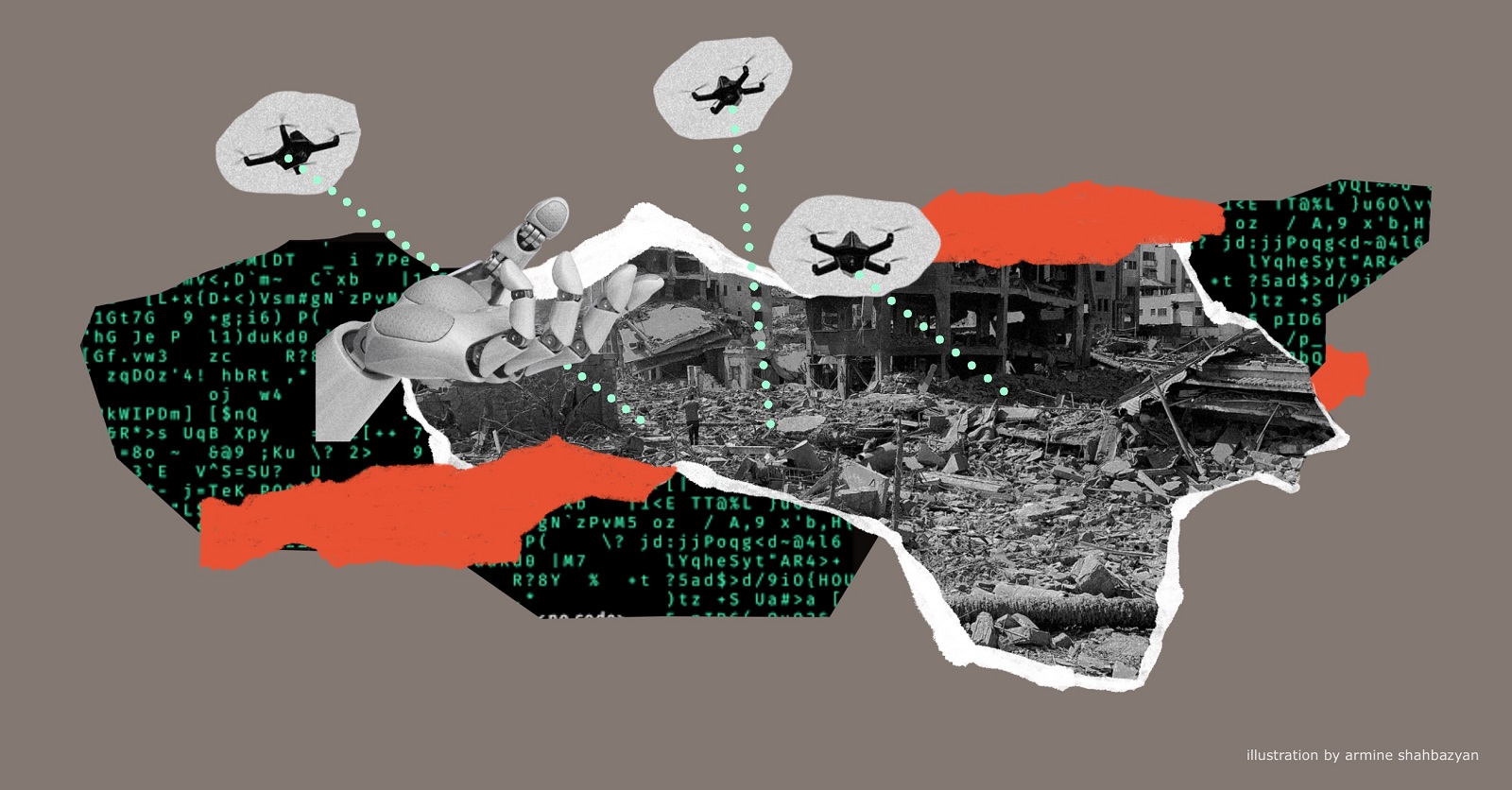
The Iran conflict has turned frontier AI models into contested weapons of state — and the financial and human fallout is only beginning to register.
In the first eleven days of the U.S.-Israeli offensive against Iran, which began on February 28, 2026, American and Israeli forces executed roughly 5,500 strikes on Iranian targets. That is an operational tempo that would have required months in any previous conflict — made possible, in significant part, by artificial intelligence. In the first eleven days of the conflict, America achieved an astonishing 5,500 strikes, using AI on a large-scale battlefield for the first time at this scale. The National The same week those bombs fell, a legal and commercial crisis erupted in Silicon Valley with consequences that will define the AI industry for years. Both events are part of the same story.
We are living through the moment when AI ceased being a future-war thought experiment and became an operational reality — embedded in targeting pipelines, shaping intelligence assessments, and now at the center of a constitutional showdown between a frontier AI company and the United States government. Alfred Nobel, who invented dynamite and then spent the remainder of his life in tortured ambivalence about it, would have recognized the pattern immediately.
The Kill Chain, Accelerated
The joint U.S. and Israeli offensive on Iran revealed how algorithm-based targeting and data-driven intelligence are reforming the mechanics of warfare. In the first twelve hours alone, U.S. and Israeli forces reportedly carried out nearly 900 strikes on Iranian targets — an operational tempo that would have taken days or even weeks in earlier conflicts. Interesting Engineering
At the technological center of this acceleration sits a system most Americans have never heard of: Project Maven. Anthropic’s Claude has become a crucial component of Palantir’s Maven intelligence analysis program, which was also used in the U.S. operation to capture Venezuelan President Nicolás Maduro. Claude is used to help military analysts sort through intelligence and does not directly provide targeting advice, according to a person with knowledge of Anthropic’s work with the Defense Department. NBC News This is a distinction with genuine moral weight — between decision-support and decision-making — but one that is becoming harder to sustain at the speed at which modern targeting now operates.
Critics warn that this trend could compress decision timelines to levels where human judgment is marginalized, ushering in an era of warfare conducted at what has been described as “faster than the speed of thought.” This shortening interval raises fears that human experts may end up merely approving recommendations generated by algorithms. In an environment dictated by speed and automation, the space for hesitation, dissent, or moral restraint may be shrinking just as quickly. Interesting Engineering
The U.S. military’s posture has been notably sanguine about these concerns. Admiral Brad Cooper, head of U.S. Central Command, confirmed that AI is helping soldiers process troves of data, stressing that humans make final targeting decisions — but critics note the gap between that principle and verifiable practice remains wide. Al Jazeera
The Financial Architecture of AI Warfare
The economic dimensions of this transformation are substantial and largely unreported in their full complexity. Understanding them requires holding three separate financial narratives simultaneously.
The direct contract market is the most visible layer. Over the past year, the U.S. Department of Defense signed agreements worth up to $200 million each with several major AI companies, including Anthropic, OpenAI, and Google. CNBC These are not trivial sums in isolation, but they represent the seed capital of a much larger transformation. The military AI market is projected to reach $28.67 billion by 2030, as the speed of military decision-making begins to surpass human cognitive capacity. Emirates 24|7
The collateral economic disruption is less discussed but potentially far larger. On March 1, Iranian drone strikes took out three Amazon Web Services facilities in the Middle East — two in the UAE and one in Bahrain — in what appear to be the first publicly confirmed military attacks on a hyperscale cloud provider. The strikes devastated cloud availability across the region, affecting banks, online payment platforms, and ride-hailing services, with some effects felt by AWS users worldwide. The Motley Fool The IRGC cited the data centers’ support for U.S. military and intelligence networks as justification. This represents a strategic escalation that no risk-management framework in the technology sector adequately anticipated: cloud infrastructure as a legitimate military target.
The reputational and legal costs of AI’s battlefield role may ultimately dwarf both. Anthropic’s court filings stated that the Pentagon’s supply-chain designation could cut the company’s 2026 revenue by several billion dollars and harm its reputation with enterprise clients. A single partner with a multi-million-dollar contract has already switched from Claude to a competing system, eliminating a potential revenue pipeline worth more than $100 million. Negotiations with financial institutions worth approximately $180 million combined have also been disrupted. Itp
The Anthropic-Pentagon Fracture: A Defining Test
The dispute between Anthropic and the U.S. Department of Defense is not merely a contract negotiation gone wrong. It is the first high-profile case in which a frontier AI company drew a public ethical line — and then watched the government attempt to destroy it for doing so.
The sequence of events is now well-documented. The administration’s decisions capped an acrimonious dispute over whether Anthropic could prohibit its tools from being used in mass surveillance of American citizens or to power autonomous weapon systems, as part of a military contract worth up to $200 million. Anthropic said it had tried in good faith to reach an agreement, making clear it supported all lawful uses of AI for national security aside from two narrow exceptions. NPR
When Anthropic held its position, the response was unprecedented in the annals of U.S. technology policy. Defense Secretary Pete Hegseth declared Anthropic a supply chain risk in a statement so broad that it can only be seen as a power play aimed at destroying the company. Shortly thereafter, OpenAI announced it had reached its own deal with the Pentagon, claiming it had secured all the safety terms that Anthropic sought, plus additional guardrails. Council on Foreign Relations
In an extraordinary move, the Pentagon designated Anthropic a supply chain risk — a label historically only applied to foreign adversaries. The designation would require defense vendors and contractors to certify that they don’t use the company’s models in their work with the Pentagon. CNBC That this was applied to a U.S.-headquartered company, founded by former employees of a U.S. nonprofit, and valued at $380 billion, represents a remarkable inversion of the logic the designation was designed to serve.
Meanwhile, Washington was attacking an American frontier AI leader while Chinese labs were on a tear. In the past month alone, five major Chinese models dropped: Alibaba’s Qwen 3.5, Zhipu AI’s GLM-5, MiniMax’s M2.5, ByteDance’s Doubao 2.0, and Moonshot’s Kimi K2.5. Council on Foreign Relations The geopolitical irony is not subtle: in punishing a safety-focused American AI company, the administration may have handed Beijing its most useful competitive gift of the year.
The Human Cost: Social Ramifications No Algorithm Can Compute
Against the financial ledger, the humanitarian accounting is staggering and still incomplete.
The Iranian Red Crescent Society reported that the U.S.-Israeli bombardment campaign damaged nearly 20,000 civilian buildings and 77 healthcare facilities. Strikes also hit oil depots, several street markets, sports venues, schools, and a water desalination plant, according to Iranian officials. Al Jazeera
The case that has attracted the most scrutiny is the bombing of the Shajareh Tayyebeh elementary school in Minab, southern Iran. A strike on the school in the early hours of February 28 killed more than 170 people, most of them children. More than 120 Democratic members of Congress wrote to Defense Secretary Hegseth demanding answers, citing preliminary findings that outdated intelligence may have been to blame for selecting the target. NBC News
The potential connection to AI decision-support systems is explored with forensic precision by experts at the Bulletin of the Atomic Scientists. One analysis notes that the mistargeting could have stemmed from an AI system with access to old intelligence — satellite data that predated the conversion of an IRGC compound into an active school — and that such temporal reasoning failures are a known weakness of large language models. Even with humans nominally “in the loop,” people frequently defer to algorithmic outputs without careful independent examination. Bulletin of the Atomic Scientists
The social fallout extends well beyond individual atrocities. Israel’s Lavender AI-powered database, used to analyze surveillance data and identify potential targets in Gaza, was wrong at least 10 percent of the time, resulting in thousands of civilian casualties. A recent study found that AI models from OpenAI, Anthropic, and Google opted to use nuclear weapons in simulated war games in 95 percent of cases. Rest of World The simulation result does not predict real-world behavior, but it reveals how strategic reasoning models can default toward extreme outcomes under pressure — a finding that ought to unsettle anyone who imagines that algorithmic warfare is inherently more precise than the human kind.
The corrosion of accountability is perhaps the most insidious long-term social effect. “There is no evidence that AI lowers civilian deaths or wrongful targeting decisions — and it may be that the opposite is true,” says Craig Jones, a political geographer at Newcastle University who researches military targeting. Nature Yet the speed and opacity of AI-assisted operations makes it exponentially harder to assign responsibility when things go wrong. Algorithms do not face courts-martial.
Governance: The International Gap
Rapid technological development is outpacing slow international discussions. Academics and legal experts meeting in Geneva in March 2026 to discuss lethal autonomous weapons systems found themselves studying a technology already being used at scale in active conflicts. Nature The gap between the pace of deployment and the pace of governance has never been wider.
The Middle East and North Africa are arguably the most conflict-ridden and militarized regions in the world, with four out of eleven “extreme conflicts” identified in 2024 by the Armed Conflict Location and Event Data organization occurring there. The region has become a testing ground for AI warfare whose lessons — and whose errors — will shape every future conflict. War on the Rocks
The legal framework governing AI in warfare remains, generously described, aspirational. The U.S. military’s stated commitment to keeping “humans in the loop” is a principle that has no internationally binding enforcement mechanism, no agreed definition of what meaningful human control actually entails, and no independent auditing process. One expert observed that the biggest danger with AI is when humans treat it as an all-purpose solution rather than something that can speed up specific processes — and that this habit of over-reliance is particularly lethal in a military context. The National
AI as the New Dynamite: Nobel’s Unresolved Legacy
When Alfred Nobel invented dynamite in 1867, he believed — genuinely — that a weapon so devastatingly efficient would make war unthinkably costly and therefore rare. He was catastrophically wrong. The Franco-Prussian War, the First World War, and the entire industrial-era atrocity that followed proved that more powerful weapons do not deter wars; they escalate them, and they increase civilian mortality relative to combatant casualties.
The parallel to AI is not decorative. The argument for AI in warfare — that algorithmic precision reduces collateral damage, that faster targeting shortens conflicts, that autonomous systems absorb military risk that would otherwise fall on human soldiers — is structurally identical to Nobel’s argument for dynamite. It is the rationalization of a dual-use technology by those with an interest in its proliferation.
Drone technology in the Middle East has already shifted from manual control toward full autonomy, with “kamikaze” drones utilizing computer vision to strike targets independently if communications are severed. As AI becomes more integrated into militaries, the advancements will become even more pronounced with “unpredictable, risky, and lethal consequences,” according to Steve Feldstein, a senior fellow at the Carnegie Endowment for International Peace. Rest of World
The Anthropic dispute, whatever its ultimate legal resolution, has surfaced a question that Silicon Valley has been able to defer until now: can a technology company that builds frontier AI models — systems capable of synthesizing intelligence, generating targeting assessments, and running strategic simulations — genuinely control how those systems are used once deployed by a state? As OpenAI’s own FAQ acknowledged when asked what would happen if the government violated its contract terms: “As with any contract, we could terminate it.” The entire edifice of AI safety in warfare, for now, rests on the contractual leverage of companies that have already agreed to participate. Council on Foreign Relations
Nobel at least had the decency to endow prizes. The AI industry is still working out what it owes.
Policy Recommendations
A minimally adequate governance framework for AI in warfare would need to accomplish several things. Independent verification of “human in the loop” claims — not merely the assertion of it — is the essential starting point. Mandatory after-action reporting on AI involvement in any strike that results in civilian casualties would create accountability where none currently exists. International agreement on a baseline error-rate threshold — above which AI targeting systems may not be used without additional human review — would translate abstract humanitarian law into operational reality.
The technology companies themselves bear responsibility that no contract clause can fully discharge. Researchers from OpenAI, Google DeepMind, and other labs submitted a court filing supporting Anthropic’s position, arguing that restrictions on domestic surveillance and autonomous weapons are reasonable until stronger legal safeguards are established. ColombiaOne That the most capable AI builders in the world believe their own technology is not yet reliable enough for autonomous lethal use is information that should be at the center of every policy debate — not buried in court filings.
Discover more from The Economy
Subscribe to get the latest posts sent to your email.
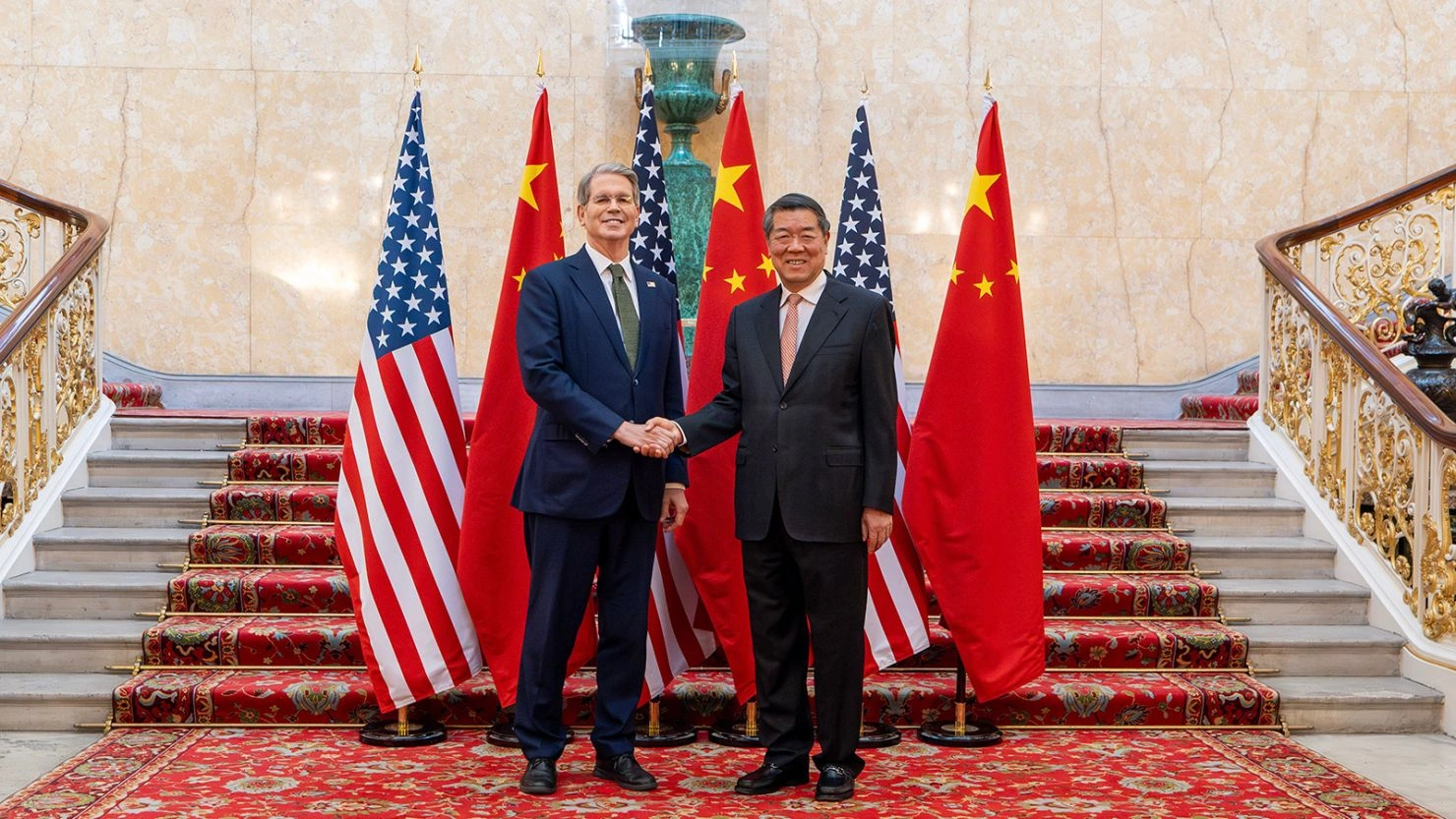
Bessent and He Lifeng meet at OECD Paris to review the Busan trade truce before Trump’s Beijing summit. Rare earths, Hormuz oil shock, and Section 301 cloud the path ahead.
The 16th arrondissement of Paris is not a place that announces itself. Discreet, residential, its wide avenues lined with haussmann facades, it is the kind of neighbourhood where power moves quietly. On Sunday morning, as French voters elsewhere in the city queued outside polling stations for the first round of local elections, a motorcade slipped through those unassuming streets toward the headquarters of the Organisation for Economic Co-operation and Development. Inside, the world’s two largest economies were attempting something rare in 2026: a structured, professional conversation.
Talks began at 10:05 a.m. local time, with Vice-Premier He Lifeng accompanied by Li Chenggang, China’s foremost international trade negotiator, while Treasury Secretary Scott Bessent arrived flanked by US Trade Representative Jamieson Greer. South China Morning Post Unlike previous encounters in European capitals, the delegations were received not by a host-country official but by OECD Secretary-General Mathias Cormann South China Morning Post — a small detail that spoke volumes. France was absorbed in its own democratic ritual. The world’s most consequential bilateral relationship was, once again, largely on its own.
The Stakes in Paris: More Than a Warm-Up Act
It would be tempting to dismiss the Paris talks as logistical scaffolding for a grander event — namely, President Donald Trump’s planned visit to Beijing at the end of March for a face-to-face with President Xi Jinping. That reading would be a mistake. The discussions are expected to cover US tariff adjustments, Chinese exports of rare earth minerals and magnets, American high-tech export controls, and Chinese purchases of US agricultural commodities CNBC — a cluster of issues that, taken together, constitute the structural skeleton of the bilateral relationship.
Analysts cautioned that with limited preparation time and Washington’s strategic focus consumed by the US-Israeli military campaign against Iran, the prospects for any significant breakthrough — either in Paris or at the Beijing summit — remain constrained. Investing.com As Scott Kennedy, a China economics specialist at the Center for Strategic and International Studies, put it with characteristic precision: “Both sides, I think, have a minimum goal of having a meeting which sort of keeps things together and avoids a rupture and re-escalation of tensions.” Yahoo!
That minimum — preserving the architecture of the relationship, not remodelling it — may, in the current environment, be ambitious enough.
Busan’s Ledger: What Has Been Delivered, and What Has Not
The two delegations were expected to review progress against the commitments enshrined in the October 2025 trade truce brokered by Trump and Xi on the sidelines of the APEC summit in Busan, South Korea. Yahoo! On certain metrics, the scorecard is encouraging. Washington officials, including Bessent himself, have confirmed that China has broadly honoured its agricultural obligations under the deal Business Standard — a meaningful signal at a moment when diplomatic goodwill is scarce.
The soybean numbers are notable. China committed to purchasing 12 million metric tonnes of US soybeans in the 2025 marketing year, with an escalation to 25 million tonnes in 2026 — a procurement schedule that begins with the autumn harvest. Yahoo! For Midwestern farmers and the commodity desks that serve them, these are not abstractions; they are the difference between a profitable season and a foreclosure notice.
But the picture darkens considerably when attention shifts to critical materials. US aerospace manufacturers and semiconductor companies are experiencing acute shortages of rare earth elements, including yttrium — a mineral indispensable in the heat-resistant coatings that protect jet engine components — and China, which controls an estimated 60 percent of global rare earth production, has not yet extended full export access to these sectors. CNBC According to William Chou, a senior fellow at the Hudson Institute, “US priorities will likely be about agricultural purchases by China and greater access to Chinese rare earths in the short term” Business Standard at the Paris talks — a formulation that implies urgency without optimism.
The supply chain implications are already registering. Defence contractors reliant on rare-earth permanent magnets for guidance systems, electric motors in next-generation aircraft, and precision sensors are operating on diminished buffers. The Paris talks, if they yield anything concrete, may need to yield this above all.
A New Irritant: Section 301 Returns
Against this backdrop of incremental compliance and unresolved bottlenecks, the US side has introduced a fresh complication. Treasury Secretary Bessent and USTR Greer are bringing to Paris a new Section 301 trade investigation targeting China and 15 other major trading partners CNBC — a revival of the legal mechanism previously used to justify sweeping tariffs during the first Trump administration. The signal it sends is deliberately mixed: Washington is simultaneously seeking to consolidate the Busan framework and reserving the right to escalate it.
For Chinese negotiators, the juxtaposition is not lost. Beijing has staked considerable domestic political credibility on the proposition that engagement with Washington produces tangible results. A Section 301 investigation, even if procedurally nascent, raises the spectre of a new tariff architecture layered atop the existing one — and complicates the case for continued compliance within China’s own policy bureaucracy.
The Hormuz Variable: When Geopolitics Enters the Room
No diplomatic meeting in March 2026 can be quarantined from the wider strategic environment, and the Paris talks are no exception. The ongoing US-Israeli military campaign against Iran has introduced a variable of potentially severe economic consequence: the partial closure of the Strait of Hormuz, the narrow waterway through which approximately a fifth of the world’s oil passes.
China sources roughly 45 percent of its imported oil through the Strait, making any disruption there a direct threat to its industrial output and energy security. Business Standard After US forces struck Iran’s Kharg Island oil loading facility and Tehran signalled retaliatory intent, President Trump called on other nations to assist in protecting maritime passage through the Strait. CNBC Bessent, for his part, issued a 30-day sanctions waiver to permit the sale of Russian oil currently stranded on tankers at sea CNBC — a pragmatic, if politically contorted, attempt to soften the energy-price spike.
For the Paris talks, the Hormuz dimension introduces a paradox. China has an acute economic interest in stabilising global oil flows and might, in principle, be receptive to coordinating with the United States on maritime security. Yet Beijing’s deep reluctance to be seen as endorsing or facilitating US-led military operations in the Middle East constrains how far it can go. The corridor between shared interest and political optics is narrow.
What Trump Wants in Beijing — and What Xi Can Deliver
With Trump’s Beijing visit now functioning as the near-term endpoint of this diplomatic process, the outlines of a summit package are beginning to take shape. The US president is expected to seek major new Chinese commitments on Boeing aircraft orders and expanded purchases of American liquefied natural gas Yahoo! — both commercially significant and symbolically resonant for domestic audiences. Boeing’s recovery from years of regulatory and reputational turbulence has made its order book a quasi-barometer of US industrial confidence; LNG exports represent a strategic diversification of American energy diplomacy.
For Xi, the calculus involves threading a needle between delivering enough to make the summit worthwhile and conceding so much that it invites criticism at home from nationalist constituencies already sceptical of engagement. China’s state media has consistently characterised the Paris talks as a potential “stabilising anchor” for an increasingly uncertain global economy Republic World — language carefully chosen to frame engagement as prudent statecraft rather than capitulation.
The OECD itself, whose headquarters serves as neutral ground for today’s meeting, cut its global growth forecast earlier this year amid trade fragmentation fears — underscoring that the bilateral relationship between Washington and Beijing carries systemic weight far beyond its two principals. A credible summit, even one short of transformative, would send a signal to investment desks and central banks from Frankfurt to Singapore that the world’s two largest economies retain the institutional capacity to manage their rivalry.
The Road to Beijing, and Beyond
What happens in the 16th arrondissement today will not resolve the structural tensions that define the US-China relationship in this decade. The rare-earth bottleneck is systemic, not administrative. The Section 301 investigation reflects a bipartisan American political consensus that China’s industrial subsidies represent an existential competitive threat. And the Iran war has introduced a geopolitical variable that neither side fully controls.
But the Paris talks serve a purpose that transcends their immediate agenda. They demonstrate, to a watching world, that diplomacy between great powers remains possible even as military operations unfold and supply chains fracture. They keep open the channels through which, eventually, more durable arrangements might be negotiated — whether at a Beijing summit, at the G20 in Johannesburg later this year, or in another European capital where motorcades slip, unannounced, through quiet streets.
The minimum goal, as CSIS’s Kennedy observed, is avoiding rupture. In the spring of 2026, with the Strait of Hormuz partially closed and yttrium shipments stalled, that minimum has acquired the weight of ambition.
Discover more from The Economy
Subscribe to get the latest posts sent to your email.

On November 19, 2023, Houthi militants seized a Bahamian-flagged cargo ship in the Red Sea. That single act of piracy — framed as solidarity with Gaza — triggered the most consequential maritime disruption to global trade since the 2021 Ever Given blockage. Two and a half years later, the Strait of Bab el-Mandeb remains a war zone in all but name, the Suez Canal handles barely a fraction of its former traffic, and the economies of eighteen nations stretching from Sri Lanka to the Philippines are absorbing cascading shocks they did not generate and cannot fully control. This is the story of how a distant conflict has become a near-present economic emergency across ASEAN and SAARC — and what it means for growth, inflation, remittances, and supply chains through 2028.
The Red Sea in Numbers: A Chokepoint Under Siege
The statistics are staggering. According to UNCTAD’s 2025 Maritime Trade Review, tonnage through the Suez Canal stood 70 percent below 2023 levels as recently as May 2025 UNCTAD, and the trajectory of recovery remains deeply uncertain. Container shipping has been devastated: traffic through the canal collapsed by roughly 75 percent during 2024 compared with 2023 averages, with no meaningful recovery through mid-2025 — data from July 2025 showing no recovery in container vessel transit through the canal, and Houthi attacks as recently as August 2025 making recovery unlikely soon Project44. The Suez Canal’s share of global maritime traffic has slipped from roughly 12 percent to below 9 percent — a structural shift that may not fully reverse even if hostilities cease.
The rerouting of vessels around Africa’s Cape of Good Hope adds 10–14 days to Asia–Europe voyages, pushing total transit times to 40–50 days. Freight rates between Shanghai and Rotterdam surged fivefold in 2024 Yqn. Rates between Shanghai and Rotterdam remained significantly higher than before the attacks began — up 80 percent relative to pre-crisis levels as of 2025. Coface UNCTAD notes that ship ton-miles hit a record annual rise of 6 percent in 2024, nearly three times faster than underlying trade volume growth. By May 2025, the Strait of Hormuz — through which 11 percent of global trade and a third of seaborne oil pass — also faced disruption risks. UNCTAD
The Asian Development Bank’s July 2025 Outlook modelled three Middle East scenarios. In its most severe case — a protracted conflict with Strait of Hormuz disruption — oil prices could surge $55 per barrel for four consecutive quarters. Asian Development Bank The Strait of Hormuz, through which roughly one-third of all seaborne oil and over one-fifth of global LNG supply passes (the latter primarily from Qatar), is a chokepoint of existential importance to every oil-importing nation from Dhaka to Manila.
The Oil Shock Transmission: How Energy Costs Hit 18 Economies
For most of 2025, Brent crude had traded in the $60–$74/barrel range, offering breathing room to energy-hungry emerging economies. That calculus shifted dramatically in early 2026. With fresh military action involving the United States and Israel targeting Iran, Brent broke above $100/bbl — roughly 70 percent above its 2025 average of $68/bbl — according to OCBC Group Research. European gas (TTF) simultaneously pushed past €50/MWh. OCBC
MUFG Research sensitivity modelling shows that every $10/barrel increase in oil prices worsens Asia’s current account balance by 0.2–0.9 percent of GDP. Thailand is the region’s most exposed economy (current account impact: -0.9% of GDP per $10/bbl), followed by Singapore (-0.7%), South Korea (-0.6%), and the Philippines. Inflationary effects are equally asymmetric: a $10/bbl oil price rise pushes annual headline CPI up by 0.6–0.8 percentage points in Thailand, 0.5–0.7pp in India and the Philippines, and 0.4–0.6pp across Malaysia, Indonesia, and Vietnam. MUFG Research Countries with fuel subsidies — notably Indonesia and Malaysia — absorb part of the pass-through fiscally, but at escalating cost to their budgets.
ASEAN: The Differentiated Exposure
ASEAN nations face wildly varying degrees of vulnerability. The Philippines sources 96 percent of its oil from the Gulf, Vietnam and Thailand approximately 87 percent and 74 percent respectively, while Singapore is more than 70 percent dependent on Middle Eastern crude — with 45 percent of its LNG imports arriving from Qatar alone. The Diplomat
The ADB’s April 2025 Outlook cut Singapore’s 2025 growth forecast to 2.6 percent (from 4.4% in 2024), citing weaker exports driven by global trade uncertainties and weaker external demand. Asian Development Bank The IMF revised ASEAN-5 aggregate growth down further to 4.1 percent in July 2025, versus earlier forecasts of 4.6 percent, with trade-dependent Vietnam (revised to 5.2% in 2025), Thailand (2.8%), and Cambodia most acutely affected. Krungsri
SAARC: The Remittance Fault Line
For the eight SAARC economies, the crisis is doubly coercive: higher energy import bills on one side, threatened remittance flows on the other.
India illustrates the tension most sharply. The country consumes approximately 5.3–5.5 million barrels per day while producing barely 0.6 million domestically, making it nearly 85 percent import-dependent. Petroleum imports already account for 25–30 percent of India’s total import bill, and every $10 oil price increase adds $12–15 billion to the annual cost. IANS News Historically, such episodes have triggered rupee depreciations exceeding 10 percent.
The remittance dimension is equally alarming. India received a record $137 billion in remittances in 2024, retaining its position as the world’s largest recipient. United Nations The 9-million-strong Indian diaspora in Gulf countries contributes nearly 38 percent of India’s total remittance inflows — roughly $51.4 billion from the GCC alone, based on FY2025 inflows of $135.4 billion. These workers are concentrated in oil services, construction, hospitality and retail: precisely the sectors most vulnerable to Gulf economic disruption. Oxford Economics estimates a sustained shock “would worsen India’s external position and could put some pressure on the rupee.” CNBC
Pakistan: Caught in the Crossfire
Pakistan’s total petroleum import bill reached approximately $10.7 billion in FY25, with crude petroleum imports of over $5.7 billion sourced predominantly from Saudi Arabia and the UAE. Its trade deficit has widened to approximately $25 billion during July–February FY26. Domestic fuel prices have already risen by approximately Rs55 ($0.20) per litre, reflecting the war-risk premium embedded in global crude markets. Profit by Pakistan Today
The remittance channel is equally fragile. Pakistan received $34.6 billion in remittances in 2024 — accounting for 9.4 percent of GDP — with Saudi Arabia alone contributing $7.4 billion (25 percent of the total), and the UAE contributing $5.5 billion (18.7 percent). Displacement Tracking Matrix An Insight Securities research note from March 2026 warns that geopolitical tensions involving the US, Israel, and Iran “have taken a hit on the security and stability perception” of Gulf economies, with the effect on Pakistani remittances expected to materialise with a lag. About 55 percent of Pakistan’s remittance inflows come from the Middle East, making the country particularly vulnerable. Arab News PK
For Pakistani exporters, shipping diversions around the Cape of Good Hope are extending transit times to Europe by 15–20 days, while freight rates on key routes could rise by up to 300 percent under war-risk classification. Profit by Pakistan Today
Bangladesh and Sri Lanka: Garments, Tea, and the Weight of Distance
Bangladesh’s vulnerability is concentrated in one devastating statistic: more than 65 percent of its garment exports — representing roughly $47 billion of an approximately $55 billion annual export economy — pass through or proximate to the Red Sea corridor. LinkedIn When Maersk confirmed on March 3, 2026, that it had suspended all new bookings between the Indian subcontinent and the Upper Gulf — covering the UAE, Bahrain, Qatar, Iraq, Kuwait, and Saudi Arabia — it confirmed that the escalating Iran crisis was no longer merely raising risk premiums; it was severing commercial flows entirely. The Daily Star
The garment sector cannot absorb air freight as a substitute: the BGMEA president notes that air freight costs have increased between 25–40 percent for some European buyers due to the Red Sea crisis, and some buyers are renegotiating contracts or diverting orders. The Daily Star As one garment vice president told Nikkei Asia, air freight costs 10–12 times more than sea transport — an instant route to negative margins. Bangladesh cannot afford order diversion at scale.
Sri Lanka’s exposure cuts across multiple arteries simultaneously. With over 1.5 million Sri Lankans (nearly 7 percent of the population) employed in the Gulf region, and the island recording a record $8 billion in remittances in 2025, any large-scale evacuation or Gulf economic contraction would shatter the fiscal stability the government has only recently achieved. Sri Lanka’s tea exports to Iran, Iraq, and the UAE — where the Iranian rial’s collapse has triggered a freeze in new orders — threaten the livelihoods of smallholder farmers across the southern highlands. EconomyNext
The Hormuz Wildcard: A Scenario That Could Rewrite Everything
Much of the analysis above rests on a scenario in which the Strait of Hormuz remains open. Should it be disrupted — even temporarily — the macroeconomic calculus transforms. Approximately 20 percent of global oil consumption transits the Strait daily, along with over one-fifth of the world’s LNG supply. Alternative land pipelines — Saudi Arabia’s East-West Pipeline and the UAE’s Abu Dhabi Crude Oil Pipeline to Fujairah — can offer some help, but their capacity represents barely one quarter of normal Hormuz throughput. MUFG Research
Under the ADB’s most severe scenario — a $55/barrel sustained oil shock — the impact on current account balances across ASEAN and South Asia would be severe. Current account deficits for the Philippines and India could widen above 4.5 percent and 2 percent of GDP respectively if oil prices were to rise above $90/bbl on a sustained basis. MUFG Research Pakistan, with minimal fiscal buffers, would face renewed currency crisis. India’s annual import bill would expand by roughly $82 billion relative to 2025 averages — approximately equal to its entire defence budget.
Silver Linings and Second-Order Winners
Crises reshape competitive landscapes. Vietnam’s electronics and apparel sector recorded export turnover of $4.45 billion in July 2025 — an 8.2 percent increase over June and 21 percent higher than the same month last year — driven partly by supply chain shifts away from China. Asian Development Bank Malaysia and Indonesia, as partial net energy exporters, benefit from elevated crude prices on the revenue side. Singapore, with a FY2025 fiscal surplus of 1.9 percent of GDP, has the deepest fiscal reserves in ASEAN to deploy energy transition support without macroeconomic destabilisation. OCBC
Thailand has launched planning work on its $28 billion Landbridge project — deep-sea ports at Ranong and Chumphon connected by highway and rail — as a potential alternative corridor to the Strait of Malacca. India is accelerating infrastructure at Chabahar Port, a corridor that bypasses Pakistani territory and opens Central Asian trade routes. The “friend-shoring” dynamic identified by the IMF is also accelerating: as Western supply chains reconfigure away from single-region dependence, ASEAN economies — particularly Vietnam and Indonesia — stand to attract manufacturing diversion from China that partially offsets the Middle East trade cost shock. Krungsri
China’s Shadow: The Geopolitical Dimension
No analysis of the Middle East’s economic impact on ASEAN and SAARC is complete without acknowledging Beijing’s role. China, which imports roughly 75 percent of its crude from the Middle East and Africa, has more at stake in Hormuz stability than almost any other economy. Yet Beijing has maintained studied neutrality, positioning itself as potential peacebroker while expanding bilateral energy security arrangements with Gulf states.
Meanwhile, China’s Belt and Road Initiative (BRI) port infrastructure — Gwadar in Pakistan, Hambantota in Sri Lanka, Kyaukpyu in Myanmar — is emerging as a hedging option for economies seeking to reduce Red Sea exposure. The IMF’s Regional Economic Outlook warns that geoeconomic fragmentation — the splitting of global trade into rival blocs — carries a potential output cost, with a persistent spike in global uncertainty producing GDP losses of 2.5 percent after two years in the MENA and adjacent regions, with the impacts more pronounced than elsewhere due to vulnerabilities including higher public debt and weaker institutions. International Monetary Fund
Outlook 2026–2028: GDP Drag Estimates and Divergent Trajectories
Baseline projections remain broadly positive for the region, underpinned by demographic dividends and resilient domestic demand. The World Bank’s October 2025 MENAAP Update projects regional growth reaching 2.8 percent in 2025 and 3.3 percent in 2026. World Bank The IMF’s October 2025 Regional Outlook projects Pakistan’s growth increasing to 3.6 percent in 2026, supported by reform implementation and improving financial conditions. International Monetary Fund ADB’s September 2025 forecasts show Indonesia at 4.9%, Philippines at 5.6%, and Malaysia at 4.3% for 2025. Asian Development Bank
But the scenario distribution has widened materially. In a contained-conflict baseline (oil averaging $75–85/bbl), the GDP drag for oil-importing SAARC economies is estimated at 0.3–0.7 percentage points annually through 2027 — painful but manageable. In a protracted Hormuz-disruption scenario, modelled GDP losses escalate to 1.5–3.0 percentage points for the most energy-dependent economies: Sri Lanka, Philippines, Bangladesh, and Pakistan. Currency pressures in that scenario could trigger sovereign debt rating downgrades for Pakistan (still under IMF programme) and Sri Lanka (still restructuring external debt).
Policy Recommendations for ASEAN and SAARC Governments
The foregoing analysis suggests a multi-track policy agenda structured across three time horizons:
Immediate (0–6 months)
- Strategic petroleum reserves: Economies with fewer than 30 days of import cover — Bangladesh, Sri Lanka, Pakistan, Philippines — should accelerate bilateral arrangements with GCC suppliers for deferred-payment oil stocking.
- Freight & insurance backstops: State-owned development banks in India, Indonesia, and Malaysia should establish temporary freight insurance facilities for SME exporters unable to access war-risk cover at commercial rates.
- Fiscal fuel-price buffers: Governments should resist immediate full pass-through of oil price increases to consumers in 2026 — the inflationary second-round effects of premature deregulation risk destabilising monetary policy just as disinflation was being consolidated.
Medium-Term (6–24 months)
- Trade corridor diversification: ASEAN and SAARC should jointly accelerate operationalisation of the India-Middle East-Europe Economic Corridor (IMEC) and Chabahar-Central Asia links to reduce exclusive dependence on the Suez/Red Sea routing for European-bound exports.
- Renewable energy acceleration: Each percentage point of fossil fuel imports replaced by domestic solar, wind, or nuclear capacity is a permanent reduction in geopolitical exposure. ADB Green Climate Fund allocations should be explicitly linked to energy import substitution targets.
- Remittance formalisation: Bangladesh, Pakistan, and Sri Lanka should extend incentive schemes to maximise remittance capture through official banking channels, maximising their foreign-exchange multiplier effect.
Long-Term (2–5 years)
- “Asia Premium” hedge architecture: A regional crude futures market, potentially anchored in Singapore, could provide more effective price discovery and hedging access to smaller economies that currently pay a structural premium above Brent.
- Supply chain friend-shoring with selectivity: ASEAN’s competitive advantage is best served by remaining in the middle of the US-China geopolitical competition rather than choosing sides definitively, attracting Western supply-chain investment without triggering Chinese economic retaliation through rare earth or intermediate input export controls.
- Multilateral maritime security: ASEAN and SAARC together represent a significant share of the global trade disruption cost. A formal joint diplomatic initiative requesting a UN-mandated naval security corridor for commercial shipping through the Red Sea and Gulf would add multilateral legitimacy to what is currently a US-led Western operation.
Conclusion: The Geography of Exposure
The Middle East conflict has delivered a masterclass in the hidden geography of economic exposure. Countries that share no border with Israel, Hamas, or Iran — countries that have issued no military guarantee and sent no troops — are nonetheless absorbing the full force of an energy price shock, a logistics cost spiral, and a remittance fragility that was structurally built into their growth models over decades.
Even if hostilities ceased tomorrow, the Red Sea crisis — now stretching into its third year as of 2026 — has tested the limits of global logistics. With Red Sea transits down up to 90 percent and Cape of Good Hope routing now the industry standard, companies face 10–14 extra days in transit, higher inventory costs, and sustained freight premiums of 25–35 percent. DocShipper The ceasefire declared in October 2025 barely shifted the dial. Shipping insurers remain risk-averse; carriers have rebuilt vessel schedules around the longer route.
What the crisis has done is clarify something that globalisation’s practitioners long preferred to obscure: deep economic integration produces deep interdependence, and deep interdependence produces deep vulnerability. The eighteen economies of ASEAN and SAARC are not passive bystanders in a conflict 4,000 miles away. They are, in the most material and measurable sense, participants in its economic consequences. The policy leaders who understand that soonest — and build the resilience architecture accordingly — will determine which countries emerge from the coming years stronger, and which emerge diminished.
Discover more from The Economy
Subscribe to get the latest posts sent to your email.
-

 Markets & Finance2 months ago
Top 15 Stocks for Investment in 2026 in PSX: Your Complete Guide to Pakistan’s Best Investment Opportunities
-

 Analysis1 month ago
Brazil’s Rare Earth Race: US, EU, and China Compete for Critical Minerals as Tensions Rise
-

 Banks2 months ago
Best Investments in Pakistan 2026: Top 10 Low-Price Shares and Long-Term Picks for the PSX
-

 Investment2 months ago
Top 10 Mutual Fund Managers in Pakistan for Investment in 2026: A Comprehensive Guide for Optimal Returns
-

 Asia2 months ago
China’s 50% Domestic Equipment Rule: The Semiconductor Mandate Reshaping Global Tech
-

 Analysis4 weeks ago
Top 10 Stocks for Investment in PSX for Quick Returns in 2026
-

 Global Economy3 months ago
Pakistan’s Export Goldmine: 10 Game-Changing Markets Where Pakistani Businesses Are Winning Big in 2025
-

 Global Economy3 months ago
15 Most Lucrative Sectors for Investment in Pakistan: A 2025 Data-Driven Analysis