
Asia
Trump’s 2025-2026 Tariffs on Asia and Europe: Justified Protectionism or Self-Inflicted Economic Wound?

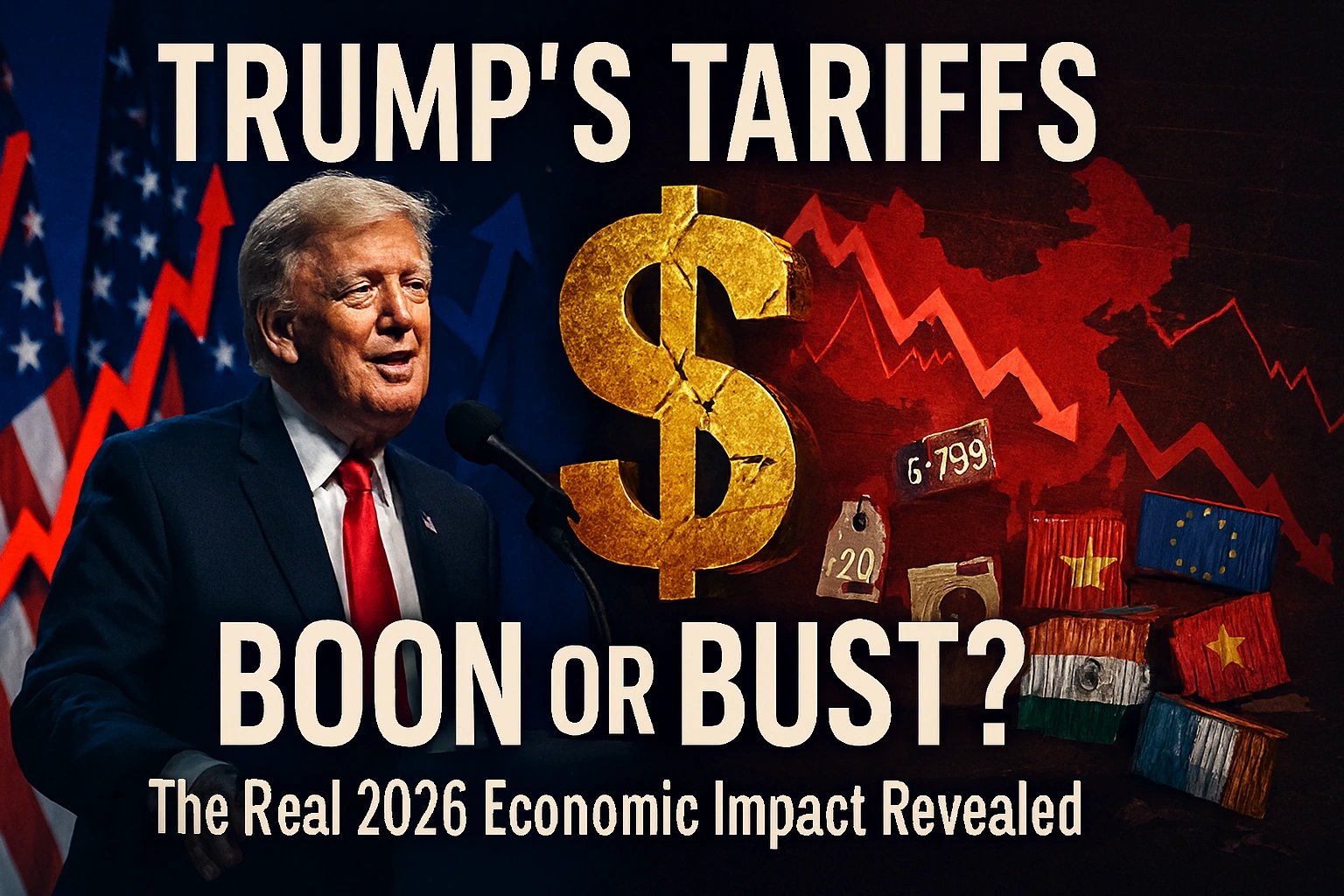
On a frigid January morning in Cincinnati, Sarah Chen stands in the aisles of her family’s small electronics shop, calculator in hand, recalculating profit margins for the third time this quarter. The wholesale price of the Chinese-made tablets that once flew off her shelves has jumped 34% since spring 2025. “I either absorb the hit or pass it to customers who are already stretched thin,” she tells me, her frustration palpable. “Either way, I lose.” Three thousand miles away, in a gleaming Tesla factory outside Austin, workers celebrate a modest expansion—twenty new jobs assembling battery components that once came exclusively from South Korea, now partially sourced domestically to sidestep tariff costs. Two stories, one policy: President Trump’s sweeping 2025-2026 tariff regime, the most aggressive protectionist turn in American trade policy since the Smoot-Hawley era.
Nearly two years into Trump’s second-term trade war, the economic verdict remains deeply contested. The administration points to $287 billion in tariff revenue collected in 2025—a dramatic increase from pre-2025 levels—and argues that reciprocal tariffs are finally leveling a playing field long tilted against American workers. Critics counter with mounting evidence of inflationary pressures, widening trade deficits, and minimal manufacturing gains that suggest the cure may be worse than the disease. As we approach the midpoint of 2026, the fundamental question persists: Are Trump’s tariffs justified protectionism reclaiming economic sovereignty, or a self-inflicted wound bleeding American consumers and competitiveness?
The Architecture of Trump’s Trade Offensive
The current tariff structure represents an unprecedented escalation in postwar American trade policy. Beginning in early 2025, the Trump administration implemented a multi-tiered system: a universal baseline tariff of 10-20% on virtually all imports, elevated rates of 60-125% on Chinese goods, and targeted duties of 25-50% on European automobiles, steel, and select agricultural products. The average effective U.S. tariff rate—hovering around 2.5% for decades—rocketed to approximately 27% by late 2025, according to Peterson Institute for International Economics analysis.
The stated rationale rests on three pillars. First, reciprocity: matching trading partners’ tariff levels to force negotiations toward lower barriers globally. Second, revenue generation: using import duties to offset income tax cuts and fund domestic priorities. Third, industrial policy: reshoring critical supply chains in semiconductors, pharmaceuticals, and defense materials deemed vital to national security. In Trump’s framing, decades of “unfair” trade deals hollowed out the Rust Belt, enriched China, and left America dangerously dependent on adversaries for essential goods.
There’s historical precedent for this worldview. Alexander Hamilton championed tariffs to nurture infant American industries. The post-Civil War “American System” used protectionism to fuel industrialization. Even modern economic giants like South Korea and Japan deployed strategic tariffs during development. The question isn’t whether protectionism can ever work—it’s whether Trump’s specific implementation, in today’s deeply integrated global economy, achieves its goals without prohibitive costs.
Revenue Gains: Real but Misleading
The Trump administration’s headline achievement is undeniable: tariff revenue surged to $287 billion in 2025, compared to roughly $80 billion annually in the pre-Trump era. Treasury Secretary Scott Bessent hailed this as vindication, arguing tariffs function as a “consumption tax on foreign goods” that funds government without burdening American workers.
Yet this framing obscures crucial economic reality. Unlike income taxes paid by high earners, tariffs function as regressive consumption taxes. When importers pay the tariff at the border, those costs cascade through supply chains, ultimately landing on retail prices. A Brookings Institution study estimated that Trump’s 2025 tariffs cost the average American household between $1,800 and $2,400 annually through higher prices on everything from smartphones to sneakers to strawberries. Low-income families, who spend proportionally more on goods than services, bear the heaviest burden.
Moreover, tariff revenue must be weighed against offsetting economic drags:
- Reduced import volumes: As prices rise, Americans buy fewer foreign goods, eventually shrinking the tariff base itself
- Retaliation costs: European Union and Chinese counter-tariffs hammered U.S. agricultural exports, requiring $12 billion in emergency farm aid in 2025
- Productivity losses: Inefficient domestic production substituting for cheaper foreign goods reduces overall economic output
- Administrative burden: Customs enforcement, trade dispute litigation, and exemption processes consume billions annually
When accounting for these factors, Yale Budget Lab economists calculate that each dollar of tariff revenue corresponds to $1.80 in total economic cost—hardly the free lunch portrayed.
The Manufacturing Renaissance That Wasn’t
Perhaps the most politically salient promise of Trump’s tariff regime was a renaissance in American manufacturing—factories returning from Shenzhen and Stuttgart, blue-collar jobs reviving the Midwest. The empirical record shows modest gains at best, illusions at worst.
U.S. manufacturing employment did tick upward in 2025, adding approximately 140,000 jobs according to Bureau of Labor Statistics data. Specific sectors saw notable activity: semiconductor fabrication plants broke ground in Arizona and Ohio, battery component production expanded in Michigan, and some textile operations relocated from Vietnam to North Carolina. The administration trumpets these wins as proof of concept.
Dig deeper, however, and the picture complicates. Federal Reserve analysis reveals that many “reshored” jobs represent capital-intensive automation rather than labor-intensive production. A chip fab employing 800 engineers and technicians replaces a Chinese factory employing 15,000 assembly workers—beneficial for high-skilled employment, but not the working-class bonanza promised. Meanwhile, manufacturing output as a percentage of GDP remained essentially flat in 2025, suggesting production gains merely kept pace with overall economic growth rather than outperforming.
More troubling, supply chains proved far more complex than tariff architects anticipated. Rather than returning to the U.S., many manufacturers simply rerouted through third countries to evade duties—China ships steel through Mexico, electronics route via Malaysia, pharmaceuticals detour through India. World Bank trade flow data documents this “trade deflection” phenomenon, which preserves Chinese production while generating paperwork, transportation costs, and environmental waste without yielding American jobs.
The hardest-hit were small and medium manufacturers dependent on imported components. A Michigan auto parts supplier I spoke with last fall described the squeeze: “We import specialized steel from Germany because no American mill produces it. The 40% tariff tripled our costs overnight. We laid off twelve people and cancelled our expansion.” For every factory celebrating tariff protection, another curses tariff-induced input costs.
Consumer Costs and Inflation’s Quiet Bite
The most direct economic impact of Trump’s tariffs landed at checkout counters nationwide. While headline inflation moderated from 2022-2023 peaks, consumer price data reveals tariff-specific spikes in key categories throughout 2025:
- Electronics: Laptops, smartphones, and televisions rose 12-18% on average, disproportionately affecting middle-class families and students
- Apparel and footwear: Clothing prices increased 8-11%, hitting budget-conscious shoppers hardest
- Automobiles: Both imported and domestic vehicles jumped 6-9% as automakers passed through tariff costs and faced reduced foreign competition
- Home appliances: Washing machines, refrigerators, and HVAC systems climbed 7-13%, devastating first-time homebuyers
Research from the National Bureau of Economic Research quantified the phenomenon: for every percentage point increase in effective tariff rates, consumer prices rise approximately 0.3 percentage points within 12-18 months. Applied to Trump’s 24-point tariff increase (from ~3% to ~27%), the model predicts a 7-point inflationary contribution—precisely what Federal Reserve economists privately estimate, according to sources familiar with internal models.
The Federal Reserve faced an impossible bind. Raising interest rates to combat tariff-driven inflation would choke economic growth and employment. Accommodating higher prices would erode purchasing power and risk unanchored expectations. Chairman Jerome Powell’s carefully parsed statements throughout 2025 reflected this dilemma: acknowledging “supply-side price pressures from trade policy” while maintaining data-dependent gradualism.
For millions of Americans like Sarah Chen in Cincinnati, macroeconomic abstractions translate to lived hardship. Tariffs don’t feel like abstract policy—they feel like shrinking purchasing power, deferred family vacations, and anxiety about making ends meet.
Asia’s Response: Adaptation and Defiance
China’s reaction to Trump’s tariff offensive underscored the limits of unilateral trade pressure. Rather than capitulating to U.S. demands, Beijing doubled down on industrial strategy and supply chain resilience. Chinese customs data revealed a record $1.2 trillion trade surplus in 2025—up from $823 billion in 2024—driven by surging exports to Europe, Southeast Asia, and Africa that offset declining U.S. sales.
The Communist Party framed Trump’s tariffs as vindication of Xi Jinping’s “dual circulation” strategy: reducing dependence on Western markets while dominating critical technology supply chains. Massive subsidies flowed to electric vehicles, solar panels, and advanced semiconductors, flooding global markets and undercutting both American and European competitors. The European Union, initially sympathetic to U.S. complaints about Chinese overcapacity, found itself imposing its own duties on Chinese EVs to protect nascent industries—fragmenting rather than unifying the Western response.
Meanwhile, Southeast Asian economies emerged as clear winners. Vietnam, Thailand, and Malaysia attracted factories fleeing both Chinese tariffs and rising Chinese labor costs, positioning themselves as neutral intermediaries in the U.S.-China rivalry. The ASEAN bloc’s combined exports to the U.S. jumped 23% in 2025, with Vietnamese electronics and Thai auto parts capturing market share. Ironically, Trump’s tariffs accelerated precisely the regional supply chain diversification China had resisted for years—but without returning production to American soil.
Japan and South Korea navigated cautiously, securing partial tariff exemptions through bilateral negotiations while deepening technological partnerships with China despite U.S. pressure. The administration’s transactional approach—threatening allies with tariffs, then granting reprieves in exchange for concessions—bred resentment even among traditional partners. Seoul’s decision to join China’s Regional Comprehensive Economic Partnership framework in late 2025, after decades of resistance, signaled eroding American influence.
Europe’s Dilemma: Retaliation and Recession Fears
Transatlantic relations, already strained over climate policy and defense spending, deteriorated sharply under Trump’s tariff regime. The European Union, facing 25-50% duties on automobiles, machinery, and luxury goods, retaliated with €48 billion in counter-tariffs targeting politically sensitive American exports: Kentucky bourbon, Florida orange juice, Iowa pork, California wine, and Harley-Davidson motorcycles.
The economic damage proved mutual. German automakers BMW, Volkswagen, and Mercedes-Benz—major employers in South Carolina, Alabama, and Georgia—cut U.S. production plans, citing tariff uncertainty and retaliatory costs. French luxury conglomerate LVMH postponed a Texas expansion. Italian food exporters scrambled to find alternatives to the lucrative American market. The International Monetary Fund downgraded eurozone growth forecasts by 0.4 percentage points for 2026, attributing half the revision to U.S. trade disruptions.
Yet Europe’s response also revealed deeper fractures. Hungary and Italy, led by populist governments sympathetic to Trump’s nationalism, resisted aggressive retaliation. France and Germany pushed for tougher measures to defend European industry. The disunity emboldened the Trump administration to negotiate bilaterally, offering Germany partial auto tariff relief in exchange for increased defense spending—undermining EU cohesion and empowering American divide-and-conquer tactics.
The strategic irony was profound: at the very moment Western democracies confronted authoritarian China’s economic coercion and Russia’s military aggression, Trump’s tariffs fractured the alliance that built the postwar liberal order. Brussels officials privately despaired that America’s turn inward left Europe geopolitically isolated and economically vulnerable—precisely the outcome Beijing and Moscow desired.
The Bigger Picture: Protection or Economic Drag?
Stepping back from sectoral details, what does the macroeconomic evidence reveal about Trump tariffs’ net impact? Three overarching conclusions emerge from academic research and institutional analysis:
First, costs substantially exceed benefits for the overall economy. The Tax Foundation’s comprehensive modeling estimates Trump’s 2025-2026 tariff regime will reduce long-run GDP by 0.7%, eliminate approximately 650,000 jobs across all sectors (even accounting for manufacturing gains), and decrease average household incomes by $2,100 annually. These aggregate losses swamp the gains to protected industries and tariff revenue collected.
Second, distributional effects are starkly regressive. While some manufacturing workers in specific sectors benefit through higher wages and job security, far more Americans lose through higher consumer prices, reduced employment in trade-dependent services, and diminished investment returns. The bottom income quintile bears 2.8 times the proportional burden of the top quintile, according to Congressional Budget Office incidence analysis—exacerbating inequality Trump claimed to remedy.
Third, geopolitical blowback undermines national security aims. Rather than compelling adversaries to change behavior, tariffs accelerated Chinese self-sufficiency, alienated European allies, and fragmented global supply chains in ways that reduce American leverage. The semiconductor supply chain, ostensibly protected for national security, grew more vulnerable as Asian partners hedged against U.S. reliability and Chinese competitors received massive state support to catch up technologically.
These findings align with historical experience. The Smoot-Hawley tariffs of 1930, enacted during the Great Depression to protect American jobs, instead deepened the crisis as trading partners retaliated and global commerce collapsed. The 2002 Bush steel tariffs, imposed to help struggling Rust Belt mills, cost 200,000 jobs in steel-consuming industries—more than the entire steel sector employed—and were withdrawn after 20 months. Trump’s own first-term washing machine tariffs raised consumer prices by $1.5 billion annually while creating just 1,800 jobs—a cost of $817,000 per job.
The pattern holds: protectionism delivers concentrated, visible benefits to politically powerful industries while imposing diffuse, invisible costs on consumers and downstream businesses. The benefits generate campaign contributions and photo ops at factory openings; the costs appear as slightly higher prices on ten thousand products, barely noticeable individually but devastating in aggregate.
A False Choice Between Sovereignty and Prosperity
The central flaw in Trump’s tariff logic is the premise that America must choose between economic openness and national strength. This false binary ignores the reality that American prosperity and security are deeply intertwined with global integration—not despite it, but because of it.
Consider the semiconductor industry, the crown jewel of strategic competition with China. American firms like Intel, Nvidia, and Qualcomm dominate chip design precisely because they access the world’s best talent (immigrant engineers), the world’s most efficient manufacturing (TSMC in Taiwan), and the world’s largest markets (global sales funding R&D). Tariff walls that fragment this ecosystem don’t strengthen American chips; they handicap innovation by raising costs and shrinking markets.
Or examine agriculture, where the U.S. enjoys genuine comparative advantage. American farmers are the world’s most productive, feeding hundreds of millions globally while supporting rural communities domestically. Chinese and European retaliatory tariffs, triggered by Trump’s trade war, cost U.S. agricultural exporters $27 billion in 2025—obliterating value that took decades to build. Taxpayer bailouts now sustain farmers who once competed profitably on merit.
The alternative to Trump’s blunt protectionism isn’t naive free trade absolutism. It’s smart industrial policy: targeted investments in R&D, infrastructure, and workforce training; strategic stockpiling of critical materials; alliance-based supply chain coordination; enforcement of trade rules against genuine cheating. South Korea didn’t become a semiconductor powerhouse through tariffs; it did so through decades of education investment, R&D subsidies, and export orientation. Germany maintains world-leading manufacturing not by closing borders, but through apprenticeship systems, stakeholder capitalism, and engineering excellence.
Conclusion: Counting the True Cost
As Sarah Chen in Cincinnati wrestles with another round of price increases, and the Austin factory worker celebrates marginal job growth, the fundamental question remains unresolved: Do Trump’s tariffs justify their economic pain?
The empirical record, now approaching two years, offers a sobering answer. Revenue gains are real but regressive. Manufacturing jobs increased modestly but fell far short of promises. Consumer costs mounted significantly. Trade deficits persisted and in some cases widened. Geopolitical isolation deepened. The macroeconomic models projecting net harm have proven distressingly accurate.
This doesn’t mean all protectionism is foolish or that America should passively accept unfair trade practices. Strategic tariffs can protect infant industries, counter dumping, or safeguard national security in genuinely critical sectors. The problem is Trump’s scattershot, maximalist approach: blanket tariffs on allies and adversaries alike, imposed without coordinated strategy, maintained despite mounting evidence of failure, justified through economic nationalism that mistakes autarky for strength.
The tragic irony is that legitimate concerns—Chinese overcapacity, supply chain vulnerabilities, working-class dislocation—get lost in the chaos of indiscriminate protectionism. By crying wolf with tariffs on European cheese and Canadian lumber, the administration undermines its own case for action on genuinely problematic Chinese subsidies or technology theft.
As voters contemplate America’s economic trajectory heading toward 2028, the tariff experiment offers a clear lesson: economic sovereignty isn’t achieved by raising walls, but by building ladders—investing in innovation, education, and infrastructure that make American workers the most productive on earth. Protection from competition breeds complacency; competition with support breeds excellence.
The choice isn’t between globalization and workers, between openness and security. It’s between smart policies that strengthen American competitiveness within global markets, and blunt instruments that inflict economic pain while claiming to protect us from the world. Two years of Trump’s tariffs suggest we’ve chosen poorly. The question now is whether we’ll learn from the evidence—or continue counting costs we can’t afford to pay.
Discover more from The Economy
Subscribe to get the latest posts sent to your email.


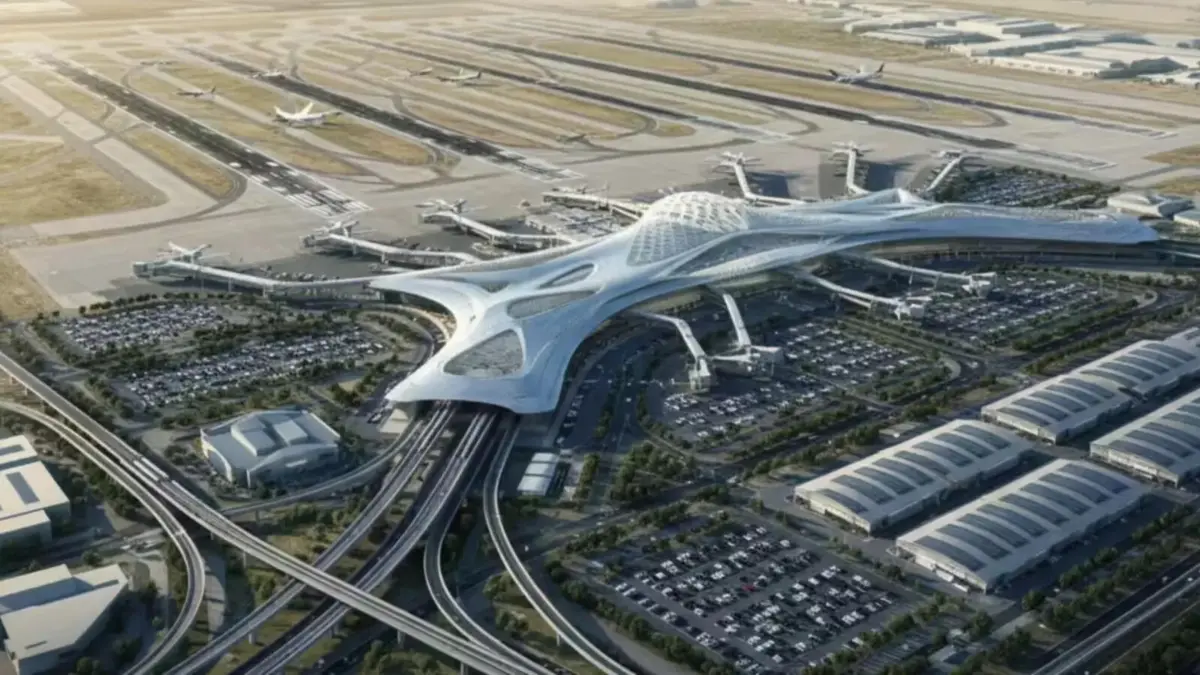
Dubai is in the middle of building what is intended to become the world’s largest airport by capacity — a Dh128 billion ($34.8 billion) expansion of Al Maktoum International Airport at Dubai World Central (DWC), according to Gulf News. When complete, the facility will feature five parallel runways, roughly 400 gates, and the capacity to handle up to 260 million passengers a year — nearly three times the current capacity of Dubai International Airport (DXB), already the world’s second-busiest airport for international traffic, per analysis from K Estates.
Where the project actually stands in 2026
Construction crews have already excavated more than 45 million cubic metres of earth and completed the airport’s second runway, according to MyBayut’s DWC guide. The first phase — a central passenger terminal and four concourses designed to handle 150 million passengers annually — is targeted for completion around 2032, per Khaleej Times. Dubai is set to allocate AED 55 billion worth of expansion contracts by the end of 2026 alone, underscoring the pace at which the project is being financed and built.
The scale of ambition extends beyond aviation infrastructure. DWC is being planned as a self-contained “airport city,” incorporating business, cultural, and residential districts across Dubai South, roughly 35 kilometres from Dubai Marina, according to the same Khaleej Times reporting. All operations currently based at DXB — including Emirates’ long-haul network — are expected to eventually transfer to the new hub.
Part of a much bigger regional aviation build-out
Al Maktoum’s expansion is the largest single project within a broader regional wave of investment: airports across the Middle East, Africa, and South Asia are expected to spend a combined $183 billion on capacity, connectivity, and passenger-experience upgrades, with the UAE and Saudi Arabia leading the push, according to Gulf News. Within the UAE alone, expansion plans extend beyond Dubai to Sharjah and Ras Al Khaimah, with a shared emphasis on AI-enabled operations, IoT systems, and energy-efficient terminal design.
What it means for the region’s real estate and travel markets
The airport build-out is already reshaping property markets nearby. Transactions in Dubai South exceeded AED 15 billion ($4.1 billion) in just the first five months of 2025 — nearly matching the entire AED 16.1 billion recorded across all of 2024 — with analysts forecasting further price appreciation as the airport nears completion, according to K Estates. For travellers and airlines, the eventual payoff is a dramatic increase in regional connectivity capacity at a time when global air travel demand — and airfares — have both been climbing steadily through 2026.
Key takeaways
- Al Maktoum International Airport’s expansion carries a price tag of roughly $34.8 billion (Dh128 billion) and is intended to make it the world’s largest airport by 2050.
- Full build-out capacity: five runways, ~400 gates, up to 260 million passengers annually and 12 million tonnes of cargo.
- Phase one, targeted for around 2032, alone will handle 150 million passengers a year.
- The project has already reshaped Dubai South real estate, with transactions surpassing AED 15 billion in the first five months of 2025.
- It is the anchor project within a broader $183 billion regional airport investment wave across the Middle East, Africa, and South Asia.
FAQ
When will Al Maktoum International Airport be the world’s largest? Full completion is projected around 2050, though the first major phase is targeted for roughly 2032.
How many passengers will Al Maktoum Airport handle? Up to 260 million passengers annually at full capacity, with the first completed phase alone handling 150 million.
Will Emirates move its operations to the new airport? Yes — all Dubai International Airport operations, including Emirates’ long-haul network, are expected to eventually transfer to Al Maktoum International.
Discover more from The Economy
Subscribe to get the latest posts sent to your email.
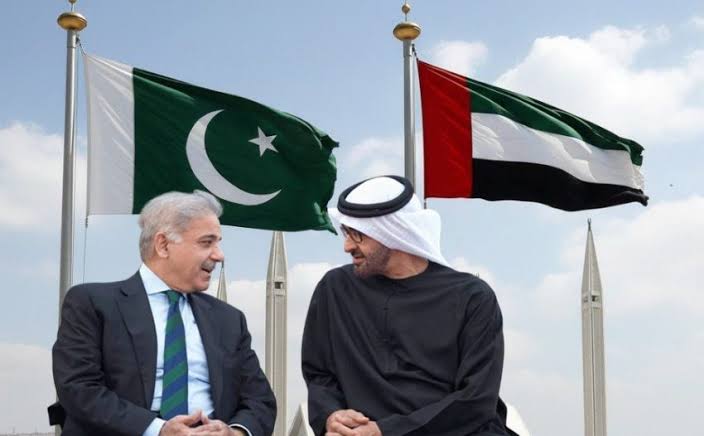
What happened: In early 2026, the United Arab Emirates declined to roll over a $3 billion loan to Pakistan — the first such refusal in seven years. The repayment equalled roughly 18% of Pakistan’s foreign currency reserves, arriving as Islamabad also faced a $1.3 billion bond payment and was waiting on the next IMF tranche.
Why it matters: It’s the clearest sign yet that Gulf sovereign patience with Pakistan’s balance-of-payments cycle is thinning, even as Gulf states simultaneously court China, Saudi Arabia, and each other for capital in a tightening regional liquidity environment.
The Story Nobody’s Connecting
Most coverage of Pakistan’s 2026 external account stress treats the UAE’s loan decision as an isolated liquidity event — a “routine financial transaction,” in the words of Pakistan’s own Ministry of Foreign Affairs. That framing misses the bigger pattern. The same weeks that Abu Dhabi called in its $3 billion, unusual delays began appearing in bank transfers from Saudi Arabia to the UAE itself — friction between the Gulf’s two largest economies, at a moment when both are also managing their own post-war oil price adjustment. (Pakistan & Gulf Economist)
Put those two data points together and a different story emerges: this isn’t just about Pakistan’s creditworthiness. It’s about Gulf capital becoming more selective, more transactional, and less willing to extend informal grace periods across the board — with Pakistan simply the most exposed borrower in the queue.
The Numbers Behind the Pressure
Pakistan’s State Bank held $16.4 billion in reserves as of late March 2026 — enough to cover roughly three months of imports, a threshold economists generally treat as a comfort floor, not a cushion. (Mettis Global News) The UAE’s declined rollover landed at the same time as a looming $1.3 billion international bond payment and dependence on the next $1.2 billion IMF disbursement — a convergence of obligations that left the State Bank with limited room to maneuver beyond import restrictions, rate hikes, or fresh commercial borrowing.
The backdrop matters too. The rupee had been trading in a comparatively narrow 278–282 band before the escalation of the Iran conflict pushed global oil prices higher, squeezing Pakistan’s import bill precisely when its Gulf safety net began to wobble. The KSE-100 benchmark, meanwhile, had already shed around 15% amid the broader pressure. (Mettis Global News)
This is not Pakistan’s first Gulf-dependency cycle. The IMF’s own record shows a now-familiar pattern: staff-level agreements reached in Dubai, UAE pledges of multibillion-dollar investment arriving alongside IMF tranches, and Gulf bridge financing used to stave off sovereign default in periods when reserves cover shrinks toward zero. (Business Standard) What’s different in 2026 is that the bridge itself is showing cracks.
Islamabad’s Official Line vs. the Structural Reality
Pakistan’s government has leaned into a “stability to sustainable growth” narrative around its FY2026–27 federal budget, with the finance minister framing the transition as export-driven rather than reserve-dependent. Business groups have broadly welcomed the budget, and the current account posted a $459 million surplus in May 2026, an improvement attributed to strong remittance inflows. (Business Recorder) The Monetary Policy Committee has held rates steady rather than reaching for emergency tightening, which is itself a signal that the central bank does not yet see the UAE episode as a systemic trigger.
But a current account surplus built substantially on remittances is different from one built on export competitiveness or durable FDI. Pakistan’s trade structure still leans heavily on a narrow set of partners: China supplies over a quarter of its imports and a meaningful share of its exports, the UAE is both a top export destination and its second-largest import source, and Gulf states collectively remain the primary channel for both remittances and emergency liquidity. (Wikipedia — Economy of Pakistan) That concentration is precisely what makes a single Gulf lender’s changed appetite so consequential.
Why the Oil Backdrop Compounds the Risk
None of this is happening in a vacuum. The IMF’s own July 2026 commentary noted that global oil markets “absorbed the war shock” from the Iran conflict, but cautioned that buffers — spare production capacity, strategic reserves, shipping insurance capacity — are running low. (IMF Blog) For an oil-importing, reserve-constrained economy like Pakistan, a second energy price shock without deeper buffers would land directly on the same reserves the UAE loan was meant to protect.
What to Watch Next
- Whether Saudi Arabia steps in as an alternative bridge lender, or whether the Riyadh–Abu Dhabi transfer friction signals a broader Gulf liquidity tightening that limits everyone’s appetite to backstop Pakistan.
- The pace and size of the next IMF tranche, and whether Fund conditionality shifts to demand deeper reserve buffers given the UAE precedent.
- Whether China increases its role as lender of last resort, deepening Pakistan’s dependency in exactly the direction Gulf financing was historically meant to offset.
Discover more from The Economy
Subscribe to get the latest posts sent to your email.
Introduction
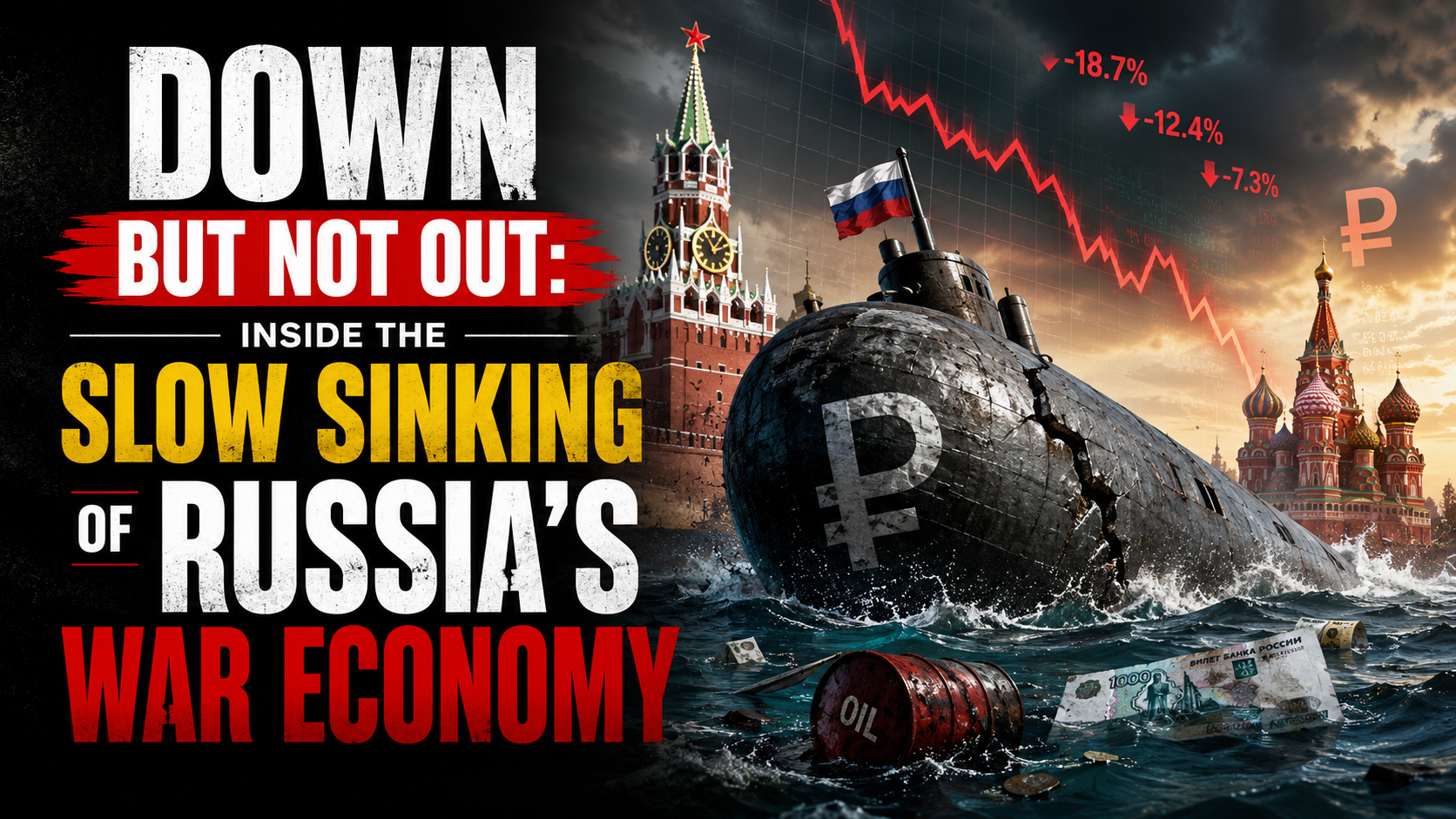
The European Council formally extended its economic sanctions against Russia for another full year on 25 June 2026, keeping restrictive measures in place until 31 July 2027 (Council of the EU). More than four years into the war, the headline story of Russia’s economy has shifted from whether sanctions would work to a more nuanced question: how much longer can the Kremlin keep financing the war before the accumulated strain becomes impossible to hide behind favorable official statistics.
The Sanctions Architecture, Renewed Again
The EU’s economic measures against Russia, first introduced in 2014 and dramatically expanded after the February 2022 full-scale invasion, now span trade, finance, energy and dual-use technology restrictions, alongside asset freezes and travel bans on a broad range of individuals and entities (Council of the EU). Since February 2022, the EU has adopted 20 separate sanctions packages, and the European Council has explicitly stated it remains determined to keep weakening Russia’s war economy by further reducing its energy revenues, curbing shadow-fleet oil shipping operations and constraining its banking system (Council of the EU). Separately, on 3 July 2026 the EU sanctioned six individuals connected to the poisoning and death of opposition figure Alexei Navalny, underscoring that the sanctions regime continues to expand on human-rights grounds as well as economic ones (Council of the EU Sanctions Timeline).
The Headline Numbers Beijing-Style Optimism Can No Longer Explain Away
Russia’s GDP is now put at roughly $2.51 trillion, the world’s eleventh-largest economy — comparable in size to South Korea despite Russia’s vastly larger landmass and resource base — with 2026 growth projected at just 1.0% and inflation running at 5.2% (Statistics of the World). More pessimistic estimates put full-year 2026 growth even lower, at around 0.4%, which would be worse than 2025’s already-weak 1% expansion and would mark a sharp deceleration from the 4.1% growth Russia posted in 2023 as it forged new trading relationships to route around initial sanctions (Forbes).
Oil and gas revenues — historically around half of Russia’s state income — have fallen to roughly a quarter, a deliberate outcome of Western sanctions strategy that targets how much Russia earns from exports rather than blocking those exports outright (Stockholm School of Economics/SITE). Russia’s oil and gas budget revenues reportedly halved in January 2026 alone, with crude prices falling below $73 a barrel before the Middle East conflict briefly reversed the trend, sending Brent surging more than 55% to near $120 a barrel at its peak (Forbes).
The Middle East War: A Temporary Lifeline With Long-Term Costs
The spike in oil prices tied to the Iran conflict, combined with a period of eased US sanctions enforcement on Russian oil under President Trump, offered Moscow unexpected fiscal breathing room in mid-2026 (Forbes). But that same conflict has undermined Russia’s longer-term energy diversification ambitions in the region: two Russian-backed power plant projects in Iran have been put on hold, along with oil and gas exploration work and plans to build new transit routes linking Russia to India via Iran (Forbes).
The Gap Between Official Statistics and Underlying Reality
Perhaps the most important analytical point from recent research is not about any single data point but about the reliability of Russian statistics themselves. Torbjörn Becker of the Stockholm Institute of Transition Economics has argued the real test of sanctions is not whether they end the war overnight, but how much they erode the Kremlin’s capacity to finance it — and by that measure, the evidence points to deeper strain than headline GDP figures suggest (Stockholm School of Economics/SITE). Becker notes that Russia’s economy grew only modestly in 2022 despite oil prices rising sharply that year — a gap between expected and actual performance that implies a considerably larger hidden economic hit than the official contraction figures showed (Stockholm School of Economics/SITE). Compounding the problem, Russian authorities have stopped publishing several key statistics since 2022, making independent assessment of inflation, consumption and real economic conditions increasingly difficult — leading Becker to conclude that “statistics have become part of the narrative” rather than a neutral measure of economic reality (Stockholm School of Economics/SITE).
The Military-Civilian Economic Split
A recurring theme across recent analysis is the growing bifurcation between Russia’s overheating military-industrial sector and a stagnating civilian economy. This imbalance has pushed interest rates higher and forced the liquidation of a striking 71% of Russia’s gold reserves to help fund continued war spending (Forbes). Russia’s total fossil fuel export revenue is estimated at roughly €734 million per day, underscoring just how central hydrocarbon income remains to the entire war financing model even as that revenue stream shrinks (Forbes).
The Counter-Narrative: Wages Still Rising
It would be inaccurate to describe Russia’s economy as in freefall. CSIS research notes that Russian salaries rose 17.8% in nominal terms and 8.7% in real terms in 2024 compared to 2023, with disposable incomes up 6.1% in 2023 and 7.3% in 2024 — growth rates not seen in Russia in almost two decades (CSIS). Government budget projections still expect real salaries to rise, albeit at a decelerating pace: 7% in 2025, 5.7% in 2026 and 4.1% in 2027 — a marked slowdown from the 2024 peak but still roughly double the pre-invasion decade average (CSIS). This wage growth, driven substantially by wartime labor shortages and military-adjacent spending, is precisely the kind of headline-stabilizing data point that has allowed Putin to argue publicly that sanctions have failed to cripple his economy (Fortune) — even as think tanks describe the broader trajectory as pushing Russia toward what one report calls an “economic, political, and military abyss” (Fortune).
What Comes Next
Renewed legislative pressure in Washington — including the Sanctioning Russia Act introduced with strong bipartisan support — signals appetite in the US for tightening the screws further, even as the loss of a key congressional champion for that effort has complicated the political path forward (TIME). Whether the EU’s renewed sanctions regime, continued oil price pressure, and constrained reserves ultimately force a shift in Kremlin calculus toward negotiation remains the central open question for 2027.
Key Takeaways
- The EU has extended Russia sanctions for a further year, through 31 July 2027, continuing a regime built from 20 separate packages since 2022.
- Russia’s 2026 GDP growth is forecast between 0.4% and 1.0%, a sharp deceleration from 2023’s 4.1% post-shock rebound.
- Oil and gas revenue’s share of Russian state income has fallen from roughly half to about a quarter as Western sanctions target export earnings specifically.
- Russia has liquidated a large share of its gold reserves to sustain war financing amid a widening split between an overheating military sector and a stagnating civilian economy.
- Official Russian statistics likely understate the true economic strain, according to independent economists who cite a widening gap between reported and expected performance.
Sources: Council of the EU, Council of the EU Sanctions Timeline, Stockholm School of Economics/SITE, Forbes, Statistics of the World, CSIS, Fortune, TIME
Discover more from The Economy
Subscribe to get the latest posts sent to your email.

Singapore’s AI Boom Is Now a Two-Country Story

Why Global Family Offices Are Converging on Dubai in 2026

A Weak Jobs Report Just Rewired the Fed’s Autumn — And Wall Street Cheered

Britain’s Fragile Rebound Meets a Budget Deadline and a Trump Ultimatum

Pakistan’s Economy Grew 3.7% — So Why Doesn’t It Feel Like a Recovery?

Top 15 Financial Stocks for Investment in PSX

Pakistan Exports 2026: Record $35.6B Forecast Masks Trade Deficit Risk

UK’s Jobs Downturn Now Matches the 2008 Financial Crisis — And AI Is Accelerating It

Fed Rate Cut Bets Surge After Shock US Jobs Report Exposes Labor Market Cracks

Pakistan’s Trade Gap Widens to $3.95bn Despite Meeting FY26 Current Account Target

Why Ottawa Is Betting on Dubai: Inside Canada’s Gulf Trade Pivot

UK Wealth Tax Fears Trigger Record £13.9bn Investor Exodus Ahead of October Budget

July Jobs Shock: Why the Fed’s September Rate Decision Just Flipped (2026 Analysis)

Global Growth Forecast 2026: IMF, World Bank Outlooks and the “Slow-Hire, Slow-Fire” Labor Market

Gold Price Forecast 2026: Fed’s July 29 Decision and Record Central Bank Buying Explained

China Politburo July 2026: Stimulus Signals Explained

Pakistan Economy 2026: GDP Grows 3.7% as IMF Completes EFF Review Amid Middle East Risk

Strait of Hormuz Blockade 2026: Oil Prices Surge 9% as US-Iran Conflict Reignites

Down But Not Out: Inside the Slow Sinking of Russia’s War Economy

Apple vs OpenAI Lawsuit: The Economic Story Behind the Headline

Gulf Capital Retreat From Pakistan 2026: UAE Loan Freeze & What It Means

Global Stock Market Selloff 2026: Stagflation Fears Return as Iran Conflict Reignites

Pakistan’s Economic Survey FY26: Inflation Spike Insights

Russia’s Shadow Fleet Insurance Economy: How Sanctions Really Work in 2026

Russia Fuel Shortages 2026: Inside a Cracking War Economy

Strait of Hormuz Crisis 2026: How Trump’s Toll U-Turn Exposes Global Economic Risk

Bank of England Rate Decision Amid Energy Crisis

Russia’s War Economy Model Is Starting to Crack, Think Tank Warns
-

 Markets & Finance7 months ago
Top 15 Stocks for Investment in 2026 in PSX: Your Complete Guide to Pakistan’s Best Investment Opportunities
-

 Analysis6 months ago
Johor’s Investment Boom: The Hidden Costs Behind Malaysia’s Most Ambitious Economic Surge
-

 Analysis6 months ago
Top 10 Stocks for Investment in PSX for Quick Returns in 2026
-

 Analysis6 months ago
Brazil’s Rare Earth Race: US, EU, and China Compete for Critical Minerals as Tensions Rise
-

 Banks7 months ago
Best Investments in Pakistan 2026: Top 10 Low-Price Shares and Long-Term Picks for the PSX
-

 Investment7 months ago
Top 10 Mutual Fund Managers in Pakistan for Investment in 2026: A Comprehensive Guide for Optimal Returns
-

 Global Economy8 months ago
15 Most Lucrative Sectors for Investment in Pakistan: A 2025 Data-Driven Analysis
-

 Global Economy8 months ago
Pakistan’s Export Goldmine: 10 Game-Changing Markets Where Pakistani Businesses Are Winning Big in 2025