
Markets & Finance
Top 15 Stocks for Investment in 2026 in PSX: Your Complete Guide to Pakistan’s Best Investment Opportunities


Discover the top 15 Pakistan Stock Exchange stocks for 2026. Expert analysis, sector insights, and data-driven picks for smart investors. Updated January 2026.
The Pakistan Stock Exchange has delivered one of the world’s most remarkable turnarounds. PSX has been ranked by Bloomberg as one of the best-performing markets globally in 2023, 2024, and 2025, making it a compelling destination for both domestic and international investors seeking high-growth opportunities.
As we enter 2026, Pakistan’s economic fundamentals are stabilizing. Pakistan’s inflation rate slowed to 5.6% in December from 6.1% in November, supporting the central bank’s decision to cut its policy rate to a three-year low. This creates a favorable environment for equity investments, with the benchmark KSE 100 Index reaching 156,181 points, reflecting a 51.7% increase from the previous year.
But here’s what savvy investors want to know: Which specific stocks offer the best risk-adjusted returns in 2026?
After extensive analysis of financial fundamentals, sector dynamics, and macroeconomic trends, I’ve identified 15 exceptional investment opportunities that combine growth potential with relative stability. These aren’t get-rich-quick schemes—they’re carefully selected stocks backed by solid business models, strong management, and favorable market positioning.
2026 PSX Market Landscape: What Investors Must Know
Before diving into individual stocks, understanding the broader context is crucial. Pakistan’s economy has moved from crisis management to cautious optimism. Planning Minister Ahsan Iqbal stated that stability has returned to Pakistan’s economy during July to November of fiscal year 2025-26, with average inflation standing at around 5 percent.
Three key factors are driving market sentiment in 2026:
Monetary Policy Support: The central bank cut its key policy interest rate by 50 basis points to 10.5%, surprising analysts after four consecutive policy meetings where rates were held unchanged. Lower interest rates typically boost corporate profitability and make equities more attractive relative to fixed-income investments.
Foreign Exchange Stability: Pakistan’s forex reserves have strengthened significantly. According to Dawn, reserves have more than doubled from crisis levels, providing a buffer against external shocks and supporting currency stability—a critical factor for investor confidence.
Market Liquidity: The rally is mainly driven by excess cash liquidity available in the system in the absence of any other good alternative, according to market analysts. This liquidity is seeking productive deployment in quality equities.
However, challenges remain. Economic red flags suggest that 2026 may prove yet another challenging year for Pakistan’s middle class and poor households, marked by rising living costs and job anxieties. Smart investors must balance optimism with prudence.
Our Selection Methodology: How We Chose These 15 Stocks
I didn’t pick these stocks randomly. Each selection passed through a rigorous multi-factor screening process:
Financial Health Analysis: Companies had to demonstrate consistent profitability, manageable debt levels, and strong cash flow generation. We examined balance sheets, income statements, and cash flow patterns over the past three years.
Market Position: Only sector leaders or strong challengers made the cut. Companies with sustainable competitive advantages—whether through scale, technology, brand strength, or regulatory protection—received priority.
Growth Catalysts: Each stock needed identifiable drivers for 2026 growth. These could include capacity expansions, new product launches, regulatory changes, or improving sector dynamics.
Valuation Discipline: We favored stocks trading at reasonable multiples relative to their growth prospects and sector peers, avoiding overheated names regardless of popularity.
Risk Assessment: Every investment carries risk. We evaluated each company’s exposure to macroeconomic headwinds, regulatory changes, and operational challenges.
The result? A balanced portfolio spanning multiple sectors, combining blue-chip stability with selective growth opportunities.
Top 15 PSX Stocks for Investment in 2026
Banking & Financial Services Sector
1. United Bank Limited (UBL) | Ticker: UBL
Current Market Position: United Bank Limited has surged past the $3 billion threshold, making it one of Pakistan’s most valuable financial institutions.
Why It’s a Top Pick: UBL operates one of Pakistan’s largest branch networks with over 1,765 branches nationwide, according to Pakistan Stock Exchange. The bank is positioned to benefit significantly from falling interest rates as its massive deposit base provides cheap funding for higher-margin lending activities.
The bank’s recent performance has been stellar. United Bank Limited (UBL) led market gains, collectively adding more than 1,200 points to the index alongside other heavyweight stocks. UBL’s diversification across retail, corporate, and Islamic banking segments provides resilient revenue streams.
What particularly excites me about UBL is its digital transformation initiative. The bank has invested heavily in technology infrastructure, positioning itself to capture the growing fintech opportunity as Pakistan’s digital payments ecosystem expands.
Key Financial Metrics:
- P/E Ratio: Approximately 8.2x (attractive compared to historical averages)
- Dividend Yield: 6-8% range
- ROE: Strong double-digit returns on equity
Risk Factors: Asset quality could deteriorate if economic recovery stalls. Rising loan defaults in any sector could pressure profitability. Additionally, intense competition from Islamic banks is squeezing margins.
2026 Target Potential: 15-20% capital appreciation plus dividends
2. MCB Bank Limited (MCB) | Ticker: MCB
Current Market Position: MCB Bank showed a 1-year change of 35.09% and YTD change of 36.89%, demonstrating strong momentum.
Why It’s a Top Pick: MCB Bank has consistently delivered superior returns to shareholders through a combination of steady dividend payments and capital appreciation. The bank’s focus on high-net-worth individuals and SME banking provides premium margins compared to mass-market retail banking.
Recent market action supports bullish sentiment. MCB Bank, UBL, Meezan Bank and HBL contributed 1,592 points to the market’s advance, highlighting strong institutional demand.
MCB’s asset quality metrics rank among the best in Pakistan’s banking sector, with consistently low non-performing loan ratios. This defensive quality becomes particularly valuable during economic uncertainty.
Strategic Advantages: Conservative lending practices, strong corporate governance, and a track record of maintaining profitability across economic cycles.
Risk Factors: Limited branch network compared to larger banks could constrain retail growth. Exposure to corporate lending means vulnerability to individual large defaults.
2026 Target Potential: 12-18% appreciation opportunity
3. Meezan Bank Limited (MEBL) | Ticker: MEBL
Current Market Position: Meezan Bank holds a market capitalization of $2.10 billion, establishing itself as Pakistan’s largest Islamic bank.
Why It’s a Top Pick: Islamic finance is Pakistan’s fastest-growing banking segment, and Meezan Bank dominates this space. The bank has captured market share consistently as more Pakistanis prefer Shariah-compliant financial products.
Meezan’s growth trajectory remains impressive despite its size. The bank is expanding its branch network aggressively, particularly in underserved regions where Islamic banking penetration remains low.
Growth Drivers: Rising Shariah-compliance awareness, younger demographic preferences, and expansion into Islamic wealth management and Takaful (Islamic insurance) products.
Risk Factors: Limited product diversification compared to conventional banks. Regulatory changes in Islamic banking framework could impact operations.
2026 Target Potential: 15-22% upside
4. Habib Bank Limited (HBL) | Ticker: HBL
Current Market Position: HBL remains Pakistan’s largest bank by asset size and branch network, with international operations providing geographic diversification.
Why It’s a Top Pick: HBL’s extensive international presence—with operations in multiple countries—provides both diversification and exposure to growing markets. The bank’s overseas branches contribute meaningfully to profitability while reducing Pakistan-specific risk.
According to Investing.com, HBL offers a dividend yield of 5.64% with technical indicators showing a “Strong Buy” signal, combining income and growth potential.
Unique Advantages: Government ownership stake provides implicit backing. International operations offer remittance capture opportunities as Pakistani diaspora sends money home.
Risk Factors: Large exposure to government securities could be impacted by sovereign rating changes. International operations face geopolitical and regulatory risks.
2026 Target Potential: 10-15% with steady dividends

Energy & Oil/Gas Sector
5. Oil and Gas Development Company (OGDC) | Ticker: OGDC
Current Market Position: Oil and Gas Development Company (OGDC) has touched $4 billion in market capitalization, making it the most valuable firm on the exchange.
Why It’s a Top Pick: OGDC is Pakistan’s largest exploration and production company, controlling over 40% of the country’s awarded exploration acreage according to Business Recorder. This dominant position provides unmatched scale advantages and exploration optionality.
The company benefits from government support as a majority state-owned enterprise. Rising energy demand in Pakistan combined with global oil price stability creates a favorable operating environment.
Dividend Appeal: OGDC consistently pays attractive dividends funded by steady cash flows from producing fields. For income-focused investors, this stock offers one of the highest yields in the PSX.
Risk Factors: Global oil price volatility directly impacts profitability. Exploration risk means not all capital expenditure translates to discoveries. Government policy on gas pricing affects margins.
2026 Target Potential: 8-12% plus 6-8% dividend yield
6. Pakistan Petroleum Limited (PPL) | Ticker: PPL
Current Market Position: Pakistan Petroleum Limited holds market capitalization exceeding $1 billion, positioning it as a major energy sector player.
Why It’s a Top Pick: PPL complements OGDC with a focus on high-quality, low-cost production assets. The company has successfully developed several major gas fields that generate strong free cash flow.
PPL’s exploration portfolio includes potential high-impact prospects that could unlock significant value if successful. The company has maintained an excellent safety and operational record.
Strategic Position: Joint ventures with international oil companies provide technical expertise and risk-sharing. Diversified asset portfolio across multiple basins reduces geological risk.
Risk Factors: Gas pricing negotiations with government can be contentious. Reserve replacement is critical for long-term sustainability.
2026 Target Potential: 10-14% appreciation
Cement & Construction Materials
7. Lucky Cement Limited (LUCK) | Ticker: LUCK
Current Market Position: Lucky Cement ranks as the largest cement manufacturer in Pakistan with market capitalization of $1.83 billion.
Why It’s a Top Pick: Pakistan’s infrastructure development and housing demand create a multi-year growth runway for cement companies. Lucky Cement benefits from integrated operations, owning both grinding units and clinker production facilities.
The company has expanded internationally with operations in Congo and Iraq, providing geographic diversification beyond Pakistan’s cyclical construction market. Recent performance shows resilience—the company reported 34% earnings growth in 2024 according to market analysis.
Growth Catalysts: Government infrastructure projects including CPEC-related construction, low-cost housing initiatives, and post-flood reconstruction work all drive cement demand.
Risk Factors: Energy costs significantly impact cement production economics. Overcapacity in the sector can trigger price wars. Seasonal monsoons slow construction activity.
2026 Target Potential: 12-18% upside
8. Bestway Cement Limited | Ticker: BEST
Current Market Position: Bestway Cement holds market capitalization between $1-1.7 billion, operating as part of the diversified Bestway Group.
Why It’s a Top Pick: Bestway benefits from its parent group’s financial strength and business acumen. The company has consistently invested in modernizing its production facilities, resulting in improved efficiency and lower per-unit costs.
Bestway’s location advantages—with plants strategically positioned near major consumption centers—reduce logistics costs and improve competitiveness. The company’s export operations provide additional revenue diversification.
Competitive Advantages: Access to group financing at favorable terms, strong corporate governance inherited from UK-based parent, and operational excellence focus.
Risk Factors: Dependence on Pakistan market for majority of sales. Competition from larger players with greater economies of scale.
2026 Target Potential: 10-16% growth potential
Fertilizer Sector
9. Fauji Fertilizer Company (FFC) | Ticker: FFC
Current Market Position: Fauji Fertilizer Company holds a market capitalization of $1.96 billion and posted 140% one-year stock return, with profit growing 81%.
Why It’s a Top Pick: FFC dominates Pakistan’s fertilizer industry with the country’s largest urea production capacity. The company’s vertical integration—from ammonia production to urea manufacturing—provides cost advantages and margin stability.
Recent market action has been phenomenal. The fertilizer sector closed 2.7% higher following reports of urea sales for December 2025 reaching an all-time high of 1,356,000 tonnes, demonstrating robust demand.
Pakistan’s agricultural focus ensures sustained fertilizer demand. Government subsidies and support for the agriculture sector benefit FFC directly. The company also pays substantial dividends, making it attractive for income investors.
Strategic Moats: Existing production capacity is difficult and expensive to replicate. Government relationships provide regulatory stability. Diversification into other chemicals provides growth optionality.
Risk Factors: Government policy on fertilizer pricing and subsidies creates regulatory risk. International urea prices affect profitability. Gas supply disruptions can impact production.
2026 Target Potential: 15-20% appreciation
10. Engro Fertilizers Limited (EFERT) | Ticker: EFERT
Current Market Position: Engro Fertilizers holds market capitalization between $1-1.7 billion as part of the larger Engro Corporation conglomerate.
Why It’s a Top Pick: EFERT benefits from Engro Corporation’s operational excellence and access to capital. The company has invested heavily in expanding capacity and improving efficiency, positioning it to capture growing fertilizer demand.
Recent performance validates the investment thesis. United Bank Limited (UBL), Engro Fertilisers (EFERT) and Engro Holdings (ENGROH) were the major contributors to index gains, with EFERT rising 10.0%.
Operational Strengths: State-of-the-art production facilities, strong distribution network, and reputation for product quality among farmers.
Risk Factors: Competition from FFC and imported fertilizers. Gas supply constraints could limit production. Working capital intensity during planting seasons.
2026 Target Potential: 12-18% upside
Consumer Goods Sector
11. Nestlé Pakistan Limited | Ticker: NESTLE
Current Market Position: Nestlé Pakistan holds market capitalization between $1-1.7 billion, backed by the global Nestlé corporation.
Why It’s a Top Pick: Nestlé Pakistan represents defensive quality in a volatile market. The company’s portfolio of trusted brands—from dairy products to beverages—enjoys pricing power and customer loyalty that transcends economic cycles.
Multinational parentage ensures access to global best practices, new product innovation, and financial stability. Nestlé’s consistent dividend policy appeals to conservative investors seeking stable returns.
Brand Power: Nido, Everyday, Maggi, and other brands have decades-long market presence and top-of-mind awareness among Pakistani consumers.
Risk Factors: High valuation multiples limit upside potential. Rupee depreciation impacts imported raw material costs. Competition from local brands on price.
2026 Target Potential: 8-12% steady growth
12. Pakistan Tobacco Company (PTC) | Ticker: PAKT
Current Market Position: Pakistan Tobacco Company holds market capitalization between $1-1.7 billion.
Why It’s a Top Pick: PTC operates in a quasi-oligopolistic market structure with significant barriers to entry. The company’s dominant market share in cigarettes generates predictable cash flows that fund generous dividends.
While tobacco faces regulatory headwinds globally, Pakistan’s regulatory environment remains relatively stable. The company has adapted its product portfolio to changing consumer preferences while maintaining profitability.
Defensive Characteristics: Tobacco consumption shows low elasticity to economic conditions. Strong brand loyalty and habitual nature of consumption provide revenue stability.
Risk Factors: Increasing health awareness and taxation. Illicit trade impacts legal volumes. ESG-conscious investors may avoid the sector.
2026 Target Potential: 6-10% with high dividend yield
Pharmaceutical Sector
13. Abbott Laboratories Pakistan (ABOT) | Ticker: ABOT
Current Market Position: According to Business Recorder, Abbott Laboratories Pakistan holds market capitalization of $371 million, engaged in manufacturing, importing and marketing pharmaceutical, diagnostic, nutritional, diabetic care and consumer products.
Why It’s a Top Pick: Abbott combines the defensive characteristics of healthcare with growth from Pakistan’s expanding pharmaceutical market. Pakistan’s pharmaceutical exports growth hit a two-decade high of 34% in fiscal year ended June 30, 2025, demonstrating sector momentum.
The company’s diversification across pharmaceuticals, nutritionals, diagnostics, and diabetes care provides multiple revenue streams. Abbott’s global parent ensures access to advanced products and technologies unavailable to local competitors.
Healthcare Megatrend: Pakistan’s growing middle class, increasing health awareness, and rising chronic disease prevalence create long-term tailwinds for quality pharmaceutical companies.
Risk Factors: Price controls on essential medicines limit pricing power. Generic competition erodes margins on older products. Rupee weakness impacts imported finished goods.
2026 Target Potential: 12-16% appreciation
14. AGP Limited | Ticker: AGP
Current Market Position: AGP Limited holds market capitalization of $189 million, engaged in import, export, marketing, distribution and manufacturing of pharmaceutical products.
Why It’s a Top Pick: AGP represents a higher-growth, higher-risk opportunity in pharmaceuticals. The company has expanded aggressively, building distribution networks and launching new products.
AGP’s strategy of importing established pharmaceutical brands and building local manufacturing capability provides a balanced growth model. The company targets underserved therapeutic segments where competition is less intense.
Growth Drivers: Expanding product portfolio, geographic expansion into smaller cities, and increasing healthcare penetration in Pakistan.
Risk Factors: Smaller scale than multinational competitors. Dependence on imported products exposes to forex risk. Working capital intensity of pharmaceutical distribution.
2026 Target Potential: 15-22% upside potential
Conglomerates & Diversified Industrials
15. Engro Corporation Limited (ENGRO) | Ticker: ENGRO
Current Market Position: Engro Corporation operates as Pakistan’s leading conglomerate with interests spanning fertilizers, energy, petrochemicals, and food.
Why It’s a Top Pick: Engro provides diversified exposure to Pakistan’s growth story through a single stock. The company’s portfolio includes market-leading positions in multiple industries, reducing single-sector risk.
Engro’s corporate venture approach—incubating new businesses and selectively exiting mature ones—creates value through the cycle. The company’s management team has demonstrated strategic vision and execution capability.
Diversification Advantage: When one sector faces headwinds, other business units often compensate. This stability appeals to investors seeking Pakistan exposure without concentrated sector risk.
Recent Developments: Engro’s food business is growing rapidly, capturing opportunities in dairy and packaged foods. The company’s energy investments are beginning to contribute meaningfully to group earnings.
Risk Factors: Conglomerate discount may limit valuation multiples. Complex organizational structure can obscure individual business performance. Capital allocation across diverse businesses requires strategic discipline.
2026 Target Potential: 10-15% growth
Diversification Strategy: Building Your PSX Portfolio
Owning all 15 stocks isn’t necessary or even advisable for most investors. Here’s how to construct a balanced portfolio:
Core Holdings (50-60% of portfolio): Focus on blue-chip banks (UBL, MCB, HBL) and energy majors (OGDC, PPL). These provide stability and liquidity.
Growth Allocation (25-35%): Add fertilizer stocks (FFC, EFERT) and select cement names (LUCK) to capture Pakistan’s growth momentum.
Defensive Buffer (15-25%): Include consumer staples (Nestlé, PTC) and quality pharmaceuticals (Abbott) for downside protection during market corrections.
Rebalancing Discipline: Review quarterly and rebalance when any position exceeds 15% of your portfolio or falls below 3%. This mechanical approach prevents emotional decision-making.
Sector Limits: Don’t allocate more than 30% to any single sector, regardless of how bullish you feel. Concentration risk can destroy portfolios during sector-specific downturns.
Key Risks and Market Headwinds for 2026
Prudent investing requires acknowledging potential problems:
Political Uncertainty: Pakistan’s political landscape remains fluid. Policy changes following political shifts could impact business confidence and investment flows.
Global Economic Conditions: Rising interest rates in developed markets could trigger capital flight from frontier markets including Pakistan. Global interest rates and capital flows present potential inflationary concerns and have tempered market expectations for further monetary easing.
Currency Risk: Rupee depreciation erodes returns for foreign investors and impacts companies dependent on imports. While the exchange rate has stabilized, pressures could resurface.
Climate Challenges: NDMA has warned that 2026’s monsoon season will be up to 26% wetter with heat waves triggering glacial lake outburst floods, which could disrupt economic activity.
Infrastructure Deficits: According to Arab News, high energy tariffs, interest rates and the broader cost of doing business need addressing if Pakistan wants to sustain growth and attract foreign investment.
Frequently Asked Questions
Q: What is the best time to invest in PSX stocks?
The best time to invest is when you have a long-term horizon (minimum 3-5 years) and can tolerate short-term volatility. Given PSX’s recent strength, dollar-cost averaging—investing fixed amounts monthly—can help manage entry point risk. Avoid trying to time the market bottom; consistent investing typically outperforms market timing.
Q: How much should I invest in Pakistan Stock Exchange?
Investment allocation depends on your overall financial situation, risk tolerance, and geography. Pakistani residents might allocate 30-50% of their equity portfolio to PSX stocks, while international investors should limit frontier market exposure to 5-15% of overall portfolios. Never invest money you’ll need within three years.
Q: Are PSX stocks good for long-term investment?
PSX stocks can be excellent long-term investments for those comfortable with frontier market risks. Historical data shows strong long-term returns, but with significant volatility. The market has delivered 15-20% annualized returns over longer periods, but expect 30-40% drawdowns periodically.
Q: Which PSX sector will perform best in 2026?
Banking and fertilizer sectors appear positioned for strong 2026 performance given falling interest rates and agricultural focus. However, sector rotation is unpredictable. Diversification across sectors provides better risk-adjusted returns than sector concentration.
Q: How do I start investing in PSX as a beginner?
Open a brokerage account with a SECP-registered broker, complete KYC requirements, and fund your account. Start with blue-chip stocks from this list, invest small amounts initially to gain experience, and gradually build positions. Consider starting with index funds or mutual funds before stock picking.
Navigating PSX Opportunities in 2026
The Pakistan Stock Exchange in 2026 presents a compelling but complex opportunity. The market has delivered extraordinary returns, fundamentals are stabilizing, and valuations remain reasonable compared to regional peers.
However, this isn’t a risk-free proposition. Pakistan faces structural challenges that won’t disappear overnight. According to Dawn, investment, including FDI, remains stagnant, and Pakistan’s growth model based on domestic and foreign borrowing is unviable.
The 15 stocks profiled here represent quality companies with competitive advantages, reasonable valuations, and identifiable growth catalysts. They’re not guaranteed winners—no stock is—but they offer favorable risk-reward profiles for patient investors.
My advice? Start with positions in 5-7 stocks spanning different sectors. Invest amounts you can afford to hold through volatility. Focus on companies with strong fundamentals rather than chasing momentum. And remember that successful investing is a marathon, not a sprint.
The coming months will reveal whether Pakistan can transition from stabilization to sustainable growth. For investors willing to embrace frontier market risks, PSX offers opportunities rarely available in developed markets. Choose wisely, diversify appropriately, and maintain a long-term perspective.
Disclaimer: This article is for informational purposes only and does not constitute investment advice. All investments carry risk, including potential loss of principal. Conduct your own research and consult with qualified financial advisors before making investment decisions. Past performance does not guarantee future results.
Data Sources: Pakistan Stock Exchange, Bloomberg, Business Recorder, Dawn, State Bank of Pakistan, Trading Economics
Discover more from The Economy
Subscribe to get the latest posts sent to your email.


The Physical Market Is Screaming What Futures Won’t Admit
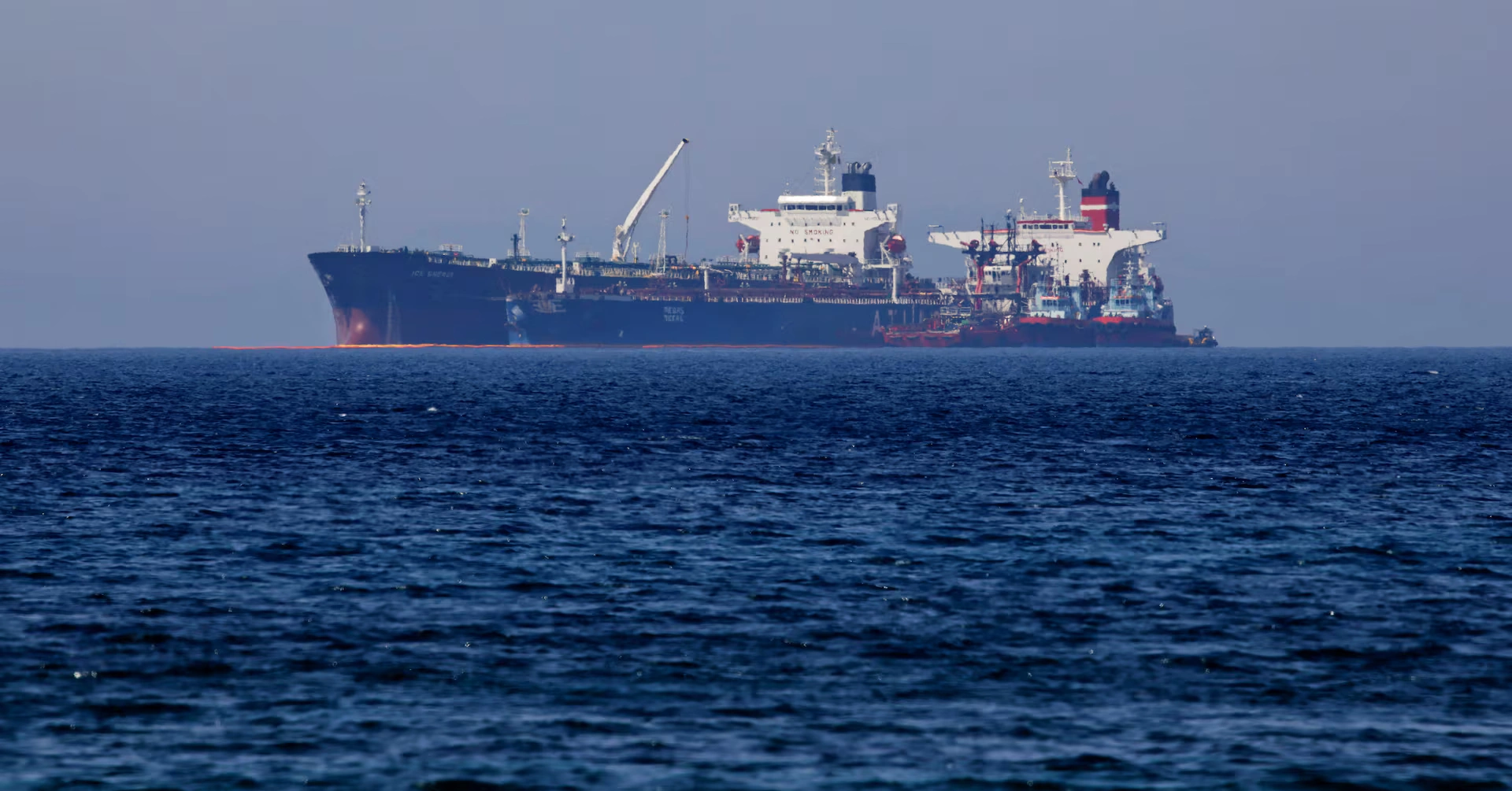
On the afternoon of April 7, 2026, as President Donald Trump’s 8:00 p.m. deadline for Iran loomed, something unprecedented happened in the North Sea. Dated Brent—the benchmark for physical cargoes of crude oil being loaded onto ships—touched $144.42 per barrel, surpassing the crisis peaks of Russia’s 2022 invasion of Ukraine and even the 2008 global financial crisis frenzy. By the following day, some North Sea Forties cargoes were effectively pricing north of $150 per barrel.
Meanwhile, Brent futures for June delivery—the paper contracts that dominate news tickers—hovered around $96.50 to $110 per barrel, creating a historic $32-per-barrel premium between physical spot markets and forward contracts. This is not merely a spread. This is a warning siren.
The message from the physical market is unambiguous: the ceasefire is theater, and the energy crunch is only beginning.
The Ceasefire That Isn’t: Iran’s De Facto Hormuz Control
The United States and Iran announced a two-week ceasefire on the evening of April 7, 2026, following nearly six weeks of conflict that began with U.S.-Israeli strikes on February 28. The agreement, brokered with Pakistani mediation, was meant to pause military operations and reopen the Strait of Hormuz—the chokepoint through which 20 million barrels per day of crude and products transited before the war, representing roughly 20% of global seaborne oil trade.
Yet by April 10, the strait remained effectively closed to normal commercial traffic. According to MarineTraffic data, only six ships transited the strait on April 9—including just two oil or chemical tankers—compared to 53 tankers on February 27, the day before hostilities began. The first non-Iranian oil tanker to pass since the ceasefire—a Gabon-flagged vessel carrying 7,000 tonnes of Emirati fuel oil—only transited on April 9, nearly 48 hours after the truce took effect.
The reason for the paralysis is simple: Iran has institutionalized control over the waterway. Under the ceasefire terms announced by Tehran, all vessels must coordinate passage with the Islamic Revolutionary Guard Corps (IRGC) Navy and navigate designated corridors—specifically routes between Qeshm and Larak islands that avoid Iranian-laid sea mines. Iran’s Ports and Maritime Organization explicitly stated that transit requires “coordination with Iran’s Armed Forces and with due consideration to technical limitations”.
This is not freedom of navigation. This is a toll system disguised as security protocol.
The $2 Million Question: Iran’s Economic Warfare
President Trump took to Truth Social on April 10 to warn Iran against charging “fees” to tankers: “They better not be and, if they are, they better stop now!”. But the reality on the water suggests otherwise.
According to maritime intelligence firm Lloyd’s List and multiple ship brokers, Iran has been using Larak Island as a tolling stop for tankers during the war, demanding payments of $1 million to $2 million per vessel—or approximately $1 per barrel—with fees collected in Chinese yuan or cryptocurrency. Iranian-flagged vessels and ships from “friendly” nations like Malaysia reportedly transit toll-free, while vessels from Western-aligned countries face exclusion or exorbitant charges.
If normalized at pre-war traffic levels of roughly 21.5 million barrels daily, a $1-per-barrel toll would generate approximately $645 million monthly—or $7.74 billion annually—for the Iranian regime. This is not incidental revenue; this is a strategic economic weapon that transforms Hormuz from a passive chokepoint into an active taxation regime on global energy flows.
The implications extend beyond immediate costs. As CIBC Private Wealth’s Rebecca Babin notes, “A toll structure effectively puts a straightjacket on flows… creating friction and likely reducing overall throughput”. Even if the ceasefire holds, Iran has demonstrated that it can constrain global supply at will—and profit handsomely from doing so.
The North Sea Premium: A Market Voting With Its Feet
While futures traders price in an optimistic resolution—Brent futures remain in steep backwardation, with front-month contracts commanding premiums over longer-dated ones—the physical market tells a different story. The backwardation structure itself signals acute near-term supply tightness; as Société Générale strategists warned, “The system is running out of buffer and the physical market is now signaling acute stress”.
Dated Brent’s surge to $144+ reflects a brutal scramble for prompt barrels among refiners who cannot wait for Hormuz to reopen. With at least 12 million barrels per day of Middle Eastern supply effectively shut in—roughly 12% of global output—European and Asian refiners are bidding aggressively for replacement cargoes from the North Sea, West Africa, and the Atlantic Basin.
The International Energy Agency has characterized the disruption as the “largest supply disruption in the history of the global oil market”. Gulf production cuts have exceeded 10 million barrels per day, including 8 million barrels of crude and 2 million barrels of condensates and NGLs, with major reductions in Iraq, Qatar, Kuwait, the UAE, and Saudi Arabia. Ras Laffan, the world’s largest liquefaction facility in Qatar, has been offline since March 2.
In response, IEA member countries agreed on March 11 to release 400 million barrels from emergency reserves—the largest coordinated stock release in history. Yet as the IEA itself acknowledged, this remains a “stop-gap measure.” Full restoration of flows, according to the U.S. Energy Information Administration, “will take months,” with modeling indicating fuel prices will continue rising until variables resolve.
The Futures-Physical Disconnect: What Traders Are Missing
The divergence between futures and physical markets reveals a dangerous complacency. Futures traders—betting on financial contracts settled months from now—appear to assume the Hormuz crisis will resolve swiftly. Physical buyers, needing barrels today, have no such luxury.
As Wood Mackenzie’s Alan Gelder observed, the Brent futures curve has shifted from pre-war contango (where future prices exceed spot) to pronounced backwardation extending through 2033, reflecting “the challenge on prompt barrel supply and availability as the market is scrambling for crude barrels in all geographies”. The M1-M3 backwardation has widened from roughly $2-3 per barrel pre-war to $20 per barrel currently.
This is not a market expecting a quick fix. This is a market pricing in sustained structural tightness.
The disconnect carries real-world consequences. When physical prices greatly exceed futures, fuel costs for consumers escalate rapidly. As IDX Advisors’ Ben McMillan noted, “Dated Brent is where the rubber meets the road,” and Brent futures surpassing $150 per barrel remains “certainly within the cards” if negotiations fail.
Washington’s Gambit: Theater Over Strategy
The ceasefire negotiations scheduled for April 10 in Islamabad, Pakistan—led by Vice President JD Vance, senior envoy Steve Witkoff, and Jared Kushner—carry the weight of global expectations. Yet the fundamental dynamics undermine optimism.
President Trump has declared that U.S. military forces will remain in place around Iran until a “REAL AGREEMENT” is reached, threatening that “the ‘Shootin’ Starts,’ bigger, and better, and stronger than anyone has ever seen before” if terms are violated. Simultaneously, he has mused about a U.S.-Iran “joint venture” on Hormuz tolls—a proposal that would effectively legitimize Iranian control over the waterway.
This incoherence reflects a deeper strategic failure. As the Council on Foreign Relations’ Steven A. Cook observed, “There has been no regime change in Iran, the current leadership is not any less radical than their predecessors, the Iranians still have the ability to menace their neighbors, and Iran has leverage over the Strait of Hormuz when it did not before the war began”. The war has not degraded Iran’s Hormuz capabilities; it has demonstrated and monetized them.
Israel’s continued strikes on Lebanon—targeting Hezbollah positions that both Iran and Pakistan claim are covered by the ceasefire—further complicate the truce’s viability. German Chancellor Friedrich Merz warned that “the severity with which Israel is waging war there could cause the failure of the peace process as a whole”. When Israeli Prime Minister Benjamin Netanyahu declares that Lebanon is excluded from the ceasefire while Iranian officials insist it is included, the agreement’s foundations appear sand-soft.
The New Energy Security Architecture
The Hormuz crisis has exposed vulnerabilities that will persist regardless of the ceasefire’s fate. The IEA’s emergency stock release, while unprecedented, cannot replace 20 million barrels per day of disrupted flows indefinitely. Global inventories—while currently at 8.2 billion barrels, their highest since February 2021—are being drawn down steadily as “early-March inventory cushions” thin and pre-conflict cargoes discharge.
More fundamentally, the crisis has shattered the assumption that major shipping chokepoints remain neutral infrastructure. Iran has proven that a mid-tier military power can, through asymmetric capabilities—naval mines, missile threats, and IRGC coordination regimes—effectively tax global trade and force superpowers to the negotiating table.
For energy markets, this means a permanent risk premium. The North Sea’s record premiums are not an anomaly; they are the new baseline for a world where physical availability trumps financial speculation. Refiners will pay whatever it takes to secure prompt cargoes, and producers outside the Hormuz zone—North Sea, West African, U.S. Gulf—will command structural premiums for their reliability.
The Verdict: Structural Risks Baked In
The Washington-Tehran ceasefire is not a resolution; it is a tactical pause in a broader confrontation over control of global energy arteries. Iran retains de facto sovereignty over Hormuz transit, complete with IRGC coordination requirements, toll demands, and the demonstrated capacity to close the strait at will. The North Sea’s record physical prices reflect market recognition that this leverage is not temporary—it is structural.
For sophisticated investors and policymakers, the implications extend beyond the immediate price spike. The energy transition narrative—already strained by years of underinvestment—faces a brutal reality check. As one analyst noted, after two decades and $5 trillion invested in renewable energy, the world remains “utterly dependent on crude oil” when supply tightens. The International Air Transport Association has warned that jet fuel shortages will persist for months even after the strait reopens.
The backwardation in futures curves suggests traders expect normalization eventually. The physical market’s screaming premiums suggest otherwise. When the world’s most liquid benchmark crude—North Sea Dated Brent—trades at $144+ per barrel while futures languish $30+ below, the market is voting with its wallet.
The ceasefire has failed to stem the global energy crunch because it was never designed to. It is a face-saving measure that leaves Iran in control, the strait constrained, and physical markets in acute stress. The North Sea premium is not a bug in the system—it is the system adjusting to a new reality where Hormuz is no longer a free passage, but a toll road run by the IRGC.
For energy security planners in Washington, Brussels, Beijing, and beyond, the message is clear: diversification is no longer optional, and strategic reserves are no longer sufficient. The Hormuz crisis has demonstrated that in an era of asymmetric warfare and economic coercion, the chokepoints that matter most are those that can be monetized by those willing to hold them hostage.
The North Sea’s record prices are the first verdict. They will not be the last.
Discover more from The Economy
Subscribe to get the latest posts sent to your email.
When the Biggest Buyer Becomes the Biggest Seller
There is a particular kind of irony that only central bankers and historians fully appreciate. For the better part of a decade, Turkey’s central bank was the gold market’s most enthusiastic convert—a tireless accumulator that helped write the de-dollarization gospel and gave emerging-market peers the confidence to stack bullion with almost evangelical zeal. Today, the Türkiye Cumhuriyet Merkez Bankası (TCMB) is the global market’s most consequential forced seller. And the price of gold is paying dearly for the conversion.
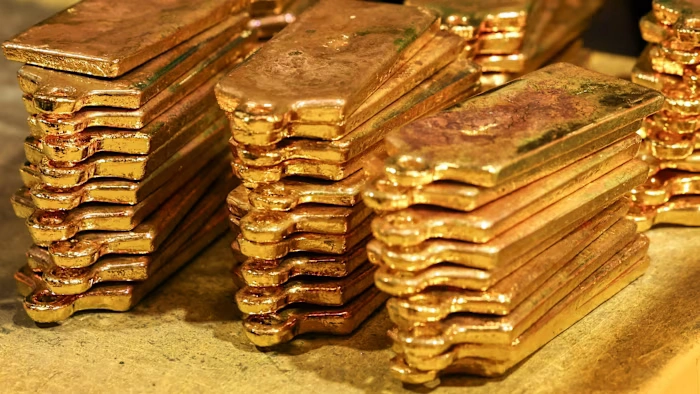
In the two weeks following the eruption of the Iran conflict on March 13, 2026, Turkey sold or swapped approximately 58 to 70 tonnes of gold—worth roughly $8 billion at prevailing prices—in what Metals Focus and central-bank data now confirm as the largest weekly drawdown of Turkish gold reserves in seven years. The March total, according to filings cross-referenced against TCMB balance-sheet data and reporting by Bloomberg and Reuters, is closing in on $20 billion. The Financial Times, which broke the story this week, described the scale of Turkey’s gold liquidation as a decisive new pressure point on a bullion market already reeling from a 15–19% retreat from January 2026 peaks.
The phrase “Turkey’s gold sales deepen bullion slump” has moved from analyst shorthand to screaming headline in a matter of days. Understanding why it happened—and what it portends—requires looking past the lira and into the architecture of a global monetary order that is cracking in places nobody expected.
The Anatomy of Turkey’s Gold Sales and Lira Defense
The Turkish lira’s structural vulnerability is no secret. Years of unorthodox monetary policy, persistently elevated inflation, and a current-account deficit that never quite closes have left the currency perpetually exposed. When the Iran conflict ignited energy markets in March, Turkey—a net energy importer with a coastline on the world’s most geopolitically volatile shipping lanes—absorbed a supply shock that was brutal in both speed and severity.
The arithmetic of the crisis was straightforward, even if the politics were not. A surging energy import bill widened the current-account deficit almost overnight. Investors, already anxious, began trimming lira exposure. The exchange rate wobbled toward levels that Ankara has historically treated as a red line. The TCMB’s response—selling gold to buy lira, defending the currency through the foreign-exchange mechanism that sits inside its reserve portfolio—was, in isolation, technically rational.
What made it extraordinary was the volume. Turkey’s central bank gold sales in 2026 have already exceeded anything seen since the 2018 currency crisis, when then-President Erdoğan’s heterodox interest-rate theories brought the lira to its knees. The World Gold Council, which tracks official-sector flows with granular precision, had flagged Turkey’s accumulation record as one of the defining demand stories of the post-2022 gold supercycle. In the span of a single month, that narrative has inverted completely.
The mechanism matters. Some of the gold was sold outright on the London Bullion Market—adding physical supply to a market that was already nervous about demand destruction from slowing Chinese purchases and ETF outflows. Some was executed through swap arrangements, where Turkey effectively borrowed dollars against its gold, a short-term liquidity tool that carries its own roll-over risks. The distinction matters for how long these pressures persist: outright sales are a one-time supply shock; swaps are a deferred reckoning.
How Turkey’s Gold Reserve Decline Is Hitting Global Bullion Prices
The impact of Turkey’s gold sales on bullion prices has been amplified by timing and psychology as much as by raw tonnage. Gold markets operate on sentiment as much as supply and demand fundamentals. When the world’s fifth-largest official-sector gold holder starts liquidating at scale, it sends a signal that no algorithm or analyst can easily contain.
Consider what the market was already processing before Ankara’s crisis: a 15–19% retreat in spot gold from its January highs, driven by a combination of Federal Reserve hawkishness, dollar resilience, and a partial unwind of the geopolitical risk premium that had lifted bullion through 2024 and most of 2025. The gold-as-safe-haven thesis was already under interrogation. Turkey’s emergency selling has handed its critics their most powerful argument yet.
The Bank for International Settlements data on cross-border gold flows will eventually quantify what the LBMA daily statistics already hint at: the London market absorbed a meaningful supply surge in mid-to-late March that found insufficient offsetting demand at prevailing prices. Spot gold, which had briefly reclaimed $2,600 per ounce in early Q1, has since struggled to hold levels that would have seemed a floor just months ago.
Here, crucially, is what most coverage has missed: Turkey is not alone. Kazakhstan and Uzbekistan—two other former Soviet republics that aggressively built gold reserves through the 2010s—have also been net sellers in recent months, according to IMF International Financial Statistics. The pattern is not coincidental. It reflects a structural reality about emerging-market central banks that built gold positions when commodity revenues were strong and reserve cushions were generous. When the tide turns—when energy shocks bite, currencies slide, and import bills balloon—gold is often the only liquid, internationally accepted asset they can mobilize quickly. The de-dollarization playbook has a chapter nobody wanted to write.
Turkey Sells Gold Amid Iran War: The Geopolitical Context
The Iran conflict’s role in this story deserves more careful treatment than it has received. The war has not simply raised energy prices; it has altered the risk calculus for every central bank sitting between Europe and the Persian Gulf. Turkey’s geographic position—straddling NATO obligations, energy transit routes, and fragile diplomatic relationships with neighbors on multiple sides—makes it uniquely exposed to any escalation along the Iran-Iraq-Gulf corridor.
The energy shock is real, immediate, and deeply asymmetric in its impact. Western economies, with diversified supply chains and substantial strategic reserves, can absorb it. Turkey, which imports the majority of its energy and runs a current account that is structurally sensitive to oil prices, cannot. The TCMB’s gold sales are, in this light, less a monetary policy choice than an emergency fiscal tool—the sovereign equivalent of breaking glass in case of fire.
What the Financial Times and Bloomberg have correctly identified is the scale. What they have not yet fully reckoned with is the precedent. If Turkey—which spent years building its gold position precisely to create a geopolitically neutral reserve buffer—is forced to liquidate under exactly the kind of crisis that gold reserves are meant to absorb, the entire strategic rationale for EM gold accumulation requires reassessment.
The De-Dollarization Myth Meets the Turkish Moment
This brings us to the uncomfortable thesis that sits at the heart of the bullion slump Turkey central bank story. The de-dollarization narrative of the last decade rested on a seductive logic: gold was the asset of monetary sovereignty, immune to American sanctions, uncorrelated with US Treasuries, and universally accepted. Central banks from Beijing to Ankara to Pretoria bought it not merely as a reserve asset but as a statement of intent—a declaration that the dollar-centric monetary system was losing its claim on the future.
Turkey’s March 2026 liquidation does not disprove that thesis entirely. But it reveals its most significant blind spot: gold’s value as a reserve asset is only realised if you can hold it through a crisis. And holding it through a crisis requires a domestic economy resilient enough to weather the storm without emergency liquidation. Turkey, for all its accumulation over the past decade, did not have that resilience. The lira’s structural fragility consumed the safety margin that the gold position was meant to provide.
This is a warning worth internalizing. The IMF’s latest Article IV consultations with several large EM gold accumulators have noted, with diplomatic understatement, that reserve composition matters less than reserve adequacy and domestic financial stability. Turkey illustrates the point with painful clarity: you cannot de-dollarize your balance sheet while remaining dollarized in your liabilities, your energy imports, and your external financing needs.
For the broader gold market, this has concrete implications. The World Gold Council’s central-bank demand data—which showed official-sector buying at record or near-record levels for three consecutive years through 2025—may be about to enter a period of structural revision. The buyers of the supercycle were largely the same countries that now face the greatest currency and energy pressure. When they become sellers, the bid that sustained gold through multiple Western rate hikes evaporates.
Opportunities in the Slump: What Western Buyers Should Know
Every crisis creates a market. The current bullion slump presents a genuinely complex set of conditions for Western investors—pension funds, family offices, sovereign wealth funds, and retail buyers who have watched gold’s retreat with a mixture of frustration and calculation.
The case for gold has not disappeared. It has been recalibrated. The metal’s role as a hedge against systemic risk—dollar debasement, banking fragility, geopolitical tail events—remains structurally intact. What has changed is the short-term supply dynamic: emergency EM selling has created an overhang that may persist for weeks or months, depending on how quickly the Iran situation stabilises and how effectively Turkey and its peers can restore reserve buffers without further liquidation.
For long-term institutional buyers, the current dislocation offers an entry point at prices that were unimaginable eighteen months ago. The LBMA forward curve suggests the market expects a stabilisation rather than a structural bear market in gold—and there is solid fundamental support for that view. Western central bank demand remains constructive. The structural case for portfolio diversification into gold has not been undermined by Turkey’s crisis; if anything, it has been reinforced by the demonstration that geopolitical risk can materialize with very little warning.
The more interesting question, and the one that deserves serious attention from asset allocators, is whether the next phase of the gold supercycle will be driven by Western institutional demand filling the vacuum left by EM official-sector retreat. If so, the market’s structure—the participants, the pricing dynamics, the geographic distribution of physical demand—will look considerably different in 2027 than it did in 2024.
What Comes Next for the Gold Supercycle
The phrase “supercycle” carries its own risks of hubris, and gold analysts who used it freely in 2024 and 2025 are now quietly adjusting their models. The post-2022 gold supercycle was built on several pillars: EM central-bank accumulation, geopolitical risk premia, dollar debasement concerns, and retail demand in China and India. Turkey’s crisis has weakened the first pillar. The question is whether the others can hold the structure.
In the short to medium term, the outlook depends heavily on three variables: the trajectory of the Iran conflict and its effect on energy prices and EM current accounts; the Federal Reserve’s willingness to pivot away from restrictive policy as global growth slows; and the pace at which Chinese institutional and retail gold demand recovers from its 2025 softness.
None of these are impossible scenarios. All of them are uncertain. What is not uncertain is that the Istanbul Grand Bazaar—where gold traders have watched the market gyrations of 2026 with the particular intensity of people whose livelihoods track the spot price—has seen a shift in sentiment that veteran traders describe as the most significant in a decade. The buyers who once crowded the jewellery shops during lira panics, converting currency into gold as a private act of monetary sovereignty, are now watching their government do the reverse, at scale, with consequences that extend far beyond Turkey’s borders.
That is the real story behind Turkey’s gold sales deepening the bullion slump. It is not merely about tonnes and dollars and reserve ratios. It is about the limits of financial sovereignty in a world where geopolitical shocks move faster than monetary policy can respond—and where even the boldest accumulation strategy can unravel in a matter of weeks when the wrong crisis arrives at the wrong moment.
Discover more from The Economy
Subscribe to get the latest posts sent to your email.
The Ceasefire That Nearly Didn’t Happen — and Why It Changes Everything
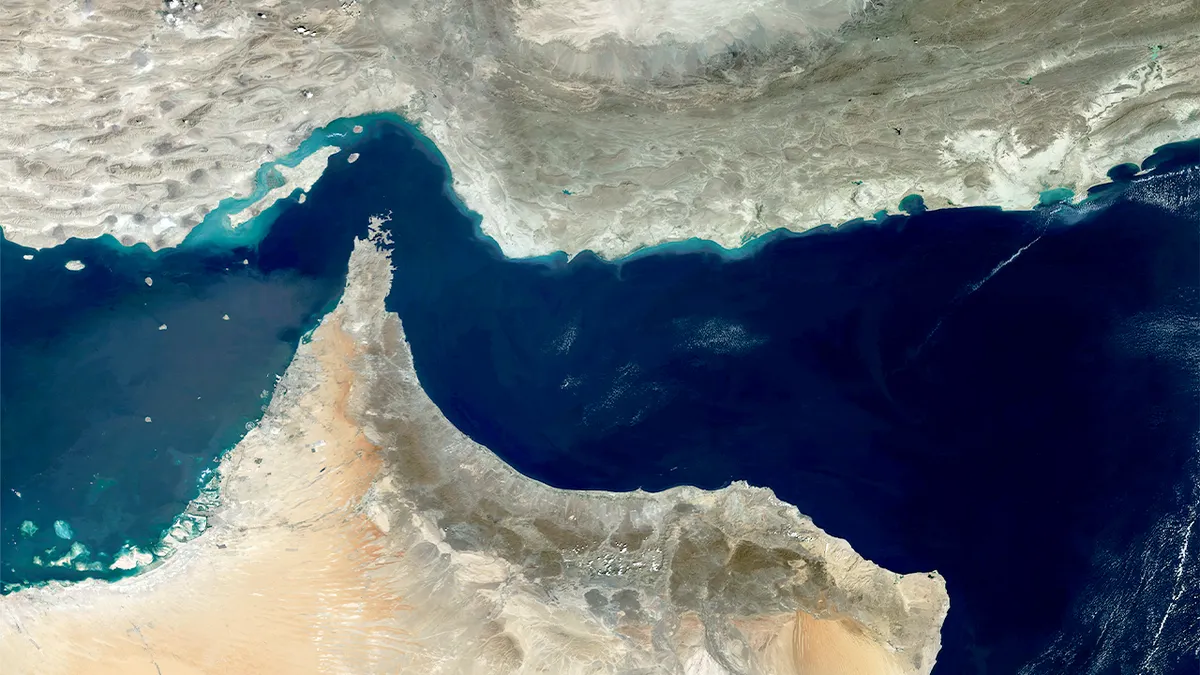
It was, in the bluntest possible terms, a civilization held to ransom. For forty days, the United States and Israel had struck Iran with a ferocity not seen since the Second World War — bridges, power plants, universities, military installations reduced to rubble. Iran had responded by sealing the Strait of Hormuz, the 21-mile chokepoint through which roughly a fifth of the world’s daily oil supply once flowed freely, triggering what the International Energy Agency has characterized as the single largest disruption to global oil markets in recorded history. Then, with less than two hours before Donald Trump’s deadline to rain “obliteration” on what remained of Iranian civilian infrastructure, Islamabad performed a diplomatic miracle.
Pakistan Prime Minister Shehbaz Sharif asked Trump to extend his deadline by two weeks and simultaneously urged Tehran to reopen the strait as a goodwill gesture, framing the appeal in terms of giving diplomacy time to run its course. CNBC It worked. Trump announced a two-week, double-sided ceasefire on the condition that Iran agree to the “complete, immediate, and safe opening of the Strait of Hormuz,” citing a 10-point Iranian peace proposal as “a workable basis on which to negotiate.” Axios
The phrase “workable basis” — anodyne to the casual reader — is, in the diplomatic lexicon of great-power competition, nothing short of seismic.
What Iran’s 10-Point Plan Actually Contains — and What It Reveals
Strip away the triumphalist messaging from both Tehran and Washington, and Iran’s 10-point proposal reads less like a peace plan and more like a maximalist opening bid from a government that has been bombed back to the pre-digital age and knows it. The plan, as spelled out by Iran’s Supreme National Security Council, includes controlled passage through the Strait of Hormuz coordinated with Iranian armed forces, the necessity of ending the war against all components of the “resistance axis,” and the withdrawal of U.S. combat forces from all regional bases and positions. NBC News It also calls for lifting all sanctions, releasing Iranian assets frozen abroad, and full payment of Iran’s war-related damages. CNBC
This is not, on any plain reading, a document the Trump administration will sign in its current form. But it is a document designed to do something far more subtle: establish Iran as a state with agency, leverage, and a coherent strategic vision — even in defeat. The Supreme National Security Council’s accompanying claim that “nearly all war objectives have been achieved” NBC News is partly face-saving theater, but it also carries a kernel of uncomfortable truth. Iran has demonstrated, unambiguously, that it holds a hand no adversary can entirely trump: physical control over the jugular vein of global energy.
The ten points, read against the backdrop of six weeks of unprecedented aerial bombardment, constitute a negotiating position, not a capitulation. Tehran knows this. Washington, if it is honest with itself, knows it too.
Pakistan’s Quiet Triumph — and the New Architecture of Mediation
Before this week, Pakistan’s role in the great-power theatre of the Middle East was largely peripheral. Islamabad was a regional pivot — important to Washington for counterterrorism cooperation, to Beijing for the China-Pakistan Economic Corridor — but not a player in the first rank of Middle East diplomacy. That calculus has been permanently revised. The truce, brokered by Pakistan, follows fierce exchanges of airstrikes, missile attacks, and threats that saw unprecedented strikes on Gulf nations, disrupted global shipping routes, and heightened fears of a prolonged confrontation. Al Jazeera
Sharif’s intervention succeeded precisely because it offered both parties something neither could offer themselves: a procedural exit. Trump needed a formula that did not look like backing down; Iran needed survival with the rhetorical scaffolding of victory. Pakistan provided the ladder for both men to descend. Peace talks are expected to begin in Islamabad on Friday, with Vice President JD Vance likely to lead the American delegation. Axios
This is diplomatically significant beyond the immediate crisis. It signals that the post-American-unipolar world is not simply a world dominated by Chinese or Russian mediation — as Riyadh’s 2023 rapprochement with Tehran, brokered by Beijing, suggested. Pakistan’s success here introduces a new variable: middle powers, credibly positioned as neither adversaries nor puppets of Washington, may now carry decisive diplomatic weight in conflicts where the principal parties have exhausted their bilateral channels.
Beijing, ever quick to register shifts in multilateral architecture, moved with characteristic swiftness. China’s Foreign Ministry spokesperson said Beijing “welcomes the ceasefire agreement” and will “support the mediation efforts” by Pakistan and other parties, noting that Chinese Foreign Minister Wang Yi had held 26 phone calls with counterparts from relevant countries. ABC News That is not the statement of a bystander — it is the statement of a great power carefully positioning itself as indispensable to whatever comes next.
The Oil Market Shock: Anatomy of a Historic Selloff
The market reaction was, in a word, violent — and that violence was entirely rational.
WTI, the U.S. crude benchmark, tumbled almost 16% to $95 a barrel — still well above the $67 level it settled at on February 27, before the war began. Brent crude futures, the global oil benchmark, dropped 14% to $93.8 a barrel. CNN For context: Dated Brent — the global benchmark for physical barrels — had reached its highest recorded price of $144.42, according to S&P Global Platts, surpassing even the 2008 financial crisis peak. Axios And the selloff itself made history: analysts described it as the biggest one-day free fall in oil prices since the 1991 Gulf War. Axios
The arithmetic of the disruption explains the arithmetic of the relief. The war in the Middle East — and the effective closure of the crucial Strait of Hormuz — has caused the biggest oil supply shock on record, choking off roughly 12 million to 15 million barrels of crude oil a day. CNN As of Tuesday, 187 tankers laden with 172 million barrels of seaborne crude and refined oil products remained inside the Gulf, according to Kpler, a global trade intelligence firm. CNN
That backlog does not clear overnight. Ports are congested, tanker routing is scrambled, and insurance premiums — which had rendered the Strait commercially prohibitive — will not normalize until underwriters are satisfied that the ceasefire is durable. Tehran has in recent weeks reportedly charged some shipping companies a $2 million fee to guarantee safe passage through the strait. CNN Iranian foreign minister Araghchi’s confirmation that safe transit would be possible “via coordination with Iran’s Armed Forces” Axios is careful language — it preserves Iranian control as a structural fact, regardless of the ceasefire’s duration. As one economist noted, that amounts to a de facto partial nationalization of the world’s most important shipping corridor.
For investors navigating the aftermath: the relief rally is real, but it is pricing in a best-case scenario that two weeks of fragile diplomacy has not yet warranted. Energy sector equities that surged 40-100% year-to-date will face significant profit-taking. Airlines, petrochemical manufacturers, and consumer-facing retailers stand to benefit materially from every dollar of sustained oil price decline. But position sizing in either direction should be calibrated to the probability of the Islamabad talks collapsing — which, given the chasm between Washington’s core demands on Iran’s nuclear program and Tehran’s insistence on full sanctions relief, remains non-trivial.
The Stock Market Surge: Reading the Signal Correctly
Stocks surged across regions: South Korea’s Kospi jumped over 5%, Japan’s Nikkei rose 4%, Hong Kong’s Hang Seng gained more than 2%, and the pan-European Stoxx 600 climbed 3.6%. Futures tied to the Dow Jones Industrial Average rose by 967 points, S&P 500 futures added 2.1%, and Nasdaq 100 futures climbed 2.3%. CNBC
The equity market’s interpretation is straightforward: lower energy costs are a global stimulus. But sophisticated investors should separate the signal from the noise here. The stock market is not pricing a peace deal — it is pricing the possibility of a peace deal, which is a materially different thing. As one market analyst from eToro observed, “TACO is becoming less of a joke and more of a trading strategy across markets. Investors have seen enough last-minute pivots to know that a two-week deadline isn’t necessarily what it seems.” CNBC
The persistence of gold’s bid — spot gold rose 2.2% to $4,803.83 per ounce even as risk assets rallied CNBC — tells the more cautious half of the story. Institutional money is hedging. The relief rally and the haven bid are running simultaneously, which is the market’s elegant way of saying: we want to believe this, but we’ve been burned before.
The Quiet Winners — and the One Uncomfortable Loser Nobody Is Naming
History’s great turning points always redistribute power in ways that the initial headlines obscure. This ceasefire is no exception.
Pakistan emerges with diplomatic capital it will spend for years. Islamabad is now, demonstrably, a credible interlocutor between Washington and Tehran — a status no amount of lobbying or bilateral summitry could have purchased.
China emerges with its multilateral positioning validated. Beijing’s five-point Chinese-Pakistani peace framework, its 26 diplomatic phone calls, its quiet shuttle diplomacy in the Gulf — all of it contributed to the architecture that made the Pakistani intervention possible. The belt-and-road world, Beijing will quietly argue, is a more stable world.
Tehran — counterintuitively — emerges with its deterrence posture partially rehabilitated. The clerical establishment that many analysts, not least in Tel Aviv and Washington, expected to collapse under military pressure has survived. Its control over the Strait of Hormuz has been demonstrated as real, not rhetorical. Whatever the outcome of the Islamabad talks, that leverage does not disappear when the ceasefire expires.
The uncomfortable loser — the entity most conspicuously absent from the diplomatic success narrative — is Israel. The office of Israeli Prime Minister Benjamin Netanyahu announced that while Israel supports the United States’ two-week ceasefire with Iran, the deal does not include the fighting between Israel’s military and Iranian-backed groups in Lebanon. CBS News Netanyahu’s carve-out on Lebanon reveals a government that found itself outmaneuvered by a diplomatic process it could not control — partners in the military campaign, bystanders in its resolution.
The Road to Islamabad: What a Durable Deal Would Actually Require
The next two weeks are not, as Trump’s Truth Social effusions might suggest, a straightforward path to the “Golden Age of the Middle East.” They are a negotiation of extraordinary complexity, with parties whose core demands are structurally incompatible at the outset.
Washington’s irreducible minimum — shared explicitly by Netanyahu, who said the U.S. “is committed to achieving” the goal of ensuring Iran “no longer poses a nuclear, missile and terror threat” ABC News — is a verifiable end to Iran’s nuclear program. Tehran’s irreducible minimum, embedded in its 10-point plan, is the lifting of all sanctions and the normalization of its economy. Bridging those positions in fourteen days is not diplomacy; it is alchemy.
What Islamabad can realistically deliver is a framework agreement — a set of principles broad enough for both sides to claim success, specific enough to extend the ceasefire and return tanker traffic to the Strait, and ambiguous enough to defer the hard questions about nuclear verification, sanctions architecture, and Iran’s regional proxy network. That is not nothing. In the history of this particular conflict, it would be a great deal.
Vice President Vance, addressing critics within the Iranian system who are “lying about the nature of the ceasefire,” said: “If the Iranians are willing, in good faith, to work with us, I think we can make an agreement.” Axios That conditional is doing a lot of work. It is also, for now, the most honest assessment available of where things actually stand.
What This Means for Global Energy Security — the Structural Question That Survives Any Deal
Even if the Islamabad talks succeed beyond all reasonable expectation, this crisis has exposed a structural vulnerability in the architecture of global energy security that no ceasefire can paper over.
A single nation — Iran — demonstrated that it could, with conventional military and asymmetric naval tools, effectively halt nearly a quarter of the world’s seaborne oil trade and push global benchmark prices to record highs within weeks. The response from OPEC, from Washington, from the IEA’s emergency reserves mechanism, from alternative routing through the Cape of Good Hope — none of it came close to compensating for what the Strait’s closure removed.
The strategic conclusion is unavoidable: the concentration of global energy transit through the Strait of Hormuz is an unacceptable systemic risk, and the post-ceasefire world — whatever shape it takes — will accelerate investments in alternative infrastructure, strategic reserve capacity, and the long-term energy transition away from Persian Gulf dependence. For sovereign wealth funds, infrastructure investors, and the energy majors themselves, the crisis of 2026 has clarified the investment case for resilience in ways that no analyst report could have achieved.
The Hormuz gambit may be over. The lesson it taught the world is just beginning to sink in.
Discover more from The Economy
Subscribe to get the latest posts sent to your email.
-

 Analysis2 months ago
Brazil’s Rare Earth Race: US, EU, and China Compete for Critical Minerals as Tensions Rise
-

 Banks3 months ago
Best Investments in Pakistan 2026: Top 10 Low-Price Shares and Long-Term Picks for the PSX
-

 Investment3 months ago
Top 10 Mutual Fund Managers in Pakistan for Investment in 2026: A Comprehensive Guide for Optimal Returns
-

 Analysis2 months ago
Top 10 Stocks for Investment in PSX for Quick Returns in 2026
-

 Asia3 months ago
China’s 50% Domestic Equipment Rule: The Semiconductor Mandate Reshaping Global Tech
-

 Global Economy3 months ago
Pakistan’s Export Goldmine: 10 Game-Changing Markets Where Pakistani Businesses Are Winning Big in 2025
-

 Global Economy3 months ago
15 Most Lucrative Sectors for Investment in Pakistan: A 2025 Data-Driven Analysis
-

 Global Economy3 months ago
What the U.S. Attack on Venezuela Could Mean for Oil and Canadian Crude Exports: The Economic Impact
Pingback: Top 5 Stock Picks on the Pakistan Stock Exchange for 2026: Expert Analysis and Investment Outlook - The Economy