
AI
Top 10 Businesses to Start in Singapore for Massive Profits in 2026 and Beyond


Singapore stands at an economic crossroads in 2026. The Ministry of Trade and Industry projects GDP growth between 1.0% and 3.0% for the year, a moderation from 2025’s robust 4.8% expansion but one that masks extraordinary sectoral opportunities. While manufacturing surged 15% in Q4 2025, driven by biomedical and electronics clusters, the city-state’s real entrepreneurial promise lies not in traditional industries but in its digital-first transformation.
For aspiring entrepreneurs, this moment presents a paradox of promise. Singapore’s trade-dependent economy faces headwinds—trade accounts for over 320% of GDP, exposing it to global tariff tensions—yet its AI readiness score of 0.80 ranks first globally, and the fintech market is projected to reach USD 13.97 billion in 2026, growing at 15.9% annually through 2031. The question isn’t whether to launch a business in Singapore, but which business model will capture the massive profit potential embedded in this sophisticated, technology-saturated market.
This comprehensive analysis examines the top 10 businesses to start in Singapore in 2026, drawing on real-time data from authoritative sources including the Singapore Economic Development Board, Ministry of Trade and Industry, Statista, and market intelligence from premium outlets. Each opportunity is evaluated on startup costs, revenue potential, competitive barriers, and strategic advantages specific to Singapore’s unique ecosystem.
1. AI Consulting and Implementation Services: Riding the Wave of Digital Transformation
Singapore’s artificial intelligence market tells a story of explosive growth. The AI market is projected to grow at 28.10% annually through 2030, reaching USD 4.64 billion, while generative AI specifically will expand at 46.26% CAGR to USD 5.09 billion by 2030. More tellingly, 53% of Singaporean companies have already deployed AI at scale, the third-highest rate globally behind only India and the UAE.
Why This Profitable Business Idea in Singapore Works Now
The government’s aggressive push toward sovereign AI and trusted governance creates sustained enterprise demand. IMDA published the Model AI Governance Framework for Agentic AI in 2026, mandating responsible deployment frameworks across sectors. Companies need external expertise to navigate these requirements while extracting business value. According to Salesforce’s State of Service report, AI is expected to handle 41% of customer service cases in Singapore by 2027, up from 30% today, revealing massive implementation gaps.
Startup Costs and Revenue Projections
Initial investment: SGD 15,000-30,000 (cloud infrastructure, business registration, initial marketing) Year 1 revenue potential: SGD 150,000-400,000 Year 3 revenue potential: SGD 800,000-2 million Gross margins: 60-75%
Small teams of 2-3 AI specialists can command SGD 8,000-15,000 per project for pilot implementations, with enterprise retainers reaching SGD 20,000-50,000 monthly. The Micron announcement of $24 billion investment in Singapore for AI-related semiconductor production signals sustained infrastructure demand that will ripple through the consulting ecosystem.
Competitive Barriers and Risks
Technical talent shortage remains acute. Domain expertise in specific verticals (healthcare, finance, logistics) commands premium pricing. Large consultancies like Accenture and Deloitte dominate enterprise accounts, but nimble startups can capture mid-market SMEs through specialized offerings—medical imaging AI for clinics, inventory optimization for retailers, or compliance automation for fintech firms.
Success Strategy
Focus on one vertical initially. Partner with universities for talent pipeline. Offer “AI readiness assessments” as loss leaders to land implementation contracts. Build case studies demonstrating ROI in 90-day pilots.
2. Cybersecurity Solutions and Managed Services: Protecting Singapore’s Digital Economy
If AI represents opportunity, cybersecurity represents necessity. Singapore’s cybersecurity market is expected to reach USD 2.65 billion in 2025 and grow at 16.14% CAGR to USD 5.60 billion by 2030. More significantly, Singapore needs over 3,000 more cybersecurity specialists by 2026, as MAS tightens compliance requirements.
Market Drivers Creating Profit Potential
Singapore Exchange’s mandatory four-business-day cyber-incident notification rules surfaced 14 reportable events in 2024’s pilot, driving listed firms to increase spending on automated breach-impact assessment tools by 31%. Digital full-banks accumulated SGD 1.8 billion in deposits by end-2024, channeling roughly 22% of operating expenditure into cybersecurity during their first year.
Zero-trust architecture mandates create recurring revenue opportunities. By November 2024, 96% of critical information infrastructure owners had submitted zero-trust roadmaps, generating demand for ongoing implementation, monitoring, and compliance validation services.
Startup Costs and Profit Margins
Initial investment: SGD 25,000-50,000 (certifications, security tools, compliance frameworks) Year 1 revenue potential: SGD 200,000-500,000 Year 3 revenue potential: SGD 1-3 million Gross margins: 50-70%
Managed security service providers (MSSPs) can structure retainers from SGD 5,000-25,000 monthly depending on client size. Penetration testing commands SGD 10,000-50,000 per engagement. The talent constraint actually benefits qualified operators—median senior-analyst pay climbed 14% to SGD 117,000, but successful firms charging 2-3x salary in client fees maintain healthy margins.
Differentiation in a Competitive Market
Most cybersecurity firms focus on network security. Emerging opportunities lie in OT (operational technology) security for manufacturers, cloud security posture management for digital-native companies, and compliance-as-a-service for fintech startups navigating MAS Technology Risk Management guidelines.
Risks and Mitigation
Client acquisition costs are high in enterprise sales. Start with SME packages (SGD 3,000-8,000/month) to build references, then move upmarket. Partner with software vendors like Microsoft and AWS for co-selling opportunities. Obtain CREST certification to differentiate from unlicensed operators.
3. Fintech Infrastructure and Embedded Finance Solutions: Building the Plumbing of Digital Commerce
Singapore’s fintech market will reach USD 13.97 billion in 2026, growing from USD 12.05 billion in 2025. But the real opportunity isn’t another consumer payments app—it’s building the infrastructure that powers next-generation financial services.
The Project Nexus Advantage
Project Nexus will connect payment rails across Singapore, Malaysia, Thailand, Philippines, and India by 2026, enabling real-time settlement and freeing an estimated USD 120 billion in trapped liquidity. Early-stage fintech firms providing API integration, cross-border reconciliation software, or SME working-capital products tied to shipment milestones can capture disproportionate value.
High-Profit Niches in 2026
Embedded finance platforms: Enable non-financial companies to offer financial services. A SaaS platform providing “banking-as-a-service” APIs can charge 0.5-2% per transaction plus monthly infrastructure fees.
Regulatory technology (regtech): Increasing sophistication of AI-powered attacks and growing regulatory scrutiny will redefine cybersecurity strategies in 2026. Compliance automation tools for KYC, AML, and reporting can command SGD 2,000-15,000 monthly SaaS fees.
B2B payments optimization: Trade finance platforms leveraging real-time settlement for SME supplier payments represent a multi-billion-dollar opportunity as traditional nostro/vostro account structures become obsolete.
Revenue Model and Profitability
Initial investment: SGD 100,000-300,000 (development, licenses, initial compliance) Year 1 revenue potential: SGD 300,000-800,000 Year 3 revenue potential: SGD 2-8 million Gross margins: 70-85% (SaaS model)
Transaction-based pricing scales elegantly. A platform processing SGD 10 million monthly at 0.75% generates SGD 75,000 in monthly revenue. Ten enterprise clients create a SGD 900,000 annual run-rate with minimal incremental costs.
Regulatory Considerations
MAS licensing requirements are stringent but navigable for infrastructure providers. Consider partnership models with licensed entities initially. The MAS SGD 100 million FSTI 3.0 program co-funds quantum-safe cybersecurity and AI-driven risk models, providing potential grant support.
4. HealthTech and Telemedicine Platforms: Serving Singapore’s Aging Population
Singapore’s demographic time bomb creates entrepreneurial opportunity. The number of healthtech startups grew from 140 to over 400 by 2025, with Singapore accounting for 9% of all healthtech startups in Asia despite its small size. In 2025, Singapore’s health and biotech sectors secured $342 million in funding.
Market Fundamentals
Singapore’s population is aging rapidly, with chronic disease management becoming a national priority. The government’s Smart Nation initiative explicitly supports digital health adoption. From AI-enabled home care to precision diagnostics, healthtech addresses both access and quality challenges.
Profitable Business Models
Chronic disease management platforms: AI-powered platforms like Mesh Bio use analytics to identify risks earlier and personalize care. B2B contracts with healthcare providers generate SGD 5-20 per patient per month.
Telemedicine infrastructure: Building white-label telemedicine platforms for clinics and hospitals. License fees of SGD 3,000-15,000 monthly plus per-consultation charges (SGD 2-5).
Medical wearables and RPM: Real-time patient monitoring wearables command hardware margins (30-40%) plus recurring subscription revenue (SGD 50-150/month per device).
Startup Costs and Scaling
Initial investment: SGD 80,000-200,000 (product development, regulatory compliance, clinical validation) Year 1 revenue potential: SGD 200,000-600,000 Year 3 revenue potential: SGD 1.5-5 million Gross margins: 50-75%
Regulatory Pathway
HSA (Health Sciences Authority) approval is required for medical devices. Start with wellness devices (lower regulatory burden) to validate market fit, then pursue medical device classification. Partner with established healthcare providers for clinical credibility and distribution.
Export Potential
Singapore serves as a springboard to Southeast Asia’s 650 million population. Successful validation in Singapore’s sophisticated market enables regional expansion, multiplying addressable market 100-fold.
5. E-Commerce Enablement and Cross-Border Logistics Tech: Powering the $30 Billion Digital Commerce Boom
Singapore’s e-commerce market was valued at USD 8.9 billion in 2024 and is projected to reach USD 29.57 billion by 2032, growing at 16.2% CAGR. But the real money isn’t in becoming the next Shopee—it’s in providing the infrastructure that makes e-commerce work.
Market Opportunity
Food and beverages is expanding at 12.45% CAGR through 2030, fastest among all categories. Parcel-locker densification and refrigerated last-mile fleets support fresh-food deliveries. Social commerce—TikTok Shop reached USD 16.3 billion GMV in 2023—creates demand for creator tools and fulfillment integration.
High-Margin Service Categories
Multi-channel integration platforms: SaaS tools enabling merchants to synchronize inventory across Shopee, Lazada, TikTok Shop, and Amazon. Charge SGD 200-2,000 monthly based on order volume.
Cross-border logistics optimization: Software that optimizes customs clearance, carrier selection, and shipping costs. Take 5-15% of savings generated.
D2C brand incubation: White-label product sourcing, branding, and marketplace optimization services. Success-based fees (10-30% of revenue) or equity stakes in brands built.
Returns and reverse logistics: Automated returns management platforms charging per transaction (SGD 3-8) or monthly subscriptions (SGD 500-5,000).
Financial Model
Initial investment: SGD 30,000-80,000 (software development, partnerships, working capital) Year 1 revenue potential: SGD 250,000-700,000 Year 3 revenue potential: SGD 1.2-4 million Gross margins: 60-80%
A logistics tech platform serving 50 merchants processing 5,000 orders monthly at SGD 2 per order generates SGD 120,000 monthly (SGD 1.44 million annually) with minimal variable costs once software is built.
Competitive Moat
Network effects matter. The more merchants on your platform, the better rates you negotiate with carriers. The more data you aggregate, the smarter your algorithms. First movers in specific verticals (food, fashion, electronics) can build defensible positions before well-funded competitors enter.
6. EdTech and Corporate Learning Solutions: Capturing the $2 Billion Skills Training Market
Singapore’s workforce transformation creates massive demand for continuous learning. 94% of firms are expected to become AI-driven by 2028, with AI and data science salaries boosting by over 25%. This skills gap translates to commercial opportunity.
Government-Backed Market Demand
SkillsFuture credits provide Singaporeans with government subsidies for approved training programs. Companies receive productivity grants to upskill employees. This creates a market where both individual learners and corporate buyers have subsidized purchasing power.
Profitable EdTech Models
Corporate micro-learning platforms: 10-15 minute modules on AI tools, cybersecurity, data analysis. B2B contracts of SGD 50-200 per employee annually.
Industry-specific certification programs: Deep-tech certifications for semiconductors, biotech, or fintech. Charge SGD 2,000-8,000 per learner with 60%+ margins.
AI-powered personalized learning: Adaptive learning platforms that customize content based on performance. Premium positioning at SGD 300-800 per learner annually.
Career transition bootcamps: 8-12 week intensive programs for mid-career switchers entering tech. Charge SGD 8,000-15,000 per cohort with income-share agreements as alternative payment.
Economics and Scale
Initial investment: SGD 50,000-150,000 (content creation, platform development, instructor fees) Year 1 revenue potential: SGD 300,000-900,000 Year 3 revenue potential: SGD 1.5-5 million Gross margins: 65-85% (digital delivery)
A corporate learning platform with 20 enterprise clients, each with 100 employees at SGD 150 per seat, generates SGD 300,000 annually. Scale to 100 clients (achievable in 3 years) and revenue reaches SGD 1.5 million with marginal content costs.
Regulatory Advantage
Partner with SkillsFuture Singapore (SSG) to become an approved training provider. This unlocks access to billions in government subsidies, dramatically reducing customer acquisition costs and price sensitivity.
7. Sustainable Food and AgriFood Tech: Meeting Green Plan 2030 Targets
Singapore’s Green Plan 2030 targets 80% of new buildings to be Super Low Energy Buildings by 2030, and the government has committed over S$30 million to the Food Tech Innovation Centre alongside A*STAR. Leading players like Oatly and Eat Just have established facilities in Singapore.
Market Dynamics
Singapore imports over 90% of its food, creating national security concerns. The government actively promotes local production through technology. Alternative proteins, vertical farming, and food waste reduction represent high-growth segments with government support.
Profitable Niches
B2B alternative protein ingredients: Selling plant-based or cultivated protein to food manufacturers. This wholesale model offers better margins (30-50%) than D2C consumer brands.
Vertical farming automation: Providing AI-powered climate control, nutrient monitoring, and harvest prediction software to vertical farms. Charge SGD 5,000-20,000 monthly per facility.
Food waste valorization: Converting food waste into animal feed, compost, or biofuel. Charge waste generators for collection (tipping fees) while selling outputs—double revenue streams.
Dark kitchen and ghost restaurant infrastructure: Shared commercial kitchen space with integrated ordering systems. Rent to multiple brands, generating SGD 4,000-15,000 per kitchen bay monthly.
Startup Investment and Returns
Initial investment: SGD 80,000-250,000 (equipment, licenses, initial inventory) Year 1 revenue potential: SGD 200,000-800,000 Year 3 revenue potential: SGD 1-4 million Gross margins: 35-60% (varies by model)
Grant Support
Enterprise Singapore offers sustainability-focused grants with up to 70% support (from standard 50%). This dramatically reduces capital requirements for green initiatives.
Exit Opportunities
Singapore’s agriFood tech ecosystem attracts significant M&A activity. Successful startups can exit to regional conglomerates (Wilmar, Olam) or global food companies seeking Asian footprints. Temasek’s active investments create additional liquidity paths.
8. Digital Marketing and Performance Marketing Agencies: Serving Singapore’s 46,000+ SMEs
Singapore hosts 46,232 companies as of January 2026, with 5,890 having secured funding. These companies—from funded startups to growth-stage enterprises—need customer acquisition expertise. Digital marketing services remain perennially in demand with high margins.
Why This Small Business Opportunity in Singapore Remains Attractive
Low barriers to entry combined with high margins create entrepreneurial appeal. A solo operator can launch with minimal capital, scale to a 5-10 person team generating SGD 2-5 million annually, then either scale further or sell to a consolidator.
Service Models and Pricing
SEO and content marketing: Retainers of SGD 3,000-15,000 monthly. Gross margins: 60-75%.
Performance marketing (Google Ads, Meta Ads): Charge 15-25% of ad spend or performance fees (5-15% of attributed revenue). A client spending SGD 50,000 monthly generates SGD 7,500-12,500 in agency fees.
Social commerce management: Managing TikTok Shop, Instagram Shopping, live-streaming commerce. Charge SGD 5,000-20,000 monthly plus 5-10% of sales.
Marketing automation and CRM: Implementation and management of HubSpot, Salesforce, or local alternatives. Setup fees (SGD 10,000-50,000) plus monthly management (SGD 2,000-10,000).
Financial Projections
Initial investment: SGD 10,000-25,000 (business setup, initial marketing, software subscriptions) Year 1 revenue potential: SGD 180,000-500,000 Year 3 revenue potential: SGD 800,000-3 million Gross margins: 60-80%
Differentiation Strategy
Generalist agencies face intense competition. Specialize by vertical (healthtech marketing, fintech growth, e-commerce brands) or by channel (TikTok-first agency, programmatic advertising specialists). Develop proprietary IP—frameworks, tools, or methodologies—that justify premium pricing.
Scale and Exit
Unlike product companies, agencies scale linearly with headcount. The path to SGD 10 million+ revenue requires either significant team growth or productization (creating software tools that deliver service outcomes with less human labor). Alternatively, build to SGD 3-5 million revenue and sell to a holding company at 3-6x EBITDA multiples.
9. Home-Based Business Services: Consulting, Virtual Assistance, and Specialized B2B Services
Not every profitable business requires significant capital. Singapore’s high cost of physical real estate makes home-based business models especially attractive for solo entrepreneurs and small teams.
Online Business Singapore Low Investment Options
Technical writing and documentation: B2B technical writing for software companies, financial services, or manufacturers. Charge SGD 0.15-0.50 per word or SGD 80-200 per hour. A single client project (20,000-word technical manual) generates SGD 3,000-10,000.
Fractional C-suite services: Part-time CFO, CMO, or CTO services for startups and SMEs. Charge SGD 5,000-15,000 monthly for 2-4 days of work. Four clients create SGD 20,000-60,000 monthly income with minimal overhead.
Specialized recruiting: Tech recruiting, executive search, or niche talent acquisition. Charge 20-25% of first-year salary. Placing 12 candidates annually at average SGD 120,000 salaries generates SGD 288,000-360,000 revenue.
Virtual CFO and bookkeeping: Monthly financial management for SMEs. Charge SGD 800-3,000 monthly per client. Twenty clients generate SGD 192,000-720,000 annually.
B2B content creation: White papers, case studies, thought leadership for tech companies. Charge SGD 2,000-8,000 per deliverable. Ten deliverables monthly generate SGD 240,000-960,000 annually.
Economics of Home-Based Models
Initial investment: SGD 3,000-10,000 (business registration, initial marketing, professional services) Year 1 revenue potential: SGD 80,000-300,000 Year 3 revenue potential: SGD 200,000-1 million Gross margins: 80-95% (primarily time-based)
Scaling Strategies
Lifestyle businesses work beautifully in Singapore’s high-cost environment—a solo consultant generating SGD 300,000 annually keeps more take-home than a mid-level corporate employee earning SGD 150,000. To scale beyond personal capacity, hire associate consultants, build proprietary methodologies you can license, or create info products and courses that generate passive income.
10. Sustainability Consulting and ESG Advisory: Profiting from the Green Transition
The global green technology and sustainability market is set to grow to USD 185.21 billion by 2034 at 22.94% CAGR. Singapore sits at the epicenter of Asia’s sustainability transformation, with the financial sector channeling billions into green investments.
Market Drivers
MAS, aligned with Green Plan 2030, has channeled funding into green bonds, sustainability-linked loans, and voluntary carbon trading platforms like Climate Impact X. SGX-listed companies face increasing ESG disclosure requirements. Supply chain partners of global corporations must demonstrate sustainability credentials to maintain contracts.
High-Value Services
Carbon accounting and reporting: Help companies measure, reduce, and report emissions. Charge SGD 15,000-80,000 for baseline assessments plus SGD 3,000-15,000 monthly for ongoing tracking.
Sustainability strategy development: Multi-month engagements creating net-zero roadmaps. Charge SGD 50,000-300,000 per engagement depending on company size.
Green financing advisory: Help companies access green bonds, sustainability-linked loans, or climate tech venture capital. Charge success fees (1-3% of capital raised) or retainers (SGD 10,000-30,000 monthly).
Supply chain sustainability audits: Assess and improve supplier sustainability practices. Charge per supplier audited (SGD 5,000-20,000) or percentage of procurement spend (0.5-2%).
ESG reporting and compliance: Prepare sustainability reports meeting GRI, SASB, or TCFD standards. Charge SGD 30,000-150,000 annually depending on report complexity.
Business Model
Initial investment: SGD 20,000-60,000 (certifications, training, initial marketing) Year 1 revenue potential: SGD 200,000-700,000 Year 3 revenue potential: SGD 1-4 million Gross margins: 65-85%
Credentials Matter
Obtain recognized certifications: GRI Certified Sustainability Professional, SASB FSA Credential, or relevant engineering certifications for technical assessments. Partner with engineering firms for energy audits and technical solutions you can’t deliver in-house.
Competitive Positioning
Big Four accounting firms dominate large enterprise ESG advisory. Target mid-market companies (SGD 50-500 million revenue) that need sophisticated services but can’t afford Big Four rates. Specialize by sector—maritime decarbonization, real estate energy retrofits, food supply chain sustainability—to build domain expertise competitors can’t easily replicate.
Synthesis: Choosing Your Path in Singapore’s 2026 Business Landscape
These ten opportunities share common threads: they leverage Singapore’s strengths (advanced digital infrastructure, sophisticated buyers, government support), address genuine market needs amplified by demographic or regulatory trends, and offer paths to profitability within 12-18 months for well-executed ventures.
Capital Intensity vs. Profit Potential Trade-offs
| Business Model | Initial Investment | Year 3 Revenue Potential | Competitive Moat |
|---|---|---|---|
| AI Consulting | Low (SGD 15-30K) | High (SGD 800K-2M) | Medium (expertise) |
| Cybersecurity | Medium (SGD 25-50K) | High (SGD 1-3M) | High (credentials) |
| Fintech | High (SGD 100-300K) | Very High (SGD 2-8M) | Very High (regulatory) |
| HealthTech | Medium (SGD 80-200K) | High (SGD 1.5-5M) | High (clinical validation) |
| E-commerce Tech | Low-Medium (SGD 30-80K) | High (SGD 1.2-4M) | Medium (network effects) |
| EdTech | Medium (SGD 50-150K) | High (SGD 1.5-5M) | Medium (content quality) |
| FoodTech | Medium-High (SGD 80-250K) | Medium (SGD 1-4M) | Medium (government support) |
| Digital Marketing | Very Low (SGD 10-25K) | Medium-High (SGD 800K-3M) | Low (services) |
| Home Business | Very Low (SGD 3-10K) | Low-Medium (SGD 200K-1M) | Low (personal brand) |
| Sustainability | Low-Medium (SGD 20-60K) | High (SGD 1-4M) | Medium (certification) |
Key Success Factors Across All Models
- Leverage government support: From SkillsFuture subsidies to Enterprise Development Grants offering 50-70% funding support, Singapore’s government actively co-invests in entrepreneurship.
- Focus on B2B models first: Singapore’s small consumer market (6 million people) limits B2C scale. B2B models offer higher contract values, longer customer relationships, and regional export potential.
- Build for ASEAN, validate in Singapore: Use Singapore’s sophisticated market as a quality signal, then expand to Indonesia (270 million people), Vietnam, Thailand, and Malaysia for scale.
- Prioritize recurring revenue: Subscription, retainer, and usage-based pricing models create predictable cash flow and higher business valuations (5-10x revenue vs. 1-3x for one-time sales).
- Partner strategically: Singapore’s ecosystem rewards collaboration. Partner with universities for talent and R&D, government agencies for grants and validation, and corporations for distribution and credibility.
Your Action Plan for Launching a Profitable Business in Singapore in 2026
The opportunity is clear. Singapore-based startups are expected to raise over $18.4 billion in new funding in 2026, with nearly 6,000 new startups projected by year-end. The question isn’t whether Singapore offers entrepreneurial opportunity—it manifestly does. The question is which opportunity aligns with your expertise, capital, and risk tolerance.
Start by assessing your competitive advantages. Do you have deep technical expertise (favor AI, cybersecurity, healthtech)? Strong sales and relationship-building skills (favor consulting, digital marketing)? Industry connections (leverage into fintech, sustainability advisory)? Limited capital but strong work ethic (home-based services, consulting)?
Next, validate demand before building. Conduct 20-30 customer discovery interviews. Sell pilot projects before developing full solutions. Use government grants to de-risk early-stage investment. Build minimum viable products in weeks, not months.
Finally, think beyond Singapore from day one. The city-state’s true value lies in its role as Asia’s quality signal and regional launchpad. Build businesses that can export to ASEAN’s 650 million people or serve global enterprises from a Singapore base.
The moderating GDP growth of 2026 masks profound sectoral opportunities. Manufacturing may face challenges, but digital services, technology enablement, and sustainability solutions are accelerating. Choose wisely, execute relentlessly, and leverage Singapore’s unparalleled business environment to build the next generation of highly profitable Asian enterprises.
Ready to launch your Singapore business? The best time to start was yesterday. The second-best time is now. Whether you’re pursuing AI consulting, cybersecurity services, fintech innovation, or any of the opportunities outlined here, Singapore’s ecosystem stands ready to support ambitious entrepreneurs willing to solve real problems for paying customers. The massive profits of 2026 and beyond await those bold enough to begin.
Discover more from The Economy
Subscribe to get the latest posts sent to your email.



The machines are already choosing who dies. The question is whether humanity will choose to stop them.
In the early weeks of Israel’s military campaign in Gaza, a targeting system called Lavender quietly changed the nature of modern warfare. The Israeli army marked tens of thousands of Gazans as suspects for assassination using an AI targeting system with limited human oversight and a permissive policy for civilian casualties. +972 Magazine Israeli intelligence officials acknowledged an error rate of around 10 percent — but simply priced it in, deeming 15 to 20 civilian deaths acceptable for every junior militant the algorithm identified, and over 100 for commanders. CIVICUS LENS The machine, according to one Israeli intelligence officer cited in the original +972 Magazine investigation, “did it coldly.”
This is not a hypothetical future threat. This is 2026. And this is why global AI regulation under the United Nations — a binding, enforceable, internationally backed governance platform — is no longer a matter of philosophical debate. It is the defining policy emergency of our era.
Why the Global AI Regulation UN Framework Is the Most Urgent Issue of 2026
When historians eventually write the account of humanity’s encounter with artificial intelligence, they will mark 2026 as the year the world stood at the threshold and hesitated. UN Secretary-General António Guterres affirmed in early February 2026: “AI is moving at the speed of light. No country can see the full picture alone. We need shared understandings to build effective guardrails, unlock innovation for the common good, and foster cooperation.” United Nations Foundation
That statement, measured and diplomatic in tone, barely captures the urgency on the ground. From the rubble of Gaza to the drone corridors above eastern Ukraine, algorithmic warfare has become normalized with terrifying speed. The Future of Life Institute now tracks approximately 200 autonomous weapons systems deployed across Ukraine, the Middle East, and Africa Globaleducationnews — the majority operating in legal and regulatory voids that no international treaty has yet filled.
Meanwhile, the governance architecture intended to respond to this moment remains fragile and fragmented. Just seven countries — all from the developed world — are parties to all current significant global AI governance initiatives, according to the UN. World Economic Forum A full 118 member states have no meaningful seat at the table where the rules of AI are being written. This is not merely inequitable; it is dangerous. The technologies being deployed against human populations are outrunning the institutions designed to constrain them.
The Lethal Reality: AI Warfare and Human Safety in the Middle East
The Gaza conflict has provided the world its most documented and disturbing window into what AI warfare looks like when accountability is stripped away. Israel’s AI tools include the Gospel, which automatically reviews surveillance data to recommend bombing targets, and Lavender, an AI-powered database that listed tens of thousands of Palestinian men linked by algorithm to Hamas or Palestinian Islamic Jihad. Wikipedia Critics across the spectrum of international law have argued that the use of these systems blurs accountability and results in disproportionate violence in violation of international humanitarian law.
Evidence recorded in the classified Israeli military database in May 2025 revealed that only 17% of the 53,000 Palestinians killed in Gaza were combatants — implying that 83% were civilians. Action on Armed Violence That figure, if accurate, represents one of the highest civilian death rates in modern recorded warfare, and it emerges directly from the logic of algorithmic targeting: speed over deliberation, efficiency over ethics, statistical probability over the irreducible humanity of each individual life.
Many operators trusted Lavender so much that they approved its targets without checking them SETA — a collapse of human oversight so complete that it renders the phrase “human-in-the-loop” meaningless in practice. UN Secretary-General Guterres stated that he was “deeply troubled” by reports of AI use in Gaza, warning that the practice puts civilians at risk and fundamentally blurs accountability.
This is not an isolated case study. Contemporary conflicts — from Gaza, Sudan and Ukraine — have become “testing grounds” for the military use of new technologies. United Nations Slovenia’s President Nataša Pirc Musar, addressing the UN Security Council, put it with stark clarity: “Algorithms, armed drones and robots created by humans have no conscience. We cannot appeal to their mercy.”
The Accountability Void: Who Is Responsible When an Algorithm Kills?
The legal and moral vacuum at the center of AI warfare is not accidental — it is structural. Although autonomous weapons systems are making life-or-death decisions in conflicts without human intervention, no specific treaty regulates these new weapons. TRENDS Research & Advisory The foundational principles of international humanitarian law — distinction between combatants and civilians, proportionality, and precaution — were designed for human actors capable of judgment, hesitation, and moral reckoning. They were not designed for systems that process kill decisions in milliseconds.
Both international humanitarian law and international criminal law emphasize that serious violations must be punished to fulfil their purpose of deterrence. A “criminal responsibility gap” caused by AI would mean impunity for war crimes committed with the aid of advanced technology. Action on Armed Violence This is the nightmare scenario that legal scholars from Human Rights Watch to the International Committee of the Red Cross now warn about openly: not only that AI enables atrocities, but that it systematically destroys the chain of accountability that makes justice possible after them.
A 2019 Turkish Bayraktar drone strike in Libya created precisely this precedent: UN investigators could not determine whether the operator, manufacturer, or foreign advisors bore ultimate responsibility. TRENDS Research & Advisory That ambiguity, multiplied by the speed and scale of contemporary AI systems, represents an existential challenge to the international legal order.
The question “who is responsible when an algorithm kills?” cannot be answered under the current framework. And that is precisely why the current framework must be replaced.
The UN’s New Architecture: Promising, But Dangerously Insufficient
There are genuine signs that the international community understands what is at stake. The Global Dialogue on AI Governance will provide an inclusive platform within the United Nations for states and stakeholders to discuss the critical issues concerning AI facing humanity, with the Scientific Panel on AI serving as a bridge between cutting-edge AI research and policymaking — presenting annual reports at sessions in Geneva in July 2026 and New York in 2027. United Nations
The CCW Group of Experts’ rolling text from November 2024 outlines potential regulatory measures for lethal autonomous weapons systems, including ensuring they are predictable, reliable, and explainable; maintaining human oversight in morally significant decisions; restricting target types and operational scope; and enabling human operators to deactivate systems after activation. ASIL
Yet the gulf between these principles and enforceable reality remains vast. In November 2025, the UN General Assembly’s First Committee passed a historic resolution calling to negotiate a legally enforceable LAWS agreement by 2026 — 156 nations supported it overwhelmingly. Only five nations strictly rejected the resolution, notably the United States and Russia. Usanas Foundation Their resistance sends a signal that is impossible to misread: the two largest military AI developers on earth are actively resisting the international constraints that the rest of the world is demanding.
By the end of 2026, the Global Dialogue will likely have made AI governance global in form but geopolitical in substance — a first test of whether international cooperation can meaningfully shape the future of AI or merely coexist alongside competing national strategies. Atlantic Council That assessment, from the Atlantic Council’s January 2026 analysis, should be understood as a warning, not a prediction to be accepted passively.
The Case for an IAEA-Style UN AI Governance Body
The most compelling model for meaningful global AI regulation under the UN has been circulating in serious policy circles for several years, and in February 2026 it gained its most prominent corporate advocate. At the international AI Impact Summit 2026 in New Delhi, OpenAI CEO Sam Altman called for a radical new format for global regulation of artificial intelligence — modeled after the International Atomic Energy Agency — arguing that “democratizing AI is the only fair and safe way forward, because centralizing technology in one company or country can have disastrous consequences.” Logos-pres
The IAEA analogy is instructive precisely because it addresses the core failure of current approaches: the absence of verification, inspection, and enforcement. An IAEA-like agency for AI could develop industry-wide safety standards and monitor stakeholders to assess whether those standards are being met — similar to how the IAEA monitors the distribution and use of uranium, conducting inspections to help ensure that non-nuclear weapon states don’t develop nuclear weapons. Lawfare
This proposal has been echoed and refined by researchers published in Nature, who draw a direct parallel: the IAEA’s standardized safety standards-setting approach and emergency response system offer valuable lessons for establishing AI safety regulations, with standardized safety standards providing a fundamental framework to ensure the stability and transparency of AI systems. Nature
Skeptics argue, with some justification, that achieving this level of cooperation in the current geopolitical climate is extraordinarily difficult. But consider the alternative. The 2026 deadline is increasingly seen as the “finish line” for global diplomacy; if a treaty is not reached, the speed of innovation in military AI driven by the very powers currently blocking the UN’s progress will likely make any future regulation obsolete before the ink is even dry. Usanas Foundation We are, in the language of arms control analysts, in the “pre-proliferation window” — the last viable moment before these systems become as ubiquitous and ungovernable as small arms.
EU AI Act Enforcement and the Patchwork Problem
The European Union has moved further than any other jurisdiction toward binding regulation. By 2026, the EU AI Act is partially in force, with obligations for general-purpose AI and prohibited AI practices already applying, and high-risk AI systems facing requirements for pre-deployment assessments, extensive documentation, post-market monitoring, and incident reporting. OneTrust This is meaningful progress. It is also deeply insufficient as a global solution.
According to Gartner, by 2030, fragmented AI regulation will quadruple and extend to 75% of the world’s economies — but organizations that have deployed AI governance platforms are currently 3.4 times more likely to achieve high effectiveness in AI governance than those that do not. Gartner That statistic reveals both the potential of structured governance and the cost of its absence.
The EU’s rules, however rigorous, apply within EU member states and to companies seeking EU market access. They do not reach the drone manufacturers of Turkey, the autonomous targeting systems of Israel, the Replicator program of the United States Pentagon, or the algorithmic weapons being developed at pace in Beijing. The International AI Safety Report 2026 notes that reliable pre-deployment safety testing has become harder to conduct, and it has become more common for models to distinguish between test settings and real-world deployment — meaning dangerous capabilities could go undetected before deployment. Internationalaisafetyreport In a military context, undetected dangerous capabilities do not result in regulatory fines. They result in mass civilian casualties.
Comprehensive global AI regulation under the United Nations must transcend this patchwork. The model cannot be voluntary principles and national strategies stitched together by hope. It must be treaty-based, inspection-backed, and enforceable — with particular urgency around military applications.
The Policy Architecture the World Needs
The outline of what a viable global AI regulation UN platform would require is not, in fact, mysterious. The intellectual groundwork has been laid. What is missing is political will, specifically from the three states — the United States, Russia, and China — whose cooperation is structurally indispensable.
A credible architecture would include, at minimum:
- A binding treaty on lethal autonomous weapons systems, prohibiting systems that cannot be used in compliance with international humanitarian law and mandating meaningful human oversight for all others. The UN Secretary-General has maintained since 2018 that lethal autonomous weapons systems are politically unacceptable and morally repugnant, reiterating in his New Agenda for Peace the call to conclude a legally binding instrument by 2026. UNODA
- An Independent International AI Agency modeled on the IAEA, with authority to develop safety standards, conduct inspections of frontier AI systems, and verify compliance — particularly for dual-use applications with military potential.
- Universal inclusion of the Global South, whose populations bear a disproportionate share of the consequences of algorithmic warfare and AI-enabled surveillance, yet remain largely absent from the forums where the rules are being written. Many countries of the Global South are notably absent from the UN’s experts group on autonomous weapons, despite the inevitable future global impact of these systems once they become cheap and accessible. Arms Control Association
- A standing accountability mechanism for AI-related violations of international humanitarian law, closing the “responsibility gap” that currently allows commanders to deflect culpability onto algorithms.
- Real-time AI risk monitoring and reporting, with annual assessments presented to the UN General Assembly — building on the model of the Independent International Scientific Panel on AI already authorized for its first report in Geneva in July 2026.
None of this is technically impossible. The scientific consensus exists. The legal frameworks are available. The moral case is overwhelming.
Conclusion: Global AI Regulation UN 2026 — The Last Clear Moment
The Greek Prime Minister, speaking at the UN Security Council’s open debate on AI, made a comparison that deserves to reverberate through every foreign ministry and defense establishment on earth: the world must rise to govern AI “as it once did for nuclear weapons and peacekeeping.” He warned that “malign actors are racing ahead in developing military AI capabilities” and urged the Council to rise to the occasion. United Nations
Humanity’s fate, as the UN Secretary-General has said plainly, cannot be left to an algorithm. But neither can it be left to voluntary declarations, aspirational principles, and annual dialogues that produce no binding obligation. The deadly deployment of AI in active conflicts has already raised existential concerns for human safety that cannot be wished away by appeals to innovation or national security prerogative.
The architecture for a genuine global AI regulation UN platform exists in skeletal form. The Geneva Dialogue, the Scientific Panel, the LAWS treaty negotiations — these are the bones of something that could actually work. What they require now is not more deliberation. They require the political courage of the world’s most powerful states to subordinate short-term strategic advantage to the longer-term survival of the rules-based international order — and, more fundamentally, to the survival of human dignity in the age of the algorithm.
The pre-proliferation window is closing. 2026 is not a deadline to be managed. It is a moral threshold to be met.
Discover more from The Economy
Subscribe to get the latest posts sent to your email.
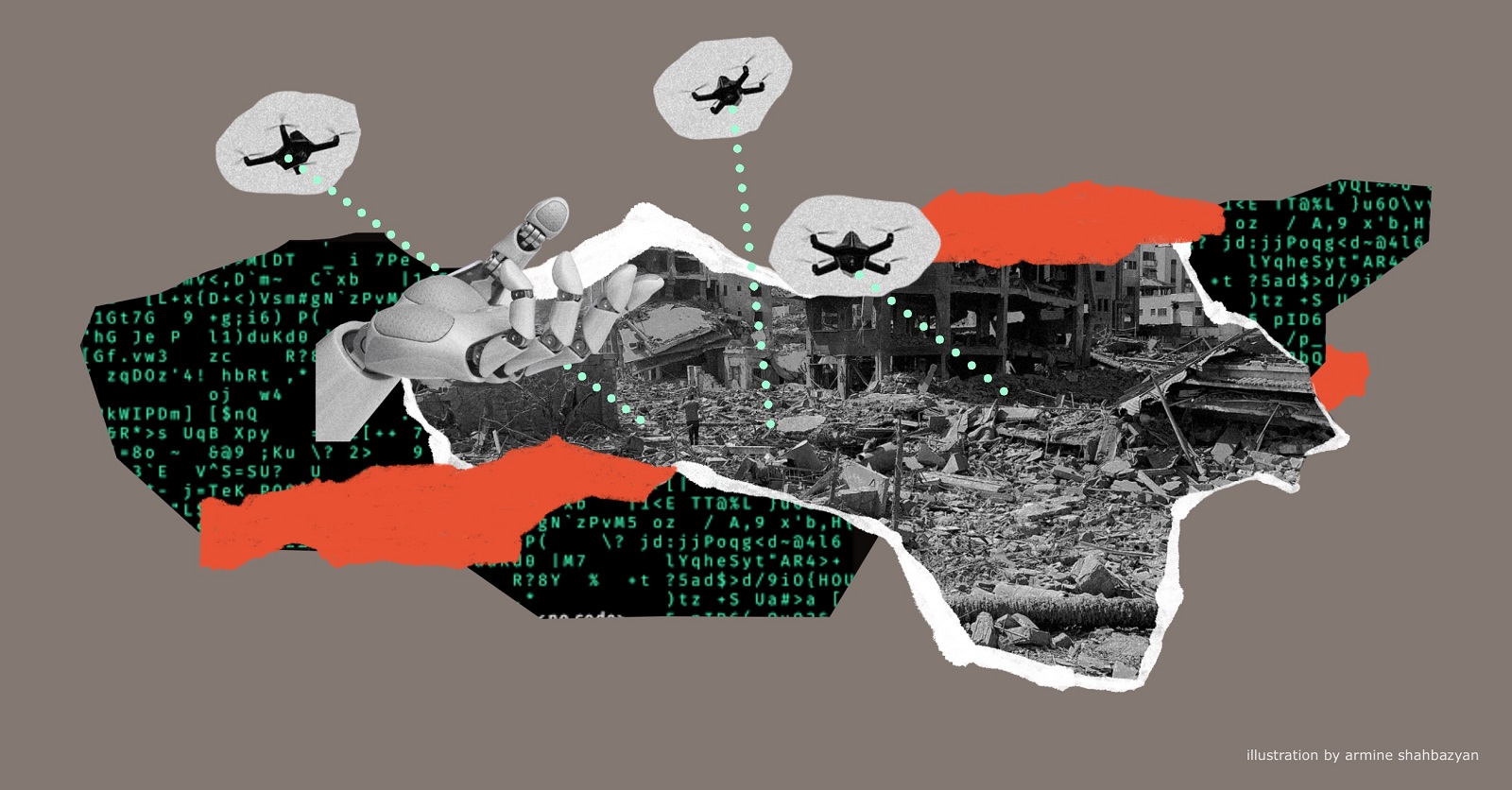
The Iran conflict has turned frontier AI models into contested weapons of state — and the financial and human fallout is only beginning to register.
In the first eleven days of the U.S.-Israeli offensive against Iran, which began on February 28, 2026, American and Israeli forces executed roughly 5,500 strikes on Iranian targets. That is an operational tempo that would have required months in any previous conflict — made possible, in significant part, by artificial intelligence. In the first eleven days of the conflict, America achieved an astonishing 5,500 strikes, using AI on a large-scale battlefield for the first time at this scale. The National The same week those bombs fell, a legal and commercial crisis erupted in Silicon Valley with consequences that will define the AI industry for years. Both events are part of the same story.
We are living through the moment when AI ceased being a future-war thought experiment and became an operational reality — embedded in targeting pipelines, shaping intelligence assessments, and now at the center of a constitutional showdown between a frontier AI company and the United States government. Alfred Nobel, who invented dynamite and then spent the remainder of his life in tortured ambivalence about it, would have recognized the pattern immediately.
The Kill Chain, Accelerated
The joint U.S. and Israeli offensive on Iran revealed how algorithm-based targeting and data-driven intelligence are reforming the mechanics of warfare. In the first twelve hours alone, U.S. and Israeli forces reportedly carried out nearly 900 strikes on Iranian targets — an operational tempo that would have taken days or even weeks in earlier conflicts. Interesting Engineering
At the technological center of this acceleration sits a system most Americans have never heard of: Project Maven. Anthropic’s Claude has become a crucial component of Palantir’s Maven intelligence analysis program, which was also used in the U.S. operation to capture Venezuelan President Nicolás Maduro. Claude is used to help military analysts sort through intelligence and does not directly provide targeting advice, according to a person with knowledge of Anthropic’s work with the Defense Department. NBC News This is a distinction with genuine moral weight — between decision-support and decision-making — but one that is becoming harder to sustain at the speed at which modern targeting now operates.
Critics warn that this trend could compress decision timelines to levels where human judgment is marginalized, ushering in an era of warfare conducted at what has been described as “faster than the speed of thought.” This shortening interval raises fears that human experts may end up merely approving recommendations generated by algorithms. In an environment dictated by speed and automation, the space for hesitation, dissent, or moral restraint may be shrinking just as quickly. Interesting Engineering
The U.S. military’s posture has been notably sanguine about these concerns. Admiral Brad Cooper, head of U.S. Central Command, confirmed that AI is helping soldiers process troves of data, stressing that humans make final targeting decisions — but critics note the gap between that principle and verifiable practice remains wide. Al Jazeera
The Financial Architecture of AI Warfare
The economic dimensions of this transformation are substantial and largely unreported in their full complexity. Understanding them requires holding three separate financial narratives simultaneously.
The direct contract market is the most visible layer. Over the past year, the U.S. Department of Defense signed agreements worth up to $200 million each with several major AI companies, including Anthropic, OpenAI, and Google. CNBC These are not trivial sums in isolation, but they represent the seed capital of a much larger transformation. The military AI market is projected to reach $28.67 billion by 2030, as the speed of military decision-making begins to surpass human cognitive capacity. Emirates 24|7
The collateral economic disruption is less discussed but potentially far larger. On March 1, Iranian drone strikes took out three Amazon Web Services facilities in the Middle East — two in the UAE and one in Bahrain — in what appear to be the first publicly confirmed military attacks on a hyperscale cloud provider. The strikes devastated cloud availability across the region, affecting banks, online payment platforms, and ride-hailing services, with some effects felt by AWS users worldwide. The Motley Fool The IRGC cited the data centers’ support for U.S. military and intelligence networks as justification. This represents a strategic escalation that no risk-management framework in the technology sector adequately anticipated: cloud infrastructure as a legitimate military target.
The reputational and legal costs of AI’s battlefield role may ultimately dwarf both. Anthropic’s court filings stated that the Pentagon’s supply-chain designation could cut the company’s 2026 revenue by several billion dollars and harm its reputation with enterprise clients. A single partner with a multi-million-dollar contract has already switched from Claude to a competing system, eliminating a potential revenue pipeline worth more than $100 million. Negotiations with financial institutions worth approximately $180 million combined have also been disrupted. Itp
The Anthropic-Pentagon Fracture: A Defining Test
The dispute between Anthropic and the U.S. Department of Defense is not merely a contract negotiation gone wrong. It is the first high-profile case in which a frontier AI company drew a public ethical line — and then watched the government attempt to destroy it for doing so.
The sequence of events is now well-documented. The administration’s decisions capped an acrimonious dispute over whether Anthropic could prohibit its tools from being used in mass surveillance of American citizens or to power autonomous weapon systems, as part of a military contract worth up to $200 million. Anthropic said it had tried in good faith to reach an agreement, making clear it supported all lawful uses of AI for national security aside from two narrow exceptions. NPR
When Anthropic held its position, the response was unprecedented in the annals of U.S. technology policy. Defense Secretary Pete Hegseth declared Anthropic a supply chain risk in a statement so broad that it can only be seen as a power play aimed at destroying the company. Shortly thereafter, OpenAI announced it had reached its own deal with the Pentagon, claiming it had secured all the safety terms that Anthropic sought, plus additional guardrails. Council on Foreign Relations
In an extraordinary move, the Pentagon designated Anthropic a supply chain risk — a label historically only applied to foreign adversaries. The designation would require defense vendors and contractors to certify that they don’t use the company’s models in their work with the Pentagon. CNBC That this was applied to a U.S.-headquartered company, founded by former employees of a U.S. nonprofit, and valued at $380 billion, represents a remarkable inversion of the logic the designation was designed to serve.
Meanwhile, Washington was attacking an American frontier AI leader while Chinese labs were on a tear. In the past month alone, five major Chinese models dropped: Alibaba’s Qwen 3.5, Zhipu AI’s GLM-5, MiniMax’s M2.5, ByteDance’s Doubao 2.0, and Moonshot’s Kimi K2.5. Council on Foreign Relations The geopolitical irony is not subtle: in punishing a safety-focused American AI company, the administration may have handed Beijing its most useful competitive gift of the year.
The Human Cost: Social Ramifications No Algorithm Can Compute
Against the financial ledger, the humanitarian accounting is staggering and still incomplete.
The Iranian Red Crescent Society reported that the U.S.-Israeli bombardment campaign damaged nearly 20,000 civilian buildings and 77 healthcare facilities. Strikes also hit oil depots, several street markets, sports venues, schools, and a water desalination plant, according to Iranian officials. Al Jazeera
The case that has attracted the most scrutiny is the bombing of the Shajareh Tayyebeh elementary school in Minab, southern Iran. A strike on the school in the early hours of February 28 killed more than 170 people, most of them children. More than 120 Democratic members of Congress wrote to Defense Secretary Hegseth demanding answers, citing preliminary findings that outdated intelligence may have been to blame for selecting the target. NBC News
The potential connection to AI decision-support systems is explored with forensic precision by experts at the Bulletin of the Atomic Scientists. One analysis notes that the mistargeting could have stemmed from an AI system with access to old intelligence — satellite data that predated the conversion of an IRGC compound into an active school — and that such temporal reasoning failures are a known weakness of large language models. Even with humans nominally “in the loop,” people frequently defer to algorithmic outputs without careful independent examination. Bulletin of the Atomic Scientists
The social fallout extends well beyond individual atrocities. Israel’s Lavender AI-powered database, used to analyze surveillance data and identify potential targets in Gaza, was wrong at least 10 percent of the time, resulting in thousands of civilian casualties. A recent study found that AI models from OpenAI, Anthropic, and Google opted to use nuclear weapons in simulated war games in 95 percent of cases. Rest of World The simulation result does not predict real-world behavior, but it reveals how strategic reasoning models can default toward extreme outcomes under pressure — a finding that ought to unsettle anyone who imagines that algorithmic warfare is inherently more precise than the human kind.
The corrosion of accountability is perhaps the most insidious long-term social effect. “There is no evidence that AI lowers civilian deaths or wrongful targeting decisions — and it may be that the opposite is true,” says Craig Jones, a political geographer at Newcastle University who researches military targeting. Nature Yet the speed and opacity of AI-assisted operations makes it exponentially harder to assign responsibility when things go wrong. Algorithms do not face courts-martial.
Governance: The International Gap
Rapid technological development is outpacing slow international discussions. Academics and legal experts meeting in Geneva in March 2026 to discuss lethal autonomous weapons systems found themselves studying a technology already being used at scale in active conflicts. Nature The gap between the pace of deployment and the pace of governance has never been wider.
The Middle East and North Africa are arguably the most conflict-ridden and militarized regions in the world, with four out of eleven “extreme conflicts” identified in 2024 by the Armed Conflict Location and Event Data organization occurring there. The region has become a testing ground for AI warfare whose lessons — and whose errors — will shape every future conflict. War on the Rocks
The legal framework governing AI in warfare remains, generously described, aspirational. The U.S. military’s stated commitment to keeping “humans in the loop” is a principle that has no internationally binding enforcement mechanism, no agreed definition of what meaningful human control actually entails, and no independent auditing process. One expert observed that the biggest danger with AI is when humans treat it as an all-purpose solution rather than something that can speed up specific processes — and that this habit of over-reliance is particularly lethal in a military context. The National
AI as the New Dynamite: Nobel’s Unresolved Legacy
When Alfred Nobel invented dynamite in 1867, he believed — genuinely — that a weapon so devastatingly efficient would make war unthinkably costly and therefore rare. He was catastrophically wrong. The Franco-Prussian War, the First World War, and the entire industrial-era atrocity that followed proved that more powerful weapons do not deter wars; they escalate them, and they increase civilian mortality relative to combatant casualties.
The parallel to AI is not decorative. The argument for AI in warfare — that algorithmic precision reduces collateral damage, that faster targeting shortens conflicts, that autonomous systems absorb military risk that would otherwise fall on human soldiers — is structurally identical to Nobel’s argument for dynamite. It is the rationalization of a dual-use technology by those with an interest in its proliferation.
Drone technology in the Middle East has already shifted from manual control toward full autonomy, with “kamikaze” drones utilizing computer vision to strike targets independently if communications are severed. As AI becomes more integrated into militaries, the advancements will become even more pronounced with “unpredictable, risky, and lethal consequences,” according to Steve Feldstein, a senior fellow at the Carnegie Endowment for International Peace. Rest of World
The Anthropic dispute, whatever its ultimate legal resolution, has surfaced a question that Silicon Valley has been able to defer until now: can a technology company that builds frontier AI models — systems capable of synthesizing intelligence, generating targeting assessments, and running strategic simulations — genuinely control how those systems are used once deployed by a state? As OpenAI’s own FAQ acknowledged when asked what would happen if the government violated its contract terms: “As with any contract, we could terminate it.” The entire edifice of AI safety in warfare, for now, rests on the contractual leverage of companies that have already agreed to participate. Council on Foreign Relations
Nobel at least had the decency to endow prizes. The AI industry is still working out what it owes.
Policy Recommendations
A minimally adequate governance framework for AI in warfare would need to accomplish several things. Independent verification of “human in the loop” claims — not merely the assertion of it — is the essential starting point. Mandatory after-action reporting on AI involvement in any strike that results in civilian casualties would create accountability where none currently exists. International agreement on a baseline error-rate threshold — above which AI targeting systems may not be used without additional human review — would translate abstract humanitarian law into operational reality.
The technology companies themselves bear responsibility that no contract clause can fully discharge. Researchers from OpenAI, Google DeepMind, and other labs submitted a court filing supporting Anthropic’s position, arguing that restrictions on domestic surveillance and autonomous weapons are reasonable until stronger legal safeguards are established. ColombiaOne That the most capable AI builders in the world believe their own technology is not yet reliable enough for autonomous lethal use is information that should be at the center of every policy debate — not buried in court filings.
Discover more from The Economy
Subscribe to get the latest posts sent to your email.

On the morning of Saturday, March 8, 2026, Caitlin Kalinowski — one of the most accomplished hardware engineers in Silicon Valley and, until that day, OpenAI’s head of robotics — posted a resignation letter that read less like a grievance and more like a brief filed before history. “This wasn’t an easy call,” she wrote on X and LinkedIn. “AI has an important role in national security. But surveillance of Americans without judicial oversight and lethal autonomy without human authorization are lines that deserved more deliberation than they got.” A second post was more surgical: “My issue is that the announcement was rushed without the guardrails defined. It’s a governance concern first and foremost.” A third, offered perhaps for those who suspected personal animosity toward colleagues or leadership, offered a quiet clarification: “This was about principle, not people.”
In the compressed, often performative world of tech resignations, these three statements were remarkable for what they were not: they were not vague, not self-promotional, and not hedged. The OpenAI Pentagon deal — announced roughly a week earlier amid the wreckage of Anthropic’s collapse from government favor — had acquired its most credible internal critic. The question, for investors, policymakers, and the millions who have handed their most intimate intellectual tasks to ChatGPT, is what happens next.
The Backdrop: Why Anthropic Said No and OpenAI Said Yes
To understand why Caitlin Kalinowski quit, you first need to understand why Anthropic effectively lost its seat at the table.
In late February 2026, the Trump administration moved to designate Anthropic as a “supply-chain risk” after the company refused to remove safety constraints from AI systems being evaluated for Pentagon deployment. The designation — extraordinary in its scope — effectively barred Anthropic from key federal procurement channels and sent a chill through the broader AI safety community. The Economist reported that Anthropic’s chief executive had offered a public apology for language critical of the Pentagon’s approach, while simultaneously filing suit to contest the supply-chain designation — a posture that satisfied no one cleanly but illustrated the profound bind facing any AI company that takes its own safety commitments seriously in a Washington now hungry for deployable capability.
OpenAI moved with speed. Within days of the Anthropic fallout becoming public, the company announced an agreement to deploy AI systems — including models built on the GPT-4 architecture — on classified Department of Defense networks. The deal, as presented, included a set of claimed “red lines”: no use for domestic surveillance of American citizens without judicial oversight, and no deployment in autonomous lethal decision-making without explicit human authorization. These commitments were described as contractually enforceable and backed by technical safeguards. Reuters confirmed the structure of the agreement on March 7, noting that OpenAI had made internal commitments about the scope of permitted use cases.
The problem, as Kalinowski’s exit would make clear, was not the destination — it was the journey, and whether sufficient architecture had been built along the way.
Kalinowski’s Stand: From Meta AR to OpenAI Robotics — A Line in the Sand
Caitlin Kalinowski was not a peripheral figure at OpenAI. She had been recruited in November 2024 from Meta, where she had served as the lead hardware engineer for Project Orion — Meta’s most ambitious augmented reality effort and, by most technical assessments, the most sophisticated AR device yet produced by a major tech company. Her hiring was seen as a signal that OpenAI was serious about the physical layer of AI: robots, sensors, embodied intelligence, hardware that could operate in the real world rather than the controlled environment of a data center.
For someone in that role, the Pentagon partnership was not abstract. Robotics and hardware sit precisely at the intersection where AI meets the physical domain — which is to say, precisely where the most consequential questions about lethal autonomy and surveillance hardware arise. Unlike a software engineer working on a language model far removed from physical deployment, Kalinowski’s domain was the place where the rubber, quite literally, meets the road.
TechCrunch’s detailed reconstruction of events suggests that internal deliberations about the Pentagon deal’s scope were truncated — that the timeline was driven by the political opportunity created by Anthropic’s exclusion rather than by a mature internal governance process. Whether that account is entirely accurate is difficult to verify from the outside. What is verifiable is that Sam Altman himself subsequently acknowledged the rollout had been “opportunistic and sloppy,” and that the company moved to amend its terms following the announcement — a remarkable concession that validated, at minimum, the procedural objection at the heart of Kalinowski’s departure.
That amended framework, as the Financial Times reported, attempted to more precisely delineate the scope of permissible military use and to establish clearer governance mechanisms. Critics — including some who did not share Kalinowski’s decision to resign — noted that the amendments came after, not before, the public announcement: a sequencing that undermined the credibility of the original process.
The Economic and Geopolitical Stakes
The Sam Altman Pentagon deal controversy arrives at a moment of extraordinary financial and strategic sensitivity for OpenAI. The company’s most recent private valuation exceeded $150 billion, a figure premised not simply on its current revenue but on a projected future in which OpenAI becomes foundational infrastructure for both the private economy and, increasingly, the national security apparatus. Defense-tech investment in the US has surged since 2022; the convergence of frontier AI capability with DoD contracting is now a central axis of Silicon Valley’s growth narrative.
The economics of the Pentagon deal, properly understood, are attractive. Government contracts offer revenue stability that consumer subscriptions do not; classified deployments command premium pricing; and a sustained DoD relationship confers a strategic moat against competitors — including international ones — that money alone cannot buy. Seen through that lens, the decision to pursue the partnership is commercially rational.
But the consumer dimension is where the math becomes more complicated. Fortune’s analysis noted that ChatGPT uninstalls in the US surged by 295% in the week following the Pentagon announcement — a figure that, if sustained even partially, represents a meaningful threat to the subscription revenue base that currently underpins OpenAI’s operating economics. Simultaneously, Claude — Anthropic’s flagship product — rose to the top two positions in the US App Store, a direct beneficiary of the perception, however imperfectly calibrated, that it represents a more principled alternative.
This dynamic illuminates a tension that will define AI’s next chapter: the revenue logic of government partnerships and the trust logic of consumer adoption do not always point in the same direction. OpenAI is now navigating both simultaneously, with the credibility cost of the governance misstep weighing on both.
Geopolitically, the stakes extend well beyond OpenAI’s balance sheet. The United States’ ability to project technological leadership — and to persuade democratic allies that American AI is the right foundation for their own defense and economic infrastructure — depends in part on the perception that US AI development operates within a comprehensible, principled framework. A high-profile resignation by a senior AI executive citing surveillance and lethal autonomy concerns is precisely the kind of signal that adversaries amplify and allies register with discomfort. Beijing’s AI governance narrative — that American AI is militarized, ungoverned, and therefore unsafe for partner nations — receives unintended reinforcement when the governance critiques come from inside the house.
The implications for the US-China AI competition are layered. China’s state-aligned AI development model faces its own credibility constraints with potential partners in the Global South and among non-aligned democracies. But every governance stumble on the American side narrows the differentiation. The OpenAI military AI deal ethics debate is, in this sense, not merely a domestic regulatory question — it is a soft-power variable in a competition that will run for decades.
The Governance Failure at the Center of It All
It is worth being precise about what Kalinowski did and did not say. She did not argue that AI has no role in national security — she said explicitly the opposite. She did not claim that the deal’s stated red lines were illegitimate. What she argued, with notable precision, was that the process was broken: that the guardrails had not been defined before the announcement was made, and that deliberation had been sacrificed to speed.
This is a governance critique, not an ideological one — and it is, arguably, the harder critique to dismiss. An ideological objection to military AI can be engaged with on policy grounds. A process objection, particularly when corroborated by the CEO’s own admission that the rollout was “sloppy,” points to institutional dysfunction of a different and more consequential kind.
The question it raises is structural: does OpenAI — or any frontier AI company operating at this scale and velocity — have governance mechanisms capable of handling the decisions now being placed before it? The company’s board was restructured in late 2023 following the brief and chaotic dismissal of Sam Altman; it has since been reconstituted with a stronger commercial orientation and reduced representation of the safety-first voices that originally dominated it. Whether that reconstituted board is equipped to deliberate with appropriate rigor on questions of OpenAI Kalinowski resignation surveillance, lethal autonomy, and classified military deployment is a question that regulators in Brussels, London, and Washington are now, quietly, asking.
The European Union’s AI Act, which entered its enforcement phase in 2025, contains explicit provisions on high-risk AI uses — provisions that may bear on the contractual structures OpenAI is now building with the DoD. UK regulators, operating under a principles-based framework rather than the EU’s rules-based approach, have been watching the American developments with a mixture of concern and, one suspects, a measure of competitive calculation. If US AI governance appears compromised, the argument for European regulatory leadership becomes stronger — and European AI champions benefit accordingly.
What Happens Next
Several trajectories are now in play simultaneously, and the interactions between them will shape not just OpenAI’s future but the broader architecture of AI governance.
Inside OpenAI, the Kalinowski resignation will accelerate an internal reckoning that was already underway. The company will face pressure — from remaining senior technical staff, from its investors, and from the amended Pentagon framework itself — to build genuine governance infrastructure rather than contractual scaffolding. Whether that means reinstating a more powerful safety function, establishing an independent oversight board with real authority over defense-related deployments, or something more novel remains to be seen. What is clear is that the talent-retention argument for getting this right is now materially stronger: engineers of Kalinowski’s caliber do not leave quietly, and her departure will be a reference point in every recruiting conversation the company has with senior hardware and robotics talent for the foreseeable future.
For the Pentagon, the episode underscores that procurement speed and governance adequacy are not the same thing. The DoD has a long and often uncomfortable history of deploying technologies — from predictive policing algorithms to drone targeting systems — before the ethical and legal frameworks have caught up. The [OpenAI Amended Pentagon Deal] represents an opportunity to establish a more rigorous template, but only if the amended terms carry genuine enforcement teeth rather than serving as public relations scaffolding.
For Anthropic, the short-term consumer gains are real but precarious. Rising to the top of the App Store on the strength of a competitor’s stumble is a brittle form of growth; sustaining that position will require Anthropic to demonstrate not just principled postures but capable products. The [Anthropic Supply-Chain Risk Ruling] also remains unresolved: the company’s legal challenge to its federal designation is pending, and its outcome will determine whether Anthropic can eventually re-enter the defense market on its own terms — or whether it becomes, by exclusion if not by choice, the AI company that the US government declined to include.
For global AI regulation, the episode has provided a concrete and high-profile case study that will inform legislative debates from Brussels to Tokyo. The argument that voluntary self-governance by frontier AI companies is adequate has been meaningfully weakened — not by an external critic but by the resignation of one of those companies’ own senior executives, citing the inadequacy of internal deliberation.
Caitlin Kalinowski’s three posts on the morning of March 8 were short. Their implications are not. In resigning over what she called a governance concern rather than a personal grievance, she has done something that critics and regulators have struggled to do from the outside: she has placed the question of how these decisions get made — not merely what decisions get made — at the center of the debate. In an industry where process is usually treated as a means to an end, that reframing may prove to be the most consequential thing she has done at OpenAI, and she did it on her way out the door.
Discover more from The Economy
Subscribe to get the latest posts sent to your email.
-

 Markets & Finance2 months ago
Top 15 Stocks for Investment in 2026 in PSX: Your Complete Guide to Pakistan’s Best Investment Opportunities
-

 Analysis1 month ago
Brazil’s Rare Earth Race: US, EU, and China Compete for Critical Minerals as Tensions Rise
-

 Banks2 months ago
Best Investments in Pakistan 2026: Top 10 Low-Price Shares and Long-Term Picks for the PSX
-

 Investment2 months ago
Top 10 Mutual Fund Managers in Pakistan for Investment in 2026: A Comprehensive Guide for Optimal Returns
-

 Asia2 months ago
China’s 50% Domestic Equipment Rule: The Semiconductor Mandate Reshaping Global Tech
-

 Analysis4 weeks ago
Top 10 Stocks for Investment in PSX for Quick Returns in 2026
-

 Global Economy3 months ago
Pakistan’s Export Goldmine: 10 Game-Changing Markets Where Pakistani Businesses Are Winning Big in 2025
-

 Global Economy3 months ago
15 Most Lucrative Sectors for Investment in Pakistan: A 2025 Data-Driven Analysis