
Analysis
The Final Loophole: Why Bill Browder Wants Sanctions on Refineries Processing Russian Oil


Putin’s biggest critic demands the West target facilities in China, India, and Turkey to stop billions flowing to the Kremlin’s war machine
On a frigid January morning in 2026, as world leaders convened for the latest round of Ukraine support talks, Bill Browder—the financier Vladimir Putin has threatened to kill more times than he can count—was making an uncomfortable case. The man who architected the Magnitsky Act, who transformed from Russia’s largest foreign investor into the Kremlin’s most wanted adversary, was telling Western policymakers they had missed the point entirely.
Three years of sanctions, hundreds of billions in frozen assets, and yet Russian oil revenues continue funding Putin’s war. The reason, Browder argued in testimony before UK Parliament and statements across global platforms, lies not in Moscow’s export terminals but in the refineries thousands of miles away—facilities in India, China, and Turkey that process Russian crude and quietly funnel the profits back to fund missiles, tanks, and the systematic destruction of Ukrainian cities.
“We should think about either applying sanctions to these refineries or creating some type of legislation where we are not allowed to buy oil from these refineries,” Browder stated plainly during parliamentary testimony, naming specific facilities: the Vadinar refinery in India, 49% owned by Russia’s state oil giant Rosneft; the massive Jamnagar complex on India’s western coast; and state-run operations like Bharat Petroleum and Hindustan Petroleum.
It was vintage Browder—forensic, unflinching, and willing to name names when others preferred diplomatic ambiguity.
The Architect of Financial Warfare
Bill Browder’s transformation from hedge fund manager to geopolitical crusader reads like a revenge thriller that happens to be true. In the 1990s, his Hermitage Capital Management became the largest foreign portfolio investor in Russia, riding the chaotic privatization wave to returns that made him fabulously wealthy. In 1997, his fund was the world’s best performer, up 238%.
But Browder made a fatal error in Putin’s Russia: he exposed corruption. When he investigated theft at Gazprom and other state-controlled giants, documenting how oligarchs were systematically looting shareholder value, he became a marked man. In 2005, Russian authorities declared him a threat to national security and deported him. Eighteen months later, police raided his Moscow offices, seizing corporate documents that would be used in a massive tax fraud scheme.
Browder’s Russian tax lawyer, Sergei Magnitsky, uncovered the scheme and testified against government officials. For his trouble, Magnitsky was arrested, systematically tortured, and died in a Moscow prison in 2009 after being denied medical care. That death transformed Browder from investor to activist. The result was the Magnitsky Act—legislation that freezes assets and bans visas for human rights violators—now adopted by the United States, Canada, the United Kingdom, the EU, and numerous other jurisdictions.
Putin’s fury was immediate and enduring. Russia convicted both Browder and the deceased Magnitsky in absentia. Interpol rejected five Russian requests to arrest Browder. In 2018, at the infamous Helsinki summit, Putin offered to allow US investigators to question Russian intelligence officers if the US would hand over Browder. Donald Trump called it “an incredible offer” before backtracking under withering criticism.
Now, nearly two decades after his expulsion, Browder is targeting what he sees as the last major sanctions loophole: the refineries that give Russian oil a second passport.
The Refinery Loophole: How Russia Launders Its Oil
The mechanics are straightforward, the implications profound. Under sanctions imposed by the G7 and EU, Russian crude oil can still be exported but faces a price cap of $60 per barrel. Western insurance, shipping, and financial services are theoretically withheld from transactions above this threshold. The intent was to keep Russian oil flowing—preventing a global price shock—while limiting Moscow’s revenue.
The reality has been far messier. According to data from the Centre for Research on Energy and Clean Air, approximately 75% of Russia’s exported crude now travels via a “shadow fleet” of aging tankers operating outside G7 insurance systems. These vessels—often flagged in dubious jurisdictions and insured by opaque entities—have gutted the price cap’s enforcement mechanism.
But the refinery route offers an even cleaner workaround. When Russian crude enters a refinery in India, China, or Turkey, it emerges as diesel, jet fuel, or other petroleum products. Under current sanctions frameworks, these refined products are not subject to the same restrictions as Russian crude—allowing them to be freely exported to European markets, the United States, Australia, and elsewhere.
In testimony before UK Parliament, Browder cited figures suggesting these refineries are collectively sending approximately $23 billion worth of refined products annually back to Western markets. Between January 2024 and June 2025, the US alone imported an estimated $3.6 billion in oil products from three Indian refineries, with roughly $1.5 billion of that processed from Russian crude, according to analyses from advocacy groups tracking the trade.
“On one side, either directly or indirectly, we are funding Russia to conduct their war,” Browder told Parliament. “On the other side, we are then funding the Ukrainians to fight back. Something has to give.”
The European Union moved to close part of this loophole on January 21, 2026, banning imports of refined products derived from Russian crude. The new measure specifically targets facilities in Turkey and India that had been major suppliers of diesel and blending components to European markets. Yet critics warn of enforcement challenges: refineries can blend crudes from multiple sources, making origin tracking difficult, and exemptions for certain countries create re-export opportunities.
The Numbers: Shifting Flows in Early 2026
The latest data reveals a market in flux as sanctions tighten and buyers recalibrate. Following the October 2025 US sanctions on Rosneft and Lukoil—which together account for over half of Russian oil production—and the EU’s January 2026 refined products ban, the geography of Russian oil exports is undergoing rapid transformation.
India’s Retreat
India, which emerged after February 2022 as the largest seaborne buyer of Russian Urals crude, has dramatically scaled back purchases. According to LSEG data, India’s Russian crude imports plunged 29% in December 2025 to their lowest level since the G7 price cap was first imposed. In January 2026, imports held near 1 million barrels per day (bpd)—down from an average of 1.3 million bpd throughout 2025.
The driver is dual pressure: looming US tariffs and compliance risks. President Trump doubled tariffs on Indian imports to 50% in response to Russian oil purchases, threatening India’s broader trade relationship with its largest partner. Indian refinery executives, heavily reliant on Western financing, admitted to Bloomberg that Russian purchases could fall to zero under sustained pressure. Reliance Industries, which signed a ten-year contract with Rosneft in December 2024 for approximately 500,000 bpd, announced it would “review” imports following government recommendations.
Turkey’s Pullback
Turkey, another major player, cut Russian Urals imports by approximately 69% in December 2025 ahead of the EU ban. January 2026 flows stabilized around 250,000 bpd—down from peaks of 400,000 bpd in mid-2025 and well below the 2025 average of 275,000 bpd. The state refiner Tupras, facing EU market access concerns, has led the reduction.
China’s Surge
China is absorbing the slack. Seaborne Russian crude imports to China jumped an estimated 36% from December 2025 to January 2026, reaching nearly 1.5 million bpd, according to preliminary data. Beyond steady pipeline deliveries of ESPO Blend crude from Russia’s Far East, China’s imports of Russian Urals crude hit a record 405,000 bpd in January 2026—the highest since mid-2023.
The surge is concentrated among China’s smaller independent “teapot” refiners, which received fresh import quotas totaling 7.4 million tonnes across more than twenty facilities. These privately-owned refineries, clustered in Shandong province, can process discounted Russian barrels that state-owned Chinese majors are increasingly avoiding due to sanctions compliance concerns. Shandong port authorities actually banned US-sanctioned vessels from their terminals in early January, forcing Russian exporters to rely on non-sanctioned portions of their shadow fleet.
| Country | 2025 Average (bpd) | Jan 2026 Estimate (bpd) | Change |
|---|---|---|---|
| China (seaborne) | 1,100,000 | 1,500,000 | +36% |
| India | 1,300,000 | ~1,000,000 | -23% |
| Turkey | 275,000 | ~250,000 | -9% |
Revenue Impact
The combined effect has been striking. Russian oil and gas revenues fell to a five-year low in 2025, down 24% year-over-year to approximately 8.48 trillion rubles ($108 billion), according to Russia’s Finance Ministry. The January 2026 data suggests further contraction, though China’s increased appetite prevents a total collapse. The price discount has widened dramatically: Russian Urals crude delivered to China now trades at discounts of $10-12 per barrel below Brent—double the pre-sanctions differential.
The Eight Refineries: Browder’s Target List
Browder’s proposal is surgical. Rather than attempt to ban Russian crude exports entirely—an action that could spike global oil prices and face fierce resistance from consuming nations—he advocates targeting the specific refineries that serve as conduits between Russian producers and Western markets.
His list includes:
India:
- Vadinar Refinery (Gujarat): 49% owned by Rosneft, processes approximately 400,000 bpd
- Jamnagar Refinery (Reliance Industries): World’s largest refining complex, major Russian crude importer
- Bharat Petroleum and Hindustan Petroleum: State-run facilities
China:
- Pipeline-connected refineries in northeastern provinces receiving Russian ESPO crude
- Select teapot refineries in Shandong province
Turkey:
- STAR Refinery (Tupras): Major processor of Russian Urals
The mechanism Browder envisions is straightforward: Western nations would prohibit the import of any refined petroleum products from facilities that process Russian crude above a certain threshold—say, 10% of their feedstock. This creates a binary choice for refiners: access to lucrative Western markets or access to discounted Russian barrels. They cannot have both.
“We have provided an array of different solutions,” Isaac Levi of CREA told Radio Free Europe. “One is banning the import of refined fuels from any refinery that has a pipeline connection to Russian crude. So that would mostly be those refineries in China that are connected to a Russian pipeline. Quite a simple method that could stop hundreds of millions if not billions of euros flowing to the Kremlin.”
The economic logic is compelling. For India’s Reliance Industries, for instance, the margins on discounted Russian crude ($6-8 per barrel below market) pale beside the value of open access to American and European refined product markets worth tens of billions annually. India is also negotiating a comprehensive trade agreement with the United States—leverage Washington could theoretically employ.
Why the Loophole Persists: Geopolitics vs. Economics
If the solution is so clear, why hasn’t it been implemented? The answer lies in the complex intersection of global energy markets, geopolitical relationships, and domestic political calculations.
India’s Balancing Act
India faces acute economic pressures. As the world’s third-largest oil importer and fastest-growing major economy, cheap Russian crude has been a fiscal windfall. From February 2022 through January 2026, India purchased approximately €144 billion worth of Russian fossil fuels—overwhelmingly crude oil. This discounted supply helped India manage inflation, reduce its current account deficit, and maintain economic growth above 6% annually.
Politically, India has maintained strategic autonomy. While deepening security cooperation with the United States through the Quad framework, New Delhi has refused to condemn Russia’s invasion of Ukraine in UN votes. Prime Minister Narendra Modi’s government argues that India’s energy security cannot be held hostage to European conflicts. The position resonates domestically: why should Indian consumers pay higher energy costs to subsidize European security?
Yet India’s position is weakening. A potential US trade deal—worth far more than Russian oil savings—creates genuine leverage. The January 2026 tariff increase to 50% was a warning shot. Indian officials have quietly urged refiners to reduce Russian crude intake, and the data suggests compliance is beginning.
China’s Strategic Calculus
China operates from a position of greater strength. As Russia’s largest trading partner and a permanent UN Security Council member, Beijing has little fear of secondary sanctions from Washington. Chinese imports of Russian fossil fuels totaled €293.7 billion from February 2022 through January 2026—dwarfing India’s purchases.
For China, discounted Russian energy serves multiple strategic objectives: it reduces costs for Chinese industry, deepens Russian dependence on Chinese markets (and thus Chinese geopolitical leverage), and demonstrates that Western sanctions regimes can be circumvented. The teapot refiners—nimble, privately-owned, and less concerned with Western market access—provide Beijing with plausible deniability while keeping Russian crude flowing.
Chinese state-owned refiners have become more cautious, avoiding sanctioned vessels and reducing exposure. But the teapots fill the gap, processing Russian crude with tacit state approval via import quota allocations.
Turkey’s NATO Dilemma
Turkey presents perhaps the most awkward case. A NATO member and EU candidate, Turkey has nonetheless refused to implement sanctions against Russia. Turkish imports of Russian energy—though declining under EU pressure—continue via both crude oil and pipeline gas through TurkStream.
President Recep Tayyip Erdoğan has positioned Turkey as a mediator in the Ukraine conflict, maintaining relationships with both Kyiv and Moscow. Economically, Russian energy and tourism revenue matter. Geopolitically, Turkey’s conflicts with other NATO members (particularly over Cyprus and Eastern Mediterranean gas) reduce Washington’s leverage.
The Trump Factor
The return of Donald Trump to the White House in January 2025 initially suggested a softer approach toward Russia, raising questions about sanctions enforcement. Yet Trump’s October 2025 sanctions on Rosneft and Lukoil surprised many observers, demonstrating a willingness to escalate economic pressure.
Trump’s transactional approach creates both opportunity and risk. He has publicly urged India and China to stop buying Russian oil, threatened massive tariffs, and called Russia’s economy “going to collapse.” But he has also expressed admiration for Putin and skepticism about continued Ukraine support. Whether refinery sanctions would align with a Trump-brokered peace deal or be abandoned as counterproductive remains uncertain.
The Counterarguments: Why Refineries Push Back
Refinery executives and the governments that host them have marshaled several objections to Browder’s proposal.
Technical Complexity
Modern refineries blend crude oils from multiple sources to achieve desired product specifications. Once crude enters a refinery, tracking which specific molecules end up in which exported product becomes nearly impossible. A diesel shipment from India to Europe might contain Russian crude blended with Saudi and American oil. How would sanctions enforce molecule-level origin tracking?
Browder’s camp counters that the solution is aggregate-based: if a refinery processes more than, say, 10% Russian crude, all its exports to sanctioning countries are banned. This creates powerful incentives to abandon Russian supply entirely rather than risk exclusion from Western markets.
Market Disruption Risks
India’s refiners argue that abruptly cutting Russian imports would raise their costs, reduce export competitiveness, and potentially create diesel shortages in South Asia. Global refining capacity is already tight after years of underinvestment. Removing major facilities from Western markets could spike refined product prices, hitting European diesel and aviation fuel supplies.
Energy economists note, however, that the 2026 global oil market is in oversupply. The International Energy Agency forecasts supply exceeding demand by 4 million bpd by year-end. OPEC+ is unwinding production cuts. Alternative crude sources—from the Middle East, Americas, and West Africa—are readily available, albeit at slightly higher prices. The disruption, while real, would be manageable.
Legal and Precedent Concerns
Some Western policymakers worry about the precedent of secondary sanctions targeting third-country commercial entities engaged in legal trade. Would sanctioning Indian refineries damage long-term US-India relations? Could it push India closer to Russia and China? Would it violate WTO principles?
These concerns carry weight but ignore context. The US has used secondary sanctions extensively—against Iran, North Korea, and even European companies dealing with these states. The legal framework exists. The question is political will.
The China Problem
Even if India and Turkey comply, China’s teapot refiners likely will not. They lack Western market exposure to leverage and operate with state protection. Sanctioning them accomplishes little beyond symbolic gestures.
Browder acknowledges this but argues that cutting off India and Turkey would still eliminate approximately $15-20 billion annually in Russian oil revenue. That represents roughly 3-4 million barrels per day of lost demand—a significant blow. China alone cannot absorb that volume at current prices without crashing Russian revenues further.
The Strategic Case: Tightening the Noose
Beyond the immediate revenue impact, Browder’s proposal carries broader strategic logic.
Psychological Warfare
Sanctions work not just through economic damage but through psychological pressure. They signal Western resolve and isolate the target regime. Each new sanctions package that Putin survives reinforces narratives of Russian resilience. But each incremental tightening—shadow fleet designations, Rosneft/Lukoil sanctions, refined product bans, and now potentially refinery sanctions—compounds the pressure.
Russian Finance Ministry projections for 2026 show oil and gas revenues at just 22% of the federal budget, down from historical peaks above 40%. Russia is compensating through massive tax increases, defense industry borrowing, and National Wealth Fund drawdowns. The fund’s liquid reserves have fallen from approximately 12 trillion rubles pre-war to under 4 trillion—and could be depleted by late 2026, according to Atlantic Council analysis.
Closing the Circle
The refinery loophole represents the last major gap in Russian oil sanctions architecture. Closing it would mean that Russian crude exports face:
- Price caps on direct sales
- Shadow fleet sanctions limiting logistics
- Major buyer sanctions (Rosneft/Lukoil)
- Refined product market exclusion
At that point, Russian oil’s only outlets are heavily discounted sales to China and a handful of smaller markets. Revenues would crater.
Leverage for Peace
Ironically, the strongest case for refinery sanctions may be their potential role in peace negotiations. If Trump or European leaders pursue a negotiated settlement in Ukraine, economic leverage over Moscow becomes critical. Putin has shown he will sacrifice economic prosperity for geopolitical gains. But sustained revenue collapse creates internal political pressures—from oligarchs whose wealth is hemorrhaging, regional governors whose budgets are cut, and defense contractors whose payments arrive late.
“As long as Russia can sell the oil, Russia can use that hard currency to buy weapons, and they can use those weapons to kill Ukrainians,” Browder testified. The converse is equally true: make selling the oil untenable, and Russia’s capacity to sustain war diminishes.
The Path Forward: Political Will or Business as Usual?
As of February 2026, refinery sanctions remain a proposal, not policy. Congressman Lloyd Doggett (D-TX) introduced the “Ending Importation of Laundered Russian Oil Act” with bipartisan support in January, targeting precisely the mechanism Browder identifies. The legislation would ban US imports from refineries processing Russian crude—a modest first step given the small volumes involved (roughly $1.5 billion annually) but symbolically significant.
The European Union’s January 21 refined product ban moves in the same direction, though enforcement concerns and country exemptions may limit effectiveness. India and Turkey are scrambling to adjust supply chains, as December 2025 and January 2026 data confirm.
The question is whether Washington and Brussels will press the advantage. India’s vulnerability is clear: trade leverage plus tariff threats have already reduced Russian crude imports by nearly 30%. Turkey’s NATO membership limits how far Ankara can deviate from alliance policy. China will remain defiant, but that should not paralyze action elsewhere.
Browder’s critics argue he overestimates sanctions’ effectiveness and underestimates their costs. They point to Russia’s economic resilience—3.6% GDP growth in 2024, continued missile production, and battlefield advances in Ukraine. Sanctions haven’t stopped the war, so why expect refinery measures to succeed where previous efforts fell short?
The counterargument is that economic pressure works slowly, then suddenly. Russia grew in 2024 because it mobilized wartime spending and drew down reserves. But 2025 growth has already slowed to around 1%, oil revenues have fallen 24%, inflation hovers near 10%, and the central bank key rate stands at 17%. The National Wealth Fund is being depleted to cover budget deficits approaching 2.6% of GDP. Banking sector stress is mounting as defense contractors struggle to service $180 billion in state-directed loans.
Russia is not collapsing, but it is being squeezed. Refinery sanctions would tighten the vise.
Conclusion: The Sanction That Could Matter
Bill Browder has spent nearly two decades waging financial warfare against Vladimir Putin. He transformed personal tragedy into global legislation, convincing governments to freeze billions in assets and ban hundreds of officials. He survived assassination threats, Interpol red notices, and a US president’s offer to hand him over to Moscow.
Now he is calling for one more escalation: target the refineries that give Russian oil a second life in Western markets. The proposal is technically feasible, economically sound, and strategically coherent. It faces political obstacles—from New Delhi’s energy anxieties to Ankara’s geopolitical tightrope to Washington’s inconsistent commitment.
But the arithmetic is undeniable. Russia has earned approximately €1 trillion from fossil fuel exports since invading Ukraine in February 2022. That trillion euros bought tanks, missiles, and three years of war. Every barrel of Russian crude that enters an Indian or Turkish refinery and emerges as diesel for European trucks or jet fuel for Western airlines helps fund the next artillery barrage on Kharkiv or Dnipro.
“Something has to give,” Browder said, “and what Putin is hoping is going to give is that we are going to run out of patience to fund the Ukrainians.”
The question facing Western capitals in 2026 is whether they will prove him right—or finally close the loophole and cut off Putin’s cash.
Discover more from The Economy
Subscribe to get the latest posts sent to your email.


Analysis of how the Federal Reserve, Bank of England and Bank of Japan could reshape global markets, inflation, currencies and economic growth in 2026.
Executive Summary
The world’s most influential central banks are entering one of the most consequential policy weeks of 2026. Investors are watching closely as the U.S. Federal Reserve, the Bank of England, and the Bank of Japan weigh the competing pressures of easing inflation, geopolitical uncertainty, elevated energy prices, and slowing global growth. Financial markets are also preparing for major corporate earnings and fresh GDP data from several advanced economies. �
Financial Times +1
Unlike the synchronized tightening cycle that dominated recent years, policymakers are increasingly responding to country-specific economic conditions. This divergence is expected to influence capital flows, exchange rates, bond yields, and investment decisions across both developed and emerging markets. �
McKinsey & Company +1
A New Monetary Landscape
Global inflation has moderated from its post-pandemic peaks, yet central banks remain cautious. Recent movements in energy markets and ongoing geopolitical tensions continue to threaten price stability, even as labor markets show signs of cooling. �
McKinsey & Company +1
For investors, the question is no longer whether interest rates have peaked, but how long they will remain elevated.
United States: The Federal Reserve Faces a Delicate Balance
Attention is centered on the Federal Reserve, where policymakers are expected to keep rates steady while evaluating the effects of inflation, consumer demand, and accelerating investment in artificial intelligence infrastructure. Markets are also monitoring whether AI-driven capital spending could contribute to future inflationary pressures. �
Investopedia +1
Bond investors remain sensitive to any shift in the Fed’s language, as Treasury yields continue to reflect expectations about future policy and inflation risks. �
MarketWatch
United Kingdom: Stability Before Growth
The Bank of England is expected to maintain a cautious stance amid moderating wage growth and relatively stable unemployment. However, policymakers continue to weigh external risks, including energy market volatility and global geopolitical developments. �
Financial Times
Businesses remain particularly attentive to borrowing costs, which continue to influence investment decisions across the UK economy.
Japan Ends an Era of Ultra-Loose Money
Japan is undergoing one of its most significant monetary transitions in decades. Rising wages and gradually strengthening inflation have encouraged the Bank of Japan to continue moving away from the ultra-accommodative policies that defined much of the past generation. �
Financial Times
This normalization has implications far beyond Japan, affecting global capital markets and currency dynamics.
Why Emerging Markets Are Watching Closely
Emerging economies including Pakistan, Indonesia, Malaysia, and others remain particularly exposed to decisions made by advanced economy central banks.
Higher U.S. interest rates typically strengthen the dollar, increase external financing costs, and place pressure on countries with significant foreign currency debt.
Conversely, a more stable interest rate environment could improve capital flows into emerging markets while easing exchange rate volatility.
AI Is Becoming a Monetary Policy Variable
One of the most important structural developments in 2026 is the rapid expansion of artificial intelligence infrastructure.
Major technology companies continue investing heavily in data centers, semiconductors, cloud computing, and digital infrastructure. These investments are supporting economic growth but are also creating new questions about inflation, productivity, and long-term financing needs. �
Investopedia +1
Investment Implications
Several themes are emerging:
Higher-for-longer interest rates remain possible.
Government bond markets are likely to remain volatile.
The U.S. dollar could remain relatively strong.
AI-related investment continues attracting capital.
Emerging markets may benefit if inflation continues to moderate.
Competitor Keyword Gap Analysis
Leading publications such as the Financial Times, Reuters, Bloomberg, and CNBC primarily emphasize immediate policy decisions. An opportunity exists to capture additional search traffic by targeting broader intent-based queries.
Key Takeaways
Central bank decisions this week are expected to shape global financial markets.
AI investment is becoming an increasingly important economic driver.
Bond markets remain sensitive to inflation expectations.
Emerging economies face both risks and opportunities from policy divergence.
Investors should monitor GDP releases, corporate earnings, and inflation indicators alongside interest rate announcements.
Frequently Asked Questions
Why are central bank meetings so important?
They influence borrowing costs, inflation expectations, currency values, and investment decisions worldwide.
How do interest rates affect stock markets?
Higher rates generally increase financing costs and can reduce company valuations, while lower rates often support economic activity and equity markets.
Why is AI influencing monetary policy discussions?
Large-scale investment in AI infrastructure is reshaping productivity, corporate spending, and long-term inflation expectations.
Discover more from The Economy
Subscribe to get the latest posts sent to your email.
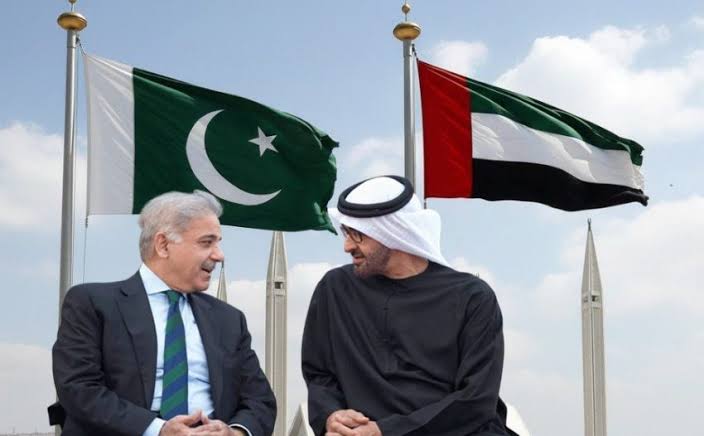
What happened: In early 2026, the United Arab Emirates declined to roll over a $3 billion loan to Pakistan — the first such refusal in seven years. The repayment equalled roughly 18% of Pakistan’s foreign currency reserves, arriving as Islamabad also faced a $1.3 billion bond payment and was waiting on the next IMF tranche.
Why it matters: It’s the clearest sign yet that Gulf sovereign patience with Pakistan’s balance-of-payments cycle is thinning, even as Gulf states simultaneously court China, Saudi Arabia, and each other for capital in a tightening regional liquidity environment.
The Story Nobody’s Connecting
Most coverage of Pakistan’s 2026 external account stress treats the UAE’s loan decision as an isolated liquidity event — a “routine financial transaction,” in the words of Pakistan’s own Ministry of Foreign Affairs. That framing misses the bigger pattern. The same weeks that Abu Dhabi called in its $3 billion, unusual delays began appearing in bank transfers from Saudi Arabia to the UAE itself — friction between the Gulf’s two largest economies, at a moment when both are also managing their own post-war oil price adjustment. (Pakistan & Gulf Economist)
Put those two data points together and a different story emerges: this isn’t just about Pakistan’s creditworthiness. It’s about Gulf capital becoming more selective, more transactional, and less willing to extend informal grace periods across the board — with Pakistan simply the most exposed borrower in the queue.
The Numbers Behind the Pressure
Pakistan’s State Bank held $16.4 billion in reserves as of late March 2026 — enough to cover roughly three months of imports, a threshold economists generally treat as a comfort floor, not a cushion. (Mettis Global News) The UAE’s declined rollover landed at the same time as a looming $1.3 billion international bond payment and dependence on the next $1.2 billion IMF disbursement — a convergence of obligations that left the State Bank with limited room to maneuver beyond import restrictions, rate hikes, or fresh commercial borrowing.
The backdrop matters too. The rupee had been trading in a comparatively narrow 278–282 band before the escalation of the Iran conflict pushed global oil prices higher, squeezing Pakistan’s import bill precisely when its Gulf safety net began to wobble. The KSE-100 benchmark, meanwhile, had already shed around 15% amid the broader pressure. (Mettis Global News)
This is not Pakistan’s first Gulf-dependency cycle. The IMF’s own record shows a now-familiar pattern: staff-level agreements reached in Dubai, UAE pledges of multibillion-dollar investment arriving alongside IMF tranches, and Gulf bridge financing used to stave off sovereign default in periods when reserves cover shrinks toward zero. (Business Standard) What’s different in 2026 is that the bridge itself is showing cracks.
Islamabad’s Official Line vs. the Structural Reality
Pakistan’s government has leaned into a “stability to sustainable growth” narrative around its FY2026–27 federal budget, with the finance minister framing the transition as export-driven rather than reserve-dependent. Business groups have broadly welcomed the budget, and the current account posted a $459 million surplus in May 2026, an improvement attributed to strong remittance inflows. (Business Recorder) The Monetary Policy Committee has held rates steady rather than reaching for emergency tightening, which is itself a signal that the central bank does not yet see the UAE episode as a systemic trigger.
But a current account surplus built substantially on remittances is different from one built on export competitiveness or durable FDI. Pakistan’s trade structure still leans heavily on a narrow set of partners: China supplies over a quarter of its imports and a meaningful share of its exports, the UAE is both a top export destination and its second-largest import source, and Gulf states collectively remain the primary channel for both remittances and emergency liquidity. (Wikipedia — Economy of Pakistan) That concentration is precisely what makes a single Gulf lender’s changed appetite so consequential.
Why the Oil Backdrop Compounds the Risk
None of this is happening in a vacuum. The IMF’s own July 2026 commentary noted that global oil markets “absorbed the war shock” from the Iran conflict, but cautioned that buffers — spare production capacity, strategic reserves, shipping insurance capacity — are running low. (IMF Blog) For an oil-importing, reserve-constrained economy like Pakistan, a second energy price shock without deeper buffers would land directly on the same reserves the UAE loan was meant to protect.
What to Watch Next
- Whether Saudi Arabia steps in as an alternative bridge lender, or whether the Riyadh–Abu Dhabi transfer friction signals a broader Gulf liquidity tightening that limits everyone’s appetite to backstop Pakistan.
- The pace and size of the next IMF tranche, and whether Fund conditionality shifts to demand deeper reserve buffers given the UAE precedent.
- Whether China increases its role as lender of last resort, deepening Pakistan’s dependency in exactly the direction Gulf financing was historically meant to offset.
Discover more from The Economy
Subscribe to get the latest posts sent to your email.
Introduction
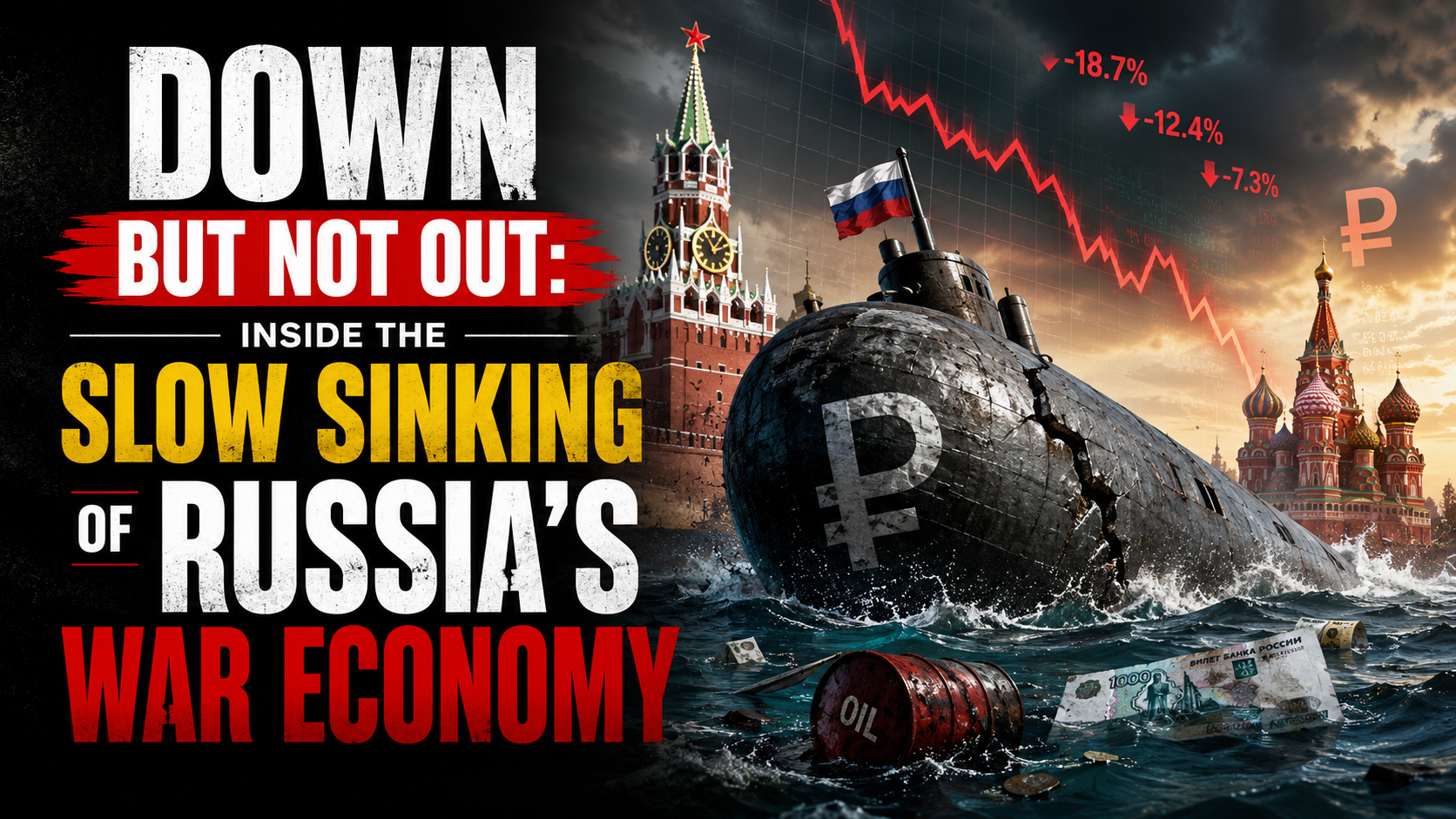
The European Council formally extended its economic sanctions against Russia for another full year on 25 June 2026, keeping restrictive measures in place until 31 July 2027 (Council of the EU). More than four years into the war, the headline story of Russia’s economy has shifted from whether sanctions would work to a more nuanced question: how much longer can the Kremlin keep financing the war before the accumulated strain becomes impossible to hide behind favorable official statistics.
The Sanctions Architecture, Renewed Again
The EU’s economic measures against Russia, first introduced in 2014 and dramatically expanded after the February 2022 full-scale invasion, now span trade, finance, energy and dual-use technology restrictions, alongside asset freezes and travel bans on a broad range of individuals and entities (Council of the EU). Since February 2022, the EU has adopted 20 separate sanctions packages, and the European Council has explicitly stated it remains determined to keep weakening Russia’s war economy by further reducing its energy revenues, curbing shadow-fleet oil shipping operations and constraining its banking system (Council of the EU). Separately, on 3 July 2026 the EU sanctioned six individuals connected to the poisoning and death of opposition figure Alexei Navalny, underscoring that the sanctions regime continues to expand on human-rights grounds as well as economic ones (Council of the EU Sanctions Timeline).
The Headline Numbers Beijing-Style Optimism Can No Longer Explain Away
Russia’s GDP is now put at roughly $2.51 trillion, the world’s eleventh-largest economy — comparable in size to South Korea despite Russia’s vastly larger landmass and resource base — with 2026 growth projected at just 1.0% and inflation running at 5.2% (Statistics of the World). More pessimistic estimates put full-year 2026 growth even lower, at around 0.4%, which would be worse than 2025’s already-weak 1% expansion and would mark a sharp deceleration from the 4.1% growth Russia posted in 2023 as it forged new trading relationships to route around initial sanctions (Forbes).
Oil and gas revenues — historically around half of Russia’s state income — have fallen to roughly a quarter, a deliberate outcome of Western sanctions strategy that targets how much Russia earns from exports rather than blocking those exports outright (Stockholm School of Economics/SITE). Russia’s oil and gas budget revenues reportedly halved in January 2026 alone, with crude prices falling below $73 a barrel before the Middle East conflict briefly reversed the trend, sending Brent surging more than 55% to near $120 a barrel at its peak (Forbes).
The Middle East War: A Temporary Lifeline With Long-Term Costs
The spike in oil prices tied to the Iran conflict, combined with a period of eased US sanctions enforcement on Russian oil under President Trump, offered Moscow unexpected fiscal breathing room in mid-2026 (Forbes). But that same conflict has undermined Russia’s longer-term energy diversification ambitions in the region: two Russian-backed power plant projects in Iran have been put on hold, along with oil and gas exploration work and plans to build new transit routes linking Russia to India via Iran (Forbes).
The Gap Between Official Statistics and Underlying Reality
Perhaps the most important analytical point from recent research is not about any single data point but about the reliability of Russian statistics themselves. Torbjörn Becker of the Stockholm Institute of Transition Economics has argued the real test of sanctions is not whether they end the war overnight, but how much they erode the Kremlin’s capacity to finance it — and by that measure, the evidence points to deeper strain than headline GDP figures suggest (Stockholm School of Economics/SITE). Becker notes that Russia’s economy grew only modestly in 2022 despite oil prices rising sharply that year — a gap between expected and actual performance that implies a considerably larger hidden economic hit than the official contraction figures showed (Stockholm School of Economics/SITE). Compounding the problem, Russian authorities have stopped publishing several key statistics since 2022, making independent assessment of inflation, consumption and real economic conditions increasingly difficult — leading Becker to conclude that “statistics have become part of the narrative” rather than a neutral measure of economic reality (Stockholm School of Economics/SITE).
The Military-Civilian Economic Split
A recurring theme across recent analysis is the growing bifurcation between Russia’s overheating military-industrial sector and a stagnating civilian economy. This imbalance has pushed interest rates higher and forced the liquidation of a striking 71% of Russia’s gold reserves to help fund continued war spending (Forbes). Russia’s total fossil fuel export revenue is estimated at roughly €734 million per day, underscoring just how central hydrocarbon income remains to the entire war financing model even as that revenue stream shrinks (Forbes).
The Counter-Narrative: Wages Still Rising
It would be inaccurate to describe Russia’s economy as in freefall. CSIS research notes that Russian salaries rose 17.8% in nominal terms and 8.7% in real terms in 2024 compared to 2023, with disposable incomes up 6.1% in 2023 and 7.3% in 2024 — growth rates not seen in Russia in almost two decades (CSIS). Government budget projections still expect real salaries to rise, albeit at a decelerating pace: 7% in 2025, 5.7% in 2026 and 4.1% in 2027 — a marked slowdown from the 2024 peak but still roughly double the pre-invasion decade average (CSIS). This wage growth, driven substantially by wartime labor shortages and military-adjacent spending, is precisely the kind of headline-stabilizing data point that has allowed Putin to argue publicly that sanctions have failed to cripple his economy (Fortune) — even as think tanks describe the broader trajectory as pushing Russia toward what one report calls an “economic, political, and military abyss” (Fortune).
What Comes Next
Renewed legislative pressure in Washington — including the Sanctioning Russia Act introduced with strong bipartisan support — signals appetite in the US for tightening the screws further, even as the loss of a key congressional champion for that effort has complicated the political path forward (TIME). Whether the EU’s renewed sanctions regime, continued oil price pressure, and constrained reserves ultimately force a shift in Kremlin calculus toward negotiation remains the central open question for 2027.
Key Takeaways
- The EU has extended Russia sanctions for a further year, through 31 July 2027, continuing a regime built from 20 separate packages since 2022.
- Russia’s 2026 GDP growth is forecast between 0.4% and 1.0%, a sharp deceleration from 2023’s 4.1% post-shock rebound.
- Oil and gas revenue’s share of Russian state income has fallen from roughly half to about a quarter as Western sanctions target export earnings specifically.
- Russia has liquidated a large share of its gold reserves to sustain war financing amid a widening split between an overheating military sector and a stagnating civilian economy.
- Official Russian statistics likely understate the true economic strain, according to independent economists who cite a widening gap between reported and expected performance.
Sources: Council of the EU, Council of the EU Sanctions Timeline, Stockholm School of Economics/SITE, Forbes, Statistics of the World, CSIS, Fortune, TIME
Discover more from The Economy
Subscribe to get the latest posts sent to your email.

Global Central Banks 2026: Fed, BoE and BoJ Decisions Could Reshape Markets

Gulf Capital Retreat From Pakistan 2026: UAE Loan Freeze & What It Means

Pakistan’s Most Reliable Export Is Its People: Remittances Hit $41.6 Billion, Overtaking Total Exports

Indonesia’s Confidence Problem: Record Investment, a Sinking Rupiah, and a Widening Credibility Gap

Down But Not Out: Inside the Slow Sinking of Russia’s War Economy

China’s Growth Slips to a Four-Year Low: Why Beijing Still Won’t Pull the Stimulus Trigger

The Johor-Singapore Corridor: How Malaysia Became Southeast Asia’s AI Infrastructure Powerhouse

Canada’s Economy ‘On Pause’: Inside the CUSMA Deadline That Passed Without a Deal

Dubai’s Millionaire Magnet: How the UAE Turned Middle East Turmoil Into a Capital Safe-Haven Boom

Britain’s Sixth Prime Minister in a Decade: What Starmer’s Exit Means for Gilts, Sterling and Your Portfolio

Anthropic Offers Up to $600,000 Salary for Critical IPO Role as AI Giant Prepares for Wall Street Debut

EU Readies Crisis Team for Potential China Rare Earths Stand-Off as Supply Chain Risks Mount

Singapore Weighs Hedge Fund Tax Cuts to Counter Hong Kong’s Growing Financial Challenge

Facebook and Instagram Experience Global Outage

Carry Trade Unwind 2026: How the Yen’s Snapback Triggered a Global Margin Call

AI Bubble Warning 2026: Why BIS, IMF and Bank of England Fear a Market Crash

BRICS De‑Dollarization Strategy Takes Shape with $15 Billion Local‑Currency Push

Male Labor Force Participation Rate 2026: Why Men Are Leaving & Economic Impact

Russia Bans Diesel Exports 2026: Global Fuel Market Impact Explained

The AI Super Bubble Is Ready to Burst

Strait of Hormuz Blockade 2026: Oil Prices Surge 9% as US-Iran Conflict Reignites

IMF Cuts Pakistan Growth Forecast, Raises Inflation to 8.4%

Private Credit Warning: Most BDCs Turn Unprofitable in 2026, Reuters Finds

Bitcoin $150k Milestone Achieved as US Sovereign Crypto Pivot Looms
Gulf Capital Retreat From Pakistan 2026: UAE Loan Freeze & What It Means

India Economic Rise 2026: How the Subcontinent Toppled Japan

Strait of Hormuz 2026: Why Markets Still Don’t Trust It’s Open

China Housing Market Turnaround: White‑List Model Stabilises Prices
-

 Markets & Finance7 months ago
Top 15 Stocks for Investment in 2026 in PSX: Your Complete Guide to Pakistan’s Best Investment Opportunities
-

 Analysis5 months ago
Johor’s Investment Boom: The Hidden Costs Behind Malaysia’s Most Ambitious Economic Surge
-

 Analysis5 months ago
Top 10 Stocks for Investment in PSX for Quick Returns in 2026
-

 Analysis6 months ago
Brazil’s Rare Earth Race: US, EU, and China Compete for Critical Minerals as Tensions Rise
-

 Banks6 months ago
Best Investments in Pakistan 2026: Top 10 Low-Price Shares and Long-Term Picks for the PSX
-

 Investment7 months ago
Top 10 Mutual Fund Managers in Pakistan for Investment in 2026: A Comprehensive Guide for Optimal Returns
-

 Global Economy7 months ago
15 Most Lucrative Sectors for Investment in Pakistan: A 2025 Data-Driven Analysis
-

 Global Economy7 months ago
Pakistan’s Export Goldmine: 10 Game-Changing Markets Where Pakistani Businesses Are Winning Big in 2025