
Asia
The Contours of 21st-Century Geopolitics Will Become Clearer in 2026: A New World Is Starting to Emerge

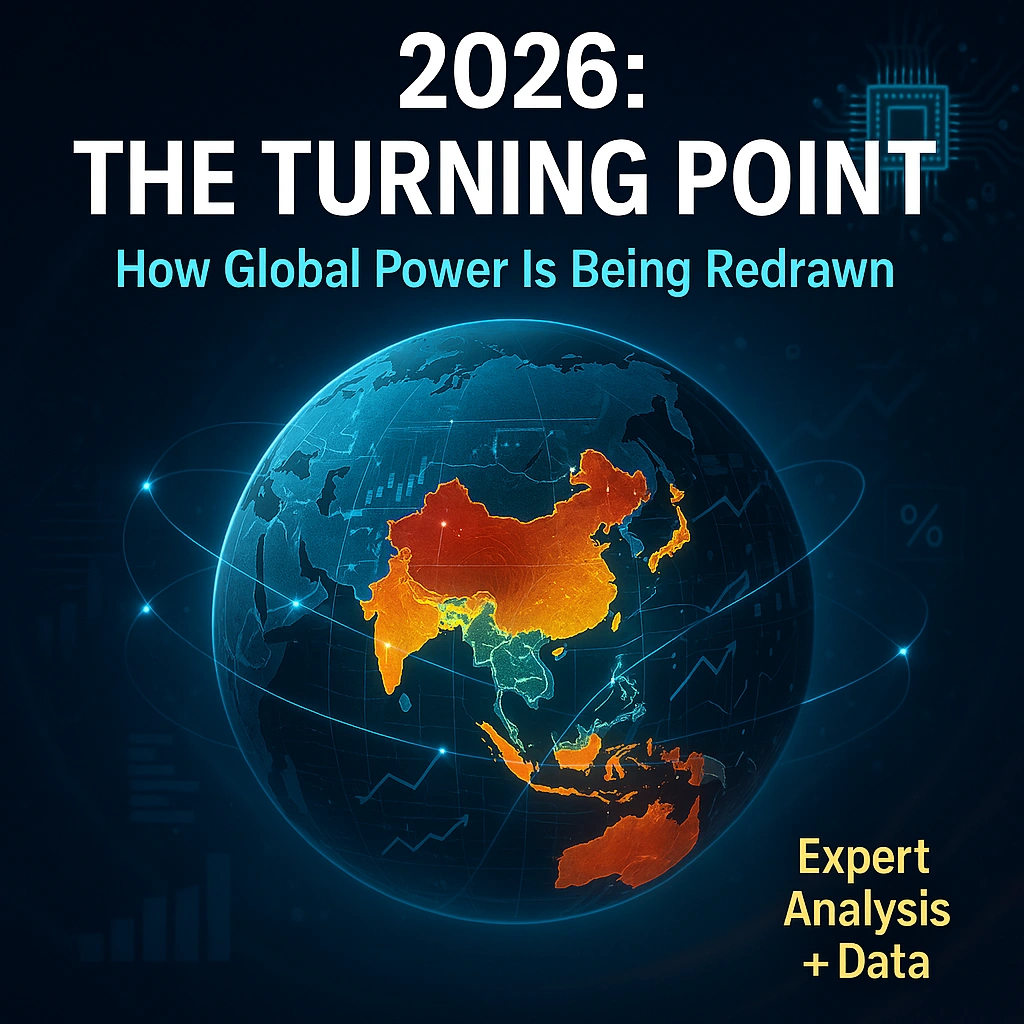
The world stands at an inflection point. As 2026 unfolds, the post-Cold War order that shaped global affairs for three decades is giving way to something fundamentally different. This isn’t just another year of geopolitical tensions—it’s the moment when the emerging world order crystallizes into recognizable contours, reshaping how businesses operate, how nations interact, and how power itself is distributed across the planet.
The evidence is everywhere. Nearly 75% of CEOs have either localized or are localizing some part of their production within the country of sale, while just over half are reorganizing supply chains to serve particular regional blocs. The multipolar world has solidified, and 2026 will be the year we see its architecture clearly defined.
The Architecture of a New World Order
Three fundamental shifts are converging to create this new geopolitical landscape. First, economic sovereignty has replaced free-market globalization as the dominant paradigm. Second, technological competition—particularly in artificial intelligence and semiconductors—has become inseparable from national security. Third, resource geopolitics centered on critical minerals and energy is redefining which nations hold strategic leverage.
These aren’t isolated trends. They’re interconnected forces creating what analysts call a “geopolitics of scarcity” where access to technology, minerals, and capital will determine winners and losers in the 21st century. For business leaders, policymakers, and investors, understanding these dynamics isn’t optional—it’s existential.
Economic Realignment: The End of Rules-Based Trade
The architecture of global commerce is undergoing its most dramatic transformation since the establishment of the Bretton Woods system in 1944. The world economy isn’t collapsing, but it is fundamentally reorganizing around new principles where national security trumps economic efficiency.
Key Takeaways:
- Economic sovereignty has replaced free-market efficiency as the organizing principle of global trade
- BRICS expansion to 11 members accounting for 40% of global GDP signals genuine power redistribution
- China controls 70% average market share in refining 19 of 20 critical minerals, creating strategic vulnerabilities
- AI and technological competition have become inseparable from national security concerns
- 75% of CEOs are localizing production, reflecting permanent supply chain restructuring
- Multipolarity is creating overlapping regional blocs rather than a return to Cold War bipolarity
- Investment must now incorporate geopolitical risk analysis as central to decision-making
The Dawn of Economic Blocs
The BRICS bloc now accounts for 40% of the global economy measured by purchasing power parity, with projections rising to 41% in 2025. The group’s expansion to eleven full members—including Egypt, Ethiopia, Indonesia, Iran, and the United Arab Emirates—represents more than geopolitical posturing. It signals a wholesale reconfiguration of trade flows, investment patterns, and financial architecture.
But BRICS expansion is just one dimension of this fragmentation. With the 2025 expansion, the BRICS group is forecast to account for 58% of GDP growth from 2024 to 2029, while the G7’s share of GDP growth is expected to decline to around 25%. This isn’t merely about emerging markets growing faster—it’s about structural power shifting from the traditional centers of global capitalism.
The North American operating environment exemplifies these tensions. The US-Mexico-Canada Agreement (USMCA) review is reshaping regional supply chains, forcing companies to recalculate decades of cross-border investment. Meanwhile, Europe faces its own reckoning as internal divisions deepen over defense spending, energy policy, and fiscal coordination.
De-Dollarization: Threat or Mirage?
Perhaps no trend captures more attention—or generates more confusion—than efforts to challenge the US dollar’s dominance. BRICS has launched initiatives like BRICS Pay and the BRICS Bridge to facilitate trade in local currencies and bypass SWIFT, with a new BRICS currency backed by commodities like gold and oil under discussion.
The reality is more nuanced than the headlines suggest. The dollar still accounts for nearly half of global payments and maintains unmatched liquidity and legal certainty. However, the direction of travel is unmistakable. Russia and India settling oil transactions in rupees, China expanding yuan-denominated trade, and multiple nations building payment systems outside the dollar infrastructure—these moves represent incremental but irreversible shifts.
For businesses, this creates immediate complexity. Companies must now navigate multiple currency zones, maintain relationships with banks in different jurisdictions, and hedge against currency risks that were previously negligible. The era of frictionless dollar-based global commerce is ending.
Trade Policy as Weapon
Governments are enacting new trade policies—including tariffs, export controls and local content requirements—to mandate or incentivize companies to modify existing supply chains and trade patterns. What began as targeted measures has evolved into comprehensive industrial strategies where every major economy is using trade tools to reshape domestic manufacturing.
The International Monetary Fund projects global growth at 3.2% in 2025 and 3.1% in 2026—below the pre-pandemic average of 3.7%. This slower growth reflects the friction costs of fragmenting supply chains. Companies face higher expenses, longer lead times, and reduced economies of scale. Yet these inefficiencies are deemed acceptable costs for enhanced economic security.
Technological Sovereignty: The New Strategic Frontier
If the 20th century’s geopolitical battles were fought over territory and resources, the 21st century’s defining contests will be won or lost in the realm of technology. And 2026 is when this competition intensifies to unprecedented levels.
The AI Arms Race Accelerates
Governments are increasingly treating AI assets as a national security priority and an important piece of critical infrastructure, with AI serving as a force multiplier of cyber conflicts. This transformation from commercial technology to strategic asset has profound implications.
The United States and China dominate this landscape, but their approaches diverge sharply. America relies on private-sector innovation led by tech giants, while China pursues state-directed development with tighter integration between commercial and military applications. DeepSeek’s surprise emergence in January 2025—releasing a reasoning model competitive with the most advanced US systems but at significantly lower development costs—demonstrated that assumptions about insurmountable American leads were premature.
For businesses, AI competition creates a minefield of compliance requirements. Export controls determine which companies can access cutting-edge chips. Data localization laws restrict where AI training can occur. Governments impose requirements on which AI systems can be deployed in critical infrastructure. The result is what analysts call a “two-speed AI ecosystem”: giants capable of navigating regulatory complexity across jurisdictions, and smaller firms confined to single markets or dependent on platforms controlled by others.
The Semiconductor Chokepoint
Nothing illustrates technological interdependence—and vulnerability—more starkly than semiconductors. Taiwan produces the majority of the world’s most advanced chips. The Netherlands’ ASML holds a near-monopoly on extreme ultraviolet lithography machines essential for cutting-edge production. The United States dominates chip design and specialized manufacturing equipment.
This concentration creates acute geopolitical risk. Any disruption to Taiwan’s production would cascade through global supply chains, affecting everything from smartphones to fighter jets. Nations are responding with massive investment in domestic semiconductor manufacturing, but building fabs requires years and faces immense technical barriers.
Water scarcity adds another dimension. Data centers and semiconductor manufacturing consume vast quantities of water. As freshwater scarcity grows worldwide and demand for water increases for semiconductor manufacturing and cooling data centers, more water rights conflicts will arise. Geography and geology—not just technology and capital—will determine which nations can sustain advanced manufacturing.
Digital Sovereignty and Data Balkanization
The free flow of data that underpinned the digital economy is fragmenting into national and regional silos. The European Union’s data protection regime, China’s cybersecurity laws, and emerging frameworks across dozens of countries create incompatible requirements for how data is collected, processed, and stored.
This “splinternet” imposes real costs. Companies must maintain separate infrastructure for different markets. Cloud providers face restrictions on where they can locate data centers and which customers they can serve. The seamless global digital infrastructure of the 2010s is being replaced by a patchwork of national digital territories.
Critical Minerals: The New Oil
Energy dominated geopolitics for a century. In 2026, critical minerals are assuming that role—with even higher stakes because alternatives are scarcer and concentration is more extreme.
China’s Commanding Heights
For 19 out of 20 important strategic minerals, China is the leading refiner with an average market share of 70%. This dominance extends beyond refining to manufacturing. China’s share of sintered permanent magnet production—magnets used in electric vehicles, wind turbines, industrial motors, data centers and defense systems—has risen from around 50% two decades ago to 94% today.
Beijing has demonstrated willingness to weaponize this control. In April 2025, China introduced export controls on seven heavy rare earth elements. By October, these controls expanded to include five additional elements and equipment for processing rare earths. Most significantly, from December 2025 onward, controls extend to internationally manufactured products containing Chinese-sourced materials or technologies.
The implications are staggering. Defense contractors, automotive manufacturers, renewable energy companies, and consumer electronics firms all depend on supply chains that flow through China. Even when minerals are mined elsewhere, they typically travel to China for refining and processing.
The Race for Diversification
Between 2020 and 2024, growth in refined material production was heavily concentrated among leading suppliers, with the average market share of the top three refining nations of key energy minerals rising from around 82% in 2020 to 86% in 2024. Concentration is increasing, not decreasing, despite years of stated diversification goals.
The obstacles are formidable. Building a rare earth processing facility requires years of permitting, billions in investment, and expertise concentrated in a handful of companies. Environmental regulations in many countries make domestic processing challenging. The economics favor continuing reliance on Chinese infrastructure even as the geopolitical risks mount.
Countries are pursuing multiple strategies. The United States signed an $8.5 billion rare earths agreement with Australia. Africa’s cobalt-copper belt in the Democratic Republic of Congo and Zambia is seeing expanded investment. Gulf states are positioning themselves as critical partners through infrastructure investments across multiple continents.
Yet even aggressive expansion may not bear fruit quickly enough. Given the long lead times for development of critical mineral mining, processing and manufacturing assets, even aggressive expansion of new, de-risked supply chain activity may not yet protect the United States from a severe supply chain disruption.
Resource Nationalism and Strategic Stockpiling
Producing nations are asserting greater control over their mineral wealth. In February 2025, the Democratic Republic of Congo announced a four-month suspension of cobalt exports to curb falling prices. More than half of energy-related minerals now face some form of export controls.
This resource nationalism creates a paradox: nations seeking to secure supply chains face restrictions from the very countries they’re trying to partner with. The result is a complex negotiation where access to minerals is traded for technology transfer, infrastructure investment, and geopolitical alignment.
Institutional Reordering: From Multilateralism to Minilateralism
The international institutions built after World War II and expanded after the Cold War are struggling to adapt to this multipolar reality. 2026 will see these pressures intensify as nations seek alternatives that better reflect current power distributions.
The BRICS Alternative
The New Development Bank is expected to play a key role in providing investment flows into BRICS countries through loans and credit arrangements that may be given at relatively modest interest rates and near condition-free financing. This represents an alternative to the International Monetary Fund and World Bank, institutions often criticized for imposing stringent conditions.
The BRICS Contingent Reserve Arrangement, with $100 billion in capital, provides emergency liquidity without requiring countries to first seek IMF assistance. These parallel institutions don’t replace Western-dominated frameworks, but they provide options that didn’t exist a decade ago.
Regional Blocs Strengthen
While global institutions fracture, regional frameworks are gaining strength. The African Continental Free Trade Area creates a market of 1.3 billion people. The Regional Comprehensive Economic Partnership links fifteen Asia-Pacific economies. The European Union, despite internal tensions, remains the world’s largest single market.
These regional architectures will be the building blocks of the emerging order. Rather than a single global system, we’re moving toward overlapping regional spheres with variable geometry—some nations participating in multiple blocs, others forced to choose between incompatible frameworks.
Middle Powers Navigate
Countries like South Korea, Indonesia, Vietnam, and the UAE face a delicate balancing act. They seek to maintain economic relationships with both China and the West while avoiding being forced into binary choices. ASEAN countries are particularly adept at this balancing approach due to their intertwined commercial and strategic interests with both Washington and Beijing.
This “strategic autonomy” represents a distinct approach from Cold War non-alignment. These nations aren’t staying neutral—they’re actively engaging with multiple power centers, extracting concessions and maintaining flexibility. The success of this strategy depends on major powers tolerating such flexibility rather than demanding exclusive alignment.
Energy Transition Meets Geopolitical Reality
The transformation of global energy systems is accelerating even as geopolitical fragmentation complicates the transition. This creates tensions between climate ambitions and national security imperatives.
The Green Energy Paradox
Renewable energy reduces dependence on oil and gas but creates new dependencies on critical minerals and manufacturing capacity. Solar panels, wind turbines, and electric vehicle batteries require materials that flow through concentrated supply chains. The energy transition, rather than reducing geopolitical competition, is redirecting it toward new chokepoints.
With Saudi Arabia, Iran, and UAE as BRICS members, the bloc now controls over 40% of global crude oil production and produces 32% of global natural gas output. Traditional energy producers aren’t being displaced—they’re repositioning themselves for the new energy landscape while maintaining leverage from hydrocarbon production.
Petrostates Pivot
Gulf nations are using oil revenues to invest heavily in renewable energy, positioning themselves as future clean energy hubs. The UAE’s massive solar installations and green hydrogen projects exemplify this strategy. These investments aren’t just about diversification—they’re about maintaining geopolitical relevance in a decarbonizing world.
Russia and Iran face different calculations. Heavily dependent on fossil fuel exports and facing sanctions, they have fewer options for managed transition. This creates potential for disruption if energy markets shift faster than these economies can adapt.
What This Means for Business
The emerging world order fundamentally changes how companies must operate. The era of optimizing purely for efficiency is over. Resilience, redundancy, and regional adaptation are now strategic imperatives.
Supply Chain Transformation
Companies cannot rely on single-source suppliers, even if they offer the lowest costs. Building resilient supply chains means accepting higher expenses and reduced margins in exchange for greater security. The 75% of CEOs localizing production represents recognition that globalization’s golden age has ended.
This doesn’t mean complete de-globalization. Rather, it’s “selective reglobalization”—maintaining international networks while building regional capabilities and reducing critical dependencies. The challenge is identifying which components require local sourcing and which can remain globally sourced.
Navigating Regulatory Complexity
Businesses face conflicting requirements across jurisdictions. Export controls, data localization, local content rules, and cybersecurity mandates often contradict each other. Companies need compliance architectures that can adapt to rapidly changing rules while maintaining operational continuity.
Small and medium enterprises face particular challenges. The cost of navigating multiple regulatory regimes may exceed their capacity, forcing difficult choices between markets or dependence on larger platforms.
Investment Priorities Shift
Capital allocation must now incorporate geopolitical risk analysis alongside traditional financial metrics. Questions that were once peripheral—political stability, resource security, regulatory trajectory—are now central to investment decisions.
The IMF projects global growth at 3.2% in 2025 and 3.1% in 2026, with advanced economies expected to grow around 1.5-1.6% while emerging markets hold above 4%. This divergence reflects the structural shift toward emerging economies even as mature markets face the costs of adjustment.
The Year Ahead: Five Critical Developments
As 2026 progresses, several key developments will clarify the emerging order’s contours:
1. US-China Coexistence Framework: Despite competition, both powers recognize the need for managed coexistence. Trade agreements and summit outcomes will signal whether they can establish predictable parameters or whether relations deteriorate further.
2. BRICS Institutional Deepening: The bloc will test whether its expanded membership can translate into effective coordination. Progress on payment systems, the New Development Bank’s lending, and joint infrastructure projects will indicate whether BRICS becomes a functional alternative or remains primarily symbolic.
3. Critical Minerals Diplomacy: Deals between major economies and resource-rich nations will reveal which partnerships can actually deliver diversified supply chains. The gap between announced agreements and operational supply is the measure that matters.
4. AI Governance Fragmentation: Attempts at harmonized AI standards will collide with national security imperatives. The AI Action Summit outcomes will show whether any degree of international coordination is possible or whether complete fragmentation is inevitable.
5. Regional Bloc Consolidation: Economic integration within regions—Africa, Southeast Asia, Latin America—will either accelerate or stall based on whether nations can overcome internal divisions and present coherent alternatives to China or Western-led frameworks.
Preparing for the Post-2026 World
The multipolar world emerging in 2026 won’t be stable or comfortable. It will be characterized by persistent tensions, periodic crises, and the constant need to adapt to shifting alignments. Yet it also creates opportunities for those who can navigate complexity.
For Business Leaders
Success requires abandoning assumptions of stable global rules and embracing radical flexibility. Scenario planning must incorporate geopolitical disruptions as baseline expectations rather than tail risks. Building optionality—alternative suppliers, regional operations, flexible logistics—becomes as important as optimizing existing operations.
Partnerships with governments will be essential. Companies that align with national priorities on supply chain resilience, technology development, or resource security will find support. Those that resist state priorities will face increasing pressure.
For Policymakers
The challenge is managing competition without triggering outright conflict. Maintaining channels for dialogue, establishing guardrails for rivalry, and finding areas for cooperation even amid strategic competition will determine whether multipolarity leads to relative stability or devastating confrontation.
Middle powers have particular opportunities and responsibilities. By maintaining connections across blocs and refusing to accept false binaries, they can preserve some degree of system-wide integration even as major powers pursue strategic separation.
For Investors
Understanding geopolitical trajectories becomes as crucial as analyzing balance sheets. Sectors like defense, cybersecurity, semiconductor manufacturing, and critical minerals processing will see sustained investment regardless of short-term market conditions. Companies with regional footprints matching emerging bloc structures will outperform those tied to fading global models.
Conclusion: A World Being Remade
The contours of 21st-century geopolitics are indeed becoming clearer in 2026, but clarity doesn’t mean simplicity. We’re witnessing the most significant restructuring of the international system since the Cold War ended—arguably since the post-World War II order was established.
This isn’t returning to Cold War bipolarity. The multipolar world taking shape is more fluid, with multiple centers of power, overlapping institutions, and nations maintaining diverse relationships across blocs. Technology rather than ideology drives competition, though values still matter. Economic interdependence hasn’t disappeared but is being restructured around security concerns.
As Morgan Stanley describes 2026: “The Year of Risk Reboot,” a period where market focus shifts from macro anxieties to micro fundamentals. Yet underneath that shift, the fundamental architecture of global commerce, technology, and power continues its dramatic transformation.
For decades, globalization seemed inevitable—an unstoppable force of markets and technology integration. Now we understand it was a particular configuration of geopolitical conditions that has ended. What replaces it will be shaped by the choices leaders make in 2026 and the years immediately following.
The new world emerging isn’t inherently worse than what came before, but it will be different in fundamental ways. Success in this environment requires understanding that change, accepting its permanence, and adapting strategies accordingly. Those who cling to the old world’s assumptions will find themselves increasingly unable to operate effectively. Those who recognize the new contours and position themselves accordingly will find opportunities others miss.
2026 is the year the fog lifts and we see the new landscape clearly. What we do with that clarity will determine whether this transition leads to a more balanced international system or to deeper instability. The choice isn’t whether to accept this new world—it’s already here. The question is how we navigate it.
Discover more from The Economy
Subscribe to get the latest posts sent to your email.


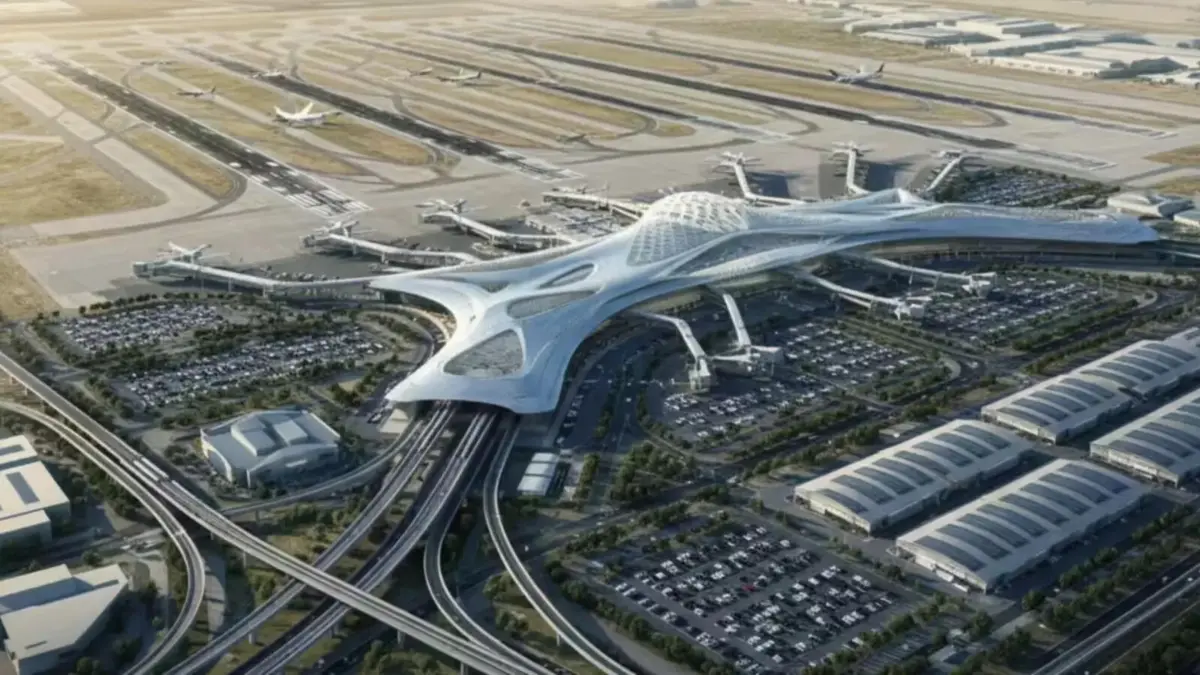
Dubai is in the middle of building what is intended to become the world’s largest airport by capacity — a Dh128 billion ($34.8 billion) expansion of Al Maktoum International Airport at Dubai World Central (DWC), according to Gulf News. When complete, the facility will feature five parallel runways, roughly 400 gates, and the capacity to handle up to 260 million passengers a year — nearly three times the current capacity of Dubai International Airport (DXB), already the world’s second-busiest airport for international traffic, per analysis from K Estates.
Where the project actually stands in 2026
Construction crews have already excavated more than 45 million cubic metres of earth and completed the airport’s second runway, according to MyBayut’s DWC guide. The first phase — a central passenger terminal and four concourses designed to handle 150 million passengers annually — is targeted for completion around 2032, per Khaleej Times. Dubai is set to allocate AED 55 billion worth of expansion contracts by the end of 2026 alone, underscoring the pace at which the project is being financed and built.
The scale of ambition extends beyond aviation infrastructure. DWC is being planned as a self-contained “airport city,” incorporating business, cultural, and residential districts across Dubai South, roughly 35 kilometres from Dubai Marina, according to the same Khaleej Times reporting. All operations currently based at DXB — including Emirates’ long-haul network — are expected to eventually transfer to the new hub.
Part of a much bigger regional aviation build-out
Al Maktoum’s expansion is the largest single project within a broader regional wave of investment: airports across the Middle East, Africa, and South Asia are expected to spend a combined $183 billion on capacity, connectivity, and passenger-experience upgrades, with the UAE and Saudi Arabia leading the push, according to Gulf News. Within the UAE alone, expansion plans extend beyond Dubai to Sharjah and Ras Al Khaimah, with a shared emphasis on AI-enabled operations, IoT systems, and energy-efficient terminal design.
What it means for the region’s real estate and travel markets
The airport build-out is already reshaping property markets nearby. Transactions in Dubai South exceeded AED 15 billion ($4.1 billion) in just the first five months of 2025 — nearly matching the entire AED 16.1 billion recorded across all of 2024 — with analysts forecasting further price appreciation as the airport nears completion, according to K Estates. For travellers and airlines, the eventual payoff is a dramatic increase in regional connectivity capacity at a time when global air travel demand — and airfares — have both been climbing steadily through 2026.
Key takeaways
- Al Maktoum International Airport’s expansion carries a price tag of roughly $34.8 billion (Dh128 billion) and is intended to make it the world’s largest airport by 2050.
- Full build-out capacity: five runways, ~400 gates, up to 260 million passengers annually and 12 million tonnes of cargo.
- Phase one, targeted for around 2032, alone will handle 150 million passengers a year.
- The project has already reshaped Dubai South real estate, with transactions surpassing AED 15 billion in the first five months of 2025.
- It is the anchor project within a broader $183 billion regional airport investment wave across the Middle East, Africa, and South Asia.
FAQ
When will Al Maktoum International Airport be the world’s largest? Full completion is projected around 2050, though the first major phase is targeted for roughly 2032.
How many passengers will Al Maktoum Airport handle? Up to 260 million passengers annually at full capacity, with the first completed phase alone handling 150 million.
Will Emirates move its operations to the new airport? Yes — all Dubai International Airport operations, including Emirates’ long-haul network, are expected to eventually transfer to Al Maktoum International.
Discover more from The Economy
Subscribe to get the latest posts sent to your email.
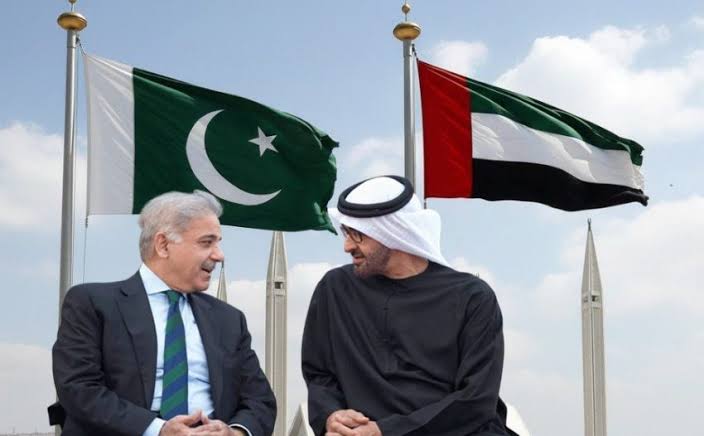
What happened: In early 2026, the United Arab Emirates declined to roll over a $3 billion loan to Pakistan — the first such refusal in seven years. The repayment equalled roughly 18% of Pakistan’s foreign currency reserves, arriving as Islamabad also faced a $1.3 billion bond payment and was waiting on the next IMF tranche.
Why it matters: It’s the clearest sign yet that Gulf sovereign patience with Pakistan’s balance-of-payments cycle is thinning, even as Gulf states simultaneously court China, Saudi Arabia, and each other for capital in a tightening regional liquidity environment.
The Story Nobody’s Connecting
Most coverage of Pakistan’s 2026 external account stress treats the UAE’s loan decision as an isolated liquidity event — a “routine financial transaction,” in the words of Pakistan’s own Ministry of Foreign Affairs. That framing misses the bigger pattern. The same weeks that Abu Dhabi called in its $3 billion, unusual delays began appearing in bank transfers from Saudi Arabia to the UAE itself — friction between the Gulf’s two largest economies, at a moment when both are also managing their own post-war oil price adjustment. (Pakistan & Gulf Economist)
Put those two data points together and a different story emerges: this isn’t just about Pakistan’s creditworthiness. It’s about Gulf capital becoming more selective, more transactional, and less willing to extend informal grace periods across the board — with Pakistan simply the most exposed borrower in the queue.
The Numbers Behind the Pressure
Pakistan’s State Bank held $16.4 billion in reserves as of late March 2026 — enough to cover roughly three months of imports, a threshold economists generally treat as a comfort floor, not a cushion. (Mettis Global News) The UAE’s declined rollover landed at the same time as a looming $1.3 billion international bond payment and dependence on the next $1.2 billion IMF disbursement — a convergence of obligations that left the State Bank with limited room to maneuver beyond import restrictions, rate hikes, or fresh commercial borrowing.
The backdrop matters too. The rupee had been trading in a comparatively narrow 278–282 band before the escalation of the Iran conflict pushed global oil prices higher, squeezing Pakistan’s import bill precisely when its Gulf safety net began to wobble. The KSE-100 benchmark, meanwhile, had already shed around 15% amid the broader pressure. (Mettis Global News)
This is not Pakistan’s first Gulf-dependency cycle. The IMF’s own record shows a now-familiar pattern: staff-level agreements reached in Dubai, UAE pledges of multibillion-dollar investment arriving alongside IMF tranches, and Gulf bridge financing used to stave off sovereign default in periods when reserves cover shrinks toward zero. (Business Standard) What’s different in 2026 is that the bridge itself is showing cracks.
Islamabad’s Official Line vs. the Structural Reality
Pakistan’s government has leaned into a “stability to sustainable growth” narrative around its FY2026–27 federal budget, with the finance minister framing the transition as export-driven rather than reserve-dependent. Business groups have broadly welcomed the budget, and the current account posted a $459 million surplus in May 2026, an improvement attributed to strong remittance inflows. (Business Recorder) The Monetary Policy Committee has held rates steady rather than reaching for emergency tightening, which is itself a signal that the central bank does not yet see the UAE episode as a systemic trigger.
But a current account surplus built substantially on remittances is different from one built on export competitiveness or durable FDI. Pakistan’s trade structure still leans heavily on a narrow set of partners: China supplies over a quarter of its imports and a meaningful share of its exports, the UAE is both a top export destination and its second-largest import source, and Gulf states collectively remain the primary channel for both remittances and emergency liquidity. (Wikipedia — Economy of Pakistan) That concentration is precisely what makes a single Gulf lender’s changed appetite so consequential.
Why the Oil Backdrop Compounds the Risk
None of this is happening in a vacuum. The IMF’s own July 2026 commentary noted that global oil markets “absorbed the war shock” from the Iran conflict, but cautioned that buffers — spare production capacity, strategic reserves, shipping insurance capacity — are running low. (IMF Blog) For an oil-importing, reserve-constrained economy like Pakistan, a second energy price shock without deeper buffers would land directly on the same reserves the UAE loan was meant to protect.
What to Watch Next
- Whether Saudi Arabia steps in as an alternative bridge lender, or whether the Riyadh–Abu Dhabi transfer friction signals a broader Gulf liquidity tightening that limits everyone’s appetite to backstop Pakistan.
- The pace and size of the next IMF tranche, and whether Fund conditionality shifts to demand deeper reserve buffers given the UAE precedent.
- Whether China increases its role as lender of last resort, deepening Pakistan’s dependency in exactly the direction Gulf financing was historically meant to offset.
Discover more from The Economy
Subscribe to get the latest posts sent to your email.
Introduction
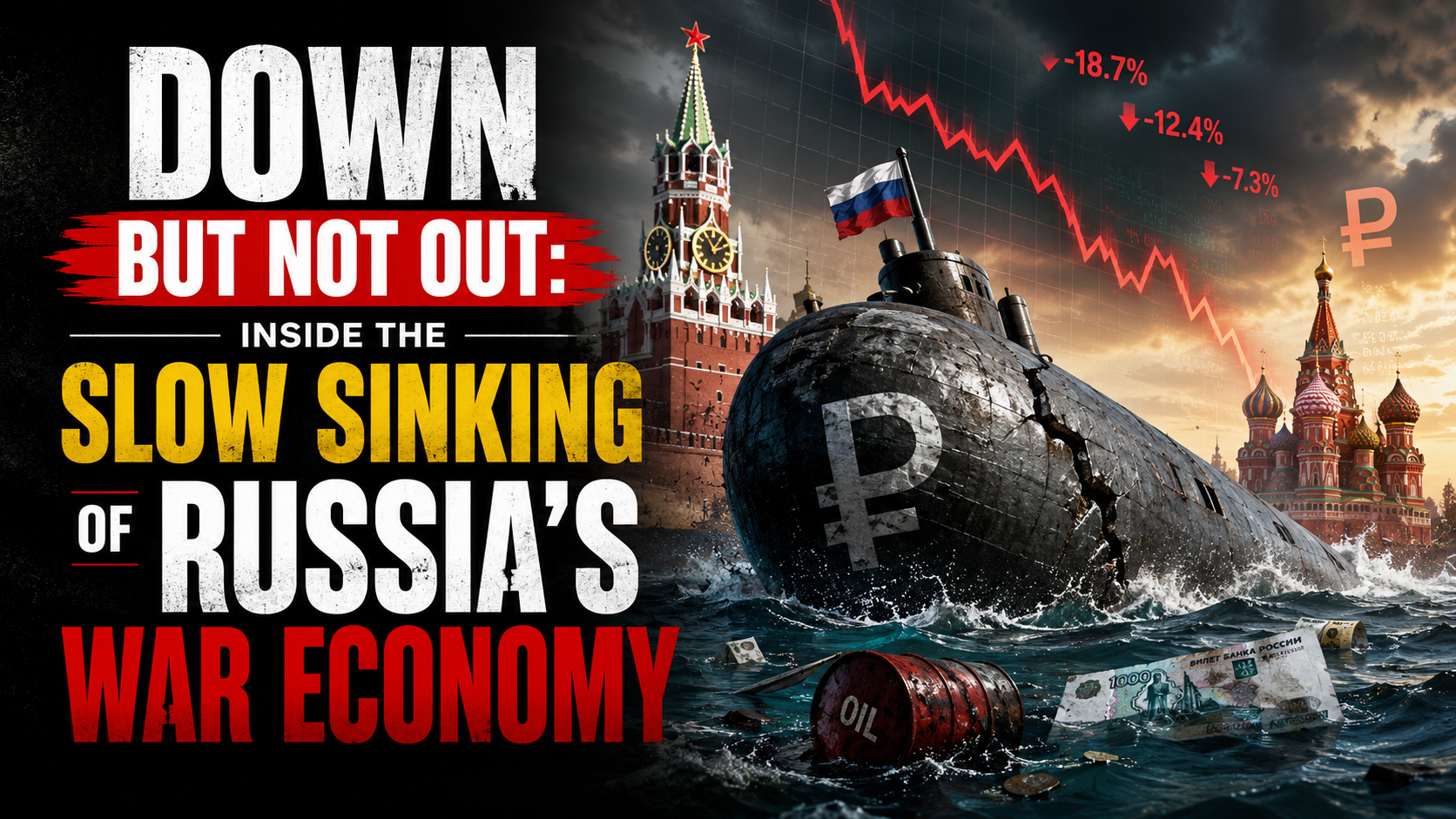
The European Council formally extended its economic sanctions against Russia for another full year on 25 June 2026, keeping restrictive measures in place until 31 July 2027 (Council of the EU). More than four years into the war, the headline story of Russia’s economy has shifted from whether sanctions would work to a more nuanced question: how much longer can the Kremlin keep financing the war before the accumulated strain becomes impossible to hide behind favorable official statistics.
The Sanctions Architecture, Renewed Again
The EU’s economic measures against Russia, first introduced in 2014 and dramatically expanded after the February 2022 full-scale invasion, now span trade, finance, energy and dual-use technology restrictions, alongside asset freezes and travel bans on a broad range of individuals and entities (Council of the EU). Since February 2022, the EU has adopted 20 separate sanctions packages, and the European Council has explicitly stated it remains determined to keep weakening Russia’s war economy by further reducing its energy revenues, curbing shadow-fleet oil shipping operations and constraining its banking system (Council of the EU). Separately, on 3 July 2026 the EU sanctioned six individuals connected to the poisoning and death of opposition figure Alexei Navalny, underscoring that the sanctions regime continues to expand on human-rights grounds as well as economic ones (Council of the EU Sanctions Timeline).
The Headline Numbers Beijing-Style Optimism Can No Longer Explain Away
Russia’s GDP is now put at roughly $2.51 trillion, the world’s eleventh-largest economy — comparable in size to South Korea despite Russia’s vastly larger landmass and resource base — with 2026 growth projected at just 1.0% and inflation running at 5.2% (Statistics of the World). More pessimistic estimates put full-year 2026 growth even lower, at around 0.4%, which would be worse than 2025’s already-weak 1% expansion and would mark a sharp deceleration from the 4.1% growth Russia posted in 2023 as it forged new trading relationships to route around initial sanctions (Forbes).
Oil and gas revenues — historically around half of Russia’s state income — have fallen to roughly a quarter, a deliberate outcome of Western sanctions strategy that targets how much Russia earns from exports rather than blocking those exports outright (Stockholm School of Economics/SITE). Russia’s oil and gas budget revenues reportedly halved in January 2026 alone, with crude prices falling below $73 a barrel before the Middle East conflict briefly reversed the trend, sending Brent surging more than 55% to near $120 a barrel at its peak (Forbes).
The Middle East War: A Temporary Lifeline With Long-Term Costs
The spike in oil prices tied to the Iran conflict, combined with a period of eased US sanctions enforcement on Russian oil under President Trump, offered Moscow unexpected fiscal breathing room in mid-2026 (Forbes). But that same conflict has undermined Russia’s longer-term energy diversification ambitions in the region: two Russian-backed power plant projects in Iran have been put on hold, along with oil and gas exploration work and plans to build new transit routes linking Russia to India via Iran (Forbes).
The Gap Between Official Statistics and Underlying Reality
Perhaps the most important analytical point from recent research is not about any single data point but about the reliability of Russian statistics themselves. Torbjörn Becker of the Stockholm Institute of Transition Economics has argued the real test of sanctions is not whether they end the war overnight, but how much they erode the Kremlin’s capacity to finance it — and by that measure, the evidence points to deeper strain than headline GDP figures suggest (Stockholm School of Economics/SITE). Becker notes that Russia’s economy grew only modestly in 2022 despite oil prices rising sharply that year — a gap between expected and actual performance that implies a considerably larger hidden economic hit than the official contraction figures showed (Stockholm School of Economics/SITE). Compounding the problem, Russian authorities have stopped publishing several key statistics since 2022, making independent assessment of inflation, consumption and real economic conditions increasingly difficult — leading Becker to conclude that “statistics have become part of the narrative” rather than a neutral measure of economic reality (Stockholm School of Economics/SITE).
The Military-Civilian Economic Split
A recurring theme across recent analysis is the growing bifurcation between Russia’s overheating military-industrial sector and a stagnating civilian economy. This imbalance has pushed interest rates higher and forced the liquidation of a striking 71% of Russia’s gold reserves to help fund continued war spending (Forbes). Russia’s total fossil fuel export revenue is estimated at roughly €734 million per day, underscoring just how central hydrocarbon income remains to the entire war financing model even as that revenue stream shrinks (Forbes).
The Counter-Narrative: Wages Still Rising
It would be inaccurate to describe Russia’s economy as in freefall. CSIS research notes that Russian salaries rose 17.8% in nominal terms and 8.7% in real terms in 2024 compared to 2023, with disposable incomes up 6.1% in 2023 and 7.3% in 2024 — growth rates not seen in Russia in almost two decades (CSIS). Government budget projections still expect real salaries to rise, albeit at a decelerating pace: 7% in 2025, 5.7% in 2026 and 4.1% in 2027 — a marked slowdown from the 2024 peak but still roughly double the pre-invasion decade average (CSIS). This wage growth, driven substantially by wartime labor shortages and military-adjacent spending, is precisely the kind of headline-stabilizing data point that has allowed Putin to argue publicly that sanctions have failed to cripple his economy (Fortune) — even as think tanks describe the broader trajectory as pushing Russia toward what one report calls an “economic, political, and military abyss” (Fortune).
What Comes Next
Renewed legislative pressure in Washington — including the Sanctioning Russia Act introduced with strong bipartisan support — signals appetite in the US for tightening the screws further, even as the loss of a key congressional champion for that effort has complicated the political path forward (TIME). Whether the EU’s renewed sanctions regime, continued oil price pressure, and constrained reserves ultimately force a shift in Kremlin calculus toward negotiation remains the central open question for 2027.
Key Takeaways
- The EU has extended Russia sanctions for a further year, through 31 July 2027, continuing a regime built from 20 separate packages since 2022.
- Russia’s 2026 GDP growth is forecast between 0.4% and 1.0%, a sharp deceleration from 2023’s 4.1% post-shock rebound.
- Oil and gas revenue’s share of Russian state income has fallen from roughly half to about a quarter as Western sanctions target export earnings specifically.
- Russia has liquidated a large share of its gold reserves to sustain war financing amid a widening split between an overheating military sector and a stagnating civilian economy.
- Official Russian statistics likely understate the true economic strain, according to independent economists who cite a widening gap between reported and expected performance.
Sources: Council of the EU, Council of the EU Sanctions Timeline, Stockholm School of Economics/SITE, Forbes, Statistics of the World, CSIS, Fortune, TIME
Discover more from The Economy
Subscribe to get the latest posts sent to your email.

Balance of Payments (BOP)

The Falkland Islands Dispute: Sovereign Wealth, Offshore Drilling, and Market Impacts

Gross Domestic Product (GDP): Nominal vs. Real

What is Inflation and the Consumer Price Index (CPI)?

US-China Trade Competition 2026: Supply Chain Relocation Guide

Oil Prices Break $100 in 2026: Middle East Conflict & Energy Markets

South-South Trade Expansion: Digital Integration and Emerging Market Growth

$166B Tariff Refund Tapering Fast: Is Your Business Missing Out?

Stock Market Today: Dow Climbs 500 Points as Markets Shake Off Inflation Jitters

14th WTO Conference 2026: Tariffs & Global Supply Chain Impact

Swish Secures $24M Funding to Disrupt India’s $100B Food Market

Physical AI and Driverless Tech: The Next Trillion-Dollar Industrial Revolution

Enterprise AI Platforms Disrupting B2B SaaS in 2026: Full Analysis

Crypto vs. Safe Haven Assets 2026: Where Institutions Are Hedging

State Farm’s $5B Dividend 2026: Who Qualifies & Payout Dates

US-China Relations in Q3 2026: Trade Tariffs and Supply Chain Risks

Gold’s Wild 2026: From a Record $5,600 Peak to a 24% Crash and Back Toward $4,500

Oil Surges as Strait of Hormuz Traffic Collapses Again

The Rocket That Won’t Quit: Inside SpaceX’s Falcon 9 Launch Machine

Bank of England Set to Hold Rates Through Year-End, Reuters Poll Shows

SpaceX Starship Flight 14: First Orbital Attempt & Starlink V3 Launch Explained

The 2026 Crypto Regulatory Shift: What It Means for Institutional Investors

AI Chip Stocks 2026: The Best Semiconductor Investments Beyond Marvell

Retail Earnings Week: What Home Depot, Target & Walmart Reveal

AI-Powered Training: The Next Multi-Billion Dollar Ecosystem in Fitness

Russia’s Black Sea Oil Exports Fall for a Fifth Straight Week

Top 30 Stocks for Investment in PSX for Massive ROI in 2026

Global Chip Selloff Deepens: What’s Driving the Aug. 19 Semiconductor Rout
-

 Markets & Finance8 months ago
Top 15 Stocks for Investment in 2026 in PSX: Your Complete Guide to Pakistan’s Best Investment Opportunities
-

 Analysis7 months ago
Johor’s Investment Boom: The Hidden Costs Behind Malaysia’s Most Ambitious Economic Surge
-

 Analysis7 months ago
Top 10 Stocks for Investment in PSX for Quick Returns in 2026
-

 Analysis7 months ago
Brazil’s Rare Earth Race: US, EU, and China Compete for Critical Minerals as Tensions Rise
-

 Banks8 months ago
Best Investments in Pakistan 2026: Top 10 Low-Price Shares and Long-Term Picks for the PSX
-

 Investment8 months ago
Top 10 Mutual Fund Managers in Pakistan for Investment in 2026: A Comprehensive Guide for Optimal Returns
-

 Global Economy9 months ago
15 Most Lucrative Sectors for Investment in Pakistan: A 2025 Data-Driven Analysis
-

 Global Economy9 months ago
Pakistan’s Export Goldmine: 10 Game-Changing Markets Where Pakistani Businesses Are Winning Big in 2025