
Global Economy
Resource Wealth and Geopolitical Vulnerability: Understanding Recent US Foreign Policy Toward Venezuela, Greenland, and Iran

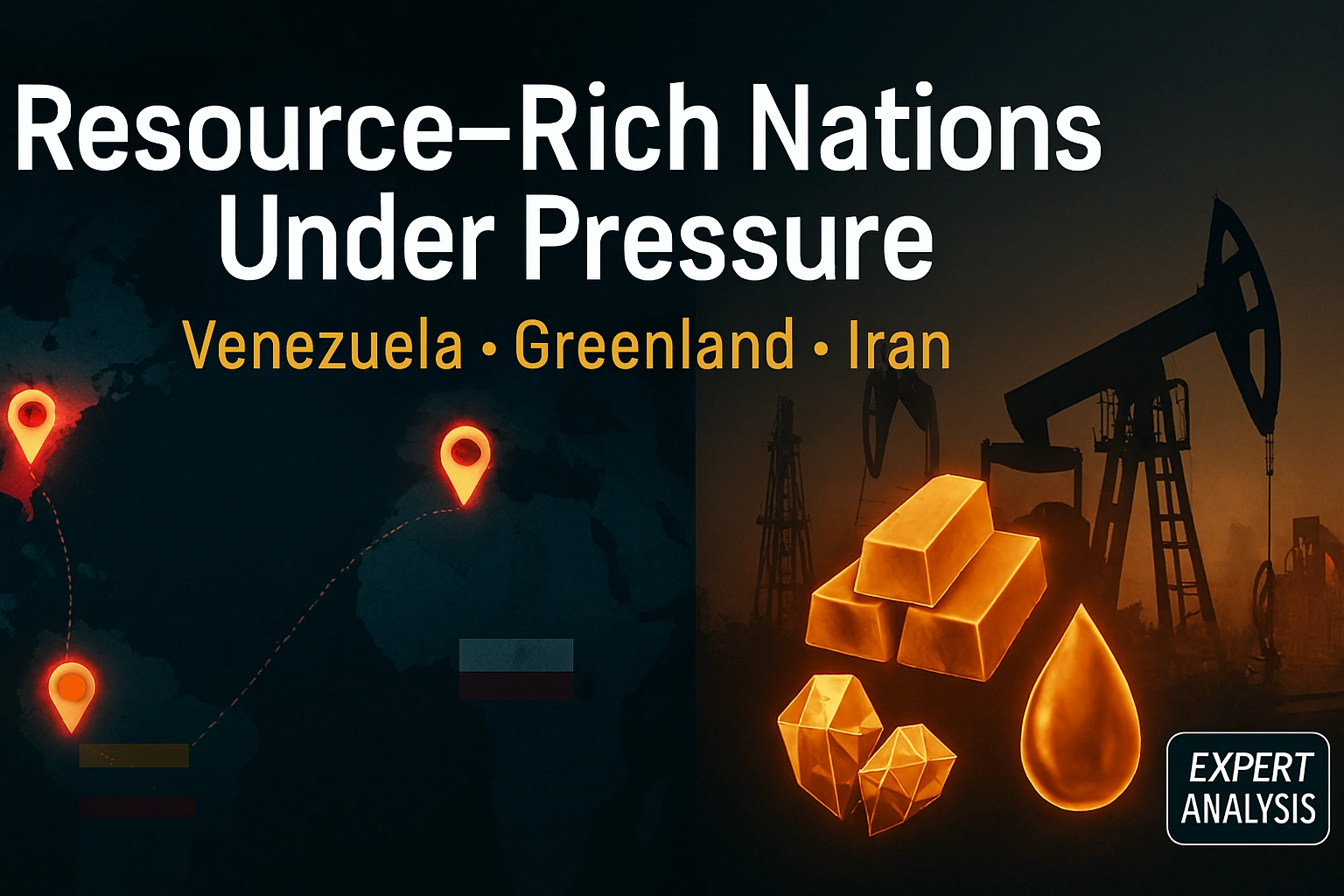
An evidence-based analysis of how natural resources intersect with state capacity and international relations
In early January 2026, the United States took unprecedented action in Venezuela, capturing President Nicolás Maduro in a military operation. This dramatic escalation coincided with statements from President Trump expressing interest in acquiring Greenland and making references to other resource-rich territories. These events have reignited longstanding debates about the relationship between natural resource wealth, state capacity, and great power intervention.
This article examines three countries—Venezuela, Greenland, and Iran—that share two key characteristics: significant natural resource endowments and varying degrees of geopolitical vulnerability. Rather than starting with conclusions, we’ll explore the complex dynamics that shape how resource abundance intersects with state weakness, international competition, and foreign policy decisions.
The Resource Curse Debate: What Research Actually Shows
For decades, scholars have debated whether natural resource wealth helps or hinders development. The “resource curse” theory suggests that countries rich in oil, minerals, or other commodities often experience slower economic growth, weaker institutions, and increased conflict. However, recent research from the World Bank paints a more nuanced picture.
Research indicates that the relationship between resources and development outcomes is far from deterministic. Countries with similar levels of resource wealth can achieve vastly different results in terms of economic growth, institutional quality, and democratic governance. The key variable appears to be institutional strength rather than resource abundance itself.
Studies examining resource-rich economies found that natural resource abundance and institutional performance indicators can have significant negative effects on economic growth in some groups of economies, confirming the presence of both resource curse and institutional curse. However, these economies have the potential to escape the resource curse provided they are able to build human capital, adopt information and communication technology services, and build quality institutions.
Some scholars have challenged the resource curse framework entirely, arguing for an “institutions curse” instead. Research from the United Nations suggests that weak institutions compel countries to rely on natural resource extraction as a default economic sector, rather than resources inherently weakening institutions. Under this view, resources can actually stimulate state capacity and development when properly managed.
Venezuela: Oil Abundance and Institutional Collapse
The Resource Profile
Venezuela possesses the world’s largest proven oil reserves at approximately 303 billion barrels—roughly 18 percent of global reserves. These reserves, primarily extra-heavy crude in the Orinoco Belt, require specialized refining but represent extraordinary potential wealth.
Beyond petroleum, Venezuela holds Latin America’s largest gold reserves and ranks among top global holders of iron ore and bauxite. The country claims reserves of 340 million tonnes of nickel along with significant copper resources.
From Abundance to Crisis
The Venezuelan case illustrates how resource wealth alone cannot guarantee prosperity or stability. Oil production collapsed from over 3 million barrels per day in the late 1990s to under 1 million in the early 2020s. This decline resulted from a combination of underinvestment, international sanctions, and skilled-labor attrition.
The country’s economic crisis deepened over years of political turmoil, with hyperinflation, mass migration, and deteriorating public services. International sanctions, particularly those targeting the oil sector, further constrained the government’s ability to maintain production or generate revenue from its primary resource.
Recent Developments
According to reporting from the Council on Foreign Relations, the Trump administration’s National Security Strategy emphasizes control of the Western Hemisphere. The operation that captured Maduro represents a dramatic escalation in US involvement in the region, justified partly by concerns about drug trafficking, mass migration, and connections to adversarial powers including China, Russia, and Iran.
Greenland: Strategic Minerals and Arctic Geopolitics
The Resource Landscape
Greenland’s known rare earth reserves are almost equivalent to those of the entire United States. If fully developed, these deposits could meet at least 25 percent of global rare earth demand—a crucial consideration given current supply chain vulnerabilities.
The island holds substantial reserves of lithium, niobium, hafnium, and zirconium, all critical components for batteries, semiconductors, and advanced technologies. These materials are essential for the energy transition and advanced manufacturing.
Development Challenges
Despite this potential, Greenland faces significant obstacles to resource development. Current mining concentrations are relatively low (1-3 percent versus optimal 3-6 percent), driving up extraction costs. Environmental concerns remain paramount, with Greenland passing a law in 2021 limiting uranium in mined resources, effectively halting development of a major rare earth project.
Infrastructure limitations and harsh Arctic conditions add further complexity and cost to any extraction operations. The economic viability of Greenland’s resources depends heavily on global market conditions and technological advances in extraction methods.
Strategic Considerations
According to recent reporting from TIME, President Trump has described Greenland as “surrounded by Russian and Chinese ships,” emphasizing Arctic geopolitics where melting ice caps have opened new shipping routes and access to previously inaccessible resources.
CNN reports that Trump stated the US needs Greenland “from the standpoint of national security,” while Greenland’s Prime Minister responded that “our country is not an object in great-power rhetoric. We are a people. A country. A democracy.”
Chinese companies are already invested in developing Greenland’s resources, reflecting broader competition between the United States and China for critical mineral supply chains. This competition has intensified as nations seek to reduce dependence on Chinese-dominated rare earth processing.
Iran: Energy Reserves and Geopolitical Isolation
Resource Endowment
Iran’s natural gas reserves constitute more than one-tenth of the world’s total, making it a major potential energy supplier. The country also possesses significant petroleum reserves and ranks among the world’s most mineral-rich nations.
With 68 types of minerals and 37 billion tonnes of proven reserves, Iran ranks fifth globally in total natural resource wealth, valued at approximately $27.5 trillion. This includes the world’s 9th largest copper reserves and 6th largest zinc reserves.
Sanctions and Isolation
Iran’s substantial resource wealth has been largely inaccessible to global markets due to decades of international sanctions. These restrictions, imposed primarily by the United States and its allies, have aimed to pressure Iran over its nuclear program and regional activities.
The sanctions regime demonstrates how resource wealth can become a liability rather than an asset when a country faces international isolation. Unable to fully monetize its resources, Iran has experienced significant economic constraints despite its natural endowments.
According to analysis from the Atlantic Council, Iran has long been allied to Venezuela, using Caracas to bypass US sanctions. The operation against Maduro signals to Iran that Washington is willing to pursue regime change when deemed in US interests.
Institutional Capacity and Resource Governance
A key factor distinguishing successful resource-rich countries from struggling ones is institutional capacity. Research published in Energy Policy indicates that strong institutions help countries escape the resource curse, though the emphasis on institutions as solutions sometimes ignores the circumstances under which institutions are formed and how they change.
When governments derive most revenue from resources rather than taxes, they face less pressure to provide responsive governance. Citizens cannot easily hold leaders accountable through the power of the purse. This dynamic can lead to what scholars call “rentier states” where political legitimacy depends on resource distribution rather than governmental effectiveness.
World Bank research has shown that financial systems are less developed in more resource-rich countries. Studies indicate that unexpected exogenous windfalls from natural resource rents are not intermediated effectively, with institution building and regulatory reform being even more important in resource-rich countries.
However, institutional weakness itself may precede resource development. Academic analysis suggests many countries developed resource extraction as a default economic sector precisely because weak institutions prevented cultivation of more diversified economies.
Great Power Competition and Strategic Resources
The contemporary geopolitical landscape is characterized by intensifying competition for strategic resources, particularly critical minerals essential for advanced technologies and the energy transition. China currently dominates global critical mineral supply chains, creating vulnerabilities for other nations.
This competition manifests differently across our three case studies. In Venezuela, the focus remains primarily on petroleum. In Greenland, rare earth minerals take center stage. Iran’s situation involves both energy resources and strategic minerals, complicated by its geopolitical position in the Middle East.
The Trump administration’s National Security Strategy, as discussed by Council on Foreign Relations experts, has emphasized control of the Western Hemisphere and securing access to critical resources. This approach reflects broader concerns about economic security and technological competitiveness in an era of great power rivalry.
Historical Patterns in Resource-Related Interventions
US foreign policy toward resource-rich regions has historical precedents worth examining. Research indicates the United States intervened successfully to change governments in Latin America 41 times between 1898 and 1994—approximately once every 28 months for an entire century.
While economic interests have often been cited as underlying causes, the reality appears more complex. Multiple factors typically converge: strategic considerations, ideological preferences, corporate interests, and perceived threats to American influence. Pure economic motivations rarely operate in isolation from these other dynamics.
The Role of Sanctions and Economic Pressure
Economic sanctions have become a preferred tool of US foreign policy, particularly toward resource-rich nations. IMF working papers examining natural resource dependence and policy responses have found that the resource curse can be particularly severe for economic performance in countries with low degrees of trade openness.
In Venezuela, oil sanctions dramatically reduced government revenues and production capacity. In Iran, sanctions have prevented full exploitation of vast energy reserves. The effectiveness of sanctions in achieving policy objectives remains debated, but their impact on resource-dependent economies is undeniable.
Sanctions create a paradox for resource-rich nations: possessing valuable commodities provides little benefit if international markets remain inaccessible. This dynamic can weaken already struggling institutions and exacerbate humanitarian crises, though proponents argue sanctions pressure governments toward policy changes.
International Law and Territorial Sovereignty
Questions of international law loom over discussions of great power actions toward weaker states. Foreign Policy reporting notes that the United Nations Security Council held an emergency meeting following the Venezuela operation, with Colombia’s UN Ambassador stating that “there is no justification whatsoever, under any circumstances, for the unilateral use of force to commit an act of aggression.”
The principle of territorial sovereignty, enshrined in the UN Charter, theoretically protects nations from external intervention regardless of their resource wealth or institutional capacity. However, the practical application of these principles has been uneven. As a permanent member of the Security Council, the United States can veto resolutions and block punitive measures.
Greenland’s status as an autonomous territory within the Kingdom of Denmark adds additional legal complexity to any discussion of its future. While Greenland has substantial self-governance, Denmark retains control over foreign affairs and defense policy.
Looking Forward: Implications and Uncertainties
Several key factors will likely shape future dynamics around resource-rich states:
Technology and Markets: Advances in extraction technology, changing global demand patterns, and shifts in energy systems will all influence which resources matter most and how accessible they become.
Climate Change: Arctic warming makes previously inaccessible resources more reachable while simultaneously raising environmental concerns about extraction in fragile ecosystems.
Multipolar Competition: As China, Russia, and other powers increase their global engagement, resource-rich nations may have more options for partnerships and investment, potentially reducing any single power’s leverage.
Institutional Development: Some resource-rich nations are successfully building stronger institutions and more diversified economies, challenging deterministic narratives about the resource curse.
Domestic Politics: Within both resource-rich nations and major powers, domestic political dynamics will shape foreign policy approaches and resource development strategies.
Conclusion
The relationship between resource wealth, state capacity, and foreign intervention is far more complex than simple cause-and-effect narratives suggest. Venezuela, Greenland, and Iran each possess significant natural resources, but they differ dramatically in their governance structures, strategic environments, and relationships with major powers.
Research from multiple institutions indicates that resources themselves are neither inherently beneficial nor harmful. Rather, their impact depends on institutional quality, governance capacity, and the broader geopolitical context. Countries can escape the resource curse through strong institutions, transparent governance, and economic diversification, though building these capacities presents significant challenges.
For policymakers, the key insight is that resource abundance creates both opportunities and vulnerabilities. How nations navigate these dynamics depends on complex interactions between domestic institutions, international competition, and the evolving global economy. Simple interventions or quick fixes are unlikely to address the multifaceted challenges facing resource-rich states with weak institutions.
Understanding these dynamics requires moving beyond ideological positions to examine specific contexts, historical patterns, and the often-contradictory interests at play. Only through such nuanced analysis can we develop more effective approaches to resource governance and international relations in an increasingly competitive world.
Frequently Asked Questions
Why does Trump want Greenland? Trump has cited both national security and economic reasons for interest in Greenland, emphasizing its strategic location in the Arctic and its substantial rare earth mineral deposits that are critical for advanced technologies.
What natural resources does Venezuela have? Venezuela possesses the world’s largest proven oil reserves (approximately 303 billion barrels), Latin America’s largest gold reserves, and significant deposits of iron ore, bauxite, nickel, and copper.
How do sanctions affect resource-rich countries? Sanctions can prevent resource-rich countries from accessing international markets, limiting their ability to monetize natural resources despite their abundance. This creates economic constraints and can weaken institutions further.
What makes a state “weak” in geopolitical terms? Geopolitical weakness typically refers to limited institutional capacity, economic vulnerability, political instability, military asymmetry compared to major powers, and isolation from international protection mechanisms.
How does resource wealth create vulnerability? Resource wealth can create vulnerability by encouraging institutional weakness (reducing need for taxation), attracting external intervention, enabling corruption, preventing economic diversification, and making countries targets in great power competition for strategic materials.
Further Reading
For readers interested in exploring these topics further, consider examining:
- World Bank research on natural resources and development
- Council on Foreign Relations analysis of US foreign policy
- IMF working papers on resource economics
- United Nations research on resource governance
- Academic journals on political economy and international relations
The complexity of these issues demands ongoing engagement with diverse perspectives and rigorous empirical research rather than reliance on simplified narratives or ideological frameworks.
Discover more from The Economy
Subscribe to get the latest posts sent to your email.



How once-unimaginable catastrophes become baseline assumptions
There is a particular kind of hubris that infects markets in the long stretches between catastrophes. Volatility compresses. Risk premia decay. The insurance gets quietly cancelled because it hasn’t paid out in years and the premiums feel like wasted money. Then the disaster arrives — not as a distant rumble but as a wall of water — and the entire analytical framework investors have spent years constructing turns out to have been a map of the wrong country.
We are living through one of the most instruction-rich moments in modern financial history. Since February 28, 2026, when the United States launched military operations against Iran and Tehran responded by closing the Strait of Hormuz, markets have been running a live masterclass in catastrophe pricing. West Texas Intermediate crude surged from $67 to $111 per barrel in under a fortnight — the fastest oil spike in four decades. War-risk insurance premiums on shipping through the Gulf soared more than 1,000 percent. The S&P 500 lost 5 percent in a single week, and the ECB and Bank of England are now staring down a renewed tightening scenario they spent the first quarter of 2026 insisting was off the table.
And yet — and this is the part that should make every portfolio manager uncomfortable — the analytical mistakes driving losses right now are not new. They are the same six structural errors investors have made in every previous crisis. Understanding them, really understanding them, is not an academic exercise. It is the difference between surviving the next disaster and being liquidated by it.
Key Takeaways at a Glance
- Markets price first-order disaster impacts; second- and third-order cascades are systematically underpriced
- Volatility is information; price-discovery failure is the true systemic risk — monitor private-to-public valuation spreads
- Tight CAT bond spreads signal capital crowding, not benign risk — use compression as a contrarian indicator
- Emerging market currencies and credit spreads lead developed-market pricing of global disasters
- Geopolitical risk premia decay faster than structural damage — separate the transitory from the permanent
- The best time to buy tail protection is when every indicator says you do not need it
Lesson One: Markets price the disaster they know, not the one that is compounding behind it
The economics of disaster pricing contain a fundamental asymmetry. Markets are reasonably good at incorporating a known risk — geopolitical tension, elevated VIX, stretched valuations — into current prices. What they catastrophically underprice is the second-order cascade that no single model captures.
Consider what the Hormuz closure actually detonated. Yes, oil went to $111 per barrel. Obvious. What was less obvious: the inflation feedback loop that forced investors to reprice central bank paths they had already discounted as settled. The Federal Reserve was expected to hold rates in 2026; futures now assign a 74 percent probability it does not cut at all this year. Europe’s energy import dependency made the ECB’s position worse. That transmission — from oil shock to rate-repricing to credit stress to equity multiple compression — is a chain, not a point event. Most risk models price the first link.
The academic framework for this is well established but rarely operationalised. The NBER disaster-risk literature, particularly Wachter (2013) and Barro (2006), argues that rare disasters produce risk premia that appear irrational in calm periods but are in fact the rational price of tail exposure across long time horizons. What these models miss, however, is that real-world disasters rarely arrive as clean, isolated point events. They arrive as cascades. The COVID-19 pandemic was not just a health shock — it was simultaneously a supply-chain shock, a demand shock, a sovereign-debt shock, and a labour-market restructuring shock. The Hormuz closure is not just an oil shock. It is an inflation shock, a monetary policy shock, a EM balance-of-payments shock, and an AI-investment sentiment shock, all at once.
Key takeaway: Map not just the primary disaster scenario but every second- and third-order transmission mechanism it activates. The primary impact is already partially in the price. The cascades are not.
Lesson Two: The real crisis is not volatility — it is the collapse of price discovery
Scott Bessent, the US Treasury Secretary, said something in March 2026 that deserves to be read not as politics but as a precise financial concept. Asked what genuinely frightened him after 35 years in markets, Bessent answered: “Markets go up and down. What’s important is that they are continuous and functioning. When people panic is when you’re not able to have price discovery — when markets close, when there is the threat of gating.”
Volatility is information. A price moving sharply up or down is a market doing exactly what it should: integrating new signals, adjusting expectations, clearing. The true systemic catastrophe is not a 10 percent drawdown. It is the moment when buyers and sellers can no longer find each other at any price — when the mechanism that produces prices breaks entirely.
This is not theoretical. Private credit markets are currently exhibiting exactly this dynamic. US BDCs — business development companies that provide credit to mid-market companies — have seen share prices fall 10 percent and trade 20 percent or more below their latest stated NAVs. Alternative asset managers that collect fees from these vehicles are down more than 30 percent. The public market is rendering a verdict on private valuations that the private market itself cannot yet deliver, because the private marks have not moved. There is no continuous clearing mechanism. There is no daily price discovery. There is only the last funding round — which is a negotiated fiction, not a price.
Investors who understand this distinction can do something useful with it: treat the spread between public-market pricing and private-market marks as a real-time fear gauge. When that gap widens sharply, the market is not panicking irrationally. It is pricing the absence of price discovery itself.
Key takeaway: Distinguish between volatility (information-rich, manageable) and price-discovery failure (structurally dangerous, contagion-prone). Monitor private-to-public valuation spreads as a leading indicator of the latter.
Lesson Three: Catastrophe bond complacency is always a warning, never a reassurance
In February 2026, Bloomberg reported that catastrophe-bond risk premia had fallen to levels not seen since before Hurricane Ian struck Florida in 2022. The cause was a surge of fresh capital chasing ILS yields. Managers called it a healthy market. A more honest reading is that it was a market pricing the wrong risk for the wrong reasons.
Here is the structural problem with catastrophe bonds, and indeed with most insurance-linked securities: the risk premium is set by the supply of capital chasing the trade, not by the true probability distribution of the underlying disaster. When capital floods in — as it has, driven by institutional allocators seeking uncorrelated returns — spreads compress regardless of whether the actual hurricane, flood, or geopolitical catastrophe risk has changed. The academic literature on CAT bond pricing, including recent work in the Journal of the Operational Research Society, confirms that cyclical capital flows consistently distort the risk-neutral pricing of catastrophe events.
The counter-intuitive lesson: when CAT bond spreads are tightest, protection is cheapest to buy and most expensive to have sold. The compression that looks like market efficiency is often capital crowding masquerading as a risk assessment. A catastrophe-bond market trading at pre-Ian yields six months before an Iran-driven energy crisis was not a serene market. It was a complacent one.
Key takeaway: Use catastrophe-bond spread compression not as a signal of benign risk conditions but as a contrarian indicator of under-priced tail exposure. Buy protection when it is cheap; do not sell it because it is cheap.
Lesson Four: Emerging markets absorb the shock first — and price it most honestly
There is a geographic hierarchy to disaster pricing that sophisticated global investors routinely ignore. When a major geopolitical or macro catastrophe detonates, the signal appears first in emerging market currencies, credit spreads, and energy import bills — not in the S&P 500 or the Dax. This is not because EM markets are more efficient. It is because they have less capacity to absorb shocks and therefore less incentive to pretend the shock is temporary.
The Hormuz closure is a case study. Developed-market investors spent the first week debating whether oil at $111 per barrel was “priced in.” Meanwhile, Gulf states were issuing precautionary production-cut announcements and Middle Eastern shipping had effectively ceased. Economies in South and Southeast Asia — which import 80 percent or more of their petroleum needs — faced simultaneous currency pressure (oil is dollar-denominated), fiscal pressure (fuel subsidies explode), and inflation pressure (food and transport costs surge). Countries like Pakistan, Sri Lanka, and Bangladesh were pricing a recession before most DM economists had updated their Q1 2026 forecasts.
The BIS research on disaster-risk transmission across 42 countries documents precisely this dynamic: world and country-specific disaster probabilities co-move in complex, non-linear ways. When global disaster probability rises, EM asset prices move first and fastest. For a DM investor, this is an early-warning system hiding in plain sight.
Key takeaway: Monitor EM currency indices, sovereign credit spreads, and fuel import data as leading indicators of how the global market is actually pricing a disaster — before the consensus in New York or London has caught up.
Lesson Five: Geopolitical risk premia have a half-life problem — and it is shorter than you think
Markets are extraordinarily good at normalising the catastrophic. This is not a character flaw; it is a survival mechanism. But for investors, the normalisation of extreme risk is one of the most financially treacherous dynamics in markets.
Consider the structural pattern Tyler Muir documented in his landmark paper Financial Crises and Risk Premia: equity risk premia collapse by roughly 20 percent at the onset of a financial crisis, then recover by around 20 percent over the following three years — even when the underlying structural damage persists. Wars display an even more dramatic version of this pattern. The initial shock is priced aggressively. But as weeks become months, the equity market begins to discount the conflict as background noise, even if oil remains $20 per barrel above pre-war levels and inflation continues to compound.
This half-life problem cuts in two directions. On the way in: investors are often too slow to price a new geopolitical risk, underestimating how durable its effects will be. On the way out: investors often reprice risk premia too quickly back to baseline, treating a structural change in the global system as if it were a weather event that has now passed. The Strait of Hormuz may reopen. But global shipping has permanently re-priced war-risk. Sovereign wealth funds in the Gulf are permanently reconsidering their US dollar reserve holdings. Indian and Japanese energy policymakers are permanently accelerating domestic diversification. These structural changes do not vanish when the headline risk premium fades.
Key takeaway: When pricing geopolitical disasters, separate the acute risk premium (which will fade) from the structural repricing (which will not). The former is a trading signal. The latter is an asset allocation decision that most portfolios have not yet made.
Lesson Six: The moment you feel safest is precisely when you are most exposed
The final lesson is the most counter-intuitive, and arguably the most important. There is a specific period in any market cycle — often 18 to 36 months after the previous crisis — when the cost of tail protection is at its cheapest, investor confidence is high, and catastrophe risk feels entirely theoretical. This is exactly when the next disaster is being loaded.
We can locate this period with precision in the current cycle. In early 2026, the CAPE ratio on US equities reached 39.8, its second-highest reading in 150 years. The Buffett Indicator (total market cap to GDP) hovered between 217 and 228 percent — historically associated with the period immediately before major corrections. CAT bond spreads were at post-Ian lows. VIX had compressed back to mid-teens. Private-credit redemption queues were elevated but not yet alarming. And the macroeconomic consensus — including, notably, within the US Treasury — was that tariff-driven inflation would prove transitory and that central banks would be cutting before mid-year.
Every one of those conditions has now reversed. The reversal took six weeks.
The academic literature on learning and disaster risk, particularly the Kozlowski, Veldkamp, and Venkateswaran (2020) framework on “scarring” from rare events, finds that markets systematically underestimate disaster probability in long stretches without disasters, then over-correct sharply when one arrives. This is not irrationality in the pejorative sense — it is Bayesian updating in the presence of genuinely ambiguous information. But the practical implication is stark: the time to buy disaster insurance is not after the disaster has arrived and the VIX has spiked to 45. It is in the quiet months when every indicator says you don’t need it.
Key takeaway: Maintain systematic, rule-based disaster hedges that do not depend on a real-time catastrophe forecast. The moment it feels unnecessary to hold tail protection is the moment the portfolio is most exposed to needing it.
The Synthesis: From Lessons to Portfolio Architecture
These six lessons converge on a single architectural principle: disaster pricing is not a moment-in-time forecast exercise. It is a permanent structural feature of portfolio construction.
The real mistake — the one that has cost investors dearly in 2020, in 2022, and again in 2026 — is not failing to predict the next disaster. It is believing that markets have already priced it in. The history of catastrophe pricing teaches us, with brutal consistency, that they have not. The cascade is underpriced. The price-discovery failure is unmodelled. The CAT bond spread is supply-driven, not risk-driven. The EM signal is ignored. The geopolitical risk premium is given a shorter half-life than the structural damage it caused. And the tail hedge is cancelled precisely when it is most needed.
The investors who will outperform across the full cycle are not those who predicted the Hormuz closure or the tariff escalation or the next crisis that has not yet been named. They are those who understood that unpriceable disasters are not unpriceable because they are impossible to imagine. They are unpriceable because the incentive structures of the investment industry consistently penalise the premiums required to hedge them.
That gap between what disasters cost and what markets charge for protection is not a market inefficiency. It is the most durable alpha in finance. Learning to harvest it is, in the deepest sense, the only lesson that matters.
Discover more from The Economy
Subscribe to get the latest posts sent to your email.

There was a moment, somewhere in the fog of mid-2025, when the prevailing consensus on Wall Street and in the marble corridors of multilateral institutions was something close to dread. U.S. tariffs had mushroomed into the most aggressive trade barriers since Smoot-Hawley. Shipping lanes were fractured. Geopolitical fault lines — in the Middle East, in the Taiwan Strait, across the ruins of eastern Ukraine — had not so much deepened as multiplied. The prophets of doom were well-provisioned with data. And yet, here we are. The global economy, battered and limping, is still standing — and in certain respects, walking rather faster than feared.
This is not a triumphalist story. The global economy more resilient than feared narrative deserves neither uncritical celebration nor smug vindication. What it demands is honest, clear-eyed examination. Why did the worst not happen? What forces absorbed the blows? And — most critically — does the resilience we are witnessing reflect structural strength, or is it a borrowed grace, a temporary reprieve before deeper reckonings arrive?
The numbers, for now, tell a story of surprising steadiness. The IMF’s January 2026 World Economic Outlook projects global growth at 3.3 percent for 2026 and 3.2 percent for 2027 — a small but meaningful upward revision from October 2025 estimates. IMF Managing Director Kristalina Georgieva, speaking at Davos in January 2026, called this outcome “the biggest surprise” — a remarkable concession from the head of the institution whose job it is, partly, to anticipate exactly this. Meanwhile, the UN Department of Economic and Social Affairs estimated 2025 global growth at 2.8 percent, better than expected given the tariff storm that rolled through international trade. The OECD, for its part, subtitled its December 2025 Economic Outlook “Resilient Growth but with Increasing Fragilities” — a formulation that is, in its cautious way, almost poetic.
The Four Pillars of an Unlikely Resilience
So what happened? Why didn’t it break?
1. The Private Sector Adapted Faster Than Governments Could Fragment
Perhaps the single most underappreciated force in the global economy’s durability is the sheer agility of the private sector. Georgieva at Davos was blunt about it: globally, governments have stepped back from running companies, and the private sector — “more adaptable, more agile” — has filled the void. When tariffs on certain trade corridors spiked, supply chains did not collapse so much as reroute. Manufacturers diversified sourcing from China to Vietnam, Mexico, and India. Companies front-loaded exports ahead of anticipated barriers, producing a short-term trade surge that buffered 2025 GDP figures across multiple economies. The OECD noted that global growth continued at a resilient pace, driven in part by the front-loading of trade in anticipation of higher tariffs earlier in the year, alongside strong AI investment and supportive macroeconomic policies.
This is, of course, a partial answer. Front-loading is not structural growth — it borrows demand from the future. But it bought time, and time, in economics, is often everything.
2. Technology Investment as the New Growth Engine
The second pillar is one that carries both the greatest promise and the most dangerous ambiguity: the relentless surge in artificial intelligence and broader information technology investment. The IMF’s analysis identified continued investment in the technology sector — especially AI — as a key driver of resilience, acting as “a very powerful driver of growth and potentially prosperity”. The OECD’s data underscores the geography of this boom: AI-related trade now accounts for roughly 15.5 percent of total world merchandise trade, with two-thirds of that originating in Asia. Tech exports from Korea and Chinese Taipei continued rising into late 2025. In the United States, the numbers are almost surreal: strip out AI-related investments, and U.S. GDP contracted slightly in the first half of 2025.
This tells you something important. The global economy’s resilience in 2025–26 is, in significant measure, a tech-sector story. It is a story concentrated in a handful of companies, a handful of geographies, and a single technological paradigm. That concentration is both the source of its power and the root of its fragility — a point we will return to.
3. Monetary and Fiscal Policy Did Not Drop the Ball
History will be reasonably kind to the monetary policymakers of this era — not because they were brilliant, but because they did not, on balance, panic. Central banks that had raised rates aggressively through 2022–23 began easing with measured care as inflation declined. Global headline inflation fell from 4.0 percent in 2024 to an estimated 3.4 percent in 2025, with further moderation projected toward 3.1 percent in 2026. This easing in price pressures gave central banks room to cut, which in turn supported financial conditions, credit availability, and investment flows. The IMF noted that “accommodative financial conditions” were among the key offsetting tailwinds to trade disruptions.
Fiscal policy, too, surprised — though not without cost. Governments spent. Defence budgets expanded. Industrial policy packages — from the remnants of U.S. clean energy subsidies to the EU’s Recovery and Resilience Facility — continued channelling public money into capital formation. The bill, of course, is accumulating. But in 2025 and into 2026, fiscal firepower helped absorb shocks that might otherwise have cascaded.
4. Emerging Market Resilience Held the Global Average
The fourth pillar is often underweighted in Western commentary: the developing world, especially in Asia, continued to grow. South Asia is forecast to expand 5.6 percent in 2026, led by India’s 6.6 percent expansion, driven by resilient consumption and substantial public investment. Africa is projected at 4.0 percent. These are not trivial numbers. When commentators in New York or London describe the global economy as “resilient,” they are describing an aggregate that is substantially upheld by hundreds of millions of consumers and workers in economies whose stories rarely make the front page of financial newspapers. The heterogeneity is stark: the OECD bloc muddles along; the emerging world, in many places, runs.
The Data Beneath the Headlines: A Comparative Snapshot
| Institution | 2025 Global Growth | 2026 Forecast | Key Drivers Cited |
|---|---|---|---|
| IMF (Jan 2026) | 3.3% | 3.3% | AI investment, fiscal/monetary support, private sector agility |
| OECD (Dec 2025) | 3.2% | 2.9% | Front-loading, AI trade, macroeconomic policy |
| UN DESA (Jan 2026) | 2.8% | 2.7% | Consumer spending, disinflation, EM domestic demand |
The discrepancies in headline figures reflect genuine methodological differences — purchasing power parity weighting, country coverage, base year choices. But the directional consensus is unmistakable: the world grew more in 2025 than it was expected to when tariff escalation peaked. That is a fact worth sitting with.
Why the Resilience Is Under-Appreciated (and Why That Matters)
Here is an inconvenient truth about economic discourse: bad news travels faster, and fear is more monetisable than optimism. The financial media ecosystem is structurally incentivised to amplify downside scenarios. The think tanks that warned loudest about a tariff-induced recession in 2025 are not, by and large, issuing prominent corrections.
This matters because misread resilience breeds misguided policy. If policymakers believe the economy is weaker than it actually is, they over-stimulate — running up debt, inflating asset prices, postponing necessary reforms. If investors believe fragility is the baseline, they underallocate capital to productive long-term investments in favour of short-term hedging. Getting the diagnosis right is not academic; it shapes behaviour, and behaviour shapes outcomes.
The IMF noted that the trade shock “has not derailed global growth” and that global economic growth “continues to show considerable resilience despite significant trade disruptions caused by the US and heightened uncertainty”. Georgieva’s “biggest surprise” framing is telling: even the IMF, with all its modelling resources, did not anticipate the degree of offset. That should prompt a certain epistemic humility about our collective ability to forecast economic shocks — and perhaps a corresponding caution about declaring the worst inevitable next time.
The Fragilities That Resilience Is Masking
And yet. Here is where intellectual honesty demands a sharp turn.
The IMF warned explicitly that the current resilience “masks underlying fragilities tied to the concentration of investment in the tech sector,” and that “the negative growth effects of trade disruptions are likely to build up over time.” The OECD’s subtitle — “Resilient Growth but with Increasing Fragilities” — deserves to be read in full, not just the first half. There are at least five structural vulnerabilities that the headline growth numbers obscure.
The AI Bubble Risk Is Real and Underpriced
The same technology boom that is holding up the global economy today could become its undoing if expectations are not met. The IMF cautioned explicitly about the risk of a correction in AI-related valuations, warning that if tech firms fail to “deliver earnings commensurate with their lofty valuations,” a correction could trigger lower-than-expected growth and productivity losses. The OECD echoes this: weaker-than-expected returns from net AI investment could trigger widespread risk repricing in financial markets, given stretched asset valuations and optimism about corporate earnings.
Strip out AI investment from U.S. GDP and the economy contracted in early 2025. That is a remarkable statement of concentration risk, and it deserves to be said plainly: a significant portion of what we are calling “global resilience” is a bet on AI productivity gains materialising at scale, on schedule. That bet may be correct. It may also be the largest speculative bubble since the dot-com era, dressed in more sophisticated clothes.
Public Debt Is a Ticking Clock
Governments spent their way through the pandemic, then through the inflation crisis, then through the tariff shock. The fiscal bills are accumulating. The OECD flagged that high public spending pressures from rising defence requirements and population ageing are increasing fiscal risks, while NATO countries plan to raise core military spending to at least 3.5% of GDP by 2035. The IMF maintains that governments still have “important work to do to reduce public debt to safeguard financial stability.” None of this is new, but the accumulation of deferred reckoning is reaching levels where the next shock — a pandemic, a financial crisis, a major military conflict — will find fiscal buffers meaningfully depleted.
Geopolitical Fragmentation Has Not Stabilised
The Strait of Hormuz, through which roughly a fifth of global oil supply normally flows, saw shipping traffic fall 90 percent during a fresh Middle East escalation. The IMF’s Georgieva warned that if the new conflict proves prolonged, it has “clear and obvious potential to affect market sentiment, growth, and inflation”. For Japan alone, close to 60 percent of oil imports transit through the strait. For Asia broadly, the exposure is existential in energy security terms. The tariff wars between the U.S. and China have eased somewhat from their 2025 peaks, but the WTO’s Director-General has warned that a full U.S.-China economic decoupling could reduce global output by 7 percent in the long run — a figure that dwarfs any AI productivity upside currently modelled.
Inequality Is Widening, Not Narrowing
The resilience of the global aggregate conceals a distributional disaster. The UN Secretary-General António Guterres noted that “many developing economies continue to struggle and, as a result, progress towards the Sustainable Development Goals remains distant for much of the world”. High prices continue to erode real incomes for low- and middle-income households across the globe, even as headline inflation falls. AI productivity gains, where they materialise, are accruing disproportionately to capital owners and highly skilled workers in a handful of advanced economies. The Davos consensus on AI-as-equaliser remains aspirational, not empirical.
Supply Chain Concentration Has Not Been Solved
The pandemic briefly sensitised policymakers to the fragility of hyper-concentrated global supply chains. Yet China still accounts for more than 50 percent of all rare earth mining and lithium globally, and more than 90 percent of all magnet manufacturing and graphite. These are not peripheral materials — they are the physical substrate of the AI economy, the clean energy transition, and modern defence systems. A single supply disruption event here would cascade through semiconductors, electric vehicles, wind turbines, and data centres simultaneously. The diversification rhetoric remains largely rhetoric.
What Genuine Resilience Would Actually Look Like
Reading the data carefully, one is struck by the difference between resilience as a condition and resilience as a strategy. What the global economy has demonstrated since 2022 is resilience of the first kind: absorption capacity, improvisational agility, the ability to muddle through. What it has not yet demonstrated is resilience of the second kind: the deliberate construction of buffers, the investment in systemic redundancy, the political willingness to accept short-term costs for long-term stability.
Georgieva’s injunction at Davos — “learn to think of the unthinkable, and then stay calm, adapt” — is good personal advice. As a framework for global economic governance, it is insufficient. Here, then, is what bold, prescription-level thinking demands:
1. A Multilateral AI Investment Framework. The AI boom cannot continue to be managed as a purely national or corporate phenomenon. A framework housed at the WEF or the OECD should establish shared standards for AI investment disclosure, productivity accounting, and systemic risk assessment. If AI is indeed driving 15 percent of world merchandise trade, it deserves the kind of multilateral oversight that financial instruments won — slowly, imperfectly — after 2008.
2. Coordinated Fiscal Consolidation Timelines. The IMF’s calls for debt reduction need to be backed by credible multilateral timelines, not just bilateral conditionality. A G20-level framework that sequences fiscal consolidation against growth indicators — rather than imposing austerity into downturns — would give markets clearer signals while protecting public investment in strategic sectors.
3. Strategic Supply Chain Diversification, Funded Publicly. The World Bank and regional development banks should establish dedicated financing windows for critical minerals diversification and processing capacity outside current concentration zones. This is not protectionism — it is systemic risk management, and it is overdue.
4. A Green and Digital Investment Compact for the Global South. The differential between 6.6 percent growth in India and negative growth in parts of sub-Saharan Africa is not inevitable — it reflects infrastructure deficits and financing gaps that multilateral institutions have the tools, if not always the will, to address. The UN DESA report is explicit: without stronger policy coordination, today’s pressures risk locking the world into a lower-growth path, with developing nations shouldering a disproportionate share of the pain.
5. Central Bank Independence as a Non-Negotiable. The IMF has stressed that central bank independence remains critical for both price stability and credibility. In an era when political leaders are increasingly tempted to subordinate monetary institutions to short-term electoral calculations — particularly around the inflation-tariff nexus — this point deserves repetition, loudly, without apology.
The Verdict: Resilient, But Not Invulnerable
Let us be precise about what the evidence shows. The global economy has absorbed, without breaking, a series of shocks that would have qualified as catastrophic by pre-pandemic standards. It has done so through a combination of technological investment, fiscal and monetary firepower, private sector adaptability, and the sheer demographic and economic weight of emerging economies continuing to grow. This is genuinely impressive. It should not be dismissed.
But resilience in a storm is not the same as being sea-worthy. The hull is holding — for now. The debt levels are high and rising. The geopolitical weather is worsening. The AI boom is either the most transformative force since the industrial revolution or the most dangerous speculative bubble since tulips, and the honest answer is that we do not yet know which. As the IMF’s own blog put it in January 2026, the challenge for policymakers and investors alike is “to balance optimism with prudence, ensuring that today’s tech surge translates into sustainable, inclusive growth rather than another boom-bust cycle.”
Georgieva’s injunction rings true: “We need to not only understand why it is resilient, but nurture this resilience for the future.” That is the work that has not yet been done. The economy has surprised us. The question is whether we are surprised enough to actually change course — or whether, as so often in history, relief becomes complacency, and complacency becomes the seed of the next crisis.
The global economy is more resilient than we feared. It is less resilient than we need it to be. That gap — between the relief of today and the demands of tomorrow — is the most important space in contemporary economic policy. Filling it requires not optimism alone, nor pessimism, but something rarer and more valuable: clarity.
📊 Key Growth Forecasts at a Glance (2025–2027)
| Economy | 2025 (Est.) | 2026 (Forecast) | 2027 (Forecast) |
|---|---|---|---|
| World (IMF) | 3.3% | 3.3% | 3.2% |
| World (UN DESA) | 2.8% | 2.7% | 2.9% |
| World (OECD) | 3.2% | 2.9% | 3.1% |
| United States | ~1.9–2.0% | 2.0–2.4% | 1.9–2.0% |
| China | 5.0% | 4.4–4.5% | 4.3% |
| Euro Area | 1.3% | 1.2–1.3% | 1.4% |
| India | ~6.3% | 6.3–6.6% | 6.5% |
| Japan | 1.1–1.3% | 0.7–0.9% | 0.6–0.9% |
Sources: IMF WEO January 2026; OECD Economic Outlook December 2025; UN DESA WESP 2026
Discover more from The Economy
Subscribe to get the latest posts sent to your email.
Analysis
Iran’s Real Weapon Is the World Economy: How Missiles, Drones, Mines and Selective Maritime Disruption Are Reshaping Global Risk
When the White House quietly confirmed that US President Donald Trump would travel to Beijing on May 14 to 15, rescheduling a summit previously derailed by the sudden outbreak of the Iran war on February 28, it was more than a mere scheduling adjustment. It was a stark geopolitical admission. The delay revealed that this conflict in the Middle East is now structurally vast enough to disrupt the calendars of great powers, distort global markets, and force governments thousands of miles from the Persian Gulf to urgently rethink energy security, inflation, and supply-chain resilience.
For decades, military analysts have war-gamed a clash between Washington and Tehran through the sterile lens of conventional military metrics: ship counts, sortie rates, and air defense batteries. But as the events of the past month have demonstrated with chilling clarity, the central question of this conflict is no longer whether Iran can defeat the United States or Israel conventionally. They cannot, and they know it.
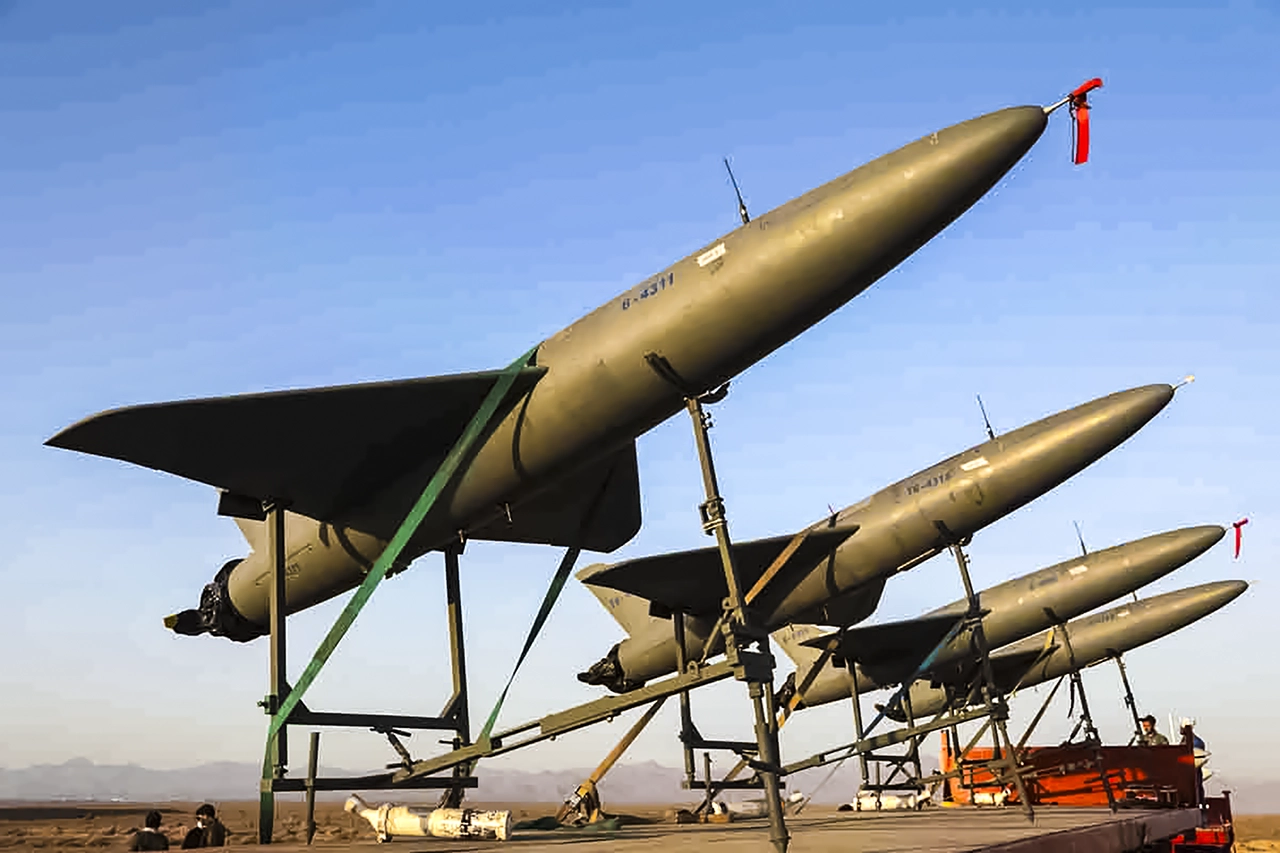
The real question is whether Tehran can make the economic price of continuing the war too high, too global, and too prolonged for the West to ignore. We are witnessing a masterclass in asymmetric warfare where Iran’s real weapon is the world economy. By deploying low-cost, high-impact tools, Tehran is proving that missiles, drones, mining threats and selective maritime disruption can be enough to make insurers, traders, shipowners and governments reprice risk across the entire globalized system.
Iran’s strategy is a meticulously calibrated economic coercion. Tehran is exploiting a rare combination of geography, target concentration and asymmetric tools to hold the global economic recovery hostage. And so far, the financial markets are proving them right.
The New Paradigm: Iran Asymmetric Economic Warfare
To understand the genius—and the terror—of Iran’s current playbook, one must discard the 20th-century notion that wars are won by destroying the enemy’s military formations. In a hyper-connected, hyper-optimized global economy, a nation does not need to sink a fleet to achieve strategic parity; it merely needs to make the cost of transit commercially unviable.
This is the essence of Iran asymmetric economic warfare. By utilizing swarms of cheap loitering munitions, unmanned surface vessels, and the persistent, invisible threat of naval mines, Tehran has fundamentally altered the cost-benefit analysis of navigating the world’s most critical maritime chokepoints. A $20,000 drone does not need to sink a $150 million Very Large Crude Carrier (VLCC) carrying $100 million worth of oil. It only needs to scorch its deck to trigger a systemic panic in the underwriting rooms of London and New York.
Tehran understands the fragility of the maritime arteries that sustain modern capitalism. This is why the recent entrance of Yemen’s Houthis into the broader conflict is so destabilizing. We are no longer looking at an isolated crisis in the Strait of Hormuz; we are facing a dual-chokepoint strangulation encompassing both Hormuz and the Bab el-Mandeb Strait. By targeting commercial vessels selectively—and reportedly floating a mafia-style “$2 million-per-ship fee” for guaranteed safe passage—Iran and its proxies are effectively levying a private tax on global trade.
This is not a traditional blockade. It is a protection racket scaled to the size of the global economy. Through Iran missiles drones mining global supply chains, Tehran is executing a strategy designed not to win a military victory, but to inflict a political and economic pain threshold that forces a diplomatic capitulation.
Repricing the Gulf: Iran Maritime Disruption Insurance
The immediate frontline of this new war is not the flight deck of a US aircraft carrier; it is the actuarial spreadsheets of global maritime insurers. The Strait of Hormuz disruption 2026 is triggering a seismic shift in how risk is priced, bought, and sold.
Prior to February 28, an estimated 20% of global oil consumption—roughly 21 million barrels per day—transited the Strait of Hormuz. Today, that volume has contracted sharply as shipping companies route around the cape or pause voyages entirely. For those that dare the passage, the financial toll is staggering. War-risk insurance premiums have skyrocketed, surging from a fraction of a percent of a vessel’s value to unsustainable single-digit percentages practically overnight.
As the Financial Times notes in its analysis of maritime risk, when Gulf shipping risk insurers repricing occurs at this velocity, the costs are immediately passed down the supply chain. Iran maritime disruption insurance is no longer a niche concern for shipping magnates; it is a direct inflationary tax applied to every commodity, manufactured good, and barrel of oil moving between East and West.
Data Visualization Context: [Chart: Oil Price Trajectory vs. Shipping Volumes Through Hormuz & Bab el-Mandeb Since Feb 28] – A diverging line graph illustrating the inverse relationship between plunging daily vessel transits in the Gulf and the sharp, unbroken ascent of Brent Crude prices crossing the $100 threshold.
This dynamic forces a profound recalibration of what constitutes “risk.” A shipowner looking at a 500% increase in war-risk premiums must decide if the cargo is worth the financial gamble. When the answer is no, vessels sit idle, supply chains freeze, and the global economy chokes. This is precisely what the architects in Tehran intended.
The Macro Shock: Inflation, Oil Trajectories, and Fed Paralysis
The ripple effects of this strategy are already crashing onto the shores of Western central banks. The Iran war oil prices impact has been immediate and violent. With US crude settling above the $100 mark and Brent eyeing a record monthly rise, the specter of the 1970s oil shocks has returned to haunt policymakers. The International Energy Agency (IEA) has already sounded the alarm, warning that we are teetering on the edge of the “largest supply disruption in history” if the conflict broadens to regional oil infrastructure.
This energy shock arrives at the worst possible macroeconomic moment. Just as the US Federal Reserve and the European Central Bank believed they had tamed the post-pandemic inflation dragon, the Gulf crisis has reignited price pressures. Federal Reserve Chair Jerome Powell recently signaled a “wait and see” approach regarding the war’s economic fallout, a subtle admission that the central bank is trapped. Raising interest rates to combat oil-driven inflation risks plunging the global economy into a deep recession; holding them steady risks allowing inflation to become entrenched.
The Economist recently highlighted the resurgence of stagflation fears, pointing out that a prolonged conflict exceeding three months will inevitably lead to deep macroeconomic scarring. By weaponizing the oil markets, Iran has effectively bypassed the Pentagon and launched a direct strike on the Federal Reserve. This is the zenith of Iran calibrated economic coercion 2026: forcing Western leaders into impossible domestic political dilemmas.
Target Concentration: The Outsized Impact on Asian Economies
While the geopolitical theater is fixated on the Washington-Tehran dynamic, the true economic victims of this asymmetric warfare reside in the East. The Strait of Hormuz closure economic impact on Asia cannot be overstated. The economies of China, Japan, India, and South Korea are fundamentally reliant on Middle Eastern crude and liquefied natural gas (LNG).
Tehran’s strategy capitalizes heavily on this “target concentration.” The overwhelming majority of the oil flowing through Hormuz is destined for Asian markets. Consequently, the disruption serves as a blunt instrument of leverage against the very nations that historically maintain neutral or even amicable relations with Iran.
The real-time fallout across the Indo-Pacific is stark. In Singapore, households are already facing immediate electricity tariff hikes for the April-June quarter, with the Energy Market Authority warning of sharper increases to come. Major logistics hubs are feeling the squeeze, with companies like Yeo Hiap Seng cutting headcount and moving operations to navigate the margin crush. Supply chains are fraying; luxury cars destined for Asian markets are stranded in Sri Lankan ports as Japanese shipping companies face paralyzing congestion.
To mitigate the crisis, Asian powers are scrambling for alternatives. Japan is hastily coordinating with Indonesia to secure thermal coal as a fallback for power generation, risking its climate commitments in the name of raw survival. Meanwhile, in a fascinating display of diplomatic fracture, Malaysia recently announced that its tankers would be exempt from Iran’s reported Hormuz toll—a testament to Kuala Lumpur’s pragmatic, long-standing relationship with Tehran.
This selective enforcement is the most insidious aspect of Iran economic coercion. By granting safe passage to some nations while punishing others, Tehran is attempting to divide the international community, making a unified coalition impossible. It forces Beijing and New Delhi to pressure Washington for a rapid de-escalation, effectively turning America’s vital trading partners into unwitting lobbyists for Iranian interests.
The Limits of Conventional Deterrence
The stark reality of 2026 is that traditional naval hegemony is insufficient to guarantee the free flow of global commerce. The US Navy, for all its unparalleled lethality, is designed to destroy state-level navies and project power ashore. It is not inherently designed to play an endless, unwinnable game of Whac-A-Mole against swarms of explosive drones launched from the backs of pickup trucks, or to sweep vast swathes of the Gulf for untethered acoustic mines.
As detailed by Foreign Affairs in their recent evaluation of Gulf security, attempting to solve an asymmetric economic problem with a symmetric military solution is a fool’s errand. Every Tomahawk missile fired at a fifty-dollar drone launch pad is a victory for Tehran’s arithmetic. The sheer cost imbalance heavily favors the instigator.
Furthermore, the secondary knock-on effects are paralyzing corporate strategy. Multinational giants are scaling back; consumer goods titans like Unilever have reportedly imposed global hiring freezes explicitly citing the Middle East war’s macroeconomic drag. Credit ratings agencies are recalibrating the sovereign debt of Gulf nations, with Fitch signaling downgrade risks for regional players due to post-war security environment uncertainties.
When global capital begins to view the entire Middle East as functionally un-investable and physically un-navigable, Iran’s objective is met. They do not need to plant a flag in Washington. They simply need to make the Dow Jones bleed until Washington offers terms.
Conclusion: Navigating a Repriced World
When Presidents Trump and Xi sit down in Beijing this May, the agenda will not merely be about tariffs, semiconductor export controls, or artificial intelligence dominance. The specter at the banquet will be the vulnerability of their shared globalized economy to asymmetric disruption. The Iran war of 2026 has irrevocably proved that the ultimate weapon of mass disruption is not nuclear; it is logistical.
We have entered an era where Iran’s real weapon is the world economy. The success of calibrated economic coercion means that future conflicts will increasingly mirror this blueprint. Rogue states and non-state actors alike have learned that by applying pressure to the delicate, over-optimized nodes of global supply chains, they can punch vastly above their geopolitical weight class.
The West cannot bomb its way out of an insurance crisis. Countering this new reality requires more than just deploying additional carrier strike groups. It demands a total reimagining of global supply-chain resilience, a rapid acceleration toward localized and diversified energy grids, and the painful acceptance that the era of friction-free, perfectly timed global shipping is over.
Until the world economy can insulate itself from the asymmetric leverage of chokepoint disruption, the true balance of power will not be measured in ballistic missiles or stealth fighters. It will be measured in the terrifyingly fragile mathematics of freight rates, risk premiums, and the price of a barrel of crude. The world has been repriced. We are all just paying the toll.
Discover more from The Economy
Subscribe to get the latest posts sent to your email.
-

 Markets & Finance3 months ago
Top 15 Stocks for Investment in 2026 in PSX: Your Complete Guide to Pakistan’s Best Investment Opportunities
-

 Analysis2 months ago
Brazil’s Rare Earth Race: US, EU, and China Compete for Critical Minerals as Tensions Rise
-

 Banks3 months ago
Best Investments in Pakistan 2026: Top 10 Low-Price Shares and Long-Term Picks for the PSX
-

 Investment3 months ago
Top 10 Mutual Fund Managers in Pakistan for Investment in 2026: A Comprehensive Guide for Optimal Returns
-

 Analysis2 months ago
Top 10 Stocks for Investment in PSX for Quick Returns in 2026
-

 Asia3 months ago
China’s 50% Domestic Equipment Rule: The Semiconductor Mandate Reshaping Global Tech
-

 Global Economy3 months ago
Pakistan’s Export Goldmine: 10 Game-Changing Markets Where Pakistani Businesses Are Winning Big in 2025
-

 Global Economy3 months ago
15 Most Lucrative Sectors for Investment in Pakistan: A 2025 Data-Driven Analysis