Global Economy
Resource Wealth and Geopolitical Vulnerability: Understanding Recent US Foreign Policy Toward Venezuela, Greenland, and Iran
An evidence-based analysis of how natural resources intersect with state capacity and international relations
In early January 2026, the United States took unprecedented action in Venezuela, capturing President Nicolás Maduro in a military operation. This dramatic escalation coincided with statements from President Trump expressing interest in acquiring Greenland and making references to other resource-rich territories. These events have reignited longstanding debates about the relationship between natural resource wealth, state capacity, and great power intervention.
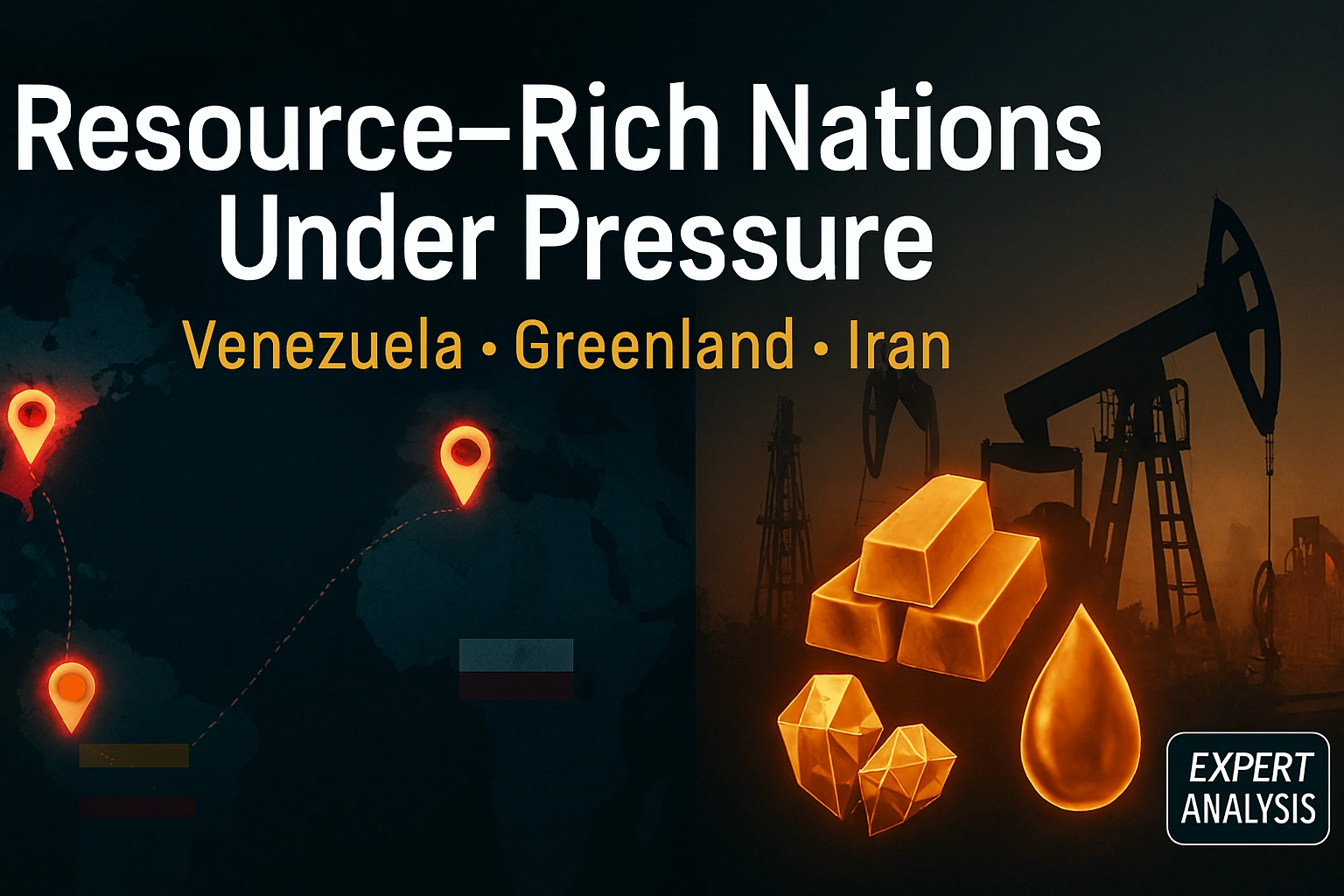
This article examines three countries—Venezuela, Greenland, and Iran—that share two key characteristics: significant natural resource endowments and varying degrees of geopolitical vulnerability. Rather than starting with conclusions, we’ll explore the complex dynamics that shape how resource abundance intersects with state weakness, international competition, and foreign policy decisions.
The Resource Curse Debate: What Research Actually Shows
For decades, scholars have debated whether natural resource wealth helps or hinders development. The “resource curse” theory suggests that countries rich in oil, minerals, or other commodities often experience slower economic growth, weaker institutions, and increased conflict. However, recent research from the World Bank paints a more nuanced picture.
Research indicates that the relationship between resources and development outcomes is far from deterministic. Countries with similar levels of resource wealth can achieve vastly different results in terms of economic growth, institutional quality, and democratic governance. The key variable appears to be institutional strength rather than resource abundance itself.
Studies examining resource-rich economies found that natural resource abundance and institutional performance indicators can have significant negative effects on economic growth in some groups of economies, confirming the presence of both resource curse and institutional curse. However, these economies have the potential to escape the resource curse provided they are able to build human capital, adopt information and communication technology services, and build quality institutions.
Some scholars have challenged the resource curse framework entirely, arguing for an “institutions curse” instead. Research from the United Nations suggests that weak institutions compel countries to rely on natural resource extraction as a default economic sector, rather than resources inherently weakening institutions. Under this view, resources can actually stimulate state capacity and development when properly managed.
Venezuela: Oil Abundance and Institutional Collapse
The Resource Profile
Venezuela possesses the world’s largest proven oil reserves at approximately 303 billion barrels—roughly 18 percent of global reserves. These reserves, primarily extra-heavy crude in the Orinoco Belt, require specialized refining but represent extraordinary potential wealth.
Beyond petroleum, Venezuela holds Latin America’s largest gold reserves and ranks among top global holders of iron ore and bauxite. The country claims reserves of 340 million tonnes of nickel along with significant copper resources.
From Abundance to Crisis
The Venezuelan case illustrates how resource wealth alone cannot guarantee prosperity or stability. Oil production collapsed from over 3 million barrels per day in the late 1990s to under 1 million in the early 2020s. This decline resulted from a combination of underinvestment, international sanctions, and skilled-labor attrition.
The country’s economic crisis deepened over years of political turmoil, with hyperinflation, mass migration, and deteriorating public services. International sanctions, particularly those targeting the oil sector, further constrained the government’s ability to maintain production or generate revenue from its primary resource.
Recent Developments
According to reporting from the Council on Foreign Relations, the Trump administration’s National Security Strategy emphasizes control of the Western Hemisphere. The operation that captured Maduro represents a dramatic escalation in US involvement in the region, justified partly by concerns about drug trafficking, mass migration, and connections to adversarial powers including China, Russia, and Iran.
Greenland: Strategic Minerals and Arctic Geopolitics
The Resource Landscape
Greenland’s known rare earth reserves are almost equivalent to those of the entire United States. If fully developed, these deposits could meet at least 25 percent of global rare earth demand—a crucial consideration given current supply chain vulnerabilities.
The island holds substantial reserves of lithium, niobium, hafnium, and zirconium, all critical components for batteries, semiconductors, and advanced technologies. These materials are essential for the energy transition and advanced manufacturing.
Development Challenges
Despite this potential, Greenland faces significant obstacles to resource development. Current mining concentrations are relatively low (1-3 percent versus optimal 3-6 percent), driving up extraction costs. Environmental concerns remain paramount, with Greenland passing a law in 2021 limiting uranium in mined resources, effectively halting development of a major rare earth project.
Infrastructure limitations and harsh Arctic conditions add further complexity and cost to any extraction operations. The economic viability of Greenland’s resources depends heavily on global market conditions and technological advances in extraction methods.
Strategic Considerations
According to recent reporting from TIME, President Trump has described Greenland as “surrounded by Russian and Chinese ships,” emphasizing Arctic geopolitics where melting ice caps have opened new shipping routes and access to previously inaccessible resources.
CNN reports that Trump stated the US needs Greenland “from the standpoint of national security,” while Greenland’s Prime Minister responded that “our country is not an object in great-power rhetoric. We are a people. A country. A democracy.”
Chinese companies are already invested in developing Greenland’s resources, reflecting broader competition between the United States and China for critical mineral supply chains. This competition has intensified as nations seek to reduce dependence on Chinese-dominated rare earth processing.
Iran: Energy Reserves and Geopolitical Isolation
Resource Endowment
Iran’s natural gas reserves constitute more than one-tenth of the world’s total, making it a major potential energy supplier. The country also possesses significant petroleum reserves and ranks among the world’s most mineral-rich nations.
With 68 types of minerals and 37 billion tonnes of proven reserves, Iran ranks fifth globally in total natural resource wealth, valued at approximately $27.5 trillion. This includes the world’s 9th largest copper reserves and 6th largest zinc reserves.
Sanctions and Isolation
Iran’s substantial resource wealth has been largely inaccessible to global markets due to decades of international sanctions. These restrictions, imposed primarily by the United States and its allies, have aimed to pressure Iran over its nuclear program and regional activities.
The sanctions regime demonstrates how resource wealth can become a liability rather than an asset when a country faces international isolation. Unable to fully monetize its resources, Iran has experienced significant economic constraints despite its natural endowments.
According to analysis from the Atlantic Council, Iran has long been allied to Venezuela, using Caracas to bypass US sanctions. The operation against Maduro signals to Iran that Washington is willing to pursue regime change when deemed in US interests.
Institutional Capacity and Resource Governance
A key factor distinguishing successful resource-rich countries from struggling ones is institutional capacity. Research published in Energy Policy indicates that strong institutions help countries escape the resource curse, though the emphasis on institutions as solutions sometimes ignores the circumstances under which institutions are formed and how they change.
When governments derive most revenue from resources rather than taxes, they face less pressure to provide responsive governance. Citizens cannot easily hold leaders accountable through the power of the purse. This dynamic can lead to what scholars call “rentier states” where political legitimacy depends on resource distribution rather than governmental effectiveness.
World Bank research has shown that financial systems are less developed in more resource-rich countries. Studies indicate that unexpected exogenous windfalls from natural resource rents are not intermediated effectively, with institution building and regulatory reform being even more important in resource-rich countries.
However, institutional weakness itself may precede resource development. Academic analysis suggests many countries developed resource extraction as a default economic sector precisely because weak institutions prevented cultivation of more diversified economies.
Great Power Competition and Strategic Resources
The contemporary geopolitical landscape is characterized by intensifying competition for strategic resources, particularly critical minerals essential for advanced technologies and the energy transition. China currently dominates global critical mineral supply chains, creating vulnerabilities for other nations.
This competition manifests differently across our three case studies. In Venezuela, the focus remains primarily on petroleum. In Greenland, rare earth minerals take center stage. Iran’s situation involves both energy resources and strategic minerals, complicated by its geopolitical position in the Middle East.
The Trump administration’s National Security Strategy, as discussed by Council on Foreign Relations experts, has emphasized control of the Western Hemisphere and securing access to critical resources. This approach reflects broader concerns about economic security and technological competitiveness in an era of great power rivalry.
Historical Patterns in Resource-Related Interventions
US foreign policy toward resource-rich regions has historical precedents worth examining. Research indicates the United States intervened successfully to change governments in Latin America 41 times between 1898 and 1994—approximately once every 28 months for an entire century.
While economic interests have often been cited as underlying causes, the reality appears more complex. Multiple factors typically converge: strategic considerations, ideological preferences, corporate interests, and perceived threats to American influence. Pure economic motivations rarely operate in isolation from these other dynamics.
The Role of Sanctions and Economic Pressure
Economic sanctions have become a preferred tool of US foreign policy, particularly toward resource-rich nations. IMF working papers examining natural resource dependence and policy responses have found that the resource curse can be particularly severe for economic performance in countries with low degrees of trade openness.
In Venezuela, oil sanctions dramatically reduced government revenues and production capacity. In Iran, sanctions have prevented full exploitation of vast energy reserves. The effectiveness of sanctions in achieving policy objectives remains debated, but their impact on resource-dependent economies is undeniable.
Sanctions create a paradox for resource-rich nations: possessing valuable commodities provides little benefit if international markets remain inaccessible. This dynamic can weaken already struggling institutions and exacerbate humanitarian crises, though proponents argue sanctions pressure governments toward policy changes.
International Law and Territorial Sovereignty
Questions of international law loom over discussions of great power actions toward weaker states. Foreign Policy reporting notes that the United Nations Security Council held an emergency meeting following the Venezuela operation, with Colombia’s UN Ambassador stating that “there is no justification whatsoever, under any circumstances, for the unilateral use of force to commit an act of aggression.”
The principle of territorial sovereignty, enshrined in the UN Charter, theoretically protects nations from external intervention regardless of their resource wealth or institutional capacity. However, the practical application of these principles has been uneven. As a permanent member of the Security Council, the United States can veto resolutions and block punitive measures.
Greenland’s status as an autonomous territory within the Kingdom of Denmark adds additional legal complexity to any discussion of its future. While Greenland has substantial self-governance, Denmark retains control over foreign affairs and defense policy.
Looking Forward: Implications and Uncertainties
Several key factors will likely shape future dynamics around resource-rich states:
Technology and Markets: Advances in extraction technology, changing global demand patterns, and shifts in energy systems will all influence which resources matter most and how accessible they become.
Climate Change: Arctic warming makes previously inaccessible resources more reachable while simultaneously raising environmental concerns about extraction in fragile ecosystems.
Multipolar Competition: As China, Russia, and other powers increase their global engagement, resource-rich nations may have more options for partnerships and investment, potentially reducing any single power’s leverage.
Institutional Development: Some resource-rich nations are successfully building stronger institutions and more diversified economies, challenging deterministic narratives about the resource curse.
Domestic Politics: Within both resource-rich nations and major powers, domestic political dynamics will shape foreign policy approaches and resource development strategies.
Conclusion
The relationship between resource wealth, state capacity, and foreign intervention is far more complex than simple cause-and-effect narratives suggest. Venezuela, Greenland, and Iran each possess significant natural resources, but they differ dramatically in their governance structures, strategic environments, and relationships with major powers.
Research from multiple institutions indicates that resources themselves are neither inherently beneficial nor harmful. Rather, their impact depends on institutional quality, governance capacity, and the broader geopolitical context. Countries can escape the resource curse through strong institutions, transparent governance, and economic diversification, though building these capacities presents significant challenges.
For policymakers, the key insight is that resource abundance creates both opportunities and vulnerabilities. How nations navigate these dynamics depends on complex interactions between domestic institutions, international competition, and the evolving global economy. Simple interventions or quick fixes are unlikely to address the multifaceted challenges facing resource-rich states with weak institutions.
Understanding these dynamics requires moving beyond ideological positions to examine specific contexts, historical patterns, and the often-contradictory interests at play. Only through such nuanced analysis can we develop more effective approaches to resource governance and international relations in an increasingly competitive world.
Frequently Asked Questions
Why does Trump want Greenland? Trump has cited both national security and economic reasons for interest in Greenland, emphasizing its strategic location in the Arctic and its substantial rare earth mineral deposits that are critical for advanced technologies.
What natural resources does Venezuela have? Venezuela possesses the world’s largest proven oil reserves (approximately 303 billion barrels), Latin America’s largest gold reserves, and significant deposits of iron ore, bauxite, nickel, and copper.
How do sanctions affect resource-rich countries? Sanctions can prevent resource-rich countries from accessing international markets, limiting their ability to monetize natural resources despite their abundance. This creates economic constraints and can weaken institutions further.
What makes a state “weak” in geopolitical terms? Geopolitical weakness typically refers to limited institutional capacity, economic vulnerability, political instability, military asymmetry compared to major powers, and isolation from international protection mechanisms.
How does resource wealth create vulnerability? Resource wealth can create vulnerability by encouraging institutional weakness (reducing need for taxation), attracting external intervention, enabling corruption, preventing economic diversification, and making countries targets in great power competition for strategic materials.
Further Reading
For readers interested in exploring these topics further, consider examining:
- World Bank research on natural resources and development
- Council on Foreign Relations analysis of US foreign policy
- IMF working papers on resource economics
- United Nations research on resource governance
- Academic journals on political economy and international relations
The complexity of these issues demands ongoing engagement with diverse perspectives and rigorous empirical research rather than reliance on simplified narratives or ideological frameworks.
Discover more from The Economy
Subscribe to get the latest posts sent to your email.
Geopolitics
Global Cooperation Barometer 2026: Why International Collaboration Isn’t Dead—It’s Just Evolving [WEF Report Analysis]
While 123 million people were forcibly displaced in 2024—the highest number on record—global cooperation metrics held remarkably steady. This paradox lies at the heart of the World Economic Forum’s Global Cooperation Barometer 2026, a comprehensive analysis that challenges our assumptions about international collaboration in an age of rising tensions.
The third edition of this landmark report, developed in partnership with McKinsey & Company, reveals a nuanced truth: global cooperation isn’t collapsing—it’s transforming. Traditional multilateral frameworks may be straining under geopolitical pressures, but smaller, more agile coalitions are emerging to fill critical gaps in trade, technology transfer, climate action, and even security.
This evolution represents what UN Secretary-General António Guterres calls “hard-headed pragmatism”—the recognition that cooperation makes sense when it delivers tangible mutual benefits, even in a fragmented world.
What is the Global Cooperation Barometer 2026?
The Global Cooperation Barometer is an annual assessment by the World Economic Forum and McKinsey & Company that measures international collaboration across five key areas: trade and capital, innovation and technology, climate and natural capital, health and wellness, and peace and security. Using 41 metrics indexed to 2020, the 2026 edition finds overall cooperation held steady despite geopolitical tensions, but its composition shifted dramatically—from large multilateral frameworks toward smaller, flexible coalitions based on aligned interests and pragmatic problem-solving.
After analyzing 41 distinct metrics across five essential pillars—trade and capital, innovation and technology, climate and natural capital, health and wellness, and peace and security—the report’s central finding is clear: cooperation is adapting to new realities rather than disappearing entirely.
The Surprising Resilience of Global Cooperation
The 2026 Global Cooperation Barometer tracks international collaboration from 2012 through 2024, with all data indexed to 2020 as a baseline. This methodology, endorsed by OECD economists, allows researchers to isolate trends that emerged before the COVID-19 pandemic and those accelerated by it.
The topline finding? Overall cooperation levels in 2024 remained virtually unchanged from 2023, despite an environment characterized by:
- Escalating trade barriers and protectionist policies
- Multiple active military conflicts across three continents
- Heightened mistrust between major economic powers
- Record levels of forced displacement
- Increasing restrictions on technology transfers
According to Børge Brende, President and CEO of the World Economic Forum, “The paradox is that, at a time of such rapid change, developing new and innovative approaches to cooperation requires refocusing on some of the basics—notably, doubling down on dialogue.”
Understanding the Methodology
The barometer’s rigor lies in its comprehensive approach. Each of the five pillars comprises two indices:
- Action Index: Measures concrete cooperative behaviors (trade flows, knowledge exchange, financial transfers)
- Outcome Index: Tracks results of cooperation (life expectancy, emissions levels, conflict casualties)
Data is normalized to account for economic growth and population changes, ensuring that trendlines reflect genuine cooperation shifts rather than simple expansion. For example, trade metrics are measured as a percentage of global GDP, while migration data is normalized to global population levels.
This methodology, reviewed by International Monetary Fund economists, provides an apples-to-apples comparison across vastly different domains—from pharmaceutical R&D cooperation to peacekeeping deployments.
The Composition Shift That Matters
While aggregate cooperation held steady, the composition of that cooperation shifted dramatically. Metrics tied to global multilateral institutions—those large-scale frameworks involving most of the world’s nations—declined sharply:
- UN Security Council resolutions fell from 50 in 2023 to 46 in 2024
- Multilateral peacekeeping operations dropped by 11% year-over-year
- Official Development Assistance plummeted 10.8% in 2024
- International Health Regulations compliance weakened
Simultaneously, cooperation flourished in areas where flexible, interest-based partnerships could operate:
- Cross-border data flows surged, with international bandwidth now 4x larger than pre-pandemic levels
- Services trade continued its five-year growth trajectory
- Climate finance reached record levels, approaching $1 trillion annually
- Foreign direct investment in strategic sectors (semiconductors, data centers, EV batteries) accelerated
This divergence reveals a fundamental shift: from universal frameworks to tailored coalitions. As McKinsey’s research demonstrates, cooperation increasingly follows geopolitical alignment, with partners choosing collaborators based on shared interests and values rather than institutional membership alone.
Trade and Capital: Reconfiguration Over Retreat
The trade and capital pillar reveals perhaps the most complex story in the entire report. On the surface, cooperation appears flat—neither advancing nor retreating significantly. But beneath this stability, tectonic plates are shifting.
The Great Trade Rearrangement
According to World Trade Organization data analyzed in the report, global goods trade grew slightly slower than overall GDP in 2024, leading to a marginal decline in trade intensity. More revealing than the volume, however, is the geographic redistribution underway.
McKinsey Global Institute research finds that the average “geopolitical distance” of global goods trade fell by approximately 7% between 2017 and 2024. Countries are trading more with geopolitically aligned partners and less with distant ones—particularly between the United States and China.
The numbers tell a stark story:
- US imports from China fell 20% in the first seven months of 2025 compared to the same period in 2024
- Developing countries’ share of manufacturing exports rose by 5 percentage points in 2024
- China represented over half of this growth, adding $276 billion in exports
- Trade concentration (measured by the Herfindahl-Hirschman Index) declined by about 1%, indicating slight diversification
“We’re witnessing not deglobalization but reglobalization,” explains Dr. Richard Baldwin, Professor of International Economics at the Graduate Institute Geneva. “Trade relationships are being rewired along lines of trust and strategic alignment.”
The Silent Surge in Services and Capital
While goods trade reconfigured, less visible but equally important flows accelerated. Services trade—encompassing IT services, professional services, travel, and digitally delivered offerings—continued climbing throughout 2024.
According to UNCTAD data, services trade growth was driven primarily by:
- Digitally delivered services: IT consulting, cloud services, software development
- Business services: R&D, engineering, professional services
- Travel services: Rebounding from pandemic lows, though not yet at 2019 levels
Foreign direct investment told a similar story. While overall FDI flows remained complex (influenced by “phantom FDI” in tax havens), greenfield investment announcements—representing real productive capacity—surged in future-shaping industries.
FDI Markets data reveals a striking trend: newly announced greenfield projects concentrated heavily in:
- Semiconductors: $89 billion in announced projects globally
- Data centers and AI infrastructure: $370 billion (up from $190 billion in 2024)
- EV battery manufacturing: $67 billion
- Critical minerals processing: $34 billion
These investments flowed predominantly between geopolitically aligned partners. Advanced economies, particularly the United States, attracted the lion’s share, while China’s portion of announced FDI inflows dropped from 9% (2015-19 average) to just 3% (2022-25).
The Multilateral Casualty: Foreign Aid
The sharpest decline in the trade and capital pillar came in Official Development Assistance. According to OECD tracking, ODA fell 10.8% in 2024, with only four donor countries exceeding the UN target of 0.7% of gross national income.
The 2025 outlook appears even bleaker. The OECD projects an additional 9-17% decline in ODA, driven by:
- Reduced humanitarian aid budgets
- Decreased refugee spending in donor countries
- Lower aid to Ukraine as military assistance shifts
- Domestic political pressures in major donor nations
This trend has profound implications for low and middle-income countries that depend on international assistance for health systems, education, and infrastructure development.
New Coalition Models Emerge
Despite these challenges, innovative cooperation frameworks are sprouting. The Future of Investment and Trade (FIT) Partnership, launched in September 2025, brings together 14 economies—including Singapore, New Zealand, Switzerland, and the UAE—to pilot practical trade cooperation mechanisms.
According to Brookings Institution analysis, such “minilateral” arrangements offer several advantages over traditional multilateral treaties:
- Speed: Smaller groups reach consensus faster
- Flexibility: Tailored agreements address specific needs
- Resilience: Less vulnerable to any single member’s withdrawal
- Pragmatism: Focus on mutual gains rather than universal principles
Other examples include the EU-Mercosur trade agreement (after a decade of negotiations), the ASEAN Digital Economy Framework Agreement, and bilateral critical minerals deals between the US and allies like Australia and Canada.
Innovation and Technology: The AI Race Drives Selective Cooperation
The innovation and technology pillar registered a 3% year-over-year increase—one of the strongest performances across all five domains. Yet this growth masks growing tensions over technology transfer, particularly in areas deemed strategically sensitive.
The Data Flow Explosion
International bandwidth capacity quadrupled between 2019 and 2024, according to International Telecommunication Union statistics. Cross-border data flows—measured as a percentage of total internet traffic—continued their upward trajectory, fueled by:
- Cloud computing adoption accelerating globally
- Remote work normalizing post-pandemic
- Streaming services expanding internationally
- AI model training requiring distributed datasets
Cisco’s annual internet report projects that global IP traffic will reach 4.8 zettabytes per year by 2027, with a growing share crossing international borders.
This digital connectivity enabled a corresponding rise in IT services trade. Software development, cloud services, and AI consultation increasingly operate as global markets, with talent and expertise flowing across borders despite physical restrictions.
The Strategic Technology Paradox
Even as general technology cooperation flourished, restrictions tightened on specific advanced technologies. The United States expanded export controls on:
- Advanced semiconductors and chipmaking equipment
- AI training systems above certain computational thresholds
- Quantum computing components
- Certain biotechnology applications
According to McKinsey research on export controls, these restrictions primarily target China but ripple across global supply chains, affecting companies and research institutions worldwide.
The paradox? Cooperation in cutting-edge technologies continues—but increasingly within aligned blocs. Examples include:
US-Aligned Technology Partnerships:
- US-India Initiative on Critical and Emerging Technology (iCET)
- US-EU Trade and Technology Council advancing AI safety standards
- US-Japan semiconductor research collaboration
- US-UAE framework on advanced technology cooperation
China-Led Technology Initiatives:
- 5G infrastructure partnerships across Southeast Asia and Africa
- AI research centers in Gulf states
- Data center investments in emerging markets
- Technology transfer agreements with Belt and Road countries
Foreign Affairs magazine describes this as “technological bifurcation”—not complete decoupling, but the emergence of parallel ecosystems with limited interconnection.
The Student Visa Squeeze
One concerning trend threatens long-term technology cooperation: declining international student mobility. After reaching record highs in 2024 (up 8% from 2023), international student flows appear to be contracting in 2025.
Data from major destination countries shows:
- United States: F-1 and M-1 student visas down 11% in Q1 2025
- United Kingdom: Student visa grants fell 2% year-over-year
- Australia: International student approvals dropped 64% (driven by new policy restrictions)
- Canada: Study permits declined amid new caps on international students
According to the Institute of International Education, this reversal could have long-term consequences for innovation. Historically, international students have contributed disproportionately to research breakthroughs, entrepreneurship, and cross-border knowledge networks.
Dr. Mary Sue Coleman, President of the Association of American Universities, warns: “When we restrict the flow of talent, we don’t just hurt international students—we diminish our own innovative capacity.”
The Productivity Question
Despite increases in most innovation metrics, one crucial outcome measure remained stubbornly flat: total factor productivity growth. The Conference Board’s data shows global productivity growth has stagnated for over a decade, raising questions about whether current cooperation patterns effectively translate into tangible economic benefits.
However, McKinsey Global Institute research suggests this may change. Generative AI could increase global productivity growth by 0.1 to 0.6 percentage points annually through 2040, but only if cooperation enables:
- Cross-border data access for model training
- International talent mobility for AI development
- Shared safety standards and governance frameworks
- Collaborative research on frontier applications
The question isn’t whether technology cooperation will matter—it’s whether current cooperation patterns will be sufficient to realize these gains.
Climate and Natural Capital: Deployment Rises, Outcomes Lag
The climate and natural capital pillar demonstrates both the promise and limitations of current cooperation patterns. Investment and deployment reached record levels, yet environmental outcomes continue deteriorating.
The Clean Energy Deployment Surge
Solar and wind capacity additions doubled between 2022 and 2024—from 300 to 600 gigawatts—according to the International Renewable Energy Agency. In the first half of 2025 alone, installations were 60% higher than the same period in 2024.
Remarkably, in the last 18 months, the world installed more solar capacity than in the previous three years combined.
International Energy Agency analysis attributes this acceleration to:
- Dramatic cost reductions: Solar module prices fell 90% over the past decade
- Global supply chains: Chinese manufacturing scale drove affordability
- Policy alignment: Domestic energy security goals converged with climate objectives
- Climate finance flows: Both public and private investment reached near $1 trillion annually
China accounted for two-thirds of solar, wind, and electric vehicle additions, but developing economies showed strong momentum. India became the world’s second-largest solar installer, while Brazil accelerated wind and solar deployment significantly.
The Natural Capital Challenge
While energy transition metrics improved, natural capital indicators stagnated or worsened:
- Marine protected areas: Growth stalled during 2023-24
- Terrestrial protected areas: Expansion slowed after steady progress
- Ocean Health Index: Continued gradual decline
- Biodiversity loss: Accelerated despite international commitments
The UN’s High Seas Treaty, reaching the required 60 ratifications in late 2025, offers hope. Entering force in January 2026, it creates the first legally binding framework for protecting two-thirds of the ocean beyond national jurisdiction.
Yet implementation remains uncertain, and the treaty faces the same multilateral pressures affecting other global agreements.
The Emissions Reality Check
Despite record clean energy deployment, global greenhouse gas emissions continued rising in 2024. Global Carbon Project data shows fossil fuel emissions reached approximately 37.8 billion tonnes of CO2 in 2024, up from 37.3 billion tonnes in 2023.
According to McKinsey Global Institute research, the energy transition is progressing at roughly half the speed needed to meet Paris Agreement goals of limiting warming to 1.5°C.
There is one encouraging trend: emissions intensity (emissions per unit of GDP) continues declining, demonstrating that economic growth can occur alongside emissions management—even if absolute reductions remain elusive.
Regional Climate Coalitions Take the Lead
As comprehensive global agreements prove challenging, regional cooperation is filling gaps:
European Union Initiatives:
- The Clean Industrial Deal (February 2025) aims to make decarbonization a competitive advantage
- The Net-Zero Industry Act accelerates manufacturing of clean technologies in Europe
- The Critical Raw Materials Act secures strategic inputs for the energy transition
- The EU-Central Asia Hydrogen Partnership (September 2025) creates new clean energy corridors
ASEAN Cooperation:
- The LTMS-PIP (Laos-Thailand-Malaysia-Singapore Power Integration Project) enables cross-border clean power trading
- Progress toward an integrated ASEAN Power Grid enhances energy security while enabling renewable deployment
- The ASEAN Community Vision 2025 and Master Plan on ASEAN Connectivity both reached target dates with mixed implementation
COP30 Outcomes: The UN climate conference in Brazil produced several commitments:
- Tripling of adaptation finance by 2035
- Launch of the Tropical Forests Forever Facility to boost investment in protected areas
- New mechanisms for loss and damage funding
Climate Policy Initiative analysis notes that while these commitments are significant, the critical challenge remains implementation—translating pledges into deployed capital and measurable emissions reductions.
The Just Energy Transition Shortfall
One area of cooperation that significantly underperformed expectations: the Just Energy Transition Partnerships (JETPs). These international financing mechanisms aim to assist emerging economies in transitioning to low-emission energy systems.
Despite commitments totaling $50 billion, only $7 billion had been delivered by June 2025—a 86% shortfall. According to World Resources Institute analysis, delays stemmed from:
- Bureaucratic complexity in mobilizing multilateral funds
- Competing domestic priorities among donor nations
- Difficulty coordinating between multiple financial institutions
- Recipients’ concerns about sovereignty and conditionality
This underperformance illustrates a broader challenge: while climate cooperation shows resilience in some areas (financing, trade, technology deployment), translating commitments into action remains difficult in the current geopolitical environment.
Health and Wellness: Resilient Outcomes, Eroding Support
The health and wellness pillar presents perhaps the most deceptive picture in the entire barometer. Overall cooperation appears stable—but this masks a dangerous erosion of the foundational support systems that enable positive health outcomes.
The Outcome Resilience
All major health outcome metrics improved in 2024, according to the Institute for Health Metrics and Evaluation:
- Life expectancy continued its post-pandemic recovery
- Child mortality (under-five) declined further
- Maternal mortality decreased in most regions
- Disability-adjusted life years (DALYs) improved globally
These improvements reflect long-term developmental trends, post-pandemic normalization, and the cumulative effect of previous investments in global health systems.
However, health experts warn these improvements may prove temporary if current trends in health cooperation continue.
The Development Assistance Crisis
Development Assistance for Health fell 6% to $50 billion in 2024—continuing a three-year downward trend. IHME projections suggest an additional $11 billion decline in 2025, largely due to expected cuts from US funding agencies (approximately $9 billion).
Major donor reductions include:
- United States: PEPFAR (President’s Emergency Plan for AIDS Relief) facing budget pressures; USAID tightening cost-sharing requirements
- United Kingdom: Continued retrenchment in global health spending amid domestic fiscal pressures
- Germany: ODA cuts affecting health assistance
According to World Health Organization officials, this creates a dangerous dynamic: bilateral health assistance increasingly focuses on direct service delivery (medicines, diagnostics, frontline care) while reducing support for health system infrastructure, training, and governance.
Dr. Tedros Adhanom Ghebreyesus, WHO Director-General, describes this as “robbing Peter to pay Paul—we’re treating today’s patients while dismantling the systems needed to care for tomorrow’s.”
The Multilateral-Bilateral Shift
A significant trend emerged in 2024: funding through multilateral channels (WHO, Global Fund, multilateral development banks) fell by approximately 20%, while bilateral country-to-country funding declined only 3%.
This shift toward bilateral assistance has several implications:
Potential Benefits:
- More direct accountability between donor and recipient
- Faster deployment to specific needs
- Reduced bureaucratic overhead
- Clearer metrics for impact assessment
Significant Risks:
- System-level costs (training, governance, infrastructure) go unfunded
- Recipients face increased burden on domestic budgets
- Coordination between different bilateral programs weakens
- Political considerations may override health priorities
- Smaller countries with less strategic importance receive less support
Pandemic Preparedness in Limbo
The WHO Pandemic Agreement, adopted in May 2025 after three years of challenging negotiations, represents both an achievement and a disappointment in health cooperation.
On one hand, the agreement marks the first binding global framework for pandemic response, addressing lessons from COVID-19 around:
- Equitable access to vaccines and therapeutics
- Information sharing during outbreaks
- Research collaboration and pathogen surveillance
- Capacity building in low-resource settings
On the other hand, the United States—the world’s largest economy and historically the leading contributor to global health—did not participate in the agreement. This absence raises questions about the framework’s practical effectiveness.
Dr. Jennifer Nuzzo, Director of the Pandemic Center at Brown University School of Public Health, notes: “Treaties create obligations on paper, but pandemic preparedness requires sustained investment, trust, and coordination—all of which are in short supply in the current environment.”
Regional Health Cooperation Gains Ground
As global multilateral frameworks face pressure, regional cooperation showed promising developments:
Africa:
- The African Medicines Agency held its second session in Kigali (June 2025), advancing pharmaceutical regulatory harmonization
- The Accra Compact aligned African governments on health sovereignty priorities
- South Africa’s Aspen Pharmacare expanded COVID-19 vaccine manufacturing for the continent
Caribbean:
- The Organisation of Eastern Caribbean States scaled a model to reduce insulin prices region-wide
- Negotiations advanced on a Caribbean pharmaceutical procurement alliance
Latin America:
- Brazil’s Butantan Institute partnered with other regional manufacturers on vaccine development
- The Pan American Health Organization (PAHO) strengthened regional disease surveillance
The Lancet, in a November 2025 editorial, described these developments as “pragmatic regionalism”—a recognition that health security increasingly depends on strong regional capacity rather than solely on global institutions.
The Healthspan-Lifespan Gap
One troubling trend that demands attention: while life expectancy continues rising, “health-adjusted life expectancy” (years lived in good health) lags behind. According to research published in JAMA Network Open, this means people are living more years with illness and disability.
This “healthspan-lifespan gap” varies significantly by geography and socioeconomic status, but it’s widening in most regions—suggesting that current health cooperation patterns, while extending life, may be less effective at ensuring those additional years are healthy and productive.
Peace and Security: The Pillar Under Greatest Strain
No pillar declined as sharply as peace and security. Every single metric tracked in this domain fell below pre-pandemic levels, reflecting an intensification of conflict and a weakening of multilateral conflict resolution mechanisms.
The Conflict Surge
The number of active conflicts increased in 2024, according to Uppsala Conflict Data Program. Major conflicts include:
- The ongoing Russia-Ukraine war (continuing into its third year)
- Israel-Hamas conflict in Gaza (beginning October 2023)
- Israel-Hezbollah hostilities (escalating in 2024)
- Civil war in Sudan (displacing 11.5 million people)
- Civil war in Myanmar (intensifying since 2021 coup)
- Intensified fighting in eastern Democratic Republic of Congo
Battle-related deaths remained near 2023 levels, with the Russia-Ukraine conflict accounting for over 40% of total fatalities.
The Displacement Crisis
Forcibly displaced people reached a record 123 million globally by the end of 2024, according to UNHCR. This represents an increase from 117 million in 2023 and 108 million in 2022.
The Sudan conflict alone displaced approximately 11.5 million people—the largest single-year displacement since Syria’s civil war peaked in 2013-2015.
Refugee flows strained hosting countries, particularly:
- Turkey (hosting 3.6 million Syrian refugees plus new arrivals)
- Pakistan (hosting Afghan refugees amid economic crisis)
- Uganda (hosting over 1.5 million refugees from multiple neighboring conflicts)
- Poland and other Eastern European nations (supporting Ukrainian refugees)
According to Internal Displacement Monitoring Centre, the costs of supporting displaced populations fall disproportionately on middle-income countries neighboring conflict zones—countries that often lack the resources for adequate support.
Multilateral Mechanisms Under Pressure
The decline in multilateral peace and security cooperation manifested in several metrics:
UN Security Council:
- Resolutions decreased from 50 (2023) to 46 (2024)
- Vetoes by permanent members blocked action on several major conflicts
- The ratio of resolutions to active conflicts declined significantly
- Until November 2025, no new peacekeeping operation had been mandated since 2014
Peacekeeping Operations:
- The ratio of multilateral peacekeeping operations to conflicts fell by approximately 11% year-over-year
- Personnel deployed to multilateral peace operations declined by more than 40% between 2015 and 2024
- Budget constraints disrupted operations, with the approved UN peacekeeping budget falling from $9.7 billion (2014) to $4.7 billion (2025)
Stockholm International Peace Research Institute attributes these declines to:
- Geopolitical tensions among major powers limiting consensus
- Donor fatigue and budget pressures in contributing countries
- Questions about peacekeeping effectiveness in complex civil wars
- Host country sovereignty concerns limiting mandate flexibility
The Cyber and Grey-Zone Threat
Beyond traditional kinetic conflict, 2024 saw intensification of cyberattacks and “grey-zone” activities—actions that fall below the threshold of open warfare but still inflict significant damage.
Verizon’s 2025 Data Breach Investigations Report documents surging cyber incidents across Asia, the Middle East, and Europe. High-profile attacks in 2024-25 included:
- Tata Motors’ Jaguar Land Rover halted production due to cyberattack (September 2025)
- Marks & Spencer faced up to £300 million losses from cyber breach (May 2025)
- Multiple critical infrastructure attacks across Europe
Physical infrastructure also came under attack through grey-zone operations:
- Sabotage of gas pipelines in Europe
- Damage to undersea internet cables in the Red Sea and West Africa (three major multi-cable outages)
- GPS jamming affecting civilian aviation
- Disinformation campaigns targeting elections in multiple democracies
Center for Strategic and International Studies analysis suggests these grey-zone activities are becoming the preferred tool for state and non-state actors seeking to achieve strategic objectives while avoiding direct military confrontation.
The Defense Spending Response
Countries responded to deteriorating security with increased defense budgets:
NATO:
- All 32 member states met the 2% of GDP defense spending target in 2025 (compared to fewer than 20 in 2024)
- The alliance raised its spending target to 5% of GDP for 2035 at The Hague Summit (June 2025)
Asia-Pacific:
- China continued double-digit defense budget increases
- Japan increased defense spending significantly, moving toward the 2% NATO target
- India expanded military modernization programs
- Australia boosted defense spending in response to regional tensions
European Union:
- The European Defence Agency reported increased spending across member states
- New EU defense industrial strategy launched to build autonomous capabilities
According to International Institute for Strategic Studies, global military expenditure reached approximately $2.4 trillion in 2024, representing roughly 2.2% of global GDP—the highest level since the early post-Cold War period.
Regional Peacekeeping Fills the Gap
Despite the decline in UN-led multilateral operations, regional bodies stepped up:
African Union:
- Led security transition in Somalia (ATMIS – African Union Transition Mission in Somalia)
- Deployed forces to eastern Democratic Republic of Congo
- Supported peacekeeping efforts in South Sudan
ECOWAS (Economic Community of West African States):
- Maintained presence in several West African nations
- Coordinated responses to coups and instability in the Sahel
Arab League and GCC (Gulf Cooperation Council):
- Mediation efforts in Yemen
- Coordination on security challenges in the Red Sea corridor
United States Institute of Peace research suggests regional organizations often have advantages in peacekeeping:
- Better understanding of local contexts and dynamics
- Greater perceived legitimacy among parties to conflicts
- Ability to act when great power politics block global action
- More flexible mandates and lighter bureaucracy
However, these operations also face significant challenges, including limited resources, potential conflicts of interest among regional powers, and questions about impartiality.
Emerging Bright Spots in Conflict Resolution
Despite the overall decline, some successful examples of cooperation emerged in 2024-25:
Türkiye’s Mediation:
- The Ankara Declaration (February 2025) led to de-escalation of tensions between Ethiopia and Somalia
- Turkish diplomacy facilitated technical talks and confidence-building measures
Armenia-Azerbaijan Progress:
- The two nations agreed on the text of a peace treaty with EU and US facilitation
- Steps taken to keep third-country forces off borders reduced immediate escalation risks
Israel-Hamas Ceasefire:
- After 15 months of conflict, Qatar and Egypt mediated a ceasefire agreement in January 2025
- While fragile, the agreement created space for humanitarian access and reconstruction discussions
These examples underscore a theme throughout the barometer: while large-scale multilateral frameworks struggle, tailored diplomatic efforts by committed mediators can still yield results.
The Rise of Minilateralism: From Global to Agile
The single most important trend across all five pillars is the shift from universal, rules-based multilateralism toward smaller, flexible, interest-based coalitions.
Defining the New Cooperation Landscape
Multilateralism traditionally involved:
- Near-universal membership (180+ countries)
- Comprehensive frameworks (covering many issues)
- Consensus-based decision-making
- Institutional permanence (UN, WTO, WHO, etc.)
- Rules-based order with dispute resolution mechanisms
Minilateralism (sometimes called “plurilateralism”) instead features:
- Small groups of like-minded countries (3-20 members)
- Focused agendas (addressing specific challenges)
- Streamlined decision-making (easier consensus)
- Purpose-built arrangements (dissolving when objectives met)
- Pragmatic cooperation based on mutual interests
According to Council on Foreign Relations analysis, minilateralism offers several advantages in the current environment:
- Speed: Smaller groups negotiate and implement faster
- Flexibility: Tailored solutions address specific needs without compromising for universal buy-in
- Resilience: Less vulnerable to any single member’s withdrawal or obstruction
- Effectiveness: Clear objectives and accountable membership improve outcomes
- Complementarity: Can coexist with and supplement multilateral frameworks
Examples Across the Five Pillars
Trade and Capital:
- Future of Investment and Trade (FIT) Partnership (14 economies)
- EU-Mercosur trade agreement (after decade of negotiations)
- ASEAN Digital Economy Framework Agreement
- US-Australia-Japan-India Quad economic cooperation
- Bilateral critical minerals partnerships (US-Australia, US-Canada, US-Japan)
Innovation and Technology:
- US-India Initiative on Critical and Emerging Technology
- US-EU Trade and Technology Council
- US-Japan semiconductor research collaboration
- US-UAE advanced technology cooperation framework
- Various AI safety research partnerships
Climate and Natural Capital:
- EU Clean Industrial Deal and regional decarbonization efforts
- LTMS-PIP Southeast Asian power grid integration
- EU-Central Asia Hydrogen Partnership
- Just Energy Transition Partnerships (despite underperformance, represent minilateral model)
Health and Wellness:
- African Medicines Agency regional pharmaceutical cooperation
- OECS insulin procurement collaboration (Caribbean)
- Accra Compact on African health sovereignty
- Various regional vaccine manufacturing partnerships
Peace and Security:
- African Union-led peacekeeping missions
- ECOWAS regional security coordination
- Türkiye-mediated bilateral negotiations (Ethiopia-Somalia, others)
- Quad security dialogue (US-Japan-Australia-India)
The Geopolitical Clustering Dynamic
McKinsey Global Institute research identifies a clear pattern: cooperation increasingly occurs within geopolitical blocs defined by shared values, security concerns, and economic interests.
Three broad clusters are emerging:
Western-Aligned Bloc:
- North America, Europe, developed Asia-Pacific (Japan, South Korea, Australia)
- Characterized by: democratic governance, market economies, security alliances (NATO, bilateral treaties)
- Deepening integration in technology, defense, critical supply chains
China-Aligned Bloc:
- China, Russia, some Central Asian nations, selective African and Latin American partnerships
- Characterized by: state-directed economics,alternative governance models, Belt and Road participation
- Growing integration in infrastructure, commodities, some technologies
Non-Aligned/Swing States:
- India, Brazil, Indonesia, Turkey, Gulf states, much of Africa and Latin America
- Characterized by: strategic autonomy, economic pragmatism, multiple partnerships
- Maintain relationships across blocs, optimize for national interests
Critically, these clusters are not rigid or exclusive. Many countries maintain relationships across boundaries, and cooperation patterns vary by issue area. India, for example, partners with the US on technology and security (Quad) while maintaining trade relationships with Russia and China.
The Dialogue Imperative
For this new cooperation landscape to function effectively, dialogue becomes more—not less—important.
As UN Secretary-General António Guterres emphasized in his September 2025 address to the General Assembly: “Taking steps forward to address global priorities can only happen if parties first talk with one another to find commonality.”
Yet dialogue quality has deteriorated. Too often, international engagements feature:
- Positioning statements rather than genuine exchange
- One-way communication designed to hold ground rather than find common ground
- Performative diplomacy focused on domestic audiences
- Tactical maneuvering instead of problem-solving
Effective dialogue in the minilateral era requires:
- Confidential channels: Away from public pressure and domestic political constraints
- Specific agendas: Focused on concrete problems with potential solutions
- Good-faith participation: Genuine willingness to find mutually beneficial outcomes
- Technical expertise: Subject matter experts alongside diplomats
- Follow-through mechanisms: Implementation plans with clear accountability
Harvard Negotiation Project research emphasizes that successful minilateral cooperation depends on participants separating people from problems, focusing on interests rather than positions, and generating options for mutual gain before deciding on specific approaches.
What the Shifting Cooperation Landscape Means for Global Business
The transformation in global cooperation patterns has profound implications for multinational corporations, investors, and business leaders navigating an increasingly complex environment.
The Corporate Sentiment Split
The Global Cooperation Barometer survey of approximately 800 executives across 81 economies revealed a striking divergence in perceptions:
- 40% reported that growing barriers in trade, talent, and capital flows hampered their ability to do business
- 60% said the effects were neutral or not substantially negative
This split suggests that business impacts depend heavily on:
- Industry: Technology and pharmaceuticals face more restrictions than services
- Geography: Companies operating between aligned partners less affected than those spanning geopolitical divides
- Business model: Digital platforms more adaptable than asset-heavy manufacturers
- Strategic positioning: Proactive adaptation mitigates negative effects
According to Harvard Business Review analysis, companies successfully navigating this environment share several characteristics:
- Geopolitical intelligence capabilities: Dedicated teams tracking regulatory changes, alliance shifts, and emerging restrictions
- Flexible supply chains: Multiple sourcing options and rapid reconfiguration ability
- Regional strategies: Tailored approaches for different geopolitical clusters
- Government relations excellence: Deep understanding of policy priorities and effective engagement
- Scenario planning: Regular war-gaming of geopolitical shocks and strategic responses
The Opportunity in Reconfiguration
While some business leaders focus on cooperation’s decline, others see opportunity in its transformation. McKinsey research identifies several emerging opportunities:
New Trade Corridors:
- Intra-ASEAN trade growing rapidly as regional integration deepens
- Africa-India trade expanding as both seek diversification
- Middle East-Europe connections strengthening (renewable energy, logistics)
- Latin American regional trade agreements creating larger effective markets
Strategic Industry Positioning:
- Semiconductor manufacturing expanding beyond East Asia (US, Europe, India investments)
- EV battery supply chains developing regional hubs (Europe, North America, Southeast Asia)
- Critical minerals processing diversifying away from China dominance
- Pharmaceutical manufacturing regionalizing for supply security
Services and Digital Growth:
- IT services demand surging as businesses digitize and adopt AI
- Professional services expanding as companies navigate complex regulatory environments
- Digital platforms less constrained by physical trade barriers
- Knowledge-intensive services benefiting from continued (if selective) talent mobility
Climate Transition Opportunities:
- $1 trillion+ annual climate finance creating massive market
- Clean technology manufacturing and deployment accelerating globally
- Energy transition requiring infrastructure investment across developing economies
- Carbon markets and climate services expanding
Building a Geopolitical Nerve Center
McKinsey research on geopolitical risk management recommends companies establish a dedicated “geopolitical nerve center”—a cross-functional team responsible for:
Monitoring and Intelligence:
- Track regulatory changes across jurisdictions
- Monitor geopolitical developments affecting operations
- Assess competitor positioning and strategic moves
- Maintain relationships with policy experts and government officials
Scenario Planning and War-Gaming:
- Develop detailed scenarios for potential geopolitical shocks (new sanctions, conflict escalation, alliance shifts)
- War-game company responses with senior leadership quarterly
- Identify trigger points for pre-authorized decisions
- Maintain updated playbooks for rapid response
Strategic Coordination:
- Align business unit strategies with geopolitical realities
- Coordinate government relations across regions
- Manage trade-offs between efficiency and resilience
- Balance short-term costs of adaptation with long-term risk reduction
Capability Building:
- Develop internal expertise on key geographies and issues
- Build relationships with external experts and advisors
- Train leadership on geopolitical risk assessment
- Foster cultural awareness and sensitivity
Companies that invested in these capabilities earlier are now outperforming. According to Boston Consulting Group analysis, firms in the top quartile of geopolitical preparedness showed 3-5 percentage points higher return on invested capital during 2022-24 compared to bottom-quartile peers.
Three Strategies for Navigating the New Cooperation Paradigm
As global cooperation evolves, leaders in both public and private sectors must adapt their approaches. Three strategies emerge from the barometer’s findings:
1. Match Cooperation Format to Specific Issues
Not all challenges require universal, multilateral solutions. Leaders should strategically choose cooperation formats based on:
Issue Characteristics:
- Technical problems with clear solutions: Small expert groups (e.g., technology standards)
- Economic opportunities with aligned incentives: Bilateral or regional trade agreements
- Security challenges with geographic concentration: Regional organizations
- Global challenges requiring universal participation: Reformed multilateral institutions (climate, pandemics)
Partner Alignment:
- High alignment: Deep integration possible (single markets, currency unions, defense alliances)
- Moderate alignment: Issue-specific cooperation (trade agreements, technology partnerships)
- Low alignment: Transactional engagement (commodity trade, specific projects)
Time Sensitivity:
- Immediate crises: Ad hoc coalitions of capable and willing actors
- Medium-term challenges: Purpose-built minilateral partnerships
- Long-term systemic issues: Institutional frameworks with staying power
The key is strategic flexibility—maintaining participation in multiple cooperation formats simultaneously, activating different partnerships for different challenges.
2. Strengthen Resilience Through New Organizational Capabilities
Both governments and businesses must build capabilities to thrive in a more fragmented cooperation landscape:
For Governments:
Intelligence and Foresight:
- Establish forward-looking analytical units tracking cooperation trends
- Maintain comprehensive mapping of existing partnerships and potential new ones
- Develop scenario planning for different cooperation futures
Diplomatic Agility:
- Train diplomats in minilateral negotiation techniques
- Empower smaller negotiating teams with flexible mandates
- Build rapid response capacity for emerging cooperation opportunities
Policy Coordination:
- Break down silos between trade, security, climate, and health policy
- Recognize interconnections across cooperation domains
- Develop whole-of-government strategies for key relationships
For Businesses:
Geopolitical Intelligence:
- Build dedicated teams monitoring regulatory and political developments
- Develop early warning systems for cooperation disruptions
- Maintain networks of advisors across key geographies
Operational Flexibility:
- Design supply chains with multiple sourcing options
- Maintain manufacturing and service delivery capacity in multiple regions
- Develop rapid reconfiguration capabilities
Strategic Relationships:
- Cultivate relationships with policymakers in key markets
- Participate actively in industry associations and multi-stakeholder forums
- Build trust through consistent engagement, not just during crises
According to McKinsey & Company research, companies that systematically built these capabilities showed higher revenue growth (2-4 percentage points annually) and lower volatility (15-25% lower earnings variance) compared to peers during 2020-24.
3. Pursue Public-Private and Private-Private Coalitions
Cooperation need not flow only through governmental channels. Innovative partnership models can accelerate progress:
Public-Private Coalitions:
These partnerships leverage complementary strengths:
- Government: Convening power, regulatory authority, patient capital, long-term perspective
- Business: Technical expertise, operational efficiency, innovation capacity, private capital
Successful examples include:
Minerals Security Partnership:
- Governments and leading mining/manufacturing companies
- Objective: Accelerate critical mineral projects
- Approach: Coordinated investment and market-making
- Result: Pipeline of projects moving toward financial close
Coalition for Epidemic Preparedness Innovations (CEPI):
- Governments, foundations, pharmaceutical companies
- Objective: Accelerate vaccine development for emerging threats
- Approach: Coordinated R&D funding and manufacturing capacity
- Result: Rapid COVID-19 vaccine development and future preparedness
Private-Private Coalitions:
When public policy moves slowly, businesses can self-organize:
The Resilience Consortium (World Economic Forum/McKinsey):
- Brings together businesses’ agility, MDBs’ capital mobilization capacity
- Focus on building resilience in critical supply chains
- Enables rapid coordination without waiting for government action
Industry-Specific Standards Bodies:
- Technology companies collaborating on AI safety standards
- Pharmaceutical companies coordinating on pandemic preparedness
- Logistics companies optimizing supply chain resilience
According to World Economic Forum research, effective public-private partnerships share common characteristics:
- Clear governance: Defined roles, decision-making processes, accountability
- Aligned incentives: Structure ensuring all parties benefit from success
- Measurable objectives: Concrete targets and transparent progress tracking
- Risk sharing: Appropriate distribution of risks and rewards
- Long-term commitment: Patience through inevitable implementation challenges
Looking Ahead: Cooperation’s Future in 2026 and Beyond
As we move deeper into 2026, several trends deserve close attention:
Pressure Points to Watch
US Policy Direction:
- Tariff policies and their implementation affecting global trade flows
- Foreign aid levels impacting health and development cooperation
- Technology export controls shaping innovation ecosystems
- Immigration policies affecting talent mobility
China’s Strategic Choices:
- Economic opening or further self-reliance emphasis
- Technology cooperation with developing economies
- Belt and Road Initiative evolution
- Role in multilateral institutions
European Union Cohesion:
- Internal political dynamics affecting unity
- Defense spending and security cooperation expansion
- Industrial policy and subsidy competition
- Enlargement and neighborhood relations
Emerging Economy Agency:
- India’s positioning between major powers
- Gulf states’ technology and economic partnerships
- African regional integration progress
- Latin American trade and political alignments
Multilateral Institution Reform:
- UN Security Council reform discussions
- WTO dispute resolution restoration
- World Bank/IMF governance changes
- WHO funding and authority
Reasons for Measured Optimism
Despite significant challenges, several factors suggest cooperation’s resilience:
Economic Incentives Remain Strong:
- Global supply chains still deliver efficiency gains
- Cross-border investment creates wealth
- International students and workers enhance innovation
- Trade benefits consumers through lower prices and greater choice
Technology Enables New Forms:
- Digital platforms reduce coordination costs
- Data flows enable distributed collaboration
- Remote communication makes distance less relevant
- AI could enhance translation and cross-cultural understanding
Shared Challenges Demand Collective Action:
- Climate change affects all countries
- Pandemics ignore borders
- Cybersecurity threats require coordination
- Economic instability ripples globally
Pragmatic Leaders Understand Value:
- Surveys show majority recognize cooperation benefits
- Business leaders adapt strategies rather than retreat
- Diplomats seek creative solutions within constraints
- Civil society maintains cross-border networks
The Adaptation Imperative
The central message of the Global Cooperation Barometer 2026 is neither pessimistic nor naively optimistic. Instead, it offers a realistic assessment: cooperation is under pressure but adapting.
The question isn’t whether countries and organizations will cooperate—they will, because they must. The question is whether they’ll adapt quickly and effectively enough to address urgent challenges while managing tensions.
As Børge Brende of the World Economic Forum notes: “Cooperative approaches are vital for advancing corporate, national and global interests. The barometer finds that, in the face of strong headwinds, cooperation is still taking place, albeit in different forms than in the past.”
The path forward requires:
- Dialogue: Open, constructive engagement to identify common interests
- Flexibility: Willingness to try new cooperation formats and partnerships
- Pragmatism: Focus on tangible outcomes rather than ideological purity
- Patience: Recognition that building trust and achieving results takes time
- Innovation: Creative approaches to long-standing challenges
Conclusion: Cooperation Evolving, Not Collapsing
The 2026 Global Cooperation Barometer paints a nuanced picture of international collaboration in an era of geopolitical fragmentation. While traditional multilateral frameworks face unprecedented strain, cooperation persists and evolves through smaller, more flexible coalitions.
Across trade, technology, climate, health, and security—the five pillars of global cooperation—we see common patterns:
- Multilateral mechanisms declining but not disappearing entirely
- Regional and minilateral partnerships filling gaps with agile, interest-based cooperation
- Economic incentives continuing to drive collaboration where mutual benefits are clear
- Outcomes holding steady or improving in some areas, deteriorating in others
- Adaptability emerging as the key to navigating uncertainty
For business leaders, this environment demands new capabilities: geopolitical intelligence, supply chain flexibility, strategic relationship management, and scenario planning. Companies that proactively adapt can find opportunity in reconfiguration rather than merely managing decline.
For government officials and diplomats, success requires matching cooperation formats to specific challenges, building diverse partnership portfolios, and maintaining dialogue even—especially—with those with whom disagreement runs deep.
For all stakeholders, the fundamental truth remains: many of today’s most pressing challenges cannot be solved by any country or organization alone. Climate change, pandemic preparedness, economic prosperity, technological innovation, and peace all require cooperative effort.
The shape of that cooperation may look different from the post-World War II multilateral order. It may be more fragmented, more pragmatic, more selective about participants and more focused on concrete outcomes. But cooperation itself—the human capacity to work together toward shared goals—endures.
As we navigate 2026 and beyond, the barometer’s message is clear: cooperation isn’t dying. It’s evolving. And our collective ability to adapt will determine whether that evolution leads to a more resilient, prosperous, and peaceful world—or to continued fragmentation and missed opportunities.
The choice isn’t between cooperation and isolation. It’s between rigid adherence to fading frameworks and creative adaptation to new realities. The data suggests pragmatic optimism: cooperation is down but not out, strained but not shattered, adapting even as it’s tested.
In this era of transformation, the question each leader must answer is not “should we cooperate?” but “how shall we cooperate most effectively?” The Global Cooperation Barometer 2026 provides essential data for answering that question wisely.
Methodology Note: This article draws primarily from the World Economic Forum’s Global Cooperation Barometer 2026 Third Edition, produced in partnership with McKinsey & Company. All statistics are sourced from the report’s 41 tracked metrics unless otherwise noted. Additional reporting includes interviews with policy experts, analysis of supplementary data sources, and review of academic literature on international cooperation.
Discover more from The Economy
Subscribe to get the latest posts sent to your email.
Global Economy
Venezuelan Crude: Trump’s Oil Pivot & The Prize Beneath Chaos
As Trump shifts from regime change to resource extraction, Venezuelan crude’s 303B barrel prize is rewriting Latin American geopolitics. Expert analysis with premium sources.
Sitting atop an estimated 303 billion barrels of proven oil reserves—roughly 17% of the world’s total and more than Saudi Arabia’s holdings—Venezuela today produces less crude than it did in 1950. This is not hyperbole but the staggering reality of a petrostate that transformed geological fortune into economic catastrophe. The country ranked just 21st in global oil production in 2024, pumping approximately 960,000 barrels per day, a fraction of its 3.5 million barrel peak in the late 1990s.
The paradox has never been starker, nor the stakes higher. In early January 2026, following unprecedented military action that resulted in the capture of Venezuelan President Nicolás Maduro, President Donald Trump announced his administration would take control of Venezuela’s oil sector. Trump declared that Venezuela would turn over between 30 million and 50 million barrels of sanctioned oil, with sales beginning immediately and continuing indefinitely. The move represents one of the most dramatic pivots in U.S. Latin American policy in generations—from regime change through maximum pressure sanctions to direct resource extraction.
For investors, policymakers, and energy analysts, Venezuela’s oil represents both immense promise and profound peril. This article examines the geological prize, chronicles the industry’s collapse, analyzes Trump’s transactional pivot, assesses the investment landscape, maps the geopolitical chess match, and most critically, asks whether oil wealth will ever benefit ordinary Venezuelans—or if the resource curse will simply acquire new management.
303 Billion Barrels: The Orinoco Advantage
Venezuela’s claim to the world’s largest proven oil reserves is not mere nationalistic boasting. According to OPEC’s Annual Statistical Bulletin 2025, Venezuela holds approximately 303 billion barrels, well ahead of Saudi Arabia’s 267 billion. The bulk of this bonanza sits in the Orinoco Belt, a 600-kilometer crescent stretching across Venezuela’s interior that may contain between 900 billion and 1.4 trillion barrels of heavy crude in proven and unproven deposits.
But geology tells only half the story. Venezuela’s crude is famously difficult. The oil is heavy and sour, requiring specialized equipment and high levels of technical prowess to produce. With API gravity ratings typically between 8 and 22 degrees—compared to the 30-40 range of lighter crudes—Venezuelan oil is thick, sulfurous, and expensive to refine. Most U.S. Gulf Coast refineries were specifically configured to process this type of heavy crude, creating a unique technical dependency that has shaped bilateral energy relations for decades.
The economic viability of Orinoco Belt production depends critically on oil prices, technology, and infrastructure. During periods when crude trades above $70-80 per barrel, extraction economics improve dramatically. Below that threshold, many deposits become marginal. Industry experts estimate that returning Venezuela to its early 2000s production highs would require approximately $180 billion in investment between now and 2040, according to energy intelligence firm Rystad Energy. Of that staggering sum, between $30-35 billion would need to be committed within the next two to three years just to stabilize and modestly increase current output.
The infrastructure decay is comprehensive. PDVSA acknowledges its pipelines haven’t been updated in 50 years, and the cost to update infrastructure to return to peak production levels would cost $58 billion. Upgrading facilities that convert extra-heavy crude into marketable products have fallen into disrepair. Power generation systems that drive extraction operations suffer chronic failures. Even basic maintenance on wellheads and pumping stations has been deferred for years.
Francisco Monaldi, director of the Latin American Energy Institute at Rice University’s Baker Institute, offers a sobering assessment of Venezuela’s reserve claims. Venezuela’s recovery rate for its oil is less than half of what the country claims, meaning a reasonable and conservative estimate of economically recoverable reserves would be closer to 100-110 billion barrels. The distinction matters enormously—not for geological surveys but for financial modeling and investment decisions.
From Boom to Bust: Anatomy of a Petrostate Failure
Venezuela’s oil story began spectacularly in 1922 when the Barrosos-2 well near Maracaibo erupted in a gusher that sprayed crude 200 feet into the air. By the 1970s, Venezuela had become Latin America’s wealthiest nation, riding OPEC-engineered price increases to prosperity. The 1976 nationalization of the oil industry under President Carlos Andrés Pérez created Petróleos de Venezuela S.A. (PDVSA), a state company that initially operated with remarkable efficiency and technical competence.
Through OPEC, which Venezuela helped found alongside Iran, Iraq, Kuwait, and Saudi Arabia, the world’s largest producers coordinated prices and gave states more control over their national industries. Venezuela’s nationalization, unlike many others, proceeded relatively smoothly. Foreign companies received compensation, technical partnerships continued, and PDVSA emerged as a world-class national oil company, retaining many of the operational practices of its multinational predecessors.
The first major shock arrived in December 2002, when a politically motivated strike against PDVSA—triggered by opposition to President Hugo Chávez—paralyzed production. The strike led to the firing of nearly 20,000 workers, or 40% of PDVSA’s total workforce, including many of its most capable engineers and skilled operators, which dropped production to less than 1 million barrels per day for a short period. This mass exodus of technical expertise created a knowledge vacuum from which PDVSA never fully recovered.
Chávez’s broader nationalization drive intensified after 2007. In 2007, he seized and nationalized the assets of foreign oil companies, including ExxonMobil and ConocoPhillips, driving them out of the country. Unlike the orderly 1976 transition, these expropriations were contentious and undercompensated. International arbitration tribunals later awarded billions in compensation—$1.6 billion to ExxonMobil and $8.5 billion to ConocoPhillips—which Venezuela has largely failed to pay. This episode fundamentally altered the risk calculus for foreign investment in the sector.
Under Chávez, PDVSA was transformed from a technical institution into a social welfare mechanism and political instrument, with the company effectively becoming an ATM machine for military spending and Bolivarian Missions. Revenue that might have been reinvested in maintenance, exploration, and upgrading facilities instead financed food subsidies, housing programs, and political patronage. The company was required to hire based on political loyalty rather than technical competence.
The 2014 oil price collapse delivered the coup de grâce. When crude plummeted from over $100 per barrel to below $30, Venezuela’s already fragile model shattered. By 2016, oil production reached the lowest it had been in 23 years, with analysts noting that the economic crisis would have occurred with or without U.S. sanctions due to chronic mismanagement. Production equipment failed without replacement parts. Electrical grid collapses shut down extraction facilities. Refineries operated at single-digit capacity utilization rates.
As unrest brewed under President Maduro, who succeeded Chávez in 2013, power was consolidated through political repression, censorship, and electoral manipulation. When the Trump administration imposed comprehensive oil sector sanctions in 2019, the industry was already in structural decline. The sanctions accelerated but did not initiate Venezuela’s production collapse.
Trump’s Pivot: From Regime Change to Resource Extraction
The transformation in U.S. policy toward Venezuela under Trump 2.0 represents one of the most dramatic tactical shifts in recent American foreign policy. During his first term (2017-2021), Trump pursued maximum pressure: comprehensive sanctions, recognition of opposition leader Juan Guaidó as interim president, and explicit calls for regime change. The Biden administration largely maintained this approach while offering selective relief, including a license for Chevron to resume limited operations.
The new calculus became clear on January 3, 2026, when U.S. military forces captured Maduro in a predawn operation. Trump officials subsequently outlined an ambitious, multi-part plan centering on seizing and selling millions of barrels of Venezuelan oil on the open market while simultaneously convincing U.S. firms to make expansive, long-term investments aimed at rebuilding the nation’s energy infrastructure. Secretary of State Marco Rubio and Energy Secretary Chris Wright have taken lead roles in articulating this strategy.
The shift from narcoterrorism rhetoric to energy pragmatism happened with remarkable speed. According to sources close to the White House, the Trump administration has set specific demands for Venezuela: the country must expel China, Russia, Iran, and Cuba and sever economic ties, and Venezuela must agree to partner exclusively with the U.S. on oil production. This represents a stark departure from previous democracy-promotion framing to a transactional, realpolitik approach focused on economic and strategic interests.
The timing reflects broader energy security considerations. The United States has light, sweet crude which is good for making gasoline but not much else, while heavy, sour crude like Venezuelan oil is crucial for diesel, asphalt, and fuels for factories and heavy equipment. Most U.S. Gulf Coast refineries were constructed to process Venezuelan heavy crude and operate significantly more efficiently when using it compared to domestic light sweet crude.
Energy Secretary Chris Wright confirmed at a Goldman Sachs conference that the U.S. will market crude coming out of Venezuela, first the backed-up stored oil and then indefinitely going forward, selling production into the marketplace. The administration plans to maintain control over initial oil sale revenues, with proceeds intended to “benefit the Venezuelan people” while funding infrastructure rebuilding.
However, significant logistical and political obstacles loom. Despite Trump’s insistence that U.S. oil companies would pour into Venezuela, officials have no ready plan for convincing firms to invest hundreds of billions of dollars in rebuilding the nation’s energy infrastructure. Major U.S. oil companies have remained largely silent on expansion plans, with Chevron—the only significant American operator currently in Venezuela—focusing on employee safety rather than announcing new investments.
The legal framework remains murky. Former Treasury sanctions policy advisor Roxanna Vigil noted that the private sector currently has nothing official to go on for any sort of assurance or confidence about how operations will be authorized based on U.S. sanctions. Without clear regulatory pathways and liability protections, even companies interested in Venezuelan opportunities face significant barriers to deployment of capital.
The political durability of this approach is questionable. Congressional Democrats have expressed concerns about the military intervention and lack of clear endgame. While some Republicans support a strong stance against Latin American drug cartels and the Maduro regime, others worry about open-ended commitments. Helima Croft, head of global commodity strategy at RBC Capital Markets, warned that accomplishing Trump’s goal will effectively require U.S. oil companies to play a “quasi-governmental role,” which could cost $10 billion a year according to oil executives.
The Investment Conundrum: Who Dares Capital in Caracas?
For international oil companies and financial institutions, Venezuela presents a uniquely challenging risk-reward calculation. The asset base is undeniably attractive—if it can be developed profitably and safely. The question is whether conditions will permit that development.
Chevron currently represents the largest Western oil presence in Venezuela, operating through joint ventures with PDVSA. Chevron pays PDVSA a percentage of output under a joint operation structure that accounts for about one-fifth of Venezuela’s official oil production. The company has approximately 3,000 employees in-country and billions in sunk assets. Walking away would likely mean forfeiting those assets entirely, as past nationalizations have demonstrated.
Chinese and Russian companies have become the dominant foreign players during the sanctions era. China National Petroleum Corporation (CNPC) holds stakes in consortiums with concessions covering 1.6 billion barrels of oil, while China Petroleum & Chemical Corporation (Sinopec) holds stakes covering 2.8 billion barrels. These ventures have continued operating despite sanctions, with Beijing treating U.S. restrictions as illegitimate unilateral measures rather than binding international law.
Chinese financial institutions, primarily the China Development Bank, loaned Venezuela approximately $60 billion through 17 different loan contracts—about half the Chinese loans committed to Latin America as of 2023. These loans were structured as oil-for-credit arrangements, with repayment in the form of crude shipments to China. Venezuela currently owes China between $17 billion and $19 billion in outstanding loans, creating substantial Beijing leverage over any future economic arrangements.
The political risk profile remains extreme. Venezuela has a documented history of asset expropriations, broken contracts, and failed arbitration payments. International Centre for Settlement of Investment Disputes tribunals awarded ExxonMobil $1.6 billion and ConocoPhillips $8.5 billion for earlier seizures, but Venezuela has not paid the money and ConocoPhillips continues attempting to collect. This track record understandably creates hesitation among institutional investors and corporate boards.
Operational risks compound the political uncertainties. Venezuela suffers from chronic electrical grid failures that interrupt extraction operations. Port infrastructure has degraded significantly. Security concerns range from equipment theft to more serious threats against personnel. The availability of diluents—lighter hydrocarbons needed to transport extra-heavy crude through pipelines—has been severely constrained. Maintaining production of heavy oil requires constant reinvestment, reliable power, and uninterrupted access to diluents, many of which historically came from the U.S. Gulf Coast.
The sovereign debt overhang presents another obstacle. Venezuela defaulted on over $150 billion in external debt obligations. A functioning government seeking international capital market access would need to negotiate comprehensive debt restructuring. PDVSA bonds, which traded as low as single-digit cents on the dollar, have surged on speculation about U.S.-backed restructuring, but recovery rates remain highly uncertain.
For potential investors, the upside scenario is compelling: privileged access to one of the world’s largest petroleum reserves, a government desperate for investment, and possible U.S. political backing. The downside risks are equally dramatic: expropriation, political instability, infrastructure failure, contract violations, and reputational damage from association with a regime that has committed documented human rights violations.
Geopolitical Chessboard: Beijing, Moscow, and the Scramble for Influence
Venezuela has become a focal point for great power competition in the Western Hemisphere, with China and Russia using economic and military engagement to expand influence in what Washington has traditionally considered its strategic backyard.
China’s relationship with Venezuela intensified dramatically under Chávez and continued under Maduro as both ideological alignment and economic pragmatism drove deepening ties. Between 2007 and 2016, China provided Venezuela with approximately $105.6 billion in loans, debt, and capital investments, according to AidData research. This made Venezuela one of China’s largest debtors globally and Beijing’s single most important financial commitment in Latin America.
Of the 900,000 barrels of oil Venezuela exported daily, approximately 800,000 barrels went to China, meaning nearly 90% of Venezuela’s oil was sold to Beijing. This created both dependency and leverage in complex ways. Venezuelan crude helped diversify China’s energy supplies and provided below-market pricing during sanctions. For Venezuela, Chinese purchases offered a critical lifeline when Western markets were closed by sanctions.
Beyond petroleum, Chinese involvement extends across critical infrastructure. Huawei Technologies secured a $250 million contract as early as 2004 to improve Venezuela’s fiber optic infrastructure, which became central to the country’s 4G network, while ZTE developed the Homeland Card national ID system key to citizens accessing state subsidies. Chinese firms also invested heavily in mining operations producing iron ore, bauxite, gold, and rare earth minerals—materials crucial for advanced weapons systems and technology supply chains.
Russia’s engagement has been more military-focused but strategically significant. Moscow has supplied weapons systems, provided military advisors, and allegedly facilitated drone manufacturing facilities on Venezuelan soil. These activities align with broader Russian objectives of contesting U.S. influence in Latin America and demonstrating global reach despite economic constraints.
Iran reportedly established drone manufacturing facilities on Venezuelan soil while Russia deployed military advisers—developments that align closely with threats outlined in Trump’s 2025 U.S. National Security Strategy, which rejects global hegemony for an America First realism. The Trump administration has cited these security concerns as partial justification for its intervention.
For Colombia and Brazil—Venezuela’s largest neighbors—the crisis creates impossible dilemmas. Colombia hosts approximately 2.8 million Venezuelan refugees and migrants, the highest concentration globally. The economic and social pressures on Colombian border regions are immense, with stretched public services, labor market tensions, and security concerns as criminal networks exploit porous borders. Brazil faces similar pressures in its northern states while trying to maintain diplomatic engagement with Caracas.
The Caribbean and Central America also feel Venezuelan dysfunction’s ripple effects. Several smaller nations had depended on Venezuela’s PetroCaribe program for subsidized oil supplies. That program’s collapse forced them to seek alternative energy sources at market prices, straining national budgets. The migration flow through Central America toward the United States has created humanitarian emergencies and diplomatic tensions.
According to Atlantic Council analysis, the U.S. capture of Maduro has paradoxically created both risks and potential opportunities for China—if Washington successfully rebuilds Venezuelan oil production and some flows to China, Beijing might recoup remaining loan balances. This creates perverse incentives where Chinese interests may partly align with U.S. success, despite the geopolitical rivalry.
For OPEC, Venezuela has become an embarrassing member. The country was a founding member alongside Iran, Iraq, Kuwait, and Saudi Arabia, but its influence has waned dramatically as production collapsed. Venezuelan representatives continue attending ministerial meetings, but the country has been unable to meet production quotas and contributes little to cartel strategy.
The Venezuelan People: Beyond the Barrels
While geopolitical players and oil companies calculate their interests, 28 million Venezuelans endure one of the world’s worst humanitarian catastrophes. The scale of suffering is staggering and directly linked to the oil sector’s collapse.
Approximately 7.9 million Venezuelans have fled the country since 2014, making this one of the largest displacement crises globally, with 6.9 million hosted by Latin American and Caribbean countries. This represents roughly 23% of the population—an exodus comparable to Syria’s refugee crisis but occurring without active warfare.
Inside Venezuela, 14.2 million people need humanitarian aid, including 5.1 million facing acute food insecurity, while the minimum wage stands at just $3.60 per month and 90% of the population experiences water shortages. These figures represent catastrophic state failure. Hospitals lack basic medications and equipment. Schools operate sporadically. Even Caracas, the capital, suffers frequent power blackouts.
The economic decline has left nearly 85% of Venezuelans in poverty while 53% live in extreme poverty, with the average monthly salary at $24 while a basic food basket for a family of five costs $500. Hyperinflation, while moderated somewhat from 2018-2019 peaks, continues eroding purchasing power. The local currency, the bolívar, has been redenominated multiple times to remove zeros that became meaningless.
The oil-producing regions tell particularly tragic stories. Zulia state, home to Lake Maracaibo where Venezuela’s petroleum industry began, has seen environmental devastation as poorly maintained infrastructure leaks crude into waterways. The Yanomami indigenous community in the Amazon spanning Venezuela and Brazil has faced dire humanitarian crisis, with over 570 children perishing in less than four years due to malnutrition and malaria on the Brazilian side, partly attributed to invasions by over 20,000 illegal miners.
The migration routes expose desperate people to terrible dangers. In 2023, a record 520,000 migrants crossed the treacherous 60-mile Darién Gap between Panama and Colombia, with Venezuelans making up almost 63% of all migrants, and over 20% of those crossing were children. The journey involves risk of death, human trafficking, sexual violence, dehydration, disease, and extortion by criminal groups controlling routes.
Despite the scale of suffering, international response has been grossly inadequate. Compared with $20.8 billion provided by the international community to address the Syrian refugee crisis in its first eight years, Venezuela received only $1.4 billion over a five-year period—one-tenth the per capita funding. Donor fatigue, the crisis’s protracted nature, and Venezuela’s diplomatic isolation have all contributed to this funding gap.
The fundamental question is whether oil wealth can finally benefit ordinary Venezuelans or if the resource curse will simply acquire new management. Historically, petroleum profits have enriched elites while bypassing most citizens. Analysts estimate that as much as $100 billion was embezzled between 1972 and 1997 alone, during earlier boom periods. Transparency International consistently ranks Venezuela among the world’s most corrupt nations.
For any future scenario to differ from this dismal pattern, robust safeguards would be essential: international revenue transparency mechanisms, independent auditing of oil sales and government expenditures, civil society oversight, opposition political participation, media freedom, and judicial independence. None of these conditions currently exist or appear likely to emerge quickly.
Future Scenarios: Three Pathways
Scenario 1: Managed Transition (Probability: 30%)
In this optimistic scenario, the U.S. brokers a negotiated political settlement that includes reformed Venezuelan governance, international revenue oversight, and coordinated sanctions relief. A multilateral trust fund manages oil proceeds, ensuring transparent allocation to reconstruction, debt service, and social spending. International financial institutions provide bridging support.
Production could gradually increase from current levels of approximately 960,000 barrels per day to 1.5 million within three years and potentially 2 million by 2035, assuming $40-50 billion in capital investment reaches critical infrastructure and operational improvements. Major international oil companies return under production-sharing agreements with clear legal protections. Chinese and Russian interests are either bought out or integrated into new arrangements.
This scenario requires sustained political will in Washington, buy-in from regional partners, acceptance by Venezuelan opposition groups and some Chavista factions, and Chinese pragmatism prioritizing loan recovery over geopolitical positioning. The barriers are formidable but not insurmountable.
Scenario 2: Muddle-Through Malaise (Probability: 50%)
This more likely scenario involves partial sanctions relief but continued political instability, corruption, and underinvestment. Production limps along between 800,000 and 1.2 million barrels per day—enough to generate revenue but insufficient for meaningful economic recovery. Chinese and Russian companies maintain dominant positions while U.S. firms participate cautiously through service contracts rather than major capital commitments.
Infrastructure continues degrading faster than repairs can address. Skilled workers remain abroad or retire without replacement. Revenue leakage through corruption persists. The humanitarian crisis moderates slightly as remittances from diaspora populations and modest economic activity provide survival income, but poverty remains widespread.
Political gridlock prevents structural reforms. The installed interim government lacks legitimacy and capacity. Elections, if held, produce disputed results. International attention wanes after initial intervention headlines fade. Venezuela stabilizes at a low equilibrium—neither recovering nor completely collapsing, but remaining broken indefinitely.
Scenario 3: Chaotic Deterioration (Probability: 20%)
In this worst-case scenario, the U.S. intervention fails to establish stable governance. Political fragmentation leads to regional power centers, potentially including armed groups controlling oil-producing areas. Production drops below 500,000 barrels per day as infrastructure fails catastrophically and security deteriorates.
Regional spillover intensifies. Colombia and Brazil face expanded migration flows and cross-border violence. Caribbean nations experience refugee waves overwhelming their limited capacities. Drug trafficking and oil smuggling networks expand into governance vacuums.
International responses fragment. China and Russia pursue separate engagements with whoever controls productive assets. The U.S. becomes entangled in stabilization efforts that prove far more costly and protracted than anticipated—an “oil quagmire” rather than the swift success initially projected.
Heavy crude markets experience significant disruption as Venezuelan barrels disappear from supply chains. Refineries configured for Venezuelan crude face either expensive reconfiguration or sustained margin compression. Oil prices experience sharp volatility as markets price conflict risk and supply uncertainty.
Conclusion: The Paradox Persists
Venezuela’s fundamental paradox—immense petroleum wealth coexisting with profound dysfunction—remains unresolved despite dramatic U.S. intervention. The nation sits atop more proven oil reserves than Saudi Arabia yet produces less crude than Ecuador. It possesses geological advantages that should fund prosperity but has instead delivered misery to millions.
Trump’s pivot from ideological regime change to transactional resource extraction represents a starkly different approach than the maximum pressure campaign of recent years. Whether this proves more effective depends critically on implementation details still being improvised. Can Washington navigate the complex politics of installing legitimate governance? Will oil companies risk billions without clear legal frameworks? Can infrastructure be rebuilt while preventing corruption from devouring investment? Will ordinary Venezuelans finally benefit from their country’s oil, or will new management extract wealth just as previous regimes did?
The historical record counsels skepticism. Petrostates face inherent governance challenges that transcend individual leaders or political systems. The resource curse has proven remarkably persistent across diverse contexts. Venezuela’s specific history—of corruption, Dutch disease economics, state capacity erosion, and polarized politics—suggests that even with American backing and industry expertise, recovery will be measured in years and decades, not months.
For investors, the risk-reward calculation depends entirely on time horizon and risk tolerance. Short-term traders may find volatility profitable. Long-term strategic players might accept elevated risk for privileged access to reserves. Most institutions will likely wait for clearer political and legal frameworks before committing substantial capital.
For policymakers, Venezuelan oil’s significance extends beyond energy supply. It represents a test case for resource-rich failed states, great power competition in developing regions, and the limits of external intervention in sovereign nations. Success or failure will influence approaches to similar challenges elsewhere.
For Venezuelans—those who remained and the nearly 8 million who fled—oil has brought far more curse than blessing. The coming months and years will determine if this generation finally sees petroleum wealth translate into healthcare, education, infrastructure, and opportunity, or if the prize beneath the chaos remains forever just beneath reach, enriching outsiders while impoverishing locals.
Key dates to watch: quarterly U.S.-Venezuela production reports, PDVSA financial disclosures, international debt restructuring negotiations, regional migration statistics, OPEC ministerial meetings addressing Venezuelan quota allocations, and most critically, any signals of transparent revenue management mechanisms taking root. Without the last element, all the technical expertise and capital investment in the world will simply fuel the same old extraction—of Venezuela’s oil and of Venezuelans’ hopes.
Discover more from The Economy
Subscribe to get the latest posts sent to your email.
Asia
Inside Singapore’s AI Bootcamp to Retrain 35,000 Bankers: Reshaping Asia’s Financial Future
When Kelvin Chiang presented his team’s agentic AI models to Singapore’s Monetary Authority, he knew he was demonstrating something unprecedented. What used to consume an entire workday for a private banker—compiling wealth reports, validating sources of funds, drafting compliance documents—now takes just 10 minutes. But before Bank of Singapore could deploy these tools across its wealth management division, Chiang’s data scientists had to walk regulators through every safeguard, every failsafe, and every human oversight mechanism designed to prevent the system from “hallucinating” false information.
The regulators didn’t push back. They embraced it.
That collaborative spirit between government and industry defines Singapore’s radically different approach to the AI transformation sweeping global banking. While financial institutions in the United States and Europe announce mass layoffs—Goldman Sachs warning of more job cuts as AI takes hold—Singapore is executing the world’s most ambitious banking workforce retraining program. DBS Bank, OCBC, and United Overseas Bank are retraining all 35,000 of their domestic employees over the next two years, a government-backed initiative that represents not just a skills upgrade, but a fundamental reimagining of what it means to work in financial services.
The Revolutionary Scale of Singapore’s AI Training Initiative
The numbers tell only part of the story. Singapore’s three banking giants are investing hundreds of millions in a training infrastructure that reaches from entry-level tellers to senior executives. But unlike generic technology upskilling programs that plague many organizations, this bootcamp targets specific, measurable competencies needed to work alongside autonomous AI systems.
Violet Chung, a senior partner at McKinsey & Company, identifies what makes this initiative unique: “The government is doing something about it because they realize that this capability and this change is actually infusing potentially a lot of fear.” That acknowledgment of worker anxiety—combined with proactive solutions rather than platitudes—sets Singapore apart from Western approaches that often prioritize shareholder returns over workforce stability.
The Monetary Authority of Singapore (MAS) isn’t just cheerleading from the sidelines. Deputy Chairman Chee Hong Tat, who also serves as Minister for National Development, has made workforce resilience a regulatory expectation. The message to banks is clear: deploy AI aggressively, but ensure your people evolve with the technology. Singapore’s National Jobs Council, working through the Institute of Banking and Finance, offers banks up to 90% salary support for mid-career staff reskilling—an unprecedented level of public investment in private sector workforce development.
Understanding Agentic AI: The Technology Driving the Transformation
To grasp why 35,000 bankers need retraining, you must first understand what agentic AI does differently than the chatbots and recommendation engines that preceded it.

Traditional AI systems respond to prompts. Ask a question, get an answer. Agentic AI, by contrast, pursues goals autonomously. According to research from Deloitte, these systems can plan multi-step workflows, coordinate actions across platforms, and adapt their strategies in real-time based on changing circumstances—all without constant human intervention.
Consider OCBC’s implementation. Kenneth Zhu, the 36-year-old executive director of data science and AI, oversees a lab where 400 AI models make six million decisions every single day. These aren’t simple calculations. The models flag suspicious transactions, score credit risk, filter false positives in anti-money laundering systems, and even draft preliminary reports that once consumed hours of compliance officers’ time.
At DBS Bank, an internal AI assistant now handles more than one million prompts monthly. The bank has deployed role-specific tools that reduce call handling time by up to 20%—not by replacing customer service staff, but by handling the tedious documentation and data retrieval that used to interrupt human conversations. Customer service officers now spend their time actually serving customers, while AI manages the administrative burden.
The source of wealth verification process at Bank of Singapore exemplifies agentic AI’s potential. Relationship managers previously spent up to 10 days manually reviewing hundreds of pages of client documents—financial statements, tax notices, property valuations, corporate filings—to write compliance reports. The new SOWA (Source of Wealth Assistant) system completes this same analysis in one hour, cross-referencing Bank of Singapore’s extensive database and OCBC’s parent company records to validate information plausibility.
Bloomberg Intelligence forecasts that DBS will generate up to S$1.6 billion ($1.2 billion) in additional pretax profit through AI-derived cost savings—roughly a 17% boost. These aren’t theoretical projections. DBS CEO Tan Su Shan reports the bank already achieved S$750 million in AI-driven economic value in 2024, with expectations exceeding S$1 billion in 2026.
Inside the Bootcamp: How 35,000 Bankers Are Actually Learning AI
The phrase “AI bootcamp” might conjure images of programmers teaching SQL queries. Singapore’s program looks nothing like that.
The curriculum divides into three tiers, each calibrated to job function and AI exposure level:
Tier 1: AI Literacy for Everyone (All 35,000 employees)
- Understanding what AI can and cannot do
- Recognizing AI-generated content and potential hallucinations
- Data privacy and security in AI contexts
- Ethical considerations when deploying automated decision-making
- Prompt engineering basics for interacting with AI assistants
Tier 2: AI Collaboration Skills (Frontline and Middle Management)
- Working with AI co-pilots for customer service
- Interpreting AI-generated insights and recommendations
- Overriding AI decisions when human judgment is required
- Monitoring AI system performance and reporting anomalies
- Translating customer needs into AI-friendly inputs
Tier 3: AI Development and Governance (Technical Teams and Senior Leaders)
- Model risk management frameworks
- Building and validating AI use cases
- Implementing responsible AI principles (fairness, explainability, accountability)
- Regulatory compliance for AI systems
- Strategic AI investment and ROI measurement
The Institute of Banking and Finance Singapore doesn’t just offer online modules. Through its Technology in Finance Immersion Programme, the organization partners with banks to create hands-on learning experiences. Participants work on actual banking challenges, developing practical skills rather than theoretical knowledge.
Dr. Jochen Wirtz, vice-dean of MBA programs at National University of Singapore, emphasizes the urgency: “Banks would be completely stupid now to load up on employees who they will then have to let go again in three or four years. You’re much better off freezing now, trying to retrain whatever you can.”
That philosophy explains why DBS has frozen hiring for AI-vulnerable positions while simultaneously training 13,000 existing employees—more than 10,000 of whom have already completed initial certification. Rather than the classic “hire-and-fire” cycle that characterizes American banking, Singapore pursues “freeze-and-train.”
The Human Reality: Fear, Adaptation, and Unexpected Opportunities
Not everyone welcomes their AI co-worker with open arms.
Bank tellers watching their branch traffic decline, back-office analysts seeing AI handle tasks they spent years mastering, relationship managers uncertain how to add value when machines draft perfect emails—the anxiety is real and justified. Singapore’s approach acknowledges these concerns rather than dismissing them.
Walter Theseira, associate professor of economics at Singapore University of Social Sciences, notes that banks are managing workforce transitions through “natural attrition rather than forced redundancies.” When employees retire, change roles internally, or move to other companies, banks increasingly choose not to backfill those positions. This gradual adjustment—combined with the creation of new AI-adjacent roles—softens the disruption.
The emerging job categories reveal how AI transforms rather than eliminates work:
- AI Quality Assurance Specialists: Testing AI outputs for accuracy, bias, and regulatory compliance
- Digital Relationship Managers: Handling complex wealth management with AI-generated insights
- Automation Process Designers: Identifying workflows suitable for AI augmentation
- Model Risk Officers: Ensuring AI systems operate within approved parameters
- Customer Experience Strategists: Designing human-AI interaction patterns
UOB has given all employees access to Microsoft Copilot while deploying more than 300 AI-powered tools across operations. OCBC reports that AI-assisted processes have freed up capacity equivalent to hiring 1,000 additional staff—capacity redirected toward higher-value customer interactions and strategic initiatives rather than eliminated.
One success story circulating in Singapore’s banking community involves a former transaction processor who completed the AI training program and now leads a team designing automated fraud detection workflows. Her deep understanding of payment patterns—knowledge that seemed obsolete when AI took over transaction processing—became invaluable when combined with technical AI literacy. She didn’t lose her job to automation; she gained leverage over it.
Singapore’s Regulatory Philosophy: Partnership Over Policing
What separates Singapore’s approach from virtually every other financial center is how its regulator, the Monetary Authority of Singapore, engages with AI deployment.
In November 2025, MAS released its consultation paper on Guidelines for AI Risk Management—a document that reflects months of collaboration with banks rather than top-down dictates imposed on them. The guidelines focus on proportionate, risk-based oversight rather than prescriptive rules that could stifle innovation.
MAS Deputy Managing Director Ho Hern Shin explained the philosophy: “The proposed Guidelines on AI Risk Management provide financial institutions with clear supervisory expectations to support them in leveraging AI in their operations. These proportionate, risk-based guidelines enable responsible innovation.”
The guidelines address five critical areas:
- Governance and Oversight: Board and senior management responsibilities for AI risk culture
- AI Risk Management Systems: Clear identification processes and accurate AI inventories
- Risk Materiality Assessments: Evaluating AI impact based on complexity and reliance
- Life Cycle Controls: Managing AI from development through deployment and monitoring
- Capabilities and Capacity: Building organizational competency to work with AI safely
Rather than banning certain AI applications, MAS encourages banks to experiment while maintaining rigorous documentation of safeguards. When Kelvin Chiang presented his agentic AI tools, regulators wanted to understand the thinking process, the oversight mechanisms, and the escalation protocols—not to obstruct deployment, but to ensure responsible implementation.
This collaborative regulatory stance extends to funding. Through the IBF’s programs, Singapore effectively subsidizes workforce transformation, recognizing that individual banks cannot bear the full cost of societal-scale reskilling. PwC research shows organizations offering AI training report 42% higher employee engagement and 38% lower attrition in technical roles—benefits that justify public investment.
MAS Chairman Gan Kim Yong, who also serves as Deputy Prime Minister, framed the imperative at Singapore FinTech Festival: “It is important for us to understand that the job will change and it’s very hard to keep the same job relevant for a long period of time. As jobs evolve, we have to keep the people relevant.”
The ROI Case: Why Massive AI Investment Makes Business Sense
Singapore’s banks aren’t retraining 35,000 workers out of altruism. The business case for AI transformation is overwhelming—provided the workforce can leverage it.
DBS CEO Tan Su Shan described AI adoption as generating a “snowballing effect” of benefits. The bank’s 370 AI use cases, powered by more than 1,500 models, contributed S$750 million in economic value in 2024. She projects this will exceed S$1 billion in 2026, representing a measurable return on years of investment in both technology and people.
The efficiency gains manifest across every banking function:
Customer Service: AI handles routine inquiries, reducing average response time while allowing human agents to focus on complex problems requiring empathy and judgment. DBS’s upgraded Joy chatbot managed 120,000 unique conversations, cutting wait times and boosting satisfaction scores by 23%.
Risk Management: OCBC’s 400 AI models process six million daily decisions related to fraud detection, credit scoring, and compliance monitoring—work that would require thousands of additional staff and still produce inferior results due to human attention limitations.
Wealth Management: AI-powered portfolio analysis and market insights allow relationship managers at private banks to serve more clients at higher quality. What once required a team of analysts now happens in real-time, personalized to each client’s specific situation.
Operations: Back-office processing that once consumed entire departments now runs largely automated, with humans focused on exception handling and quality assurance rather than manual data entry.
According to KPMG research, organizations achieve an average 2.3x return on agentic AI investments within 13 months. Frontier firms leading AI adoption report returns of 2.84x, while laggards struggle at 0.84x—a performance gap that could determine competitive survival.
The transformation isn’t limited to cost savings. DBS now delivers 30 million hyper-personalized insights monthly to 3.5 million customers in Singapore alone, using AI to analyze transaction patterns, life events, and financial behaviors. These “nudges”—reminding customers of favorable exchange rates, suggesting timely financial products, flagging unusual spending—drive engagement and revenue while genuinely helping customers make better decisions.
Global Context: How Singapore’s Model Differs from Western Approaches
The contrast with American and European banking couldn’t be starker.
JPMorgan Chase CEO Jamie Dimon speaks enthusiastically about AI’s opportunities while the bank deploys hundreds of use cases. Yet JPMorgan analysts project global banks could eliminate up to 200,000 jobs within three to five years as AI scales. Goldman Sachs continues warning employees to expect cuts. The narrative centers on efficiency gains and shareholder value, with workforce impact treated as an unfortunate but necessary consequence.
European banks face different pressures. Strict labor protections make large-scale layoffs difficult, but they also complicate rapid workforce transformation. Banks attempt gradual transitions through attrition, but without Singapore’s comprehensive retraining infrastructure, displaced workers often struggle to find equivalent roles.
Singapore’s model succeeds through three unique factors:
1. Government-Industry Alignment The close relationship between MAS, the National Jobs Council, and major banks enables coordinated action impossible in more fragmented markets. When Singapore decides workforce resilience matters, resources flow accordingly.
2. Social Contract Expectations Singapore’s three major banks operate with implicit understanding that their banking licenses come with social responsibilities. Massive layoffs would trigger regulatory and reputational consequences, creating strong incentives for workforce investment.
3. Manageable Scale With 35,000 domestic banking employees across three major institutions, Singapore can execute comprehensive training that would be logistically impossible for American banks with hundreds of thousands of global staff.
Harvard Business Review analysis suggests Singapore’s approach, while difficult to replicate exactly, offers lessons for other nations: establish clear regulatory expectations around workforce transition, provide financial support for retraining, create industry-specific training partnerships, and measure success not just by AI deployment speed but by workforce adaptation rates.
The 2026-2028 Horizon: What Comes Next
As Singapore approaches the halfway point of its two-year retraining initiative, early results suggest the model works—but also highlight emerging challenges.
DBS has already reduced approximately 4,000 temporary and contract positions over three years, while UOB and OCBC report no AI-related layoffs of permanent staff. The banking sector is discovering that AI changes job composition more than job quantity, at least in the medium term.
The next wave of transformation will test whether current training adequately prepares employees. Gartner forecasts that by 2028, agentic AI will enable 15% of daily work decisions to be made autonomously—up from essentially zero in 2024. As AI agents gain more autonomy, the human role shifts from executor to orchestrator, requiring even higher-order skills.
MAS is already considering how to hold senior executives personally accountable for AI risk management, recognizing that autonomous systems create novel governance challenges. The proposed framework would mirror the Monetary Authority’s approach to conduct risk, where individuals bear clear responsibility for failures.
Singapore is also grappling with an unexpected challenge: Singlish, the local English creole, creates complications for AI natural language processing. Models trained on standard English struggle with Singapore’s unique linguistic patterns, requiring localized AI development—which in turn demands more sophisticated training for local AI specialists.
The broader implications extend beyond banking. If Singapore succeeds in demonstrating that massive AI deployment can coexist with workforce stability through strategic retraining, it provides a template for other industries and nations facing similar disruptions.
McKinsey estimates that AI could put $170 billion in global banking profits at risk for institutions that fail to adapt, while pioneers could gain a 4% advantage in return on tangible equity—a massive performance gap. Singapore’s banks, with their AI-literate workforce, position themselves firmly in the pioneer category.
Lessons for the Global Banking Industry
Singapore’s AI bootcamp experiment offers actionable insights for financial institutions worldwide:
Start with Culture, Not Technology: The most sophisticated AI fails if employees resist or misuse it. Comprehensive training that addresses fears and demonstrates value creates buy-in impossible to achieve through top-down mandates.
Partner with Government: Workforce transformation at this scale exceeds individual firms’ capacity. Public-private partnerships can distribute costs while ensuring industry-wide capability building.
Measure What Matters: Singapore tracks not just AI deployment metrics but workforce adaptation rates, employee satisfaction with AI tools, and the emergence of new hybrid roles. These human-centric measures predict long-term success better than pure technology KPIs.
Reimagine Rather Than Replace: The most successful AI implementations augment human capabilities rather than substituting for them. Relationship managers with AI insights outperform both pure humans and pure machines.
Invest in Adjacent Capabilities: AI literacy alone isn’t enough. Workers need complementary skills—critical thinking, emotional intelligence, creative problem-solving—that AI cannot replicate but can amplify.
Create New Career Paths: As traditional roles evolve, new opportunities in AI quality assurance, model risk management, and human-AI experience design create advancement paths for ambitious employees.
Accept Gradual Transition: Singapore’s two-year timeline, with flexibility for individual banks to move faster or slower based on their readiness, acknowledges that workforce transformation cannot be rushed without creating unnecessary disruption.
The Verdict: A Model Worth Watching
As the financial world watches Singapore’s unprecedented experiment, the stakes extend far beyond one nation’s banking sector. The question isn’t whether AI will transform banking—that transformation is already underway. The question is whether that transformation must inevitably create massive worker displacement, or whether strategic intervention can enable human adaptation at the pace of technological change.
Singapore bets on the latter possibility. By retraining all 35,000 domestic banking employees, by creating robust public-private partnerships, by developing comprehensive curricula that address both technical skills and existential anxieties, the city-state attempts to prove that the future of work doesn’t have to be a zero-sum battle between humans and machines.
Early returns suggest the model works. Banks report measurable productivity gains without mass layoffs. Employees initially resistant to AI training increasingly embrace it as they discover enhanced rather than diminished job prospects. Regulators fine-tune an approach that enables innovation while maintaining safety.
Yet challenges remain. Can retraining keep pace with accelerating AI capabilities? Will the job categories being created prove as numerous and lucrative as those being transformed? What happens to workers who cannot or will not adapt, despite comprehensive support?
These questions lack definitive answers. What Singapore demonstrates beyond doubt is that workforce transformation of this magnitude is possible—that major financial institutions can deploy cutting-edge AI aggressively while simultaneously investing in their people’s futures.
When historians eventually assess the AI revolution’s impact on work, Singapore’s banking sector bootcamp may be remembered as either a successful proof of concept that other nations and industries replicated, or as an admirable but ultimately isolated experiment that proved impossible to scale beyond a small, tightly integrated economy.
The next two years will tell us which.
Discover more from The Economy
Subscribe to get the latest posts sent to your email.
-
Global Economy5 days agoWhat the U.S. Attack on Venezuela Could Mean for Oil and Canadian Crude Exports: The Economic Impact
-
Asia1 week agoChina’s 50% Domestic Equipment Rule: The Semiconductor Mandate Reshaping Global Tech
-
Global Economy2 weeks agoPakistan’s Economic Outlook 2025: Between Stabilization and the Shadow of Stagnation
-
China Economy1 week agoChina’s Property Woes Could Last Until 2030—Despite Beijing’s Best Censorship Efforts
-
Acquisitions2 weeks agoAfter Four Decades of Decline, Can Private Ownership Save Pakistan’s National Airline?
-
Markets & Finance2 days agoTop 15 Stocks for Investment in 2026 in PSX: Your Complete Guide to Pakistan’s Best Investment Opportunities
-
Asia1 week agoThe Contours of 21st-Century Geopolitics Will Become Clearer in 2026: A New World Is Starting to Emerge
-
Global Economy2 weeks ago15 Most Lucrative Sectors for Investment in Pakistan: A 2025 Data-Driven Analysis