
Analysis
Pakistan’s $750mn Eurobond Upsize Signals Investor Confidence

Pakistan exercised the greenshoe option to upsize its Eurobond to $750mn after overwhelming global demand. Here’s what this credibility reset means for investors, policymakers, and frontier markets worldwide.
The Greenshoe Moment That Rewrote Pakistan’s Credit Narrative
There is a specific sound that seasoned sovereign debt bankers learn to recognize — not the ring of a deal closing, but the quieter signal that comes just before it: the greenshoe option exercised. It means demand outran supply. It means the market wanted more of you than you dared to offer.
On April 20, 2026, Pakistan heard that sound for the first time in four years.
After successfully pricing a $500 million, 3-year Eurobond under its Global Medium-Term Note (GMTN) programme — its first return to international capital markets since 2022 — Islamabad did not merely celebrate the re-entry. It upsized. By exercising a greenshoe (over-allotment) mechanism, Pakistan raised the total Pakistan Eurobond issuance to $750 million, pulling in an additional $250 million from global institutional investors who, clearly, were hungry for more.
Adviser to Finance Minister Khurram Schehzad announced the development on social media, describing the 3-year Eurobond as having “witnessed strong investor demand despite ongoing global market and geopolitical uncertainties — signalling renewed confidence in Pakistan’s economic outlook.” That is diplomatic understatement for what is, analytically, a watershed moment.
This is not just a financing headline. This is a credibility reset — one with cascading implications for Pakistan’s external debt strategy, its sovereign yield curve, the trajectory of the IMF-supported reform programme, and the broader calculus of frontier-market investing in an era of elevated geopolitical risk.
What Is the Greenshoe Option — and Why Does It Matter Here?
For non-specialist readers: a greenshoe option (formally, the over-allotment option) allows a bond issuer to sell additional securities — typically up to 15–20% of the original deal size — when investor demand exceeds the initial offering. Critically, the additional bonds are issued at the same terms and interest rate as the original, meaning the issuer captures extra funding without paying a premium for it.
In Pakistan’s case, demand was sufficiently robust to absorb an additional $250 million — a 50% increase over the base deal — at identical pricing terms. The fact that investors chose to take on more Pakistani sovereign risk at the same yield, rather than demanding a concession, speaks volumes about how the market has repriced the country’s creditworthiness.
Compare this to 2022. The last time Pakistan attempted to access commercial dollar markets, it was fighting a balance-of-payments crisis that would eventually require a complex IMF bailout, with foreign exchange reserves having drained to dangerously low levels and credit rating agencies cutting the sovereign’s outlook to negative. The contrast with today is not incremental — it is categorical.
The Four-Year Journey Back: From Crisis to Capital Market Re-Entry
Pakistan’s road back to the Eurobond market is a study in what disciplined, if painful, macroeconomic adjustment can achieve.
Between 2022 and 2025, Pakistan endured one of the most severe fiscal consolidations in its modern history under the umbrella of successive IMF programmes. Policy interest rates were hiked to a peak of 22% in May 2024, causing real economic contraction but decisively breaking the inflationary spiral that had gripped the country. The State Bank of Pakistan (SBP) has since cut rates progressively — to 10.5% by end-2025 — as inflation returned to a more manageable trajectory.
The critical inflection point, signalling genuine intent to global creditors, was the on-time repayment of a $1.3 billion Eurobond that matured on April 8, 2026 — just twelve days before this new issuance. Together with $126.125 million in coupon obligations on other outstanding bonds, Pakistan’s total external debt payments that single day exceeded $1.426 billion, executed without fanfare or delay. Khurram Schehzad described debt servicing as “a non-event — reflecting consistency, discipline, and strengthened capacity.” For international investors watching from London, New York, and Dubai, that non-event was the loudest possible signal.
A sovereign that makes a $1.4 billion payment on time during a Middle East energy shock is a sovereign that deserves a second look at its new paper.
Decoding the Demand: Who Is Buying Pakistani Debt and Why
Pakistan Eurobond investor demand in 2026 reflects a confluence of factors that any serious emerging-market portfolio manager would recognize:
1. The rating upgrade cycle. All three major agencies — Fitch, Moody’s, and S&P — have revised Pakistan’s sovereign ratings or outlooks upward since 2024. Fitch Ratings affirmed Pakistan’s long-term IDR at ‘B-‘ with a Stable Outlook in April 2026, citing progress on fiscal consolidation and macroeconomic stability broadly in line with the IMF programme. Moody’s has moved to Caa1 with a stable outlook. These upgrades are not symbolic — they directly expand the pool of institutional investors permitted by mandate to buy Pakistani paper.
2. The yield pickup in a compressed global landscape. With US Treasuries still elevated but broadly range-bound, and European spreads compressed, investors in search of yield have increasingly turned to emerging-market sovereign paper that offers genuine compensation for credit risk. A 3-year Pakistani Eurobond, structured by a sovereign that has just demonstrated timely repayment capacity on $1.4 billion in a single day, offers a compelling risk-adjusted return relative to alternatives.
3. The IMF anchor. The staff-level agreement for the third review of Pakistan’s Extended Fund Facility (EFF) and the second review of the Resilience and Sustainability Facility (RSF) — confirmed during the IMF–World Bank Spring Meetings in April 2026 — provides exactly the kind of policy continuity signal that institutional investors need before committing capital. IMF programmes are imperfect instruments, but they are, in the language of bond markets, a floor with periodic inspections.
4. Macro fundamentals improving faster than expected. The SBP Governor briefed JP Morgan, Barclays, Citibank, Jefferies, and Franklin Templeton on the sidelines of the Spring Meetings, noting that real GDP growth reached 3.8% in H1-FY26, up sharply from just 1.8% in the first half of the prior fiscal year. SBP foreign exchange reserves are projected to strengthen to approximately $18 billion by June 2026, buoyed by continued SBP dollar purchases and expected bilateral inflows.
Reading the Yield Curve: What the $750mn Deal Builds
One of the most technically significant aspects of this Pakistan $750 million Eurobond 2026 transaction is its role in what debt managers call yield curve construction — the process of establishing market-determined reference rates across different maturities.
Pakistan’s sovereign dollar curve has, for four years, been essentially theoretical — secondary-market prices existed on outstanding bonds, but no new benchmark had been set. A new primary issuance, especially one that clears with a greenshoe exercised, establishes a fresh, liquid reference point.
Think of it as re-installing a lighthouse after years of darkness. Future Pakistani issuances — Sukuk, Panda Bonds, project-finance paper — will now have a credible pricing anchor. Investment banks arranging those transactions can point to a recent, market-tested yield from a liquid deal as their starting point.
This is the deeper logic behind Schehzad’s comment about adding “fresh liquidity to Pakistan’s sovereign yield curve, strengthening its presence in global bond markets and supporting the development of a more efficient pricing benchmark for future transactions.” It is not boilerplate — it is a precise description of how sovereign debt markets function.
For comparison: in Pakistan’s 2021 Eurobond issuance — the last before the four-year hiatus — the government accessed markets at yields reflecting the pre-crisis period. The current deal, priced after the full repayment cycle and under a functioning IMF programme, establishes a new, more credible par value for Pakistani sovereign risk. The tightening of that yield over successive issuances is the financial barometer of the reform programme’s success.
The Risks: Middle East Conflict, Oil Prices, and the IMF Trajectory
Intellectual honesty demands that we acknowledge what the celebratory headlines are burying: Pakistan remains in a fragile fiscal position, and the global environment has worsened since the reform programme began.
The IMF’s April 2026 World Economic Outlook maintained Pakistan’s FY26 growth forecast at 3.6% — significantly below the government’s own target of 4.2% — and cut the FY27 projection to 3.5%, down from 4.1% earlier. Inflation is projected to average 7.2% this fiscal year and rise further to 8.4% in FY27, eroding the purchasing power gains achieved during the disinflation cycle.
The most acute near-term risk is energy. Pakistan sources approximately 90% of its total energy imports from the Middle East, and the ongoing regional conflict has sent oil and gas prices surging while freight costs and insurance premiums have risen dramatically — compressing the trade account precisely when the country needs external buffers to hold.
Meanwhile, Pakistan faces a substantial external repayment calendar through June 2026: around $4.8 billion in total external obligations are due by mid-year, including bilateral deposit rollovers with Gulf partners. The $3.5 billion UAE facility repayment was executed in April, but the sequencing of these obligations remains a pressure point.
Fitch flagged Pakistan’s general government interest-to-revenue ratio at a very high 46.5% — meaning nearly half of every rupee collected in government revenue goes to service debt. The public debt-to-GDP ratio, while declining from 70.7% in FY25 to a projected 68.9% in FY26, remains well above the peer median of 51.3% for ‘B’-rated sovereigns. These are not footnotes; they are structural constraints that limit policy space precisely when flexibility is most needed.
The greenshoe option exercised is encouraging. But the patient is recovering, not recovered.
The Pipeline: Sukuk, Panda Bonds, and the Architecture of Diversification
What makes this Eurobond truly consequential is not the $750 million itself — in the context of Pakistan’s external financing needs, it is meaningful but not transformative. What matters is what it enables.
Pakistan’s upcoming financing pipeline includes:
- GMTN Programme continuation: The GMTN framework provides a shelf registration that allows Pakistan to tap international capital markets repeatedly without requiring a full new documentation process each time. This issuance activates that pipeline for 2026.
- Sukuk issuance: Pakistan has established itself as a credible issuer of Islamic finance instruments. A new Sukuk, backed by the demonstrated repayment record and GMTN activation, would tap the Gulf’s substantial Islamic finance pools — particularly from Saudi Arabia, UAE, and Malaysia — providing diversification away from conventional dollar debt markets.
- Panda Bond debut: Finance Minister Muhammad Aurangzeb confirmed plans to issue Pakistan’s first-ever Panda Bond — yuan-denominated sovereign debt sold in China’s onshore capital market. Initial plans call for approximately $250 million equivalent. This would be geopolitically and financially significant: it diversifies currency and investor base, deepens the China-Pakistan economic relationship beyond CPEC infrastructure, and provides rupee-insulated funding that doesn’t add to dollar-denominated debt exposure.
Together, this multi-instrument strategy reflects a maturation in Pakistan’s external debt management — from reactive crisis financing to proactive portfolio construction. It is precisely the kind of approach that sovereign debt specialists at the World Bank Group have recommended for frontier economies seeking to reduce refinancing risk.
Lessons for Frontier Economies: The Pakistan Template
One of the underreported dimensions of this transaction is its demonstration effect for other frontier and emerging economies navigating the post-pandemic, post-rate-shock landscape.
Pakistan’s re-entry offers a replicable template:
Repay visibly. Reform credibly. Re-enter strategically.
The sequencing matters enormously. Pakistan could not have exercised a greenshoe in April 2026 without the $1.426 billion repayment on April 8 that preceded it. That payment — executed smoothly during a regional energy crisis — was the marketing roadshow that no investment bank fee could purchase.
Countries like Egypt, Ethiopia, and Sri Lanka — all navigating their own external financing crises — are watching. The lesson is not that pain is optional, but that structured reform under multilateral supervision, combined with visible sovereign credibility signals (timely repayments, transparent communications, policy consistency), eventually reopens commercial markets on terms that don’t penalise the sovereign indefinitely.
For global investors, Pakistan’s greenshoe moment is a reminder that frontier markets are not a monolith. Differentiation is both possible and necessary. A sovereign that has implemented genuine fiscal consolidation, rebuilt reserves from crisis lows, and demonstrated consistent external obligations management deserves a different risk premium than one that has not.
Policy Recommendations: Building on the Momentum
The successful Pakistan Eurobond upsizing is a window of opportunity, not a destination. Here is what Islamabad must do to convert this moment into durable market access:
1. Institutionalise the GMTN pipeline. Use the momentum from this deal to announce a structured calendar of future issuances — giving the market predictability and reducing the stigma premium on Pakistan paper caused by irregular market access.
2. Accelerate the Panda Bond. With the Eurobond baseline established, a Panda Bond issuance within H1 FY27 would signal genuine currency and geographic diversification — a powerful message to both Chinese and Western institutional investors.
3. Protect the IMF programme. The third EFF review approval is existential. Any slippage on fiscal targets — particularly the primary surplus — risks triggering the kind of market re-pricing that would undo months of credibility building. Fiscal discipline is not a constraint on growth at this stage; it is its precondition.
4. Build reserves aggressively. The SBP’s target of $18 billion in reserves by June 2026 should be treated as a floor, not a ceiling. Additional Eurobond proceeds going directly to FX buffers serves the dual purpose of strengthening the external position while providing the market with visible proof of reserve accumulation.
5. Communicate the reform story continuously. The Roshan Digital Account — with over $12.4 billion in inflows across 917,000+ accounts — is an underappreciated success story. Diaspora capital, properly channelled, can be a significant and stable external financing source.
The Bottom Line: A Signal Worth Heeding
Pakistan’s $750 million Eurobond upsize is, at its core, a repricing event. Not of a single bond, but of a sovereign’s credibility in international markets. The greenshoe option exercised is not merely a financial technicality — it is a market verdict: global investors, armed with current data, see enough upside in Pakistan’s reform trajectory to want more exposure, not less.
Against a backdrop of Middle East conflict, elevated global inflation, and tightening financial conditions across emerging markets, that verdict carries exceptional weight.
This is not the moment to declare victory. Pakistan’s debt-to-GDP remains elevated, its energy import dependence is an acute vulnerability, and the IMF programme has several more reviews — and several more tests — ahead of it. But for the first time in four years, Pakistan is writing its financial narrative from a position of demonstrated capacity rather than desperate necessity.
For global investors, the message is clear: the risk premium on Pakistan has compressed, and the yield curve is being rebuilt. Those who understand frontier debt cycles know that the optimal entry point is rarely after the recovery is complete — it is precisely in moments like this one: when the greenshoe gets exercised, and the lighthouse comes back on.
Frequently Asked Questions (FAQ)
1. What is the Pakistan Eurobond upsizing and why did it happen?
Pakistan initially issued a $500 million, 3-year Eurobond under its GMTN programme in April 2026, marking its first return to international capital markets after a four-year absence. Due to strong demand from global institutional investors, it exercised the greenshoe (over-allotment) option to raise an additional $250 million, bringing the total Pakistan Eurobond issuance to $750 million.
2. What is the greenshoe option in sovereign bond issuance?
A greenshoe option allows a bond issuer to sell additional securities — typically up to 15–20% above the original offering size — at the same terms and interest rate, when investor demand exceeds initial supply. In Pakistan’s case, the greenshoe enabled the government to capture an additional $250 million in financing without offering any pricing concession to investors.
3. What does the Pakistan $750 million Eurobond 2026 mean for the country’s FX reserves?
The proceeds are intended to bolster Pakistan’s foreign exchange buffers and support external financing needs. The SBP has projected its reserves will reach approximately $18 billion by June 2026. The Eurobond proceeds, combined with IMF disbursements and bilateral inflows, contribute directly to that target.
4. What is Pakistan’s credit rating in 2026?
As of April 2026, Fitch Ratings has affirmed Pakistan’s long-term foreign currency IDR at ‘B-‘ with a Stable Outlook. Moody’s has rated Pakistan at ‘Caa1’ with a stable outlook. S&P maintains a comparable sub-investment-grade rating. All three agencies have moved away from the negative outlook that characterized the 2022 crisis period.
5. What are Pakistan’s next bond market plans after the Eurobond?
Pakistan has outlined a pipeline that includes additional issuances under the GMTN programme, a potential Sukuk issuance targeting Islamic finance investors, and the country’s inaugural Panda Bond in China’s onshore capital market. These are designed to diversify Pakistan’s external financing base by currency, instrument type, and investor geography.
6. What are the key risks to Pakistan’s Eurobond strategy?
The main risks include: the ongoing Middle East conflict driving up energy import costs (Pakistan sources ~90% of energy from the region); potential IMF programme slippage if fiscal targets are missed; a high government interest-to-revenue ratio (~46.5%); and significant upcoming external debt obligations through June 2026. These risks underline why reform continuity is essential to sustaining market access.
7. How does Pakistan’s Eurobond compare to peers and what does it mean for frontier markets broadly?
Pakistan’s re-entry after four years, with a greenshoe exercised, is a differentiated signal in the frontier debt space. Countries like Sri Lanka and Egypt have faced similar crises with varying reform outcomes. Pakistan’s template — visible repayments, IMF-anchored reforms, and proactive market communication — provides a replicable model for frontier economies seeking to rebuild commercial market access post-crisis.
Discover more from The Economy
Subscribe to get the latest posts sent to your email.


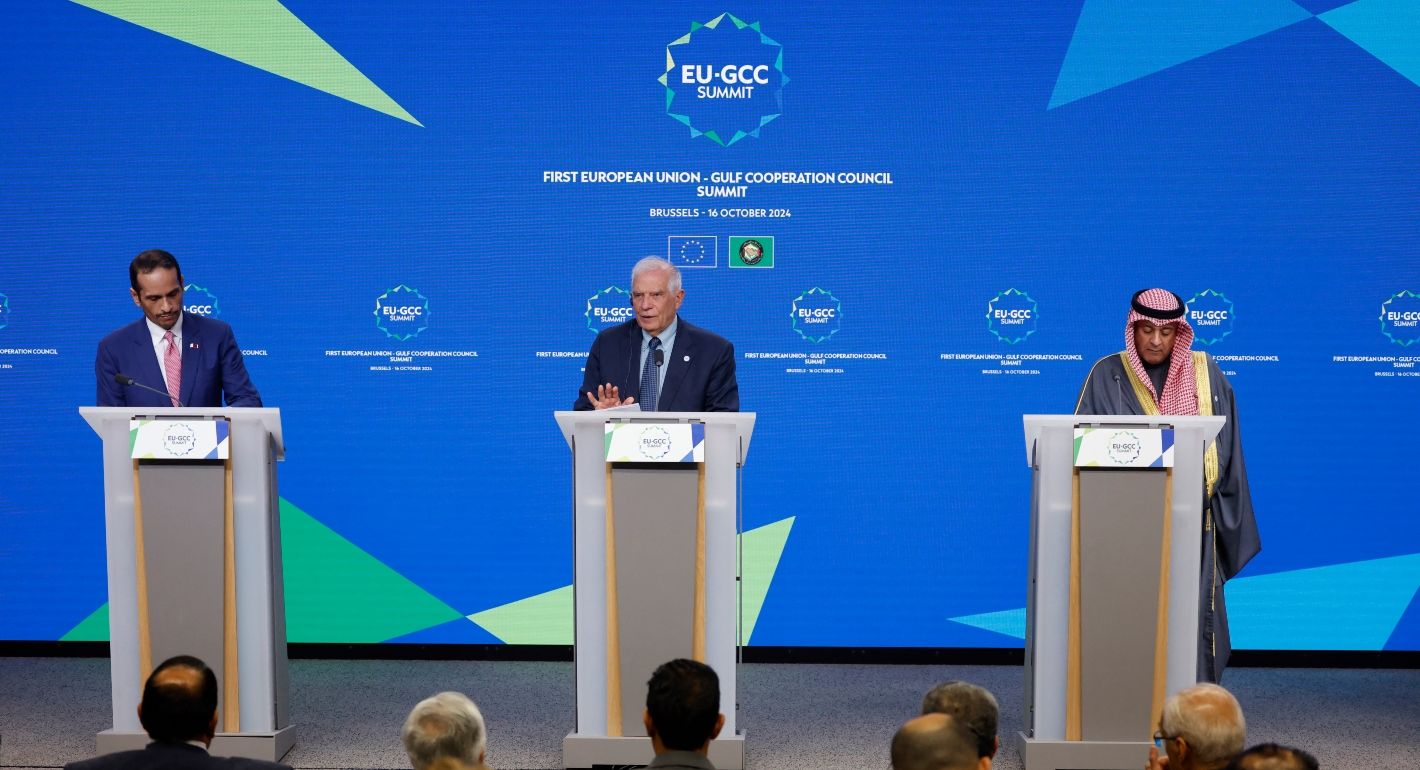
Gulf investors pulled over $1 billion from Pakistan’s bonds and equities in FY26. Here’s why the Gulf peace deal matters more than headlines suggest.
Pakistan’s economic commentary this year has largely stayed domestic — inflation, IMF reviews, remittances. The more revealing story sits in the balance-of-payments data: Gulf capital, historically one of Pakistan’s most reliable sources of portfolio investment, has gone into reverse at precisely the moment Islamabad is leaning on its Gulf relationships diplomatically.
The numbers
State Bank of Pakistan data show that from July 1, 2025 to June 19, 2026, equity market inflows totalled just $308 million while outflows exceeded $1 billion. Foreign direct investment declined by 28% over the first 11 months of FY26, domestic bonds saw a net outflow of $550 million, and total bond outflows for the year topped $2 billion. Pakistan’s external financing needs are steep: the country must pay over $26 billion in 2026–27, against an $35 billion trade deficit in the first 11 months of FY26.
Between July 2025 and June 2026, foreign outflows from Pakistan’s domestic bonds exceeded $2 billion, while equity market outflows topped $1 billion against just $308 million in inflows. Gulf states have been net sellers, with Bahrain withdrawing $30 million from Pakistani bonds in early FY27 alone, as the US-Israeli war with Iran raised regional risk premiums.
The pattern has continued into the new fiscal year. In the first ten days of FY27, Bahrain withdrew $30 million from Pakistan’s domestic bonds — $21 million from treasury bills and $9 million from Pakistan Investment Bonds — with no Gulf country recording any inflow during the period. Luxembourg was the only recorded foreign buyer, investing $4 million.
Why the peace deal matters disproportionately to Pakistan
Analysts quoted in Pakistani financial press note that Pakistan is not a party to the Gulf war but is now part of the peace framework, which raises the stakes for Islamabad if the deal collapses. Remittances from Gulf countries have so far held up, but bankers warn a prolonged conflict could eventually disrupt what remains the country’s largest source of foreign exchange, alongside stagnant exports and growth capped below 4%.
This sits against a wider regional backdrop: a new UNCTAD World Investment Report finds Gulf outbound investment grew through 2025, but warns that a prolonged conflict could redirect Gulf capital toward domestic reconstruction and strategic infrastructure, reducing the pool available for developing economies in Asia and Africa that increasingly depend on GCC financing — a dynamic that directly implicates Pakistan’s financing model.
The underserved angle
Most Pakistani business coverage frames this as an IMF-and-remittances story. The more precise framing is a capital-substitution risk: Pakistan has structurally relied on Gulf sovereign and institutional capital to plug its external financing gap, and that capital source is now competing for the same money regional reconstruction and Gulf domestic strategic infrastructure would need in a prolonged-conflict scenario. There is a live, underreported counter-current too — SBP data show net FDI actually rose from $54.46 million in April 2026 to $214.29 million in May, suggesting the bond-market flight and the FDI picture are not moving in lockstep.
Discover more from The Economy
Subscribe to get the latest posts sent to your email.
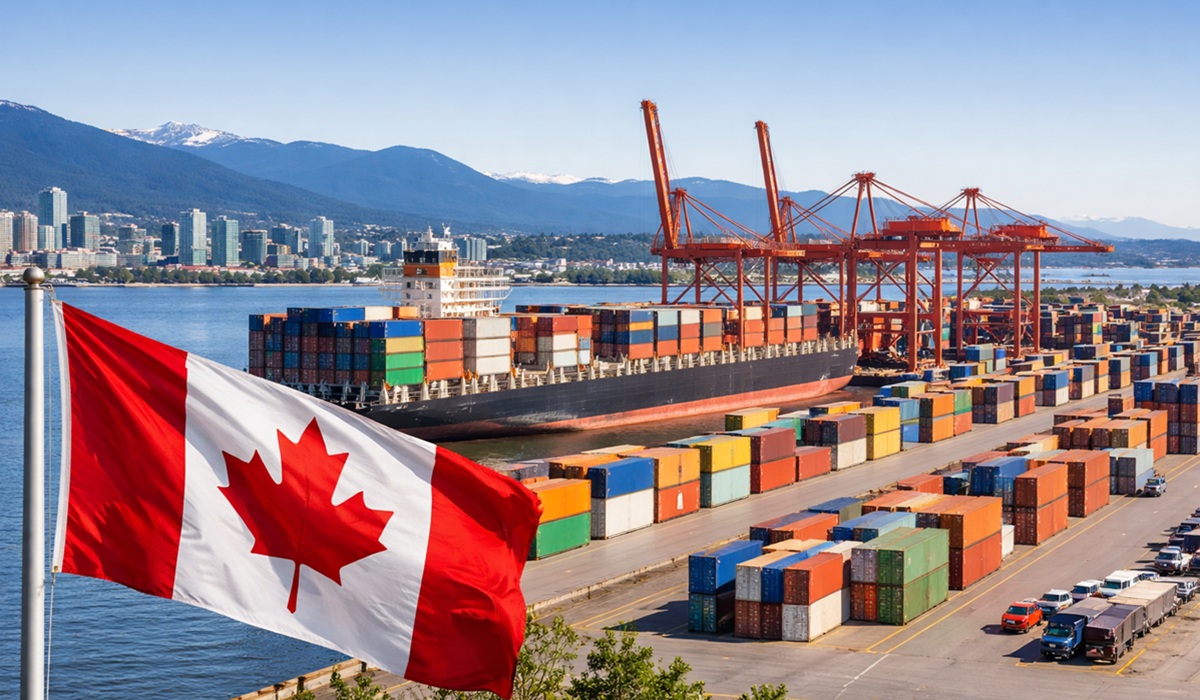
As US tariffs strain CUSMA, Canada is striking deals with China, Indonesia and the UAE. Here’s how Ottawa’s pivot away from the US is actually unfolding.
Every Canadian trade story in 2026 tends to lead with the same character: Washington. But the more consequential story may be what Ottawa is doing everywhere else. Facing sustained US tariff pressure and uncertainty over the CUSMA review, the Carney government has initiated a strategy to diversify Canada’s international trade, with a specific target of doubling exports to non-US markets by 2035.
Canada’s trade diversification strategy aims to double exports to non-US markets by 2035. In 2025–26 it produced a stabilisation deal with China on EVs and canola, a new trade agreement with Indonesia, a Foreign Investment Promotion and Protection Agreement with the UAE, and consultations with India, Thailand and Mercosur.
The deals nobody outside trade-law circles is tracking
Three moves stand out as substantively new rather than aspirational:
- China: during a visit to Beijing, Canada’s prime minister struck a deal establishing a tariff-rate quota for a set number of Chinese EVs — reverting to pre-2024 tariff levels — in exchange for reduced Chinese tariffs on Canadian canola, lobster and peas. This is a live trade-off between EV protectionism and agricultural market access.
- Indonesia: Canada signed a new trade agreement with Indonesia in 2025, opening a Southeast Asian market largely absent from Canadian export strategy until now.
- UAE: Ottawa launched trade-agreement negotiations and signed a new Foreign Investment Promotion and Protection Agreement with the United Arab Emirates, positioning the Gulf as a capital and market-access partner rather than just an energy counterpart.
Meanwhile, exporter confidence has ticked up but remains below its historical average, and diversification remains concentrated in a narrow set of commodities rather than being broad-based.
Why the gravity model is the real obstacle
Trade economists point to the Gravity Model of trade to explain why diversification is structurally hard: the US economy’s size, physical proximity, regulatory similarity and deeply integrated supply chains with Canada make full substitution unrealistic in the near term, even as China and India are flagged as the two most promising long-term markets given they will account for roughly 45% of global economic growth.
The underserved angle
Most coverage treats “Canada diversifying away from the US” as a single narrative. It is actually three distinct, sometimes contradictory tracks: a commodity-for-EV-tariff trade with China, a market-opening play in Southeast Asia via Indonesia, and a capital-and-investment play with the Gulf via the UAE. Each carries different risk profiles — geopolitical risk with China, execution risk with a new Indonesian relationship, and Gulf capital that is itself increasingly redirected toward domestic reconstruction needs amid regional conflict.
Discover more from The Economy
Subscribe to get the latest posts sent to your email.
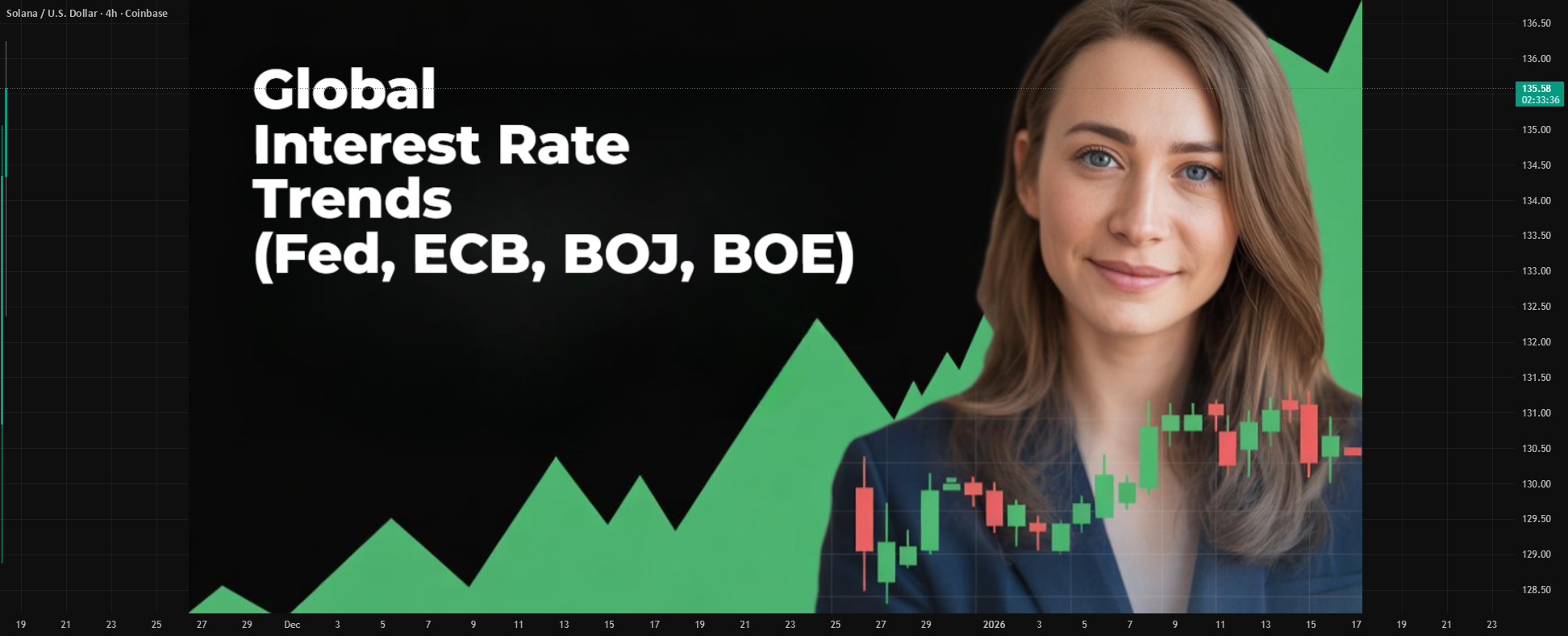
Analysis of how the Federal Reserve, Bank of England and Bank of Japan could reshape global markets, inflation, currencies and economic growth in 2026.
Executive Summary
The world’s most influential central banks are entering one of the most consequential policy weeks of 2026. Investors are watching closely as the U.S. Federal Reserve, the Bank of England, and the Bank of Japan weigh the competing pressures of easing inflation, geopolitical uncertainty, elevated energy prices, and slowing global growth. Financial markets are also preparing for major corporate earnings and fresh GDP data from several advanced economies. �
Financial Times +1
Unlike the synchronized tightening cycle that dominated recent years, policymakers are increasingly responding to country-specific economic conditions. This divergence is expected to influence capital flows, exchange rates, bond yields, and investment decisions across both developed and emerging markets. �
McKinsey & Company +1
A New Monetary Landscape
Global inflation has moderated from its post-pandemic peaks, yet central banks remain cautious. Recent movements in energy markets and ongoing geopolitical tensions continue to threaten price stability, even as labor markets show signs of cooling. �
McKinsey & Company +1
For investors, the question is no longer whether interest rates have peaked, but how long they will remain elevated.
United States: The Federal Reserve Faces a Delicate Balance
Attention is centered on the Federal Reserve, where policymakers are expected to keep rates steady while evaluating the effects of inflation, consumer demand, and accelerating investment in artificial intelligence infrastructure. Markets are also monitoring whether AI-driven capital spending could contribute to future inflationary pressures. �
Investopedia +1
Bond investors remain sensitive to any shift in the Fed’s language, as Treasury yields continue to reflect expectations about future policy and inflation risks. �
MarketWatch
United Kingdom: Stability Before Growth
The Bank of England is expected to maintain a cautious stance amid moderating wage growth and relatively stable unemployment. However, policymakers continue to weigh external risks, including energy market volatility and global geopolitical developments. �
Financial Times
Businesses remain particularly attentive to borrowing costs, which continue to influence investment decisions across the UK economy.
Japan Ends an Era of Ultra-Loose Money
Japan is undergoing one of its most significant monetary transitions in decades. Rising wages and gradually strengthening inflation have encouraged the Bank of Japan to continue moving away from the ultra-accommodative policies that defined much of the past generation. �
Financial Times
This normalization has implications far beyond Japan, affecting global capital markets and currency dynamics.
Why Emerging Markets Are Watching Closely
Emerging economies including Pakistan, Indonesia, Malaysia, and others remain particularly exposed to decisions made by advanced economy central banks.
Higher U.S. interest rates typically strengthen the dollar, increase external financing costs, and place pressure on countries with significant foreign currency debt.
Conversely, a more stable interest rate environment could improve capital flows into emerging markets while easing exchange rate volatility.
AI Is Becoming a Monetary Policy Variable
One of the most important structural developments in 2026 is the rapid expansion of artificial intelligence infrastructure.
Major technology companies continue investing heavily in data centers, semiconductors, cloud computing, and digital infrastructure. These investments are supporting economic growth but are also creating new questions about inflation, productivity, and long-term financing needs. �
Investopedia +1
Investment Implications
Several themes are emerging:
Higher-for-longer interest rates remain possible.
Government bond markets are likely to remain volatile.
The U.S. dollar could remain relatively strong.
AI-related investment continues attracting capital.
Emerging markets may benefit if inflation continues to moderate.
Competitor Keyword Gap Analysis
Leading publications such as the Financial Times, Reuters, Bloomberg, and CNBC primarily emphasize immediate policy decisions. An opportunity exists to capture additional search traffic by targeting broader intent-based queries.
Key Takeaways
Central bank decisions this week are expected to shape global financial markets.
AI investment is becoming an increasingly important economic driver.
Bond markets remain sensitive to inflation expectations.
Emerging economies face both risks and opportunities from policy divergence.
Investors should monitor GDP releases, corporate earnings, and inflation indicators alongside interest rate announcements.
Frequently Asked Questions
Why are central bank meetings so important?
They influence borrowing costs, inflation expectations, currency values, and investment decisions worldwide.
How do interest rates affect stock markets?
Higher rates generally increase financing costs and can reduce company valuations, while lower rates often support economic activity and equity markets.
Why is AI influencing monetary policy discussions?
Large-scale investment in AI infrastructure is reshaping productivity, corporate spending, and long-term inflation expectations.
Discover more from The Economy
Subscribe to get the latest posts sent to your email.

Pakistan Gulf Investment Outflows 2026: Peace Deal Stakes Explained

Canada Trade Diversification 2026: China, Indonesia, UAE Deals Explained

US Forced-Labour Tariffs on 60 Countries: The Hidden Trade Shock of 2026

Global Central Banks 2026: Fed, BoE and BoJ Decisions Could Reshape Markets

Gulf Capital Retreat From Pakistan 2026: UAE Loan Freeze & What It Means

Pakistan’s Most Reliable Export Is Its People: Remittances Hit $41.6 Billion, Overtaking Total Exports

Indonesia’s Confidence Problem: Record Investment, a Sinking Rupiah, and a Widening Credibility Gap

Down But Not Out: Inside the Slow Sinking of Russia’s War Economy

China’s Growth Slips to a Four-Year Low: Why Beijing Still Won’t Pull the Stimulus Trigger

The Johor-Singapore Corridor: How Malaysia Became Southeast Asia’s AI Infrastructure Powerhouse

Canada’s Economy ‘On Pause’: Inside the CUSMA Deadline That Passed Without a Deal

Dubai’s Millionaire Magnet: How the UAE Turned Middle East Turmoil Into a Capital Safe-Haven Boom

Britain’s Sixth Prime Minister in a Decade: What Starmer’s Exit Means for Gilts, Sterling and Your Portfolio

Anthropic Offers Up to $600,000 Salary for Critical IPO Role as AI Giant Prepares for Wall Street Debut

Carry Trade Unwind 2026: How the Yen’s Snapback Triggered a Global Margin Call

AI Bubble Warning 2026: Why BIS, IMF and Bank of England Fear a Market Crash

BRICS De‑Dollarization Strategy Takes Shape with $15 Billion Local‑Currency Push

The AI Super Bubble Is Ready to Burst

Russia Bans Diesel Exports 2026: Global Fuel Market Impact Explained

Strait of Hormuz Blockade 2026: Oil Prices Surge 9% as US-Iran Conflict Reignites

Private Credit Warning: Most BDCs Turn Unprofitable in 2026, Reuters Finds

IMF Cuts Pakistan Growth Forecast, Raises Inflation to 8.4%

Bitcoin $150k Milestone Achieved as US Sovereign Crypto Pivot Looms
Gulf Capital Retreat From Pakistan 2026: UAE Loan Freeze & What It Means

India Economic Rise 2026: How the Subcontinent Toppled Japan

Strait of Hormuz 2026: Why Markets Still Don’t Trust It’s Open

China Housing Market Turnaround: White‑List Model Stabilises Prices

Chipmakers Just Lost 6.7% in Two Days: Inside the Great AI Trade Rotation
-

 Markets & Finance7 months ago
Top 15 Stocks for Investment in 2026 in PSX: Your Complete Guide to Pakistan’s Best Investment Opportunities
-

 Analysis5 months ago
Johor’s Investment Boom: The Hidden Costs Behind Malaysia’s Most Ambitious Economic Surge
-

 Analysis5 months ago
Top 10 Stocks for Investment in PSX for Quick Returns in 2026
-

 Analysis6 months ago
Brazil’s Rare Earth Race: US, EU, and China Compete for Critical Minerals as Tensions Rise
-

 Banks6 months ago
Best Investments in Pakistan 2026: Top 10 Low-Price Shares and Long-Term Picks for the PSX
-

 Investment7 months ago
Top 10 Mutual Fund Managers in Pakistan for Investment in 2026: A Comprehensive Guide for Optimal Returns
-

 Global Economy7 months ago
15 Most Lucrative Sectors for Investment in Pakistan: A 2025 Data-Driven Analysis
-

 Global Economy7 months ago
Pakistan’s Export Goldmine: 10 Game-Changing Markets Where Pakistani Businesses Are Winning Big in 2025