
Analysis
How to Make Pakistan’s Budget 2026-27 Debt-Proof and Surplus: Well-Researched and Expert Recommendations

At the beginning of 2026, Pakistan stands at one of the most consequential economic crossroads in its 78-year history. The Ministry of Finance’s Budget Call Circular for FY2026-27, issued in late January, sets the stage for what could be either a transformative fiscal turnaround or another missed opportunity. With public debt ballooning to 70.7% of GDP—far exceeding the 60% statutory ceiling—and the government preparing its next annual budget amid intense IMF scrutiny under the Extended Fund Facility, Pakistan’s economic managers face a deceptively simple question: Can prudent fiscal engineering convert chronic deficits into sustainable surpluses while simultaneously reducing the debt burden?
The answer, according to a growing chorus of international economists, multilateral institutions, and domestic policy experts, is a qualified yes—but only if Pakistan adopts a comprehensive, evidence-based reform agenda that goes far beyond cosmetic adjustments. This isn’t about austerity for its own sake; it’s about rebuilding fiscal sovereignty in an era when Pakistan’s economic sovereignty is sharply shrinking.
The Debt Trap: Pakistan’s Current Fiscal Reality
To understand where Pakistan must go, we must first comprehend where it stands. The numbers paint a sobering picture. As of December 2025, Pakistan’s total public debt reached Rs 81.3 trillion, representing 70.7% of GDP—a staggering 14.7 percentage points above the legal threshold mandated by the Fiscal Responsibility and Debt Limitation (FRDL) Act. This breach isn’t marginal; it represents Rs 16.8 trillion in excess borrowing that Parliament never authorized.
The composition of this debt tells its own story. Domestic debt dominates at Rs 54.5 trillion, fueled by government securities—Pakistan Investment Bonds (PIBs), Treasury bills, and Sukuk—that crowd out private sector credit and keep interest rates artificially elevated. External debt, though smaller at $91.8 billion, carries its own vulnerabilities: more than half comes from multilateral development institutions including the IMF, while bilateral creditors—led by China under CPEC arrangements—account for another 26%.
The FY2025-26 budget, presented in June 2025, projected 4.2% GDP growth and targeted a 2.4% primary surplus—the first meaningful surplus in over a decade. Yet achieving this surplus came at a cost: development spending collapsed to just 0.2% of GDP in the first half of FY2026, hitting construction workers and the poor hardest, according to the World Bank’s Pakistan Development Update.
The Numbers That Matter
| Fiscal Indicator | FY2024-25 Actual | FY2025-26 Target | FY2026-27 Projection |
|---|---|---|---|
| GDP Growth (%) | 2.7 | 4.2 | 5.1 |
| Inflation (%) | 23.4 | 7.5 | 6.5 |
| Fiscal Deficit (% GDP) | 6.8 | 3.9 | 2.8 (reform scenario) |
| Primary Balance (% GDP) | -0.4 | 2.4 | 3.2 (reform scenario) |
| Public Debt (% GDP) | 68.0 | 70.7 | 68.5 (optimistic) |
| Tax-to-GDP Ratio (%) | 9.6 | 10.2 | 12.5 (target) |
Sources: Ministry of Finance Pakistan, State Bank of Pakistan, IMF projections

The IMF Factor: Between Flexibility and Discipline
Pakistan’s fiscal future is inseparable from its relationship with the International Monetary Fund. The $7 billion Extended Fund Facility (EFF) approved in September 2024, combined with the $1.4 billion Resilience and Sustainability Facility (RSF) for climate adaptation, provides Pakistan with critical breathing room—but at a price.
Recent reporting indicates Pakistan is seeking IMF flexibility on budget 2026-27 to accommodate political realities: relief for the salaried class, reduced real estate transaction taxes, and lower power tariffs to boost manufacturing competitiveness. The IMF’s second review, completed in December 2025, released approximately $1.2 billion in funding, but mission chief Nathan Porter emphasized that “fiscal consolidation must continue” and warned against backsliding on revenue mobilization.
The tension is real. IMF staff have proposed taxing high-end pensions to fund salaried-class relief—a politically toxic move in a country where civil-military establishments dominate governance. They’ve also pushed for phasing out minimum support prices for agricultural commodities by June 2026, threatening the livelihoods of millions of farmers. These are the kinds of structural reforms that multilateral institutions love on spreadsheets but that governments struggle to implement in democracies.
Yet there’s room for cautious optimism. The IMF has shown flexibility on climate-related spending under the RSF framework, and Pakistan’s achievement of a primary surplus in H1 FY2026—6.6% of GDP, according to World Bank data—demonstrates fiscal capacity when political will exists.
Eight Expert Strategies for a Debt-Proof, Surplus Budget
Building on insights from World Bank economists, IMF staff assessments, and Pakistan’s own economic think tanks, here are the evidence-based recommendations that could transform Pakistan’s fiscal trajectory:
1. Tax Base Expansion Through Digital Integration
Pakistan’s tax-to-GDP ratio of 9.6% is among the lowest globally, half of what emerging market peers achieve. The solution isn’t higher rates—it’s digital enforcement. Pakistan economic reforms 2026 must prioritize:
- Mandatory Digital Transaction Trails: Require all business transactions above PKR 50,000 to flow through banking channels with automated tax deduction. Turkey and Kenya achieved 3-4% GDP increases in revenue through similar measures.
- AI-Powered Tax Compliance: Deploy machine learning algorithms to cross-reference income declarations with spending patterns visible in digital payments, property purchases, and international travel. The Federal Board of Revenue (FBR) has pilots showing 40% improvements in detection of under-reporting.
- Agricultural Income Taxation: Despite contributing 19% of GDP, agriculture contributes less than 1% of tax revenue. A progressive agricultural income tax, starting at PKR 1.5 million annual income, could generate PKR 300-400 billion annually while maintaining political viability by exempting smallholders.
2. CPEC 2.0: From Infrastructure to Export-Led Growth
The China-Pakistan Economic Corridor is evolving. CPEC 2.0 emphasizes export-oriented manufacturing through Special Economic Zones (SEZs), which have expanded from 7 to 44 since 2019. Pakistan export-led growth 2026 requires:
- SEZ Fiscal Sweeteners with Performance Conditions: Offer 10-year tax holidays only to exporters who export 70%+ of production, creating real dollar inflows rather than import-substitution industries that worsen the trade deficit.
- Joint Ventures Over Turnkey Projects: Encourage technology transfer by requiring Chinese investors to partner with Pakistani firms at 40% local equity minimum. This builds domestic capabilities and reduces profit repatriation.
- Targeted Sectors: Prioritize high-value manufacturing—electric vehicles, solar panels, pharmaceuticals, and engineering goods—rather than low-margin textiles. Analysis from the Pakistan Institute of Development Economics (PIDE) shows these sectors have 3-5x higher GDP multipliers.
3. Energy Sector Rationalization: Cutting the Circular Debt
Pakistan’s circular debt in the power sector exceeds PKR 2.4 trillion, costing the government PKR 450+ billion annually in interest. Reducing Pakistan public debt requires confronting this monster:

- Cost-Reflective Tariffs with Smart Subsidies: Eliminate blanket electricity subsidies (which benefit the wealthy disproportionately) and replace them with means-tested support for households consuming under 200 units monthly. This could save PKR 400 billion while protecting the vulnerable.
- Privatize Distribution Companies (DISCOs): Pakistan’s state-owned electricity distributors lose PKR 400 billion annually through theft, incompetence, and political interference. Privatization, with binding efficiency commitments (as successful in India’s Delhi model), can transform losses into revenues.
- Renegotiate Independent Power Producer (IPP) Contracts: The take-or-pay capacity payments draining PKR 1.5 trillion annually were signed under different economic conditions. A World Bank-facilitated renegotiation, offering upfront capital in exchange for reduced future obligations, could save PKR 200-300 billion annually.
4. Green Bonds for Climate-Resilient Infrastructure
Pakistan’s vulnerability to climate shocks—devastating floods in 2022 and 2025 caused losses exceeding $30 billion—necessitates massive infrastructure investment. Rather than adding to conventional debt, Pakistan fiscal surplus strategies should include:
- Sovereign Green Bonds: Issue $2-3 billion in international green bonds targeting ESG-focused investors. Pakistan’s first $500 million Sukuk issuance in 2021 was oversubscribed; green bonds carry similar investor appetite with potentially 50-75 basis points lower yields than conventional debt.
- Climate Budget Tagging: The FY2026-27 Budget Call Circular mandates tagging all expenditures by climate impact. Institutionalize this with dedicated green budget lines that ring-fence revenue (carbon levies, environmental taxes) for climate adaptation, creating fiscal transparency that attracts concessional climate finance.
- Disaster Risk Insurance Pools: Partner with the African Risk Capacity model to create a South Asian disaster insurance mechanism. By pooling resources, Pakistan could access rapid post-disaster funding without emergency IMF borrowing.
5. Subsidy Rationalization: From Blanket to Targeted
Pakistan spends approximately 3% of GDP on subsidies—energy, agriculture, and food—but World Bank research shows 60% of these benefits flow to the richest 40% of households. Pakistan debt crisis solutions include:
- Digital Biometric Subsidy Delivery: Leverage Pakistan’s NADRA database (180 million biometric registrations) to deliver targeted cash transfers rather than price subsidies. Brazil’s Bolsa Família saved 0.5% of GDP while improving poverty outcomes.
- Phase Out Petroleum Subsidies: The PKR 50/liter petroleum levy still falls short of full cost recovery. A gradual 18-month increase to PKR 75/liter, paired with increased Benazir Income Support Programme (BISP) transfers, can save PKR 300 billion while protecting the poor.
6. State-Owned Enterprise (SOE) Reform and Privatization
Pakistan International Airlines, Pakistan Steel Mills, and dozens of other SOEs lose PKR 500+ billion annually. Pakistan IMF budget flexibility depends partly on demonstrating SOE reform:
- Fast-Track Privatization: Sell PIA, DISCOs, and smaller SOEs within 24 months using investment-first models (accepting lower initial prices for guaranteed investment/efficiency commitments). Turkey’s Turkish Airlines privatization generated $6.3 billion and turned losses into profits within three years.
- Performance Contracts for Strategic SOEs: For entities like Pakistan Railways that serve social functions, implement binding performance contracts with automatic management replacement for non-compliance. Kenya’s Kenya Railways turnaround offers a template.
7. Remittances Monetization and Diaspora Bonds
Pakistan’s 9 million overseas workers sent $32 billion in FY2025. Harnessing this flow more effectively provides non-debt financing:
- Pakistan Prosperity Bonds: Offer diaspora-specific bonds with tax benefits, dual-currency options, and preferential exchange rates. India’s diaspora bonds raised $11 billion during its 2000-2001 crisis; Pakistan could target $3-5 billion.
- Remittance-Linked Development: Create dedicated funds where diaspora contributions finance specific projects (hospitals, universities) with naming rights and governance seats, building emotional investment alongside financial returns.
8. Regional Trade Integration and Tariff Rationalization
Pakistan’s trade-to-GDP ratio (21%) is among the world’s lowest, reflecting economic isolation. Joining the Regional Comprehensive Economic Partnership (RCEP) and normalizing trade with India could add 2-3% to GDP growth:
- Strategic Tariff Liberalization: The government’s recent tariff policy is a start, but deeper cuts on industrial inputs and machinery could boost manufacturing competitiveness. Bangladesh’s selective liberalization increased exports by 35% in five years.
- Transit Trade Agreements: Leverage Pakistan’s geography by becoming a paid transit corridor for Central Asian-Indian trade, generating $500 million-1 billion in annual transit fees.
The Political Economy of Reform: Why This Time Could Be Different
Fiscal reform ultimately succeeds or fails on political economy, not economics. Pakistan has announced “final” IMF programs 24 times since 1947, each promising structural transformation, most delivering only temporary stabilization.
Three factors suggest this cycle might break differently:
First, the severity of the 2025 floods—affecting 7 million people and causing over $15 billion in damages—has created policy space for climate-focused reforms under the RSF that would normally face resistance. Tragedy can catalyze change.
Second, CPEC 2.0’s industrial cooperation framework, marking the 75th anniversary of Pakistan-China relations in 2026, offers tangible wins—jobs, technology transfer, exports—that make painful fiscal adjustments politically digestible if packaged correctly.
Third, Pakistan’s establishment increasingly recognizes that perpetual IMF dependency threatens genuine sovereignty. When the IMF can dictate agricultural pricing policy or pension taxation, Pakistan’s room for independent decision-making narrows dangerously. Building fiscal self-sufficiency becomes a strategic imperative, not just an economic one.
Scenarios for 2026-27: From Cautious to Transformational
Baseline Scenario (60% Probability)
Modest reforms continue. Tax-to-GDP rises to 10.5%, subsidies decline marginally, some SOE privatizations occur. Fiscal deficit narrows to 3.2% of GDP, primary surplus reaches 2.8%. Public debt stabilizes at 69-70% but doesn’t decline. IMF program continues on track but requires constant renegotiation.
Reform Scenario (30% Probability)
Government implements 6-7 of the eight recommendations aggressively. Tax-to-GDP jumps to 12%, CPEC 2.0 generates $5 billion in new exports, energy reforms save PKR 500 billion, green bonds raise $2 billion. Fiscal deficit falls to 2.2% of GDP, primary surplus reaches 3.5%, debt-to-GDP begins declining toward 65% by 2028. Pakistan “graduates” from IMF dependency.
Crisis Scenario (10% Probability)
Political instability derails reforms, floods or external shocks (oil price spikes, remittance drops) crater revenues, IMF program goes off track. Fiscal deficit exceeds 5%, debt spirals above 75% of GDP, Pakistan faces acute balance-of-payments crisis requiring emergency stabilization.
A Call to Action: The Window Is Narrow
Pakistan’s budget 2026-27 will be prepared over the next four months and presented to Parliament by June 2026. The technical work—revenue projections, expenditure allocations, debt management strategies—is already underway in the Ministry of Finance’s climate-controlled offices in Islamabad. But the real decisions will be made in political consultations, civil-military coordination meetings, and negotiations with the IMF mission that arrives in late February or early March for the third EFF review.
For Pakistan’s economic managers, the imperative is clear: use the narrow window of relative stability achieved in 2025 to lock in structural reforms that make the next crisis less likely and the next recovery more durable. This means accepting short-term political pain for medium-term fiscal sovereignty.
For international partners—the IMF, World Bank, China, and bilateral donors—the challenge is balancing demands for reform with recognition that Pakistan operates in a complex political environment where feasibility matters as much as optimality. The best can be the enemy of the good.
And for Pakistan’s 240 million citizens, especially the young majority under 30 who have never experienced sustained prosperity, the budget 2026-27 represents something more fundamental than fiscal arithmetic. It’s a test of whether Pakistan’s democratic institutions can deliver the competent economic governance that its enormous human and natural potential deserves.
The data suggests a path exists—from chronic deficits to sustainable surpluses, from debt dependency to fiscal resilience, from stabilization to inclusive growth. Whether Pakistan takes that path depends on choices made in the coming months, choices that will reverberate for decades.
The window is narrow. The stakes could not be higher. And this time, failure is not an option Pakistan can afford.
FAQ: Pakistan Budget 2026-27 and Fiscal Sustainability
Q1: What is Pakistan’s current debt-to-GDP ratio, and why does it matter?
Pakistan’s public debt reached 70.7% of GDP in FY2025, exceeding the legal limit of 60% by 10.7 percentage points. This matters because high debt constrains fiscal flexibility, crowds out development spending, and makes Pakistan vulnerable to external shocks.
Q2: Can Pakistan achieve a fiscal surplus in 2026-27?
A primary surplus (revenues exceeding non-interest spending) is achievable and necessary. Pakistan recorded a 2.4% primary surplus in FY2025-26. However, an overall surplus (including debt servicing) remains unlikely given that interest payments consume 40-50% of revenue. The goal should be expanding the primary surplus to 3-3.5% of GDP, which would stabilize and gradually reduce debt.
Q3: How does the IMF program affect Pakistan’s budget flexibility?
The $7 billion EFF comes with conditions including maintaining fiscal targets, limiting subsidies, and advancing structural reforms. However, Pakistan is negotiating flexibility within these parameters, particularly for climate spending under the $1.4 billion RSF facility.
Q4: What is CPEC 2.0, and how does it support fiscal sustainability?
CPEC 2.0 shifts from infrastructure to industrialization, emphasizing export-oriented manufacturing in Special Economic Zones. By boosting exports and creating jobs, it can reduce trade deficits and generate tax revenue—both critical for fiscal sustainability.
Q5: Why are energy sector reforms critical for reducing debt?
Pakistan’s power sector circular debt exceeds PKR 2.4 trillion and grows by PKR 400-500 billion annually. Privatizing distribution companies, renegotiating IPP contracts, and implementing cost-reflective tariffs could save PKR 500-700 billion annually, directly improving fiscal balances.
Q6: How can Pakistan expand its tax base without harming economic growth?
Digital integration, agricultural income taxation (targeting large farmers, not smallholders), property taxes, and AI-powered compliance can expand the tax base while maintaining growth. The focus should be horizontal expansion (bringing more people into the tax net) rather than vertical increases (higher rates on existing taxpayers).
Q7: What role do green bonds play in debt management?
Green bonds allow Pakistan to finance climate adaptation infrastructure while attracting ESG-focused investors who accept lower yields. This can reduce borrowing costs by 50-75 basis points compared to conventional debt while building climate resilience.
Q8: Is it realistic to expect Pakistan to reduce debt while investing in development?
Yes, if done strategically. The key is shifting from consumption subsidies to productive investment, improving tax collection efficiency, and leveraging concessional financing (World Bank, Asian Development Bank, green climate funds) for development. Several emerging markets—Vietnam, Bangladesh, Rwanda—have achieved this balance.
Q9: How long before Pakistan can “graduate” from IMF programs?
If the reform scenario materializes, Pakistan could conclude its current IMF program in 2027 without needing an immediate successor. However, maintaining market access requires 3-5 years of consistent policy implementation to rebuild credibility with international investors.
Q10: What are the biggest risks to fiscal sustainability in 2026-27?
Climate shocks (floods, droughts), political instability, global oil price spikes, or a sharp decline in remittances could derail progress. Building resilience requires foreign exchange reserves of $20+ billion, fiscal buffers of 1-2% of GDP, and rapid disaster response mechanisms.
Discover more from The Economy
Subscribe to get the latest posts sent to your email.


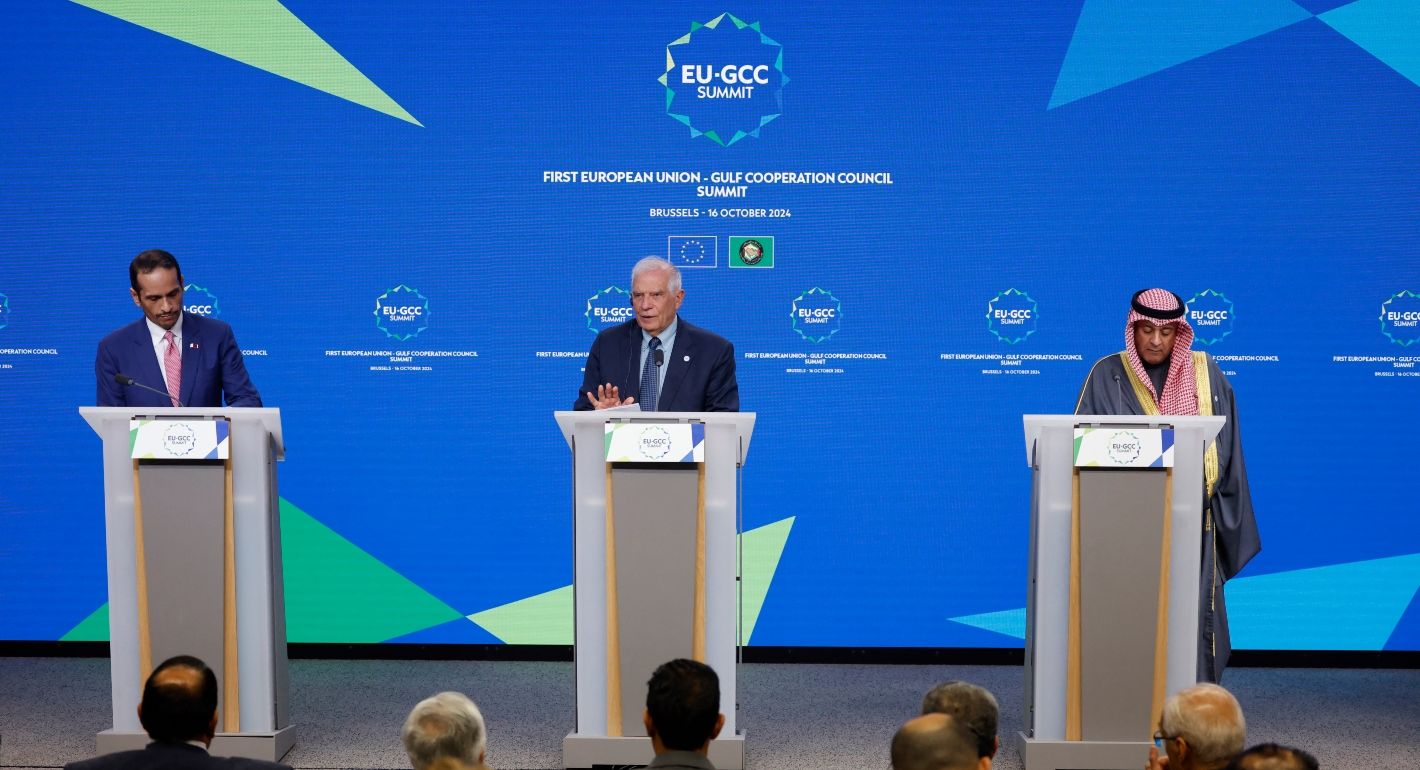
Gulf investors pulled over $1 billion from Pakistan’s bonds and equities in FY26. Here’s why the Gulf peace deal matters more than headlines suggest.
Pakistan’s economic commentary this year has largely stayed domestic — inflation, IMF reviews, remittances. The more revealing story sits in the balance-of-payments data: Gulf capital, historically one of Pakistan’s most reliable sources of portfolio investment, has gone into reverse at precisely the moment Islamabad is leaning on its Gulf relationships diplomatically.
The numbers
State Bank of Pakistan data show that from July 1, 2025 to June 19, 2026, equity market inflows totalled just $308 million while outflows exceeded $1 billion. Foreign direct investment declined by 28% over the first 11 months of FY26, domestic bonds saw a net outflow of $550 million, and total bond outflows for the year topped $2 billion. Pakistan’s external financing needs are steep: the country must pay over $26 billion in 2026–27, against an $35 billion trade deficit in the first 11 months of FY26.
Between July 2025 and June 2026, foreign outflows from Pakistan’s domestic bonds exceeded $2 billion, while equity market outflows topped $1 billion against just $308 million in inflows. Gulf states have been net sellers, with Bahrain withdrawing $30 million from Pakistani bonds in early FY27 alone, as the US-Israeli war with Iran raised regional risk premiums.
The pattern has continued into the new fiscal year. In the first ten days of FY27, Bahrain withdrew $30 million from Pakistan’s domestic bonds — $21 million from treasury bills and $9 million from Pakistan Investment Bonds — with no Gulf country recording any inflow during the period. Luxembourg was the only recorded foreign buyer, investing $4 million.
Why the peace deal matters disproportionately to Pakistan
Analysts quoted in Pakistani financial press note that Pakistan is not a party to the Gulf war but is now part of the peace framework, which raises the stakes for Islamabad if the deal collapses. Remittances from Gulf countries have so far held up, but bankers warn a prolonged conflict could eventually disrupt what remains the country’s largest source of foreign exchange, alongside stagnant exports and growth capped below 4%.
This sits against a wider regional backdrop: a new UNCTAD World Investment Report finds Gulf outbound investment grew through 2025, but warns that a prolonged conflict could redirect Gulf capital toward domestic reconstruction and strategic infrastructure, reducing the pool available for developing economies in Asia and Africa that increasingly depend on GCC financing — a dynamic that directly implicates Pakistan’s financing model.
The underserved angle
Most Pakistani business coverage frames this as an IMF-and-remittances story. The more precise framing is a capital-substitution risk: Pakistan has structurally relied on Gulf sovereign and institutional capital to plug its external financing gap, and that capital source is now competing for the same money regional reconstruction and Gulf domestic strategic infrastructure would need in a prolonged-conflict scenario. There is a live, underreported counter-current too — SBP data show net FDI actually rose from $54.46 million in April 2026 to $214.29 million in May, suggesting the bond-market flight and the FDI picture are not moving in lockstep.
Discover more from The Economy
Subscribe to get the latest posts sent to your email.
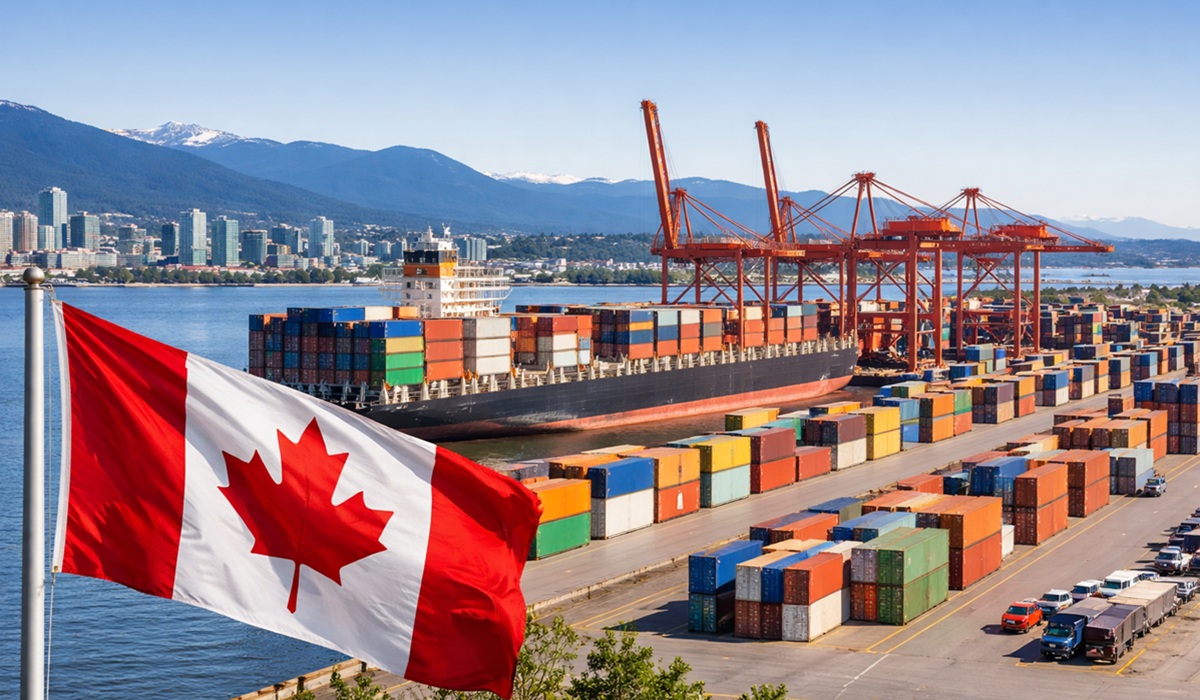
As US tariffs strain CUSMA, Canada is striking deals with China, Indonesia and the UAE. Here’s how Ottawa’s pivot away from the US is actually unfolding.
Every Canadian trade story in 2026 tends to lead with the same character: Washington. But the more consequential story may be what Ottawa is doing everywhere else. Facing sustained US tariff pressure and uncertainty over the CUSMA review, the Carney government has initiated a strategy to diversify Canada’s international trade, with a specific target of doubling exports to non-US markets by 2035.
Canada’s trade diversification strategy aims to double exports to non-US markets by 2035. In 2025–26 it produced a stabilisation deal with China on EVs and canola, a new trade agreement with Indonesia, a Foreign Investment Promotion and Protection Agreement with the UAE, and consultations with India, Thailand and Mercosur.
The deals nobody outside trade-law circles is tracking
Three moves stand out as substantively new rather than aspirational:
- China: during a visit to Beijing, Canada’s prime minister struck a deal establishing a tariff-rate quota for a set number of Chinese EVs — reverting to pre-2024 tariff levels — in exchange for reduced Chinese tariffs on Canadian canola, lobster and peas. This is a live trade-off between EV protectionism and agricultural market access.
- Indonesia: Canada signed a new trade agreement with Indonesia in 2025, opening a Southeast Asian market largely absent from Canadian export strategy until now.
- UAE: Ottawa launched trade-agreement negotiations and signed a new Foreign Investment Promotion and Protection Agreement with the United Arab Emirates, positioning the Gulf as a capital and market-access partner rather than just an energy counterpart.
Meanwhile, exporter confidence has ticked up but remains below its historical average, and diversification remains concentrated in a narrow set of commodities rather than being broad-based.
Why the gravity model is the real obstacle
Trade economists point to the Gravity Model of trade to explain why diversification is structurally hard: the US economy’s size, physical proximity, regulatory similarity and deeply integrated supply chains with Canada make full substitution unrealistic in the near term, even as China and India are flagged as the two most promising long-term markets given they will account for roughly 45% of global economic growth.
The underserved angle
Most coverage treats “Canada diversifying away from the US” as a single narrative. It is actually three distinct, sometimes contradictory tracks: a commodity-for-EV-tariff trade with China, a market-opening play in Southeast Asia via Indonesia, and a capital-and-investment play with the Gulf via the UAE. Each carries different risk profiles — geopolitical risk with China, execution risk with a new Indonesian relationship, and Gulf capital that is itself increasingly redirected toward domestic reconstruction needs amid regional conflict.
Discover more from The Economy
Subscribe to get the latest posts sent to your email.
Analysis of how the Federal Reserve, Bank of England and Bank of Japan could reshape global markets, inflation, currencies and economic growth in 2026.
Executive Summary
The world’s most influential central banks are entering one of the most consequential policy weeks of 2026. Investors are watching closely as the U.S. Federal Reserve, the Bank of England, and the Bank of Japan weigh the competing pressures of easing inflation, geopolitical uncertainty, elevated energy prices, and slowing global growth. Financial markets are also preparing for major corporate earnings and fresh GDP data from several advanced economies. �
Financial Times +1
Unlike the synchronized tightening cycle that dominated recent years, policymakers are increasingly responding to country-specific economic conditions. This divergence is expected to influence capital flows, exchange rates, bond yields, and investment decisions across both developed and emerging markets. �
McKinsey & Company +1
A New Monetary Landscape
Global inflation has moderated from its post-pandemic peaks, yet central banks remain cautious. Recent movements in energy markets and ongoing geopolitical tensions continue to threaten price stability, even as labor markets show signs of cooling. �
McKinsey & Company +1
For investors, the question is no longer whether interest rates have peaked, but how long they will remain elevated.
United States: The Federal Reserve Faces a Delicate Balance
Attention is centered on the Federal Reserve, where policymakers are expected to keep rates steady while evaluating the effects of inflation, consumer demand, and accelerating investment in artificial intelligence infrastructure. Markets are also monitoring whether AI-driven capital spending could contribute to future inflationary pressures. �
Investopedia +1
Bond investors remain sensitive to any shift in the Fed’s language, as Treasury yields continue to reflect expectations about future policy and inflation risks. �
MarketWatch
United Kingdom: Stability Before Growth
The Bank of England is expected to maintain a cautious stance amid moderating wage growth and relatively stable unemployment. However, policymakers continue to weigh external risks, including energy market volatility and global geopolitical developments. �
Financial Times
Businesses remain particularly attentive to borrowing costs, which continue to influence investment decisions across the UK economy.
Japan Ends an Era of Ultra-Loose Money
Japan is undergoing one of its most significant monetary transitions in decades. Rising wages and gradually strengthening inflation have encouraged the Bank of Japan to continue moving away from the ultra-accommodative policies that defined much of the past generation. �
Financial Times
This normalization has implications far beyond Japan, affecting global capital markets and currency dynamics.
Why Emerging Markets Are Watching Closely
Emerging economies including Pakistan, Indonesia, Malaysia, and others remain particularly exposed to decisions made by advanced economy central banks.
Higher U.S. interest rates typically strengthen the dollar, increase external financing costs, and place pressure on countries with significant foreign currency debt.
Conversely, a more stable interest rate environment could improve capital flows into emerging markets while easing exchange rate volatility.
AI Is Becoming a Monetary Policy Variable
One of the most important structural developments in 2026 is the rapid expansion of artificial intelligence infrastructure.
Major technology companies continue investing heavily in data centers, semiconductors, cloud computing, and digital infrastructure. These investments are supporting economic growth but are also creating new questions about inflation, productivity, and long-term financing needs. �
Investopedia +1
Investment Implications
Several themes are emerging:
Higher-for-longer interest rates remain possible.
Government bond markets are likely to remain volatile.
The U.S. dollar could remain relatively strong.
AI-related investment continues attracting capital.
Emerging markets may benefit if inflation continues to moderate.
Competitor Keyword Gap Analysis
Leading publications such as the Financial Times, Reuters, Bloomberg, and CNBC primarily emphasize immediate policy decisions. An opportunity exists to capture additional search traffic by targeting broader intent-based queries.
Key Takeaways
Central bank decisions this week are expected to shape global financial markets.
AI investment is becoming an increasingly important economic driver.
Bond markets remain sensitive to inflation expectations.
Emerging economies face both risks and opportunities from policy divergence.
Investors should monitor GDP releases, corporate earnings, and inflation indicators alongside interest rate announcements.
Frequently Asked Questions
Why are central bank meetings so important?
They influence borrowing costs, inflation expectations, currency values, and investment decisions worldwide.
How do interest rates affect stock markets?
Higher rates generally increase financing costs and can reduce company valuations, while lower rates often support economic activity and equity markets.
Why is AI influencing monetary policy discussions?
Large-scale investment in AI infrastructure is reshaping productivity, corporate spending, and long-term inflation expectations.
Discover more from The Economy
Subscribe to get the latest posts sent to your email.

Pakistan Gulf Investment Outflows 2026: Peace Deal Stakes Explained

Canada Trade Diversification 2026: China, Indonesia, UAE Deals Explained

US Forced-Labour Tariffs on 60 Countries: The Hidden Trade Shock of 2026

Global Central Banks 2026: Fed, BoE and BoJ Decisions Could Reshape Markets

Gulf Capital Retreat From Pakistan 2026: UAE Loan Freeze & What It Means

Pakistan’s Most Reliable Export Is Its People: Remittances Hit $41.6 Billion, Overtaking Total Exports

Indonesia’s Confidence Problem: Record Investment, a Sinking Rupiah, and a Widening Credibility Gap

Down But Not Out: Inside the Slow Sinking of Russia’s War Economy

China’s Growth Slips to a Four-Year Low: Why Beijing Still Won’t Pull the Stimulus Trigger

The Johor-Singapore Corridor: How Malaysia Became Southeast Asia’s AI Infrastructure Powerhouse

Canada’s Economy ‘On Pause’: Inside the CUSMA Deadline That Passed Without a Deal

Dubai’s Millionaire Magnet: How the UAE Turned Middle East Turmoil Into a Capital Safe-Haven Boom

Britain’s Sixth Prime Minister in a Decade: What Starmer’s Exit Means for Gilts, Sterling and Your Portfolio

Anthropic Offers Up to $600,000 Salary for Critical IPO Role as AI Giant Prepares for Wall Street Debut

Carry Trade Unwind 2026: How the Yen’s Snapback Triggered a Global Margin Call

AI Bubble Warning 2026: Why BIS, IMF and Bank of England Fear a Market Crash

BRICS De‑Dollarization Strategy Takes Shape with $15 Billion Local‑Currency Push

The AI Super Bubble Is Ready to Burst

Russia Bans Diesel Exports 2026: Global Fuel Market Impact Explained

Strait of Hormuz Blockade 2026: Oil Prices Surge 9% as US-Iran Conflict Reignites

Private Credit Warning: Most BDCs Turn Unprofitable in 2026, Reuters Finds

IMF Cuts Pakistan Growth Forecast, Raises Inflation to 8.4%

Bitcoin $150k Milestone Achieved as US Sovereign Crypto Pivot Looms
Gulf Capital Retreat From Pakistan 2026: UAE Loan Freeze & What It Means

India Economic Rise 2026: How the Subcontinent Toppled Japan

Strait of Hormuz 2026: Why Markets Still Don’t Trust It’s Open

China Housing Market Turnaround: White‑List Model Stabilises Prices

Chipmakers Just Lost 6.7% in Two Days: Inside the Great AI Trade Rotation
-

 Markets & Finance7 months ago
Top 15 Stocks for Investment in 2026 in PSX: Your Complete Guide to Pakistan’s Best Investment Opportunities
-

 Analysis5 months ago
Johor’s Investment Boom: The Hidden Costs Behind Malaysia’s Most Ambitious Economic Surge
-

 Analysis5 months ago
Top 10 Stocks for Investment in PSX for Quick Returns in 2026
-

 Analysis6 months ago
Brazil’s Rare Earth Race: US, EU, and China Compete for Critical Minerals as Tensions Rise
-

 Banks6 months ago
Best Investments in Pakistan 2026: Top 10 Low-Price Shares and Long-Term Picks for the PSX
-

 Investment7 months ago
Top 10 Mutual Fund Managers in Pakistan for Investment in 2026: A Comprehensive Guide for Optimal Returns
-

 Global Economy7 months ago
15 Most Lucrative Sectors for Investment in Pakistan: A 2025 Data-Driven Analysis
-

 Global Economy7 months ago
Pakistan’s Export Goldmine: 10 Game-Changing Markets Where Pakistani Businesses Are Winning Big in 2025