Connect with us

Analysis

Oil Prices Surge 10% Amid Iran Conflict: Could Brent Hit $100 as Strait of Hormuz Closure Looms?

Published

on

Analysts warn of escalating geopolitical risks driving energy markets into turmoil, with key chokepoint disruptions threatening global supply chains and stoking inflation fears worldwide.

The oil market woke to a seismic jolt this weekend. Within hours of U.S. and Israeli strikes on Iranian military infrastructure, Brent crude surged roughly 10% to approximately $80 a barrel in over-the-counter trading on Sunday — a visceral reminder that in the modern energy economy, geopolitical shockwaves travel faster than any tanker on the high seas. For energy analysts who had spent weeks tracking the slow build of military tension in the Middle East, the price spike was not a surprise. What concerns them far more is what could come next.

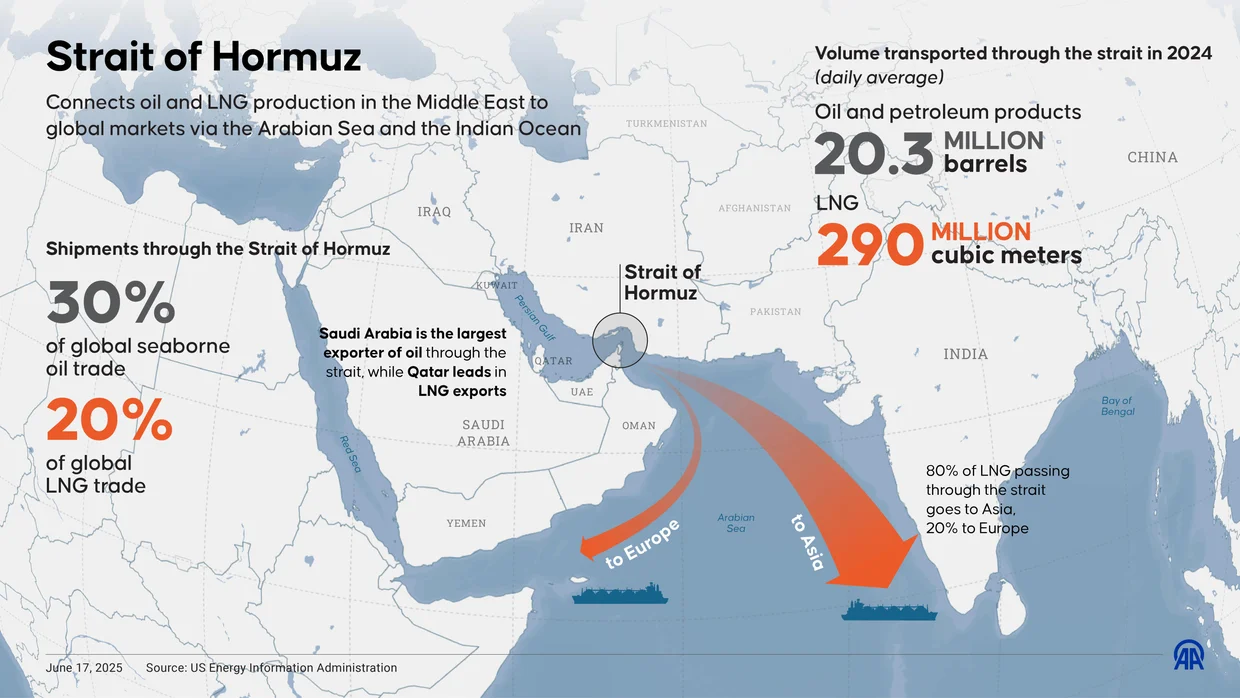
“While the military attacks are themselves supportive for oil prices, the key factor here is the closing of the Strait of Hormuz,” said Ajay Parmar, director of energy and refining at ICIS. That single sentence captures the existential anxiety now gripping global energy markets. The Strait of Hormuz — the narrow waterway separating Iran from the Arabian Peninsula — is the single most consequential chokepoint in the world’s oil supply chain, and the possibility of its closure has transformed a market event into a potential global economic crisis.

Real-Time Market Reaction: A Benchmark in Motion

Brent crude had already been climbing before the strikes landed. The global benchmark reached $73 a barrel on Friday — its highest level since July — as traders priced in a growing probability of military confrontation. When futures markets reopen Monday, analysts broadly expect the rally to hold and potentially accelerate.

West Texas Intermediate (WTI), the U.S. benchmark, was trading near $67 a barrel ahead of the weekend, reflecting slightly softer domestic demand signals but tracking the broader geopolitical premium being baked into global crude. The spread between Brent and WTI has widened as Middle Eastern supply-route risk commands a higher premium in internationally traded barrels.

Adding complexity to the supply picture, OPEC+ had only recently agreed to modest output increases of approximately 206,000 barrels per day as part of its phased unwinding of voluntary cuts — a move designed to recapture market share in a period of relative stability. That calculus has now changed overnight. With Iranian production — currently running at roughly 3.2 million barrels per day — suddenly under threat of disruption, and with the group’s Gulf members facing their own strategic calculations, OPEC+’s next emergency meeting could prove pivotal.

IndicatorPre-Strike (Friday)Post-Strike (Sunday OTC)
Brent Crude~$73/bbl~$80/bbl
WTI~$67/bblEst. $73–75/bbl
Projected Range (90-day)$73–$78$85–$100+
OPEC+ Planned Output Hike+206,000 bpdUnder review

The Chokepoint That Could Change Everything

To understand why analysts are invoking $100 oil, one must understand the Strait of Hormuz’s unique position in global energy architecture. According to the U.S. Energy Information Administration, approximately 20 to 21 million barrels of oil pass through the strait daily — representing somewhere between 20% and 30% of all seaborne oil trade globally. Liquefied natural gas flows add another layer of vulnerability: roughly 20% of the world’s LNG supply also transits the strait, with major importers in Asia — Japan, South Korea, China, and India — critically exposed.

Iran has threatened on multiple occasions to close the Strait of Hormuz in response to military pressure. While analysts have historically viewed such threats as largely rhetorical, the current escalation — involving direct U.S. and Israeli strikes on Iranian soil — represents a qualitatively different provocation. Tehran’s calculus on retaliation has shifted. “The risk of even a partial disruption to Hormuz flows is now being priced in ways we haven’t seen since 2019,” one senior energy trader told Bloomberg over the weekend.

Iran possesses a range of asymmetric tools short of an outright blockade: mine-laying, attacks on tanker traffic, and harassment of vessels using its naval assets and proxy forces throughout the region. Any of these actions would trigger insurance market seizures, rerouting costs, and supply delays severe enough to rattle prices without a single barrel being physically withheld.

What Analysts Are Forecasting

The forecasting community has moved rapidly to revise upward its price targets in the wake of Sunday’s developments. The divergence between bull and base cases is wide — reflecting genuine uncertainty about Iran’s response and the duration of any disruption.

Helima Croft, head of global commodity strategy at RBC Capital Markets and one of the most closely watched voices in geopolitical energy analysis, has long warned that Middle East risk was being systematically underpriced by markets. In recent notes, RBC analysts flagged the $90–$95 range as achievable under a moderate disruption scenario, with $100 possible if Hormuz flows are materially curtailed.

Goldman Sachs, whose commodity desk has been tracking the Iran-Israel tension since late 2024, has outlined scenarios in which sustained supply disruption pushes Brent to $95–$100 by Q2 2026 — contingent on whether OPEC+ Gulf members, particularly Saudi Arabia and the UAE, step in with compensatory output.

Rystad Energy’s Jorge León, vice president of oil market research, has previously estimated that a full Strait of Hormuz closure lasting 30 days could remove 15–17 million barrels of daily supply from the market — a shock that dwarfs anything seen since the 1973 Arab oil embargo. Even a partial, weeks-long disruption affecting 30–40% of normal flows could push prices into triple digits.

Capital Economics has taken a more measured line, arguing that OPEC+ spare capacity — estimated at roughly 5–6 million bpd, predominantly held by Saudi Arabia — provides a meaningful buffer. However, their analysts acknowledge that tapping that capacity while simultaneously managing alliance cohesion and navigating U.S. pressure will require careful political choreography.

Global Economic Fallout: From Petrol Pumps to Supply Chains

The consequences of an oil price spike to $100 would reverberate well beyond energy trading floors. Consumer inflation, which central banks in the U.S., EU, and UK have spent two years painstakingly subduing, would face a significant new headwind. Energy costs feed into virtually every sector of the global economy — from petrochemicals and plastics to food production, shipping, and manufacturing.

In the United States, a sustained move to $100 Brent would likely push gasoline prices back above $4 per gallon nationally — a politically toxic level that the Biden and Trump administrations alike have treated as a red line. In Europe, still navigating energy price volatility following the Russia-Ukraine conflict, the impact on household energy bills and industrial competitiveness could be severe.

Emerging market economies face a particularly acute risk. Countries in South and Southeast Asia that import large shares of their energy needs — India, Pakistan, Indonesia, the Philippines — would see their current account deficits worsen sharply, currency pressures intensify, and inflationary spirals become harder to contain. For the world’s most financially vulnerable nations, a prolonged oil shock could tip fragile fiscal positions into crisis.

Global shipping and supply chain disruption extends beyond oil. The Strait of Hormuz is also critical for dry bulk cargo, container traffic, and chemical shipments. Rerouting vessels around the Cape of Good Hope adds weeks to transit times and thousands of dollars per voyage in fuel and operating costs — a friction that cascades through global trade.

Historical Context and the Limits of Alternatives

This is not the first time the world has stared down a Hormuz closure scenario. During the 1980–1988 Iran-Iraq War — the so-called “Tanker War” — over 400 ships were attacked in the Gulf, yet full closure was never achieved, partly because Iran and Iraq both needed oil revenues to fund their war efforts. Tehran today faces a different strategic calculus.

Two pipeline alternatives exist that partially mitigate Hormuz risk. Saudi Arabia’s East-West Pipeline can transport up to approximately 5 million bpd from the Eastern Province to the Red Sea port of Yanbu, bypassing the strait entirely. The UAE’s Abu Dhabi Crude Oil Pipeline can move around 1.5 million bpd to the port of Fujairah on the Gulf of Oman. Together, these routes could offset perhaps 6–7 million bpd — significant, but far short of the 20+ million that currently flows through Hormuz daily.

Conclusion: Between De-Escalation and a Prolonged Crisis

The next 72 hours are likely to be defining. Iran’s formal response to the U.S.-Israeli strikes — whether diplomatic signaling, proportional military retaliation, or an asymmetric escalation campaign targeting Gulf shipping — will determine whether the current oil spike is a spike or the beginning of a sustained re-pricing of global energy risk.

Markets are, at this moment, pricing probability rather than certainty. The $80 Brent level reflects elevated fear; $100 reflects a world in which Hormuz flows are genuinely, materially disrupted. Between those two numbers lies an enormous range of human, diplomatic, and military contingency.

What is not contingent is the underlying vulnerability the current crisis has exposed: a global energy system that, despite years of diversification rhetoric, remains structurally dependent on a waterway 33 kilometers wide at its narrowest point. As Ajay Parmar’s warning makes clear, the military strikes may have lit the match — but the Strait of Hormuz is the powder keg that the world’s economies cannot afford to see ignite.


Discover more from The Economy

Subscribe to get the latest posts sent to your email.

Continue Reading
Click to comment

Leave a Reply

Analysis

SoftBank Plunges 10% as $6 Billion OpenAI Margin Loan Stalls

Published

on

SoftBank Group dropped as much as 11% in Tokyo on Tuesday before closing down 8.3%, wiping roughly $8 billion off its market value in a single session. The trigger wasn’t earnings or guidance. It was a Bloomberg report, carried by Reuters, that the company’s talks to raise a SoftBank margin loan backed by its OpenAI stake have stalled.

What began as a $10 billion pitch to creditors has shrunk to $6 billion, and even that looks uncertain. For a firm that has bet its balance sheet on artificial intelligence, the market’s reaction was swift and unsentimental.

The fall lands in the middle of a broader technology sell-off, but SoftBank’s pain is specific. Since September 2024, founder Masayoshi Son has committed up to $30 billion to OpenAI, turning the Japanese conglomerate into the ChatGPT maker’s largest financial backer. To fund it, SoftBank secured a $40 billion loan through a bridge facility in March, arranged by JPMorgan Chase, Goldman Sachs, Mizuho, SMBC and MUFG, due in March 2027.

That bridge was always meant to be refinanced. The plan: borrow against the paper gains in OpenAI. With OpenAI’s March funding round valuing it at $852 billion, SoftBank’s 13% stake was marked near $110 billion on paper. Yet private-company collateral is a hard sell when lenders are already nervous about AI valuations and SoftBank’s history of concentrated bets.

1 — The Core Development: From $10 Billion to Stalled Talks

The SoftBank margin loan was pitched as a two-year facility, with an option to extend by one year, using OpenAI shares as collateral. Initial discussions in April targeted $10 billion. By early May, bankers were already telling Bloomberg that creditors balked at valuing an unlisted AI company, and the target was cut to $6 billion.

On June 10, the story broke that those talks have now stalled. SoftBank Group’s talks with potential creditors to raise at least $6 billion from a margin loan backed by its OpenAI stake have stalled, Bloomberg reported, citing people familiar with the matter. Reuters could not independently verify the report, and SoftBank declined to comment.

The market didn’t wait for confirmation. SoftBank shares, ticker 9984 in Tokyo, plummeted more than 11% at one stage in Tokyo, before recovering slightly to close down 8.3%. Seeking Alpha pegged the U.S.-listed ADR drop at 9.7% the same day. Over five trading sessions, the stock has fallen by more than a fifth, stripping SoftBank of its crown as Japan’s most valuable company.

Why the sensitivity? Because the loan isn’t optional. SoftBank is racing to close a $22.5 billion funding commitment to OpenAI by year-end. It has already sold its entire $5.8 billion Nvidia stake and offloaded $4.8 billion of T-Mobile US shares to raise cash. It has slowed Vision Fund dealmaking to a crawl — any deal above $50 million now requires Son’s explicit approval.

The margin loan was the cleanest way to bridge the gap without selling more crown jewels. Without it, SoftBank must choose between more asset sales, a dilutive equity raise, or leaning harder on its Arm Holdings collateral, where it already has $11.5 billion in undrawn capacity.

2 — Why SoftBank’s Margin Loan Concerns Spooked Markets

What is SoftBank’s margin loan for OpenAI?

A margin loan lets an investor borrow against securities it already owns. SoftBank wanted to pledge its private OpenAI shares to banks, receive cash, and use that cash to meet its remaining OpenAI funding promises. Lenders get interest and a claim on the shares if SoftBank defaults. The problem is pricing something that doesn’t trade.

Creditors worry about three things. First, valuation volatility. OpenAI was marked at $300 billion in April when SoftBank struck its deal. By late 2025, Reuters sources said Amazon was in talks to invest at close to $900 billion. That’s a threefold swing in months, not years.

Second, liquidity. If SoftBank couldn’t repay, banks would own a slice of a private company with no public market. Selling it quickly would mean a steep discount.

Third, concentration. SoftBank already has $40 billion in bridge debt maturing in March 2027. Adding another $6-10 billion secured by the same underlying asset — AI optimism — looks like doubling down.

Why did SoftBank shares fall 10%? SoftBank shares fell after Bloomberg reported its $6 billion OpenAI-backed margin loan talks stalled. Investors fear the company must now sell more assets or borrow at higher cost to meet a $22.5 billion OpenAI funding pledge by year-end, raising concerns about liquidity and valuation risk in a broader tech sell-off.

That 58-word answer captures the featured snippet target directly. The picture is more complicated than a single loan, however.

Lenders are also watching SoftBank’s other promises. Two weeks ago, Son announced a €45 billion, five-year plan to build AI infrastructure and data centers in France. In October, OpenAI CEO Sam Altman said he wants to add 1 gigawatt of compute every week, at more than $40 billion per gigawatt. Those numbers require constant funding, not one-off loans.

3 — Implications: Funding Gap, Asset Sales, and the Arm Backstop

The immediate implication is a funding gap. SoftBank has parent-level cash of 4.2 trillion yen ($27.16 billion) as of September 30, according to Reuters. That’s substantial, but not enough to cover both the $22.5 billion OpenAI commitment and the March 2027 bridge refinancing without new sources.

What follows, however, is a forced pivot to asset sales. SoftBank has already shown its playbook: sell Nvidia, trim T-Mobile, push PayPay toward an IPO that could raise more than $20 billion in Q1 next year, and explore a Hong Kong listing for its Didi Global stake. Each sale crystallizes gains but also reduces future optionality.

The second-order effect is on Arm. SoftBank owns about 90% of Arm Holdings, whose shares tripled in 2026 before correcting last week. That appreciation gave SoftBank an extra $6.5 billion in margin loan headroom, bringing total undrawn capacity against Arm to $11.5 billion. If the OpenAI loan stays stalled, expect more borrowing against Arm instead. It’s listed, liquid, and easier for banks to underwrite.

Still, that swaps one risk for another. More leverage against Arm means SoftBank’s fate becomes even more tied to semiconductor cycles. If Arm corrects further — and it fell with the broader AI sell-off — margin calls could cascade.

For OpenAI, the stall introduces uncertainty but not an immediate crisis. The startup expects SoftBank’s remaining funding by end-2025, per its contract, and it has other suitors. Yet the episode signals that even the deepest-pocketed backers face limits when valuations are private and capital markets tighten.

Policymakers in Tokyo are watching too. SoftBank’s $40 billion bridge was arranged with three Japanese megabanks. A failed refinancing would land back on their balance sheets just as the Bank of Japan debates rate normalization. The Financial Services Agency has previously warned about concentration risk in private credit.

4 — The Counterargument: Is This a Liquidity Hiccup or a Structural Warning?

Not everyone sees a crisis. SoftBank bulls point to the math: even after the 20% weekly drop, the stock is up 46% in 2026 and 219% over twelve months. The driver isn’t OpenAI, it’s Arm. SoftBank’s Arm stake was worth more than $400 billion at the peak, dwarfing the $6 billion loan in question.

From this view, the margin loan stall is a negotiating tactic, not a rejection. Creditors want better terms — higher spreads, tighter covenants, a lower loan-to-value — because they can. SoftBank can walk away, wait for OpenAI’s rumored IPO in September, and then borrow against listed shares at far better rates. MarketWatch noted OpenAI has confidentially filed and hired Morgan Stanley and Goldman Sachs to advise.

That said, the counterargument underestimates timing. SoftBank needs cash before an IPO, not after. Its $30 billion OpenAI commitment was split: $10 billion paid in April, the rest contingent on OpenAI’s conversion to a for-profit, which it completed in October. The remaining $20 billion-plus is due by year-end. Waiting for a September IPO that may slip is a gamble.

CreditSights, cited by Reuters in a bond-sale report, estimates SoftBank faces a $35.7 billion funding shortfall but notes “strong underlying asset value.” The tension between those two phrases — shortfall versus value — is exactly what the market is pricing.

CLOSING

SoftBank’s 10% plunge isn’t about a single loan. It’s about a business model built on borrowing against tomorrow’s winners to fund today’s bets. For a decade, that model worked when rates were zero and private valuations only rose. In 2026, with rates higher, AI competition fiercer — Google’s Gemini gaining, Anthropic heading for its own listing — and lenders demanding real collateral, the model creaks.

Masayoshi Son has navigated these moments before, from the dot-com crash to the WeWork implosion. He still has levers: Arm, PayPay, T-Mobile, and a $27 billion cash pile. Yet each lever pulled reduces his margin for error.

The market’s message on Tuesday was blunt. It will no longer take OpenAI’s paper valuation at face value when pricing SoftBank’s debt. Until creditors do, or until SoftBank finds cash elsewhere, the stock will trade not on AI dreams, but on funding risk.


Discover more from The Economy

Subscribe to get the latest posts sent to your email.

Continue Reading

Analysis

US Inflation Hits 4.2% in May 2026 on Energy Shock

Published

on

The numbers landed like a thunderclap across trading floors at 8:30 a.m. Eastern on June 10. Headline consumer prices in the United States had leapt 4.2% in the year through May, the Bureau of Labor Statistics reported, rocketing past every consensus forecast. The print — the highest since the inflationary inferno of 2022 — was powered by a 17.3% monthly surge in gasoline, itself the shockwave of a military blockade in the Strait of Hormuz that had throttled global crude flows for 37 days and counting. In Chicago, soybean futures halted limit-down. In Washington, the phones inside the Eccles Building began ringing before the data hit the wire.

The 4.2% figure ends a fragile, hard-won disinflation that had taken the consumer price index from 9.1% in June 2022 to 3.8% as recently as April 2026. For 22 months, the Federal Reserve had held the federal funds rate at 5.25%–5.50%, betting that restrictive policy could finish the job without cracking the labour market. May’s report — a 0.9% month-on-month jump in the headline index — suggests that bet has been overrun by events 6,200 nautical miles away. Core CPI, which strips out food and energy, rose 0.4% for the month and 3.7% year-on-year, a sobering reminder that underlying price pressures have not been vanquished. The energy shock is now bleeding into services, shelter, and transportation, the categories that determine whether inflation becomes embedded in the daily life of every American.

The catalyst is no mystery. On 3 May, Iran’s Revolutionary Guard Corps mined the western approaches of the Strait of Hormuz and deployed fast-attack craft after the collapse of the Vienna 3 nuclear talks. Within 48 hours, Brent crude had vaulted from $78 to $124 a barrel. The physical market seized up: 21 million barrels a day of crude and condensate transit the strait, and insurers declared most hulls uninsurable north of Fujairah. By the final week of May, the US national average retail price for regular gasoline touched $5.12 a gallon, [according to AAA](https://gasprices.aaa.com/), up $1.44 from the week before the blockade. Jet fuel and diesel rose even faster, compressing airline margins and adding a fresh layer of freight costs to an economy still scarred by the logistics snarls of 2021–22. The BLS energy index climbed 12.4% in May alone — the largest one-month increase since March 2022, when Russia’s invasion of Ukraine scrambled global hydrocarbons.

For motorist Carla Jefferson, filling the tank of her 2019 Honda CR-V at a Shell station on West Florissant Avenue in St. Louis, the arithmetic was brutal. “It was $91. I’ve never paid $91 for a tank of regular,” she said on the morning of the CPI release, studying the receipt as though it might contain a clerical error. “I manage a daycare. I can’t just not drive.” Her experience is the granular translation of an index number that, in Washington and New York, is traded and hedged and dissected in decimal points. For households earning under $60,000, energy and food together consume roughly 22% of post-tax income, more than double the share of the top quintile. When gasoline gallops, those households have no alternative: demand is inelastic, and the price is paid in forgone prescriptions, skipped credit-card payments, and cheap calories that often worsen health outcomes. The 4.2% headline is an average that conceals a regressive tax.

What caused the jump in US inflation to 4.2% in May 2026? The Strait of Hormuz disruption sent gasoline prices up 18.3% and overall energy costs up 12.4%, adding roughly 1.8 percentage points to headline CPI. Core services inflation stayed stubborn at 4.1%, driven by shelter, insurance, and medical care, confirming that even without the energy shock, price stability was not assured. The BLS release noted that shelter costs, the largest component of core CPI, rose 0.5% for the month and 5.2% year-on-year, propelled by a lagged pass-through of home prices and a multi-year insurance premium spiral in coastal states exposed to climate-linked disasters.

The bond market’s reaction was swift and brutal. The two-year Treasury yield, the most sensitive to Fed policy expectations, leapt 28 basis points to 4.89% within an hour of the release — the sharpest intraday move since March 2023, when regional banks were failing. The ten-year yield pierced 4.70% for the first time in 16 months, and the yield curve bear-steepened in a way that historically signals markets pricing a policy error. Fed funds futures, which as late as April implied two rate cuts in the second half of 2026, abruptly flipped to price a 62% probability of a quarter-point hike at the July meeting, according to CME FedWatch. Rate traders are now assigning a non-trivial chance — 14%, by one options-based model — that the terminal rate could breach 6% before year-end.

What follows, however, is not a straightforward replay of 2022. The American economy of June 2026 is more leveraged, more fiscally constrained, and more politically brittle than the one that absorbed the post-pandemic price surge. Federal debt held by the public has crossed $38 trillion, and net interest outlays are running at an annualised $1.4 trillion, exceeding the defence budget. Every additional 100 basis points of Fed tightening adds roughly $380 billion to annual interest costs within two years, a fiscal accelerator that the Congressional Budget Office has flagged as the single largest risk to long-term solvency. The political calendar compounds the arithmetic: midterm elections are five months away, and a Democratic president is defending a single-digit House majority. The White House released a statement at 9:12 a.m. pledging to “use every tool at our disposal,” including a new round of Strategic Petroleum Reserve releases, but the SPR holds just 19 days of net import cover after the drawdowns of 2022 and the replenishment delays of 2024–25. The powder is damp.

Fed Chair Jerome Powell, speaking at a European Central Bank forum in Sintra on 9 June, acknowledged the inflation spike as “a supply-driven shock that complicates the path to our 2% objective,” but his words were carefully hedged. “We will not overreact to a single print, however uncomfortable, when the source is clearly a geopolitical event whose duration we cannot forecast,” he said. “But we will not hesitate to act if expectations become unanchored.” The University of Michigan’s preliminary June survey of consumers, released on the same day as the CPI, offered an early warning: five-to-ten-year inflation expectations ticked up to 3.4%, the highest since 1995, from 3.0% in May. That metric, which the Fed’s own research identifies as a critical leading indicator of wage-price dynamics, will likely dominate the internal debate at the Federal Open Market Committee’s 17–18 June meeting.

The picture is more complicated than a mechanical pass-through from oil to inflation. The US economy is running hotter than most models recognised. Payrolls grew by 287,000 in May, and average hourly earnings accelerated to 4.4% year-on-year, a pace inconsistent with 2% inflation unless productivity growth has accelerated well beyond its current 1.6% trend. The Atlanta Fed’s GDPNow model was tracking 3.1% real growth for the second quarter as of 6 June, driven by a consumption binge that household balance sheets cannot sustain indefinitely. This is not stagflation; it’s an overheating economy absorbing a supply shock, a combination that leaves monetary policymakers with no clean choices. If they hike into the shock, they risk crushing demand at precisely the moment the economy needs flexibility to reallocate resources. If they wait, they risk letting the 1970s genie out of the bottle — and the 1970s genie, once freed, required a 20% funds rate and a double-dip recession to re-cork.

A competing view, articulated forcefully by Mohamed El-Erian, chief economic adviser at Allianz and president of Queens’ College, Cambridge, insists the Fed should hold steady and accept a temporarily higher inflation rate rather than compound the supply shock with demand destruction. “The central bank cannot print oil, it cannot reopen a strait, and it cannot unilaterally cool shelter inflation that is driven by a decade of underbuilding,” El-Erian wrote in a Bloomberg opinion column on 9 June. “Tightening now would be an unforced error — the equivalent of shooting the patient because the fever hasn’t broken.” The argument has intellectual heft: core goods inflation actually declined 0.2% in May, and the supply-chain pressures index maintained by the New York Fed remains below its long-run average. If the Strait of Hormuz reopens — and diplomatic backchannels between Oman and Tehran have intensified in recent days — energy prices could fall as fast as they rose, pulling headline inflation back toward 3.5% by September.

Yet that position assumes that the inflation expectations genie stays docile. The Michigan survey suggests it’s already stirring. And there is a deeper, more structural worry: the energy shock is not a one-off. It is the third major supply disruption in five years, following COVID-era factory closures and the Russia-Ukraine commodity crisis. Firms that spent the 2010s optimising for just-in-time efficiency are now aggressively reconfiguring for resilience — reshoring, dual-sourcing, building inventory buffers. That insurance carries a cost, and the cost is structurally higher prices. A working paper published by the Bank for International Settlements in April 2026 estimated that the shift from efficiency to resilience in global supply chains could add 0.8 to 1.2 percentage points to advanced-economy inflation over the medium term, independent of cyclical forces. If the BIS is even half right, the Fed’s 2% target may be incompatible with the geopolitical realities of the mid-2020s.

The second-order effects are already cascading. Mortgage rates, which had drifted down to 6.3% in April on hopes of Fed easing, shot back above 7% in the first week of June, freezing the spring housing market. The National Association of Realtors’ affordability index dropped to its lowest level since October 1985. In corporate credit markets, spreads on high-yield bonds widened 65 basis points in two weeks, and a major airline — already squeezed by jet fuel costs — postponed a $3.2 billion debt refinancing, citing “adverse market conditions.” Emerging-market currencies, from the Indonesian rupiah to the South African rand, sold off sharply as the dollar index climbed 2.7% in five trading sessions. A strong dollar, coupled with expensive energy, is a classic recipe for balance-of-payments stress in the developing world. The IMF’s managing director warned on 8 June that the institution is “preparing for a wave of emergency lending requests” if crude prices stay elevated beyond the third quarter.

For American businesses, the calculus is simple and unforgiving. The producer price index for May, released 24 hours after the CPI, showed a 0.9% monthly rise, with goods inputs up 1.6% — nearly all of it energy and energy-linked chemicals. Margins, which cushioned the early phase of the post-pandemic inflation, are now compressing. The S&P 500’s aggregate operating margin fell to 11.9% in the first quarter, the lowest since late 2020, and second-quarter guidance from consumer-discretionary CEOs has been laced with warnings about “elasticity exhaustion” — the point at which customers simply stop accepting price increases. Procter & Gamble, which has raised prices in 17 of the last 19 quarters, reported a 1.8% volume decline in its North American segment for the three months to March. If energy costs persist, the next round of earnings calls will be a stress test for the pricing power that Wall Street has taken for granted.

The disinflation that preceded May’s shock was real but fragile. It rested on three pillars: healing supply chains, a cooling labour market, and anchored expectations. The Middle East crisis has knocked out the first pillar. The second pillar is wobbling: the quits rate, a reliable predictor of wage pressure, rose to 2.6% in April from 2.3% in January, and the ratio of job openings to unemployed workers ticked back above 1.6. The third pillar — expectations — is now under direct assault. History suggests that once expectations begin to drift, the cost of restoring them rises nonlinearly. The Fed’s own 2022 Tealbook simulations showed that a one-percentage-point increase in expected inflation, if not countered quickly, adds 0.7 points to actual inflation within 12 months. The Michigan reading of 3.4% is not yet a one-point jump, but its trajectory is steeper than anything observed since 1991.

What makes this episode distinct is the speed with which the energy shock has transmitted into core services. In the 1973–74 oil embargo, it took roughly six quarters for higher crude prices to fully work their way into non-energy consumer prices. In 2026, that lag has compressed to what San Francisco Fed economists estimate as three to four months, owing to the prevalence of energy surcharges in service contracts, algorithmic pricing software that reprices airline seats and hotel rooms in real time, and indexed wage agreements in logistics and healthcare. The “stickier” the inflation becomes, the more painful the cure. Diane Swonk, chief economist at KPMG US, captured the anxiety in a client note on the morning of the release: “This is not 1973, but it is also not 2022. We are in a third regime — one where supply shocks are more frequent, pass-through is faster, and the Fed’s margin for patience is thinner than markets assume.”

The thin margin is evident in the options market. The Cboe Volatility Index, the VIX, closed at 29.8 on 10 June, its highest since the regional banking turmoil of March 2023. But more telling was the move in the MOVE index, which tracks Treasury volatility: it hit 158, a level that historically has preceded recessions. Bond traders are not merely pricing a rate hike; they are pricing a regime change in the structure of the economy. The term premium on the ten-year note — the compensation investors demand for bearing the risk that inflation and rates could deviate from expectations — turned positive in May for the first time since 2020 and has since widened to 42 basis points. That shift alone has added roughly $120 billion to the present value of the federal debt stock, a figure that will quietly appear in the Treasury’s next quarterly refunding announcement.

What comes next will hinge on three variables: the duration of the Strait of Hormuz closure, the reaction function of the FOMC, and the resilience of the American consumer. The first is unknowable. The second will be revealed on 18 June, when the committee releases its Summary of Economic Projections; traders will scrutinise the “dot plot” for any shift in the 2026 median. The third is measurable in real time. Real average hourly earnings, adjusted for the May CPI, fell 0.6% for the month and are now down 1.3% year-on-year. Households are drawing down the last of their pandemic-era savings buffers; the San Francisco Fed estimates that excess savings, which peaked at $2.3 trillion in mid-2021, fell below $150 billion in April. Credit card delinquencies at smaller banks have risen to 7.1%, the highest in data going back to 1991. The consumer is not broken, but the cracks are widening.

The afternoon of the CPI release, a modest two-paragraph statement from the Treasury Department confirmed that Secretary Wally Adeyemo had convened an emergency meeting of the President’s Working Group on Financial Markets. The statement named no date, no agenda. It didn’t need to. The silence was the message.

The US economy has absorbed energy shocks before, and it has absorbed inflation before. It has rarely absorbed both while sitting on a federal debt-to-GDP ratio above 120%, a housing market frozen by 7% mortgage rates, and a geopolitical map that grows more incendiary by the quarter. The 4.2% print is not a crisis. It is a warning, printed in the only language financial markets truly respect. Whether Washington and the Eccles Building heed it is a question that will be answered not in the coming weeks, but in the long, brittle months ahead. The only certainty is that the margin for error has vanished.


Discover more from The Economy

Subscribe to get the latest posts sent to your email.

Continue Reading

Analysis

Crypto Adoption: Why Wall Street Embraces Crypto

Published

on

For more than a decade, the relationship between Wall Street and cryptocurrency resembled a cold war. Bank executives dismissed Bitcoin as speculation. Regulators warned about risks. Institutional investors largely watched from the sidelines.

Now the same financial establishment that once treated digital assets as a threat is racing to build products, infrastructure, and business models around them.

The shift is no longer theoretical. Major banks are exploring tokenized deposits, asset managers are expanding crypto ETF offerings, payment networks are integrating stablecoins, and exchanges are building bridges between traditional securities and blockchain-based markets. What was once viewed as a challenge to the financial system is increasingly becoming part of it.

Crypto Adoption by Wall Street Moves Into a New Phase

The latest evidence arrived this week when Axios reported that Wall Street firms are accelerating plans to offer crypto-related services as investor demand converges with broader trends in tokenization, stablecoins, artificial intelligence, and 24-hour markets. Kraken co-CEO David Ripley told Axios that major financial institutions increasingly expect to provide access to assets such as Bitcoin and Ethereum.

The timing matters.

Just a few years ago, leading banking executives openly questioned whether cryptocurrencies had any lasting value. Today, the conversation has shifted from whether digital assets belong in finance to how quickly institutions can integrate them.

The transformation is visible across several fronts:

  • Expansion of spot Bitcoin and Ethereum ETFs
  • Growth in institutional custody services
  • Development of tokenized securities
  • Stablecoin-based payment networks
  • Blockchain settlement infrastructure
  • Bank-issued digital deposits

Perhaps the most striking development is that many institutions are no longer approaching crypto as a speculative asset class alone. Instead, they are increasingly viewing blockchain technology as financial infrastructure.

Why Wall Street Changed Its Mind

The simplest answer is demand.

Retail investors, hedge funds, family offices, pension managers, and wealth clients have shown sustained interest in digital assets despite periods of severe volatility. Ignoring that demand became increasingly difficult.

Yet demand explains only part of the story.

The deeper reason is that crypto itself has evolved.

During the first wave of adoption, most institutional discussions focused on Bitcoin’s price. Today’s conversations focus on settlement systems, tokenized treasuries, digital identity, programmable payments, and real-world asset tokenization.

Reuters recently described stablecoins as the “plumbing” of a new financial architecture, arguing that the biggest opportunity may lie not in the coins themselves but in the infrastructure supporting them. Payment processors, compliance systems, custody providers, and blockchain settlement networks are becoming attractive investment themes for large institutions.

That represents a fundamental shift.

Wall Street has historically profited from financial infrastructure. Whether through exchanges, clearing houses, custodians, payment networks, or settlement platforms, the industry thrives by controlling the rails on which money moves.

Blockchain increasingly looks like a new set of rails.

What Role Are Stablecoins Playing?

Stablecoins are becoming central to Wall Street’s crypto strategy because they combine blockchain efficiency with price stability. Unlike Bitcoin, stablecoins are typically pegged to traditional currencies, allowing institutions to use blockchain networks for payments, settlements, and transfers without taking direct cryptocurrency price risk.

The growth figures are difficult to ignore.

According to research cited by Macquarie, the stablecoin market has expanded to approximately $312 billion, rising roughly 50% year over year as banks, payment firms, and financial institutions explore broader use cases.

Visa has publicly stated that it sees significant potential in stablecoin settlement systems. The company is actively exploring ways to connect stablecoin transactions with existing merchant payment networks, a sign that established financial infrastructure providers no longer view blockchain solely as competition.

This week, another major signal emerged from Asia.

Japan’s three largest banking groups announced plans to jointly issue yen-backed stablecoins by March 2027, highlighting how mainstream banking institutions increasingly view digital currencies as part of future payment systems rather than existential threats.

How Tokenization Is Changing Financial Markets

Another powerful force behind Wall Street’s crypto embrace is tokenization.

Tokenization converts traditional assets into blockchain-based digital representations that can be traded, transferred, and settled more efficiently.

The concept applies to:

  • Government bonds
  • Corporate debt
  • Equities
  • Real estate
  • Private market investments
  • Money market funds

Institutional executives increasingly argue that tokenized assets can reduce settlement times, improve transparency, lower operational costs, and expand market access.

According to Reuters, partnerships involving major exchanges and financial firms are accelerating efforts to tokenize traditional securities and bring blockchain-based ownership structures into mainstream finance.

Kraken’s plans to provide tokenized access to public offerings represent one example of how the traditional boundary between securities markets and crypto markets is beginning to blur.

The significance extends beyond technology.

Financial markets remain constrained by operating hours, settlement delays, geographic barriers, and layers of intermediaries. Blockchain systems promise continuous operation and near-instant settlement.

For institutions measured by efficiency gains measured in basis points, those improvements can translate into billions of dollars.

The ETF Revolution Brought Institutions Into the Market

If there was a turning point in institutional crypto adoption, it was the emergence of regulated crypto ETFs.

Exchange-traded funds gave investors exposure to digital assets without requiring direct custody of cryptocurrencies.

That solved one of Wall Street’s biggest concerns.

The results have been substantial. Large asset managers now dominate crypto ETF flows, while Bitcoin and Ethereum funds have become the preferred vehicles for institutional exposure. According to reporting from The Wall Street Journal, investor demand remains concentrated among products offered by major firms such as BlackRock and Fidelity.

The ETF structure transformed crypto from a niche investment into an asset class that could fit inside retirement accounts, advisory portfolios, and institutional mandates.

That transition may ultimately prove more important than any individual cryptocurrency rally.

The Skeptics Still Have a Case

Despite growing institutional enthusiasm, the picture is more complicated than crypto advocates often suggest.

Bitcoin has struggled during parts of 2026 as investors redirected capital toward artificial intelligence investments and high-profile technology opportunities. Bernstein recently reported that crypto ETF inflows have slowed significantly this year, even though overall market structure has become more diversified.

Regulatory uncertainty remains another challenge.

Governments continue to debate how digital assets should be supervised, how stablecoin reserves should be managed, and how tokenized assets fit within existing securities laws.

Traditional banks are also not embracing crypto out of pure enthusiasm.

In many cases, they are responding to competitive pressure.

The rise of stablecoins threatens to divert deposits and payment activity away from conventional banking channels. Some institutions are building blockchain-based alternatives partly to defend existing business models rather than replace them.

That distinction matters.

Wall Street’s goal is not necessarily to decentralize finance. Its goal is to remain central to finance regardless of which technology powers the system.

The Bigger Economic Implications

The long-term significance extends far beyond Bitcoin prices.

If blockchain-based settlement becomes mainstream, it could reshape:

  • Cross-border payments
  • Securities clearing
  • Corporate treasury management
  • Foreign exchange transactions
  • Capital market infrastructure
  • Wealth management services

Financial institutions are beginning to treat digital assets as part of a broader modernization effort rather than an isolated investment category.

That perspective explains why banks, payment companies, exchanges, and asset managers increasingly discuss crypto alongside artificial intelligence, automation, and digital transformation strategies.

What follows, however, is not a simple victory for the original crypto vision.

Many early cryptocurrency advocates imagined a future without banks. Instead, the emerging reality looks very different. Banks are adapting, integrating, and expanding into blockchain-based finance rather than disappearing from it.

The New Reality

Wall Street’s embrace of crypto marks one of the most remarkable reversals in modern finance.

Institutions that once dismissed Bitcoin as a speculative fad are now building products around digital assets, experimenting with tokenized securities, supporting stablecoin infrastructure, and preparing for blockchain-enabled markets that never close.

The irony is hard to miss.

Crypto was created partly as a challenge to traditional finance. Yet its greatest validation may be coming from the very institutions it sought to disrupt.

Whether this marriage ultimately transforms finance or simply modernizes existing power structures remains an open question.

What is no longer in doubt is that Wall Street has stopped asking whether crypto matters. It is now deciding how to profit from it.


Discover more from The Economy

Subscribe to get the latest posts sent to your email.

Continue Reading

Trending

Copyright © 2025 The Economy, Inc . All rights reserved .

Discover more from The Economy

Subscribe now to keep reading and get access to the full archive.

Continue reading