
Analysis
Investors Pile Into Hungarian Assets in Bet on Closer EU Ties — and a €17 Billion Prize

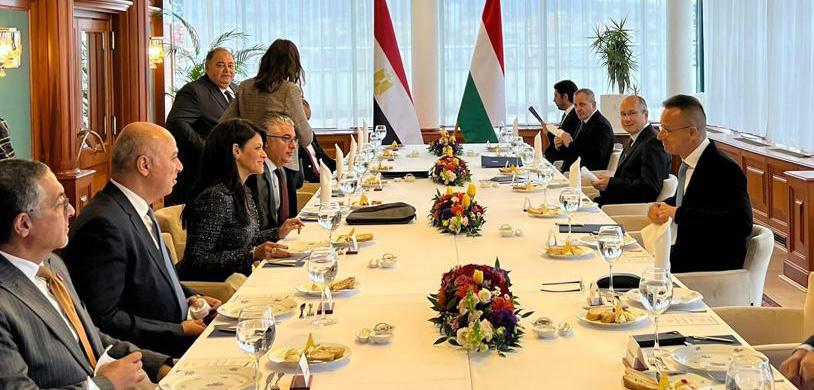
Following Péter Magyar’s historic landslide, Hungarian stocks, bonds, and the forint are surging. Here’s why global capital is pivoting to Central Europe’s most dramatic turnaround story of 2026 — and what the risks still are.
Market Snapshot — April 13, 2026
| Indicator | Level | Move |
|---|---|---|
| BUX Index | 137,260 pts | ▲ +3.1% — All-Time High |
| EUR/HUF Rate | 363.98 | ▲ Forint at 4-Year High |
| 10yr Bond Yield | 6.31% | ▼ –51bps post-vote |
| OTP Bank (MTD) | +17% | ▲ BUX’s largest constituent |
| Frozen EU Funds | €17B+ | ≈ 8% of Hungary’s annual GDP |
At 8:14 a.m. on Monday, April 13, the Budapest Stock Exchange’s BUX index crossed 137,000 points for the first time in its history. On the trading floor — and in the Zoom rooms of every emerging-markets desk from London to Singapore — the reaction was the same: a collective, quiet exhale, six years in the making.
Péter Magyar had done it. His centre-right Tisza party had secured 53.6 percent of the vote, delivering a two-thirds supermajority that ended Viktor Orbán’s 16-year grip on Hungary and, with it, the most sustained standoff between a member state and the European Union in the bloc’s history. By the time Frankfurt opened, the forint had surged to a four-year high of 363.98 per euro — a move of nearly four percent in a matter of days, one of the currency’s most violent short-term rallies since the pandemic. International bonds maturing in 2050 and 2052 had added more than two cents on the dollar overnight. Morgan Stanley’s emerging markets team was already out with a note: the landslide “leaves room for assets to rise even further.”
This was not ordinary post-election repositioning. This was a repricing of a country.
The Trade That Waited a Decade
To understand the ferocity of Monday’s rally, you have to understand how deeply cheap Hungarian assets had become — and why. Since Orbán consolidated power after his 2010 supermajority, Hungary accumulated a unique political risk premium: frozen EU funds, rule-of-law proceedings under Article 7, a judiciary stripped of independence, and a media landscape systematically captured by loyalists. By early 2026, Budapest’s 10-year government bond yields were trading more than 400 basis points above German equivalents — the second-highest spread in the entire European Union, a number that spoke not only to fiscal anxiety but to something more existential: the market’s judgment that Hungary had become, in institutional terms, a semi-detached member of the European project.
Investors had priced in isolation. Now they were pricing in reintegration.
“The market is reacting to a combination of uncertainty dissipating — there was a real concern of election results being contested — and renewed optimism for policy changes that should align Europe.”
— Timothy Ash, Senior EM Strategist, RBC Global Asset Management
The structural logic of the trade was simple, even if its execution required nerves of steel. For years, the EU had withheld approximately €17 billion in cohesion and Recovery and Resilience Facility (RRF) funds from Budapest, citing backsliding on judicial independence, press freedom, and anti-corruption standards. That sum represents roughly eight percent of Hungary’s annual GDP — a staggering figure for an economy that recorded near-zero growth in 2025. Unlock it, and the growth arithmetic changes instantly. Morgan Stanley estimates the disbursement alone could add between 1.0 and 1.5 percentage points to Hungarian GDP growth. For an economy forecast to grow at just 1.9 percent in 2026, that would be transformative.
Aberdeen and Allianz had been quietly accumulating Hungarian government paper for weeks as Tisza’s poll leads widened. Others followed the same pre-positioning logic. When the result came in — not just a win, but the largest electoral mandate of any party in Hungary’s 37 years of post-communist democracy — those trades paid. Those who had held back scrambled to get in.
Magyar’s ‘New Deal’ — and What the Market Is Actually Buying
What precisely are investors buying? Not simply a change of personality in the Prime Minister’s office on Kossuth Square. They are buying a credible institutional reset, delivered through a supermajority powerful enough to undo constitutional amendments that took years to embed.
Magyar has outlined what he calls a “Hungarian New Deal” — a programme built around three pillars:
- Judicial and institutional restoration — joining the European Public Prosecutor’s Office, reversing structural changes to the Constitutional Court, and introducing a two-term limit for prime ministers.
- Anti-corruption reform — ending the crony procurement networks that enriched Orbán allies and reorienting public contracts toward competitive tender.
- Foreign investment predictability — abolishing the sector-specific windfall taxes on banks, energy companies, and retailers that had made Hungary’s business environment increasingly hostile since 2022.
For the equity market, it is that third pillar that drove Monday’s sector rotation most viscerally. OTP Bank, Hungary’s dominant lender and the BUX’s largest single constituent, surged more than 17 percent over the pre-election and post-election period. MOL, the oil and gas giant, rose sharply. Richter Gedeon, the pharmaceuticals group with genuine international reach, outperformed. Meanwhile, firms with close ties to Orbán’s NER system — his National System of Cooperation — plummeted as investors processed what the end of protected oligarchic networks would mean for their order books.
“Magyar will need better relations with the EU. There are lots of structural funds that will probably get released, and the market knows the economic policy team well.”
— Timothy Ash, RBC Global Asset Management
The likely appointment of András Kármán as Finance Minister has done as much as any single signal to anchor investor confidence. A former board member at the European Bank for Reconstruction and Development with an orthodox economics pedigree, Kármán was Tisza’s economic adviser throughout the campaign. His emergence as the probable guardian of the public finances offers markets precisely what they needed: a credible fiscal anchor, someone Brussels and the bond market can speak to in the same language.
The EU Equation — Timeline, Mechanics, and the Urgency of August
The market’s immediate question is not whether the EU funds will flow — few serious analysts doubt that they will, eventually — but when. And here, the calendar creates genuine complexity.
The mid-year deadline for Budapest to access the EU’s post-COVID RRF funds looks extremely tight, even under the most optimistic scenario. EU bureaucracy does not move at the speed of equity markets. Milestones must be assessed, legal processes followed, Commission staff deployed. Yet JPMorgan, in a research note circulated after the result, argues that “extraordinary circumstances will call for exceptional flexibility” from Brussels — and the early signals from the Commission have been anything but cold. Ursula von der Leyen welcomed Magyar’s victory as “a victory for fundamental freedoms,” declaring that “Hungary has chosen Europe” and pledging to work “intensively” with the new government to implement the reforms required to release funding.
Capital Economics’ Liam Peach, in a note that cut closer to the bone than most sell-side commentary, put the challenge plainly: “The durability of any positive market reaction will now depend on how quickly Tisza moves to rebuild relations with the EU, secure EU fund disbursements, and signal a credible medium-term fiscal anchor.” In other words: the rally is real, but it must be earned. The August 2026 deadline that the incoming government has set for securing fund access is ambitious. Investors are watching it closely.
Key Reform Milestones the Market Is Tracking
| Milestone | Timeline | Market Impact | Risk Level |
|---|---|---|---|
| EU Commission rule-of-law dialogue opens | May–Jun 2026 | Bond spread compression | Low |
| Windfall tax repeal legislation | Q2 2026 | OTP/banking sector upside | Low |
| RRF milestone assessment submission | By Aug 2026 | Forint rally extension | Medium |
| Judicial independence reforms enacted | Q3–Q4 2026 | Sovereign rating revision | Medium |
| First EU cohesion fund disbursement | Late 2026 | GDP growth uplift 1–1.5ppt | Medium |
| Euro adoption roadmap published | 2027–2028 | Long-run convergence trade | High |
The Risks Markets Are Choosing to Overlook — For Now
Every great emerging-market trade has a shadow side, and Hungary’s is no different. The euphoria of a regime change can be a more powerful market force than the messy reality that follows. Investors buying the narrative of post-Orbán Hungary in April 2026 are making a series of downstream assumptions that deserve scrutiny.
Begin with the fiscal inheritance. Hungary enters the Magyar era with one of the EU’s largest budget deficits — above five percent of GDP — a debt-to-GDP ratio north of 70 percent and climbing, and a sovereign credit rating from S&P Global that sits just one notch above junk. For all the optimism about EU fund inflows, those funds do not arrive without reform conditionality attached, and delivering reform while consolidating the public finances simultaneously is one of the hardest things any new government can attempt.
Then there is the institutional depth problem. Commerzbank analyst Tatha Ghose, one of the more sober voices amid the post-election commentary, noted that “Tisza inherits a state apparatus deeply shaped by Fidesz over the past decade and a half, with key institutions, administrative structures, and policy frameworks still populated by Fidesz loyalists.” A parliamentary supermajority gives Magyar the constitutional tools. It does not give him the bureaucratic machinery to use them at speed.
PGIM’s head of emerging market macro research, Magdalena Polan, added another wrinkle: a sudden disbursement of EU funding before reforms are fully cemented “could leave Brussels open to legal challenges from other potentially unhappy member countries.” Speed and legal robustness may pull in opposite directions.
On economics, Deutsche Bank’s analysts noted that Hungary’s “fiscal and debt dynamics remain incompatible with Maastricht criteria at the moment” — a polite way of saying that Magyar’s aspiration for euro adoption, however politically appealing, will require years of fiscal surgery that markets should not expect to feel quickly. And Magyar’s proposed shift from Hungary’s flat 15 percent income tax to a three-tier progressive system, while popular with Brussels, will unsettle segments of the business community that are currently cheering his arrival.
Finally — and this is the geopolitical variable that no Budapest bond model can fully capture — Hungary’s foreign policy reset comes at a moment of acute European security stress. Orbán’s exit deprives Vladimir Putin of his most reliable EU interlocutor, but it also removes a complicated brake on EU-wide decisions on Ukraine aid. How Magyar navigates the Russia relationship, energy dependencies, and US relations in a MAGA-inflected Washington will matter enormously for Hungary’s standing in Brussels — and therefore for the pace of fund releases.
The Broader CEE Convergence Thesis
Step back from the Budapest trading floors for a moment, and something larger comes into view. Hungary’s inflection is not an isolated event. It is the most dramatic data point yet in a broader Central and Eastern European repricing that has been underway since 2022.
Poland’s own democratic restoration under Donald Tusk’s coalition government, which began reversing the Law and Justice party’s judicial changes from late 2023 onward, offered investors the proof of concept: institutional reform in a CEE country can drive durable asset outperformance. The zloty’s relative resilience, Warsaw’s equity market premium over Budapest in the post-2022 period, and the gradual compression of Polish sovereign spreads all told the same story. Investors in the CEE convergence trade — the thesis that Central European economies will gradually close the gap with Western European income and governance standards, driving sustained capital appreciation — had been waiting for Hungary to join that narrative. On April 12, it did.
If Magyar delivers even a partial reform agenda over the next 18 months, the country-risk premium that has kept foreign direct investment subdued, deterred long-term institutional capital, and inflated borrowing costs could compress meaningfully. The €17 billion in EU funds is the immediate prize. The longer-term prize is Hungary’s re-emergence as a credible investment destination for the kind of patient capital — infrastructure funds, private equity, real estate — that rewards institutional stability over the long run.
“It’s a new chapter for Hungary and it’s a great opportunity. To move the economy will not take much because sentiment and rule of law are such an important part of the economic set of factors that impact growth.”
— Magdalena Polan, Head of EM Macro Research, PGIM
What Comes Next
The first 100 days of the Magyar government will be watched with the intensity usually reserved for a new Federal Reserve chair. Markets have front-loaded a great deal of good news. The BUX at all-time highs, a forint below 370 to the euro, and bond yields at their lowest since late 2024 all reflect an optimistic scenario in which reforms move swiftly, EU dialogue opens constructively, and the fiscal position stabilises.
That scenario is achievable. It is not guaranteed. Hungarian Conservative analysts warn that “much of the political shift has already been priced in” and that further forint appreciation beyond the 363–370 range “is likely to remain limited” without concrete reform delivery. On a longer horizon, the sustainability of sub-370 levels depends on fiscal fundamentals that remain, for now, challenging.
For investors, the tactical trade may already be mostly done. The structural trade — the multi-year bet on Hungary’s institutional rehabilitation, EU fund absorption, and eventual convergence — is just beginning. Those are different instruments with different time horizons. Confusing them, as emerging-market history demonstrates with tiresome regularity, tends to be expensive.
But this much is clear: something has shifted in Central Europe. A country that spent 16 years drifting toward the European periphery — geographically, institutionally, and in terms of capital flows — has pivoted with extraordinary speed. The market noticed before the political commentators caught up. Now the question is whether a nation of ten million people, led by a 43-year-old former Fidesz insider turned democratic reformer, can convert the most dramatic electoral mandate in its post-communist history into the institutional transformation that the markets — and Brussels — are betting their money on.
In Budapest this week, the Danube still runs between two cities that reunified only 150 years ago. History here moves in long arcs. Investors are betting that this time, the arc bends faster.
Bottom Line for Investors
The post-election rally in Hungarian stocks, bonds, and the forint reflects a legitimate structural repricing — not mere sentiment. With €17 billion in frozen EU funds, a credible finance minister, and a two-thirds supermajority enabling swift legislative change, the fundamental case is real. But the market has already priced an optimistic scenario. Durable outperformance depends on reform delivery pace, fiscal consolidation credibility, and Brussels’ willingness to move fast. Position sizing should reflect the asymmetry: the upside is large, the timeline is uncertain, and the institutional obstacles are underappreciated.
Frequently Asked Questions
How much in EU funds could Hungary unlock after Péter Magyar’s election? Approximately €17–19 billion in frozen RRF and cohesion funds — roughly 8% of Hungary’s annual GDP — could be released if Magyar’s government delivers on EU rule-of-law and anti-corruption milestones. Morgan Stanley estimates this alone could add 1.0–1.5 percentage points to annual GDP growth.
How did Hungarian assets perform after the April 2026 election? The BUX index hit an all-time high of 137,260 points, the forint surged to a four-year high of 363.98 per euro (a ~4% move in days), and 10-year government bond yields fell roughly 51 basis points to their lowest since late 2024. OTP Bank rose close to 17% in the month leading up to and following the election.
What is Péter Magyar’s economic reform plan for Hungary? Magyar’s “Hungarian New Deal” centres on abolishing Orbán-era windfall taxes on banks and retailers, restoring judicial independence to unlock EU funds, joining the European Public Prosecutor’s Office, and creating a more predictable, corruption-free environment for foreign direct investment.
What are the main risks to the Hungarian asset rally? Hungary’s budget deficit exceeds 5% of GDP, its debt-to-GDP ratio is above 70%, and S&P Global rates it just one notch above junk. Institutional inertia — a state apparatus stacked with Fidesz loyalists — could slow reforms. EU fund disbursement timelines are also uncertain and legally complex.
Is Hungary on a path to euro adoption? Magyar has expressed intent to put Hungary on a euro adoption roadmap, but Deutsche Bank notes current fiscal and debt dynamics remain “incompatible with Maastricht criteria.” Meaningful convergence toward sub-3% deficits and sub-60% debt ratios would likely take several years of sustained fiscal discipline.
Discover more from The Economy
Subscribe to get the latest posts sent to your email.


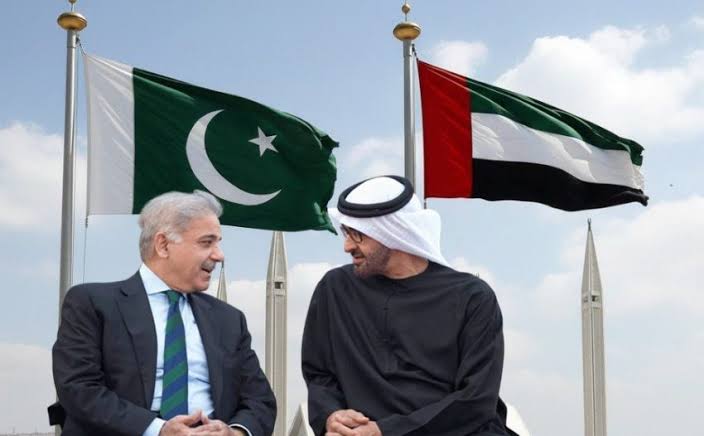
What happened: In early 2026, the United Arab Emirates declined to roll over a $3 billion loan to Pakistan — the first such refusal in seven years. The repayment equalled roughly 18% of Pakistan’s foreign currency reserves, arriving as Islamabad also faced a $1.3 billion bond payment and was waiting on the next IMF tranche.
Why it matters: It’s the clearest sign yet that Gulf sovereign patience with Pakistan’s balance-of-payments cycle is thinning, even as Gulf states simultaneously court China, Saudi Arabia, and each other for capital in a tightening regional liquidity environment.
The Story Nobody’s Connecting
Most coverage of Pakistan’s 2026 external account stress treats the UAE’s loan decision as an isolated liquidity event — a “routine financial transaction,” in the words of Pakistan’s own Ministry of Foreign Affairs. That framing misses the bigger pattern. The same weeks that Abu Dhabi called in its $3 billion, unusual delays began appearing in bank transfers from Saudi Arabia to the UAE itself — friction between the Gulf’s two largest economies, at a moment when both are also managing their own post-war oil price adjustment. (Pakistan & Gulf Economist)
Put those two data points together and a different story emerges: this isn’t just about Pakistan’s creditworthiness. It’s about Gulf capital becoming more selective, more transactional, and less willing to extend informal grace periods across the board — with Pakistan simply the most exposed borrower in the queue.
The Numbers Behind the Pressure
Pakistan’s State Bank held $16.4 billion in reserves as of late March 2026 — enough to cover roughly three months of imports, a threshold economists generally treat as a comfort floor, not a cushion. (Mettis Global News) The UAE’s declined rollover landed at the same time as a looming $1.3 billion international bond payment and dependence on the next $1.2 billion IMF disbursement — a convergence of obligations that left the State Bank with limited room to maneuver beyond import restrictions, rate hikes, or fresh commercial borrowing.
The backdrop matters too. The rupee had been trading in a comparatively narrow 278–282 band before the escalation of the Iran conflict pushed global oil prices higher, squeezing Pakistan’s import bill precisely when its Gulf safety net began to wobble. The KSE-100 benchmark, meanwhile, had already shed around 15% amid the broader pressure. (Mettis Global News)
This is not Pakistan’s first Gulf-dependency cycle. The IMF’s own record shows a now-familiar pattern: staff-level agreements reached in Dubai, UAE pledges of multibillion-dollar investment arriving alongside IMF tranches, and Gulf bridge financing used to stave off sovereign default in periods when reserves cover shrinks toward zero. (Business Standard) What’s different in 2026 is that the bridge itself is showing cracks.
Islamabad’s Official Line vs. the Structural Reality
Pakistan’s government has leaned into a “stability to sustainable growth” narrative around its FY2026–27 federal budget, with the finance minister framing the transition as export-driven rather than reserve-dependent. Business groups have broadly welcomed the budget, and the current account posted a $459 million surplus in May 2026, an improvement attributed to strong remittance inflows. (Business Recorder) The Monetary Policy Committee has held rates steady rather than reaching for emergency tightening, which is itself a signal that the central bank does not yet see the UAE episode as a systemic trigger.
But a current account surplus built substantially on remittances is different from one built on export competitiveness or durable FDI. Pakistan’s trade structure still leans heavily on a narrow set of partners: China supplies over a quarter of its imports and a meaningful share of its exports, the UAE is both a top export destination and its second-largest import source, and Gulf states collectively remain the primary channel for both remittances and emergency liquidity. (Wikipedia — Economy of Pakistan) That concentration is precisely what makes a single Gulf lender’s changed appetite so consequential.
Why the Oil Backdrop Compounds the Risk
None of this is happening in a vacuum. The IMF’s own July 2026 commentary noted that global oil markets “absorbed the war shock” from the Iran conflict, but cautioned that buffers — spare production capacity, strategic reserves, shipping insurance capacity — are running low. (IMF Blog) For an oil-importing, reserve-constrained economy like Pakistan, a second energy price shock without deeper buffers would land directly on the same reserves the UAE loan was meant to protect.
What to Watch Next
- Whether Saudi Arabia steps in as an alternative bridge lender, or whether the Riyadh–Abu Dhabi transfer friction signals a broader Gulf liquidity tightening that limits everyone’s appetite to backstop Pakistan.
- The pace and size of the next IMF tranche, and whether Fund conditionality shifts to demand deeper reserve buffers given the UAE precedent.
- Whether China increases its role as lender of last resort, deepening Pakistan’s dependency in exactly the direction Gulf financing was historically meant to offset.
Discover more from The Economy
Subscribe to get the latest posts sent to your email.
Introduction
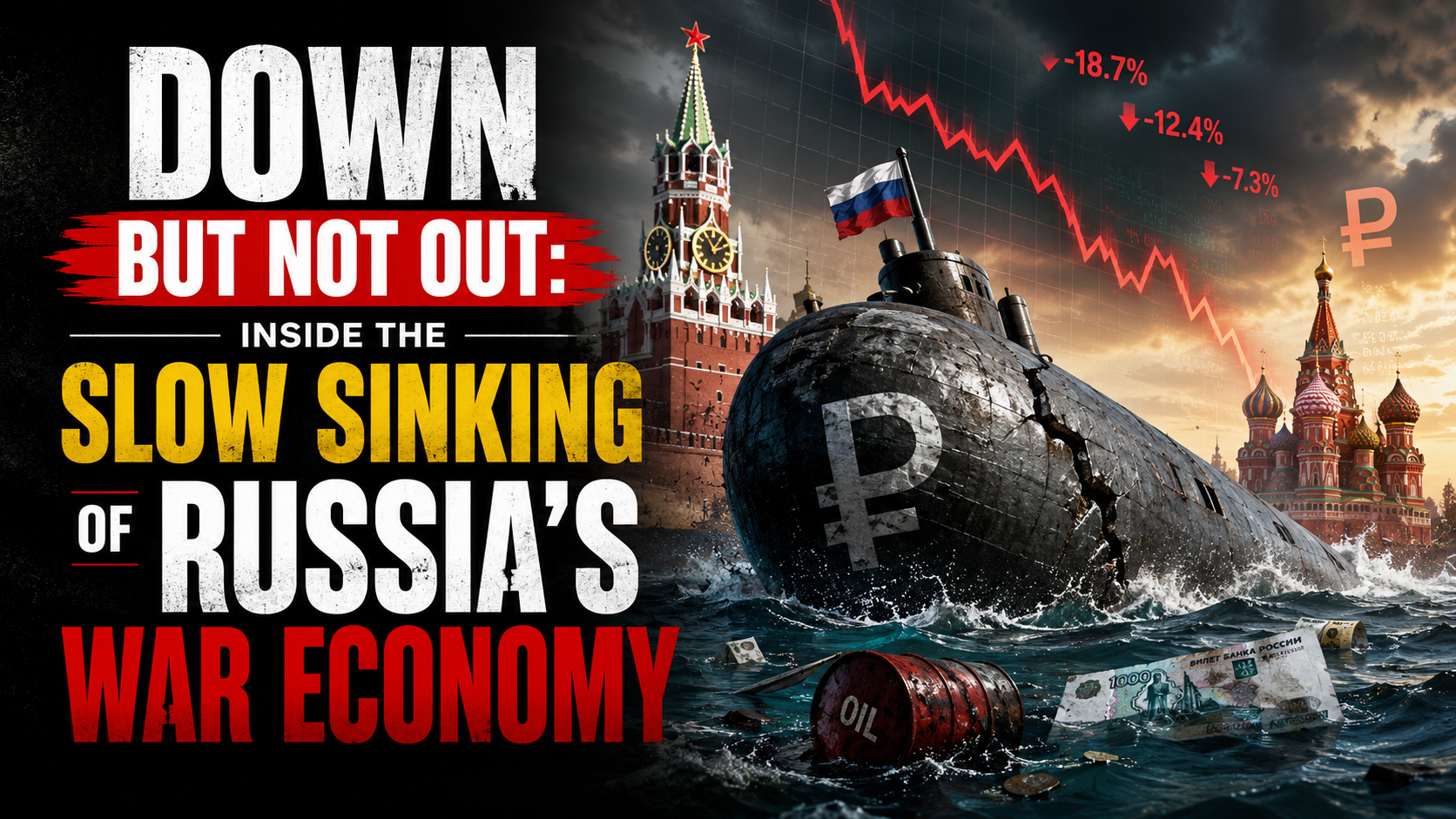
The European Council formally extended its economic sanctions against Russia for another full year on 25 June 2026, keeping restrictive measures in place until 31 July 2027 (Council of the EU). More than four years into the war, the headline story of Russia’s economy has shifted from whether sanctions would work to a more nuanced question: how much longer can the Kremlin keep financing the war before the accumulated strain becomes impossible to hide behind favorable official statistics.
The Sanctions Architecture, Renewed Again
The EU’s economic measures against Russia, first introduced in 2014 and dramatically expanded after the February 2022 full-scale invasion, now span trade, finance, energy and dual-use technology restrictions, alongside asset freezes and travel bans on a broad range of individuals and entities (Council of the EU). Since February 2022, the EU has adopted 20 separate sanctions packages, and the European Council has explicitly stated it remains determined to keep weakening Russia’s war economy by further reducing its energy revenues, curbing shadow-fleet oil shipping operations and constraining its banking system (Council of the EU). Separately, on 3 July 2026 the EU sanctioned six individuals connected to the poisoning and death of opposition figure Alexei Navalny, underscoring that the sanctions regime continues to expand on human-rights grounds as well as economic ones (Council of the EU Sanctions Timeline).
The Headline Numbers Beijing-Style Optimism Can No Longer Explain Away
Russia’s GDP is now put at roughly $2.51 trillion, the world’s eleventh-largest economy — comparable in size to South Korea despite Russia’s vastly larger landmass and resource base — with 2026 growth projected at just 1.0% and inflation running at 5.2% (Statistics of the World). More pessimistic estimates put full-year 2026 growth even lower, at around 0.4%, which would be worse than 2025’s already-weak 1% expansion and would mark a sharp deceleration from the 4.1% growth Russia posted in 2023 as it forged new trading relationships to route around initial sanctions (Forbes).
Oil and gas revenues — historically around half of Russia’s state income — have fallen to roughly a quarter, a deliberate outcome of Western sanctions strategy that targets how much Russia earns from exports rather than blocking those exports outright (Stockholm School of Economics/SITE). Russia’s oil and gas budget revenues reportedly halved in January 2026 alone, with crude prices falling below $73 a barrel before the Middle East conflict briefly reversed the trend, sending Brent surging more than 55% to near $120 a barrel at its peak (Forbes).
The Middle East War: A Temporary Lifeline With Long-Term Costs
The spike in oil prices tied to the Iran conflict, combined with a period of eased US sanctions enforcement on Russian oil under President Trump, offered Moscow unexpected fiscal breathing room in mid-2026 (Forbes). But that same conflict has undermined Russia’s longer-term energy diversification ambitions in the region: two Russian-backed power plant projects in Iran have been put on hold, along with oil and gas exploration work and plans to build new transit routes linking Russia to India via Iran (Forbes).
The Gap Between Official Statistics and Underlying Reality
Perhaps the most important analytical point from recent research is not about any single data point but about the reliability of Russian statistics themselves. Torbjörn Becker of the Stockholm Institute of Transition Economics has argued the real test of sanctions is not whether they end the war overnight, but how much they erode the Kremlin’s capacity to finance it — and by that measure, the evidence points to deeper strain than headline GDP figures suggest (Stockholm School of Economics/SITE). Becker notes that Russia’s economy grew only modestly in 2022 despite oil prices rising sharply that year — a gap between expected and actual performance that implies a considerably larger hidden economic hit than the official contraction figures showed (Stockholm School of Economics/SITE). Compounding the problem, Russian authorities have stopped publishing several key statistics since 2022, making independent assessment of inflation, consumption and real economic conditions increasingly difficult — leading Becker to conclude that “statistics have become part of the narrative” rather than a neutral measure of economic reality (Stockholm School of Economics/SITE).
The Military-Civilian Economic Split
A recurring theme across recent analysis is the growing bifurcation between Russia’s overheating military-industrial sector and a stagnating civilian economy. This imbalance has pushed interest rates higher and forced the liquidation of a striking 71% of Russia’s gold reserves to help fund continued war spending (Forbes). Russia’s total fossil fuel export revenue is estimated at roughly €734 million per day, underscoring just how central hydrocarbon income remains to the entire war financing model even as that revenue stream shrinks (Forbes).
The Counter-Narrative: Wages Still Rising
It would be inaccurate to describe Russia’s economy as in freefall. CSIS research notes that Russian salaries rose 17.8% in nominal terms and 8.7% in real terms in 2024 compared to 2023, with disposable incomes up 6.1% in 2023 and 7.3% in 2024 — growth rates not seen in Russia in almost two decades (CSIS). Government budget projections still expect real salaries to rise, albeit at a decelerating pace: 7% in 2025, 5.7% in 2026 and 4.1% in 2027 — a marked slowdown from the 2024 peak but still roughly double the pre-invasion decade average (CSIS). This wage growth, driven substantially by wartime labor shortages and military-adjacent spending, is precisely the kind of headline-stabilizing data point that has allowed Putin to argue publicly that sanctions have failed to cripple his economy (Fortune) — even as think tanks describe the broader trajectory as pushing Russia toward what one report calls an “economic, political, and military abyss” (Fortune).
What Comes Next
Renewed legislative pressure in Washington — including the Sanctioning Russia Act introduced with strong bipartisan support — signals appetite in the US for tightening the screws further, even as the loss of a key congressional champion for that effort has complicated the political path forward (TIME). Whether the EU’s renewed sanctions regime, continued oil price pressure, and constrained reserves ultimately force a shift in Kremlin calculus toward negotiation remains the central open question for 2027.
Key Takeaways
- The EU has extended Russia sanctions for a further year, through 31 July 2027, continuing a regime built from 20 separate packages since 2022.
- Russia’s 2026 GDP growth is forecast between 0.4% and 1.0%, a sharp deceleration from 2023’s 4.1% post-shock rebound.
- Oil and gas revenue’s share of Russian state income has fallen from roughly half to about a quarter as Western sanctions target export earnings specifically.
- Russia has liquidated a large share of its gold reserves to sustain war financing amid a widening split between an overheating military sector and a stagnating civilian economy.
- Official Russian statistics likely understate the true economic strain, according to independent economists who cite a widening gap between reported and expected performance.
Sources: Council of the EU, Council of the EU Sanctions Timeline, Stockholm School of Economics/SITE, Forbes, Statistics of the World, CSIS, Fortune, TIME
Discover more from The Economy
Subscribe to get the latest posts sent to your email.
Analysis
Dubai’s Millionaire Magnet: How the UAE Turned Middle East Turmoil Into a Capital Safe-Haven Boom

Introduction
While much of the commentary on the 2026 Middle East conflict has focused on oil tankers and the Strait of Hormuz, a quieter and arguably more consequential story has been unfolding in Dubai and Abu Dhabi: capital is flowing in, not out. The UAE attracted roughly 9,800 net new millionaires in 2025 — the highest net millionaire inflow of any country globally, according to Henley & Partners — and 2026 data suggests the pattern is holding even as regional tensions have periodically spiked (Tap Fiscal). For a global content audience trying to understand why a country geographically adjacent to an active conflict zone is functioning as a safe haven rather than a risk zone, the answer lies in three decades of deliberate institutional design.
The Headline Numbers
Dubai’s economy grew 2.4% in the first quarter of 2026 alone, with GDP reaching AED 232 billion, according to figures reported via the official WAM news agency (Gateway Group UAE Weekly Business News). The UAE Central Bank’s own outlook projects national economic growth of 5.6% for 2026, outpacing the broader GCC average, with the hydrocarbon sector expected to grow 7.3% on higher oil production even as non-oil sectors — financial services, manufacturing, trade, tourism and transport — continue to carry the bulk of long-term momentum (Xinhua). Non-oil activity now accounts for roughly 75% of GDP, a diversification level that insulates the economy from oil-price shocks far more than headlines about the region typically convey (Tap Fiscal).
Why S&P and the Central Bank Both Say the UAE Can Absorb the Shock
A dedicated S&P Global Ratings assessment concluded the UAE’s banking sector has shown strong resilience and financial soundness through the recent period of regional volatility, and the agency expects solid loan growth to continue into 2027, supported by ample system liquidity amid expected monetary easing (Gulf News). S&P separately reaffirmed the UAE’s sovereign credit rating at AA/A-1+ with a stable outlook, citing strong fiscal buffers and one of the world’s largest sovereign wealth portfolios (Xinhua).
The scale of that buffer is difficult to overstate. S&P estimates the UAE’s consolidated net asset position will reach roughly 184% of GDP in 2026, with government liquid assets calculated at approximately 210% of GDP (Gulf News). That firepower sits across a small number of globally diversified institutions — the Abu Dhabi Investment Authority, Mubadala Investment Company, ADQ, the Investment Corporation of Dubai, and the Emirates Investment Authority — which generate income well beyond the oil sector and give the state fiscal flexibility that few conflict-adjacent economies possess (Gulf News).
The UAE Central Bank’s own Q1 2026 review points to the same conclusion from the market side: the Dubai Financial Market’s share price index rose 22.9% year-on-year in the fourth quarter of 2025, the Abu Dhabi Securities Market General Index gained 6.6%, and credit default swap spreads for both Abu Dhabi and Dubai narrowed further — a signal of sustained investor confidence rather than flight (Central Bank of the UAE Quarterly Economic Review).
The Short-Term Noise Was Real — But It Didn’t Stick
None of this means the conflict has been costless. In the early days of escalation, some expatriates left the UAE, private jet charter prices to exit Dubai briefly spiked to as much as $250,000, and hotel occupancy dipped alongside disrupted aviation routes (Tap Fiscal). But the institutional and long-term investor data tell a different story than the panic-driven headlines: the Dubai International Financial Centre has resumed normal operations and remains home to nearly 9,000 active firms spanning wealth management, banking and capital markets (Tap Fiscal). A UAE government minister framed the resilience explicitly, describing the economy as structurally sound and built over decades to adapt to crisis rather than be destabilized by it (Tap Fiscal).
What’s Driving the Millionaire Inflow Specifically
High-net-worth migration to the UAE is not a new phenomenon, but 2025’s record net inflow suggests the safe-haven thesis is strengthening rather than fading. The pattern is consistent with what analysts describe as a flight to stable, low-tax jurisdictions with strong rule of law during periods of global uncertainty (Tap Fiscal) — a category the UAE has spent two decades positioning itself to fit, through free zones, golden visa programs, and a deliberately diversified, sovereign-wealth-anchored economy that does not rise or fall with a single sector or a single regional headline.
Risks Worth Watching
- Banking system exposure to regional escalation: while S&P’s baseline case is resilience, further escalation involving direct disruption to Gulf shipping lanes or energy infrastructure would test the “limited and short-term” impact assumption analysts currently hold (Xinhua).
- Real estate cooling: separate reporting on new vehicle and property registrations suggests parts of the UAE’s consumer economy are cooling from exceptional prior-year growth rates, even if not contracting (Arabian Business).
- Global AI valuation correction spillover: as with other major financial centers, UAE sovereign funds carry meaningful exposure to global equity markets, including AI-related names that regulators elsewhere have flagged as a concentration risk.
Key Takeaways
- The UAE recorded the world’s highest net millionaire inflow in 2025 and Dubai’s economy grew 2.4% in Q1 2026 despite regional conflict.
- Sovereign wealth institutions (ADIA, Mubadala, ADQ, ICD) give the UAE a net asset position near 184% of GDP, its core buffer against geopolitical shocks.
- S&P has reaffirmed a stable AA/A-1+ sovereign rating, citing fiscal buffers and banking sector resilience.
- Early-conflict disruption (jet charter spikes, occupancy dips) proved short-lived; DIFC activity and equity indices have both strengthened.
- Non-oil GDP diversification, now at roughly 75%, is the structural reason the UAE decouples from pure oil-price and conflict-headline risk.
Sources: S&P/Gulf News UAE Resilience Analysis, Xinhua/UAE Central Bank, Tap Fiscal UAE Economic Outlook 2026, Central Bank of the UAE Quarterly Economic Review, March 2026, Gateway Group UAE Weekly Business News, Arabian Business
Discover more from The Economy
Subscribe to get the latest posts sent to your email.

Gulf Capital Retreat From Pakistan 2026: UAE Loan Freeze & What It Means

Pakistan’s Most Reliable Export Is Its People: Remittances Hit $41.6 Billion, Overtaking Total Exports

Indonesia’s Confidence Problem: Record Investment, a Sinking Rupiah, and a Widening Credibility Gap

Down But Not Out: Inside the Slow Sinking of Russia’s War Economy

China’s Growth Slips to a Four-Year Low: Why Beijing Still Won’t Pull the Stimulus Trigger

The Johor-Singapore Corridor: How Malaysia Became Southeast Asia’s AI Infrastructure Powerhouse

Canada’s Economy ‘On Pause’: Inside the CUSMA Deadline That Passed Without a Deal

Dubai’s Millionaire Magnet: How the UAE Turned Middle East Turmoil Into a Capital Safe-Haven Boom

Britain’s Sixth Prime Minister in a Decade: What Starmer’s Exit Means for Gilts, Sterling and Your Portfolio

Anthropic Offers Up to $600,000 Salary for Critical IPO Role as AI Giant Prepares for Wall Street Debut

EU Readies Crisis Team for Potential China Rare Earths Stand-Off as Supply Chain Risks Mount

Singapore Weighs Hedge Fund Tax Cuts to Counter Hong Kong’s Growing Financial Challenge

Facebook and Instagram Experience Global Outage

Inside the $1 Billion Tap-to-Pay Fraud Rings Targeting Banks and Retailers

Carry Trade Unwind 2026: How the Yen’s Snapback Triggered a Global Margin Call

AI Bubble Warning 2026: Why BIS, IMF and Bank of England Fear a Market Crash

BRICS De‑Dollarization Strategy Takes Shape with $15 Billion Local‑Currency Push

Male Labor Force Participation Rate 2026: Why Men Are Leaving & Economic Impact

Russia Bans Diesel Exports 2026: Global Fuel Market Impact Explained

The AI Super Bubble Is Ready to Burst

Strait of Hormuz Blockade 2026: Oil Prices Surge 9% as US-Iran Conflict Reignites

IMF Cuts Pakistan Growth Forecast, Raises Inflation to 8.4%

Private Credit Warning: Most BDCs Turn Unprofitable in 2026, Reuters Finds
Gulf Capital Retreat From Pakistan 2026: UAE Loan Freeze & What It Means

India Economic Rise 2026: How the Subcontinent Toppled Japan

Bitcoin $150k Milestone Achieved as US Sovereign Crypto Pivot Looms

Strait of Hormuz 2026: Why Markets Still Don’t Trust It’s Open

Chipmakers Just Lost 6.7% in Two Days: Inside the Great AI Trade Rotation
-

 Markets & Finance7 months ago
Top 15 Stocks for Investment in 2026 in PSX: Your Complete Guide to Pakistan’s Best Investment Opportunities
-

 Analysis5 months ago
Johor’s Investment Boom: The Hidden Costs Behind Malaysia’s Most Ambitious Economic Surge
-

 Analysis5 months ago
Top 10 Stocks for Investment in PSX for Quick Returns in 2026
-

 Analysis6 months ago
Brazil’s Rare Earth Race: US, EU, and China Compete for Critical Minerals as Tensions Rise
-

 Banks6 months ago
Best Investments in Pakistan 2026: Top 10 Low-Price Shares and Long-Term Picks for the PSX
-

 Investment7 months ago
Top 10 Mutual Fund Managers in Pakistan for Investment in 2026: A Comprehensive Guide for Optimal Returns
-

 Global Economy7 months ago
15 Most Lucrative Sectors for Investment in Pakistan: A 2025 Data-Driven Analysis
-

 Global Economy7 months ago
Pakistan’s Export Goldmine: 10 Game-Changing Markets Where Pakistani Businesses Are Winning Big in 2025