
Banks
Investment Banking Services: What They Cost and How to Choose the Right Firm in 2026

Global M&A deal value hit an estimated $1.6 trillion in the first quarter of 2026 alone — a record and a 50.6% jump from the same period a year earlier — and every one of those transactions ran through an investment bank charging fees that can run into the tens of millions of dollars on a single deal.
Investment banking services sit at the center of how corporations raise capital, execute mergers and acquisitions, and access public and private markets. Yet for founders, CFOs, and business owners approaching this world for the first time, the fee structures, service tiers, and firm categories are rarely explained in plain terms — until the engagement letter is already on the table.
This guide breaks down what investment banking services actually include, how fees are structured across deal types, and what separates a bulge-bracket bank from a boutique advisory firm.
How Investment Banking Services Actually Work
At its core, investment banking exists to connect companies that need capital or strategic transactions with the investors and counterparties who can provide them. Full-service investment banks offer underwriting, M&A advisory, sales and trading, equity research, and asset management, while boutique firms typically focus narrowly on advisory work alone.
Key takeaway: Not every company needs a full-service bulge-bracket bank. A mid-sized company selling its business is often better served by a boutique M&A advisory firm with deep sector expertise than by a large institution where the deal may not receive senior-banker attention.
The Core Service Categories
- Underwriting (Equity and Debt Capital Markets) — helping companies raise capital through IPOs, follow-on offerings, and bond issuances, connecting issuers to institutional investors.
- M&A Advisory — representing buyers or sellers throughout a acquisition or merger, from target identification through negotiation and closing.
- Sales and Trading — facilitating secondary-market transactions in securities on behalf of institutional clients.
- Restructuring Advisory — guiding financially distressed companies through debt restructuring, often alongside bankruptcy counsel.
- Equity Research — producing analysis used both by the bank’s trading clients and to support its underwriting relationships.
Step-by-Step: How a Typical M&A Advisory Engagement Proceeds
- Mandate and engagement letter — the bank is formally retained, with fee structure (retainer plus success fee) defined upfront.
- Preparation of marketing materials — a confidential information memorandum and financial model are built to present the opportunity to prospective buyers or investors.
- Buyer/investor outreach — the bank leverages its network to identify and approach qualified counterparties.
- Due diligence and negotiation — the bank coordinates data room access, manages competing bids, and negotiates deal terms on the client’s behalf.
- Closing — final documentation, regulatory approvals (where applicable), and funds transfer.
Financial and Strategic Implications: How Investment Banking Fees Actually Work
Fee structures vary meaningfully by service type, and understanding the typical range helps companies negotiate from an informed position rather than accepting a bank’s first proposal.
| Service Type | Typical Fee Range | Fee Basis |
|---|---|---|
| M&A Advisory | 1%–5% of deal value | Success fee, often with a retainer credited against it |
| IPO Underwriting | 3%–7% of funds raised | Percentage of gross proceeds |
| Debt Underwriting | Typically lower than equity, often under 2% | Percentage of issuance size |
| Restructuring Advisory | Case-specific | Hourly or fixed fee plus a success fee |
| Trading and Brokerage | 0.05%–0.5% | Commission per transaction |
Investment banking fees are generally classified into three buckets — Advisory (M&A), Equity Capital Markets, and Debt Capital Markets — with M&A advisory typically carrying the highest percentage fee due to the complexity and duration of the engagement.
Expert insight: M&A fee percentages generally decrease as deal size increases — a common structure known as a “Lehman formula” or similar sliding scale — meaning a $10 million transaction and a $500 million transaction rarely pay the same percentage rate, even at the same bank.
2026 Dealmaking Environment: Why Fee Negotiation Leverage Has Shifted
Global M&A volume is projected to reach $3.8 trillion in 2026, surpassing the prior record set in 2021, according to Goldman Sachs’ Global Banking & Markets division. With dealmaking activity accelerating and investment banking fee revenue rising sharply at major firms — Goldman’s IB fees alone jumped 48% year over year in a recent quarter — banks currently have less incentive to discount fees on strong mandates, making the choice of firm and negotiation of terms more consequential than in a slower market.
Retainer vs. Success Fee: What to Negotiate
Most advisory engagements combine a modest monthly or upfront retainer with a much larger success fee paid only on deal completion. Companies should negotiate:
- Whether the retainer is credited against the eventual success fee
- A “tail period” clause limiting how long the bank is entitled to a fee after the engagement ends if a deal closes with a party the bank introduced
- Fee caps or step-downs for larger transaction sizes
How to Choose the Right Investment Banking Firm
- Sector expertise over brand name — a boutique with deep experience in your specific industry frequently outperforms a generalist bulge-bracket team.
- Deal-size fit — confirm the bank regularly executes transactions in your size range; being a small mandate at a large bank often means junior-banker attention.
- Senior banker availability — ask specifically who will be running the process day-to-day, not just whose name is on the pitch book.
- Track record of closed, not just announced, deals — a strong pipeline of announced-but-unclosed transactions can signal execution risk.
- Conflict-of-interest screening — confirm the bank isn’t simultaneously representing a competing party or potential acquirer in your sector.
- Clear, written fee agreement — including retainer treatment, tail provisions, and expense reimbursement terms.
Key takeaway: The single most overlooked factor when choosing an investment bank isn’t the fee percentage — it’s confirming which specific team member will actually be running your process, since the pitch team and the execution team are not always the same people.
Future Outlook: Investment Banking Trends Through 2027
- Megadeal concentration is reshaping deal counts. Q1 2026 saw record announced M&A value even as total transaction count fell roughly 30% year over year, reflecting a market increasingly driven by a smaller number of very large transactions.
- AI infrastructure spending is a major dealmaking driver. Capital expenditure on AI infrastructure across major hyperscalers is projected to reach $660–$725 billion in 2026, nearly double the prior year, fueling financing and advisory mandates across the technology and energy sectors.
- Equity capital markets activity is reawakening selectively. After a slower stretch for IPOs, renewed investor appetite in specific sectors is beginning to revive new-issue activity, though selectively rather than broadly.
- Private equity exit pressure is expected to boost dealmaking further. A large backlog of aging private equity holdings is expected to drive increased sponsor-led sell-side activity as firms seek liquidity for their investors.
Frequently Asked Questions
How much do investment banking services typically cost?
M&A advisory fees typically range from 1% to 5% of deal value, IPO underwriting fees range from 3% to 7% of funds raised, and fees generally decrease as a percentage on larger transactions.
What’s the difference between a bulge-bracket bank and a boutique investment bank? Bulge-bracket banks offer a full range of services including trading, research, and lending alongside advisory work, while boutique firms typically focus exclusively on M&A or restructuring advisory, often with deeper sector specialization.
Do I pay an investment bank if the deal doesn’t close?
Often partially. Most engagements include a retainer paid regardless of outcome, but the large majority of the total fee — the success fee — is typically paid only upon deal completion.
How do I know if my company is too small for a large investment bank?
If your transaction size falls well below a bank’s typical deal range, you risk receiving junior-team attention; boutique firms specializing in your size range and sector frequently provide more senior, dedicated focus.
What is a “tail period” in an investment banking engagement?
It’s a contractual clause entitling the bank to its success fee if a transaction closes within a defined period after the engagement ends, provided the buyer or investor was introduced by the bank during the engagement.
Discover more from The Economy
Subscribe to get the latest posts sent to your email.



The interest rate gap between a well-qualified business loan and a poorly-qualified one can exceed 10 percentage points — meaning the same $100,000 loan could cost a business tens of thousands of dollars more in interest depending entirely on how the application is structured and timed.
Business financing spans an enormous range of products — SBA loans, term loans, business lines of credit, equipment financing, and merchant cash advances — each with different rates, qualification standards, and best-use cases. Choosing the wrong product for your situation is one of the most common and costly mistakes business owners make, often driven by unfamiliarity with what’s actually available.
This guide breaks down the major business loan categories, current rate environments, and what lenders actually evaluate when deciding whether to approve an application.
How Business Loans Actually Work: The Core Categories
Not all business loans are structured the same way, and matching the loan type to your actual need — working capital, equipment, real estate, or a cash-flow bridge — is the single biggest factor in getting favorable terms.
Key takeaway: SBA loans are backed by the U.S. Small Business Administration, which reduces risk for lenders and allows them to offer better terms — lower rates, longer repayment periods, and smaller down payments — than most conventional business loans. But SBA loans also involve more extensive documentation and longer approval timelines than online or conventional lenders.
The Major Business Loan Categories
- SBA 7(a) Loans — the most flexible SBA program, usable for working capital, equipment, refinancing, and acquisitions, up to $5 million.
- SBA 504 Loans — specifically for major fixed assets like commercial real estate and heavy equipment, structured as a partnership between a bank, a Certified Development Company, and the borrower.
- SBA Microloans — smaller loans, up to $50,000, distributed through nonprofit intermediary lenders, well-suited to startups and newer businesses.
- Conventional term loans — bank or online-lender loans with fixed terms and rates, typically requiring stronger credit and financial history than SBA products.
- Business lines of credit — revolving credit for ongoing working capital needs, where interest accrues only on the amount drawn.
- Equipment financing — loans secured by the equipment being purchased, often with faster approval since the collateral is built into the structure.
Step-by-Step: The Business Loan Application Process
- Determine the right loan type for your specific need — working capital, real estate, equipment, or a cash-flow bridge each point toward different products.
- Gather financial documentation — typically tax returns, bank statements, profit and loss statements, and a business plan for newer businesses.
- Check personal and business credit — most lenders weigh both, particularly for smaller businesses without an extensive standalone credit history.
- Compare multiple lenders — rates and terms vary significantly between banks, credit unions, SBA-preferred lenders, and online lenders.
- Submit the application and respond promptly to underwriting requests — delays in providing requested documentation are a leading cause of slower approval timelines.
- Review the full offer, not just the headline rate — origination fees, prepayment penalties, and personal guarantee requirements all affect true cost.
Financial and Strategic Implications: 2026 Business Loan Rate Landscape
Rates vary substantially by loan type, lender, and borrower qualifications. Understanding the current landscape helps set realistic expectations before applying.
| Loan Type | Typical 2026 Rate Range | Key Qualification Factors |
|---|---|---|
| SBA 7(a) Loan | Roughly 9.75%–13.25%, or 10.50%–15.50% depending on lender and structure | 680+ credit score, 2+ years in business typical |
| SBA 504 Loan | Fixed rates approximately 5.7%–5.9% on the CDC portion | Used for real estate/major equipment; not for working capital |
| SBA Microloan | 8%–13%, set by the intermediary lender | Best for startups needing modest capital (average loan around $13,000) |
| Conventional bank term loan | Varies by lender and borrower profile, often prime-plus-margin | Strongest credit and financial history typically required |
| Online/alternative lenders | Frequently higher than bank rates | Faster approval, more flexible qualification standards |
Expert insight: SBA loan rate tables published by the agency represent maximum allowable rates, not guaranteed pricing — strong borrowers routinely qualify for pricing meaningfully below the cap. Always ask a lender directly where your profile is likely to land within the allowable range rather than assuming the maximum rate applies to you.
SBA Loan Fees Beyond the Interest Rate
Beyond the quoted interest rate, SBA loans carry a guarantee fee that scales with loan size — no fee for loans under $150,000, roughly 3% for loans between $150,001 and $700,000, and 3.5% above that, which meaningfully affects the true cost of borrowing and should be factored into any loan comparison.
2026 Rate Environment Context
The Bank Prime Loan Rate, which underpins most variable-rate SBA 7(a) pricing, stood at 6.75% as of January 2026, with most SBA loans priced at Prime plus a capped lender spread that varies by loan size — smaller loans generally carry higher spreads than larger ones.
How to Choose the Right Business Loan
- Match the loan structure to the actual use of funds — real estate and equipment purchases favor SBA 504 or equipment financing; ongoing working capital favors a line of credit rather than a lump-sum term loan.
- Compare total cost, not just headline rate — factor in origination fees, guarantee fees, and any prepayment penalties.
- Weigh speed against cost — online and alternative lenders typically approve faster than SBA loans but often at a higher effective rate.
- Understand personal guarantee requirements — most small business loans, including SBA products, require a personal guarantee from owners with significant equity stakes.
- Get multiple offers before committing — rate and fee variation between lenders for the same borrower profile can be substantial.
- Confirm prepayment terms — some SBA loans carry prepayment penalties in the first several years, which matters if you expect to refinance or pay down the loan early.
Key takeaway: The lowest advertised rate isn’t always the lowest true cost once guarantee fees, origination charges, and repayment term length are factored in — always compare the total dollar cost of financing across the full loan term, not just the interest rate percentage.
Future Outlook: Business Lending Trends Through 2027
- SBA qualification standards have tightened. Recent SBA rule changes raised the minimum credit score requirement, tightened ownership and citizenship documentation, and reinstated guarantee fees that had previously been waived — meaning applicants should expect a somewhat more rigorous underwriting process than in prior years.
- Rate direction remains a key variable for borrowers. Market watchers continue to anticipate potential rate adjustments as economic conditions evolve, which could meaningfully affect the cost of variable-rate business loans over the life of a loan.
- Online lender competition continues to compress approval timelines. As more fintech lenders enter the small business space, speed-to-funding has become a meaningful competitive differentiator, though often still at a rate premium versus SBA and conventional bank products.
- Alternative financing products are gaining share for specific use cases. Revenue-based financing, invoice factoring, and merchant cash advances continue to expand as options for businesses that don’t fit traditional underwriting criteria, generally at a higher effective cost than conventional loans.
Frequently Asked Questions
What credit score do I need for a business loan?
Requirements vary by loan type and lender, but SBA 7(a) loans commonly require a credit score of roughly 680 or higher, while some online and alternative lenders accept lower scores at a higher rate.
What’s the difference between an SBA loan and a conventional business loan?
SBA loans are partially guaranteed by the federal government, which typically allows lenders to offer lower rates and longer terms, but they generally involve more documentation and a longer approval process than conventional bank or online loans.
How long does it take to get approved for a business loan?
Timelines vary significantly: online lenders can sometimes approve and fund within days, while SBA loans often take several weeks to a few months due to more extensive underwriting requirements.
Do all business loans require a personal guarantee?
Most do, particularly for small businesses and owners with significant equity stakes, meaning the business owner is personally liable for repayment if the business itself cannot repay the loan.
Is an SBA loan always cheaper than a conventional loan?
Often, but not always, once fees are included — SBA loans typically carry lower interest rates but include a guarantee fee that scales with loan size, which should be factored into any total-cost comparison.
Discover more from The Economy
Subscribe to get the latest posts sent to your email.
The advertisement promises cash “in as little as 24 hours” — but the fine print rarely mentions that structured settlement factoring companies commonly apply discount rates between 16% and 28%, meaning you could permanently forfeit tens of thousands of dollars for the convenience of getting paid early.
A structured settlement loan — more accurately called a structured settlement factoring transaction, since it isn’t technically a loan at all — allows someone receiving periodic settlement payments (from a personal injury case, workers’ compensation award, or lawsuit) to sell some or all of those future payments to a factoring company in exchange for an immediate lump sum. It’s a legitimate, regulated financial product, but it is also one of the most heavily scrutinized corners of consumer finance for a reason.
This guide explains exactly how these transactions work, what they actually cost once the time value of money is properly calculated, and how to evaluate whether selling part of your structured settlement makes financial sense.
How Structured Settlement Factoring Actually Works
When you accept a structured settlement — instead of a single lump-sum payment — an insurance company agrees to pay you a series of payments over months, years, or decades, often specifically to provide long-term financial security. A factoring company will purchase the right to some or all of those future payments in exchange for a discounted lump sum today.
Key takeaway: Every U.S. state and the District of Columbia has a Structured Settlement Protection Act requiring a judge to approve any factoring transaction and find that it is in the seller’s best interest before it can be completed. This judicial review step exists specifically because these transactions have a documented history of predatory practices.
Why It’s Called a “Loan” but Isn’t One
Structured settlement transfers are technically a sale of an asset (your future payment stream), not a loan. There’s no credit check, no monthly loan payment, and no debt in the traditional sense — which is exactly why marketing language often blurs the distinction and makes the product sound more like an emergency cash-advance service than what it actually is: a permanent forfeiture of a portion of your settlement’s total value.
Step-by-Step: How a Transfer Transaction Proceeds
- Quote request — the factoring company offers a lump sum in exchange for some or all of your future payments.
- Disclosure of terms — federal and state law require full disclosure of the discount rate, fees, and the annualized percentage rate of the transaction.
- Independent professional advice — most states require the seller to receive advice from an independent attorney or financial advisor (not one selected by the factoring company) regarding the transaction’s financial, legal, and tax implications.
- Court filing and hearing — a judge reviews the transaction and must find it is in the seller’s best interest, considering their financial needs and understanding of the deal.
- Court approval and funding — once approved, the factoring company pays the lump sum and begins receiving the transferred payments directly from the settlement issuer.
Financial and Strategic Implications: The Real Cost of Selling Your Settlement
The core problem with structured settlement factoring is that the “discount rate” advertised often bears little resemblance to how consumers intuitively understand interest rates — and the gap between the two can be enormous.
| Concept | What It Means for You |
|---|---|
| Advertised discount rate | Industry data shows rates commonly ranging from 16% to 28%, occasionally exceeding what state usury laws would otherwise permit for a comparable loan |
| Real-world example | A seller entitled to $22,468 in a future payment received only about $8,379 in one documented case, reflecting a roughly 25% discount rate applied over the payment’s remaining term |
| Historical abuse pattern | One factoring company’s database reportedly held 122,000 current and prospective customers representing $32 billion in structured settlement payments, illustrating the scale of the industry |
| Regulatory enforcement | The Consumer Financial Protection Bureau has pursued enforcement action against factoring companies for allegedly offering vulnerable consumers lump sums representing roughly 30 cents on the dollar of present value |
Expert insight: A common and misleading sales tactic is presenting the discount as a flat percentage of the total payment stream rather than a properly annualized rate. Because this ignores the time value of money, it consistently understates the true cost to the consumer — always ask a factoring company for the transaction’s effective annual percentage rate, not just its “discount rate.”
Why the Independent Professional Advice Requirement Matters
Most state Structured Settlement Protection Acts require a seller to receive advice from an independent professional before completing a transfer — but regulators have documented cases where factoring companies steered sellers toward advisors who were themselves paid by the factoring company, undermining the independence the law was designed to guarantee. If a factoring company recommends a specific attorney or advisor, seeking a truly independent second opinion is strongly advisable.
When Selling Part of a Structured Settlement Can Make Sense
Despite the risks, factoring transactions aren’t inherently predatory in every case. Common legitimate reasons include:
- Covering an urgent, unavoidable medical expense not otherwise covered
- Avoiding a materially worse financial outcome, such as bankruptcy or foreclosure
- Funding a clearly beneficial investment, such as education or a home purchase, where the math genuinely favors the transfer
How to Choose the Right Path Before Selling
- Get multiple quotes. Discount rates vary meaningfully between factoring companies; a single quote provides no basis for comparison.
- Ask for the effective annual percentage rate, not just the advertised discount rate, and have an independent advisor verify the calculation.
- Sell only what you need, not your entire remaining payment stream — most transactions can be structured as a partial transfer.
- Insist on genuinely independent professional advice — verify the advisor is not compensated by or referred through the factoring company.
- Understand the court approval process is a real safeguard, not a formality — use the hearing to ask questions if anything about the transaction remains unclear.
- Explore alternatives first — traditional personal loans, medical payment plans, or hardship programs may cost meaningfully less than permanently forfeiting settlement value.
Key takeaway: The single most important number in any structured settlement offer isn’t the lump sum you’d receive today — it’s the effective annualized discount rate applied to get there. A seemingly generous cash offer can still represent one of the most expensive forms of financing available.
Future Outlook: Structured Settlement Regulation Through 2027
- Federal scrutiny of the factoring industry is intensifying. The National Structured Settlements Trade Association has formally petitioned the CFPB to strengthen oversight, and lawmakers including U.S. Senator Tina Smith have publicly stated existing protections are “generally inadequate.”
- State-level Structured Settlement Protection Acts continue to evolve. Several states have debated tightening disclosure and court-review requirements in response to documented abuse patterns, particularly involving vulnerable claimants.
- The non-adversarial nature of court approval hearings remains a structural weakness. Critics note that these hearings typically involve only the factoring company’s attorney and the seller, with no independent advocate specifically representing the payee’s interests — a gap likely to remain a focus of reform proposals.
- Consumer awareness campaigns are expanding. As media coverage of predatory factoring practices continues, sellers are increasingly encouraged to shop multiple offers and seek truly independent advice before proceeding.
Frequently Asked Questions
Is a structured settlement loan actually a loan?
No. It’s technically a sale of your right to future settlement payments, not a loan — there’s no credit check or monthly repayment, but you permanently forfeit a portion of your settlement’s value in exchange for immediate cash.
How much will I lose by selling my structured settlement?
Discount rates commonly range from 16% to 28% annualized, meaning the lump sum you receive today can be substantially less than the present value of the payments you’re giving up.
Do I need court approval to sell my structured settlement payments?
Yes. Every state requires a judge to review and approve the transaction, finding it is in your best interest, before a factoring company can complete the purchase.
Can I sell only part of my structured settlement instead of all of it?
Yes. Most transactions can be structured as a partial transfer, allowing you to access some cash now while preserving a portion of your future payment stream.
Is the “independent advice” I receive before selling actually independent?
It should be, but regulators have documented cases where factoring companies referred sellers to advisors who were themselves compensated by the factoring company. Seeking your own independent advisor is strongly recommended.
Discover more from The Economy
Subscribe to get the latest posts sent to your email.
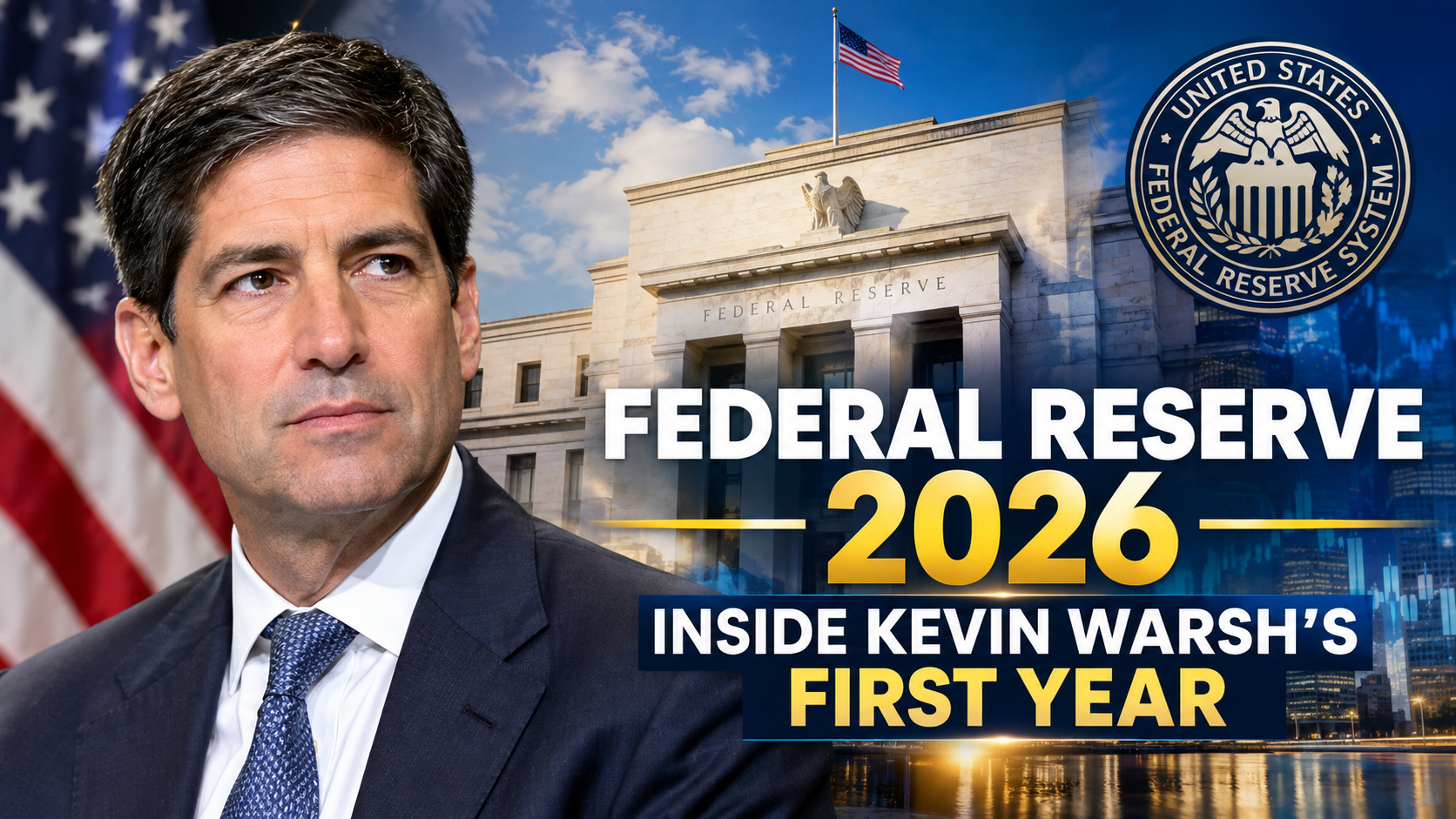
Who is the Federal Reserve chair in 2026? Kevin Warsh was confirmed as the 17th chair of the Federal Reserve in a narrow 54-45 Senate vote on May 13, 2026 — the most divisive confirmation in the Fed’s history — with his term officially beginning when Jerome Powell’s term expired two days later, according to J.P. Morgan Wealth Management’s analysis. Warsh, who at 35 had been the youngest person ever appointed to the Fed’s Board of Governors back in 2006, returned to the central bank after years in the private sector, including a stint as a partner at Duquesne Family Office.
His confirmation followed months of tension between President Trump and outgoing Chair Powell over the pace of rate cuts, and markets immediately began parsing Warsh’s public statements for clues about where he would steer policy.
What Warsh Actually Believes About Inflation
Featured Snippet Target: Fed Chair Kevin Warsh has signaled tighter inflation discipline through a “trimmed averages” approach to measuring price changes — removing the most extreme price movements from the inflation basket before calculating overall trends — while also arguing in a pre-confirmation Wall Street Journal op-ed that artificial intelligence could act as a significant disinflationary force on the broader economy.
That combination puzzled Fed-watchers who expected Warsh, nominated by a president who had repeatedly pushed for lower rates, to simply deliver the dovish policy Trump wanted. Instead, according to analysis from The Motley Fool, Warsh has been notably tight-lipped in his first months, by design — he has stated he wants the Fed to take more of a “back seat” in market communication, believing markets function more efficiently digesting economic data directly rather than reacting to Fed guidance.
The First Meeting: A Hawkish Surprise
Warsh’s debut as chair came at the June 16-17, 2026 FOMC meeting, and it delivered a genuine surprise to markets pricing in continued easing. The Fed held its federal funds rate steady at 3.50%-3.75% for a third consecutive meeting, but new quarterly projections showed nine Fed officials now anticipating a rate hike by the end of 2026 — a sharp reversal from the cutting cycle markets had expected — with the median forecast raised to 3.6% by year-end, according to reporting from The Daily Record. The updated policy statement also removed all forward guidance language about future rate moves, adopting a shortened format reminiscent of the Alan Greenspan era — an early, tangible sign of Warsh’s stated preference for a more narrowly focused, less communicative central bank.
That hawkish pivot came against a genuinely difficult inflation backdrop. Inflation had been running stubbornly above the Fed’s 2% target even before Warsh’s arrival, and the eruption of the Iran conflict in late February 2026 pushed oil prices sharply higher, adding a fresh layer of cost-push inflation pressure just as the new chair was settling in.
Why the FOMC Itself Is Divided
Warsh inherited a genuinely split committee. The 19-member FOMC had signaled openness to a prolonged pause after delivering three rate cuts in the prior fall, with many policymakers believing those cuts had sufficiently addressed slowing job growth, according to analysis from ChannelChek. April 2026’s meeting — held before Warsh’s confirmation — brought the most policy disagreement among committee members in decades, reflecting a genuine intellectual split between officials worried about persistent inflation and those worried about a weakening, “low-hire, low-fire” job market.
Convincing that divided committee to resume cutting rates, rather than hike as the June projections suggested, will likely be one of Warsh’s most consequential early challenges — particularly if inflation data continues running hot on the back of elevated energy costs.
The Bigger Structural Agenda
Beyond the immediate rate debate, Warsh has signaled an intent to reshape how the Fed operates more broadly. He has stated a goal of shrinking the central bank’s balance sheet and strengthening coordination between the Fed, the Treasury, and the White House on economic policy, according to reporting on his confirmation. That coordination goal is itself a departure from the traditional emphasis on Fed independence from fiscal policymakers — a shift some economists have flagged as worth watching closely, given how central bank independence has historically been treated as a bulwark against politically-driven inflation.
The Market Reaction
Markets initially reacted to Warsh’s nomination with genuine uncertainty rather than a clear directional bet. Following his January 2026 nomination, Fed funds futures were pricing a 65.3% probability of at least one rate cut by June — up from 61.8% the prior day — with markets pricing in a total of 52 basis points of cuts for all of 2026 at that point, according to fixed-income commentary from Asset Allocation & Management Company. That dovish pricing has since been substantially unwound by the actual June hawkish pivot — a reminder that a new Fed chair’s confirmed policy stance, once articulated in an actual meeting, matters far more to markets than pre-confirmation speculation about political allegiance.
The Bottom Line
Kevin Warsh’s first months as Fed chair have defied the simple “Trump appointee cuts rates” narrative that dominated coverage of his nomination. Instead, he has delivered a genuinely hawkish debut meeting, adopted a more hands-off communication style, and articulated an inflation-measurement philosophy that gives him intellectual cover to hold rates higher for longer if energy-driven inflation persists. Whether that stance holds through the rest of 2026 will depend heavily on how the Iran conflict’s economic fallout evolves and whether the divided FOMC can coalesce around a consistent direction.
Next step: Track the Fed’s quarterly Summary of Economic Projections alongside actual CPI and PCE inflation prints — the gap between the two, more than any single Warsh public statement, is the clearest signal of whether the Fed’s late-2026 rate path tilts toward the hike some officials now anticipate or back toward the cuts markets originally expected.
Discover more from The Economy
Subscribe to get the latest posts sent to your email.

World’s Largest Economies: Ranking the Top Global Powers

Business Loan: A Complete 2026 Guide to Rates, Types, and Qualifying

Fast Invoice Factoring: How to Turn Unpaid Invoices Into Cash Within 24 Hours

Investment Banking Services: What They Cost and How to Choose the Right Firm in 2026

Structured Settlement Loan: What “Cash Now” Offers Actually Cost You

DUI Attorney: Why Your First Call After an Arrest Should Never Be to the Court

Personal Injury Lawyer: A Complete Guide to Filing Your Claim in 2026

Commercial Vehicle Accident Lawyer: Holding Companies Accountable Beyond the Driver

Inside the White House Feud: How Trump’s Allies Are Painting Anthropic’s Dario Amodei as the Face of ‘AI Doomerism’

Truck Collision Attorney: What Your Case Is Really Worth After a Semi-Truck Crash

Beyond Petrochemicals: How Indonesia’s Chandra Asri is Constructing an Integrated ASEAN Mobility Powerhouse

Pakistan Moves From Stabilization to Recovery as IMF Review Puts Reform Momentum in Focus

Mesothelioma Attorney: How to Choose the Right Lawyer to Maximize Your 2026 Asbestos Settlement

SpaceX IPO 2026: History’s Biggest Stock Debut?

Top 30 Stocks for Investment in PSX for Massive ROI in 2026

SpaceX Starship Flight 14: First Orbital Attempt & Starlink V3 Launch Explained

Oil Prices Break $100 in 2026: Middle East Conflict & Energy Markets

Fidelity Investments Review 2026: SPAXX Yields & Zero-Fee Funds

AI Chip Stocks 2026: The Best Semiconductor Investments Beyond Marvell

Tween Back-to-School Trends 2026: What’s Driving the $85B Season

BRICS+ Cross-Border Payments 2026: Interoperability Explained

10-Year Treasury Yield Hits 4.80%: What It Means for Rates & Portfolios

Shein Clothes Quality & Safety in 2026: What Lab Tests Show

China’s US$10.8 Billion Trade Shortcut: Why the Pinglu Canal Matters

MRVL Earnings 2026: Why Marvell Sank Despite Beating Estimates

IMF & World Bank 2026 Global Economic Outlook: Growth, Inflation, Debt

Middle East War Economics 2026: Oil Prices & Energy Markets

High-CPM Finance Niches 2026: Publisher Monetization Blueprint
-

 Markets & Finance9 months ago
Top 15 Stocks for Investment in 2026 in PSX: Your Complete Guide to Pakistan’s Best Investment Opportunities
-

 Analysis7 months ago
Johor’s Investment Boom: The Hidden Costs Behind Malaysia’s Most Ambitious Economic Surge
-

 Analysis7 months ago
Top 10 Stocks for Investment in PSX for Quick Returns in 2026
-

 Banks8 months ago
Best Investments in Pakistan 2026: Top 10 Low-Price Shares and Long-Term Picks for the PSX
-

 Analysis8 months ago
Brazil’s Rare Earth Race: US, EU, and China Compete for Critical Minerals as Tensions Rise
-

 Investment9 months ago
Top 10 Mutual Fund Managers in Pakistan for Investment in 2026: A Comprehensive Guide for Optimal Returns
-

 Global Economy9 months ago
15 Most Lucrative Sectors for Investment in Pakistan: A 2025 Data-Driven Analysis
-

 Global Economy9 months ago
Pakistan’s Export Goldmine: 10 Game-Changing Markets Where Pakistani Businesses Are Winning Big in 2025