
Asia
Inside Singapore’s AI Bootcamp to Retrain 35,000 Bankers: Reshaping Asia’s Financial Future

When Kelvin Chiang presented his team’s agentic AI models to Singapore’s Monetary Authority, he knew he was demonstrating something unprecedented. What used to consume an entire workday for a private banker—compiling wealth reports, validating sources of funds, drafting compliance documents—now takes just 10 minutes. But before Bank of Singapore could deploy these tools across its wealth management division, Chiang’s data scientists had to walk regulators through every safeguard, every failsafe, and every human oversight mechanism designed to prevent the system from “hallucinating” false information.
The regulators didn’t push back. They embraced it.
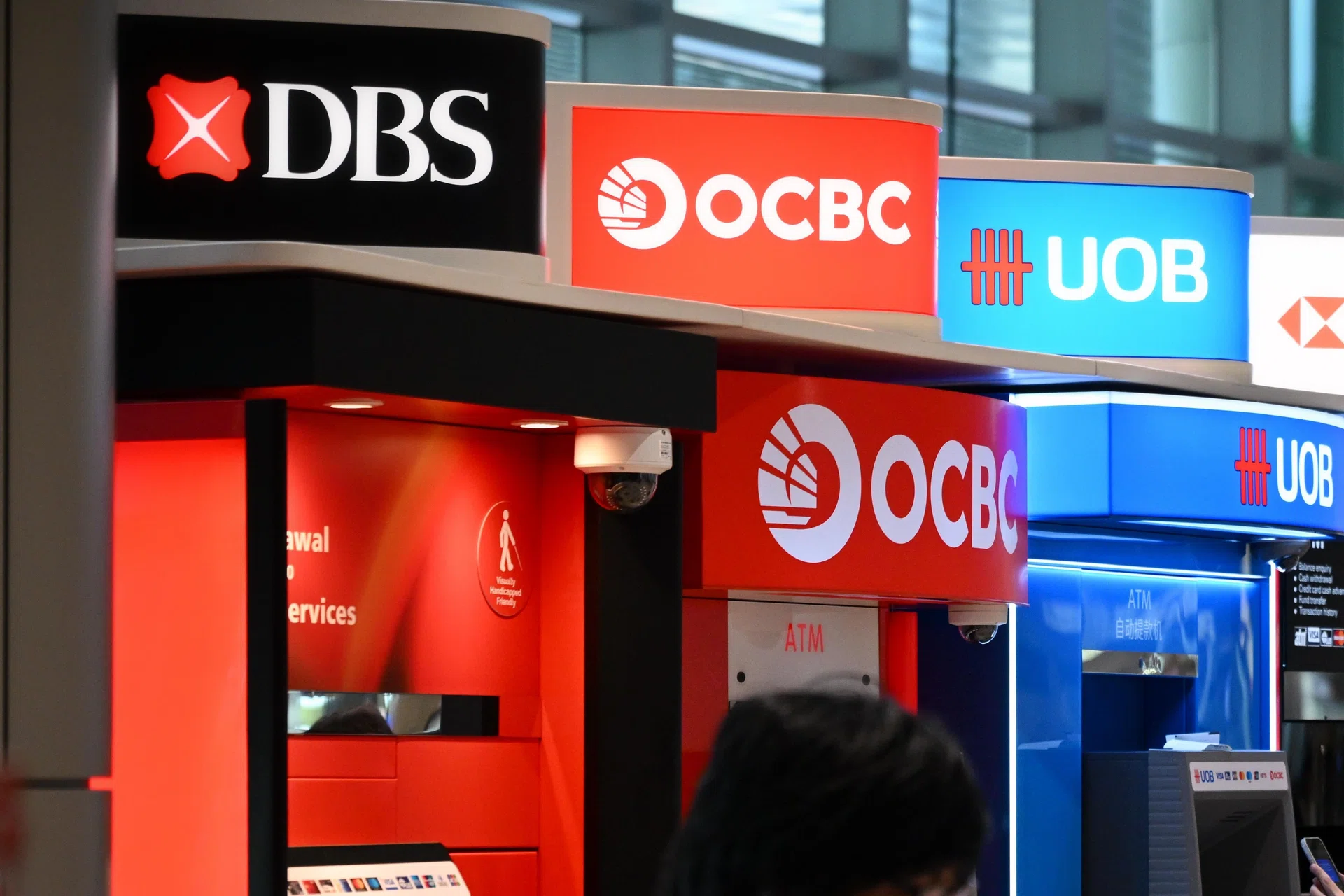
That collaborative spirit between government and industry defines Singapore’s radically different approach to the AI transformation sweeping global banking. While financial institutions in the United States and Europe announce mass layoffs—Goldman Sachs warning of more job cuts as AI takes hold—Singapore is executing the world’s most ambitious banking workforce retraining program. DBS Bank, OCBC, and United Overseas Bank are retraining all 35,000 of their domestic employees over the next two years, a government-backed initiative that represents not just a skills upgrade, but a fundamental reimagining of what it means to work in financial services.
The Revolutionary Scale of Singapore’s AI Training Initiative
The numbers tell only part of the story. Singapore’s three banking giants are investing hundreds of millions in a training infrastructure that reaches from entry-level tellers to senior executives. But unlike generic technology upskilling programs that plague many organizations, this bootcamp targets specific, measurable competencies needed to work alongside autonomous AI systems.
Violet Chung, a senior partner at McKinsey & Company, identifies what makes this initiative unique: “The government is doing something about it because they realize that this capability and this change is actually infusing potentially a lot of fear.” That acknowledgment of worker anxiety—combined with proactive solutions rather than platitudes—sets Singapore apart from Western approaches that often prioritize shareholder returns over workforce stability.
The Monetary Authority of Singapore (MAS) isn’t just cheerleading from the sidelines. Deputy Chairman Chee Hong Tat, who also serves as Minister for National Development, has made workforce resilience a regulatory expectation. The message to banks is clear: deploy AI aggressively, but ensure your people evolve with the technology. Singapore’s National Jobs Council, working through the Institute of Banking and Finance, offers banks up to 90% salary support for mid-career staff reskilling—an unprecedented level of public investment in private sector workforce development.
Understanding Agentic AI: The Technology Driving the Transformation
To grasp why 35,000 bankers need retraining, you must first understand what agentic AI does differently than the chatbots and recommendation engines that preceded it.

Traditional AI systems respond to prompts. Ask a question, get an answer. Agentic AI, by contrast, pursues goals autonomously. According to research from Deloitte, these systems can plan multi-step workflows, coordinate actions across platforms, and adapt their strategies in real-time based on changing circumstances—all without constant human intervention.
Consider OCBC’s implementation. Kenneth Zhu, the 36-year-old executive director of data science and AI, oversees a lab where 400 AI models make six million decisions every single day. These aren’t simple calculations. The models flag suspicious transactions, score credit risk, filter false positives in anti-money laundering systems, and even draft preliminary reports that once consumed hours of compliance officers’ time.
At DBS Bank, an internal AI assistant now handles more than one million prompts monthly. The bank has deployed role-specific tools that reduce call handling time by up to 20%—not by replacing customer service staff, but by handling the tedious documentation and data retrieval that used to interrupt human conversations. Customer service officers now spend their time actually serving customers, while AI manages the administrative burden.
The source of wealth verification process at Bank of Singapore exemplifies agentic AI’s potential. Relationship managers previously spent up to 10 days manually reviewing hundreds of pages of client documents—financial statements, tax notices, property valuations, corporate filings—to write compliance reports. The new SOWA (Source of Wealth Assistant) system completes this same analysis in one hour, cross-referencing Bank of Singapore’s extensive database and OCBC’s parent company records to validate information plausibility.
Bloomberg Intelligence forecasts that DBS will generate up to S$1.6 billion ($1.2 billion) in additional pretax profit through AI-derived cost savings—roughly a 17% boost. These aren’t theoretical projections. DBS CEO Tan Su Shan reports the bank already achieved S$750 million in AI-driven economic value in 2024, with expectations exceeding S$1 billion in 2026.
Inside the Bootcamp: How 35,000 Bankers Are Actually Learning AI
The phrase “AI bootcamp” might conjure images of programmers teaching SQL queries. Singapore’s program looks nothing like that.
The curriculum divides into three tiers, each calibrated to job function and AI exposure level:
Tier 1: AI Literacy for Everyone (All 35,000 employees)
- Understanding what AI can and cannot do
- Recognizing AI-generated content and potential hallucinations
- Data privacy and security in AI contexts
- Ethical considerations when deploying automated decision-making
- Prompt engineering basics for interacting with AI assistants
Tier 2: AI Collaboration Skills (Frontline and Middle Management)
- Working with AI co-pilots for customer service
- Interpreting AI-generated insights and recommendations
- Overriding AI decisions when human judgment is required
- Monitoring AI system performance and reporting anomalies
- Translating customer needs into AI-friendly inputs
Tier 3: AI Development and Governance (Technical Teams and Senior Leaders)
- Model risk management frameworks
- Building and validating AI use cases
- Implementing responsible AI principles (fairness, explainability, accountability)
- Regulatory compliance for AI systems
- Strategic AI investment and ROI measurement
The Institute of Banking and Finance Singapore doesn’t just offer online modules. Through its Technology in Finance Immersion Programme, the organization partners with banks to create hands-on learning experiences. Participants work on actual banking challenges, developing practical skills rather than theoretical knowledge.
Dr. Jochen Wirtz, vice-dean of MBA programs at National University of Singapore, emphasizes the urgency: “Banks would be completely stupid now to load up on employees who they will then have to let go again in three or four years. You’re much better off freezing now, trying to retrain whatever you can.”
That philosophy explains why DBS has frozen hiring for AI-vulnerable positions while simultaneously training 13,000 existing employees—more than 10,000 of whom have already completed initial certification. Rather than the classic “hire-and-fire” cycle that characterizes American banking, Singapore pursues “freeze-and-train.”
The Human Reality: Fear, Adaptation, and Unexpected Opportunities
Not everyone welcomes their AI co-worker with open arms.
Bank tellers watching their branch traffic decline, back-office analysts seeing AI handle tasks they spent years mastering, relationship managers uncertain how to add value when machines draft perfect emails—the anxiety is real and justified. Singapore’s approach acknowledges these concerns rather than dismissing them.
Walter Theseira, associate professor of economics at Singapore University of Social Sciences, notes that banks are managing workforce transitions through “natural attrition rather than forced redundancies.” When employees retire, change roles internally, or move to other companies, banks increasingly choose not to backfill those positions. This gradual adjustment—combined with the creation of new AI-adjacent roles—softens the disruption.
The emerging job categories reveal how AI transforms rather than eliminates work:
- AI Quality Assurance Specialists: Testing AI outputs for accuracy, bias, and regulatory compliance
- Digital Relationship Managers: Handling complex wealth management with AI-generated insights
- Automation Process Designers: Identifying workflows suitable for AI augmentation
- Model Risk Officers: Ensuring AI systems operate within approved parameters
- Customer Experience Strategists: Designing human-AI interaction patterns
UOB has given all employees access to Microsoft Copilot while deploying more than 300 AI-powered tools across operations. OCBC reports that AI-assisted processes have freed up capacity equivalent to hiring 1,000 additional staff—capacity redirected toward higher-value customer interactions and strategic initiatives rather than eliminated.
One success story circulating in Singapore’s banking community involves a former transaction processor who completed the AI training program and now leads a team designing automated fraud detection workflows. Her deep understanding of payment patterns—knowledge that seemed obsolete when AI took over transaction processing—became invaluable when combined with technical AI literacy. She didn’t lose her job to automation; she gained leverage over it.
Singapore’s Regulatory Philosophy: Partnership Over Policing
What separates Singapore’s approach from virtually every other financial center is how its regulator, the Monetary Authority of Singapore, engages with AI deployment.
In November 2025, MAS released its consultation paper on Guidelines for AI Risk Management—a document that reflects months of collaboration with banks rather than top-down dictates imposed on them. The guidelines focus on proportionate, risk-based oversight rather than prescriptive rules that could stifle innovation.
MAS Deputy Managing Director Ho Hern Shin explained the philosophy: “The proposed Guidelines on AI Risk Management provide financial institutions with clear supervisory expectations to support them in leveraging AI in their operations. These proportionate, risk-based guidelines enable responsible innovation.”
The guidelines address five critical areas:
- Governance and Oversight: Board and senior management responsibilities for AI risk culture
- AI Risk Management Systems: Clear identification processes and accurate AI inventories
- Risk Materiality Assessments: Evaluating AI impact based on complexity and reliance
- Life Cycle Controls: Managing AI from development through deployment and monitoring
- Capabilities and Capacity: Building organizational competency to work with AI safely
Rather than banning certain AI applications, MAS encourages banks to experiment while maintaining rigorous documentation of safeguards. When Kelvin Chiang presented his agentic AI tools, regulators wanted to understand the thinking process, the oversight mechanisms, and the escalation protocols—not to obstruct deployment, but to ensure responsible implementation.
This collaborative regulatory stance extends to funding. Through the IBF’s programs, Singapore effectively subsidizes workforce transformation, recognizing that individual banks cannot bear the full cost of societal-scale reskilling. PwC research shows organizations offering AI training report 42% higher employee engagement and 38% lower attrition in technical roles—benefits that justify public investment.
MAS Chairman Gan Kim Yong, who also serves as Deputy Prime Minister, framed the imperative at Singapore FinTech Festival: “It is important for us to understand that the job will change and it’s very hard to keep the same job relevant for a long period of time. As jobs evolve, we have to keep the people relevant.”
The ROI Case: Why Massive AI Investment Makes Business Sense
Singapore’s banks aren’t retraining 35,000 workers out of altruism. The business case for AI transformation is overwhelming—provided the workforce can leverage it.
DBS CEO Tan Su Shan described AI adoption as generating a “snowballing effect” of benefits. The bank’s 370 AI use cases, powered by more than 1,500 models, contributed S$750 million in economic value in 2024. She projects this will exceed S$1 billion in 2026, representing a measurable return on years of investment in both technology and people.
The efficiency gains manifest across every banking function:
Customer Service: AI handles routine inquiries, reducing average response time while allowing human agents to focus on complex problems requiring empathy and judgment. DBS’s upgraded Joy chatbot managed 120,000 unique conversations, cutting wait times and boosting satisfaction scores by 23%.
Risk Management: OCBC’s 400 AI models process six million daily decisions related to fraud detection, credit scoring, and compliance monitoring—work that would require thousands of additional staff and still produce inferior results due to human attention limitations.
Wealth Management: AI-powered portfolio analysis and market insights allow relationship managers at private banks to serve more clients at higher quality. What once required a team of analysts now happens in real-time, personalized to each client’s specific situation.
Operations: Back-office processing that once consumed entire departments now runs largely automated, with humans focused on exception handling and quality assurance rather than manual data entry.
According to KPMG research, organizations achieve an average 2.3x return on agentic AI investments within 13 months. Frontier firms leading AI adoption report returns of 2.84x, while laggards struggle at 0.84x—a performance gap that could determine competitive survival.
The transformation isn’t limited to cost savings. DBS now delivers 30 million hyper-personalized insights monthly to 3.5 million customers in Singapore alone, using AI to analyze transaction patterns, life events, and financial behaviors. These “nudges”—reminding customers of favorable exchange rates, suggesting timely financial products, flagging unusual spending—drive engagement and revenue while genuinely helping customers make better decisions.
Global Context: How Singapore’s Model Differs from Western Approaches
The contrast with American and European banking couldn’t be starker.
JPMorgan Chase CEO Jamie Dimon speaks enthusiastically about AI’s opportunities while the bank deploys hundreds of use cases. Yet JPMorgan analysts project global banks could eliminate up to 200,000 jobs within three to five years as AI scales. Goldman Sachs continues warning employees to expect cuts. The narrative centers on efficiency gains and shareholder value, with workforce impact treated as an unfortunate but necessary consequence.
European banks face different pressures. Strict labor protections make large-scale layoffs difficult, but they also complicate rapid workforce transformation. Banks attempt gradual transitions through attrition, but without Singapore’s comprehensive retraining infrastructure, displaced workers often struggle to find equivalent roles.
Singapore’s model succeeds through three unique factors:
1. Government-Industry Alignment The close relationship between MAS, the National Jobs Council, and major banks enables coordinated action impossible in more fragmented markets. When Singapore decides workforce resilience matters, resources flow accordingly.
2. Social Contract Expectations Singapore’s three major banks operate with implicit understanding that their banking licenses come with social responsibilities. Massive layoffs would trigger regulatory and reputational consequences, creating strong incentives for workforce investment.
3. Manageable Scale With 35,000 domestic banking employees across three major institutions, Singapore can execute comprehensive training that would be logistically impossible for American banks with hundreds of thousands of global staff.
Harvard Business Review analysis suggests Singapore’s approach, while difficult to replicate exactly, offers lessons for other nations: establish clear regulatory expectations around workforce transition, provide financial support for retraining, create industry-specific training partnerships, and measure success not just by AI deployment speed but by workforce adaptation rates.
The 2026-2028 Horizon: What Comes Next
As Singapore approaches the halfway point of its two-year retraining initiative, early results suggest the model works—but also highlight emerging challenges.
DBS has already reduced approximately 4,000 temporary and contract positions over three years, while UOB and OCBC report no AI-related layoffs of permanent staff. The banking sector is discovering that AI changes job composition more than job quantity, at least in the medium term.
The next wave of transformation will test whether current training adequately prepares employees. Gartner forecasts that by 2028, agentic AI will enable 15% of daily work decisions to be made autonomously—up from essentially zero in 2024. As AI agents gain more autonomy, the human role shifts from executor to orchestrator, requiring even higher-order skills.
MAS is already considering how to hold senior executives personally accountable for AI risk management, recognizing that autonomous systems create novel governance challenges. The proposed framework would mirror the Monetary Authority’s approach to conduct risk, where individuals bear clear responsibility for failures.
Singapore is also grappling with an unexpected challenge: Singlish, the local English creole, creates complications for AI natural language processing. Models trained on standard English struggle with Singapore’s unique linguistic patterns, requiring localized AI development—which in turn demands more sophisticated training for local AI specialists.
The broader implications extend beyond banking. If Singapore succeeds in demonstrating that massive AI deployment can coexist with workforce stability through strategic retraining, it provides a template for other industries and nations facing similar disruptions.
McKinsey estimates that AI could put $170 billion in global banking profits at risk for institutions that fail to adapt, while pioneers could gain a 4% advantage in return on tangible equity—a massive performance gap. Singapore’s banks, with their AI-literate workforce, position themselves firmly in the pioneer category.
Lessons for the Global Banking Industry
Singapore’s AI bootcamp experiment offers actionable insights for financial institutions worldwide:
Start with Culture, Not Technology: The most sophisticated AI fails if employees resist or misuse it. Comprehensive training that addresses fears and demonstrates value creates buy-in impossible to achieve through top-down mandates.
Partner with Government: Workforce transformation at this scale exceeds individual firms’ capacity. Public-private partnerships can distribute costs while ensuring industry-wide capability building.
Measure What Matters: Singapore tracks not just AI deployment metrics but workforce adaptation rates, employee satisfaction with AI tools, and the emergence of new hybrid roles. These human-centric measures predict long-term success better than pure technology KPIs.
Reimagine Rather Than Replace: The most successful AI implementations augment human capabilities rather than substituting for them. Relationship managers with AI insights outperform both pure humans and pure machines.
Invest in Adjacent Capabilities: AI literacy alone isn’t enough. Workers need complementary skills—critical thinking, emotional intelligence, creative problem-solving—that AI cannot replicate but can amplify.
Create New Career Paths: As traditional roles evolve, new opportunities in AI quality assurance, model risk management, and human-AI experience design create advancement paths for ambitious employees.
Accept Gradual Transition: Singapore’s two-year timeline, with flexibility for individual banks to move faster or slower based on their readiness, acknowledges that workforce transformation cannot be rushed without creating unnecessary disruption.
The Verdict: A Model Worth Watching
As the financial world watches Singapore’s unprecedented experiment, the stakes extend far beyond one nation’s banking sector. The question isn’t whether AI will transform banking—that transformation is already underway. The question is whether that transformation must inevitably create massive worker displacement, or whether strategic intervention can enable human adaptation at the pace of technological change.
Singapore bets on the latter possibility. By retraining all 35,000 domestic banking employees, by creating robust public-private partnerships, by developing comprehensive curricula that address both technical skills and existential anxieties, the city-state attempts to prove that the future of work doesn’t have to be a zero-sum battle between humans and machines.
Early returns suggest the model works. Banks report measurable productivity gains without mass layoffs. Employees initially resistant to AI training increasingly embrace it as they discover enhanced rather than diminished job prospects. Regulators fine-tune an approach that enables innovation while maintaining safety.
Yet challenges remain. Can retraining keep pace with accelerating AI capabilities? Will the job categories being created prove as numerous and lucrative as those being transformed? What happens to workers who cannot or will not adapt, despite comprehensive support?
These questions lack definitive answers. What Singapore demonstrates beyond doubt is that workforce transformation of this magnitude is possible—that major financial institutions can deploy cutting-edge AI aggressively while simultaneously investing in their people’s futures.
When historians eventually assess the AI revolution’s impact on work, Singapore’s banking sector bootcamp may be remembered as either a successful proof of concept that other nations and industries replicated, or as an admirable but ultimately isolated experiment that proved impossible to scale beyond a small, tightly integrated economy.
The next two years will tell us which.
Discover more from The Economy
Subscribe to get the latest posts sent to your email.



Dubai is in the middle of building what is intended to become the world’s largest airport by capacity — a Dh128 billion ($34.8 billion) expansion of Al Maktoum International Airport at Dubai World Central (DWC), according to Gulf News. When complete, the facility will feature five parallel runways, roughly 400 gates, and the capacity to handle up to 260 million passengers a year — nearly three times the current capacity of Dubai International Airport (DXB), already the world’s second-busiest airport for international traffic, per analysis from K Estates.
Where the project actually stands in 2026
Construction crews have already excavated more than 45 million cubic metres of earth and completed the airport’s second runway, according to MyBayut’s DWC guide. The first phase — a central passenger terminal and four concourses designed to handle 150 million passengers annually — is targeted for completion around 2032, per Khaleej Times. Dubai is set to allocate AED 55 billion worth of expansion contracts by the end of 2026 alone, underscoring the pace at which the project is being financed and built.
The scale of ambition extends beyond aviation infrastructure. DWC is being planned as a self-contained “airport city,” incorporating business, cultural, and residential districts across Dubai South, roughly 35 kilometres from Dubai Marina, according to the same Khaleej Times reporting. All operations currently based at DXB — including Emirates’ long-haul network — are expected to eventually transfer to the new hub.
Part of a much bigger regional aviation build-out
Al Maktoum’s expansion is the largest single project within a broader regional wave of investment: airports across the Middle East, Africa, and South Asia are expected to spend a combined $183 billion on capacity, connectivity, and passenger-experience upgrades, with the UAE and Saudi Arabia leading the push, according to Gulf News. Within the UAE alone, expansion plans extend beyond Dubai to Sharjah and Ras Al Khaimah, with a shared emphasis on AI-enabled operations, IoT systems, and energy-efficient terminal design.
What it means for the region’s real estate and travel markets
The airport build-out is already reshaping property markets nearby. Transactions in Dubai South exceeded AED 15 billion ($4.1 billion) in just the first five months of 2025 — nearly matching the entire AED 16.1 billion recorded across all of 2024 — with analysts forecasting further price appreciation as the airport nears completion, according to K Estates. For travellers and airlines, the eventual payoff is a dramatic increase in regional connectivity capacity at a time when global air travel demand — and airfares — have both been climbing steadily through 2026.
Key takeaways
- Al Maktoum International Airport’s expansion carries a price tag of roughly $34.8 billion (Dh128 billion) and is intended to make it the world’s largest airport by 2050.
- Full build-out capacity: five runways, ~400 gates, up to 260 million passengers annually and 12 million tonnes of cargo.
- Phase one, targeted for around 2032, alone will handle 150 million passengers a year.
- The project has already reshaped Dubai South real estate, with transactions surpassing AED 15 billion in the first five months of 2025.
- It is the anchor project within a broader $183 billion regional airport investment wave across the Middle East, Africa, and South Asia.
FAQ
When will Al Maktoum International Airport be the world’s largest? Full completion is projected around 2050, though the first major phase is targeted for roughly 2032.
How many passengers will Al Maktoum Airport handle? Up to 260 million passengers annually at full capacity, with the first completed phase alone handling 150 million.
Will Emirates move its operations to the new airport? Yes — all Dubai International Airport operations, including Emirates’ long-haul network, are expected to eventually transfer to Al Maktoum International.
Discover more from The Economy
Subscribe to get the latest posts sent to your email.

What happened: In early 2026, the United Arab Emirates declined to roll over a $3 billion loan to Pakistan — the first such refusal in seven years. The repayment equalled roughly 18% of Pakistan’s foreign currency reserves, arriving as Islamabad also faced a $1.3 billion bond payment and was waiting on the next IMF tranche.
Why it matters: It’s the clearest sign yet that Gulf sovereign patience with Pakistan’s balance-of-payments cycle is thinning, even as Gulf states simultaneously court China, Saudi Arabia, and each other for capital in a tightening regional liquidity environment.
The Story Nobody’s Connecting
Most coverage of Pakistan’s 2026 external account stress treats the UAE’s loan decision as an isolated liquidity event — a “routine financial transaction,” in the words of Pakistan’s own Ministry of Foreign Affairs. That framing misses the bigger pattern. The same weeks that Abu Dhabi called in its $3 billion, unusual delays began appearing in bank transfers from Saudi Arabia to the UAE itself — friction between the Gulf’s two largest economies, at a moment when both are also managing their own post-war oil price adjustment. (Pakistan & Gulf Economist)
Put those two data points together and a different story emerges: this isn’t just about Pakistan’s creditworthiness. It’s about Gulf capital becoming more selective, more transactional, and less willing to extend informal grace periods across the board — with Pakistan simply the most exposed borrower in the queue.
The Numbers Behind the Pressure
Pakistan’s State Bank held $16.4 billion in reserves as of late March 2026 — enough to cover roughly three months of imports, a threshold economists generally treat as a comfort floor, not a cushion. (Mettis Global News) The UAE’s declined rollover landed at the same time as a looming $1.3 billion international bond payment and dependence on the next $1.2 billion IMF disbursement — a convergence of obligations that left the State Bank with limited room to maneuver beyond import restrictions, rate hikes, or fresh commercial borrowing.
The backdrop matters too. The rupee had been trading in a comparatively narrow 278–282 band before the escalation of the Iran conflict pushed global oil prices higher, squeezing Pakistan’s import bill precisely when its Gulf safety net began to wobble. The KSE-100 benchmark, meanwhile, had already shed around 15% amid the broader pressure. (Mettis Global News)
This is not Pakistan’s first Gulf-dependency cycle. The IMF’s own record shows a now-familiar pattern: staff-level agreements reached in Dubai, UAE pledges of multibillion-dollar investment arriving alongside IMF tranches, and Gulf bridge financing used to stave off sovereign default in periods when reserves cover shrinks toward zero. (Business Standard) What’s different in 2026 is that the bridge itself is showing cracks.
Islamabad’s Official Line vs. the Structural Reality
Pakistan’s government has leaned into a “stability to sustainable growth” narrative around its FY2026–27 federal budget, with the finance minister framing the transition as export-driven rather than reserve-dependent. Business groups have broadly welcomed the budget, and the current account posted a $459 million surplus in May 2026, an improvement attributed to strong remittance inflows. (Business Recorder) The Monetary Policy Committee has held rates steady rather than reaching for emergency tightening, which is itself a signal that the central bank does not yet see the UAE episode as a systemic trigger.
But a current account surplus built substantially on remittances is different from one built on export competitiveness or durable FDI. Pakistan’s trade structure still leans heavily on a narrow set of partners: China supplies over a quarter of its imports and a meaningful share of its exports, the UAE is both a top export destination and its second-largest import source, and Gulf states collectively remain the primary channel for both remittances and emergency liquidity. (Wikipedia — Economy of Pakistan) That concentration is precisely what makes a single Gulf lender’s changed appetite so consequential.
Why the Oil Backdrop Compounds the Risk
None of this is happening in a vacuum. The IMF’s own July 2026 commentary noted that global oil markets “absorbed the war shock” from the Iran conflict, but cautioned that buffers — spare production capacity, strategic reserves, shipping insurance capacity — are running low. (IMF Blog) For an oil-importing, reserve-constrained economy like Pakistan, a second energy price shock without deeper buffers would land directly on the same reserves the UAE loan was meant to protect.
What to Watch Next
- Whether Saudi Arabia steps in as an alternative bridge lender, or whether the Riyadh–Abu Dhabi transfer friction signals a broader Gulf liquidity tightening that limits everyone’s appetite to backstop Pakistan.
- The pace and size of the next IMF tranche, and whether Fund conditionality shifts to demand deeper reserve buffers given the UAE precedent.
- Whether China increases its role as lender of last resort, deepening Pakistan’s dependency in exactly the direction Gulf financing was historically meant to offset.
Discover more from The Economy
Subscribe to get the latest posts sent to your email.
Introduction
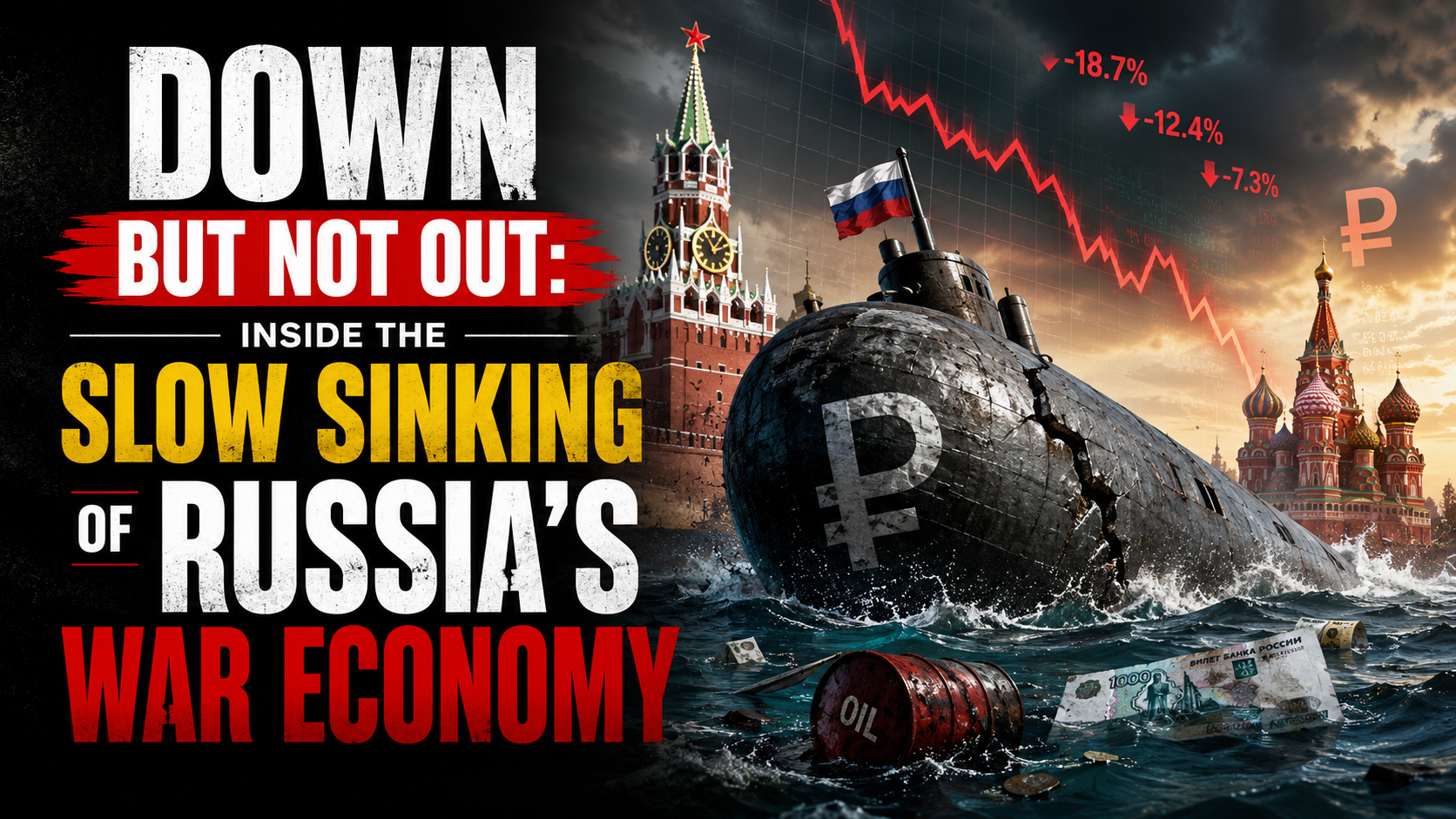
The European Council formally extended its economic sanctions against Russia for another full year on 25 June 2026, keeping restrictive measures in place until 31 July 2027 (Council of the EU). More than four years into the war, the headline story of Russia’s economy has shifted from whether sanctions would work to a more nuanced question: how much longer can the Kremlin keep financing the war before the accumulated strain becomes impossible to hide behind favorable official statistics.
The Sanctions Architecture, Renewed Again
The EU’s economic measures against Russia, first introduced in 2014 and dramatically expanded after the February 2022 full-scale invasion, now span trade, finance, energy and dual-use technology restrictions, alongside asset freezes and travel bans on a broad range of individuals and entities (Council of the EU). Since February 2022, the EU has adopted 20 separate sanctions packages, and the European Council has explicitly stated it remains determined to keep weakening Russia’s war economy by further reducing its energy revenues, curbing shadow-fleet oil shipping operations and constraining its banking system (Council of the EU). Separately, on 3 July 2026 the EU sanctioned six individuals connected to the poisoning and death of opposition figure Alexei Navalny, underscoring that the sanctions regime continues to expand on human-rights grounds as well as economic ones (Council of the EU Sanctions Timeline).
The Headline Numbers Beijing-Style Optimism Can No Longer Explain Away
Russia’s GDP is now put at roughly $2.51 trillion, the world’s eleventh-largest economy — comparable in size to South Korea despite Russia’s vastly larger landmass and resource base — with 2026 growth projected at just 1.0% and inflation running at 5.2% (Statistics of the World). More pessimistic estimates put full-year 2026 growth even lower, at around 0.4%, which would be worse than 2025’s already-weak 1% expansion and would mark a sharp deceleration from the 4.1% growth Russia posted in 2023 as it forged new trading relationships to route around initial sanctions (Forbes).
Oil and gas revenues — historically around half of Russia’s state income — have fallen to roughly a quarter, a deliberate outcome of Western sanctions strategy that targets how much Russia earns from exports rather than blocking those exports outright (Stockholm School of Economics/SITE). Russia’s oil and gas budget revenues reportedly halved in January 2026 alone, with crude prices falling below $73 a barrel before the Middle East conflict briefly reversed the trend, sending Brent surging more than 55% to near $120 a barrel at its peak (Forbes).
The Middle East War: A Temporary Lifeline With Long-Term Costs
The spike in oil prices tied to the Iran conflict, combined with a period of eased US sanctions enforcement on Russian oil under President Trump, offered Moscow unexpected fiscal breathing room in mid-2026 (Forbes). But that same conflict has undermined Russia’s longer-term energy diversification ambitions in the region: two Russian-backed power plant projects in Iran have been put on hold, along with oil and gas exploration work and plans to build new transit routes linking Russia to India via Iran (Forbes).
The Gap Between Official Statistics and Underlying Reality
Perhaps the most important analytical point from recent research is not about any single data point but about the reliability of Russian statistics themselves. Torbjörn Becker of the Stockholm Institute of Transition Economics has argued the real test of sanctions is not whether they end the war overnight, but how much they erode the Kremlin’s capacity to finance it — and by that measure, the evidence points to deeper strain than headline GDP figures suggest (Stockholm School of Economics/SITE). Becker notes that Russia’s economy grew only modestly in 2022 despite oil prices rising sharply that year — a gap between expected and actual performance that implies a considerably larger hidden economic hit than the official contraction figures showed (Stockholm School of Economics/SITE). Compounding the problem, Russian authorities have stopped publishing several key statistics since 2022, making independent assessment of inflation, consumption and real economic conditions increasingly difficult — leading Becker to conclude that “statistics have become part of the narrative” rather than a neutral measure of economic reality (Stockholm School of Economics/SITE).
The Military-Civilian Economic Split
A recurring theme across recent analysis is the growing bifurcation between Russia’s overheating military-industrial sector and a stagnating civilian economy. This imbalance has pushed interest rates higher and forced the liquidation of a striking 71% of Russia’s gold reserves to help fund continued war spending (Forbes). Russia’s total fossil fuel export revenue is estimated at roughly €734 million per day, underscoring just how central hydrocarbon income remains to the entire war financing model even as that revenue stream shrinks (Forbes).
The Counter-Narrative: Wages Still Rising
It would be inaccurate to describe Russia’s economy as in freefall. CSIS research notes that Russian salaries rose 17.8% in nominal terms and 8.7% in real terms in 2024 compared to 2023, with disposable incomes up 6.1% in 2023 and 7.3% in 2024 — growth rates not seen in Russia in almost two decades (CSIS). Government budget projections still expect real salaries to rise, albeit at a decelerating pace: 7% in 2025, 5.7% in 2026 and 4.1% in 2027 — a marked slowdown from the 2024 peak but still roughly double the pre-invasion decade average (CSIS). This wage growth, driven substantially by wartime labor shortages and military-adjacent spending, is precisely the kind of headline-stabilizing data point that has allowed Putin to argue publicly that sanctions have failed to cripple his economy (Fortune) — even as think tanks describe the broader trajectory as pushing Russia toward what one report calls an “economic, political, and military abyss” (Fortune).
What Comes Next
Renewed legislative pressure in Washington — including the Sanctioning Russia Act introduced with strong bipartisan support — signals appetite in the US for tightening the screws further, even as the loss of a key congressional champion for that effort has complicated the political path forward (TIME). Whether the EU’s renewed sanctions regime, continued oil price pressure, and constrained reserves ultimately force a shift in Kremlin calculus toward negotiation remains the central open question for 2027.
Key Takeaways
- The EU has extended Russia sanctions for a further year, through 31 July 2027, continuing a regime built from 20 separate packages since 2022.
- Russia’s 2026 GDP growth is forecast between 0.4% and 1.0%, a sharp deceleration from 2023’s 4.1% post-shock rebound.
- Oil and gas revenue’s share of Russian state income has fallen from roughly half to about a quarter as Western sanctions target export earnings specifically.
- Russia has liquidated a large share of its gold reserves to sustain war financing amid a widening split between an overheating military sector and a stagnating civilian economy.
- Official Russian statistics likely understate the true economic strain, according to independent economists who cite a widening gap between reported and expected performance.
Sources: Council of the EU, Council of the EU Sanctions Timeline, Stockholm School of Economics/SITE, Forbes, Statistics of the World, CSIS, Fortune, TIME
Discover more from The Economy
Subscribe to get the latest posts sent to your email.

Middle East War Economics 2026: Oil Prices & Energy Markets

PSX Forecast 2026: KSE-100, IMF Reviews & Geopolitics

Asian Markets Outlook 2026: China, Japan & Singapore Stocks

Global Economy 2026: IMF Growth, Inflation & Private Credit

Current Account Deficit (CAD) : Causes and Impact

Balance of Payments (BOP)

The Falkland Islands Dispute: Sovereign Wealth, Offshore Drilling, and Market Impacts

Gross Domestic Product (GDP): Nominal vs. Real

What is Inflation and the Consumer Price Index (CPI)?

US-China Trade Competition 2026: Supply Chain Relocation Guide

Oil Prices Break $100 in 2026: Middle East Conflict & Energy Markets

South-South Trade Expansion: Digital Integration and Emerging Market Growth

$166B Tariff Refund Tapering Fast: Is Your Business Missing Out?

Stock Market Today: Dow Climbs 500 Points as Markets Shake Off Inflation Jitters

State Farm’s $5B Dividend 2026: Who Qualifies & Payout Dates

US-China Relations in Q3 2026: Trade Tariffs and Supply Chain Risks

Gold’s Wild 2026: From a Record $5,600 Peak to a 24% Crash and Back Toward $4,500

Oil Surges as Strait of Hormuz Traffic Collapses Again

The Rocket That Won’t Quit: Inside SpaceX’s Falcon 9 Launch Machine

Bank of England Set to Hold Rates Through Year-End, Reuters Poll Shows

SpaceX Starship Flight 14: First Orbital Attempt & Starlink V3 Launch Explained

The 2026 Crypto Regulatory Shift: What It Means for Institutional Investors

AI Chip Stocks 2026: The Best Semiconductor Investments Beyond Marvell

Retail Earnings Week: What Home Depot, Target & Walmart Reveal

AI-Powered Training: The Next Multi-Billion Dollar Ecosystem in Fitness

Russia’s Black Sea Oil Exports Fall for a Fifth Straight Week

Top 30 Stocks for Investment in PSX for Massive ROI in 2026

Tween Back-to-School Trends 2026: What’s Driving the $85B Season
-

 Markets & Finance8 months ago
Top 15 Stocks for Investment in 2026 in PSX: Your Complete Guide to Pakistan’s Best Investment Opportunities
-

 Analysis7 months ago
Johor’s Investment Boom: The Hidden Costs Behind Malaysia’s Most Ambitious Economic Surge
-

 Analysis7 months ago
Top 10 Stocks for Investment in PSX for Quick Returns in 2026
-

 Analysis7 months ago
Brazil’s Rare Earth Race: US, EU, and China Compete for Critical Minerals as Tensions Rise
-

 Banks8 months ago
Best Investments in Pakistan 2026: Top 10 Low-Price Shares and Long-Term Picks for the PSX
-

 Investment8 months ago
Top 10 Mutual Fund Managers in Pakistan for Investment in 2026: A Comprehensive Guide for Optimal Returns
-

 Global Economy9 months ago
15 Most Lucrative Sectors for Investment in Pakistan: A 2025 Data-Driven Analysis
-

 Global Economy9 months ago
Pakistan’s Export Goldmine: 10 Game-Changing Markets Where Pakistani Businesses Are Winning Big in 2025
Pingback: DBS Hits S$1 Billion AI Value Milestone — But Agentic AI Poses Talent Challenges for Singapore Banks - The Economy