
Asia
Defying Global Headwinds: How the AIIB’s New Leadership is Mobilizing Critical Infrastructure Investment Across Asia


Ten days into her presidency, Zou Jiayi chose Hong Kong’s Asian Financial Forum as the venue for a message that was simultaneously reassuring and urgent. Speaking on January 26 to an audience of financial heavyweights and policymakers, the new president of the Asian Infrastructure Investment Bank emphasized that multilateral cooperation has become “an economic imperative” for sustaining long-term investment amid rising global economic uncertainty aiib. Her debut overseas speech signaled both continuity with her predecessor’s vision and a sharpened focus on the formidable challenges that lie ahead.
The timing was deliberate. As geopolitical fractures deepen, borrowing costs rise, and concessional finance dwindles, Zou noted that countries across Asia and beyond continue to require “reliable energy, resilient infrastructure, digital connectivity, effective climate mitigation and adaptation” aiib—needs that grow more pressing even as fiscal space tightens. For the AIIB, which has grown from 57 founding members to 111 approved members with USD100 billion in capitalization, the question is no longer whether multilateral development banks matter. It is whether they can mobilize capital at sufficient scale to bridge Asia’s infrastructure chasm—and whether China’s most prominent multilateral initiative can navigate an increasingly polarized global landscape.
A Decade in the Making: The AIIB’s Unlikely Journey
The AIIB’s establishment in 2016 represented something rare in contemporary geopolitics: a Chinese-led initiative that Western powers, with the notable exceptions of the United States and Japan, chose to join rather than oppose. The bank emerged from China’s frustration with what it perceived as inadequate representation in the post-war Bretton Woods institutions. Despite China’s economic ascent, its voting share in the Asian Development Bank remained disproportionately small—just 5.47 percent compared to the 26 percent combined voting power held by Japan and the United States—while governance reforms moved at glacial pace.
Yet the AIIB was designed, perhaps strategically, to avoid direct confrontation with the existing order. Its governance frameworks deliberately mirror those of the World Bank and ADB, incorporating international best practices on environmental and social safeguards, procurement transparency, and project evaluation. More than half of the bank’s approved projects have involved co-financing with established multilateral institutions. The institution maintains AAA credit ratings from all major rating agencies—a testament to its financial discipline and multilateral governance structure, where developing countries hold approximately 70 percent of shares.
This hybrid identity—simultaneously embedded within and distinct from Western-led development architecture—has allowed the AIIB to endure even as US-China strategic competition has intensified. But it also creates tensions. Western observers continue to scrutinize whether Beijing wields excessive influence through its 30.5 percent shareholding, which gives China effective veto power over major decisions. Meanwhile, China itself walks a tightrope, managing the AIIB as a genuinely multilateral institution while also pursuing its more opaque Belt and Road Initiative through state-owned banks.
Zou’s Inheritance: Scale, Ambition, and Sobering Constraints
Zou Jiayi assumed the AIIB presidency on January 16, the bank’s tenth anniversary, inheriting an institution that has approved nearly USD70 billion across 361 projects in 40 member economies. Her predecessor, Jin Liqun, spent a decade building credibility, expanding membership, and establishing operational systems. The accomplishments are tangible: over 51,000 kilometers of transportation infrastructure supported, 71 million people gaining access to safe drinking water, and 410 million beneficiaries of improved transport connectivity.
Yet measured against Asia’s infrastructure needs, these achievements remain a drop in a very deep bucket. The Asian Development Bank estimates that developing Asia requires USD1.7 trillion annually through 2030 simply to maintain growth momentum, address poverty, and respond to climate change. That figure balloons to USD1.8 trillion when climate adaptation and mitigation measures are fully incorporated. Against this backdrop, the AIIB’s USD8.4 billion in 2024 project approvals across 51 projects—impressive by institutional growth metrics—captures less than 0.5 percent of annual regional needs.
The bank’s updated corporate strategy acknowledges this reality with aggressive targets: doubling annual financing to USD17 billion by 2030, deploying at least USD75 billion over the strategy period, and ensuring over 50 percent goes toward climate-related investments. These are ambitious goals. They are also, quite clearly, insufficient to close the infrastructure gap without massive private capital mobilization—which brings us to the central challenge Zou articulated in Hong Kong.
The Private Capital Conundrum
Zou was unequivocal in Hong Kong: public resources “alone will not be sufficient” scmp. Private capital mobilization, alongside support from peer development banks, would be crucial. This recognition reflects a fundamental tension in development finance: traditional multilateral lending, even at unprecedented scale, cannot come close to meeting infrastructure needs. The private sector must be induced to invest in projects that carry political risks, long payback periods, regulatory uncertainties, and—increasingly—climate vulnerabilities.
Yet coaxing private investors into emerging market infrastructure has proven maddeningly difficult. Risk-return profiles often don’t align with institutional investor requirements. Currency mismatches create vulnerabilities. Weak regulatory frameworks and corruption concerns add further friction. Development banks have experimented with various mechanisms to address these challenges: partial credit guarantees, first-loss tranches, blended finance structures, and on-lending facilities through local financial institutions.
The AIIB has embraced this “finance-plus” approach, exemplified by three projects Zou highlighted in her speech: initiatives in Türkiye, Indonesia, and Kazakhstan that demonstrate how multilateral cooperation enables sustainable investment across diverse country contexts aiib. The Türkiye project involves sustainable bond investments channeled through private developers. Indonesia’s multifunctional satellite project operates as a public-private partnership bringing digital connectivity to remote areas. Kazakhstan’s Zhanatas wind power plant demonstrated how multilateral backing can catalyze commercial financing for renewable energy in frontier markets.
These successes, however, remain exceptions rather than the rule. The AIIB’s nonsovereign (private sector) portfolio remains modest compared to sovereign lending. Scaling private capital mobilization requires not just financial innovation but also patient institution-building: strengthening regulatory frameworks, improving project preparation, enhancing local capital markets, and building pipelines of bankable projects. It’s intricate, time-consuming work that doesn’t lend itself to dramatic announcements or swift results.
Climate Imperatives Meet Geopolitical Realities
Climate financing represents both the AIIB’s greatest opportunity and its most complex challenge. In 2024, 67 percent of the bank’s approved financing contributed to climate mitigation or adaptation—surpassing its 50 percent target for the third consecutive year. Nearly every approved project (50 of 51) aligned with Sustainable Development Goal 13 on climate action. The bank introduced Climate Policy-Based Financing instruments to support members’ reform programs, issued digitally native bonds through Euroclear, and raised nearly USD10 billion in sustainable development bonds.
These achievements matter enormously. Infrastructure decisions made today will lock in emissions patterns for decades. Asia accounts for the majority of global infrastructure investment and a disproportionate share of future emissions growth. Getting infrastructure right—prioritizing renewable energy over coal, building climate-resilient transport networks, investing in water management systems that can withstand extreme weather—is arguably the most important contribution development banks can make to global climate stability.
Yet climate finance also illuminates geopolitical fault lines. While the AIIB has officially aligned its operations with the Paris Agreement and maintains rigorous environmental standards, China—the bank’s largest shareholder and second-largest borrower—continues to finance coal projects through bilateral mechanisms. This creates uncomfortable contradictions. Western members value the AIIB’s climate commitments; they simultaneously worry about whether Chinese influence might soften environmental standards or prioritize projects that serve Beijing’s strategic interests.
The answer, to date, appears to be no. The AIIB’s multilateral governance structure, AAA credit rating, and co-financing relationships create powerful incentives for maintaining high standards. The bank’s environmental and social framework, while sometimes criticized for placing too much monitoring responsibility on clients, aligns with international best practices. Projects undergo independent evaluation. A public debarment list includes dozens of Chinese entities excluded from bidding on AIIB contracts.
Still, perception matters. In an era of intensifying US-China competition, economic “de-risking,” and fractured value chains, even genuinely multilateral institutions face scrutiny based on their leadership’s nationality. The AIIB must continuously demonstrate that it operates according to professional merit rather than geopolitical calculation—a burden that Western-led institutions, whatever their flaws, rarely face.
Navigating Treacherous Waters: The “De-Risking” Dilemma
Zou acknowledged in Hong Kong that the global economy faces “a convergence of challenges, including a weakening of traditional drivers of global growth such as strong investment and integrated value chains” aiib. This was diplomatic language for a more stark reality: the post-Cold War consensus on economic integration has fractured, perhaps irreparably. Supply chains are being reconfigured along geopolitical lines. Export controls proliferate. “Friend-shoring” replaces globalization as the operative principle in advanced economies.
For multilateral development banks, this environment presents what Zou called “geopolitical tensions,” “fragmentation of global value chains,” and “declining concessional resources” scmp. Infrastructure connectivity—long viewed as an unalloyed good—now triggers security concerns. Digital infrastructure projects face scrutiny over data governance and technological dependencies. Energy projects must navigate not just climate considerations but also great power competition over supply chains for batteries, solar panels, and rare earth minerals.
The AIIB finds itself in a particularly delicate position. Its mission of enhancing regional connectivity can be read as complementary to—or in competition with—various initiatives: the US-led Indo-Pacific Economic Framework, the European Union’s Global Gateway, Japan’s Partnership for Quality Infrastructure, and of course China’s Belt and Road Initiative. Zou must articulate a value proposition that transcends these competing visions while avoiding entanglement in their conflicts.
Her emphasis on multilateral cooperation as an economic imperative, rather than a geopolitical strategy, suggests one approach: positioning the AIIB as a pragmatic problem-solver focused on tangible development outcomes rather than ideological alignment. The bank’s co-financing relationships with the World Bank, ADB, and European development banks provide concrete evidence of this positioning. These partnerships reduce duplication, leverage expertise, share risks, and signal commitment to international standards.
Yet cooperation has its limits. Research examining AIIB project patterns finds that co-financing with the World Bank occurs less frequently in countries with strong Belt and Road Initiative ties to China, suggesting that geopolitical considerations do influence project selection, even if indirectly. The AIIB’s role as host institution for the China-led Multilateral Cooperation Center for Development Finance—whose relationship to the BRI remains deliberately opaque—further complicates claims of pure multilateralism.
The Road to 2030: Realistic Ambitions or Inevitable Disappointment?
As Zou settles into her five-year term, the central question is whether the AIIB can meaningfully contribute to closing Asia’s infrastructure gap or whether it will remain, despite growth, a marginal player relative to the scale of needs. The bank’s goal of reaching USD17 billion in annual approvals by 2030 would represent impressive institutional expansion. It would still capture less than one percent of annual regional infrastructure requirements.
This gap between ambition and reality suggests three possible futures. The first is transformative success: the AIIB becomes a genuine catalyst for private capital mobilization, leveraging its balance sheet to unlock multiples of private investment, pioneering innovative financial instruments, and demonstrating that multilateral cooperation can transcend geopolitical divisions. In this scenario, the bank’s impact is measured not in its direct lending but in its role as orchestrator, de-risker, and standard-setter.
The second possibility is respectable incrementalism: the AIIB continues growing steadily, maintains its AAA rating, delivers solid development outcomes in member countries, and co-finances projects with peer institutions. It becomes a useful but not transformative addition to the development finance architecture—valuable primarily for providing borrower countries with an additional funding source and slightly more voice in governance compared to Western-dominated institutions.
The third scenario is slow decline into irrelevance or, worse, becoming a vehicle for Chinese strategic interests that alienates Western members and undermines the bank’s multilateral character. This seems unlikely given the institution’s governance structures and Jin Liqun’s decade of credibility-building, but geopolitical pressures could push in this direction if not carefully managed.
Zou’s Hong Kong speech positioned her firmly in pursuit of the first scenario. Her emphasis on cooperation, private capital, and shared development priorities reflects understanding that the AIIB’s influence will be determined not by its balance sheet alone but by its ability to convene actors, mobilize resources, and demonstrate that multilateral solutions can deliver results in an age of nationalism and competition.
The Verdict: Indispensable but Insufficient
The infrastructure gap facing developing Asia represents both a development crisis and an opportunity. Inadequate infrastructure constrains economic growth, perpetuates poverty, limits access to education and healthcare, and increases vulnerability to climate shocks. Yet infrastructure investment, done well, can be transformative: connecting markets, enabling industrialization, providing clean energy access, and building climate resilience.
Zou characterized infrastructure investment as a “duty” for development banks to support industrialization and help countries provide goods and services to the global market scmp. This framing is telling. It positions the AIIB not as a charity but as a catalyst for economic transformation—aligning with the bank’s focus on sustainable returns, economic viability, and productive infrastructure rather than pure poverty alleviation.
The AIIB’s first decade demonstrated that a Chinese-led multilateral institution could operate according to international standards, attract broad membership, and deliver substantive development outcomes. Zou’s challenge is to scale this success while navigating increasingly treacherous geopolitical waters. Her insistence on multilateral cooperation as an economic imperative—not just a diplomatic nicety—suggests recognition that fragmentation serves no one’s interests when infrastructure needs are so vast.
Yet realism demands acknowledging that even a successful AIIB operating at peak efficiency cannot, alone or with peer institutions, close Asia’s infrastructure gap. The private sector must be decisively engaged. Domestic resource mobilization must be strengthened. Project preparation must improve. Regulatory frameworks must evolve. These changes require patient, painstaking work that extends far beyond any single institution’s mandate.
The AIIB under Zou’s leadership will likely prove indispensable but insufficient—a useful, professionally managed multilateral development bank that makes meaningful contributions to Asian infrastructure while remaining orders of magnitude too small relative to needs. That’s not a failure of vision or execution. It’s a reflection of the enormous scale of challenges facing developing Asia and the structural limits of multilateral development finance in an era of constrained public resources and hesitant private capital.
Whether the bank can transcend these limits—whether it can truly become the catalyst and mobilizer Zou envisions—will depend not just on Beijing’s commitment or Western engagement, but on whether Asia’s developing economies can create the enabling conditions that make infrastructure projects genuinely bankable. That transformation, ultimately, is one that development banks can support but not substitute for. And it’s a challenge that will extend well beyond Zou’s five-year term, or indeed the AIIB’s second decade. The question is whether, in a world of deepening divisions, multilateral institutions retain the credibility and capacity to help nations build the future—together.
Discover more from The Economy
Subscribe to get the latest posts sent to your email.



Asian equity markets have delivered a reminder that the AI investment boom is not simply an American technology story. South Korean memory producers, Taiwanese chip manufacturers, Japanese equipment suppliers and regional exporters are connected to global capital spending on computing. That creates an opportunity when orders surge and a vulnerability when assumptions change.
A Reuters market report on October 13 described a sharp risk-off episode in technology-linked Asian shares. Subsequent Wall Street Journal coverage described a partial rebound. Those moves are best understood as a test of expectations, not as proof that regional growth has reversed.
The first link: US AI spending and Asian earnings
The global chip supply chain has multiple layers. Advanced logic semiconductors, high-bandwidth memory, equipment, materials and packaging each respond differently to investment cycles. An AI server ordered in the United States can create revenue for numerous Asian firms, while supplier earnings remain vulnerable to delays or changes in product mix.
This concentration means broad stock indices may react strongly to a relatively narrow group of companies. The movement of an index is not necessarily a reliable representation of household consumption or the local services economy. Readers should check the contribution of leading constituents before interpreting a headline percentage drop.
Korea, Taiwan and Japan have different exposures
Korea’s market has significant memory-chip exposure. Taiwan has a major role in contract semiconductor manufacturing and its suppliers. Japan combines technology-related manufacturers with banks, exporters and domestic sectors. Exchange rates can amplify or offset changes in export competitiveness and returns for foreign investors.
Currency matters especially when an investor buys shares denominated in won, Taiwan dollars or yen. Even if a local index is unchanged, the return measured in dollars can change because of foreign-exchange movements. A regional market roundup should therefore include both equity and currency context.
Interest rates and oil can overwhelm the chip narrative
The AI industry competes for capital with governments, housing and ordinary businesses. When bond yields climb, distant profits are discounted more heavily; heavily indebted firms face rising refinancing expenses. Meanwhile high energy prices can pressure importers and manufacturers even when some technology exporters remain strong.
The IMF’s October outlook highlights both AI-related opportunities and inflation, conflict and fiscal vulnerabilities. That mixed picture argues against a single “Asia is booming” or “Asia is crashing” explanation.
The danger of extrapolating one trading session
A large daily decline can reflect positioning, forced selling or an abrupt change in sentiment. A rebound can reflect bargain hunting or short covering without resolving the original valuation issue. Neither movement establishes a sustainable trend. Investors should connect price action to revisions in earnings guidance, orders and financing conditions.
Useful evidence includes export orders, manufacturing surveys, semiconductor inventories, central-bank signals and capital flows. Compare the same measures over several months and distinguish expectations from realized data.
How to follow Asian markets responsibly
Build a dashboard with major indices, local-currency performance, exchange rates, benchmark bond yields and relevant oil prices. Record dates and market closing times; an Asian close may precede major US news that influences futures later. Avoid combining prices from different sessions as though they represent the same moment.
For a long-term investor, diversification across sectors and countries matters more than guessing the next technology stock to rebound. For a news reader, the essential question is whether a market move reflects an earnings change, financing risk or only a revision to how much investors are willing to pay.
Market structure can magnify headline moves
Market-capitalization-weighted benchmarks allocate more influence to companies with high market value. As chip and platform businesses grow, their success can make an index more concentrated. During a drawdown, selling pressure in those same names may dominate the index even if the median constituent is relatively stable. Equal-weighted sector comparisons and the share of stocks advancing can help distinguish broad weakness from concentration effects. Investors should also review whether an exchange was closed for a holiday and whether a quoted movement refers to a futures contract or the cash session. Time alignment is essential when comparing Asian and US markets.
Frequently asked questions
Why do Asian markets fall when US AI stocks sell off?
Regional firms supply chips, memory and equipment to the same global investment cycle, and investors frequently adjust exposure across markets at once.
Is a rebound proof the AI bubble is over?
No. Price recoveries do not necessarily resolve doubts about future returns and financing.
Which numbers are worth monitoring?
Earnings expectations, memory prices, exports, bond yields, currencies and oil prices give a more balanced picture than an index close alone.
Discover more from The Economy
Subscribe to get the latest posts sent to your email.
Markets & Finance
Beyond Singapore’s Borders: How Squeezed SMEs Can Unlock High-Yield Growth Across ASEAN

Faced with escalating domestic overhead, acute labor bottlenecks, and an ultra-saturated local market, Singapore’s small and medium-sized enterprises (SMEs) are approaching an operational inflection point. While the city-state remains an unrivaled global financial hub, domestic cost structures are increasingly compressing profit margins for mid-market businesses. Expanding across Southeast Asia is no longer merely a growth option—it has become a necessity for enterprise resilience and long-term value creation.
The Singapore Pressure Cooker: Why Domestic Growth Has Hit a Ceiling
Singapore SMEs contend with a uniquely challenging operating environment. According to economic assessments from the Monetary Authority of Singapore, structural cost pressures—spanning commercial real estate rents, utility hikes, and rising labor expenses—continue to outpace revenue growth across several non-oil domestic sectors.
Key factors squeezing Singapore SMEs include:
- Manpower Bottlenecks: Tightening foreign worker quotas and elevated salary thresholds under the Strategic Skills Framework have made local talent recruitment highly competitive and expensive.
- Property and Rental Overhead: Commercial and industrial space costs in prime logistics and office hubs remain among the highest in Asia, squeezing operational margins for retail, manufacturing, and services alike.
- Market Saturation: With a population of roughly 6 million, the domestic addressable market limits scale, making revenue compounding difficult without international customer acquisition.
To achieve sustainable multi-year growth, forward-looking business leaders are restructuring their footprint—using Singapore as an intellectual property (IP), treasury, and management headquarters while scaling operations into neighbor economies.
The ASEAN Dividend: Demographics, Digitalization, and Supply Chain Realignment
Southeast Asia represents a vibrant economic bloc of over 680 million consumers, characterized by rapid urbanization, an expanding middle class, and high mobile technology penetration. Research published by the Asian Development Bank highlights that regional GDP growth across ASEAN continues to outpace global averages, fueled by strong domestic demand and cross-border trade integration.
                  +-------------------------------------------------------+
                  |            Singapore Corporate Head Office            |
                  |     (IP, Treasury, Governance, R&D, Tech Core)        |
                  +-------------------------------------------------------+
                                              |
      +-----------------------+---------------+---------------+-----------------------+
      |                       |                               |                       |
      v                       v                               v                       v
+-----------+           +-----------+                   +-----------+           +-----------+
|  Vietnam  |           | Indonesia |                   | Malaysia  |           | Thailand  |
| (Mfg/Tech)|           | (Consumer)|                   | (Logistics|           | (Industrial|
|           |           |           |                   | & Services|           | & Auto Ops|
+-----------+           +-----------+                   +-----------+           +-----------+
Three macro drivers make ASEAN the primary expansion target for Singaporean firms:
- Supply Chain Diversification (“China+1”): Global multinationals and regional enterprises are diversifying manufacturing hubs toward Southeast Asia to enhance supply chain resilience, boosting local business ecosystems.
- Accelerated Digital Transformation: Digital economy report insights from McKinsey & Company reveal that regional cross-border e-commerce, fintech adoption, and digital services are projected to triple in market value by 2030.
- Regional Trade Integration: Agreements such as the Regional Comprehensive Economic Partnership (RCEP) and ASEAN Free Trade Area (AFTA) reduce trade barriers, lower tariffs, and simplify cross-border logistics.
Comparative Expansion Matrix for Target ASEAN Markets
Selecting the right expansion destination depends on sector alignment, talent requirements, and cost structures. The following framework maps core opportunities for Singapore SMEs across major ASEAN growth markets:
| Expansion Market | Primary Growth Drivers | Strategic Cost Advantage | High-Potential Sectors | Market Entry Complexity |
| Vietnam | Rapid industrialization, tech talent pool, strong export orientation | Low manufacturing and engineering labor costs | Precision engineering, electronics, software development | Moderate (Requires navigating local regulatory channels) |
| Indonesia | Massive domestic market (275M+ population), rising consumer class | High consumer volume potential, lower operational costs | B2C e-commerce, consumer tech, logistics, agritech | Moderate to High (Complex licensing & local partner rules) |
| Malaysia | Proximity to Singapore, shared talent language, integrated supply chains | Lower land and talent costs with minimal cultural friction | Cross-border logistics, professional services, food manufacturing | Low (High synergy with SG business models) |
| Thailand | Strong industrial base, advanced infrastructure, EV ecosystem | Cost-effective industrial facilities and skilled labor | Advanced manufacturing, automotive supply, healthcare, tourism tech | Moderate (Language barriers require local executive talent) |
A 4-Step Actionable Roadmap for Overseas Regionalization
Expanding across borders requires structured execution to avoid capital misallocation. Enterprise leaders can adopt this four-phase framework to mitigate market entry risks:
- Leverage Institutional Support and Co-FundingBefore committing capital, utilize government-backed regionalization initiatives. Programs administered by Enterprise Singapore—such as the Market Readiness Assistance (MRA) grant and the Enterprise Development Grant (EDG)—provide co-funding for market studies, legal set-up, and overseas business matching.
- Adopt a “Hub-and-Spoke” Operational ModelMaintain high-value activities (financing, IP management, advanced R&D, regional leadership) in Singapore to preserve institutional trust and regulatory clarity. Establish operational “spokes” in target ASEAN countries to handle high-volume manufacturing, customer support, and local marketing.
- Form Local Joint Ventures and Strategic AlliancesDirect market entry can carry regulatory hurdles and cultural blind spots. Partnering with established in-market distributors or joint-venture partners accelerates distribution access and ensures regulatory compliance.
- Capitalize on Cross-Border Digital InteroperabilityWith initiatives backed by the ASEAN Secretariat to build unified cross-border payment rails (such as real-time QR payment linkages between Singapore, Malaysia, Thailand, and Indonesia), businesses can handle cross-border payments with reduced friction and lower FX transaction costs.
Mitigating Risk: Structural Protocols for Cross-Border Success
While the growth prospects are significant, cross-border expansion presents operational challenges. SME leadership must address key risk categories:
- Regulatory and Foreign Ownership Restrictions: Certain jurisdictions enforce foreign ownership caps in specific sectors. Engaging qualified legal counsel early ensures proper corporate structuring and compliance with local equity mandates.
- Foreign Exchange Exposure: Currency volatility across emerging ASEAN markets can erode operating profits. Implementing formal hedging policies through treasury banking partners mitigates FX exposure.
- Taxation Structuring: Companies must optimize transfer pricing and leverage bilateral Avoidance of Double Taxation Agreements (DTAs) signed between Singapore and ASEAN member states to avoid overlapping tax obligations.
SMEs that treat regional expansion as a strategic imperative rather than a reactive survival tactic can leverage Singapore’s regional anchor status to capture long-term market share across Southeast Asia.
Discover more from The Economy
Subscribe to get the latest posts sent to your email.
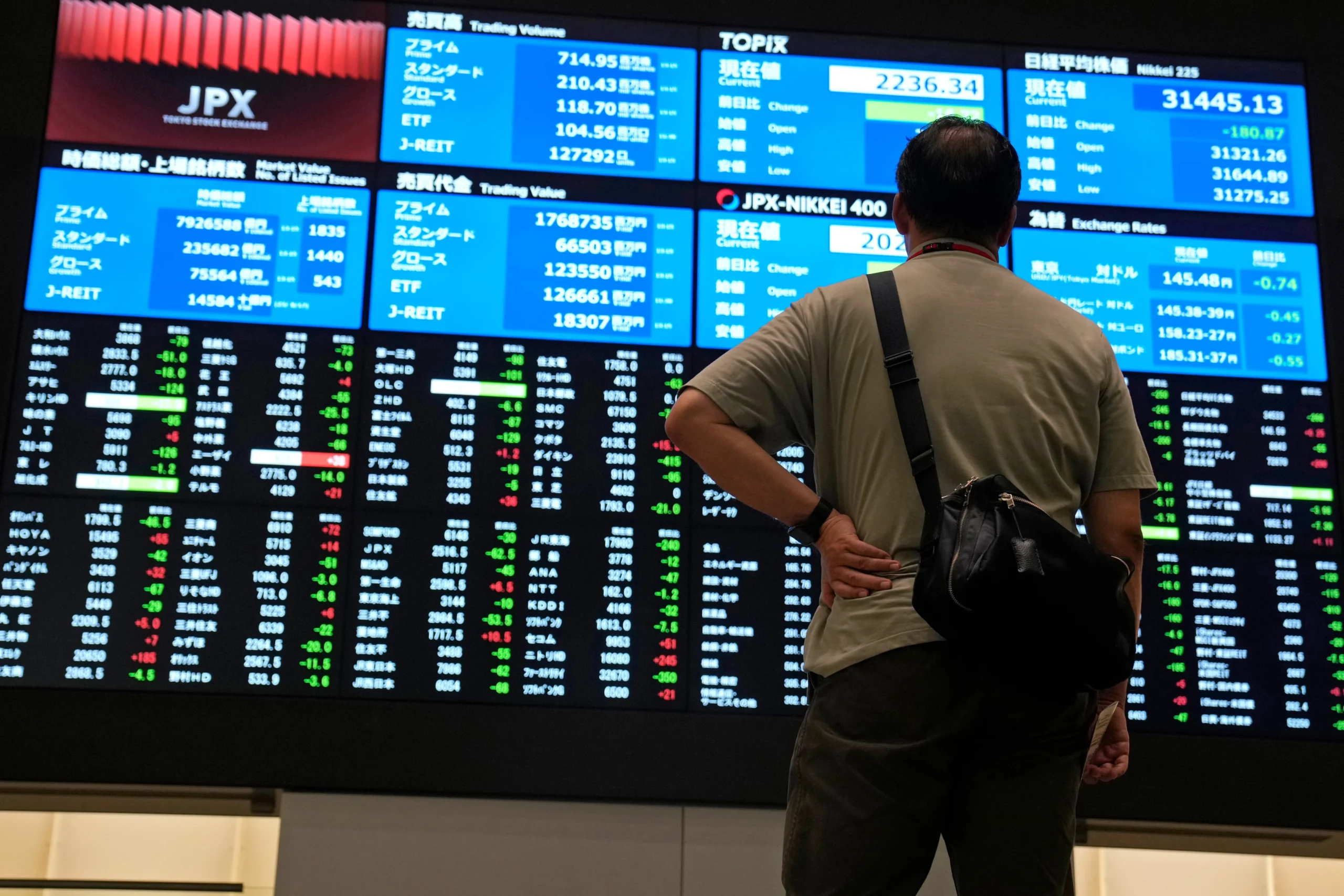
Are Asian stock markets rising in 2026?
Most of them are, but for very different reasons. Japan’s Nikkei 225 is trading at levels roughly 44% higher than a year ago on continued AI-linked technology strength; China’s benchmark indices climbed to multi-year highs at the start of the year on AI optimism and signs of economic recovery; and Pakistan’s KSE-100 has been one of the most volatile large gainers globally, crossing record highs early in the year before enduring sharp single-session pullbacks in September. Understanding each market separately matters more than treating “Asia” as one trade.
Japan: A 15-Year-Plus Bull Run Meets a Hawkish Central Bank
The Nikkei 225 closed at 65,018.95 on September 18, 2026, gaining 1.38% on the session and sitting 44.34% above where it stood a year earlier, according to data compiled by Trading Economics. That move came even as the Bank of Japan raised its policy rate by 25 basis points to 1.25% — a widely expected but still consequential tightening step, as policymakers balance elevated inflation and wage growth against pressure from U.S. Treasury Secretary Scott Bessent for currency and trade cooperation. Japan’s annual inflation rate held at 1.9% in August, with core inflation at 1.7% — below the Bank of Japan’s 2% target for a seventh straight month, suggesting the central bank still has room to normalize policy gradually rather than aggressively.
Technology and AI-related names have led Japan’s rally, with chip-equipment and materials names such as Advantest and Lasertec posting some of the sharpest single-day gains, echoing similar advances on Wall Street. That correlation is a theme across the region: Asian equity performance in 2026 has tracked the U.S. AI-capex story almost as closely as it has tracked domestic fundamentals.
China: AI Optimism Meets an Overheating Warning
China’s equity markets opened 2026 on a tear. The benchmark CSI 300 Index advanced 1.6% to close at its highest level in four years on January 6, while the Shanghai Composite rose 1.5% to its strongest level since July 2015, fueled by sustained optimism over the country’s AI advances and early signs of broader economic recovery, according to Bloomberg. Materials and technology shares led the advance, and the rally coincided with a robust pipeline of onshore AI-related IPOs.
That said, the rally showed early signs of overheating even in January: the 14-day relative strength index on the Shanghai Composite climbed above 75 — firmly into technical overbought territory — a level it had not touched since the previous September. Momentum has been uneven since; by late July, the Shanghai Composite had pulled back to a 16-week low on the CSI 300 gauge even as the broader index posted modest daily gains, reflecting a market still working through the tension between AI-driven optimism and valuation discipline. On the macro side, the IMF’s own China growth revisions this year have tracked a similar push-pull, with earlier 2025 forecasts putting Chinese growth near 4.8% before moderating toward roughly 4.2% as trade and property-sector headwinds persist.
Malaysia and Singapore: Steady Gains, Regional Correlation
Malaysia’s FTSE Bursa Malaysia KLCI has spent much of 2026 grinding toward multi-year highs rather than posting dramatic single-day swings. The index touched a more-than-six-year high near 1,686 points in early January, according to New Straits Times, and by early September had climbed further to around 1,714–1,715 points, per Bursa Malaysia futures data reported by Bernama, Malaysia’s state news agency. Analysts at Rakuten Trade have described the index as being in a healthy uptrend across both short- and long-term timeframes, with pullbacks read as consolidation rather than a change in trend.
Singapore’s Straits Times Index has moved in tandem with regional sentiment through the year, trading in the high-3,900-point range during mid-2026 sessions alongside comparable moves in Hong Kong’s Hang Seng and South Korea’s Kospi — a reminder that Southeast Asian and Northeast Asian benchmarks remain tightly correlated on any given trading day, even when their underlying economic drivers differ.
Pakistan: The Region’s Most Volatile Outperformer
Featured Snippet Target: Pakistan’s KSE-100 Index began 2026 at a record high above 176,000 points, climbed further past 186,000 and 188,000 in the following days on institutional buying and expectations of a policy rate cut, but has since seen sharp single-session pullbacks — including a 3,078-point, 1.79% drop on September 10 — underscoring how the world’s best-performing frontier market in early 2026 has also been among its most volatile.
The Pakistan Stock Exchange’s rally traces back to a shift in domestic asset allocation: brokerage house Topline Securities described the move from fixed-income instruments into equities — driven by falling returns on traditional savings vehicles — as the primary fuel behind sustained liquidity and elevated valuations, according to coverage from Aaj News. Banking names including United Bank Limited, Habib Bank, and MCB, alongside energy majors like Oil and Gas Development Company, have repeatedly featured among the index’s top contributors on both up and down days.
By early September, the picture had turned choppier. The KSE-100 gained 399 points on September 4 to close at 175,328, per ARY News, before dropping over 3,000 points just days later on September 10 — a reminder that Pakistan’s rally, while historic in percentage terms, remains far more sensitive to single-session sentiment shifts than its larger regional peers.
The Cross-Market Pattern
Three threads tie these otherwise disconnected markets together in 2026. First, AI-linked capital spending is now a genuine cross-border driver — Japanese and Chinese tech names have both rallied on echoes of the same U.S. hyperscaler capex story. Second, central bank policy divergence is widening: Japan is tightening from historically ultra-loose settings, while Pakistan has been cutting rates to support a still-fragile broader economy. Third, frontier and emerging markets — Pakistan chief among them — are delivering far larger percentage swings, in both directions, than developed Asian benchmarks, rewarding investors who can tolerate volatility but punishing those who chase momentum without hedging for pullbacks.
The Bottom Line
Asia’s 2026 story is not one market but five distinct ones moving on different clocks — Japan’s AI-and-rate-hike rally, China’s optimism-versus-overheating tension, Malaysia and Singapore’s steadier regional drift, and Pakistan’s high-beta swings around a genuine structural re-rating. Anyone allocating across the region needs a market-by-market view rather than a single “Asia” thesis.
Next step: Track Bank of Japan policy meetings, China’s Politburo economic guidance sessions, and Pakistan’s State Bank Monetary Policy Committee decisions together — the three events, spaced through the remainder of 2026, are the clearest near-term catalysts for each market’s next move.
Discover more from The Economy
Subscribe to get the latest posts sent to your email.

Neocloud Economics in 2026: GPU Debt, Utilization and Power

What Is a Neocloud? How AI GPU Clouds Work and Compare

Lula Re-elected in 2026: What Changes for the Dollar, Brazilian Stocks, and Interest Rates?

Lula Wins Brazil’s 2026 Election: Five Economic Tests for 2027

SSI November 2026 Payment: Why Benefits Arrive October 30

Russia Sanctions Waiver: What Asian Oil Buyers Gain

Asia Markets Weekly: How Oil, US Yields and the Fed Reach Tokyo, Kuala Lumpur and Karachi

Gold Near $4,000: Buy, Hold or Wait? A Pakistan Tola Price Guide

US 10-Year Treasury Yield Near 5%: The Hidden Cost for Pakistani Investors

Fed Meeting on October 28: Hike or Hold—and Why Pakistan Investors Should Care

Can Pakistan Turn US–Iran Mediation Into an Economic Dividend?

Oil Above $100: How Higher Crude Prices Reach Pakistan’s Rupee, Petrol and Imports

SBP Interest Rate at 11.5%: What Will Decide Pakistan’s Next Policy Move?

The Global South: Debt, Climate Finance and Investment in 2026

Crude Oil & Petroleum Market Analysis: OPEC+ Decisions and Price Forecasts

Top US Convenience Store Chains: Store Counts, EV Charging, and Sales Trends

Algorithmic Dogfights: Why the U.S. and China Must Establish Rules of Engagement for Autonomous Air Power

Who Is Shivon Zilis? The Neuralink Executive at the Center of the Musk–OpenAI Trial

Social Security Extra $90 Deposit: Who Qualifies for the October 2026 Medicare Rebate?

Corporate America Faces a New Debt Test as US Borrowing Costs Surge

Global Economic Outlook 2026: 7 Forces Reshaping Markets, Trade and Business

Gold Price Outlook 2026: The Forces Behind the Forecasts—and What Could Reverse Them

Gold Falls 3.7% as Yields Surge: Is Gold Still a Safe Haven in 2026?

Stock Market Today: Dow, S&P 500, and Nasdaq Retreat as Treasury Yields

MAS Allocates S$1.45 Billion to Five Asset Managers in Third EQDP Batch: Total Deployment Reaches S$5.4 Billion

Anthropic Bans Sustained Abuse of Claude AI Under New Usage Policy Effective November 12, 2026

Stock Market Crash in 2026? Warning Signs, Scenarios and a Calm Investor Checklist

Geopolitics and Your Portfolio: How International Affairs Move Global Markets
-

 Markets & Finance10 months ago
Top 15 Stocks for Investment in 2026 in PSX: Your Complete Guide to Pakistan’s Best Investment Opportunities
-

 Analysis8 months ago
Johor’s Investment Boom: The Hidden Costs Behind Malaysia’s Most Ambitious Economic Surge
-

 Analysis8 months ago
Top 10 Stocks for Investment in PSX for Quick Returns in 2026
-

 Banks9 months ago
Best Investments in Pakistan 2026: Top 10 Low-Price Shares and Long-Term Picks for the PSX
-

 Analysis9 months ago
Brazil’s Rare Earth Race: US, EU, and China Compete for Critical Minerals as Tensions Rise
-

 Investment10 months ago
Top 10 Mutual Fund Managers in Pakistan for Investment in 2026: A Comprehensive Guide for Optimal Returns
-

 Global Economy10 months ago
15 Most Lucrative Sectors for Investment in Pakistan: A 2025 Data-Driven Analysis
-

 Global Economy10 months ago
Pakistan’s Export Goldmine: 10 Game-Changing Markets Where Pakistani Businesses Are Winning Big in 2025